50 Amazing Photos Show What Texas Looked Like in the Late 19th Century

Texas is a state in the South Central region of the United States. At 268,596 square miles (695,662 km2), and with more than 29.1 million residents in 2020, it is the second-largest U.S. state by both area (after Alaska) and population (after California). Texas shares borders with the states of Louisiana to the east, Arkansas to the northeast, Oklahoma to the north, New Mexico to the west, and the Mexican states of Chihuahua, Coahuila, Nuevo León, and Tamaulipas to the south and southwest; and has a coastline with the Gulf of Mexico to the southeast.

Houston is the most populous city in Texas and the fourth-largest in the U.S., while San Antonio is the second most populous in the state and seventh-largest in the U.S. Dallas–Fort Worth and Greater Houston are, respectively, the fourth- and fifth-largest metropolitan statistical areas in the country. Other major cities include Austin, the second most populous state capital in the U.S., and El Paso. Texas is nicknamed the “Lone Star State” for its former status as an independent republic, and as a reminder of the state’s struggle for independence from Mexico. The “Lone Star” can be found on the Texas state flag and on the Texas state seal. The origin of Texas’s name is from the Caddo word táysha’ meaning ‘friends’.

Due to its size and geologic features such as the Balcones Fault, Texas contains diverse landscapes common to both the U.S. Southern and the Southwestern regions. Although Texas is popularly associated with the U.S. southwestern deserts, less than ten percent of Texas’s land area is desert. Most of the population centers are in areas of former prairies, grasslands, forests, and the coastline. Traveling from east to west, one can observe terrain that ranges from coastal swamps and piney woods, to rolling plains and rugged hills, and finally the desert and mountains of the Big Bend.

The term “six flags over Texas” refers to several nations that have ruled over the territory.[note 1] Spain was the first European country to claim and control the area of Texas. France held a short-lived colony. Mexico controlled the territory until 1836 when Texas won its independence, becoming the Republic of Texas. In 1845, Texas joined the union as the 28th state. The state’s annexation set off a chain of events that led to the Mexican–American War in 1846. A slave state before the American Civil War, Texas declared its secession from the U.S. in early 1861, and officially joined the Confederate States of America on March 2 of the same year. After the Civil War and the restoration of its representation in the federal government, Texas entered a long period of economic stagnation.

Historically, four major industries shaped the Texas economy prior to World War II: cattle and bison, cotton, timber, and oil. Before and after the U.S. Civil War, the cattle industry—which Texas came to dominate—was a major economic driver for the state, and created the traditional image of the Texas cowboy. In the later 19th century, cotton and lumber grew to be major industries as the cattle industry became less lucrative. It was ultimately, though, the discovery of major petroleum deposits (Spindletop in particular) that initiated an economic boom which became the driving force behind the economy for much of the 20th century. Texas developed a diversified economy and high tech industry during the mid-20th century. As of 2015, it has the second most Fortune 500 company headquarters (54) in the United States. With a growing base of industry, the state leads in many industries, including tourism, agriculture, petrochemicals, energy, computers and electronics, aerospace, and biomedical sciences. Texas has led the U.S. in state export revenue since 2002, and has the second-highest gross state product. If Texas were a sovereign state, it would have the 10th-largest economy in the world. (Wikipedia)

The photographs and information related to photos from SMU Libraries Digital Collections provide a unique glimpse into the social and domestic history, architecture, transportation, ranching, agriculture, commerce, material culture, costume, and urban and rural history of Texas in the 1880s and 1890s.

Empire Livery & Sale Stable, M. J. Dagnan, Proprietor, Austin, Texas, circa 1880
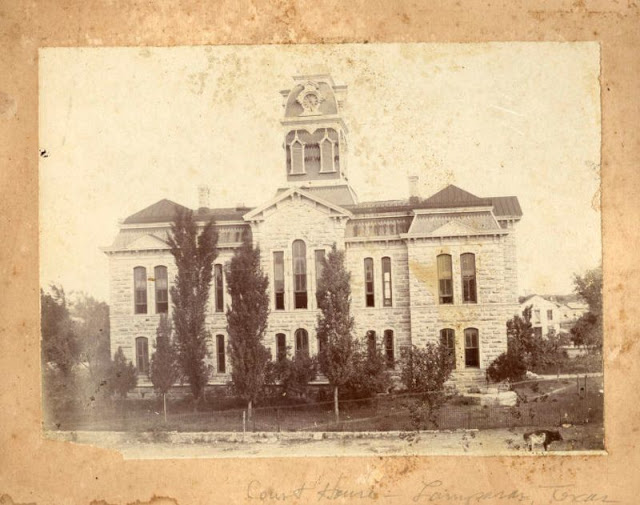
Courthouse, Lampasas, Texas, circa 1880
Texas State Capitol fire, 1881
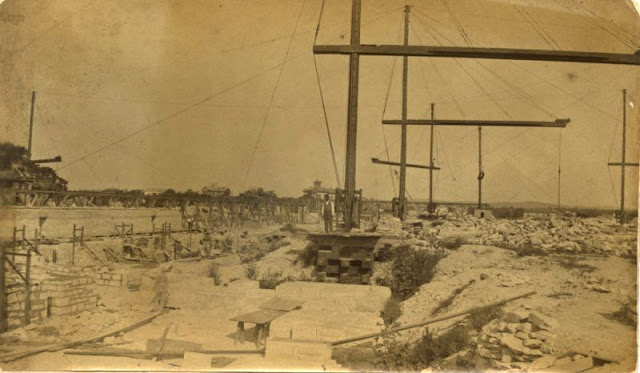
Foundation of Capitol Building, Austin, Travis County, Texas, circa 1882
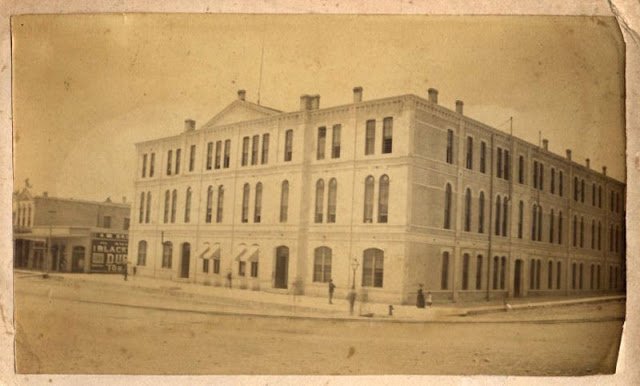
Pierson Hotel, El Paso, Texas, circa 1882-1895
Temporary Capitol, Austin, Travis County, Texas, 1883-1888
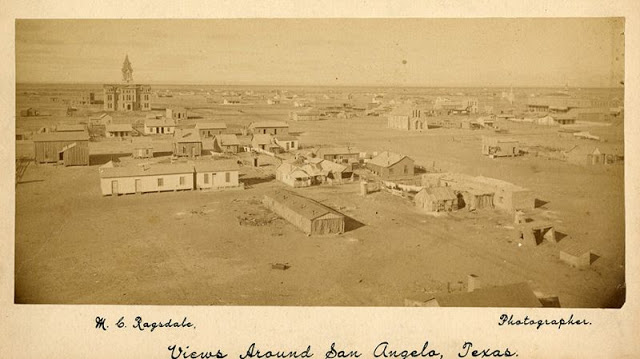
Bird’s-eye view of San Angelo, Texas, circa 1885
Branding Caldwell in early days, Henrietta, Clay County, Texas, circa 1885
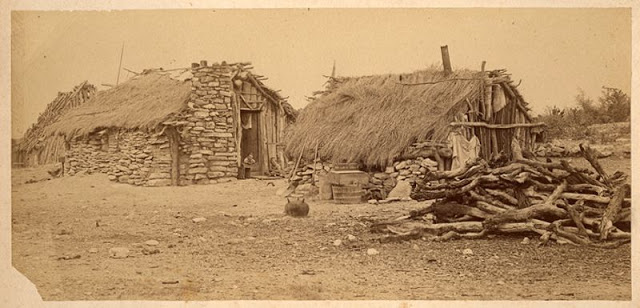
Farm house, San Angelo, Texas, circa 1885
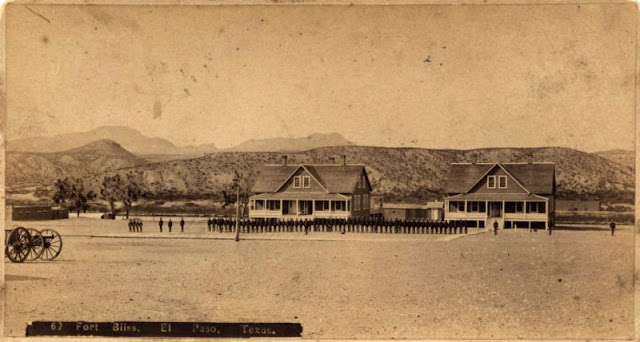
Fort Bliss, El Paso, Texas, 1885
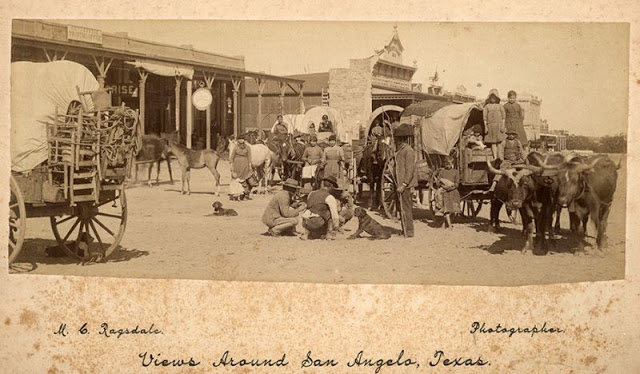
Immigrants going through San Angelo, Texas, circa 1885
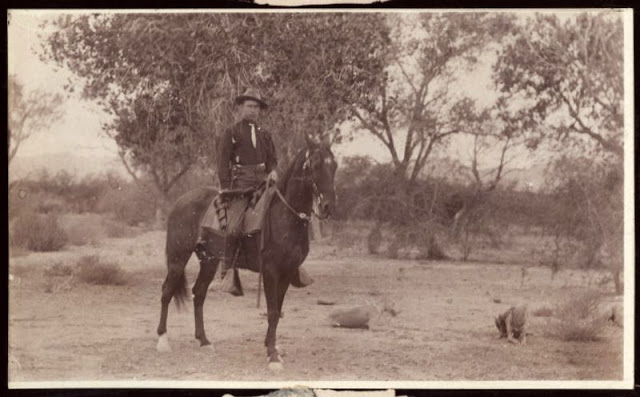
Mr. Jacob Hoffman of Troop F, 3rd Cavalry, Fort Hancock, Texas, circa 1885
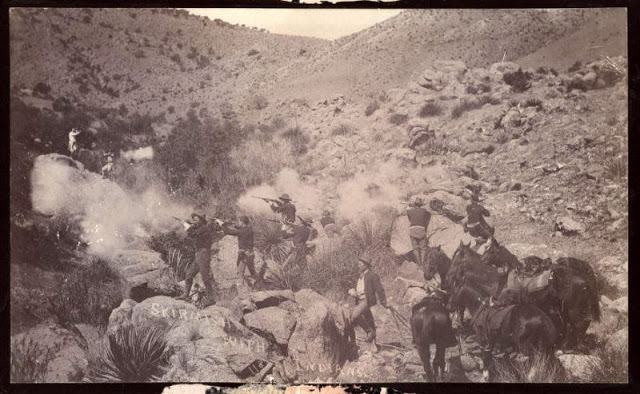
Skirmish with Indians, Texas, circa 1885
Congress Avenue, Austin, Texas, circa 1888
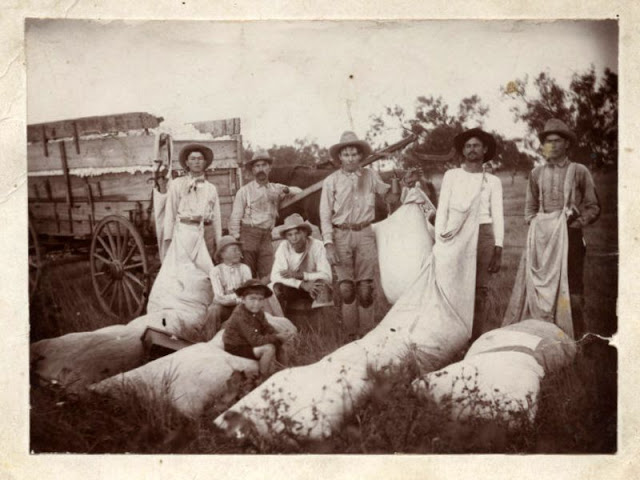
Family in cotton field outside San Antonio, circa 1889-1892
Comanche Camp, Texas, circa 1890
Missouri, Kansas, and Texas Railway Collision, Texas, circa 1890
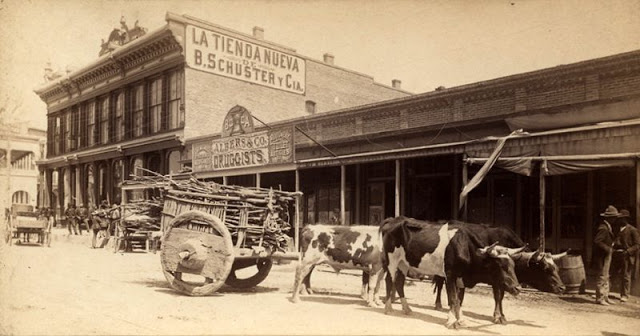
Ox cart with storefronts in background, El Paso, Texas, circa 1890
Maverick County Jail Guards, Eagle Pass Rifles, Texas, 1891
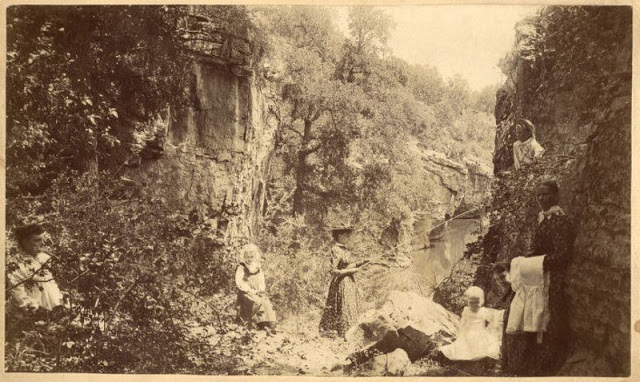
A group on riverbank, San Antonio, Bexar County, Texas, circa 1892
Aqueduct at Mission San Juan, San Antonio, Bexar County, Texas, circa 1892
Beautics of San Antonio River. Guenthers Lower Mill, San Antonio, Bexar County, Texas, circa 1892
Beauties of San Antonio River. Mill Dam, San Antonio, Bexar County, Texas, circa 1892
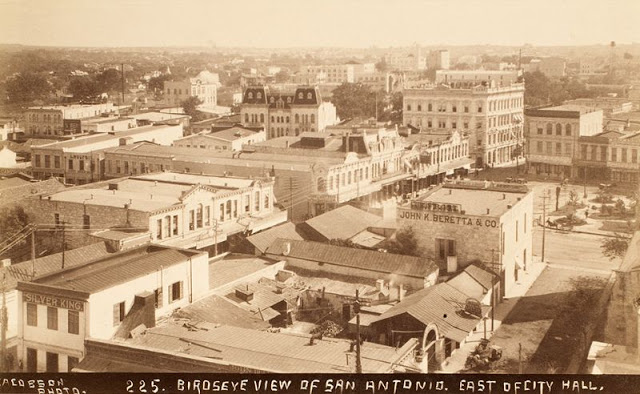
Birdseye View of San Antonio. East of City Hall, San Antonio, Bexar County, Texas, circa 1892
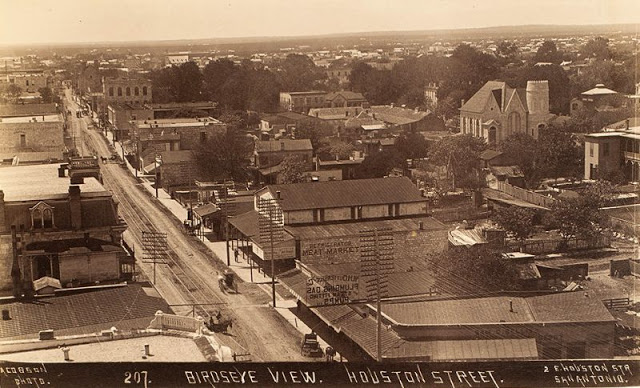
Birdseye View. Houston Street, San Antonio, Bexar County, Texas, circa 1892
Commerce Str., Looking East, San Antonio, Bexar County, Texas, circa 1892
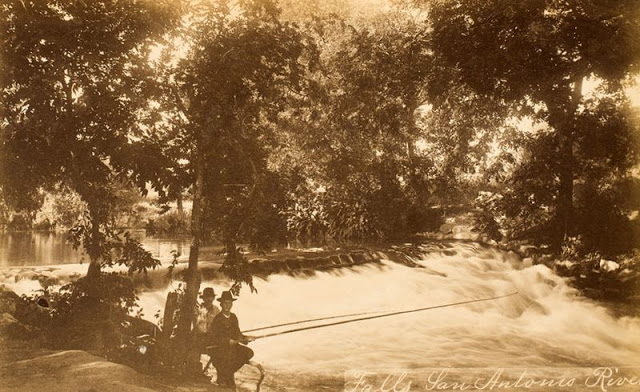
Falls San Antonio River, San Antonio, Bexar County, Texas, circa 1892
Fourth Mission, San Antonio, Bexar County, Texas, circa 1892
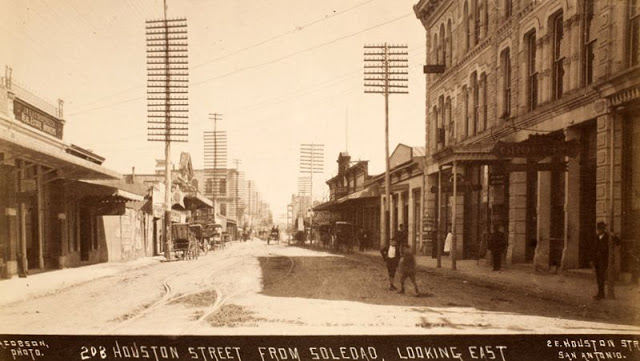
Houston Street from Soledad, Looking East, San Antonio, Bexar County, Texas, circa 1892
Mexican Cart and Burro, San Antonio, Bexar County, Texas, circa 1892
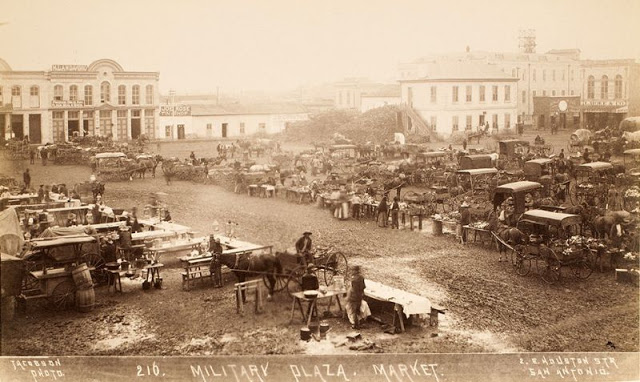
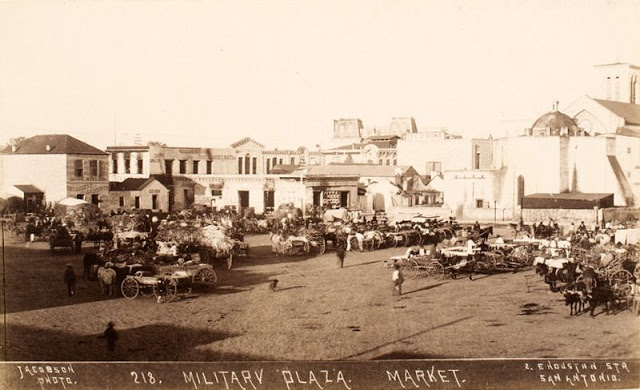
Military Plaza. Market, San Antonio, Bexar County, Texas, circa 1892
Mission Concepcion. 1st Mission, San Antonio, Bexar County, Texas, circa 1892
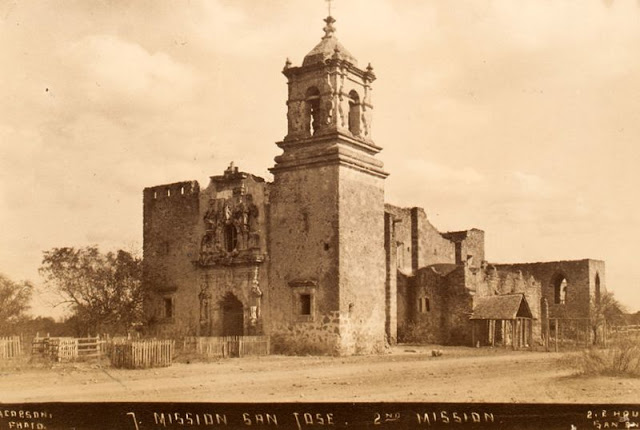
Mission San Jose. 2nd Mission, San Antonio, Bexar County, Texas, circa 1892
Mission San Juan Capistrano. 3d Mission, San Antonio, Bexar County, Texas, circa 1892
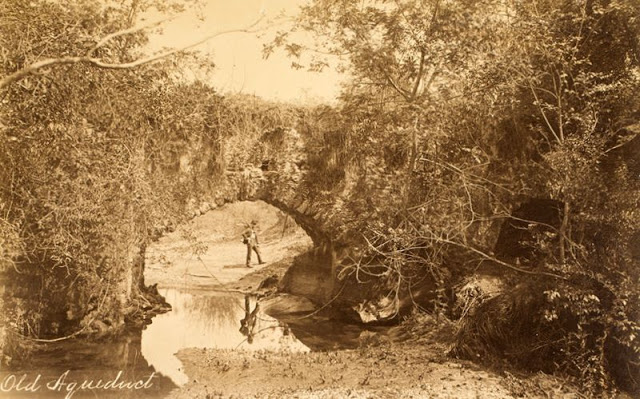
Old aqueduct, San Antonio, Bexar County, Texas, circa 1892
The Ursuline Convent, San Antonio, Bexar County, Texas, circa 1892
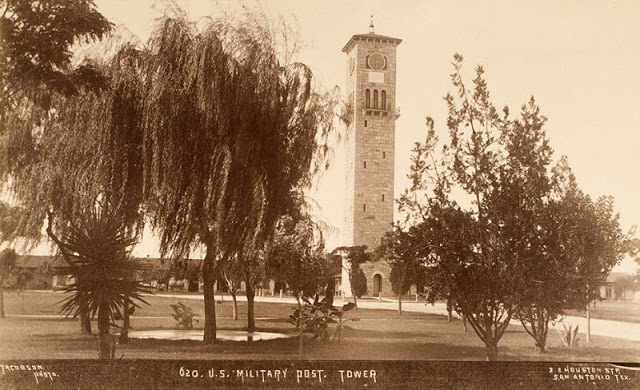
U.S. Military Post, San Antonio, Bexar County, Texas, circa 1892.
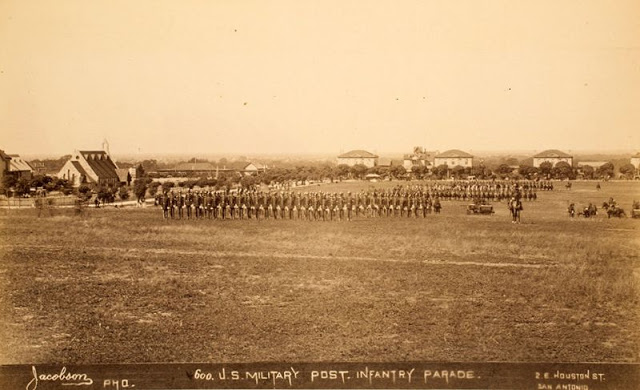
U.S. Military Post. Infantry Parade, San Antonio, Bexar County, Texas, circa 1892
View approaching ‘Lover’s Retreat’ 3 miles west from Palo Pinto, Texas, 1892
Wood Market on Military Plaza, San Antonio, Bexar County, Texas, circa 1892
Rise in North Concho, San Angelo, Texas, 1894
Picking cotton, Eden, Texas, 1895
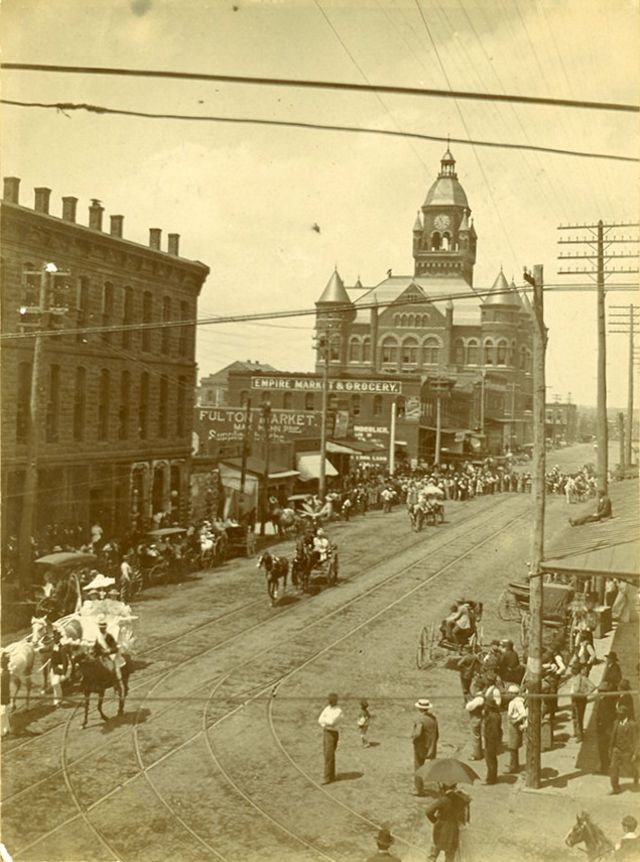
View of charity circus parade from Trust building looking west toward the court house, Dallas, Texas, 1895
View of Olive while snowbound, Texas, February 14, 1895
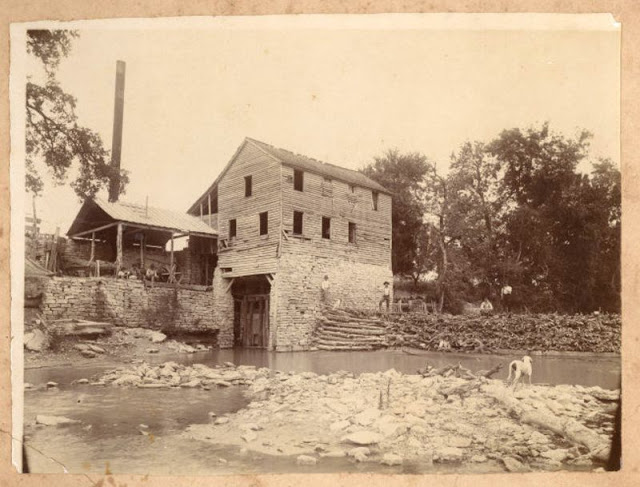
Lanham mill, Somervell County, Texas, 1896
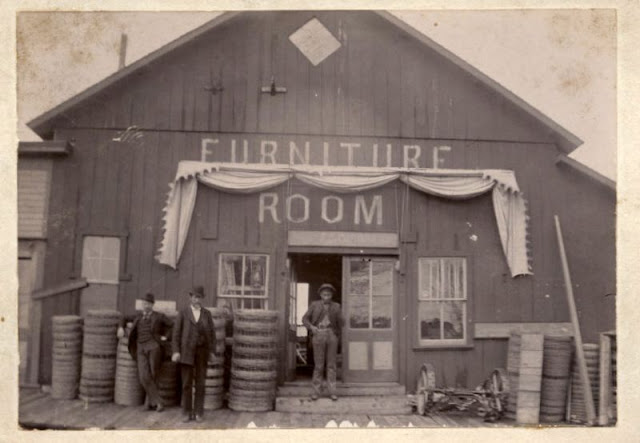
Furniture Room store, Sherman, Texas, 1899

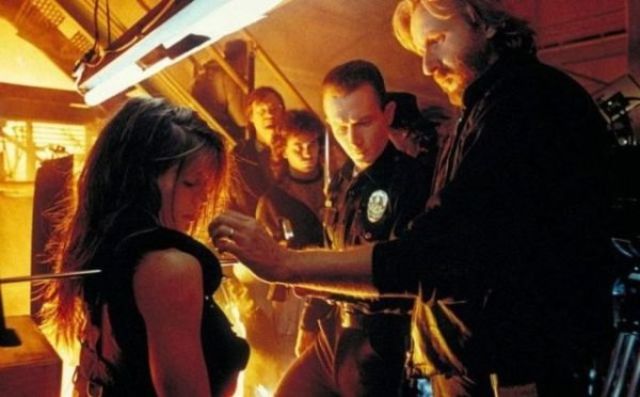
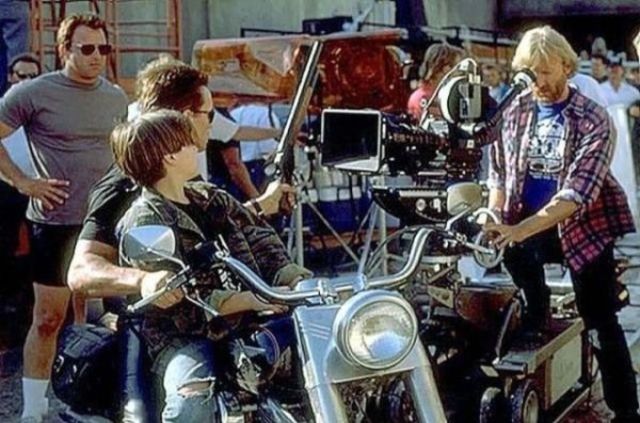
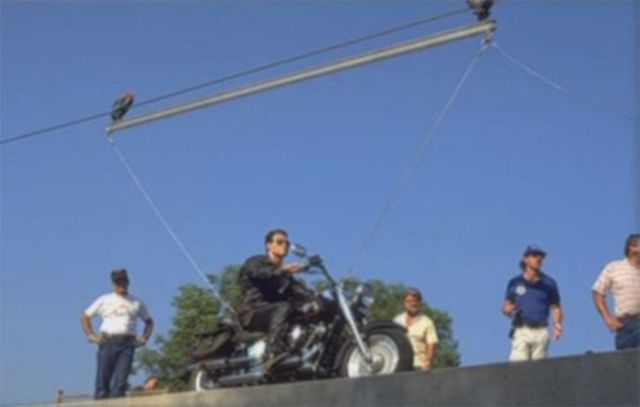
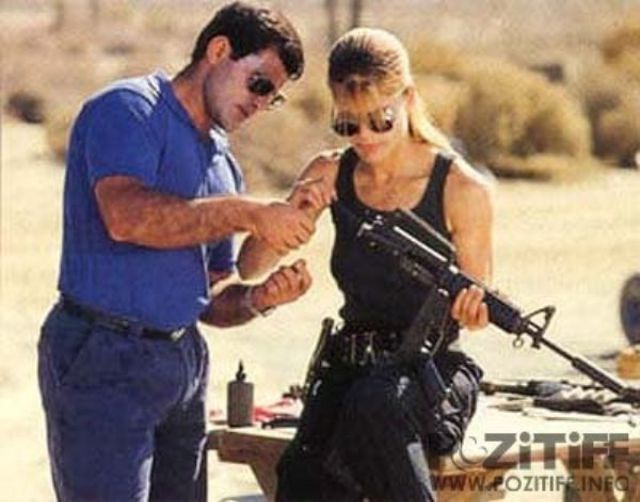
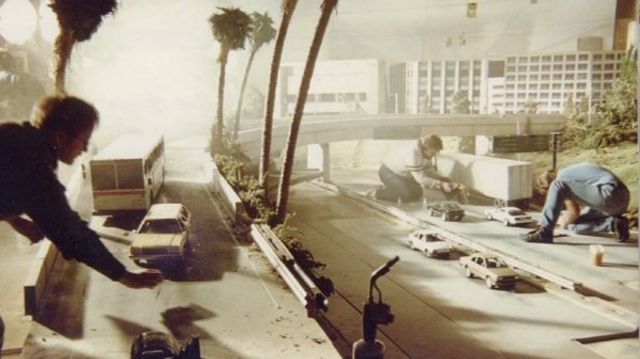
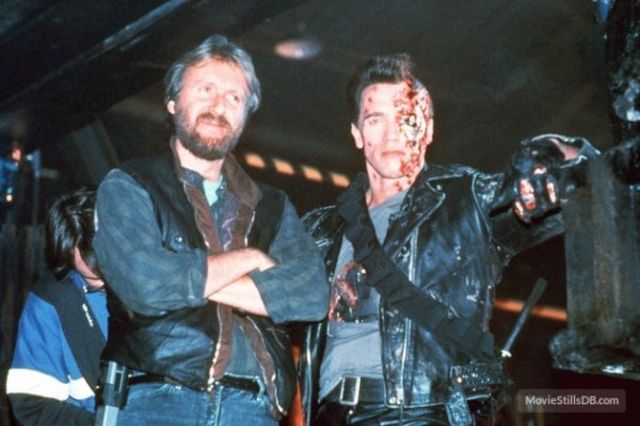
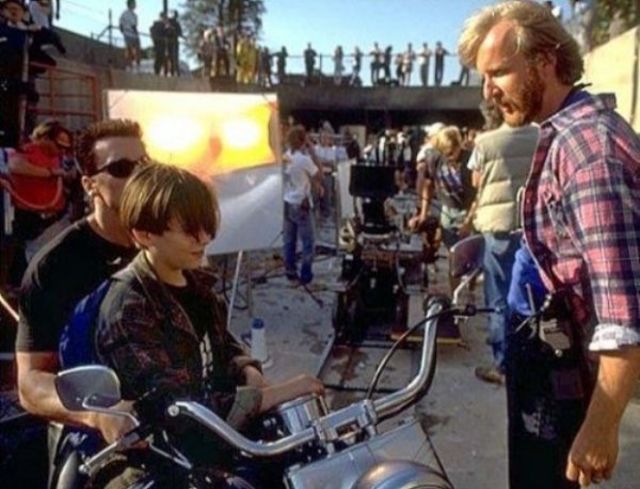
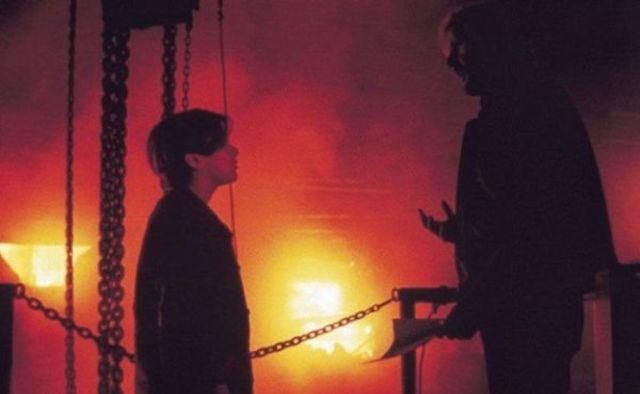
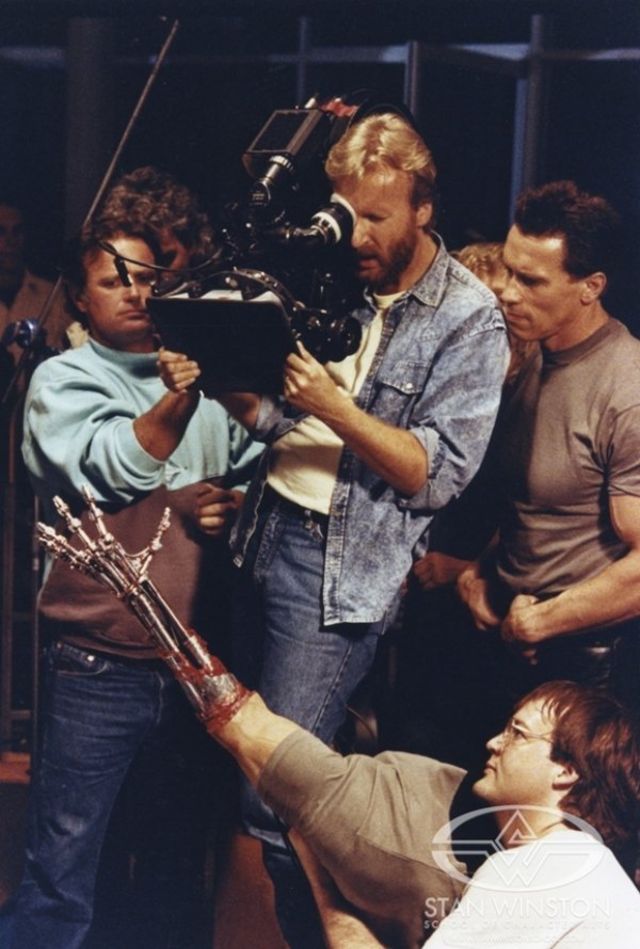
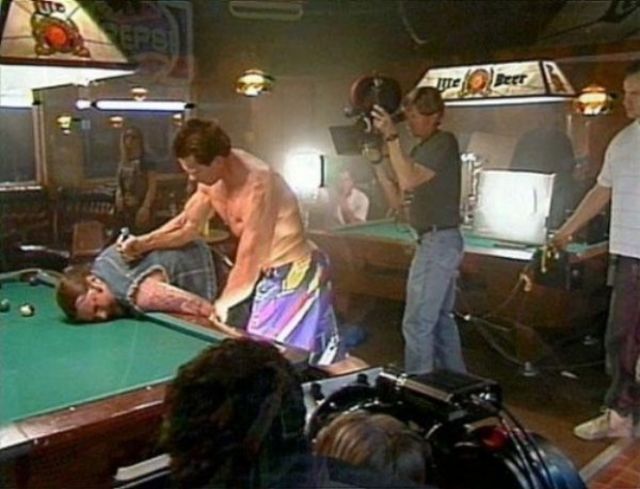
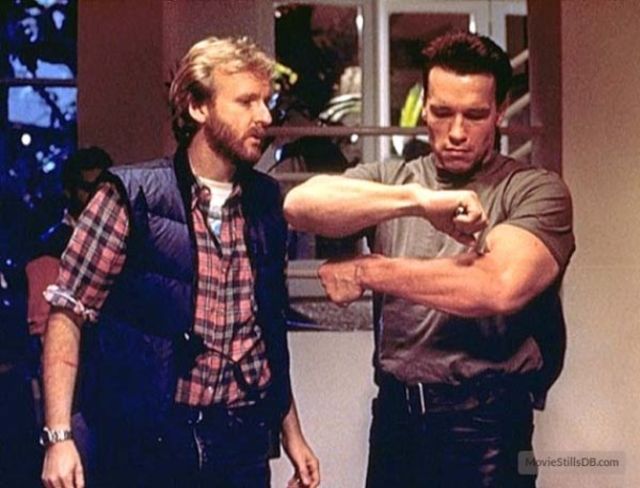
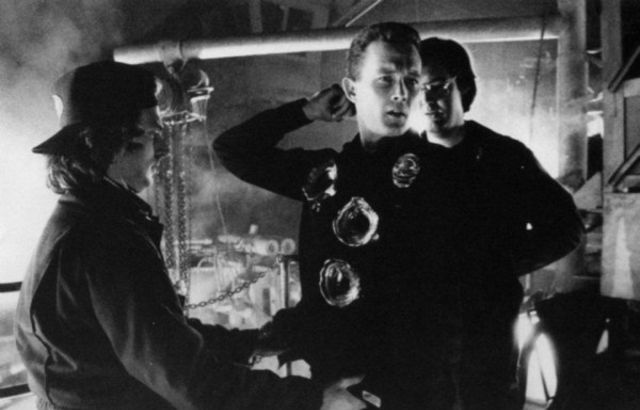
35 Amazing Behind the Scenes Photos From the Making of “Terminator 2: Judgment Day”

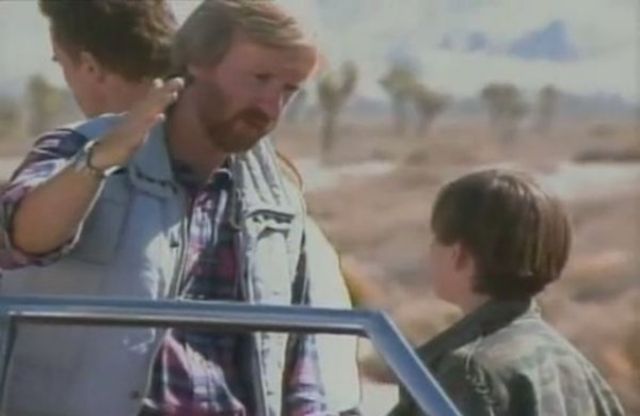
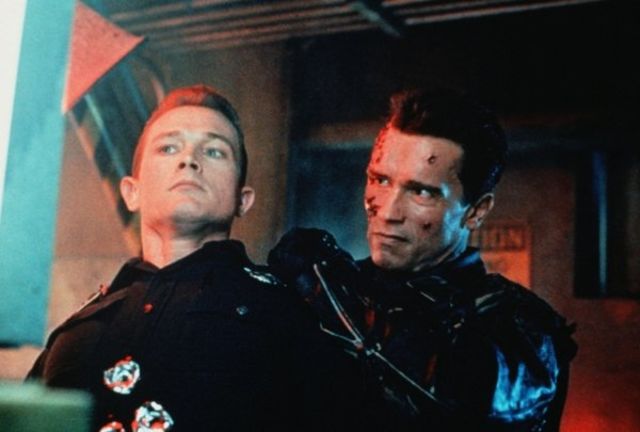
Terminator 2: Judgment Day is a 1991 science fiction action film, the second installment of the Terminator franchise and the sequel to The Terminator (1984). Directed by James Cameron and written by Cameron and William Wisher, Jr., it stars Arnold Schwarzenegger, Linda Hamilton, Robert Patrick, and Edward Furlong.

Terminator 2: Judgement Day was released in the United States on July 3, 1991. Its visual effects saw breakthroughs in computer-generated imagery, including the first use of natural human motion for a computer-generated character and the first partially computer-generated main character. It was a critical and commercial success and influenced popular culture, especially the use of visual effects in films.

The film received several accolades, including Academy Awards for Best Sound Editing, Best Sound Mixing, Best Makeup, and Best Visual Effects. The highest-grossing film of 1991 and of Schwarzenegger’s career, Terminator 2 has since been named by several publications such as the American Film Institute as one of the greatest action films, science fiction films, and sequels of all time.

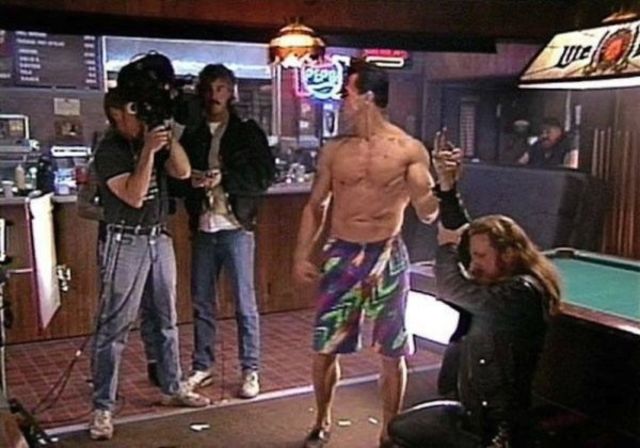
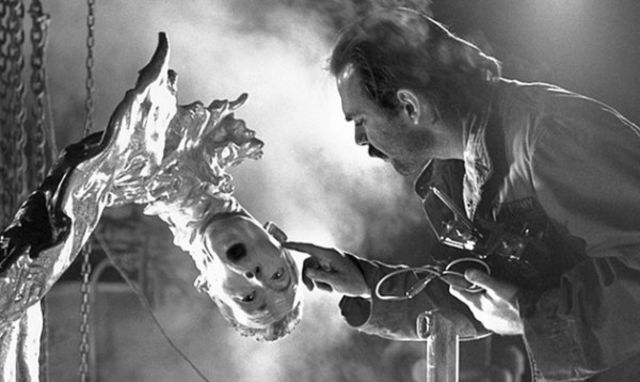
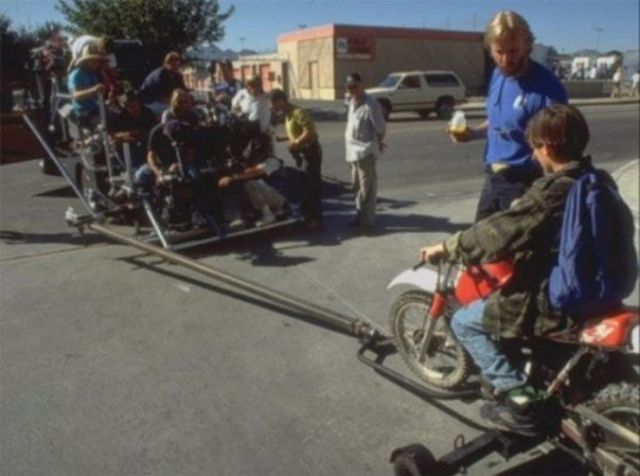
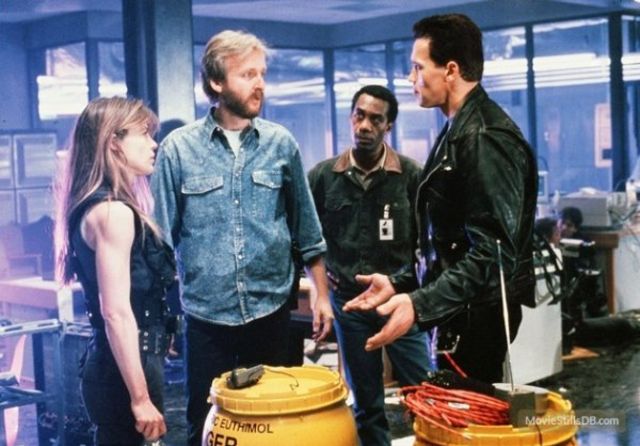
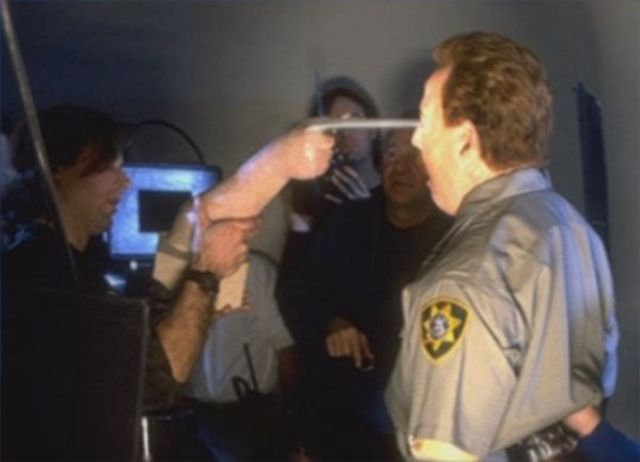
Below is a gallery of 35 behind the scenes photographs from the making of the Terminator 2.

42 Wonderful Color Photos Showing Life in Sweden During the Late 1950s

Björn Allard (1923-2006) was employed as a photographer at the Swedish National Heritage Board in the 1950s and 1960s. He took part in archaeological surveys and excavations to contribute documentary photographs. Since he held an academic degree in Nordic and comparative archeology, he was certainly well suited for the work.

An important part of Björn Allard’s tasks was to document at the Board’s culture-historical surveys and archaeological excavations in northern Sweden, due to the regulations of Swedish lakes and rivers at the expansion of hydropower and the construction of new power plants in the 1950s and 1960s.

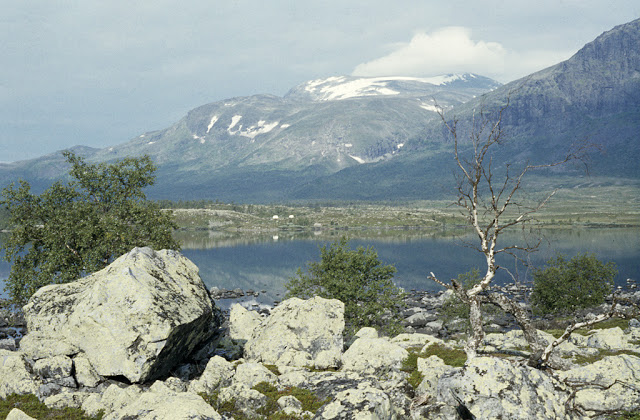
Five Swedish provinces will be represented in the album. From north to south: Lapland (Lappland), Ångermanland, Jämtland, Dalecarlia (Dalarna), Östergötland and Västergötland.

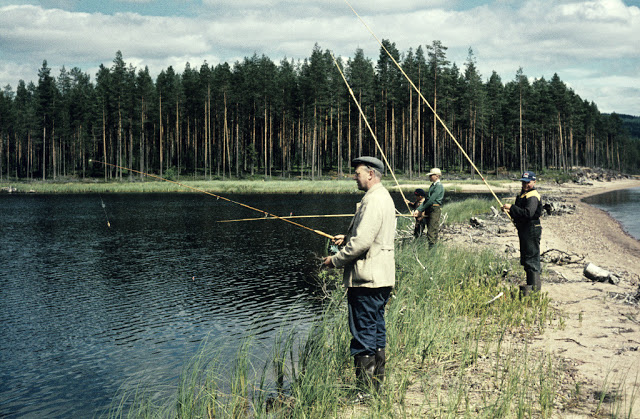
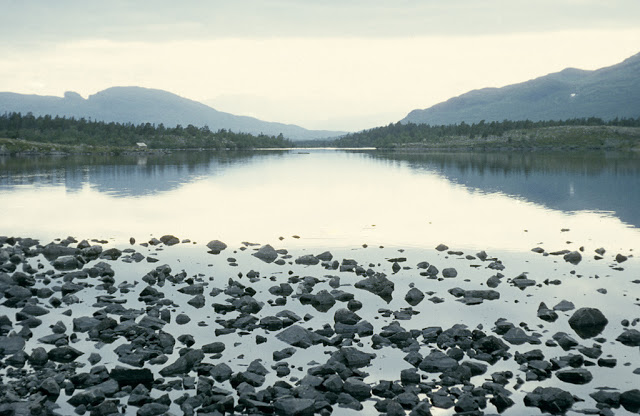
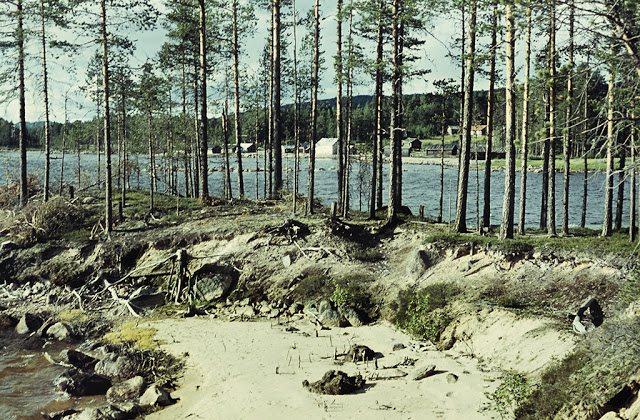
The images are taken between 1957 and 1959. They show landscapes, cultural environments in the countryside and archaeologists from the Swedish National Heritage Board at field work. Locals in northern Sweden, at work or at leisure, will appear now and then.

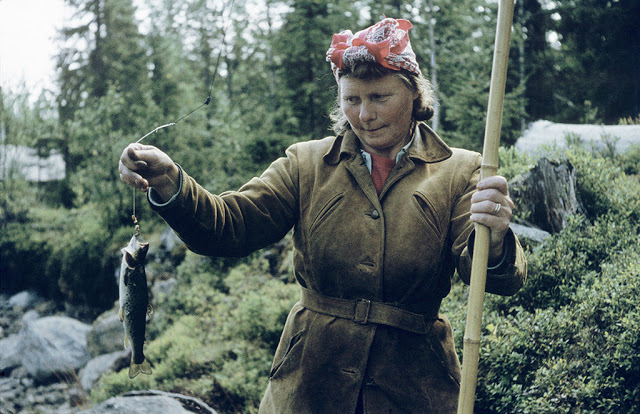
A woman fishing at lake Hökvattnet, Jämtland, Sweden, 1958
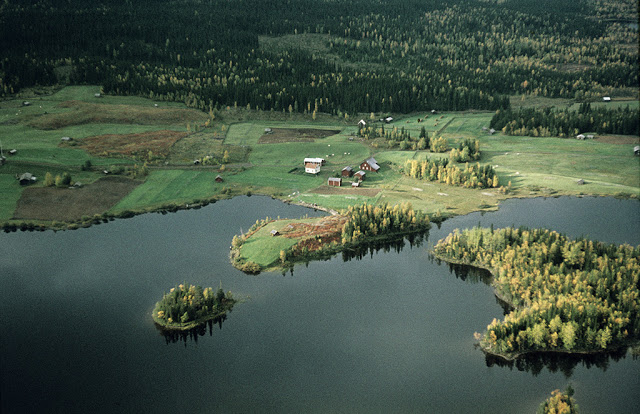
Aerial view, Hökvattnet, Jämtland, Sweden, 1958
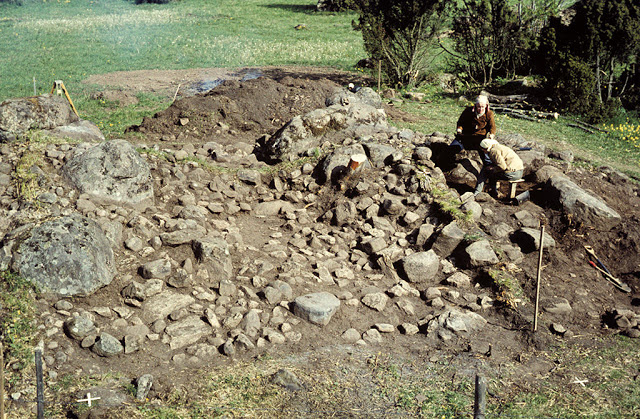
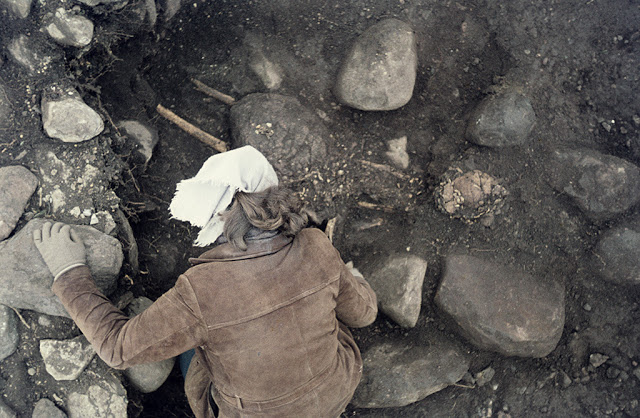
Archaeological excavation, Häggum, Västergötland, Sweden, 1958

Archaeological excavation, Häggum, Västergötland, Sweden, 1958
Archaeologist at work, Häggum, Västergötland, Sweden, 1958
Arranging a fire ladder for photographing, Häggum, Västergötland, Sweden, 1958
Boathouses by lake Tisjön, Dalarna, Sweden, 1957
Cleansing of archaeological site, Häggum, Västergötland, Sweden, 1958
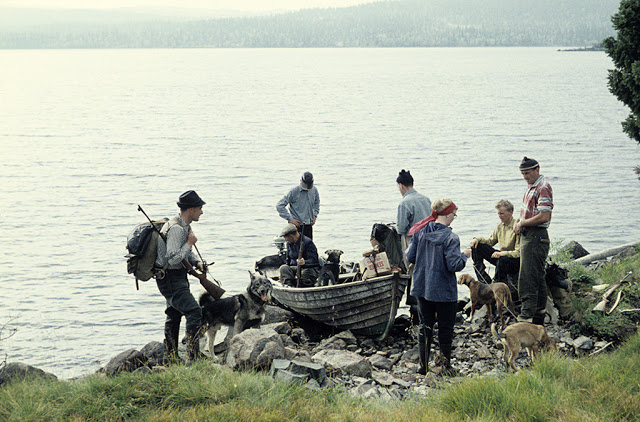
Elk hunters, Lakavattnet, Jämtland, Sweden, 1958
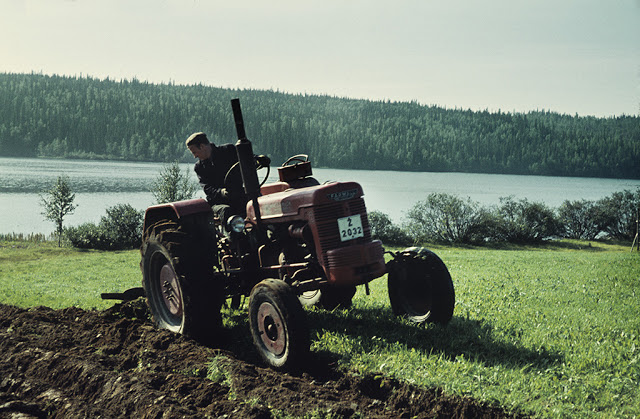
Farmer plowing, Hökvattnet, Jämtland, Sweden, 1958
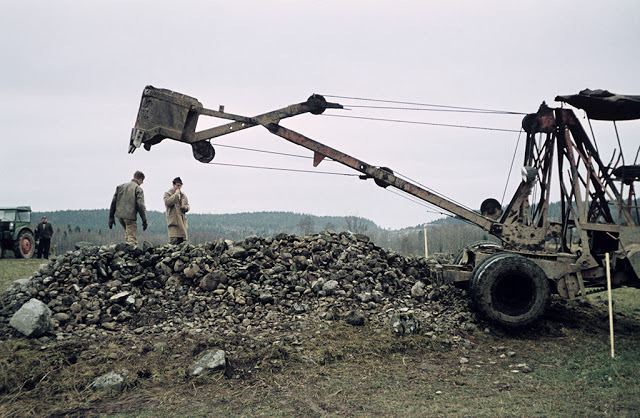
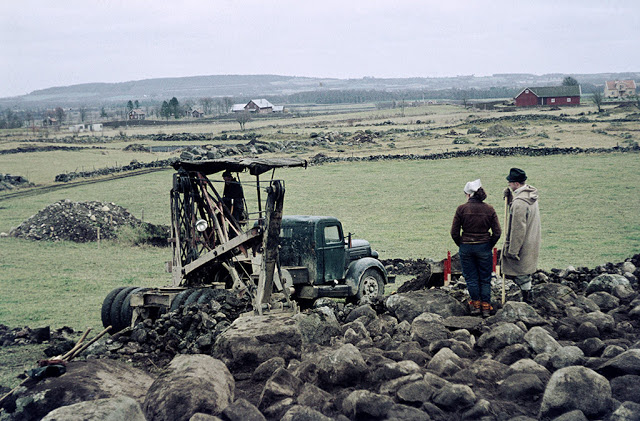
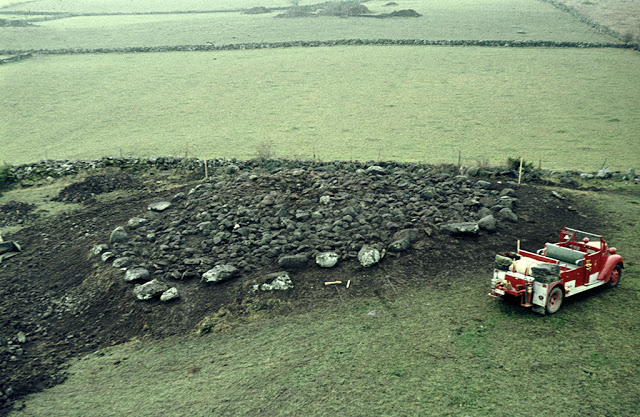
Fire engine at prehistoric mound, Häggum, Västergötland, Sweden, 1958
Fishing in lake Tisjön, Dalarna, Sweden, 1957
Fishing-nets, lake Satisjaure (Satihaure), Gällivare, Lappland, Sweden, 1958
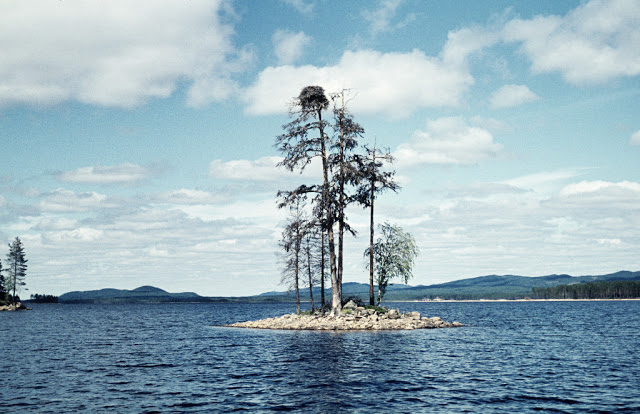
Fiskön (‘Fish island’) in lake Tisjön, Dalarna, Sweden, 1957
Girl and dog, Satisjaure (Satihaure), Gällivare, Lappland, Sweden, 1958
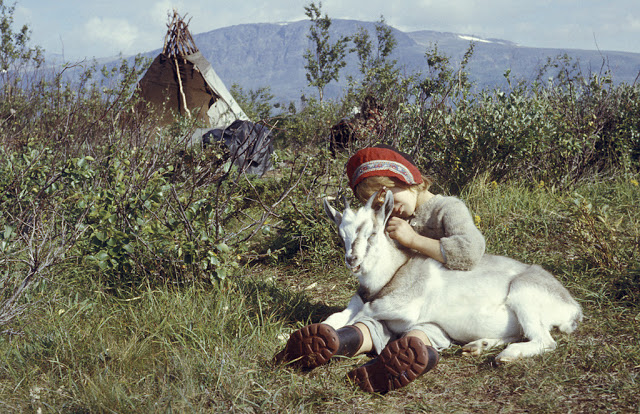
Girl and goat at Sami camp, Satisjaure (Satihaure), Gällivare, Lappland, Sweden, 1958
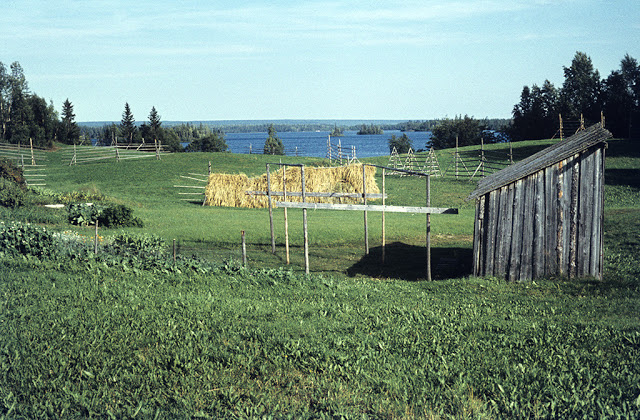
Hay-drying racks, Hökvattnet, Jämtland, Sweden, 1958
Junsterforsen (Junster rapids), Jämtland, Sweden, 1958
Lake Smalsjön, Dalarna, Sweden, 1957
Lake Tisjön, Dalarna, Sweden, 1957
Logs in Ångermanälven river at Hälla (Hielle), Åsele, Lappland, Sweden, 1959
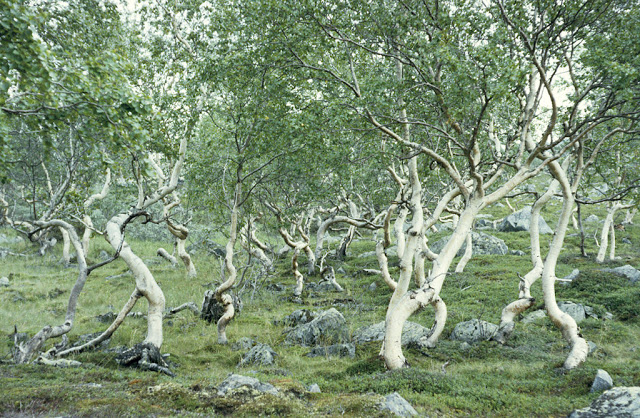
Mountain birches, Satisjaure (Satihaure), Gällivare, Lappland, Sweden, 1958
Mountain cattle, Hökvattnet, Jämtland, Sweden, 1958
Old cottage, Hökvattnet, Jämtland, Sweden, 1958
Old hut at Tisjölandet, Dalarna, Sweden, 1957
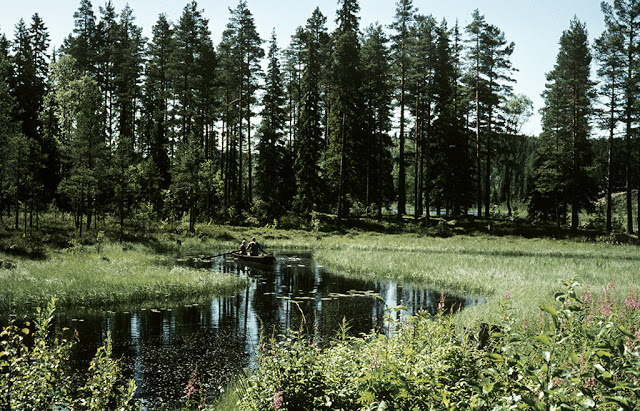
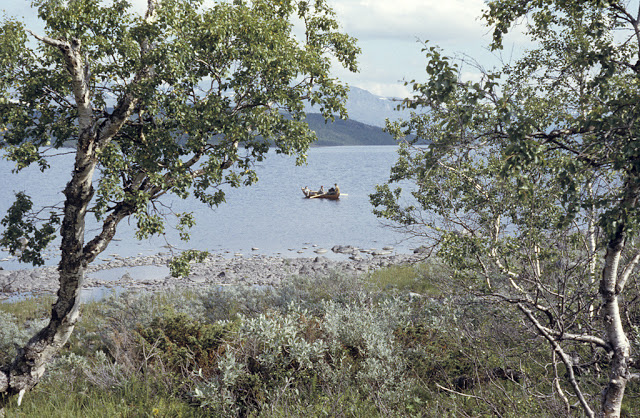
Rowboat on lake Satisjaure (Satihaure), Gällivare, Lappland, Sweden, 1958
Rowboat, lake Satisjaure (Satihaure), Gällivare, Lappland, Sweden, 1958
Sami camp, Satisjaure (Satihaure), Gällivare, Lappland, Sweden, 1958
Sami hut, Satisjaure (Satihaure), Gällivare, Lappland, Sweden, 1958
Satisjaure (Satihaure), Gällivare, Lappland, Sweden, 1958
Seaplane on lake Satisjaure (Satihaure), Gällivare, Lappland, Sweden, 1958
Sheep, Lakavattnet, Jämtland, Sweden, 1958
Shelter over archaeological excavation, Häggum, Västergötland, Sweden, 1958
Stone Age settlement at Tisjölandet, Dalarna, Sweden, 1957
Stone Age settlement, Hälla (Hielle), Åsele, Lappland, Sweden, 1959
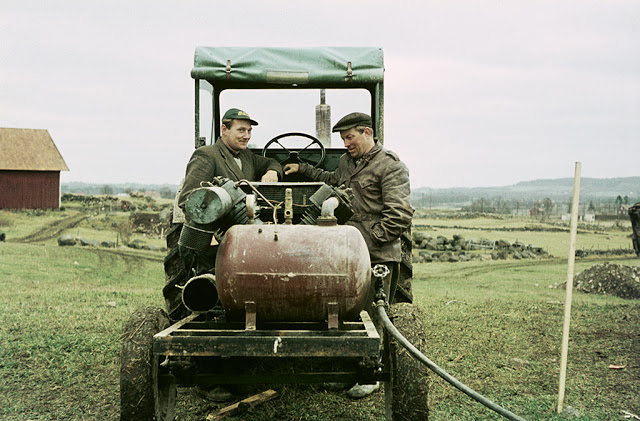
Two men on a tractor with a compressor, Häggum, Västergötland, Sweden, 1958

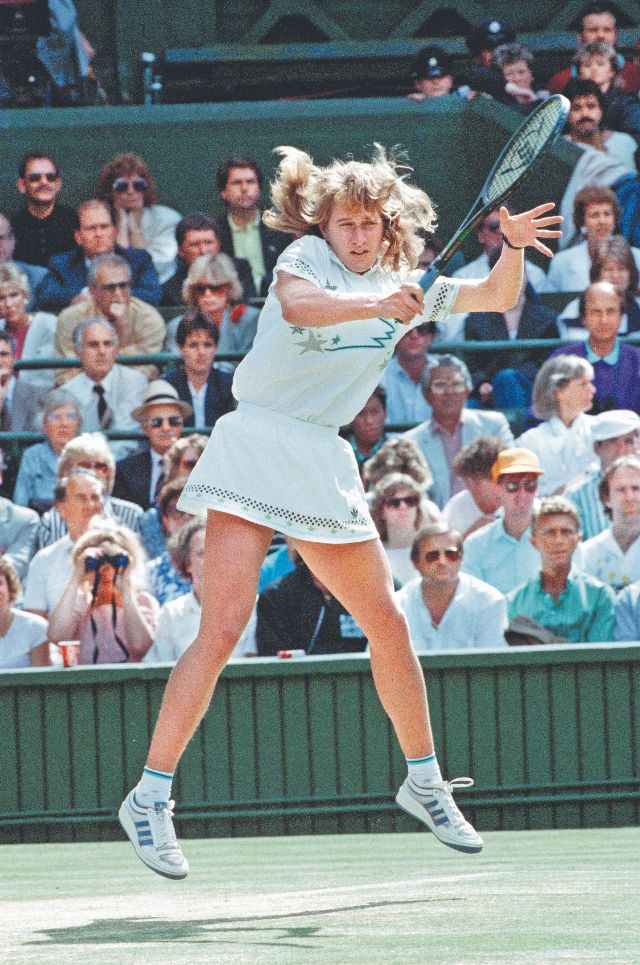
26 Wonderful Photos of Tennis Star Steffi Graf in the Late 1980s and 1990s

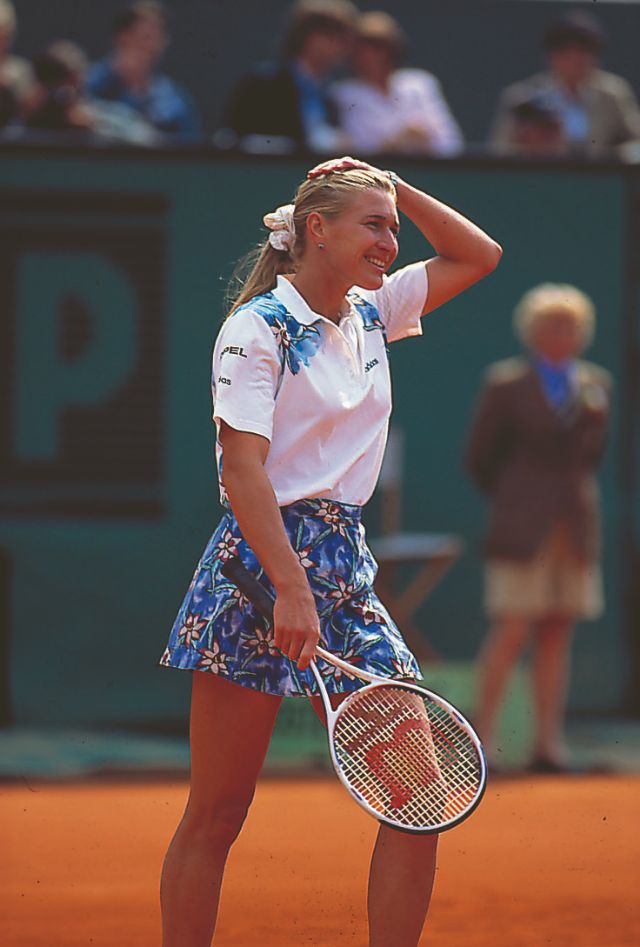
Steffi Graf, byname of Stephanie Maria Graf is a German former professional tennis player who dominated women’s tennis in the late 1980s and ’90s.
Graf began playing tennis with the encouragement of her father, who became her coach. At age 13 she became the second youngest player ever to earn an international ranking. In 1987 she won her first Grand Slam event, defeating Czech-born American Martina Navratilova at the French Open. In 1988 she became the third woman to win all four Grand Slam tournaments (the Australian Open, the French Open, Wimbledon, and the U.S. Open) in one calendar year, and she won a gold medal at the Olympic Games in Seoul—an unprecedented feat that became known as the “Golden Slam.”

Graf was known for her intensity, speed, and powerful forehand, and by the 1990s she had become one of the premier players in the world, winning multiple singles titles in the French Open (1987–88, 1993, 1995–96, 1999), Australian Open (1988–90, 1994), and U.S. Open (1988–89, 1993, 1995–96). Her seven victories at Wimbledon (1988–89, 1991–93, 1995–96) were second in number to only Navratilova’s nine. Soon after losing in the finals at Wimbledon in 1999, Graf, who had been plagued by injuries, retired from the sport.

Graf’s retirement did not remove her from the public spotlight. In 2001 she married fellow tennis great Andre Agassi, and the couple was involved in various charitable causes, including Children for Tomorrow, a nonprofit organization that Graf had founded in 1998 to aid children and families affected by war and other crises. Graf was inducted into the International Tennis Hall of Fame in 2004.

23 Vintage Photos of Actor Steve Reeves in the 1940s

Born in Glasgow, Montana in 1926, Steve Reeves was an American professional bodybuilder, actor, and philanthropist. He moved to California at age 10, developed an interest in bodybuilding at Castlemont High School, and trained at Ed Yarick’s gym in Oakland, California. After winning the Mr America title in Chicago in 1947, he was contacted by an agent who suggested he go into acting.

Reeves was famous in the mid-1950s as a movie star in Italian-made peplum films, playing the protagonist as muscular characters such as Hercules, Goliath, and Sandokan. At the peak of his career, he was the highest-paid actor in Europe.

From 1959 through 1964, Reeves went on to appear in a string of sword and sandal movies shot on relatively small budgets and, although he is best known for his portrayal of Hercules, he played the character only twice: in the 1957 film (released in the US in 1959) and its 1959 sequel Hercules Unchained (released in the US in 1960). By 1960, Reeves was ranked as the number-one box-office draw in twenty-five countries around the world.

Reeves decided to retire for several reasons: stress, his injury, and the decline in the market for his sort of movies. He had earned enough to retire and moved to his ranch in Oregon, which he purchased from Chandler Knowles.

In 2000, Reeves died from a blood clot after having had surgery two days earlier. He died at Palomar Hospital in Escondido, California, where his second wife had also died.

Many years before Hercules, these cool pics that captured a very young and handsome Steve Reeves in the 1940s.

Amazing Photos Showing SoCal’s Skate, Beach and Punk Scenes From the Late 1960s to the Early 1980s

Spot is a man of many talents. Besides serving as the album producer and sound engineer for punk bands like the Misfits and Black Flag, the photographer, who goes only by Spot, also snapped a treasure trove of photos that perfectly captured SoCal beach and punk rock life during the late 1960s to the early 1980s.
He started taking photography seriously in 1969. Spot grew up with magazines like LIFE and was inspired by the black and white journalistic photos he saw, and when he got a Pentax, he was inseparable with his camera. He started writing music articles for a local newspaper, the Easy Reader, and began taking photos for the outlet as well.

In 1982, Spot lost access to the darkroom he had been using to develop his pictures, and along with being so busy recording at the time, he gave up photography.

“I started taking photos in 1969,” Spot told in an interview. “My first camera got stolen in ’72 and I didn’t get another one til ’76 when I was living in Hermosa and writing for the Easy Reader. Then it became photo-journalism. I lost my darkroom in 1981 when Media Art closed down. But all that damn musical punkin’, rockin’ and sockin’ had happened and I didn’t have time or facilities for photography anymore.”

35 Photos of Croatian Survivors of The Sinai Express : European Exiles In Egypt (1944)

Otto Gilmore’s photographs are a “comprehensive, overall photographic study of El Shatt, the United Nations Relief and Rehabilitation Administration’s refugee camp for Yugoslavs in the Sinai, Egypt”. Gilmore was the camp in September 1944 at the behest of the US Farm Security Administration/Office of War Information.

Also there was Treva Edgerton, a worker with the United Nations Relief and Rehabilitation Administration (UNRRA), an international relief agency. His snapshots add texture to the story of Europeans who rode the Sinai Express. Croats left everything behind as the Germans approached their homes. El Shatt housed 30,000 refugees from Dalmatia. These people had been evacuated by the Allies ahead of a German invasion. Created on February 2, 1944, the camp was disbanded on March 20, 1946, after the war ended. The refugees left behind 825 graves of their comrades. An estimated 650 children were born in the camp.

50 Amazing Color Photographs Showing Life in Singapore During the 1960s

Singapore, officially the Republic of Singapore, is a sovereign island city-state in maritime Southeast Asia. It lies about one degree of latitude (137 kilometres or 85 miles) north of the equator, off the southern tip of the Malay Peninsula, bordering the Strait of Malacca to the west, the Singapore Strait to the south, the South China Sea to the east and the Straits of Johor to the north. The country’s territory is composed of one main island, 63 satellite islands and islets, and one outlying islet, the combined area of which has increased by 25% since the country’s independence as a result of extensive land reclamation projects. It has the third greatest population density in the world. With a multicultural population and recognising the need to respect cultural identities of the major ethnic groups within the nation, Singapore has four official languages; English, Malay, Mandarin, and Tamil. English is the lingua franca and numerous public services are available only in English. Multiracialism is enshrined in the constitution and continues to shape national policies in education, housing, and politics.

Singapore’s history dates back at least a millennium, having been a maritime emporium known as Temasek and subsequently as a major constituent part of several successive thalassocratic empires. Its contemporary era began in 1819 when Stamford Raffles established Singapore as an entrepôt trading post of the British Empire. In 1867, the colonies in Southeast Asia were reorganised and Singapore came under the direct control of Britain as part of the Straits Settlements. During the Second World War, Singapore was occupied by Japan in 1942, and returned to British control as a separate crown colony following Japan’s surrender in 1945. Singapore gained self-governance in 1959 and in 1963 became part of the new federation of Malaysia, alongside Malaya, North Borneo, and Sarawak. Ideological differences, most notably the perceived encroachment of the egalitarian “Malaysian Malaysia” political ideology led by Lee Kuan Yew into the other constituent entities of Malaysia – at the perceived expense of the bumiputera and the policies of Ketuanan Melayu – eventually led to Singapore’s expulsion from the federation two years later; Singapore became an independent sovereign country in 1965.

After early years of turbulence whilst lacking natural resources and a hinterland, the nation rapidly developed to become one of the Four Asian Tigers based on international trade and economic globalisation, integrating itself within the world economy through free trade with minimal to no trade barriers or tariffs, export-oriented industrialisation, and the large accumulation of received foreign direct investment, foreign-exchange reserves and assets held by sovereign wealth funds. A highly developed country, it is ranked joint-eleventh on the UN Human Development Index and has the second-highest GDP per capita (PPP) in the world. Identified as a tax haven, Singapore is the only country in Asia with a AAA sovereign credit rating from all major rating agencies. It is a major financial, maritime shipping and aviation hub, and has consistently been ranked as one of the most expensive cities to live in for expatriates and foreign workers. Singapore is placed highly in key social indicators: education, healthcare, quality of life, personal safety, infrastructure and housing, with a home-ownership rate of 88 percent. Singaporeans enjoy one of the longest life expectancies, fastest Internet connection speeds, lowest infant mortality rates and lowest levels of corruption in the world. The country has a retentionist stance for capital punishment, one of four in the developed world along with Japan, the United States and Taiwan. Singapore’s use of capital punishment for drug trafficking is a source of contention with non-governmental organisations.

Singapore is a unitary parliamentary republic with a Westminster system of unicameral parliamentary government, and its legal system is based on common law. While elections are free, the government under the People’s Action Party (PAP) wields significant control and dominance over politics and society, with limits on assembly, association, expression and the press except for the Speakers’ Corner; the PAP having ruled continuously since full internal self-government was achieved in 1959, with 83 out of 104 seats in Parliament as of the 2020 election, the rest of the elected seats being held by the Workers’ Party (WP). One of the five founding members of ASEAN, Singapore is also the headquarters of the Asia-Pacific Economic Cooperation (APEC) Secretariat, the Pacific Economic Cooperation Council (PECC) Secretariat, and is the host city of many international conferences and events. Singapore is also a member of the United Nations, World Trade Organization, East Asia Summit, Non-Aligned Movement, and the Commonwealth of Nations. (Wikipedia)

Here below is an amazing color photo collection of Singapore in the 1960s, before becoming a global commerce, finance and transport hub.

40 Rare Behind the Scenes Photos Showing the Making of ‘The Shining’

The Shining (1980) is creative director Stanley Kubrick’s intense, epic, gothic horror film and haunted house masterpiece – a beautiful, stylish work that distanced itself from the blood-letting and gore of most modern films in the horror genre. It is considered one of the greatest horror movies of all time.

The film’s source material from science-fiction/horror author Stephen King’s 1977 best-selling novel by the same name, bears little resemblance to Kubrick’s creation.

Kubrick’s quest for perfection was taken to new levels during the making of The Shining. Crew members broke down in tears and actors found themselves asked to do over 127 takes (The Guinness Book World record) for a single shot. Other stories include: Kubrick agonizing for months on the color of the titles in the opening credits; calling Stephen King obsessively at 3 AM asking him if he believed in God; frantically changing scenes at the last second; forcing Jack Nicholson to eat cheese sandwiches (which he hated) to portray disgust; and pushing actress Shelly Duvall’s sanity till her hair started falling out. Jack Nicholson was so disturbed by the way Shelly Duvall and Scatman Crothers were treated that he vowed never to work on a Kubrick film again.

Jack Nicholson and Shelley Duvall.
2nd Unit camera operator Jeff Blyth, Jeff’s wife, and their camera assistant doubling for the Torrance family in many unused shots of the car and wearing costumes from the film. Note their “Tony” finger poses.
The facade of the Overlook Hotel set under construction on the backlot at EMI Elstree Studios.
Lisa and Louise Burns, who portrayed the Grady Sisters, prepare for a shot on the games room set. Kelvin Pike operates the camera and Camera Assistant Peter Robinson holds the slate.
Lisa and Louise Burns as the Grady Sisters.
Steadicam inventor Garrett Brown takes actor Danny Lloyd for a ride on his Steadicam just outside the hedge maze set on the backlot at MGM Elstree Studios. Brown discovered that Danny was about the same weight as the camera, so he would often give the boy rides in a makeshift swing hanging from the device.
Stanley Kubrick, Shelley Duvall, Danny Lloyd sits in the lap of his on-set coach and longtime Kubrick assistant Leon Vitali. To the left, Kubrick’s daughter Vivian holds the camera she used to film the Making of The Shining documentary. Behind them, Steadicam inventor Garrett Brown stands with camera operator Kelvin Pike and another unidentified crew member.
Actor Danny Lloyd (Danny Torrance) on set.
Fake blood splashed on the walls of the hallway set where the Grady Sisters appear.
Stanley Kubrick, Jack Nicholson (Jack Torrance), and Shelley Duvall (Wendy Torrance) rehearse.
Stanley Kubrick and Jack Nicholson on set.
Joe Turkel (Lloyd), Stanley Kubrick, and Jack Nicholson on set.
Stanley Kubrick reviews a take with Jack Nicholson on the Gold Room set. Watching from behind are Kubrick assistant Leon Vitali, actor Joe Turkel, Camera Operator Kelvin Pike and Director of Photography John Alcott.
Philip Stone (Delbert Grady) and Jack Nicholson between takes.
Jack Nicholson on set.
Jack Nicholson, (in reflection) Stanley Kubrick and daughter, Vivian, on set.
Jack Nicholson and Stanley Kubrick on set.
Shelley Duvall, Jack Nicholson, and crew on set.
Stanley Kubrick and Shelley Duvall on set.
Stanley Kubrick and Jack Nicholson during continuity Polaroid.
A combination of real axes and axe handles with lightweight fiberglass heads was used during production.
Crew member between takes.
Jack Nicholson and Stanley Kubrick watching video playback.
Filming Dick Hallorann’s death scene on the lobby set. Stanley Kubrick composes the insert shot of the axe striking Hallorann’s chest. A special effects artist kneeling to the right of Jack Nicholson holds a bag of fake stage blood, with tubing to deliver the blood running up the handle of the axe.
Stunt Double for Scatman Crothers (Dick Hallorann).
Crew between takes.
Scatman Crothers on set.
Jack Nicholson on set.
Stanley Kubrick, Jack Nicholson, Steadicam inventor Garrett Brown, Kubrick’s daughter, Vivian, Continuity Supervisor June Randall, and others.
Shelley Duvall and Danny Lloyd during continuity Polaroid.
Stanley Kubrick and Shelley Duvall.
Jack Nicholson on the exterior set of the Overlook Hotel at EMI Elstree Studios.
Grip Dennis Lewis, Assistant Director Brian Cook, Camera Operator Kelvin Pike, and Camera Assistant Douglas Milsome set up a shot for in the exterior hedge maze set on the backlot of Elstree Studios.
Jack Nicholson posing for his final moment frozen in the snow. This side angle reveals the crude bracing system of wood and styrofoam that was built to hold Nicholson as still as possible for the lengthy shot.
Jack Nicholson posing for his final moment frozen in the snow.
Jack Nicholson’s personal working copy of the screenplay, on display at the California Museum in Sacramento, CA in 2008.

27 Fascinating Scooter and Motorcycle Ads From the 1960s

Before ‘political correctness’ was ever invented, the motorcycle industry loved to target males (sorry ladies) using some good old fashioned ‘sex sells’ tactics. They’d usually do it with headlines filled with sexual innuendo and many, many beautifully seductive women. Women that stared you in the eye and said “Purchase this fine motorbike and you will find yourself swimming in a ocean of pre-feminist, lose-moraled women in see-through clothing without any buttons.”

Here’s a collection of magazine ads from the 1960s and a few from the early ’70s that pay homage to those golden days of advertising. Enjoy…
Yesterday Today

Bringing You the Wonder of Yesterday - Today

Skip to content ↓