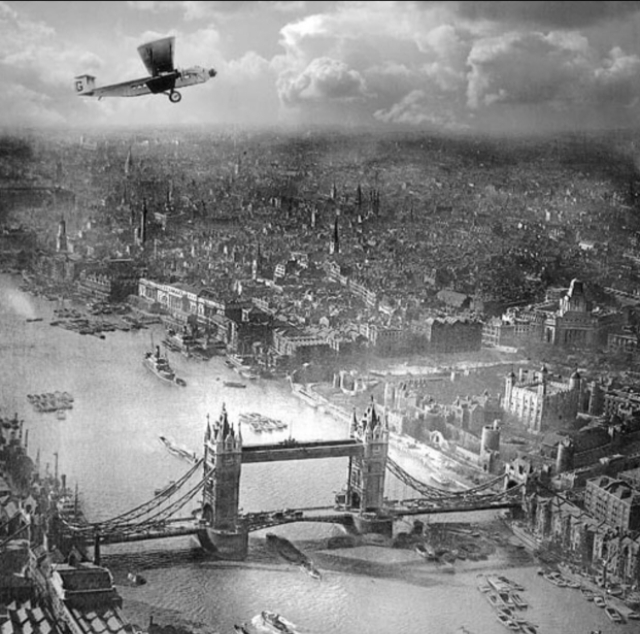
Creating spectacular images in the face of technical and physical adversity, Captain Alfred G Buckham (1879-1956) was the foremost aerial photographer of his day. Between 1908 to the early 1930s, Buckham created aerial portraits that are awe-inspiring, poetic and works of technical brilliance.
During the First World War he was Captain in the Royal Naval Air Service. However, by 1919 he was discharged as disabled, the result of nine crashes that left him breathing through a tube in his neck for the rest of his life – but that didn’t stop him risking loss of consciousness to capture spectacular images.
These extraordinary aerial shots of London were taken by Buckham in the 1920s with a heavy plate camera, leaning perilously out of the aeroplane, as he told, “I always stand up to make an exposure and, taking the precaution to tie my right leg to the seat, I am free to move about rapidly, and easily, in any desired direction; and loop the loop and indulge in other such delights, with perfect safety.”
Subscribe to continue reading
Become a paid subscriber to get access to the rest of this post and other exclusive content.
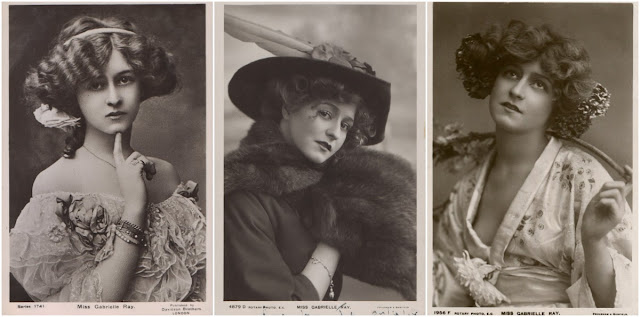
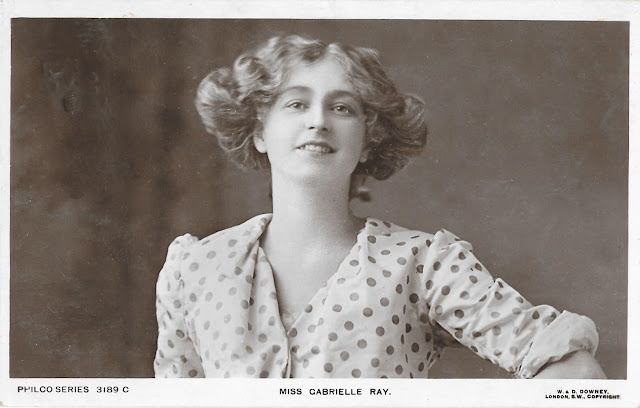
Gabrielle Ray was an English stage actress, dancer and singer, best known for her roles in Edwardian musical comedies. She was considered one of the most beautiful actresses on the London stage and became one of the most photographed women in the world.
Gabrielle Ray, real name Gabrielle Elizabeth Clifford Cook, was born in Stockport, Cheshire (UK) on April 28, 1883. Her stage career began at the delicate age of only ten years old, playing a succession of juvenile roles in the many theaters that then existed in London’s West End. Her debut appears to have been in the musical play Miami at the Royal Princess’s Theatre, Oxford Street, in October 1893.
The following year she appeared in A Celebrated Case at the Elephant and Castle, a particularly tough venue which catered exclusively for the working classes who were not slow to show their appreciation, or vent their disapproval of what they saw. Gabrielle played the daughter of the wronged heroine of the piece.
Her first big break came when she was spotted by touring company manager Ben Greet whilst performing in the pantomime Sinbad the Sailor at the Hammersmith Lyric Opera House in 1899. Impressed by her talent, Greet signed up the 16 year old to play Mamie Clancy in his touring companies production of The Belle of New York, a musical comedy. This was followed by a provincial tour in another Greet production, playing Dolly Twinkle in The Casino Girl before returning to the Lyric in 1902 play the lead in the pantomime Little Red Riding Hood.
By now, at age 19, the young girl had grown into a stunningly attractive young woman. A vision of loveliness with bright blue eyes and golden blonde hair who enchanted her audience from the moment she appeared on stage. Present at the opening night was the famous theatre manager George Edwardes, whose Gaiety Theatre was one of London’s top venues. Recognizing her as a star in the making Edwardes wasted no time in contracting her that very night to join his company on completion of her engagement at the Lyric.
Gabrielle’s first engagement for Edwardes was as understudy to Gertie Millar, only four years her senior but already a renowned musical/comedy performer, in ‘The Toreador’ at the Gaiety. When the Gaiety closed for refurbishment in the Autumn of 1903, Edwardes engaged Gabrielle to take over from Letty Lind to end the run of The Girl from Kays at the Apollo.
When the Gaiety reopened on October 26, 1903, with a royal premiere of The Orchid, attended by Their Majesties King Edward VI and Queen Alexandra, Gertie Millar again played the lead whilst Gabrielle returned not as understudy, but to play the major role of Thisbe which included a solo song-and-dance number that Gabrielle made one of the highlights of the show.
By now Gabrielle’s success was assured and she continued to perform for Edwardes in a string of successful productions, including his biggest hit, a reworking of Franz Lehar’s The Merry Widow which opened at Edwardes second theatre, Daly’s on June 8, 1907. Lily Elsie played the lead but Gabrielle’s major role as Frou Frou included a whirling dance routine with handstands and high kicks performed on a table held head-high by four men that she again made into a show-stopper.
In 1912 Gabrielle announced her retirement from the stage in order to marry Eric Loder. Thousands of spectators who turned up to see the spectacle at St Edwards Roman Catholic Church in Windsor on February 29, 1912 were disappointed when the bride failed to arrive and the wedding was cancelled. Gabrielle later explained that she could not go through with the wedding in front of the mass crowd of waiting newspaper reporters and socialites. The couple were married in a private ceremony the next day. It was not to be a match made in heaven, however, and she split from him after only two years.
Following the break-up of her marriage Gabrielle returned to the stage in 1915, but the Theatre was changing as cinema seduced its audiences away. The death that year of her mentor George Edwardes, and her own emotional scars from her broken marriage affected her deeply. Still, she appeared in two more major West End productions, Betty at Daly’s and Flying Colours at The Hippodrome before ending her career appearing spasmodically in provincial pantomimes and variety tours.
At the height of her fame Gabrielle had been a much admired and frequently photographed musical comedy star who was feted as being “the most beautiful woman in the United Kingdom.” Never a brilliant actress, which had limited her to mainly supporting roles, it was her beauty and her dancing which had brought her fame and fortune. She had a graceful fluidity coupled with an acrobatic prowess that made her dancing nothing less than sensational. She was also a shrewd businesswoman, when she and Lily Elsie each signed exclusive photo contracts with Foulsham and Banfield (who produced the Rotary Photographic postcards series) Gabrielle negotiated for herself four times the commission paid to Elsie, despite being the lesser star.
Tragically, as her career waned a damaging combination of depression and alcoholism brought about a total breakdown in health. She was helped by the financial support which she continued to receive as part of the marriage settlement from her ex-husband, Eric loder, but in 1936 she suffered a total nervous breakdown which led to her remaining institutionalized in a mental hospital for nearly forty years.
Gabrielle Ray died, childless and alone, at the age of 90 on May 21, 1973.
Subscribe to continue reading
Become a paid subscriber to get access to the rest of this post and other exclusive content.
Eduard van der Elsken (1925–1990) was a Dutch photographer and filmmaker. His imagery provides quotidian, intimate and autobiographic perspectives on the European zeitgeist spanning the period of the Second World War into the nineteen-seventies in the realms of love, sex, art, music (particularly jazz), and alternative culture.
He described his camera as “infatuated,” and said: “I’m not a journalist, an objective reporter, I’m a man with likes and dislikes.” His style is subjective and emphasizes the seer over the seen; a photographic equivalent of first-person speech.
Over the course of his 40-year career, Van der Elsken took around 100,000 photographs, “collecting my kind of people.” Take a look at these incredible pictures of the people of Amsterdam taken by Van der Elsken in the 1960s and 1970s:
Subscribe to continue reading
Become a paid subscriber to get access to the rest of this post and other exclusive content.
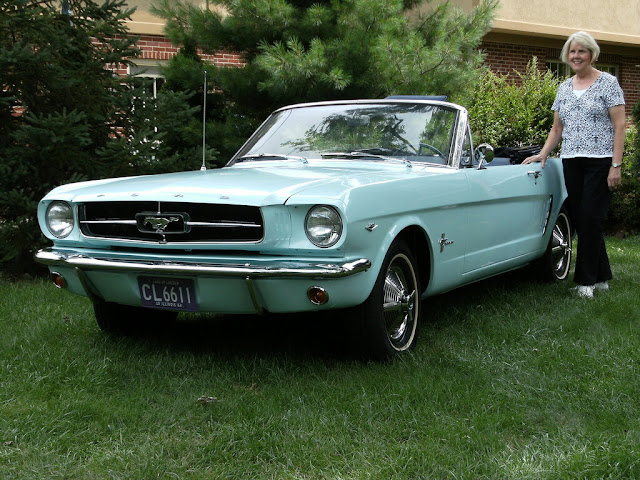
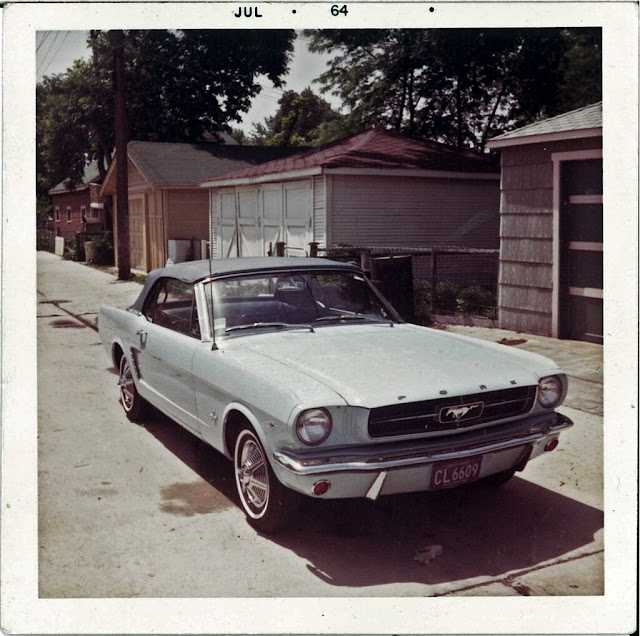
On April 15, 1964, two days before the Ford Mustang was officially supposed to go on sale, one mistakenly left the dealership. The lucky new owner, the first person to buy a Mustang was Gail Wise, a 22 year old school teacher from Chicago. Her parents let her the money after she landed her new job, but had no way to get to and from the school she was to teach at. She head to a local dealership in search of a convertible. When she expressed her desires she was disheartened to learn no drop tops were in stock. Perhaps seeing her dismay, the salesman told her he had a special surprise and led her to a backroom. Not sketchy at all…
Much to her relief she found a baby blue Ford Mustang convertible. The car had yet to be released to the public, and the salesman knew the sale shouldn’t occur, yet. But what’s a couple days? Gail offered to pay full price for the car, $3,447.50, without even taking it for a test drive. No salesman can say no to that.
She said that at the dealership, she told the salesman that she wanted a convertible but he didn’t have one on the floor. Instead, he invited her to the backroom for a special surprise. “In the backroom under the tarp was this skylight-blue Mustang,” Gail Wise told ABC News. “I was excited. It was sporty. It had bucket seats [and a] transmission on the floor. I said, ‘Oh, yes! I want it.’”
She left to many stares and smiles, as many had never seen the car in concept form or otherwise. It should be said, this was not the first Mustang built, just the first one publicly sold.
“I was excited I had bought a new car,” Gail Wise said in an earlier interview with Ford Motor Co. “But, when everybody was staring at me and the car, I was like ‘Wow! What did I buy?’ I was really impressed. I felt like a movie star.”
After the ‘Stang sat for more than 20 years, the car received a full restoration in the early 2000s. Gail still owns the car to this day.
Subscribe to continue reading
Become a paid subscriber to get access to the rest of this post and other exclusive content.
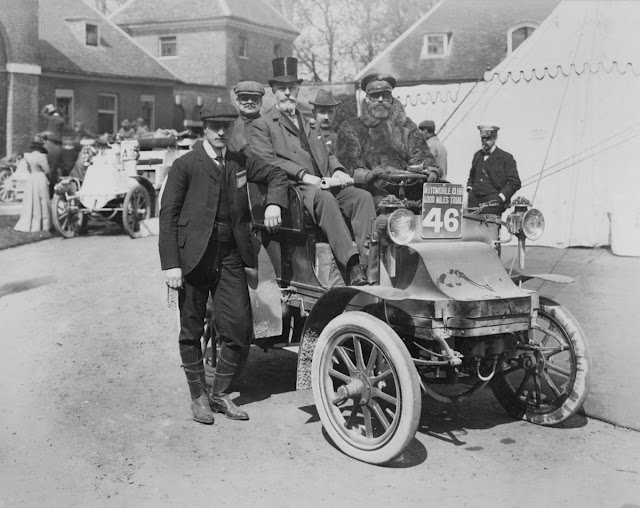
In 1900, automobiles weren’t much more impressive than the horse-drawn carriages they were meant to replace. Internal combustion engines offered about 12 horsepower, but they were also loud, dirty, and unreliable. In a public effort to dispel that image—or at least the unreliable part—the Automobile Club of Great Britain and Ireland organized the 1,000 Mile Race of 1900.
London to Edinburgh and back again, 1000 miles in only 20 days, to show just what the motor car could do. The Thousand Mile Trial was a resounding success. More than half of the participants finished and, despite the insistence of some drivers on taking liqueurs with lunch, the only casualties were an unfortunate dog and an ‘unmanageable’ horse.
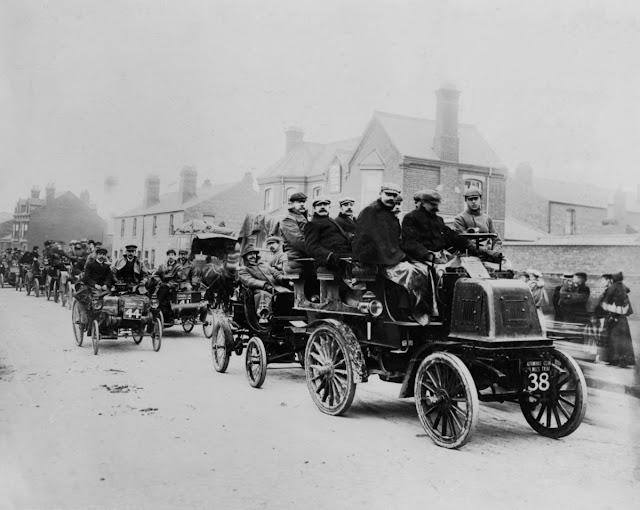
Between April 23 and May 12, 65 cars raced throughout the UK, pausing during the marathon for four hill climbs and one speed trial. According to a contemporary account of the race in the Brisbane Courrier, the goal was to prove the car was “a serious and trustworthy means of locomotion; not a toy dangerous and troublesome alike to the public and its owner.”
It was an ambitious route. The contestants started in London, crossing through Bristol, Birmingham, and Manchester on the way north to Edinburgh. They hit Newcastle, Sheffield, and Nottingham on the trip back to London, covering roughly 100 miles each day, according to Grace’s Guide, a non-profit project that documents British industrial history.
By all accounts, the race was a success. The Courrier reported that 46 of the cars that started the race made it back to London. Grace’s Guide puts that number at 35, but even that is quite impressive, especially considering the only casualties were one dog and “one unmanageable horse,” which broke its leg in a collision with a car and had to be destroyed. The race was won by Charles Stewart Rolls (as in Rolls-Royce), who drove a 12-horsepower Panhard that topped out at 37.63 mph.
Subscribe to continue reading
Become a paid subscriber to get access to the rest of this post and other exclusive content.
Born 1916 in San Diego, California, American actor Gregory Peck began appearing in stage productions, acting in over fifty plays and three Broadway productions. He first gained critical success in The Keys of the Kingdom (1944) which earned him his first Academy Award nomination. He starred in a series of successful films, including romantic-drama The Valley of Decision (1944), Alfred Hitchcock’s Spellbound (1945), and family film The Yearling (1946).
Peck reached global recognition in the 1950s and 1960s, appearing back-to-back in the book-to-film adaptation of Captain Horatio Hornblower (1951) and biblical drama David and Bathsheba (1951). He starred alongside Ava Gardner in The Snows of Kilimanjaro (1952) and Audrey Hepburn in Roman Holiday (1953), which earned him a Golden Globe award.
Other notable films in which he appeared include Moby Dick (1956, and its 1998 mini-series), The Guns of Navarone (1961), Cape Fear (1962, and its 1991 remake), The Omen (1976), and The Boys from Brazil (1978). Throughout his career, he often portrayed protagonists with “fiber” within a moral setting. He won the Academy Award for Best Actor for his performance as Atticus Finch in To Kill a Mockingbird (1962), an adaptation of the modern classic of the same name which revolved around racial inequality, for which he received universal acclaim.
Peck was one of the most popular film stars from the 1940s to the 1960s. In 1999, the American Film Institute named Peck among 25 Greatest Male Stars of Classic Hollywood Cinema, ranking him at No. 12. He was also active in politics, challenging the House Un-American Activities Committee in 1947 and was regarded as a political opponent by President Richard Nixon. President Lyndon B. Johnson honored Peck with the Presidential Medal of Freedom in 1969 for his lifetime humanitarian efforts.
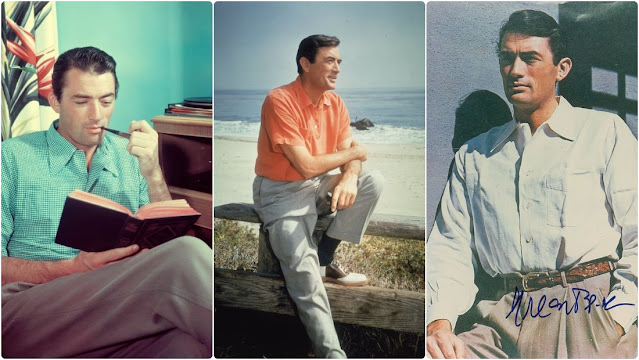
Peck died in his sleep from bronchopneumonia in 2003 at the age of 87. Take a look at these vintage photos to see portrait of a young and handsome Gregory Peck in the 1940s and 1950s.
Subscribe to continue reading
Become a paid subscriber to get access to the rest of this post and other exclusive content.
Eye of the Devil is a 1966 British mystery/horror film with occult and supernatural themes directed by J. Lee Thompson and starring Deborah Kerr, David Niven and Sharon Tate.
The film is set in rural France and was filmed at the Château de Hautefort and in England. Eye of the Devil is based on the novel Day of the Arrow by Robin Estridge and was initially titled Thirteen.
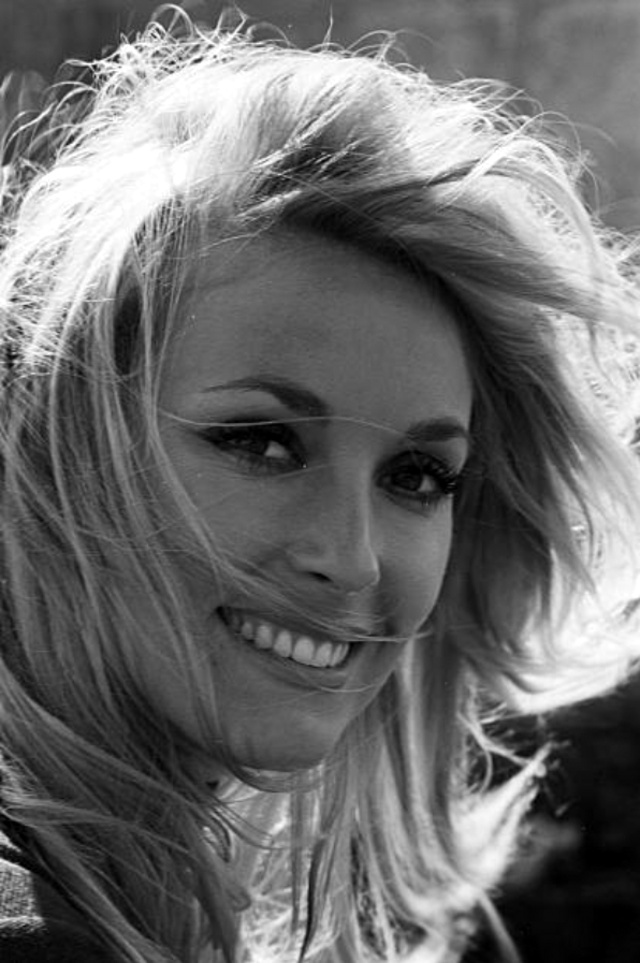
These gorgeous photos of American actress Sharon Tate, aged 22, were taken by photographer Philippe Le Tellier. She has just been signed for a co-starring role in the new MGM film, Eye of the Devil, pictured at her flat in Eaton Square, London, Friday 17th September 1965.
Sharon Marie Tate Polanski (née Tate; January 24, 1943 – August 9, 1969) was an American actress and model. During the 1960s, she appeared in advertisements and small television roles before appearing in films as well as working as a model. After receiving positive reviews for her comedic and dramatic acting performances, Tate was hailed as one of Hollywood’s most promising newcomers.
She made her film debut in 1961 as an extra in Barabbas with Anthony Quinn. She next appeared in the horror film Eye of the Devil (1966). Her first major role was as Jennifer North in the 1967 film Valley of the Dolls, which earned her a Golden Globe Award nomination. That year, she also performed in the film The Fearless Vampire Killers, directed by Roman Polanski, whom she married the following year. Tate’s last completed film, 12+1, was released posthumously in 1969.
On August 9, 1969, Tate and four others were murdered by members of the Manson Family, a cult, in the home she shared with Polanski. She was eight-and-a-half months pregnant.
Subscribe to continue reading
Become a paid subscriber to get access to the rest of this post and other exclusive content.
It’s always fascinating to compare food advertisings then and now. Back then, pork, beef and chicken were three basic food groups in America, whereas today people have become more conscious of diet and nutrition, which results in the changes in modern selling points: organic, local, healthy and sustainable. Food stylists across social media, of course, had not existed yet, so glistening mounds of meat dripping with gravy and covered with fat were what consumers would see.
Take a look back at these vintage meat ads from old magazines, cookbooks from the 1930s to 1970s:
Subscribe to continue reading
Become a paid subscriber to get access to the rest of this post and other exclusive content.
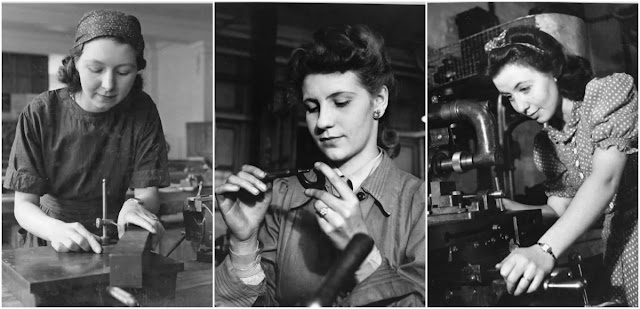
These women were all training in various London polytechnics to work in munitions factories during the early 1940s.
Women have always worked outside the home but never before in the numbers or with the same impact as they did in World War II. Prior to the war, most of the women that did work were from the lower working classes and many of these were minorities. There were a variety of attitudes towards women in the work force. Some thought they should only have jobs that men didn’t want while others felt women should give up their jobs so unemployed men could have a job. Still others held the view that women from the middle class or above should never lower themselves to go to work.
Around 950,000 British women worked in munitions factories during World War II, making weapons like shells and bullets. Munitions work was often well-paid but involved long hours, sometimes up to seven days a week. Workers were also at serious risk from accidents with dangerous machinery or when working with highly explosive material.
Some munitions workers handled toxic chemicals every day. Those who handled sulphur were nicknamed ‘Canary Girls’, because their skin and hair turned yellow from contact with the chemical.
A machine shop trainee at the Ministry of Labour training centre at Chelsea Polytechnic at work on a milling machine.
Subscribe to continue reading
Become a paid subscriber to get access to the rest of this post and other exclusive content.