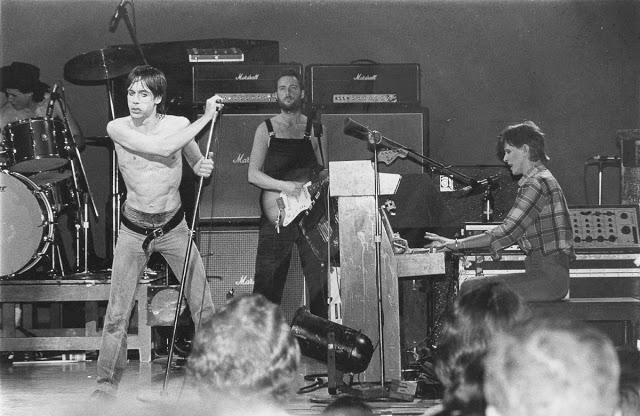
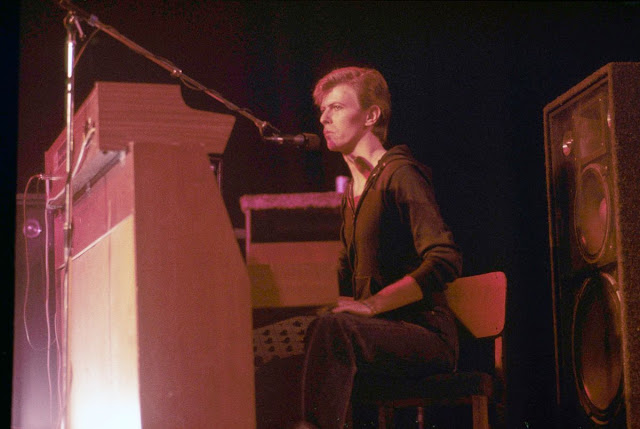
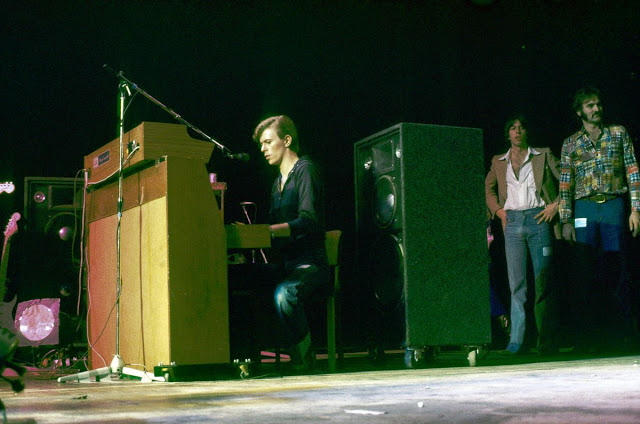
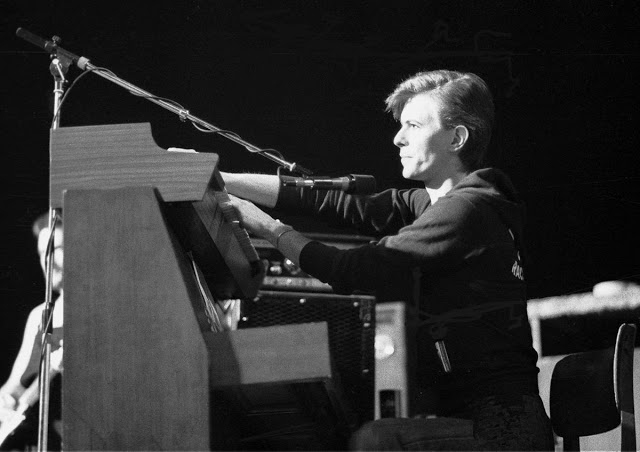
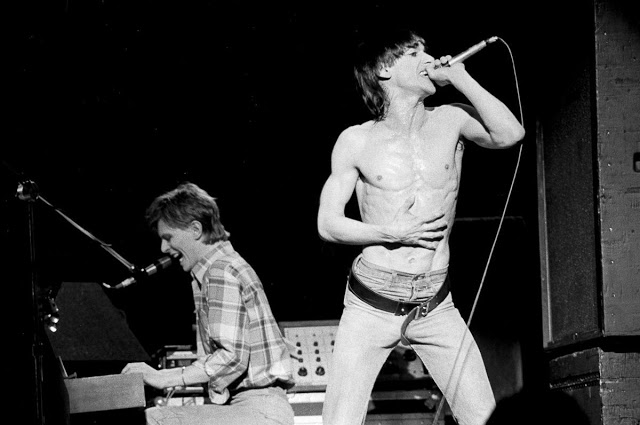
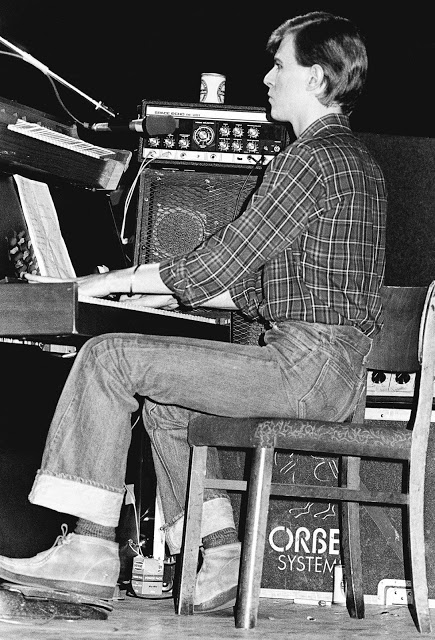
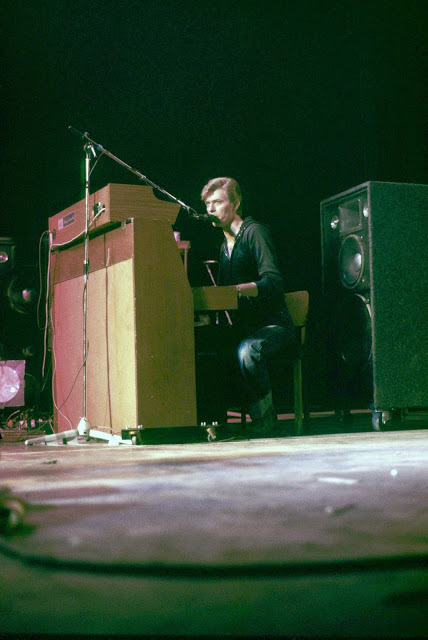
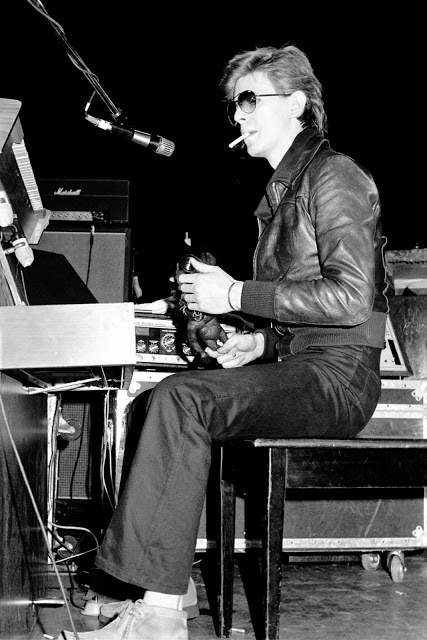
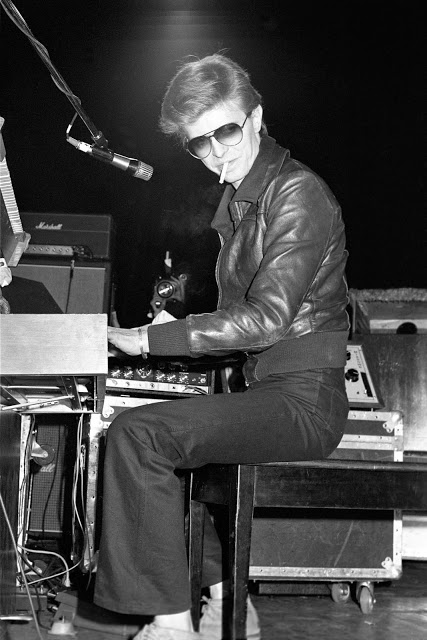
David Bowie worked with countless artists over the course of his prolific career, but one of his most notable peers and collaborators was Iggy Pop.
They first met in 1971 at Max’s Kansas City, a musical hotspot in New York City, while Bowie was on tour to promote his album The Man Who Sold the World.
Bowie produced and co-wrote a number of tracks on Pop’s 1977 masterpiece, The Idiot, and is often credited with resurrecting Pop’s career in the 1970s after the Stooges broke up.
In 1977, Iggy Pop finally went on a 30-date world tour as a solo act. His backup band included David Bowie on keyboards and backing vocals. That year the two also collaborated on Pop’s second album, Lust for Life, which would become a long-awaited critical and commercial success.
“He was really disciplined,” Iggy Pop said in an interview. “That was at a time when it might be 700 people in Albuquerque, it might be 15,000 at the Garden, it might be 300 people in Zurich, etc. He did a great show every night. I don’t care where it was.”
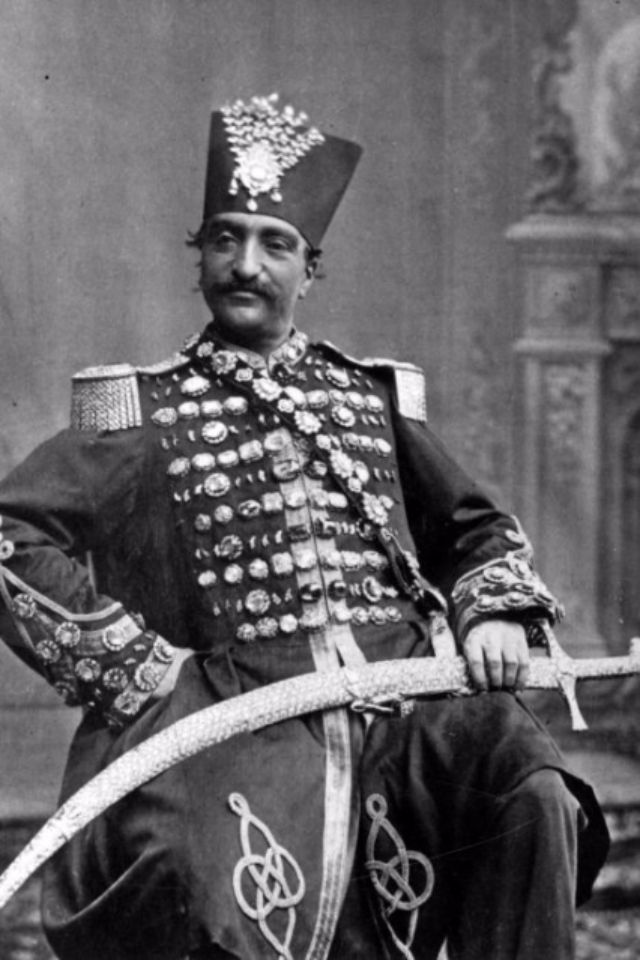
In 1842 the 11 year-old heir to the Persian throne received a camera from Queen Victoria of England. The young heir fell in love with the magical contraption. In the following decades he documented his life, revealing to the public eye, what it was never supposed to see.
One of Shah Qajar’s many passions was photography. From his early days he loved to take photos from his childhood, and when he came to power he decided to create the world’s first official photo studio at his court.
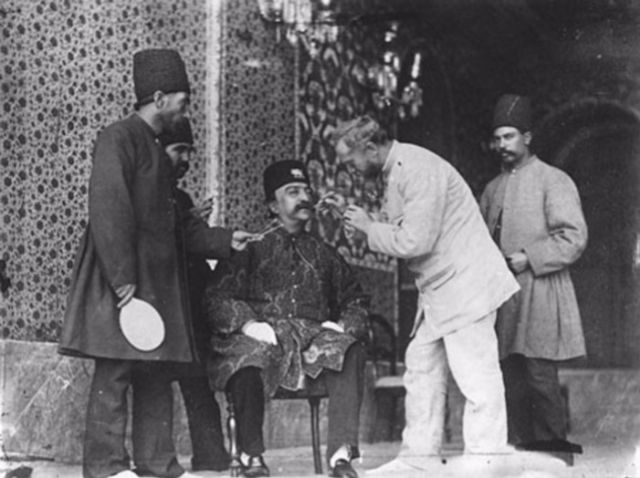
In the 1870s, Russian photographer Anton Sevryugin opened a workshop in Tehran. He became official photographer to the Persian court. Sevryugin made a photographic record of Persia, and he was awarded an imperial title for his services.
Naser al-Din Shah QajarNaser Al-Din Shah Qajar and the photographer Sevryugin before a photoshoot.
The Russian photographer could take pictures of the Shah himself, as well as his male relatives, courtesans and servants. Qajar reserved for himself the right to photograph the harem, in which historians believe he had approximately 100 concubines.
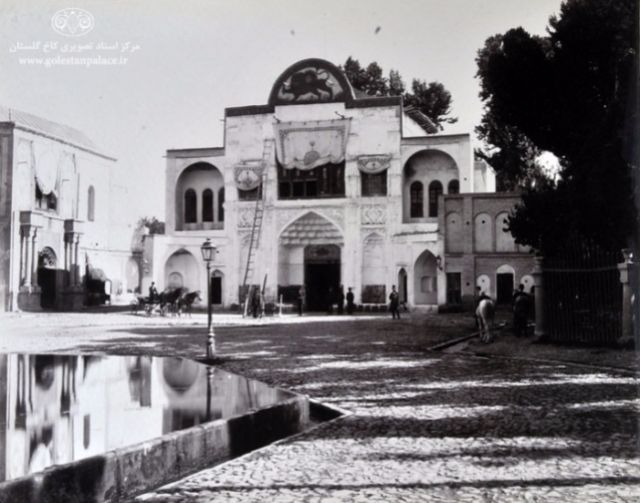
It is known that Naser al-Din Shah developed the photos in a darkroom at the court and kept them in large albums in the Golestan palace, which is now a museum.
The main entrance to the palace of Gulistan.
What makes these photographs extraordinary is that Shiia custom of the time forbade the photography of peoples’ faces, especially those of women. Only the most powerful man in the country could afford to break this custom.
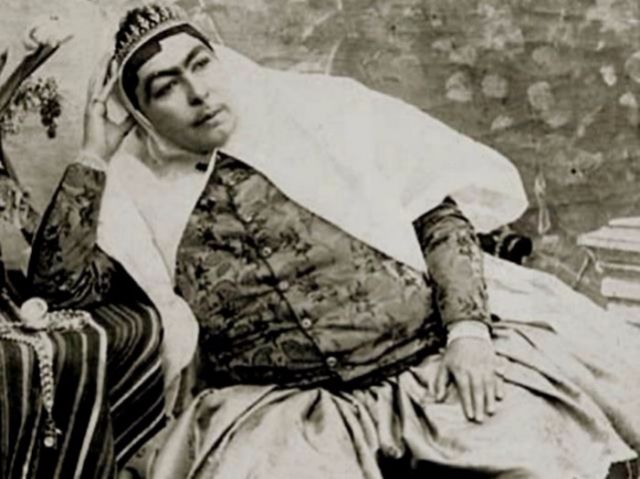
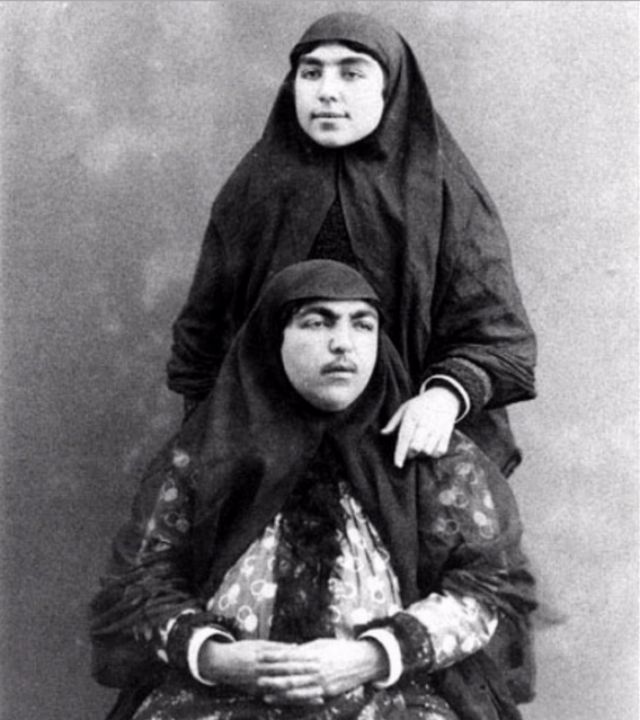
The incomparable Anis al-Doleh was the Shah’s favourite wife. (On the right)Plumpness was one of the main criteria of beauty.Young concubine with a hookah.
These photographs of women contradict the conventional depiction of the life in a harem.
The Shah’s wives look quite up to date for their time, and they gaze calmly into the lens, without coquettishness or servility.
Anis al-Doleh, known as the Shah’s soulmate.The incomparable Anis al-Doleh (sitting).
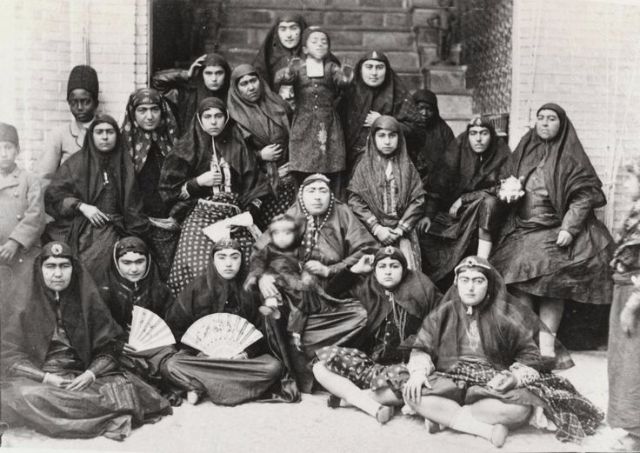
You could even imagine that maybe the harem wives enjoyed each others’ company; in some photos picnic parties are shown.
The harem at a picnic.Naser al-Din Shah Qajar with some of his wives.Naser al-Din Shah Qajar with some of his wives.The inhabitants of the harem didn’t suffer from skinniness.
From the photographs you can judge the Iranian monarch’s tastes. It’s quite clear that the women didn’t suffer from hunger and were not burdened with physical work. Experts claim that in the Golestan collection there are even nudes, but these have been well hidden.
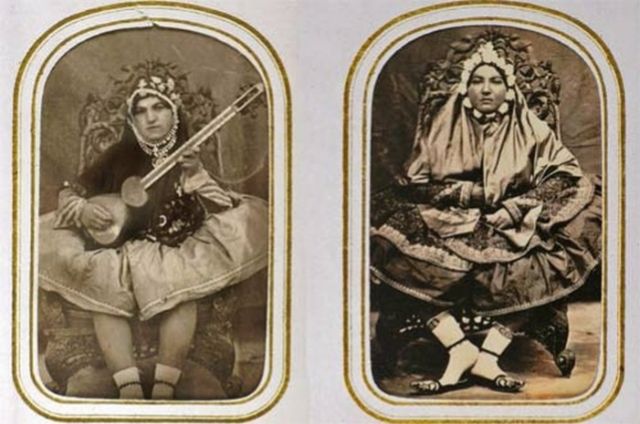
Ladies from the harem in ‘shaliteh’ skirts.Ladies from the harem in ‘shaliteh’ skirts.
In many of the photos the concubines are pictured in short, opulently decorated skirts called ‘shaliteh’, similar to ballet tutus. This is no coincidence.
In 1873 Naser al-Din travelled to Saint Petersburg on the invitation of Russian Tsar Alexander II. While there, he visited the ballet. According to rumor, he was so charmed by the Russian dancers, that he had his women dressed in similar skirts. Of course, the concubines could only remove their Muslim dress for the camera. On the other hand, this may be just a rumor.
In 1928, renowned actress Julia Faye published a “Guide to Good Posture For Flappers” and it is blowing our minds.
The dictionary defines a flapper as – “A young woman, especially one in the 1920s, who showed disdain for conventional dress and behavior.” That is, conventional in the 1920s. The style came around after the first world war, and women were tired of trying to conform to society’s idea of normal – women were gaining more independence, and the face of America was changing!
Flappers were most commonly known for their dancing, drinking, smoking, wearing a lot of makeup, and a love of films. Almost all flappers had bobbed hair, dated frequently, and stopped wearing their corsets (which were social norms in the 1910s).
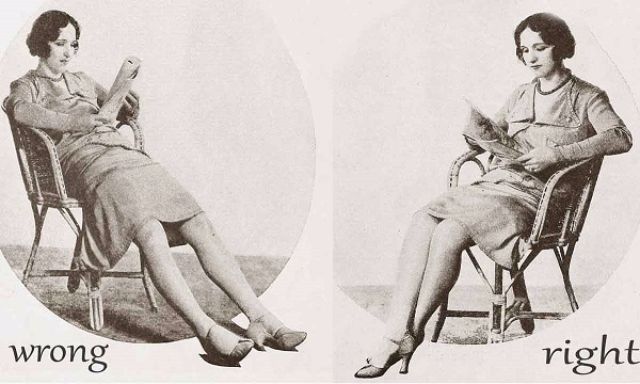
How to sit correctly #1
No lady should ever sit like Julia does on the left (even a student). In fact no lady would! There are other ways of sitting comfortably while still looking graceful, as Julia does to the right.
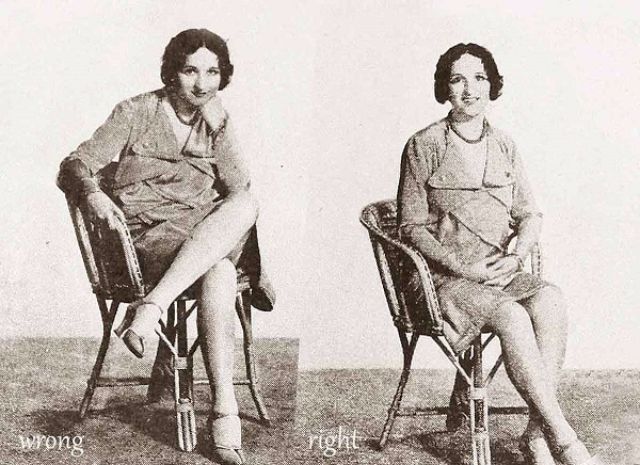
How to sit correctly #2
The art of sitting with crossed legs went out for women with the arrival of short skirts. “Don’t do this!” warns Julia. “Cross the feet instead of the legs and you’ll be just as comfortable and twice as feminine!”
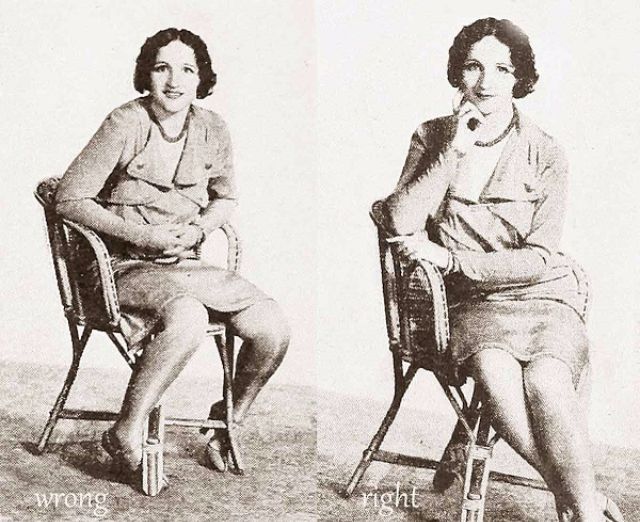
How to sit correctly #3
“Never hook your toes behind chair legs, if you would be graceful,” says Miss Faye. All right Julia! To the right is the correct posture.
“Sitting pretty is my name for this pose!” laughs Julia.
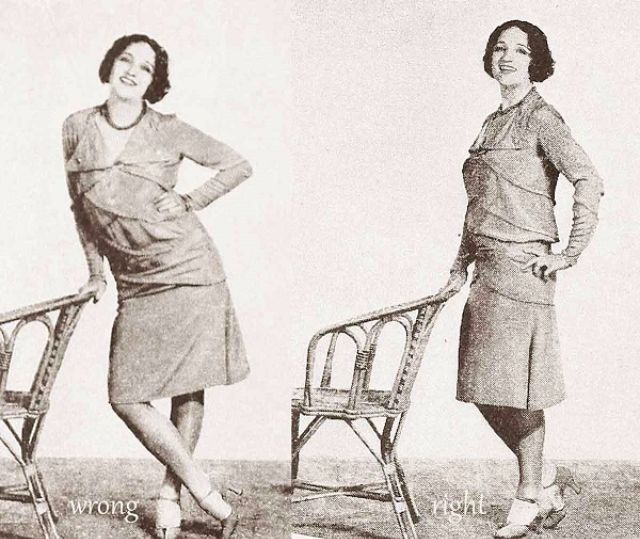
How to stand correctly
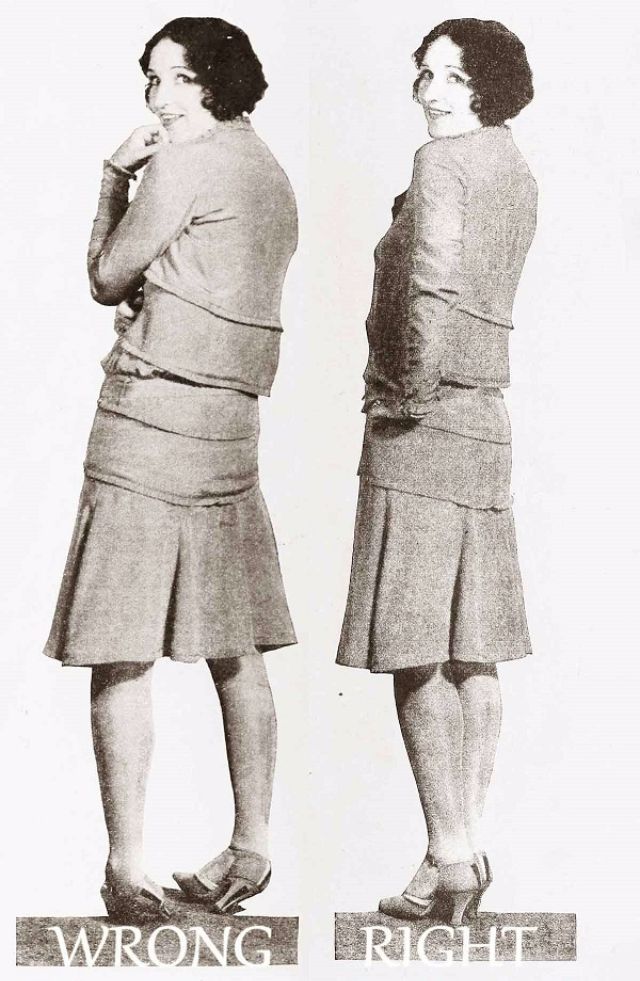
Don’t stand like you’re hiding a boner. How the well brought up young girl should not stand is illustrated to the left. Well really Julia! But over on the right, this is more like it! Julia Faye demonstrates erect posture and firm balance.
How to stand by a chair
Note the bad lines of Julia’s body on the left and the ungraceful balance of legs and hips. On the right, Julia stands in the correct manner.
“Time flies like an arrow; fruit flies like a banana.” A French postcard from the 1920s shows how to eat a banana from age 18-40. Not sure why not peeling said banana…
A half a century ago, bananas were more delicious. They were creamier with a more delectable tropical fruit taste. When they ripened, they stayed ripe longer instead of swiftly turning to black slime. Since they lasted on the shelf when ripe it was possible to sell them ripe–as opposed to today’s bananas which must be purchased all green and hard and nasty.
French naturalist Nicolas Baudin carried a few corms of this banana from Southeast Asia, depositing them at a botanical garden on the Caribbean island of Martinique. In 1835, French botanist Jean François Pouyat carried Baudin’s fruit from Martinique to Jamaica. Gros Michel bananas were grown on massive plantations in Honduras, Costa Rica, and elsewhere in Central America.
This variety was once the dominant export banana to Europe and North America, grown in Central America, but in the 1950s, Panama disease, a wilt caused by the fungus Fusarium oxysporum, wiped out vast tracts of Gros Michel plantations in Central America, though it is still grown on non-infected land throughout the region. The Gros Michel was replaced on Central American plantations and in U.S. grocery stores by the Cavendish.
By the 1960s, the exporters of Gros Michel bananas were unable to keep trading such a susceptible cultivar, and started growing resistant cultivars belonging to the Cavendish subgroup.
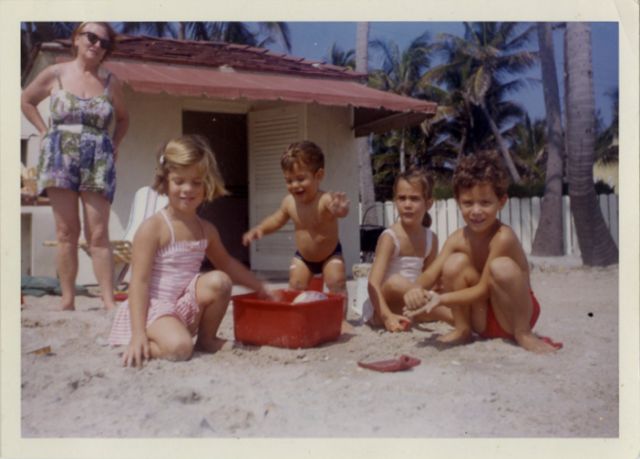
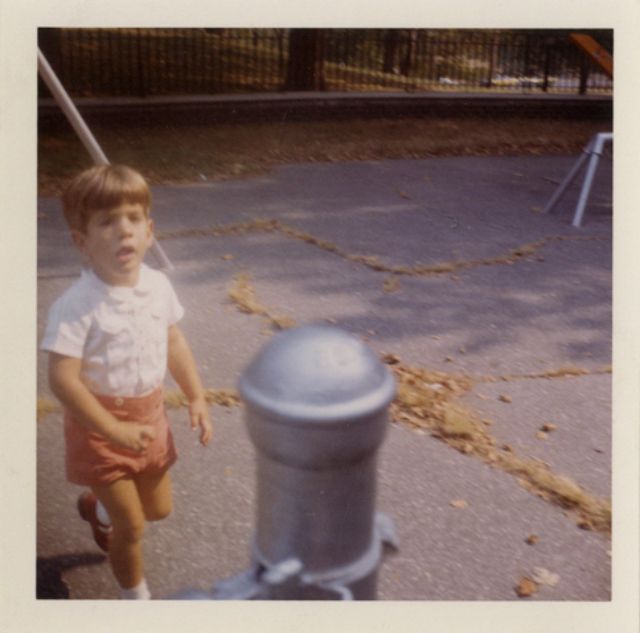
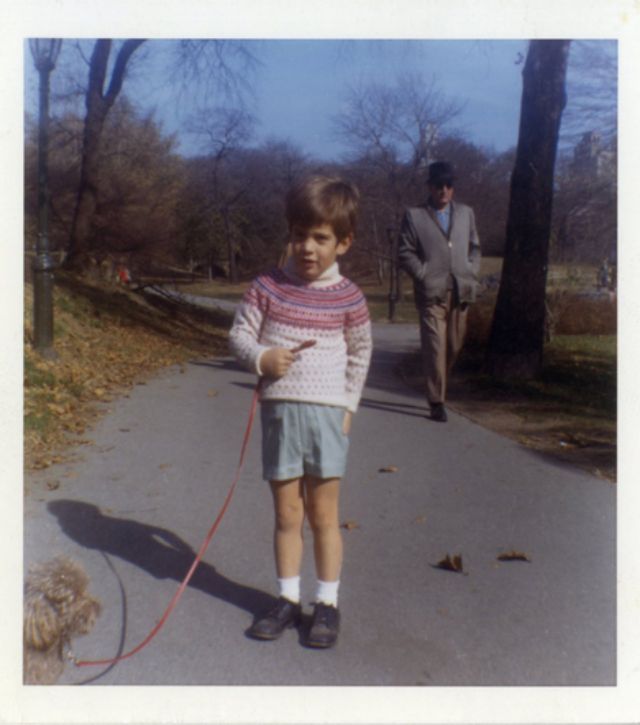
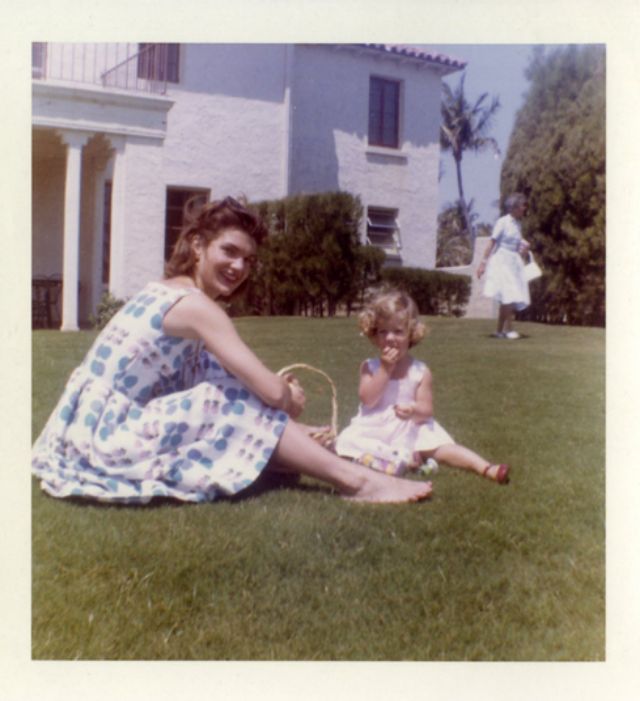
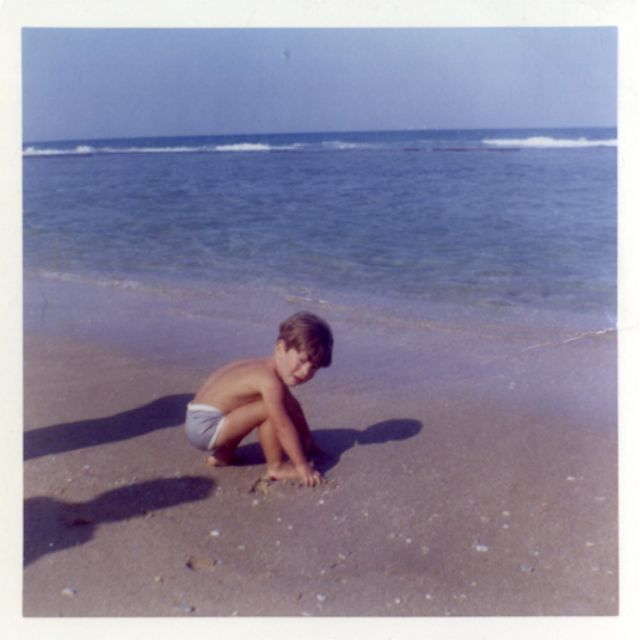
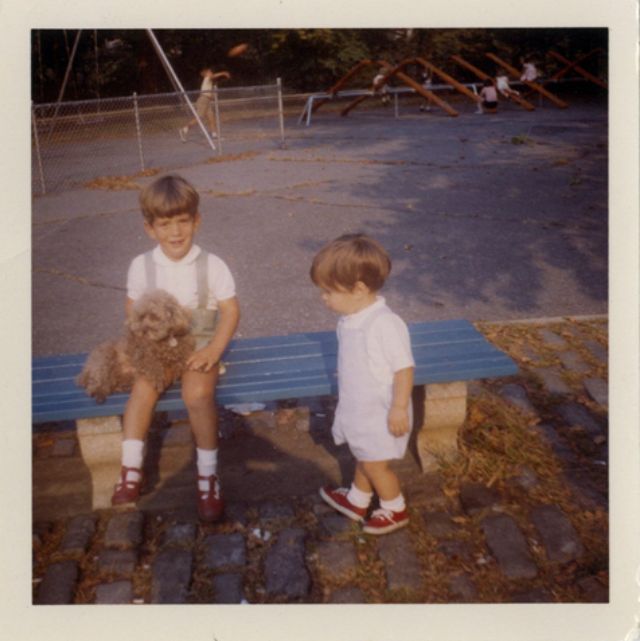
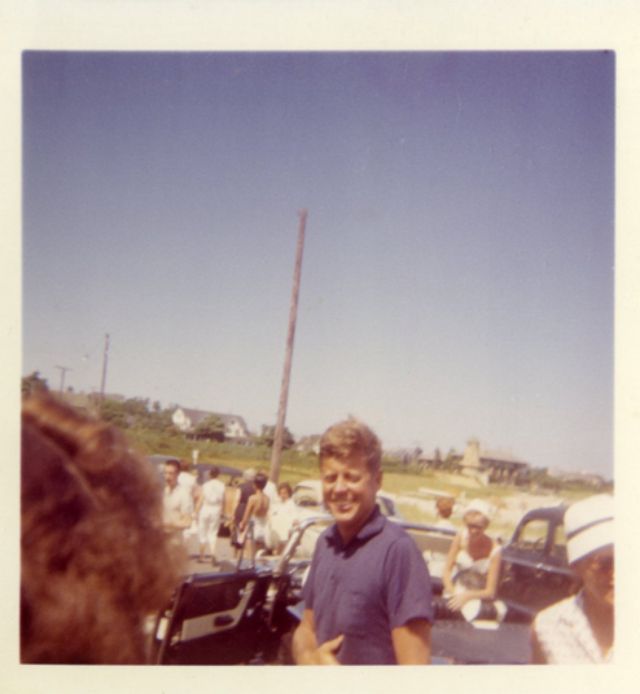
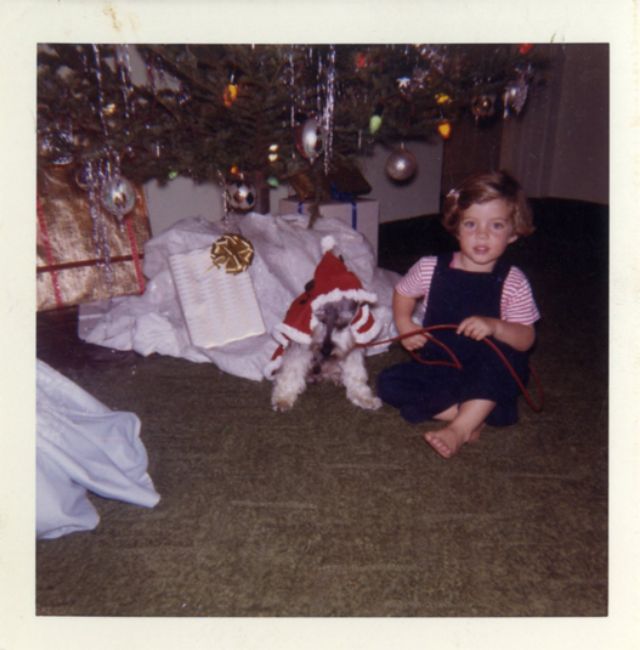
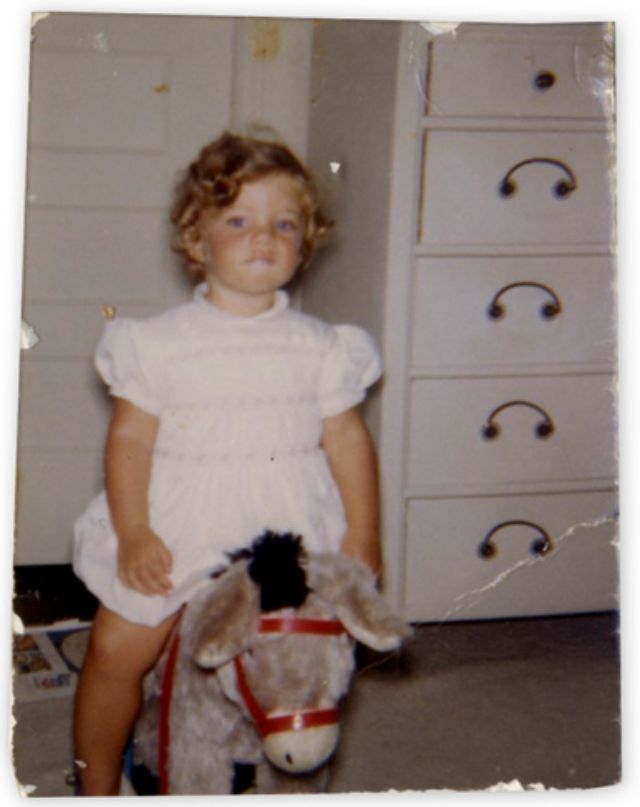
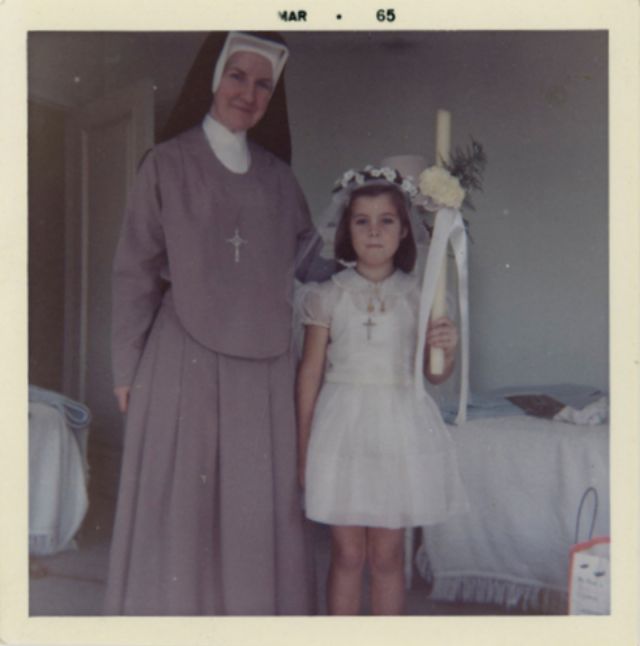
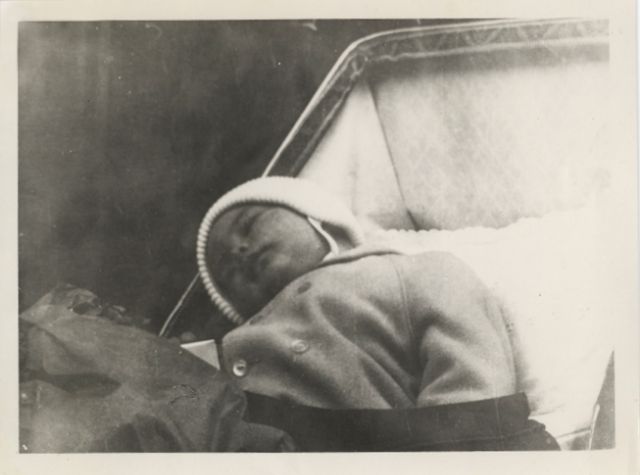
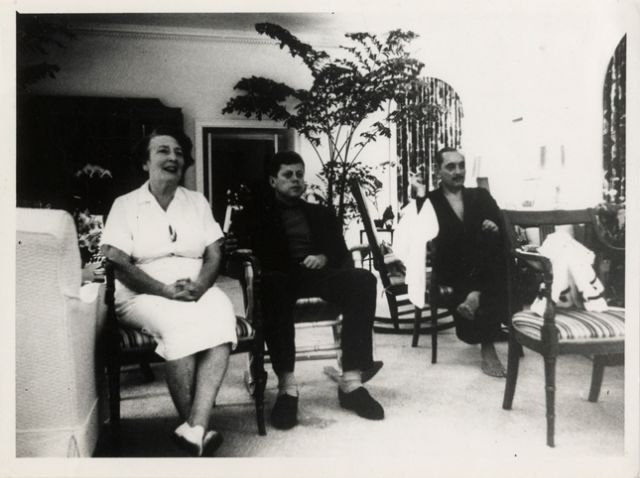
These photos were owned by the Kennedys nanny, Maud Shaw, who retired from her position in 1965. Shaw was the nanny to Caroline and John Kennedy for seven years, a period which included the administration of President John F. Kennedy.
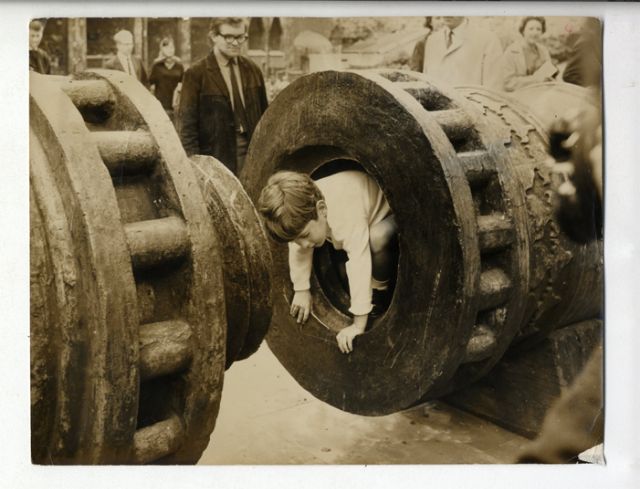
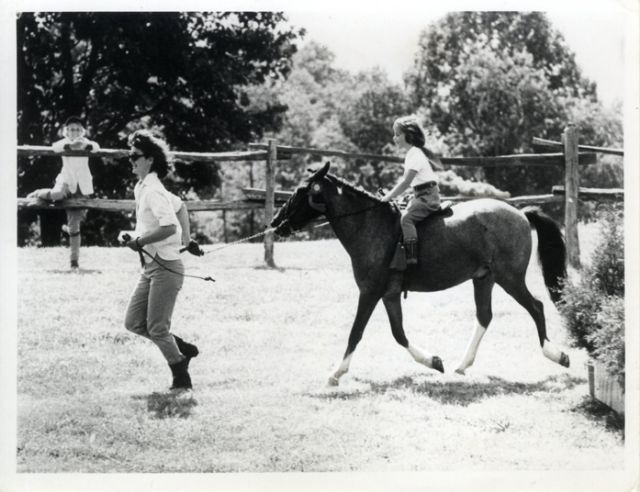
The photos are part of Shaw’s personal collection of Kennedy mementos. They feature a variety of candid pictures of the First Lady and her two children, including shots at the beach, leading a pony, and other family moments.
The Kennedy family is an American political family that has long been prominent in American politics, public service, entertainment, and business. In 1884, 35 years after the family’s arrival from Ireland, Patrick Joseph “P. J.” Kennedy became the first Kennedy elected to public office, serving in the Massachusetts state legislature until 1895. There was at least one Kennedy family member in federal elective office from 1947, when P. J. Kennedy’s grandson John F. Kennedy became a member of Congress from Massachusetts, until 2011, when Patrick J. Kennedy II (John’s nephew) retired as a member of Congress from Rhode Island.
P. J.’s son Joseph P. Kennedy Sr. had nine children with his wife Rose Fitzgerald Kennedy, including John F. Kennedy (who served in both houses of the United States Congress and as U.S. President) and Robert F. Kennedy (who served as U.S. Attorney General and in the U.S. Senate). Other descendants include members of the U.S. House of Representatives and Senate, two U.S. ambassadors, a lieutenant governor, three state legislators (one of whom was also in the U.S. House of Representatives), and one mayor.
Their daughter, Eunice, founded the National Institute of Child Health and Human Development (part of the National Institutes of Health), and the Special Olympics. Eunice’s daughter Maria Shriver served as First Lady of California. Other descendants of Joseph and Rose Kennedy have been active as lawyers, authors, and activists on behalf of those with physical and intellectual challenges. (Wikipedia)
Caroline and John F. Kennedy Jr. playing in the sand with friends, May 1962.John F. Kennedy Jr. running.John F. Kennedy Jr. walking a dog in the park, December 1964.Jackie Kennedy having a picnic with Carolyn Kennedy on the lawn, May 1960.John F. Kennedy Jr. playing in the beach sand, April 1963.John F. Kennedy Jr. and friend.President John F. Kennedy in a blue polo shirt.Caroline Kennedy with her dog under the Christmas tree (January 1961).Caroline Kennedy on a rocking horse.Caroline Kennedy with a nun, March 1965.Maud Shaw holding John F. Kennedy Jr. with Caroline Kennedy next to her.John F. Kennedy Jr. in his crib.Maud Shaw (left) is seated next to John F Kennedy (centre).John F. Kennedy Jr. energetically crawling through a statue (May 17, 1965).Jackie Kennedy leading horse Macaroni ridden by Caroline Kennedy in Wexford, Virginia.
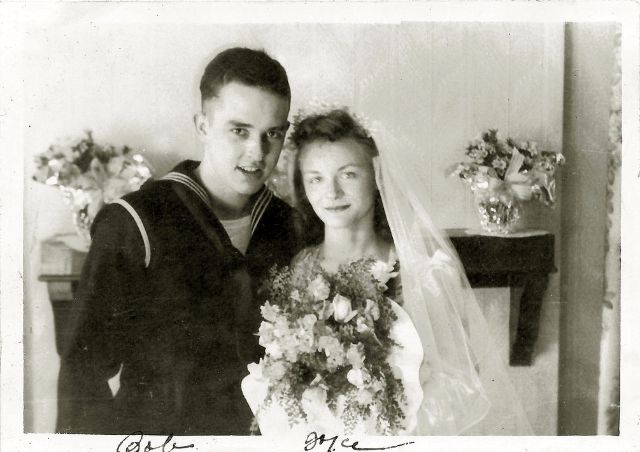
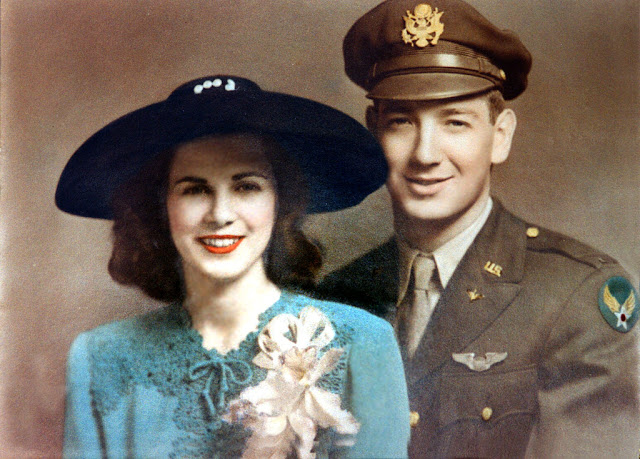
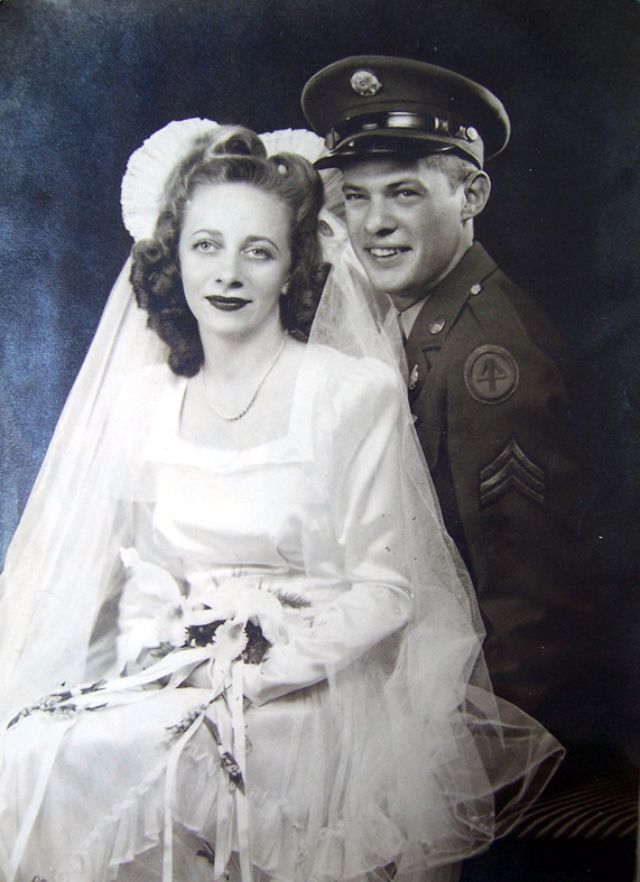
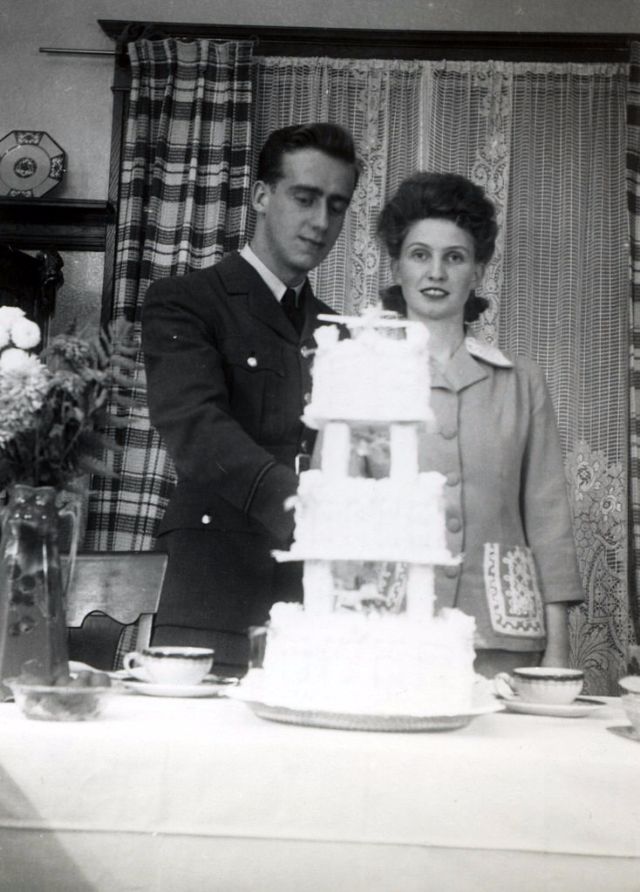
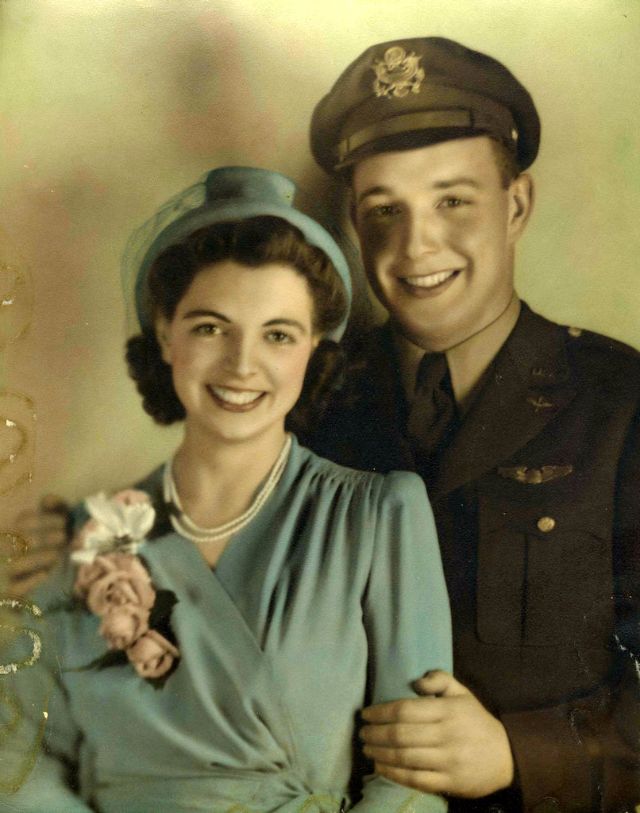
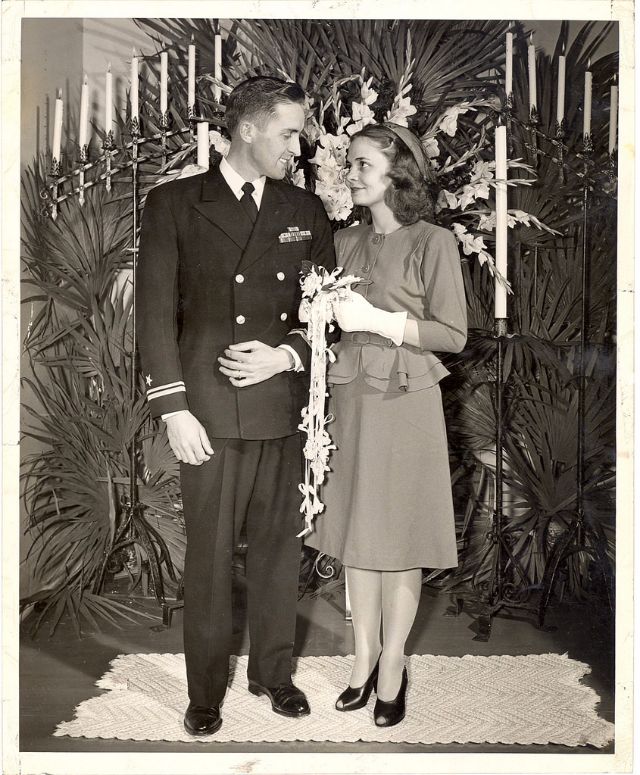
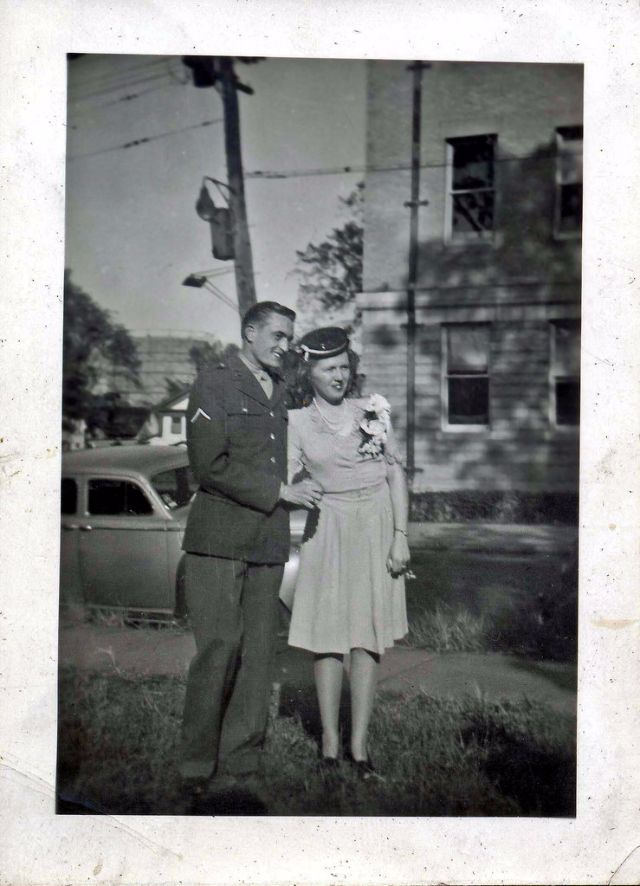
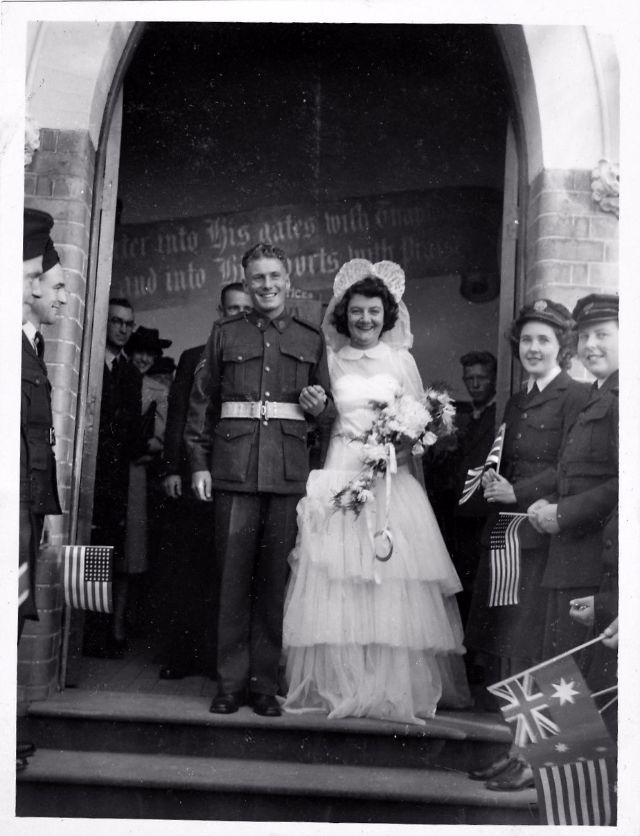
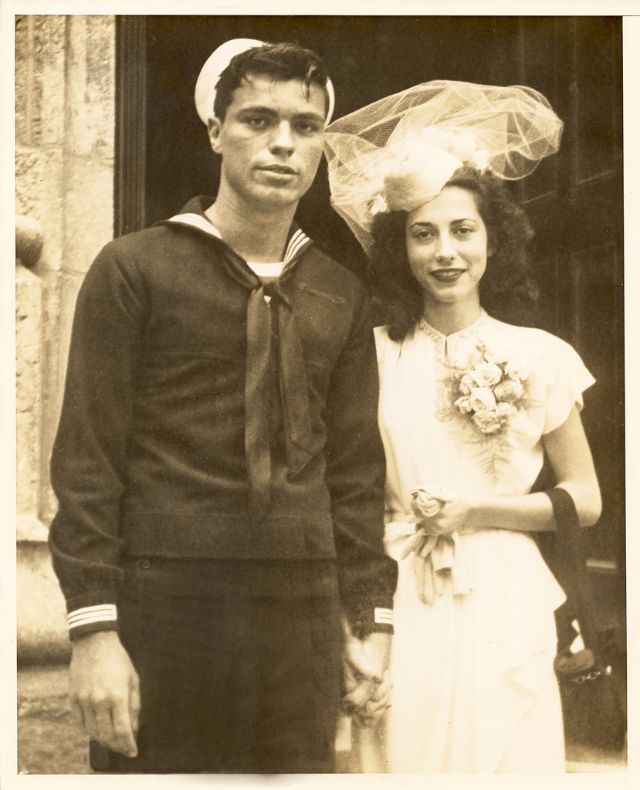
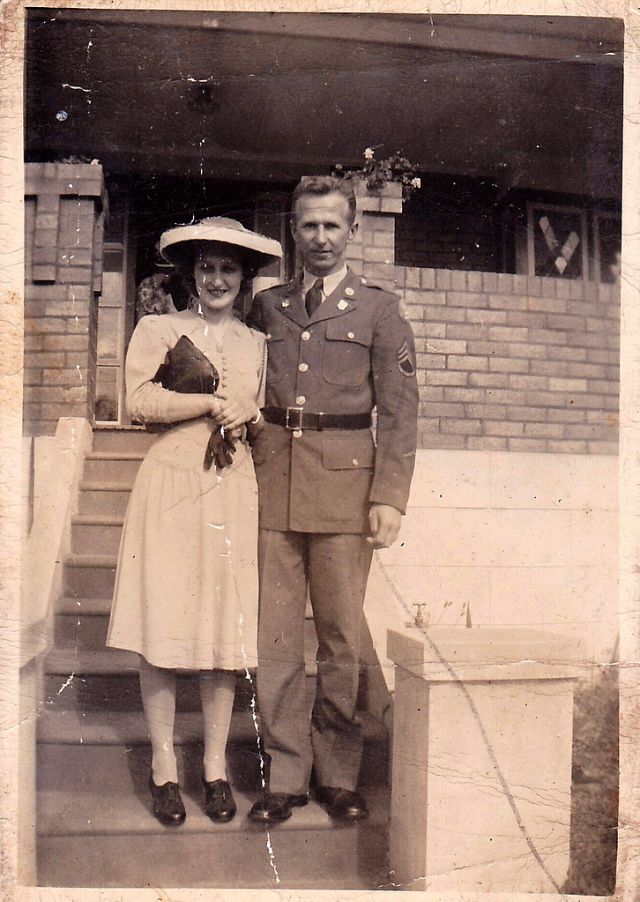
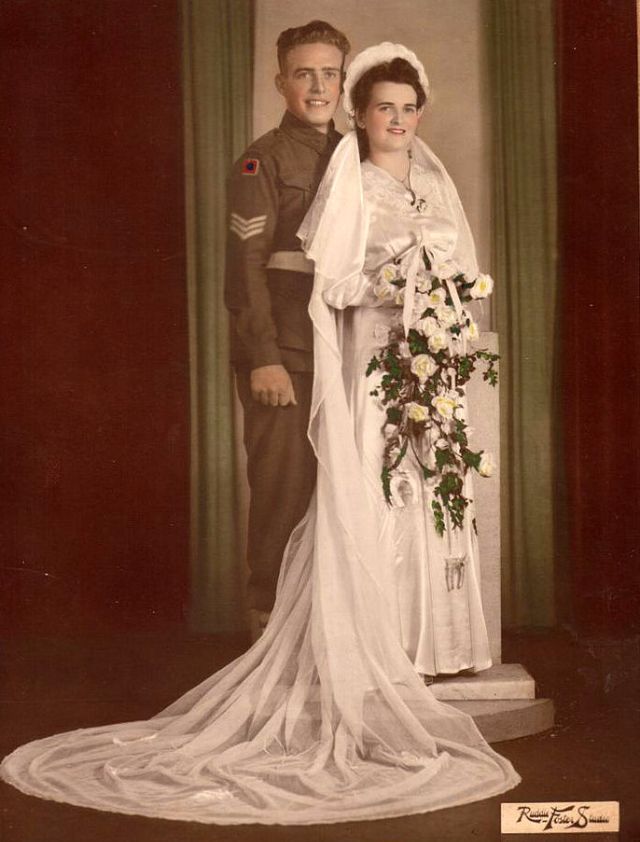
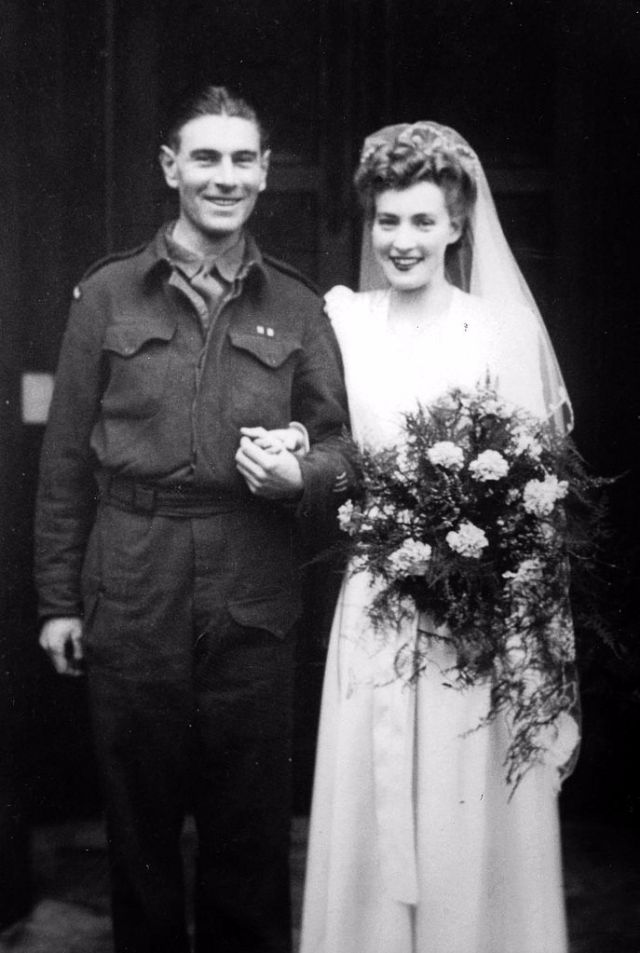
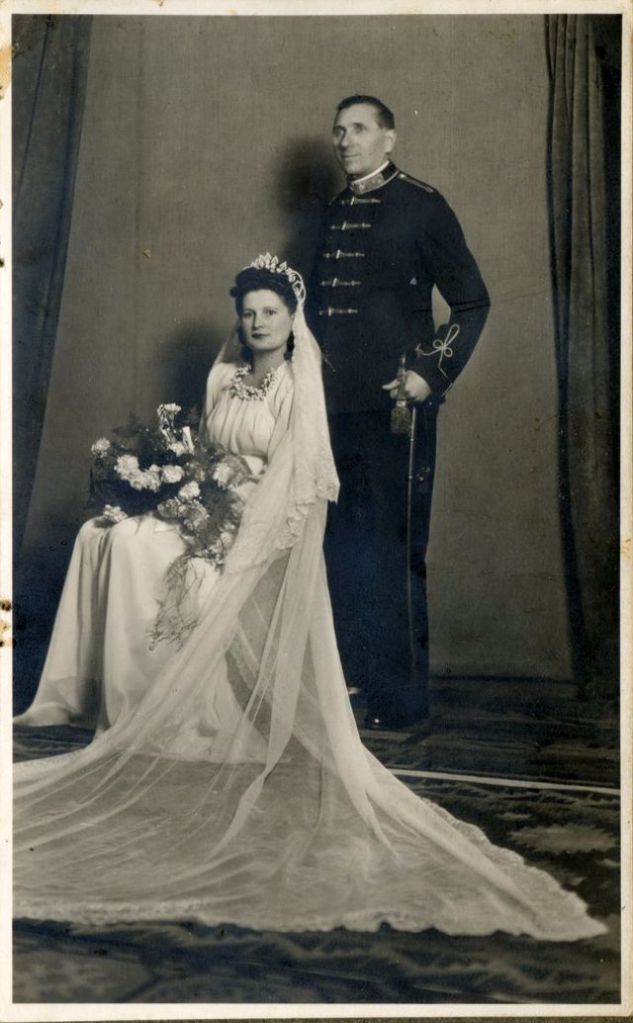
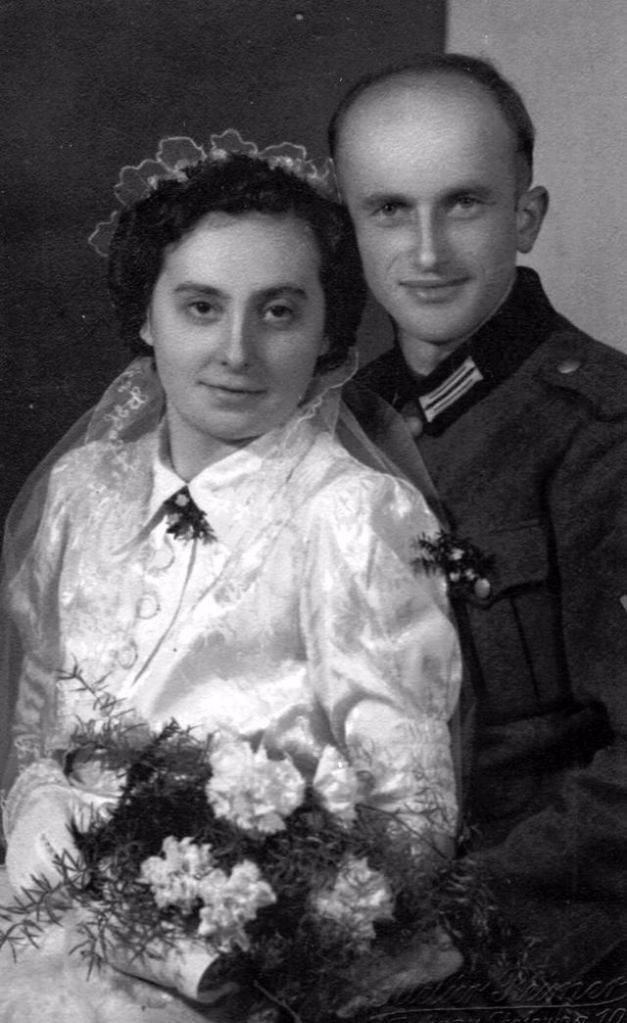
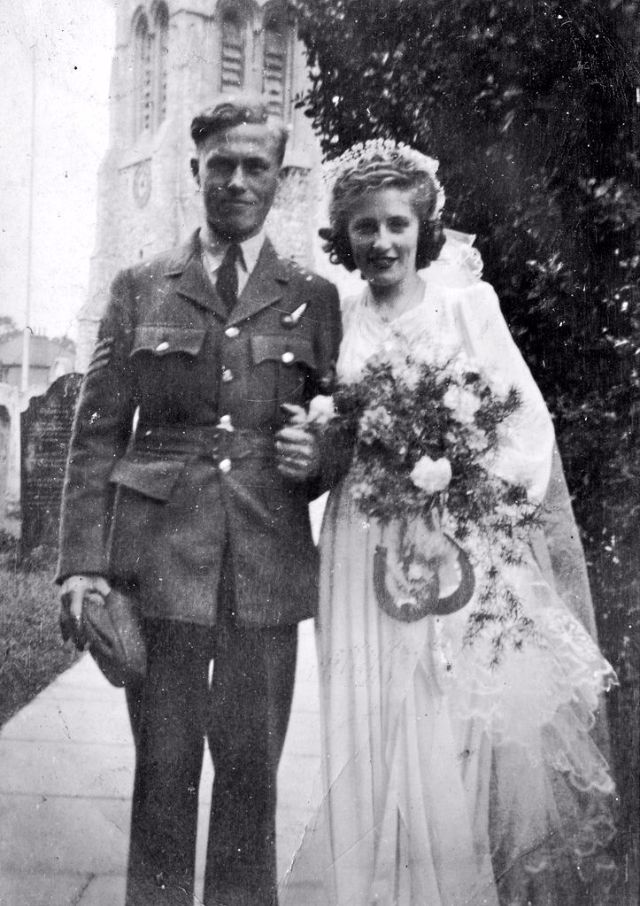
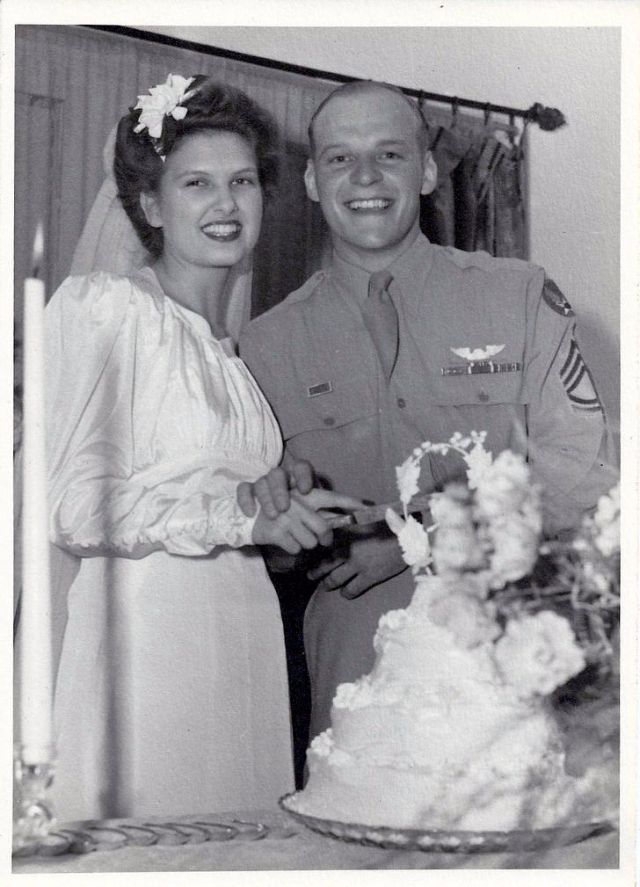
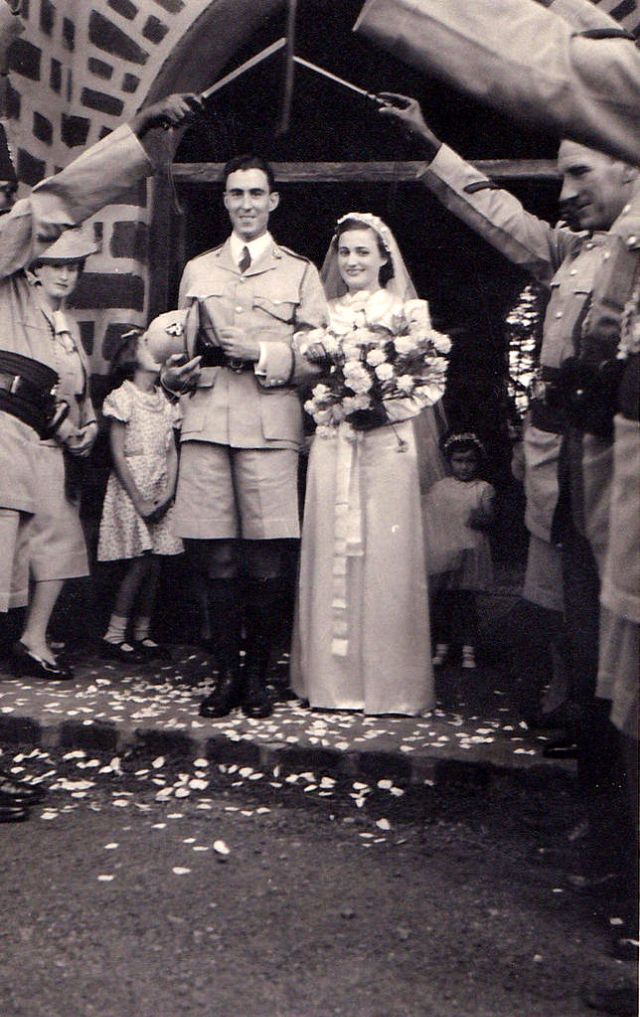
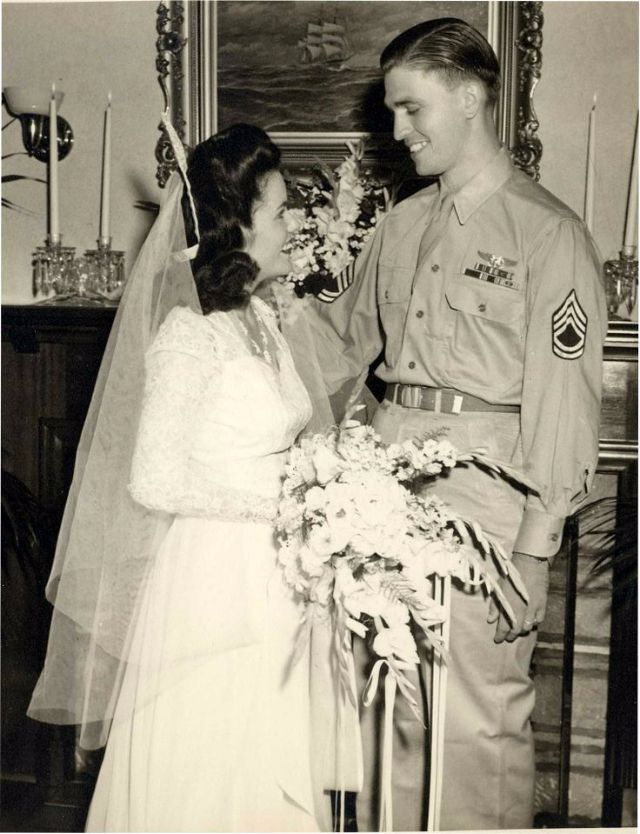
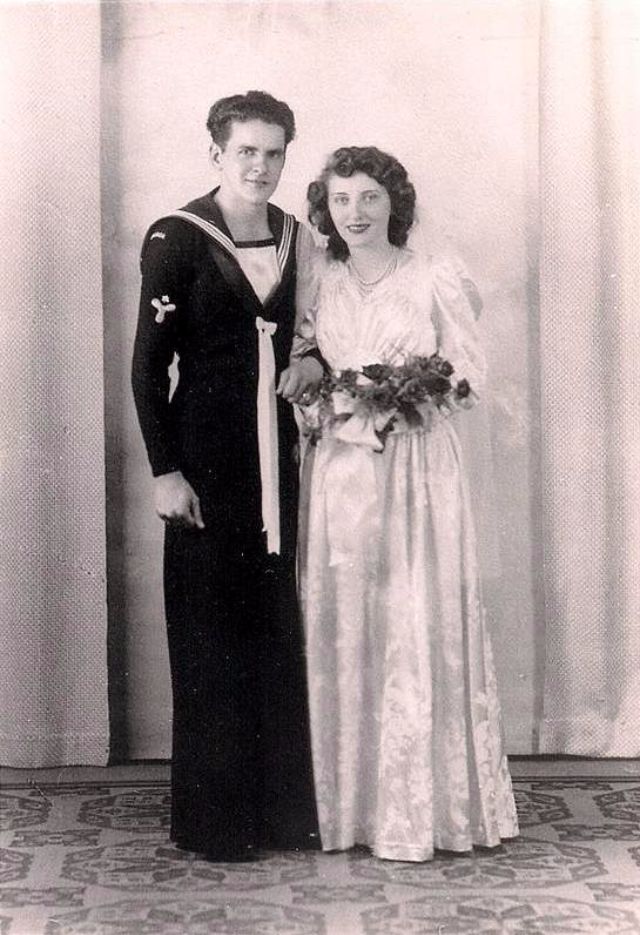
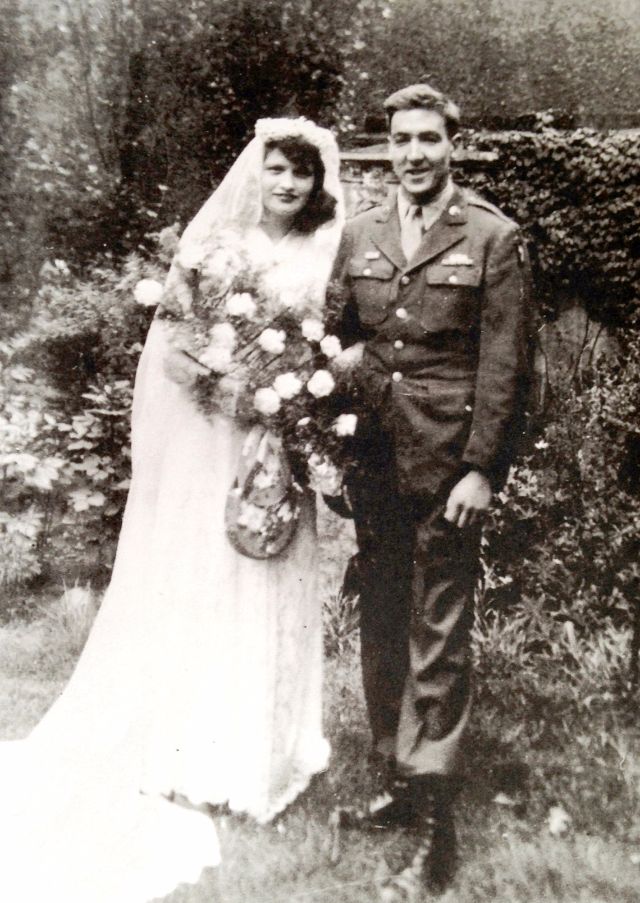
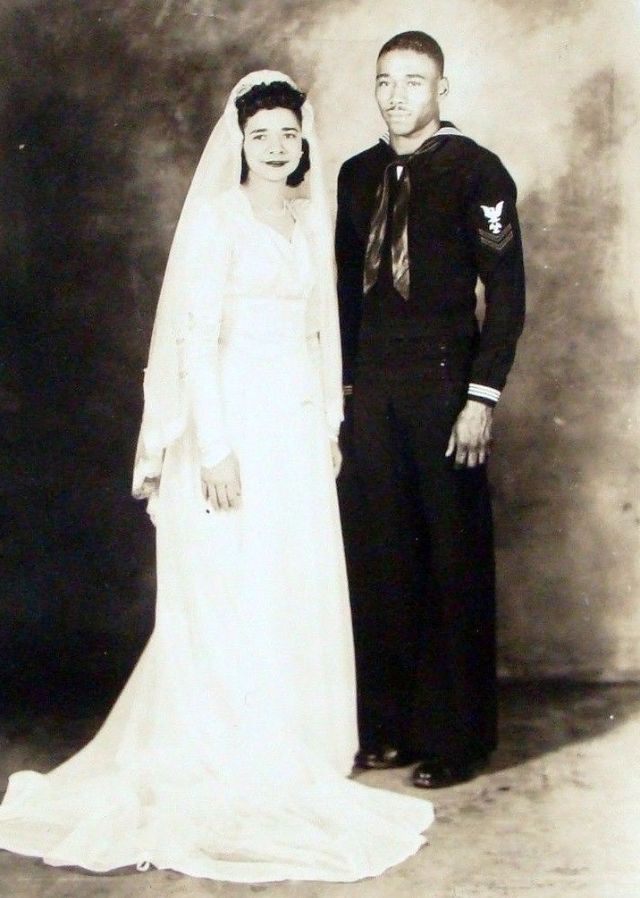
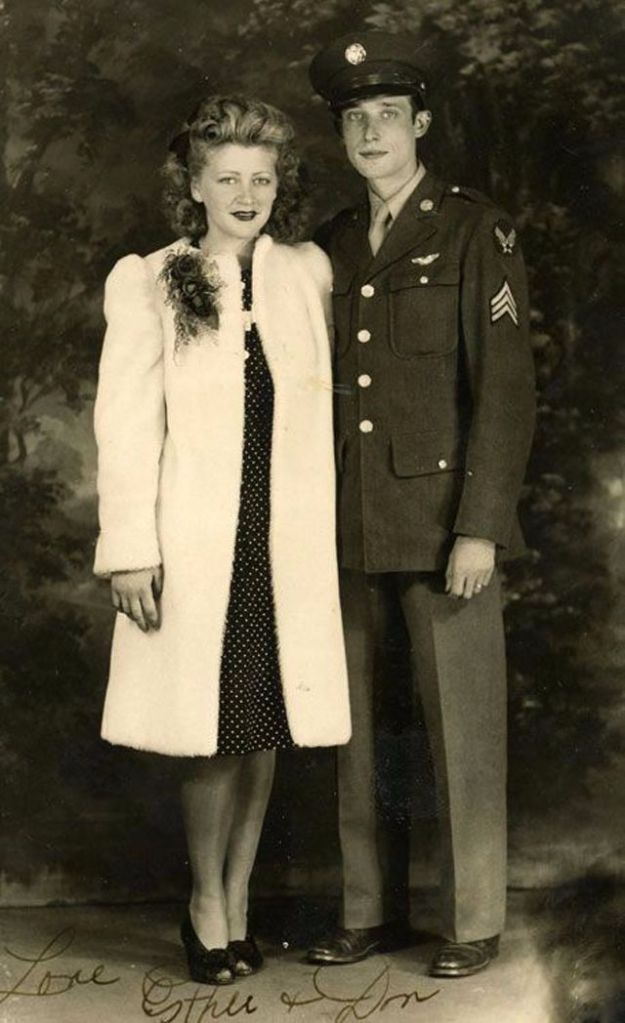
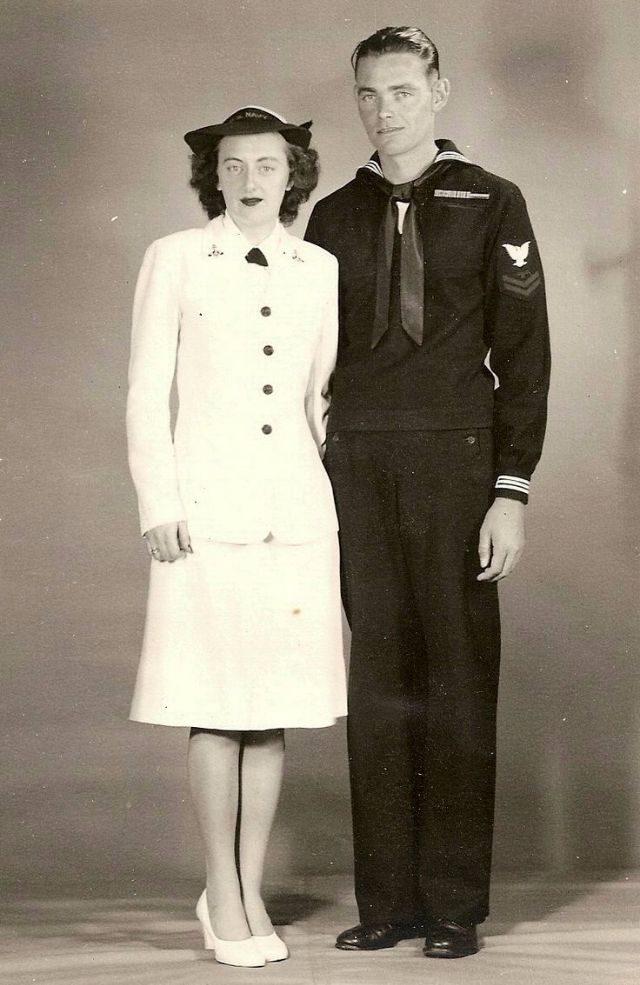
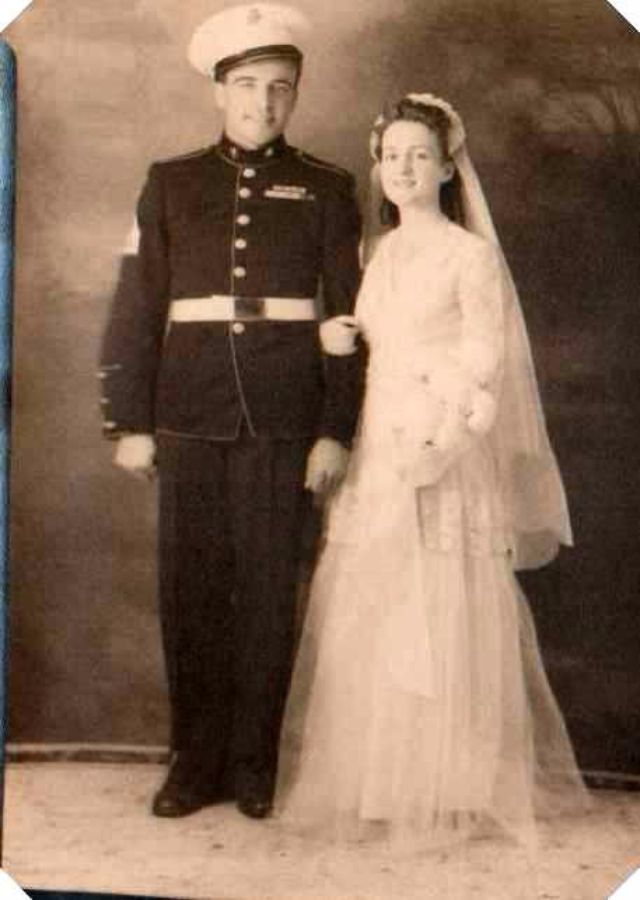
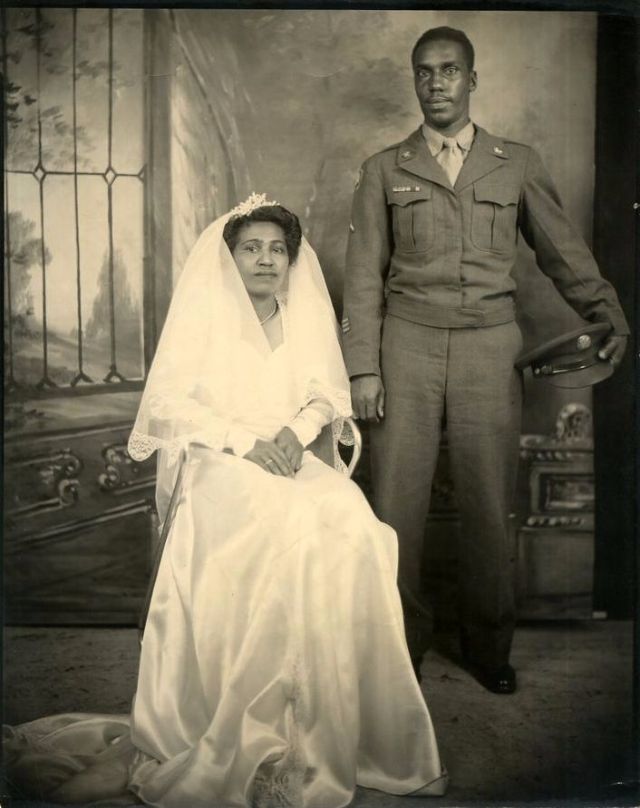
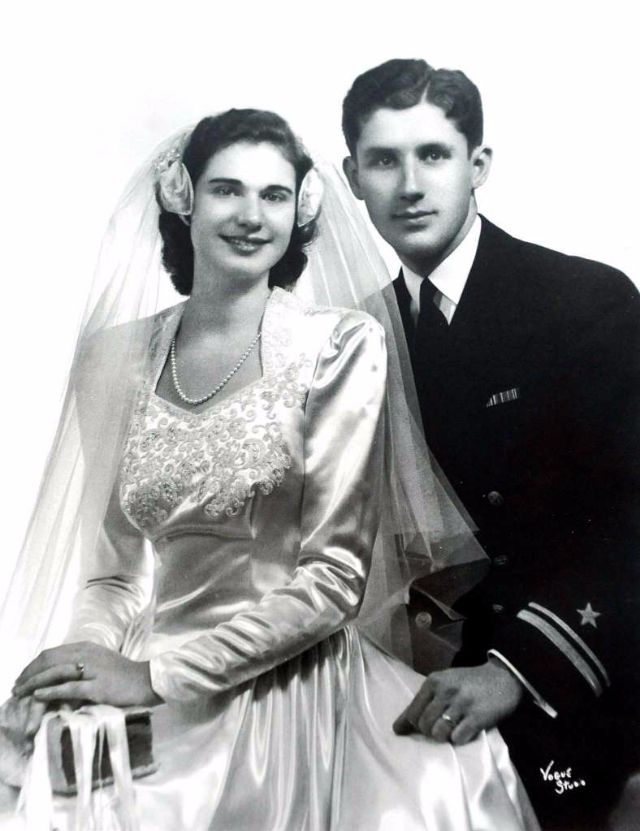
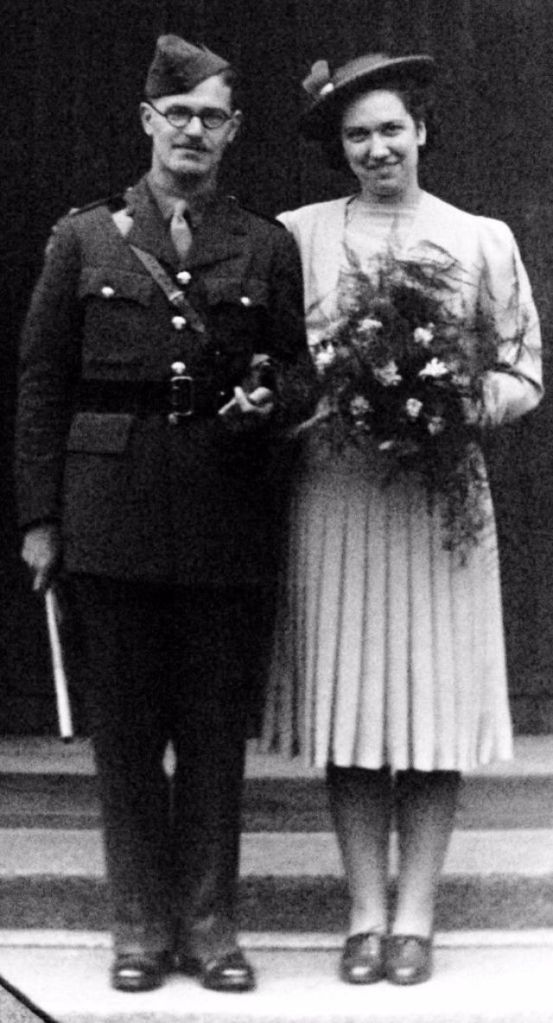
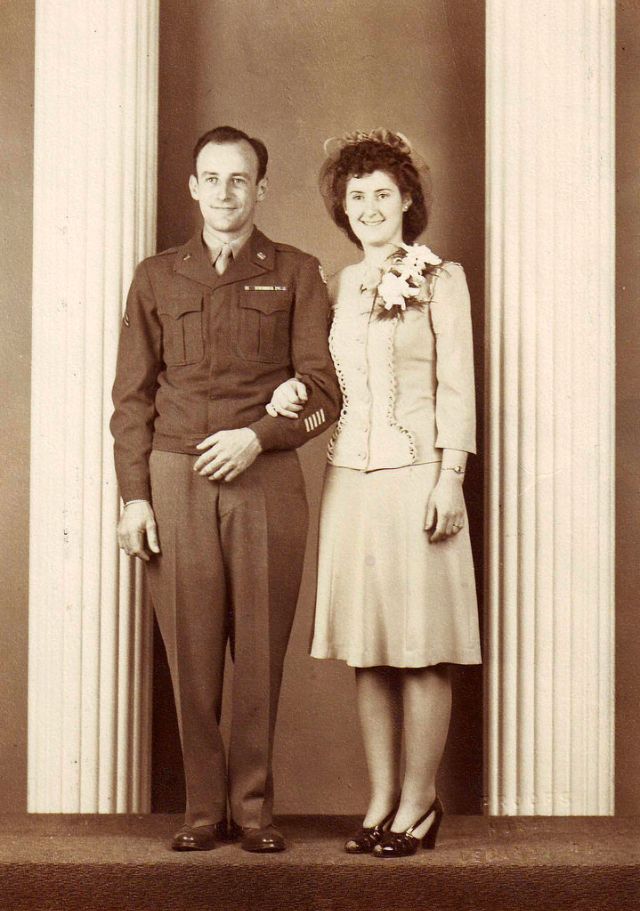
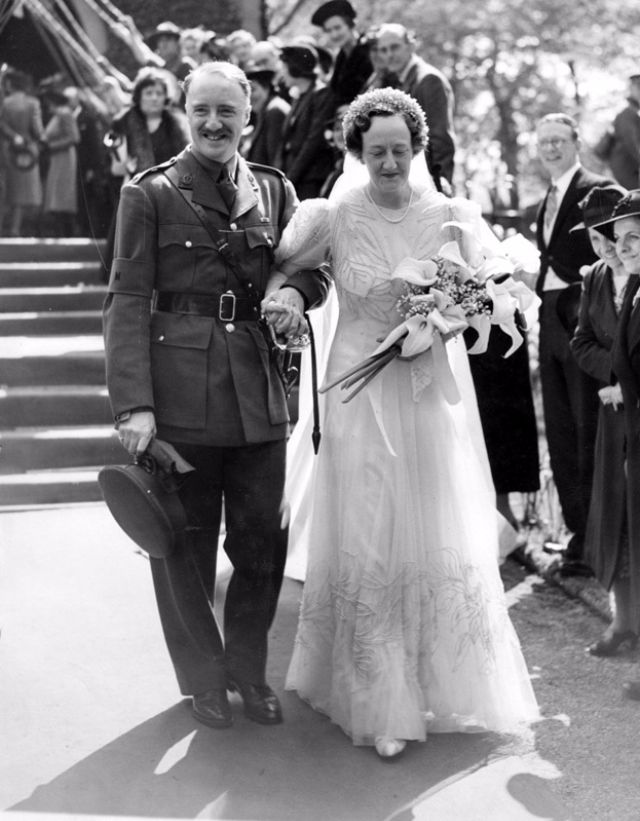
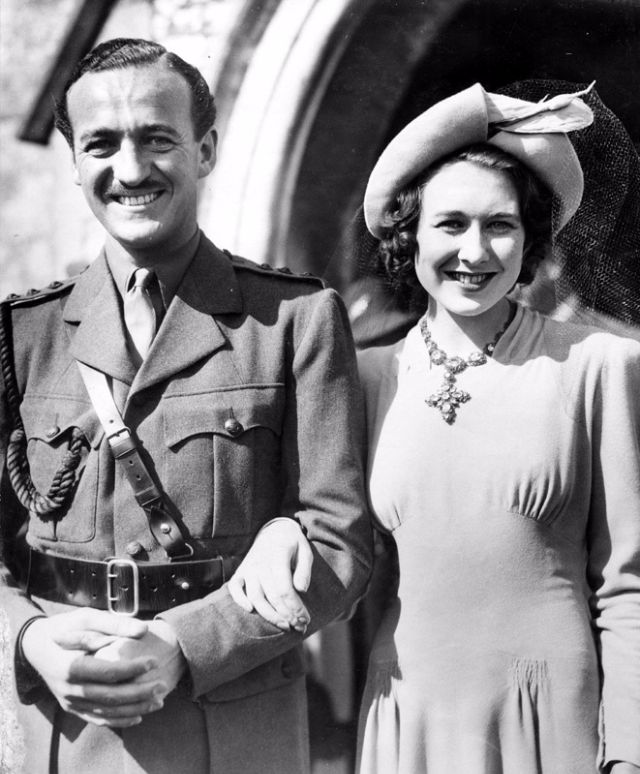
Despite many difficulties, the weddings of soldiers in World War II were still very wonderful, allowing us to feel emotionally. The bride’s outfits were sometimes just normal white dresses, but these didn’t make them less beautiful.
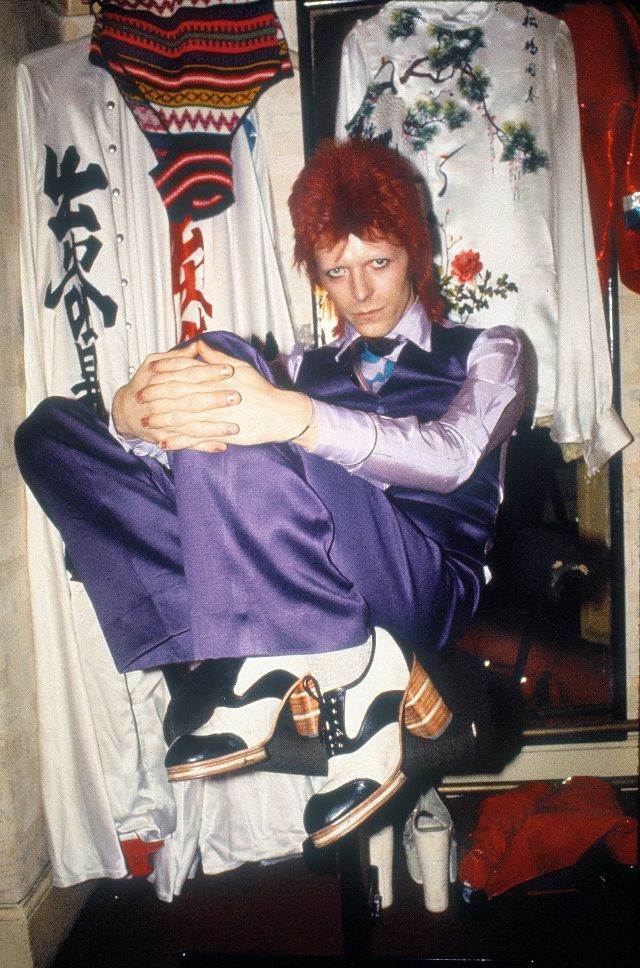
Though a lot of people associate men’s heels exclusively with the disco era, they had actually gained popularity with the mainstream long before John Travolta ever set a hustling foot on a lighted floor. In fact, the heels of Tony Manero’s boogie shoes were actually low compared to some of the men’s styles that came earlier in the 1970s.
Recording and performing artists of glam, rock and soul, like David Bowie, Marc Bolan, Peter Frampton, and members of The Jackson 5 were just a few of the male celebrities that helped popularize the men’s “high heel” trend in the early part of the 1970s.
In those earlier years, very high, block or chunky heels were usually paired with extremely thick platform soles. Later in the decade, however, the height of the heels came down, while the platform soles were thinner, or completely eliminated.
Shoes with sky-high platforms, like chopines, date back to at least the 15th century. And, even modern platform shoes, like the styles we see today, had been in fashion in both the 1930s and the 1960s, before completely taking over in the 1970s.
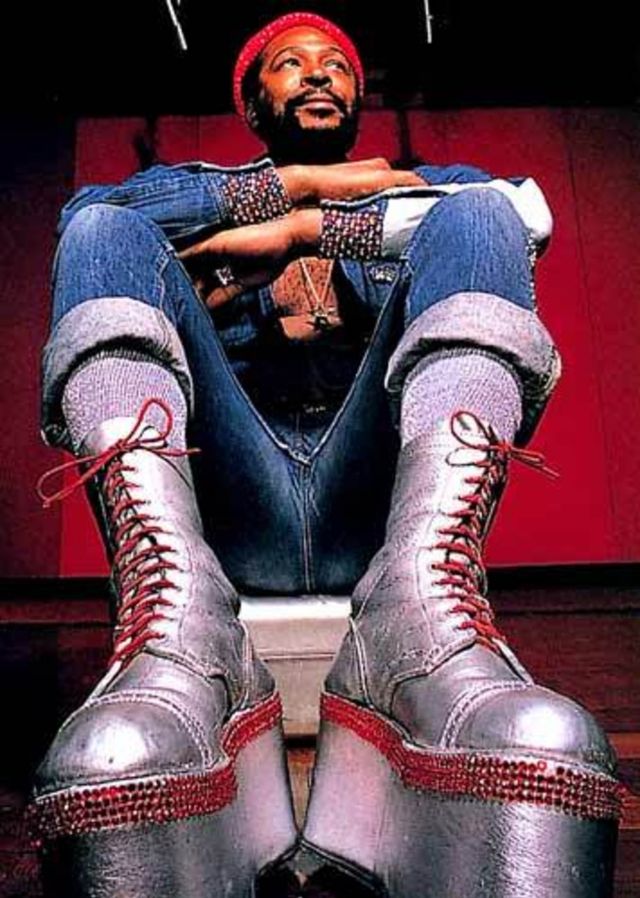
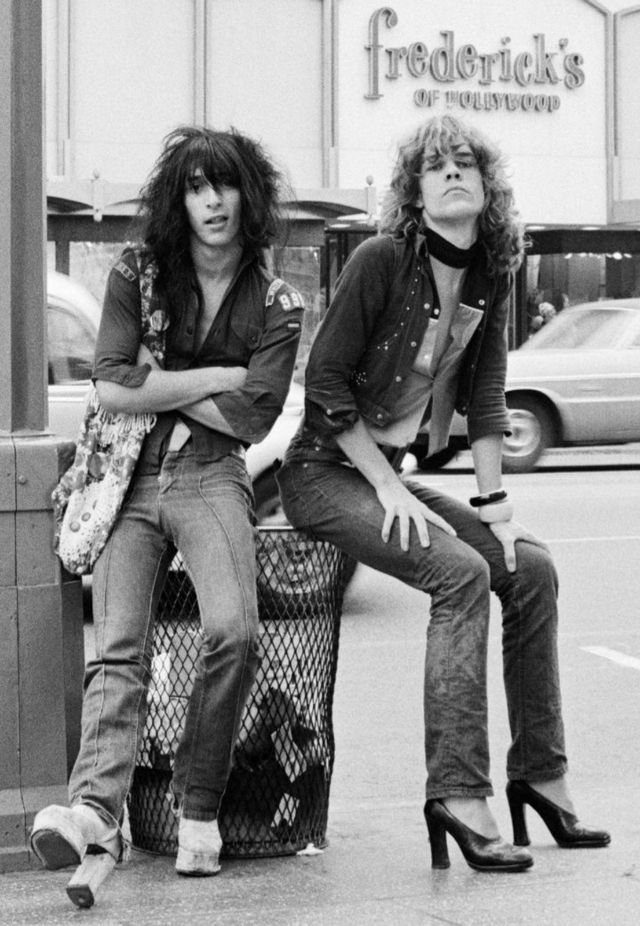
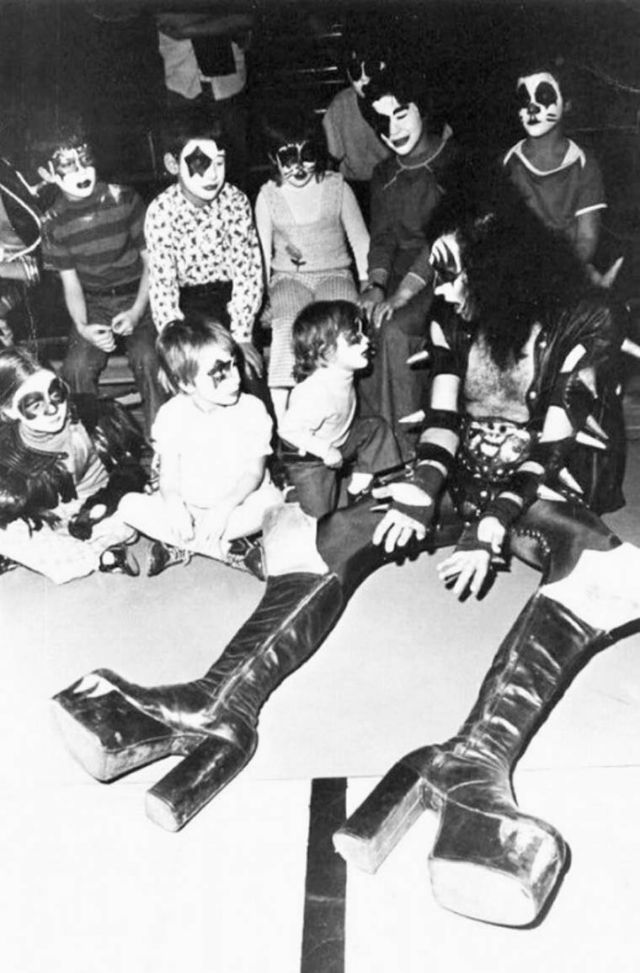
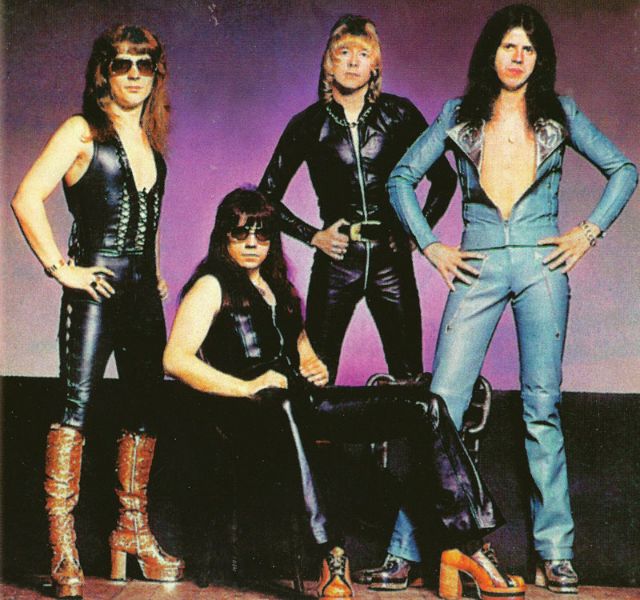
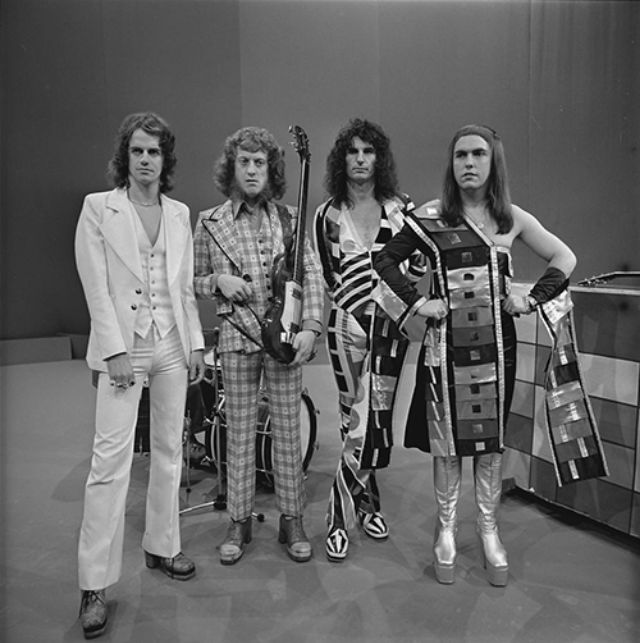
David Bowie, ca. 1970s.George Clinton, 1978.An early version of AC/DC with vocalist Dave Evans looking very glam (far left) with Angus (the only one not wearing heels) and Malcolm Young.Marvin Gaye’s signature silver platform boots made by Gaye’s wife, Janis, ca. 1970s.Johnny Thunders and David Johansen of the New York Dolls, 1973.Gene Simmons, his sick platform boots, and KISS’s young minions.KISS walking on the street of New York City, 1976.The SweetKeith MoonSladeUnknown rocker, New York City, 1977.
Morrison shelters were a way of protecting people from in their own homes from falling bombs. This was an alternative to the Anderson shelter in the garden and the public shelters.
The Morrison shelter was an indoor cage that was designed to protect the occupants from the debris if the house was hit by a bomb.
The Morrison shelter’s official name is the “Table (Morrison) indoor shelter”, it was designed by John Baker and named after Herbert Morrison who was the Minister of Home Security at the time. The idea for the Morrison shelter was fed from the realization that there was a lack of indoor shelters as not enough homes had cellars.
The Morrison shelter measured approximately 6 ft 6 inches (1.98m) long, 4 ft (1.21m) wide and 2 ft 6 inches (0.76m) high. With a steel plate “table” top, welded wire mesh sides, and a metal lath floor. Three tools were supplied with the pack that you built up inside your home and it had 359 parts altogether. A lot of people used the shelter as a table and had bedding inside of it.
A Morrison shelter in a room setting, showing how such a shelter could be used as a table during the day and as a bed at night. The table cloth is partly pulled back to reveal the sleeping area.
Derek Lambert describes how this new shelter at first appeared to be a more comfortable option: When the first savagery of the night attacks faded we left the cupboard under the stairs and moved into a Morrison shelter.
This was a large metal cage a little higher than a dinner table. It had a hefty iron frame with a sheet steel ceiling screwed together with chunky nuts and bolts. Underneath was a crude wire mattress. It was massive and angular and filled the dining room except for a space in front of the fire.
It became part of the house, a foundation almost; we slept in it and on it, we ate from it, we played in it. When the siren sounded we were supposed to dive inside and put up steel mesh around the sides. Thus, according to the theorists, we were protected from falling masonry by the frame and steel ceiling and from flying rubble by the mesh cage.
When the Germans resumed the destruction of such military targets as schools, shops, houses and sleeping cows we spent all night in the shelter…
As the bombs stirred the ground and the shrapnel clattered down the road we fought a quiet battle of cunning for the bedclothes. Feet touched faces, arms swung across chests, elbows elbowed; snores bubbled and spluttered to be silenced by ostensibly accidental blows; fragments of wild dream-talk escaped from the depths of our private lives. Enmity was closer to the surface during those caged nights than at any other time in our well-mannered lives.
The system collapsed after a few weeks. White-faced, shadow-eyed, we decided that for the sake of health and happiness two of us would have to evacuate the shelter. For the next few months my parents slept on top of it while I rolled and stretched and crawled and sometimes slept beneath. When the next lull in the bombing came we crept back to our beds.
Half a million Morrison shelters had been distributed by the end of 1941, with a further 100,000 being added in 1943 to prepare the population for the expected German V-1 flying bomb.
Dangerous Years is a 1947 American drama film produced by Sol M. Wurtzel, directed by Arthur Pierson. Marilyn Monroe makes her first on screen appearance as Evie, the waitress in the restaurant scene.
Actually, her voice previously appeared in the film The Shocking Miss Pilgrim, which was released months earlier, as an uncredited voice as a telephone operator.
These rare pictures captured Monroe in some scenes of Dangerous Years, and during her acting lessons with coach Helena Sorell to prepare for her role in this film.
Marilyn Monroe (born Norma Jeane Mortenson; June 1, 1926 – August 4, 1962) was an American actress, model and singer. Famous for playing comedic “blonde bombshell” characters, she became one of the most popular sex symbols of the 1950s and early 1960s and was emblematic of the era’s sexual revolution. She was a top-billed actress for a decade, and her films grossed $200 million (equivalent to $2 billion in 2020) by the time of her death in 1962. Long after her death, Monroe remains a major icon of pop culture. In 1999, the American Film Institute ranked her sixth on their list of the greatest female screen legends from the Golden Age of Hollywood.
Born and raised in Los Angeles, Monroe spent most of her childhood in foster homes and an orphanage; she married at age sixteen. She was working in a factory during World War II when she met a photographer from the First Motion Picture Unit and began a successful pin-up modeling career, which led to short-lived film contracts with 20th Century Fox and Columbia Pictures. After a series of minor film roles, she signed a new contract with Fox in late 1950. Over the next two years, she became a popular actress with roles in several comedies, including As Young as You Feel and Monkey Business, and in the dramas Clash by Night and Don’t Bother to Knock. She faced a scandal when it was revealed that she had posed for nude photographs prior to becoming a star, but the story did not damage her career and instead resulted in increased interest in her films.
By 1953, Monroe was one of the most marketable Hollywood stars; she had leading roles in the film noir Niagara, which overtly relied on her sex appeal, and the comedies Gentlemen Prefer Blondes and How to Marry a Millionaire, which established her star image as a “dumb blonde”. The same year, her nude images were used as the centerfold and on the cover of the first issue of Playboy. She played a significant role in the creation and management of her public image throughout her career, but she was disappointed when she was typecast and underpaid by the studio. She was briefly suspended in early 1954 for refusing a film project but returned to star in The Seven Year Itch (1955), one of the biggest box office successes of her career.
When the studio was still reluctant to change Monroe’s contract, she founded her own film production company in 1954. She dedicated 1955 to building the company and began studying method acting under Lee Strasberg at the Actors Studio. Later that year, Fox awarded her a new contract, which gave her more control and a larger salary. Her subsequent roles included a critically acclaimed performance in Bus Stop (1956) and her first independent production in The Prince and the Showgirl (1957). She won a Golden Globe for Best Actress for her role in Some Like It Hot (1959), a critical and commercial success. Her last completed film was the drama The Misfits (1961).
Monroe’s troubled private life received much attention. She struggled with addiction and mood disorders. Her marriages to retired baseball star Joe DiMaggio and to playwright Arthur Miller were highly publicized, and both ended in divorce. On August 4, 1962, she died at age 36 from an overdose of barbiturates at her Los Angeles home. Her death was ruled a probable suicide. (Wikipedia)
Subscribe to continue reading
Become a paid subscriber to get access to the rest of this post and other exclusive content.
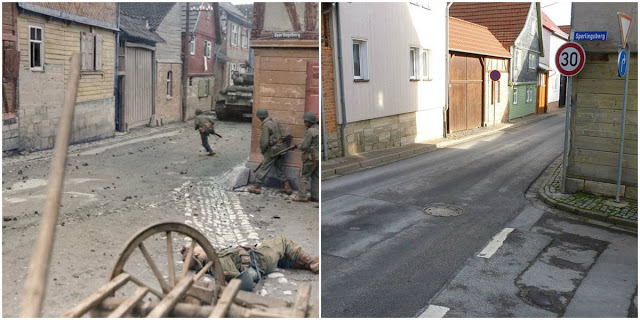
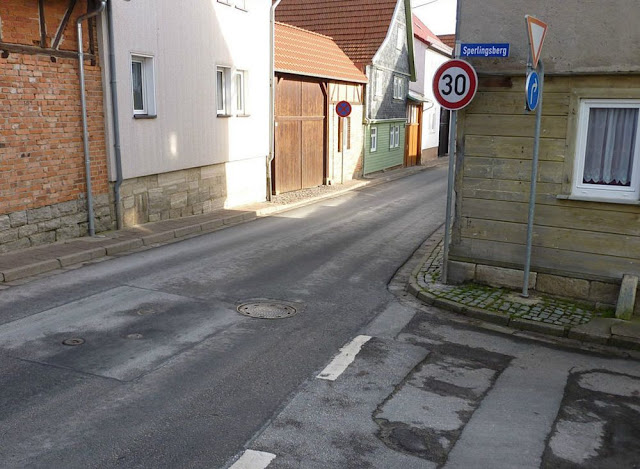
Two amazing photos. The first is allied forces pushing through the town of Oberdorla, Germany, during World War II in 1945. The second is the same street captured 71 years later in 2016.
This is a nice colorized reproduction of an original WWII photograph. Not only it brings much more detail to black and white photo, there’s also a detailed description of the photo. Infantrymen of ‘B’ Company, 44th Armored Infantry Battalion, 6th US Armored Division while crossing the street, pass the body of Pfc. Robert Vardy Wynne (aged 19 from Texas) who had just been mortally wounded by a sniper. This took place on April 4 1945 in Oberdorla, Mühlhausen/Thüringen, Germany.
Here’s the same street captured in the same angle 71 years later in 2016: