

















Bringing You the Wonder of Yesterday – Today

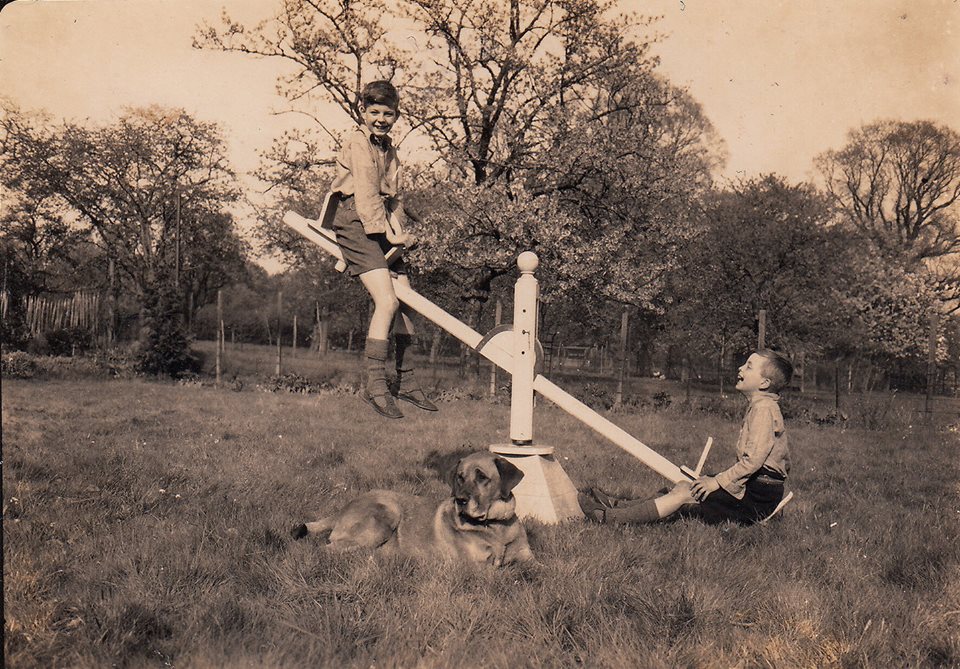
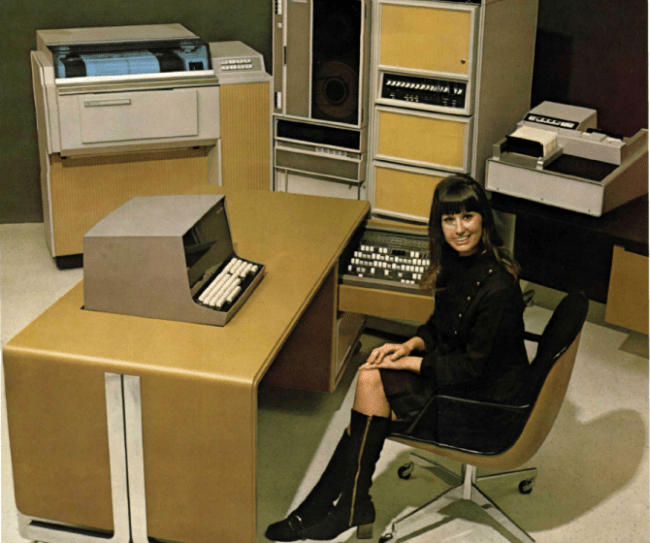
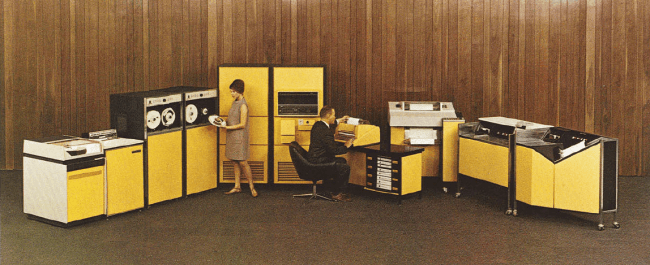
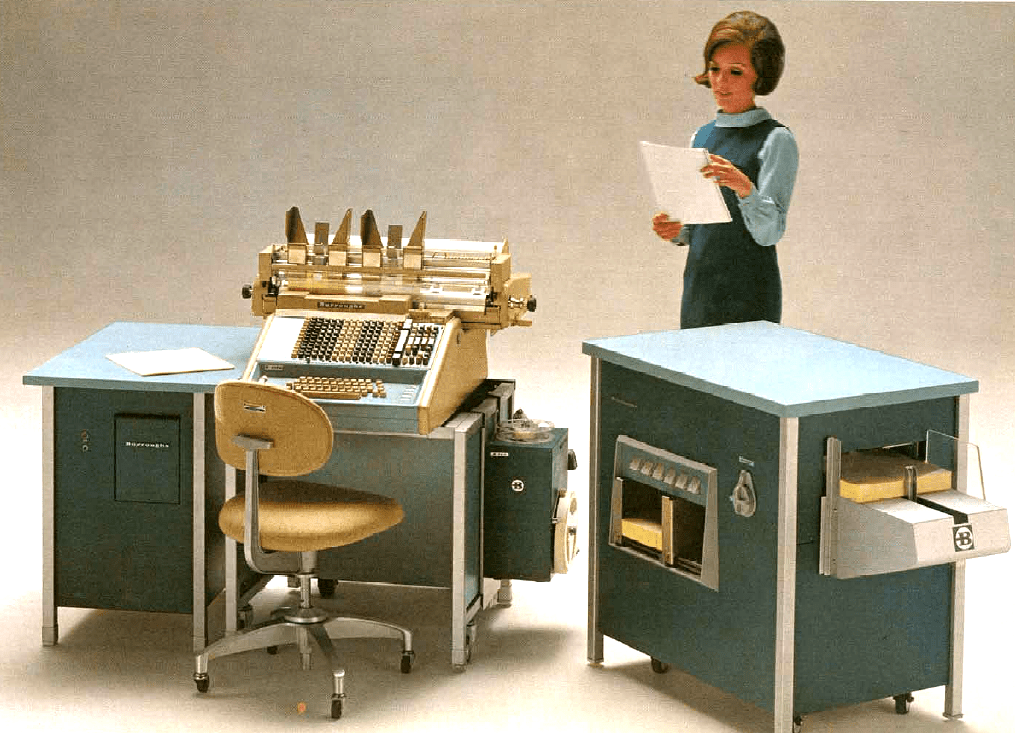
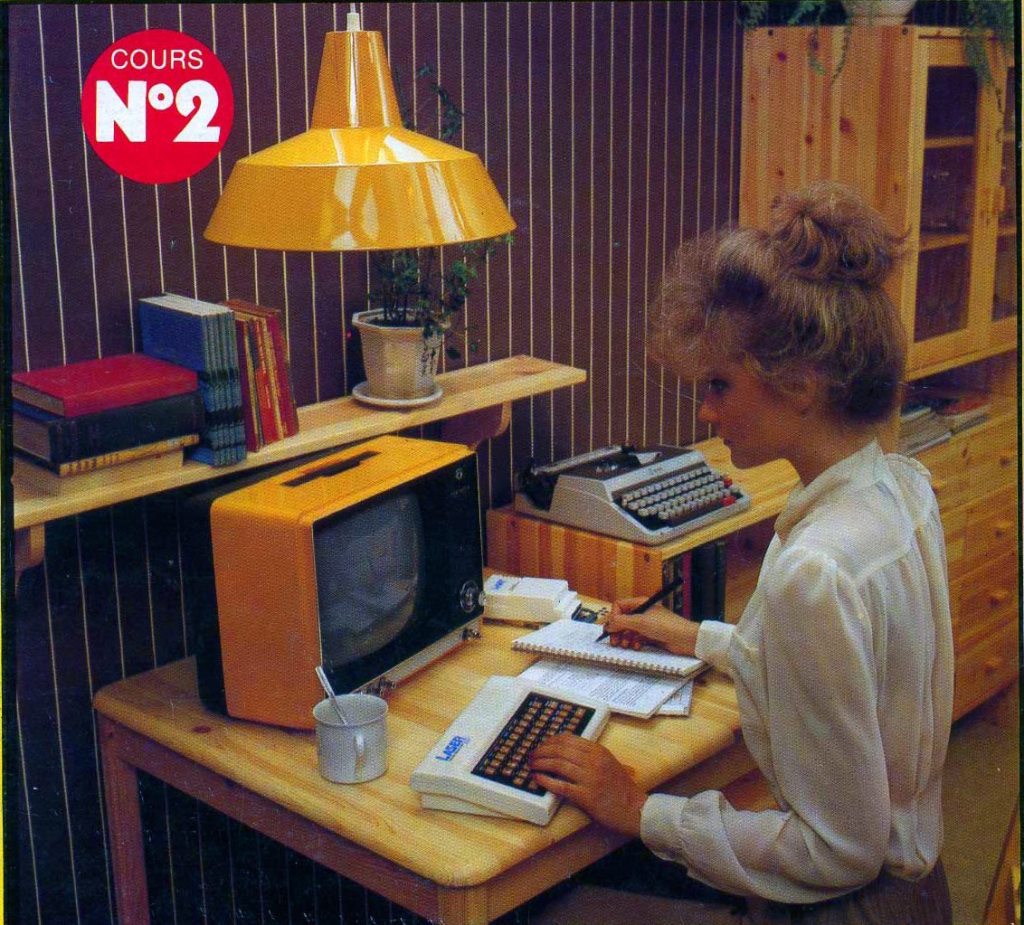
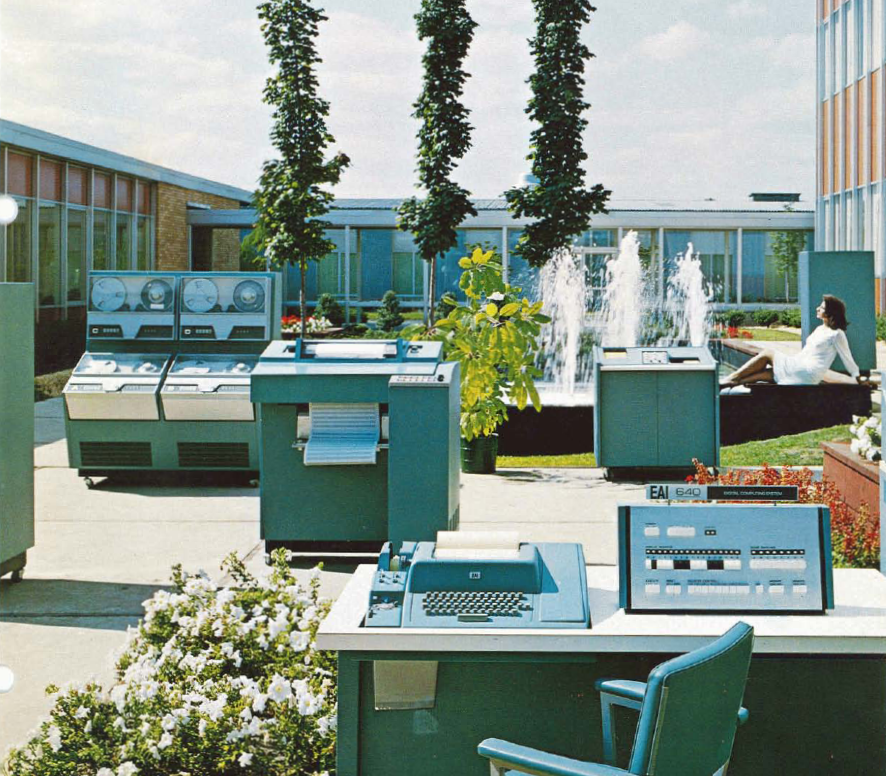
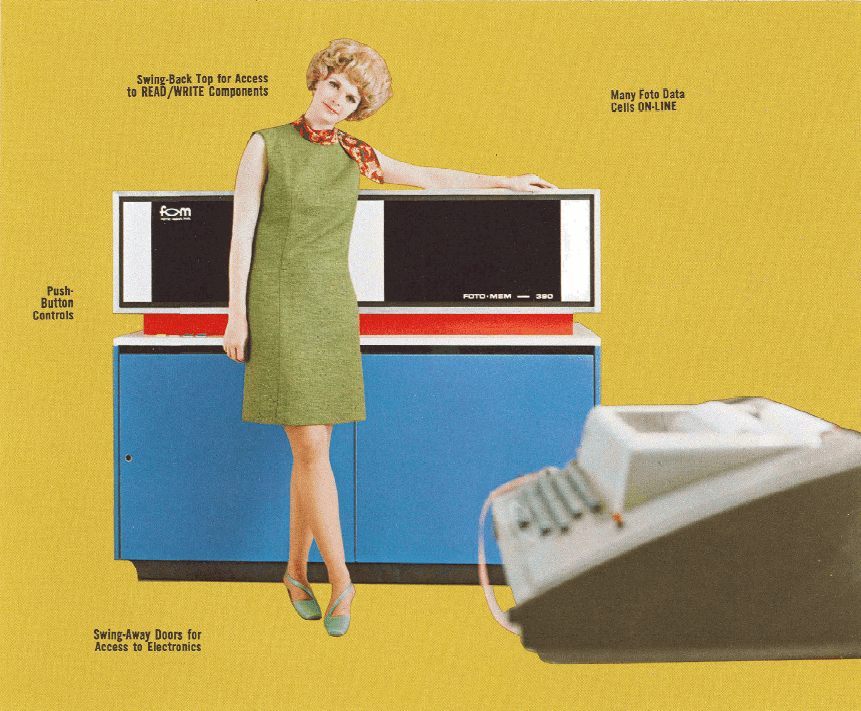
Once upon a time, our computers and various technologies came in vibrant colors. It made sense at a time when computers were massive. Also, 1960s and 70s decor tended to make everything colorful.
Unlike today where our refrigerators are plain white or stainless steel – fridges of the 60s and 70s were harvest gold, tangerine and avocado green. So too were the technologies of the day; a trend that truly didn’t wear off until the late 1980s.








As photography had become part of people’s daily lives during the inter-war period, numerous iconic images were taken of the Second World War, creating an album of hope and horror, of atrocities and valor. The one that perhaps represented the fighting spirit of well-mannered Great Britain most clearly was the famous picture taken by a photographer called Fred Morley on October 9, 1940, depicting a milkman going about with his daily business amidst the rubble in London.
The raid that took place that night was the 32nd in a row, the United Kingdom being mercilessly bombed night after night. The raid was also the one that saw a bomb make a direct hit on St Pauls Cathedral in London ? one of the city’s most recognizable buildings ? but, and with God’s help perhaps, it failed to detonate.
Prior to this attack, the Cathedral had been bombed on December 29, 1940, when yet another famous photograph was created by a Daily Mail reporter, one which was soon dubbed the “War’s greatest picture”. It depicts St. Paul’s Cathedral, surrounded in smoke, just after a bombing raid. The monumental building stands tall and proud and, most importantly, undamaged. This was the sort of story and image, desperately needed in those times, that the press was urged to create.
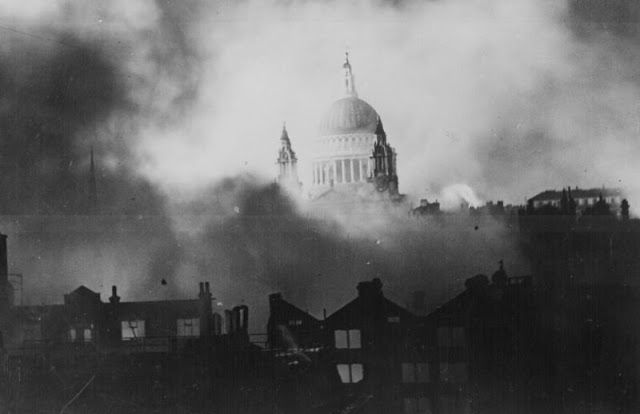
On the other hand, the image was also used by the German propaganda machine, but this time to stress the level of destruction the Luftwaffe had caused to the enemy.
The Battle of Britain, which was one of the early turning points in the war, relied heavily on the defiance and morale of both the British soldiers and its citizens, who gave their best to withstand the terrifying bombing raids and rapidly deteriorating living conditions.
Thus the photograph of a milkman casually strolling through the ruins as he delivers milk became an unofficial symbol of the defiant British character.
At the time, the photograph helped boost the morale of the millions of British citizens who became ever more prepared to repel the Nazi war machine. However, decades later it was revealed that the image was actually staged.
During the bombing raids, the British censors were working desperately to keep the nation calm by forbidding to authorize images depicting the scale of destruction which was being caused by the Luftwaffe. Since most of the photos taken by reporters were rejected, Morley had to figure out how to please the censors, but again to show the truth of what was happening in London.
On the October morning, he arrived at the scene to witness firefighters struggling to contain the fire caused by the bombing. The rubble was all around him. Since he couldn’t bear to let this go unnoticed by the press, Fred Morley devised a plan to override the censorship.
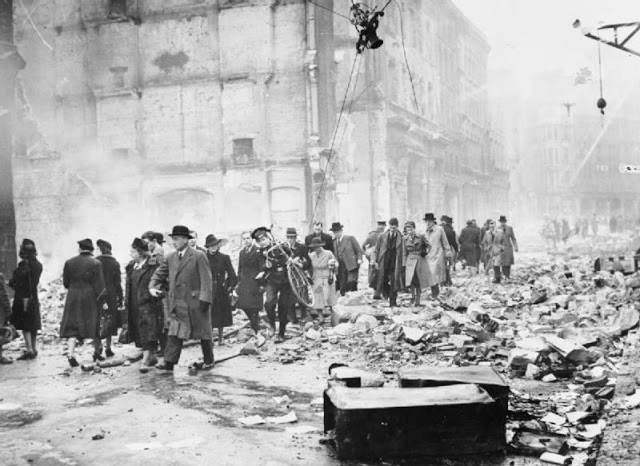
He had seen a milkman in the area and asked him if he could borrow his coat and a crate full of milk bottles. Morley’s assistant then took the recognizable white coat and posed with the crate as his boss took pictures.
The result was an image that became a part of the collective memory of the war. The image appeared spontaneous while depicting the stoicism of the British working man who casually continues with his day job, undisturbed by the threat of destruction from above. The power of the message the photo conveyed was recognized by the British censors, who decided to print it in the newspapers.
Even though the photo was staged, its role in raising the spirit of the British people during a time when it was uncertain whether or not the island would be able to deter the enemy was priceless and its timing was perfect.
(via War History Online, photos © Fred Morley)
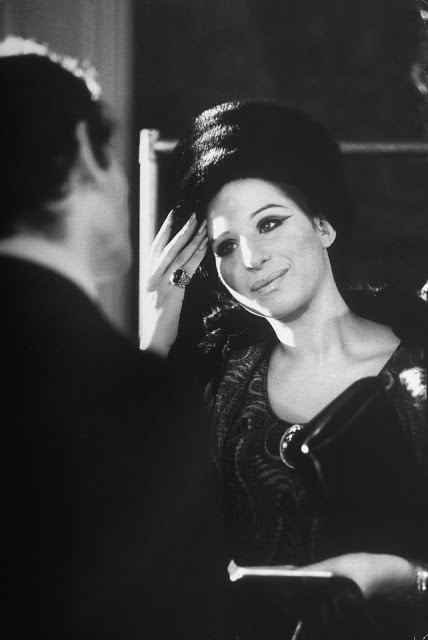
Barbra Streisand has been such a force on the entertainment scene for so long (her 1963 debut album, recorded when she was just 20, won an Album of the Year Grammy) that a glimpse back at her first years in show business offers fascinating insights into her evolution as a performer, and a person.
In 1966, LIFE published a cover story on the then-23 year old Brooklyn native that portrayed the young star as a “fear-ridden girl” terrified that her early success “could suddenly all fall apart.” Of course, creative people who have enjoyed (or endured) fame right out of the gate almost invariably, at one point or another, suffer lacerating self-doubts; Streisand, however, appears to have examined her own talents and achievements with the same tenacity that she brought to, say, mastering the nuances of a new tune or the timing of a comedic line.
“Why Barbara Streisand has to know what people think of her every time she performs is an astounding, and wrenching, phenomenon,” wrote Diana Lurie in the March 18, 1966, issue of LIFE. “At 23, she is an undisputed queen of musical comedy, television and records. Every one of the seven records she has made sold a million copies. She gets $50,000 per concert appearance. For nearly two years she pulled in standing room-only audiences for an otherwise undistinguished musical, Funny Girl… Everybody knows Streisand is on top. So does she. And the more she is hailed, the more scared and unsure she feels. ‘I win awards and everything but one of these days something is going to bomb. It’s a scary thing.’”
Here, a collection of some of fascinating photos that offers a window into the intense, emotionally fraught world Streisand inhabited and, in a sense, created for herself with her own outsized insecurities and perfectionism early in her career.

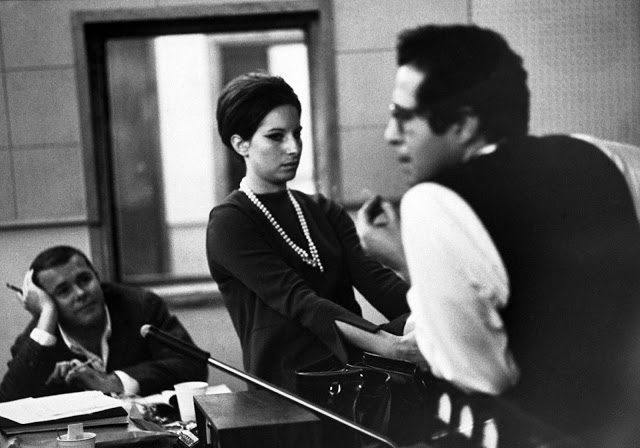


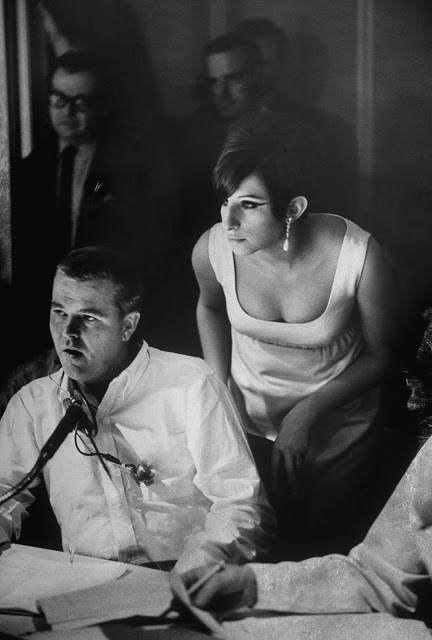
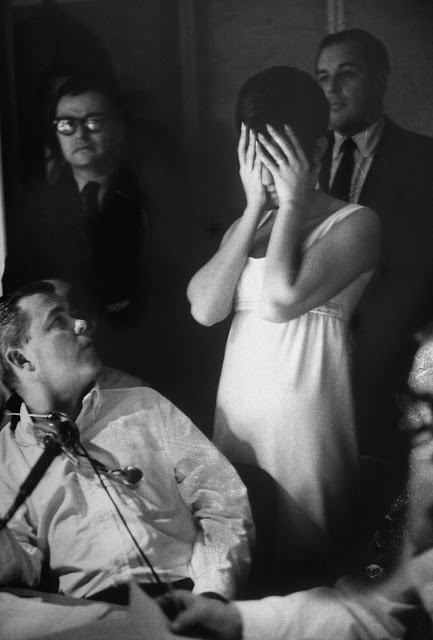
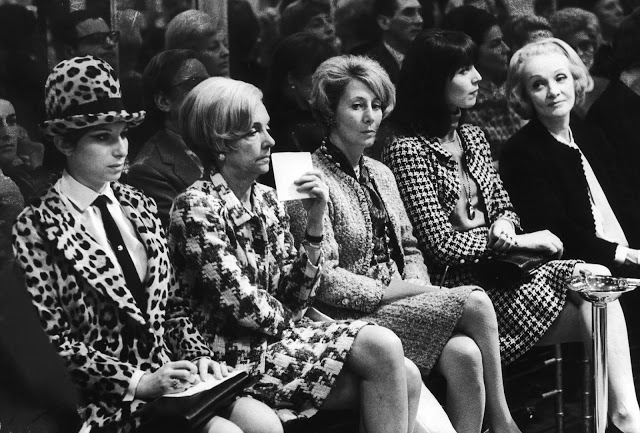
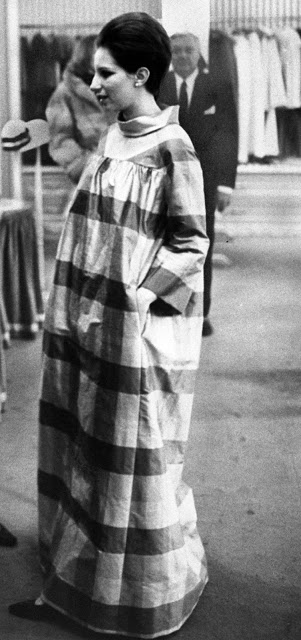


Photos by Bill Eppridge—The LIFE Picture Collection/Getty Images

A group that is rarely talked about in regards to German history and it’s dealings with people from different continents are the Africans. Most know the Askari, who fought with von Lettow-Vorbeck in the First World War. Yet rarely any know of those that actually traveled to Germany and lived most or even all of their life there.
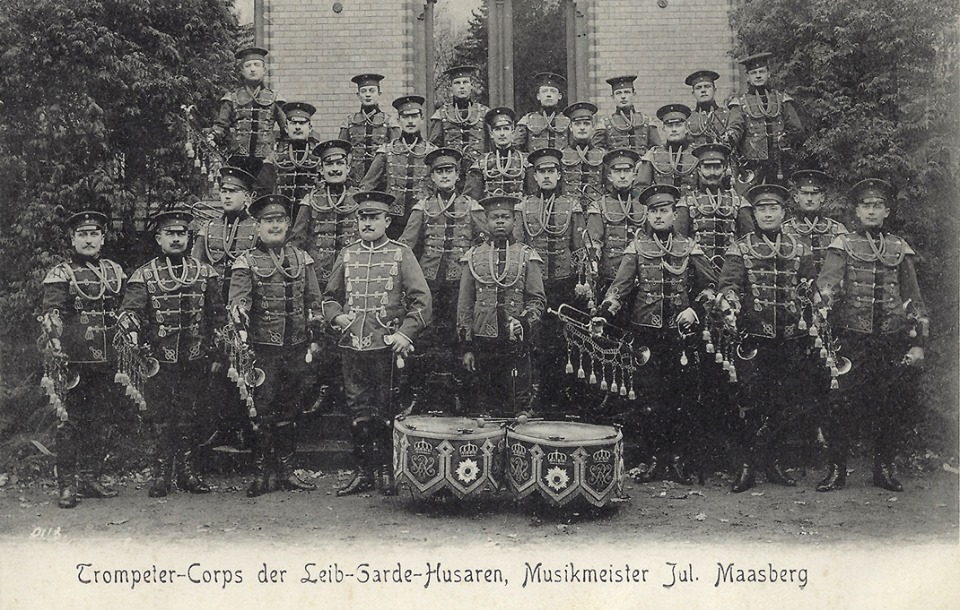
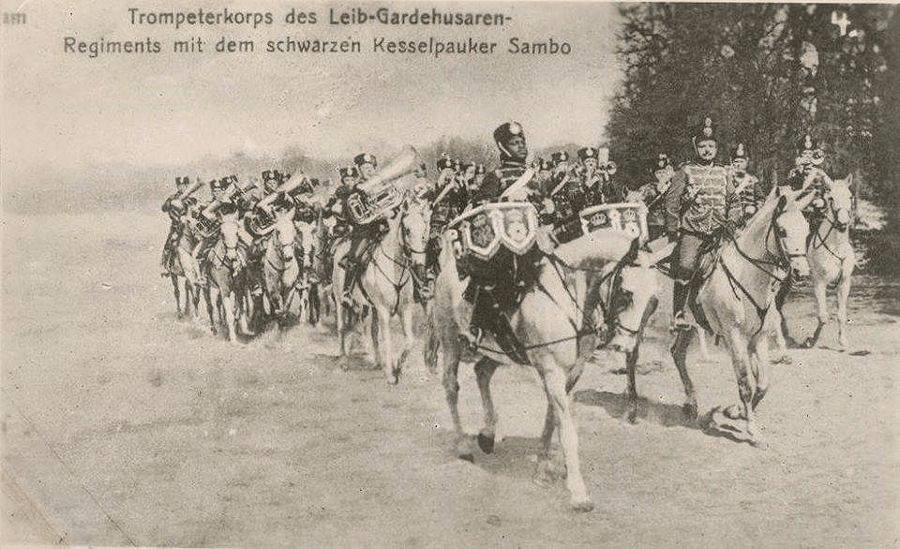
One of these young Africans was Elo Sambo. He was born on 1. April 1885 in Jaunde, Deutsch-Kamerun. At the age of six, he was picked up by a Cavalry Captain of the Schutztruppe (colonial wing of the German army) and brought to Germany. There, Kaiser Wilhelm II. officially became his godfather and Elo Sambo was known henceforth as Elo Wilhelm Sambo, in honour of the Kaiser.
Sambo grew up in a military orphanage in the city of Potsdam near Berlin, where he was trained as a cavalryman. His military career continued when he volunteered to serve with the 1. Eisenbahner-Regiment (1st Railroad-Regiment) in 1905. After his completed service there, he was allowed to join the Leibgarde-Husaren-Regiment, the Cavalry-Wing of the Imperial Guard. There, he was trained to become a kettle drummer. It was tradition that the kettle drummers of the Guard Cavalry were black.
Having completed his training, he rode infront of the trumpeters. Clad in a red uniform, he sat upon a white horse, with his black skin completing the Imperial colour scheme.
In the First World War, he served at the frontlines. First in Ostpreußen (East Prussia) during 1914, then being transfered to the front near Verdun in 1915. He was then again transfered to the “Osmanische Armee” (“Ottoman Army”, the German detachment to help the Ottomans) in Palestine, where he was taken prisoner by British troops. He was wounded several times and was awarded the Verwundetenabzeichen (Badge of the Wounded), as well as the Eisernes Kreuz 2. Klasse (Iron Cross 2nd class).
As the war ended, Sambo returned to Germany. The military was severly reduced in numbers, but he managed to find his way to the 4. Reiterregiment (4th Cavalry-Regiment), which continued the tradition of the Guard Cavalry. Here he again served as kettle drummer besides old comrades that survived the war. He was however released from service in 1923, after serving in the German Army for 18 years.
Now out of a job, he first worked as a guide for the castles of Potsdam. Not being satisfied with this job, he went to Münster in Westphalia and worked for one of his old comrades in a high-society Café. While he worked there, Germans from sometimes far away came to see him. Not only was he an African, a rarity in Germany of course, but also a war hero.
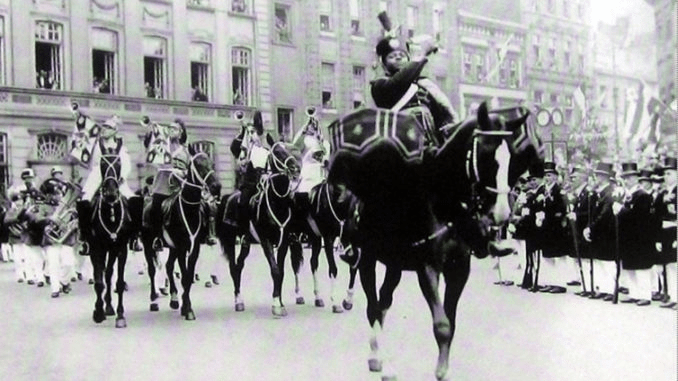
Soon however, he got into contact with some old Rhenish comrades and they arranged for him to come to Cologne, where he from then on lived in the heart of the city. The Cologne Carnival became his passion and he joined the “Blaue Funken” (“Blue Sparks”), one of the oldest Carnival-Clubs in Cologne. There he once again rode infront of the formation, now clad in a blue and white uniform, as a kettle drummer. He became a celebrity, everybody in Cologne knew of Sambo and he was beloved by most. He was especially popular with children for his kind demenour. He married a woman there and fathered at least one child, which survived the Second World War.
All the while, he was a regular attendee of Veteran-reunions, memorials and other Patriotic events, clad in his old uniform and playing the kettle drums. There was no doubt that Sambo had a deep-seated patriotism towards Germany, which he without a doubt considered to be his fatherland. There are no known reports of him ever facing any major racism in all his decades in Germany. No matter if in the army, in Potsdam, Münster or Cologne, he always was a beloved part of society.
He participated in his last carnival in 1933, dying a few months later on 15th July 1933. His burial on the Southern Cemetary of Cologne was nothing short of a hero’s burial. Behind the coffin marched two of his surviving comrades from the Guard Cavalry, clad in their old peacetime uniforms. They carried with them a large wreath by the exiled Kaiser Wilhelm II, who had not forgotten his godchild, even after all those decades. Behind them were the members of the Veteran Organisations of the different units of the Imperial Guard. They were followed by the remaining Veteran’s Organisations that existed in Cologne. Behind them came flag- and standard-carriers, all wearing the peacetime uniforms of 1914 and displaying the old flags under which Sambo had served before and during the World War. No pictures of the burial exist, but it is easy to assume that it was sight to behold, a last display of admiration by the Germans for their beloved African comrade.




Volkswagen, maker of the Beetle automobile, expands its product offerings to include a microbus, which goes into production on March 8, 1950. Known officially as the Volkswagen Type 2 (the Beetle was the Type 1) or the Transporter, the bus was a favorite mode of transportation for hippies in the U.S. during the 1960s and became an icon of the American counterculture movement.
The VW bus was reportedly the brainchild of Dutch businessman Ben Pon, an importer of Beetles to the Netherlands, who saw a market for a small bus and in 1947 sketched out his concept. Volkswagen engineers further developed the idea and in March 1950, the vehicle, with its boxy, utilitarian shape and rear engine, went into production.
The bus eventually collected a number of nicknames, including the “Combi” (for combined-use vehicle) and the “Splittie” (for its split windshield); in Germany it was known as the “Bulli.” In the U.S., it was referred to by some as a hippie van or bus because it was used to transport groups of young people and their camping gear and other supplies to concerts and anti-war rallies. Some owners painted colorful murals on their buses and replaced the VW logo on the front with a peace symbol. According to “Bug” by Phil Patton, when Grateful Dead musician Jerry Garcia died in 1995, Volkswagen ran an ad featuring a drawing of the front of a bus with a tear streaming down it.




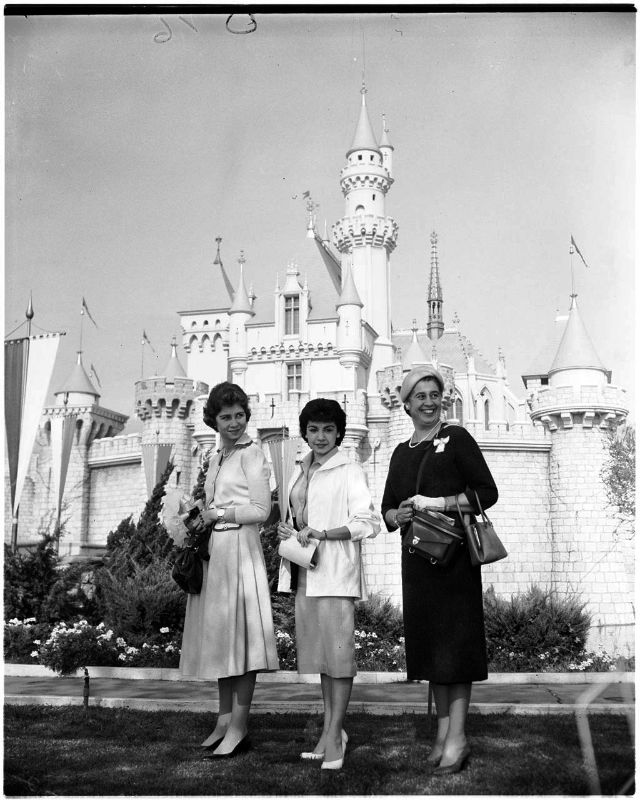
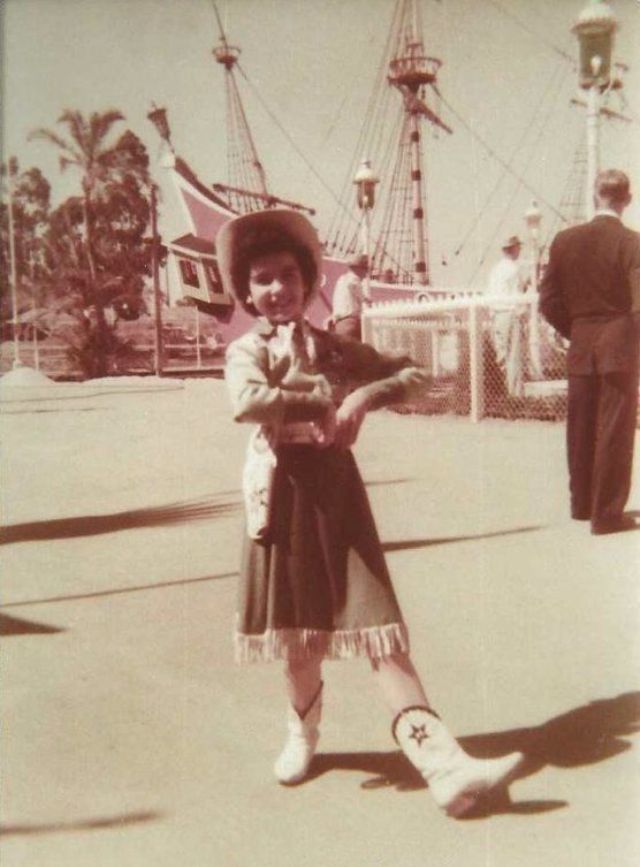
Born in Utica, New York, American actress and singer Annette Joanne Funicello began her professional career as a child performer at the age of twelve, and rose to prominence as one of the most popular Mouseketeers on the original Mickey Mouse Club.
As a teenager, Funicello transitioned to a successful career as a singer with the pop singles “O Dio Mio”, “Tall Paul” and “Pineapple Princess”, as well as establishing herself as a film actress, popularizing the successful Beach Party genre alongside co-star Frankie Avalon during the mid-1960s.
In 1992, Funicello announced that she had been diagnosed with multiple sclerosis. She died of complications from the disease in 2013.
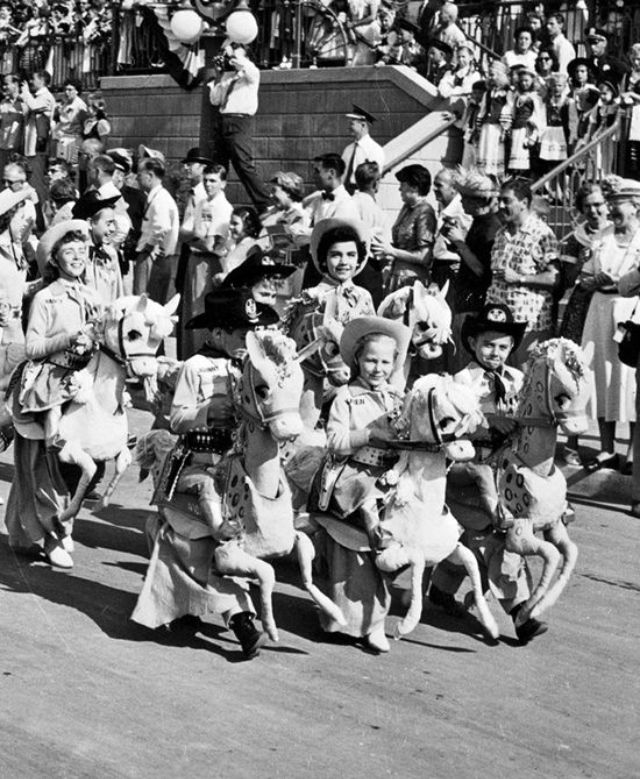
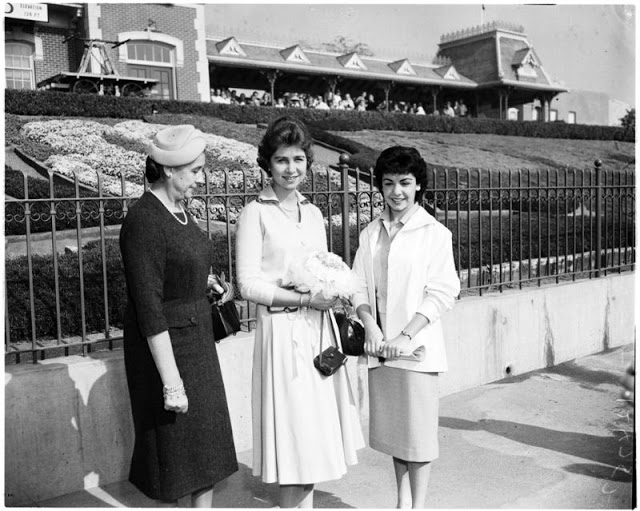
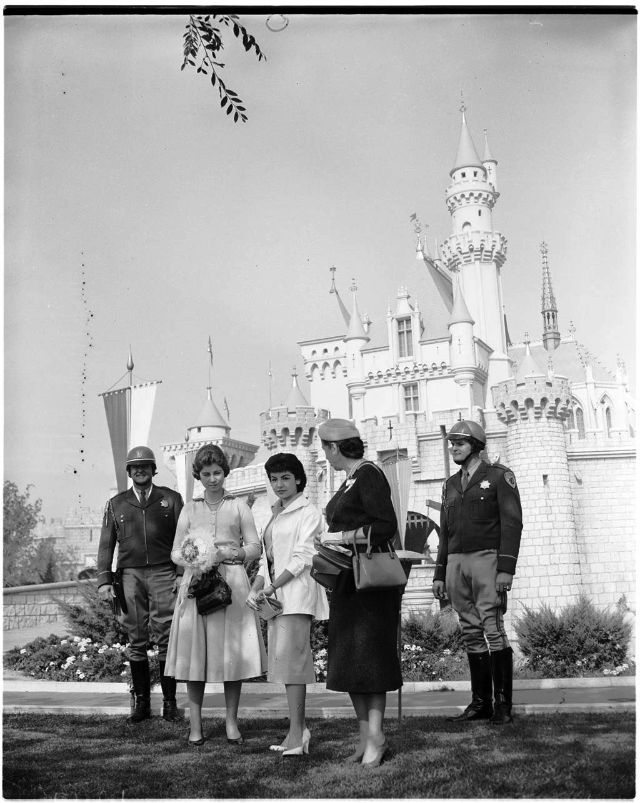
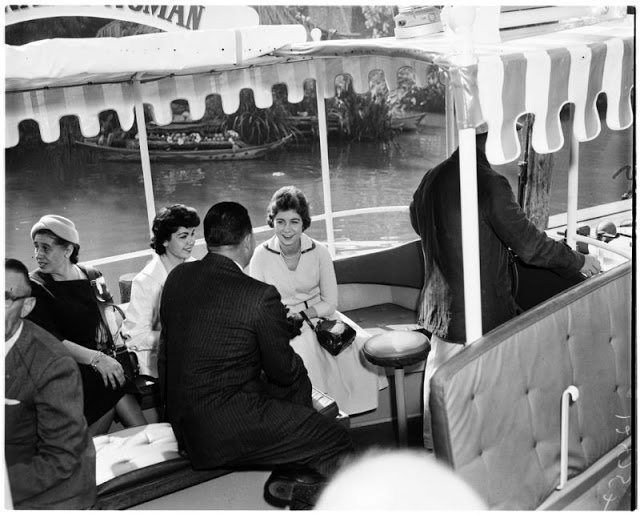
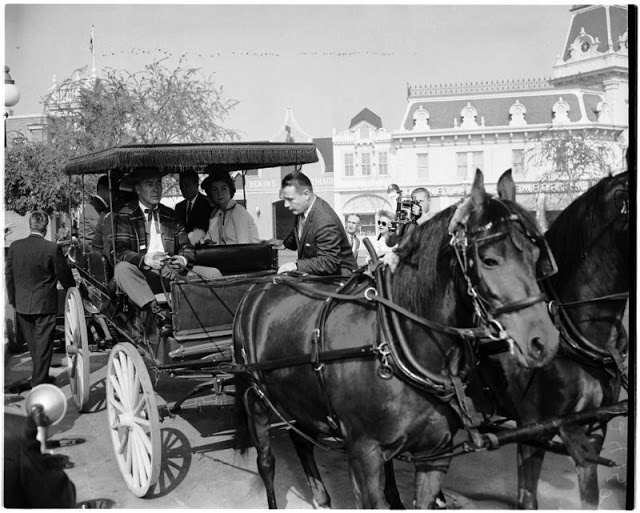
These rare photos that captured Funicello at Disneyland in 1955 and 1958. Take a look.


Become a paid subscriber to get access to the rest of this post and other exclusive content.
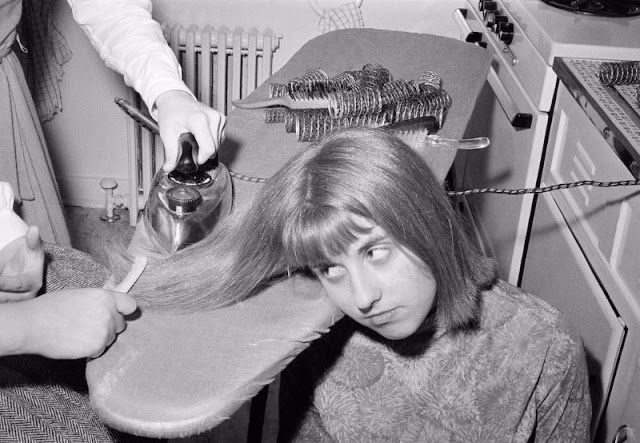
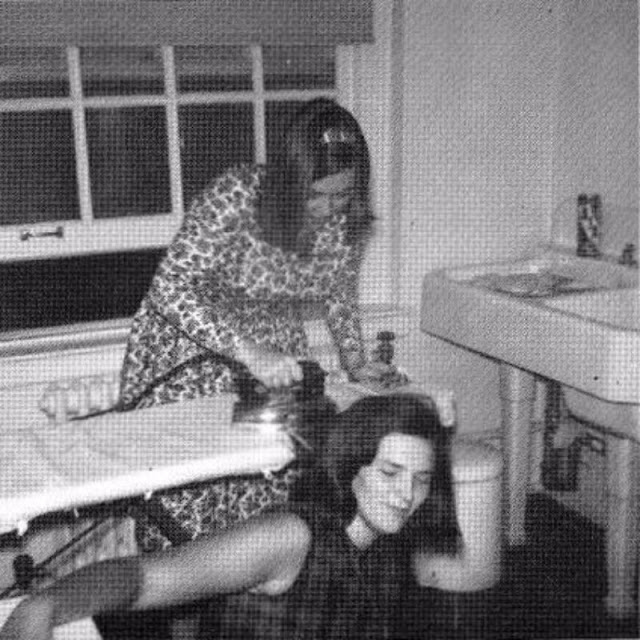
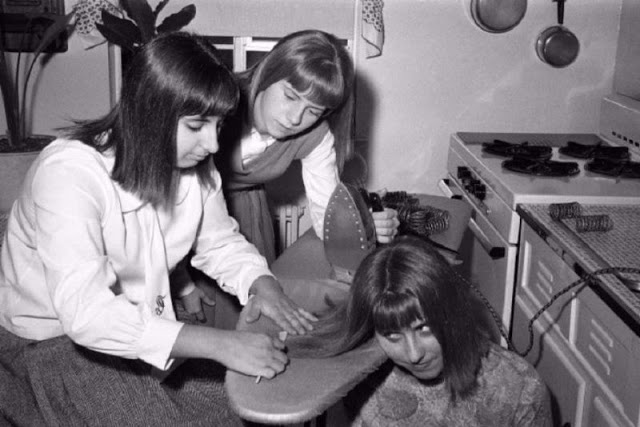
Hair straighteners have become popular in the early 1960s and have been in use ever since. Some women used clothes irons to straighten their hair. This dangerous practice was abandoned after the 1960s although it can still be found in some countries.
The sexual revolution was not the only backlash against the idealistic demands placed upon women: a hair revolt bubbled up when ladies finally got fed up with the tremendous teasing and hours of hairspray that defined the bubble bouffant of the early 1960s. Girls were tired of the combs, cans of hairspray, and long hours in curlers, and they showed their displeasure by taking to the iron.
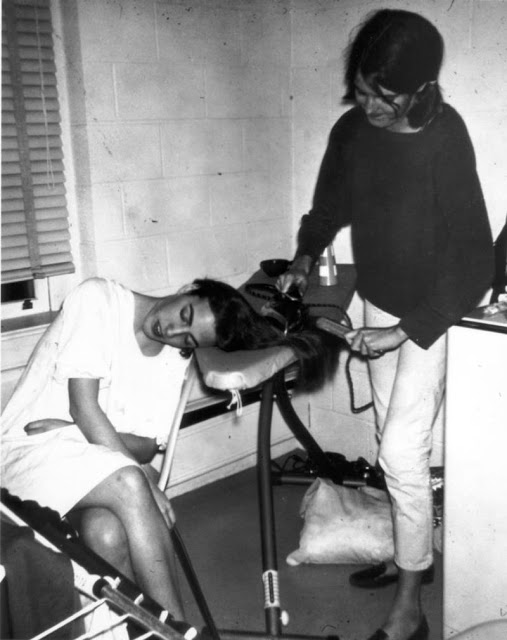
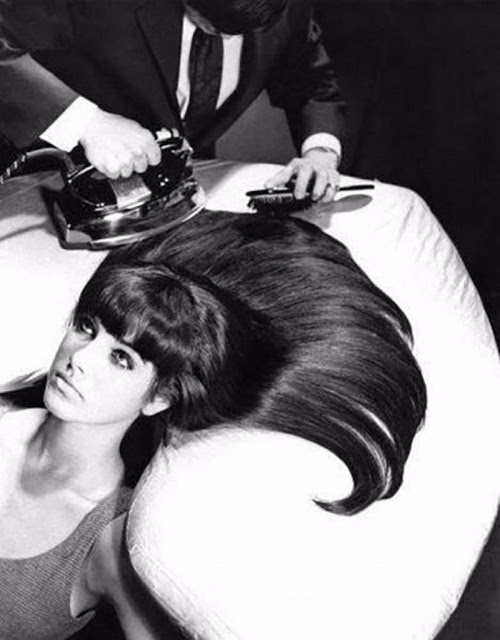
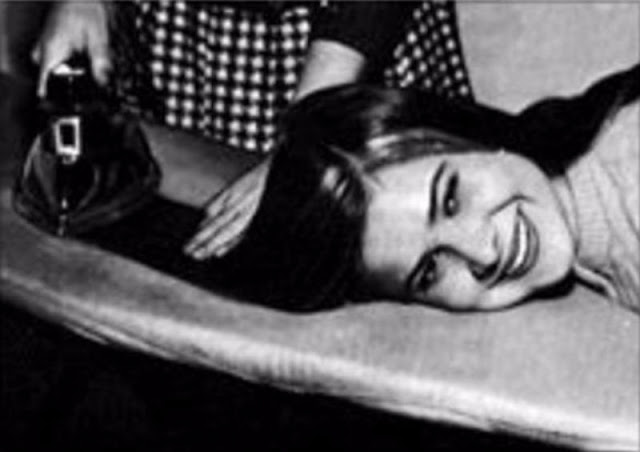
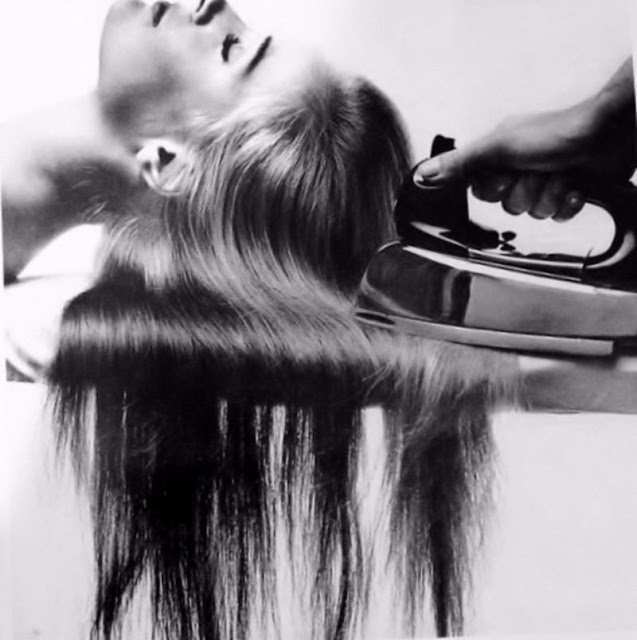
Ironing hair became a favorite pastime with friends: one girl would trustingly put her head down next to the ironing board so that her friend could iron small sections of hair. The heat of the iron smoothed out the hair follicle into the desired flatness, but a careless friend could burn your hair, or even leave the iron imprinted onto your locks like some horrible sitcom episode.
Girls gave up the tireless manipulation required for the gravity-defying dos, and exchanged the old ways for a new stick-straight style of ironed hair. Anti-style it could be called, but vanity is one of the truths of human nature, and although girls didn’t create masterpieces with their hair, they did tame their locks into sleek submission, risking burns and scorched hair, all in the name of fashion.
Straight hair became easier with the advent of the hair iron, made specifically for hair use. No more bending over the ironing board and getting a crick in your neck, the hair iron was much like a curling iron except for the two flat plates that replaced the traditional barrel. Just simply trap a section of hair between the two plates, and slide down the hair. Voilà, instant straight and shiny hair. With all the new modern conveniences, it’s amazing what we do to fit in.
Whether you want to straighten hair for a super-sleek evening look or create more manageable curls, you can choose from a variety of styling products and appliances. Using a regular clothes iron may seem more like an urban legend than a practical solution. However, with the proper technique and care a clothes iron can be the most efficient and long-lasting way to straighten even the thickest and curliest hair.

Morgan Dennis (1892-1960) was an American artist and writer who is most often remembered for his images of dogs. These posters, by Morgan Dennis, were produced for the American Humane Association’s Be Kind to Animals Week during the 1930s.
The commemorative week was first observed in 1915, and several well-known artists of the time created artwork to promote it over its first few decades of life. The national organization offered copies of posters like Dennis’ to local branches, leaving space at the bottom for their identifying information.
Each Dennis poster featured a child performing a kind act, reflecting the organization’s educational approach. The Association’s timeline history of the week notes that in 1936 Shirley Temple was the junior chair of the Be Kind to Animals Week commemoration—a celebrity endorsement that further cemented the relationship between kindness to animals and childhood.


Images: Collection of Robert Penney/the National Museum of Animals & Society
