12 Things You Probably Didn’t Know About Janis Joplin

Janis Joplin, often referred to as the “Queen of Rock and Roll,” is best remembered for her rebellious lifestyle, her psychedelic Porsche, her free flowing fashion sense and above all, her distinctive voice.
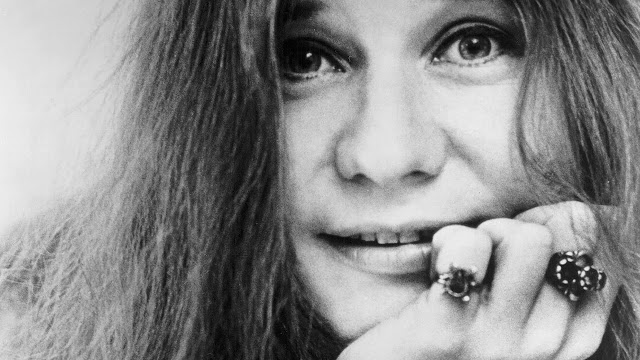
Rolling Stone ranked her as 46th on their 2004 list of the 100 Greatest Artists of All Time, and in 2008 she was ranked number 28. Her songs have withstood the test of time, with over 15.5 million albums sold in the US. In honor of a legend who died at the young age of 27, here are 27 facts about the queen of rock ‘n’ roll.

She Was Voted “Ugliest Man on Campus” at the University of Texas Which Left Her With Emotional Scars
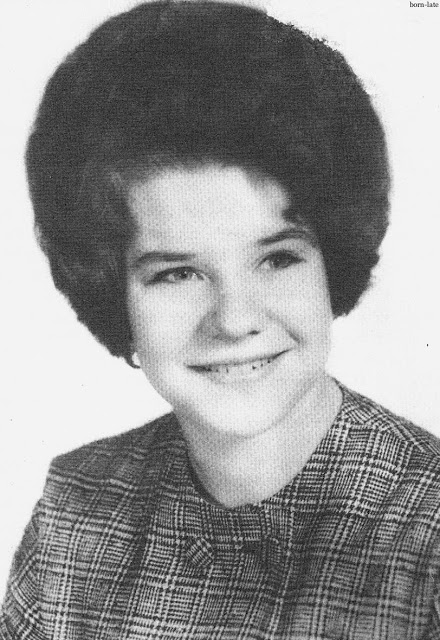
Janis Joplin was not considered by many during that time to be conventionally pretty. It was because of this that her self-esteem was effected for the entirety of her life. Growing up, she had been slightly overweight and had problems with acne that left her with an incredibly negative view of herself. As a child, Joplin was bullied for her looks and for being different.

The bullying continued all the way up until her first year of college at the University of Texas in Austin. A fraternity actually ended up voting her as “Ugliest Man on Campus” which rightfully hurt her deeply and she never forgot about it. Joplin ended up dropping out of college and she left Texas for San Francisco to escape the “angry men who liked to pick on her” as she would say.

She Loved Southern Comfort So Much, the Company Gave Her a Fur Coat in Return for the Publicity
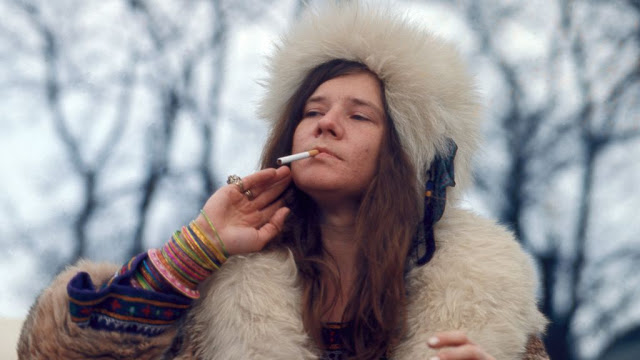
Like Joplin’s personality, and voice, her fashion sense was just as unique as her voice which was uniquely her own and was often loud and mismatched. Someone who attended the university with her said, “She goes barefooted when she feels like it, wears Levis to class because they’re more comfortable, and carries her autoharp with her everywhere she goes so that in case she gets the urge to break into song, it will be handy.”

Apparently, one accessory she never went anywhere without was a bottle of the sweet, whiskey-flavored liqueur Southern Comfort. It sure came in handy when she was fighting off the lead singer of The Doors, and it got her a free coat. In fact, the Southern Comfort company was so pleased with all the free product placement, they gave her a lynx fur coat. It seemed to go perfectly with all the booze, and her psychedelic custom-painted Porsche.

She Changed Her Will Two Days Before She Died So Her Friends Could Party
She Changed Her Will Two Days Before She Died So Her Friends Could Party

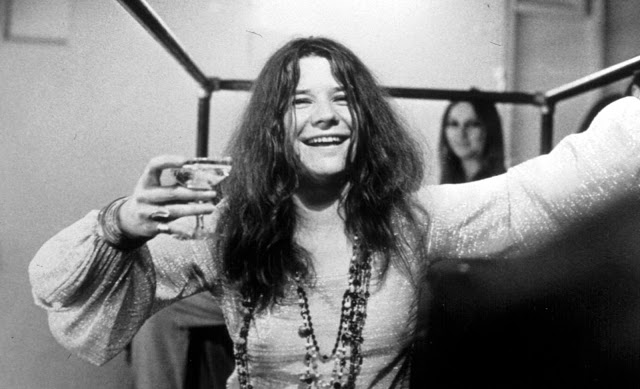
It seems almost odd that Joplin would change her will a mere two days before she died. During the change, she made a few requests that would benefit her friends and family, with some additional wealth going to her siblings. She ended up asking for $2,500 to be set aside and used for her friends to throw a party. The request allowed 200 people to have an all-night gathering at the Lion’s Share, which was her favorite San Anselmo bar. In her words, she said it was so, “my friends can get blasted after I’m gone.” Hash Brownies were (unknowingly) shared in her honor as her friends and family mourned. Joplin ended up being cremated and her ashes were scattered over the Pacific Ocean as well as along Stinson Beach in Northern California.

Jim Morrison Was Fascinated by Her, So She Broke a Bottle Over His Head
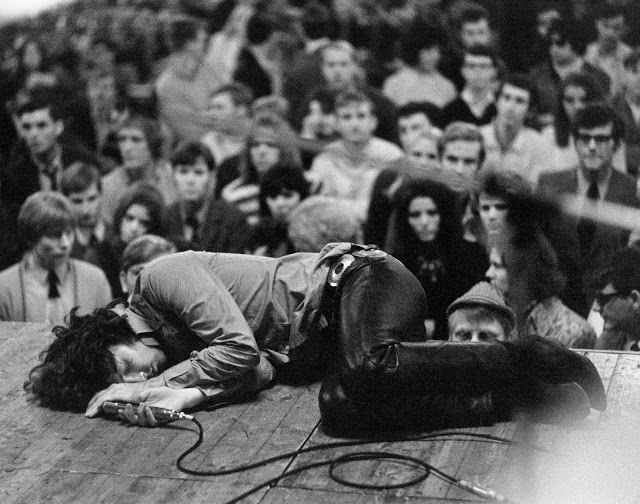
Since they were two of the biggest music stars of the 1960s, it seemed almost inevitable that Janis Joplin and Jim Morrison would get together. Producer Paul Rothchild invited them both to a party since they both liked to drink, and they had hit it off even when they were sober.

Janis had been a pleasant drunk, but Morrison often exhibited violent and obnoxious behavior. After he was rejected by Joplin since she was turned off by his behavior. and Morrison only became more interested in her. He followed her around until Joplin hit him over the head with a bottle of Southern Comfort and knocked him out. Since she was disinterested, Morrison was still incredibly set on winning her over, even asking people for her phone number saying, “What a great woman! She’s terrific!” However, Joplin really said no.

Despite Her Low Self-esteem, She Still Ditched Most of Her Clothes on Stage
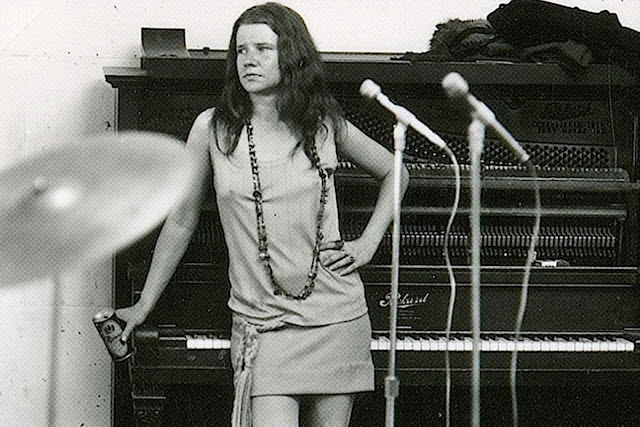
Photographer Bob Seidemann wanted to use a photo of Joplin in order to make a statement about the idealism of hippie culture and so he asked her if she’d pose topless. Joplin decided she would just rather pose completely naked, even though she didn’t have to.

Bob Seidemann recalls, “That’s the way she was. She wanted to take her clothes off real bad.” The photo was published in 1972, a few years after her death. Joplin also had no problem taking her clothes off while performing in front of crowds of people. A concert promoter at Pittsburgh’s Civic Arena remembers her being later to the stage because she had been having sex in her dressing room. When she emerged, he said that “When I got there, Janis was finally walking up to the stage. She wore a sheer netted skirt with no underwear. When the spotlight hit her, you could see everything.”

Joplin Was Arrested After a Concert for Swearing on Stage
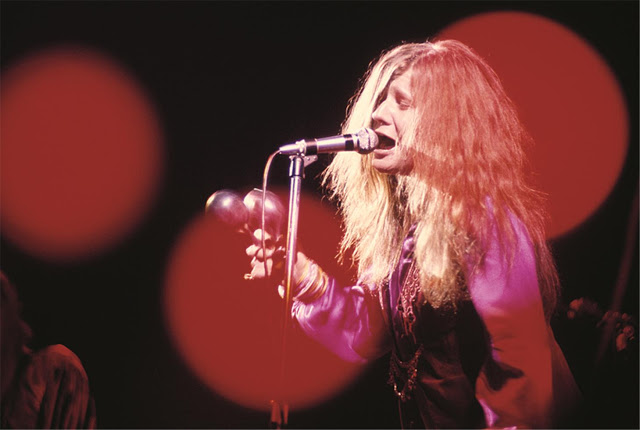
In 1969, Morrison was arrested while doing a concert tin Miami for exposing himself on stage. Following this incident, the people of Florida were incredibly worried when Joplin came to Tampa in November. While she was performing for an incredibly rowdy crowd, the lights were turned on and the show stopped to get the audience to calm down.

Officers then got onto the stage and asked Joplin to help them quiet down the crowd. Instead of assisting them, she decided to refuse and then yell obscenities at the cops. Soon the crowd quieted down enough so that the show could go on and Joplin was allowed to finish. She was then arrested in her dressing room and was asked to spend the night in jail, but the charges were eventually dropped when a judge claimed she was exercising her freedom of speech.

On the Night She Died, She Was Stood Up
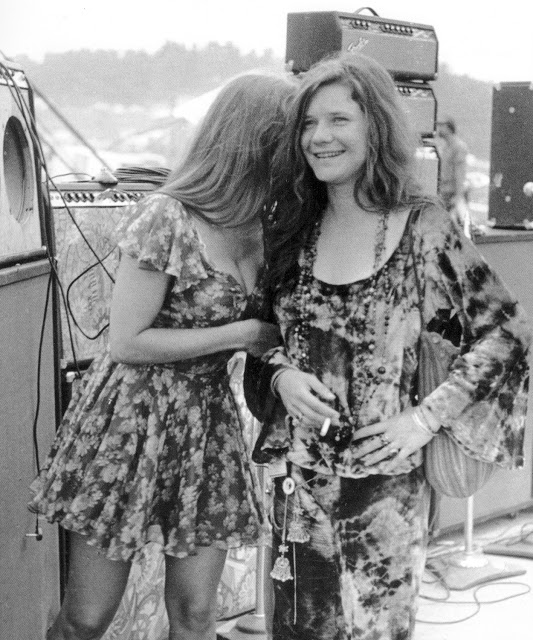
There are many stories involving Janis Joplin’s experiences with men, and how they caused her emotional distress. But she was also bisexual and had just as troubled relationships with women as well. It was recorded that she had had an on-again/off-again relationship with Peggy Caserta that, when added up, lasted longer than most of the relationships she had with men.

She grew up in the 1950s where any time of non-heterosexuality was considered a sin and a work of evil. Her sexual preferences also caused her a lot of anguish as well. During the time of her death, she had been engaged to Berkeley student Seeth Morgan, apparently having found the right man. On the night she died, she was supposed to be having a threesome with her fiancé and Peggy Caserta but both of them failed to show. It seemed to have been her final heartbreak before her passing.

She Always Had Billie Holiday’s Autobiography on Her, and Bought a Gravestone for Bessie Smith
She Always Had Billie Holiday’s Autobiography on Her, and Bought a Gravestone for Bessie Smith

She spent a good amount of years playing folk music, but it was actually the blues that had captured her heart. She once said, “I want to be the first black-white person.” Billie Holiday, who was one of the greatest and most iconic voices of the blues genre, was one of Joplin’s heroes. Joplin cherished Holiday’s autobiography Lady Sings The Blues, her entire life, basically like her bible. Their lives are very much identical in the ay that Holiday also had many problems with men, struggled with drug use, and also died from a heroin overdose.

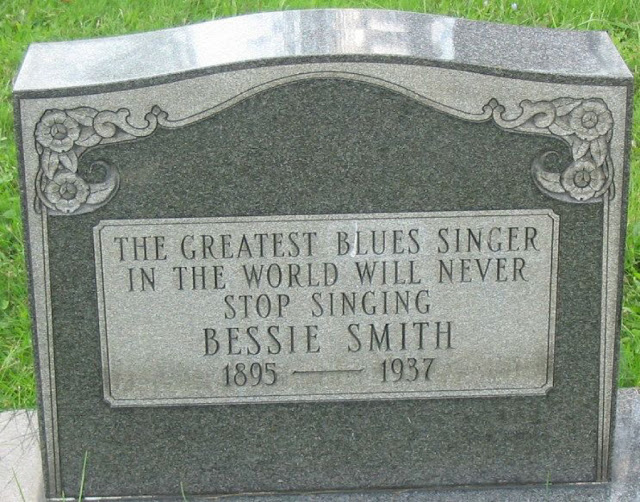
Joplin also admired Bessie Smith, even bigger than her love for Holiday. She said that Smith had been her biggest influence and inspiration to begin singing and felt such a great connection with her that she believed she was her reincarnation. Smith died in a car accident at the age of 43 and was buried in a grave left unmarked because her family refused to pay for a grave marker. When Joplin discovered this, she was outraged, and paid for a tombstone along with the daughter of one of Smith’s employees. They wrote this epitaph, “The Greatest Blues Singer in the World Will Never Stop Singing.”

Leonard Cohen Wrote “Chelsea Hotel No. 2” About Joplin, After a Fling They Had After Meeting in an Elevator
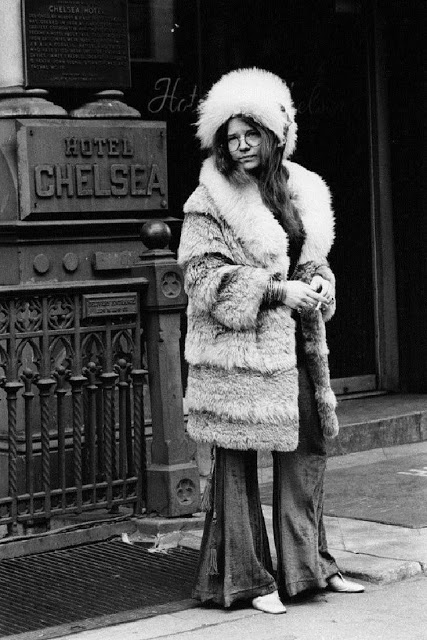
Joplin was a firm believer in free love, and she seemed to have many flings with many different men throughout her life. She even said, “I live pretty loose. You know, balling with strangers and stuff.” She was very open about who she loved physically, but she often felt like her lovers let her down. Joplin once ran into musician Leonard Cohen in the Chelsea Hotel elevator in 1968 and the two spent the night together.

She added him to her list of heartbreaks saying, “Really heavy, like slam-in-the-face it happened. Twice. Jim Morrison and Leonard Cohen. And it’s really strange ’cause they were the only two that I can think of, like prominent people, that I tried to… without really liking them up front, just because I knew who they were and wanted to know them. And then they both gave me nothing.”

Cohen wrote about their fling in his classic song “Chelsea Hotel No. 2,” but he didn’t admit it was about Joplin until years after she had died. He recalled, “She wasn’t looking for me, she was looking for Kris Kristofferson.”

She Was Ostracized in School for Believing in Desegregation
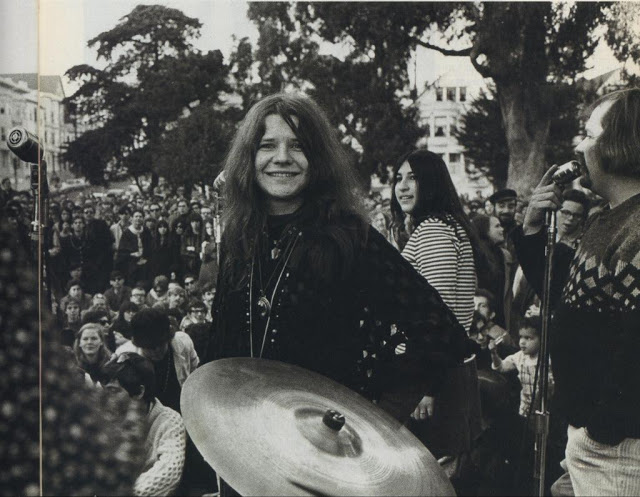
While Joplin was growing up in port Rather, Texas, the town itself was racially segregated. Her parents, who were more interested in intellectual pursuits such as art, and culture. These traits in addition to Joplin’s strong belief in desegregation, set her apart from the other students and residents of Texas, and they often made fun of her for it. She would often be called names when she walked to class and thanks to a group of football players, Joplin often skipped classes and only attended the ones she needed to graduate. She said, “They laughed me out of class, out of town, and out of state.” Her proud stance on segregation also stemmed from her love of folk and blues music which she eventually adopted as her own.

Despite Her Rebellious Lifestyle, She Got Good Grades and Was Close With Her Parents
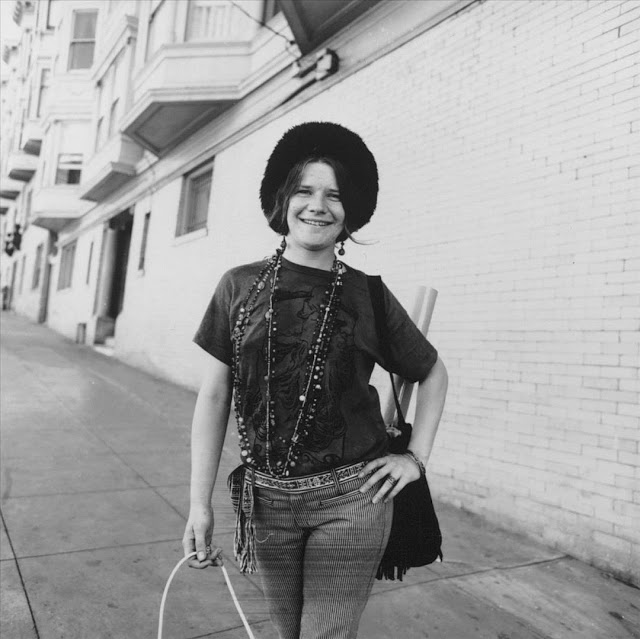
She is often remembered for her rebelliousness and free living lifestyle, but she also had a softer, sensitive and intellectual side as well. She was interested in reading, painting, writing poetry, and was interested in her studies at school. Her love of books continued throughout her life and she even attempted to promote F.Scott Fitzgerald to Raquel Welch when they appeared on the Dick Cavett Show.

Joplin’s relationship with her family after growing up with a business college mother and an oil engineer father displayed her sensitive side as well. She stayed in contact with her parents throughout her life, and wrote them eloquent letters about the things going on inside her head and the realities. Despite her participation in the 1960s counterculture, she often looked for their approval, which ended up causing her pain when they rejected her lifestyle.

She Died of a Heroin Overdose and Became a Member of the 27 Club

A doctor once told her that if she continued with her current lifestyle, she wouldn’t live until the age of 24. She was insanely proud when she proved him wrong. Many people around her during this time were enduring in psychedelic drugs such as LSD, but Joplin stuck mainly to her alcohol, and then she developed an addiction to heroin in the mid 1960s. Her drug usage and drinking grew worse and by 1969, she was apparently shooting up to $200 worth of heroin a day. Some of her friends tried to intervene and she managed to quit the habit, only to relapse later on.

On October 4th, 1970, she was scheduled to record vocals for a track called “Buried Alive in the Blues” that was going to appear on her upcoming solo album entitled, Pearl. Instead, she was found dead in her hotel room, killed by an overdose. Her death at the age of 27 puts her in the “27 club” which contains other artists who passed away at the same age including, Jim Morrison, Jimi Hendrix, Kurt Cobain, and Amy Winehouse.
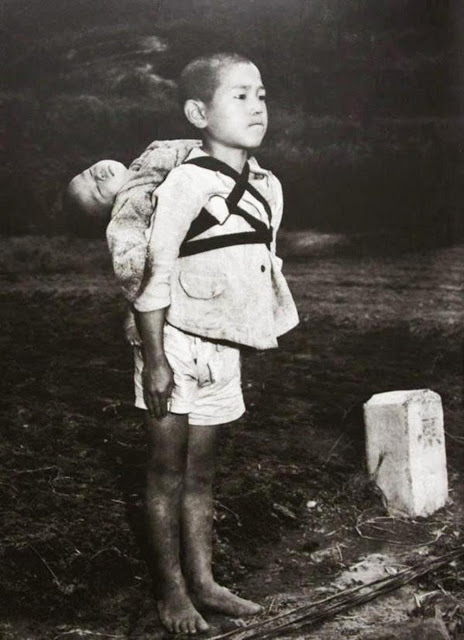
The Story Behind the Photo of 10-Year-Old Japanese Boy Carries His Deceased Brother to a Cremation Pyre, 1945

This heart rending photo was taken by Joe O’Donnell, who was sent by the U.S. military to document the horrors inflicted upon the Japanese by air raids and atomic bombs in 1945.

In this photo, the little boy had bought his brother to a cremation spot. He was barefooted and in perhaps trying to play the role of oldest functioning family member left remaining, he was clearly copying the stand-to-attention stance he would have seen amongst the warring uniformed adults.

Joe O’Donnell in his words:

“I saw a boy about ten years old walking by. He was carrying a baby on his back. In those days in Japan, we often saw children playing with their little brothers or sisters on their backs, but this boy was clearly different. I could see that he had come to this place for a serious reason. He was wearing no shoes. His face was hard. The little head was tipped back as if the baby were fast asleep.

“The boy stood there for five or ten minutes. The men in white masks walked over to him and quietly began to take off the rope that was holding the baby. That is when I saw that the baby was already dead. The men held the body by the hands and feet and placed it on the fire.

“The boy stood there straight without moving, watching the flames. He was biting his lower lip so hard that it shone with blood. The flame burned low like the sun going down. The boy turned around and walked silently away.”

Amazing Photographs of a Young Jimi Hendrix in the Army, 1961-1962

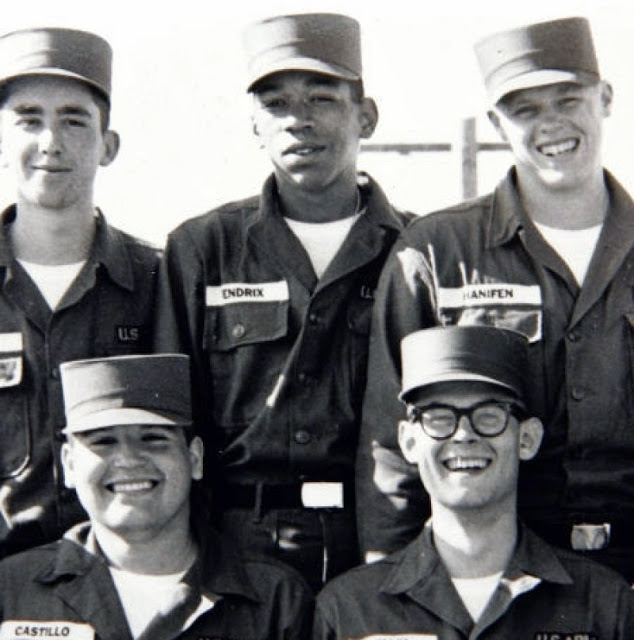
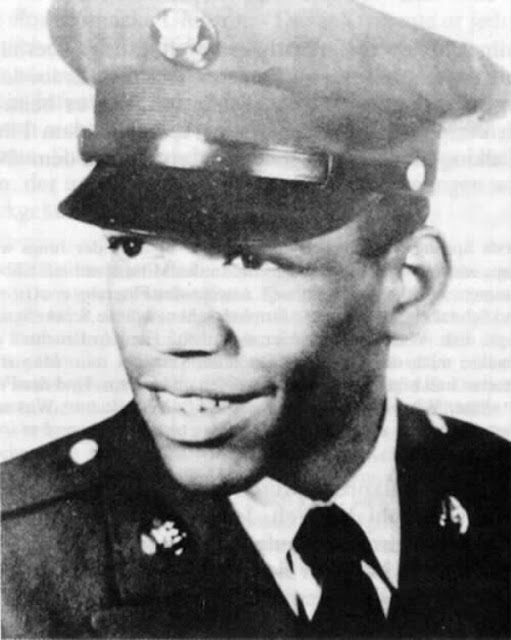
Jimi Hendrix became an icon in the protests against the war in Vietnam. But little people know that he used to be in the army himself. These unique photographs show a young Jimi Hendrix as a soldier in the army.

According to Wikipedia, before Hendrix was 19 years old, law enforcement authorities had twice caught him riding in stolen cars. When given a choice between spending time in prison or joining the Army, he chose the latter and enlisted on May 31, 1961.

After completing eight weeks of basic training at Fort Ord, California, he was assigned to the 101st Airborne Division and stationed at Fort Campbell, Kentucky. He arrived there on November 8, and soon afterward he wrote to his father: “There’s nothing but physical training and harassment here for two weeks, then when you go to jump school … you get hell. They work you to death, fussing and fighting.”

In his next letter home, Hendrix, who had left his guitar at his girlfriend Betty Jean Morgan’s house in Seattle, asked his father to send it to him as soon as possible, stating: “I really need it now.” His father obliged and sent the red Silvertone Danelectro on which Hendrix had hand-painted the words “Betty Jean” to Fort Campbell. His apparent obsession with the instrument contributed to his neglect of his duties, which led to verbal taunting and physical abuse from his peers, who at least once hid the guitar from him until he had begged for its return.

In November 1961, fellow serviceman Billy Cox walked past an army club and heard Hendrix playing guitar. Intrigued by the proficient playing, which he described as a combination of “John Lee Hooker and Beethoven,” Cox borrowed a bass guitar and the two jammed. Within a few weeks, they began performing at base clubs on the weekends with other musicians in a loosely organized band called the Casuals.

Hendrix completed his paratrooper training in just over eight months, and Major General C.W.G. Rich awarded him the prestigious Screaming Eagles patch on January 11, 1962.

By February, his personal conduct had begun to draw criticism from his superiors. They labeled him an unqualified marksman and often caught him napping while on duty and failing to report for bed checks.

On May 24, Hendrix’s platoon sergeant, James C. Spears filed a report in which he stated: “He has no interest whatsoever in the Army … It is my opinion that Private Hendrix will never come up to the standards required of a soldier. I feel that the military service will benefit if he is discharged as soon as possible.”

On June 29, 1962, Captain Gilbert Batchman granted Hendrix an honorable discharge on the basis of unsuitability. Hendrix later spoke of his dislike of the army and falsely stated that he had received a medical discharge after breaking his ankle during his 26th parachute jump.

The Nazis’ Lebensborn Program And The Quest To Breed A Master Race

Through breeding, kidnapping, and even murder, the Nazis’ Lebensborn program aimed at creating a super race of Germanized children.

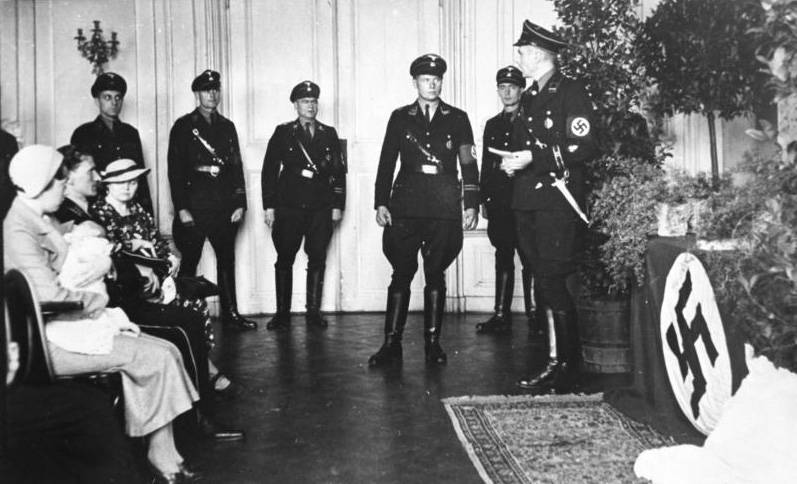
A baptism performed under a Swastika.

Among the cruelest policies put forward by the leaders of Nazi Germany — the ghettos, the concentration camps, the gas chambers — the Nazi Lebensborn program takes up a comparatively small portion of the public consciousness.

The reason, perhaps, is that the Lebensborn program was the inverse of Hitler’s genocidal policies. While other legislation focused on isolating and destroying those the Nazis considered unworthy, Lebensborn was meant to repopulate society with the best of the best: a new crop of racially pure Aryan children.

Yet as with everything the Nazis touched, the project spawned sweeping cruelty, brought about devastating losses, and had far-reaching consequences for a new generation of European children.

Germany Seeks A Way To Save Itself From Disastrous Population Decline

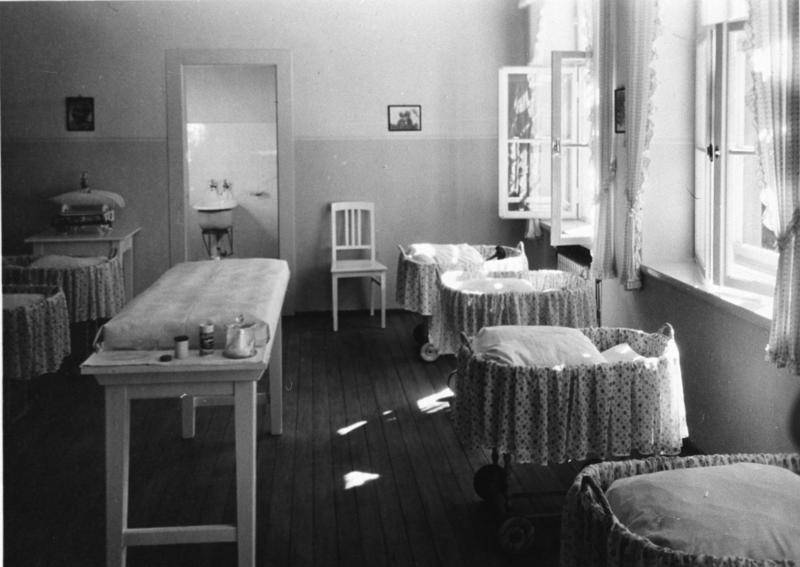
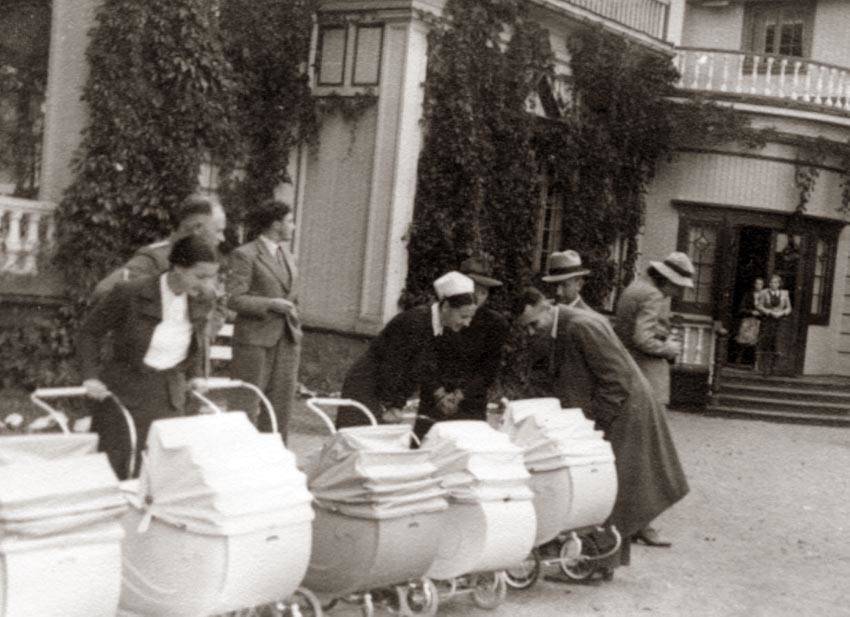
Inside a Lebensborn nursery in Germany.

Lebensborn began as the solution to a problem: Germany was facing a demographic catastrophe.

World War I had decimated the country’s young male population. Nearly 2,000,000 German soldiers were never coming home — a loss that had dire consequences for not only the years immediately following 1918 but the next decades as well. Those soldiers would never marry or start families, which meant the new generation of Germans would be a small group indeed.

Unsurprisingly, marriage prospects for German women in the 1920s and 30s were especially grim, a circumstance that led to a number of unwanted out-of-wedlock pregnancies.

In 1935, the German government estimated that as many as 800,000 pregnancies were ending in abortion every year.

To Adolf Hitler and Heinrich Himmler, this was an unconscionable waste of young Aryan children who might be swelling the ranks of the nation’s depleted population and bringing them closer to their goal of a racially pure society.

It was in that context that the Lebensborn program was created.

On its face, Lebensborn, meaning “Fount of Life,” appeared modest: It would establish a number of excellent facilities to offer the pregnant wives of S.S. officers free prenatal and postnatal care.

The mothers and babies would be looked after scrupulously while their husbands ran the Nazi regime, and — with no financial or healthcare concerns to hold them back — the couples would be encouraged to procreate as often as possible.

But the officers of the S.S. couldn’t be expected to repopulate Germany singlehandedly.

That was when head Nazi S.S. officer Heinrich Himmler got involved.

The Lebensborn Program Tries To Redefine Motherhood

A caretaker dotes on Lebensborn children.

In 1935, Himmler began a propaganda campaign inviting any unwed mother who fit the racial profile to give birth inside a Lebensborn home.

It was an ambitious pledge, as it sought to turn a centuries-old attitude about unwed mothers on its head. No longer was having a child out of wedlock a source of shame — instead, the Nazi regime would celebrate the birth of any Aryan child, regardless of its parents’ marital status.

Himmler swore that any pregnant woman who qualified would be brought to a Lebensborn facility quietly, offered the best of care free of charge, and then returned home after giving birth with no one the wiser about her long absence.

If she wasn’t prepared to raise her child herself, the program would help her find a suitable Aryan family interested in adoption.

The policy’s generosity, however, was limited. It discriminated strictly, not on the basis of wealth or social standing, but by genealogy. Only proof of paternity and a racially pure family tree dating back three generations gained you access. The result was an acceptance rate that hovered around 40 percent.

A christening for a Lebensborn baby.

Yet even the government’s open-arms approach to unwed mothers wasn’t enough to dramatically change the numbers. So Himmler took the Lebensborn program one step further.

He began arranging secret meetings in which “suitable” women could meet S.S. soldiers and, if both parties were amenable, create more babies for the Nazi party — with no offer of marriage on the table.

A report to the Ministry of Justice stated:

“Leaders of the [League of German Girls have] intimated to their girls that they should bear illegitimate children; these leaders have pointed out that in view of the prevailing shortage of men, not every girl could expect to get a husband in future, and that the girls should at least fulfill their task as German women and donate a child to the Fuhrer.”

At the same time, a 1938 reformation of the German divorce laws made it easier for men to leave wives in their late forties and fifties to marry younger women — women who could have children.

Approximately 30,000 divorces occurred in Germany within the next two years, and 80 percent of them fell into this category.

Lebensborn Expands Beyond Germany

A Nazi nurse with “German super race” children; Nazi scientists tried to lighten their hair and eyes to give them a more Aryan appearance. 1941.

The German Reich was doing its best to make motherhood into an Olympic event, issuing a Mother’s Cross of Honor in three classes: bronze, silver, and gold. The lowest rank required a woman to conceive and raise at least four children, while the highest honor recognized a woman who had given birth to eight or more.

Those who bore the Mother’s Cross of Honor received unique privileges: they could jump to the front of lines, receive government subsidies designed to help them care for the kids, and even have special access to the best meats from butcher shops.

But not every German citizen was on board. Some felt the Lebensborn program’s emphasis on motherhood came at the expense of sexual morality.

In towns where Lebensborn facilities sprang up — often in homes and buildings where German Jews had lived before their forcible removal to ghettos and concentration camps — the unwed mothers were treated with suspicion and sometimes outright anger.

German women carrying children of the Lebensborn program.

Though Himmler’s propaganda was raising the birthrate, it couldn’t change society overnight. For that, he would have to look outside Germany’s borders.

In 1939, the Nazi regime began to take an interest in the children of the European countries it had conquered.

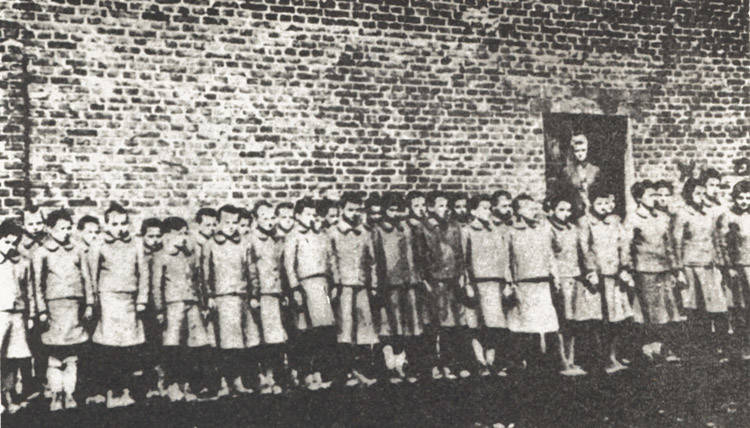
Fair-haired and blue-eyed orphans in occupied Europe began to disappear and reappear in Nazi Lebensborn facilities, where the youngest would be put up for adoption and the oldest sent on to boarding schools for retraining and Germanization.

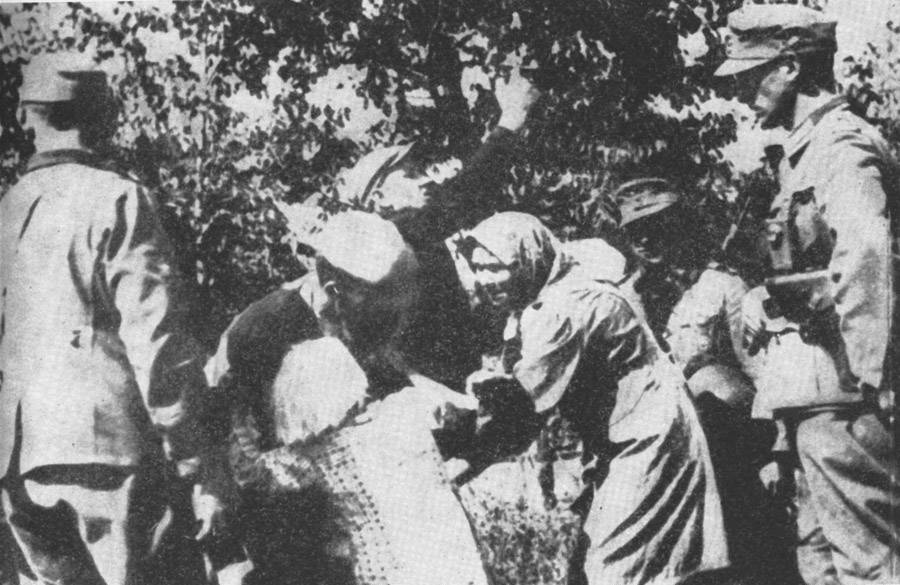
S.S. soldiers began to take Aryan-looking children in Poland and Yugoslavia, often in plain sight of their parents, and spirit them back to Germany to be reeducated.

Those who resisted their training or proved insufficiently Aryan were sent to perform hard labor in concentration camps — a death sentence for small bodies.

Polish children in a Nazi labor camp.

Reportedly, Himmler stated, “It is our duty to take [the children] with us to remove them from their environment, if necessary by robbing or stealing them.”

When confronted by the cruelty of this action, he retorted, “How can you be so cruel as to leave on the other side a brilliant future enemy who later on will kill your son and grandson?”

The stolen children were told to forget their old names and their parents. Many were convinced by authority figures that their parents didn’t want them anymore. Germany was their home now, and they were to pledge allegiance to it with pride.

Destruction And Chaos In The Final Days Of The Lebensborn Program

A child ripped from their parents in Poland for the Lebensborn program.

As the tide of the war turned in the Allies’ favor, the S.S. leadership grew desperate.

Himmler now declared that every S.S. soldier should father at least one child before going off to war. He assured the soldiers that while they fought, the mothers and babies would be cared for in a Lebensborn home.

But the new patriotic attitude toward sex was already beginning to take a toll: venereal disease was rampant, and it only grew worse as the Lebensborn program spread to other areas of occupied Europe.

Maternity wards sprang up in France, Belgium, the Netherlands, Poland, Norway, and Luxembourg. Their patients were eligible women who had become pregnant by Nazi soldiers — sometimes by their consent, and sometimes not.

The first Lebensborn mother and birthcare home in Norway just a few weeks after its opening in September of 1941.

An astonishing 8,000 to 12,000 children were born into Norway’s Lebensborn facilities alone.

When Germany was defeated and the war came to an end, the governments of the countries newly freed from Nazi rule had a difficult choice to make. What should be done with the houses full of unwed mothers — mothers carrying the children of invaders?

Norway’s government chose to continue to care for the inhabitants of the Lebensborn homes — an accommodation that the starving public resented. Many of the Lebensborn women were beaten or run off and their children bullied.

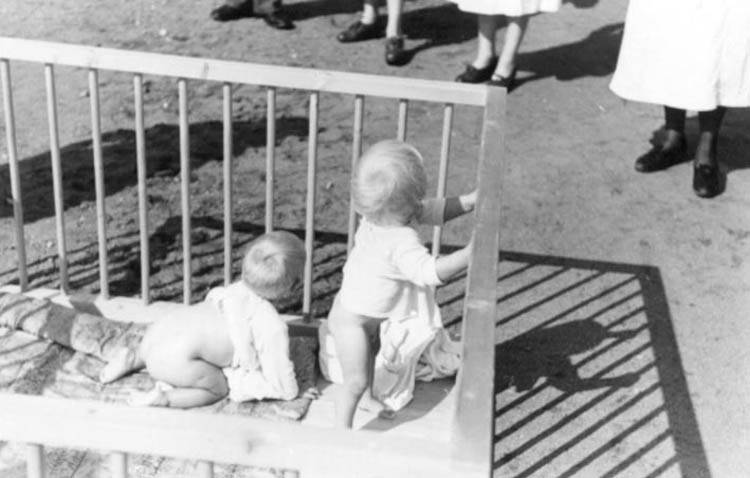
Lebensborn babies enjoying the sunshine.

But the damage extended far beyond Norway. Of the Aryan-looking children zealous S.S. officers had kidnapped from other European countries, there was little to be discovered.

The Nazis destroyed almost all of the documents on the Lebensborn program as the Allied forces neared victory, leaving an estimated 200,000 victims separated from their families. Some made it home, but others couldn’t remember enough of their families to find their way back.

Still others remained convinced their original families didn’t want them and believed the retraining; they saw themselves as German citizens, for better or for worse.

The most famous child of the Lebensborn program is Norwegian ABBA singer Anni-Frid Lyngstad, who was fathered by a German sergeant. Her widowed mother escaped after the war and took her daughter to Sweden, where the government accepted several hundred refugee children and saved them from persecution.

Many parents chose not to tell their children about their heritage and the Lebensborn program, inventing better stories and fictional fathers for their young ones to believe in.

And some are still in the dark about their heritage to this day, unaware of the part that Adolf Hitler and Heinrich Himmler would have had them play in their quest to build a master race that would rule for a thousand years — the ultimate goal of Lebensborn.

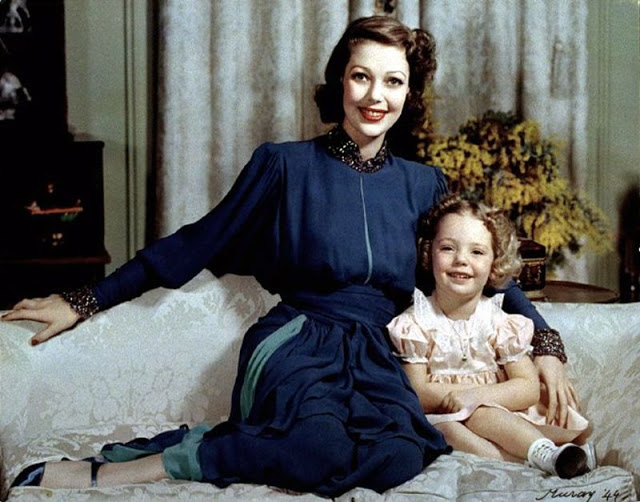
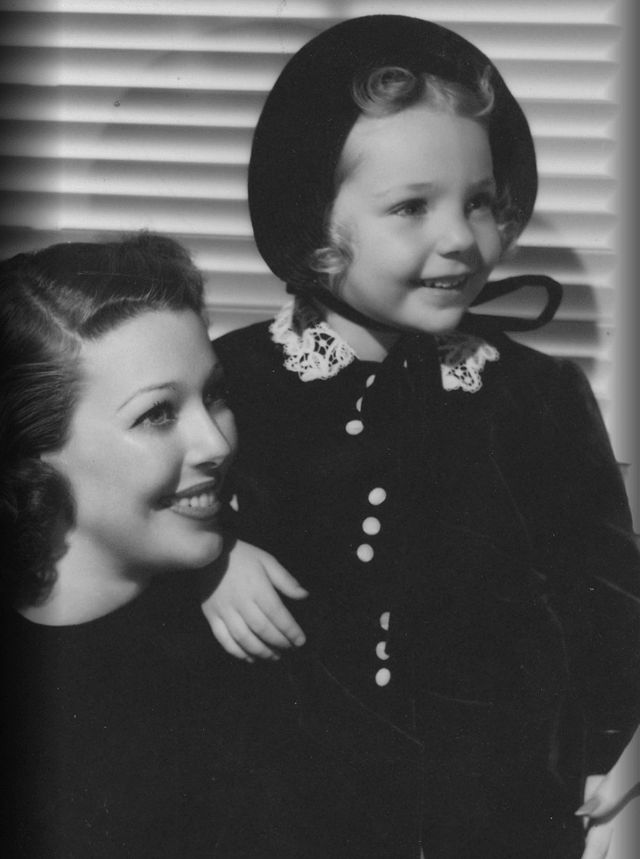
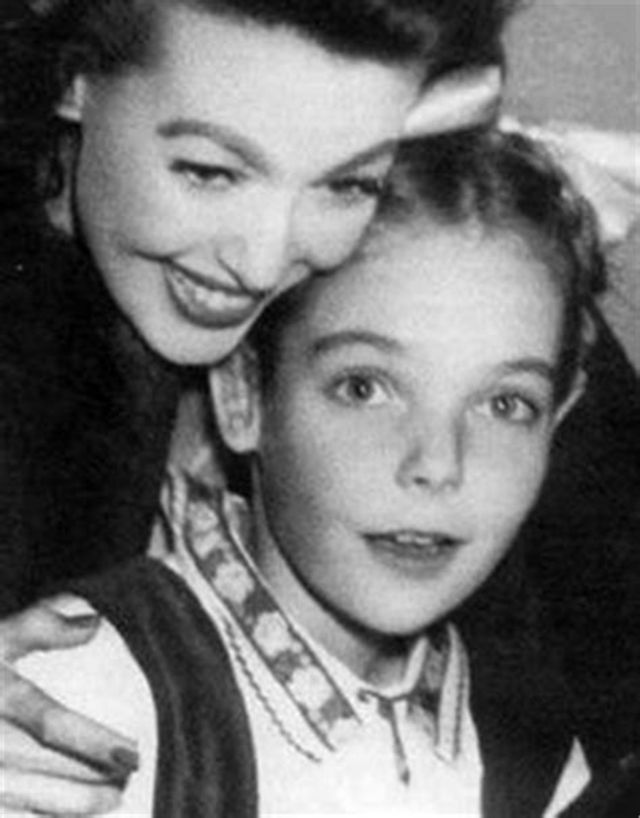
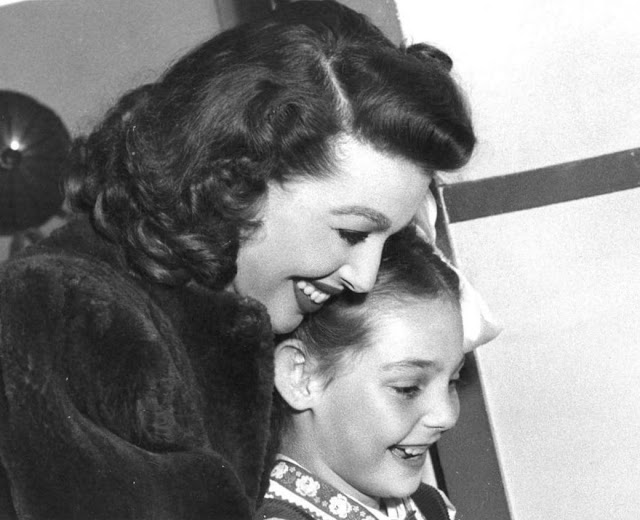
Adorable Photos of Loretta Young and Daughter Judy Lewis (Love Child of Clark Gable)

Loretta Young and Clark Gable were the romantic leads of the 1935 Twentieth Century Pictures film The Call of the Wild. Young was then 22 years old; Gable was 34 and married to Maria “Ria” Franklin Prentiss Lucas Langham. During filming, Young became pregnant by Gable.

Young did not want to damage her career or Gable’s. She knew that if Twentieth Century Pictures found out about the pregnancy, they would pressure her to have an abortion; Young, a devout Catholic, considered abortion a mortal sin. Young, her sisters, and her mother came up with a plan to hide the pregnancy and then pass off the child as adopted. When Young’s pregnancy began to advance, she went on a “vacation” to England. After returning to California, she gave an interview from her bed, covered in blankets; at that time, she stated that her long movie absence was due to a condition she had had since childhood. Young gave birth to a daughter, Judith, on November 6, 1935, in Venice, California. Young named Judith after St. Jude because he was the patron saint of (among other things) difficult situations. Weeks after her birth, Judith was placed in an orphanage. Judith spent the next 19 months in various “hideaways and orphanages” before being re-united with her mother; Young then claimed that she had adopted Judith. After Young married Tom Lewis, Judith took Lewis’s last name.

Few in Hollywood were fooled by the ruse. Judith (Judy) Lewis bore a strong resemblance to Gable, and her true parentage was widely rumored in entertainment circles. When Lewis was 31 years old, she confronted Young about her parentage; Young privately admitted that she was Lewis’s birth mother, stating that Lewis was “a walking mortal sin”. Young refused to confirm or comment publicly on the rumors until 1999, when Joan Wester Anderson wrote Young’s authorized biography. In interviews with Anderson for the book, Young stated that Lewis was her biological child and the product of a brief affair with Gable. Young would not allow the book to be published until after her death.
In 2015, Linda Lewis, the wife of Young’s son, Christopher, stated publicly that in 1998, a then-85-year-old Young had told Lewis that Gable had raped her. According to Linda Lewis, Young added that no consensual intimate contact had occurred between Gable and herself. Young had never disclosed the rape to anyone. Lewis stated that Young shared this information only after learning of the concept of date rape from watching Larry King Live; she had previously believed it was a woman’s job to fend off men’s amorous advances and had perceived her inability to thwart Gable’s attack as a moral failing on her part. Linda Lewis said that the family remained silent about Young’s rape claim until after both Young and Judy Lewis had died. (Wikipedia)

Judy Lewis was born on November 6, 1935 in Venice, California. She was conceived while her birth parents, Loretta Young and Clark Gable, were working on the film The Call of the Wild. Gable was married at the time of Lewis’ conception, and Young concealed her pregnancy to avoid scandal. Weeks after her birth, Lewis was placed in an orphanage. Lewis would spend the next 19 months in various “hideaways and orphanages” before being reunited with her mother. Young then claimed that she had adopted Lewis. When Lewis was four years old, Young married radio producer Tom Lewis, and Judy took his last name.

Lewis bore a striking resemblance to Gable, including having ears that stuck out. When Lewis was seven years old, Young had her undergo a painful operation to pin her ears back in another attempt to hide her real parentage. When Lewis was fifteen, Gable came to her mother’s house to visit her briefly. Gable asked Lewis about her life and then, upon leaving, kissed her on her forehead. It was the only time that Lewis ever spoke to Gable, and at the time, she had no idea that he was her father.

“I couldn’t believe my eyes,” she wrote in her memoir. “He was right in front of me, and he was smiling at me. His eyes were crinkled into smile lines at the corners and he was so tall that I had to look up. He was much more handsome than I remembered him from the movies.… What is he doing here? I wondered to myself. But I could say nothing. I was speechless.”

Lewis was married for several years to Joseph Tinney. They had one daughter, Maria, and two grandsons. They divorced in the late 1960s.

After Lewis became engaged to Tinney at age twenty-three, he told her it was common knowledge that Gable was her biological father; Lewis was stunned.

After Gable’s death, Lewis, at age 31, finally confronted her mother about the mystery behind her parentage. Young became nauseated, but acknowledged that she and Gable were Lewis’ biological parents. In 1994, Lewis published a book about her life entitled Uncommon Knowledge in which she stated that Gable was her father; Young refused to speak with her for three years after the book was published.

“I had to write this book,” Lewis told The Times in 1994 when her memoir was released. “I don’t think anyone knows what it’s like not to be acknowledged by your own parents.”

Loretta Young died on August 12, 2000, at age 87; her autobiography, published posthumously, confirmed that Gable was indeed Lewis’ father.

Lewis never had a chance to ask Gable the questions that swirled in her head for years: Did he want a child? What was he thinking that day they met? Would he have wanted to help raise her if her mother hadn’t pushed him away? She said that whenever she watched Gable’s loving scenes with his on-screen daughter in Gone With the Wind, she cried.

“It’s very sad to me,” she told the London Telegraph in 2002, “because he’s so dear with her. I pretend it’s me.”

Judy Lewis died of cancer at age 76 on November 25, 2011, in Gladwyne, Pennsylvania.

Behind-the-Scenes of Marilyn Monroe’s Iconic Flying Skirt Photo While Filming ‘The Seven Year Itch’

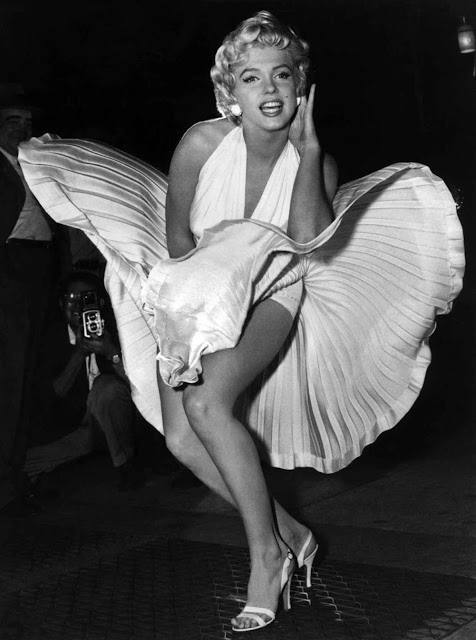
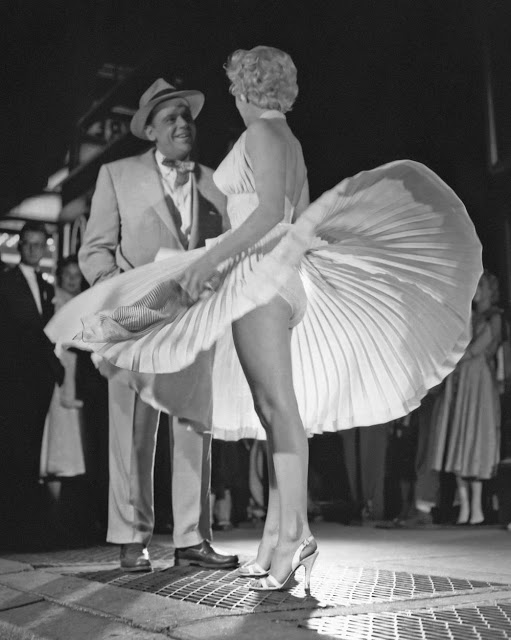
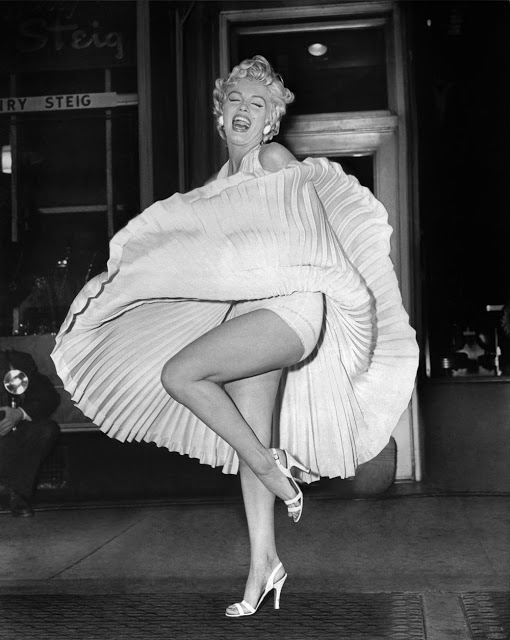
There are hundreds of photos of Marilyn Monroe, one of Hollywood’s most iconic stars, but the most famous photo of all was shot on September 15, 1954 by photographer Sam Shaw on the set of Seven Year Itch. However, there is more to the story than that, including why she faced the photographer and posed the way she did.

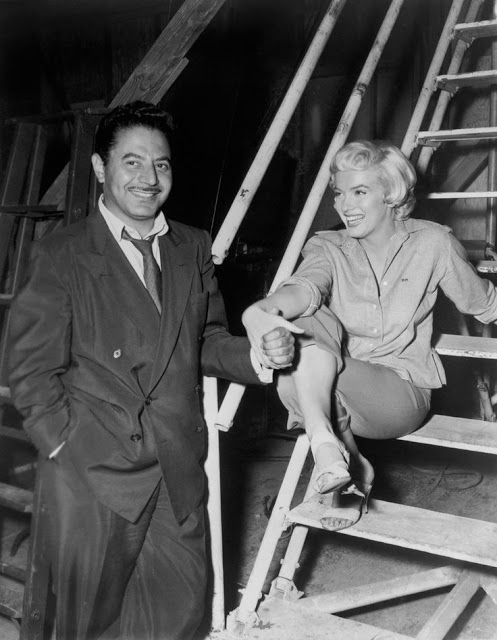
In the early 1950s, Sam Shaw was working in the film industry as a stills photographer. While on the set of biopic Viva Zapata! in 1951, he met Monroe, who at the time was a struggling actress employed on contract at the 20th Century Fox studios. Shaw couldn’t drive and Monroe, then the girlfriend of the film’s director Elia Kazan, was asked to give him a lift to the film set every day.

Shaw and Monroe developed a close friendship. She called him ‘Sam Spade’, a reference to the fictional private detective created by Dashiell Hammett. Soon he began photographing her in informal portraits that captured her playful personality. Shaw said, ‘I just want to show this fascinating woman, with her guard down, at work, at ease off-stage, during joyous moments in her life and as she ?often was – alone.’

By 1954, when Monroe was chosen for the lead role in Billy Wilder’s comedy The Seven Year Itch, she was on the way to becoming a major star. She was 28 years old and had played lead roles in films such as Gentlemen Prefer Blondes and How to Marry a Millionaire (both released in 1953). She had married her second husband, baseball star Joe DiMaggio, in January that year

In The Seven Year Itch, Monroe played the glamorous neighbour with whom middle-aged publishing executive Richard Sherman, played by Tom Ewell, becomes infatuated. At one point in the script, Monroe and Ewell stroll through a New York street and walk over a subway grate.

Sam Shaw and Marilyn Monroe, backstage at 20th Century Fox studio, Los Angeles, California, 1954. (Photo © Sam Shaw Inc.)

When reading the dialogue for this scene, Shaw saw the opportunity to use an idea he’d had several years earlier. He had been visiting the amusement park on Coney Island when he saw women exiting a ride and having their skirts blown upwards by a blast of air coming from below ground. He suggested to producer Charles Feldman that this scene could provide a set-piece poster image for the film, with a blast of air from the grate blowing Monroe’s dress in the air.

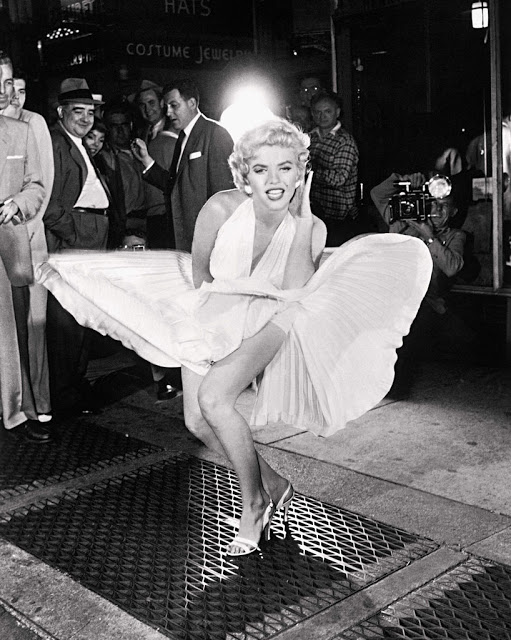
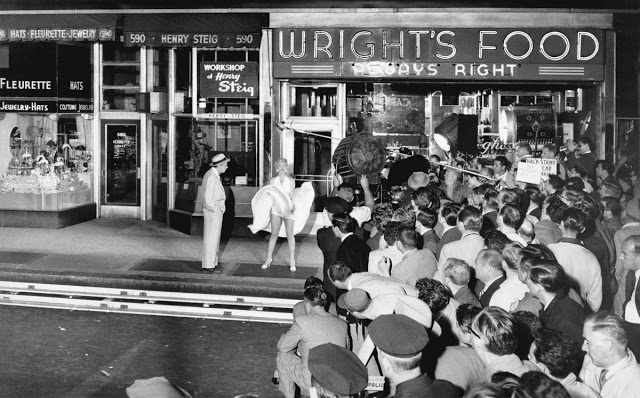
The movie scene was originally shot outside the Trans-Lux Theatre on Lexington Avenue, at around 2am. Despite the shoot’s timing, a crowd gathered to watch. Monroe was wearing a white pleated halterneck dress. A wind machine underneath the grate sent the dress billowing up above her waist, revealing her legs. As the scene was re-shot, the crowd became increasingly boisterous.

NEW YORK – SEPTEMBER 1954: Marilyn Monroe stands over a subway grate with her white dress blowing with co-star Tom Ewell and a crowd of onlookers at the corner of 51st Street and Lexington Avenue during the filming of “The Seven Year Itch” in September, 1954 in New York, New York. (Photo by Sam Shaw/Shaw Family Archives/Getty Images)

After the filming had finished, Shaw arranged for the moment to be recreated in a press photocall. Photographers including Magnum’s Elliott Erwitt stood around her as the dress was again blown upwards. Shaw, having organised the event, secured himself the best position to record it. As Monroe posed with her dress flying high, she turned to face him and said, ‘Hey, Sam Spade!’ He pressed the shutter on his Rolleiflex.

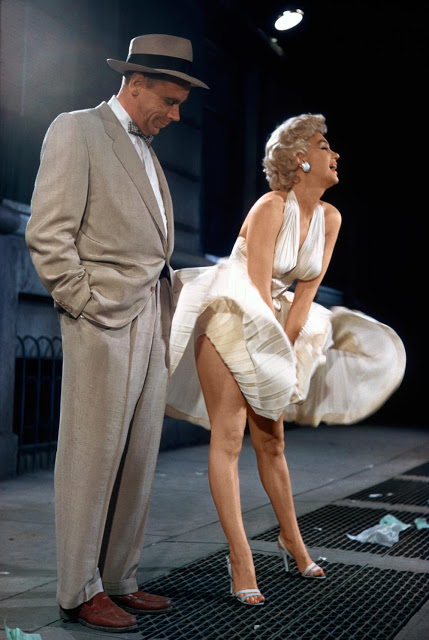
The iconic image of Marilyn Monroe was shot by photographer Sam Shaw during the filming of The Seven Year Itch. (Photo © Sam Shaw Inc.)

Shaw’s picture, with Monroe looking provocatively into his camera, is the best of the images from that shoot. The shots taken that night were published the next day in newspapers and magazines around the world. They not only brought great publicity for the film, but also cemented Monroe’s image as one of the sex symbols of the era.

However, one of the onlookers at the shoot was Joe DiMaggio, and the sight of a crowd of men ogling and whistling at his wife sent him into a jealous rage. He left the set, angrily saying, ‘I’ve had it!’ The incident led directly to the couple’s divorce in October 1954, after just nine months of marriage.

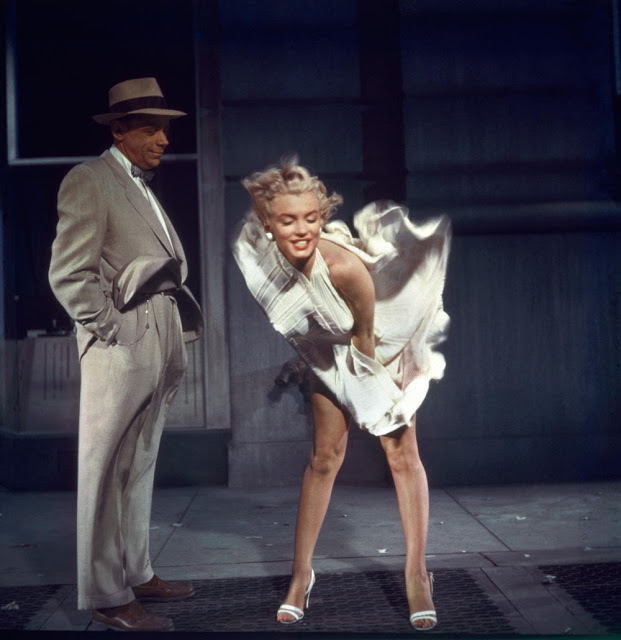
Marilyn Monroe breezes through filming with her Seven Year Itch co-star Tom Ewell in a photograph by Sam Shaw. It was Shaw’s idea to orchestrate the “flying skirt” image and use it to promote the movie. (Photo © Sam Shaw Inc.)
When the breeze from the subway catches her skirt, Monroe’s line “Isn’t it delicious” was provocative for a 1950s woman, but very apropos of the most famous sex symbol of the day. (Photo © Sam Shaw Inc.)
The iconic Seven Year Itch scene was shot on Lexington Avenue between 52nd and 53rd Street with an invited crowd and press. The crowd noise made the footage unusable and director Billy Wilder reshot the scene on a soundstage in Los Angeles. (Photo © Sam Shaw Inc.)
Monroe’s orchestrated wardrobe malfunction became one of the most iconic images in Hollywood history. (Photo © Sam Shaw Inc.)

Ironically, the filming done that night couldn’t be used as there was too much noise on set. The scene was later re-shot on a closed studio set in Los Angeles, with Shaw the only photographer present.

The scene went on to become one of the most famous in cinema history. Its importance was demonstrated in 2011 when the original white dress worn by Monroe was sold at auction for $4.6 million.

Shaw and Monroe often worked together in the following years and remained close friends until she died aged 36, in August 1962. As a mark of respect, he refused to publish any of his Monroe photographs for ten years after her death.

Shaw went on to photograph many more actors, artists and musicians, and became a movie producer in the 1960s. He had a long and productive career, but the experience of knowing Monroe remained an important part of his life.

To Shaw, she always remained ‘a contemporary Aphrodite… a beautiful, almost otherworldly creature who left behind some of that beauty’.

50 Amazing Vintage Photos Showing the World in 1968

A half-century ago, much of the world appeared to be in a state of crisis. Protests erupted in France, Czechoslovakia, Germany, Mexico, Brazil, the United States, and many other places. Some of these protests ended peacefully; many were put down harshly. Two of the biggest catalysts for protest were the U.S. involvement in the Vietnam War and the ongoing lack of civil rights in the U.S. and elsewhere.

Two of America’s most prominent leaders, Dr. Martin Luther King Jr. and Senator Robert F. Kennedy, were assassinated within months of each other. But some lessons were being learned and some progress was being made—this was also the year that NASA first sent astronauts around the moon and back, and the year President Lyndon Johnson signed the Civil Rights Act into law.

Take a look back at 1968 through these amazing historical photos.

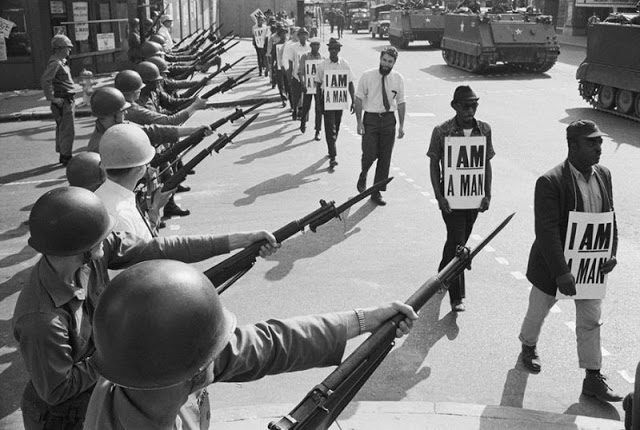
U.S. National Guard troops block off Beale Street in Memphis, Tennessee, as Civil Rights marchers wearing placards reading, “I AM A MAN” pass by on March 29, 1968. It was the third consecutive march held by the group in as many days.
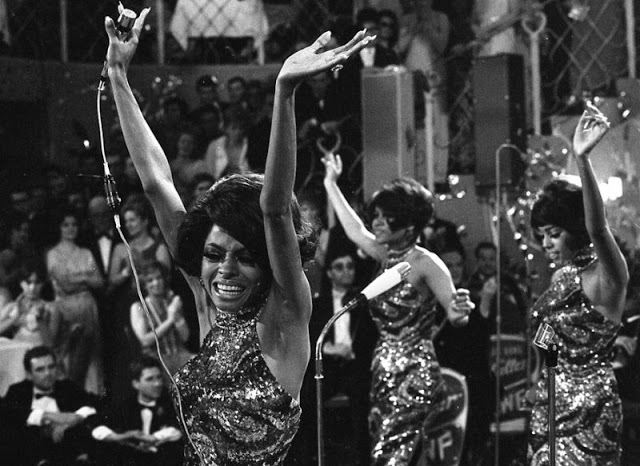
The Supremes, with Diana Ross, front, Cindy Birdsong, and Mary Wilson dance with their arms in the air as they perform at the annual “Bal pare” party in Munich, West Germany, on January 21, 1968. The American trio was backed by the West German Rolf Hans Mueller big band and was celebrated with thundering applause.
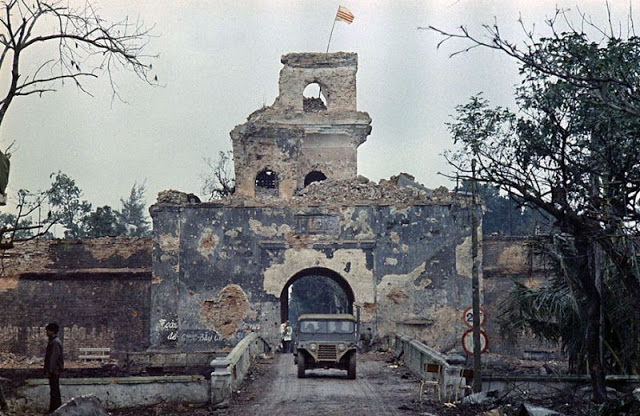
The flag of South Vietnam flies atop a tower of the main fortified structure in the old citadel as a jeep crosses a bridge over a moat in Hue during the Tet Offensive in February of 1968.
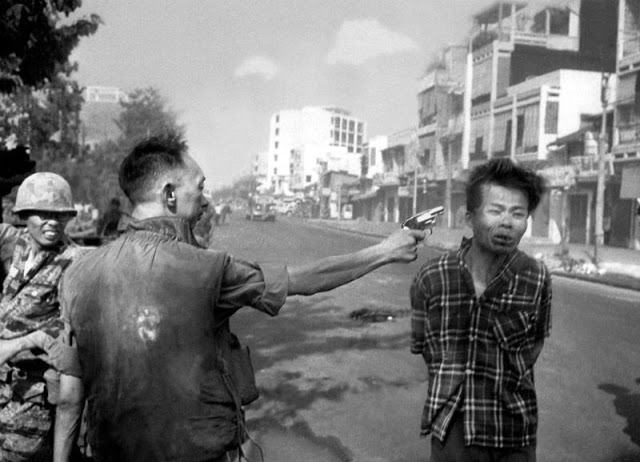
South Vietnamese General Nguyen Ngoc Loan, chief of the national police, fires his pistol, executing suspected Viet Cong officer Nguyen Van Lem (also known as Bay Lop) on a Saigon street on February 1, 1968, early in the Tet Offensive. Lem was suspected of commanding a death squad which had targeted South Vietnamese police officers that day. The fame of this photo led to a life of infamy for Nguyen Ngoc Loan, who quietly moved to the United States in 1975 and opened a pizza shop in Virginia.
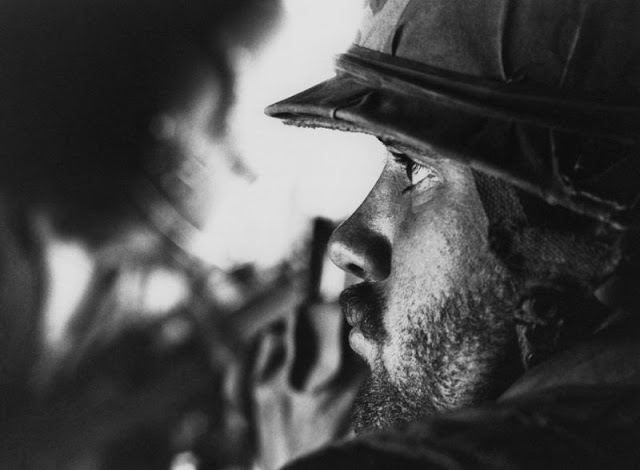
A U.S Marine with several days of beard growth sits in a helicopter on July 18, 1968, after being picked up from a landing zone near Con Thein on the southern edge of the demilitarized zone in South Vietnam. His unit had just been relieved of duty after patrolling the region around the DMZ.
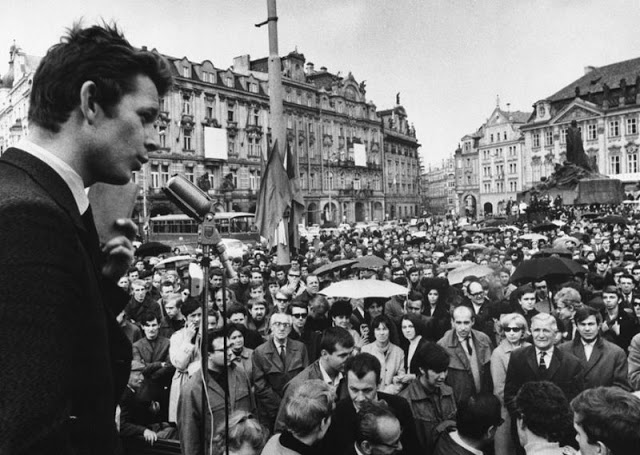
A speaker addresses a mass rally in support of democracy organized by the youth of Prague at the Old Town Square in Prague, Czechoslovakia, on May 18, 1968. During a period called the “Prague Spring,” Alexander Dubcek, the newly-elected leader of the Warsaw Pact nation, enacted numerous reforms loosening state control and expanding individual rights, which both encouraged citizens and angered the Soviet Union.
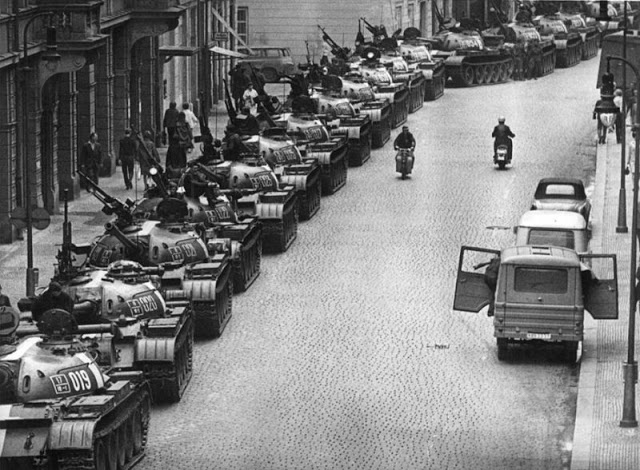
By late summer, talks between the Soviets and Czech leaders were not going the way the Kremlin wanted, so more than 2,000 tanks and thousands more Warsaw Pact troops invaded and occupied the country in August. This column of Soviet tanks was lined up in a street in Prague, Czechoslovakia, near the Old Town Square, on August 28, 1968, after Czech leaders had returned from negotiations with the Russians.
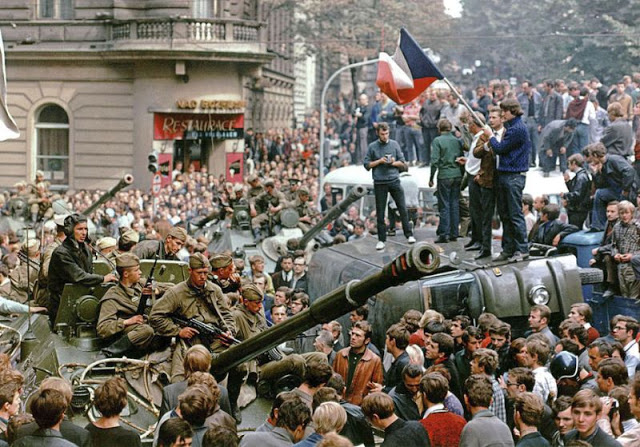
Prague residents surround Soviet tanks in front of the Czechoslovak Radio station building in central Prague during the first day of a Soviet-led invasion of Czechoslovakia on August 21, 1968. Within a year, Dubcek was removed from office, his reforms were undone, and a more Soviet-controlled government was installed.
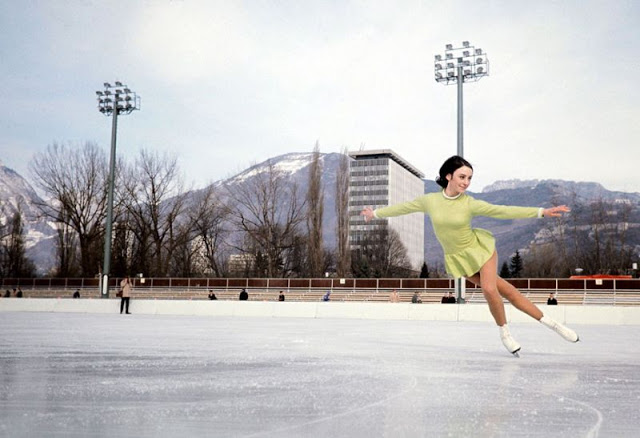
American figure skater Peggy Fleming practices on an outside rink on February 1968 in Grenoble, in the French Alps, during the 1968 Winter Olympic Games. Fleming took the gold medal in women’s figure skating.
Fashion in 1968. Left: A male model wears a silk jersey print pajama leisure suit, sandals, and a necklace at a fashion show in New York on January 9. The show was entitled “Clothing for the Emancipated Man.” Center: A sculpted silver necklace designed by Pierre Cardin features a diamond worth $60,000. The necklace is built into the halter that is part of a long black crepe evening gown presented in his spring collection in Paris, France, in February. Right: A cocktail dress of printed pure silk with a full skirt, a creation by the Fontana Sisters fashion house of Rome, to be presented at the upcoming Italian spring-summer ready-to-wear fashion show that opened in Florence on November 6, 1968.
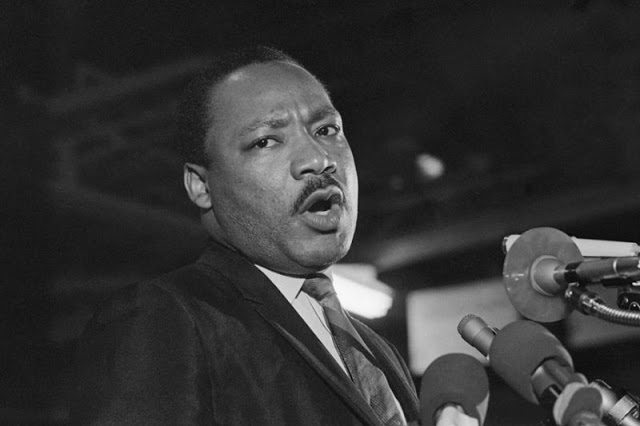
One of the last pictures to be taken of Dr. Martin Luther King Jr., as he spoke to a mass rally in Memphis on April 3rd, saying he would not halt his plans for a massive demonstration scheduled for April 8 in spite of a federal injunction.
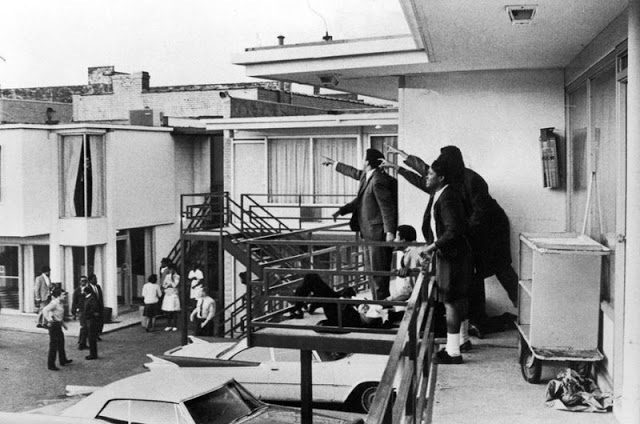
Civil-rights leader Andrew Young (left) and others stand on the balcony of the Lorraine Motel pointing in the direction of an assailant after the assassination of civil-rights leader Dr. Martin Luther King Jr., who is lying at their feet, in Memphis, Tennessee, on April 4, 1968.
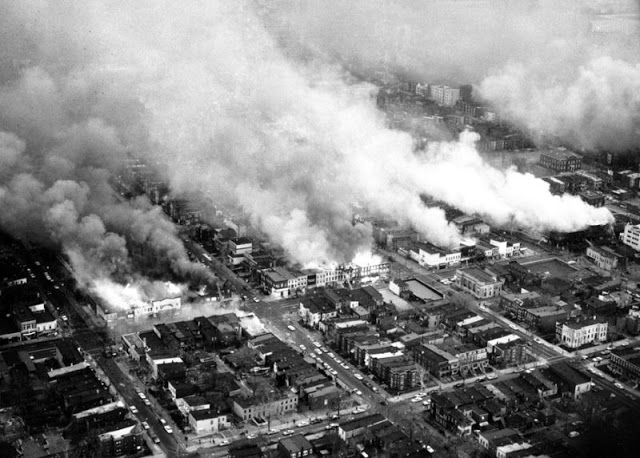
This aerial view shows clouds of smoke rising from burning buildings in northeast Washington, D.C., on April 5, 1968. The fires resulted from rioting and demonstrations after the assassination of Dr. Martin Luther King Jr.
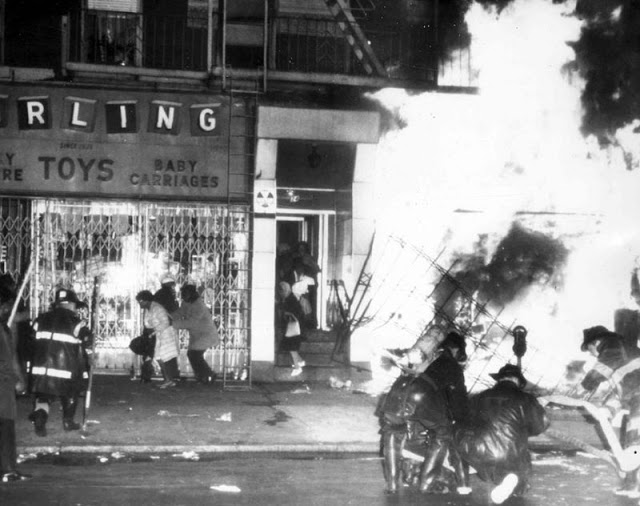
Firemen battle a blaze on 125th Street in Harlem, New York, on April 4, 1968, after a furniture store and other buildings were set on fire after it was learned that civil-rights leader Dr. Martin Luther King Jr. had been assassinated.
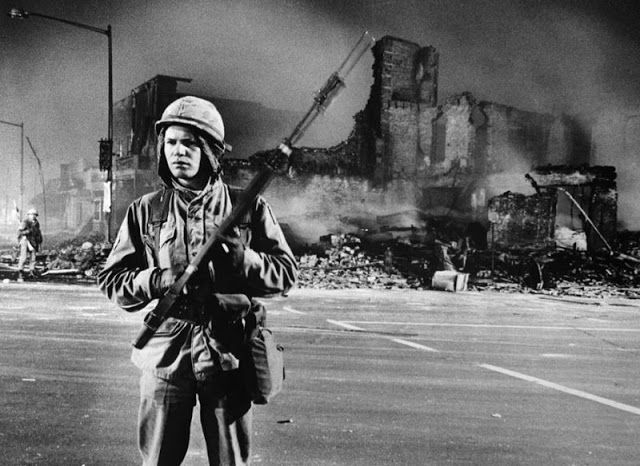
President Johnson called federal troops into the nation’s capital to restore peace after a day of arson, looting, and violence on April 5, 1968. Here, a trooper stands guard in the street as another (left) patrols a completely demolished building.
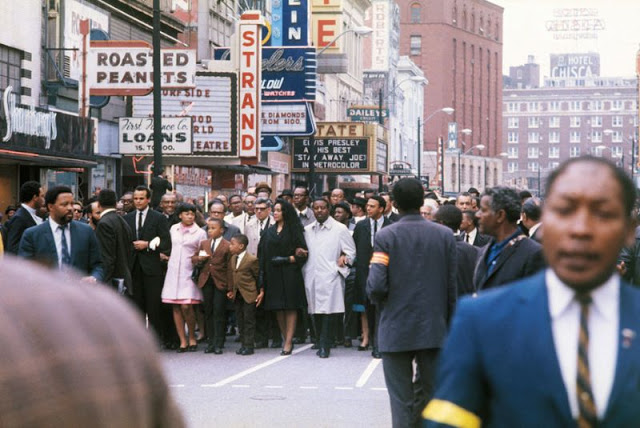
Coretta Scott King, the widow of Martin Luther King Jr., walks on the arm of Dr. Ralph Abernathy, her husband’s successor as head of the Southern Christian Leadership conference, leading about 10,000 people in a memorial march to the slain Dr. King. The King children, Yolanda, Martin III, and Dexter are at left with Harry Belafonte. Reverend Andrew Young marches next to Dr. Abernathy.
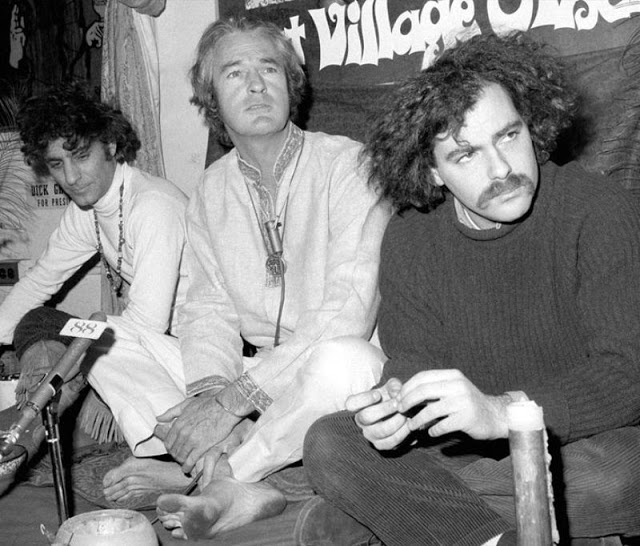
Original caption: Dr. Timothy Leary holds a conference in New York City on February 21, 1968. The LSD advocate said he is tuning in with peaceniks and “Yippies” and hopes to have a million young people in Chicago during the Democratic Party’s convention in August. He said he hopes they will disrupt the convention through “Flower Guerrilla” warfare. At left is Abbie Hoffman, who said he is an organizer and at right is Jerry Rubin, peace movement worker.
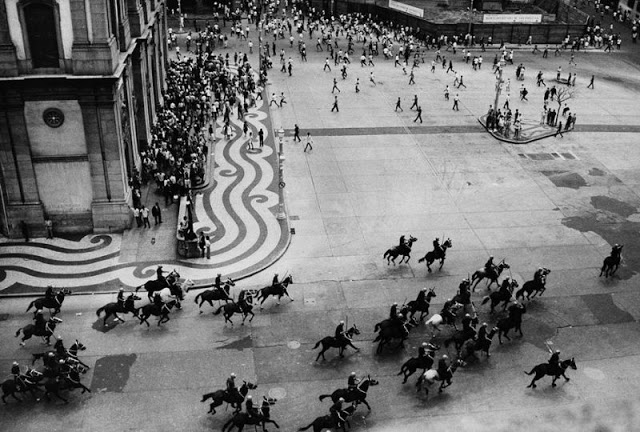
1968 was truly a year of protest around the world. Here in Rio de Janeiro, Brazil, state police cavalry charge students attending a memorial mass for Edson Luis de Lima Souto, a student killed by police, at Candelaria Church on April 4, 1968. Edson had been part of an earlier protest over high prices in a restaurant in downtown Rio, and was shot by police who were trying to remove students from premises.
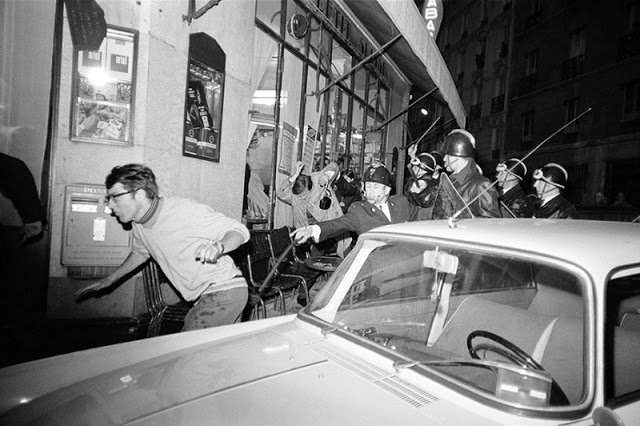
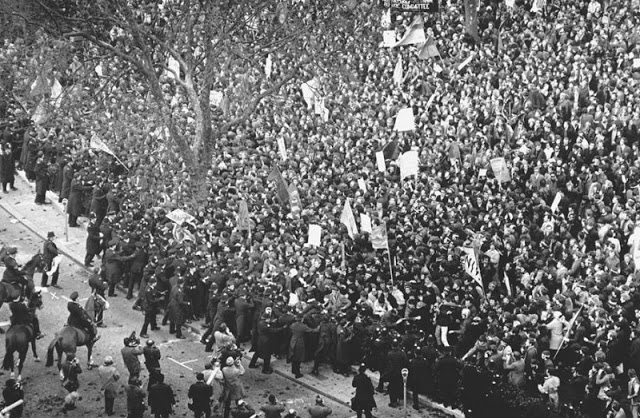
Violent clashes between policeman and students take place during the May 1968 protests in Paris, France.
A massive anti-Vietnam war demonstration in London on March 18, 1968. Hundreds were arrested as they demonstrated outside the United States embassy.
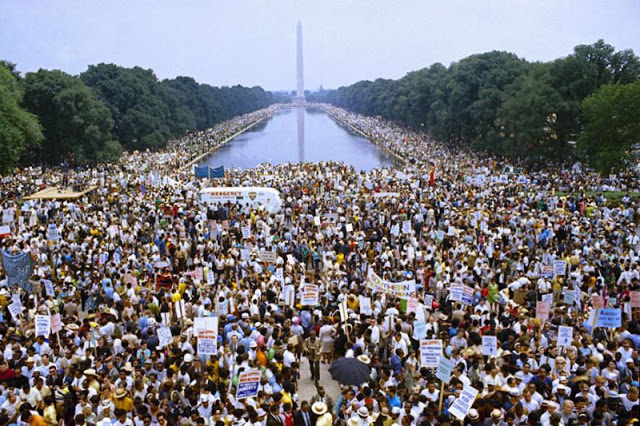
Demonstrators march on Washington, D.C., during the Poor Peoples’ Campaign Solidarity Day on June 19, 1968.
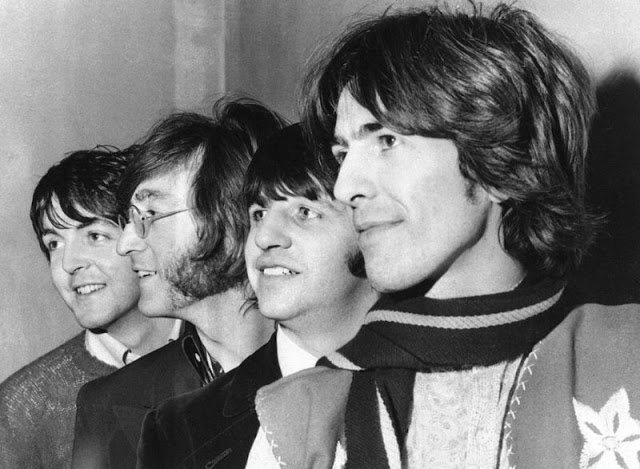
The Beatles pose together on February 28, 1968. From left are Paul McCartney, John Lennon, Ringo Starr, and George Harrison. This was the year they released the White Album.
American actor Gary Lockwood on the set of 2001: A Space Odyssey, written and directed by Stanley Kubrick. The groundbreaking film premiered in April of 1968, and earned the Academy Award for Best Visual Effects.
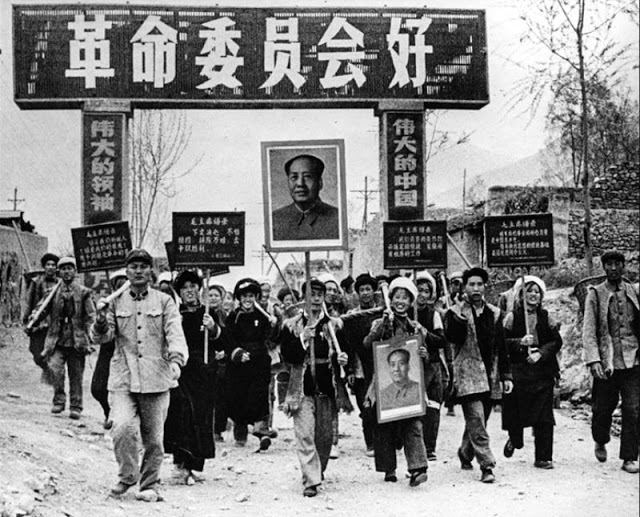
A propaganda image from China’s Cultural Revolution. In 1968, China was in a phase of their Cultural Revolution where Chairman Mao Zedong’s cult of personality was still being elevated, and intellectuals and disloyal citizens were being forced into labor camps or exiled to remote farming regions. Original caption: Members of the Sichuan Province Revolving Committee unite with civilians and soldiers to work in the fields on August 26, 1968.
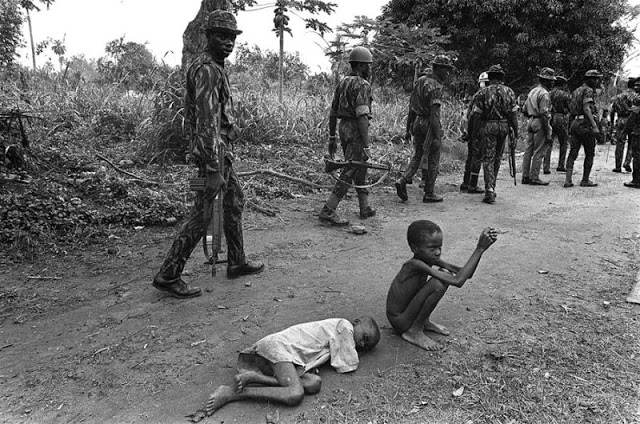
Federal Nigerian troops walk along a road near Ikot Expene, Nigeria, to the frontier with Biafra, a few miles away, on October 13, 1968. On the roadside, two emaciated Nigerian boys slowly die from starvation and malnutrition. Biafra was a breakaway state within Nigeria that fought a war for independence from 1967 to 1970, ending after years of fighting and a crippling blockade by Nigeria resulted in the deaths of between 500,000 and two million Biafran civilians by starvation.
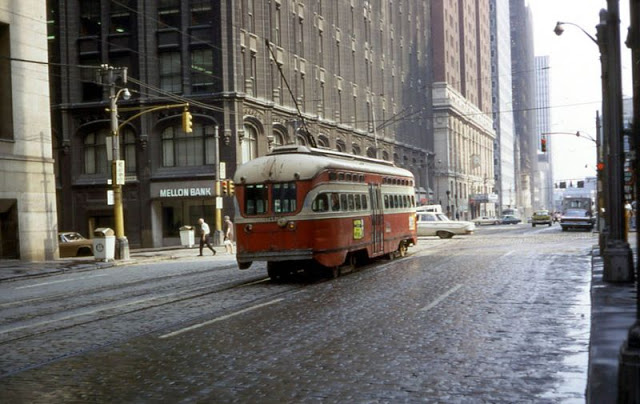
A street scene from Pittsburgh, Pennsylvania, Grant St. at 5th Ave. on August 24, 1968.
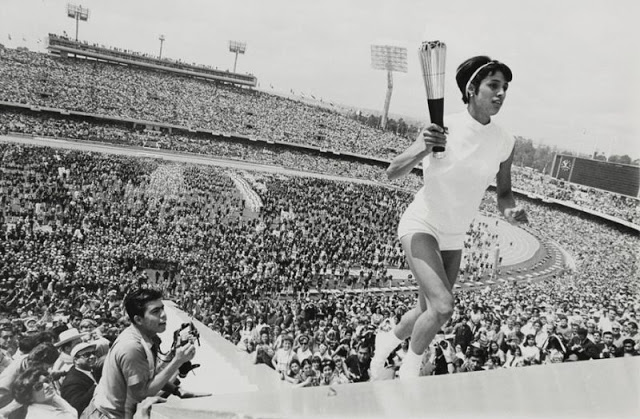
Original caption: A Feminine First. Mexico City: Mexico’s Norma Enriqueta Basilio, the first woman in the history of the modern Olympic Games to light the Olympic Fire, runs up the 90 steps with the Olympic Torch during the opening ceremonies here on October 12, 1968.
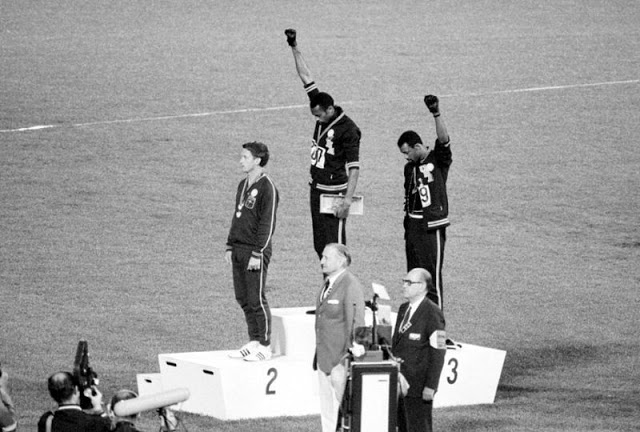
Tommie Smith and John Carlos, gold and bronze medalists in the 200-meter run at the 1968 Olympic Games, engage in a victory stand protest against unfair treatment of blacks in the United States. With heads lowered and black-gloved fists raised in the black power salute, they refused to recognize the American flag and national anthem. Australian Peter Norman is the silver medalist.
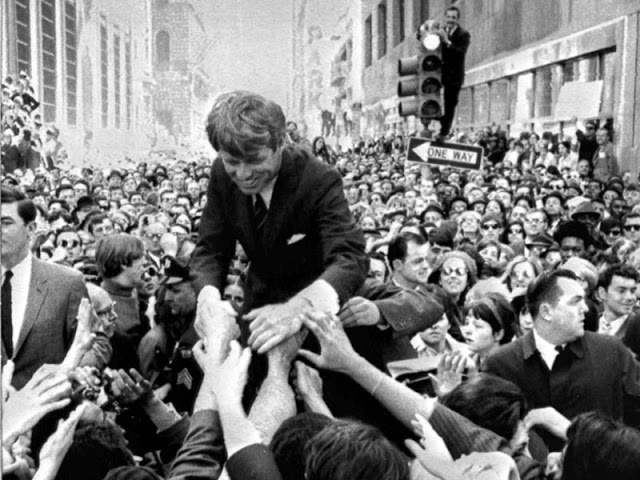
Senator Robert F. Kennedy is surrounded by hundreds of people as he leans down to shake hands during a presidential campaign appearance at a street corner in central Philadelphia on April 2, 1968. Kennedy had declared his candidacy for the presidency of the United States only weeks earlier, on March 16.
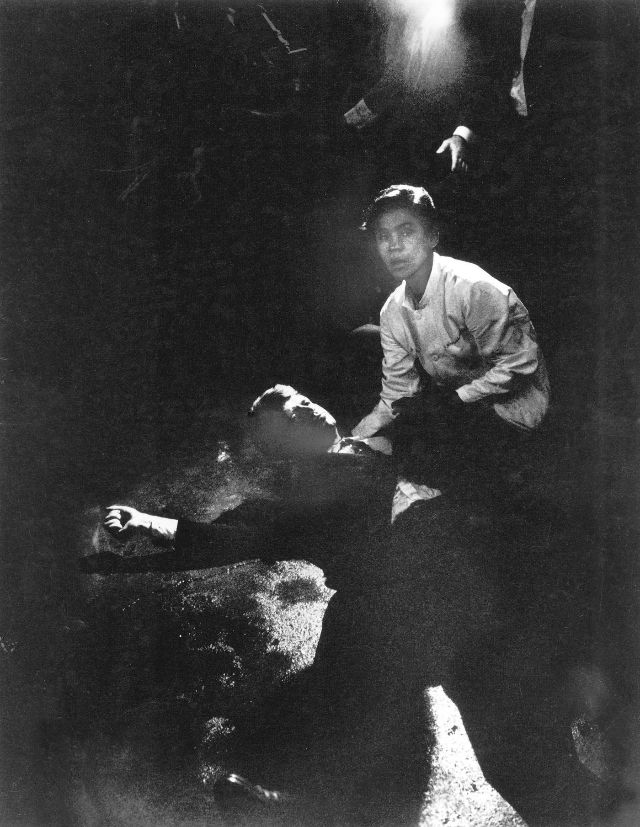
Senator Robert Kennedy lies sprawled, semi-conscious in his own blood after being shot in the head and neck while busboy Juan Romero tries to comfort him in kitchen in the Ambassador Hotel in Los Angeles, California, on June 5, 1968. A Palestinian immigrant named Sirhan Sirhan, who was angry with Kennedy over his support for Israel, shot Kennedy three times. Sirhan remains in prison to this day, last denied parole in 2016.
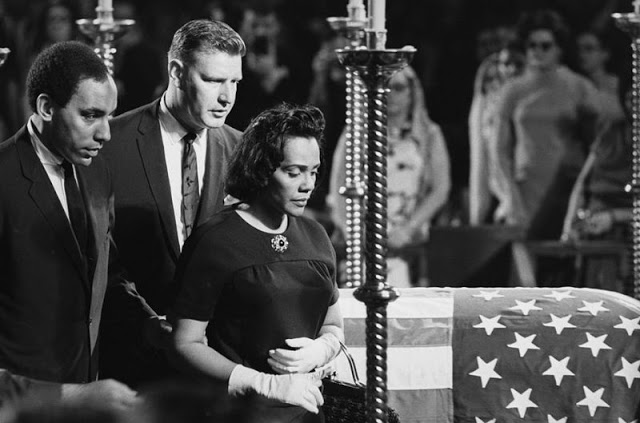
Coretta Scott King, widow of Martin Luther King Jr., walks past the casket containing the body of the assassinated Senator Robert F. Kennedy in St. Patrick’s Cathedral in New York City on June 7, 1968.
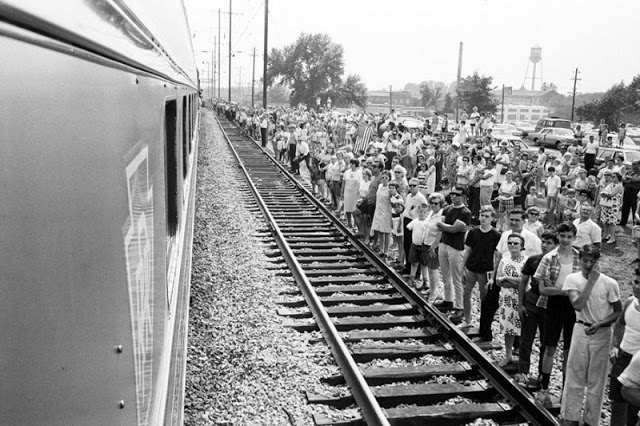
A large crowd lines railroad tracks as the funeral train of Robert F. Kennedy passes on its way to Arlington National Cemetery in Washington, D.C.
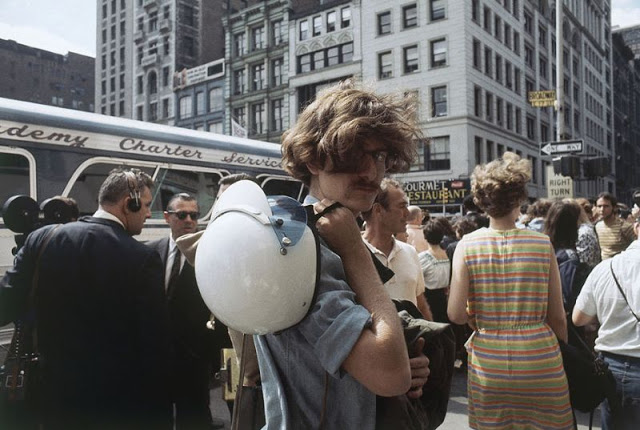
Youths prepare to board buses for Chicago in August of 1968. Peace activists and anti-war groups organized to travel to Chicago to demonstrate outside the 1968 Democratic National Convention.
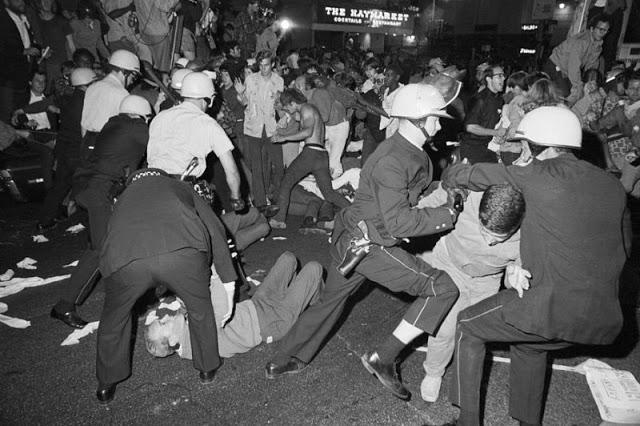
Police and demonstrators clash near the Conrad Hilton Hotel on Chicago’s Michigan Avenue August 28, 1968, during the Democratic National Convention.
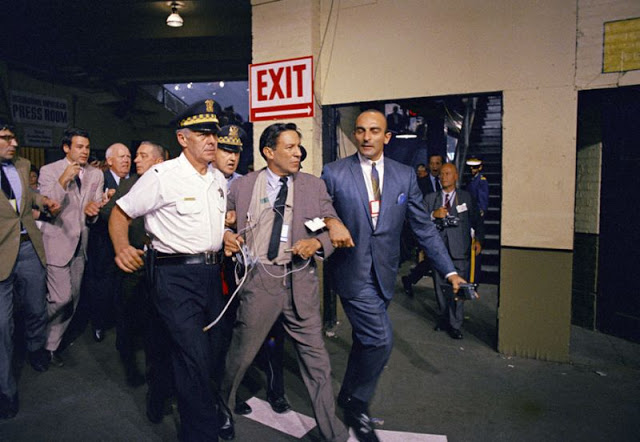
Mike Wallace, a CBS newsman, is hustled off the Democratic National Convention floor in the aftermath of a row between delegates and security officers during the nominating session on August 28, 1968 in Chicago. He was taken up a ramp to a second-floor room.
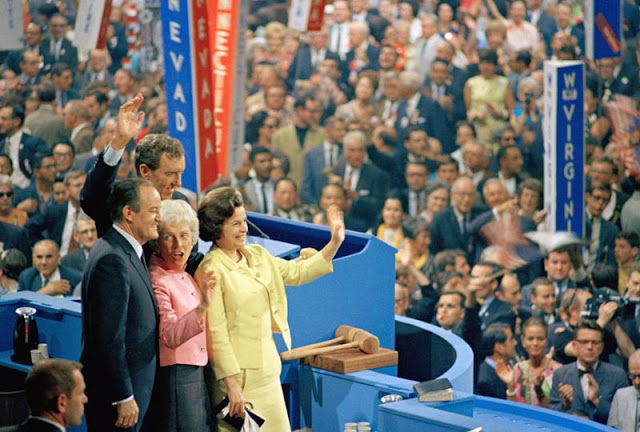
Vice President Hubert Humphrey and his running mate, Sen. Edmund S. Muskie, with their wives shown at the final session Democratic Convention in Chicago following their nominations for president and vice president, on August 29, 1968.
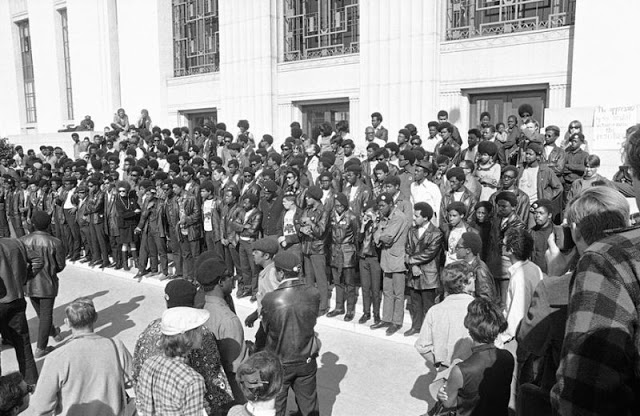
Members of the Black Panthers gather in front of entrance to the Alameda County Courthouse in Oakland, California, on July 15, 1968, to protest the trial of Huey Newton, 26, the founder of the Black Panthers. Newton went on trial for the slaying of an Oakland policeman and for wounding another officer on October 28.
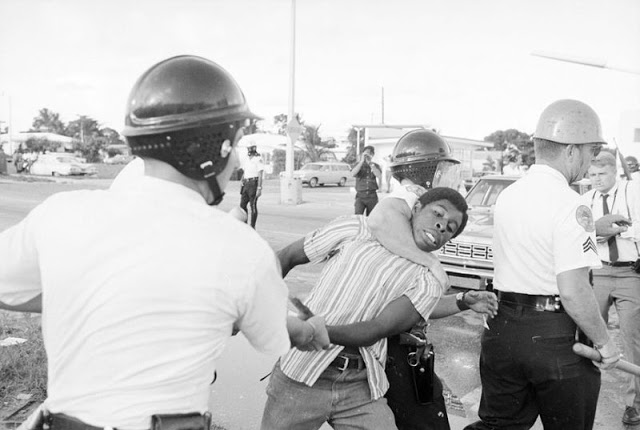
Original caption: Miami policemen, one holding the man’s arm and the other with an arm lock on his neck, drag away a Negro youth during a clash between police and rioters in that city’s predominantly Negro Liberty City district on August 8, 1968.
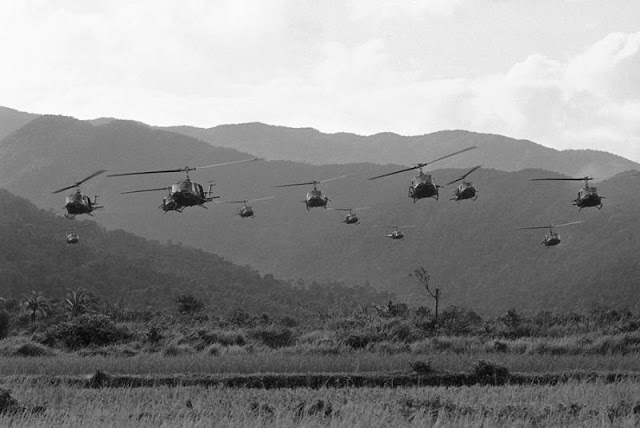
Helicopters fly low during Operation Pegasus in Vietnam on April 5, 1968. They were taking part in the operation to relieve the Khe Sanh marine base, which had been under siege for the previous three months.
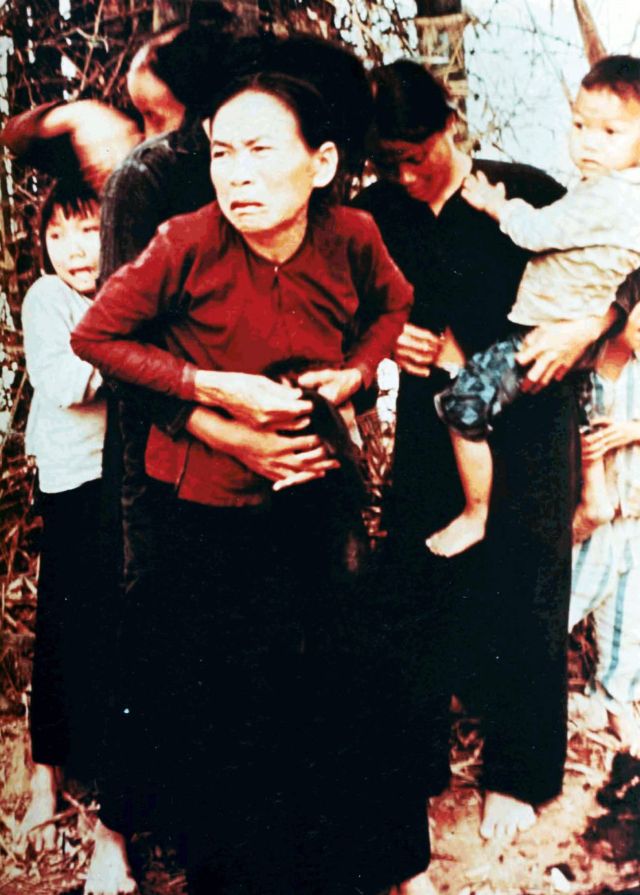
Evidence of the My Lai Massacre. A photograph of Vietnamese women and children in My Lai before they were killed by U.S. soldiers in the massacre on March 16, 1968. According to court testimony, they were killed seconds after the photo was taken. The woman on the right is adjusting her blouse buttons because of a sexual assault that happened before the massacre. Image photographed by United States Army photographer Ronald L. Haeberle.
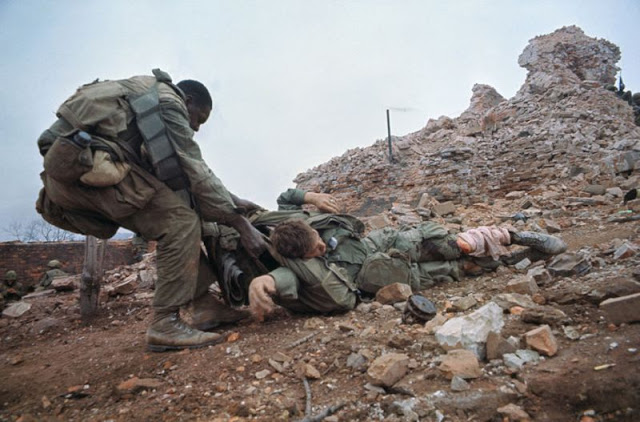
A U.S. Marine keeps his head low as he drags a wounded buddy from the ruins of the Citadel’s outer wall during the Battle of Hue in Vietnam on February 16, 1968.
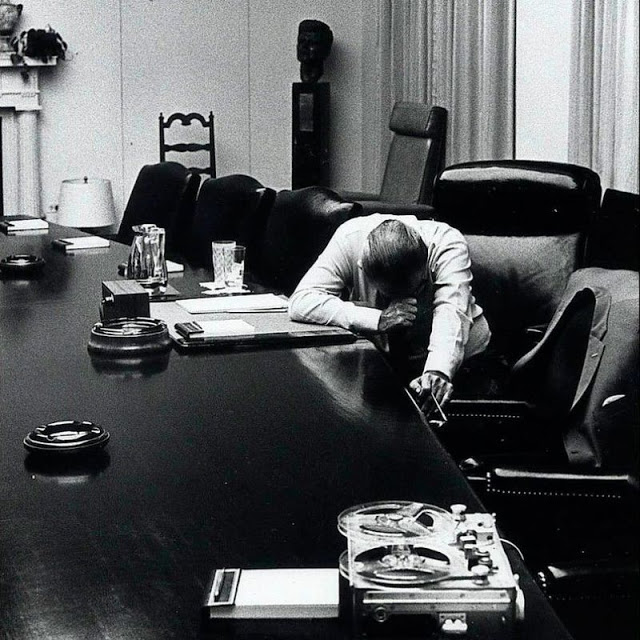
U.S. President Lyndon B. Johnson listens to a tape recording from his son-in-law Captain Charles Robb at the White House on July 31, 1968. Robb was a U.S. Marine Corps company commander in Vietnam at the time. Robb was later awarded the Bronze Star and, after returning home, became governor of Virginia in 1982, and later a senator for the same state.
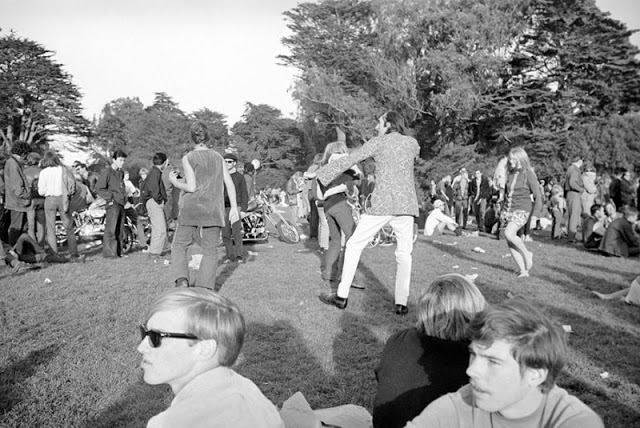
Original caption: Several hundred hippies gathered at “Hippie Hill” in San Francisco’s Golden Gate Park for a happening at which several bands played rock ‘n’ roll music. Most of the hippies sat and listened, but some just couldn’t keep from dancing to the rhythms.
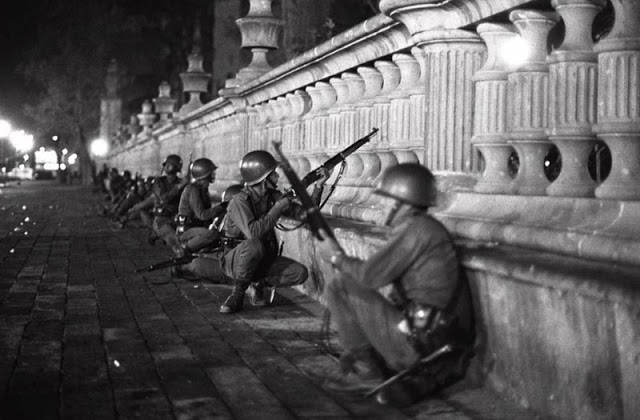
Mexican army soldiers crouch with weapons ready in Mexico City’s Tlatelolco district, in this October 2, 1968 photo. The truth behind the stunning assault on a peaceful democracy protest known as the Tlatelolco Massacre, in which some 300 people are believed to have been killed, remains largely hidden by government and military secrecy.
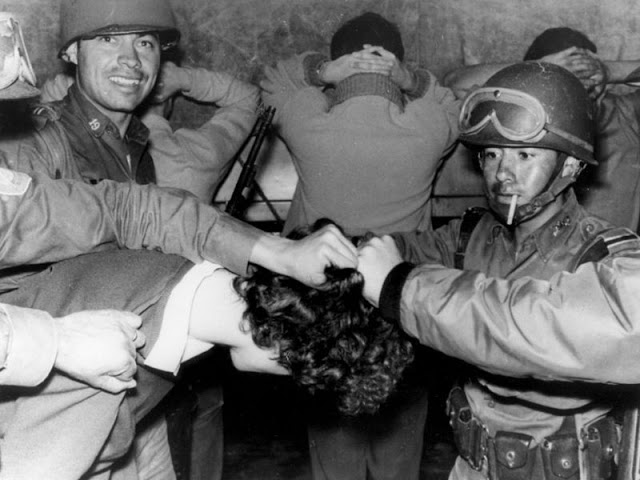
Soldiers cut a student’s hair after he was arrested during the first hour and a half of shooting in the Tlatelolco area in Mexico City on October 3, 1968. Another student stands against the wall.
SRI’s Bill English, the engineer who built the first computer mouse prototype, prepares for the December 9, 1968 “mother of all demos.” The demonstration is hailed as one of the most significant technological presentations in history, showcasing technologies that have become what we now know as modern computing. He gave the first public demonstration of a computer mouse, a graphical user interface, windowed computing, hypertext, word processing, video conferencing, and much more.
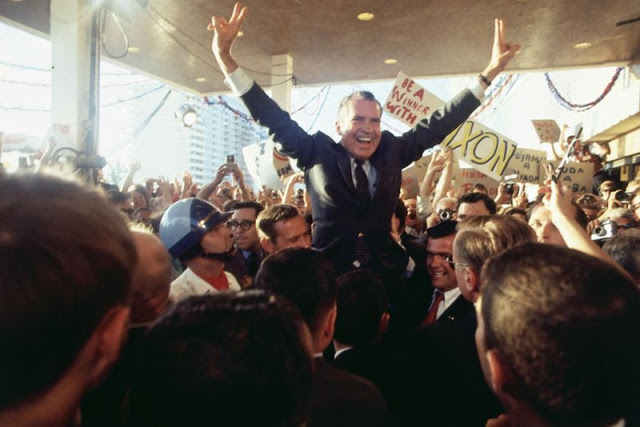
Richard M. Nixon is mobbed by wildly cheering supporters as he arrives at the Hilton Plaza Hotel, his Miami Beach headquarters.
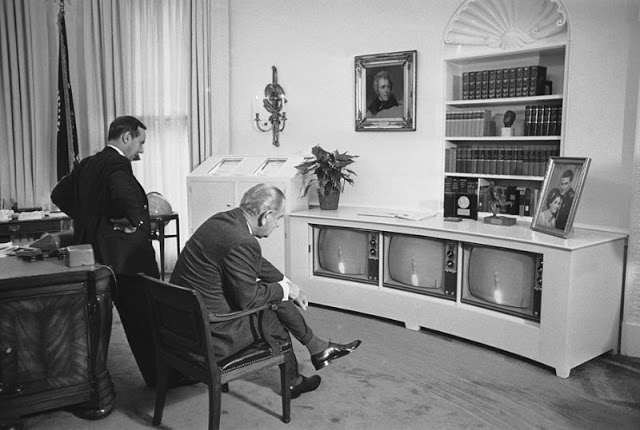
French Foreign Minister Michel Debre and U.S. President Lyndon Johnson watch television coverage of the flight of the Saturn 1 B Rocket launching from Cape Kennedy, Florida, on on October 11, 1968, in the White House Office in Washington, D.C.
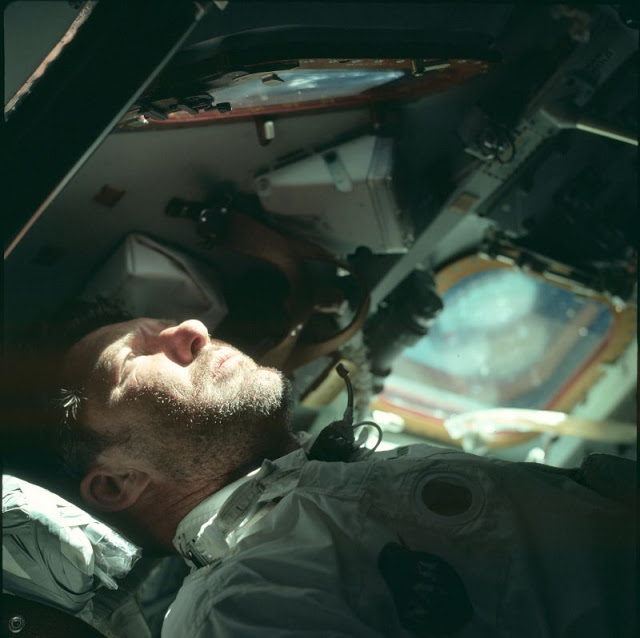
A heavy beard covers the face of astronaut Walter M. Schirra Jr., Apollo 7 commander, as he looks out the rendezvous window in front of the commander’s station on the ninth day of the Apollo 7 mission on October 20, 1968. Apollo 7 was the first Apollo mission to carry a crew, and it made 163 orbits around the Earth in 10 days, setting the stage for Apollo 8, which was heading to the moon.
Apollo 8, the first manned mission to the moon, entered lunar orbit on Christmas Eve, December 24, 1968. That evening, the astronauts—Commander Frank Borman, Command Module Pilot Jim Lovell, and Lunar Module Pilot William Anders—held a live broadcast from lunar orbit, in which they showed pictures of the earth and moon as seen from their spacecraft. Said Lovell, “The vast loneliness is awe-inspiring and it makes you realize just what you have back there on Earth.” They ended the broadcast with the crew taking turns reading from the book of Genesis.

The Bad Old Days of New York: 15 Black and White Photos Documented NYC Street Prostitutes in 1971

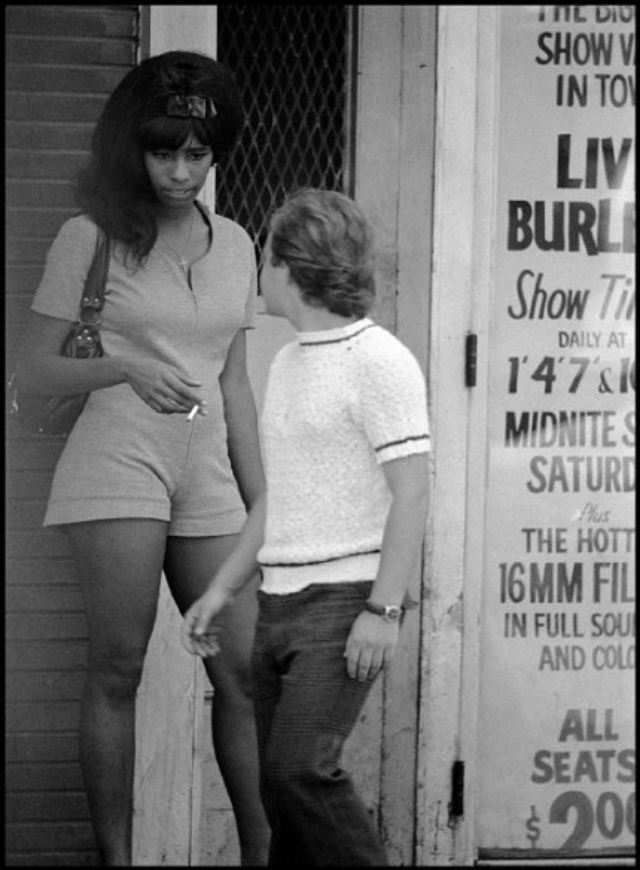
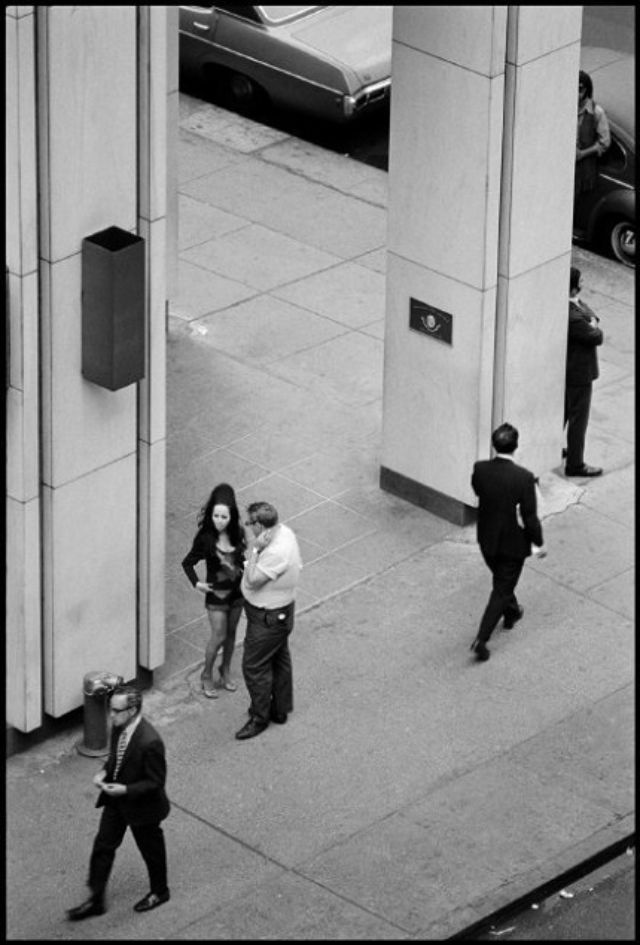
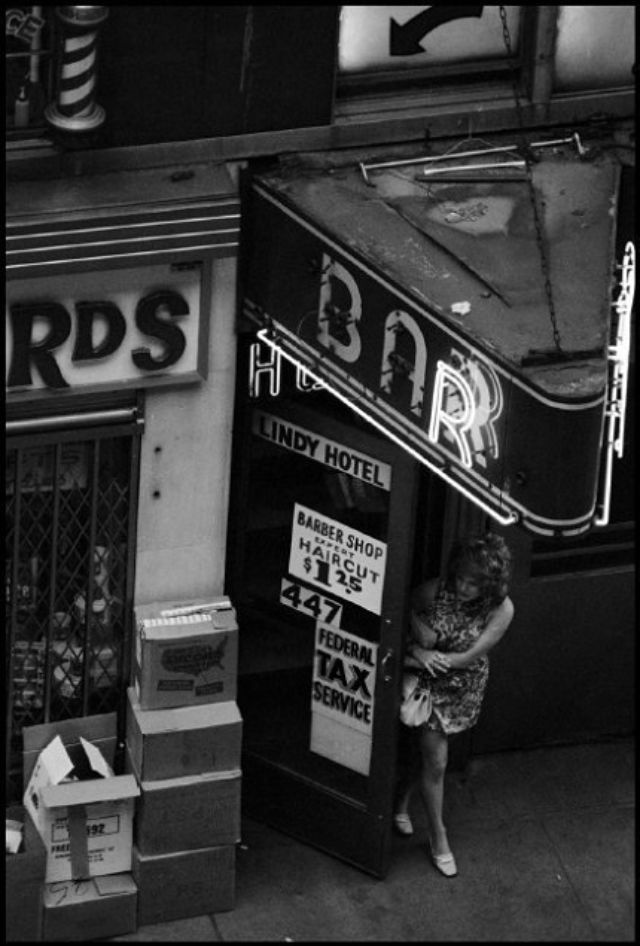
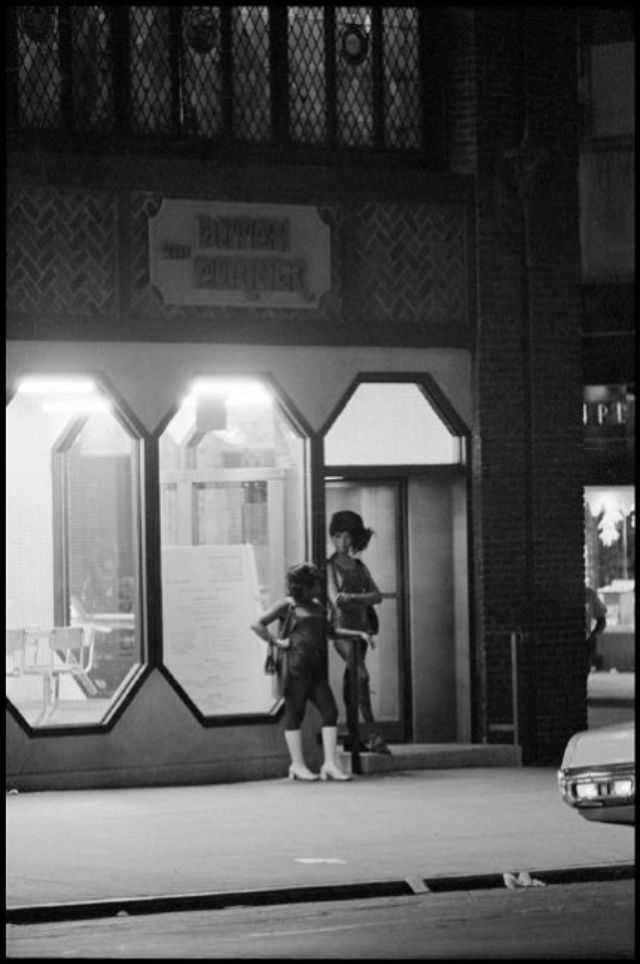
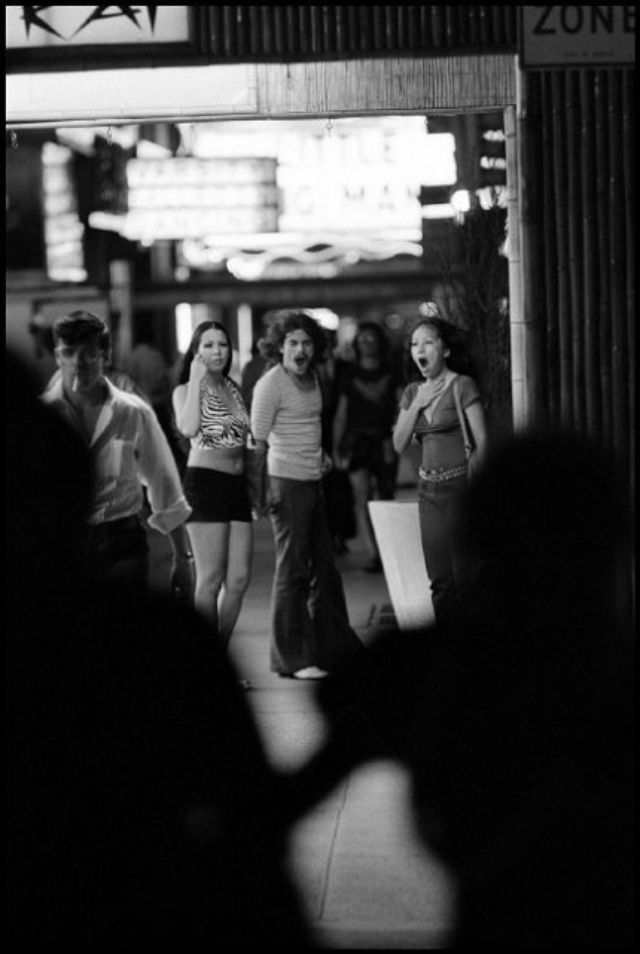
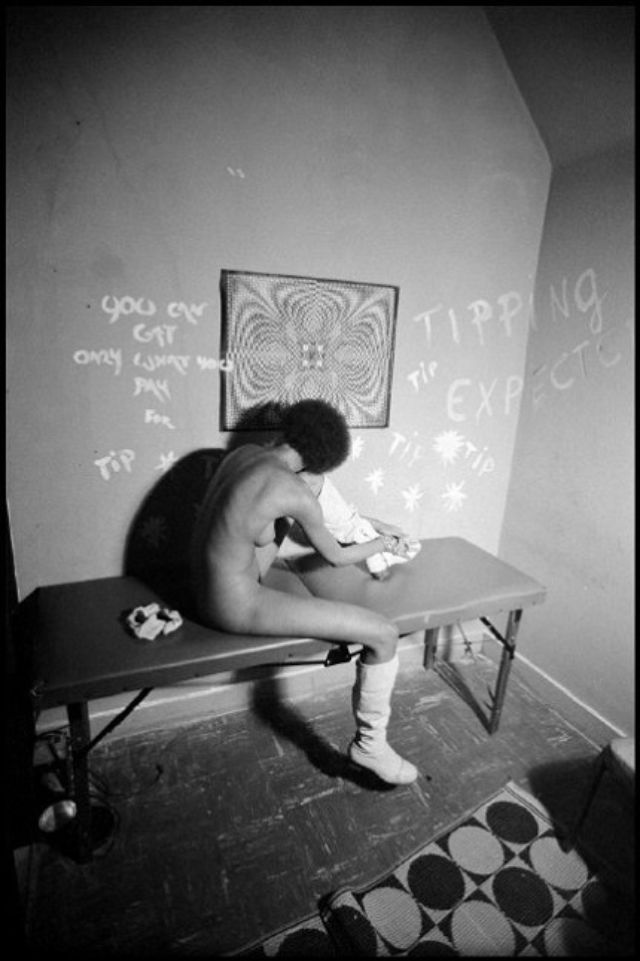
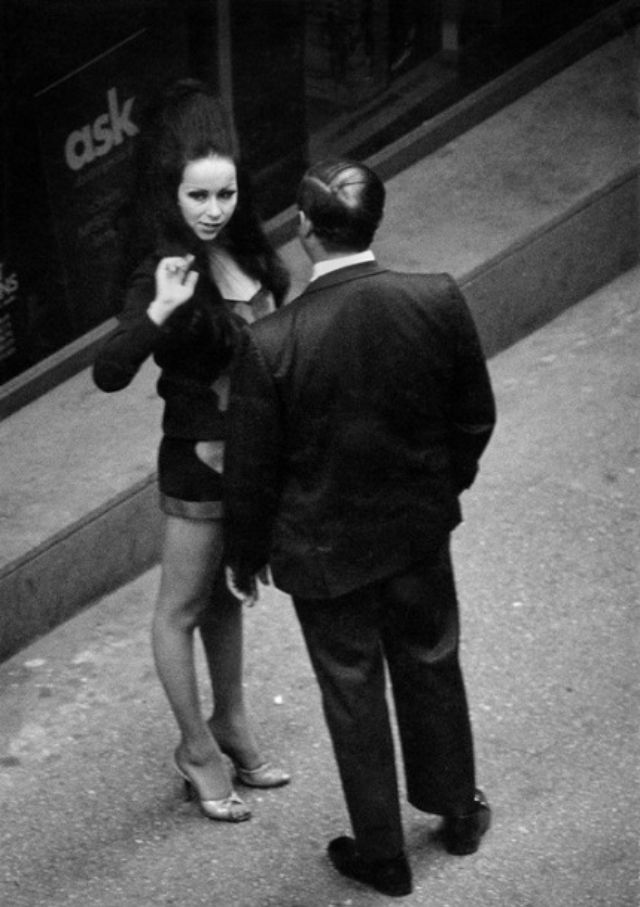
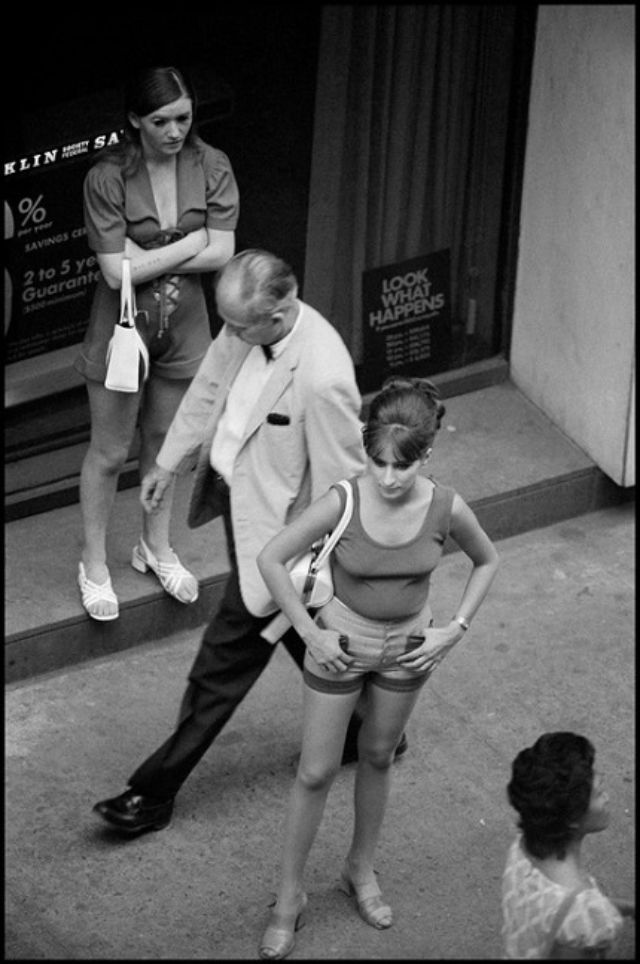
In 1971 Burt Glinn documented street prostitutes for New York Magazine. At the time, prostitutes had been getting more mention in the press due to a series of incidents in which streetwalkers had attacked clients.

Many thought that prostitutes were beginning to make more money through violence than “rendered services”, this at a time when the New York Times claimed that there were more prostitutes, gangsters and hoodlums in Times Square than ever before.

Prostitution was able to exist at such a scale since laws at the time made it practically impossible to get a conviction and even when one was attained, the fine was usually as low as $50-$100; a trifle since a streetwalker could earn her money back in less than an hour.

Photos © Burt Glinn

15 Protest Signs That Sum Up the Sixties

These movements include the civil rights movement, the student movement, the anti-Vietnam War movement, the women’s movement, the gay rights movement, and the environmental movement. Each, to varying degrees, changed government policy and, perhaps more importantly, changed how almost every American lives today.

“Bombing For Peace Is Like Fucking For Virginity.” This was on a sign in the 1960s during during a Vietnam War protest.
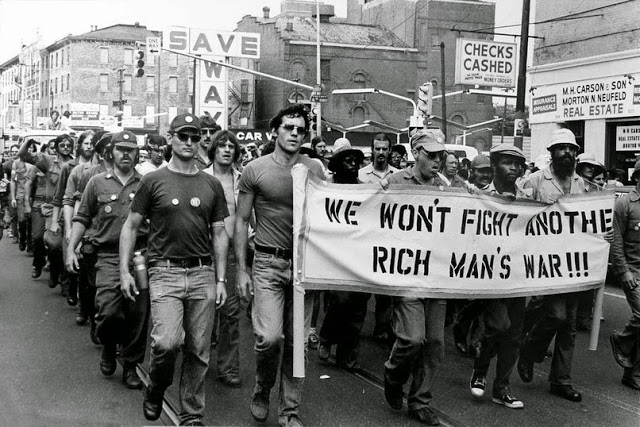
“We Won’t Fight Another Rich Man’s War!!!” – Vietnam veterans against the War, circa 1970.
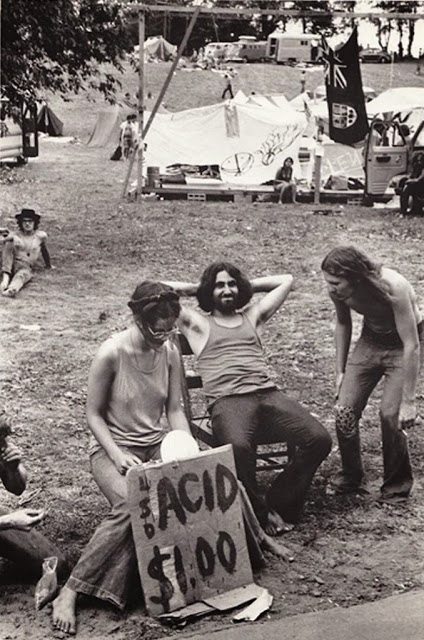
Hippies selling acid during Woodstock, 1969.
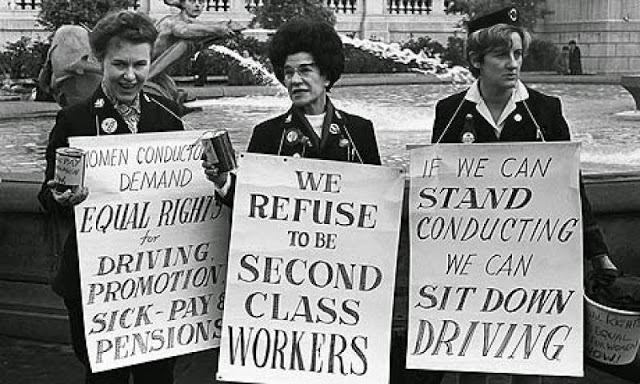
Women attend an Equal Pay for Equal Work demonstration in London’s Trafalgar Square in May 1968.
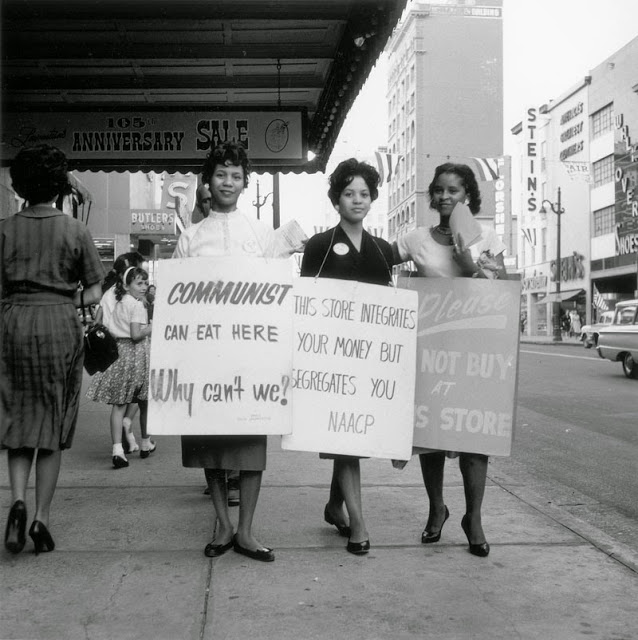
NAACP protest, Memphis, TN, early 1960s.
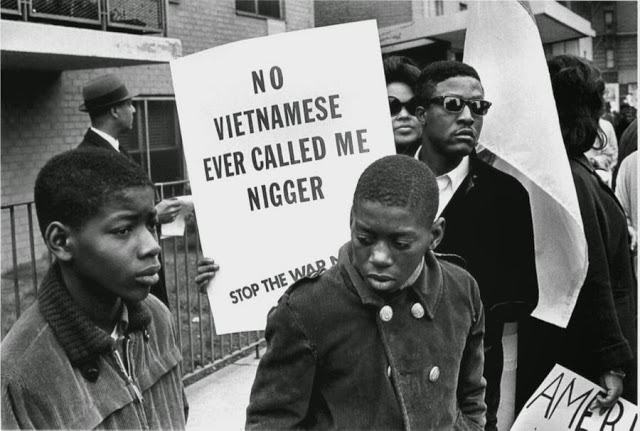
African Americans protest against the war in Vietnam during the Harlem Peace March, 1967.
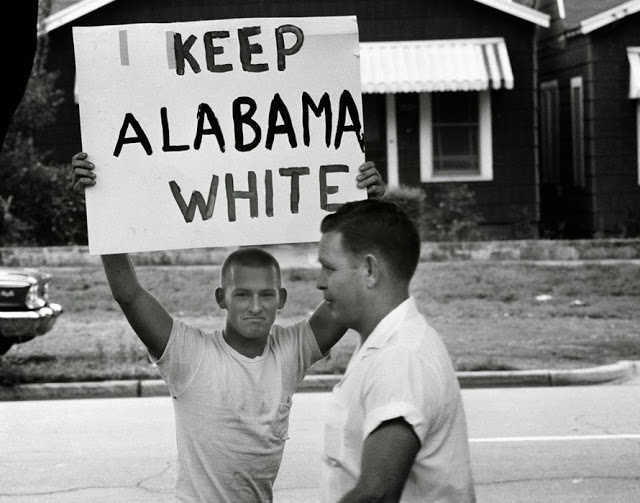
Student at Montgomery High School protest intergration, 1963.
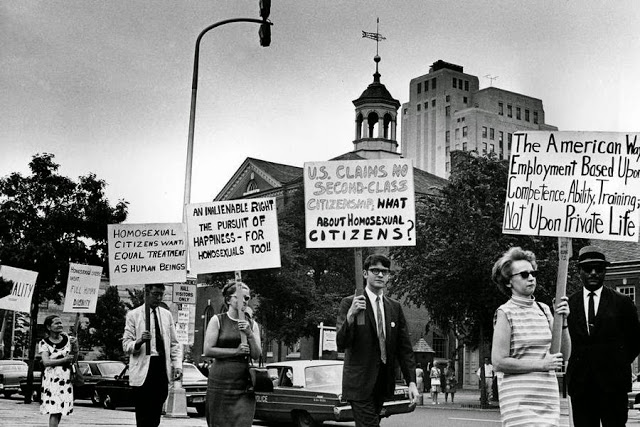
Kay Tobin Lahusen, right, and other demonstrators carry signs calling for protection of homosexuals from discrimination as they march in a picket line in front of Independence Hall in Philadelphia, July 1967.
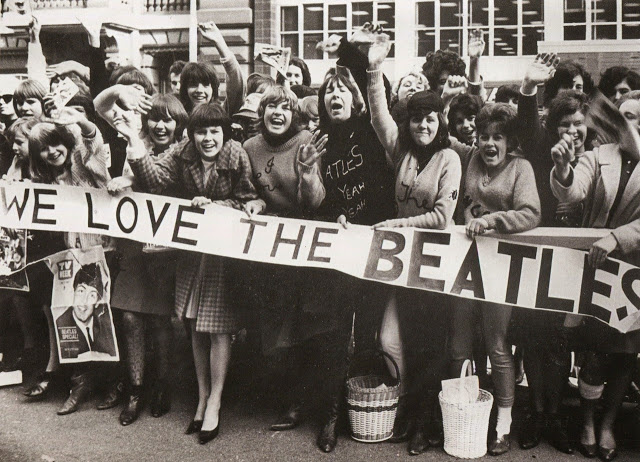
Screaming Beatles’ fans holding banners and waving at band, Australia, June 1964.
On a cool and sunny fall day in Hartford, ten thousand people jammed into Bushnell Park with one goal: to stop the war in Vietnam. As the single largest protest of its kind in the city’s history, October 15, 1969 was historic.
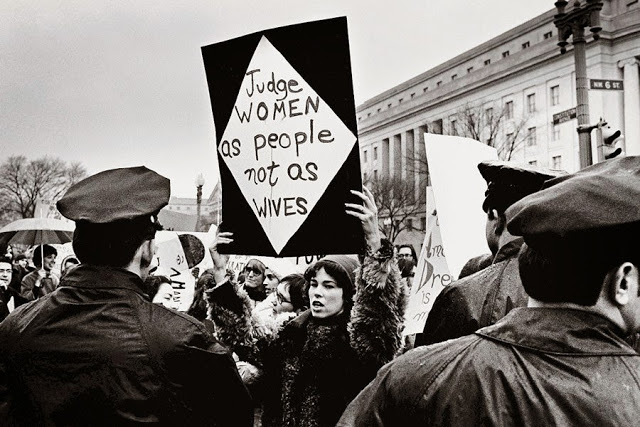
A young American woman holds up a sign as she protests for women’s rights in front of the Federal Trade Commission headquarters while policemen look on during Richard Nixon’s inauguration weekend, Washington, DC, January 18-21, 1969.
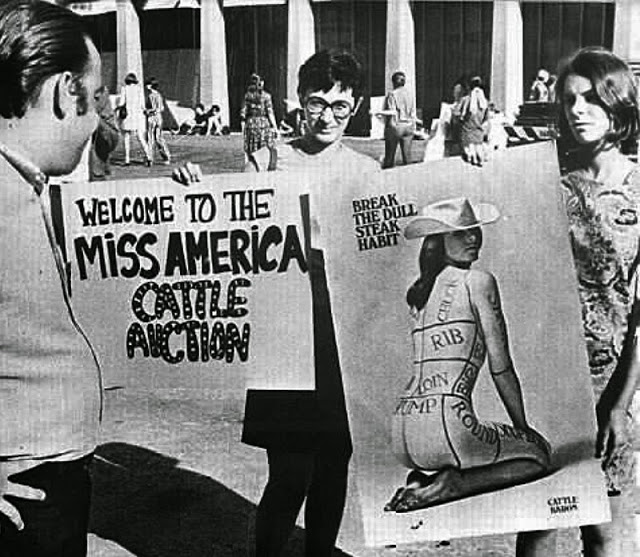
Members of the National Women’s Liberation Party protest the Miss America beauty pageant as degrading to women, September 1968
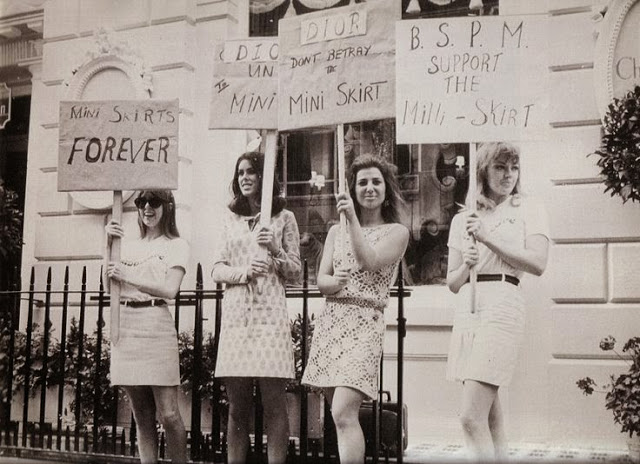
Girls from the British Society for the Protection of Mini Skirts stage a protest outside the House of Dior, for its ‘unfair’ treatment of mini skirts, ca. 1966.
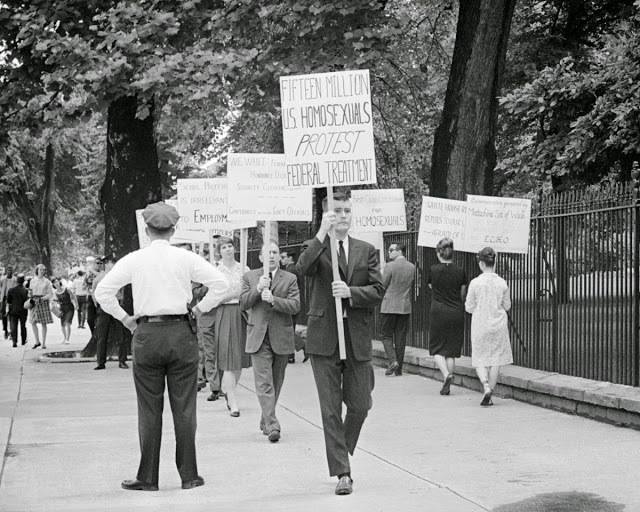
Gay rights activists picket the White House in 1965 to protest government discrimination against homosexuals.
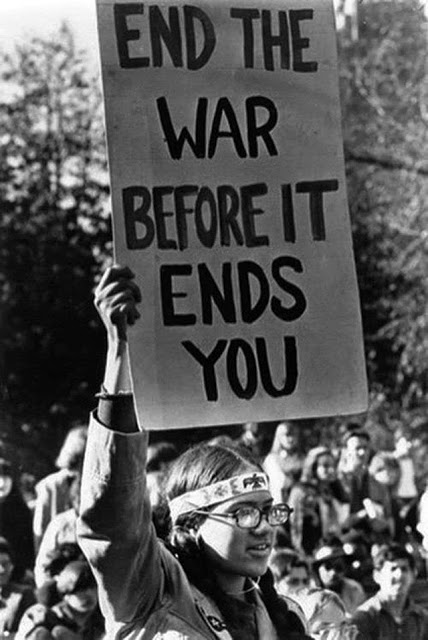
Hippie protesting the Vietnam War, ca. 1960s.

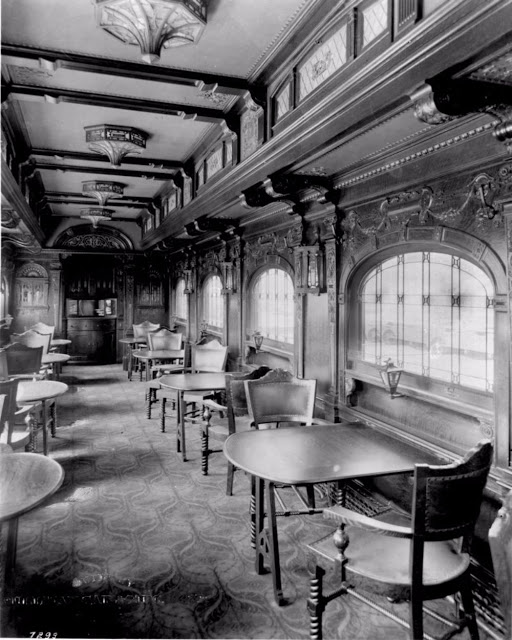
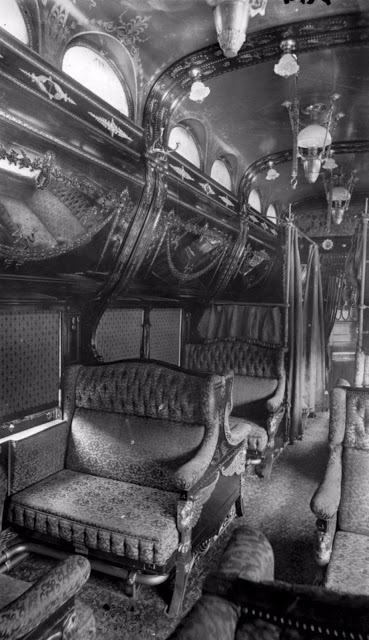
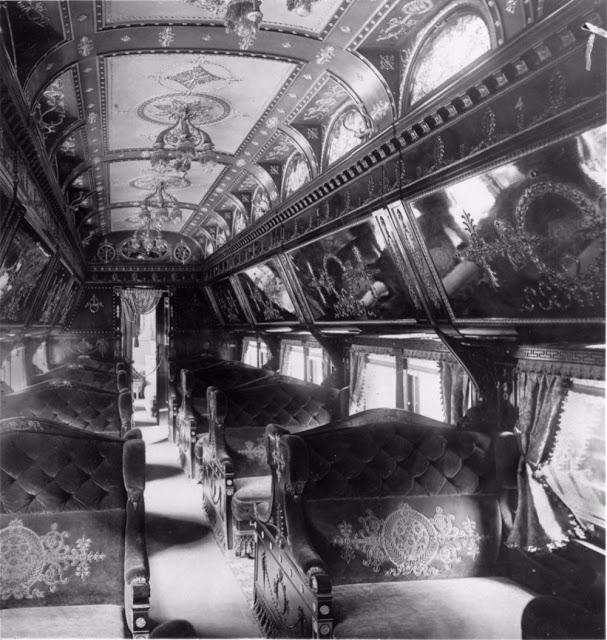
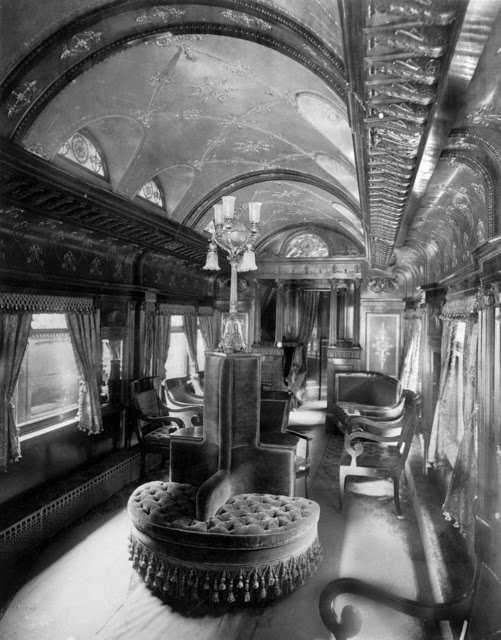
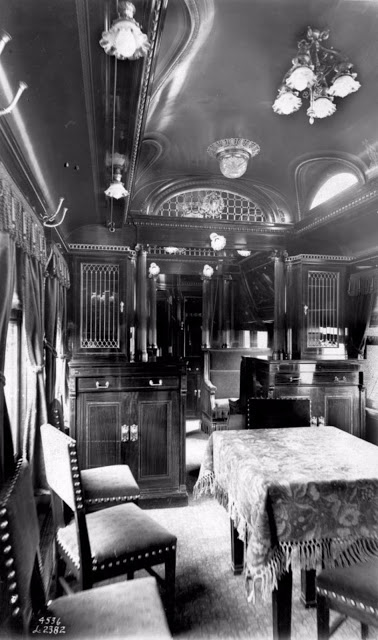
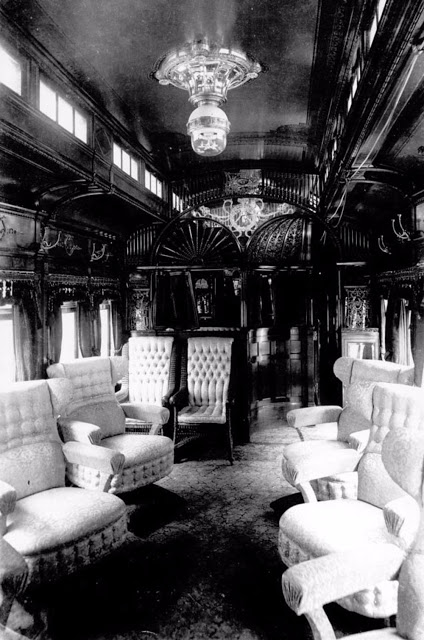
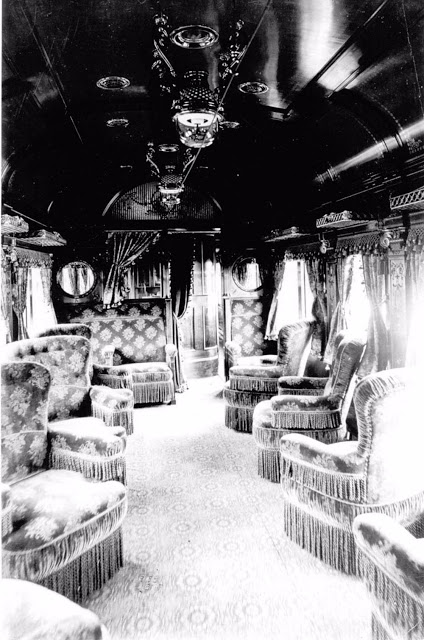
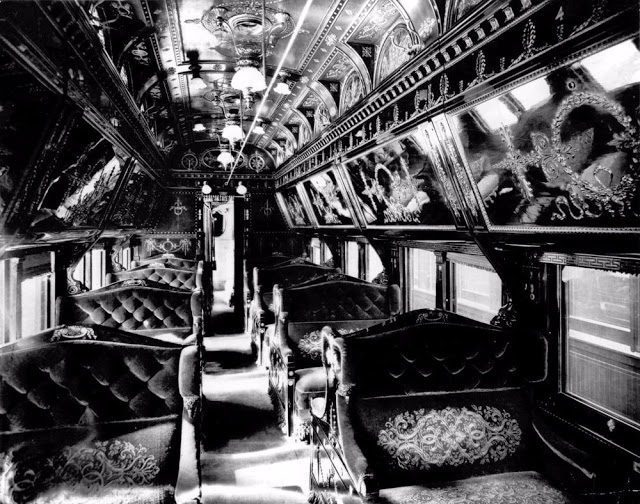
The Glory Days of Train Travel: Inside the Pullman Train Cars, the Epitome of Luxury Palace Cars and Superliners From the Late 19th Century

The Pullman Palace Car Company, founded by George Pullman, manufactured railroad cars in the mid-to-late 19th century through the early decades of the 20th century, during the boom of railroads in the United States. Its workers initially lived in a planned worker community (or “company town”) named Pullman.

George Mortimer Pullman was always an inventive, innovative entrepreneur. Legendarily, an extremely uncomfortable overnight train ride from Buffalo toWestfield, New York, caused him to realize that there was a vast market potential for comfortable, clean, efficient passenger service. He had a great deal of experience with compact and efficient sleeping accommodations thanks to his experiences with canal boats on the Erie Canal. He formed a partnership with former New York state senator Benjamin C. Field in 1857, one of his close friends and neighbors from Albion, to build and operate several sleeping cars. Pullman and Field secured a contract from the Chicago, Alton and St. Louis Railroad to develop a more comfortable sleeping car. Pullman and Field converted two moderately successful cars. Field, more interested in politics than rail cars, assigned his interest to Pullman in exchange for future loans.

In many ways, George Pullman intended his Palace Car Company to counter the discomfort, disorder, and discontinuity endemic to rail travel and modern urban life. As early as 1860, before his company had even existed, Pullman had been experimenting with railcar construction by outfitting his cars with sleeping berths that could be folded into chairs during the day. The innovation made Pullman’s cars wider than standard railcars, which initially prevented most railroads from carrying them on their narrower rails. After George Pullman secured the right for one of his cars to serve as Abraham Lincoln’s funeral car in 1865, interest in Pullman’s sleeping cars greatly expanded. In 1867, Pullman incorporated Pullman’s Palace Car Company with several investors and devoted himself to manufacturing sleeping cars.

But Pullman did more than simply manufacture sleeping cars. He also focused on transforming the entire experience of rail travel. As the photographs and documents below convey, Pullman emphasized the palatial aspects of his railcars. Outfitted with plush seating and ostentatious decorations, Pullman cars were intended to bring order and comfort to modern rail travel.

The First Pullman Car
Pullman’s Palace Hotel Car Menu
Interior of Rococo Period Car
Interior of Wood Car
Interior of Wood Car, Bed Room
Interior of Wood Car, Lounge Interior
Lounge Car Interior
Interior of Wood Car
Pullman’s Palace Car Company Stock Certificate

Yesterday Today

Bringing You the Wonder of Yesterday - Today

Skip to content ↓