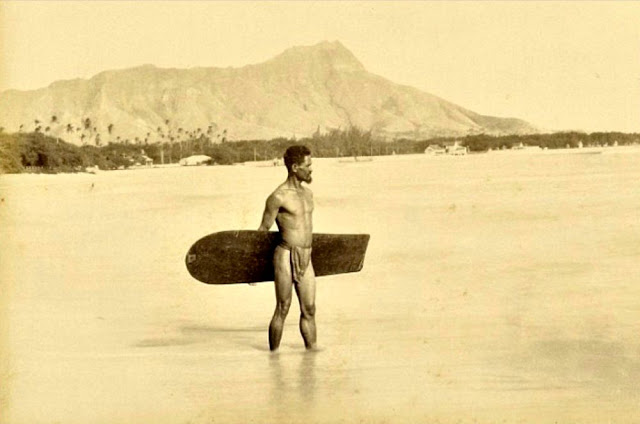
Dating back to 1890 this is perhaps the first photo ever taken of a surfer. The muscled Hawaiian beach man is photographed wearing a traditional loin cloth and shown standing in the shallows holding his rudimentary board. The original owner and the photographer are not known.
Photo of surfer wearing traditional garb with Diamond Head in the background. Oahu, 1890.
Surfing rituals and the sport itself continued in the Kapu system until missionaries from New England began arriving in 1820. The missionaries believed surfing and other Hawaiian sports to be hedonistic acts and a waste of time. They adamantly preached against the sports’ existence in Hawaii.
By 1890, surfing in Hawaii was nearly extinct, with the sport practiced in only a few places. The rapidly growing agricultural empire coming into place, coupled with the immigration of foreigners, also contributed to the decline of surfing, along with many other sacred aspects of the Polynesian culture. If not for the dedication of a few Hawaiian kings like David Kalakau, an advocate of all Hawaiian sports, surfing may not have survived to see the 20th century.
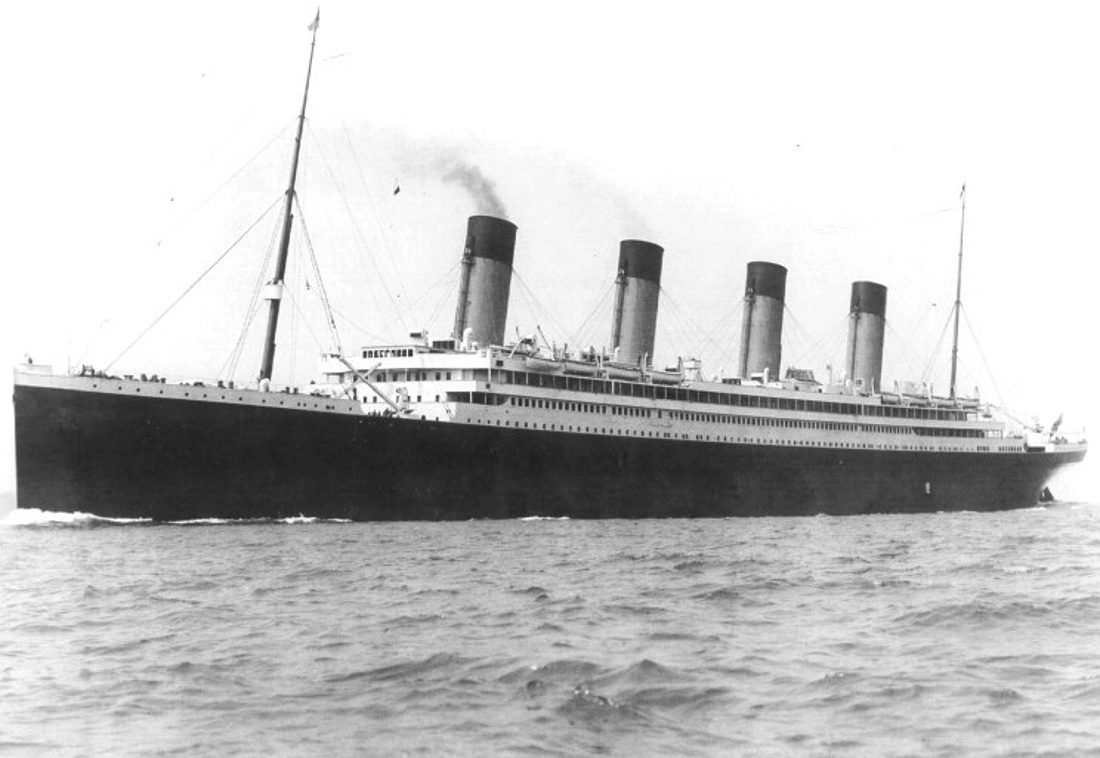
RMS Olympic was a British ocean liner and the lead ship of the White Star Line’s trio of Olympic-class liners. Unlike the other ships in the class, Olympic had a career spanning 24 years from 1911 to 1935. This included service as a troopship during the First World War, which gained her the nickname, Old Reliable. She returned to civilian service after the war, and served successfully as an ocean liner throughout the 1920s and into the first half of the 1930s, although increased competition, and the slump in trade during the Great Depression after 1930, made her operation increasingly unprofitable.
Olympic was the largest ocean liner in the world for two periods during 1910–13, interrupted only by the brief tenure of the slightly larger Titanic (which had the same dimensions but higher gross register tonnage) before the German SS Imperator went into service in June 1913. Olympic also held the title of the largest British-built liner until RMS Queen Mary was launched in 1934, interrupted only by the short careers of Titanic and Britannic.
Olympic was withdrawn from service and sold for scrap in 1935; demolition was completed in 1937.
The other two ships in the class had short service lives: in 1912, Titanic collided with an iceberg on her maiden voyage and sank in the North Atlantic; Britannic never operated in her intended role as a passenger ship, instead serving as a hospital ship during the First World War until she sank in the Aegean Sea in 1916. (Wikipedia)
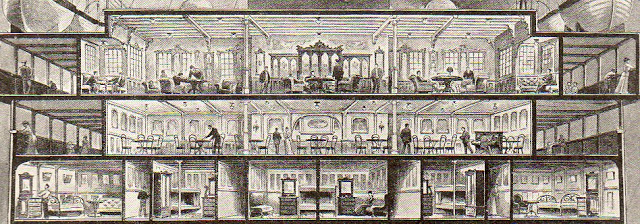
Cross section of the HMS Olympic, giving an idea of her tremendous size and capacity. This cross section appeared in the 14 August 1909 issue of The Illustrated London News, just six months or so after she was laid down.
Unlike the other ships in the class, Olympic had a long career spanning 24 years from 1911 to 1935. This included service as a troopship during the First World War. She returned to civilian service after the war and served successfully as an ocean liner throughout the 1920s and into the first half of the 1930s, although increased competition, and the slump in trade during the Great Depression after 1930, made her operation increasingly unprofitable.
Olympic was the largest ocean liner in the world for two periods during 1911–13, interrupted only by the brief tenure of the slightly larger Titanic (which had the same dimensions but higher gross tonnage owing to revised interior configurations), before she was then surpassed by SS Imperator. Olympic also retained the title of the largest British-built liner until RMS Queen Mary was launched in 1934, interrupted only by the short careers of her slightly larger sister ships.
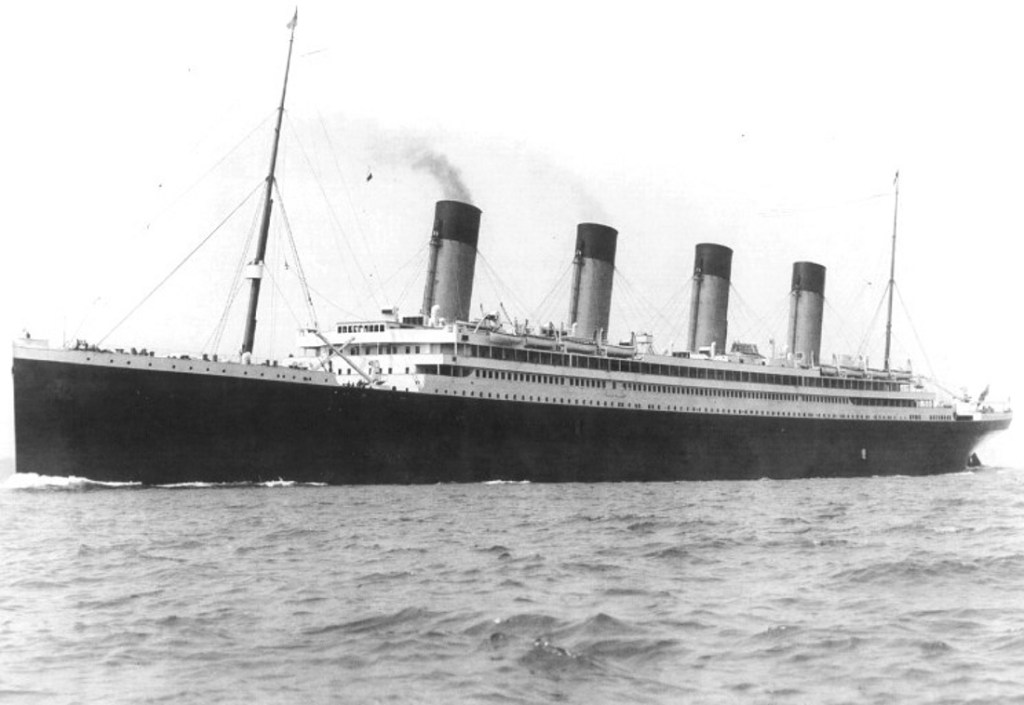
RMS Olympic, 1911
The Olympic was withdrawn from service and sold for scrap in 1935; demolition was completed in 1937. Decorative elements of Olympic were removed and sold at auction before she was scrapped, and now adorn buildings and a cruise ship.
Have you ever heard of a human zoo? A human zoo was a place (and yes, they really existed in the past) where people were kept for display, just like animals are kept in zoos. The displays often emphasized the cultural differences between Europeans of Western civilization and non-European peoples or with other Europeans who practiced a lifestyle deemed more primitive. Some of them placed indigenous populations in a continuum somewhere between the great apes and Europeans.
Human zoos were quite popular, as many of them were found around Europe during the late 1800s to the mid 1900s. However, they weren’t the only continent that liked to expose humans in this way. North America, specifically the U.S, had their fair share of human zoos; however they stepped up their game from the Europeans.
Ethnological expositions are sometimes criticized and ascertained as highly degrading and racist, depending on the show and individuals involved. It was obviously one of the most horrendous things one can imagine, and these pictures of human zoos are bound to terrify you!
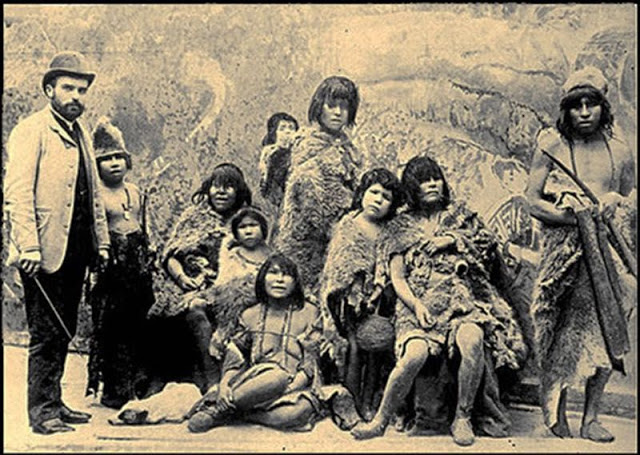
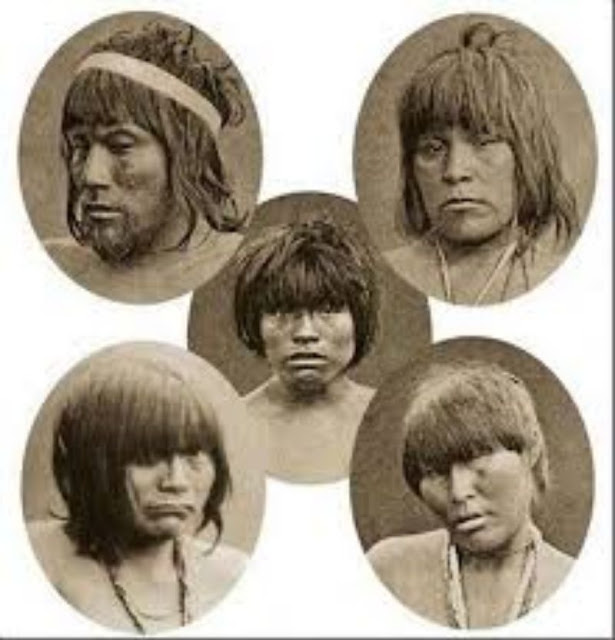
These Selk’Nam natives were exhibited in human zoos while being taken to Europe.
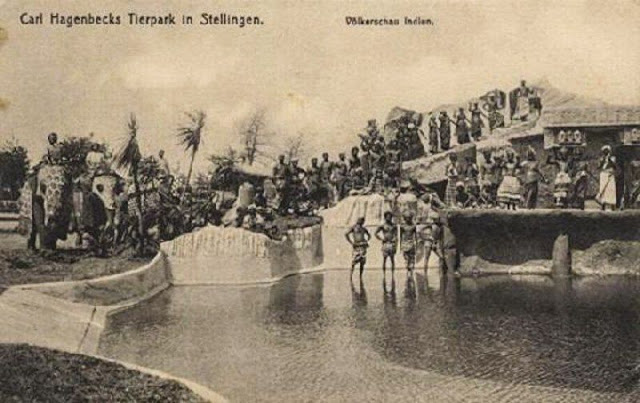
Carl Hagenbeck is often credited as being the man who made the zoo what it is today, creating enclosures without bars, and closer to the animal’s natural habitat. However, a lesser known fact is that he was also the first person to exhibit humans and create a “human zoo”; in 1889, he captured – with the permission of the Chilean government – 11 people of the Selk’Nam tribe, who were enclosed behind bars and exhibited across Europe. Several related, “purely natural” tribes were also soon subjected to the same fate.
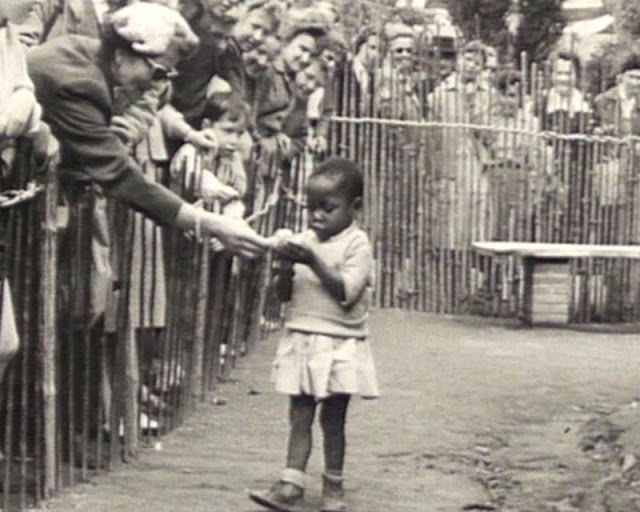
This African girl was exhibited in a human zoo in Brussels, Belgium, in 1958.
Africans and Native Americans were often kept in zoos as exhibits – a practice that ran well into the late 1950s. In Europe, this was evident even as recently as the early 2000s. In Germany, Africans were brought in as exhibits for zoos and carnivals throughout the 20th century – something that was called a “People’s Show”. The Cincinnati Zoo kept 100 Native Americans in a village setting for approximately three months. This practice continued for several years, and across several places, causing widespread fury and outrage.
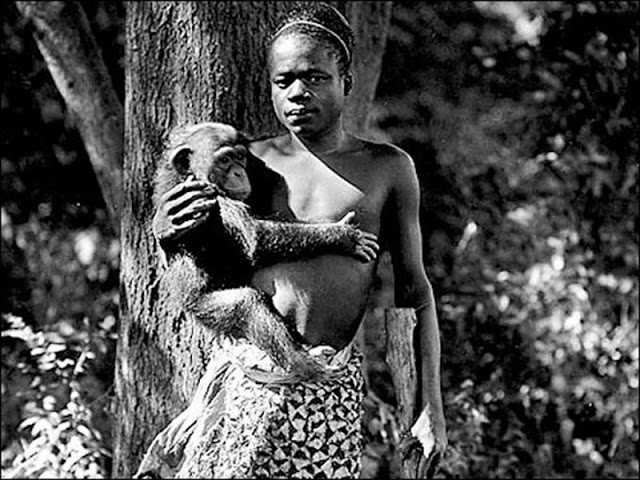
Ota Benga, a Congolese pygmy was displayed at the Bronx Zoo in New York City in 1906, and was forced to carry around orangutans and other apes while he was exhibited alongside them.
“Age, 23 years. Height, 4 feet 11 inches. Weight, 103 pounds. Brought from the Kasai River, Congo Free State, South Central Africa, by Dr. Samuel P. Verner. Exhibited each afternoon during September.” Thus read the sign outside the enclosure in which Ota Benga- a Congolese pygmy – was exhibited at the Monkey House in the Bronx Zoo in New York in 1906, where he entertained onlookers by shooting at targets with a bow and arrow and making amusing faces. He also did “tricks” with orangutans and other apes to entertain the large number of people who were drawn to this unusual, yet highly interesting specimen in the zoo. This incident, however, drew criticism from several corners, leading to the “exhibit” being withdrawn.
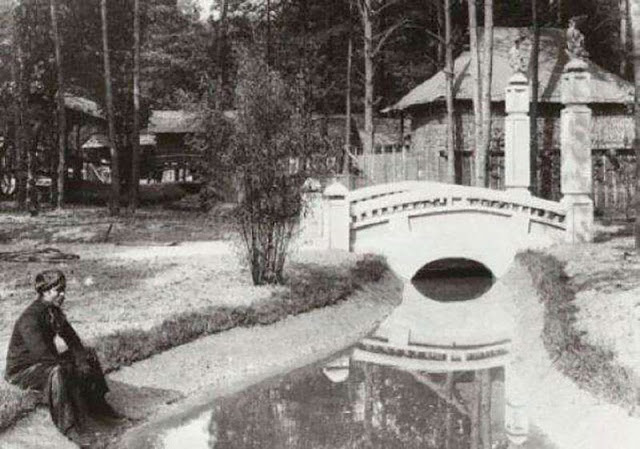
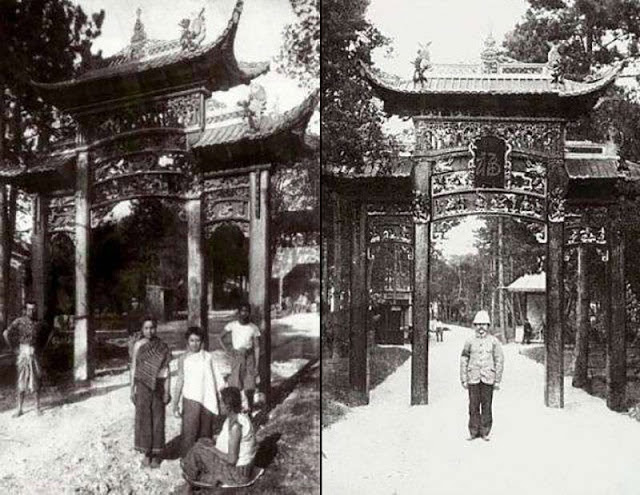
Jardin d’Agronomie Tropicale – the human zoo of Paris.
In a grand, albeit twisted display of power, the French, in a bid to promote their colonizing power, built six villages in the Jardin d’Agronomie Tropicale, each representative of the Madagascar, Indochine, Sudan, Congo, Tunisia and Morocco – French colonies at the time, for an exhibition which lasted from May through October 1907.
Built to showcase France’s colonial power, this attracted over a million people in the six months that the “exhibition” lasted.
The villages were made to reflect life in the colonies, from the architecture to the agricultural practices.Here’s the picture of a Congolese “factory” built in Marseille, in an attempt to imitate life. To this extent, several Congolese people were brought to the site to “work” in this factory.What attracted over a million people then, now lies abandoned and ignored – a spot of history that France would only too hastily forget. In 2006, despite the public being granted access to the gardens, few actually visited it.
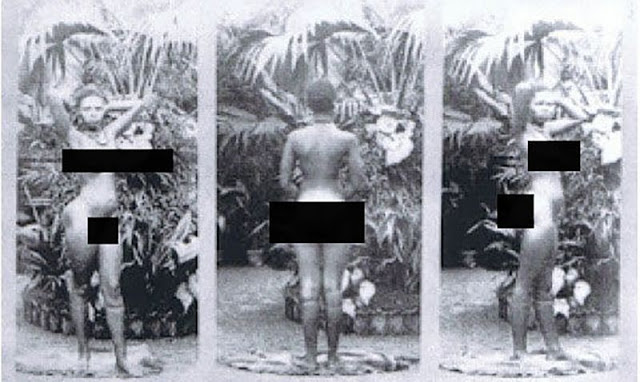
Sarah Baartman – the girl who embodied the inhumanity of the human zoos, here, being “exhibited”.
In 1810, 20-year-old Sarah “Saartjie” Baartman was recruited by an exotic animal-dealer to be “exhibited”. With the promise and expectation of wealth and fame, Sarah traveled to London with him, where what followed was far from promised; having a genetic condition that led to Sarah possessing protruding buttocks and an elongated labia, she was the topic of much speculation and attraction. She was dressed in tight-fitting clothes and exhibited at sideshow attractions; she was exhibited as being a “novelty” – something “exotic”.
She died, steeped in poverty, only to have her skeleton, brain, and sexual organs displayed in the Museum of Mankind in Paris till 1974. In 2002, following then-President Nelson Mandela’s request, her remains were repatriated.
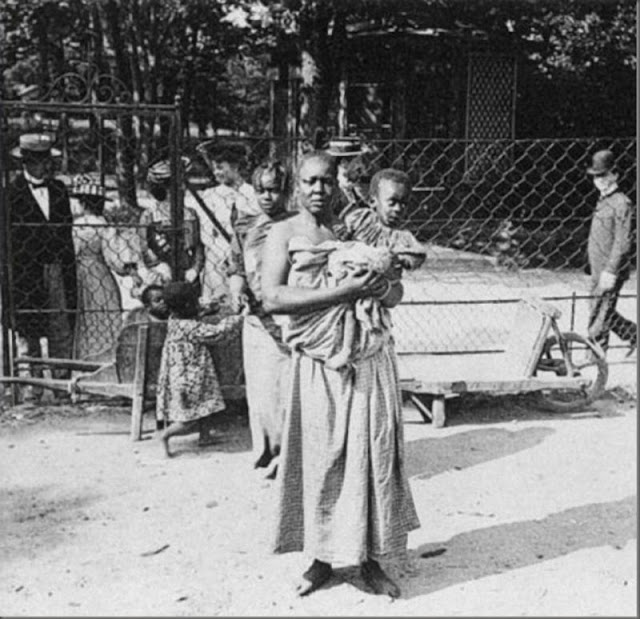
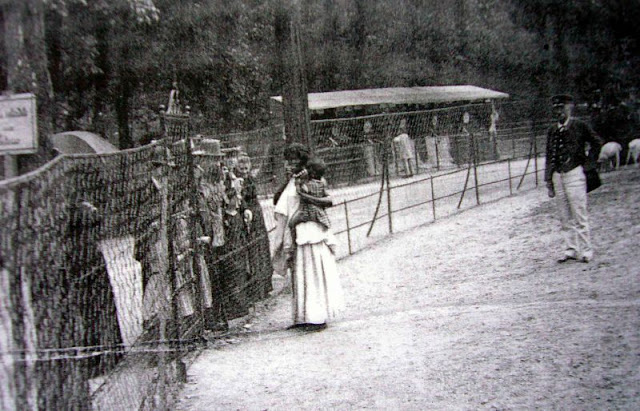
A “Negro Village” in Germany displaying a mother and her child.
This exhibit was among the most popular there, and was even visited by Otto von Bismarck.
Another photo from the “Negro Village”
Several indigenous people and African and Asian races were often caged and displayed in a makeshift “natural habitat”.
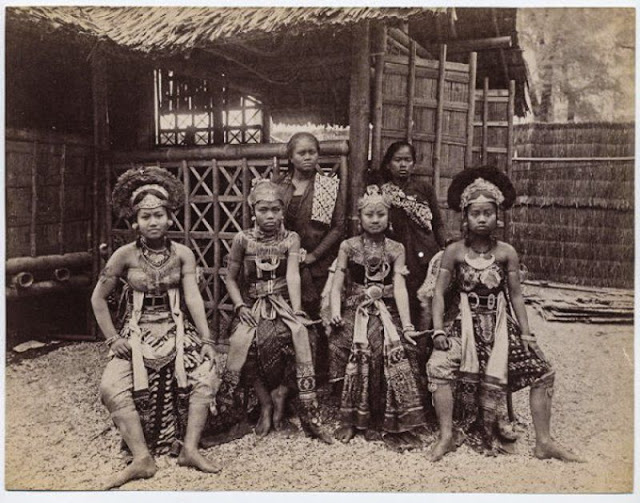
These human displays were incredibly popular and were shown at world fairs across the world, from Paris to New York.
The Parisian World Fair, 1931.
The 1931 exhibition in Paris was so successful that 34 million people attended it in six months; a smaller counter-exhibition – “The Truth on the Colonies”, organized by the Communist Party, attracted very few visitors.
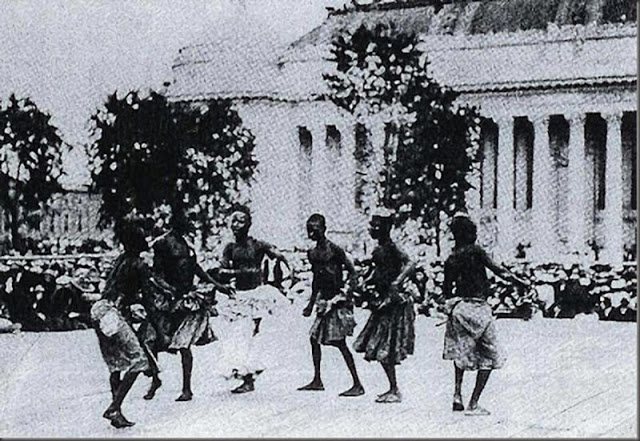
People visiting zoos during several world exhibitions were entertained by groups of pygmies who were forced to dance.
In 1881, five Indians of the Kawesqar tribe (Tierra del Fuego, Chili) were kidnapped to be transported to Europe to be displayed.
All of them died within a year.
Here, people of indigenous races are shown participating in archery at the “Savage Olympics Exhibition” organized in 1904 in St Louis by the whites.
Organised by the white Americans, The Savages’ Olympics consisted of Native Americans and other tribesmen from several corners of the world, such as Africa, South America, The Middle East, and Japan. The idea for an Olympics featuring these “savages” sprung from games director James Edward Sullen’s suggestion to implement this in order to prove that the “savages” were less athletic in comparison to “civilised”, white Americans.
The Emperor of Germany Wilhelm II examines the blacks at the zoo in Hamburg, 1909.
Cooped up behind a fence in a so-called human zoo, these Ethiopians are put on display while Germany’s Kaiser Wilhelm II gazes curiously at them.
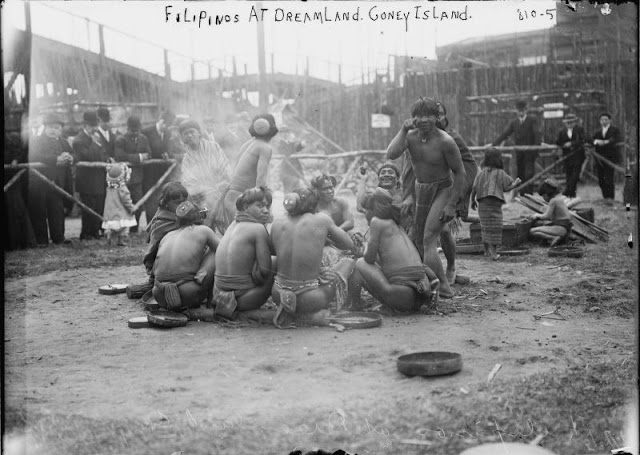
Filipinos at Dreamland, Coney Island, 1905
A group of tribespeople danced with jerky movements as a man, barefoot and wearing only a g-string, dragged a dog by a rope. The mutt snapped and snarled. Then with one deft stroke, the man slit the animal’s throat before chopping its lifeless body into pieces and throwing it into a pot.
It was all happening in Coney Island. It was 1905 and the Fililpinos were being put on show in a human zoo at the Luna Park amusement park.
A young Filipino girl at Coney Island sits surrounded by onlookers.
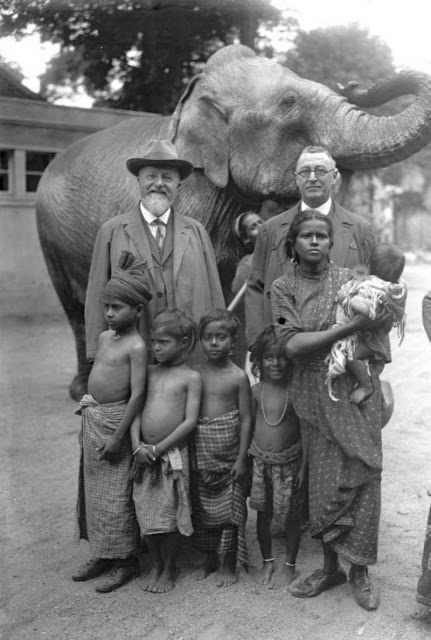
Lutz Heck poses with some of the ‘attractions’ he took to Berlin Zoo in 1931.
German zoologist Professor Lutz Heck is pictured (left) with an elephant and an African family he brought to the Berlin Zoo, in Germany in 1931.
In the early 20th century, polio was one of the most feared diseases in industrialized countries, paralysing hundreds of thousands of children every year. A highly infectious disease, polio attacks the nervous system and can lead to paralysis, disability and even death. The symptoms – pain and weakness, fatigue and muscle loss – can strike any time from 15 to 50 years after the initial disease. In 1952, more than 21,000 Americans contracted a paralyzing form of polio, and 3,000 died from it. Once infected, there was no treatment besides time and tending to the symptoms.
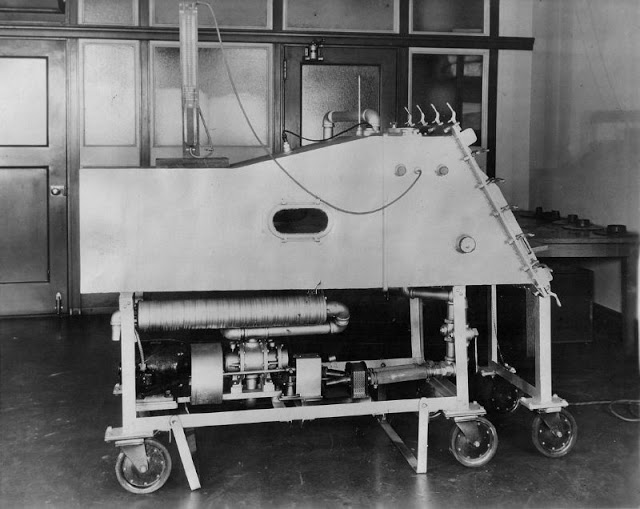
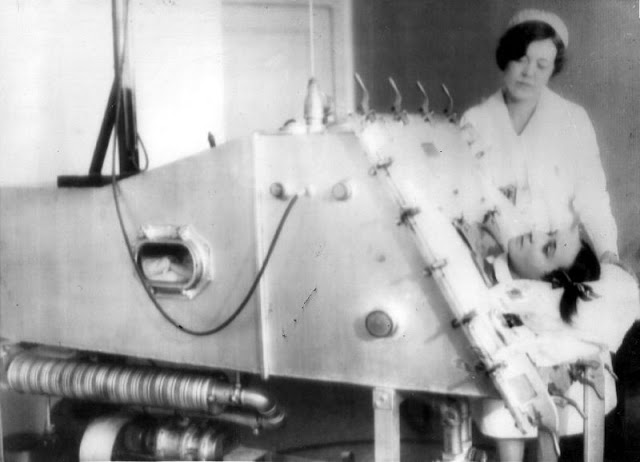
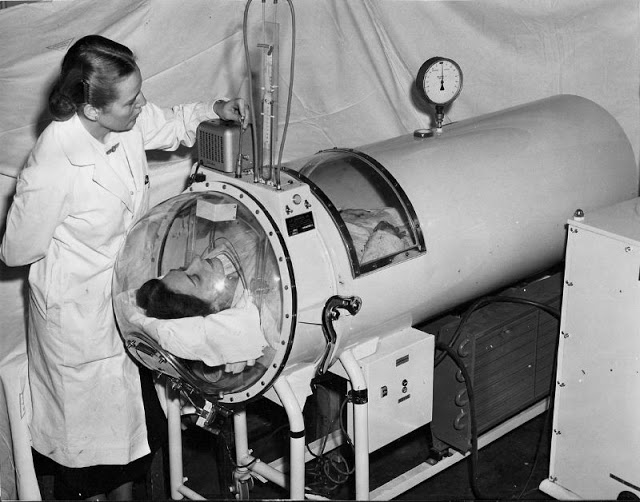
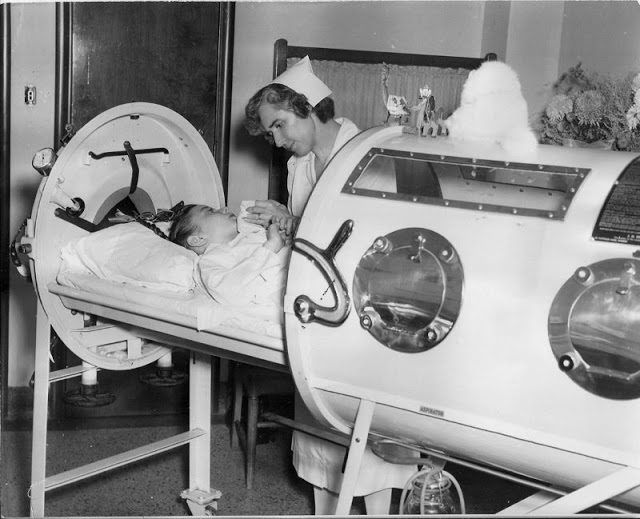
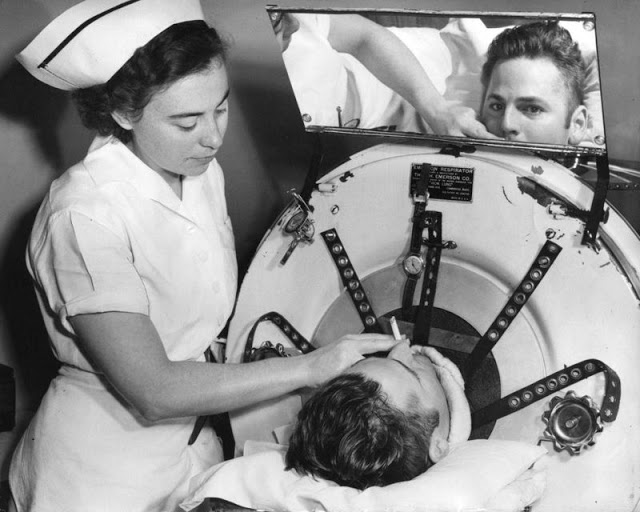
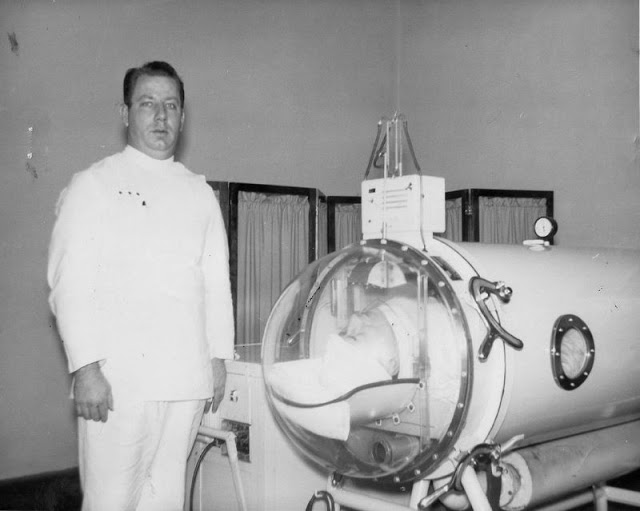
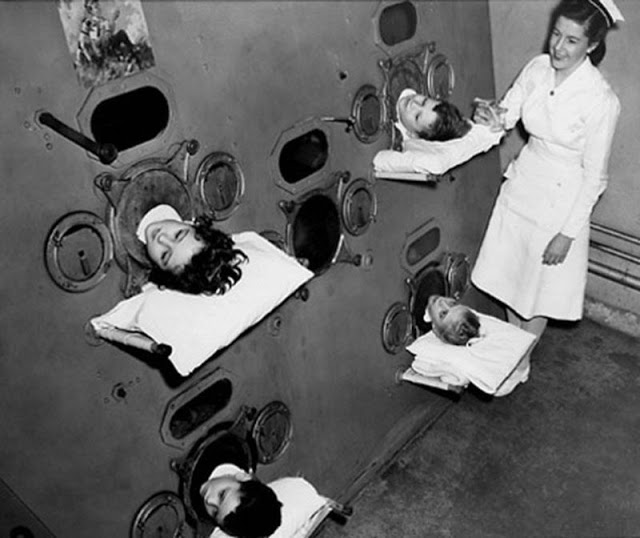
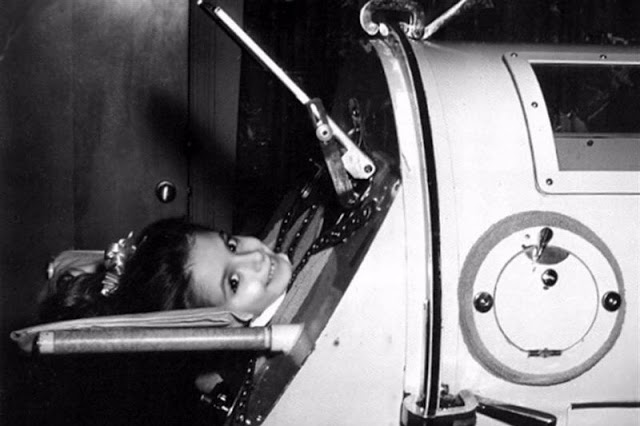
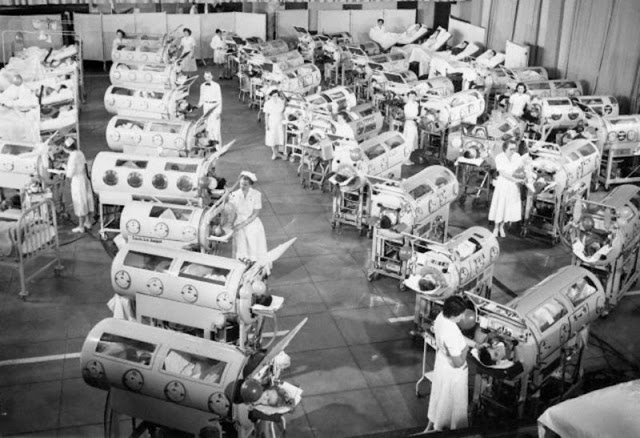
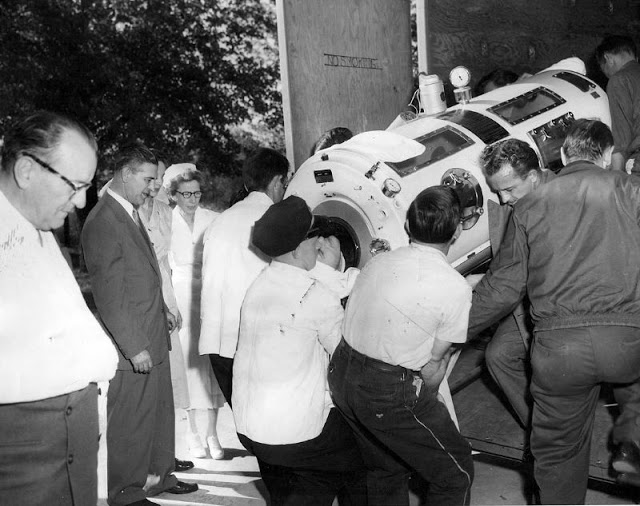
No device is more associated with polio than the tank respirator, better known as the iron lung. Physicians who treated people in the acute, early stage of polio saw that many patients were unable to breathe when the virus’s action paralyzed muscle groups in the chest. Death was frequent at this stage, but those who survived usually recovered much or almost all of their former strength.
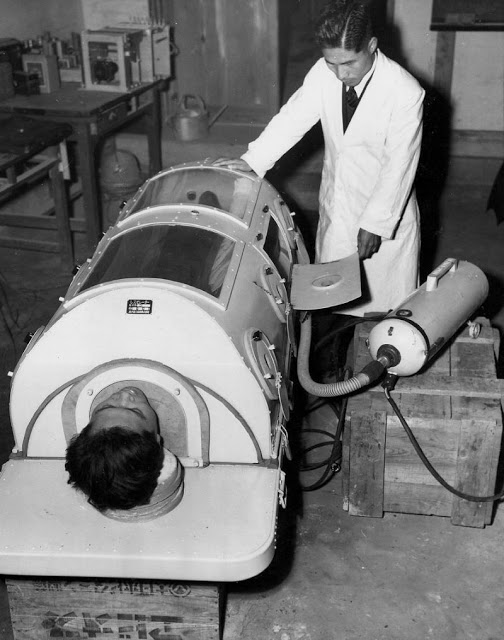
Nothing worked well in keeping people breathing until 1927, when Philip Drinker and Louis Agassiz Shaw at Harvard University devised a version of a tank respirator that could maintain respiration artificially until a person could breathe independently, usually after one or two weeks. The machine was powered by an electric motor with two vacuum cleaners. The pump changed the pressure inside a rectangular, airtight metal box, pulling air in and out of the lungs.
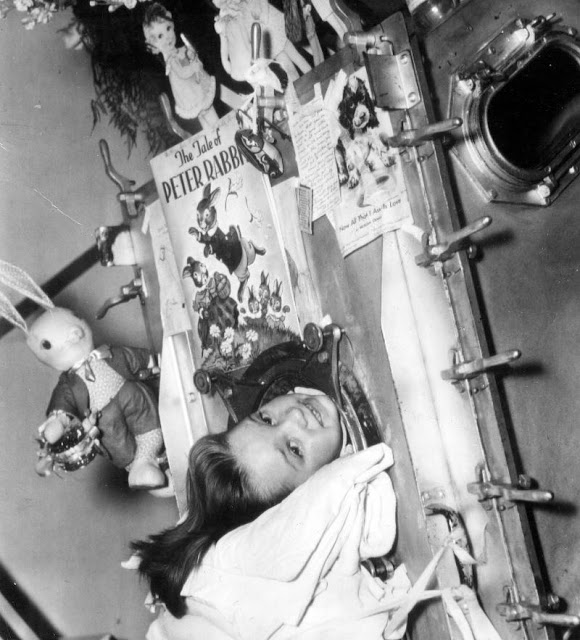
Inventor John Emerson had refined Drinker’s device and cut the cost nearly in half. Inside the tank respirator, the patient lay on a bed (sometimes called a “cookie tray”) that could slide in and out of the cylinder as needed. The side of the tank had portal windows so attendants could reach in and adjust limbs, sheets, or hot packs.
Factoids:
The National Foundation for Infantile Paralysis began mass distribution of tank respirators in 1939.
In the 1930s, an iron lung cost about $1,500—the average price of a home.
In 1959, there were 1,200 people using tank respirators in the United States; in 2004, there were 39.
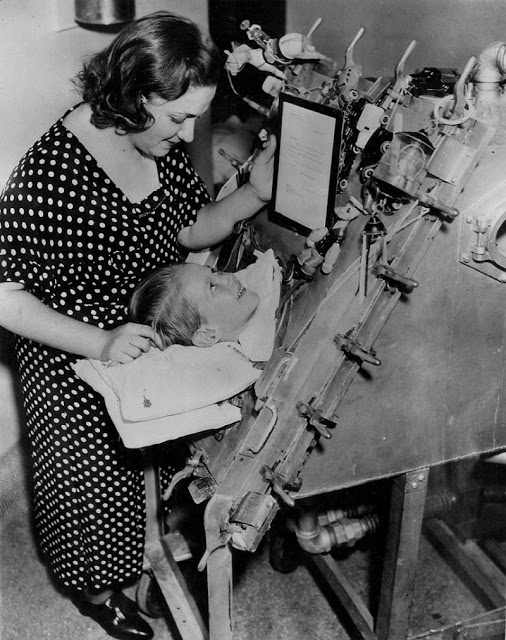
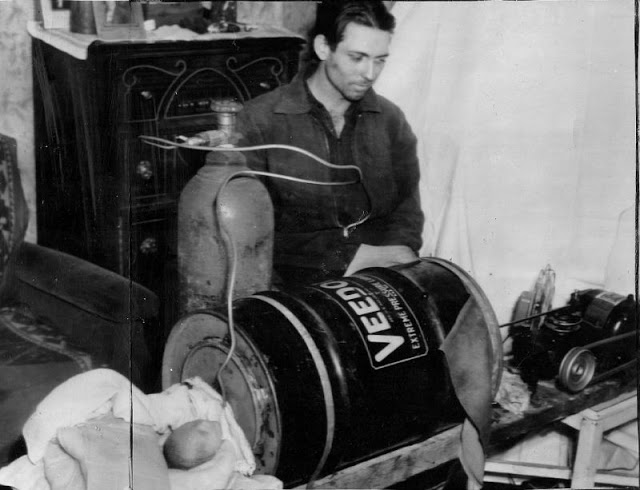
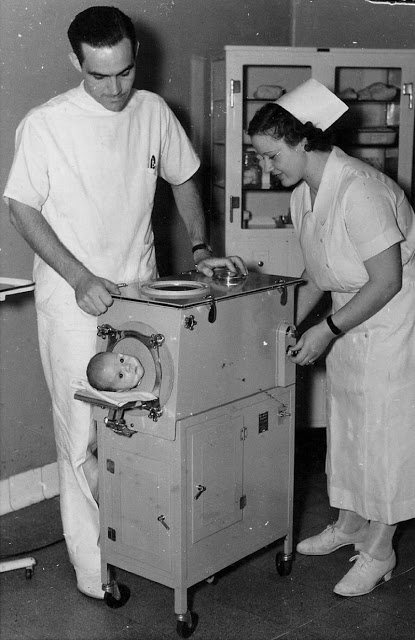
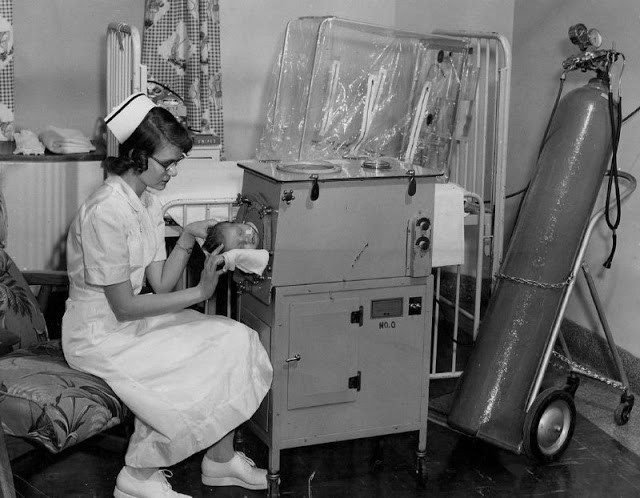
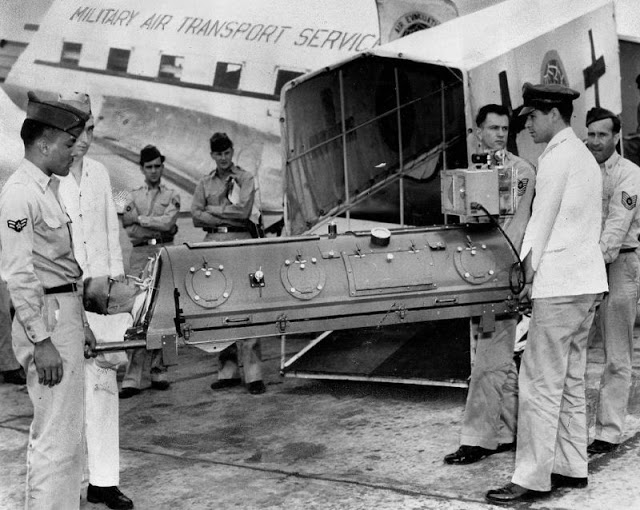
Polio (poliomyelitis) mainly affects children under 5 years of age.1930 Drinker Respirator. When this photo was taken on September 19, 1930, this Drinker iron lung at St. Luke’s Hospital in Chicago, Illinois reportedly was the only one in existence between Chicago and California.Although the patient could breathe in the machine, he could do little else besides look up at a mirror reflecting the room behind him, ca. 1930s.1930 Drinker Iron LungBetty Sue Martin, 5, can still smile after 35 days in an Iron Lung at Johns Hopkins Hospital, ca. 1937.In this 1938 photo from Alton, Illinois, the caption states “An 18 year-old bride with infantile paralysis, Mrs. Myra Rothe is kept alive by an iron lung at St. Joseph’s Hospital here. Physicians gave her a fighting chance to recover.”In this photo dated March 15, 1940, the caption stated “Homemade Iron Lung failed to save life despite ingenuity of father. James Bailey, 25 watching operation of device on his baby son, Paul which kept him alive two days. The infant died soon after. Bailey fashioned the apparatus from an oil barrel, washing machine parts, and rubber tire tubing.”1940s Pediatric Iron LungLate 1940s Iron Lung with Dome1940sVerne Muskopf, a nurse at St. Anthony’s Hospital, South Grand Boulevard and Chippewa Street, helps iron-lung patient Louis Abercrombie smoke a cigarette in November 1949. Abercrombie was a polio patient and had been in an iron lung for almost three years. Hospital policies on smoking were different then.1950s Infant Iron Lung1950s DomeIn the 1950s, Dr. James Wilson developed a multi-person negative pressure ventilator at Children’s Hospital in Boston, MA.Martha Ann Lillard was just 5 in 1953 when she became paralyzed by polio and had to use an iron lung respirator. She spent six decades in the 800-pound device.This 1953 photo shows Professor Hideo Itokawa opening the door of his duralmin lung, which reportedly was produced at one-third the price of similar models available in the United States.Because iron lungs were mostly available in large cities, family from small cities or rural areas often had to travel long distances to visit their family member in a hospital that had iron lungs available. The polio epidemic had just peaked when this photo was taken at Rancho Los Amigos Hospital in Downey, California.In this November 5, 1953 photo, Lauren Carlson, age 24, was being transported in an iron lung to a specialized care center, the Sister Kenny Unit at the Oakland County Contagious Hospital in Farmington, Michigan. Depending on the model, iron lungs weighed between 1000-1800 pounds.In July 1953, the military began using a lightweight unit made of aluminum alloy and plastic. The unit weighed only 150 pounds, approximately 1/10 the weight of standard iron lungs. In this photo, a soldier who contracted polio was being airlifted from Walter Reed Hospital to a Michigan hospital closer to his home.Unable to breathe, patients entered iron lungs, which made use of negative pressure ventilation to compress and depress the chest, simulating respiration, ca. 1955.
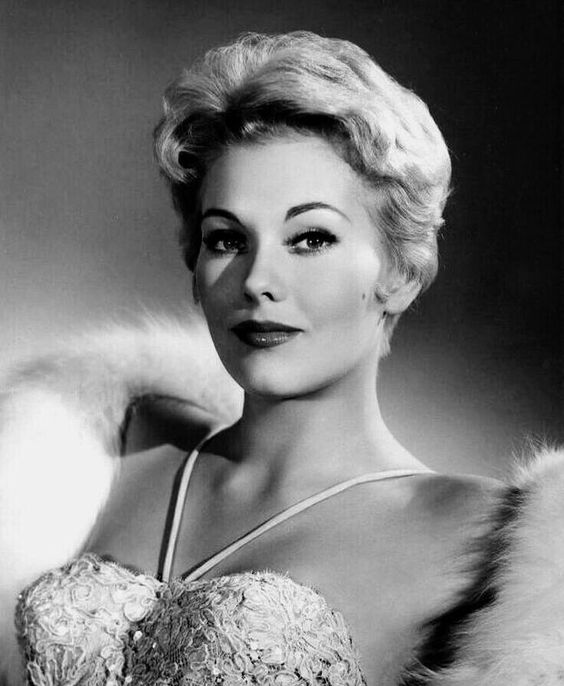
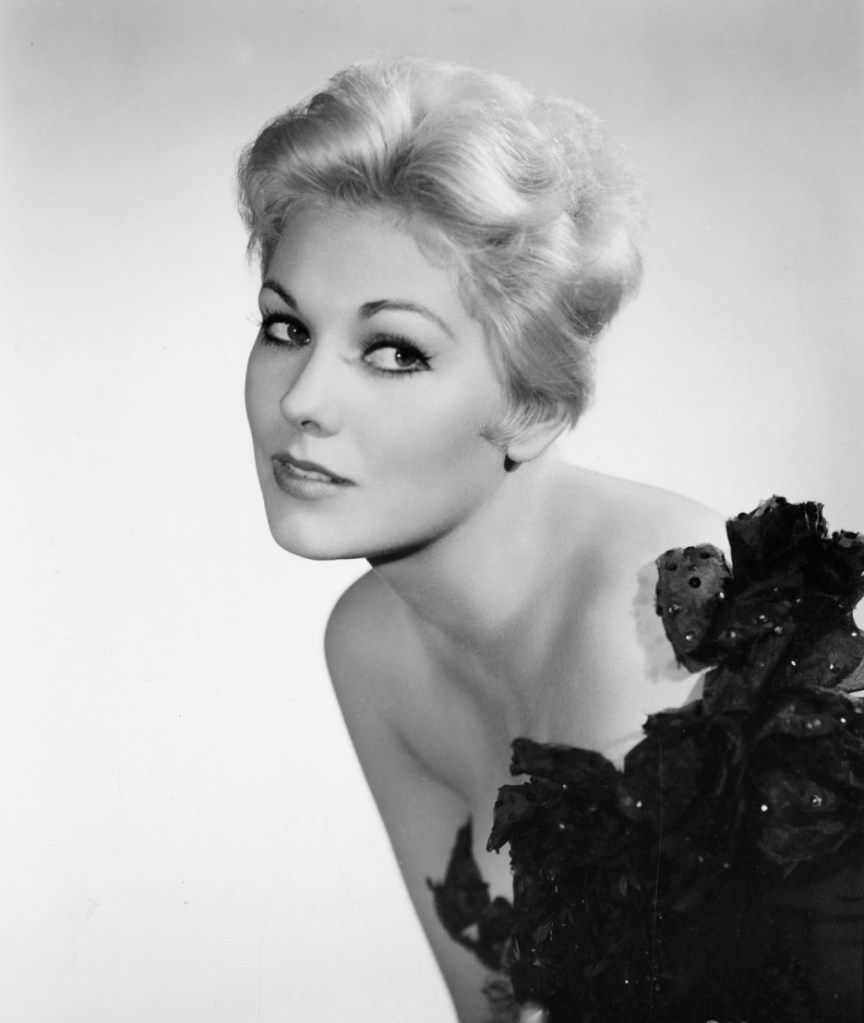
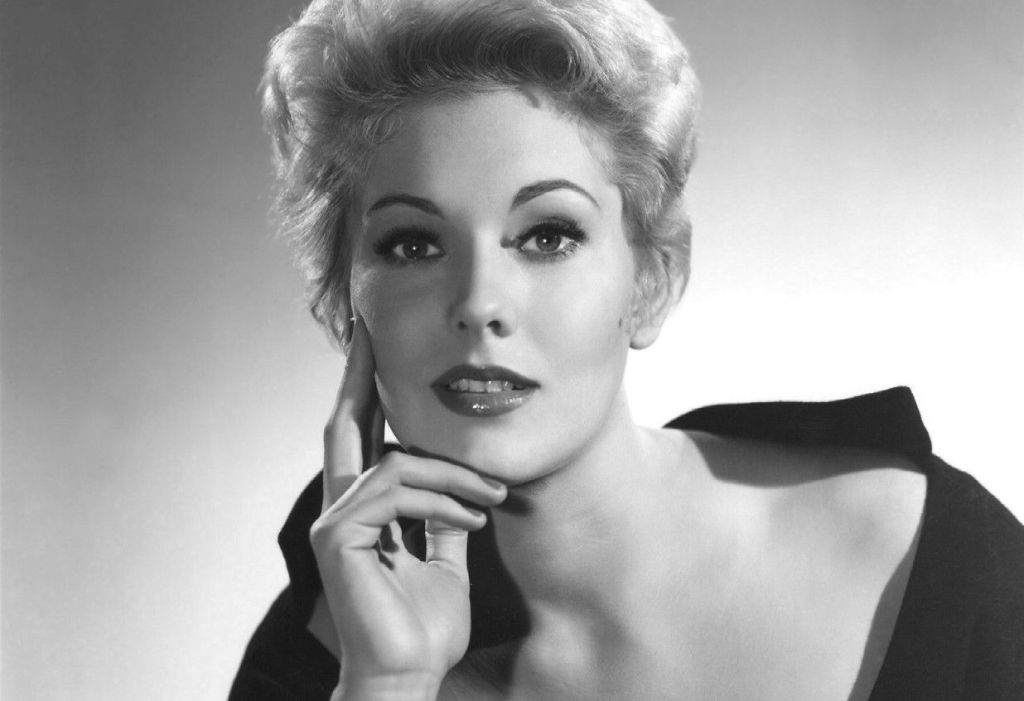
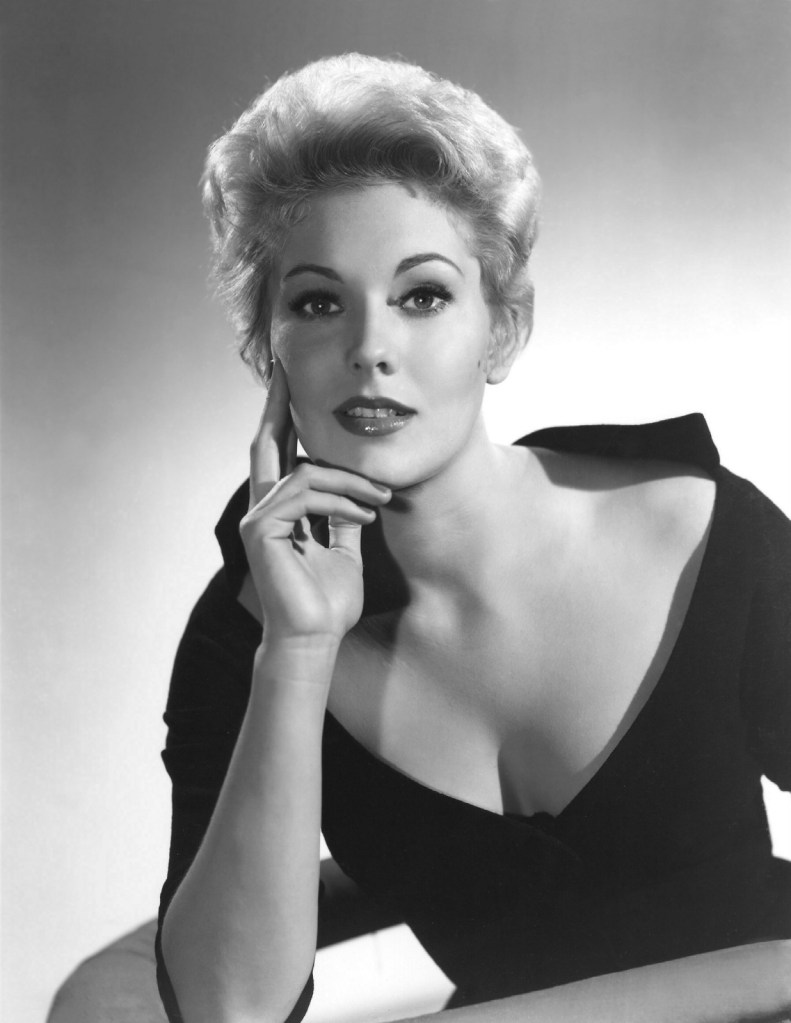
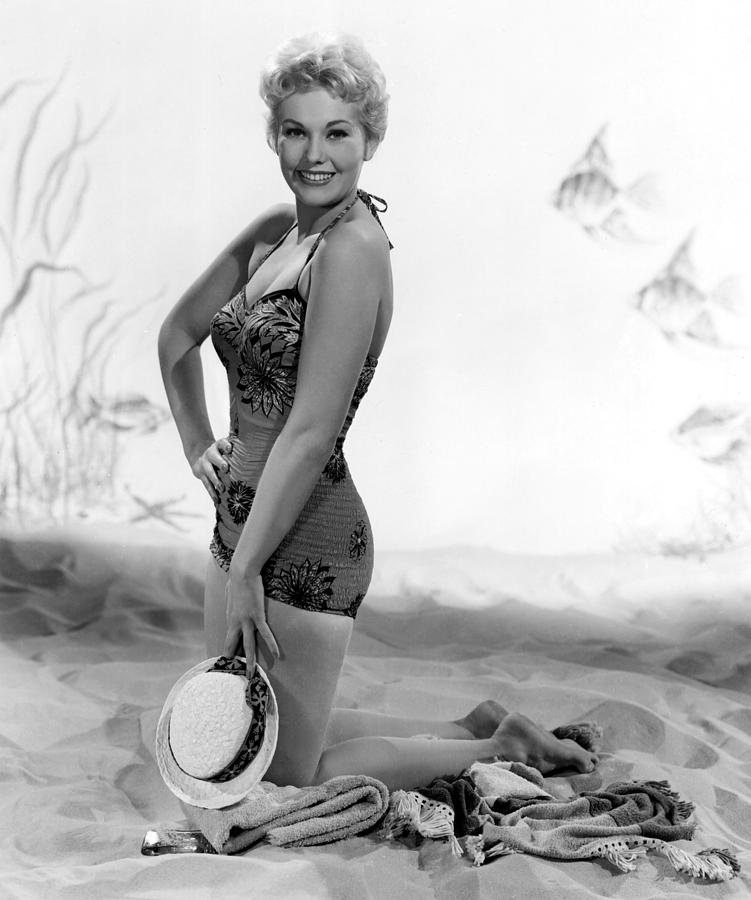
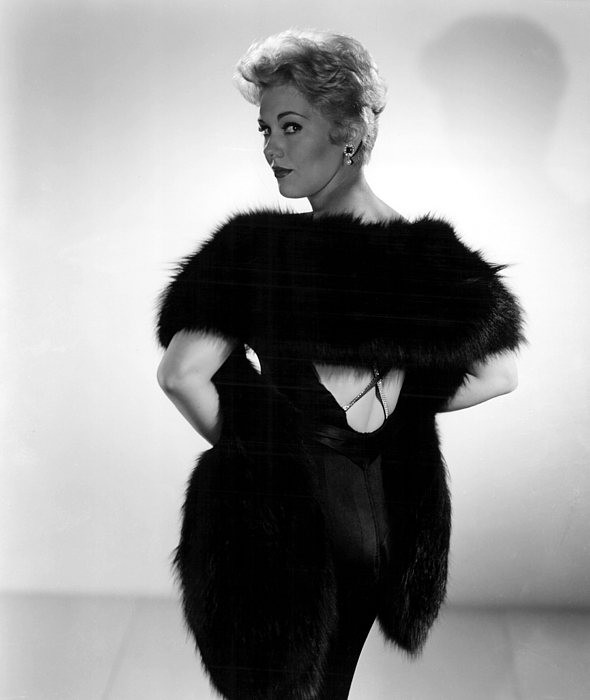
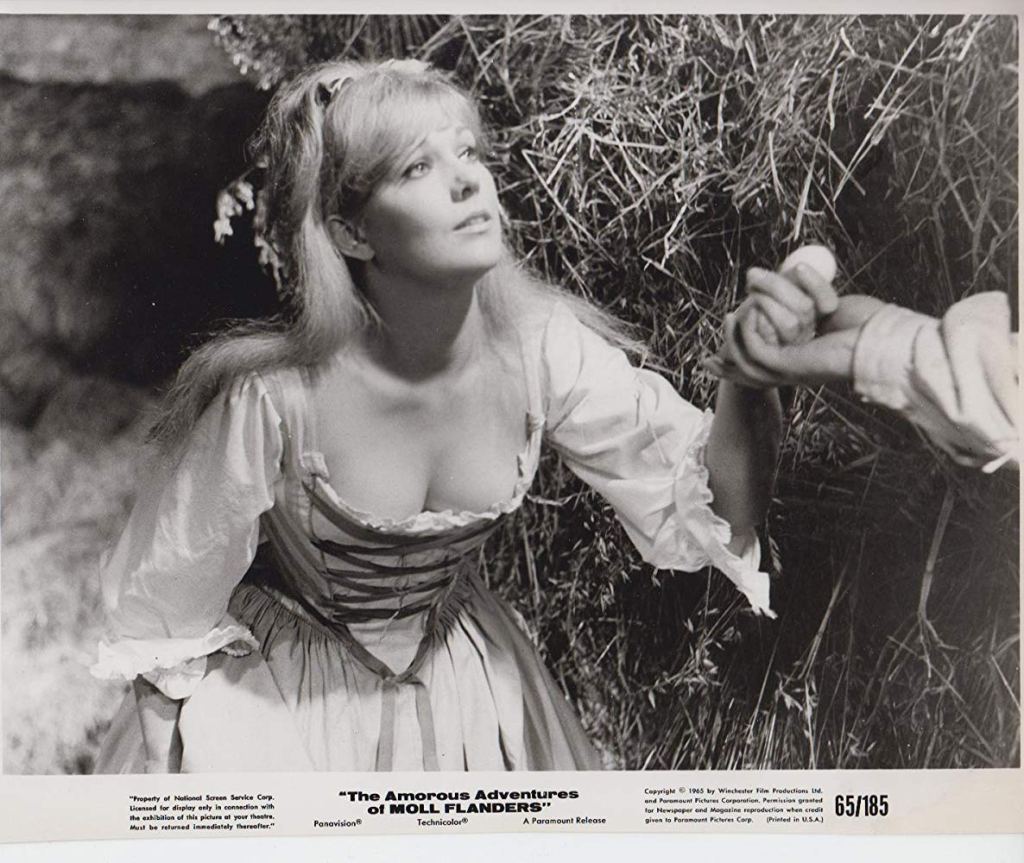
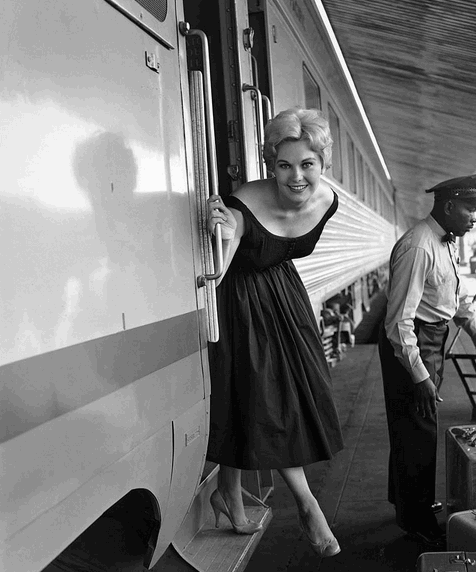
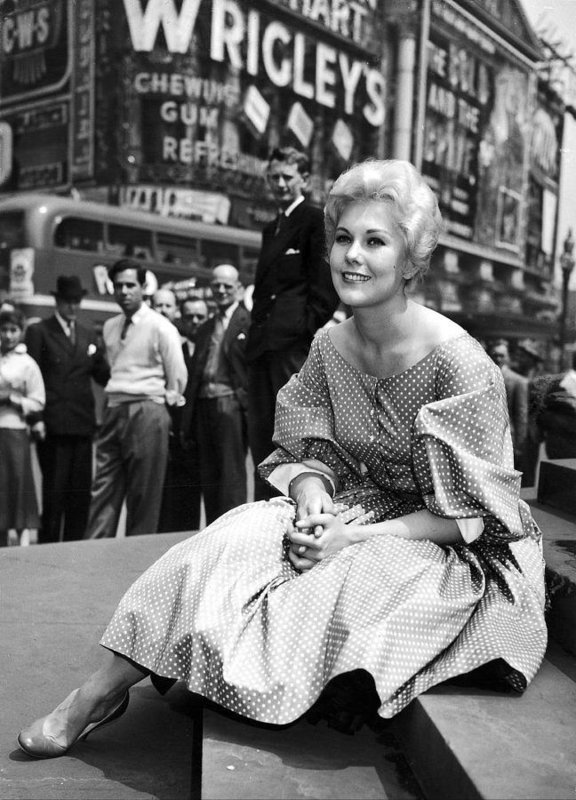
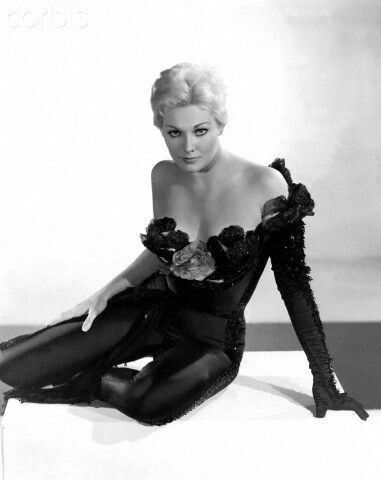
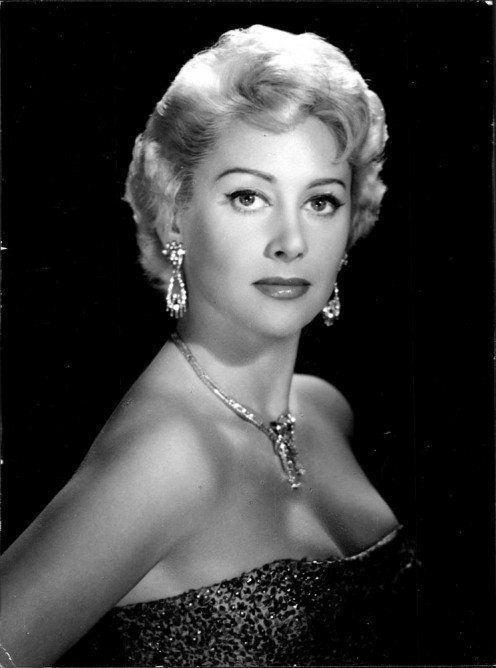
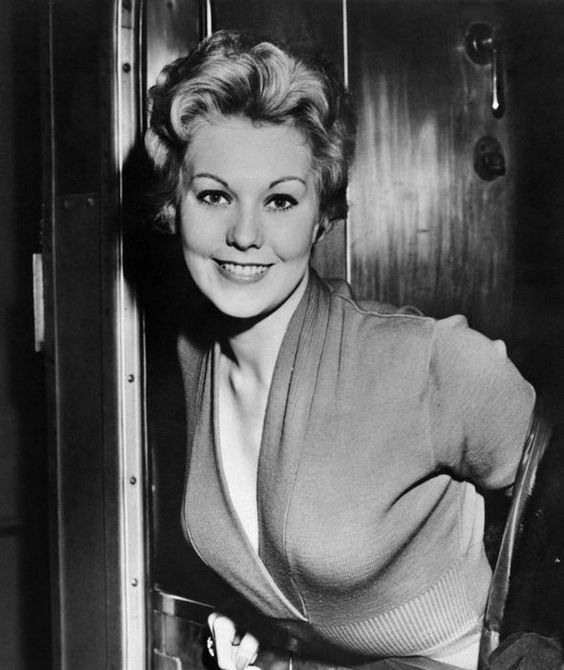
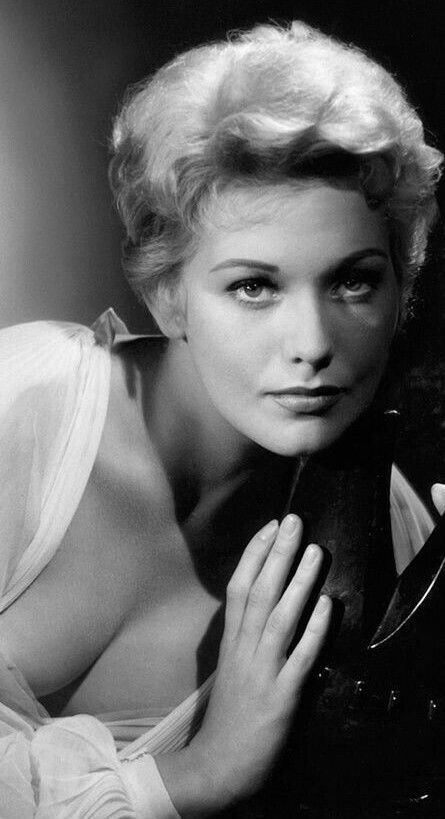
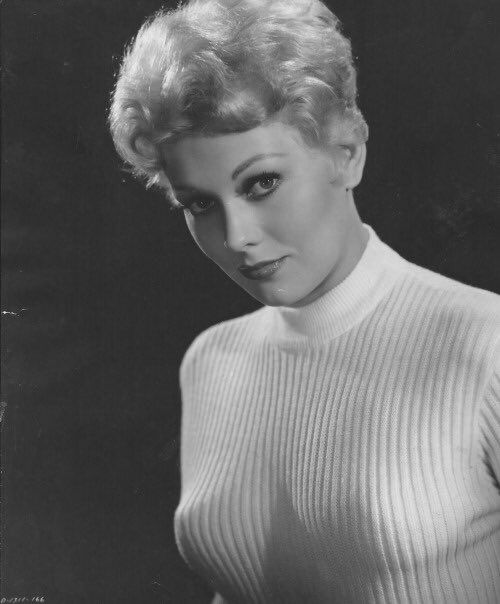
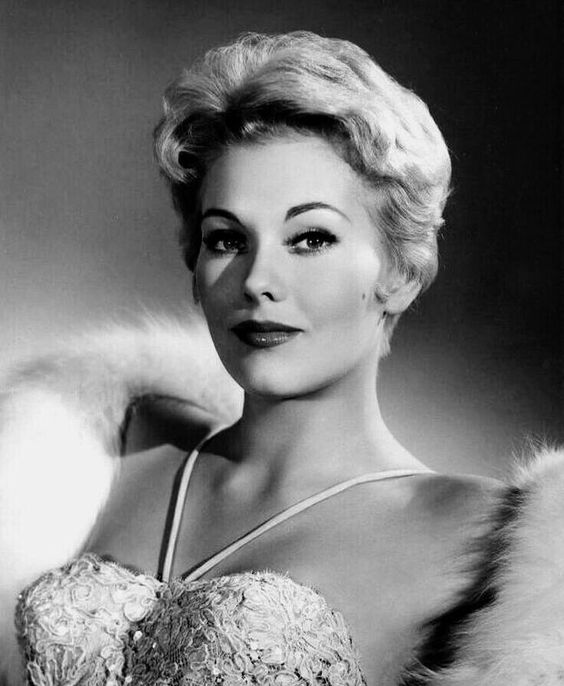
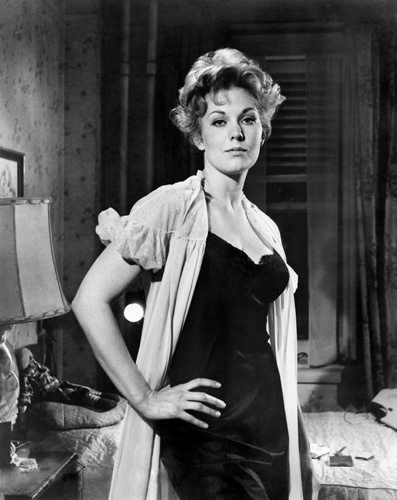
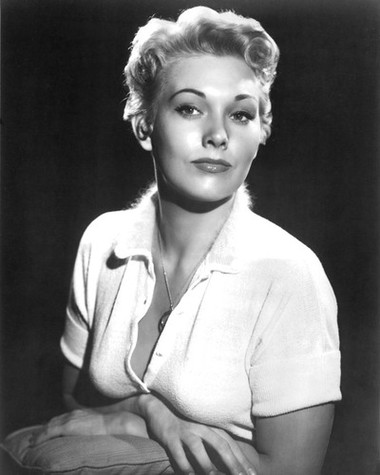
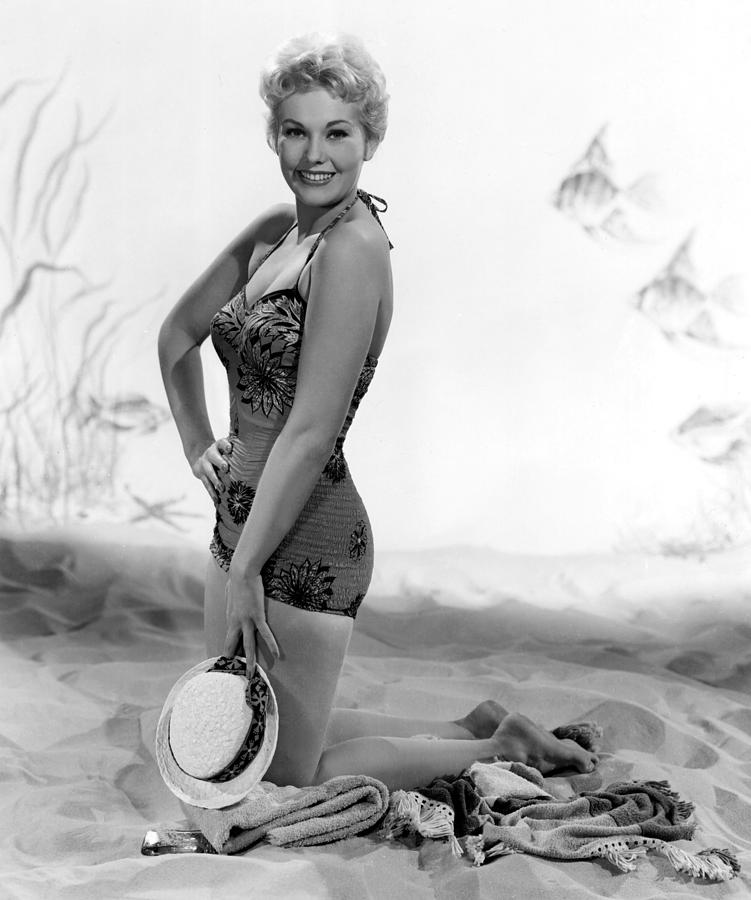
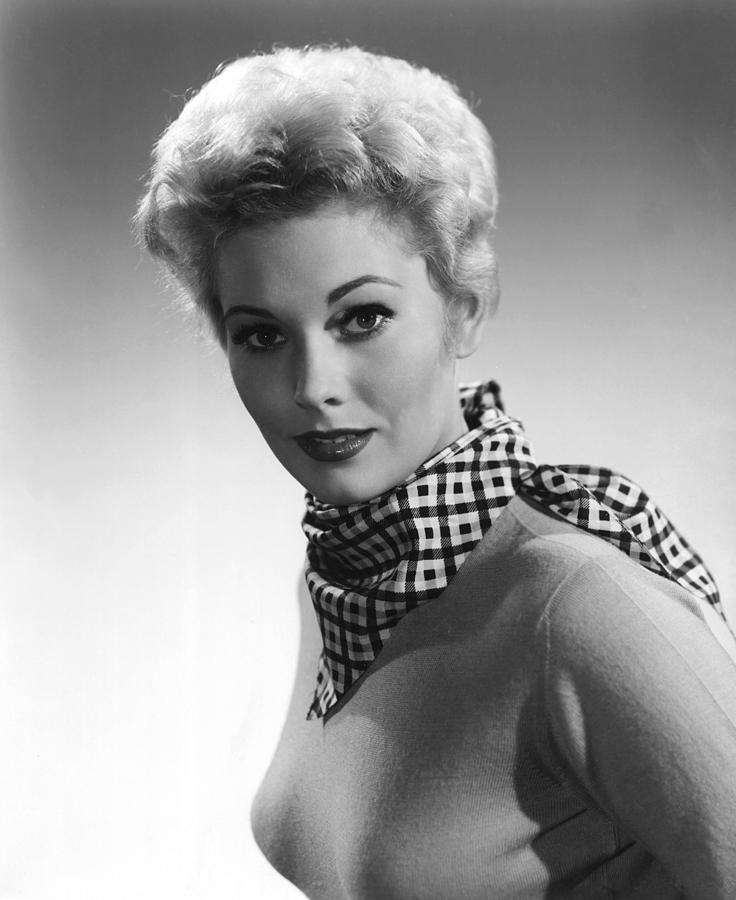
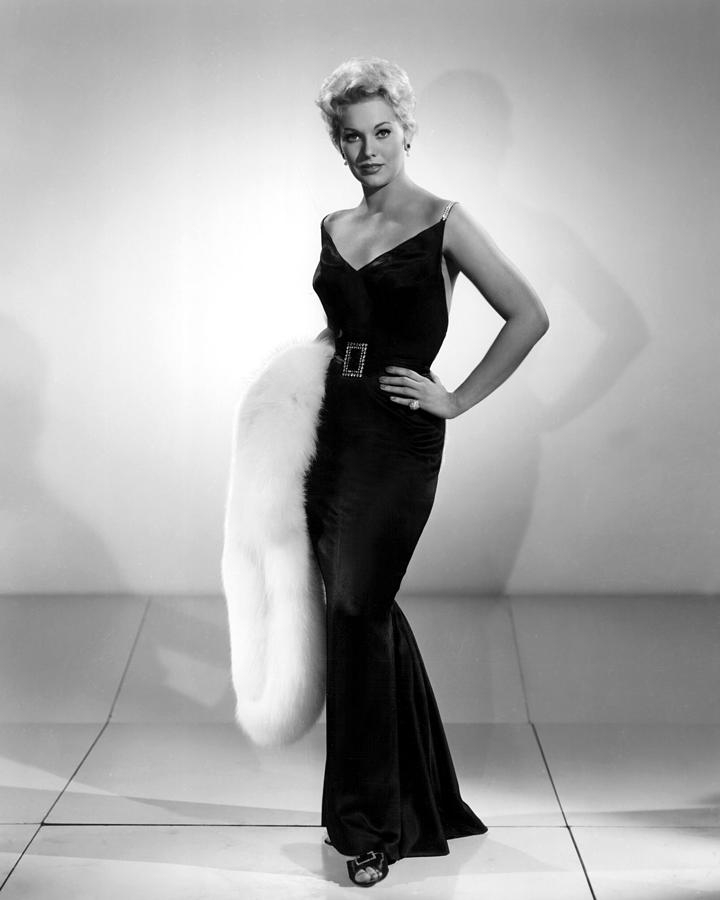
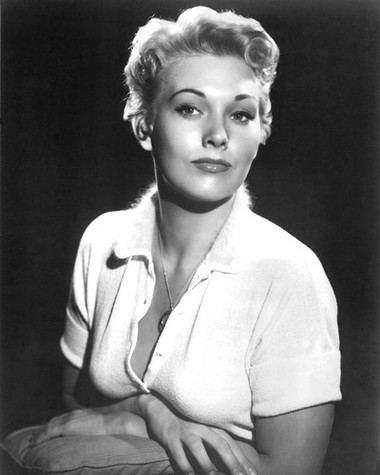
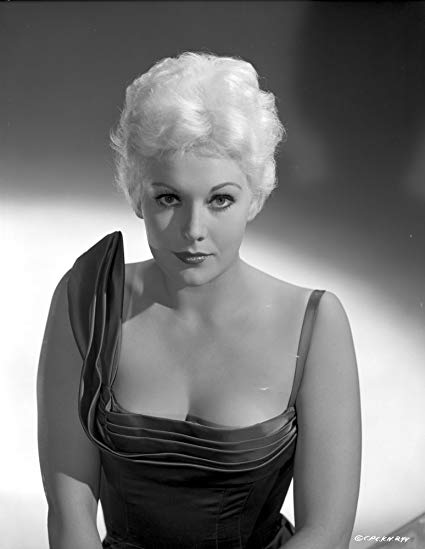
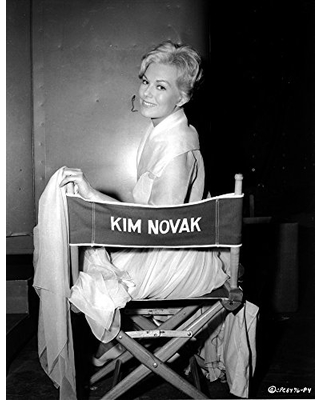
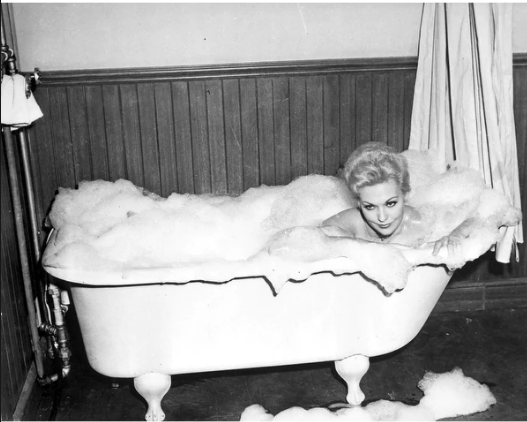
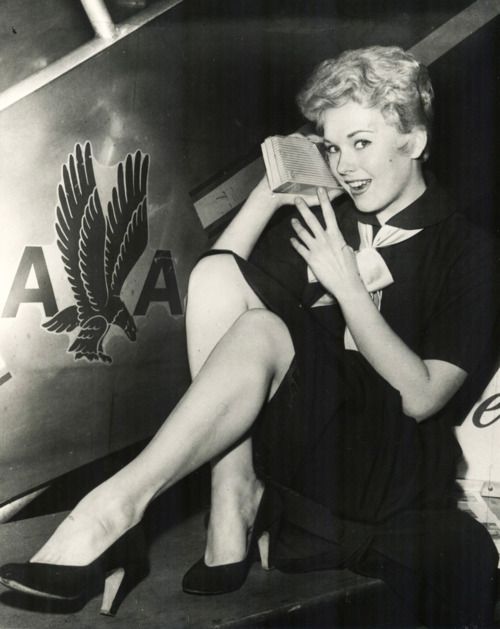
Marilyn Pauline “Kim” Novak (born February 13, 1933) is a retired American film and television actress and painter.
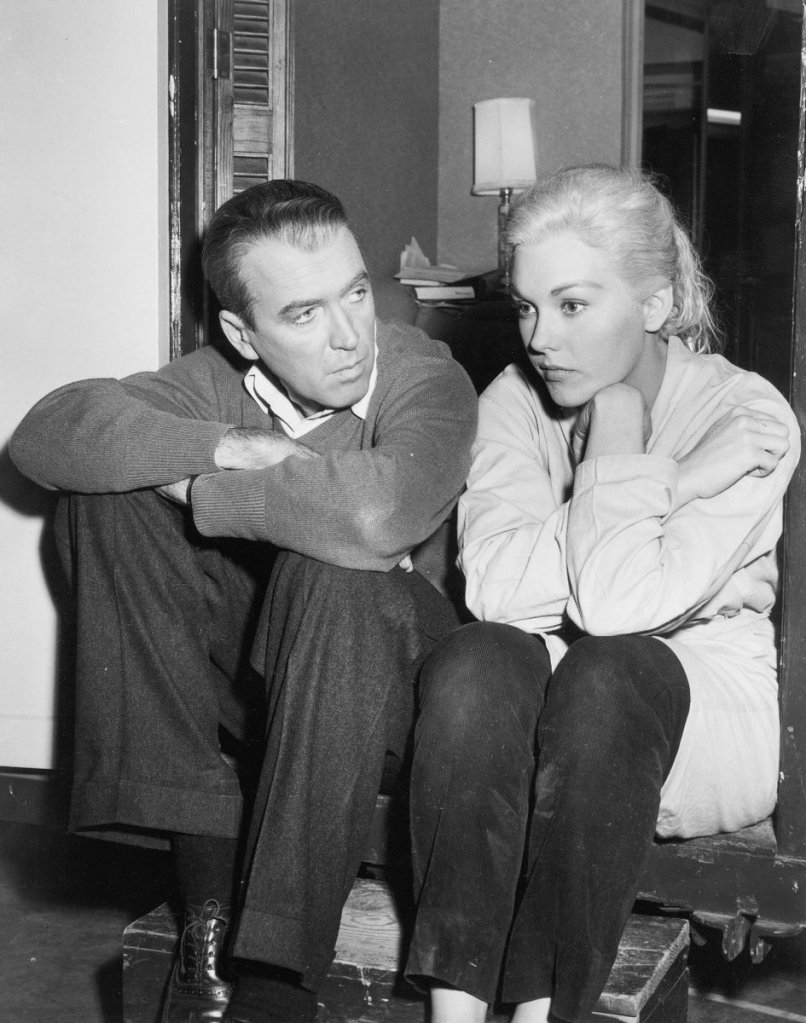
Novak began her film career in 1954 after signing with Columbia Pictures and subsequently became one of Hollywood’s top box office stars, starring in many films, including Picnic (1955), The Man with the Golden Arm (1955) and Pal Joey (1957). She is widely known for her performance as Madeleine Elster/Judy Barton in Alfred Hitchcock’s thriller Vertigo (1958) with James Stewart. The film was ignored by critics upon release, but is now recognized as one of the greatest films ever made. Other notable films include Bell, Book and Candle (1958), Strangers When We Meet (1960) and Kiss Me, Stupid (1964).
Although still only in her mid-30s, Novak withdrew from acting in 1966 and has only sporadically worked in films since. She appeared in The Mirror Crack’d (1980), and had a regular role on the primetime series Falcon Crest (1986–1987). After a disappointing experience during the filming of Liebestraum (1991), she permanently retired from acting, saying she had no desire to return. Her contributions to cinema have been honored with two Golden Globe Awards, an Honorary Golden Bear Award, and a star on the Hollywood Walk of Fame. Novak is a painter and visual artist. (Wikipedia)
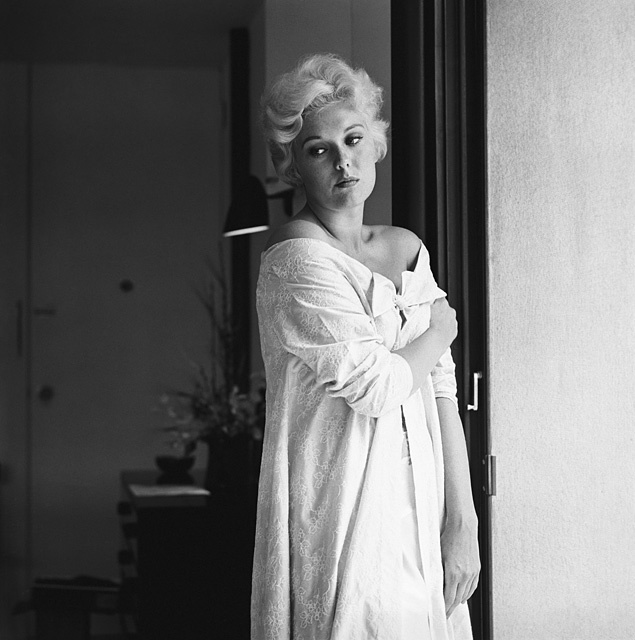
Kim Novak at home in Los Angeles 1956 Kim Novak at home in Los Angeles 1956 James Stewart and Kim Novak in Vertigo (1958)Kim Novak and Fred MacMurray in Pushover (1954)Kim Novak and Fred MacMurray in Pushover (1954)Marlon Brando and Kim NovakKim Novak, James Stewart and Alfred HitchcockKim Novak and Fredric March in Middle of the Night (1959)Kim Novak in Middle of the Night (1959)Kim Novak and Guy MadisonJames Stewart & Kim Novak on the set of Vertigo 1957Kim Novak in her new Corvette, 1956
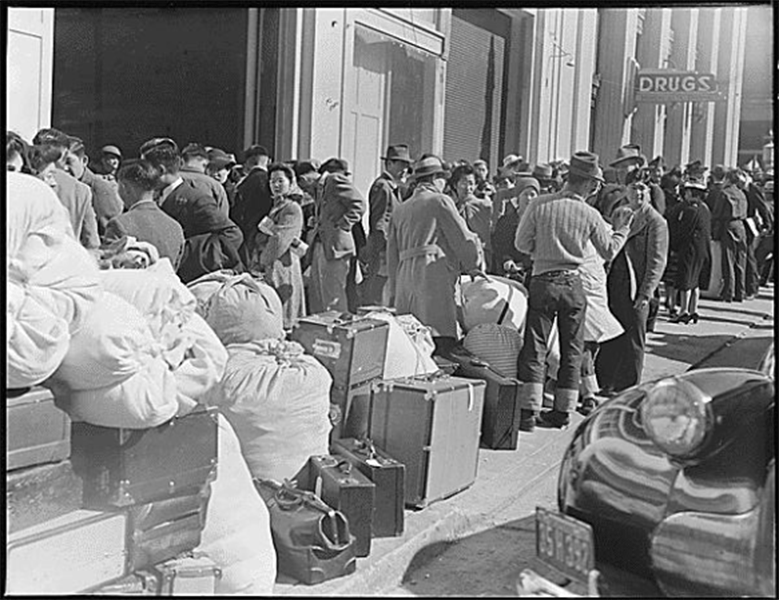
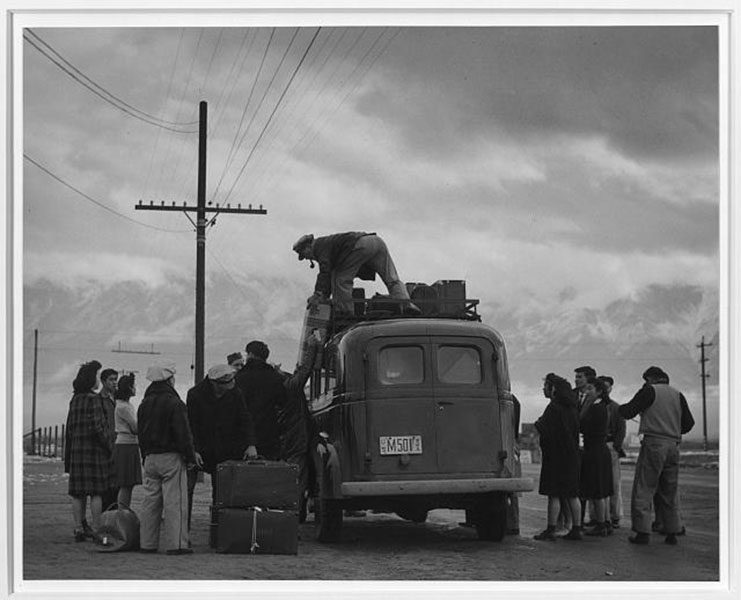
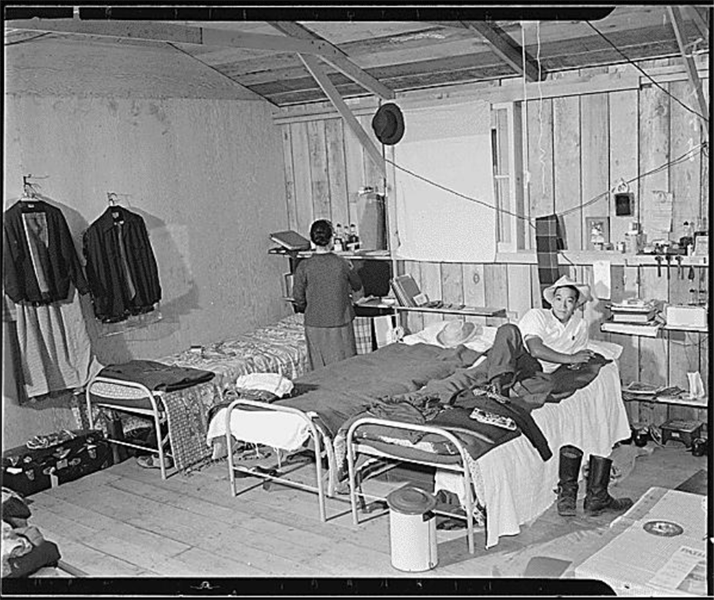
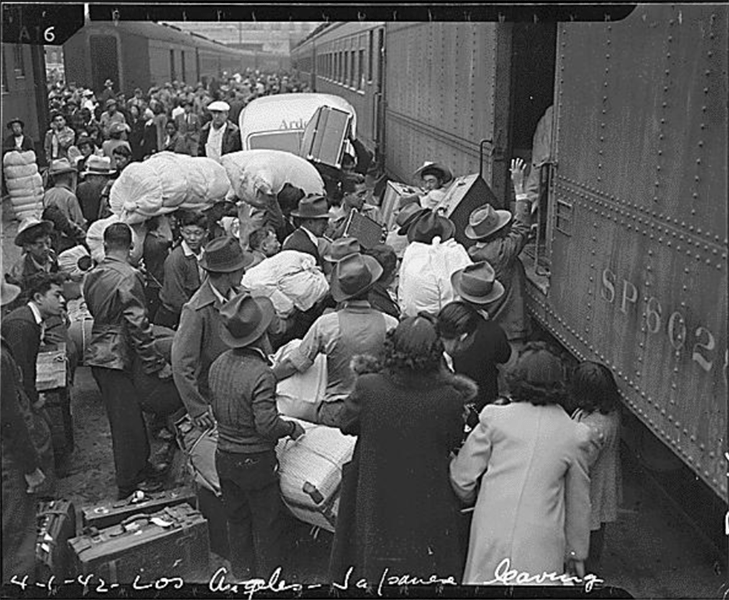
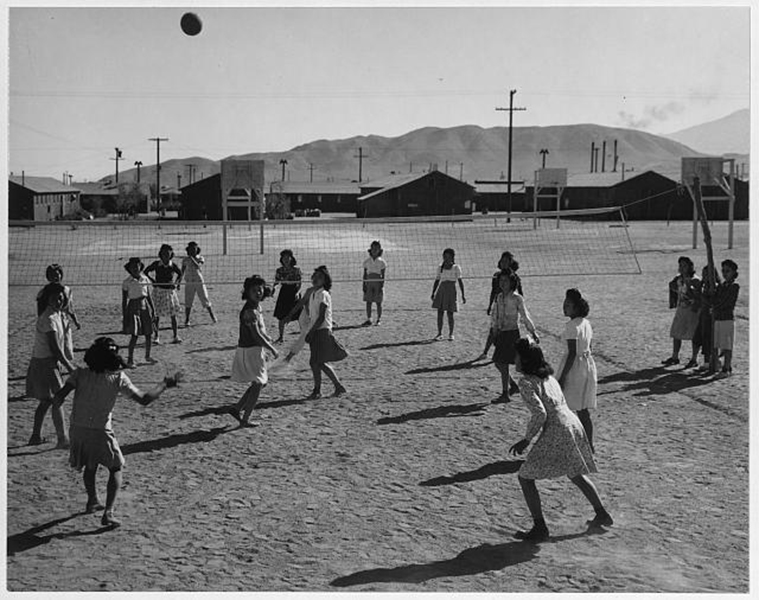
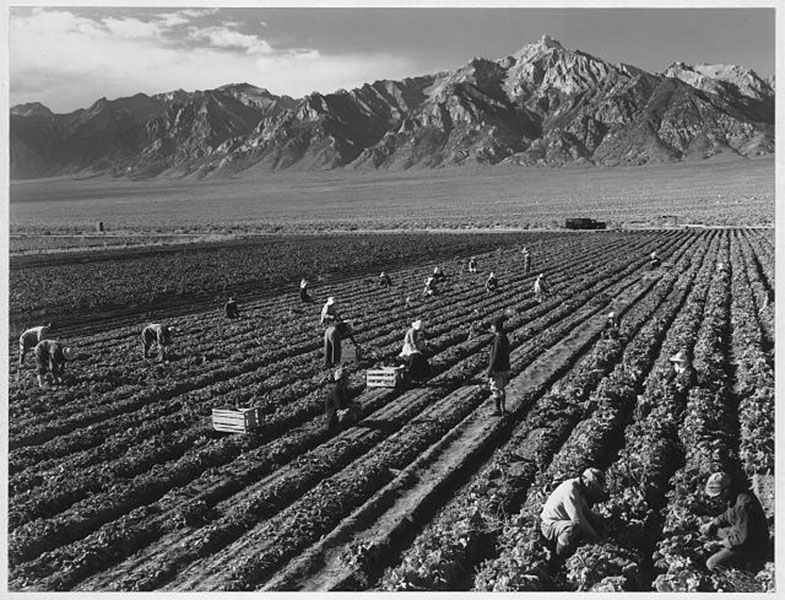
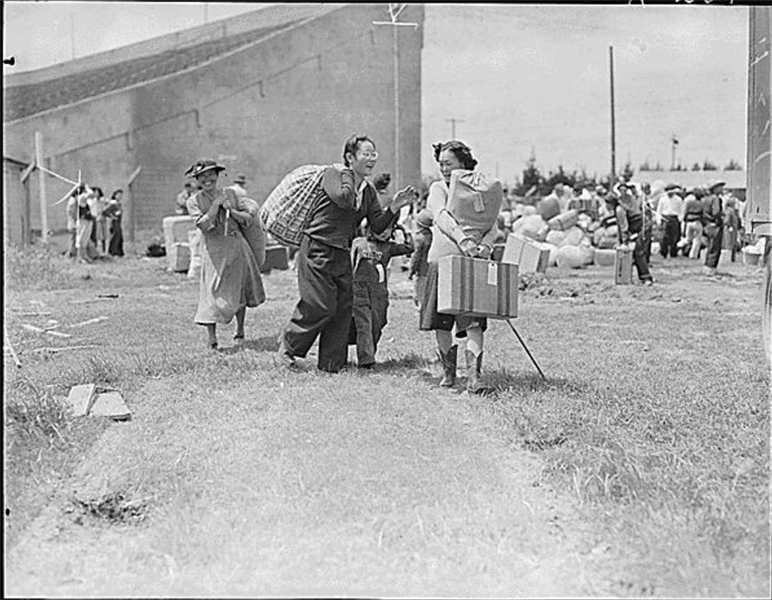
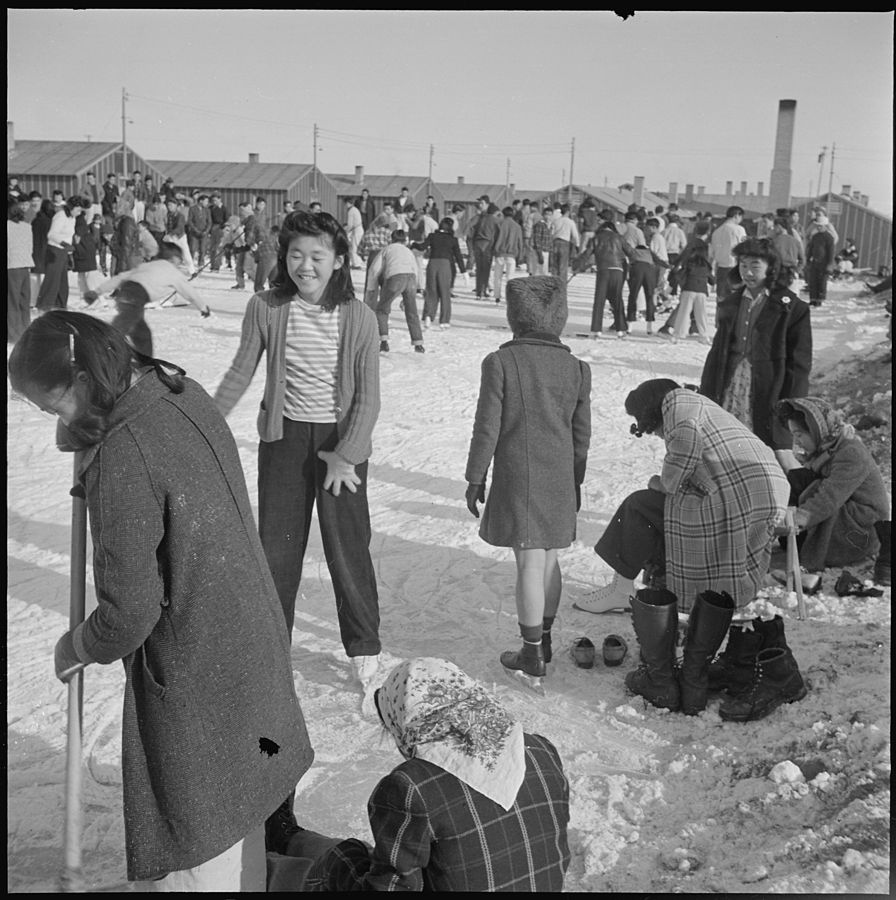
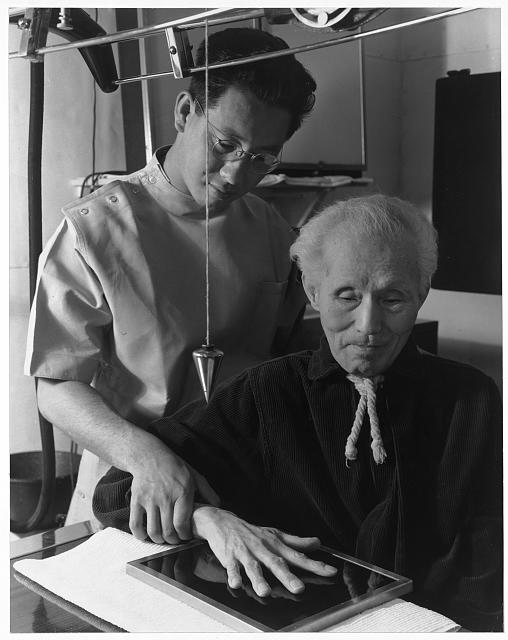
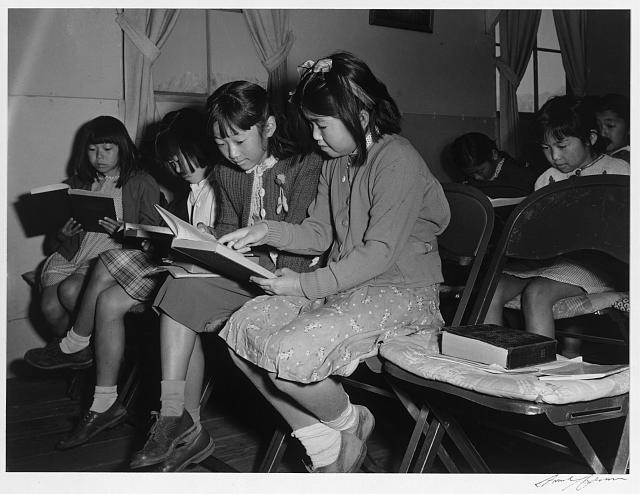
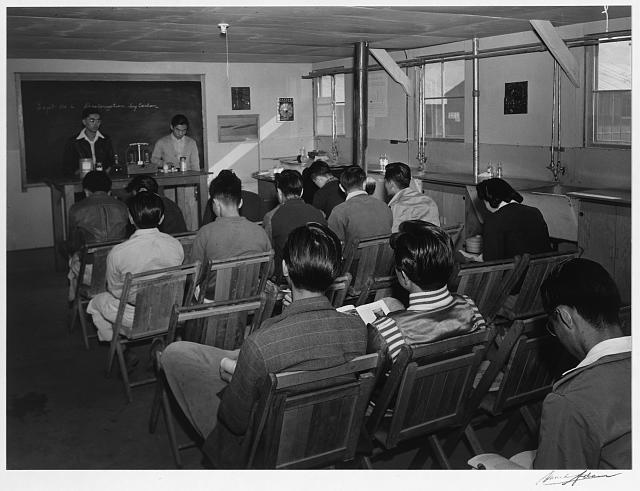
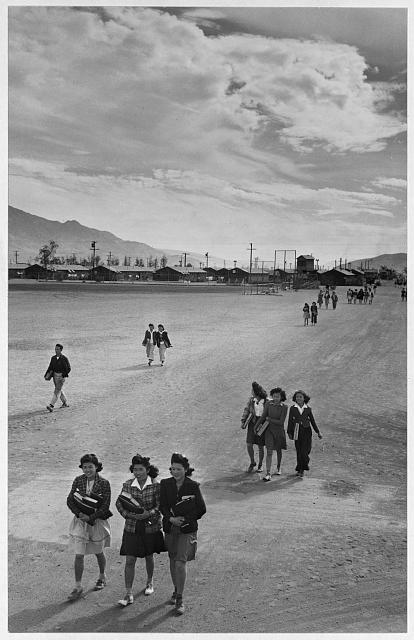
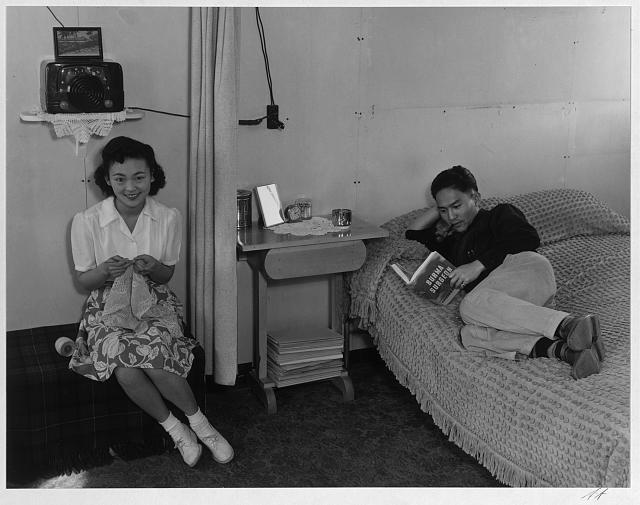
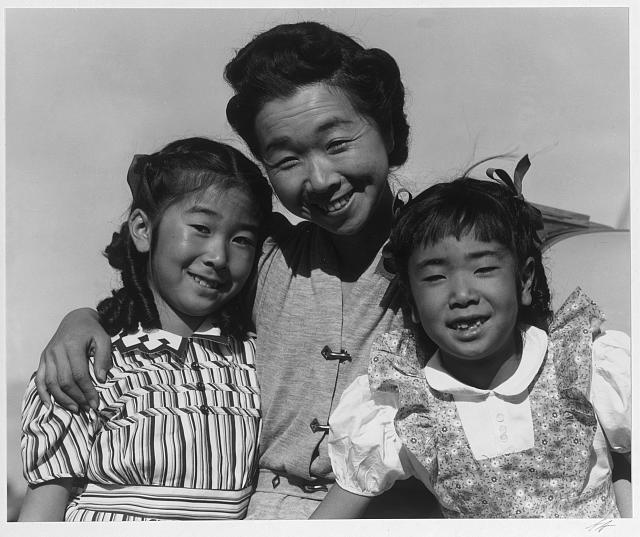
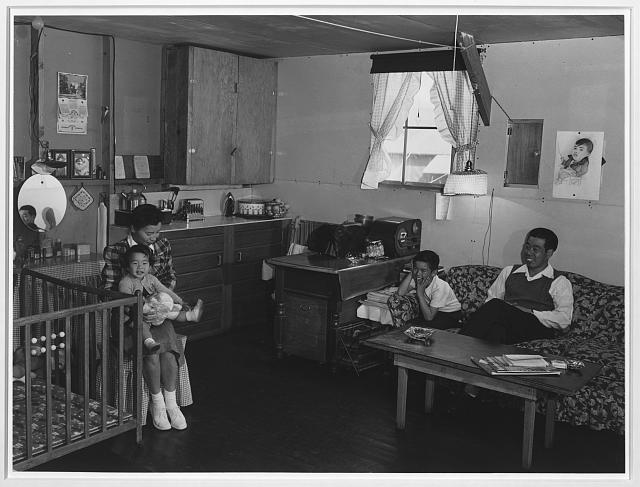
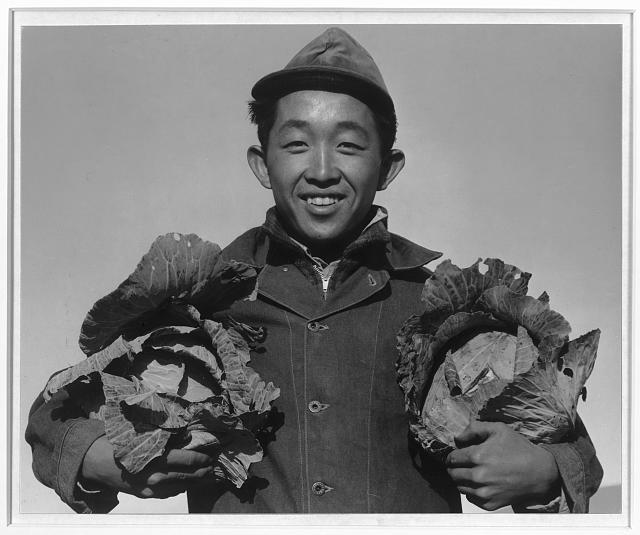
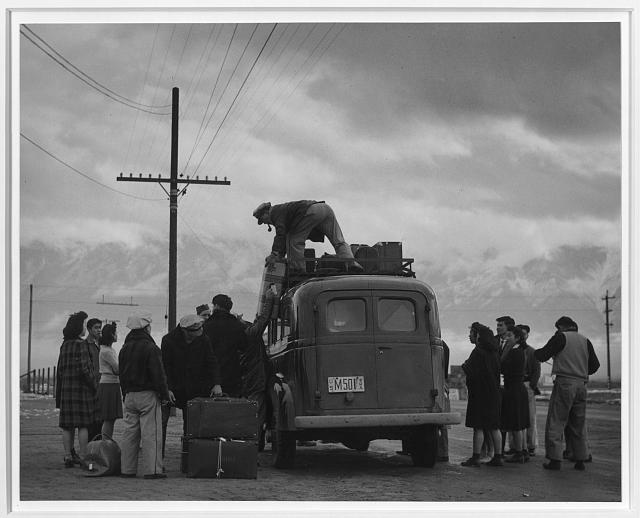
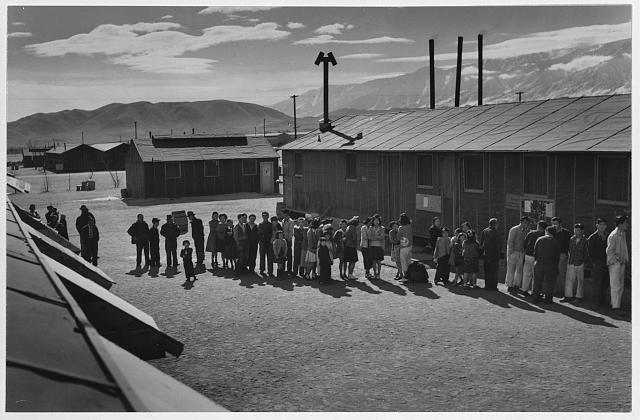
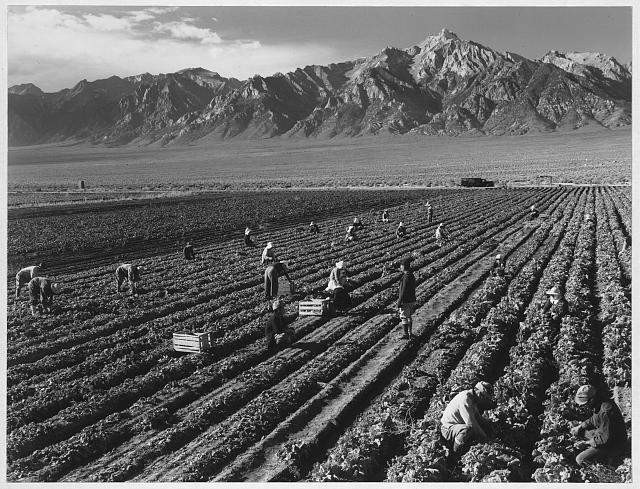
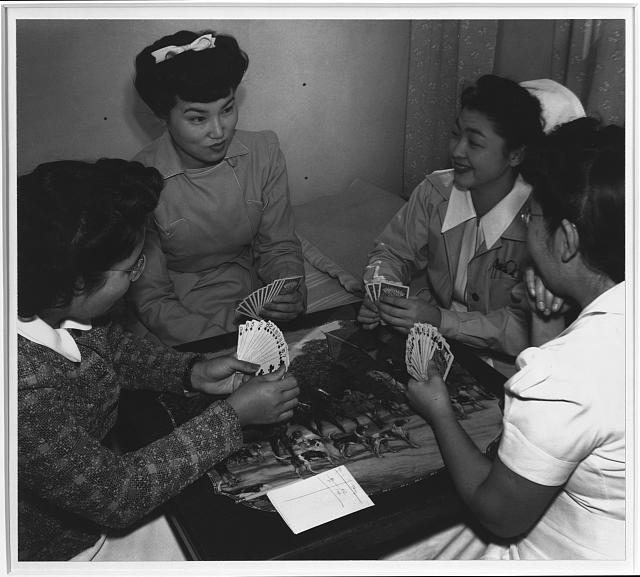
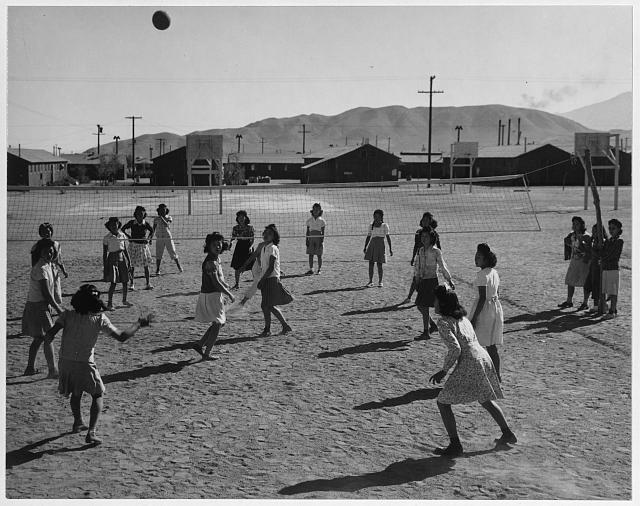
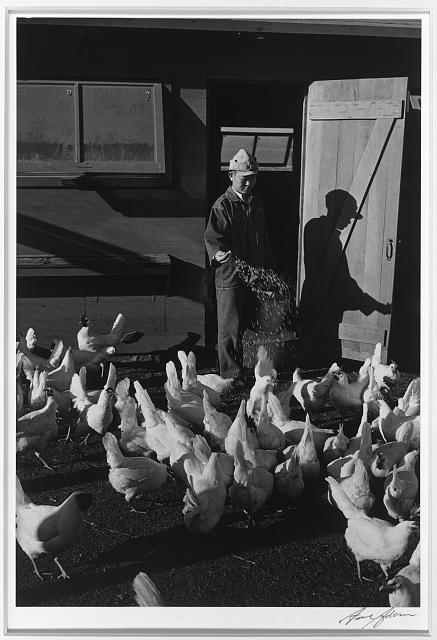
In the United States during World War II, about 120,000 people of Japanese ancestry, most of whom lived on the Pacific Coast, were forcibly relocated and incarcerated in concentration camps in the western interior of the country. Approximately two-thirds of the internees were United States citizens. These actions were issued by president Franklin D. Roosevelt via executive order shortly after Imperial Japan’s attack on Pearl Harbor.
Of the 127,000 Japanese Americans who were living in the continental United States at the time of the Pearl Harbor attack, 112,000 resided on the West Coast. About 80,000 were Nisei (literal translation: ‘second generation’; American-born Japanese with U.S. citizenship) and Sansei (‘third generation’, the children of Nisei). The rest were Issei (‘first generation’) immigrants born in Japan who were ineligible for U.S. citizenship under U.S. law.
Japanese Americans were placed in concentration camps based on local population concentrations and regional politics. More than 112,000 Japanese Americans who were living on the West Coast were interned in camps which were located in its interior. However, in Hawaii (which was under martial law), where 150,000-plus Japanese Americans composed over one-third of the territory’s population, only 1,200 to 1,800 were also interned. The internment is considered to have been a manifestation of racism – though it was implemented with intent to mitigate a security risk which Japanese Americans were believed to pose, the scale of the internment in proportion to the size of the Japanese American population far surpassed similar measures which were undertaken against German and Italian Americans, who were mostly non-citizens. California defined anyone with 1/16th or more Japanese lineage as a person who should be interned. Colonel Karl Bendetsen, the architect of the program, went so far as to say that anyone with “one drop of Japanese blood” qualified.
Roosevelt authorized Executive Order 9066, issued two months after Pearl Harbor, which allowed regional military commanders to designate “military areas” from which “any or all persons may be excluded.” Although the executive order did not mention Japanese Americans, this authority was used to declare that all people of Japanese ancestry were required to leave Alaska and the military exclusion zones from all of California and parts of Oregon, Washington, and Arizona, with the exception of those internees who were being held in government camps. The internees were not only people of Japanese ancestry, they also included a relatively small number—though still totalling well over ten thousand—of people of German and Italian ancestry as well as Germans who were expelled from Latin America and deported to the U.S. Approximately 5,000 Japanese Americans relocated outside the exclusion zone before March 1942, while some 5,500 community leaders had been arrested immediately after the Pearl Harbor attack and thus were already in custody.
The United States Census Bureau assisted the internment efforts by providing specific individual census data on Japanese Americans. The Bureau denied its role for decades despite scholarly evidence to the contrary, and its role became more widely acknowledged by 2007. In its 1944 decision Korematsu v. United States, the U.S. Supreme Court upheld the constitutionality of the removals under the Due Process Clause of the Fifth Amendment to the United States Constitution. The Court limited its decision to the validity of the exclusion orders, avoiding the issue of the incarceration of U.S. citizens without due process, but ruled on the same day in Ex parte Endo that a loyal citizen could not be detained, which began their release. The day before the Korematsu and Endo rulings were made public, the exclusion orders were rescinded.
In the 1980s, under mounting pressure from the Japanese American Citizens League (JACL) and redress organizations, President Jimmy Carter opened an investigation to determine whether the decision to put Japanese Americans into concentration camps had been justified by the government. He appointed the Commission on Wartime Relocation and Internment of Civilians (CWRIC) to investigate the camps. In 1983, the Commission’s report, Personal Justice Denied, found little evidence of Japanese disloyalty at the time and concluded that the incarceration had been the product of racism. It recommended that the government pay reparations to the internees. In 1988, President Ronald Reagan signed into law the Civil Liberties Act of 1988 which officially apologized for the internment on behalf of the U.S. government and authorized a payment of $20,000 (equivalent to $44,000 in 2020) to each former internee who was still alive when the act was passed. The legislation admitted that government actions were based on “race prejudice, war hysteria, and a failure of political leadership.” By 1992, the U.S. government eventually disbursed more than $1.6 billion (equivalent to $3.5 billion in 2020) in reparations to 82,219 Japanese Americans who had been interned. (Wikipedia)
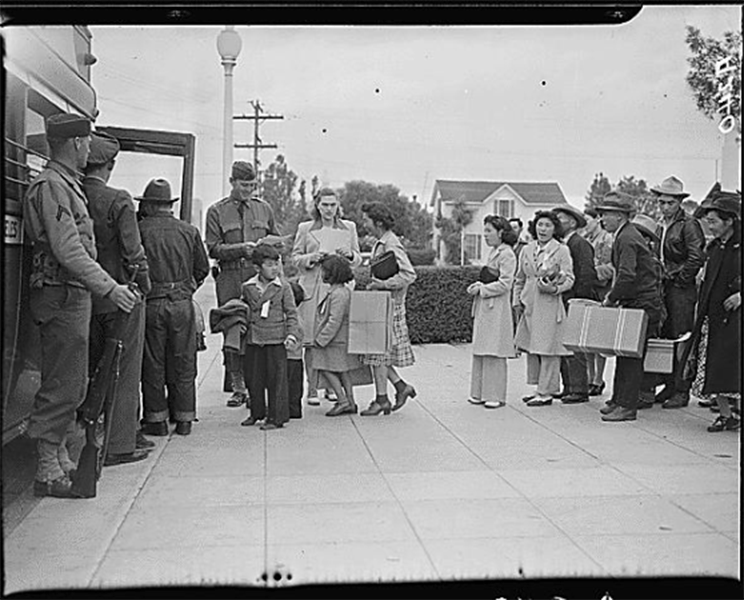
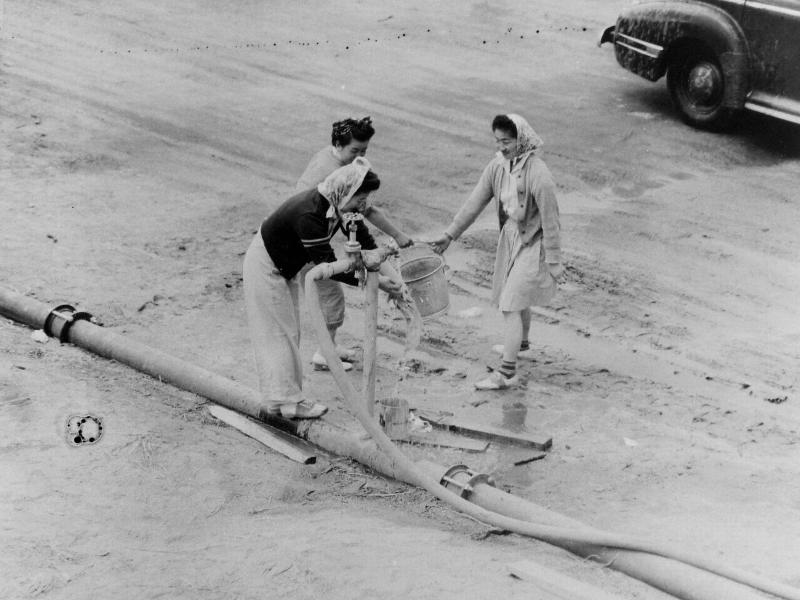
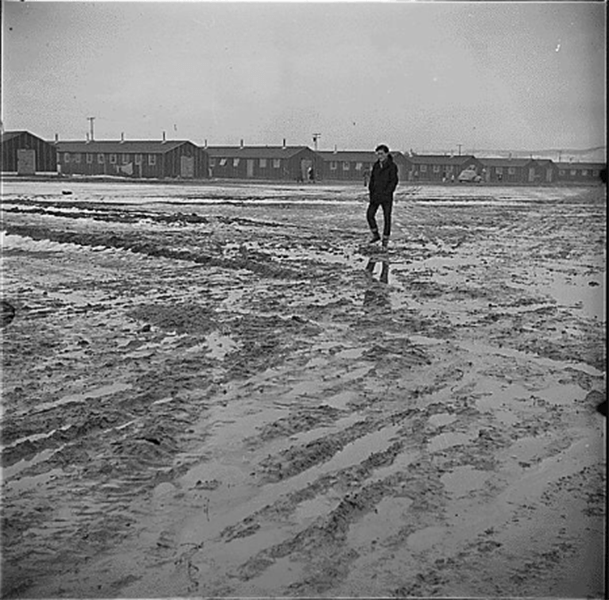
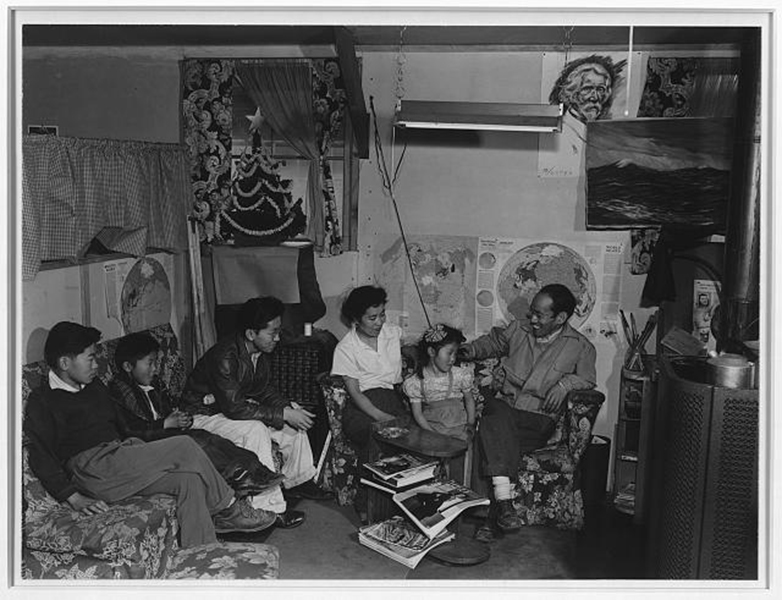
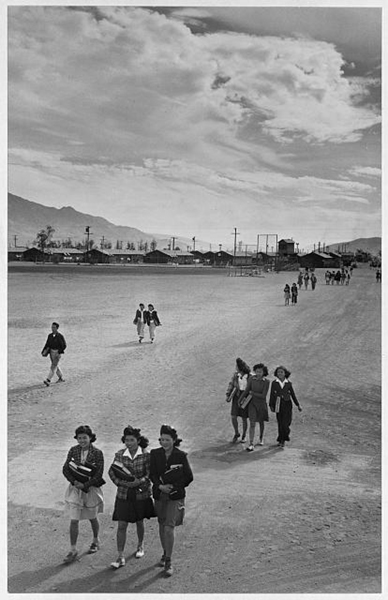
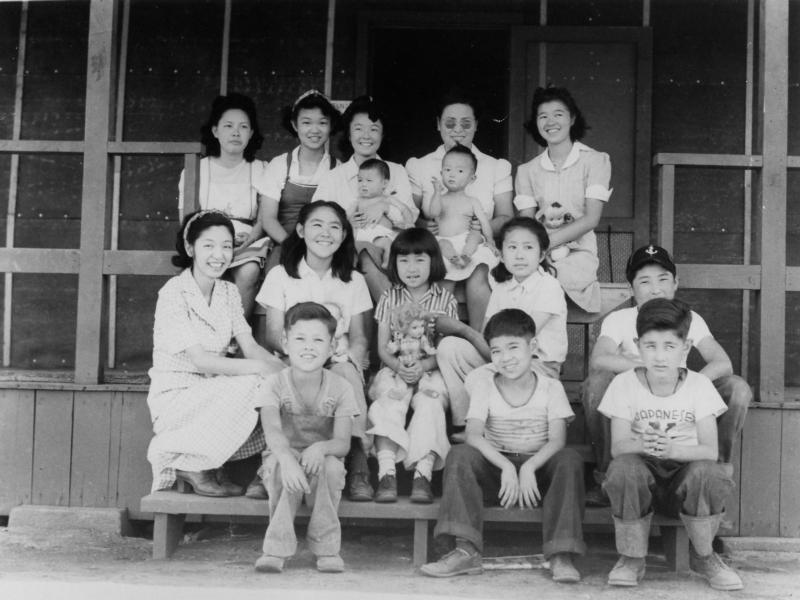
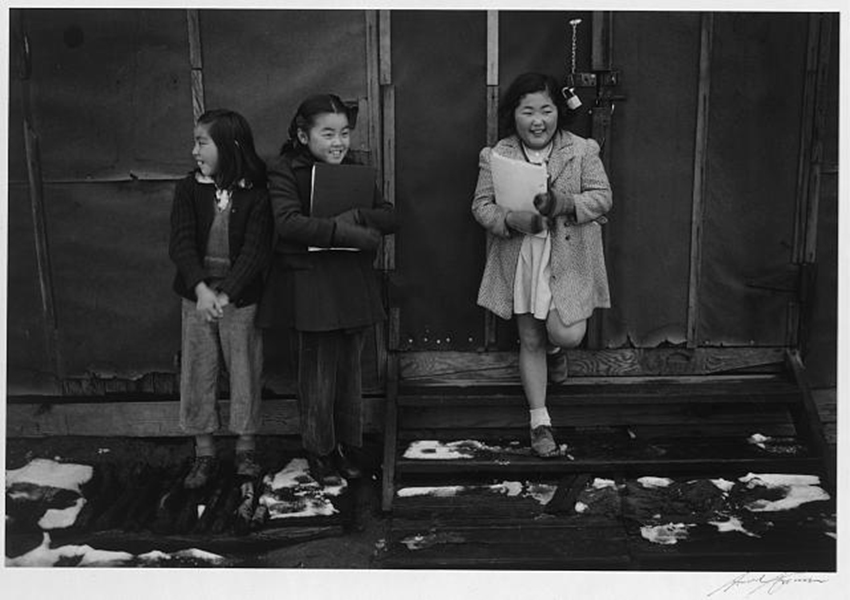
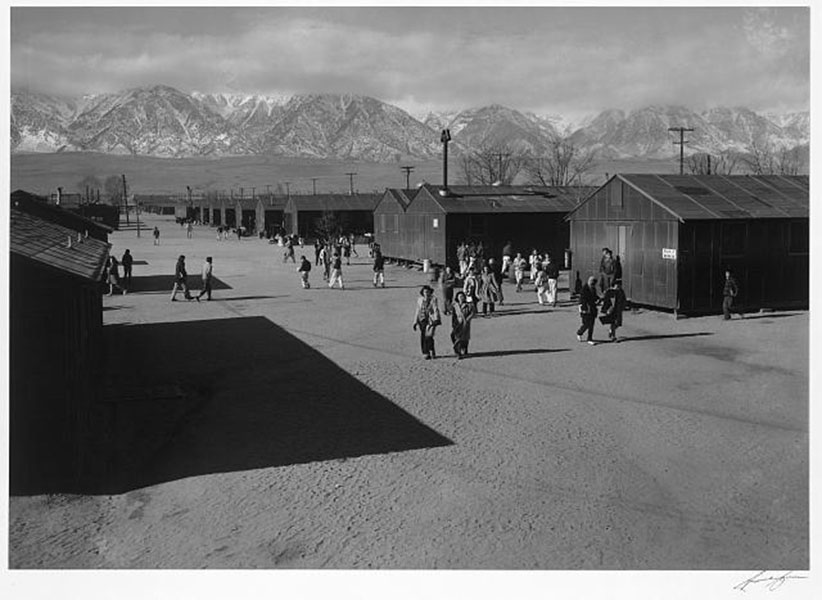
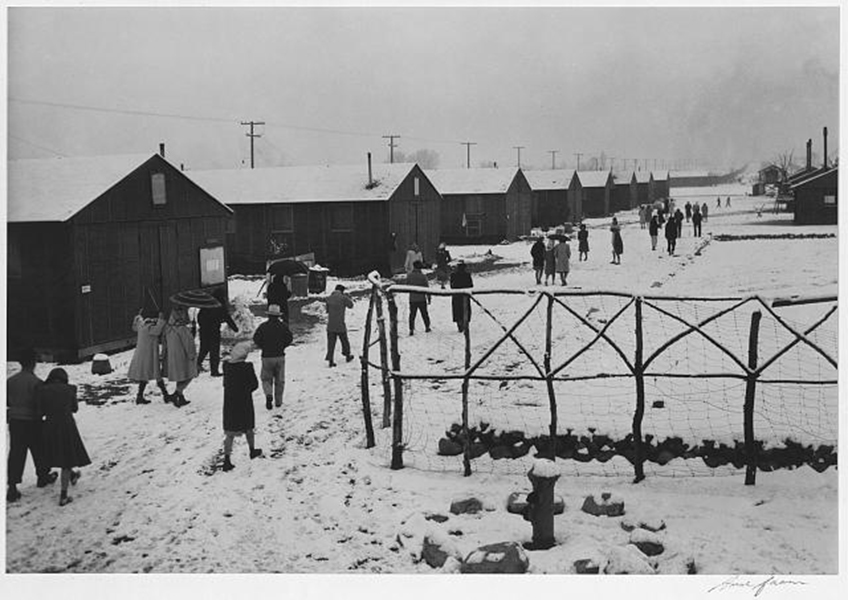
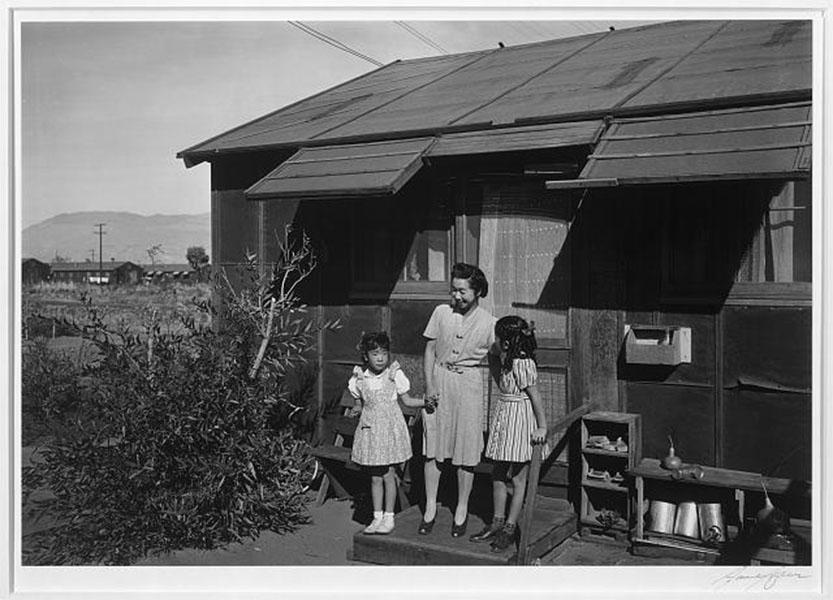
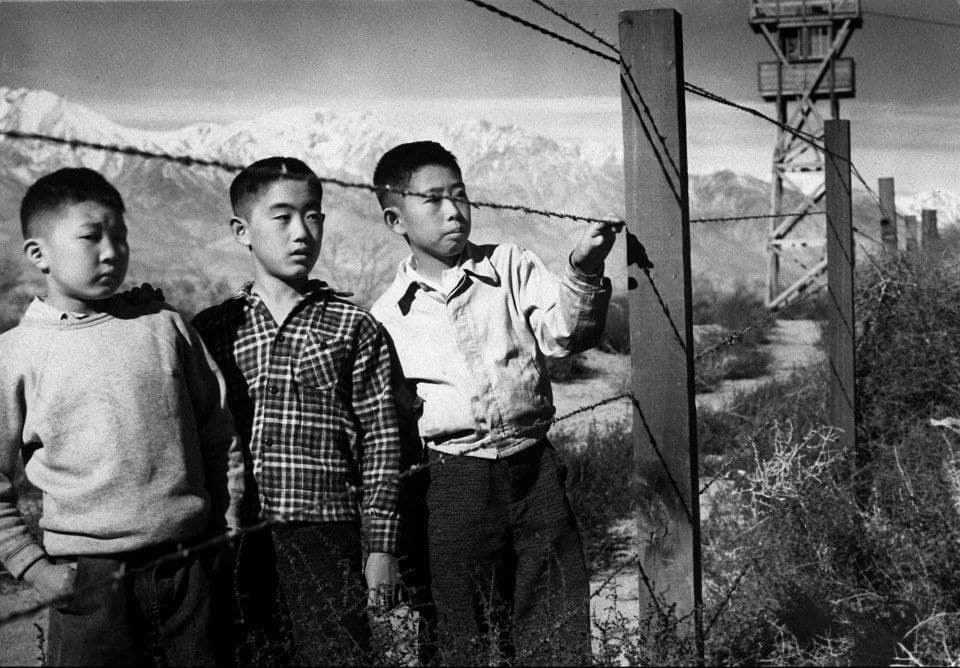
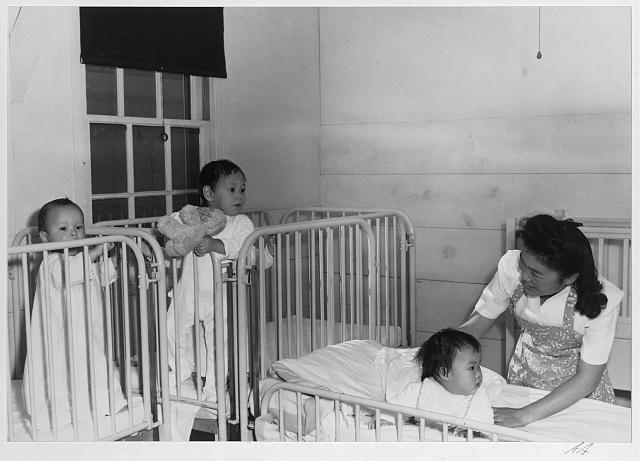
A Japanese family wearing identification tags waits to be relocated. 1942In 1942, when President Roosevelt signed Executive Order 9066, the government justified the relocation of Japanese-Americans on the West Coast to internment camps as a “military necessity” to protect against domestic espionage and sabotage. However, the government eventually admitted it “had in its possession proof that not one Japanese American, citizen or not, had engaged in espionage, not one had committed any act of sabotage.”Before relocation of Japanese-Americans began, the U.S. government froze the bank accounts of anyone born in Japan, raided homes despite not having search warrants, and allowed internees to bring only bedding and clothing to the camps.Despite such violations of basic rights, Japanese internment was almost universally accepted by the American people. The government never bothered to explain why Italian and German-Americans were not also sent to camps, and the military was not required or even pressured to provide concrete evidence that Japanese-Americans posed a threat to national security.Here, a Yugoslavian farmer stands on the farm he took over from interned Japanese-Americans. Japanese internment gave white farmers a chance to eliminate unwanted competition.However, not all the camps were complete, so many Japanese-Americans were held for months in temporary holding centers, usually converted stables at local racetracks, like this one.“Aside from the absurdity of living that way, life went on pretty much as usual,” one internee said of life at the camps. The residents set up newspapers, sports teams, and fire and police departments, though any community organization had to be approved by the War Relocation Authority.While life may have gone on “as usual,” the government also exploited internees as a source of labor.Even the War Relocation Authority knew that they were subjecting the internees to abhorrent living conditions, writing that, “for the great majority of evacuated people, the environment of the centers – despite all efforts to make them livable – remains subnormal and probably always will.”The water supply at the camps was no better than any of the other substandard accommodations. In fact, it notoriously wrought havoc on the health of the inmates.In addition to physical ailments, the mental health of many Japanese-Americans suffered greatly as a result of their incarceration.Children at the Manzanar internment camp in California in 1943Heart Mountain Relocation Center, Heart Mountain, Wyoming. 1943Manzanar Internment Camp, California, 1942Manzanar Internment Camp, California, 1942Manzanar Internment Camp, California, 1942Manzanar Internment Camp, California, 1942Manzanar Internment Camp, California, 1942Manzanar Internment Camp, California, 1942Manzanar Internment Camp, California, 1942Manzanar Internment Camp, California, 1942Manzanar Internment Camp, California, 1942Manzanar Internment Camp, California, 1942Manzanar Internment Camp, California, 1942Manzanar Internment Camp, California, 1942Manzanar Internment Camp, California, 1942Manzanar Internment Camp, California, 1942Manzanar Internment Camp, California, 1942Manzanar Internment Camp, California, 1942Manzanar Internment Camp, California, 1942Manzanar Internment Camp, California, 1942Manzanar Internment Camp, California, 1942Manzanar Internment Camp, California, 1942Manzanar Internment Camp, California, 1942Manzanar Internment Camp, California, 1942Manzanar Internment Camp, California, 1942Manzanar Internment Camp, California, 1942Manzanar Internment Camp, California, 1942Manzanar Internment Camp, California, 1942Manzanar Internment Camp, California, 1942Manzanar Internment Camp, California, 1942Manzanar Internment Camp, California, 1942Manzanar Internment Camp, California, 1942Manzanar Internment Camp, California, 1942
On September 5, 1970, The Jimi Hendrix Experience flight from the Berlin Tempelhof Airport to the Fuhlsbuettel Airport in Hamburg and then travel by train to Puttgarden to come to the Isle of Fehmarn for the Love & Peace Festival on September 6, 1970, which was also Jimi Hendrix’s final live performance.
James Marshall “Jimi” Hendrix (born Johnny Allen Hendrix; November 27, 1942 – September 18, 1970) was an American musician, singer, and songwriter. Although his mainstream career spanned only four years, he is widely regarded as one of the most influential electric guitarists in the history of popular music, and one of the most celebrated musicians of the 20th century. The Rock and Roll Hall of Fame describes him as “arguably the greatest instrumentalist in the history of rock music”.
Born in Seattle, Washington, Hendrix began playing guitar at the age of 15. In 1961, he enlisted in the US Army, but was discharged the following year. Soon afterward, he moved to Clarksville then Nashville, Tennessee, and began playing gigs on the chitlin’ circuit, earning a place in the Isley Brothers’ backing band and later with Little Richard, with whom he continued to work through mid-1965. He then played with Curtis Knight and the Squires before moving to England in late 1966 after bassist Chas Chandler of the Animals became his manager. Within months, Hendrix had earned three UK top ten hits with the Jimi Hendrix Experience: “Hey Joe”, “Purple Haze”, and “The Wind Cries Mary”. He achieved fame in the US after his performance at the Monterey Pop Festival in 1967, and in 1968 his third and final studio album, Electric Ladyland, reached number one in the US. The double LP was Hendrix’s most commercially successful release and his first and only number one album. The world’s highest-paid performer, he headlined the Woodstock Festival in 1969 and the Isle of Wight Festival in 1970 before his accidental death in London from barbiturate-related asphyxia on September 18, 1970.
Hendrix was inspired by American rock and roll and electric blues. He favored overdriven amplifiers with high volume and gain, and was instrumental in popularizing the previously undesirable sounds caused by guitar amplifier feedback. He was also one of the first guitarists to make extensive use of tone-altering effects units in mainstream rock, such as fuzz distortion, Octavia, wah-wah, and Uni-Vibe. He was the first musician to use stereophonic phasing effects in recordings. Holly George-Warren of Rolling Stone commented: “Hendrix pioneered the use of the instrument as an electronic sound source. Players before him had experimented with feedback and distortion, but Hendrix turned those effects and others into a controlled, fluid vocabulary every bit as personal as the blues with which he began.”
Hendrix was the recipient of several music awards during his lifetime and posthumously. In 1967, readers of Melody Maker voted him the Pop Musician of the Year and in 1968, Billboard named him the Artist of the Year and Rolling Stone declared him the Performer of the Year. Disc and Music Echo honored him with the World Top Musician of 1969 and in 1970, Guitar Player named him the Rock Guitarist of the Year. The Jimi Hendrix Experience was inducted into the Rock and Roll Hall of Fame in 1992 and the UK Music Hall of Fame in 2005. Rolling Stone ranked the band’s three studio albums, Are You Experienced, Axis: Bold as Love, and Electric Ladyland, among the 100 greatest albums of all time, and they ranked Hendrix as the greatest guitarist and the sixth greatest artist of all time. (Wikipedia)
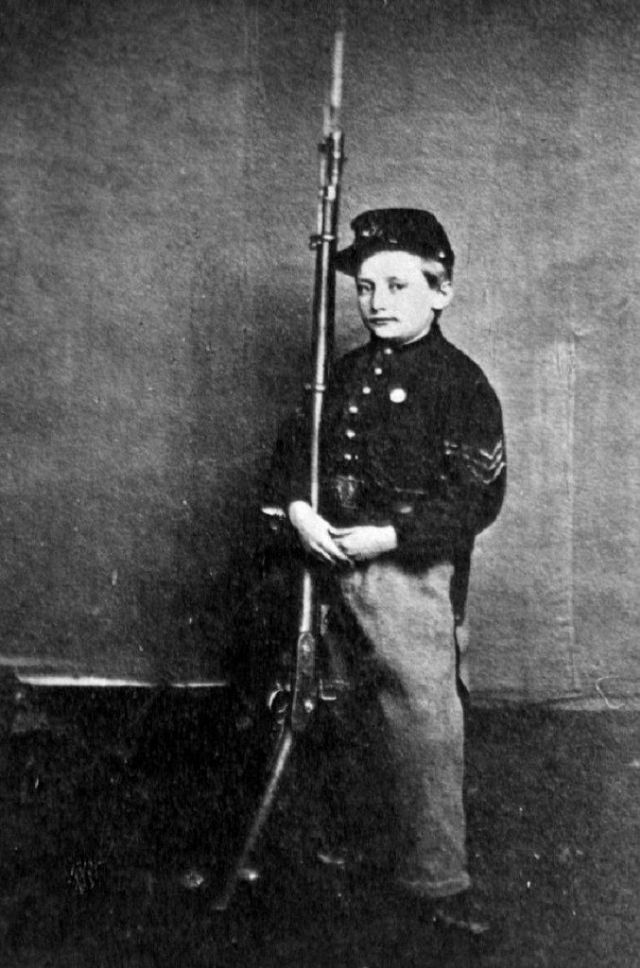
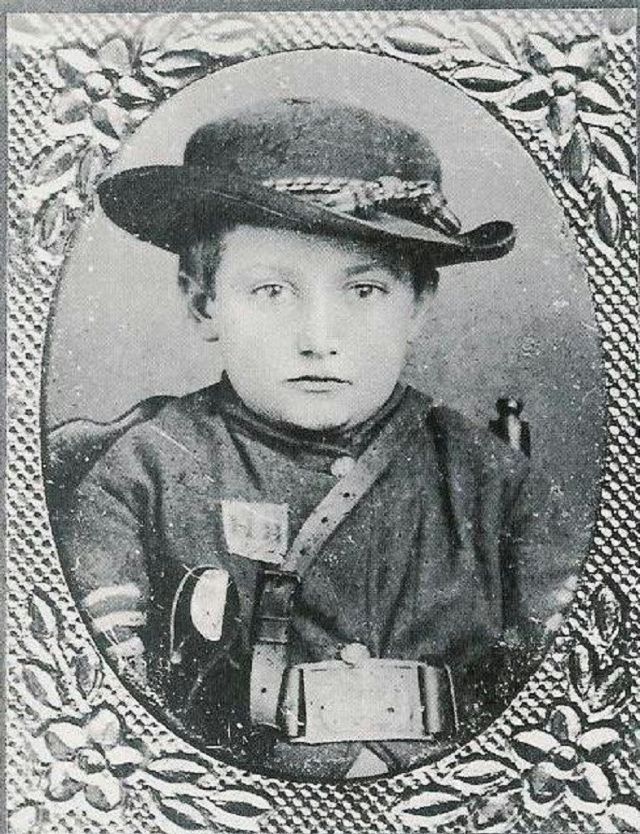
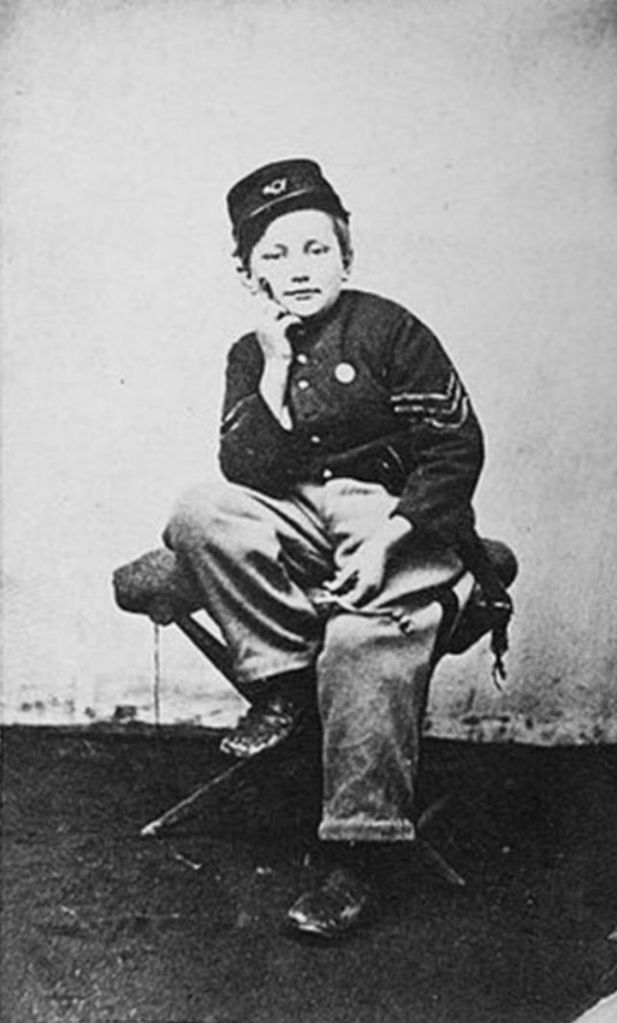
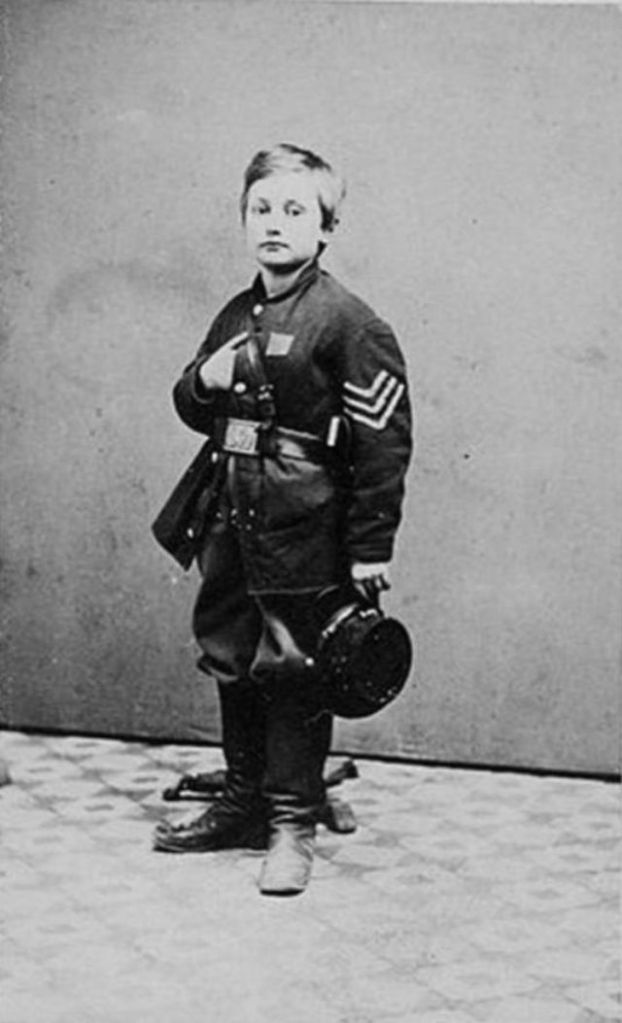
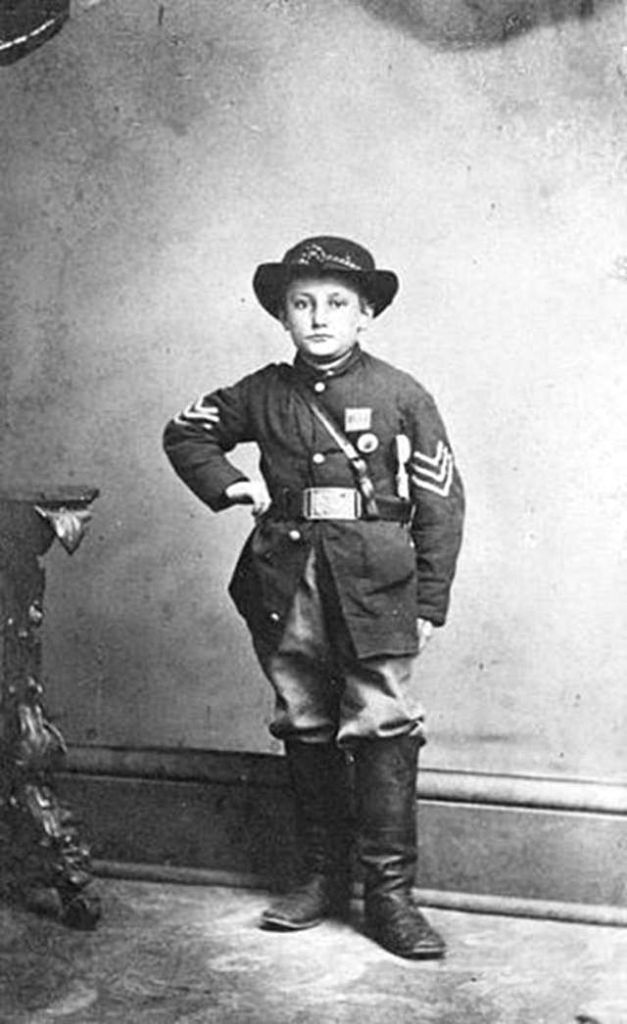
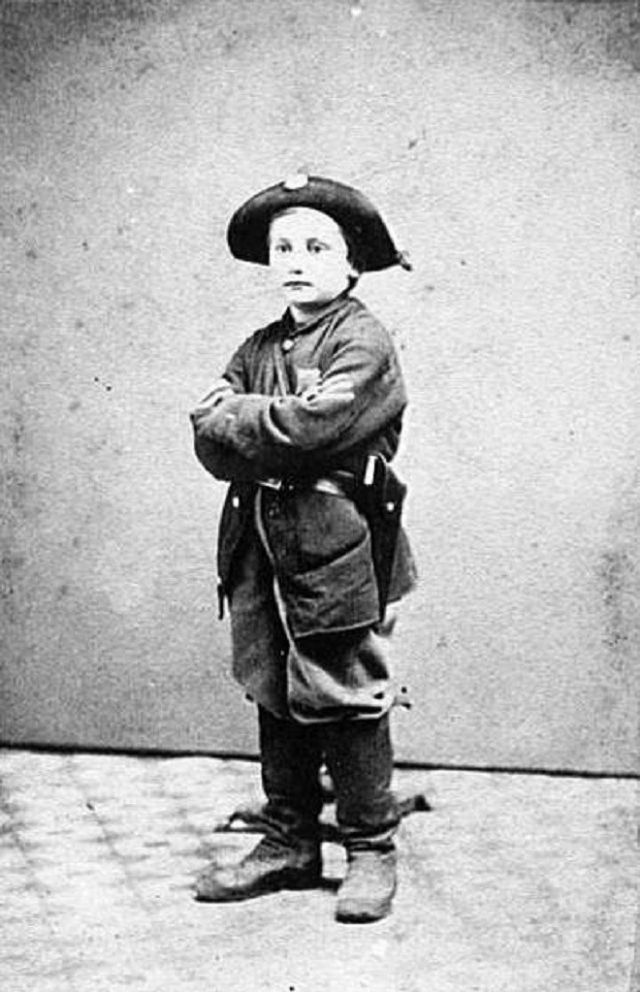
Johnny Clem was a soldier in the service of the United States for most of his life. He was born on August 13, 1851, in Newark, Ohio. His actual name was John Joseph Klem.
When President Abraham Lincoln in May 1861 issued the call for volunteers to serve in the Union army for a three year term, one of those who tried to answer was Ohio resident John Clem. Not yet 10 years old, Clem’s service was refused by the newly formed 3rd Ohio. Undeterred, Clem later tried to join the 22nd Michigan, where his persistence won over the unit’s officers. They agreed to let him follow the regiment, adopting him as a mascot and unofficial drummer boy. The officers also chipped in to pay his monthly salary of $13 before he finally was allowed to officially enlist in 1863.
Clem became a national celebrity for his actions at Chickamauga. Armed with a musket sawed down for him to carry, Clem joined the 22nd Michigan in the defense of Horseshoe Ridge on the afternoon of September 20. As the Confederate forces surrounded the unit, a Confederate colonel spotted Clem and shouted either “I think the best thing a mite of a chap like you can do is drop that gun” or called him a “damned little Yankee devil,” according to various sources. Rather than surrender, Clem shot the colonel and successfully made his way back to Union lines. For his actions, Clem was promoted to sergeant, the youngest soldier ever to become a noncommissioned officer in the U.S. Army, and became known as the “Drummer Boy of Chickamauga.”
Clem’s legend grew following the battle, although some stories may be apocryphal. One holds that his drum was destroyed at the Battle of Shiloh, earning him the nickname “Johnny Shiloh” and serving as inspiration for the song, “The Drummer Boy of Shiloh.” However, the 22nd Michigan, Clem’s unit, was not mustered until the summer after the Battle of Shiloh, making it unlikely Clem saw action in the battle with that regiment.
Clem went on to fight at Perryville, Murfreesboro, Kennesaw and Atlanta, where he was wounded twice. Clem was discharged from the Army in 1864 at age 13, but sought to rejoin the military in 1870. Nominated to West Point by President Ulysses S. Grant, Clem failed the entrance exam several times before Grant appointed him a second lieutenant in the U.S. Army. Clem enjoyed a successful second military career, rising to the rank of colonel and assistant quartermaster general by 1906. He retired on the eve of U.S. entry into World War I with the rank of major general, the last Civil War veteran to actively serve in the U.S. Army. Clem died on May 13, 1937 and is buried at Arlington National Cemetery.
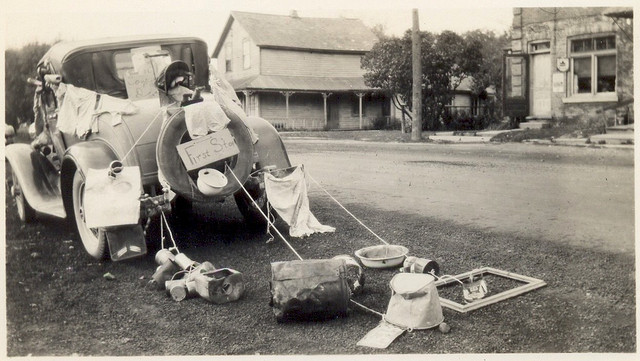
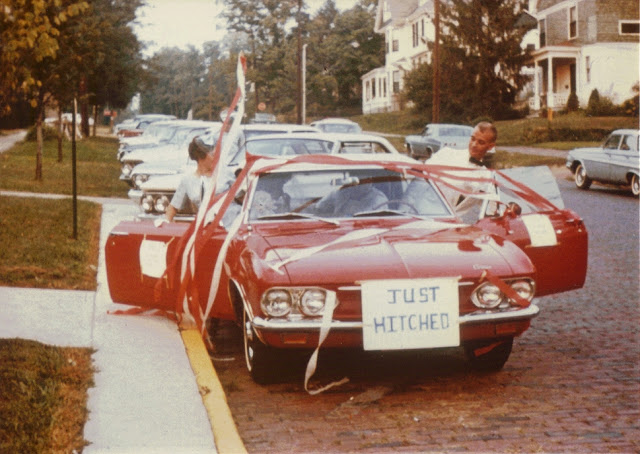
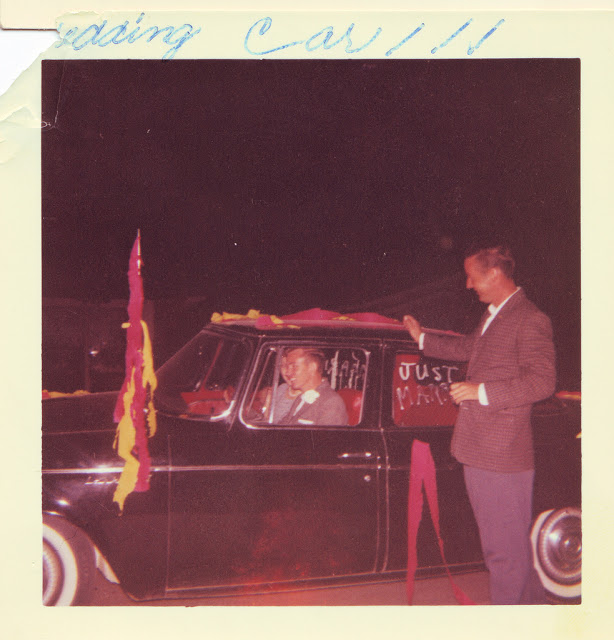
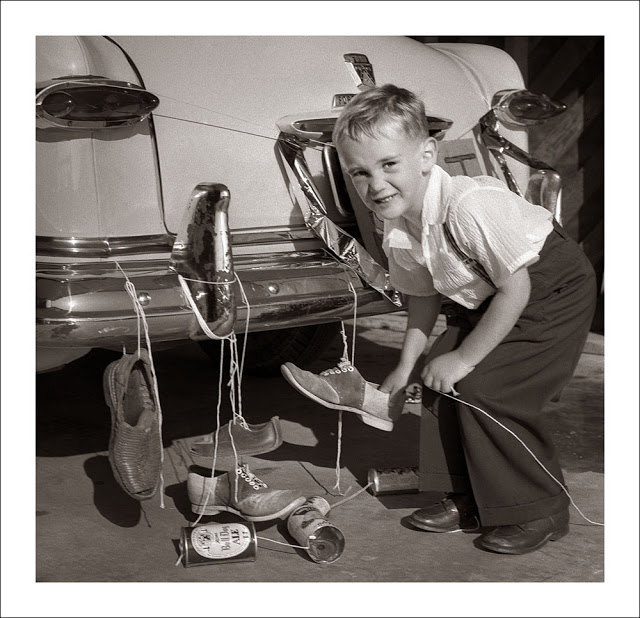
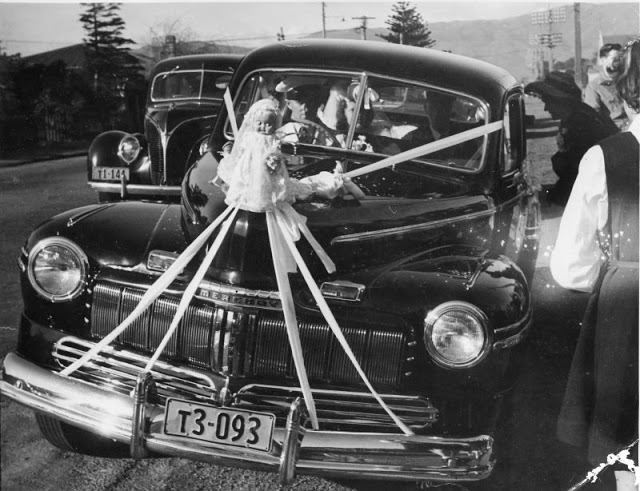
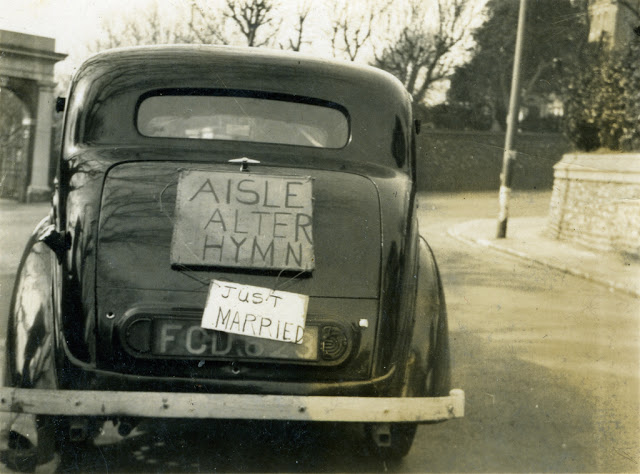
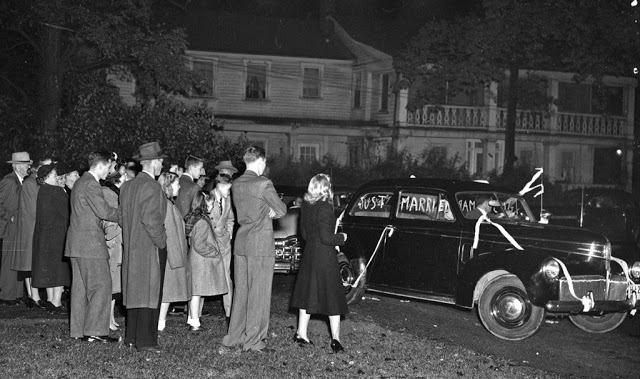
A wedding car in 1966A Ford Super Deluxe convertible with a 1949 Virginia license plate.1967 Jaguar XKEJust Married – A wedding car in Lawton, Oklahoma. April, 1958A newlywed couple admires their post-wedding car in 1956.Wedding car in Phoenix, Arizona, 1959.Sucker. April 1953.“First Stop”Bride and groom driving off in an early seventies Triumph 1300.Wedding car decorated, ca. 1960sLincoln Premiere – Wedding car scene, 1958ca. 1950sMercury wedding car, 1948‘Aisle Alter Hymn’, wedding car, ca. 1940s.Wedding car, ca. 1970s1921 Dodge wedding carA wedding in Worthington, Ohio in 1948.
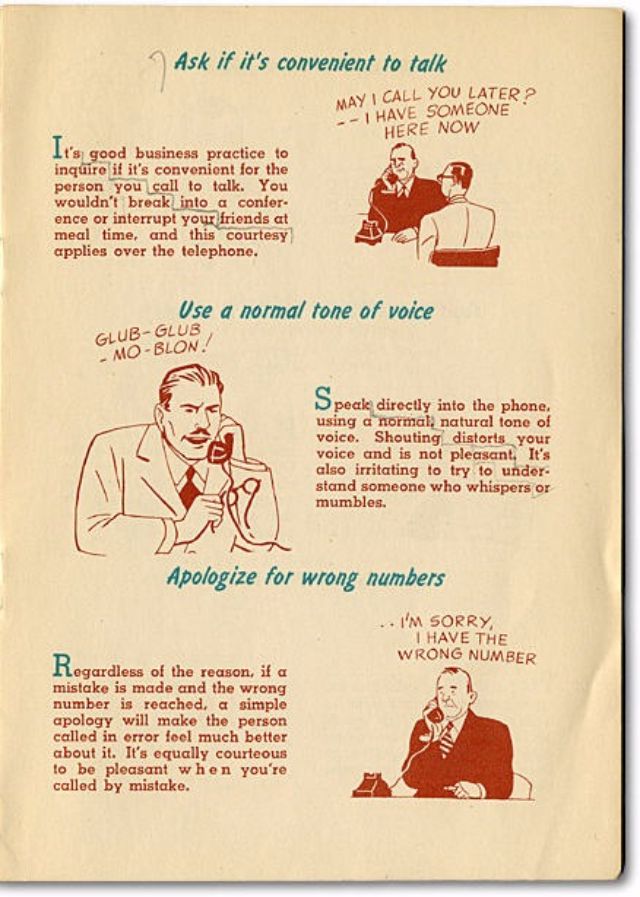
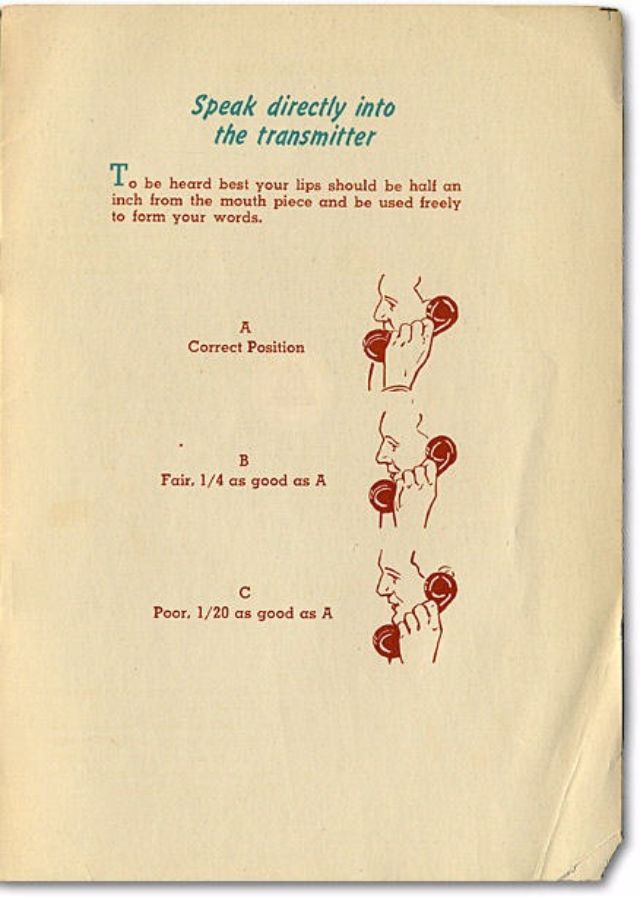
Speak to the person at the other end of the line — not to the telephone — then you’re more apt to be pleasant and understanding.
As technology and the services we use are getting ever more advanced, it could, for some people, become harder to make real friends. The social networking hubs that have become the backbone of business are also becoming the new avenue for making friends.
In the 1940s, when the phone first became a household item, people started to question if we would even need to get out of the house anymore (just like we did when the television and the Internet became household names). However, history has shown us that we still need that physical interaction. We want to keep all our friends and still go out for a coffee or a movie every once in a while.
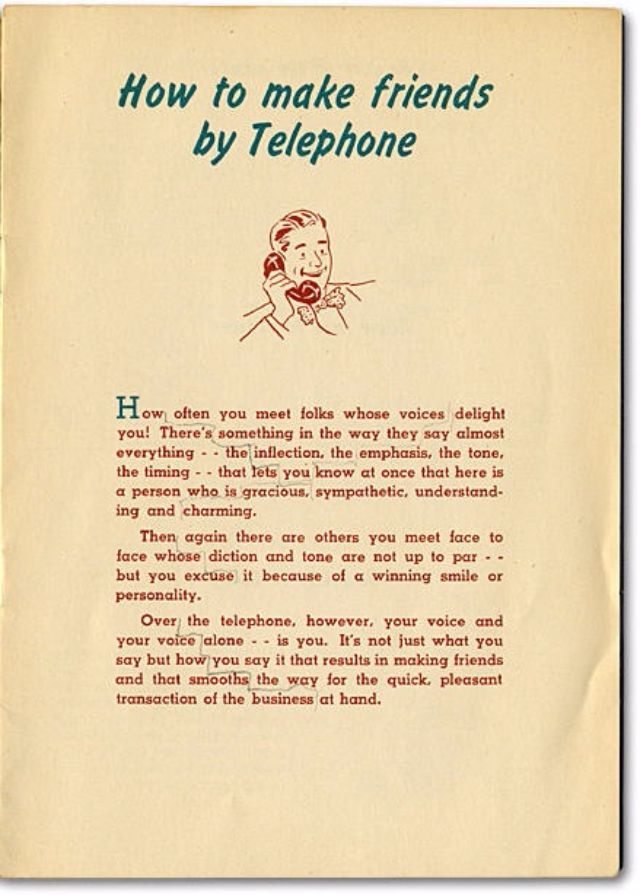
If you still don’t find a way to make friends in today’s jungle of technology services then why not have a look at this insanely geeky and retro guide brought to our attention by Contact Sheet? It’s called How To Make Friends By Telephone and is a guide meant to show people how to go about making real friends even though you’re in different locations by just using technology to interact back in the 1940s.