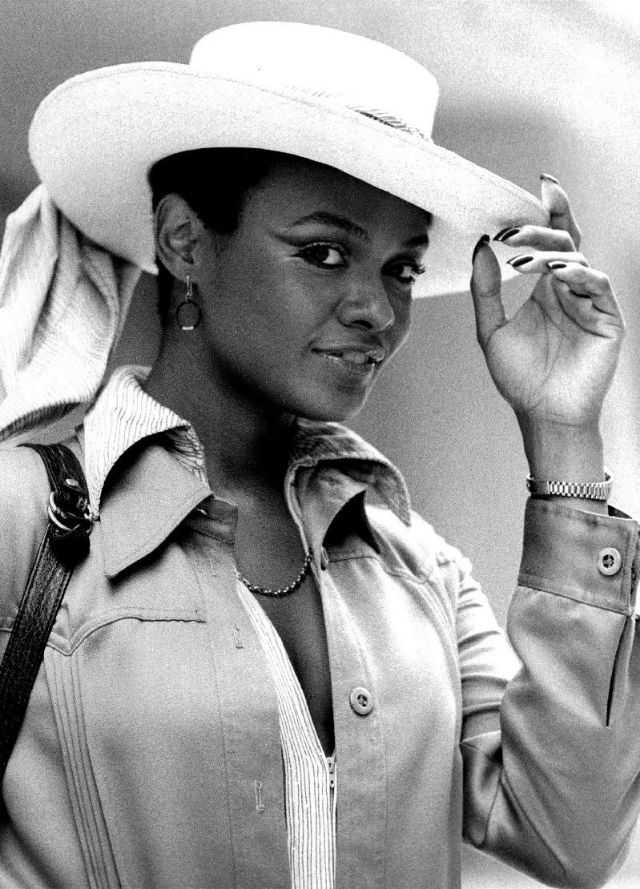
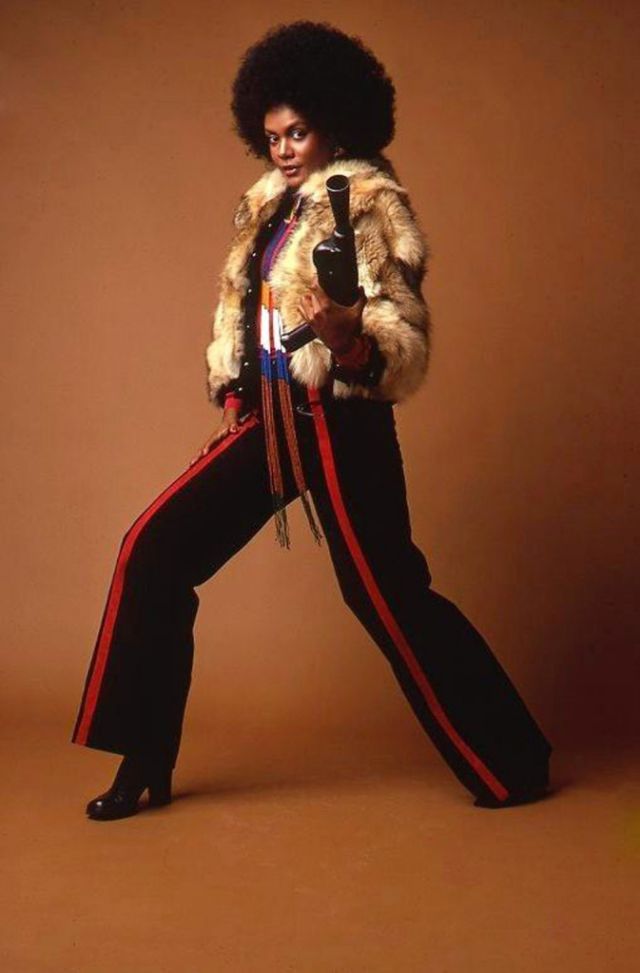
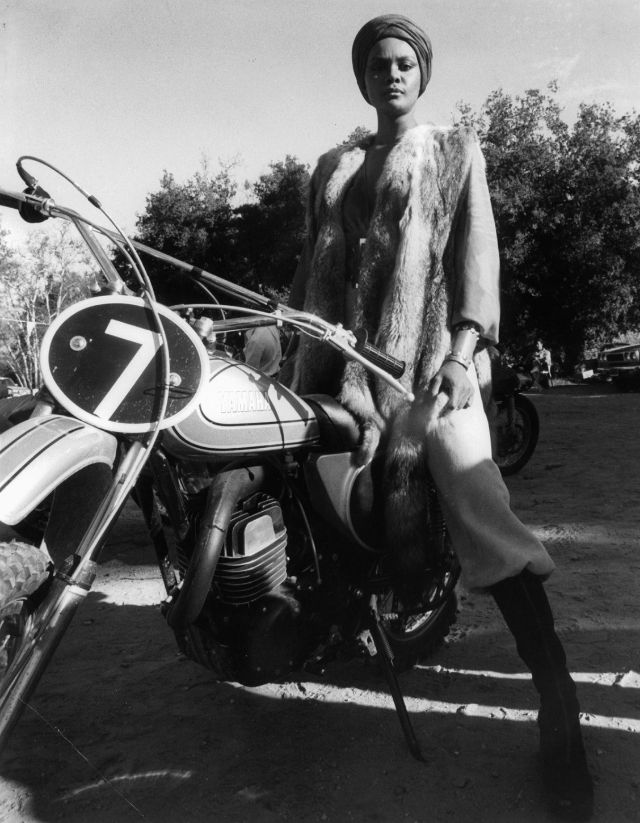
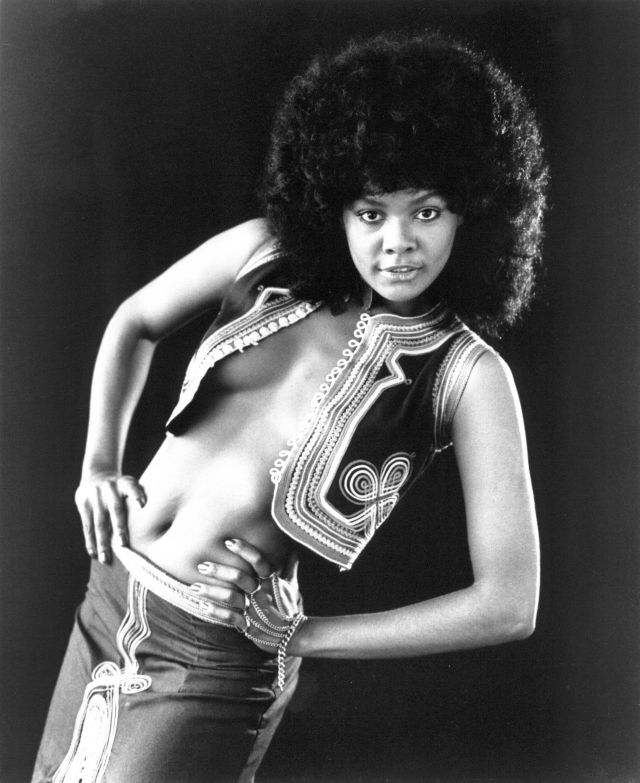
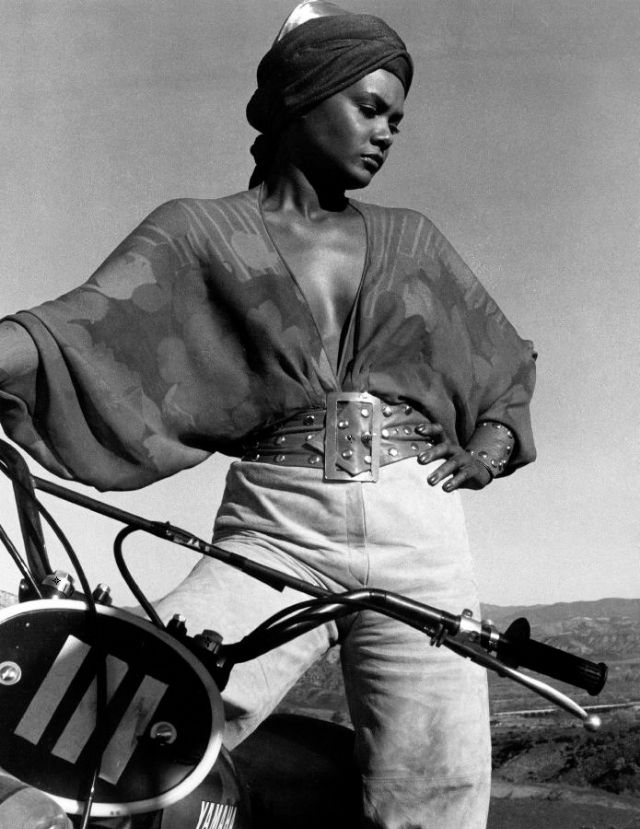
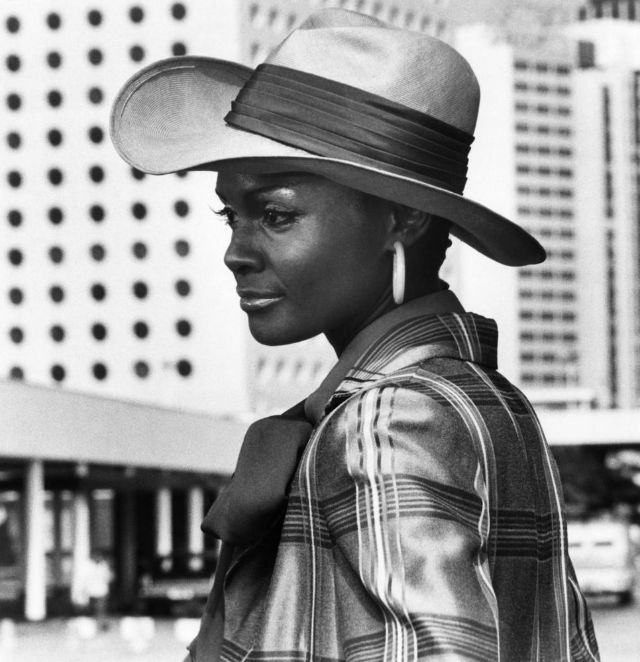
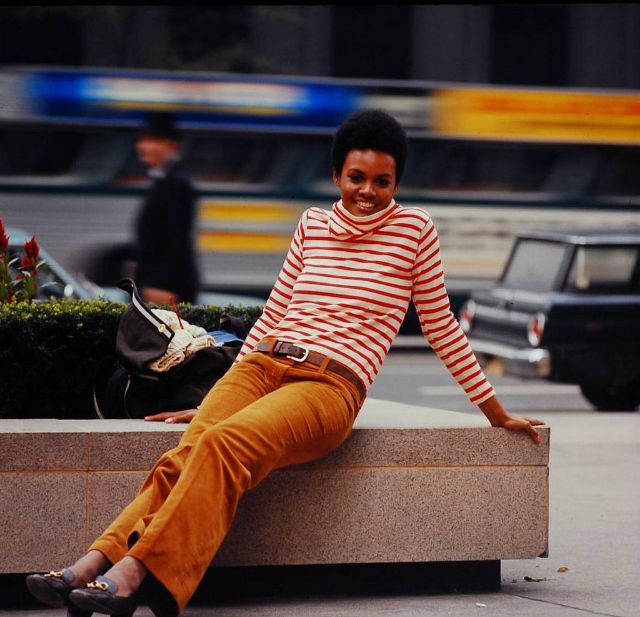
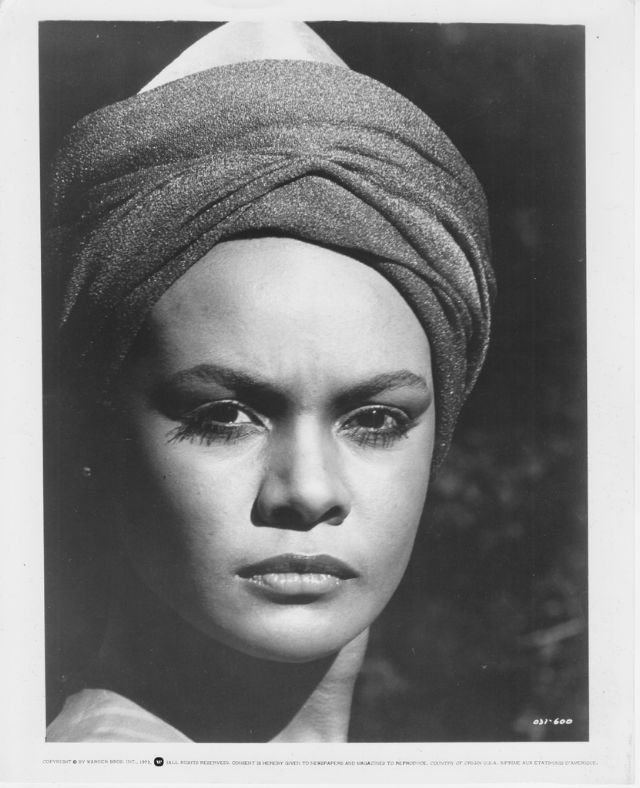
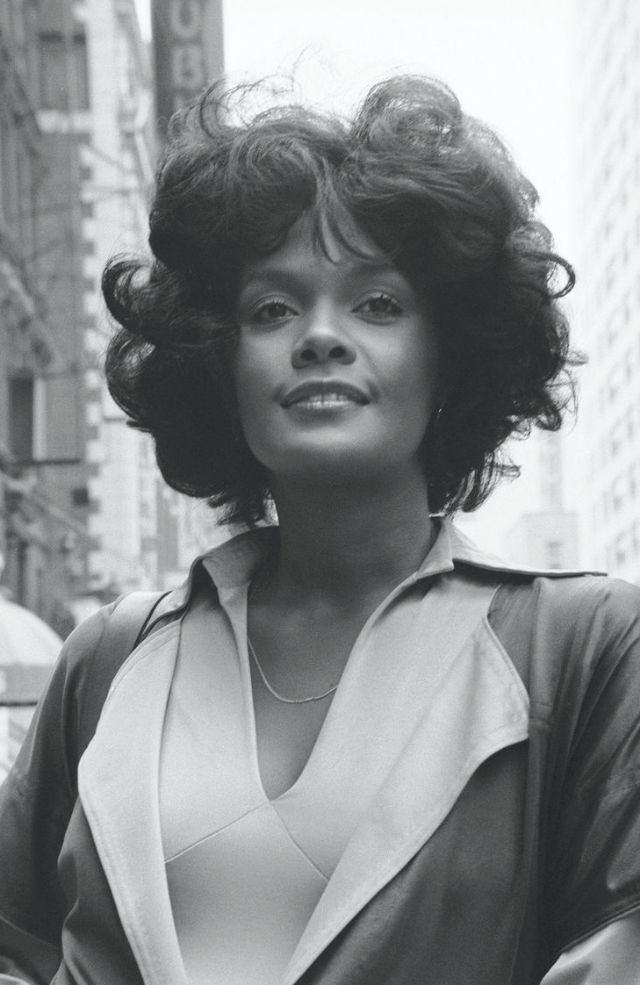
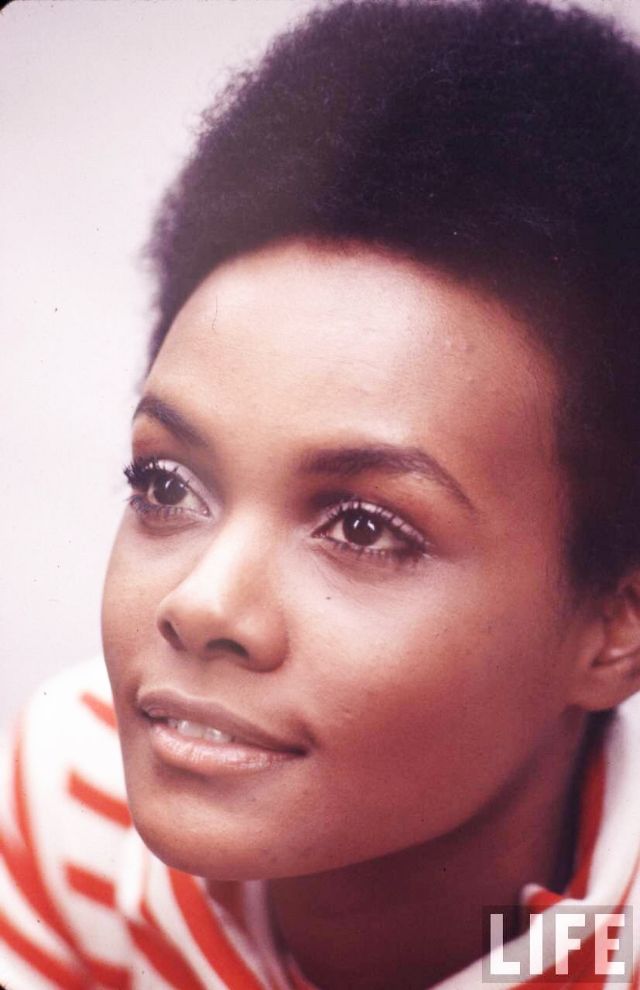
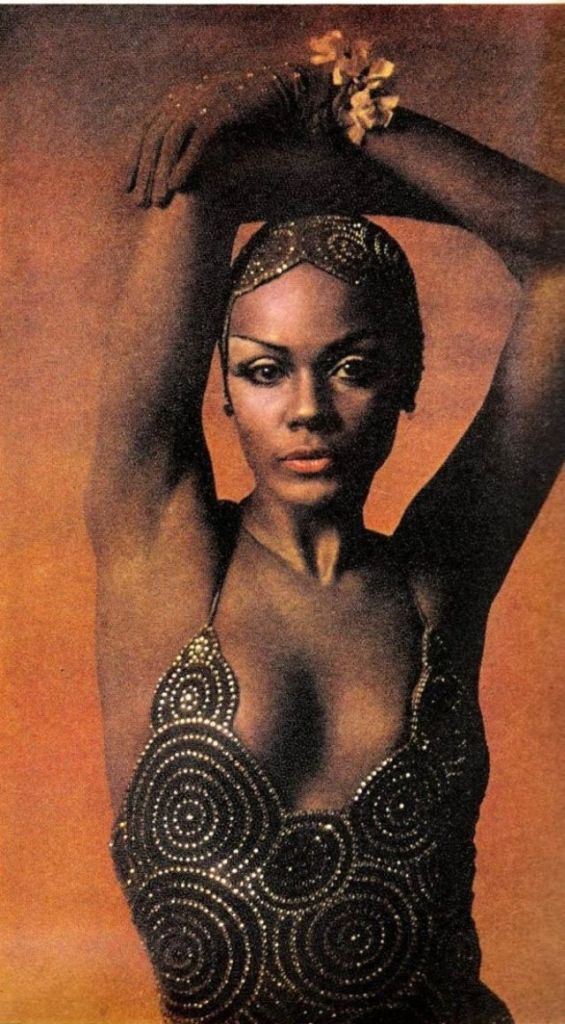
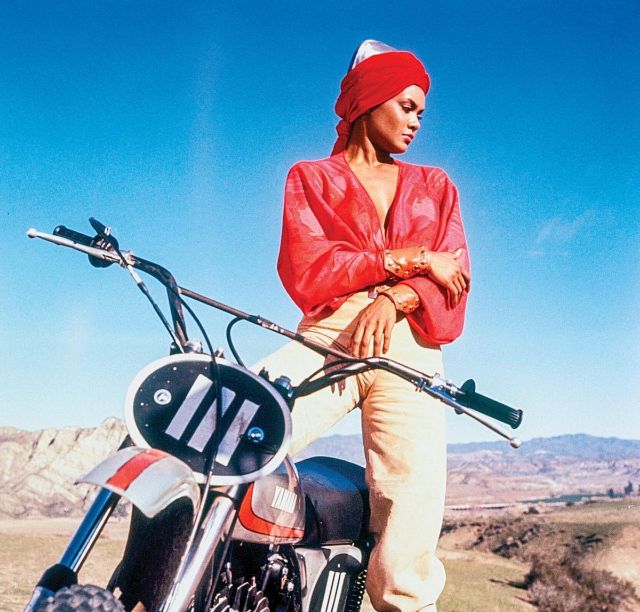
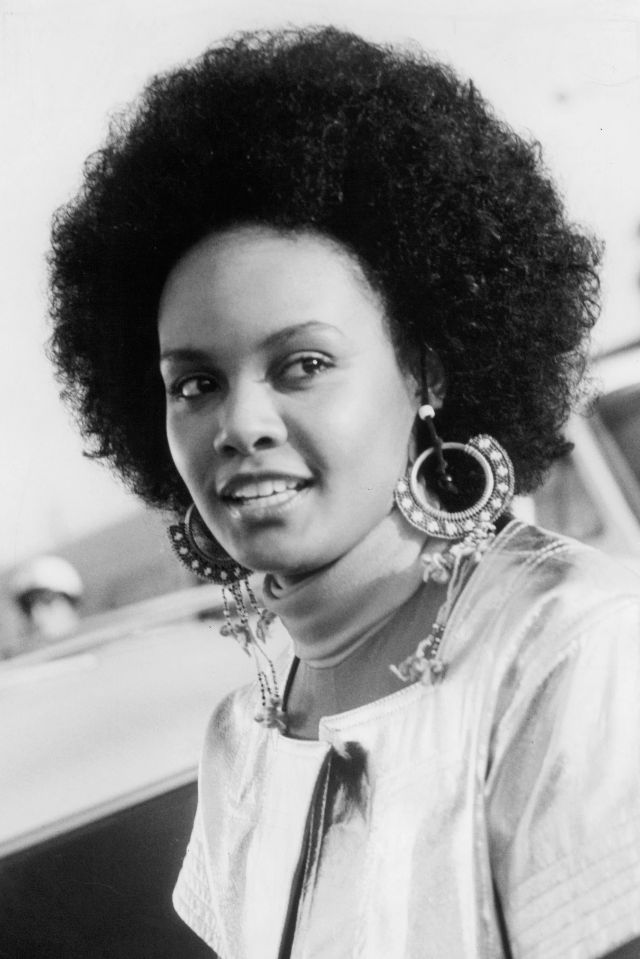
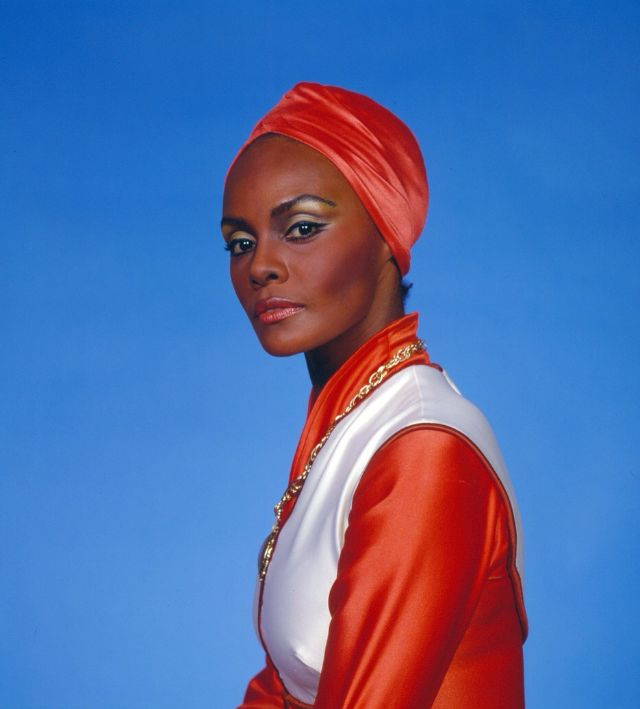
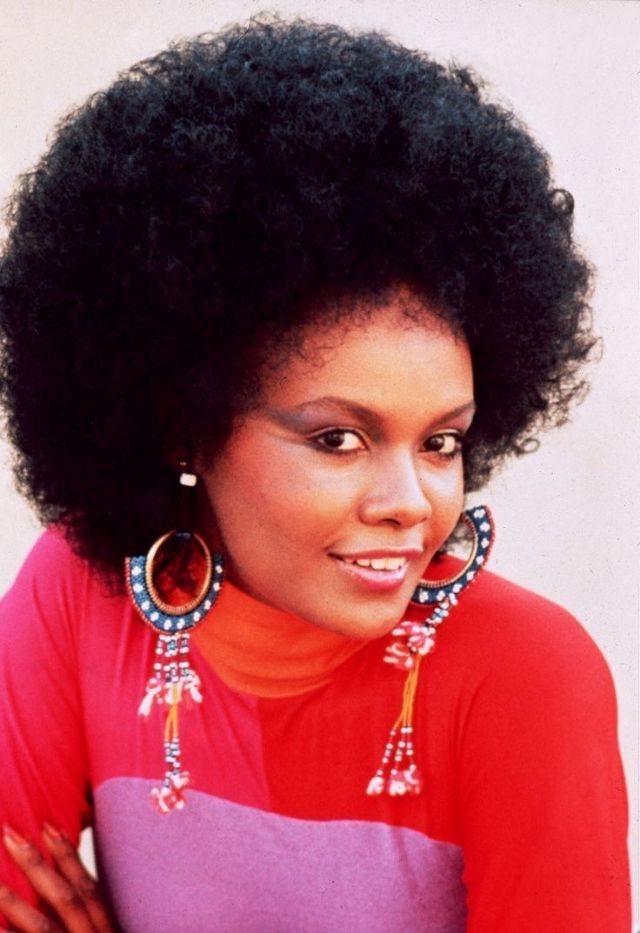
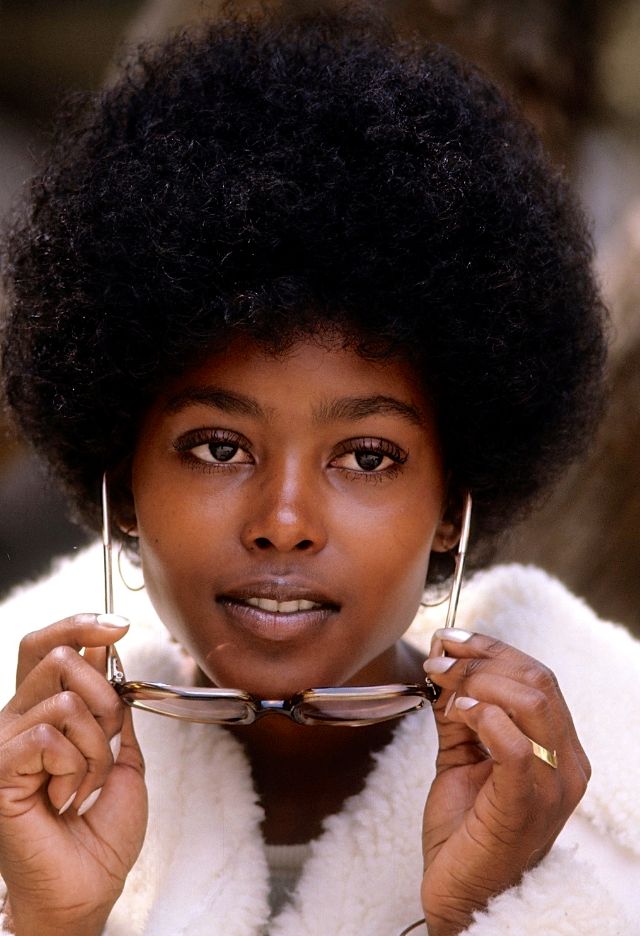
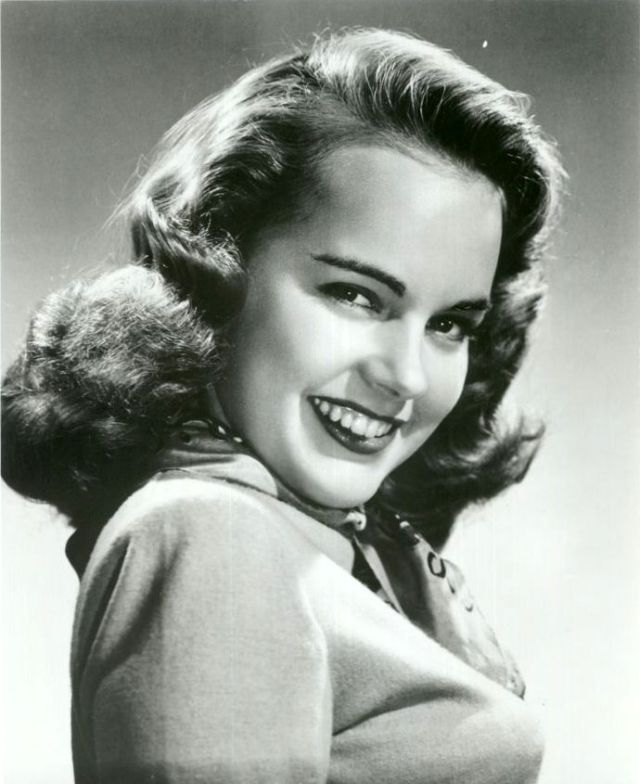
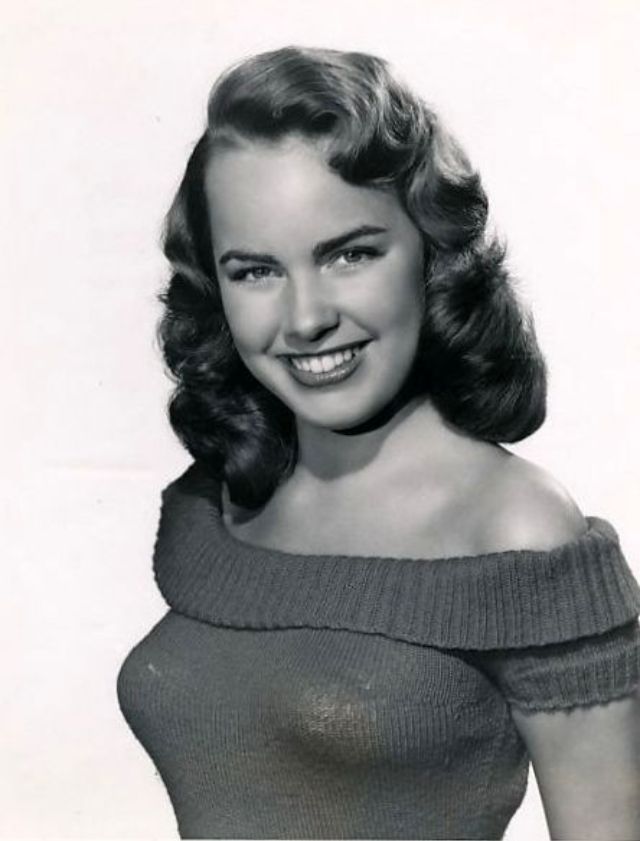
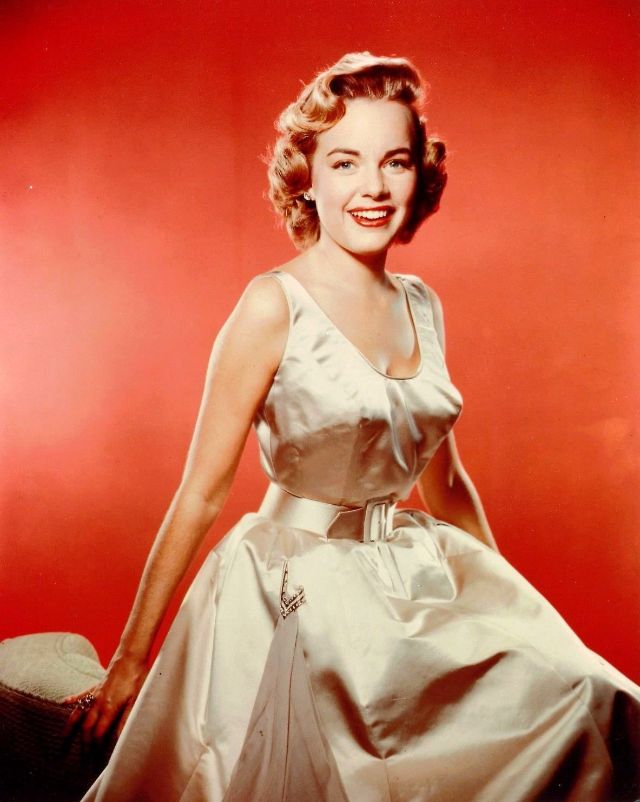
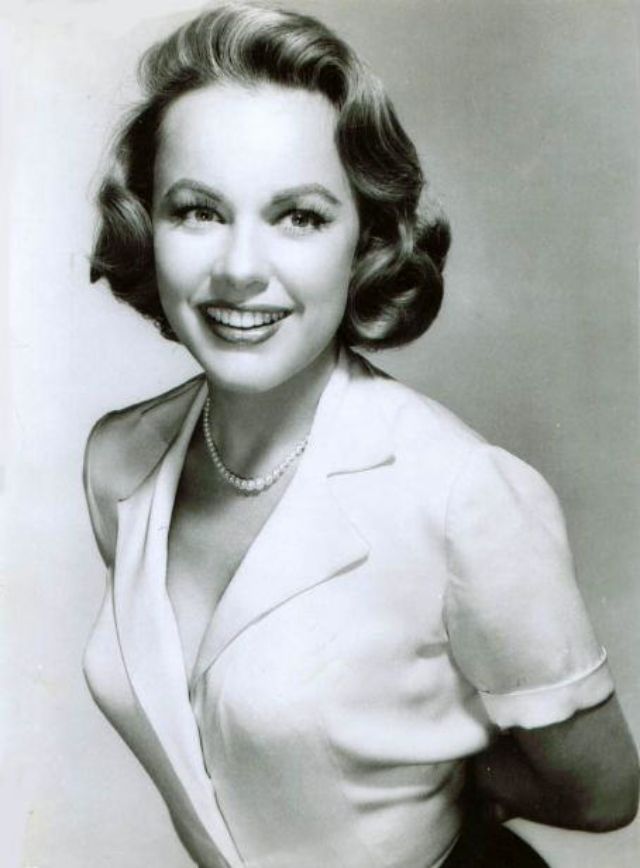
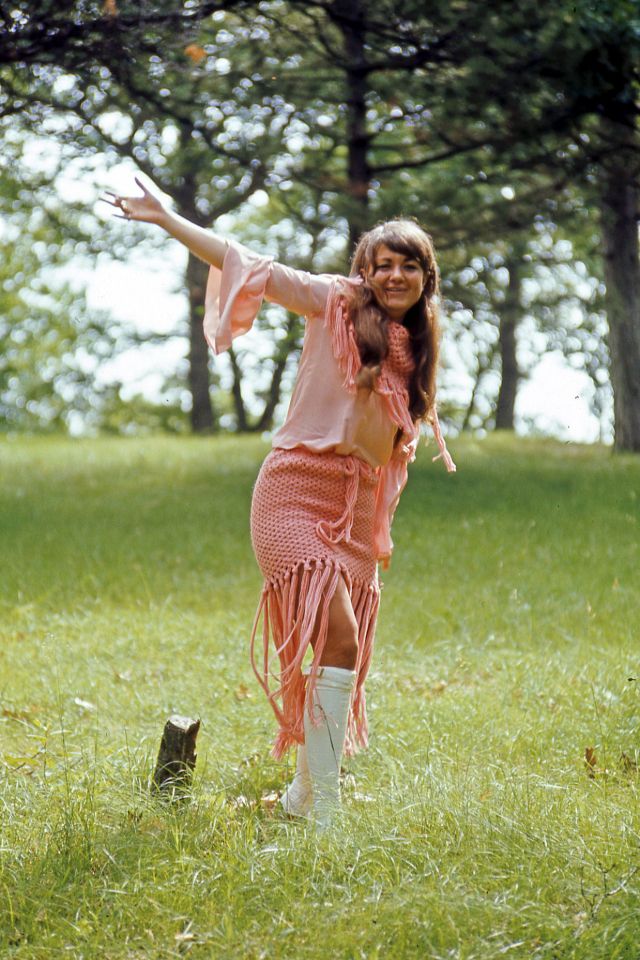
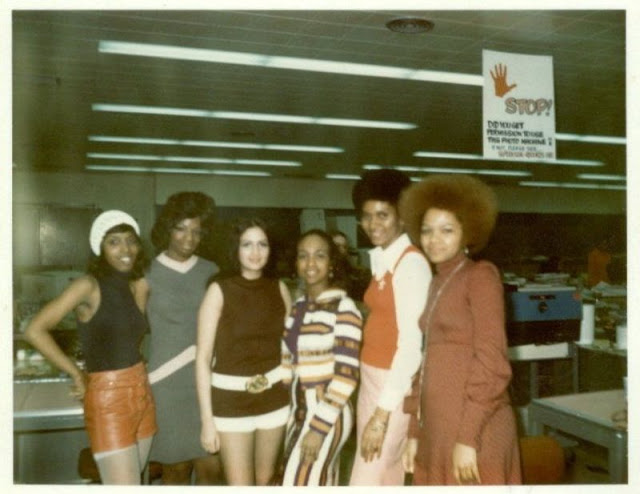
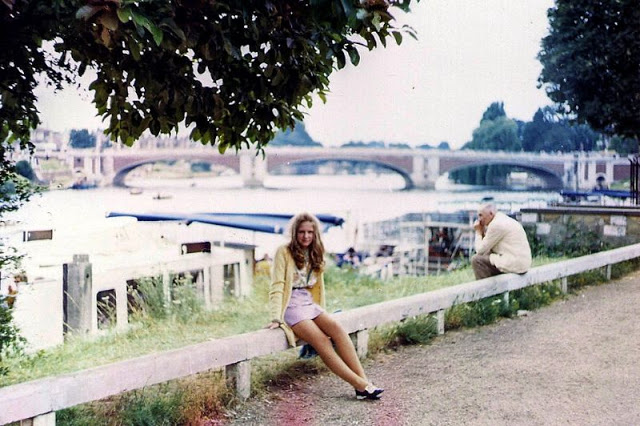
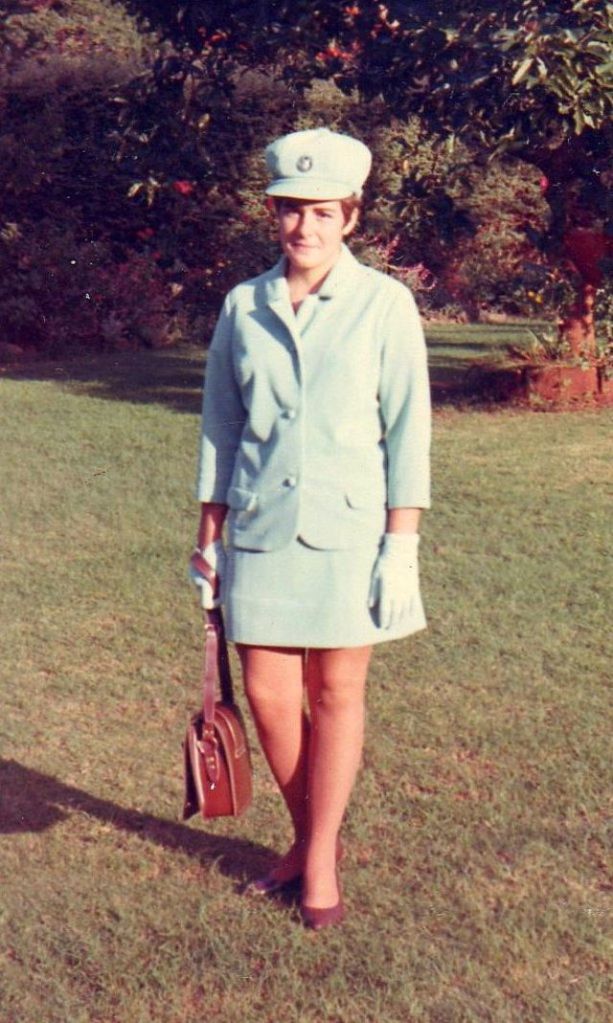
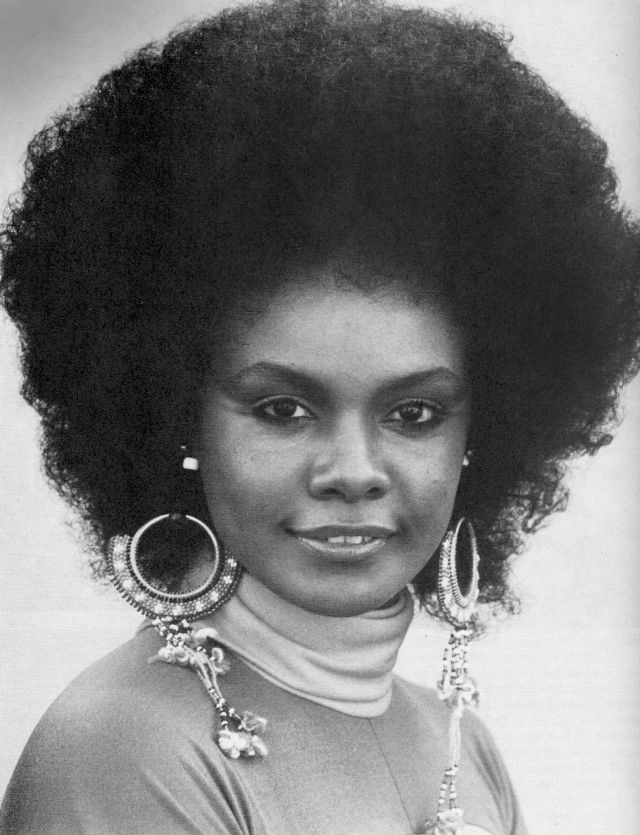
23 Amazing Vintage Photos of Actress & Model Tamara Dobson During the 1960s & 1970s

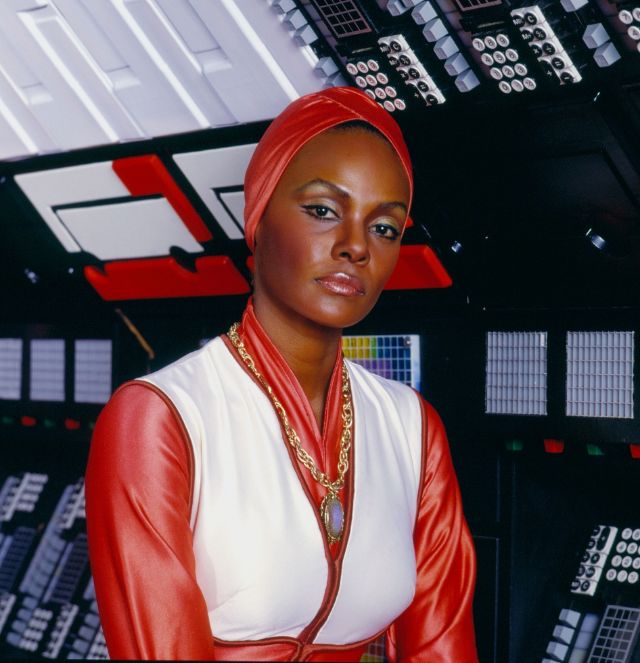
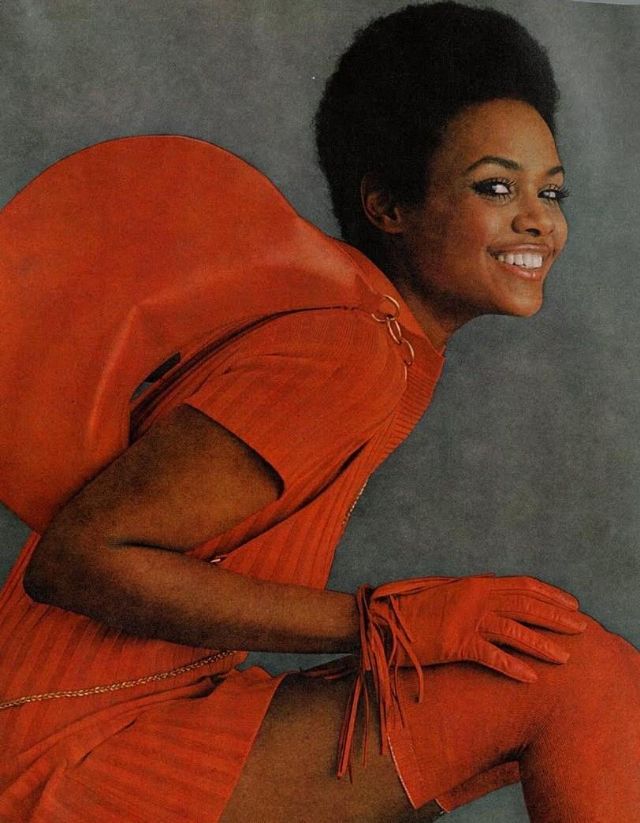
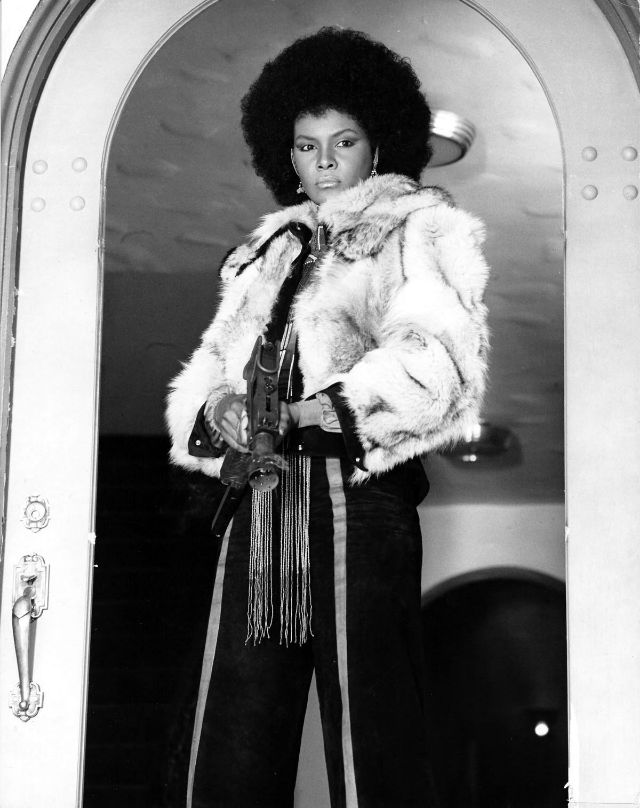
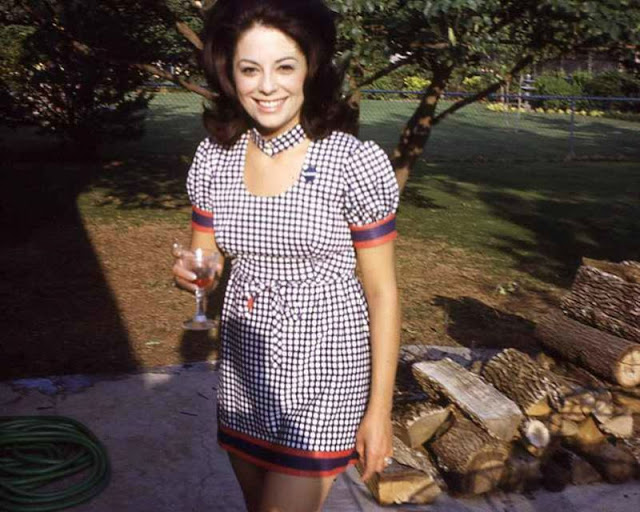
Tamara Janice Dobson (May 14, 1947 – October 2, 2006) was an American actress and fashion model. Beginning her career in modeling during the late 1960s, Dobson became best known for her title role as government agent Cleopatra “Cleo” Jones the 1973 Blaxploitation film Cleopatra Jones and its 1975 sequel Cleopatra Jones and the Casino of Gold.

Born in Baltimore, Maryland, Dobson was the second of four children born to Melvin and Evelyn Dobson (née Russell). Dobson started as a beautician. Dobson started her modeling career doing fashion shows at her school, Maryland Institute College of Art, where she also received her degree in fashion illustration. While studying, Dobson was discovered in 1969 and began to film commercials and modeled.

After school, Dobson moved from Maryland to New York to model and act full-time. Dobson modeled for Jet Magazine sometime during her early modeling career. Dobson eventually became a fashion model for Vogue Magazine, in addition to modeling for Essence magazine. She was also in TV commercials for Revlon, Fabergé, and Chanel. Dobson is also recognized by the Guinness Book of World Records as the “Tallest Leading Lady in Film”, standing at 6 foot 2 inches. Aside from Cleopatra Jones, Dobson had roles in other films such as; Come Back, Charleston Blue, Chained Heat and Norman… Is That You?

Dobson also starred in episode 13 of Buck Rogers in the 25th Century as Doctor Delora Bayliss and in Season 2 of Jason of Star Command.

Dobson was diagnosed with multiple sclerosis in 2000. She died on October 2, 2006 at Keswick Multi-Care Center in Baltimore, Maryland, of complications from pneumonia and multiple sclerosis, at age 59. Dobson never married or had children.

30 Breathtakingly Colorized Photos Show the Horror of the War in the Pacific During World War II

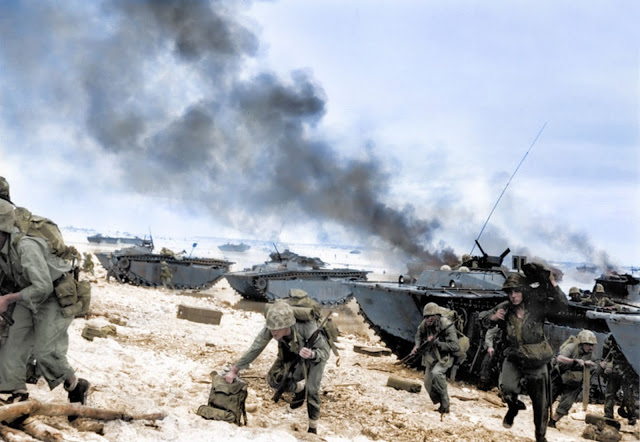
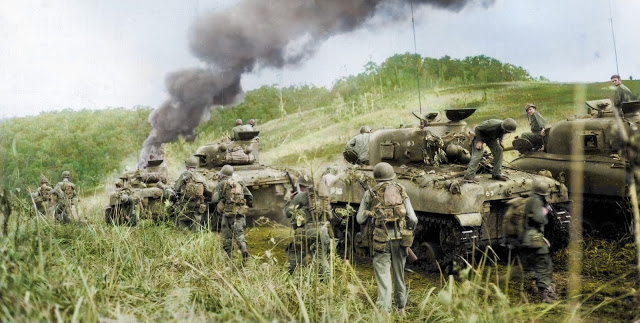
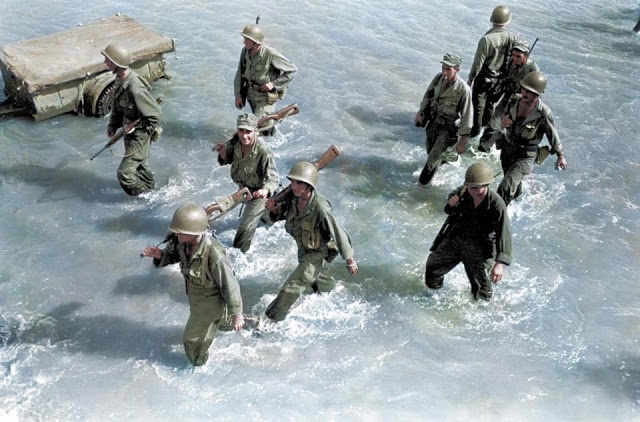
Stunning photos of the US Army during the War in the Pacific have been brought to life through vivid colorization. The breathtaking images capture the perils of war, from men being stretchered away to hospital to soldiers fighting at Okinawa.

From December 1941 to September 1945, war raged on across Asia and the Pacific. The conflict, which led to around 36 million casualties, was a turning point in World War II. The unexpected Japanese air strike on Pearl Harbor in December 1941 triggered the USA’s involvement in the Second World War.

On December 8, America declared war on Japan, along with the other Allied nations.

Royston Leonard, from Cardiff, Wales, is the man who brought these photos to life. “The Japanese code was to not surrender and to fight to the death which was their way to die in battle with honour, almost no prisoners were taken unless they were badly injured and could no longer fight,” he said. “I’ve seen a lot of photos of the European war in color but almost nothing from the Pacific War.”

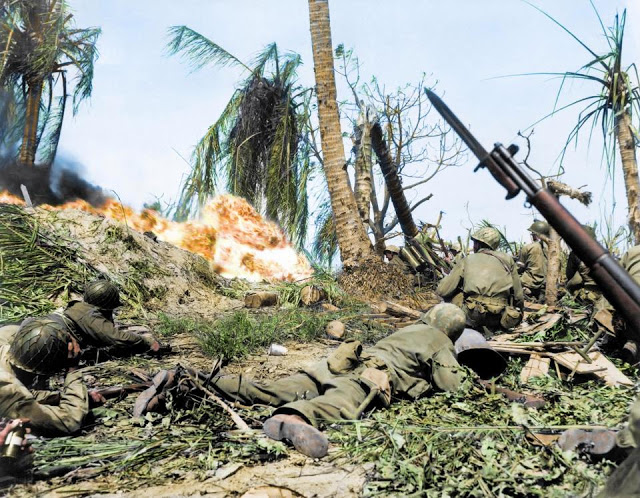
US soldiers of the 7th Infantry Division attacking a Japanese blockhouse on Kwajalein in the Marshall Islands in 1944. The troops began capturing the islands by landing their forces on the beaches.
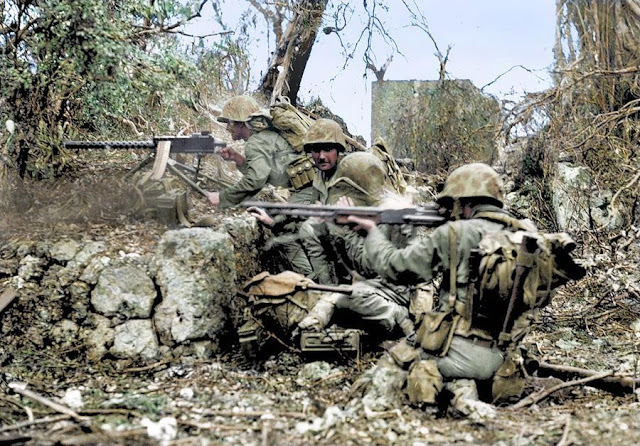
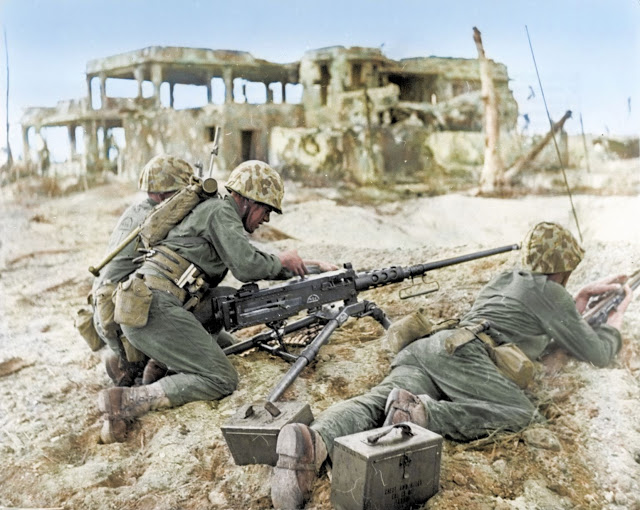
U.S. Marines firing an M1919 Browning machine gun during the fighting on the island of Peleliu. These .30 caliber weapons were typically used during World War II.
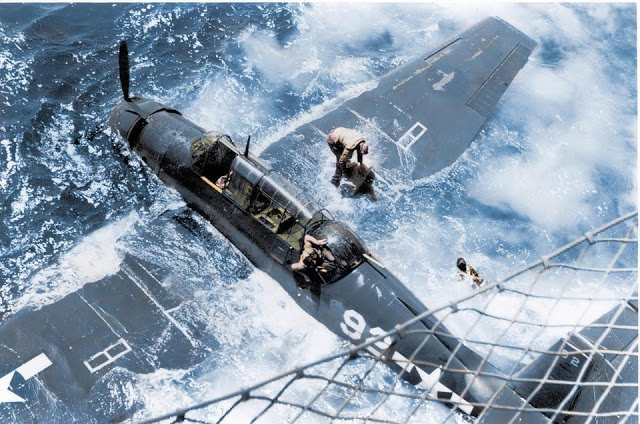
An Avenger aircraft from the squadron VT-26, after engine failure and a catapult mishap on board the aircraft carrier USS Bataan CVE-29. March 13, 1944.
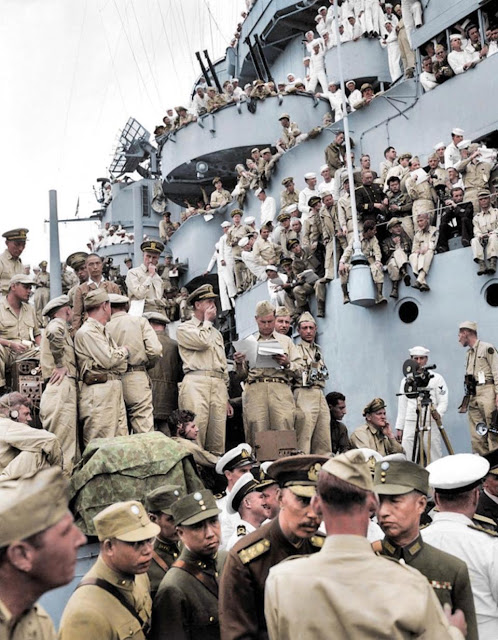
Spectators from all over the world pick vantage positions on the deck of the USS Missouri, in Tokyo Bay in September 1945, to watch the Japanese surrender ceremony marking the end of World War II.
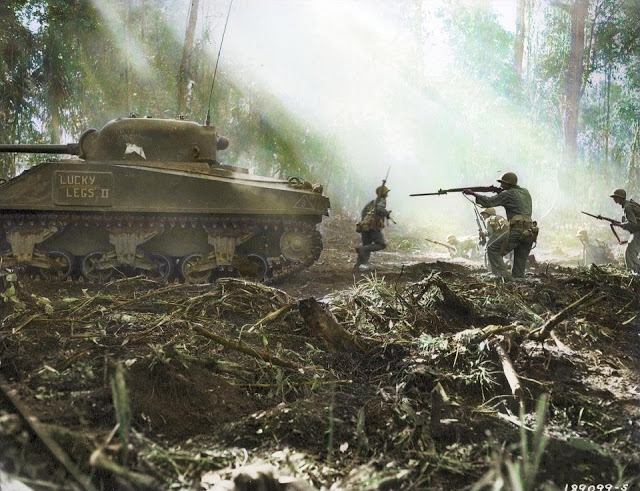
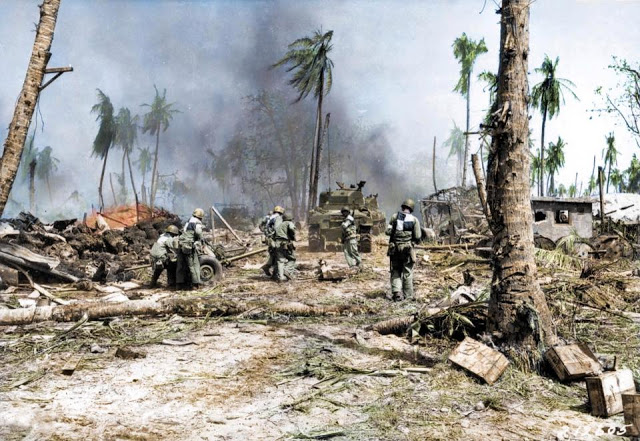
U.S. Army soldiers on Bougainville, an island in Papua New Guinea, taking cover behind an M4 Sherman tank in February 1943.
Men of the US 1st Marine Division fighting just beyond White Beach, Peleliu in September 1944.
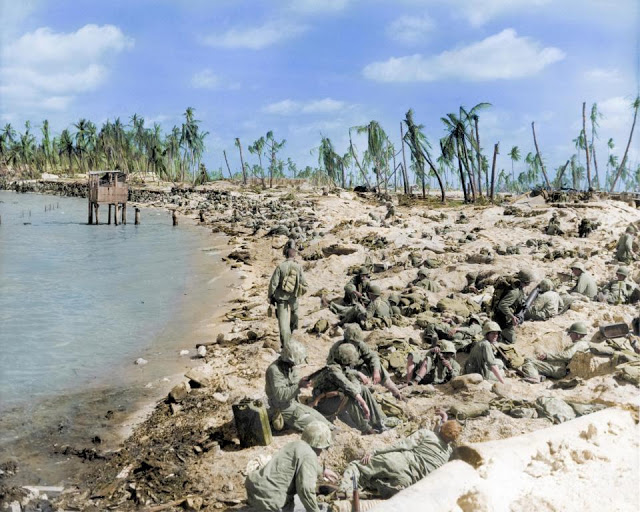
US marines huddled on the beaches during the Battle of Tarawa in World War Two, Kiribati, 1943. There were around 4,600 fatalities recorded following the bloody battle.
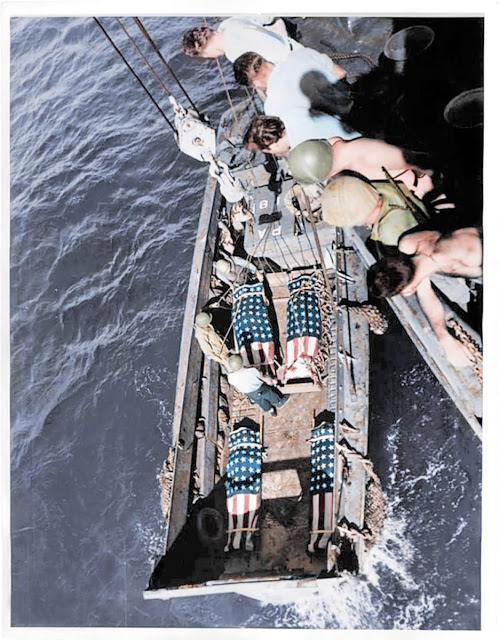
Deceased US soldiers are wrapped in their national flag and carefully lowered down onto a ship by comrades ready for burial.
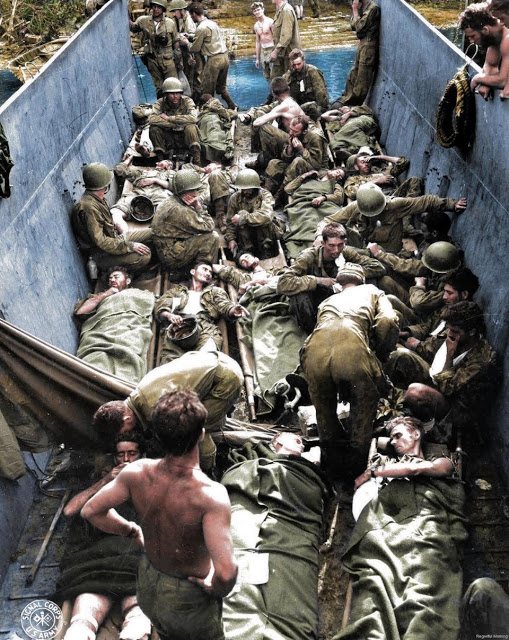
Wounded troops lying on stretchers aboard a lighter in Munda Point, New Georgia. There were more than 36 million casualties during the War in the Pacific.
Soldiers make their way across the barren landscape in Kwajalein, Marshall Islands, 1944.
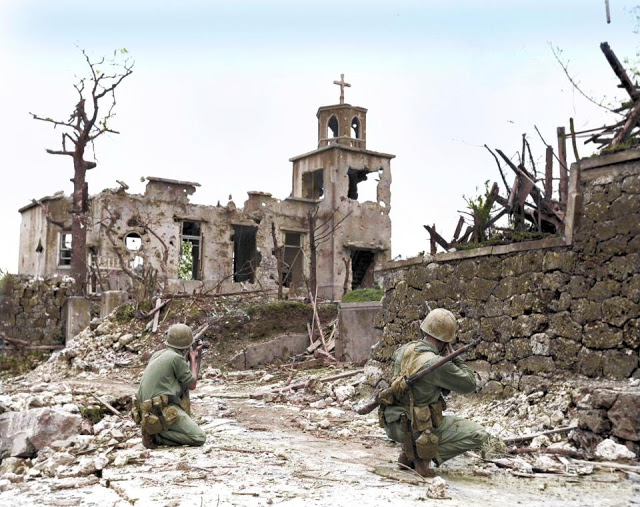
While a patrol moves in from the rear, two United States Marines cover a Japanese sniper hiding in a church, below Shuri Castle on Okinawa, 1945.
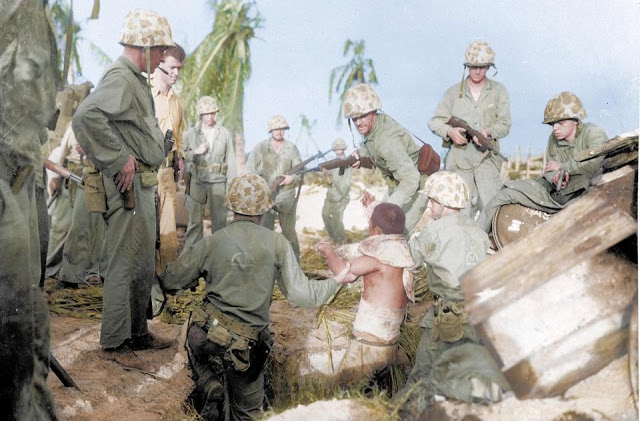
Captured wounded Japanese soldier surrounded by Marines on Kwajalein Atoll, Marshall Islands. During World War II, it’s estimated that between 19,500 and 50,000 members of the Imperial Japanese military surrendered to the Allies.
US 1st Cavalry Division crossing the Pasig River, Manilla in February 1945. Around 41,500 US troops were declared missing or dead during the Pacific War.
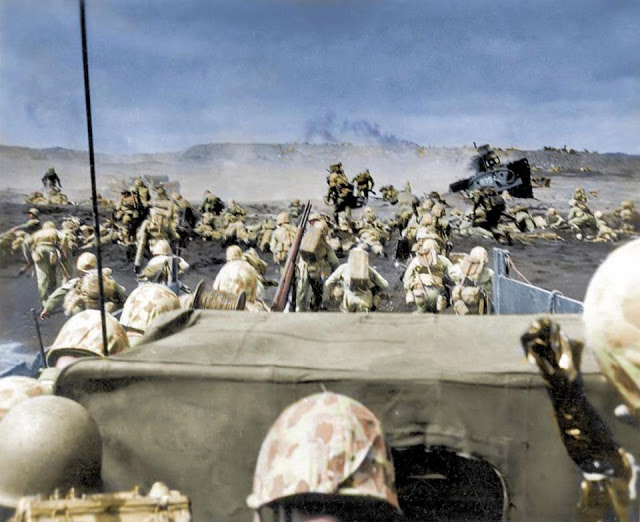
US troops make their first strike on the Japanese Home Islands at Iwo Jima in 1945. The battle lasted for five weeks and contained some of the most bloody and brutal fighting of the whole war.
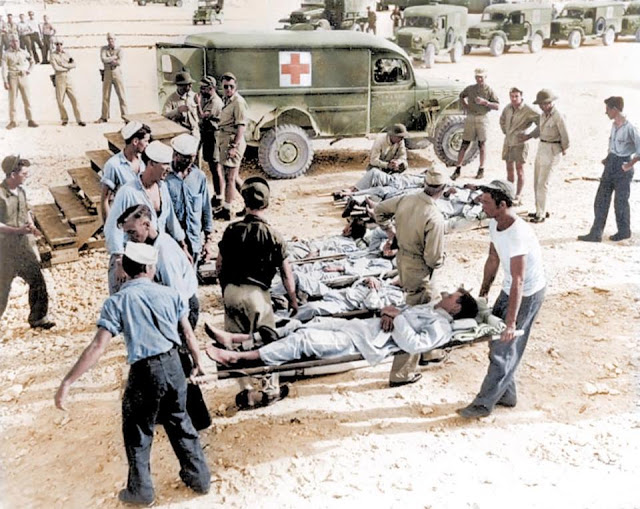
Survivors of USS Indianapolis en route to hospital after being rescued in August 1945. After the sailor’s ship was sank by Japanese tornadoes, sharks swarmed the survivors in the wreckage.
A U.S. Marine shares his water bottle with a stray kitten found under a burned-out Japanese tank on Tarawa in 1943.
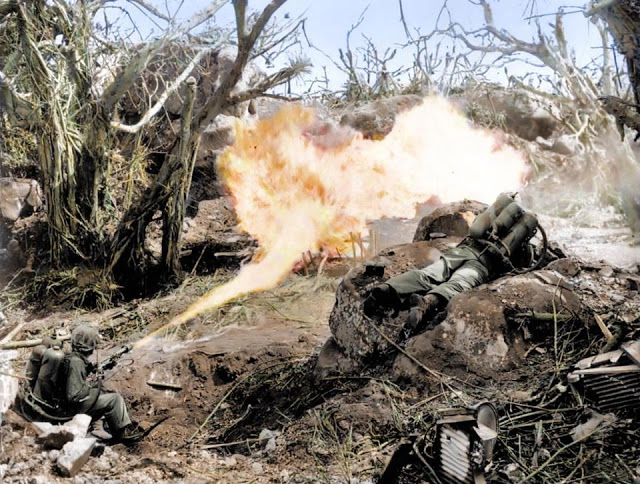
Marines torch a Japanese defensive in Iwo Jima’s Mount Suribachi by using flamethrowers in 1945. These military tools were an effective weapon for burning out entrenched fighters who would have otherwise continued to fight, costing more lives. Pictured are Pvt. Richard Klatt and PFC Wilfred Voegeli.
This picture was taken during The Battle of Saipan, where the Allied invasion fleet left Pearl Harbor in 1944. Tragically, 30,000 troops and Japanese civilians were declared dead following the conflict.
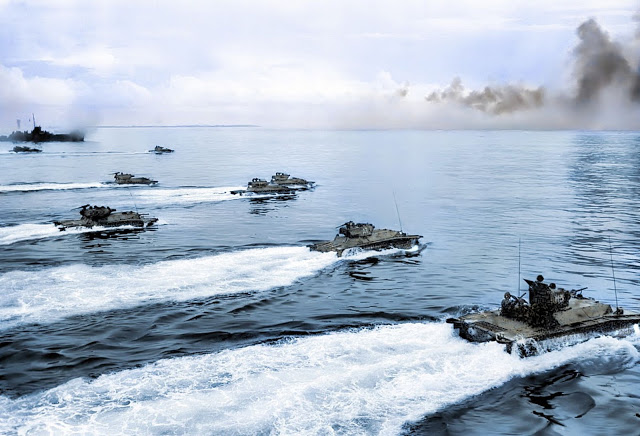
Alligator landing vehicles heading toward defences on Peleliu in September 1944.
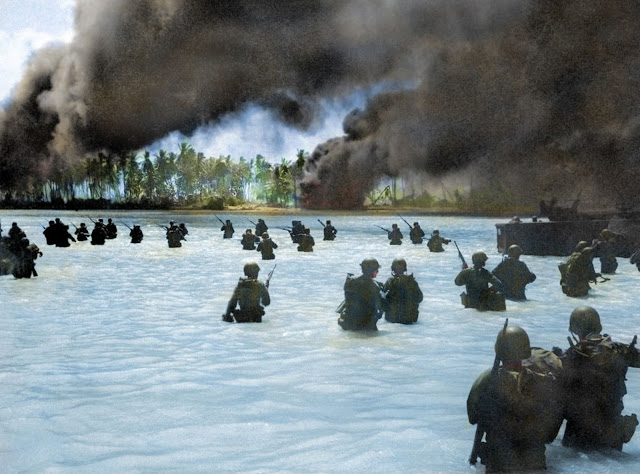
Men wade through the water near Butaritari Beach, Makin Atoll in November 1943.
US Marines under heavy fire from enemy Japanese positions during the beginning of the Battle of Peleliu in 1944.
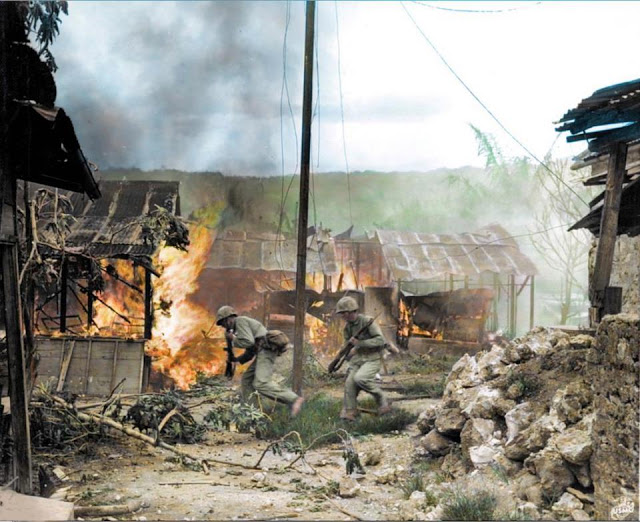
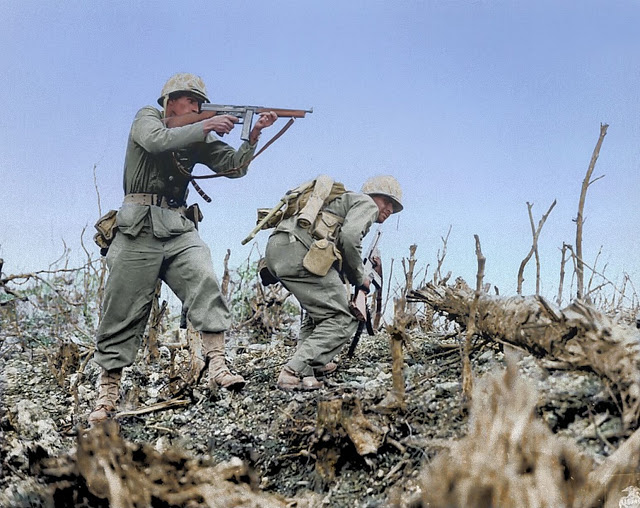
Two Marines from the 2nd Battalion, 1st Marine Regiment during fighting at Wana Ridge during the Battle of Okinawa, May 1945.
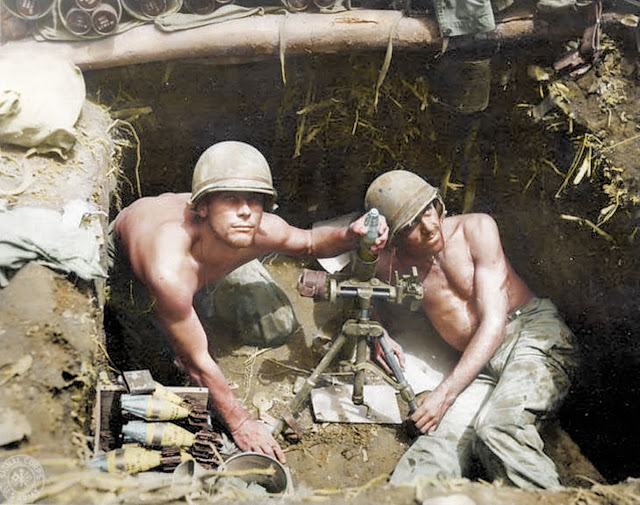
Marines firing mortar shells in the Solomon Islands.
US Marines on the beach of Namur Islet, Kwajalein Atoll.
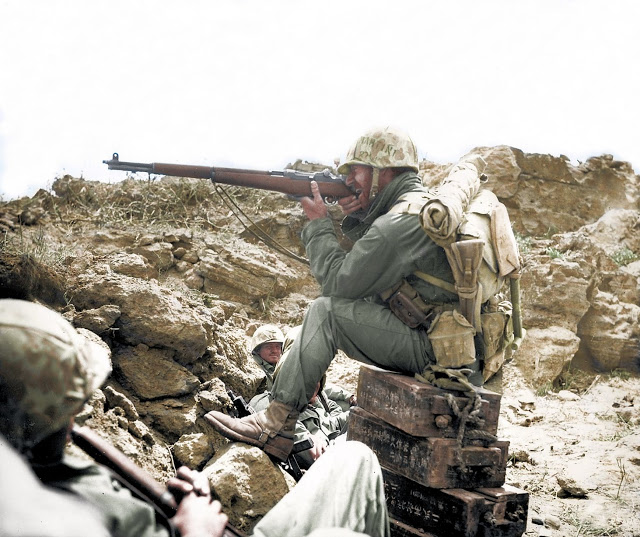
A US marine takes aim while sitting on Japanese ammunition boxes.
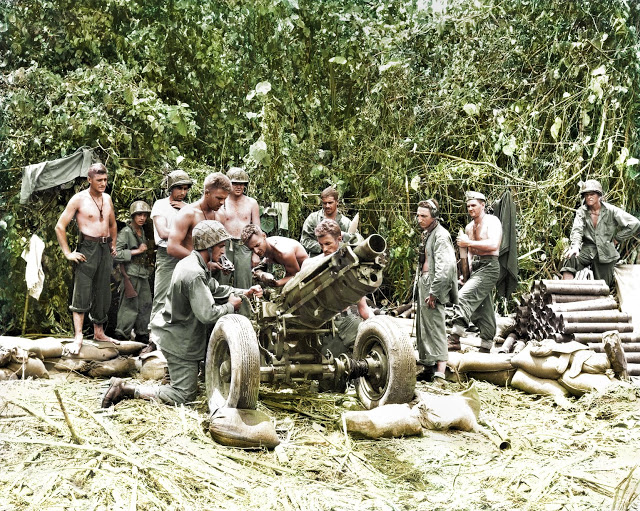
Marines from the H Battery, 3rd Battalion set up artillery in the Solomon Islands just off Blue Beach 2.
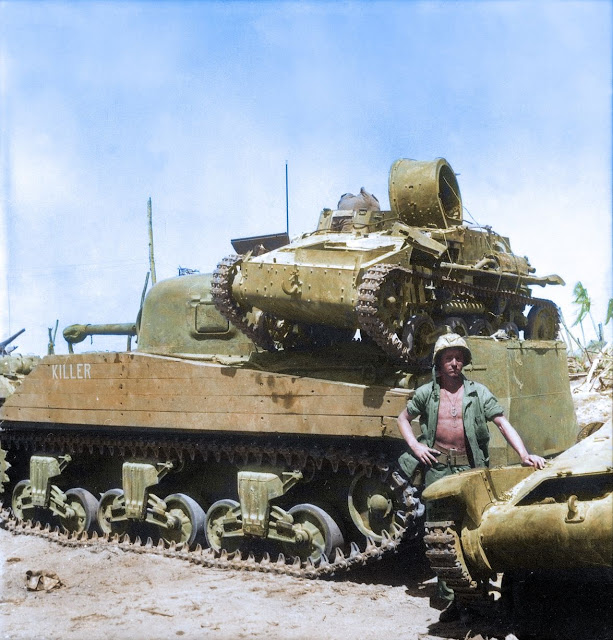
Private First Class N. E. Carling stands beside the American M4 Sherman medium tank ‘Killer’ on Kwajalein Atoll.
Men of the US First Marines Division at Cape Gloucester, New Britain, Bismarck Archipelago, late December 1943.
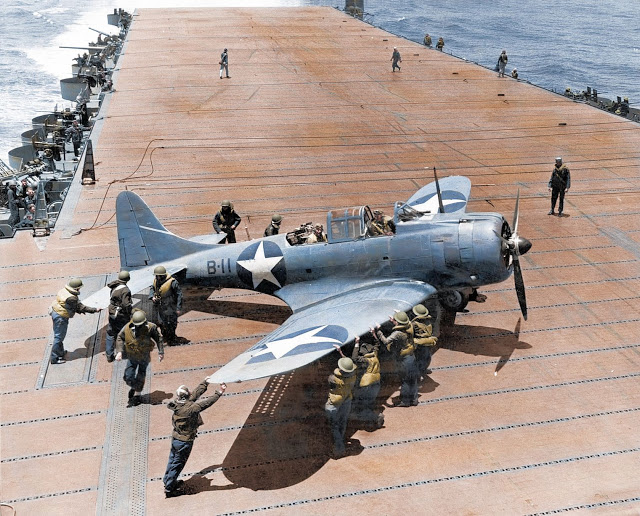
A US Navy Douglas SBD-3 Dauntless of bombing squadron VB-8 on the deck of the aircraft carrier USS Hornet (CV-8) during the Battle of Midway in 1942.
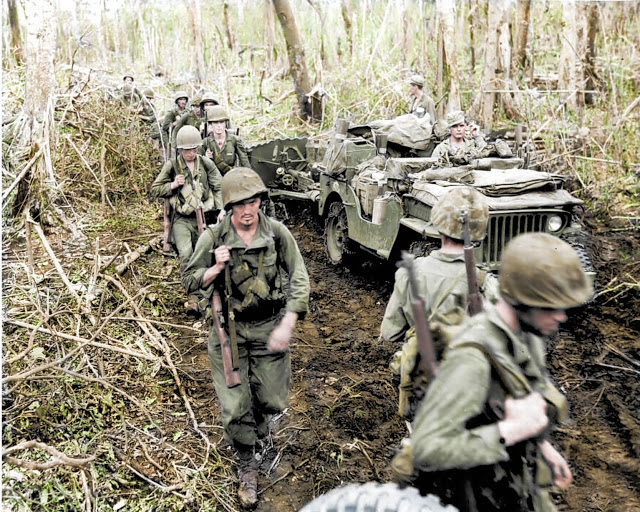
Troops and their tanks in New Guinea in April 1944.

(Photos colorized by Royston Leonard)

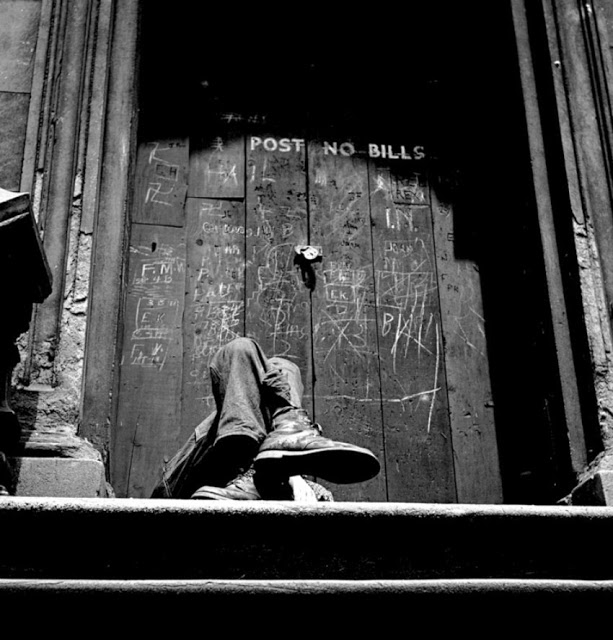
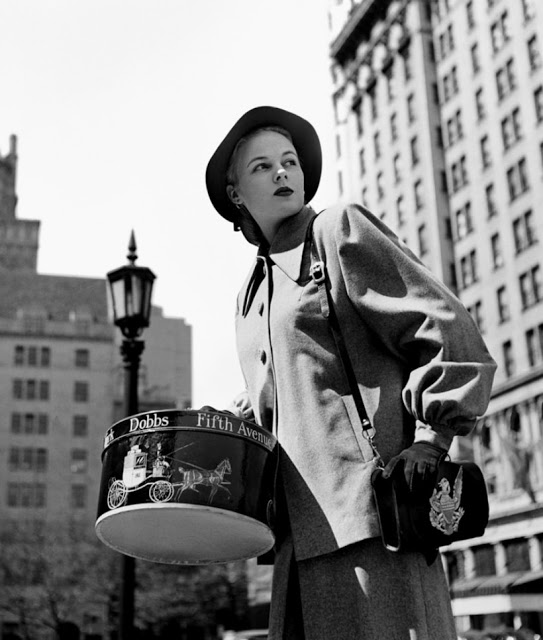
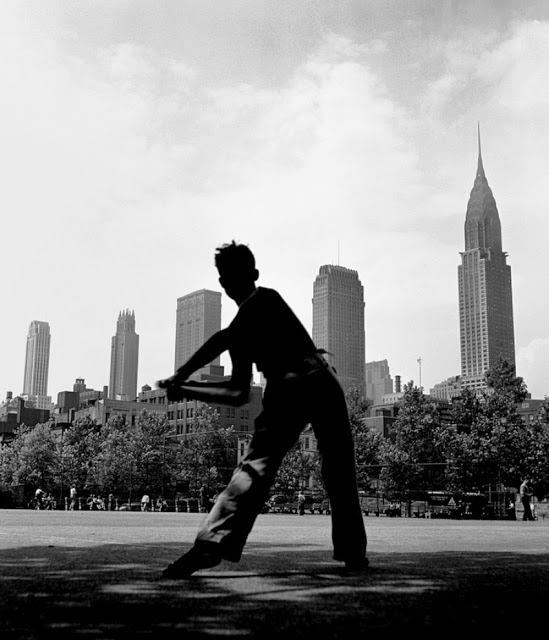
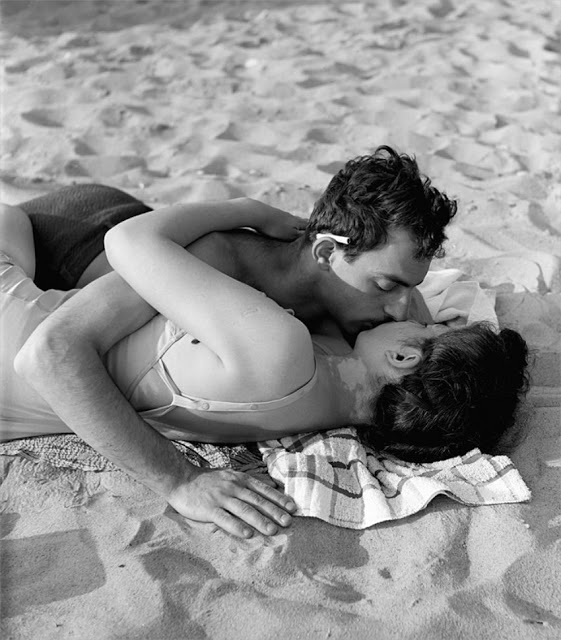
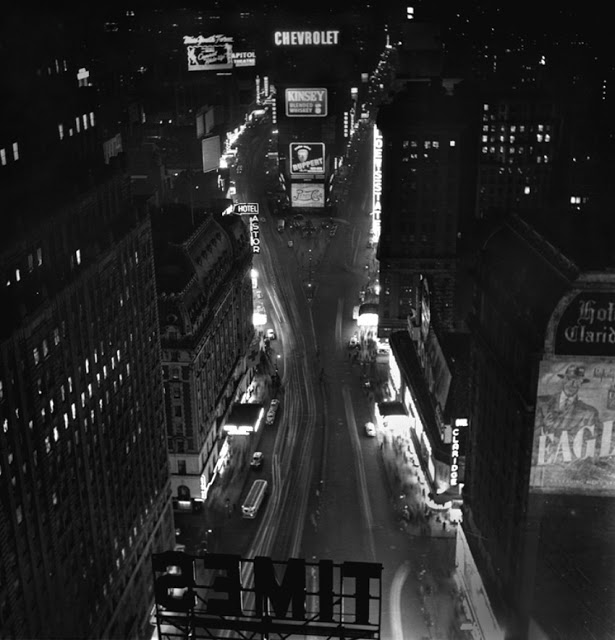
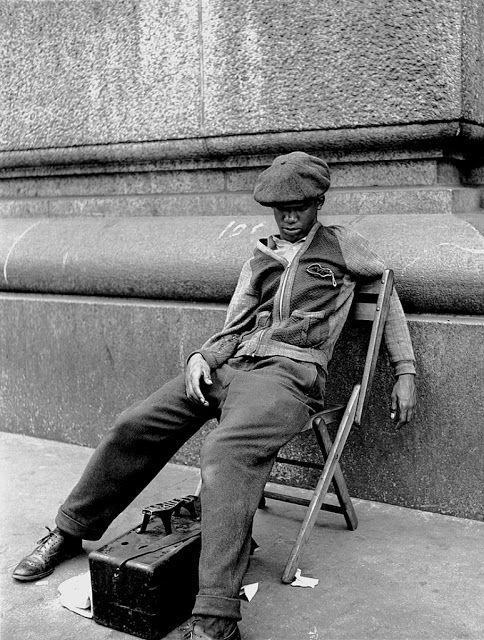
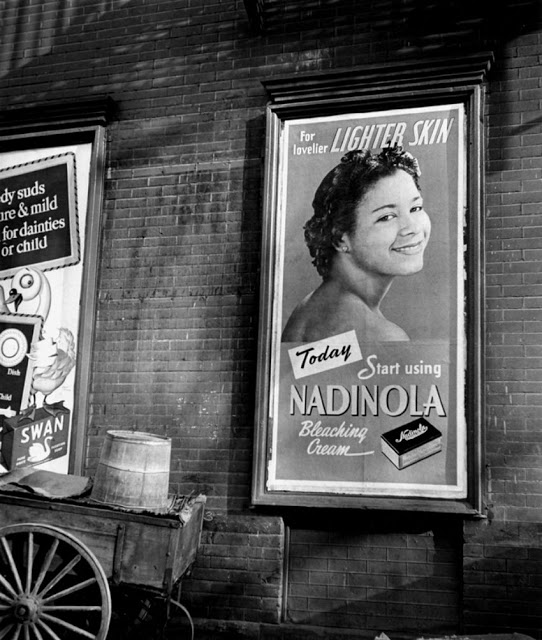
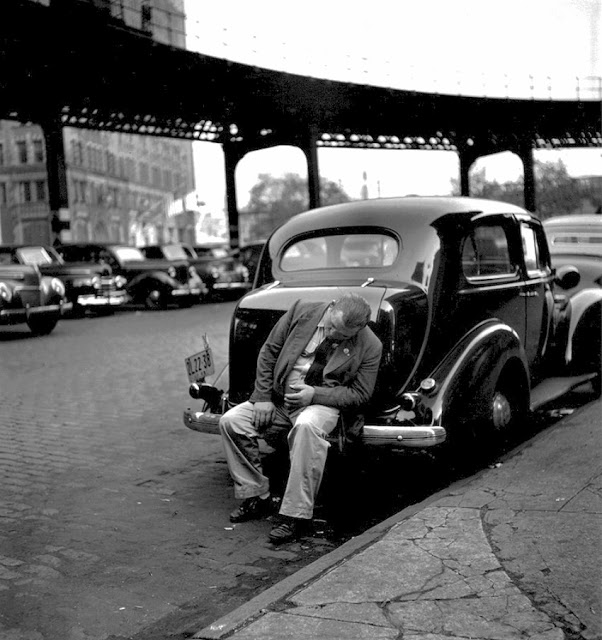
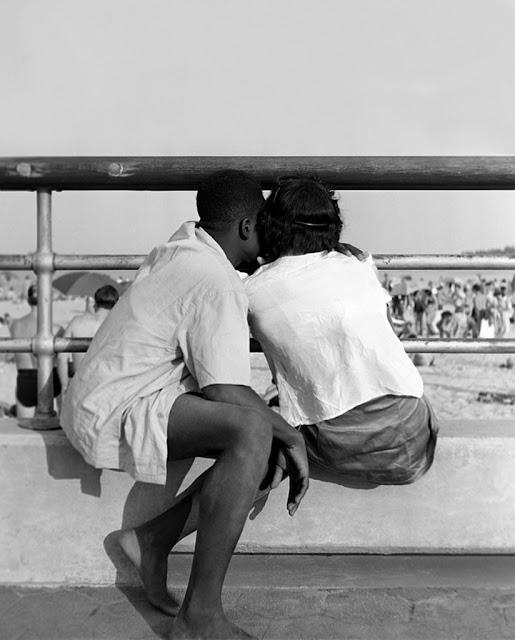
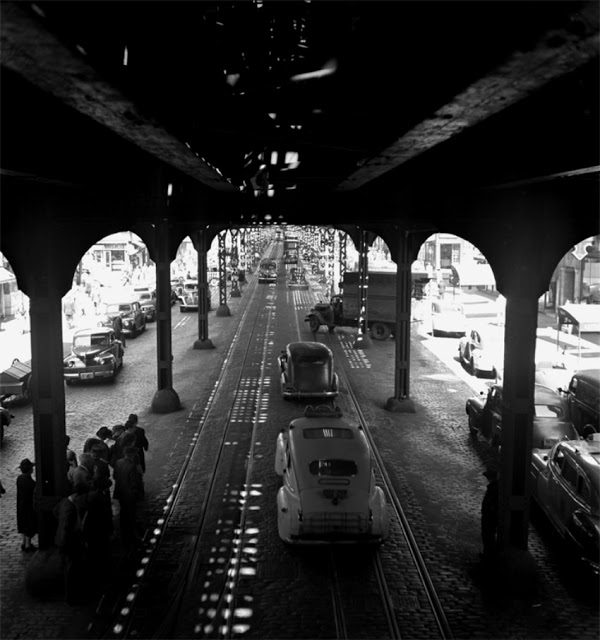
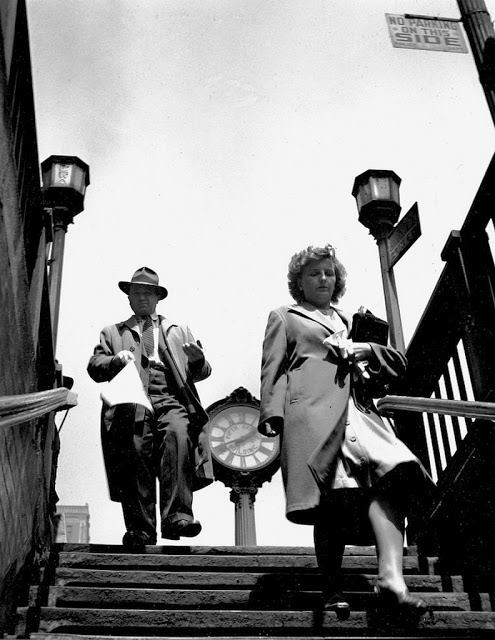
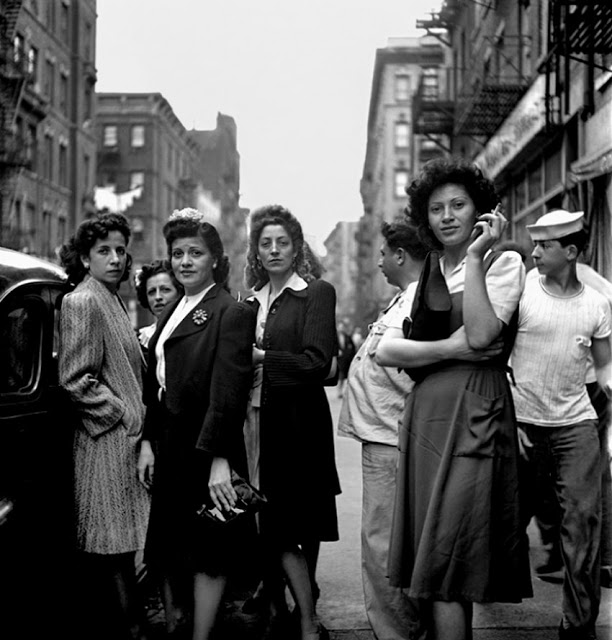
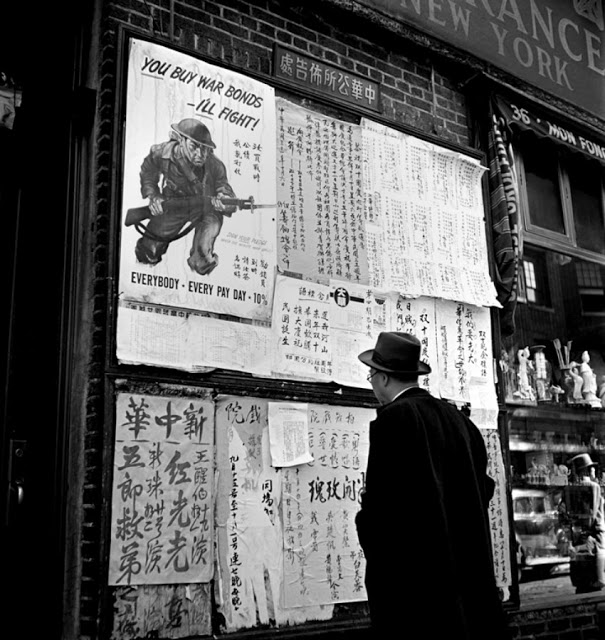
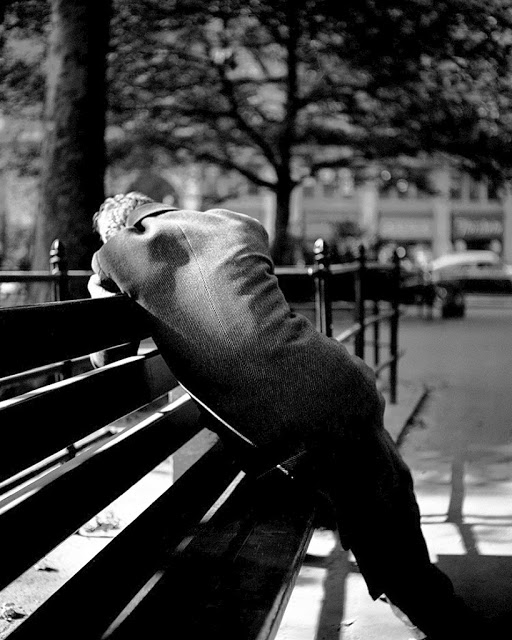
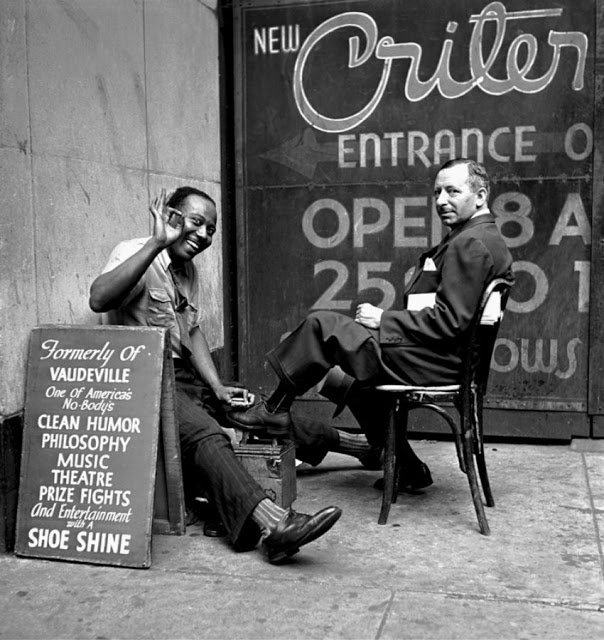
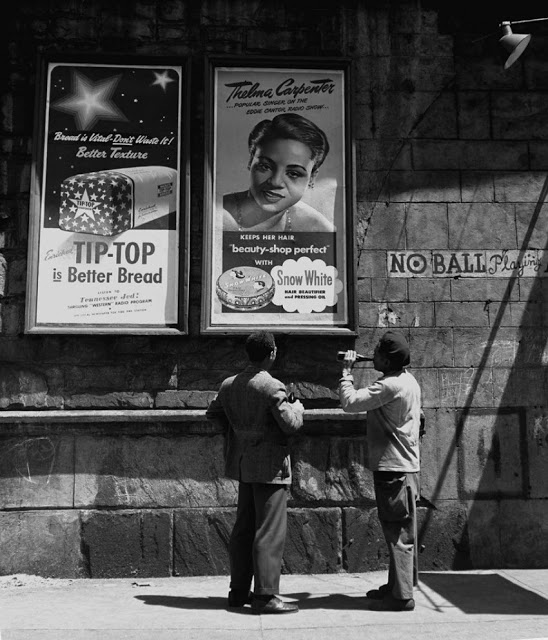
31 Amazing Photos That Show Street Life in New York City in the 1940s

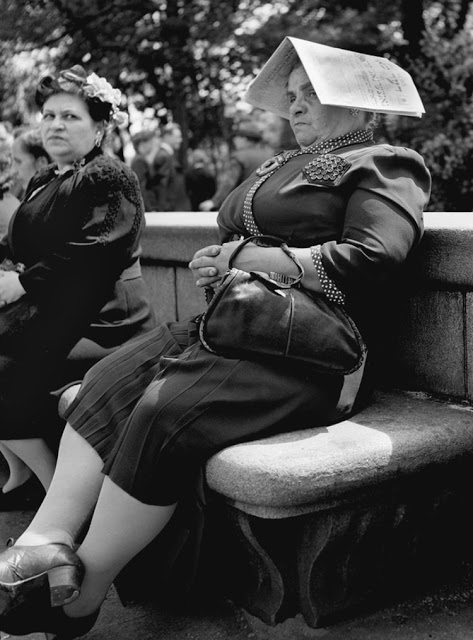
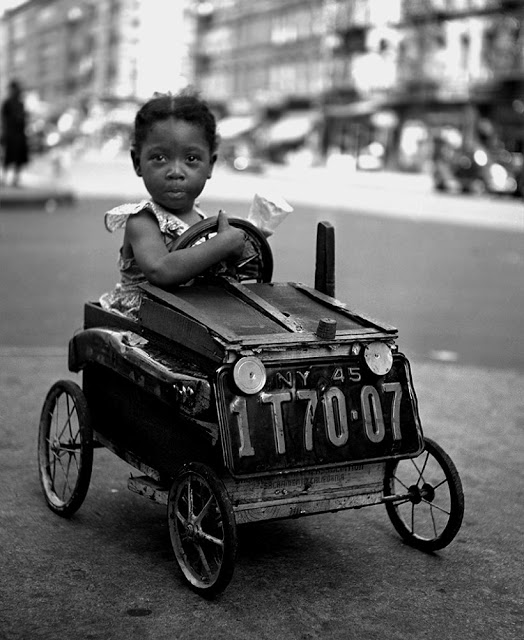
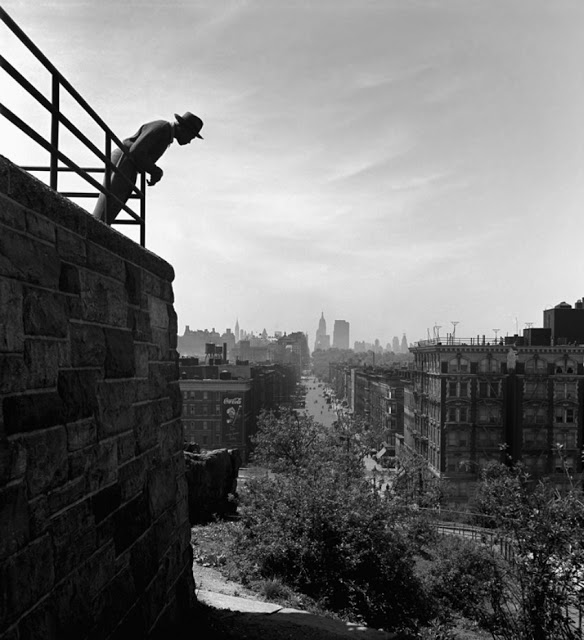
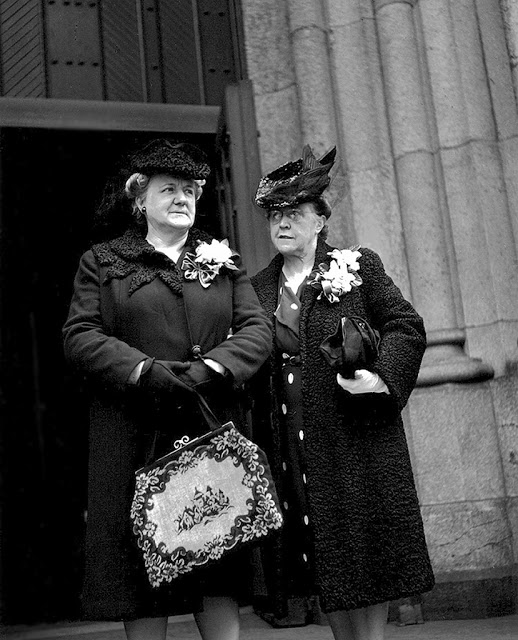
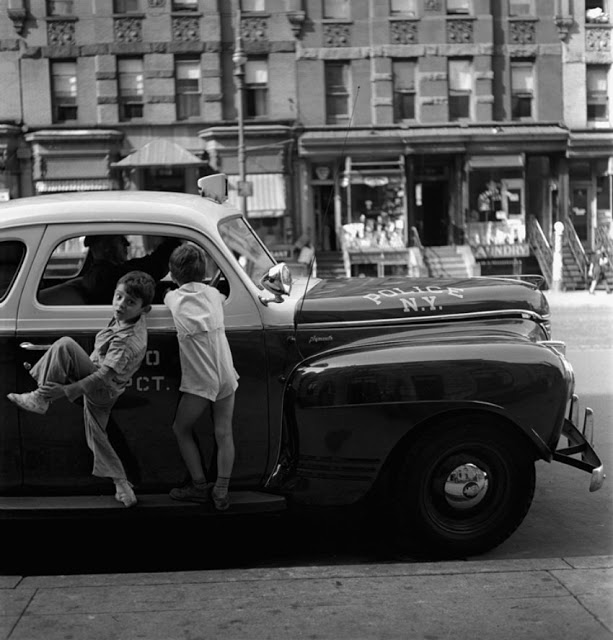
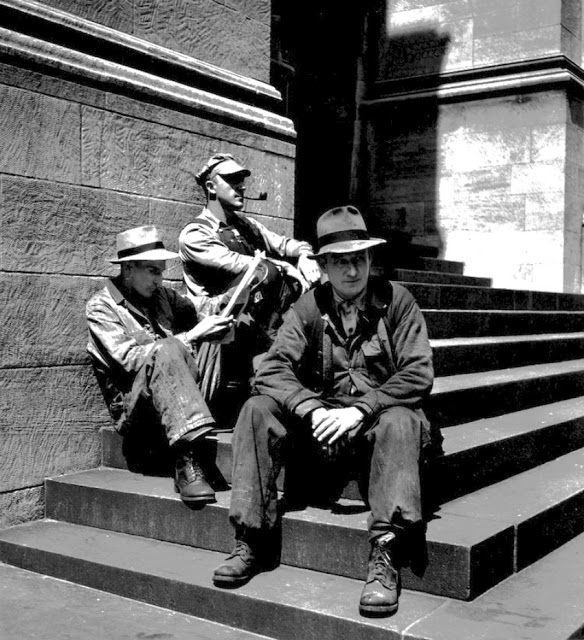
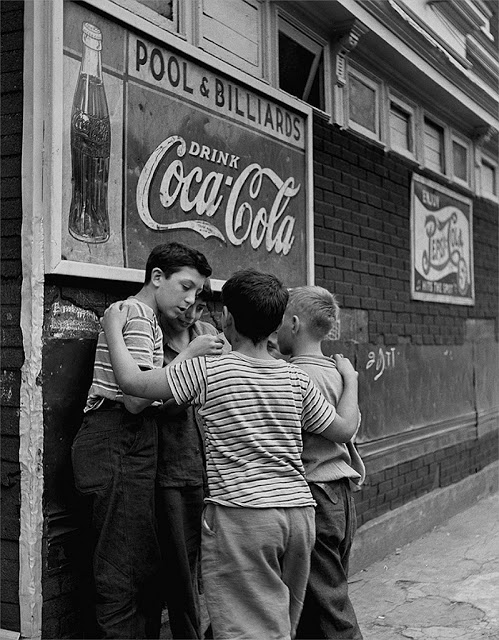
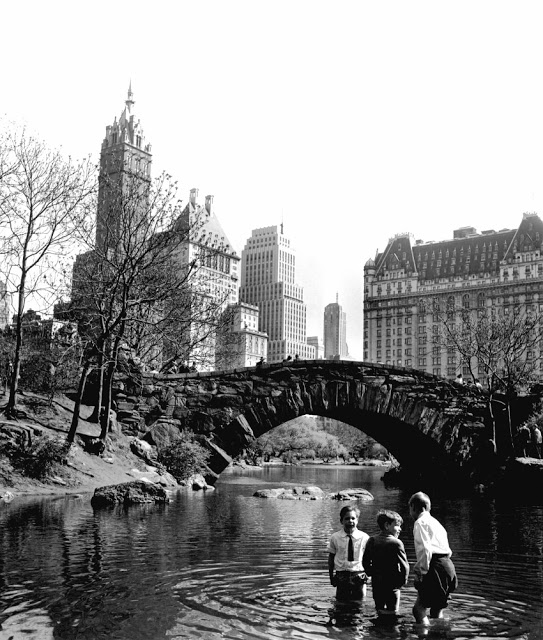
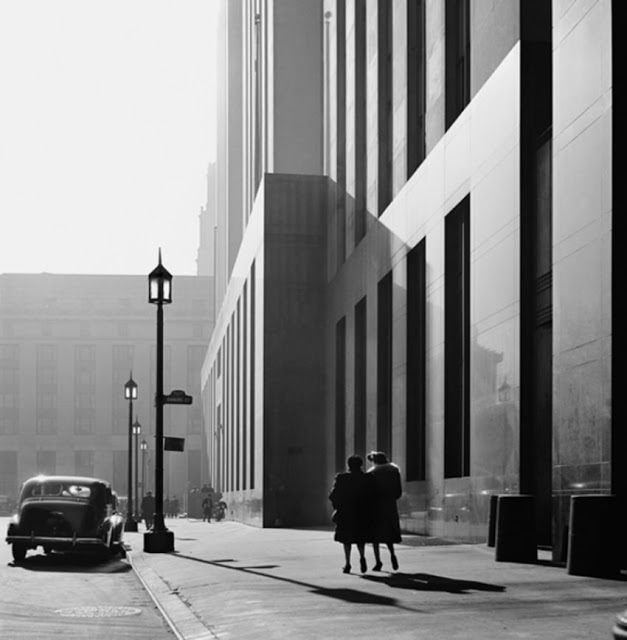
Fred Stein (1909-1967) was an early pioneer of the hand-held camera who became a gifted street photographer in Paris and New York after he was forced to flee his native Germany by the Nazi threat in the early 1930s. He explored the new creative possibilities of photography, capturing spontaneous scenes from life on the street. He was also a master portraitist, creating intimate images of many of the great personalities of the 20th century.

In the freedom of New York, the energy of the city infused Stein’s work. He added the medium-format Rolleiflex, which takes pictures in a square format.

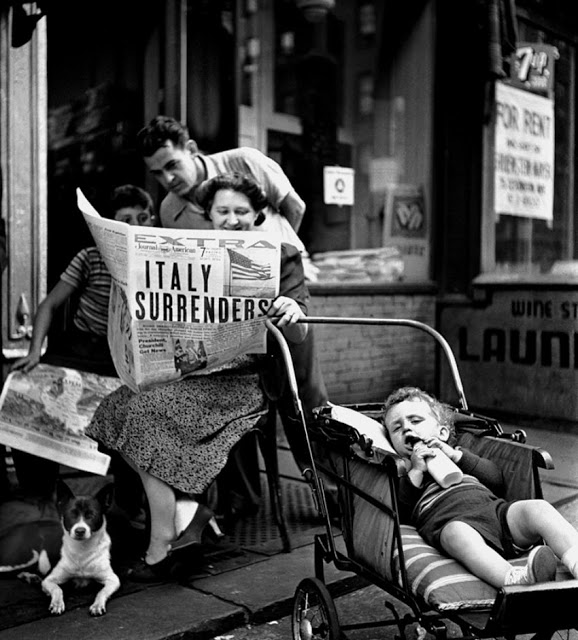
The city’s cultural mix fit perfectly with his talents and concerns. He took to the streets and ranged from Harlem to Fifth Avenue, invigorated by the bustle and variety of the New World. He loved the American spirit; and as an outsider, he came to the various ethnic areas without preconceived ideas. He was able to see in the residents a style, humor and dignity that seems perfectly fresh, even today, as evidenced in “Little Italy” 1943.

22 Strange and Amazing Inventions From the 1920s and 1930s.

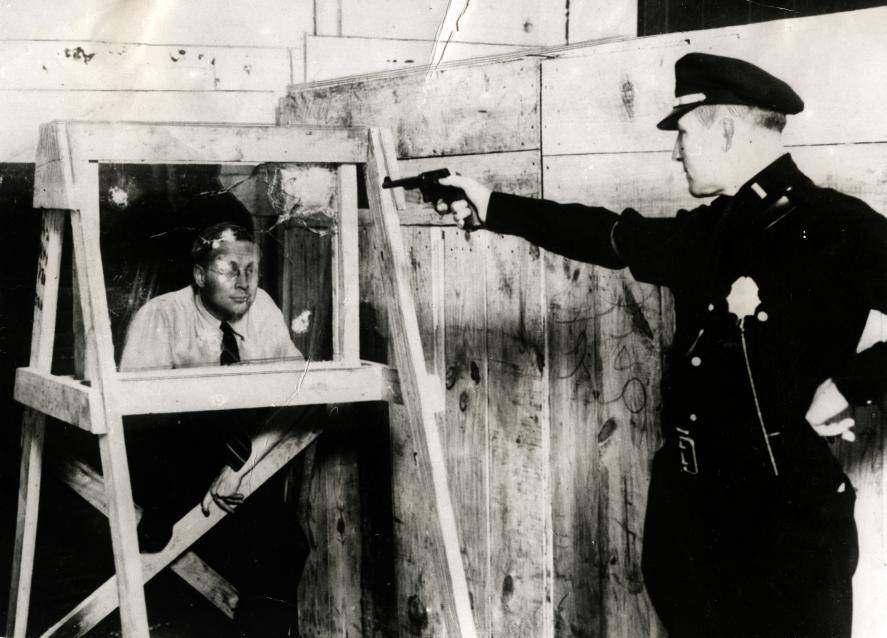
Bulletproof Glass (1931)
Bulletproof glass, demonstration by the best rifle man of the New York police, 1931.
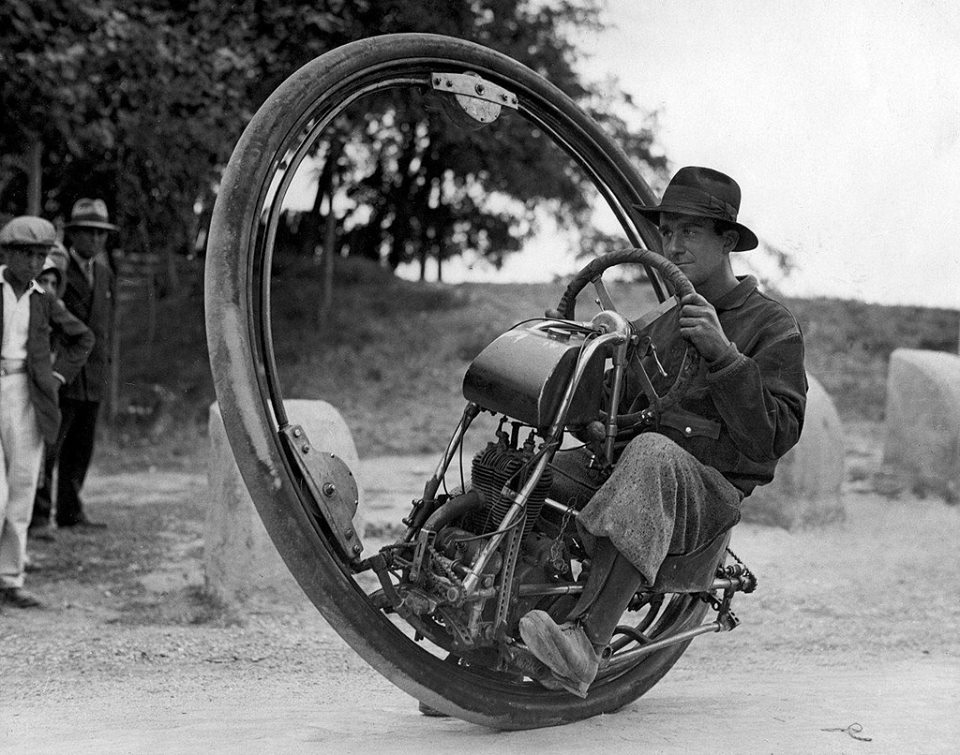
Single Wheel Motorcycle (1931)
One wheel motorcycle (invented by Italian M. Goventosa de Udine). Maximum speed: 150 kilometers per hour ( 93 Mph).
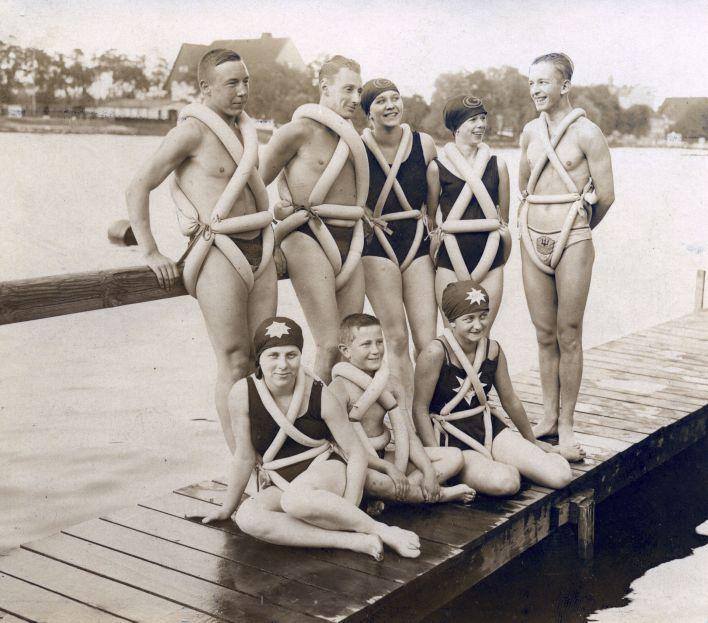
Life Jackets Made From Bicycle Tubing (1925)
A group of youngsters tied a bike tyre around the body as a swimming aid. Germany, 1925.
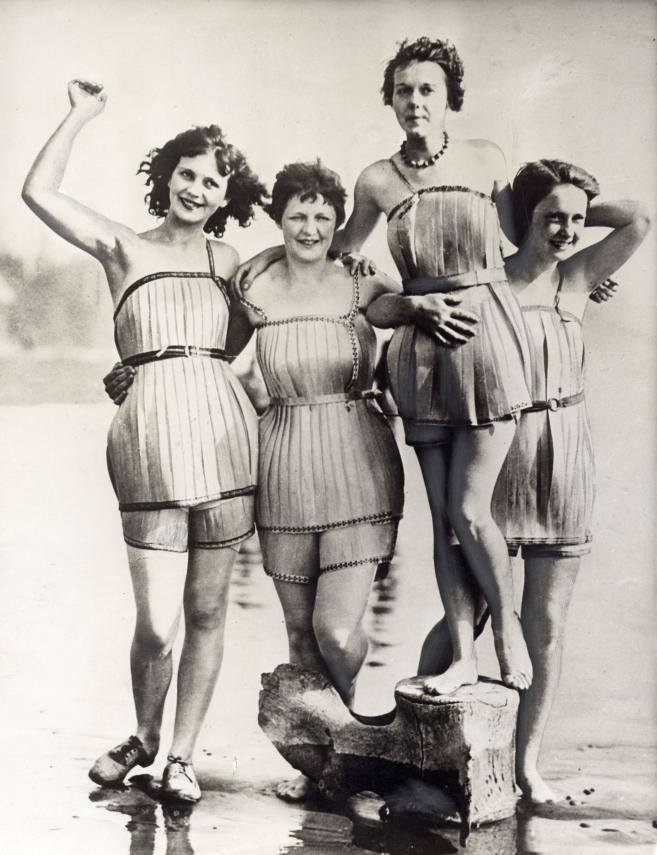
Wooden Bathing Suits (1929)
Wooden bathing suits, supposed to make swimming a lot easier. Haquian, Washington, USA, 1929.
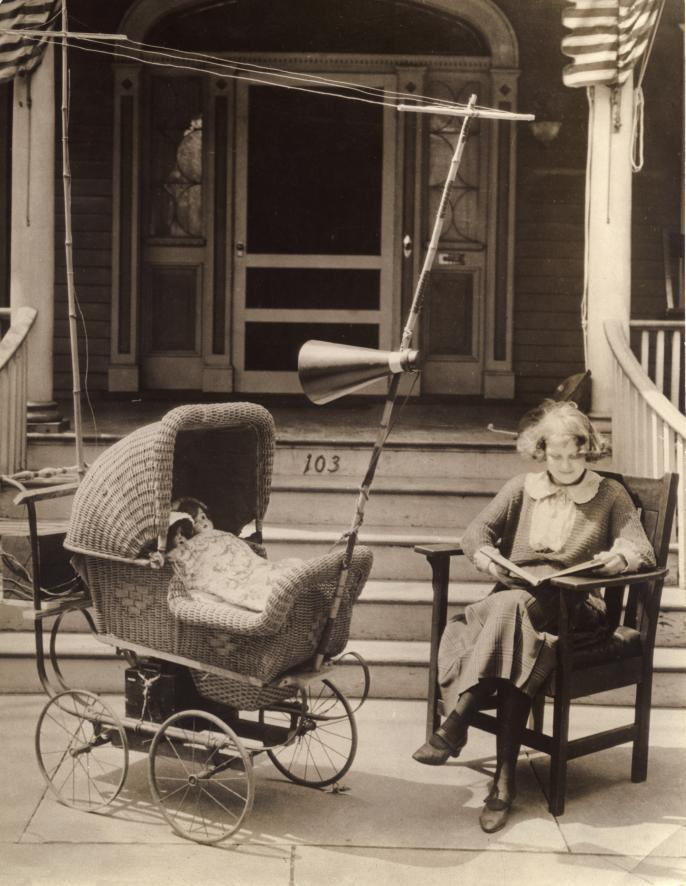
Radio Stroller (1921)
Stroller equipped with a radio, including antenna and loudspeaker, to keep the baby quiet; USA, 1921.
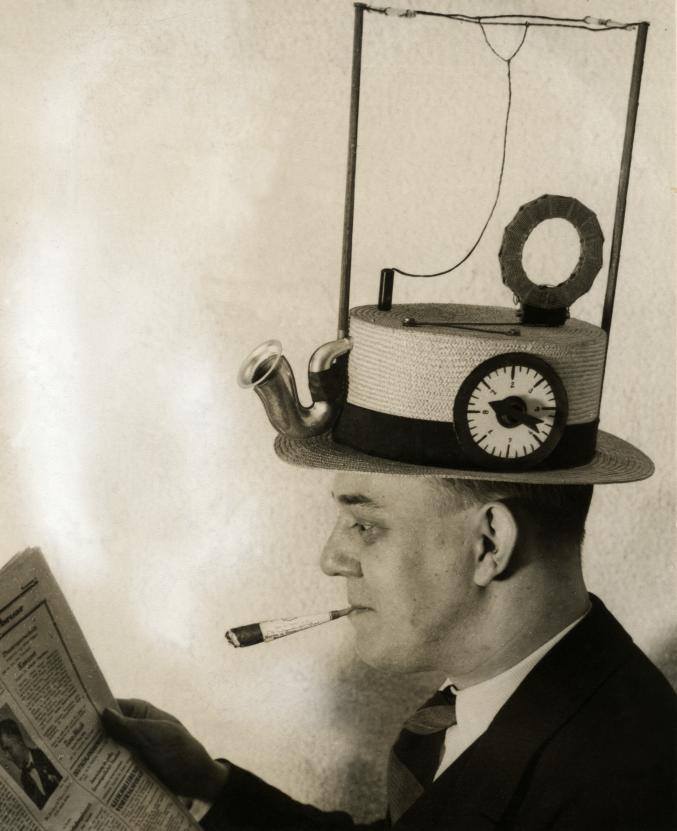
Hat With Integrated Radio (1931)
Portable radio in a straw hat, made by an American inventor in 1931.
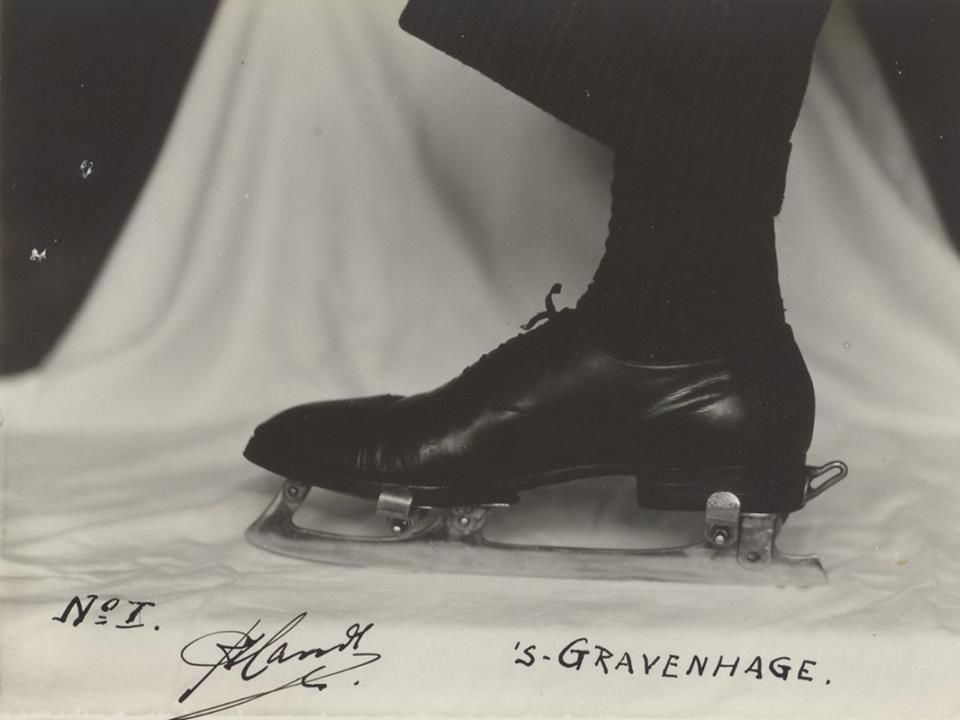
Clap Skate (1936)
In 1936, inventor R. Handl came up with the movable heel plate, but it wasn’t until 1996 that this concept revolutionized skating.
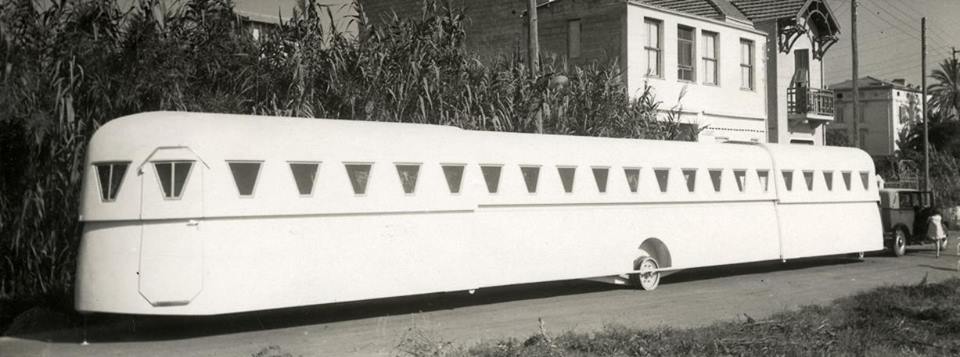
Extensible Caravan (1934)
Extensible caravan, built by a French engineer. France, 1934.
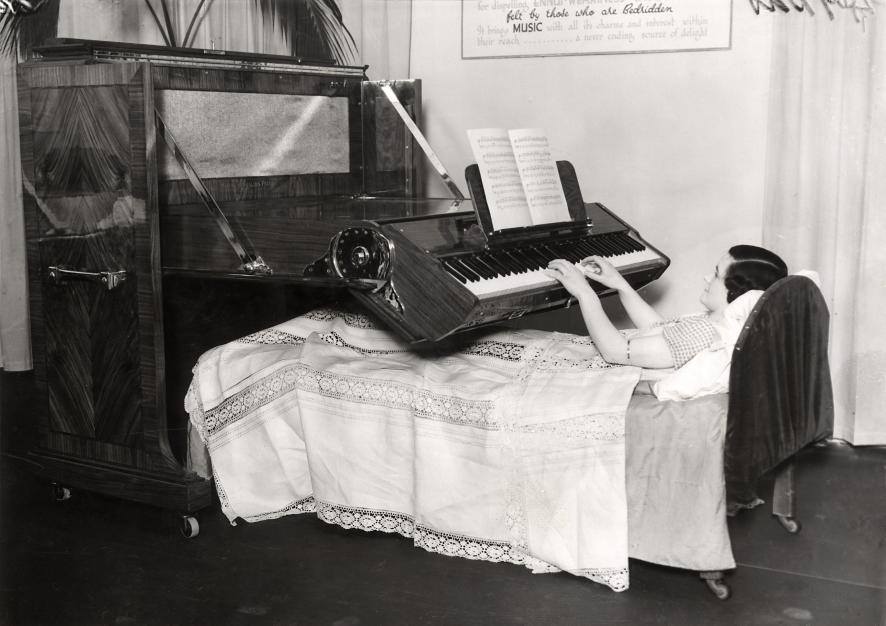
Piano For the Bedridden (1935)
Piano especially designed for people confined to bedrest; Great Britain, 1935.
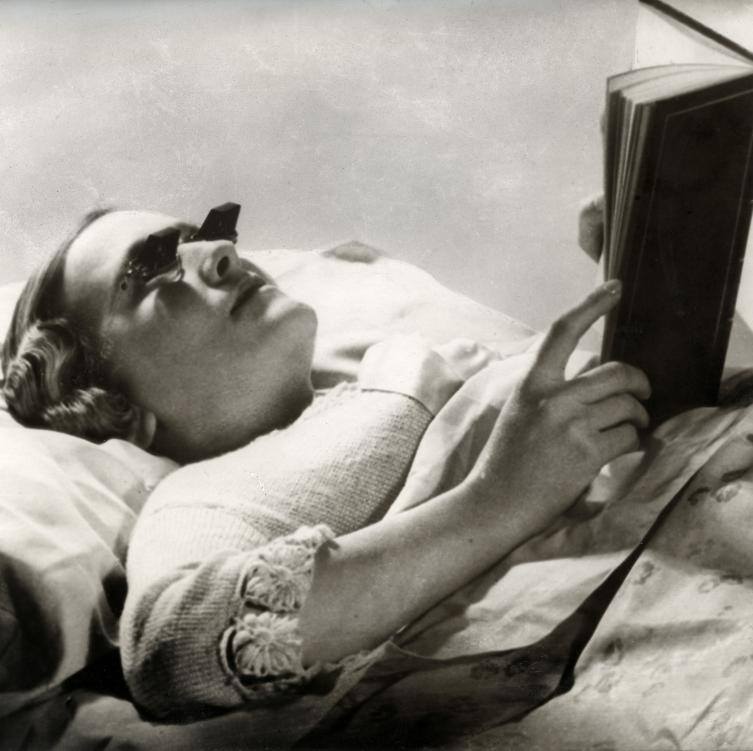
Hamblin Glasses (1936)
A pair of spectacles especially designed for reading in bed. England, 1936.
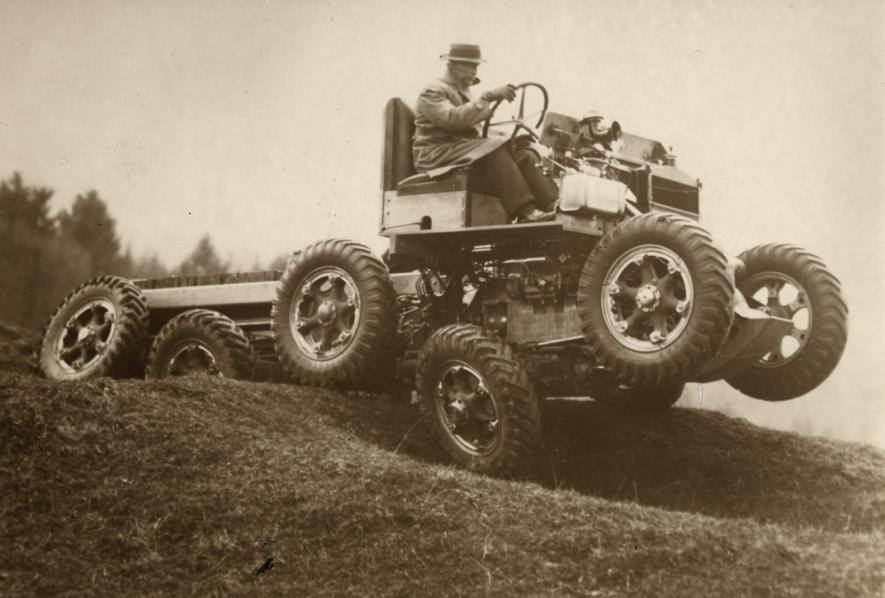
All Terrain Vehicle (1931)
This all-terrain car can descend slopes up to 65 degrees; England, 1936.
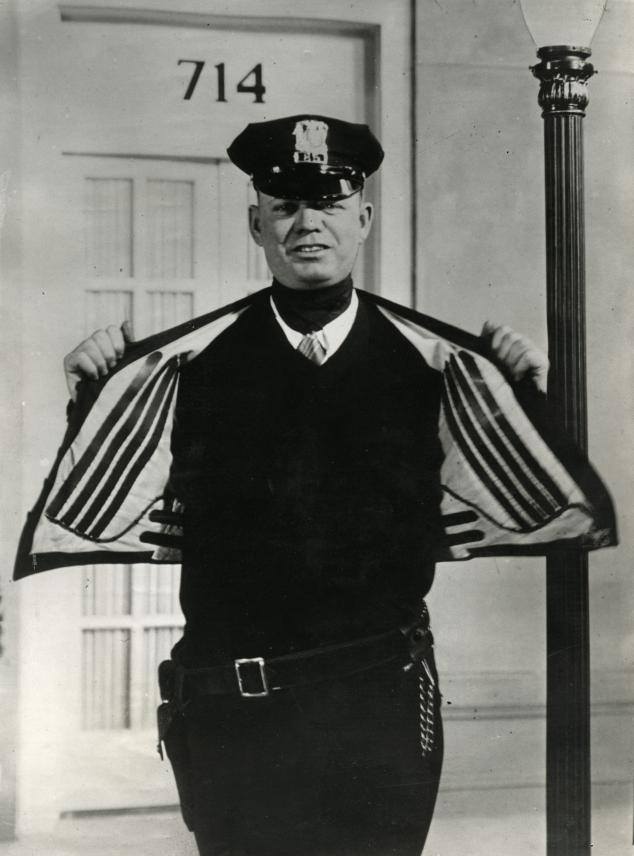
Electrically Heated Jacket (1932)
Electrically heated vest, developed for the traffic police in the United States, 1932. The power is supplied by electric contacts in the street.
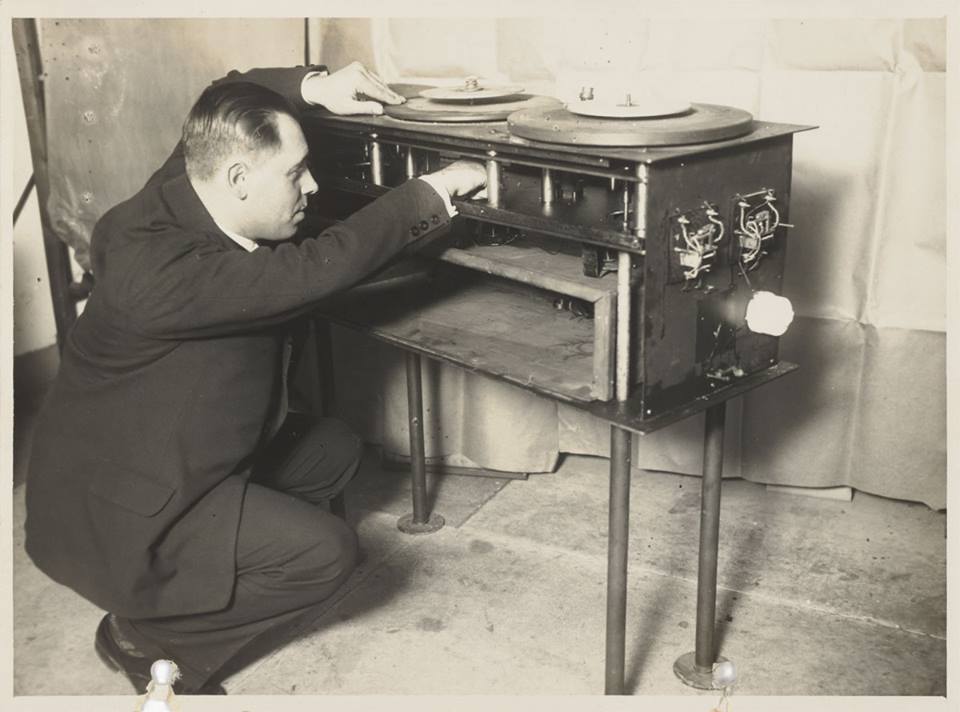
Loetafoon (1929)
A turntable linked to a film projector. It comes with single, dual and triple turntable. Designed by F.B.A. Prinsen, 1929.
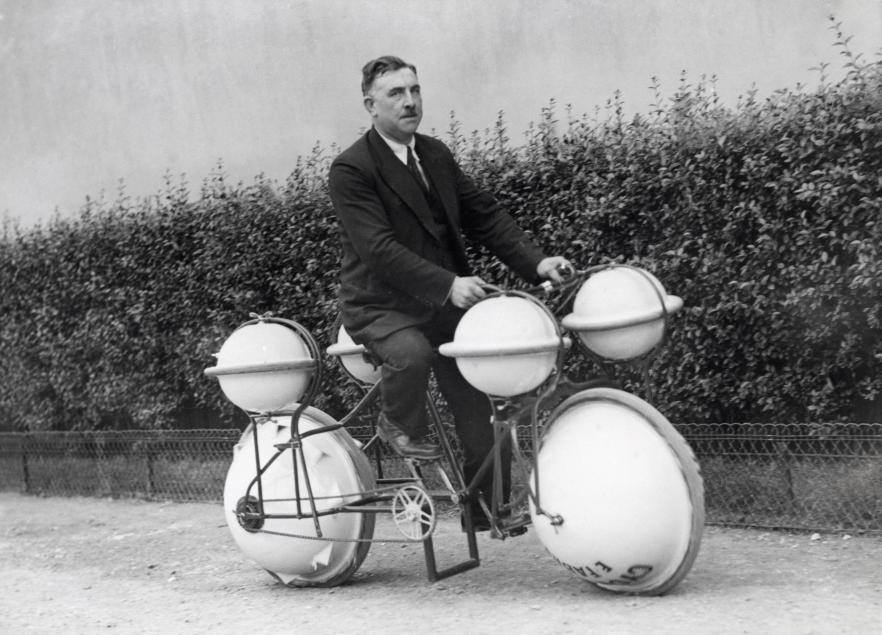
Amphibious Bicycle (1932)
This land-and-water bike can carry a load of 120 pounds; Paris, 1932.
Car With Shovel For Pedestrians (1924)
Kind of shovel on a car. Purpose: reducing the number of casualties among pedestrians. Paris, 1924.
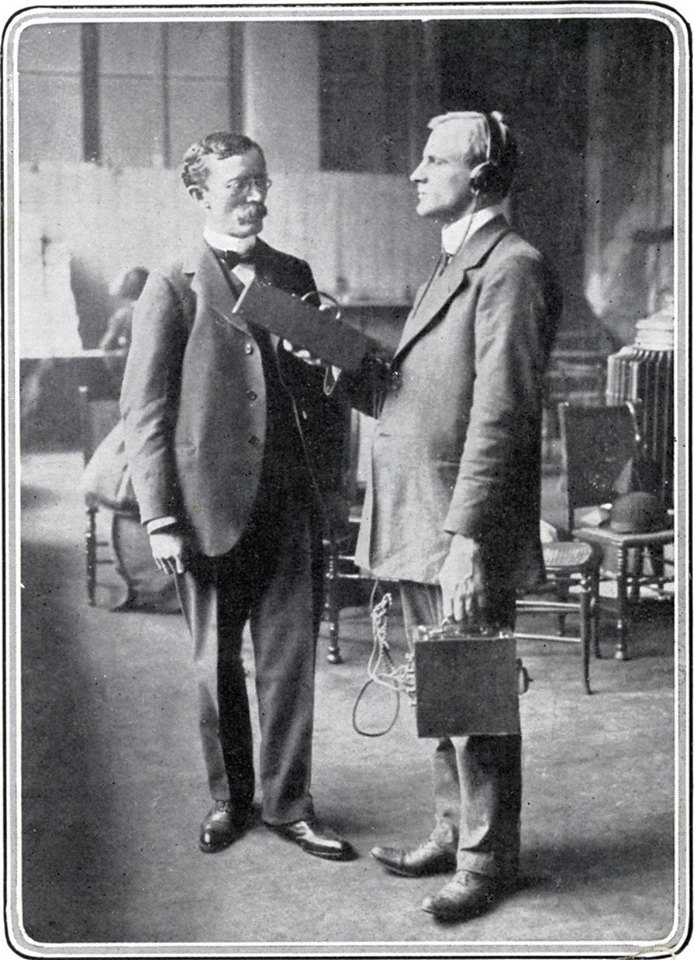
Hearing Light For the Blind (1912)
Hearing light with a new invented apparatus, 1912.
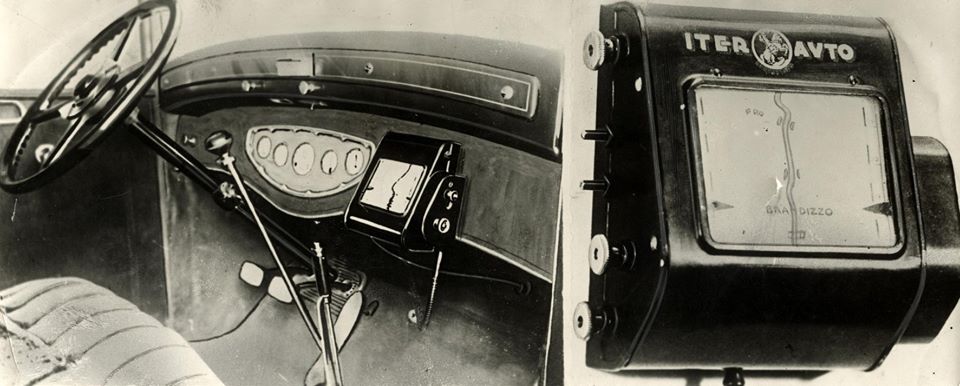
Early GPS (1932)
Yesteryear’s TomTom, a rolling key map that passes through the screen in a tempo determined by the speed of the car; 1932.
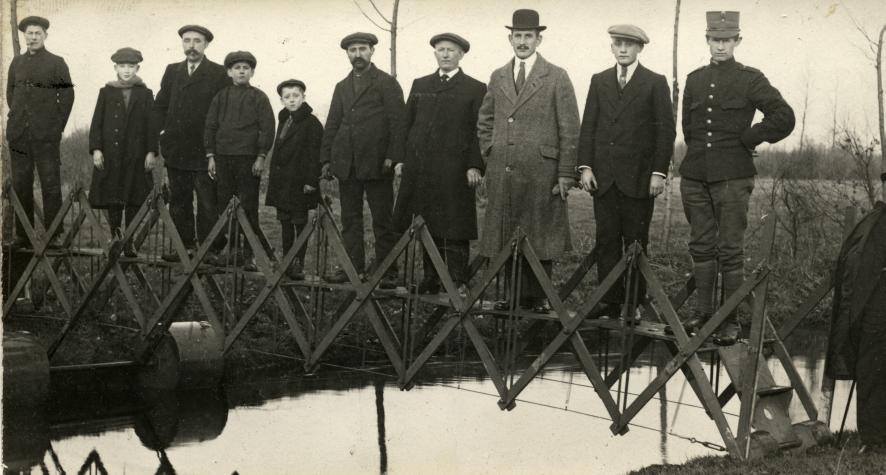
Portable and Extendable Bridge (1926)
The emergency bridge can easily be transported on a handcart; invented by L. Deth. The Netherlands, 1926.
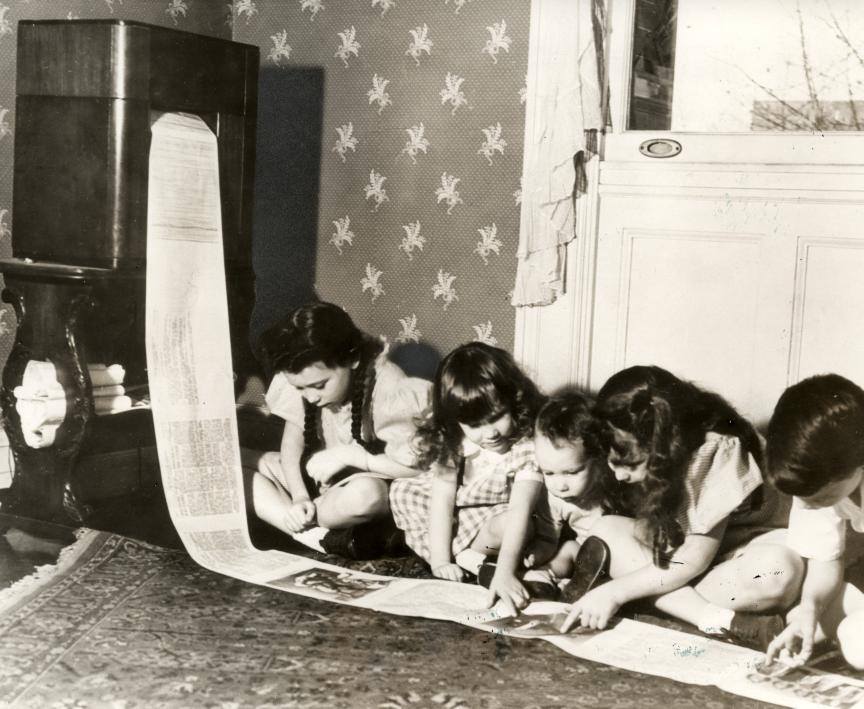
Faxed Newspaper (1938)
In 1938, the world’s first wireless newspaper was sent from WOR radio station in New York City. In this photo, children are reading the children’s page of a Missouri paper
Snowstorm Mask (1939)
Plastic face protection from snowstorms. Canada, Montreal, 1939.
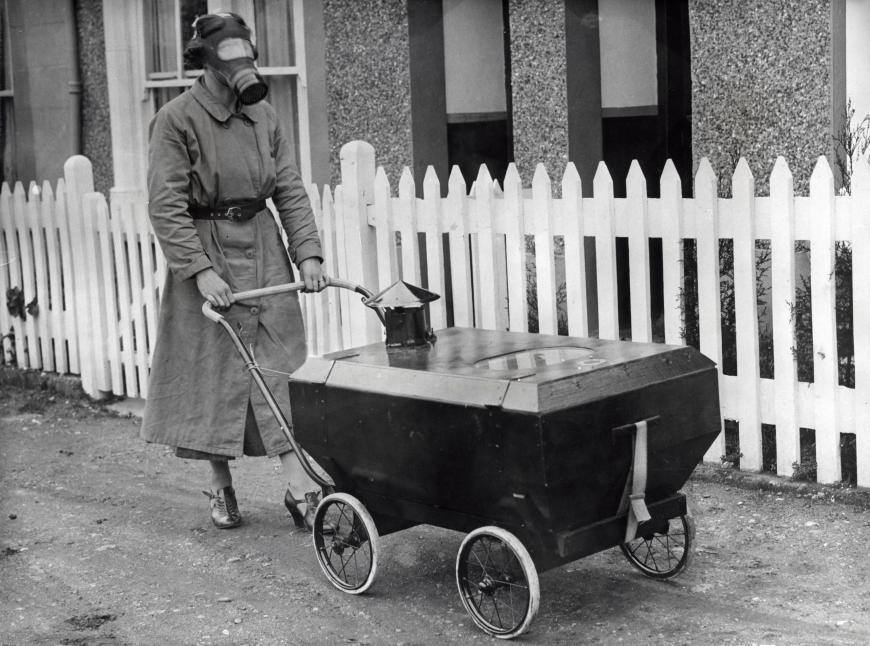
Baby Stroller Protected From Gas Attacks (1938)
A wartime stroller equipped with gas protection; England, Hextable, 1938.
Revolver Camera (1938)
A Colt 38 carrying a small camera that automatically takes a picture when you pull the trigger. At the left: six pictures taken by the camera. New York, 1938.

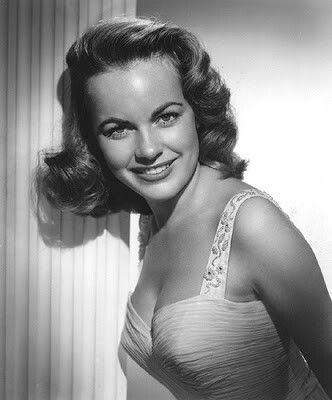
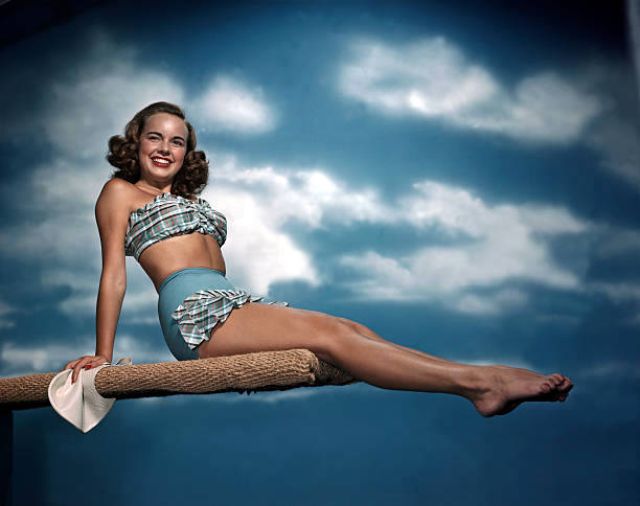
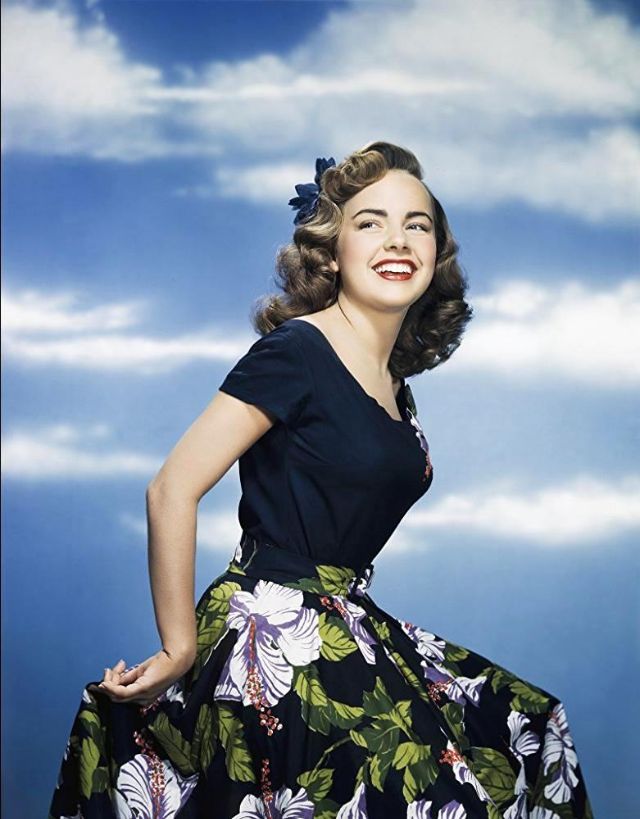
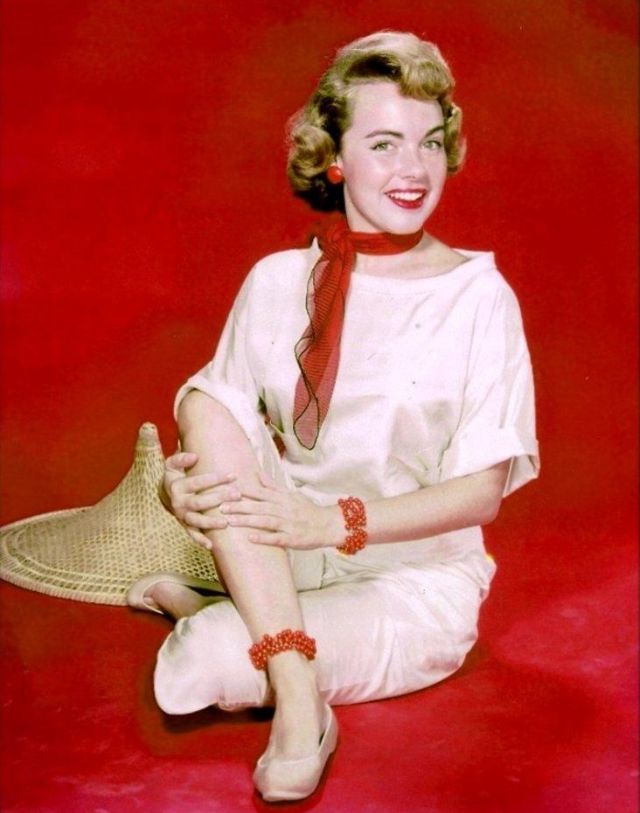
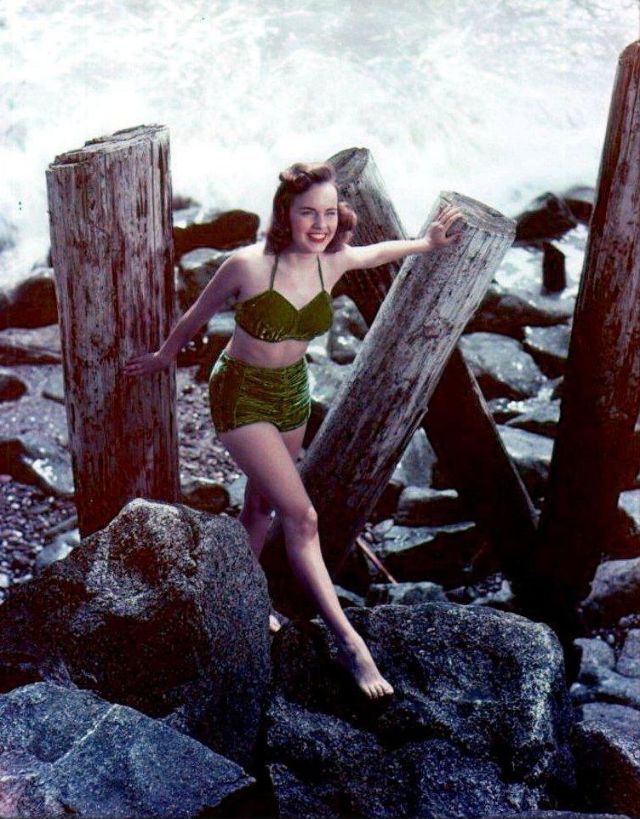
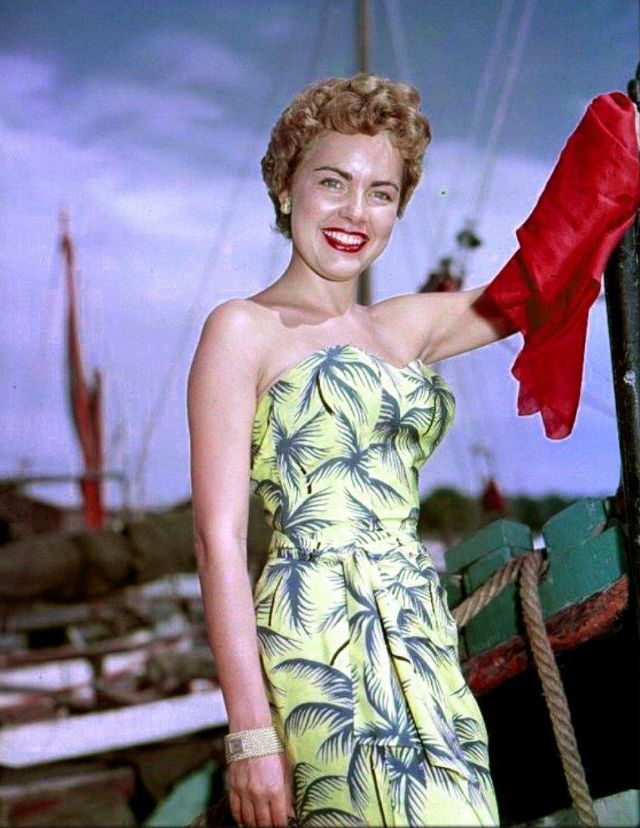
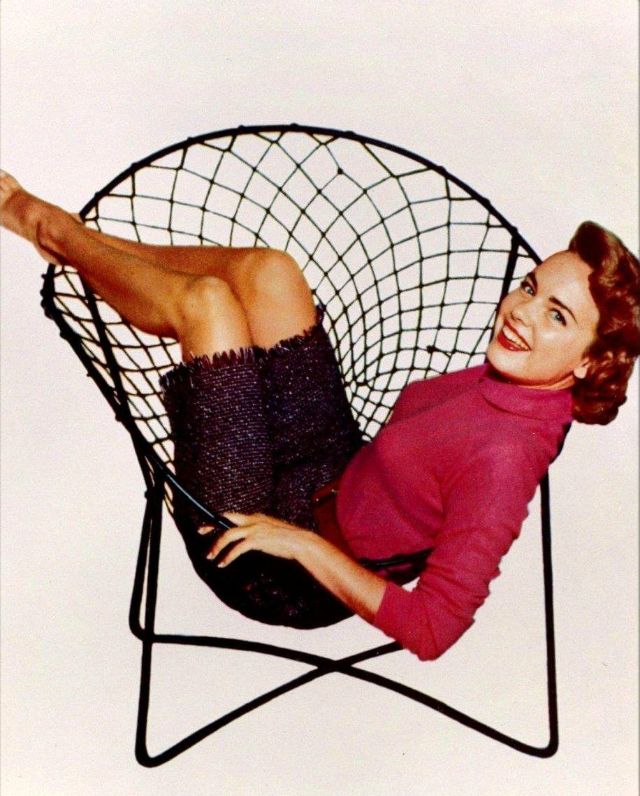
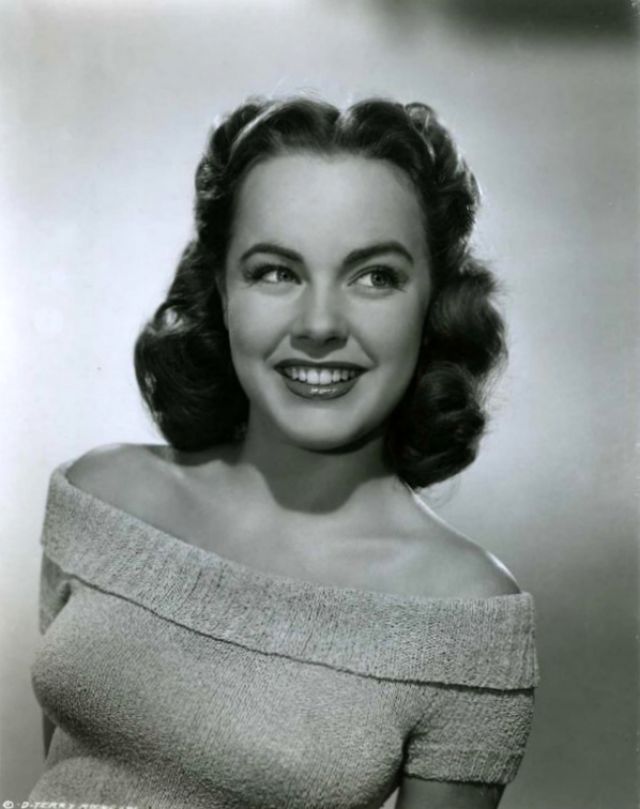
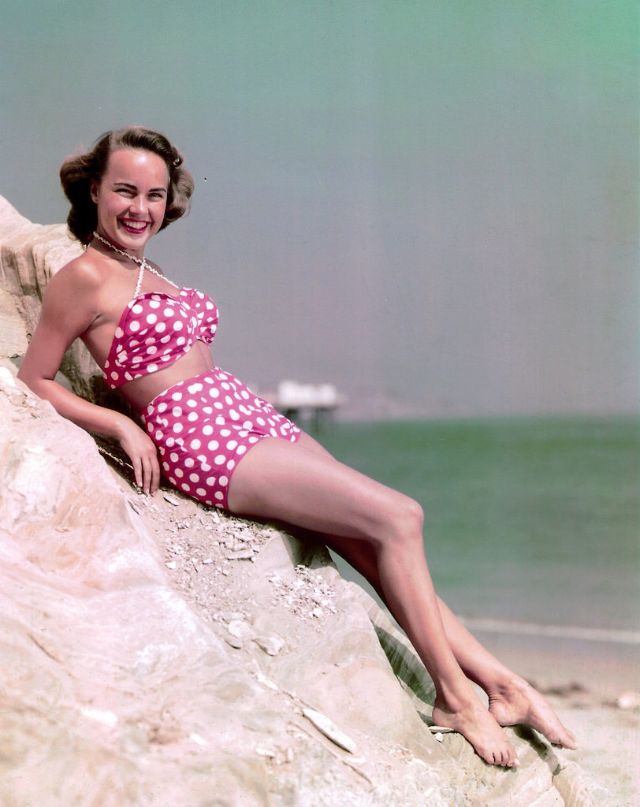
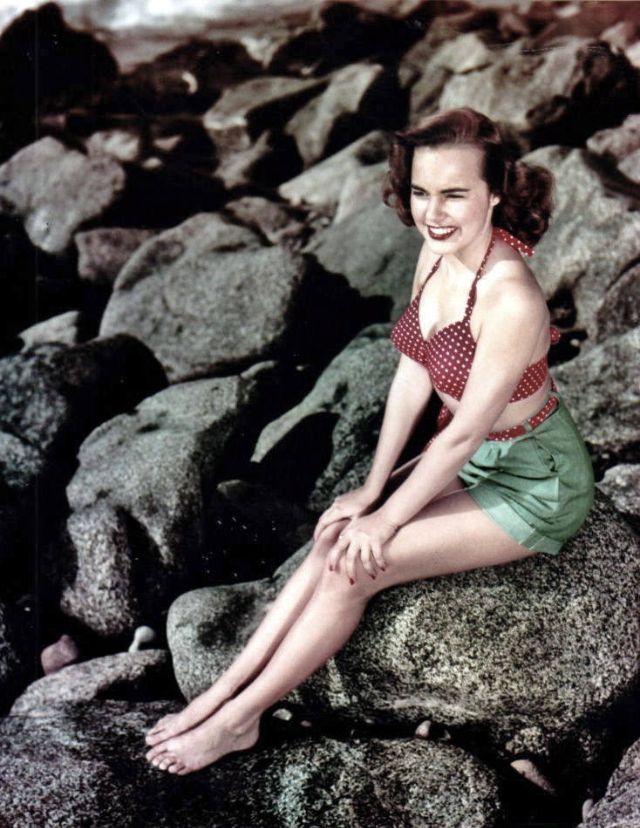
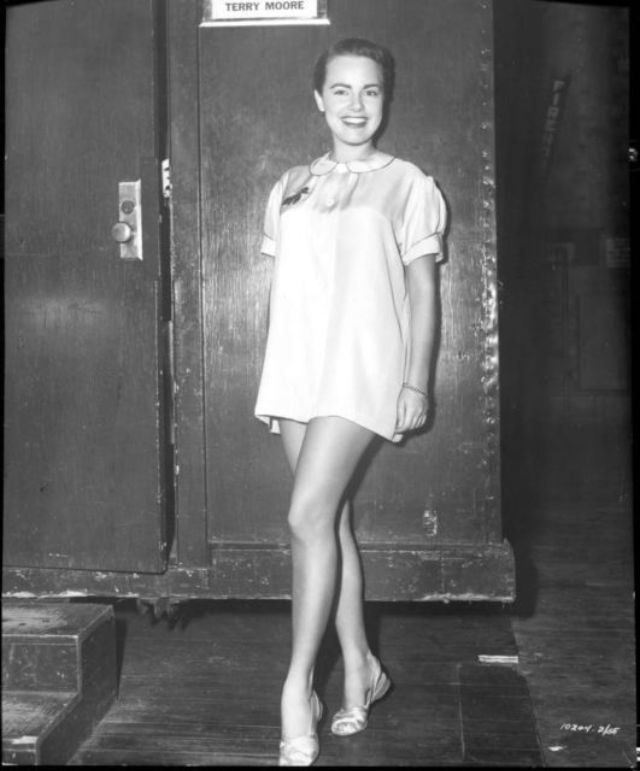
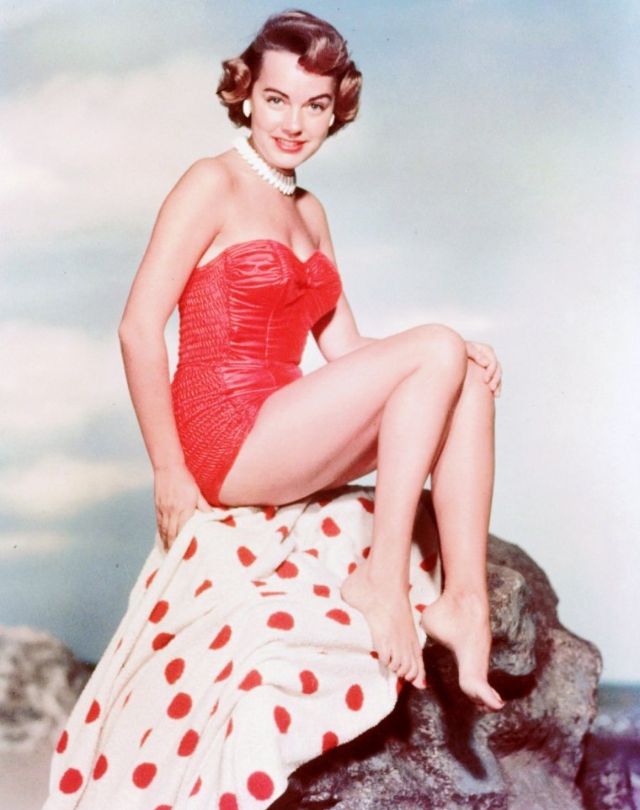
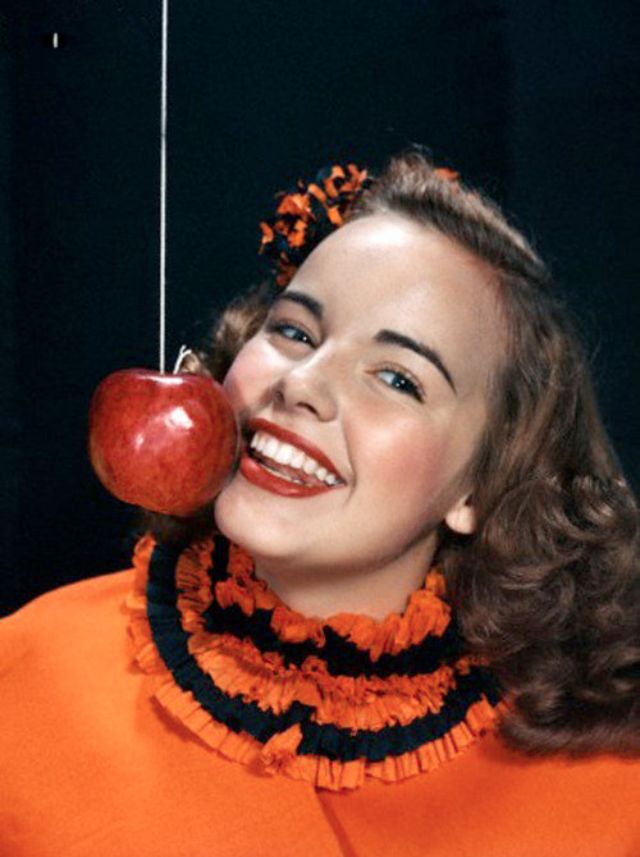
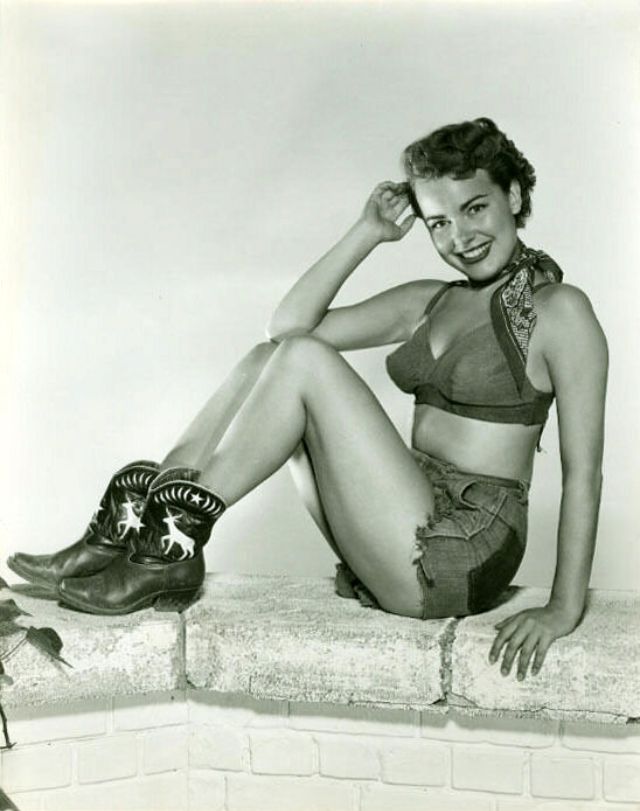
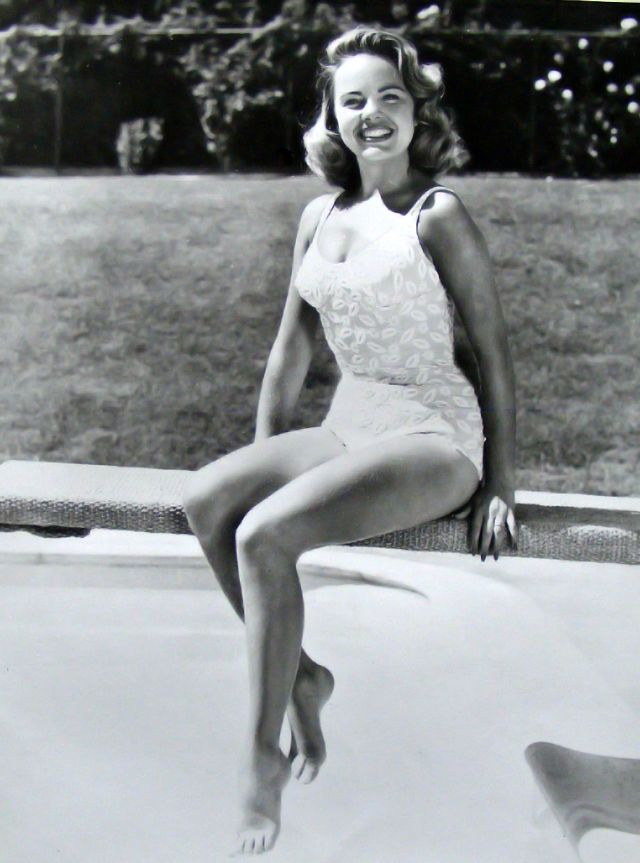
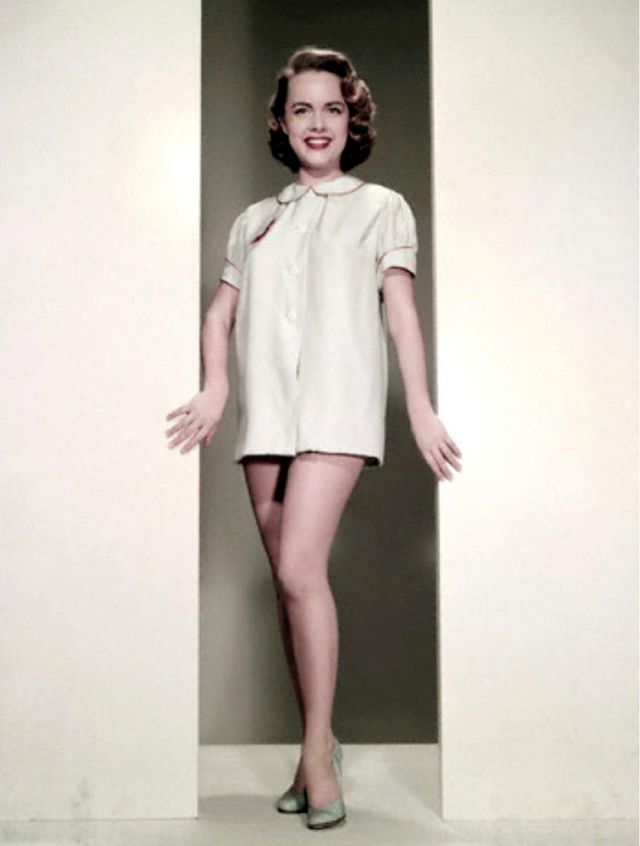
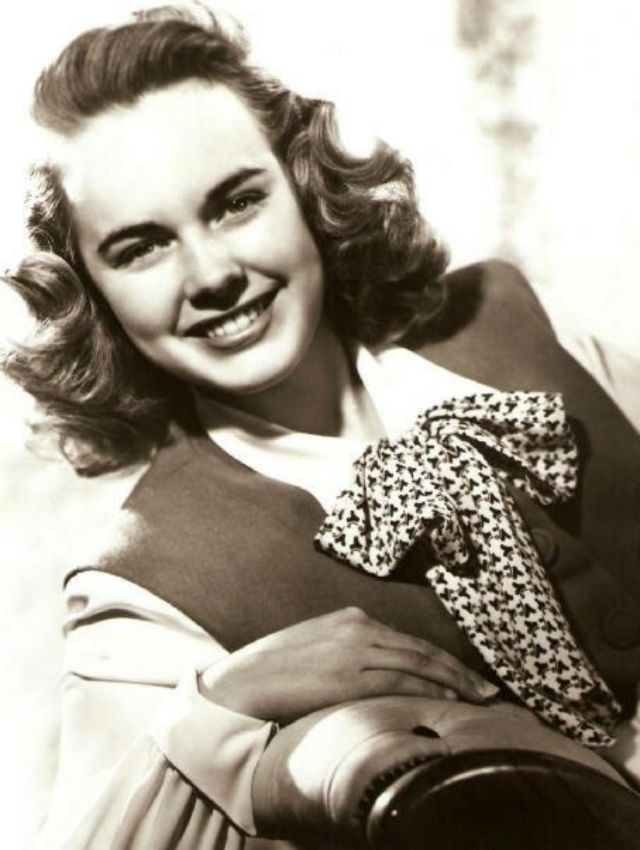
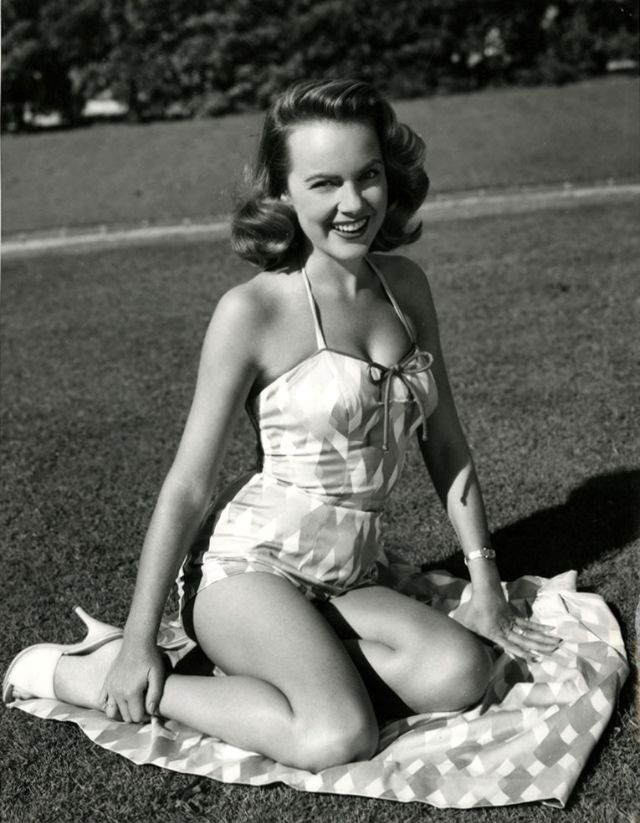
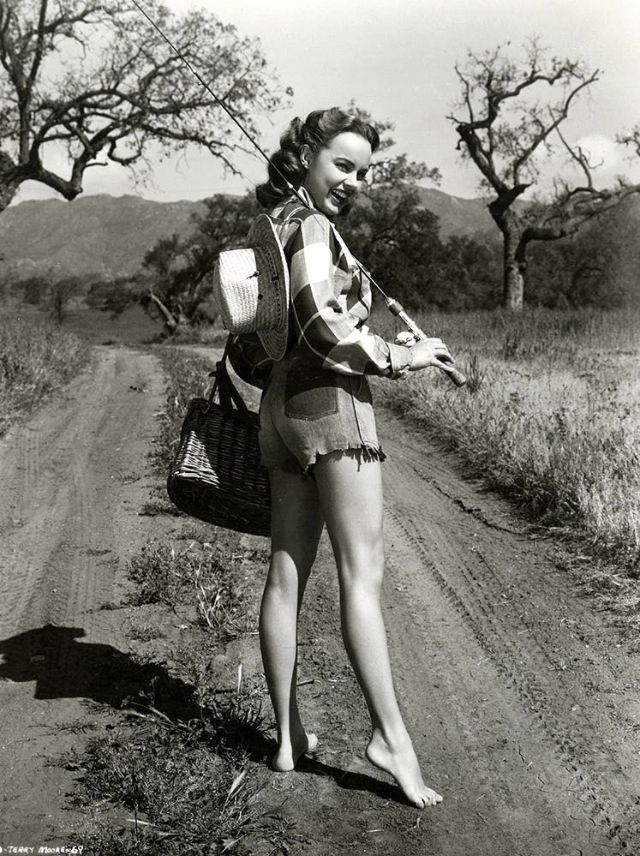
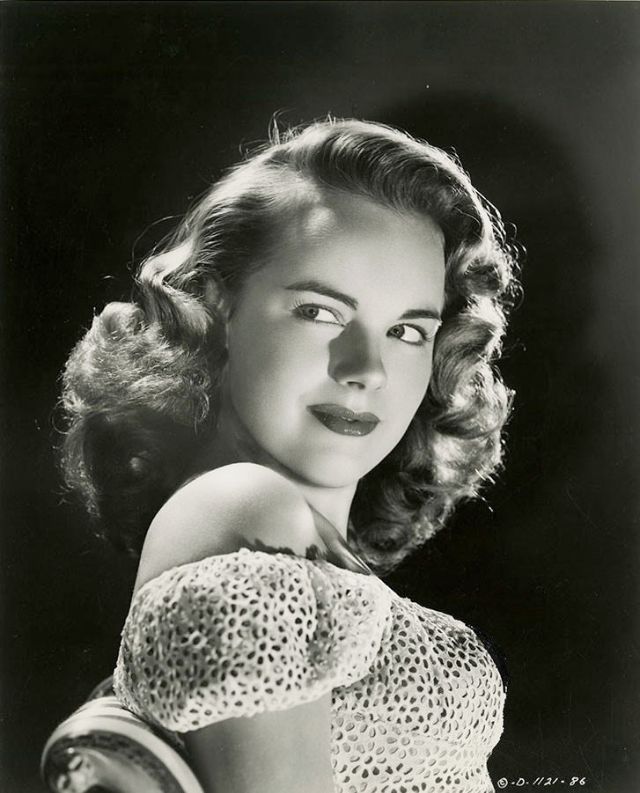
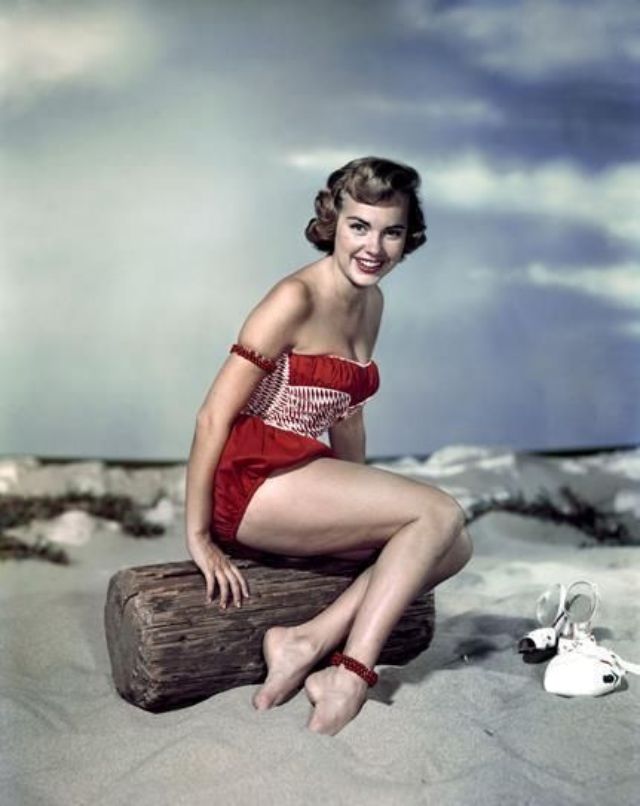
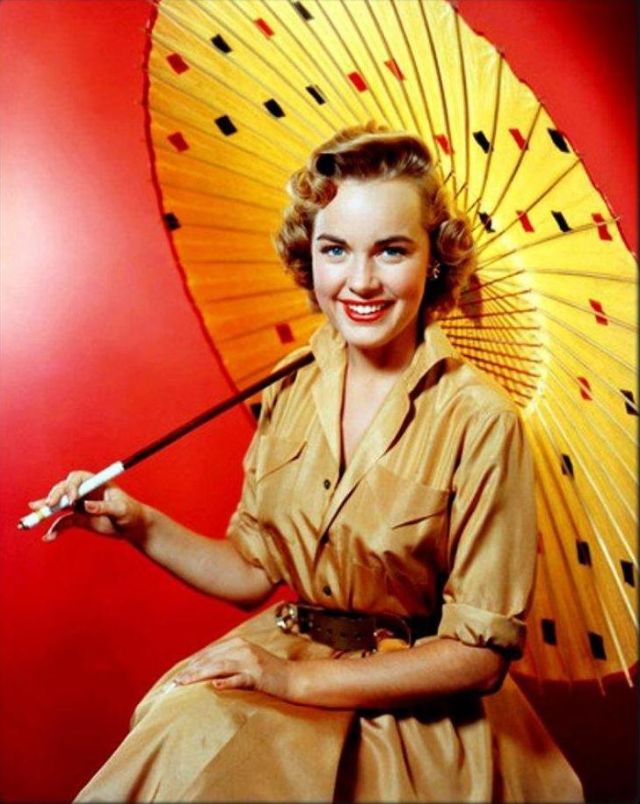
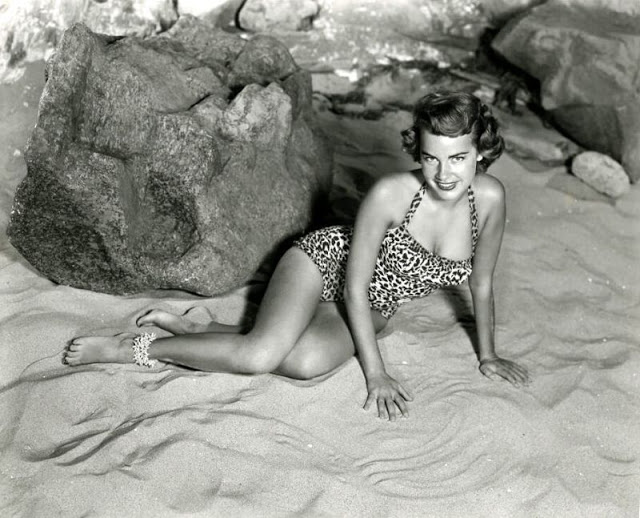
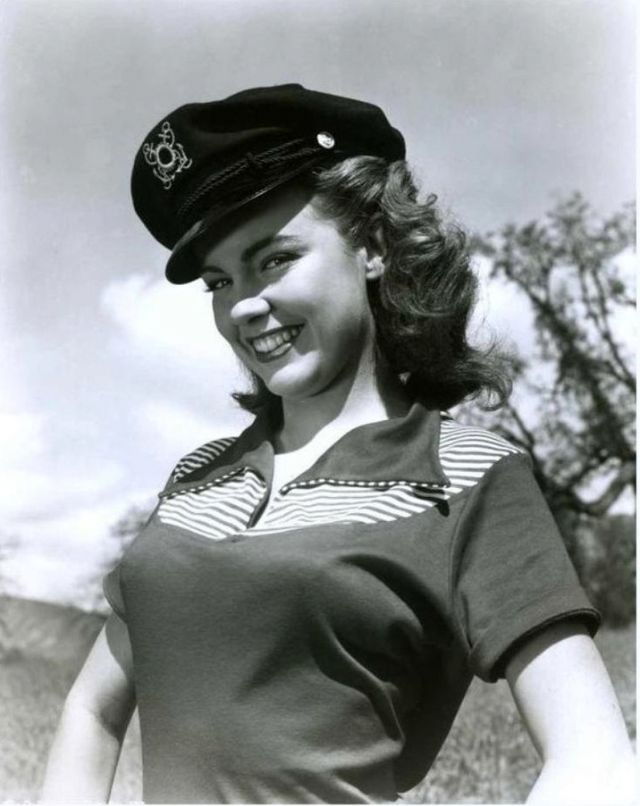
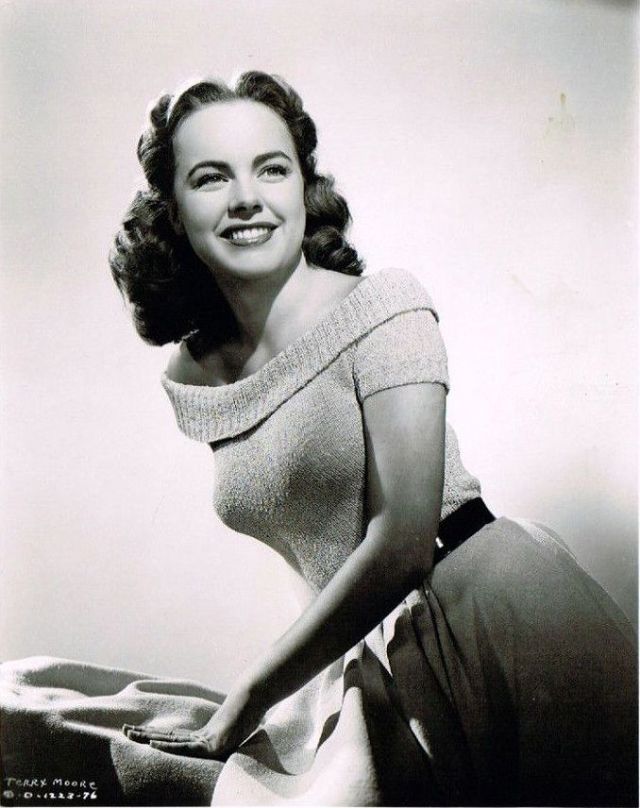
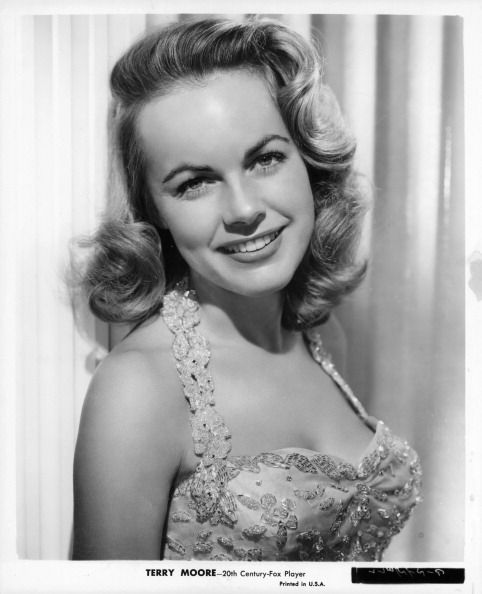
52 Stunning Photos of Actress Terry Moore in the 1940s and 1950s

Born 1929, in Glendale, California, as Helen Luella Koford, American film and television actress Terry Moore worked as a child model before making her film debut in Maryland in 1940. She was billed as Judy Ford, Jan Ford, and January Ford before taking Terry Moore as her name in 1948. She is one of the last surviving stars from the Golden Age of Hollywood.

Moore worked in radio in the 1940s, most memorably as Bumps Smith on The Smiths of Hollywood.

During the 1950s, Moore worked steadily in films such as The Great Rupert (1950), Two of a Kind (1951), Man on a Tightrope (1953), Daddy Long Legs (1955), Between Heaven and Hell (1956), Bernardine (1957), A Private’s Affair (1959), and nominated for the Academy Award for Best Supporting Actress for her performance in Come Back, Little Sheba (1952).

Moore married, in 1951, American football player and Heisman Trophy winner Glenn Davis (known as Mr. Outside when he played at the U.S. Military Academy at West Point), which lasted only one year. A subsequent marriage to Eugene McGarth, in 1956, lasted three years. One year after this marriage ended, Moore married Stuart Cramer after his divorce from Jean Peters; they had two children together, Stuart Cramer IV and actor Grant Cramer, before divorcing in 1972. In 1979, Moore claimed to have married Richard F. Carey, in Mexico; he disappeared a few days later, having swindled her and others out of their money. Her 1992 marriage to Jerry Rivers lasted until his death in 2001.

Moore became the subject of public attention as a result of her relationship with Howard Hughes. According to Moore, she and Hughes were married in 1949 in a ceremony performed by a ship captain in international waters. Moore has said that Hughes destroyed the ship’s log that recorded the marriage, and they separated from each other by 1956, but she and Hughes were never divorced. Moore has explained her subsequent marriages during Hughes’ lifetime by saying, “I didn’t care whether I was a bigamist or not, frankly. I mean, my desire to have children was that strong.”

The Texas courts rejected Moore’s claim of being Hughes’ widow based on judicial estoppel; since Moore had claimed in her divorce from Cramer to have been married to him in 1959 and received a property settlement in that case, her claim that she was married to Hughes at the time was inconsistent with that and would not be accepted. Nevertheless, the Hughes heirs agreed that Moore had had a long-term relationship with Hughes and agreed to a financial settlement with her. Moore described the settlement as “not more than eight figures”; a biography of Hughes implies that the settlement was $350,000.

Moore dated actor Glenn Ford in the early 1970s.

Here below is a glamorous photo collection that shows portrait of young Terry Moore in the 1940s and 1950s.

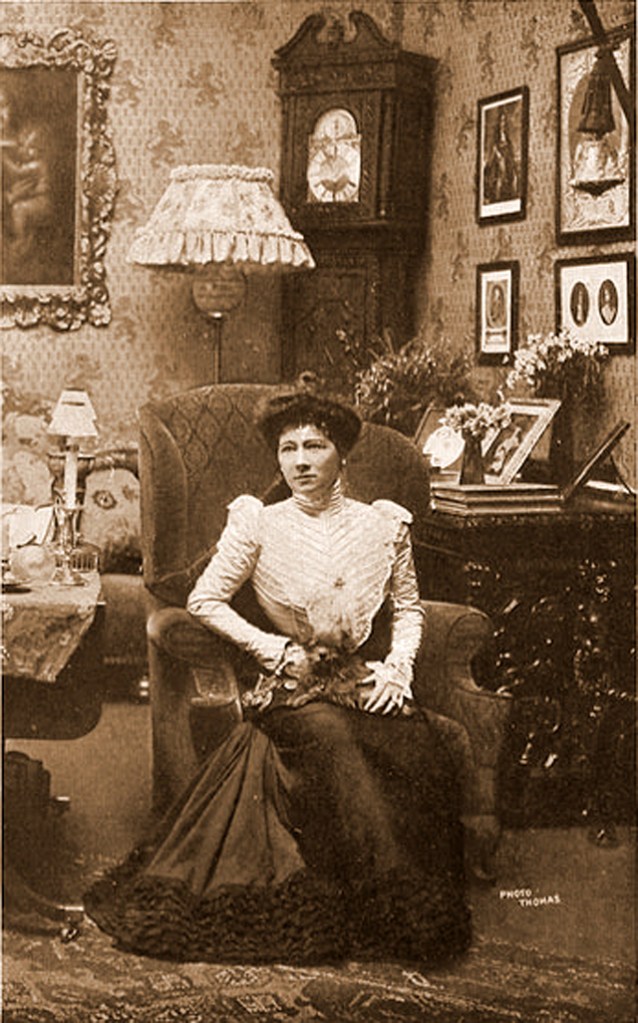
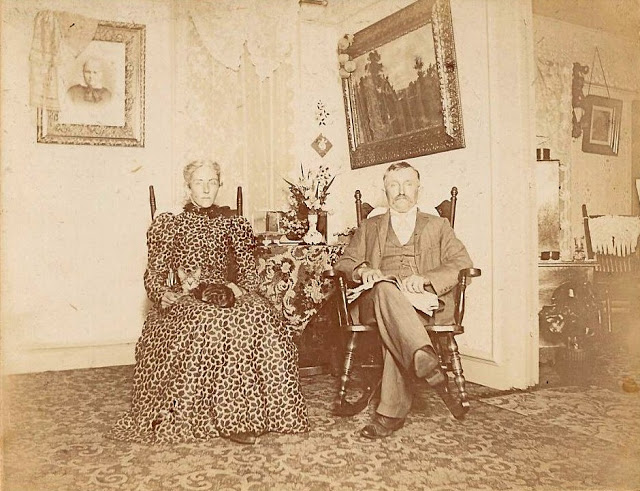
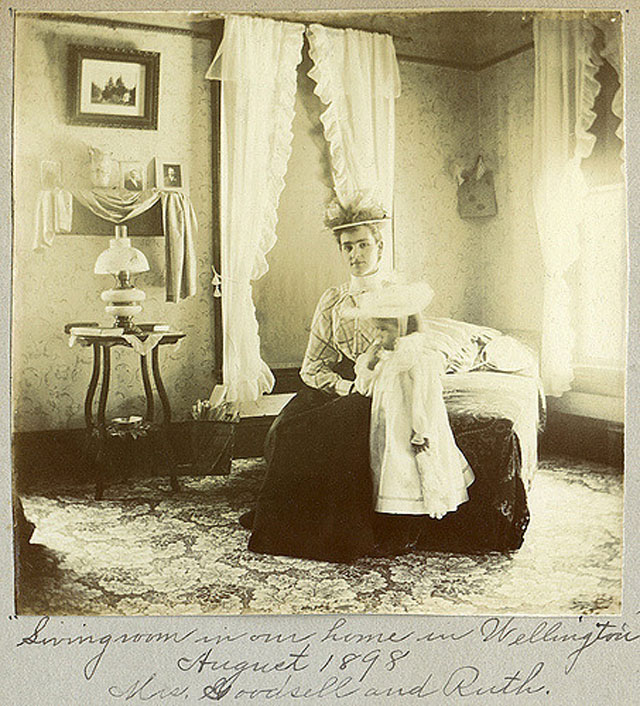
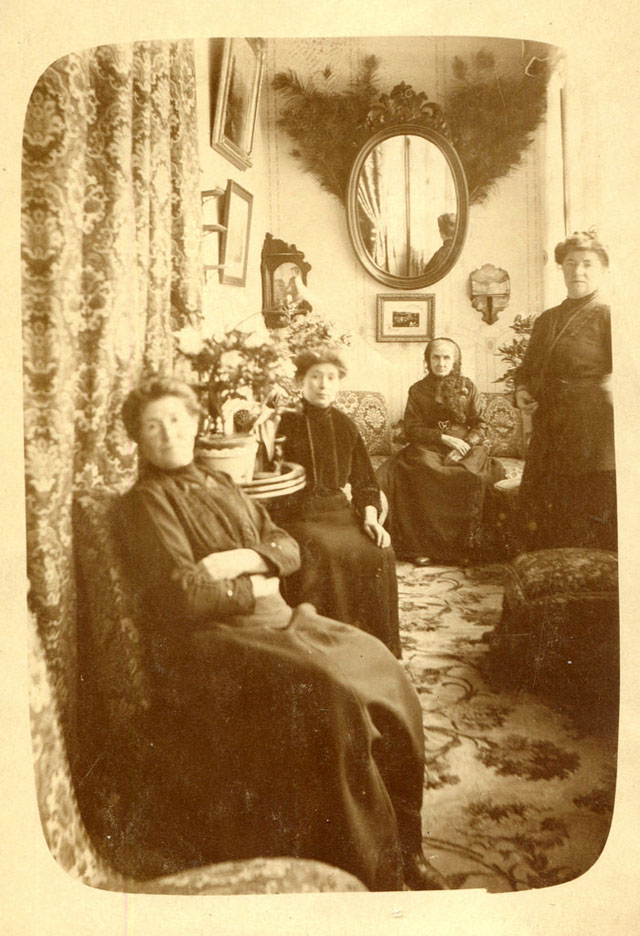
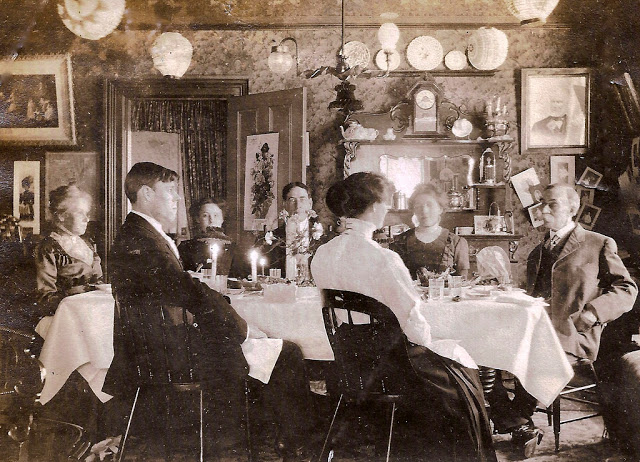
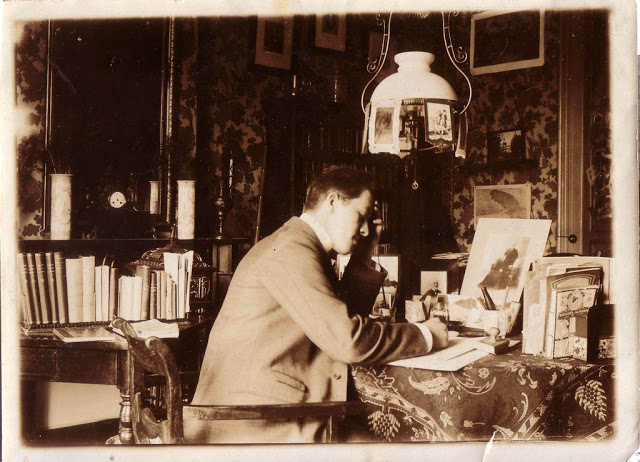
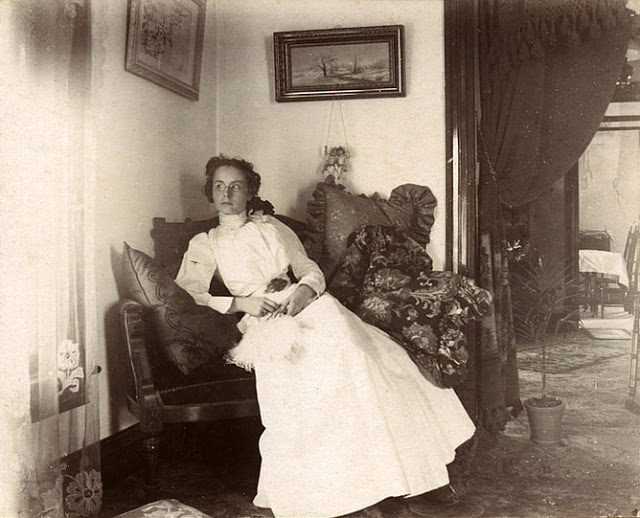
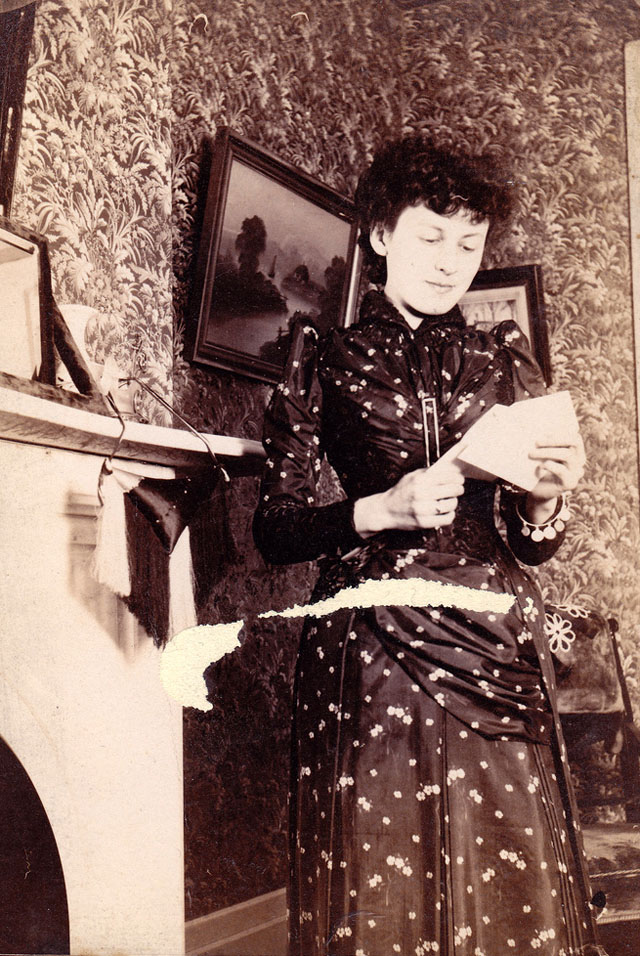
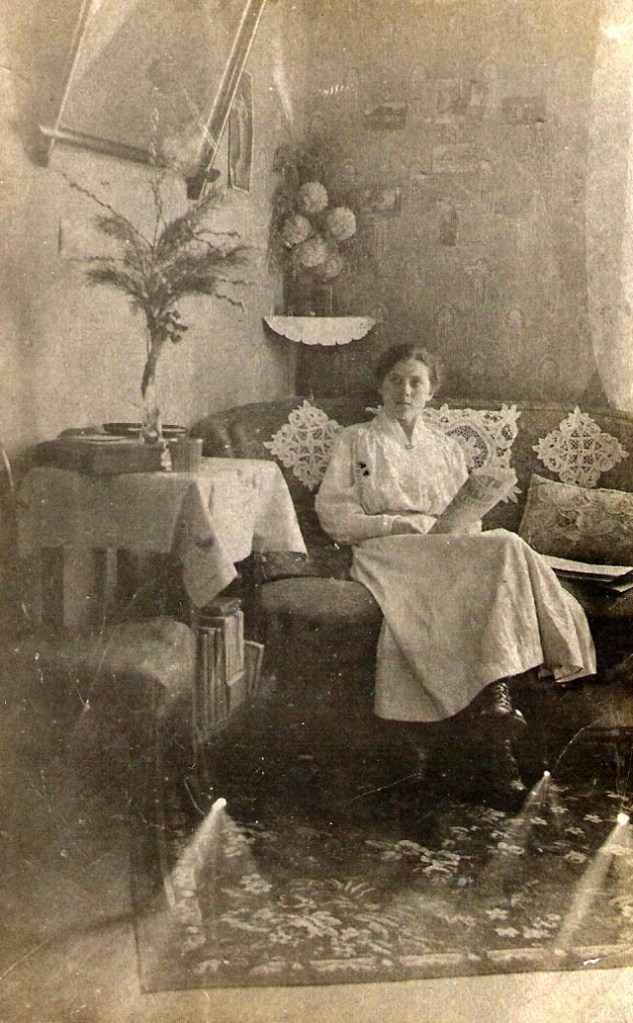
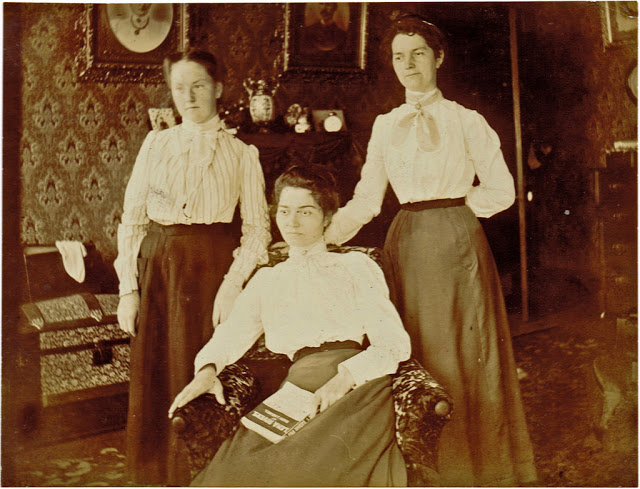
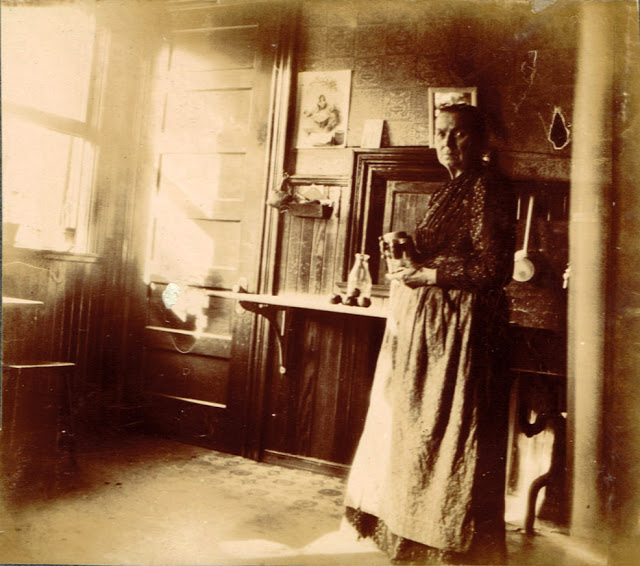
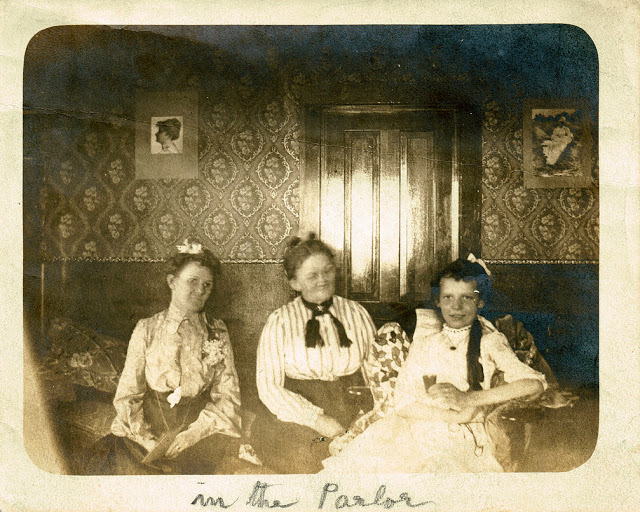
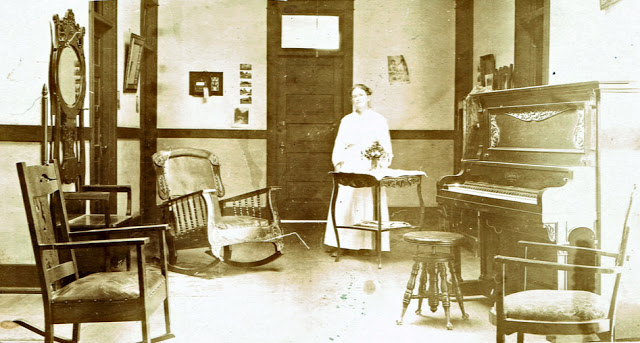
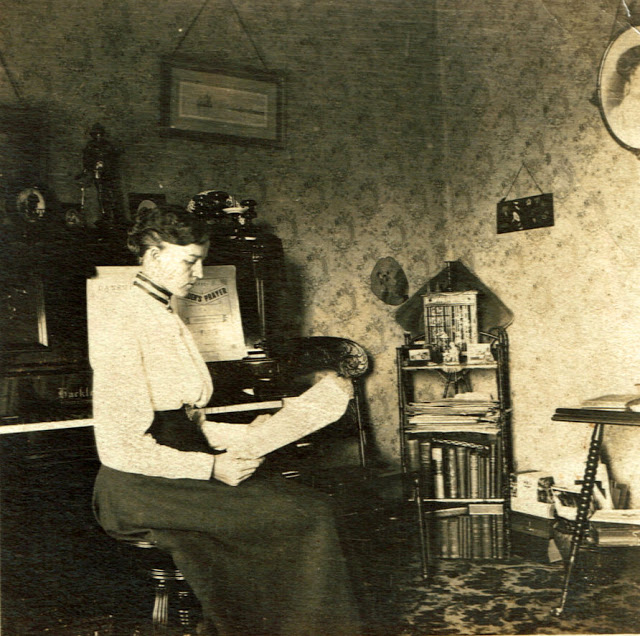
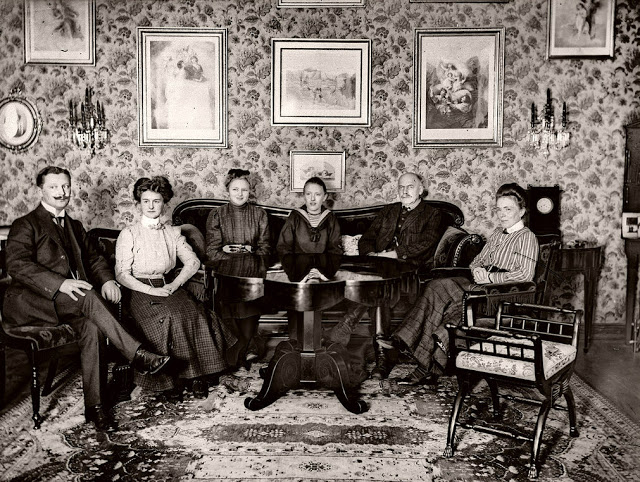
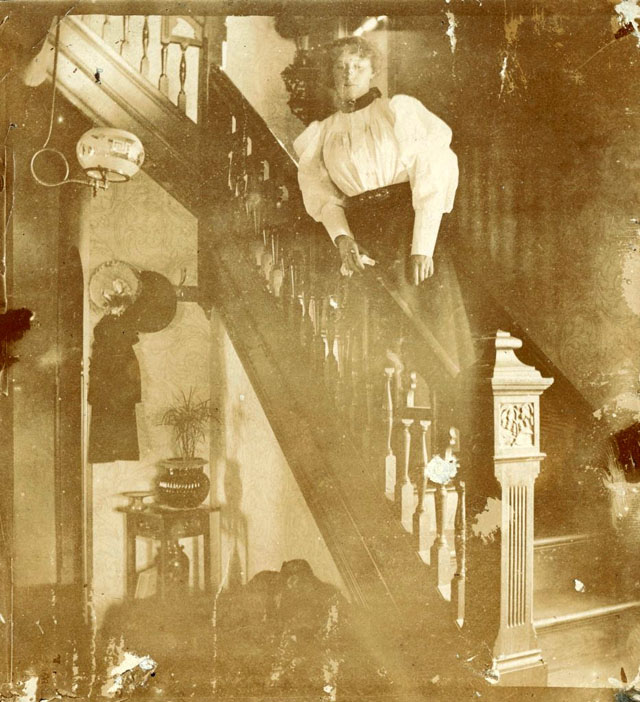
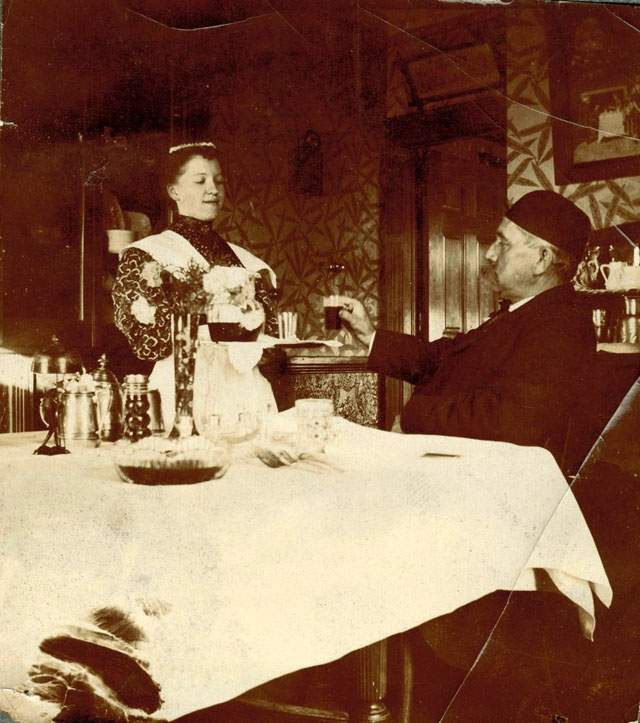
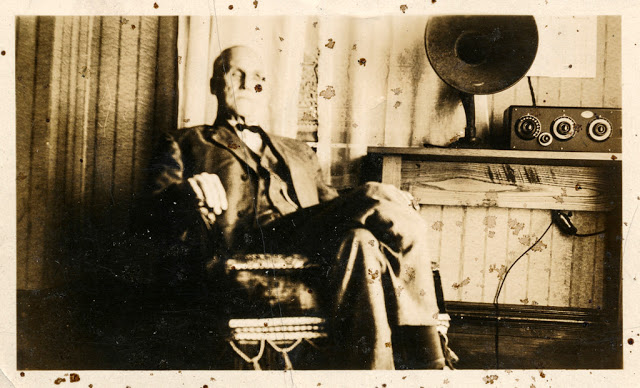
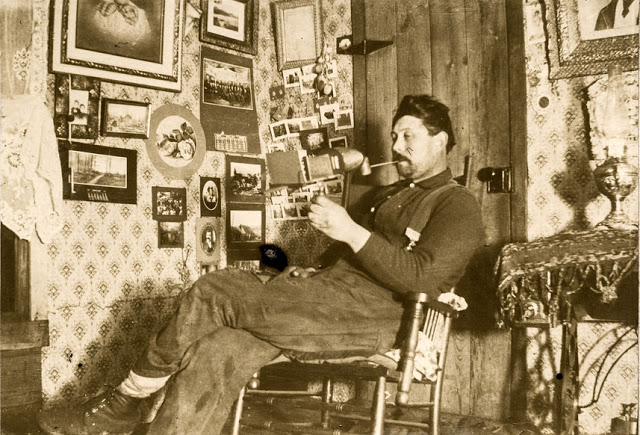
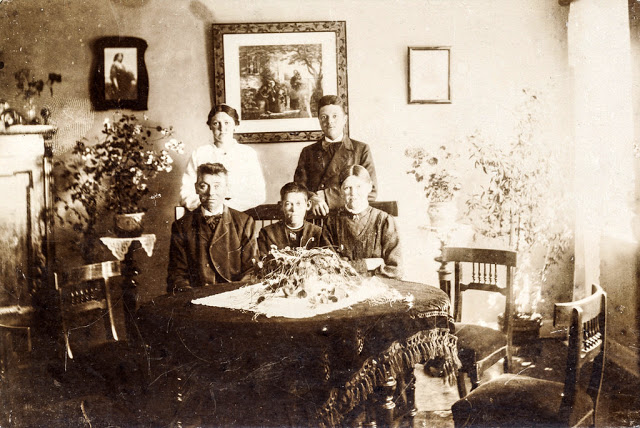
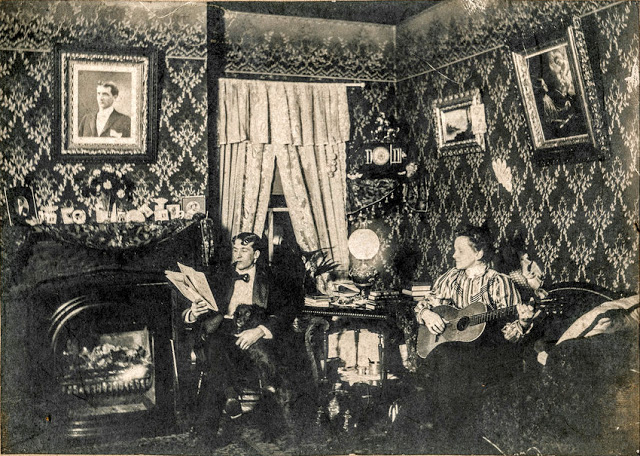
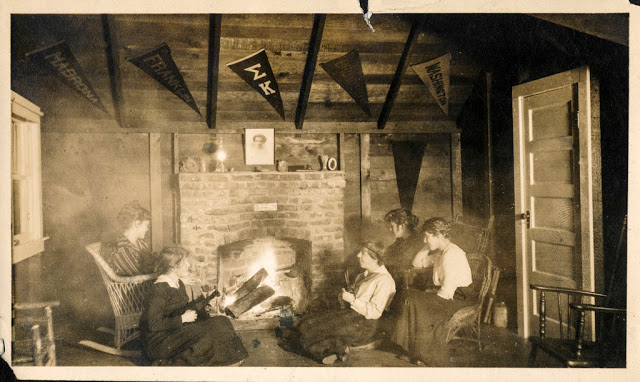
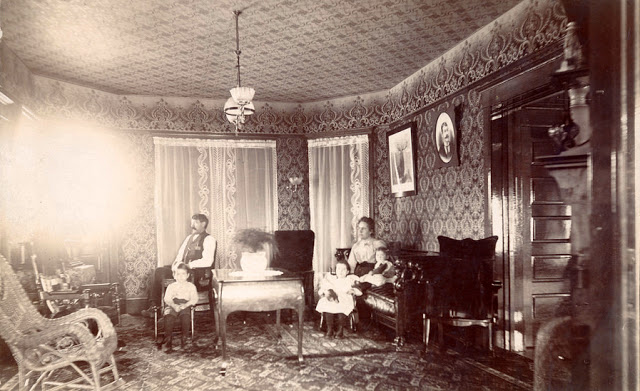
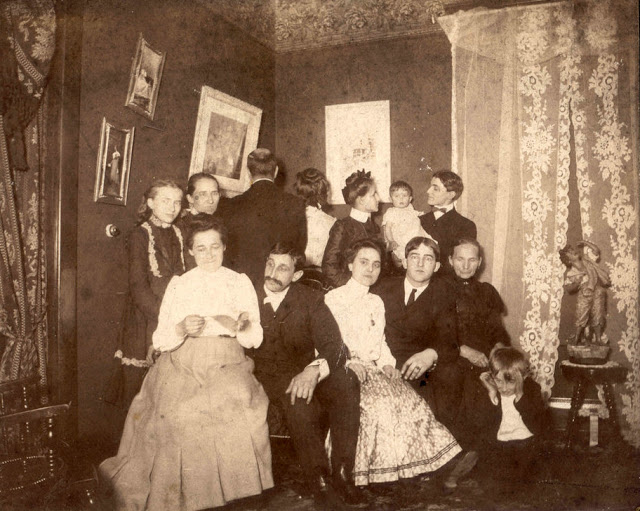
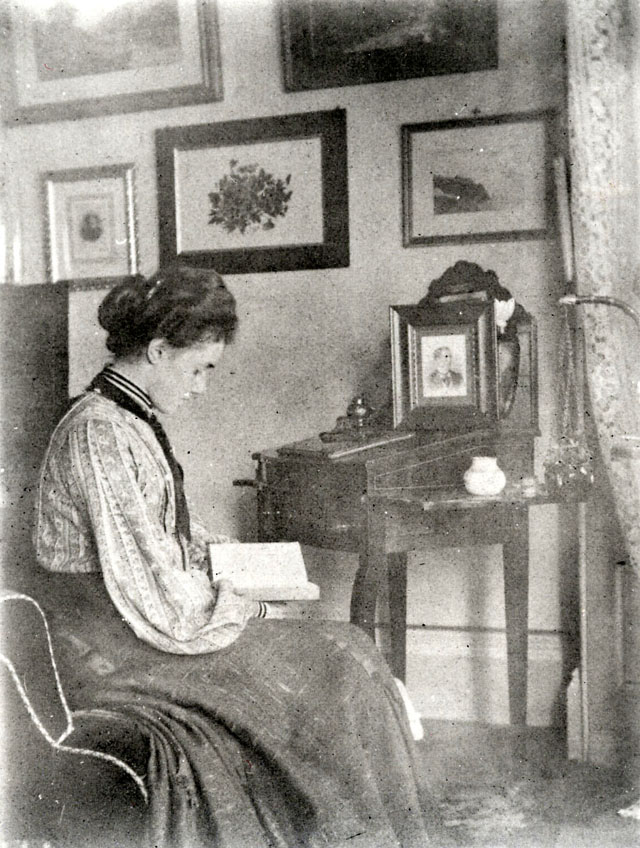
38 Amazing Photos Showing Everyday Life of People in Their Houses during the Victorian and Edwardian Eras

The economic transformations of the Industrial Revolution in the 19th century brought about further changes in men’s and women’s roles. Work was less likely to be done in the home, as fewer and fewer Americans lived on farms, and men left the home to work in offices and factories. Men assumed sole responsibility for the financial support of the family, becoming the breadwinners, a term coined in the early 19th century. Married women were not supposed to work for wages, and were considered too pure and innocent to be out in the working world. Women were supposed to devote themselves to domestic duties, and children were seen as young innocents who needed a mother’s protection. Fathers had less and less to do with raising their children.

Although the 19th-century ideal held that married women were not supposed to work, women did contribute to the family’s well-being. Wealthy women planned formal dinners, balls, and other social gatherings that were crucial to their husbands’ political and business success. Middle-class women sewed for what they called pin money, small amounts that frequently balanced the family budget. Married women in the middle and working classes took in boarders, sold hot lunches or pastries to neighbors, and saved money by doing their own baking, brewing, gardening, and other chores. It was also common in middle- and working-class families for sons to be sent to school, while their teenage sisters supported this schooling by working in a factory, teaching in elementary schools, or taking in sewing. Such work was considered acceptable as long as it was either done in the house or by unmarried young women.
Many 19th-century American families did not fit into this nuclear family ideal, as it was expensive. High housing costs meant more people than just the nuclear family often lived under one roof. Extended families, including grandparents and other relatives, were most numerous in the mid-19th century. Immigrants clung to traditional extended-family forms, and poorer families often included grandparents, grandchildren, and sometimes aunts and uncles in order to maximize sources of income and save on rent.
Check out these amazing photos below to see how did everyday life of people in their houses in the late 19th and early 20th centuries.

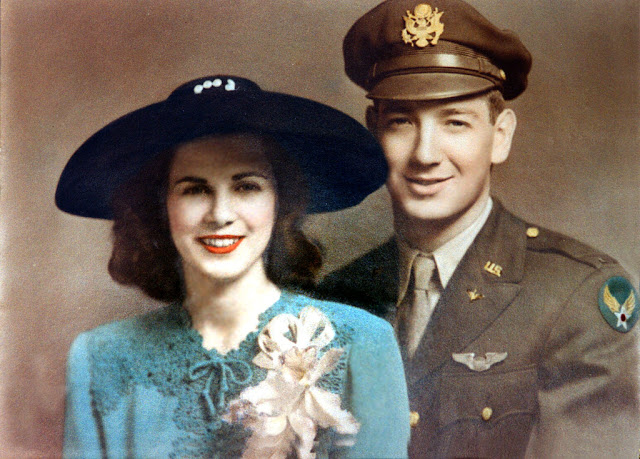
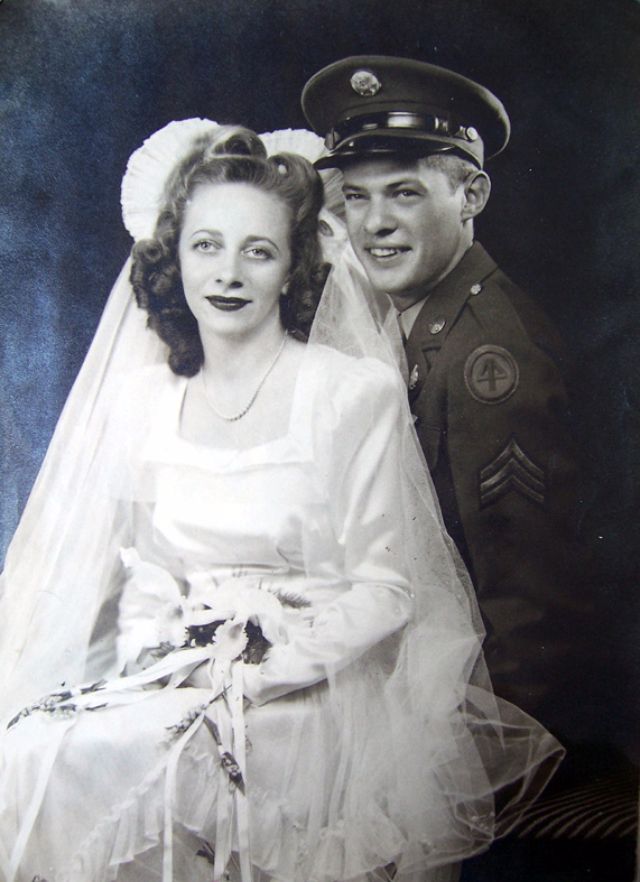
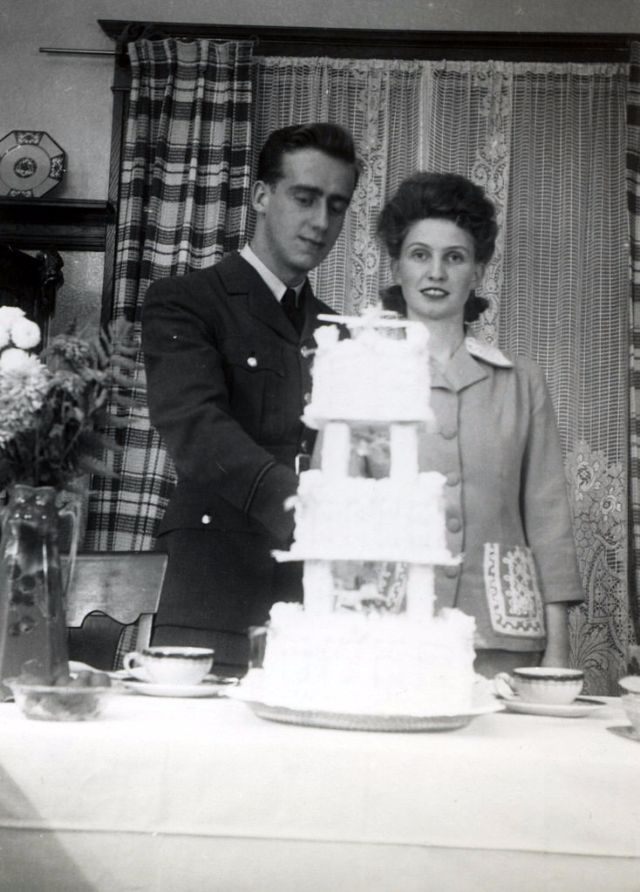
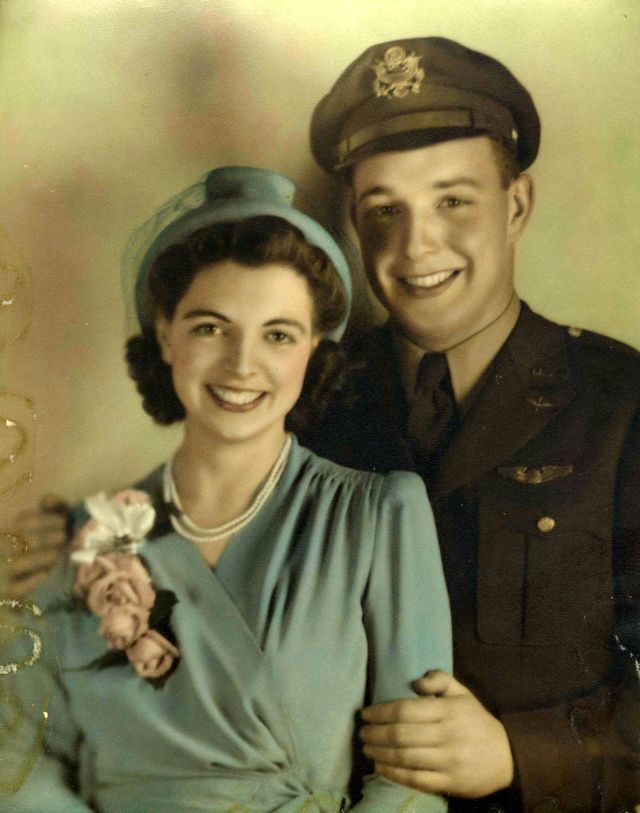
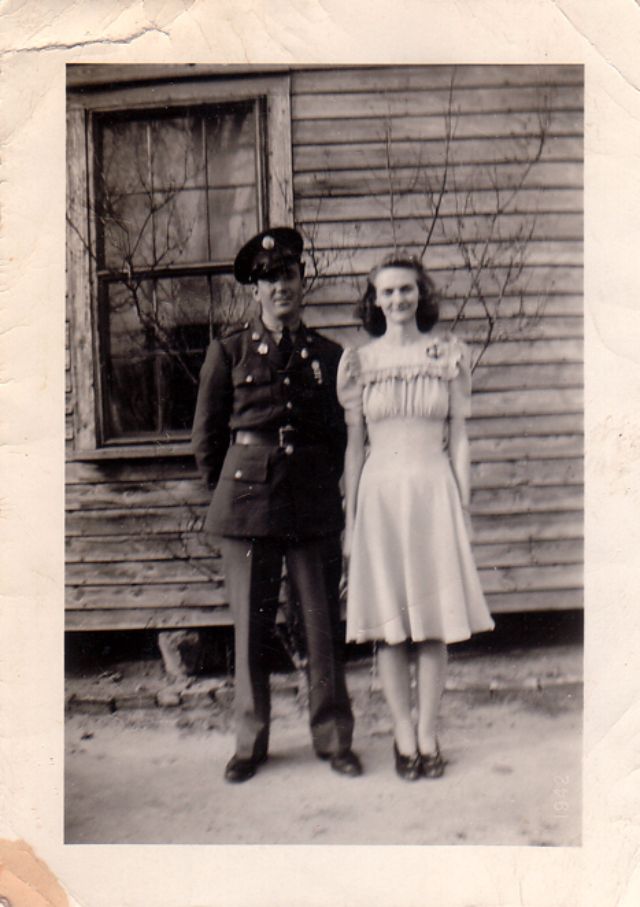
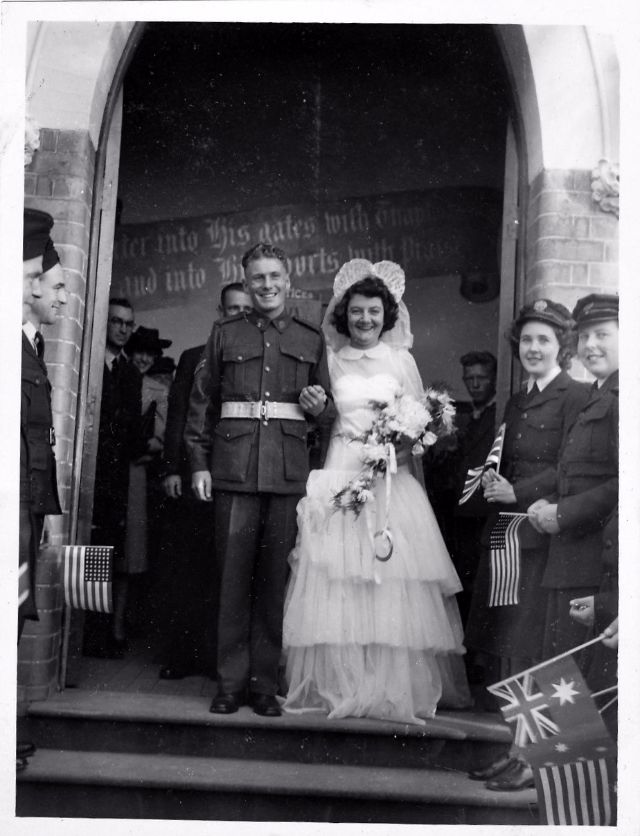
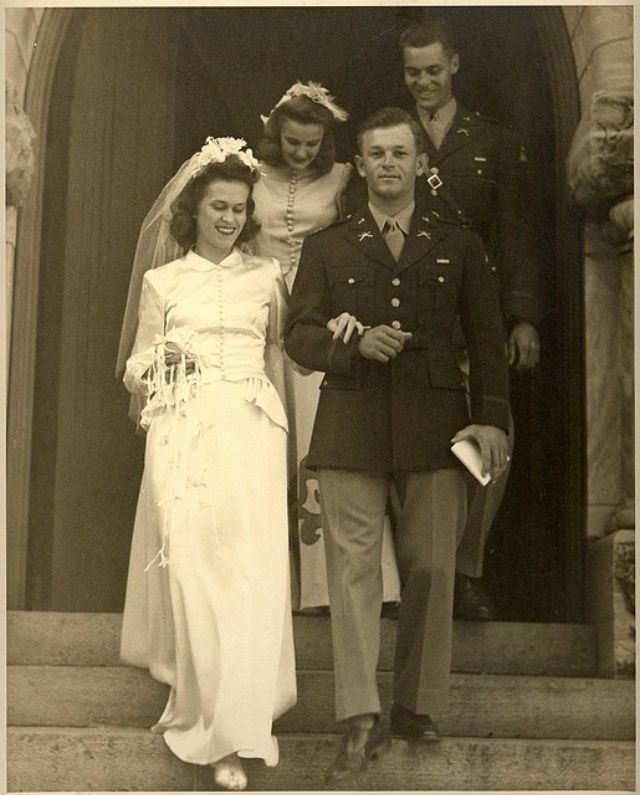
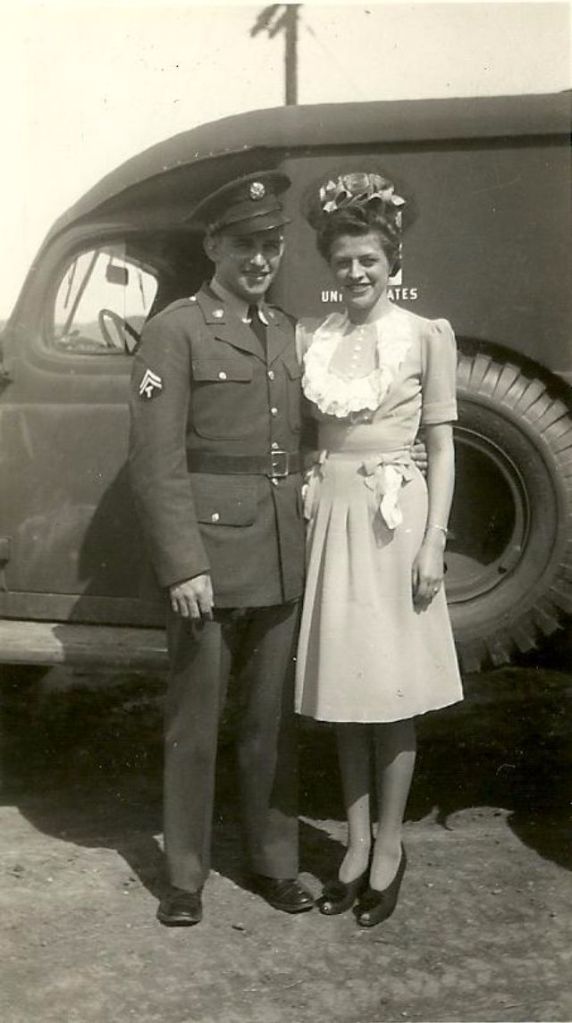
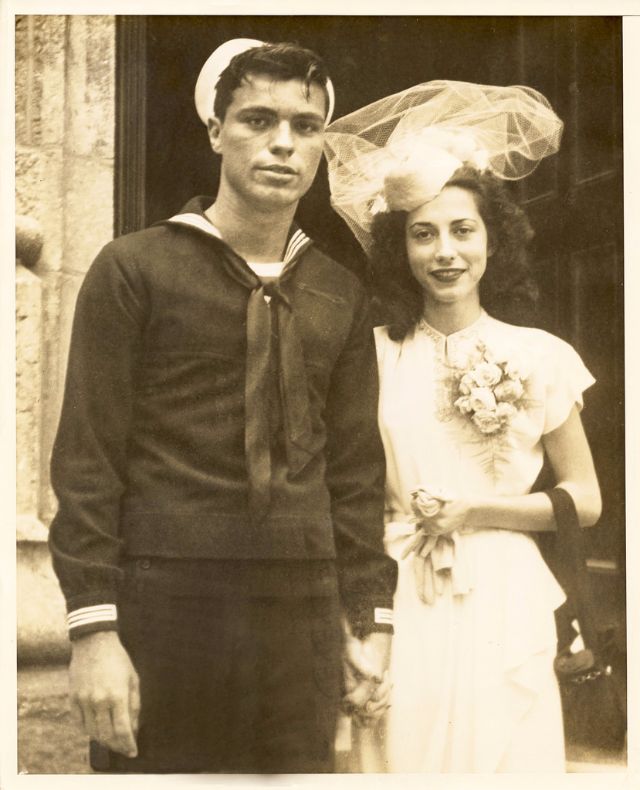
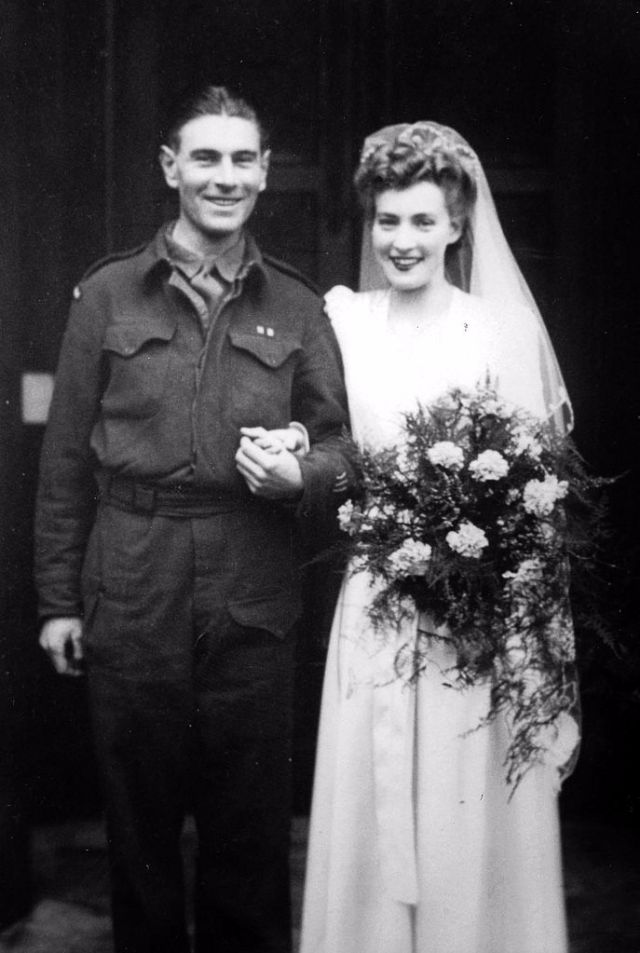
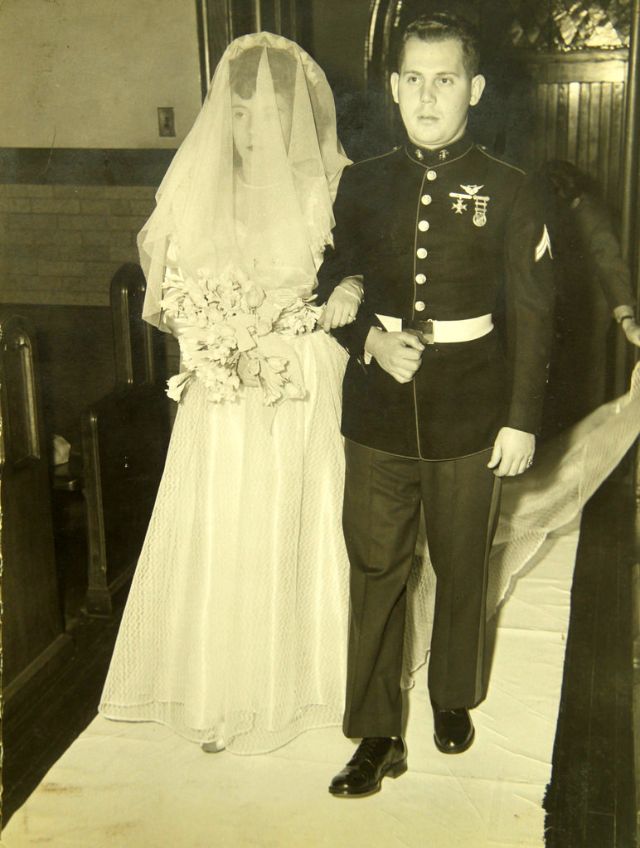
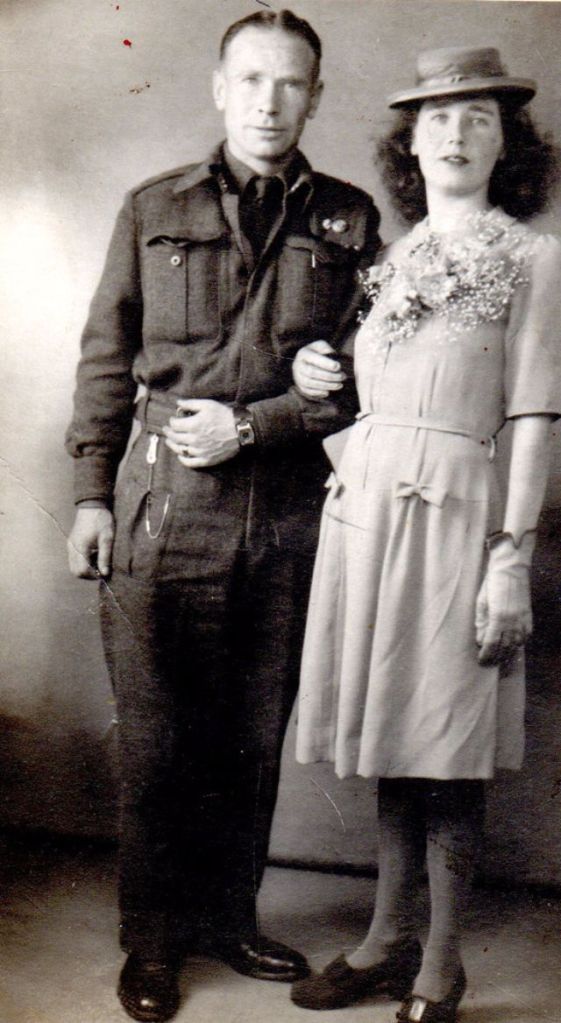
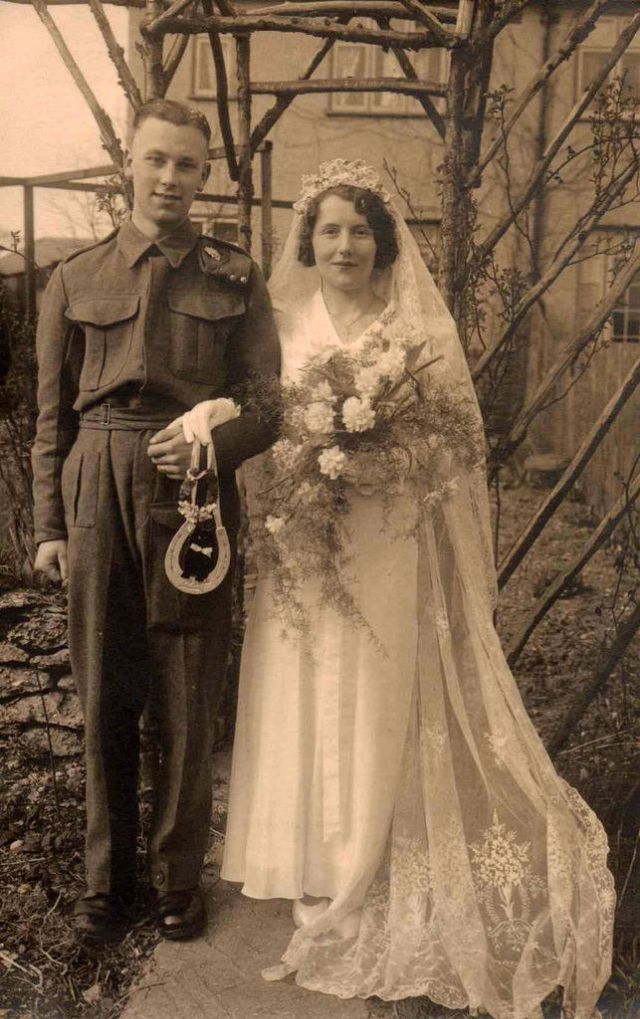
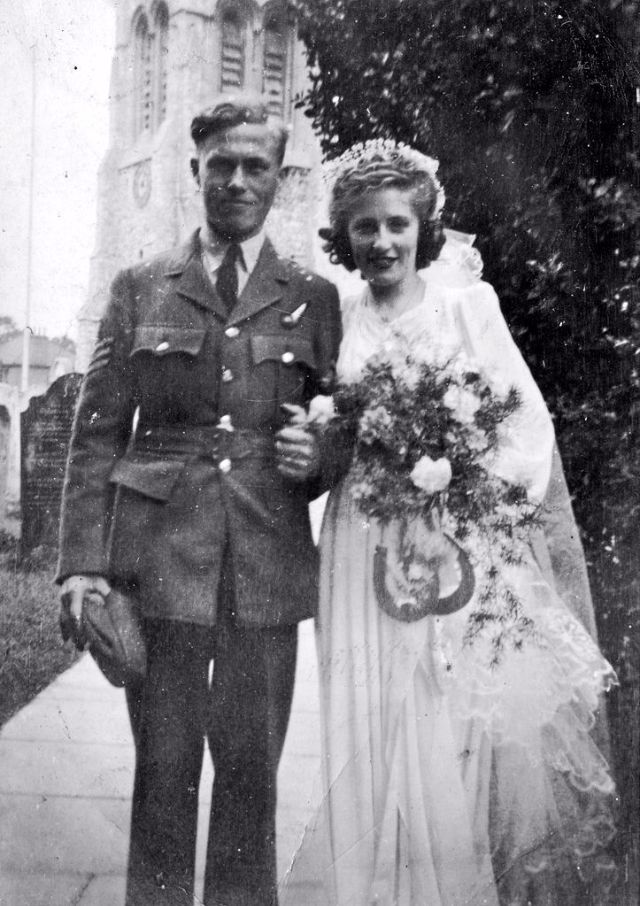
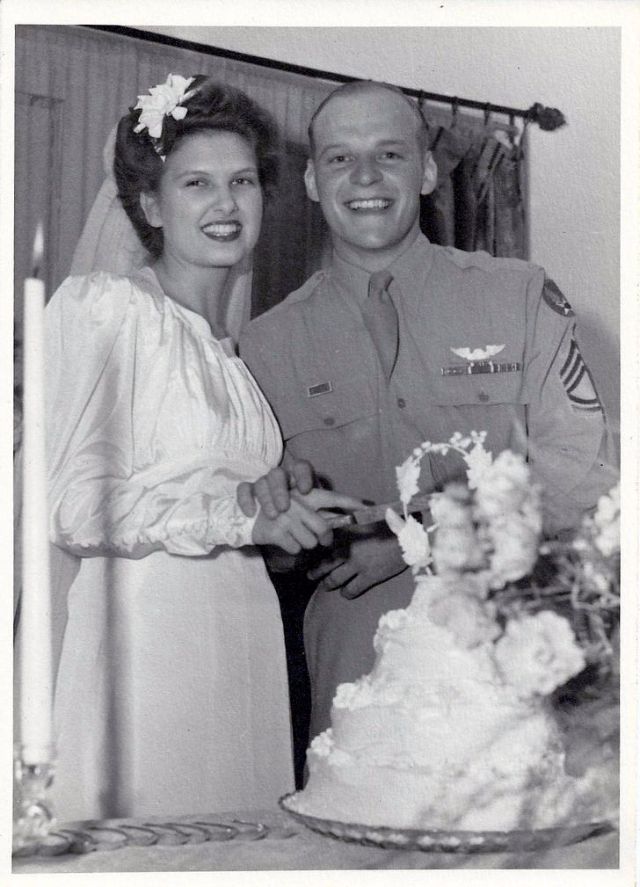
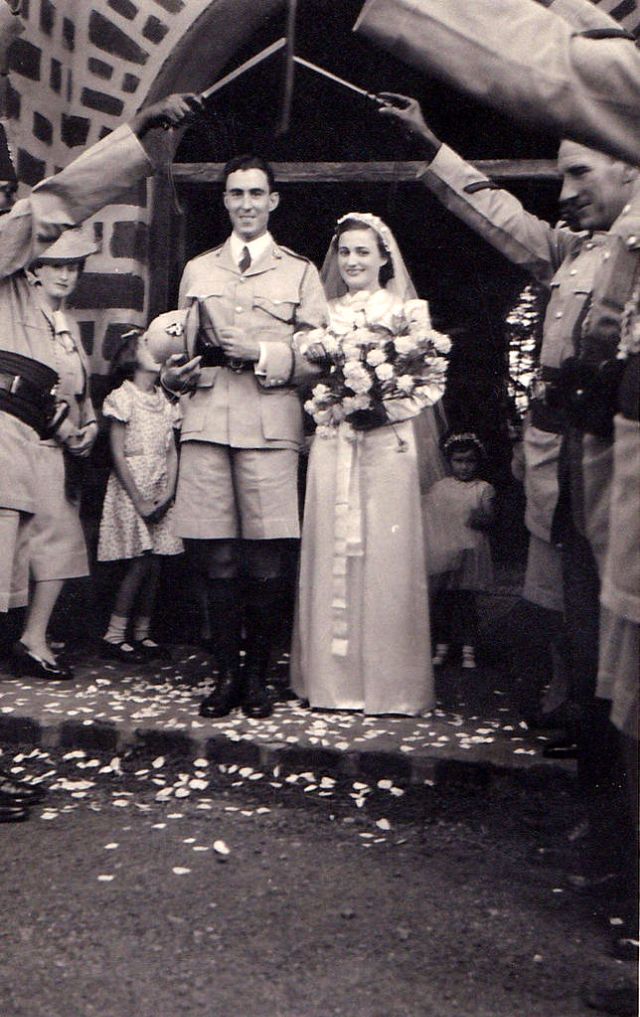
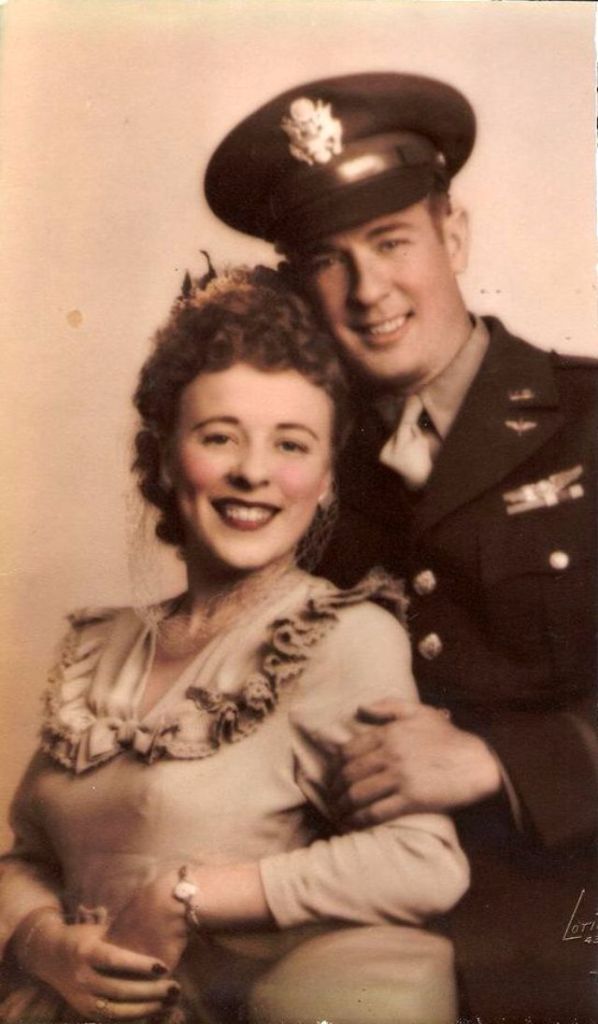
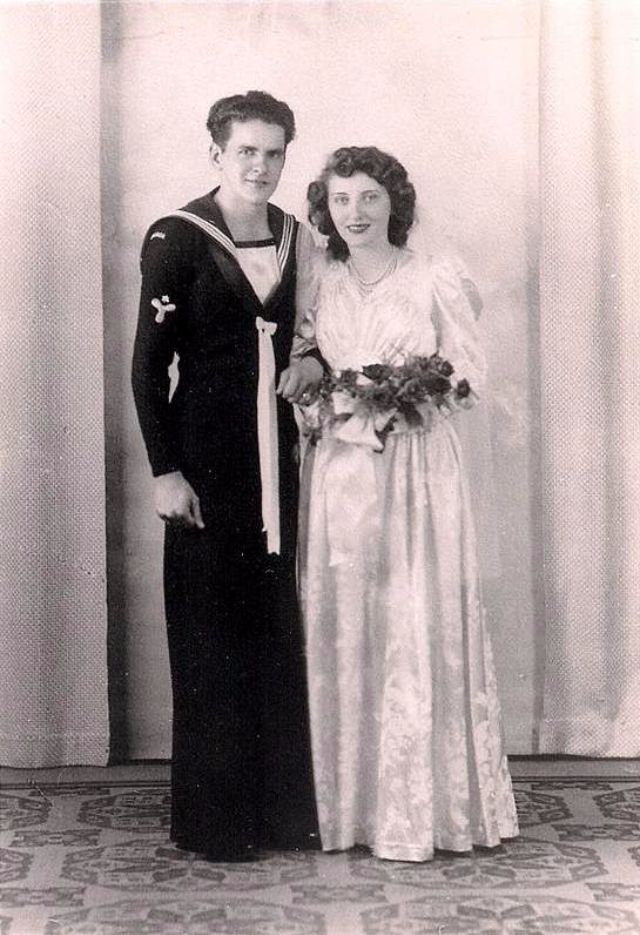
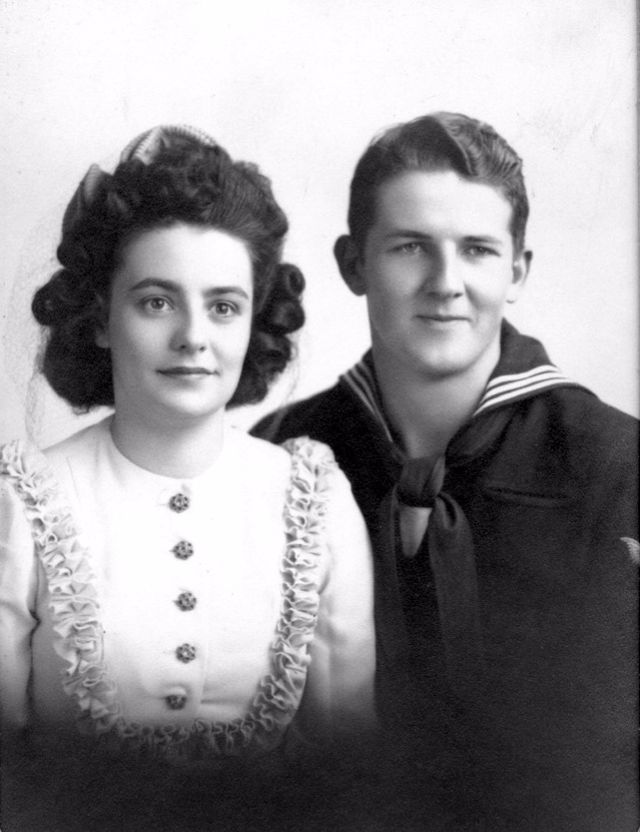
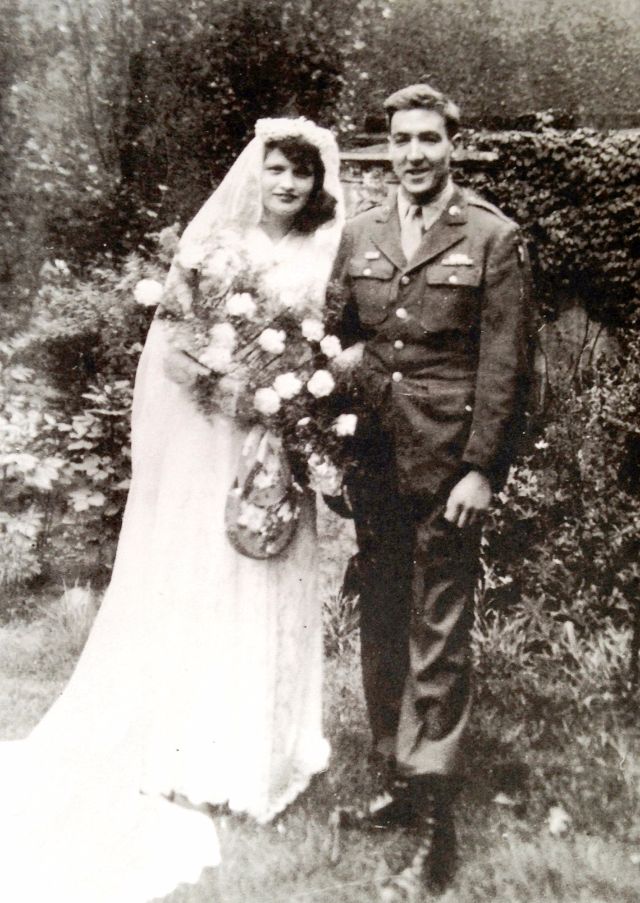
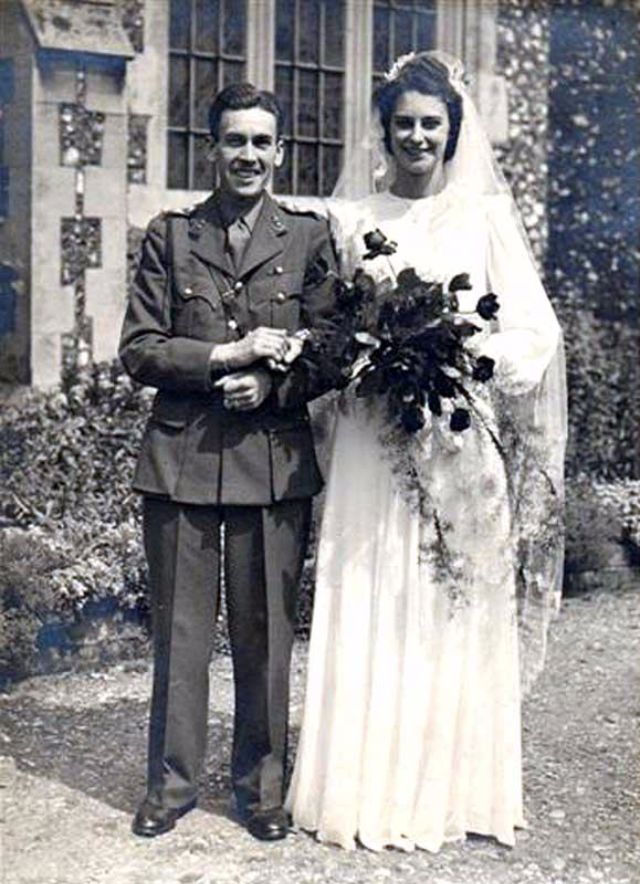
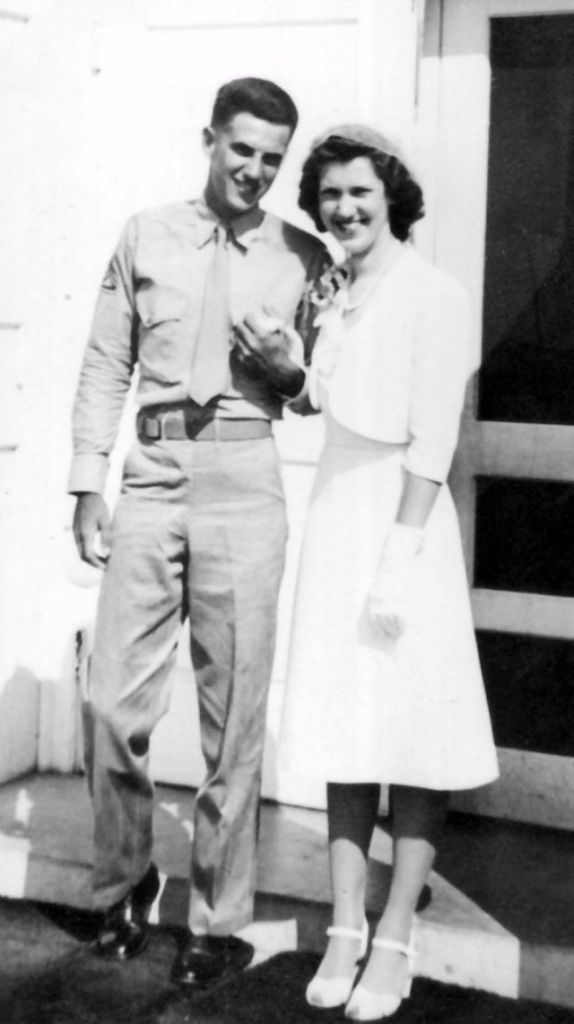
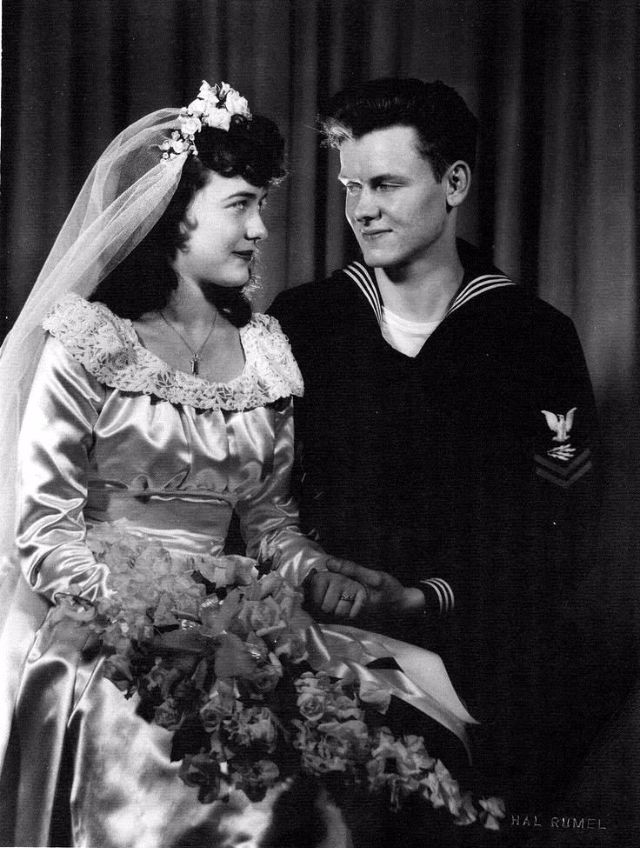
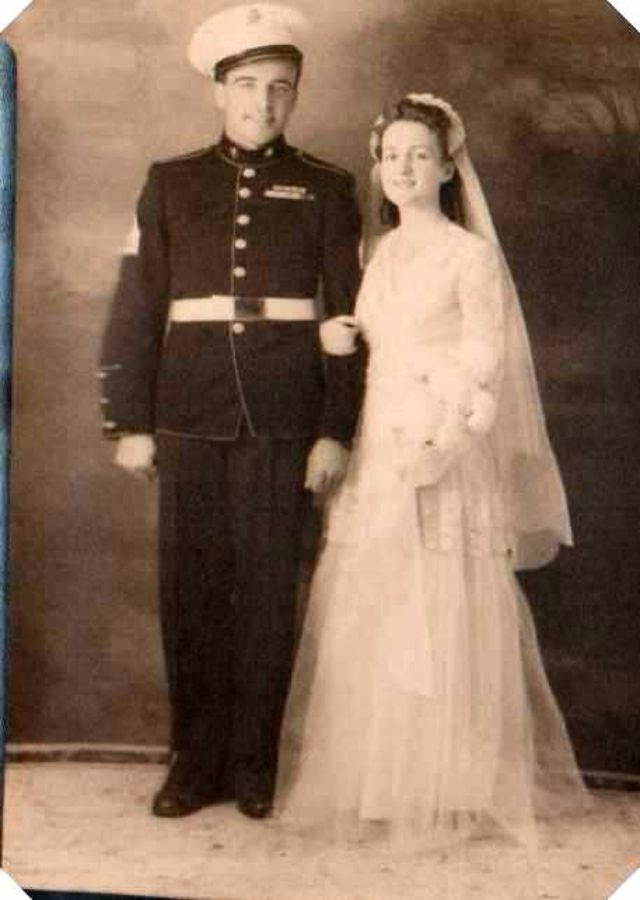
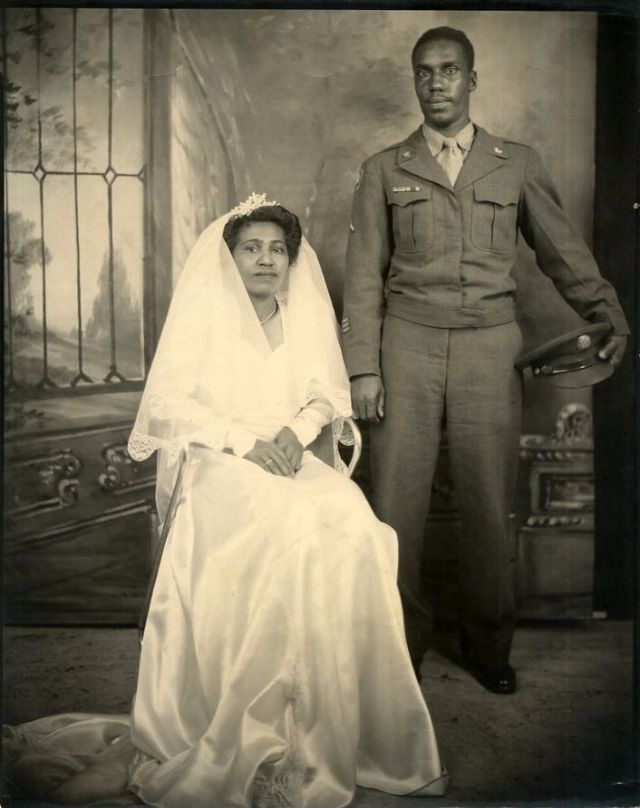
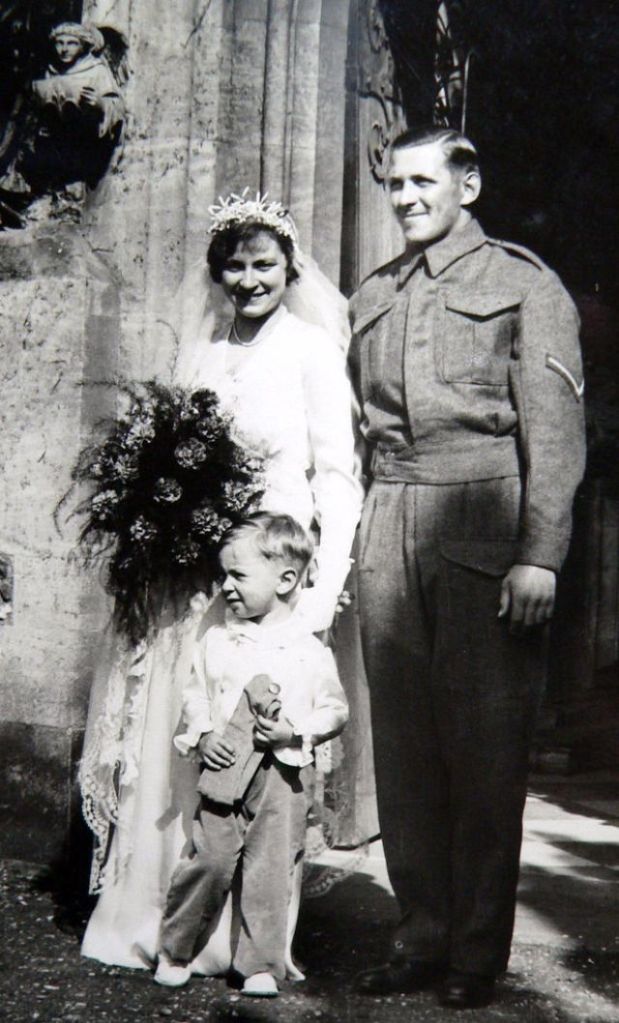
50 Amazing Vintage Photos Showing Wartime Weddings of Soldiers of World War 2

The war years of 1939 to 1945 were filled with romance amid pain and suffering. During World War II many women arranged wartime weddings within a few days to accommodate a boyfriend coming home on a 24 hour leave, before being sent to combat. Frequently there was no time to get a special dress and often women could not afford the clothing coupons needed for a wedding dress.

Nevertheless happy weddings took place, with family members donating small amounts of staples like sugar, flour and eggs so that the war bride could bake a wedding cake.

Women borrowed hats, raided gardens for flowers and loaned wedding dresses. Bridesmaids reused dresses worn to other weddings. This sometimes gave a mix and match look to bridal group photographs. Most brides wore clothes so that every item could be used again in a different venue. Friends and family rallied around loaning a hat, a bit of lace, or a dress.

A bride often wore her hair high on top of her head in a waved roll. Abundant hair was helpful, but lack of it did not stop women from adopting the style. Ever resourceful, they used old stockings rolled up to create foundations to be covered by their own hair. This style became popular since it offered the glamour lacking in other areas of wartime life. The look is film star glam.

Army, Navy and Air Corps personnel usually wore their uniforms when they wed.

In 1944, an American B-29 pilot was returning with his crew from a bombing raid over Japan, when the plane’s engine caught fire. The pilot used his parachute to jump from the burning aircraft. Later the chute helped him survive by providing shelter until he was rescued. After returning home from war, he proposed to his girlfriend. She used the life-saving parachute as material for her wedding dress. She modeled her dress on one which appeared in the movie Gone With The Wind. The bride used the original parachute strings to create the train in the back. A person can think of no other wedding dress that would be as meaningful as one that saved the life of the groom. (www.hhhistory.com)

50 Magnificent Photos of Cities of the World During the 19th and 20th Century

Prague, Czech Republic in 1964.
Moscow, Russia in 1977.
Bombay, India in 1880.
Athens, Greece in the 1930s.
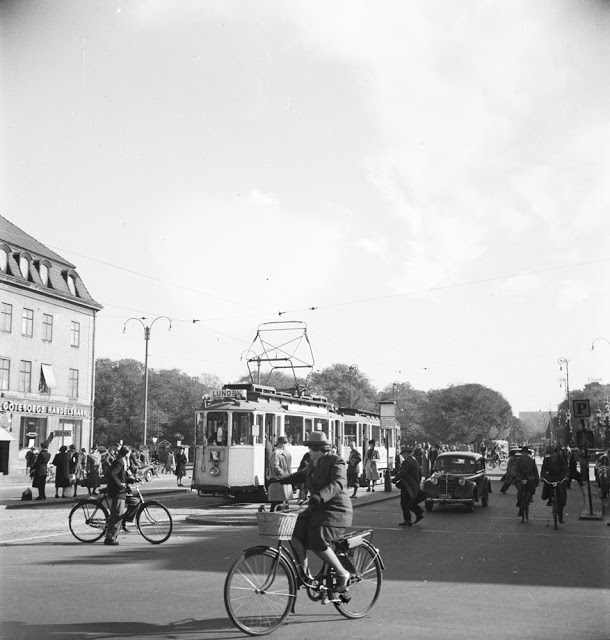
Gothenburg, Sweden in 1961.
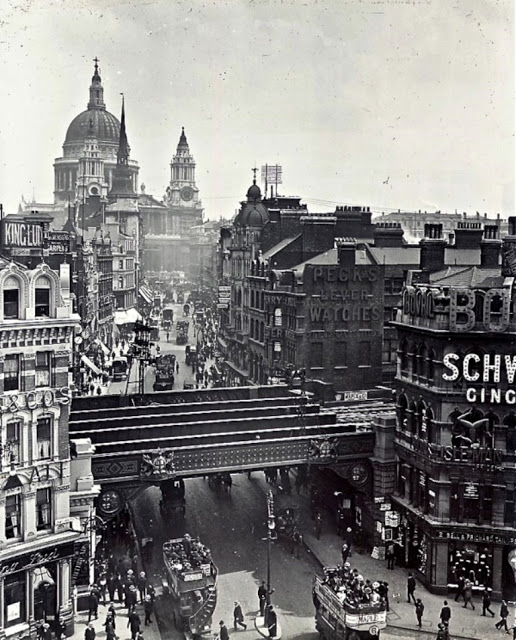
London, England in 1920.
London, England in 1950.
Rome, Italy in 1949.
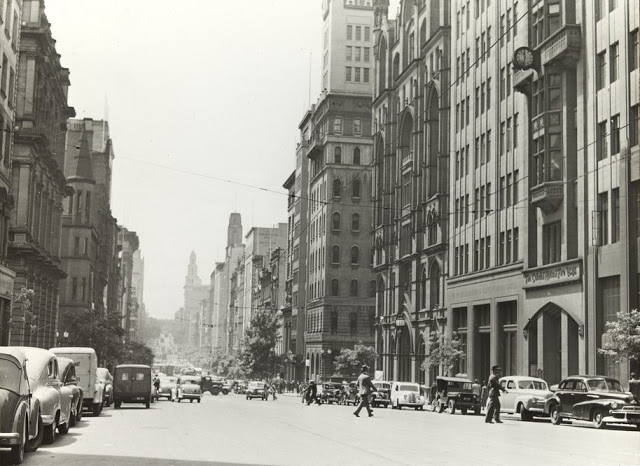
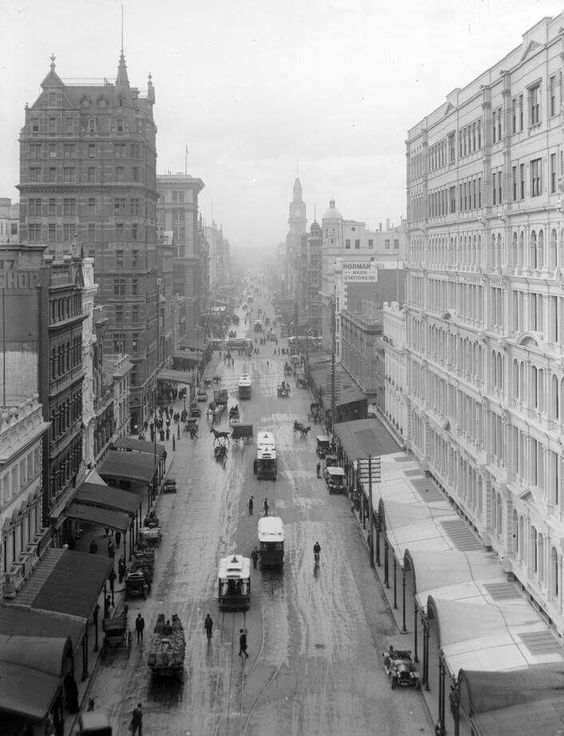
Melbourne, Australia in the 1930s.
Milan, Italy in 1950.
Paris, France in 1948.
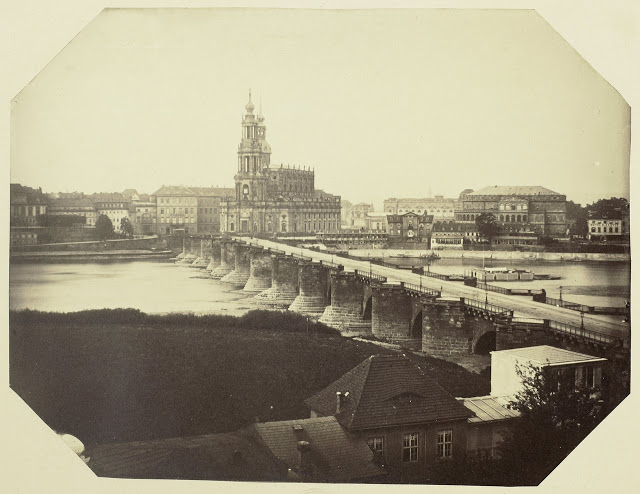
Dresden, Germany, 1857
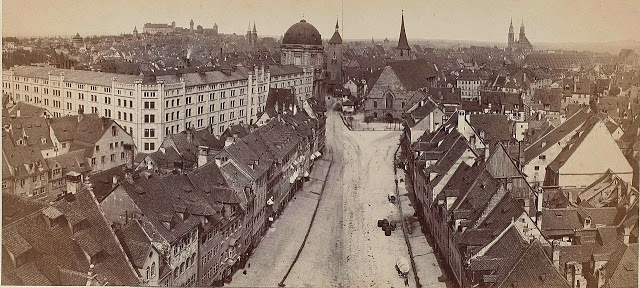
Nuremberg, Germany, 1860
Port Said, Egypt, 1888
Montreal, Canada, 1893
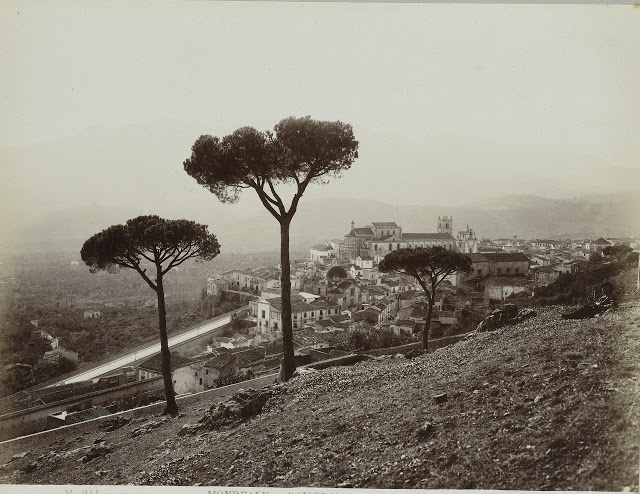
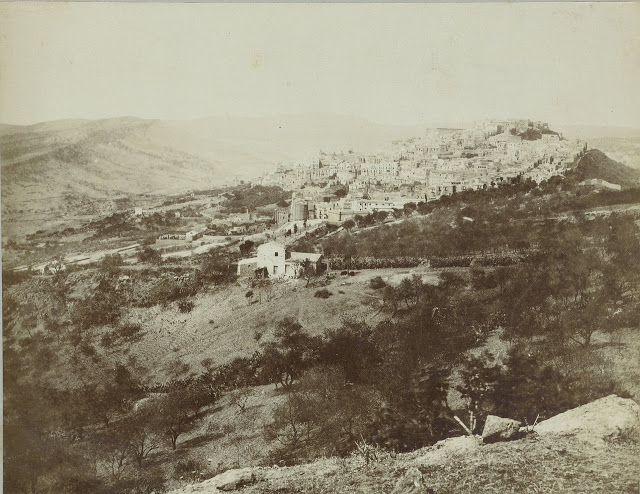
Agrigento, Italy, 1893
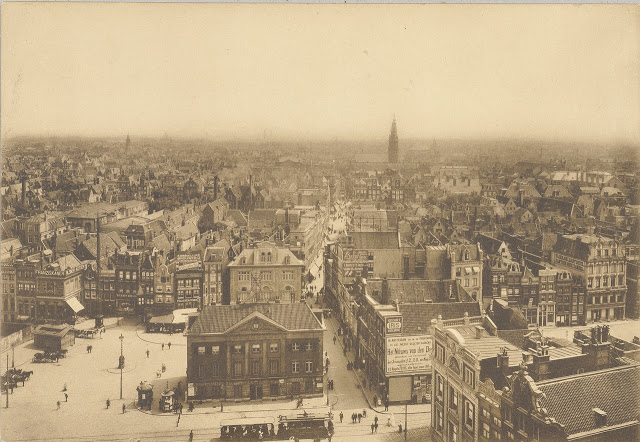
Amsterdam, Netherlands, 1906
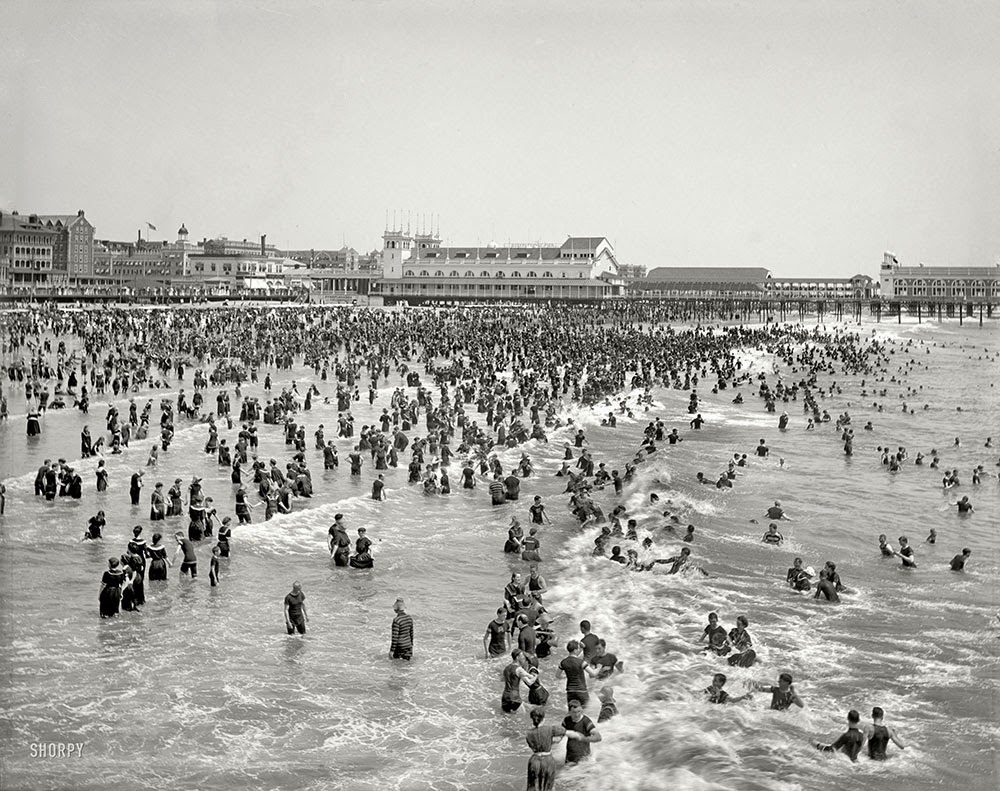
Atlantic City, New Jersey, USA, 1904
Mexico City, Mexico, 1904
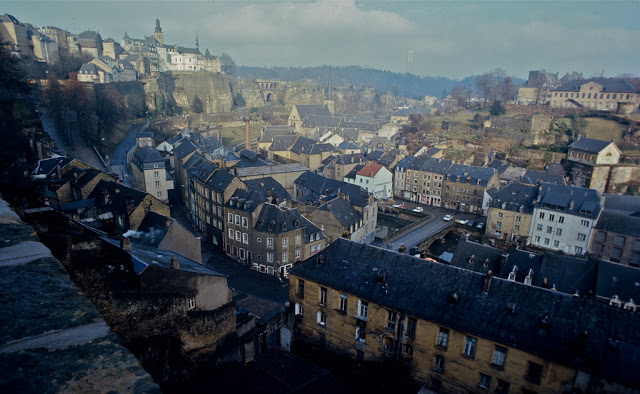
Luxembourg City, 1972
Salt Lake City, Utah, USA, 1940s
Rio de Janeiro, 1920
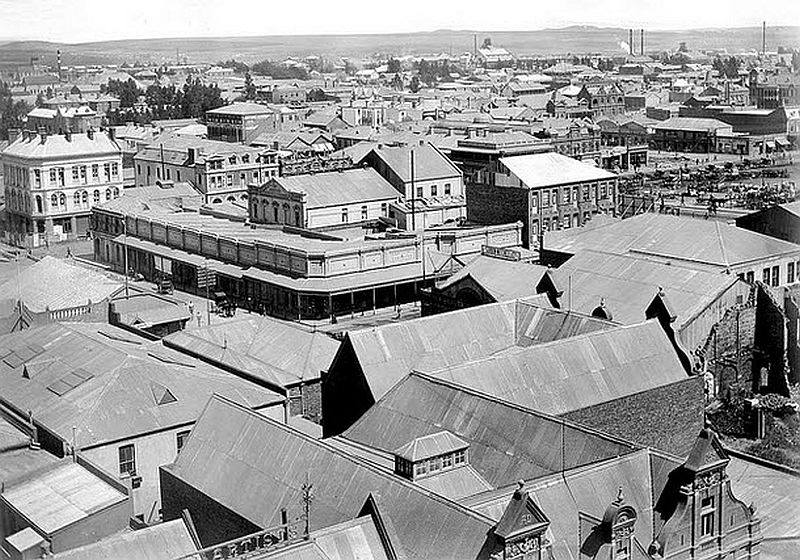
Johannesburg, South Africa, 1900
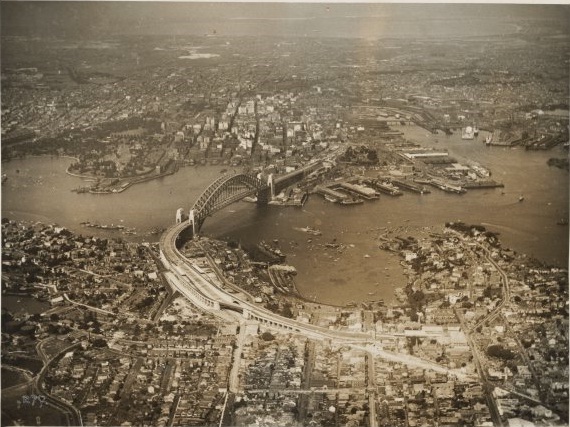
Sydney, Australia, 1932
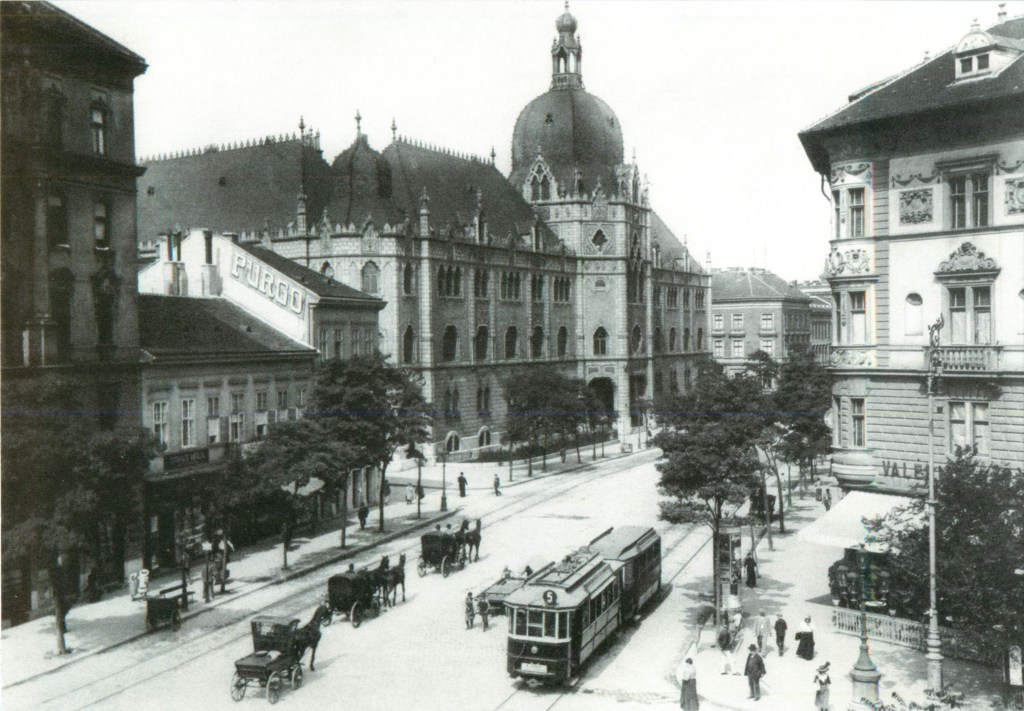
Budapest, Hungary, 1900
Oslo , Norway 1905
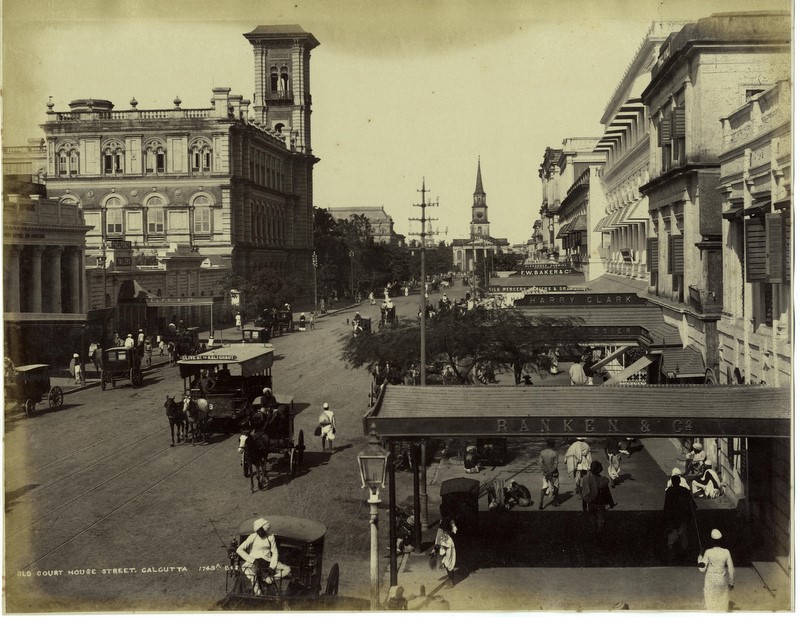
Calcutta, India 1880s
New York City, 1905
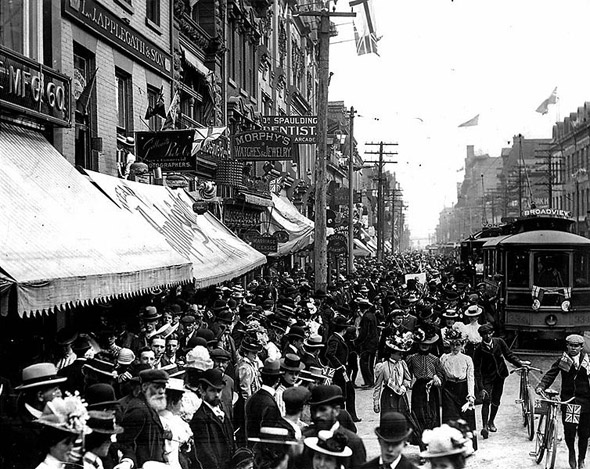
Toronto, Canada, 1902
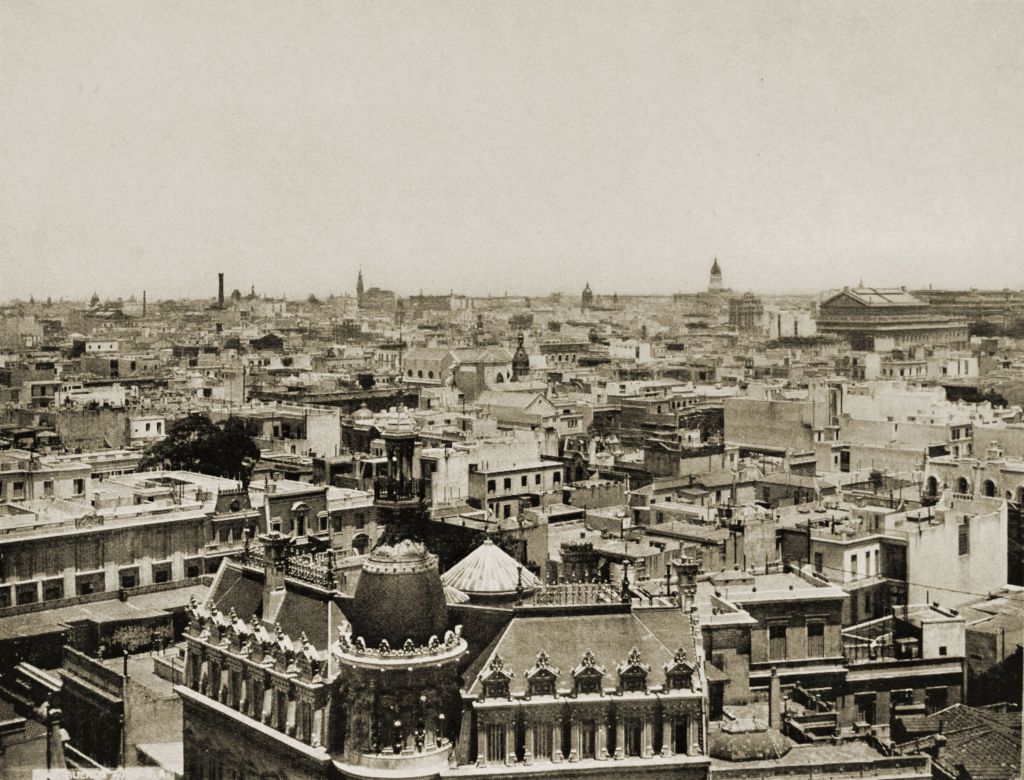
Buenos Aires, Argentina, 1917
Manila, Philippines, 1901
San Salvador, El Salvador, 1950.
Madrid, Spain 1930
Havana, Cuba 1907
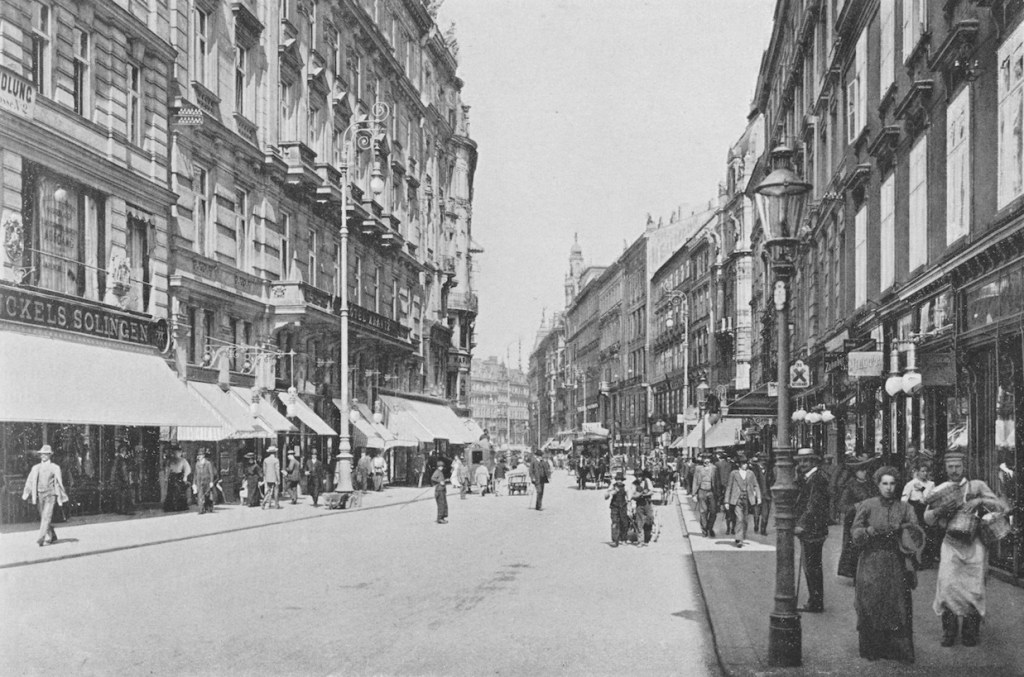
Vienna, Austria 1900
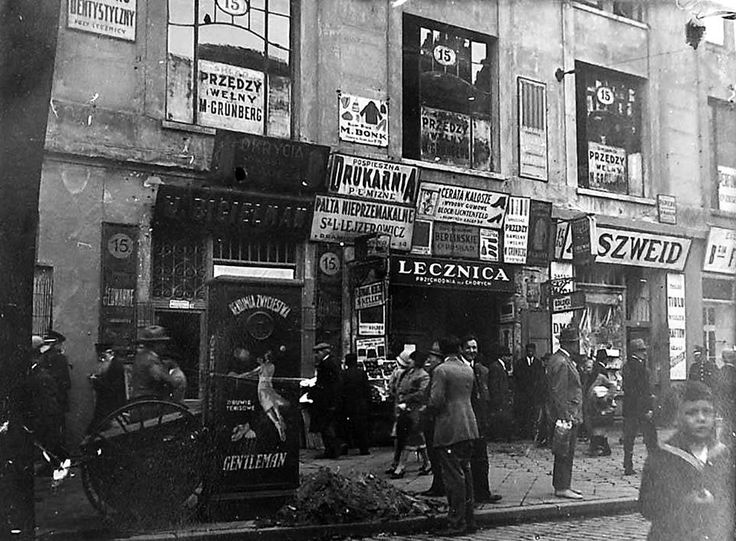
Warsaw, Poland 1930s
London, England 1930s
Melbourne, Australia 1916
Stockholm, Sweden 1949
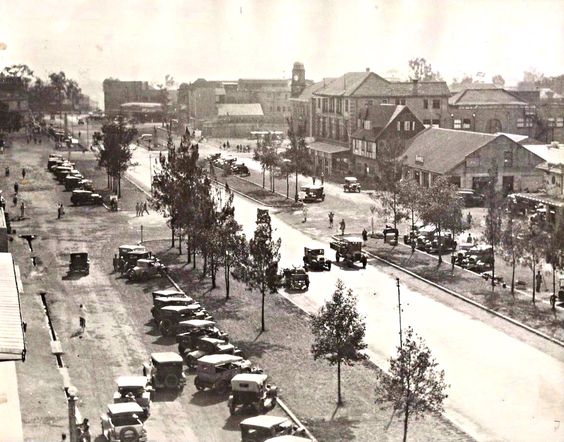
Nairobi, Kenya 1939
Cairo, Egypt 1930s
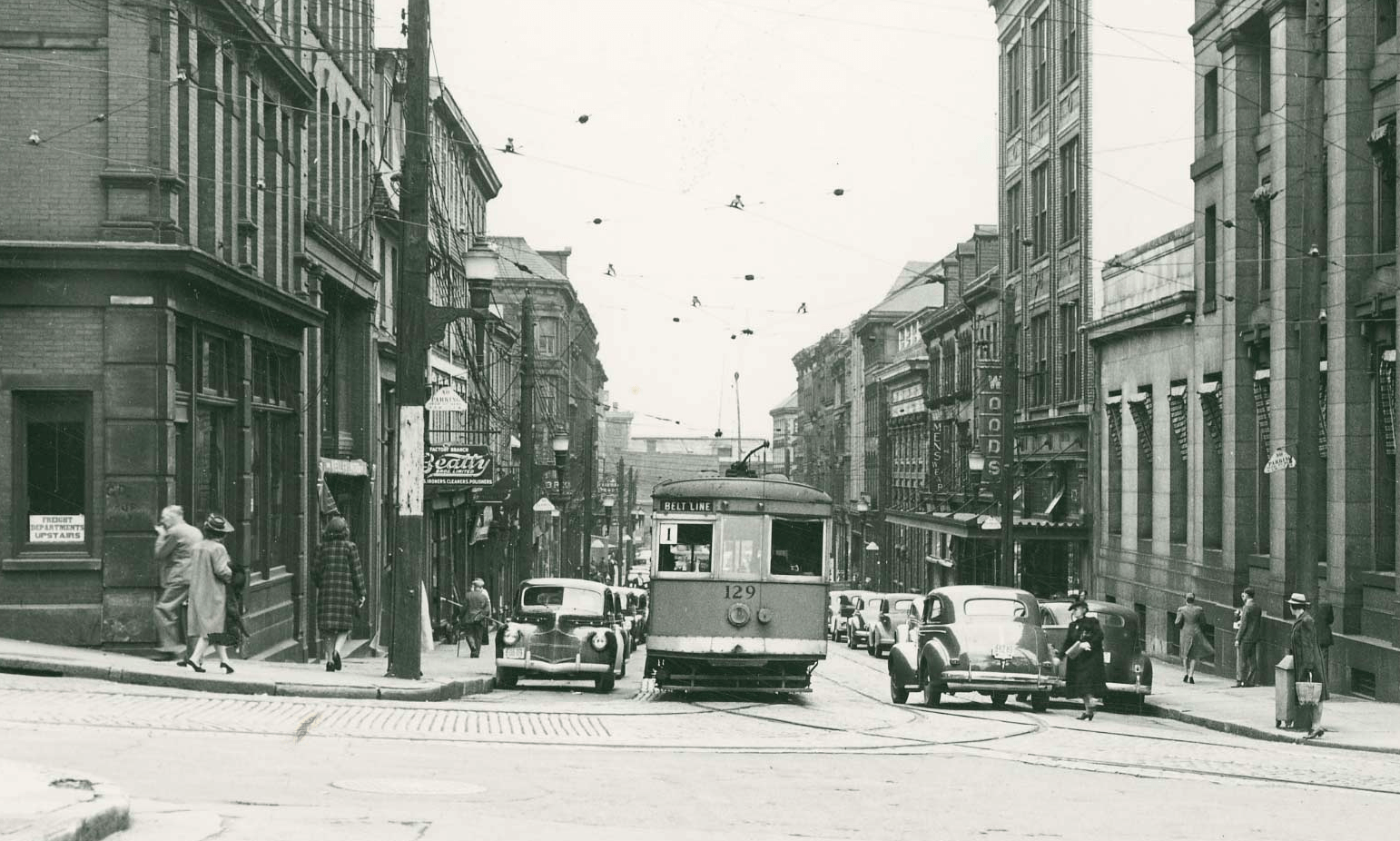
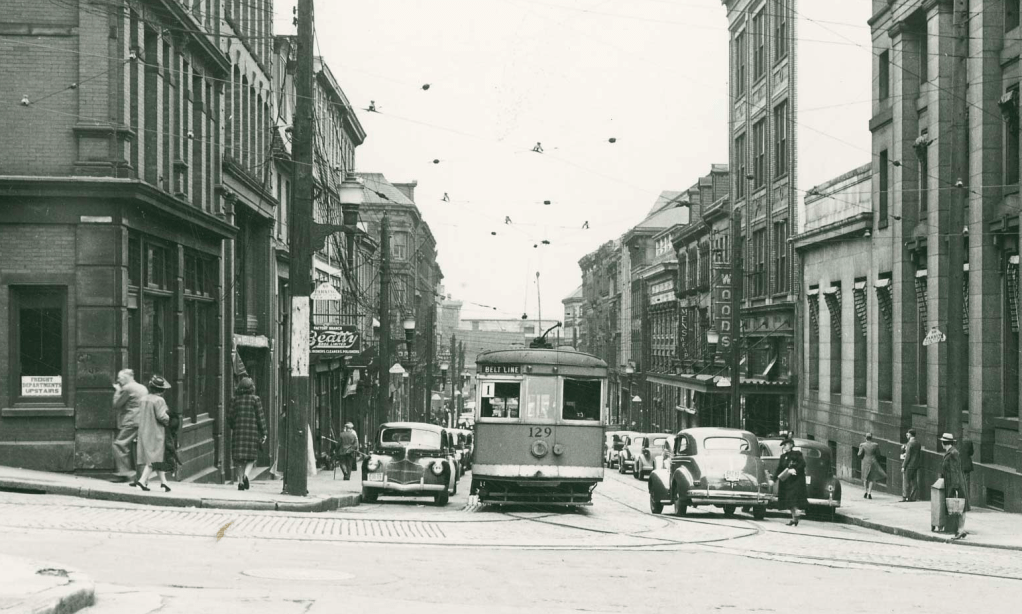
Halifax, Nova Scotia, Canada 1940s
New York City 1903
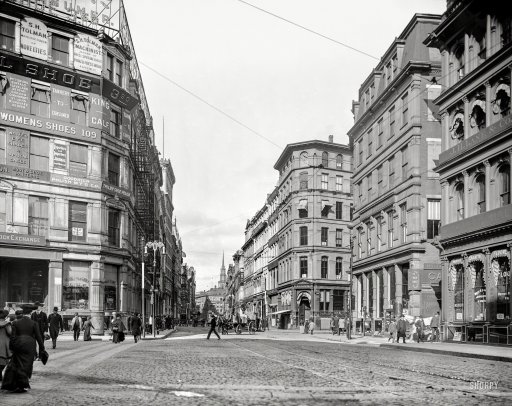
Boston, Massachussetts 1904
Glasgow, Scotland 1890
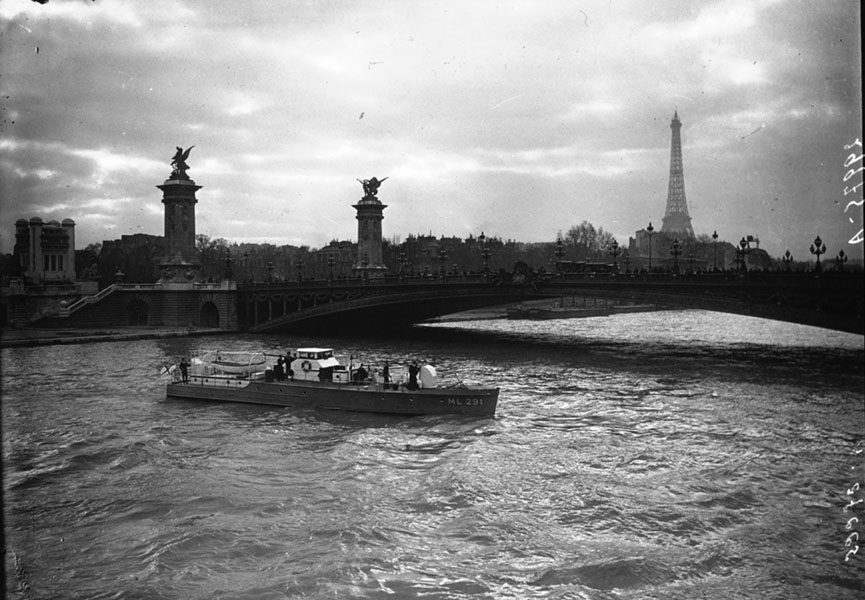
Paris, France 1926
Sydney, Australia 1904
Kobe, Japan 1938
Chicago, Illinois 1942
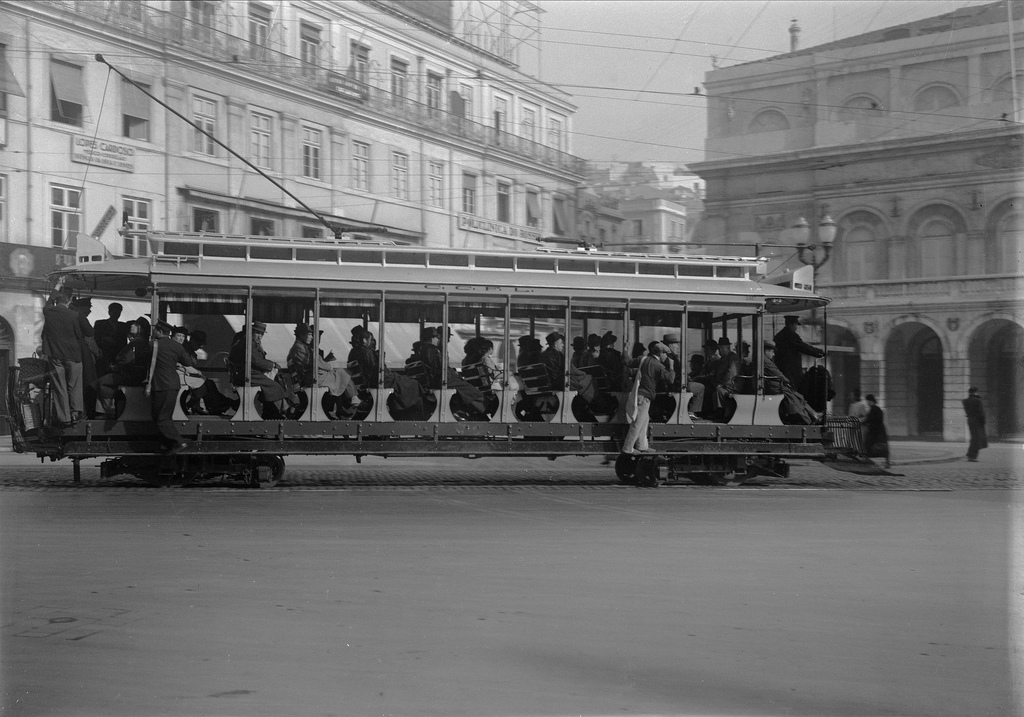
Lisbon, Portugal 1902

Yesterday Today

Bringing You the Wonder of Yesterday - Today

Skip to content ↓