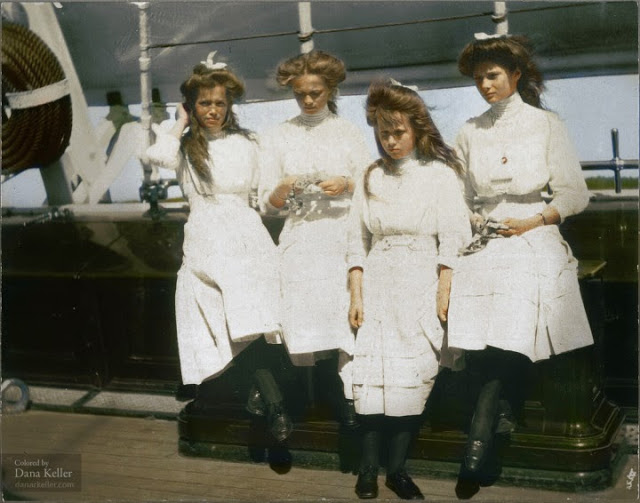
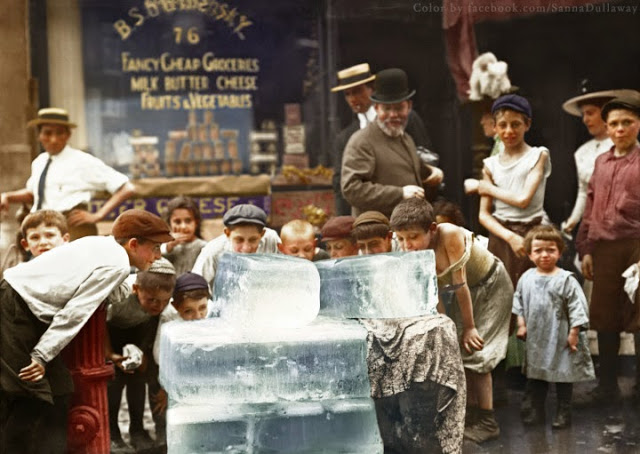
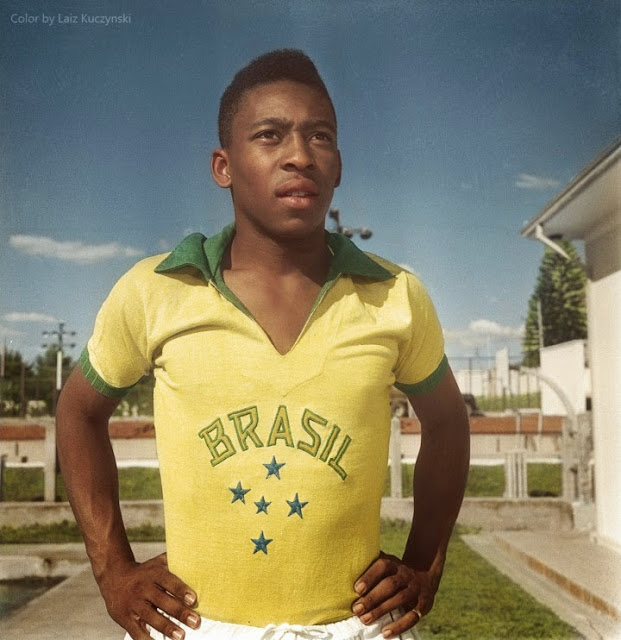
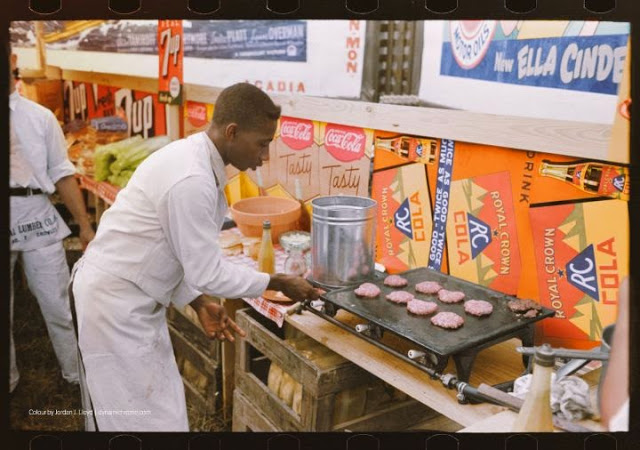
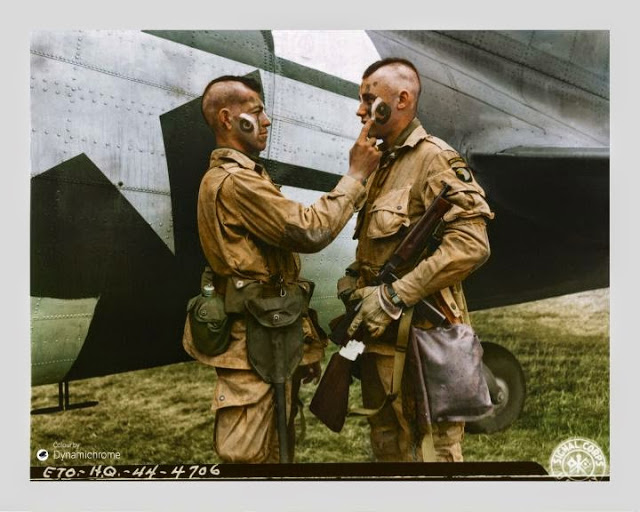
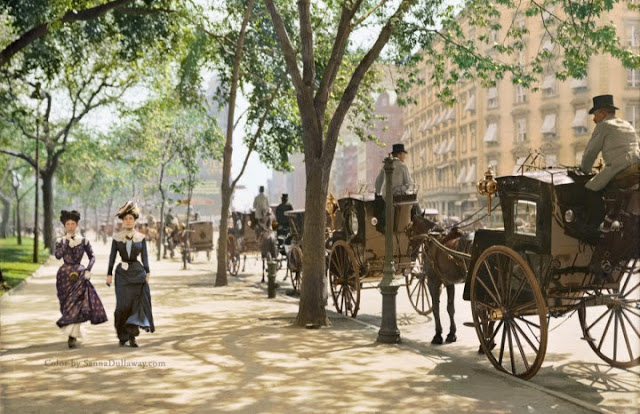
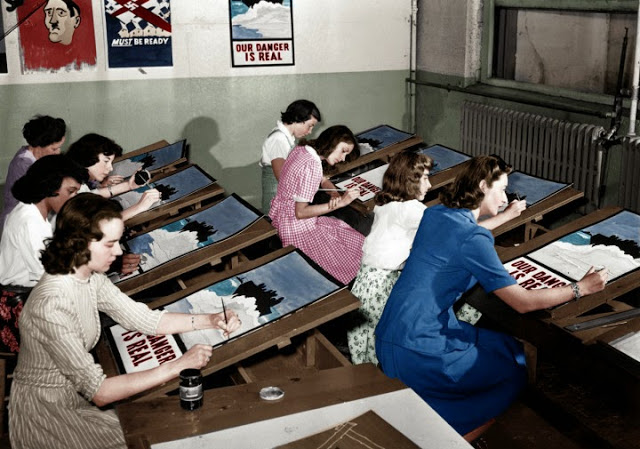
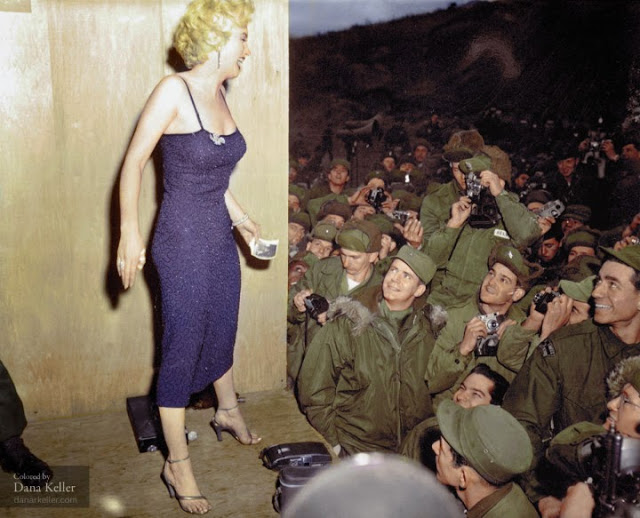
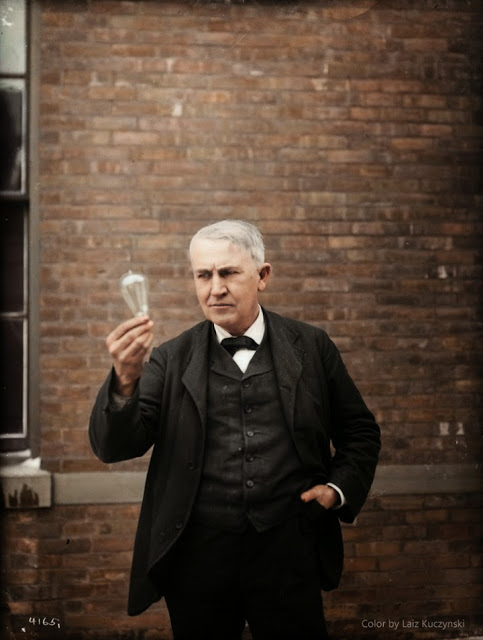
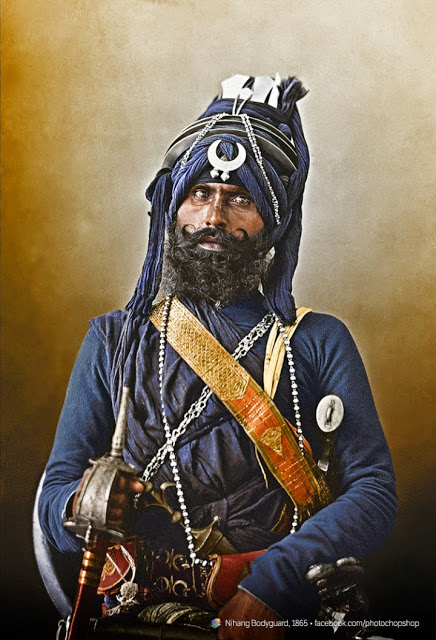
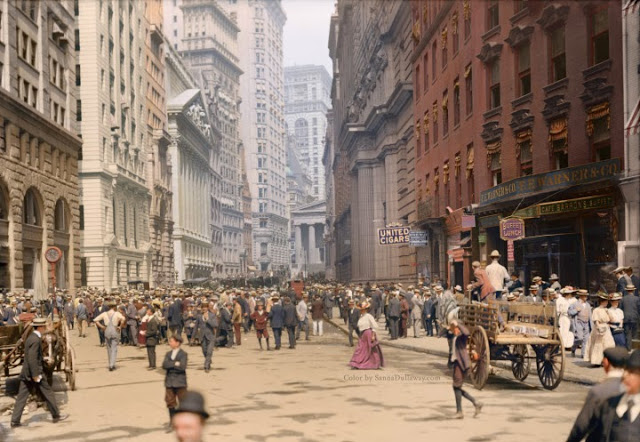
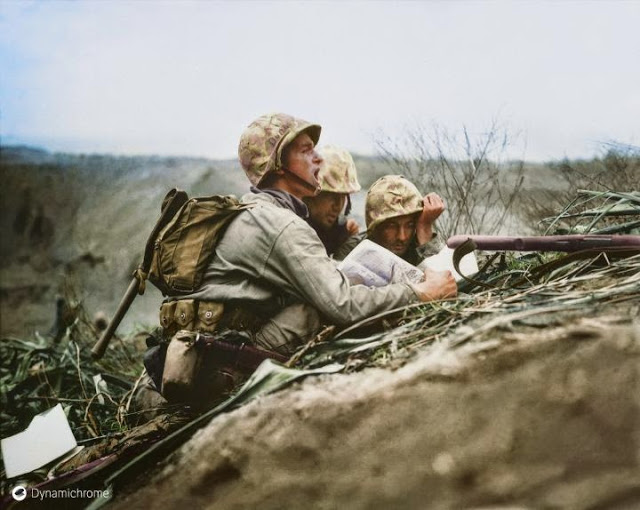
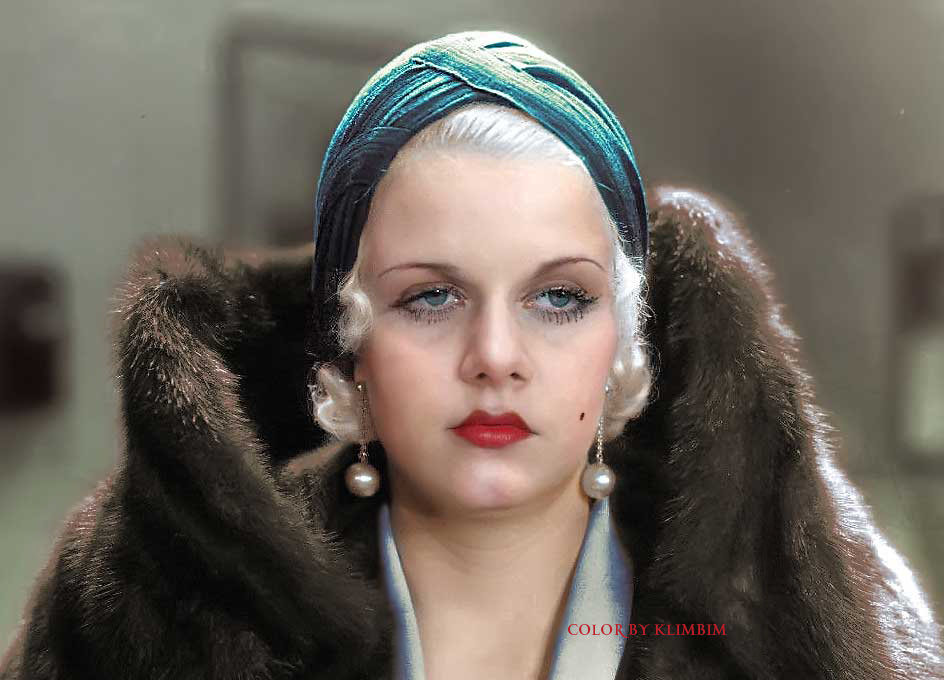
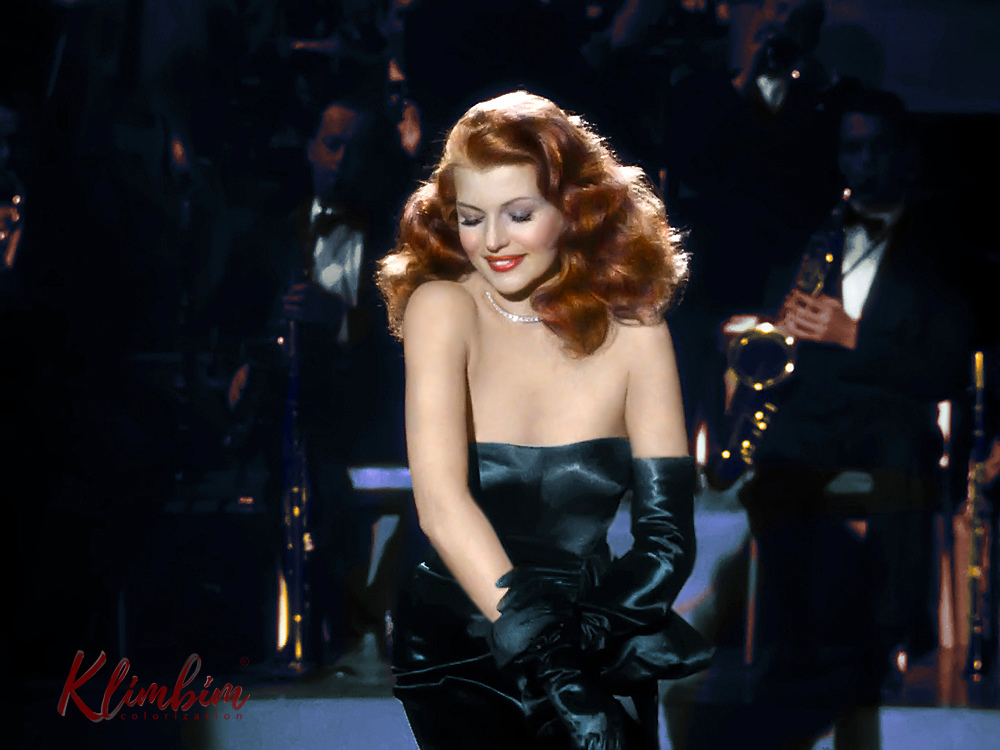
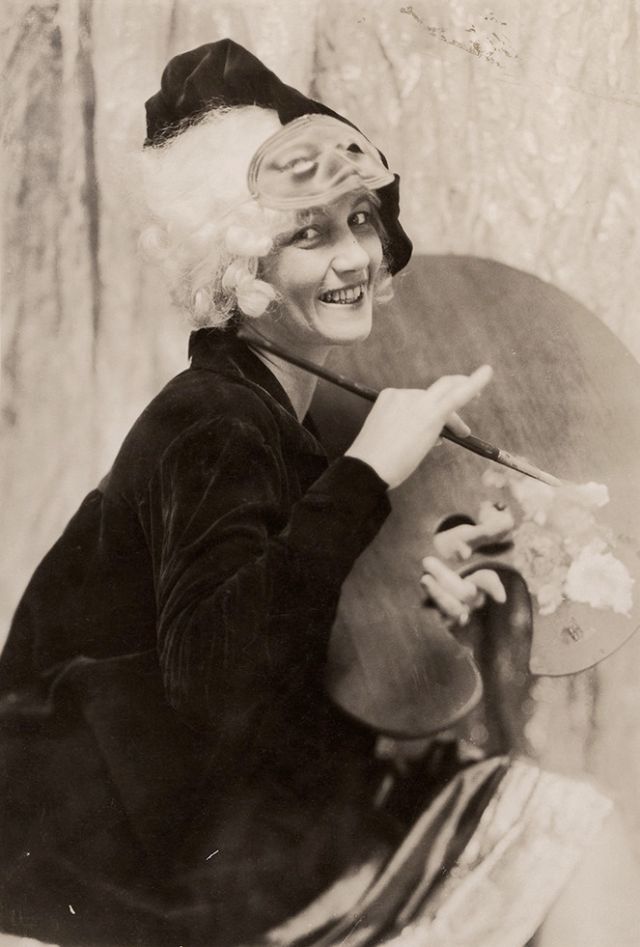
Relating to the past can be difficult when all you have to look at are faded black and white photos that feel like they are from another planet. The mind thinks and remembers in color, meaning a color photograph is much easier to connect with than a black and white photo.
Thanks to film colorization historic photos restored to full color bring new life to history. Film colorization is a process that can be conducted digitally or by hand. Prior to the 1970s basic colorization was possible but required carefully painting color onto film stock.
The invention of the computer has completely altered the way we restore historic photos thanks to digital colorization. While the process is still time-consuming it is very much worth the hard work.
Research is conducted to match colors as closely to how they really looked as possible, but in some cases artists must guess which colors to use.
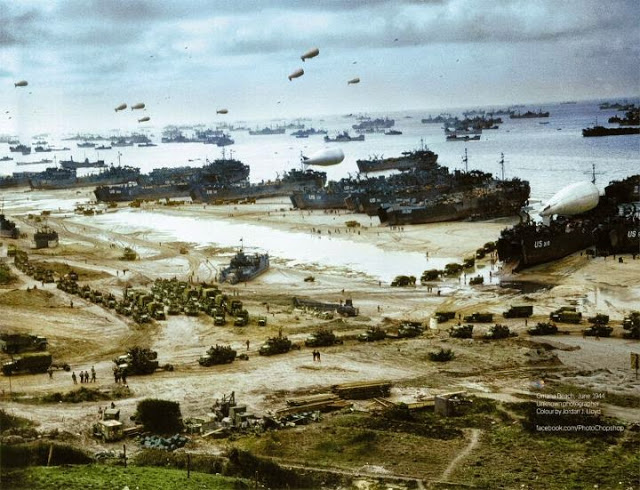
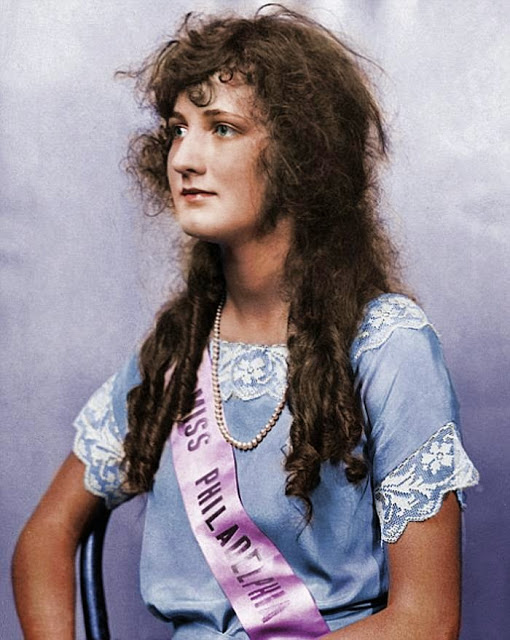
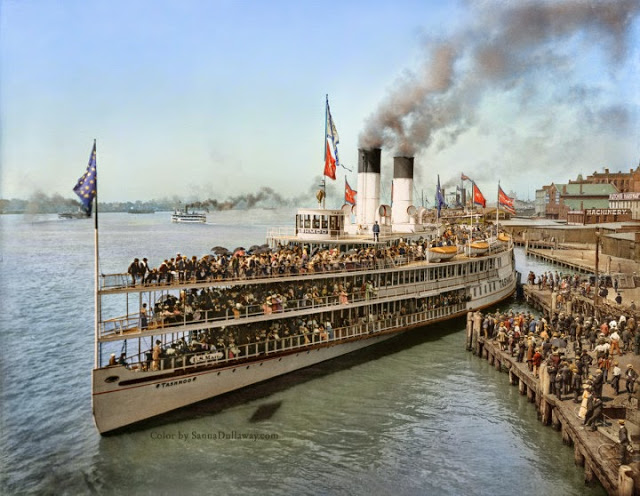
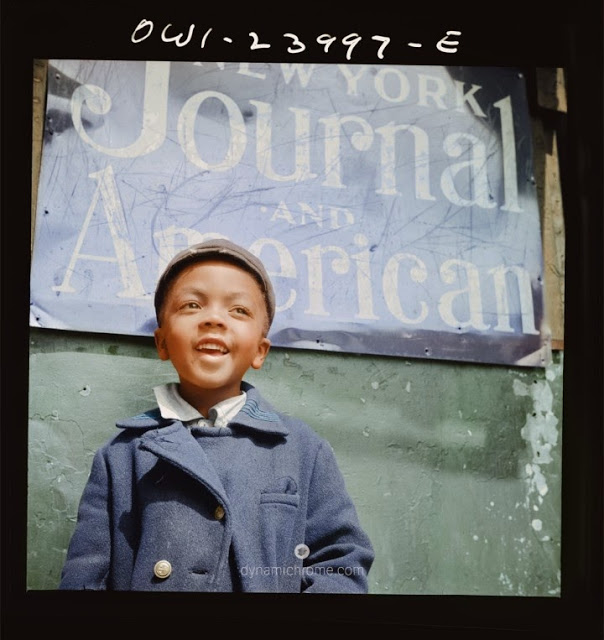
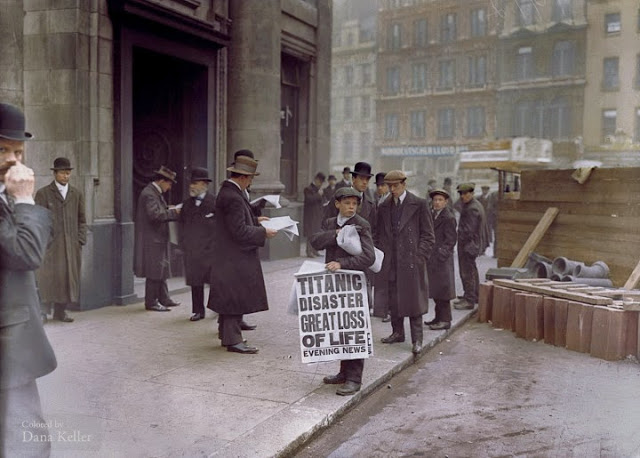
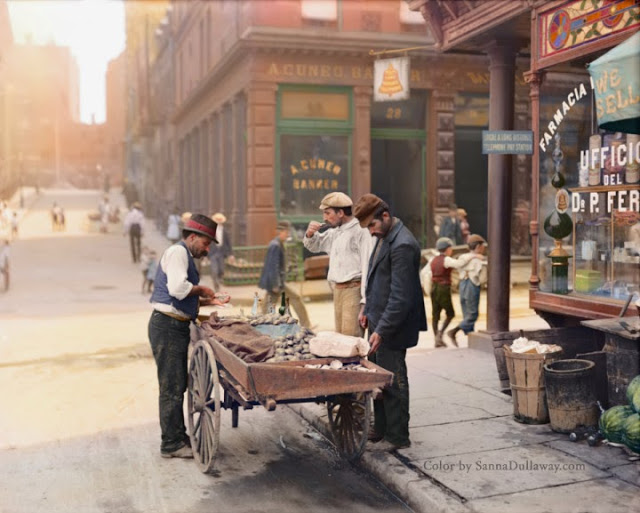
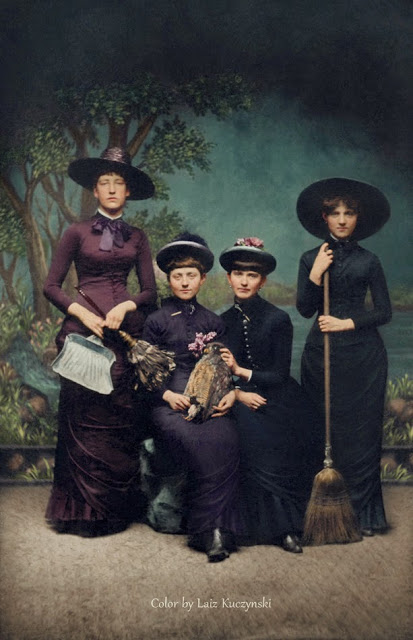
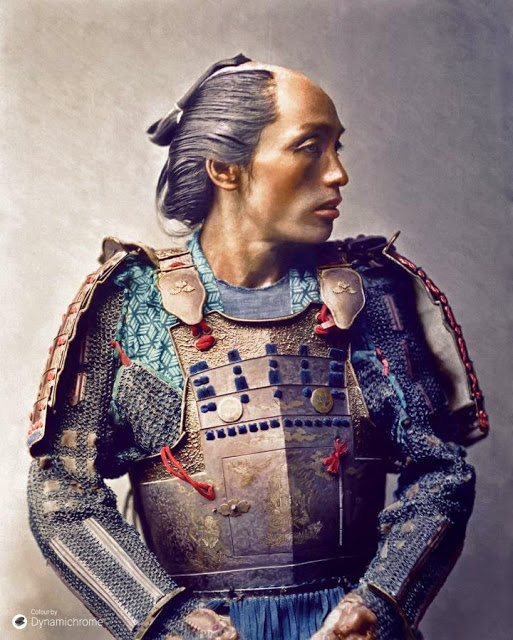
18 year old Russian girl being liberated from Dachau, April 1945Romanov sisters, Grand Duchesses Maria, Olga, Anastasia, and Tatiana, 1910Manhattan at sunset from the George Washington Bridge, December 1936“Here lies an unknown English Lieutenant killed in air combat” – Western Desert, Egypt, 1941Mary Winsor, founder and president of the Limited Suffrage Society, holds a sign during the American suffrage movement, 1910sLicking blocks of ice during the heat wave, NYC, 1912Three soldiers looking for the enemy from the shelter of a rubble-filled shed somewhere in France during World War I, 1917Two girls, Jean and Charlotte Potter, sit at the beach with their dog, ca. 1910-1915Edson Arantes do Nascimento, Soccer legend Pele. Sao Paulo, 1958An Ojibwe Native American spearfishing, Minnesota, 1908Jewish women and children arriving at the Auschwitz-Birkenau extermination camp, Poland, 1944Duck Dynasty, 1926Coney Island, New York, 1905Film and fashion icon Audrey Hepburn, 1953A small child with a puppy – Point Pleasant,West Virginia, May 1943Flipping Burgers, 1938College students pile into a Volkswagen Beetle, 1965Baseball legend “Babe” Ruth, (ca. 1920), the year he joined the New York Yankees.War Paint, 1944Cab stand in Madison Square Park, New York, 1900Unemployed men outside Al Capone’s soup kitchen in Chicago during the Great Depression, 1931World War II propaganda posters in Port Washington, New York, 1942Marilyn Monroe’s USO performance, February 1954Operation Overlord, June 1944Coca-Cola vending point at the Helsinki Summer Olympics – July 18, 1952Miss America, 1924 – Ruth Malcomson.Sidewheeler Tashmoo leaving wharf in Detroit, 1901Harlem News Boy, 1943British tattoo artist George Burchett, the King of Tattooists, 1930Titanic sinks on April 15, 1912. Newspaper boy Ned Parfett sells copies of the evening paper bearing news of the disaster.Troops crouch inside a LCVP landing craft, just before landing on “Omaha” Beach on “D-Day”, 6 June 1944Clam seller on Mulberry Bend, New York, 1900A German soldier after being captured by American troops near Nicosia, 1943Women in witch costumes, 1875A Samurai, 1881The Flatiron Building, 1905Inventor and physicist Thomas Alva Edison. New Jersey, 1911Daredevil, 1917A Nihang Bodyguard, 1865Curb Market in NYC, 1900Observer on Iwo Jima, 1945Crowded Bunks in the Prison Camp at Buchenwald, April 16, 1945Jean Harlow, 1931Soviet T-34 tanks on the streets of Lvov, 1944Rita HayworthManfred von Richthofen, “The Red Baron”
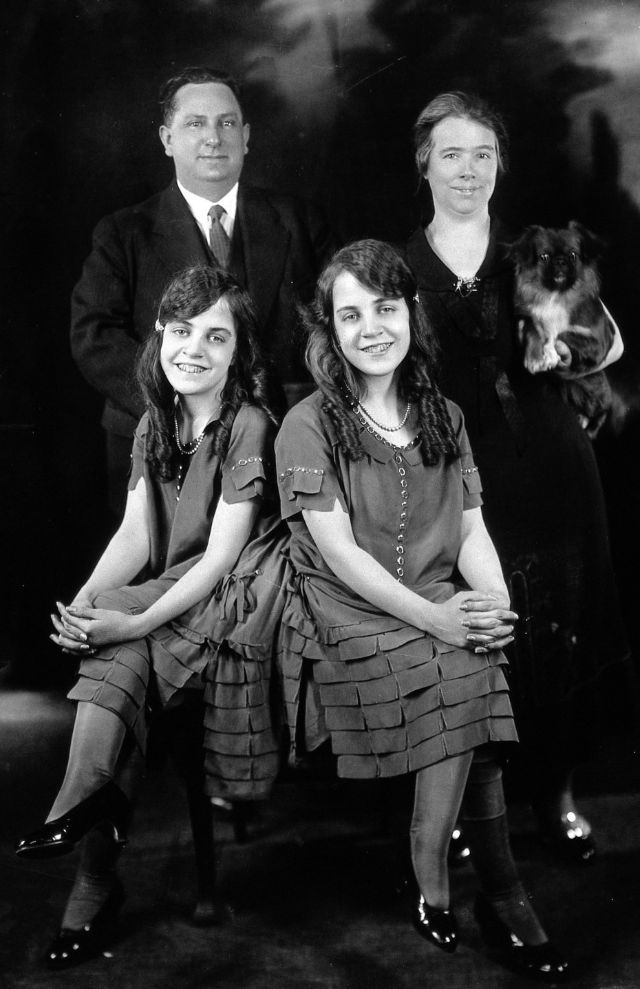
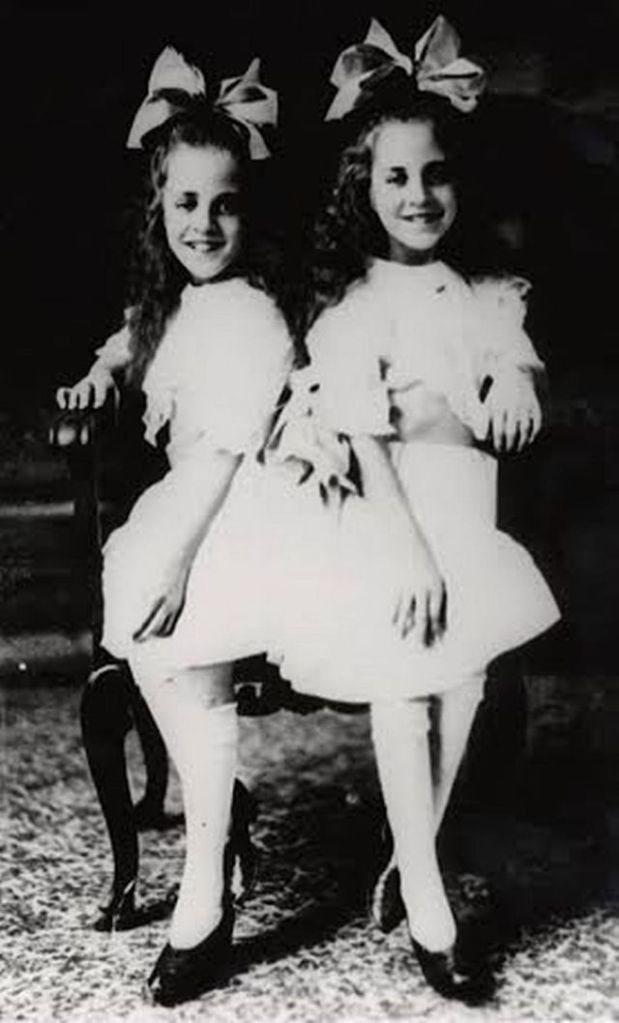
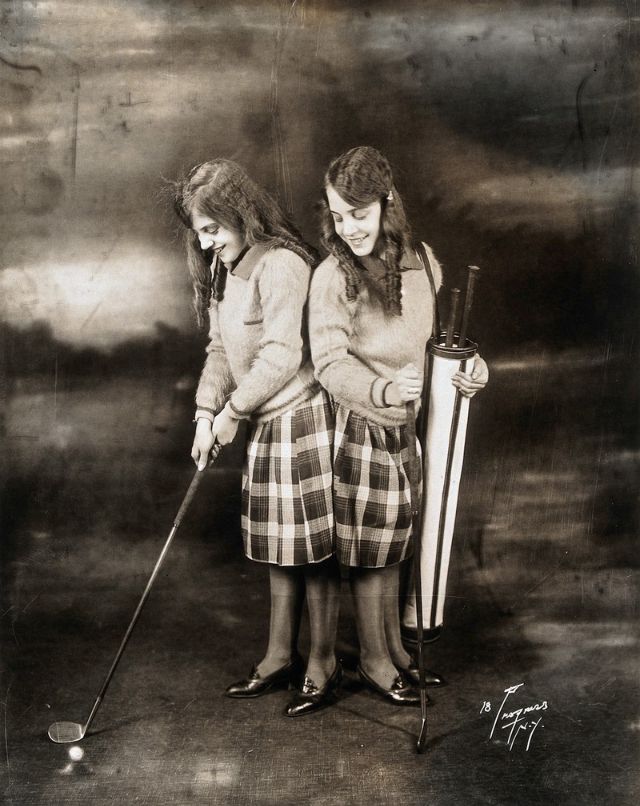
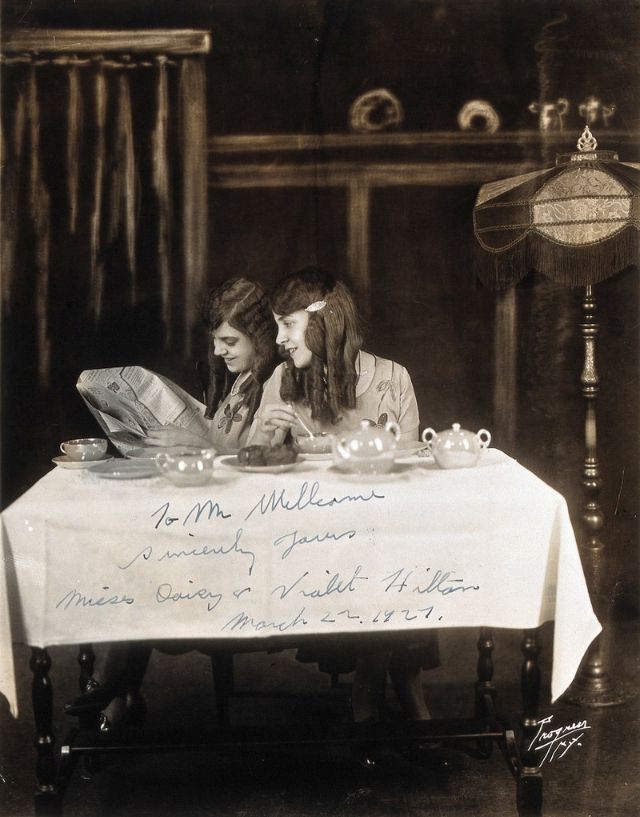
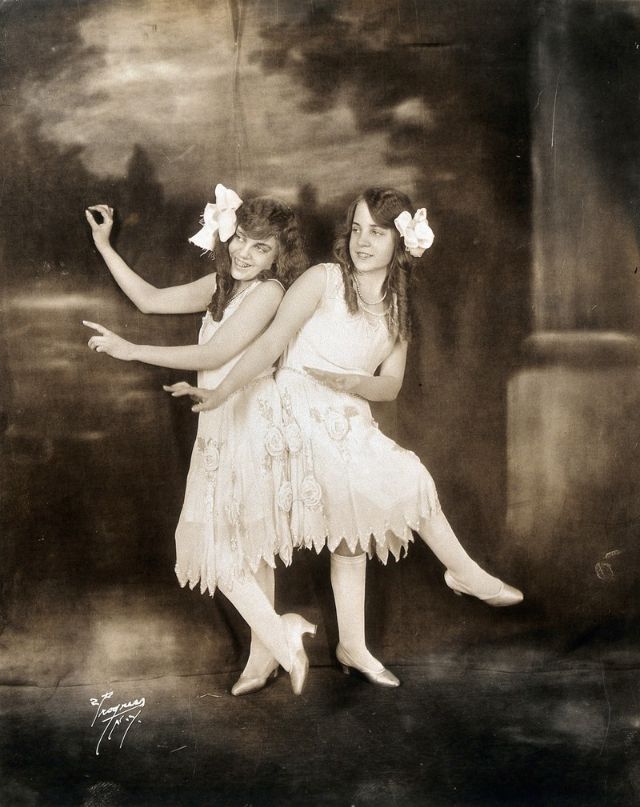
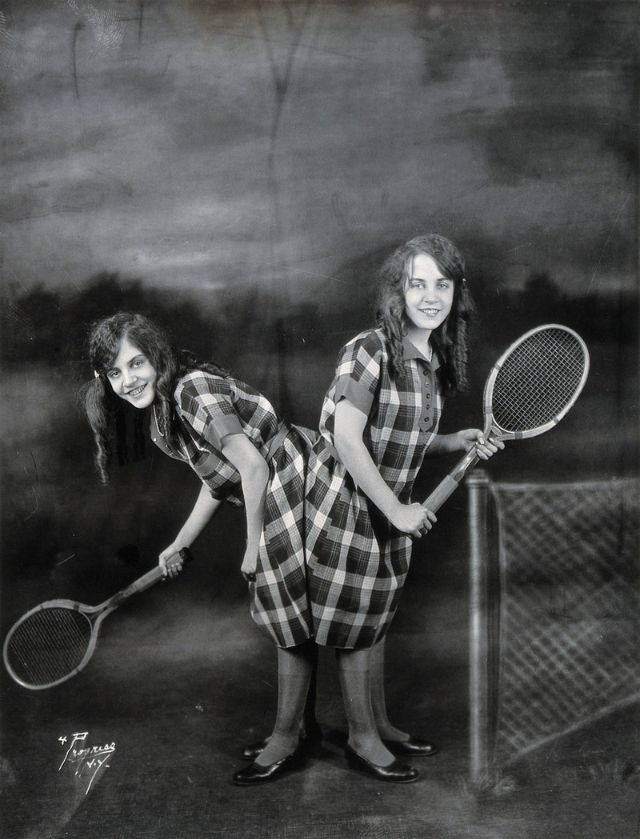
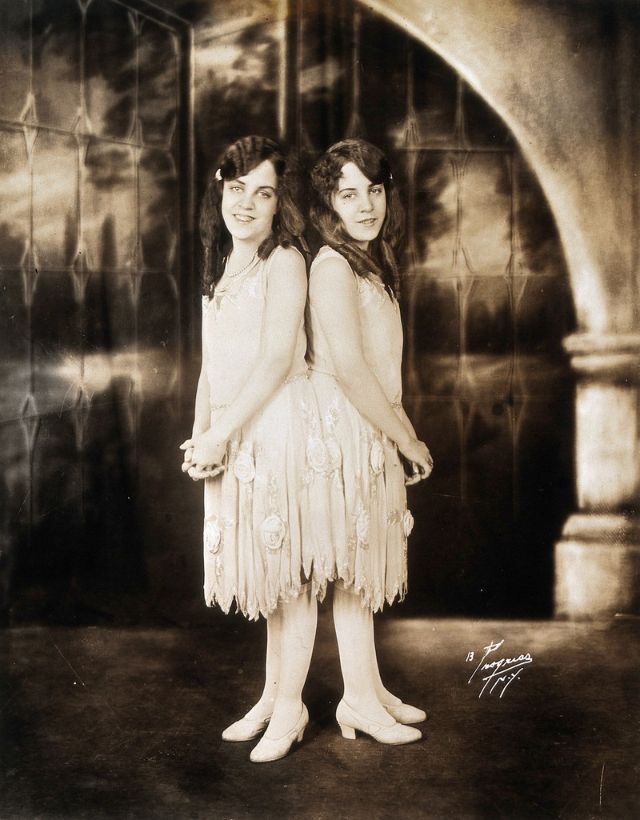
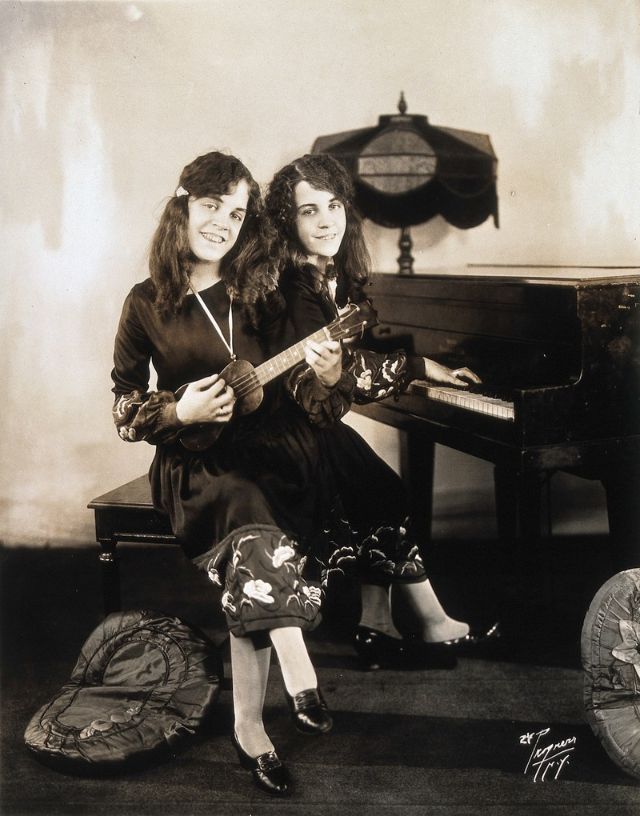
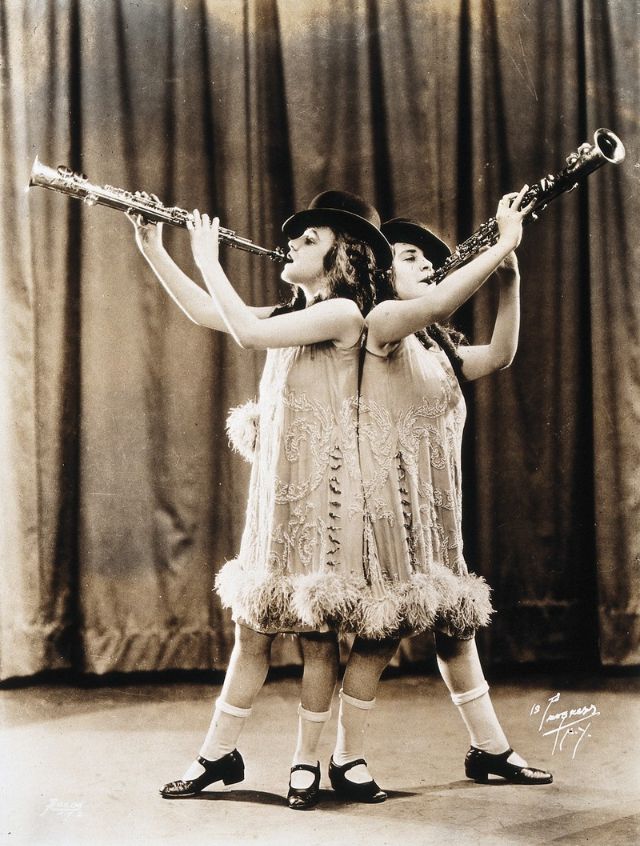
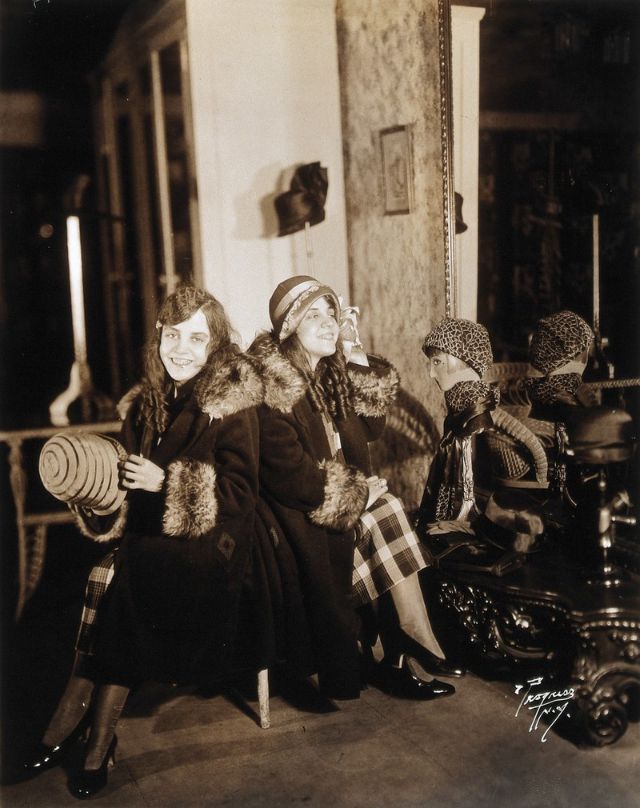
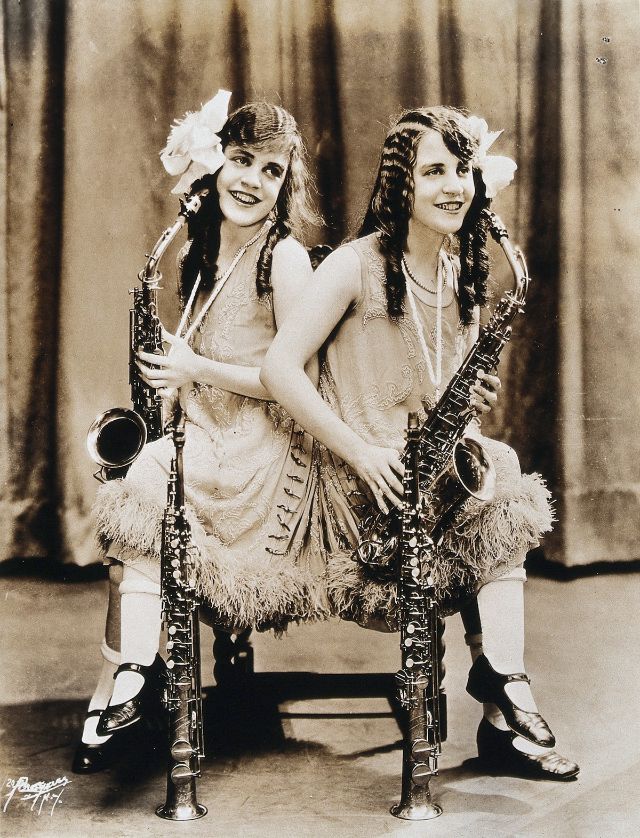
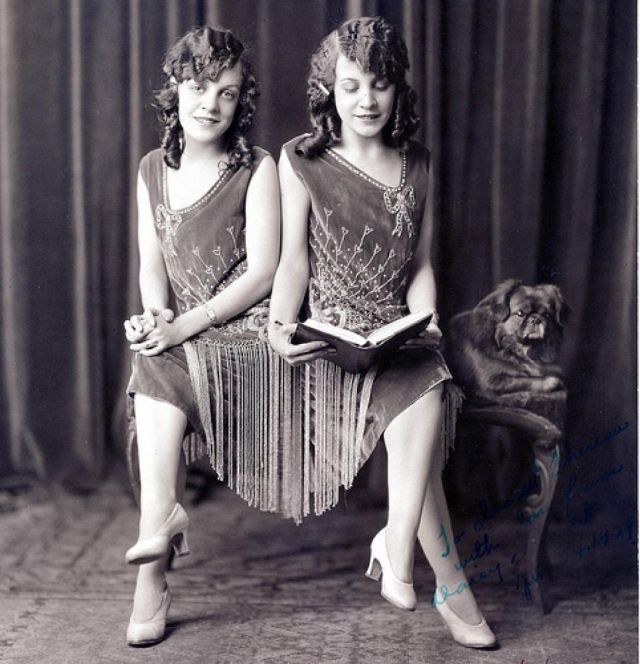
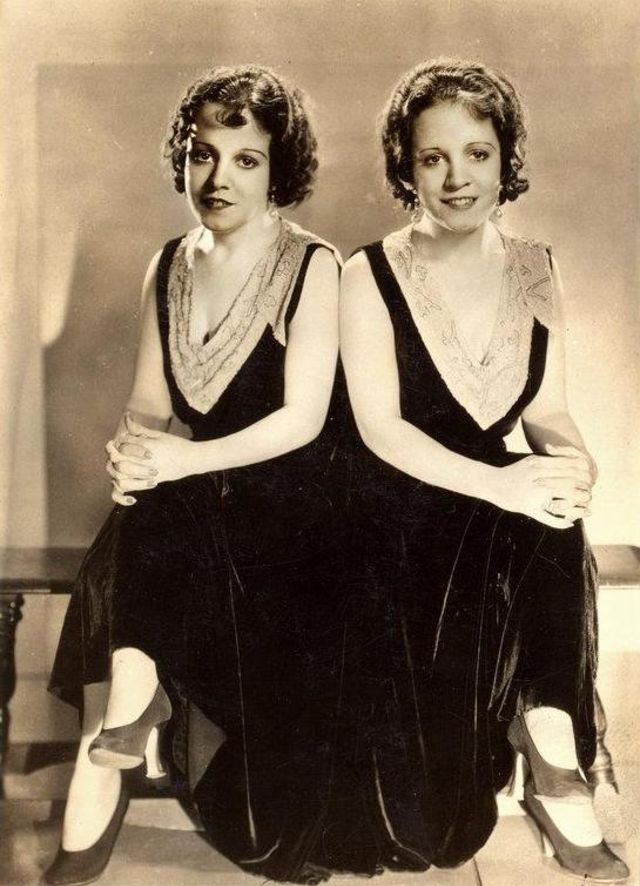
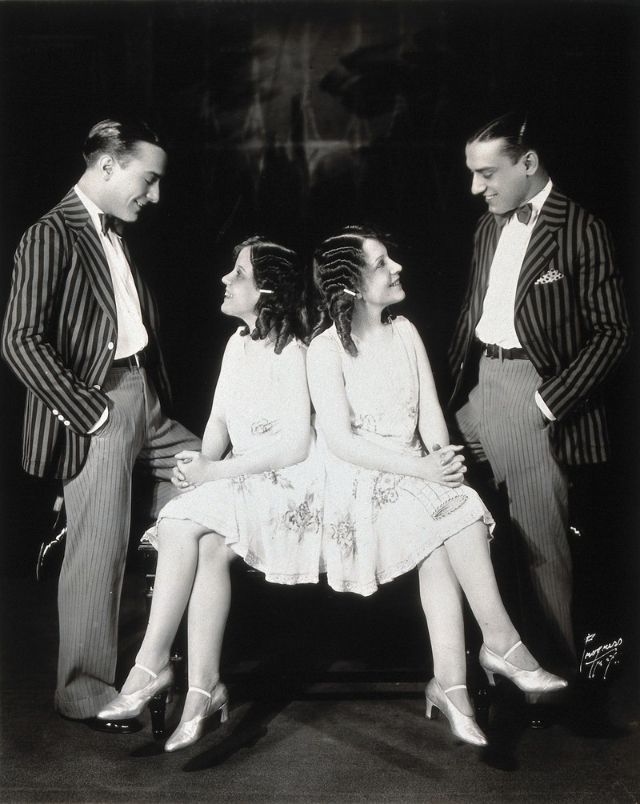
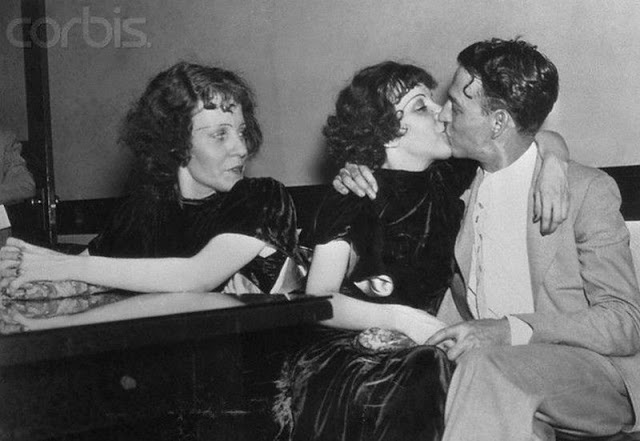
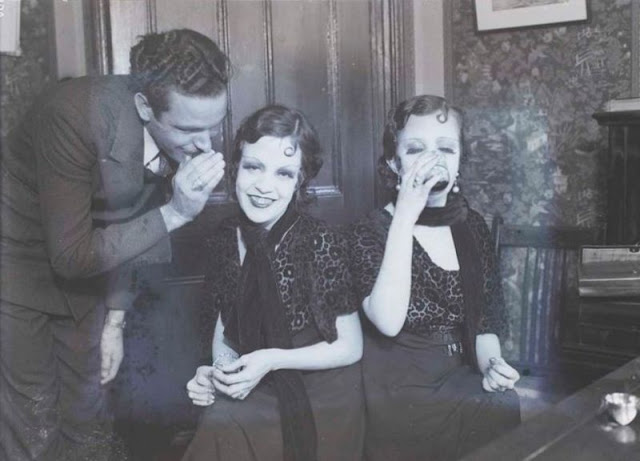
Born in Brighton, England on 5 February 1908, the twins were unofficially adopted by their biological mother’s midwife, Mary Hilton, when the mother rejected the children. From the time that they were infants, they were exhibited at fairs and circuses by Hilton and her daughter.
When Daisy Hilton and Violet Hilton moved to the United States, they became famous for their vaudeville act and their burlesque performances during the 1920s and 1930s; they also appeared in a couple of films. The conjoined burlesque sisters struggled under the heavy hand of their guardians before reaching financial independence.
The Hiltons’ early vaudeville careers were a roaring success, netting them a profit of up to $5,000.00 a week, of which, they saw none. Their various managers and guardians ensured the twins were unable to profit from their own prosperity, and after considering the advice of Harry Houdini, who implored the girls to educate themselves on their public persona through newspapers and other media, the sisters pursued liberation through the justice system. Lawyer Martin Arnold helped to secure emancipation for Daisy and Violet in January of 1931, after which, the twins were awarded approximately $100,000.00 and approached life on their own for the first time.
Even after earning their freedom, they continued to perform in vaudeville productions and, in 1932, they appeared in the film Freaks. In December 1932 the Hiltons sailed to the UK on the Berengaria. They spent most of 1933 in the UK, and returned to the US in October 1933. Violet began a relationship with musician Maurice Lambert, and they applied in 21 states for a marriage license, but it was always refused.
In 1936 Violet married gay actor James Moore as a publicity stunt. The marriage lasted ten years on paper, but it was eventually annulled. In 1941 Daisy married Harold Estep, better known as dancer Buddy Sawyer, who was also gay. The marriage lasted ten days.
They published their autobiography The Lives and Loves of the Hilton Sisters in 1942. In 1951 they starred in a second film, Chained for Life, an exploitation film loosely based on their lives. Afterwards they undertook personal appearances at double bill screenings of their two movies.
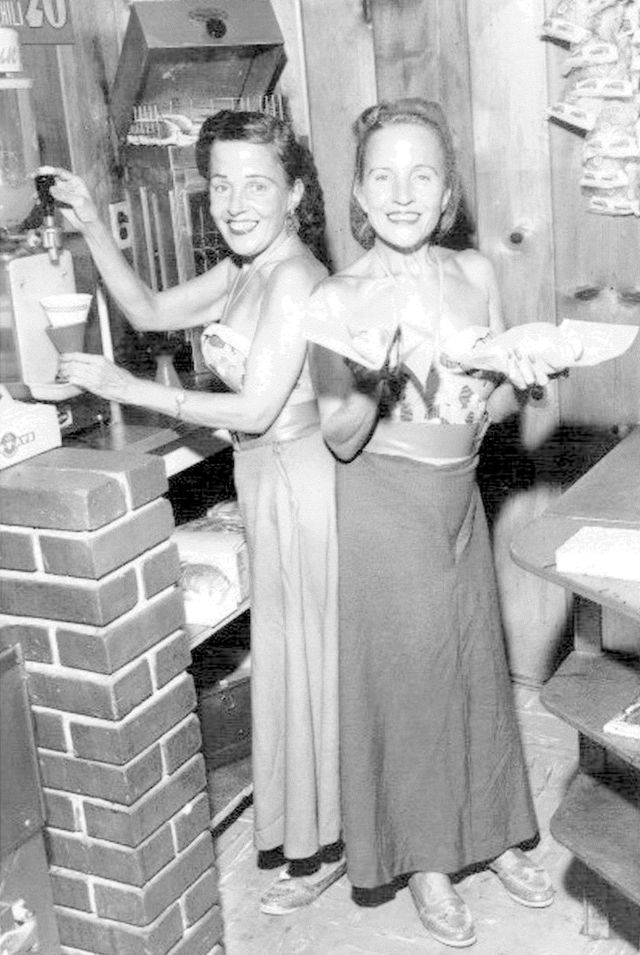
In 1955, the sisters opened a hotdog stand in Miami, which was moderately successful until competitors began complaining about the “freaks” stealing their business.
The Hiltons’ last public appearance was at a drive-in in 1961 in Charlotte, North Carolina. Their tour manager abandoned them there, and with no means of transportation or income, they were forced to take a job in a nearby grocery store, where they worked for the rest of their lives.
On 4 January 1969, after they failed to report to work, their boss called the police. The twins were found dead in their home, victims of the Hong Kong flu. According to a forensic investigation, Daisy died first; Violet died between two and four days later. They were buried in Forest Lawn West Cemetery in Charlotte.
Charles Sheldon (1889–1960) was a prolific and gifted early 1900s American illustrator who specialized in “pretty woman” themed cover portraiture and advertising in the Art Nouveau and Edwardian styles. After studying at the Art Students League, he went to Paris to study under the legendary Alphonse Mucha. He returned to America and set up a studio at Carnegie Hall in New York City.
In 1918 Sheldon received his first pin-up commission, a series of ads for La Vogue lingerie. He went on to do a series of work for the Fox Shoe Company as well as front covers for Collier’s Magazine, The Saturday Evening Post and Photoplay.
By 1921 he was contributing high fashion portraits to Woman’s Home Companion and Theater magazines. Famous women all over the world arranged to sit for portraits in his studio in Carnegie Hall in New York. The pastels he created for Photoplay 1925-1930 launched his career as a portrait cover artist. During this time period most of the stars sat three or four times for each of these portraits, later came cover art commissions for Screenland, Movie Classic and Radio Digest magazines.
A LIFE staffer from 1947 until the late 1960s, photographer Allan Grant covered the entertainment world from the inside. His unique blend of cool appraisal and obvious affection for (most) of his subjects went a long way toward making the stars seem just as quirky and approachable as the rest of us mortals.
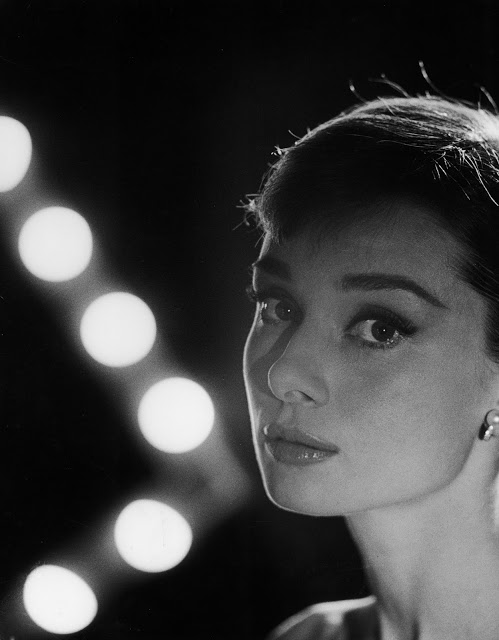
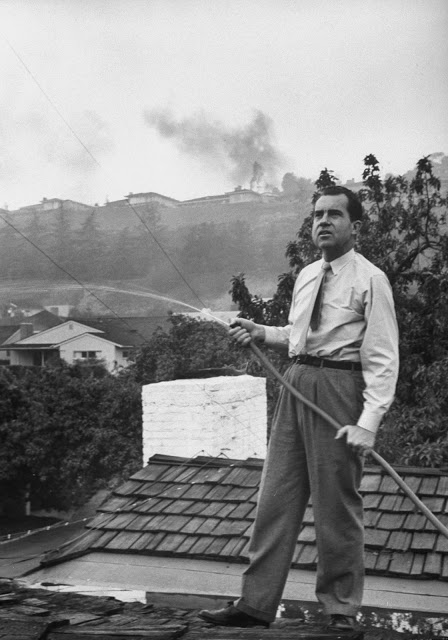
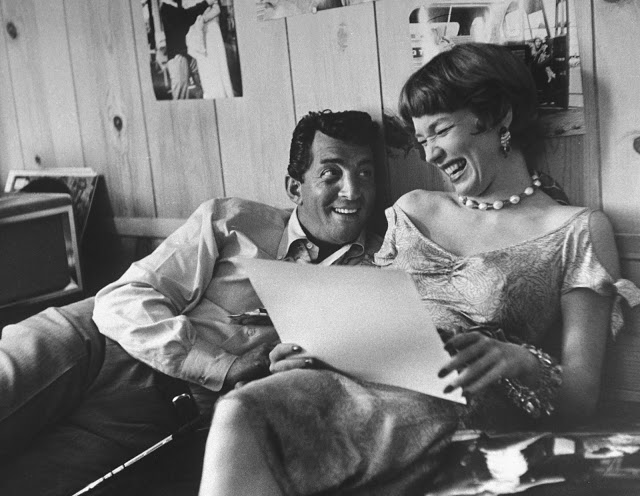
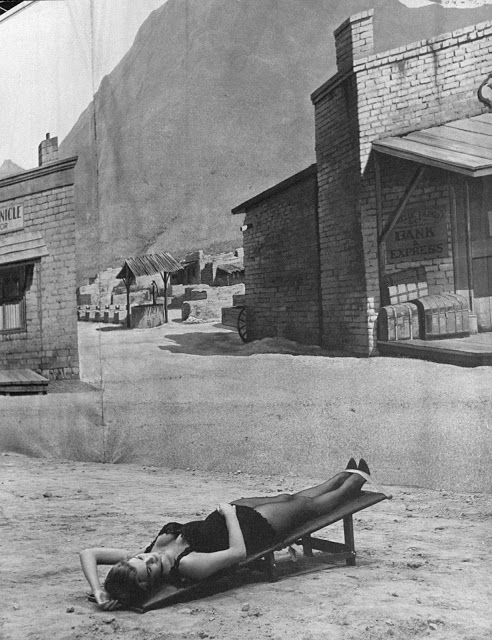
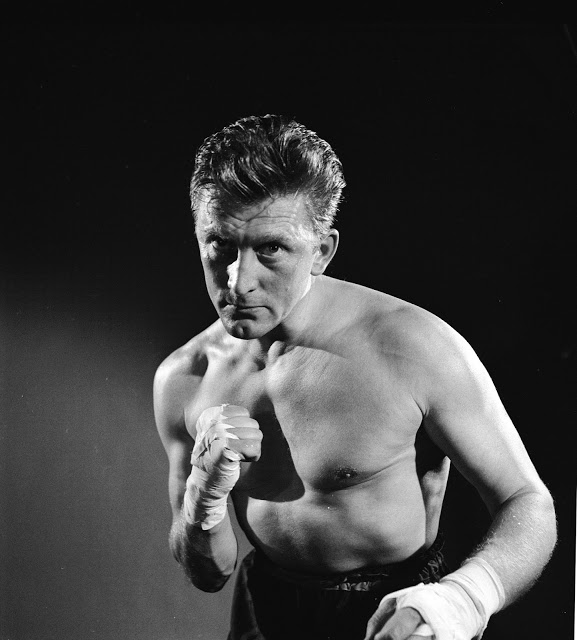
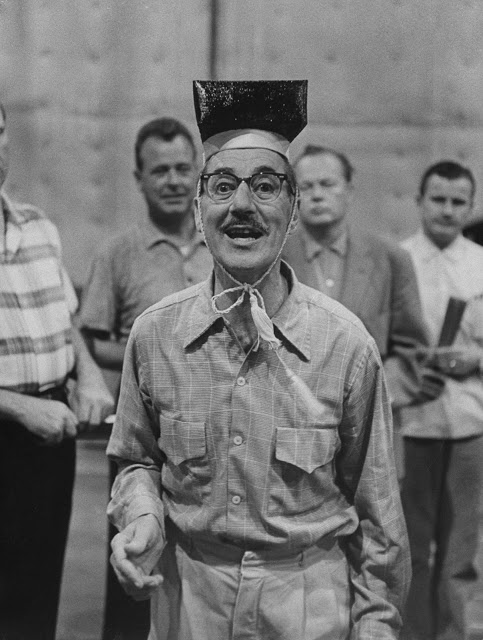
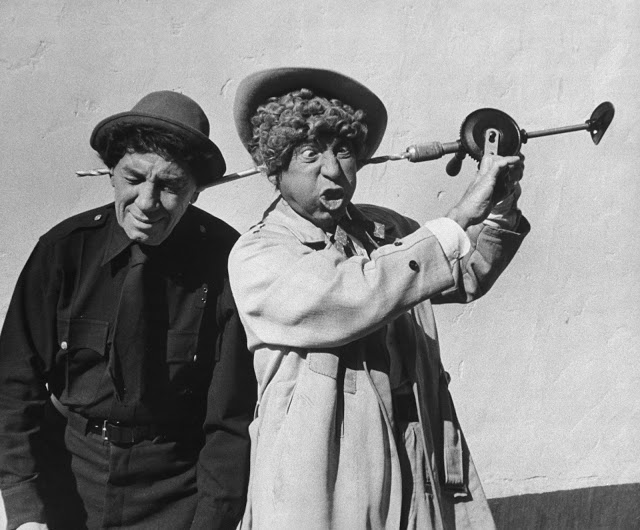
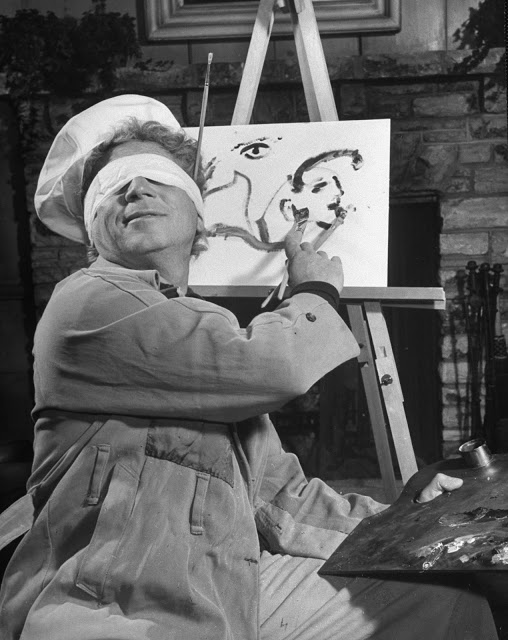
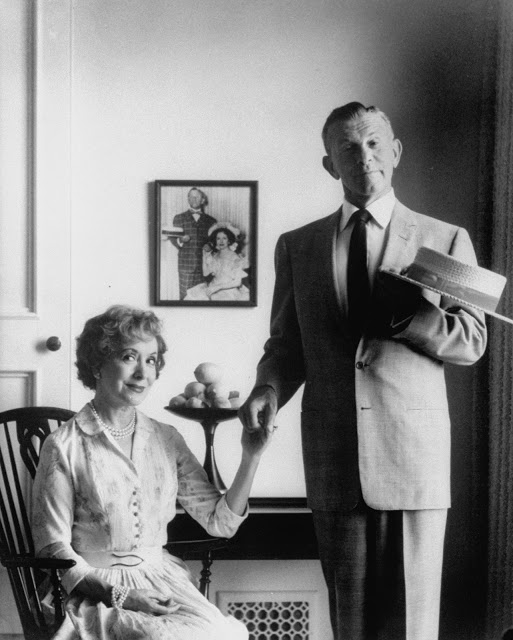
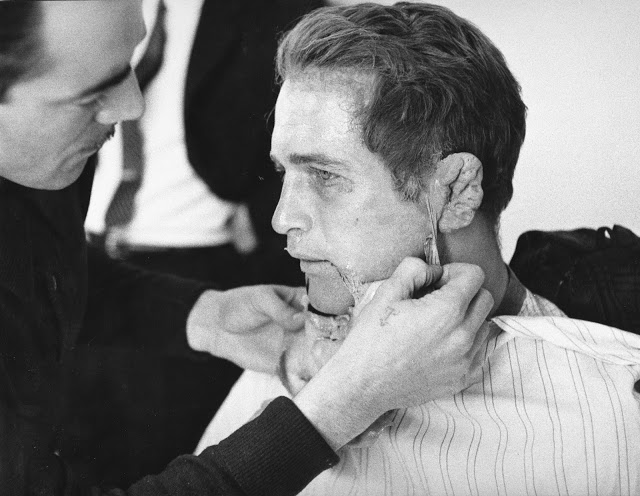
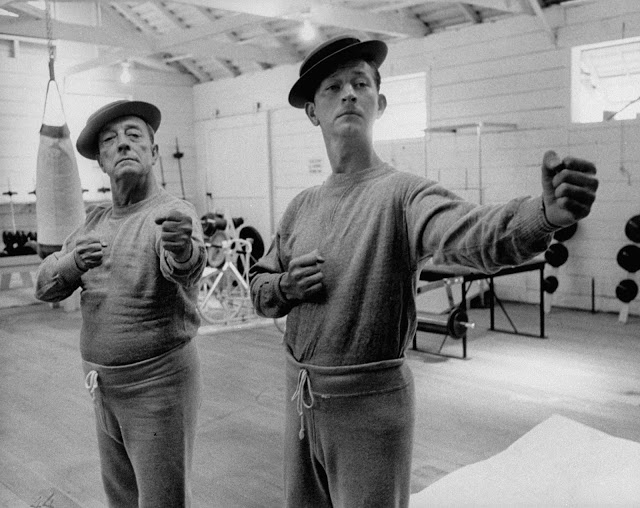
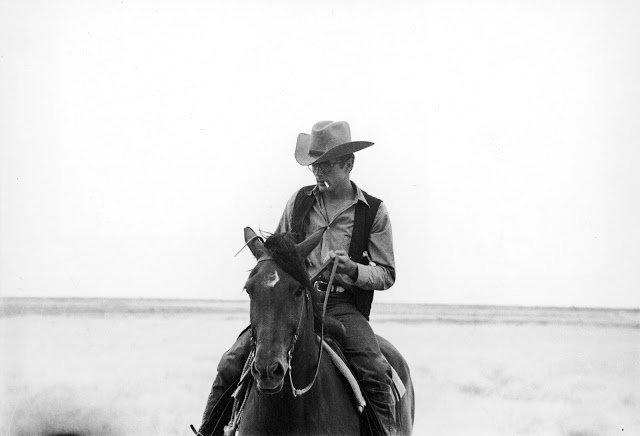
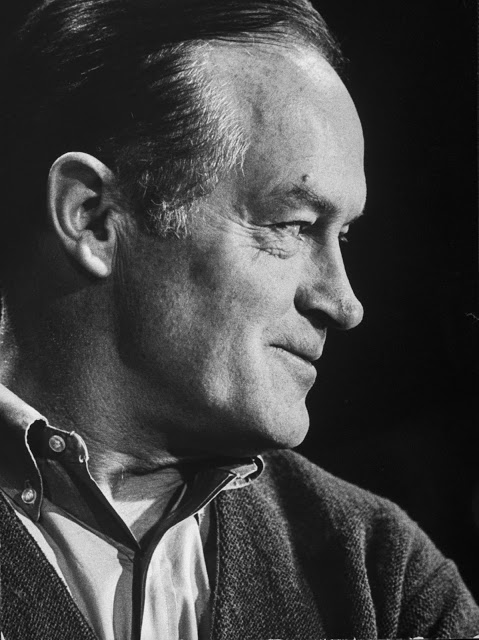
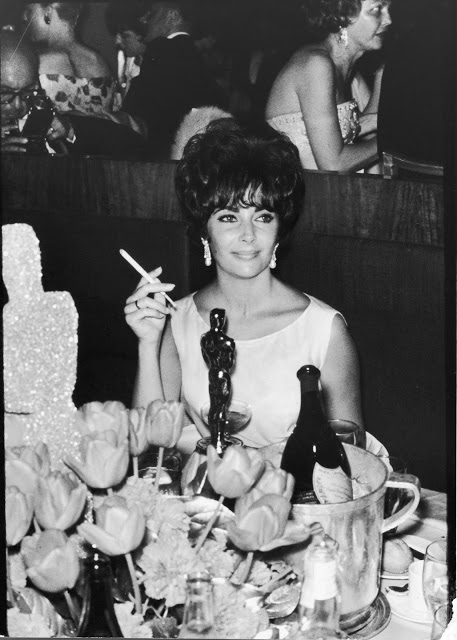
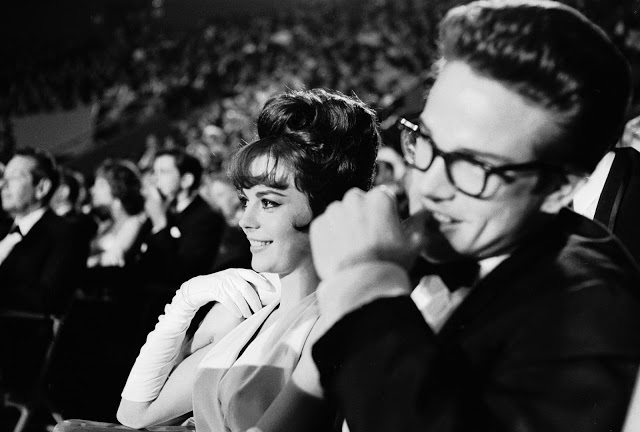
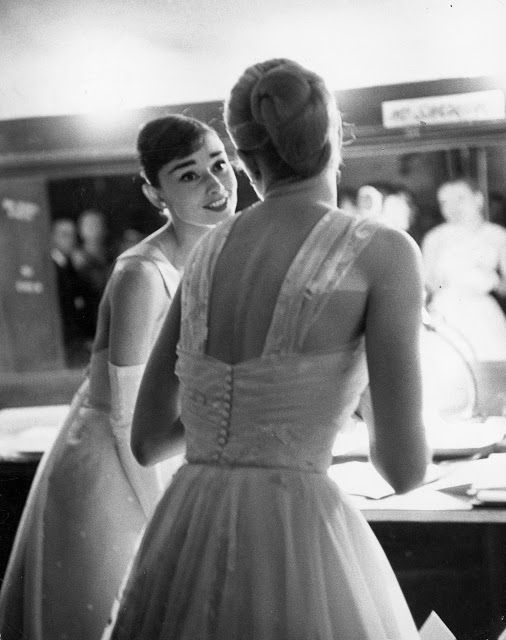
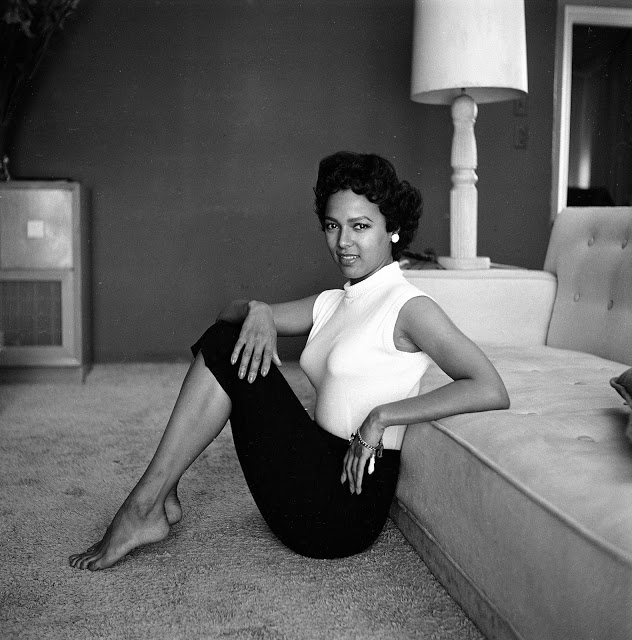
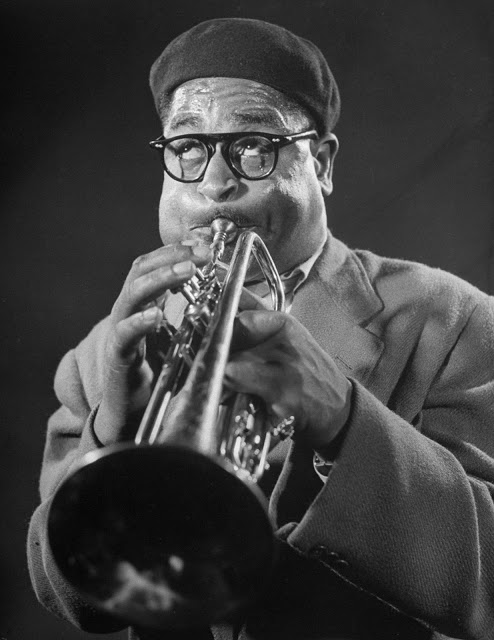
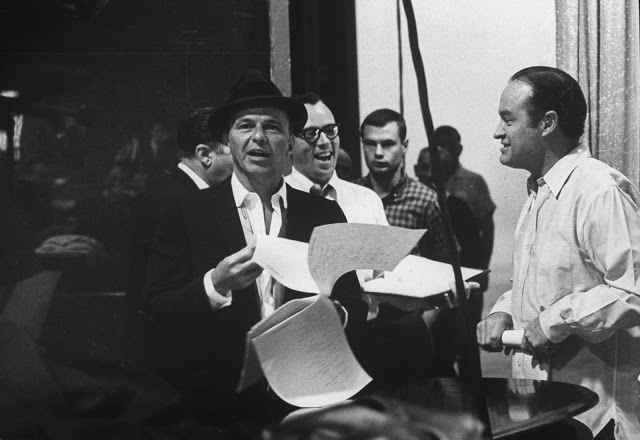
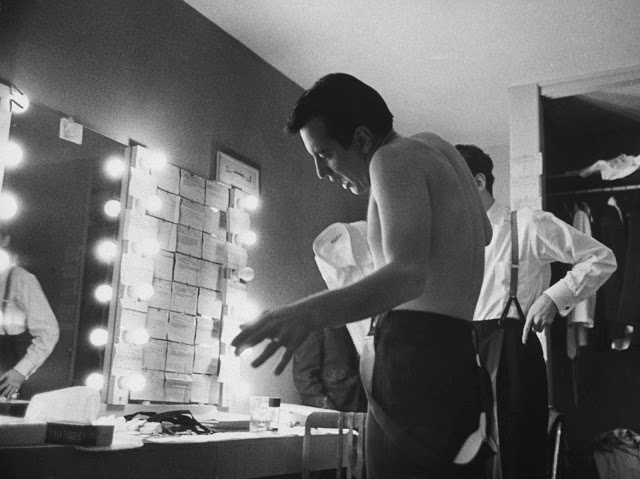
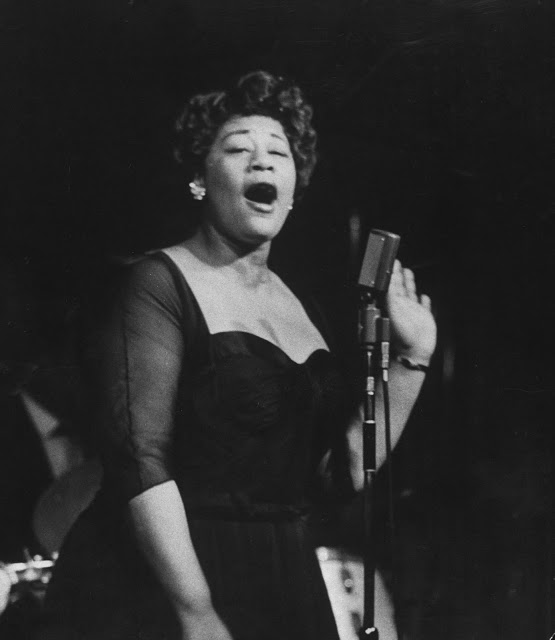
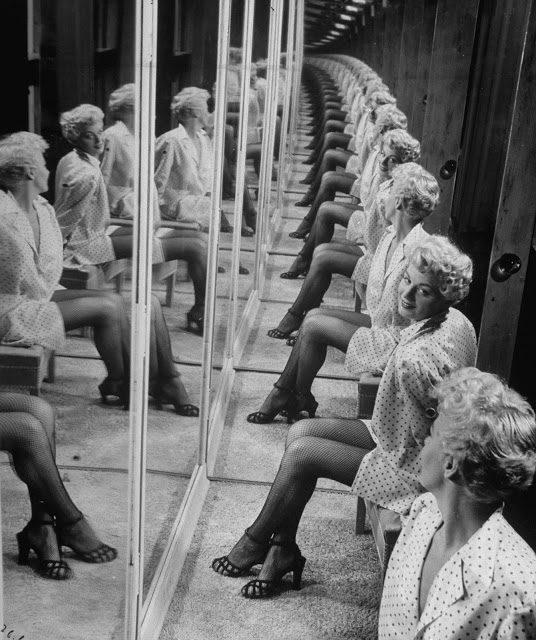
Audrey Hepburn and Grace Kelly wait backstage at the RKO Pantages Theatre during the 28th Annual Academy Awards, 1956.Audrey Hepburn, 1956.Senator Richard Nixon on the roof of his home in Los Angeles, trying to douse fires caused by a brush blaze, 1961.Dean Martin reads lines with Shirley MacLaine, 1958.Dean Martin relaxes with his sons at home, 1958.Angie Dickinson on set of Rio Bravo, 1958.Kirk Douglas, 1949.Groucho Marx in rehearsal, 1960.Chico and Harpo Marx, 1959.Harpo Marx, 1948.George Burns and his wife, Gracie Allen, 1958.Paul Newman having make-up removed on the set of The Battler (TV play), 1955.Buster Keaton and Donald O’Connor rehearse for a movie based on Keaton’s life, 1956.Cecil B. DeMille, Billy Wilder and Gloria Swanson during the filming of Sunset Boulevard, 1949.James Dean on location for the movie Giant, 1956.Bob Hope, 1962.Elizabeth Taylor at a party after winning the Oscar for her performance in BUtterfield 8, 1961.Natalie Wood and Warren Beatty at the Academy Awards, 1962.Audrey Hepburn and Grace Kelly backstage at the RKO Pantages Theatre during the 28th Annual Academy Awards, 1956.Dorothy Dandridge at home, 1954.Dizzy Gillespie during a jam session, 1948.Bob Hope (right) and Frank Sinatra rehearse for The Bob Hope Show, 1962.Sammy Davis Sr., Sammy Davis Jr. and Will Mastin on stage at Ciro’s in West Hollywood, 1955.Bobby Darin in his dressing room, 1959.Ella Fitzgerald, 1958.Actress-model Suzy Parker, 1957.Edith Piaf caught in a montage of expressions and gestures while singing during her performance at New York’s Versailles nightclub, 1952.Shelley Winters in a booth with mirrors, 1949.Marcel Duchamp with Dada artwork, 1953.
(Photos by Allan Grant—Time & Life Pictures/Getty Images)
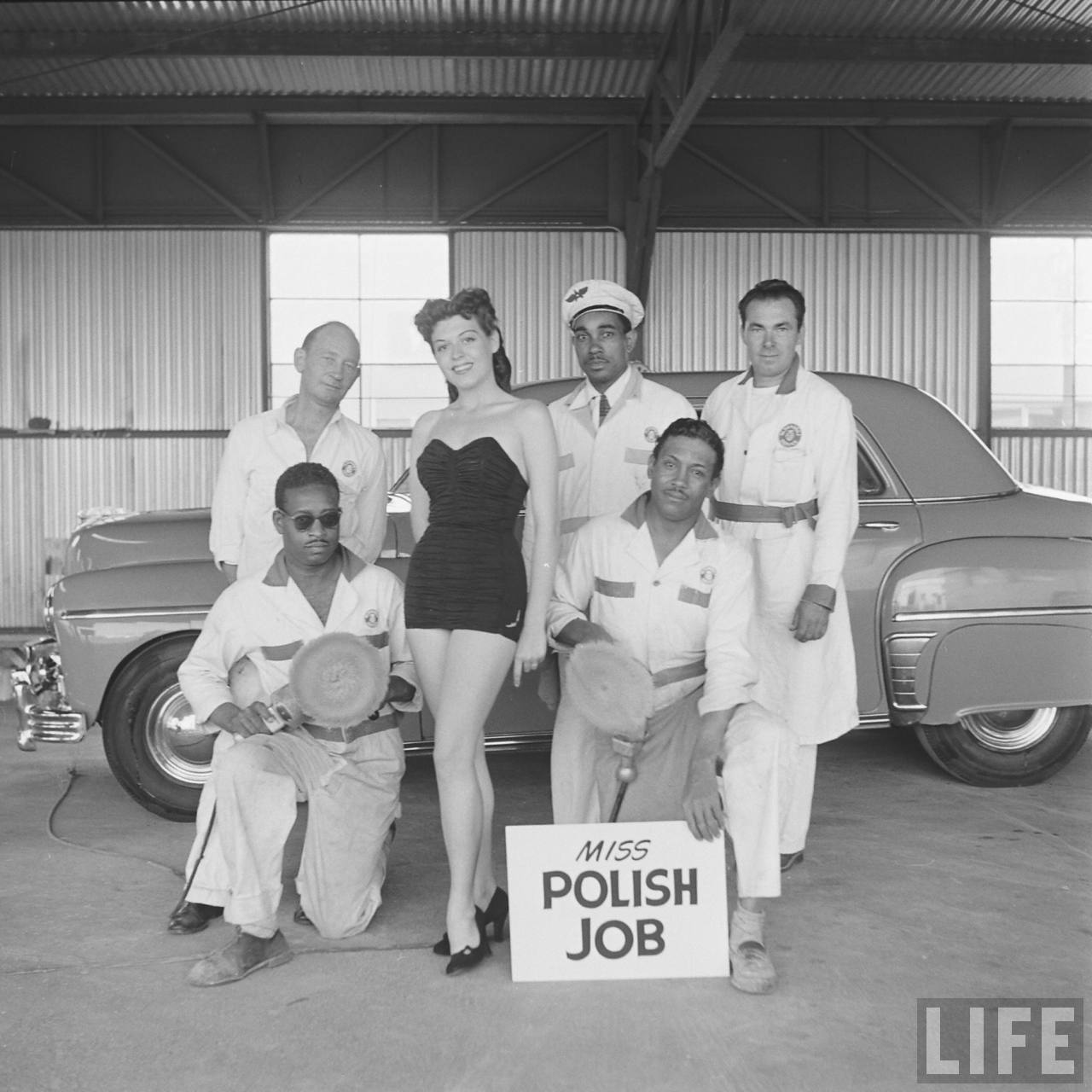
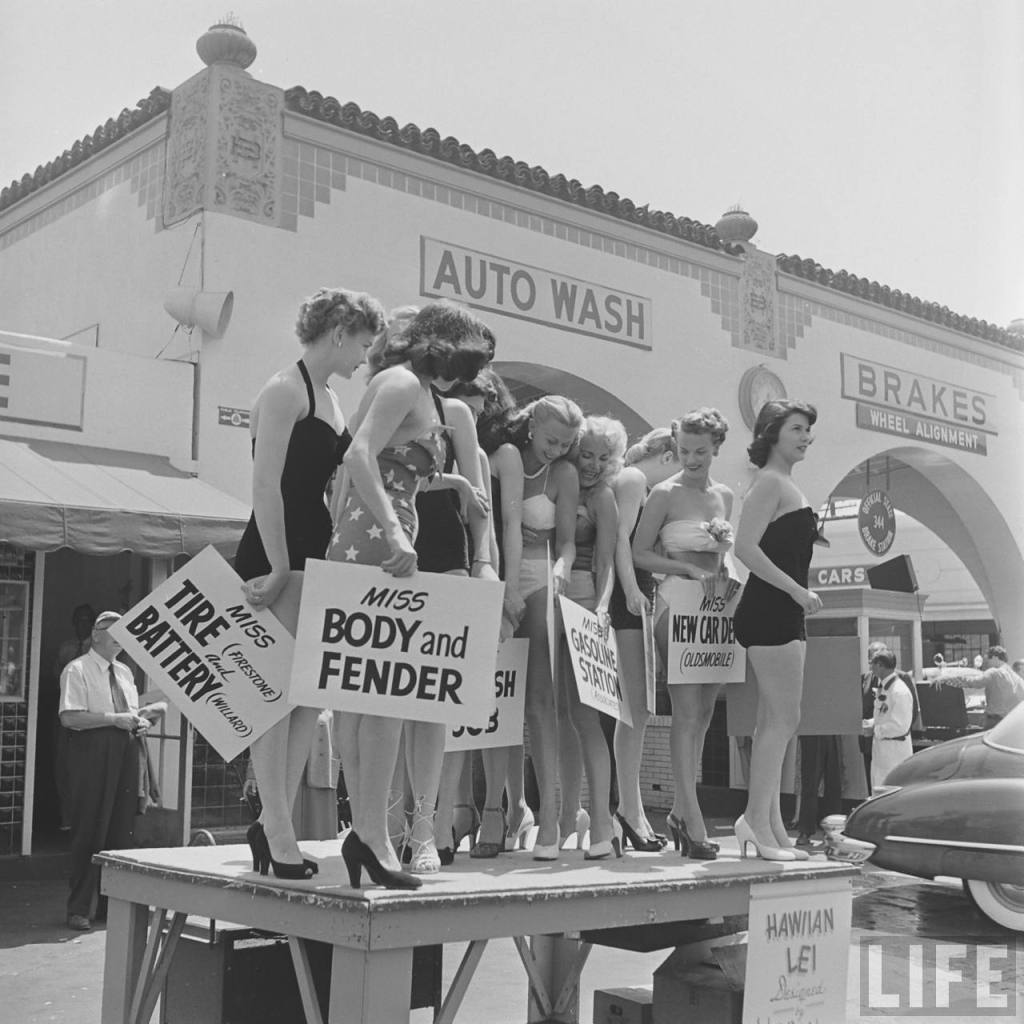
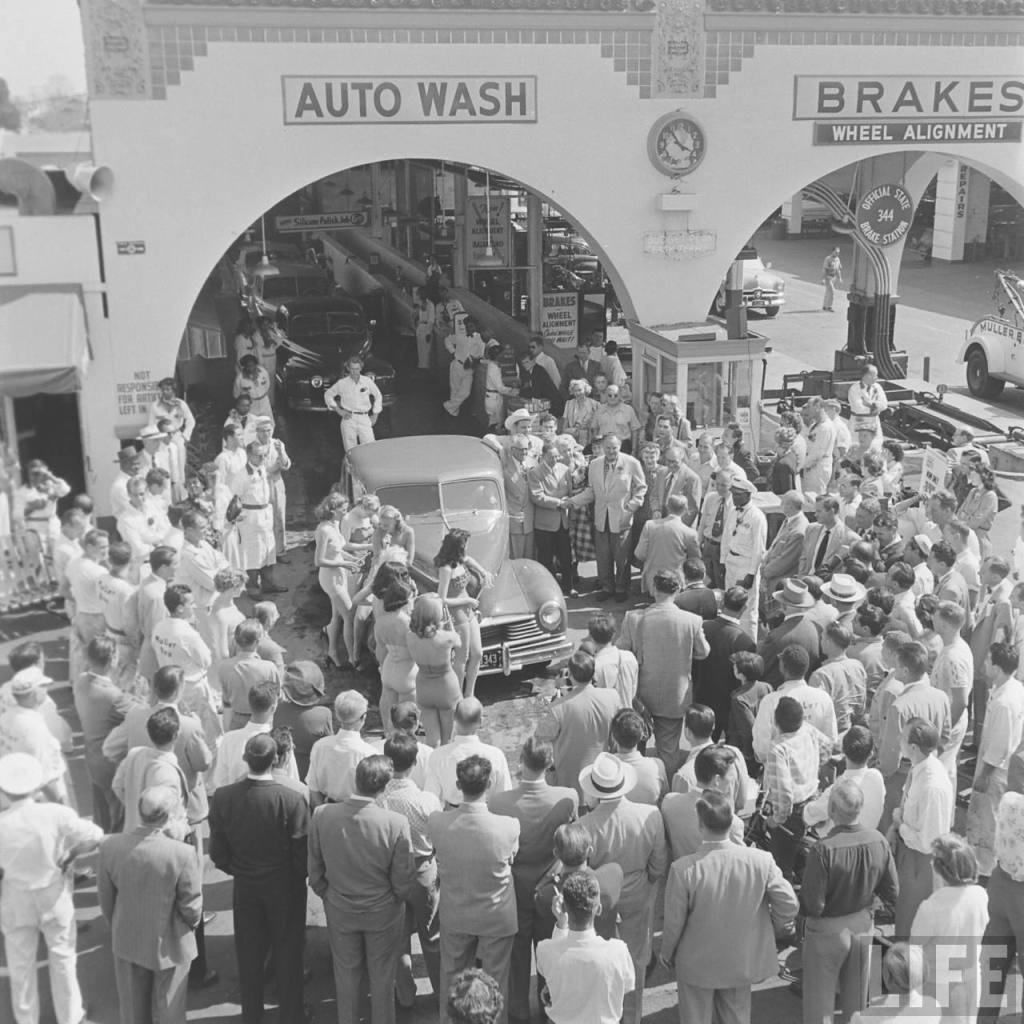
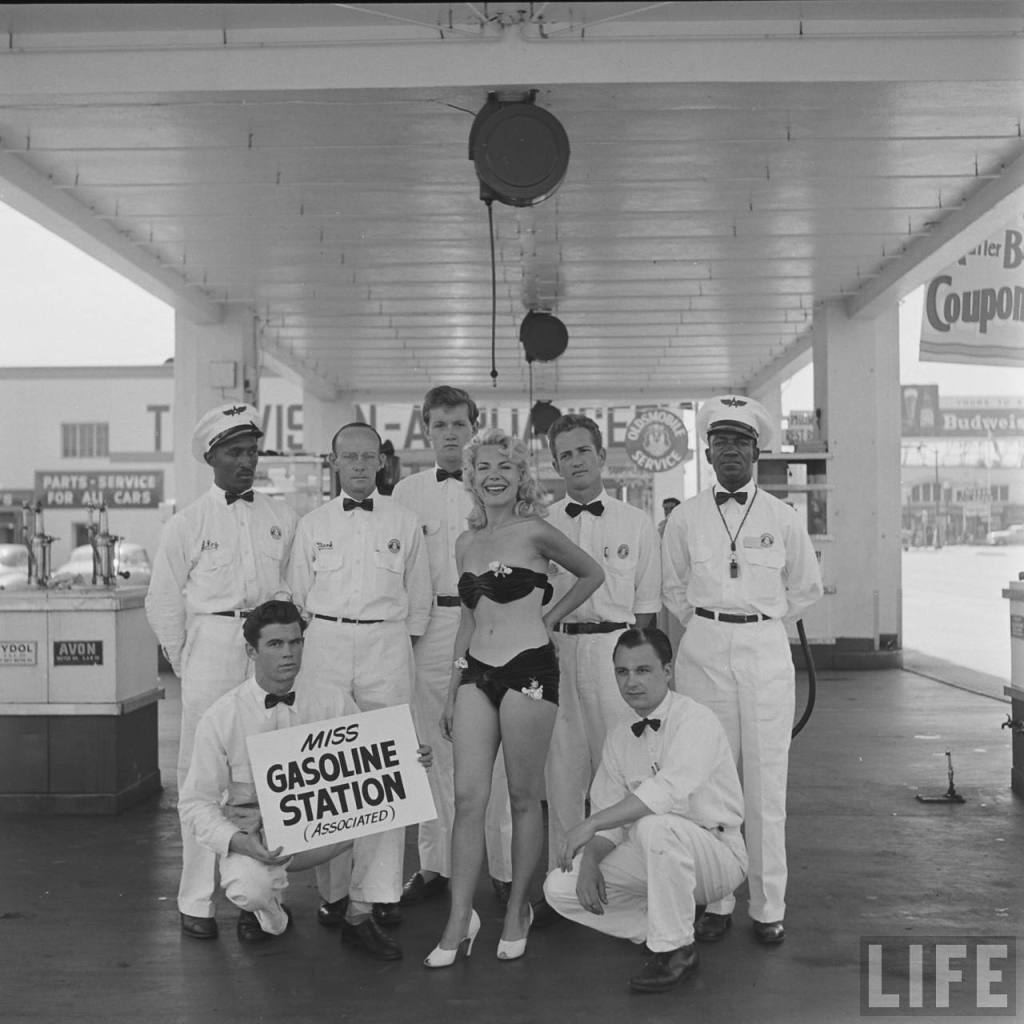
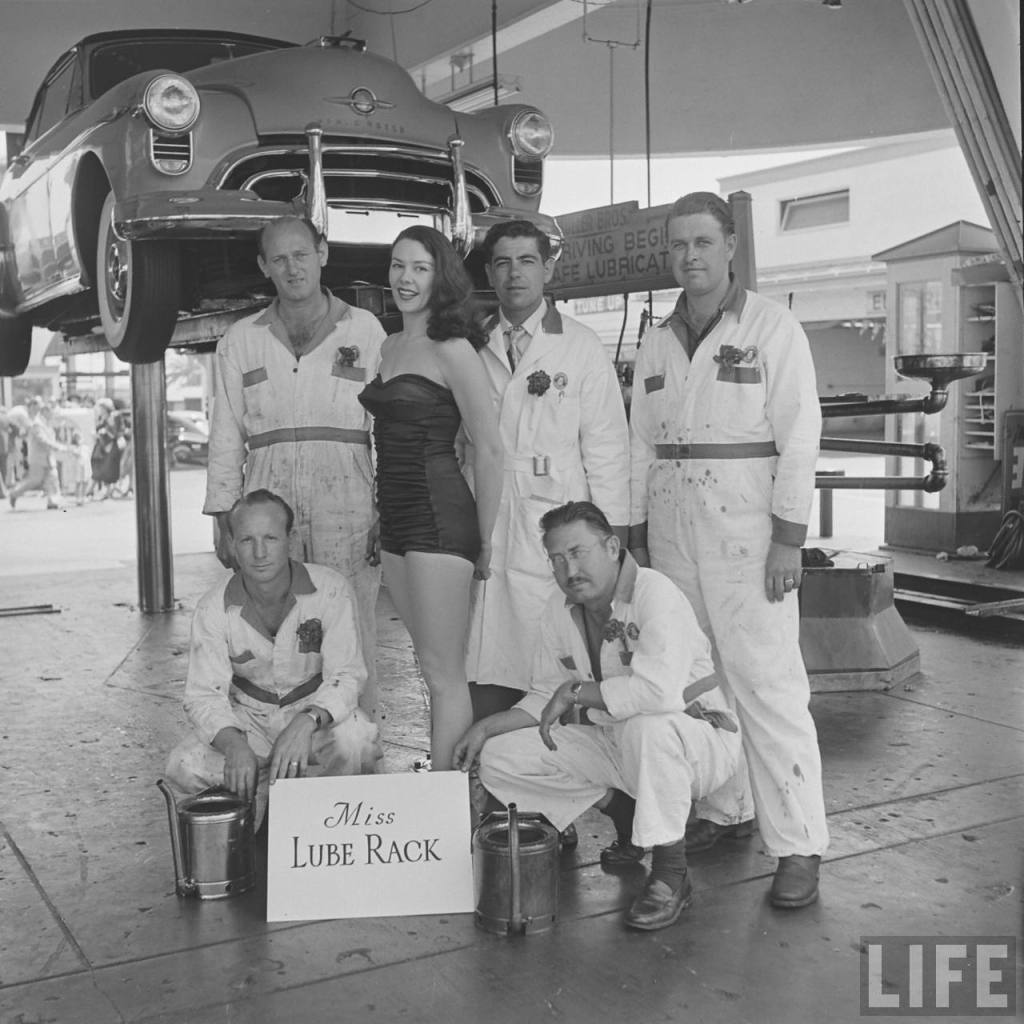
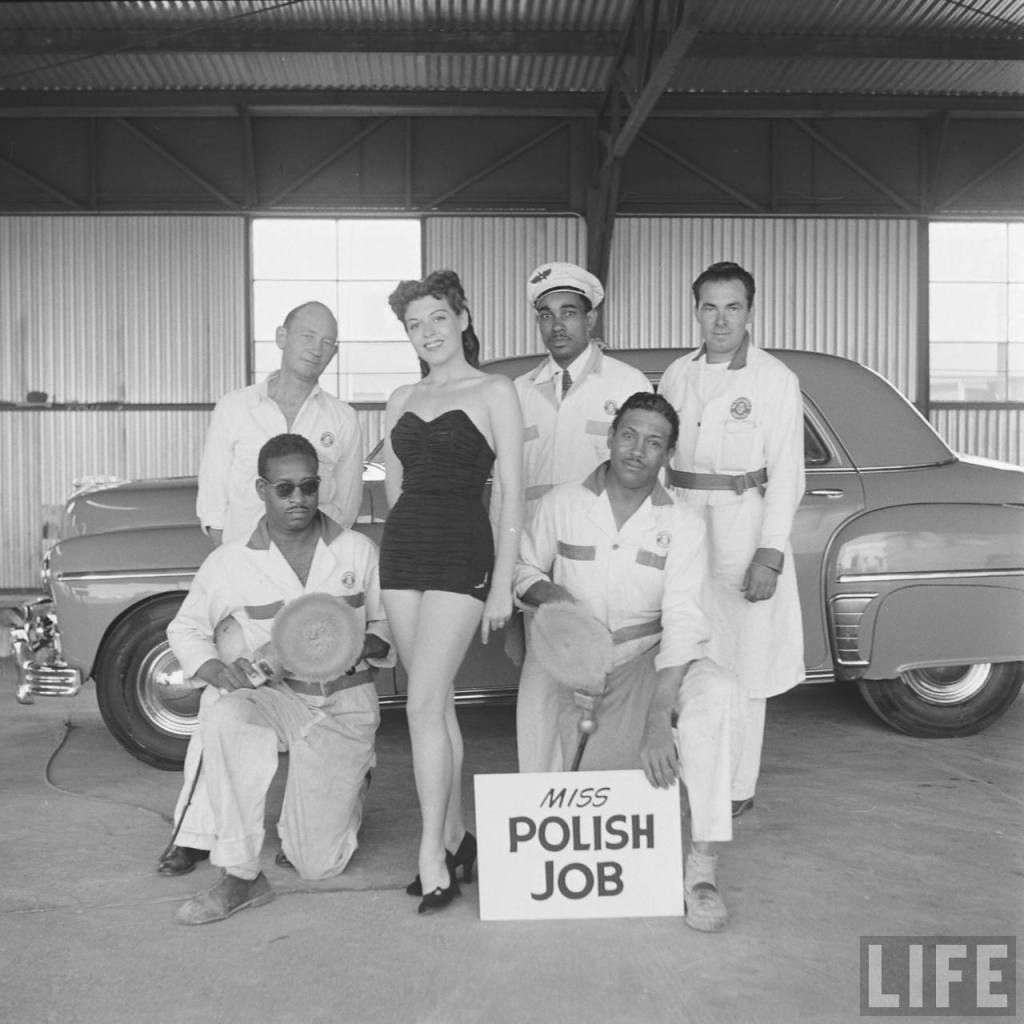
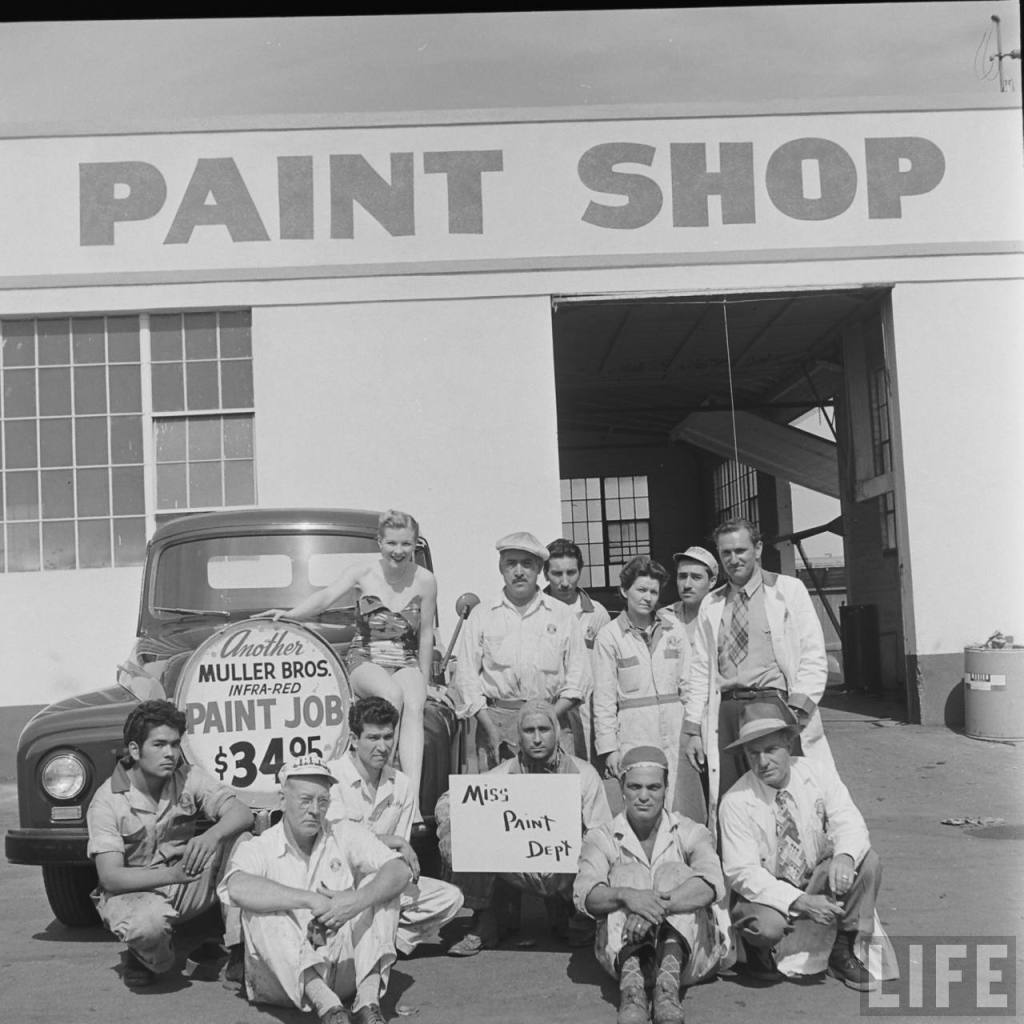
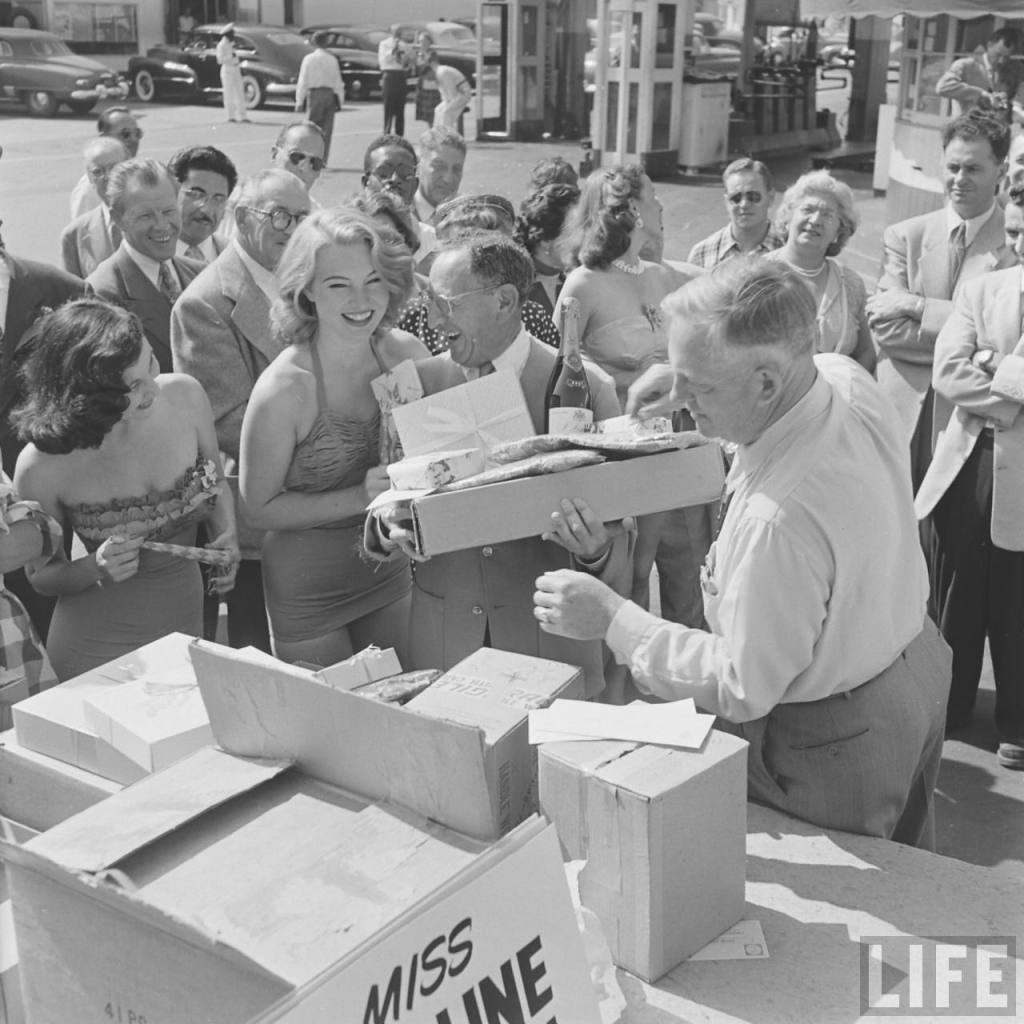
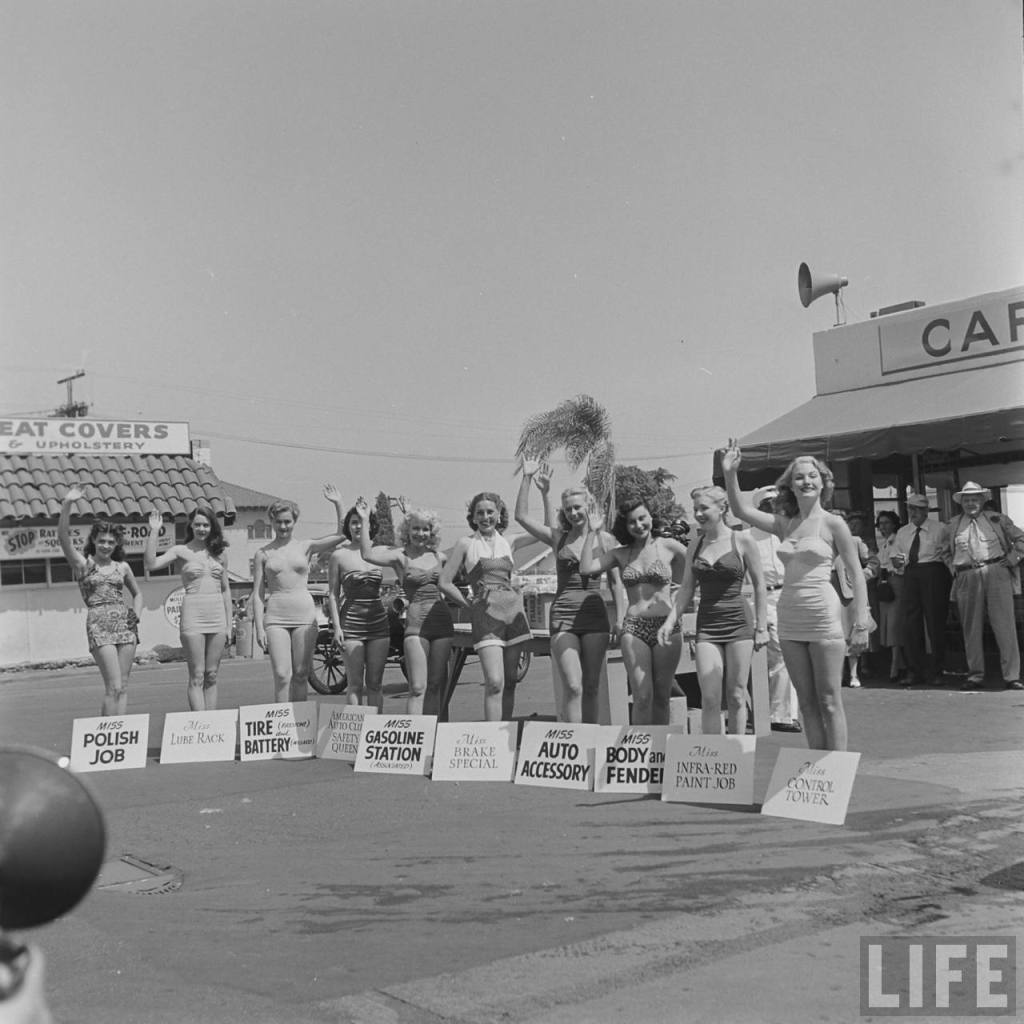
In June of 1951, the Muller Bros held a “beauty pageant” to celebrate their three millionth car wash (any excuse to attract customers). Located on Sunset and Ivar in Los Angeles California, LIFE magazine photographer Allan Grant went along to photograph the event. The beautiful ladies hired for the event, given titles like “Miss Body and Fender”, are of course being objectified in more ways than we can count here, but it doesn’t appear as if they seem to mind very much. In fact the ladies look like they were having more fun than anyone else that summer’s day in Los Angeles, 1951…
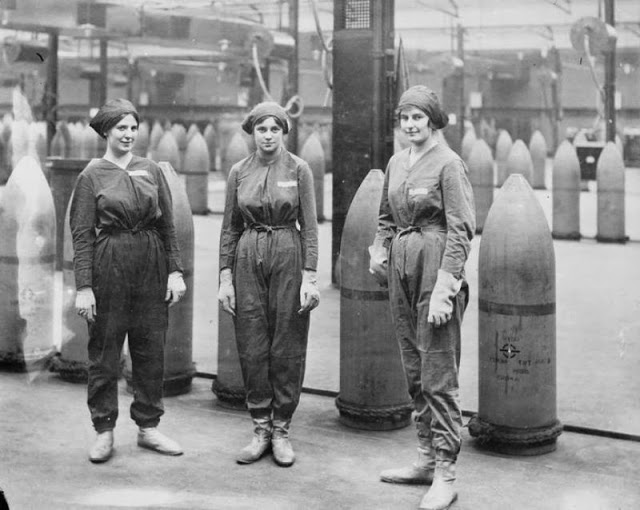
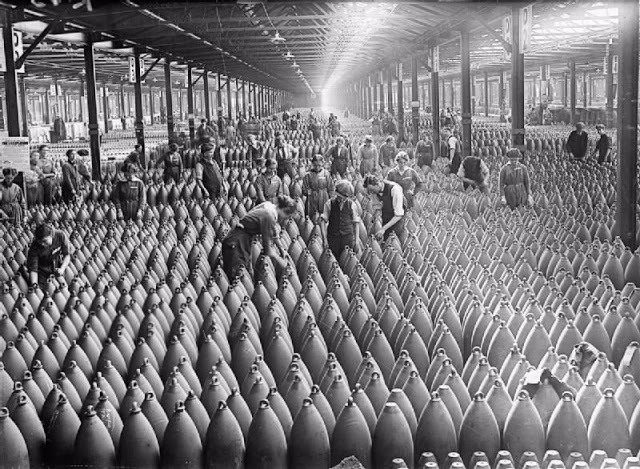
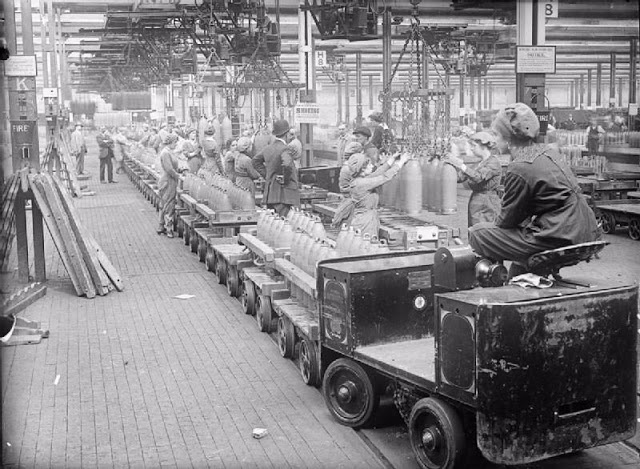
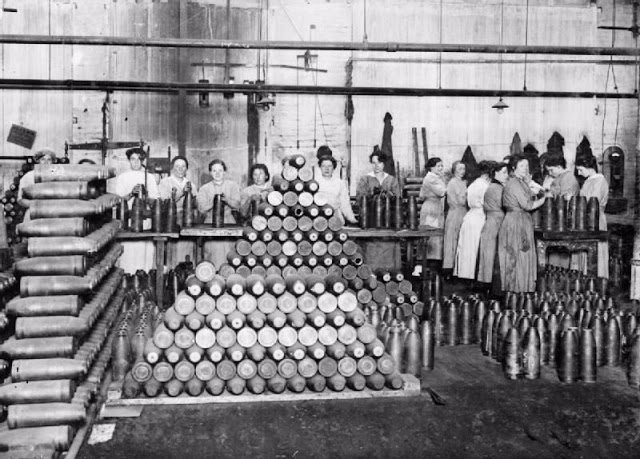
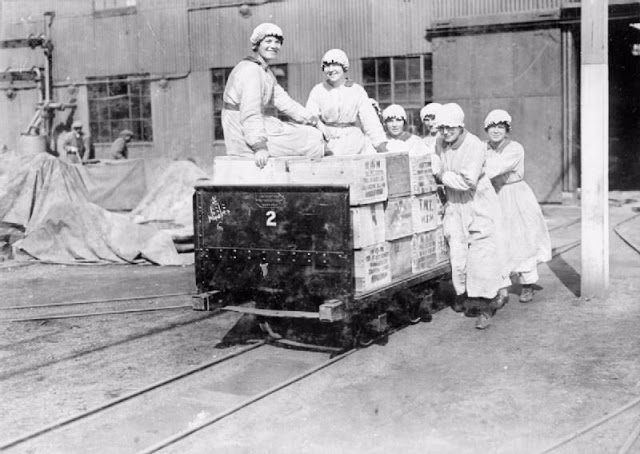
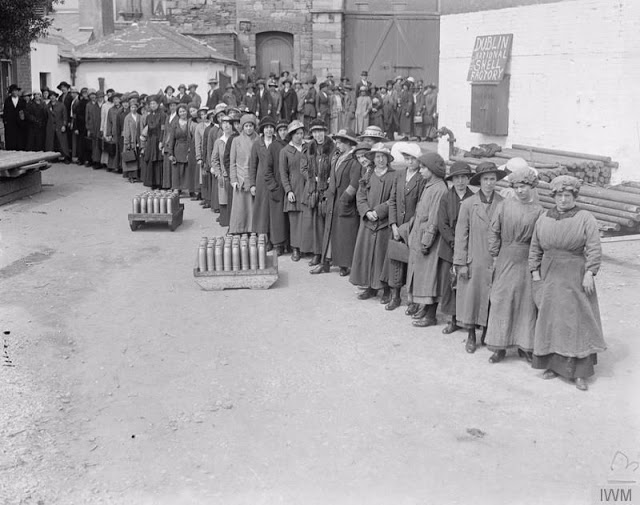
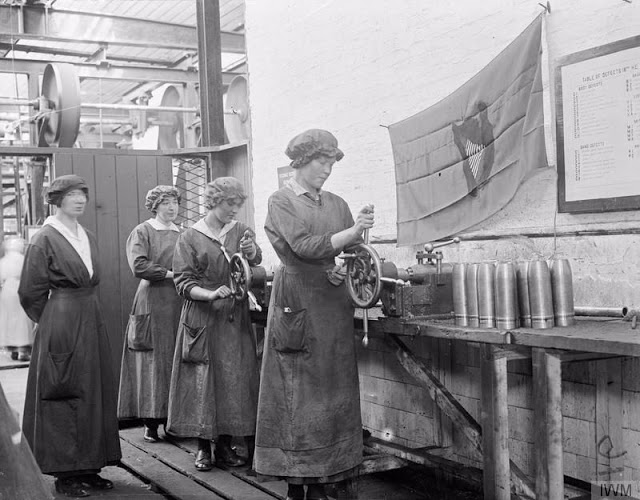
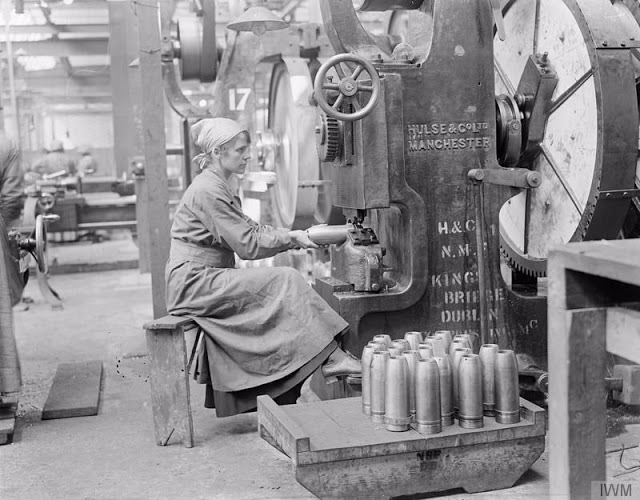
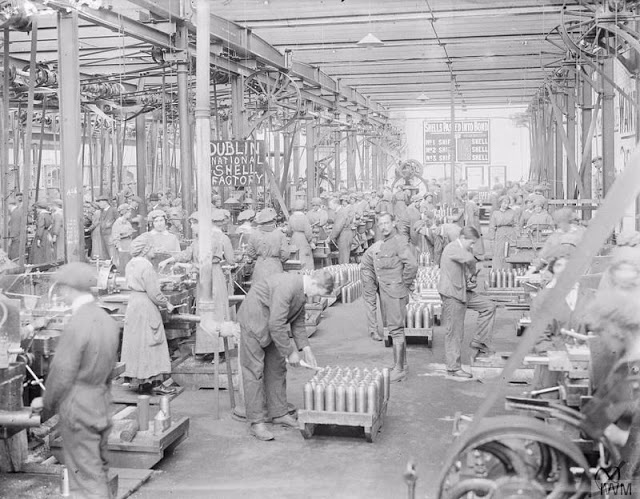
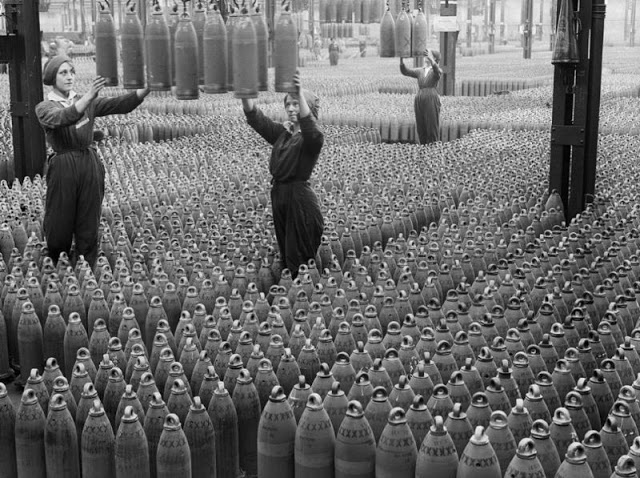
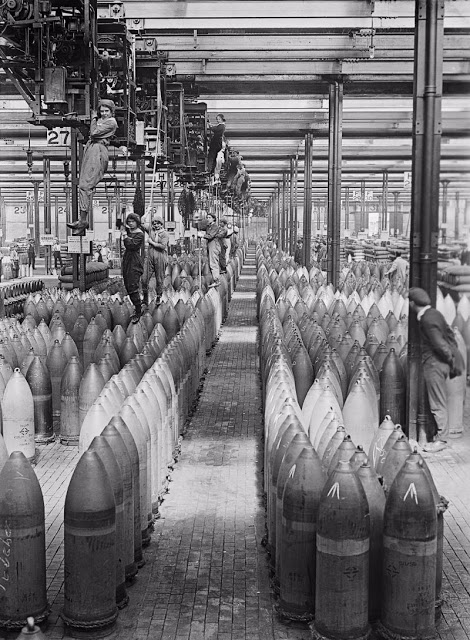
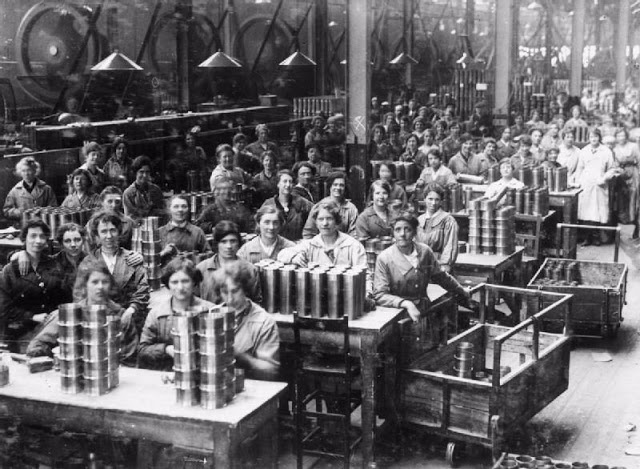
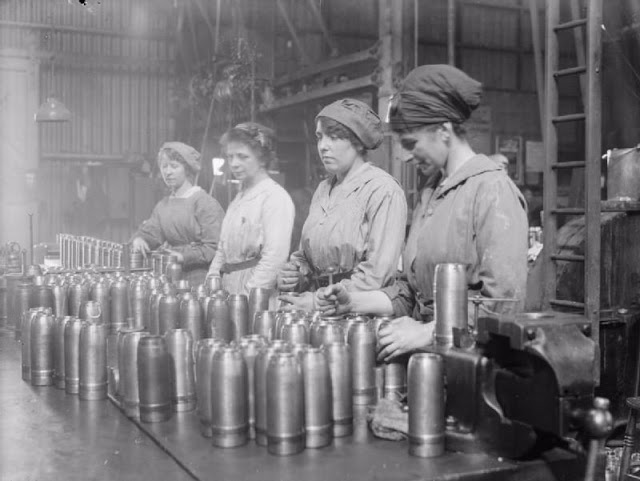
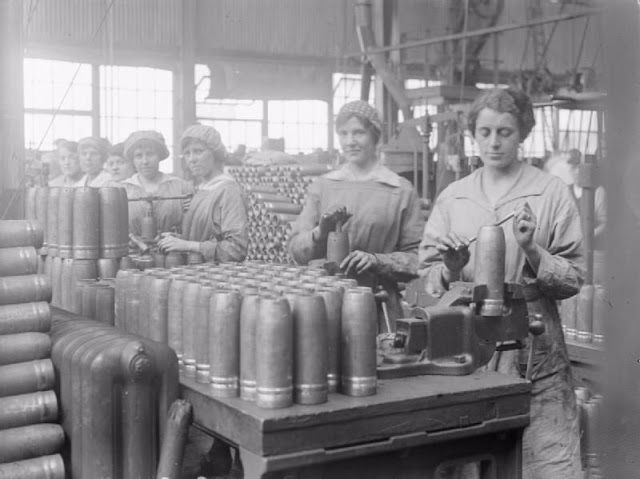
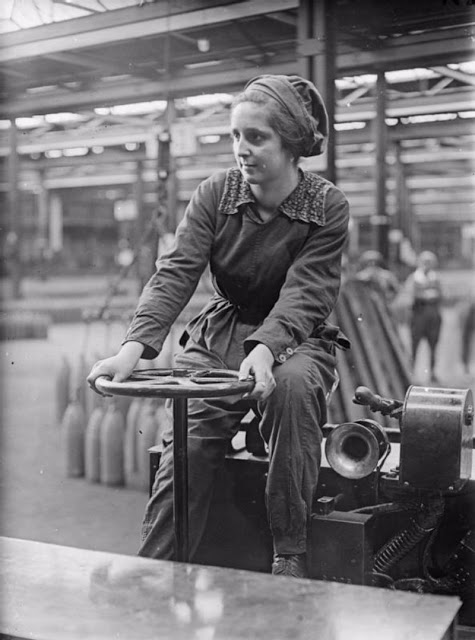
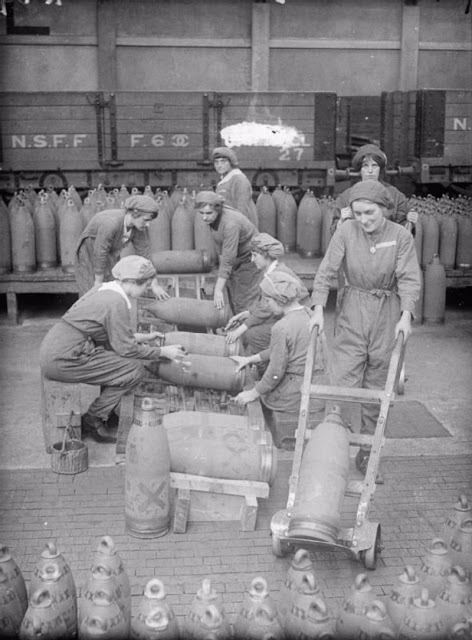
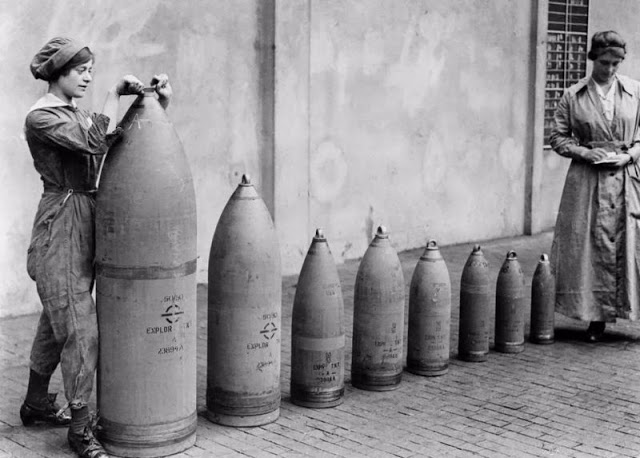
During World War I the United Kingdom called upon its female population to join the workforce. With a majority of men being deployed and a dire need for production both to support the troops and to keep the country running, women were asked to “do their bit”.
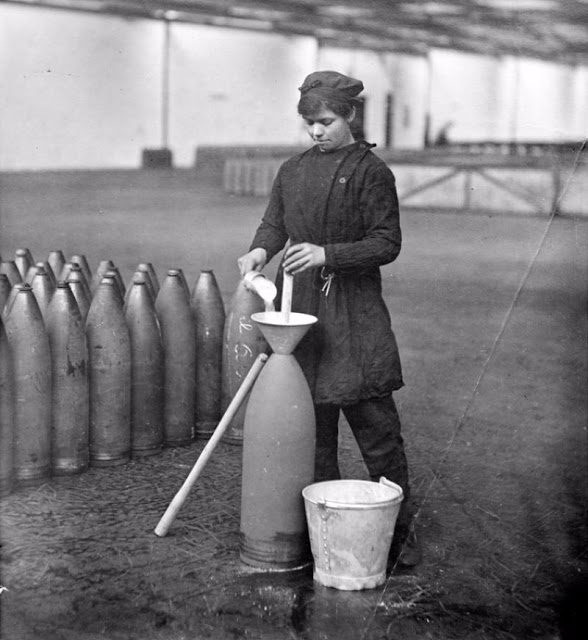
Munition factories were one of the main sites where man (or woman) power was needed. These production facilities dealt mainly with trinitrotoluene (TNT), a toxic chemical compound that was originally used as a yellow die before its potential as an explosive was discovered.
It is no wonder that the women who were exposed to TNT on a daily basis turned yellow due to depigmentation of the skin. Their hair would often turn green or reddish too and sometimes even fall off altogether. Hence the nickname ‘Canary Girls’ or ‘Munitionettes’. The side effects of working with such a toxic substance was not just visual. Other effects include: vomiting, nausea, migraines, breast deformation, chest pain, and weakening of the immune system.
On top of all these risks, the leading cause of death in the factories was explosions. The biggest of these blasts was in 1918 at the National Shell Filling Factory, Chilwell and killed 130 workers. This is Britain’s worst ever disaster involving an explosion and it was the biggest loss of life in a single explosion during WWI.
Despite all these hazards and the women’s ability to perform both heavy duty and delicate tasks perfectly, on average, women were paid less than half of what their male counterparts received.
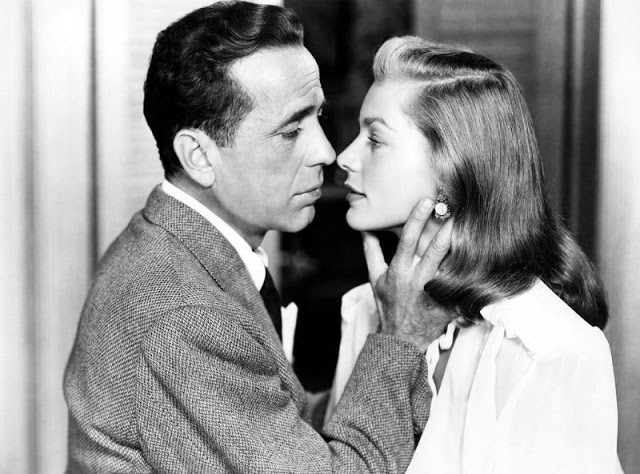
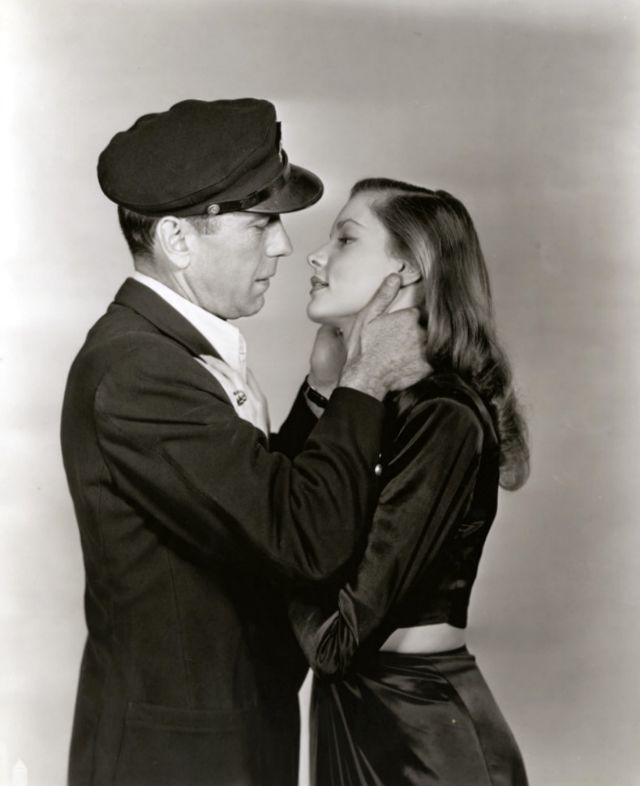
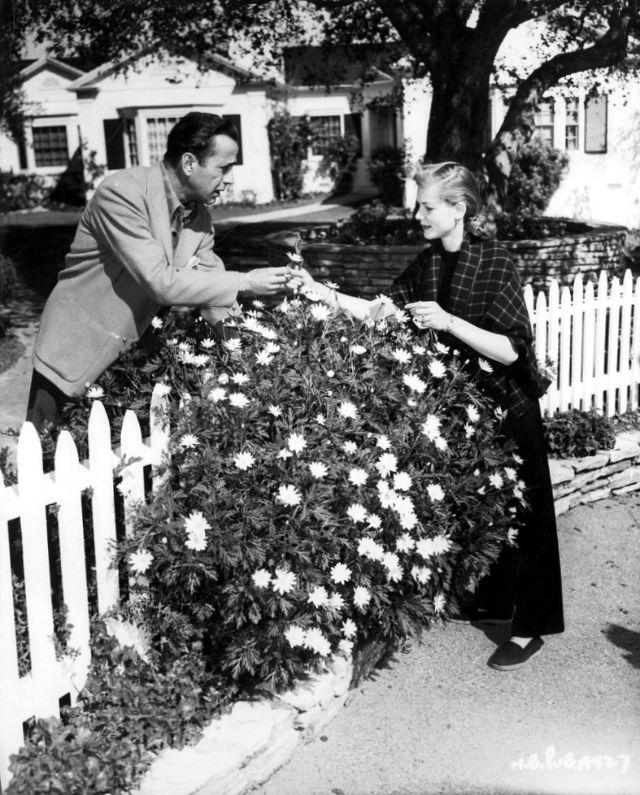
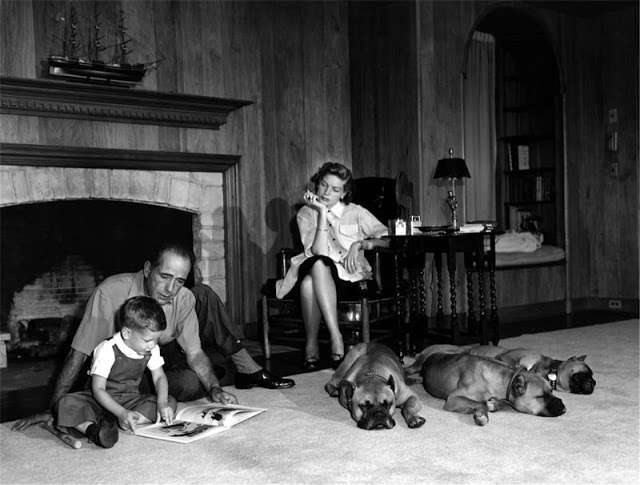
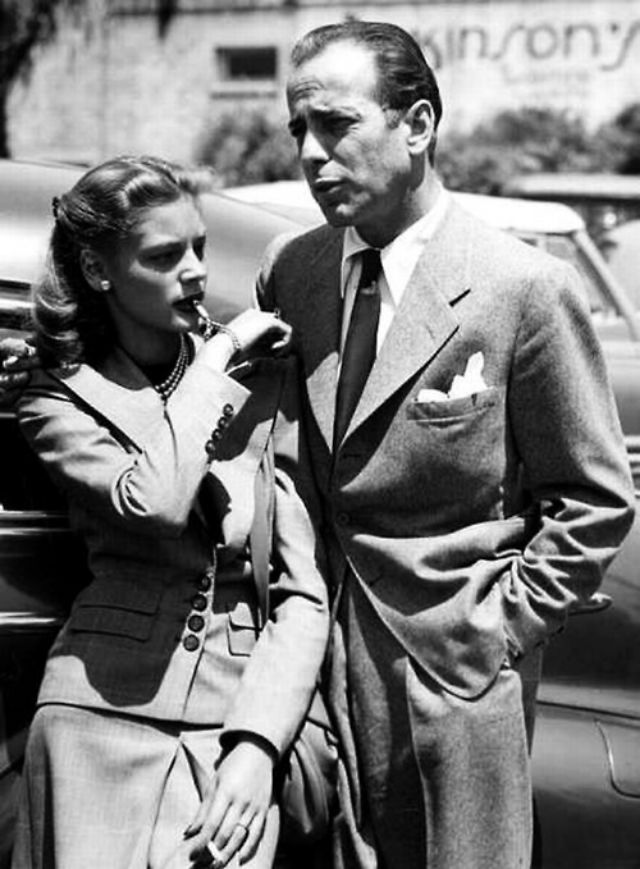
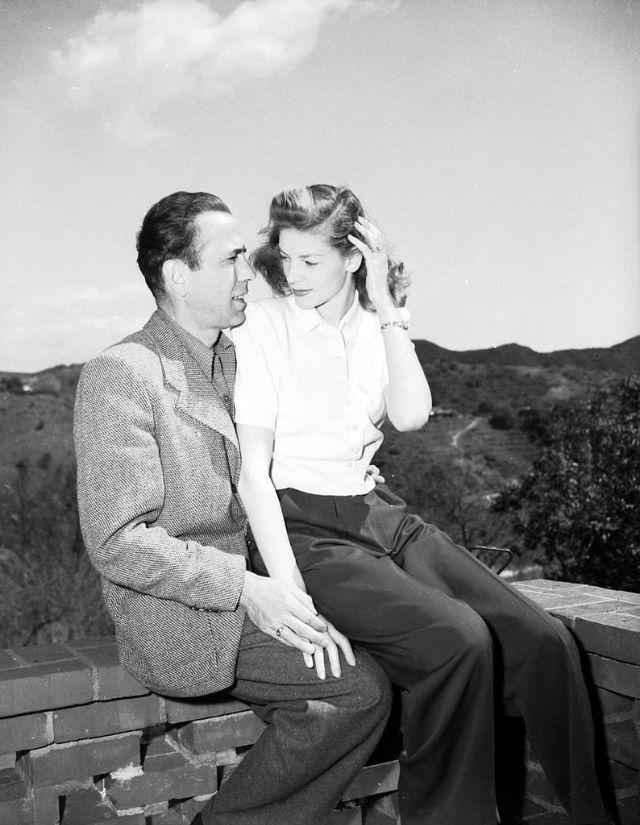
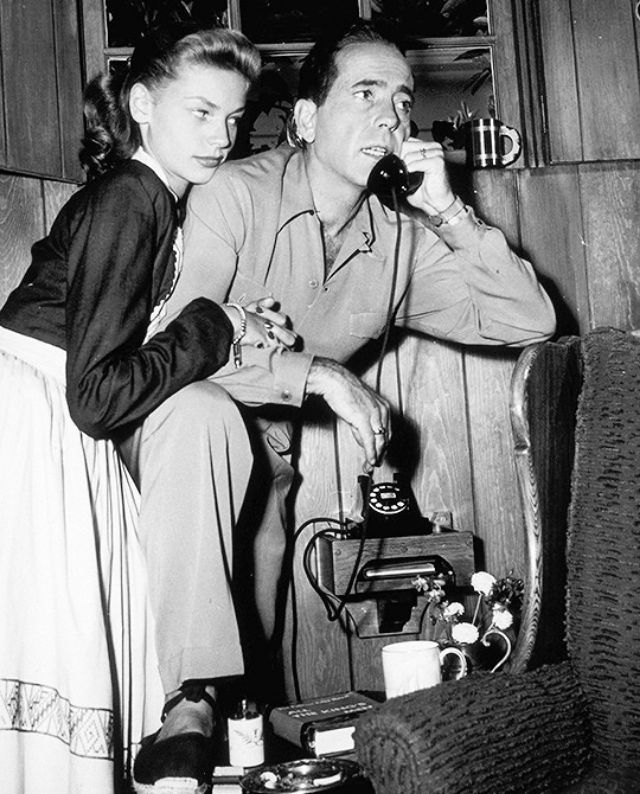
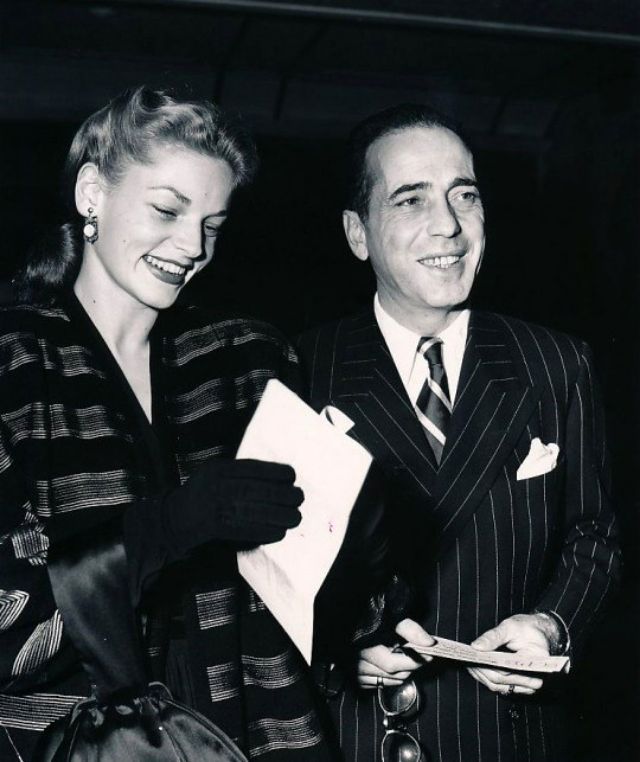
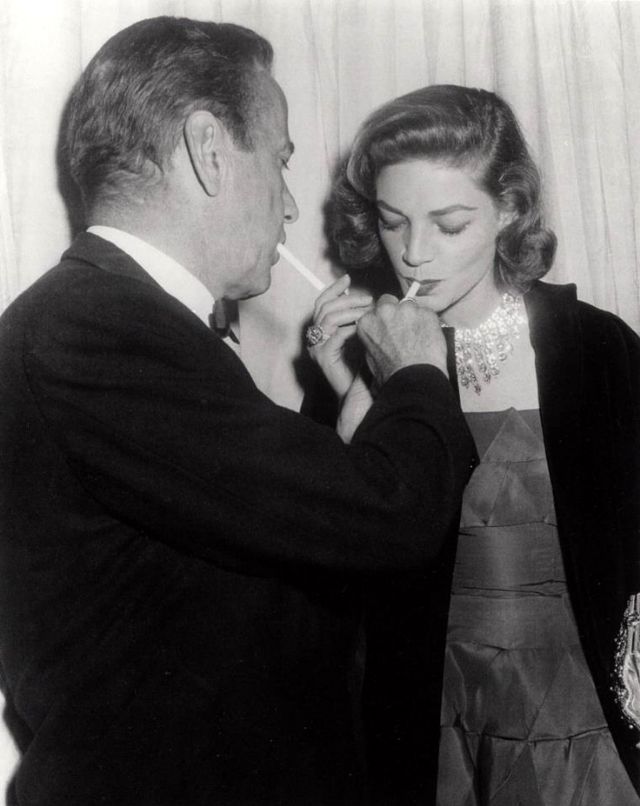
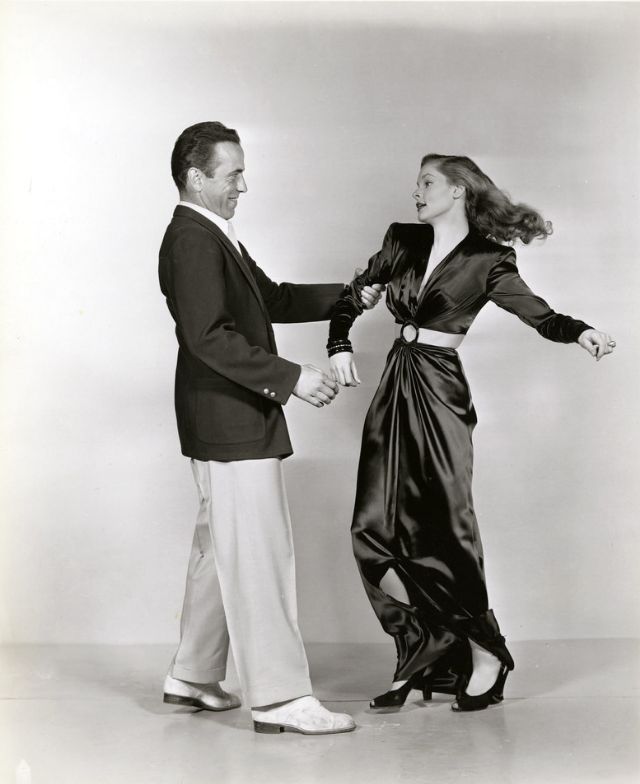
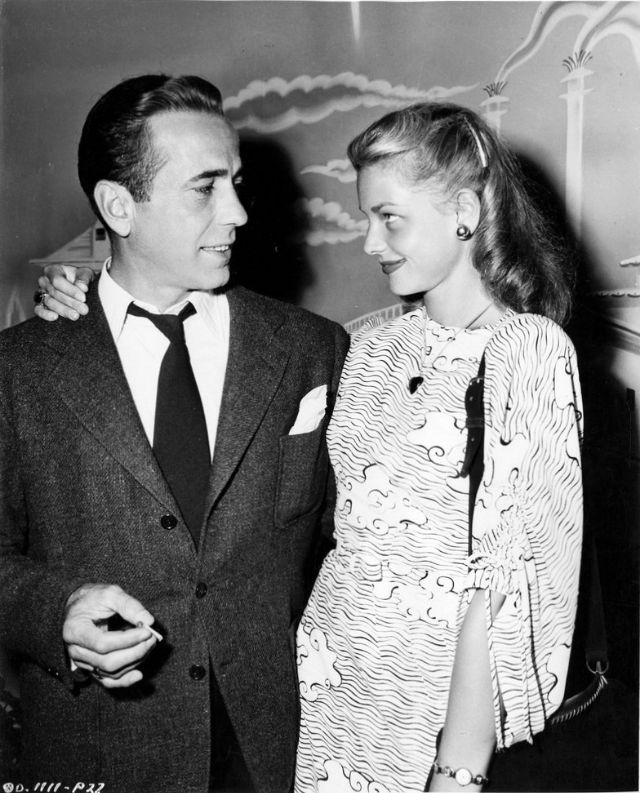
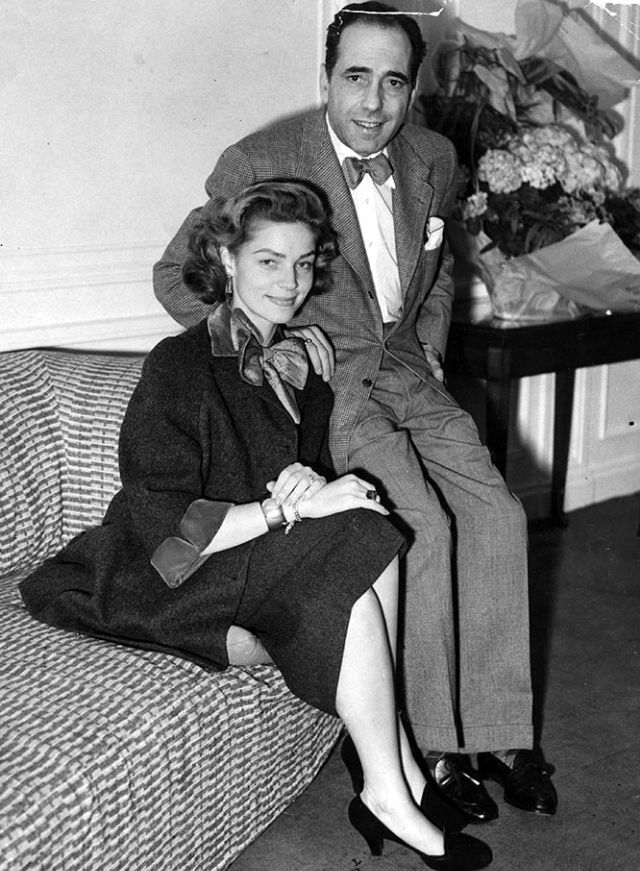
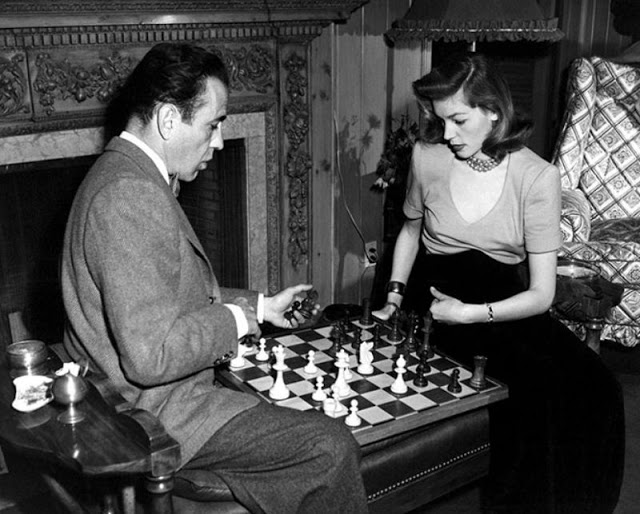
She was a Jewish girl from the Bronx, and he was raised Episcopal on Manhattan’s Upper West Side. Together they made some of the greatest film noir movies the world had ever seen, and their May-December romance will go down in history as one of Hollywood’s most glamorous marriages.
Lauren Bacall, 19, was a former model starring in her first leading film role when she met Humphrey Bogart, 45, on the set of To Have and Have Not in 1944. Bogart was married to his third wife, actress Mayo Methot, at the time. Despite their 25-year age gap, sparks flew between the two stars, and their relationship progressed quickly. The movie debuted on Jan. 20, 1945, and Bogart was divorced soon after. He and Bacall tied the knot on May 21, 1945 at a ceremony on Pulitzer Prize-winning author Louis Bromfield’s farm in Lucas, Ohio. They would go on to have two children together, staying married until Bogart’s death in 1957.
Bacall wasn’t the least bit interested in her future husband the first time she saw him on screen in Casablanca. The friend she saw the movie with found him sexy. “I thought she was crazy,” Bacall toldVanity Fair in 2011.
When they met in person a few years later, her first impression of him was of a cordial, polite, and friendly man. He told jokes to make her feel more comfortable in front of the camera, and soon their working relationship became a flirtatious friendship. In her memoir Be Myself, Bacall recounted how, three weeks into filming, Bogart stopped by her trailer to say goodnight. She was brushing her hair, and he was standing behind her:
Suddenly he leaned over, put his hand under my chin, and kissed me. It was impulsive—he was a bit shy—no lunging wolf tactics. He took a worn package of matches out of his pocket and asked me to put my phone number on the back. I did. I don’t know why I did, except it was kind of part of our game. Bogie was meticulous about not being too personal, was known for never fooling around with women at work or anywhere else. He was not that kind of man, and also he was married to a woman who was a notorious drinker and fighter. A tough lady who would hit you with an ashtray, lamp, anything, as soon as not.
When director Howard Hawks got wind of the affair, he tried to put a stop to it by telling Bacall it was just a fling, that Bogart would dump her once filming ended. He even threatened to ruin her career, bluffing that he would send her to the “lowest” studios in Hollywood. “[Hawks] used to say to Bogie, ‘You don’t have to get serious about this girl. Take her downtown to a hotel and get a room with her—that’s enough.’ That was not Bogie’s scene at all,” Bacall revealed decades later.
Her mother disliked her new boyfriend, too. When she came to visit Bacall, she mused out loud about what her daughter was thinking by pursuing a married man 25 years her senior who had a drinking problem, according to Biography.com.
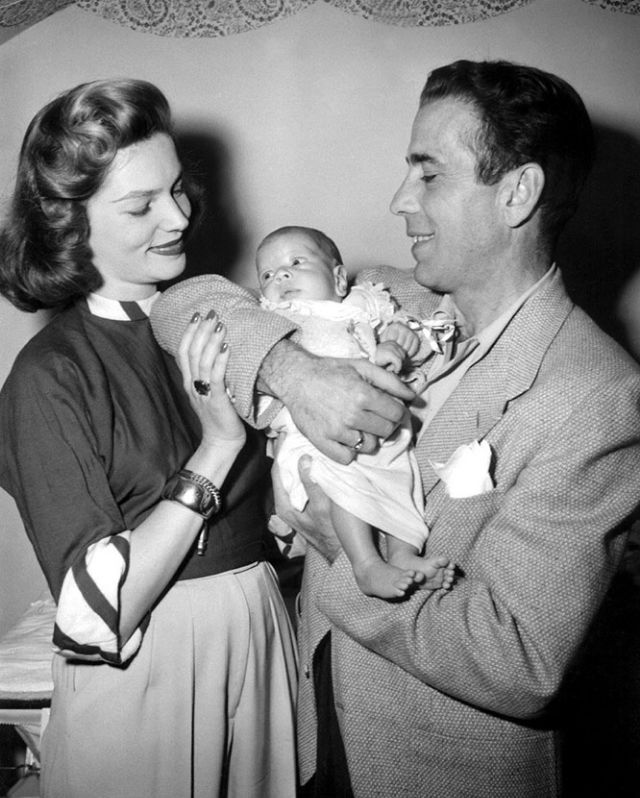
Of course, no one successfully deterred the union. Bogart became a father for the first time at age 46 when the couple welcomed their firstborn, a son they name Stevie—presumably after Bogart’s character Steve in To Have and Have Not—in January 1946.
Their daughter, Leslie, was born on August 23, 1952. Following the success of their first film together, credited in large part to their onscreen chemistry, the pair was cast in the film noir movie The Big Sleep almost immediately after. They also starred in Dark Passage (1947) and Key Largo (1948) together.
Though their relationship was marred by mutual infidelity—his with his longtime hairdresser Verita Peterson, and hers with Frank Sinatra—their mutual deep care for each other was evident until the end.
“I never believed that I could love anyone again, for so many things have happened in my life to me that I was afraid to love,” Bogart wrote in a love letter to Bacall at the beginning of their relationship. “Now I’m afraid that you’ll become impatient and that I’ll lose you—but even if that happened, I wouldn’t stop loving you.”
Bogart died of esophageal cancer in 1957. Bacall got engaged to Sinatra shortly after, but the relationship ended after she talked publicly about their affair against his wishes. She married actor Jason Robards in 1961, though it seems she never really got over Bogie. Even her second spouse referred to her as “The Widow Bogart.”
“No one has ever written a romance better than we lived,” she wrote in her memoir. After her death on Aug. 12, 2014, she was interred at Forest Lawn Memorial Park in Glendale, California, the same cemetery as Bogart. (Via countryliving.com)
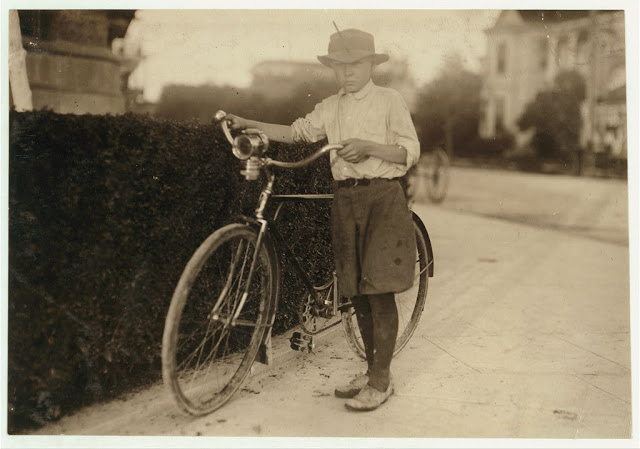
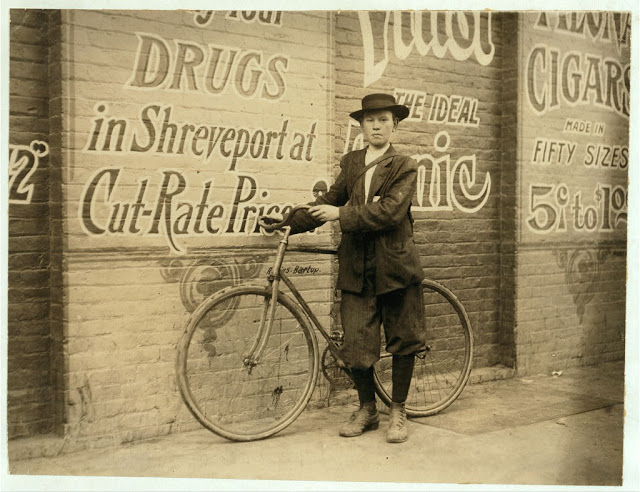
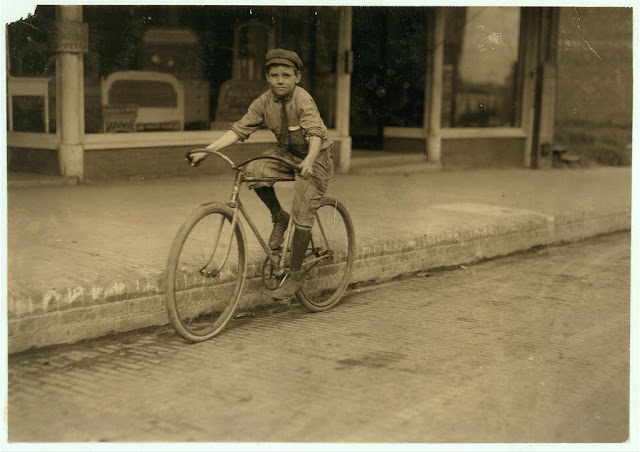
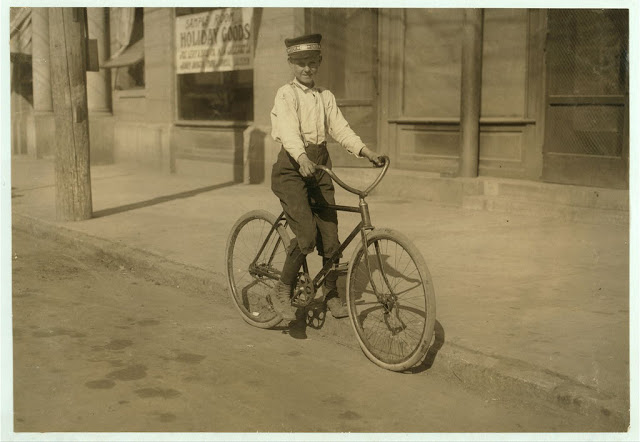
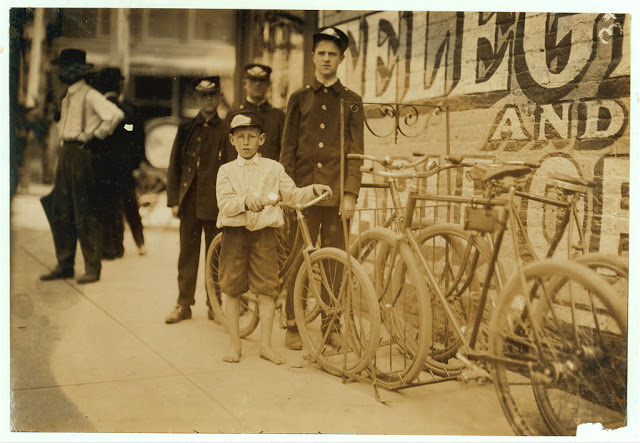
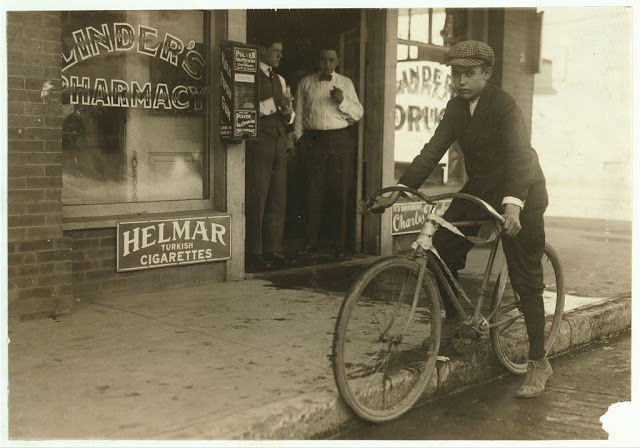
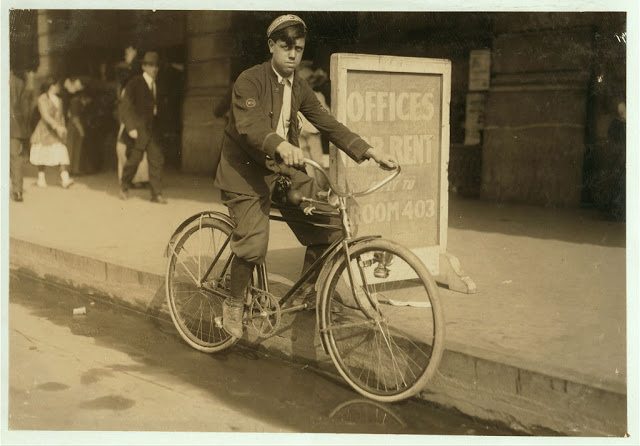
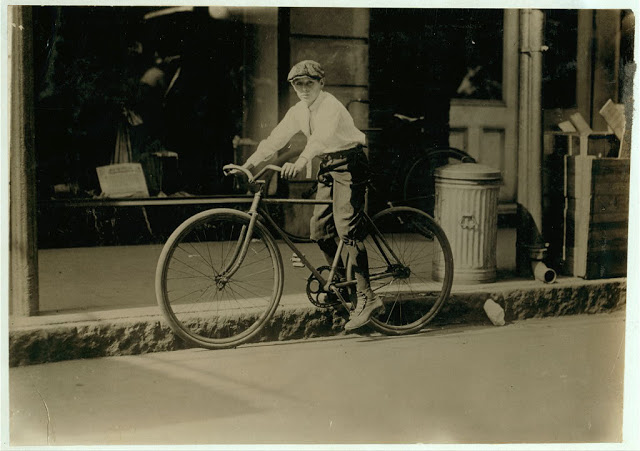
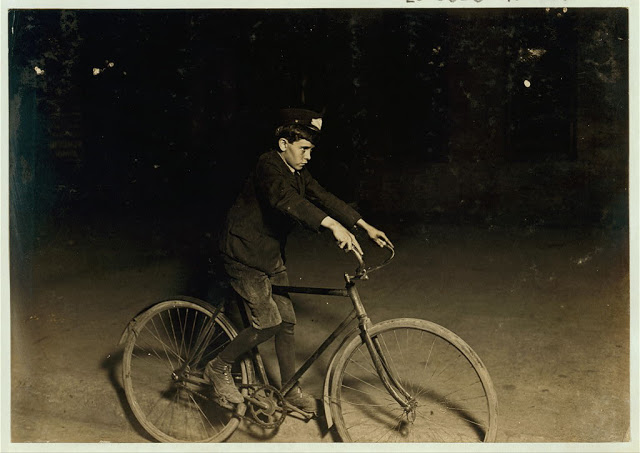
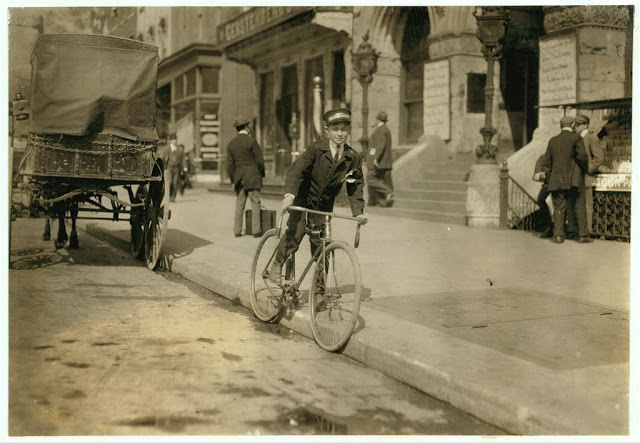
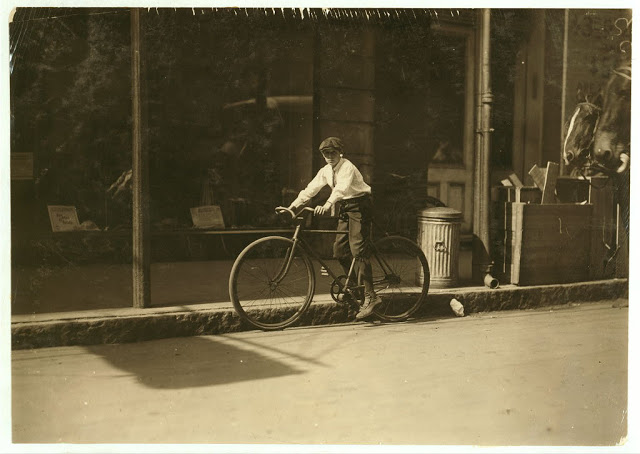
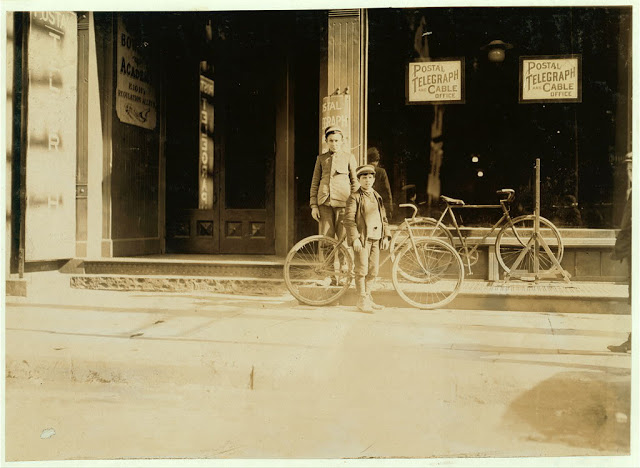
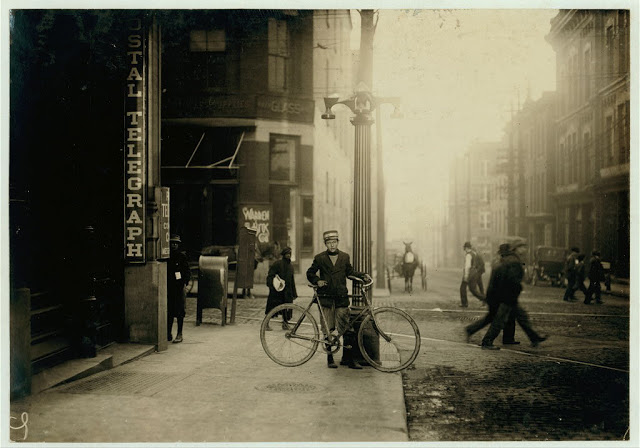
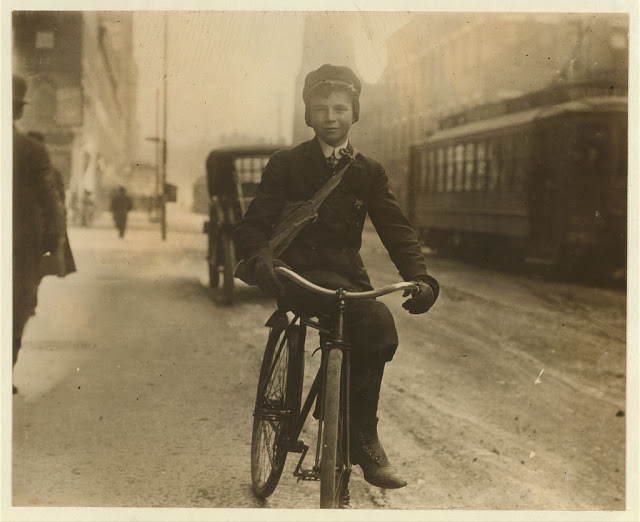
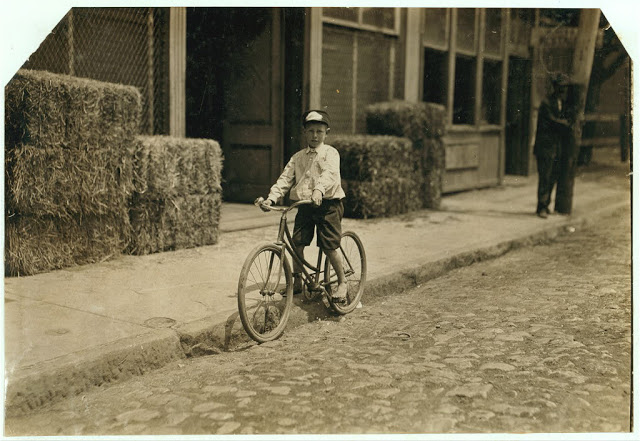
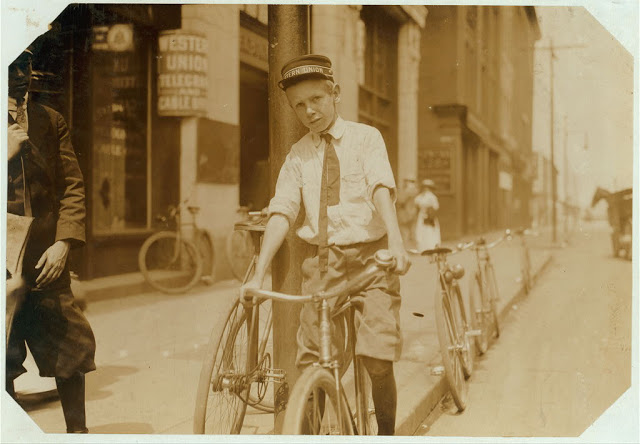
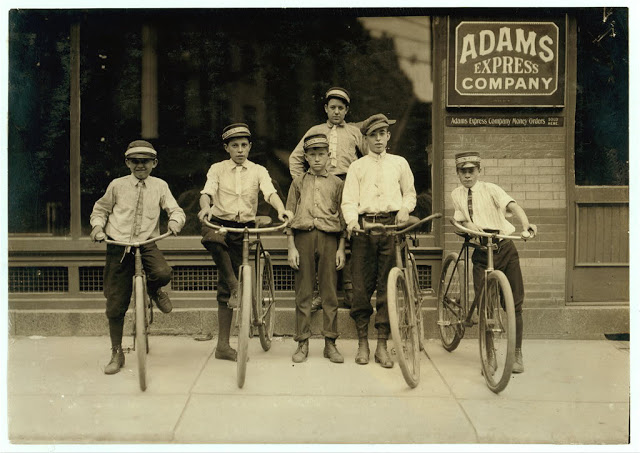
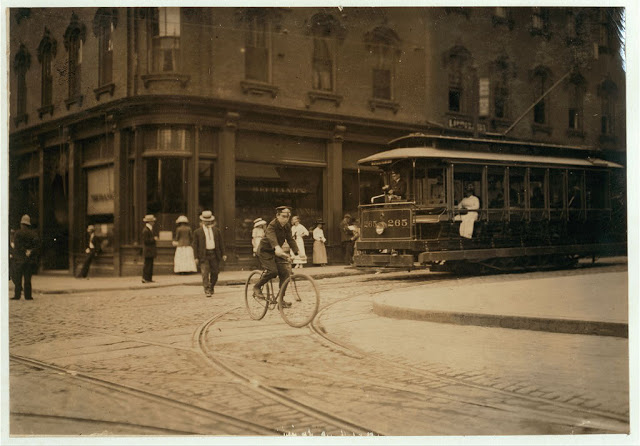
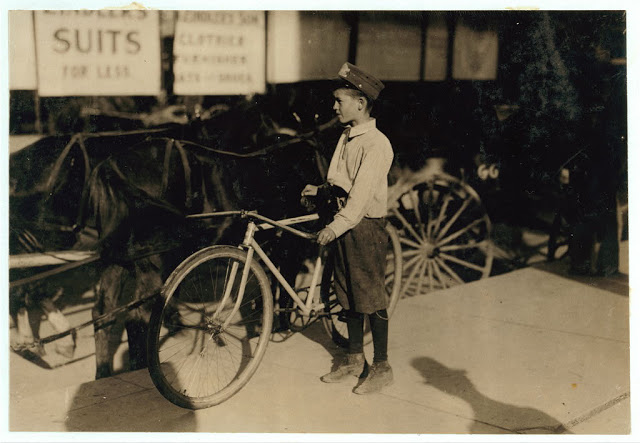
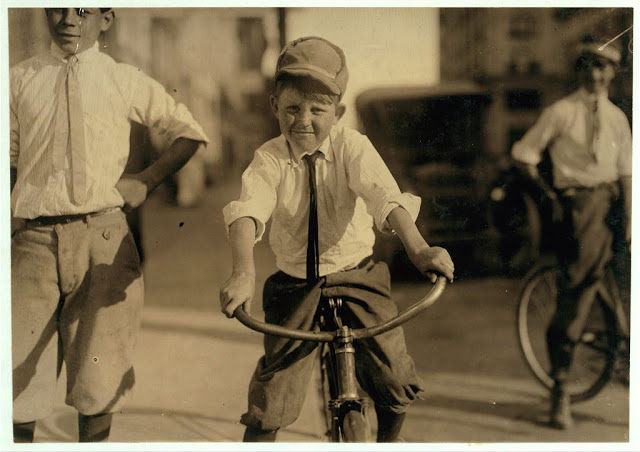
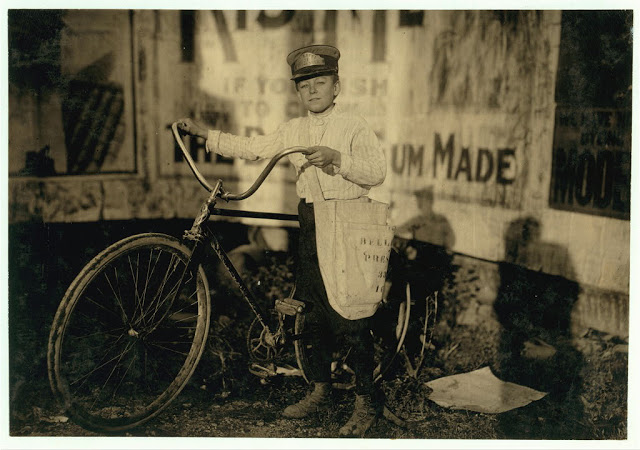
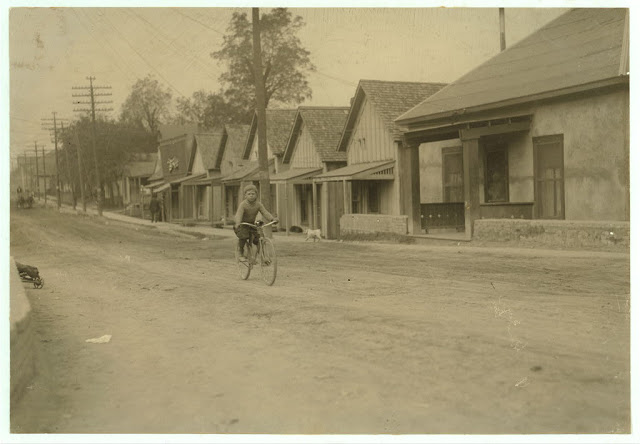
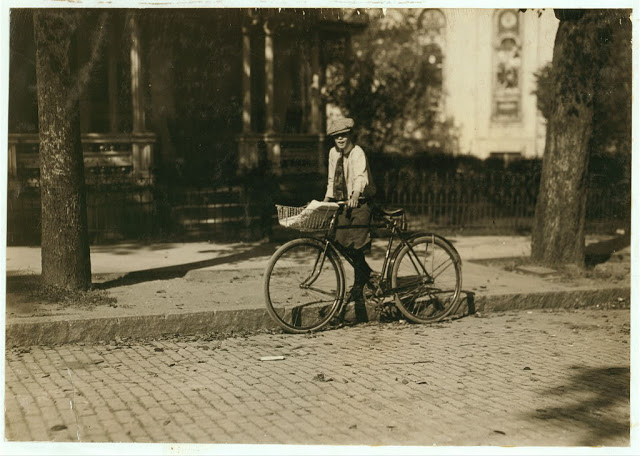
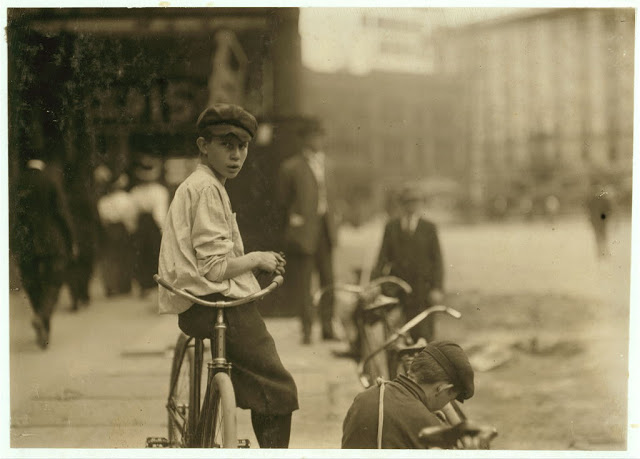
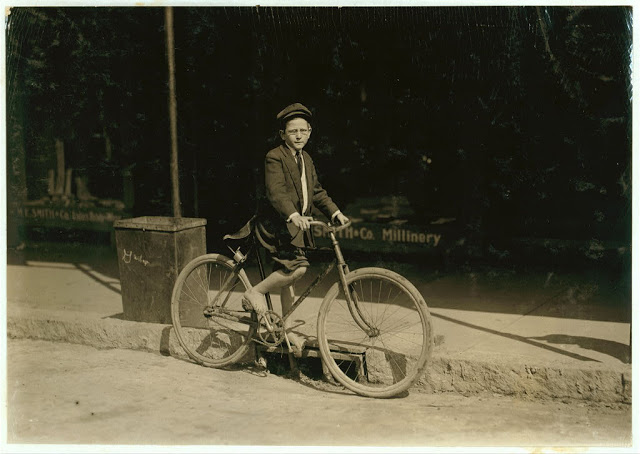
The little bicycle messengers of yesterday who were part of two million child laborers working in American industry in the early 20th century.
Photojournalist Lewis Hine played an integral role in the creation of child labor laws in America. Hine took a post with the National Child Labor Committee in 1908 and spent the next ten years documenting child laborers and their working conditions around America. Though real child labor reform didn’t come about until 1938, Hine’s photos nonetheless helped show America the destitute, exploitative conditions in which young children were forced to work.
As it turns out, Hines came across a lot of young bike messengers in the course of his work. As a by-product of his work for the NCLC, Hine created an amazing record of early American bike messengers and some of them, like the one of the aforementioned bad ass, are really great. Captions written by Lewis Hine. Here are some of his fantastic photographs:
Luther Wharton, drug store delivery boy, twelve years old. Works from 4:00 P.M. to midnight in Sommers Drug Store. I saw him working at midnight. He goes to school in the daytime, then works from four to twelve. Sundays half a day. Gets $5.00 a week. “I take medicines to the Red Light places several times a day. Yes I know some of the people there.” This is a pretty heavy burden, both physical and moral, to place on this adolescent boy. Location: San Antonio, Texas.Howard Williams, thirteen year old delivery boy for Shreveport, La. Drug Company. He works from 9:30 A.M. to 10:30 P.M.; has been here three months. Goes to the Red Light every day and night. Says that the company could not keep other messenger boys; they work them so hard. Location: Shreveport, Louisiana.Percy Neville, eleven year old messenger boy. Messenger boy #6 for Mackay Telegraph Company. He has been messenger for different companies for four years. Location: Shreveport, Louisiana.Fourteen year old messenger #2 Western Union, Shreveport. Says he goes to the Red Light district all the time. Location: Shreveport, Louisiana.The smallest boy, Western Union No. 5 is only ten years old, and is working as extra boy. He said he was going to be laid off as the manager told him he was too young, but an older messenger told me the reason was that the other messengers were having him put off because he cuts into their earnings. Location: Danville, Virginia.Postal Telegraph boy, Danville, Va. That night he refused to show me through the Red Light District, said the manager did not permit them to go on such errands. A Western Union boy (tallest boy in photo 2182) eagerly took me around and revealed an appalling intimate acquaintance with the district and the inmates. Location: Danville, Virginia.Curtin Hines. Western Union messenger #36. Fourteen years old. Goes to school. Works from four to eight P.M. Been with Western Union for six months, one month delivering for a drug store. “I learned a lot about the ‘Reservation’ while I was at the drug store and I go there some times now.” Location: Houston, Texas.Fifteen year old delivery boy for Linders Drug Store, which is located on the edge of the Reservation, Griffin Street. The boy has just returned from a trip to these Houses. He works from 8 A.M. to 8 P.M. Location: Dallas, Texas.A typical messenger boy in New Orleans. The telegraph companies are trying to obey the law, and few violations occur. Location: New Orleans, Louisiana.Willie Roberts, 11 year old delivery boy in Reiss Department Store. Location: Mobile, Alabama.A. D. T. Messenger Boy, Indianapolis, 10 P.M. Location: Indianapolis, Indiana.A. D. T. Messengers, Indianapolis. Aug., 1908. Location: Indianapolis, Indiana.Wilbur H. Woodward, 428 Third St., N.W., Washington, D.C., Western Union messenger 236, one of the youngsters on the border-line, (15 yrs. old) works until 8 P.M. only. Location: Washington (D.C.), District of Columbia.Messenger boy working for Mackay Telegraph Company. Said fifteen years old. Exposed to Red Light dangers. Location: Waco, Texas.Package boy. Location: Montgomery, Alabama.Messenger boys. Work until 11 P.M. Location: New Haven, Connecticut.George Christopher, Postal Tel. #7, 14 years old. Been at it over 3 years. Does not work nights. Location: Nashville, TennesseeSelling during school hours, 10:30 A.M. Location: Syracuse, New York (State)Postal Telegraph messenger. Birmingham, Alabama.Wilbur Bold, Western Union Messenger No. 14, twelve years old, works until 11 P.M. usually, but all night when they are busy. Location: Tampa, Florida.Leo Day, Postal Telegraph Messenger, 12 years old, and a very knowing lad. Tampa, Florida.Earle Griffith and Eddie Tahoory, working for the Dime Messenger Service. They said they never knew when they were going to get home at night. Usually work one or more nights a week, and have worked until after midnight. They said last Christmas their office had a 9 yr. old boy running errands for them, and that he made a great deal of money from tips. They make about $7 a week and more, sometimes. Said “The office is not allowed to send us into the red light district but we go when a call sends us. Not very often.” Location: Washington (D.C.), District of Columbia.The smallest boy, Western Union No. 5, is only ten years old, and is working as extra boy. He said he was going to be laid off as the manager told him he was too young, but an older messenger told me the reason was that the other messengers were having him put off because he cuts into their earnings. Location: Danville, Virginia.Hodges Gallop, Western Union Messenger No. 16, Norfolk, Va. Lives, 201 Freeman Street. Been working here one month. He, and several other very young boys, work until 10:30 P.M. Location: Norfolk, Virginia.Hodges Gallop, Western Union Messenger No. 16, Norfolk, Va. Lives, 201 Freeman Street. Been working here one month. He, and several other very young boys, work until 10:30 P.M. Location: Norfolk, Virginia.A typical group of Postal Messengers in Norfolk, Va. Smallest on left end, Wilmore Johnson, been there one year. Works days only. The Postal boys are not nearly so young, in Norfolk and also in other Virginia cities, as are the Western Union boys. Location: Norfolk, Virginia.Group of Western Union Messengers in Norfolk, Va. See also photo 2232, 2258, and report on Va. messengers. Location: Norfolk, Virginia.Raymond Bykes, Western Union No. 23, Norfolk Va. Said he was fourteen years old. Works until after one A.M. every night. He is precocious and not a little “tough.” Has been here at this office for only three months, but he already knows the Red Light District thoroughly and goes there constantly. He told me he often sleeps down at the Bay Line boat docks all night. Several times I saw his mother hanging around the office, but she seemed more concerned about getting his pay envelope than anything else. Location: Norfolk, Virginia.Young messenger in New Bedford, Massachusetts.Twelve year old messenger #7. Edison Green. Works on day shift now. “I got acquainted with the Red Light people over in Oklahoma City where I was messenger for three years, but I carry messages out to them here.” Location: Houston, Texas.Eleven year old Western Union messenger #51. J.T. Marshall. Been day boy here for five months. Goes to Red Light district some and knows some of the girls. Location: Houston, Texas.Jeff Miller. A young delivery boy for Magnolia Pharmacy. This is especially bad for him as he has recently returned from the Seabrook Reform School where he had spent a year. He would not tell me why he was sent there. Location: Houston, Texas.Marion Davis, Messenger #21 for Bellevue Messenger Service. Fourteen years old. “Been messenger, off and on, for two years. Not supposed to go to the Reservation under sixteen years, but I do just the same. The boss don’t care and the cops don’t stop me.” Location: Houston, Texas.Isaac Boyett, “I’m de whole show.” The twelve year old proprietor, manager and messenger of the Club Messenger Service, 402 Austin Street, Waco Tex. The photo shows him in the heart of the Red Light District where he was delivering messages as he does several times a day. Said he knows the houses and some of the inmates. Has been doing this for one year, working until 9:30 P.M. on Saturdays. Not so late on other nights. Makes from six to ten dollars a week. Location: Waco, Texas.A typical Birmingham messenger. Birmingham, Alabama.Extremes meet. One of the youngest and one of the older messenger boys in Mobile. The small boy is Emmet Brewster, Postal messenger #3. 11 years old; been working there 7 months. Makes $10 to $15 a month. Finished the third grade in school. I saw him carrying messages late at night. Location: Mobile, Alabama.A 12 year old delivery boy for a Montgomery laundry. Makes $1.50 a week. Montgomery, Alabama.Boy learning printer’s trade. Montgomery, Alabama.A 10 year old delivery boy for a small department store in Opelika, Alabama.10 year old delivery boy for an Opelika drug store. Gets $3 a week. Opelika, Alabama.An 11 year old delivery boy for an Opelika meat market. Opelika, Alabama.“Red Line” messenger service. Sacramento, CaliforniaManley Creasson, 914 W. 6 St. Messenger #6, Mackay Telegraph Co. Says he is 14; school records say 13. Says he has steady job – “Been a messenger for years. Get $15 for 2 weeks’ pay.” Location: Oklahoma City, Oklahoma.Jack Ryan, 6-year-old newsie, who lives at 126 1/2 W. Reno St. Location: Oklahoma City, Oklahoma.Ben Collins, 515 N. Walnut St. Been working steady for Mackay Telegraph Co. for 1 month. 13 years old. Says he makes $5 a week. Oklahoma City, Oklahoma.
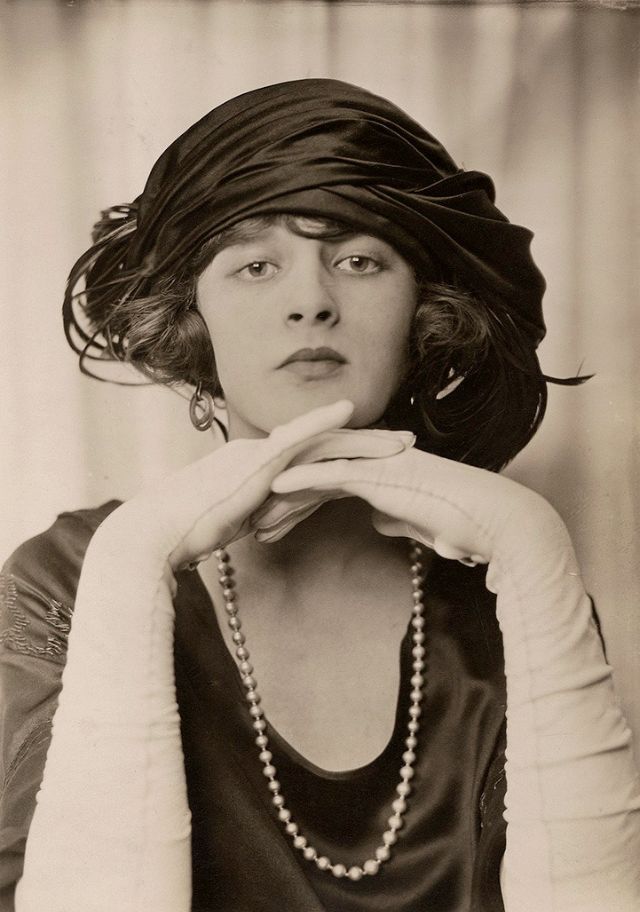
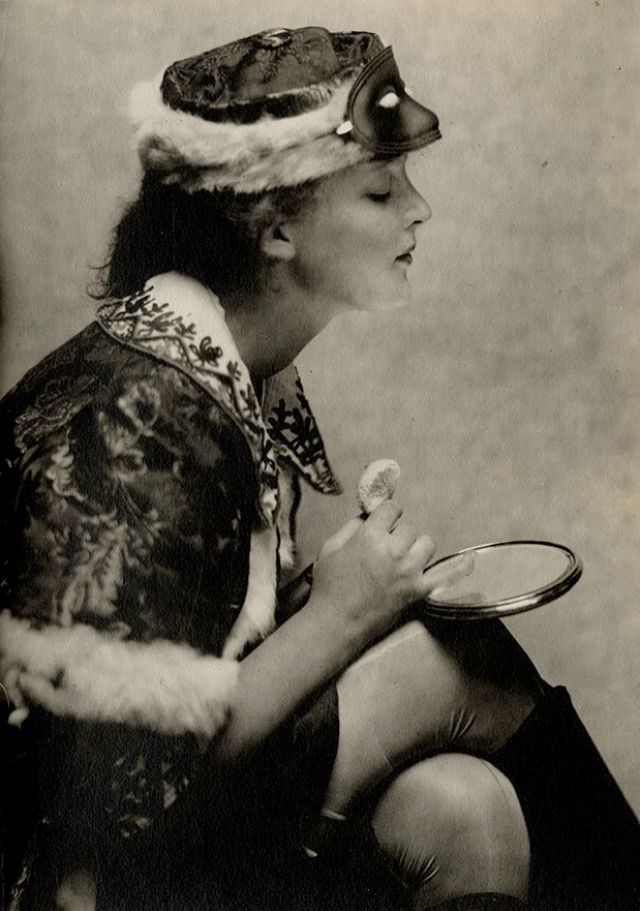
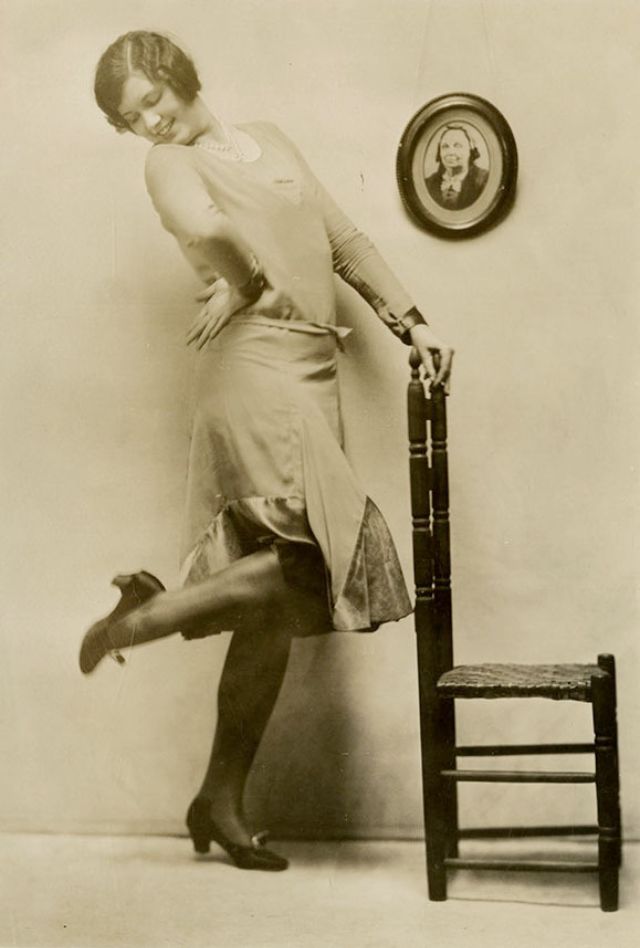
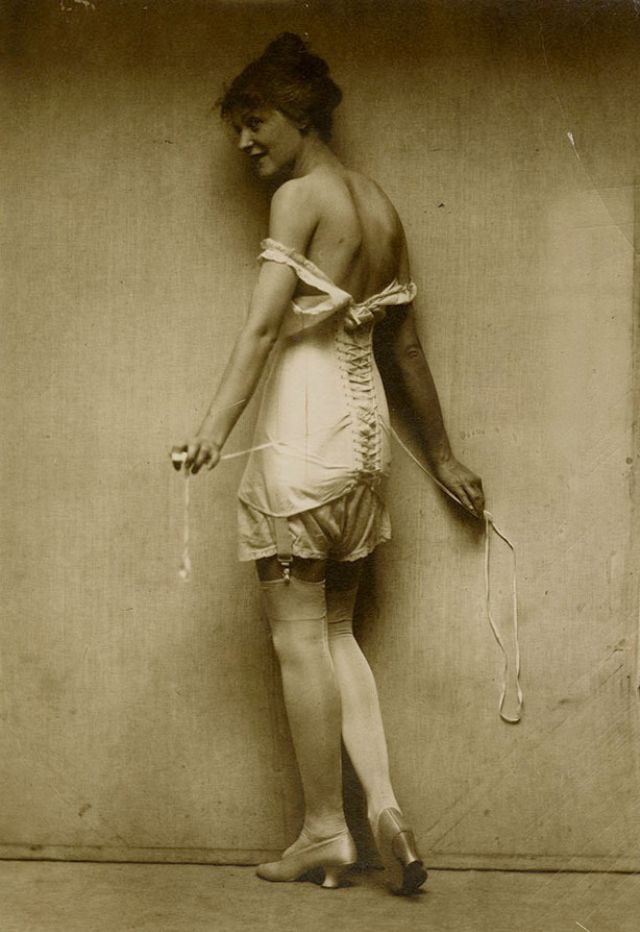
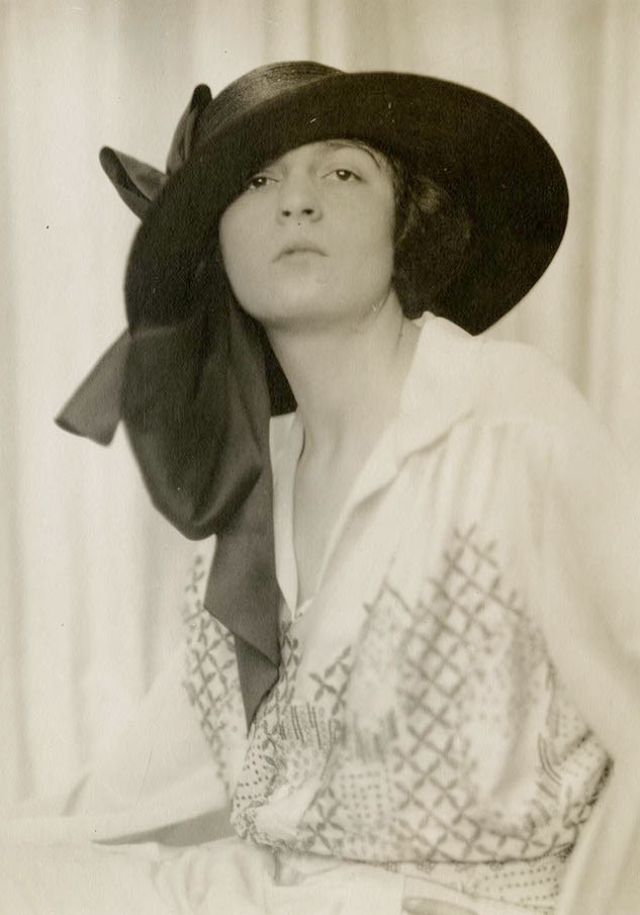
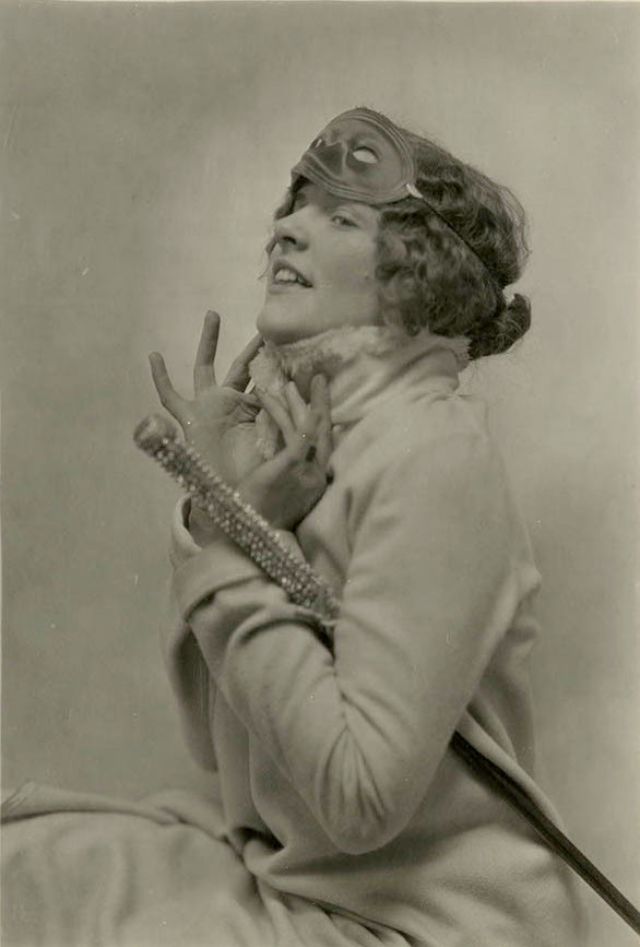
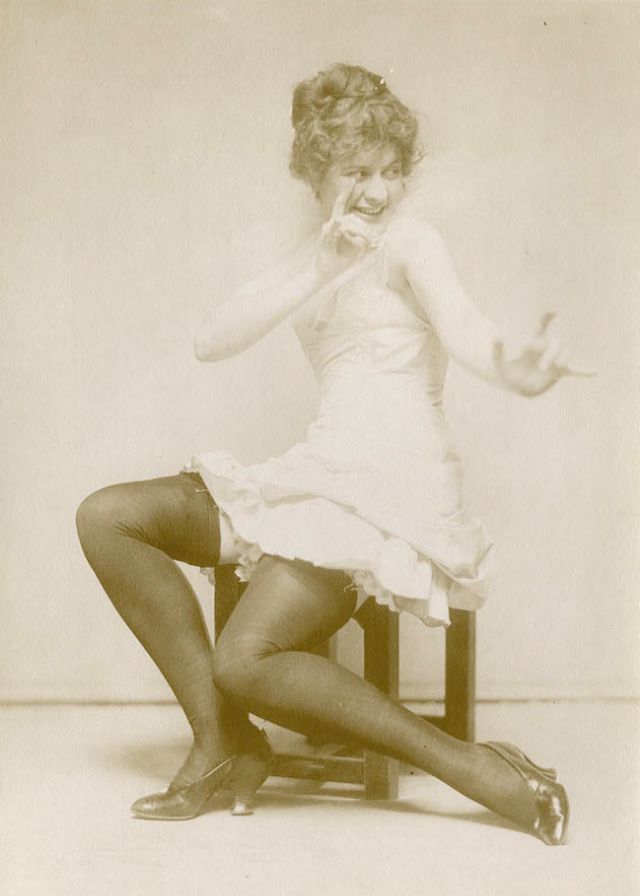
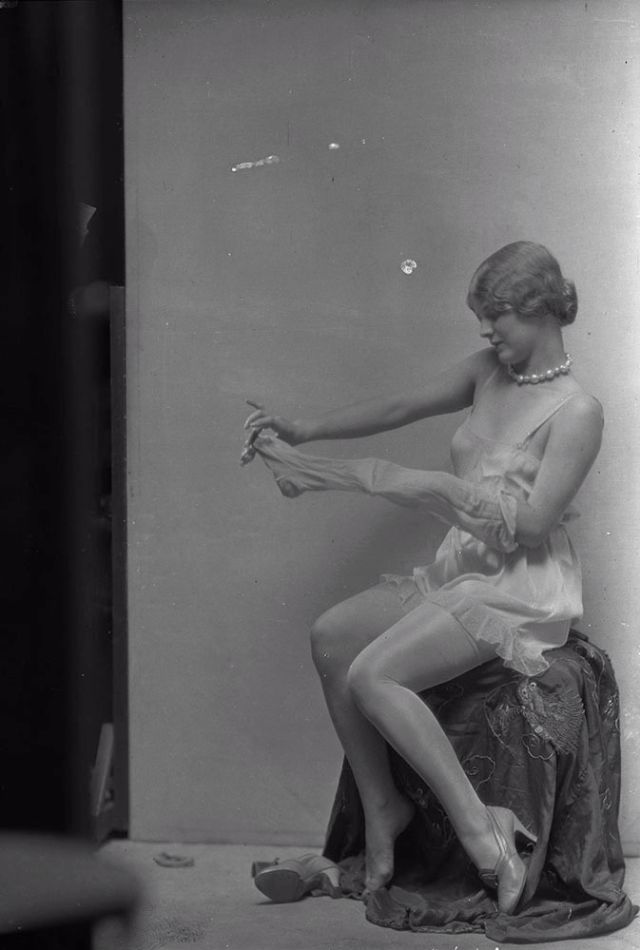
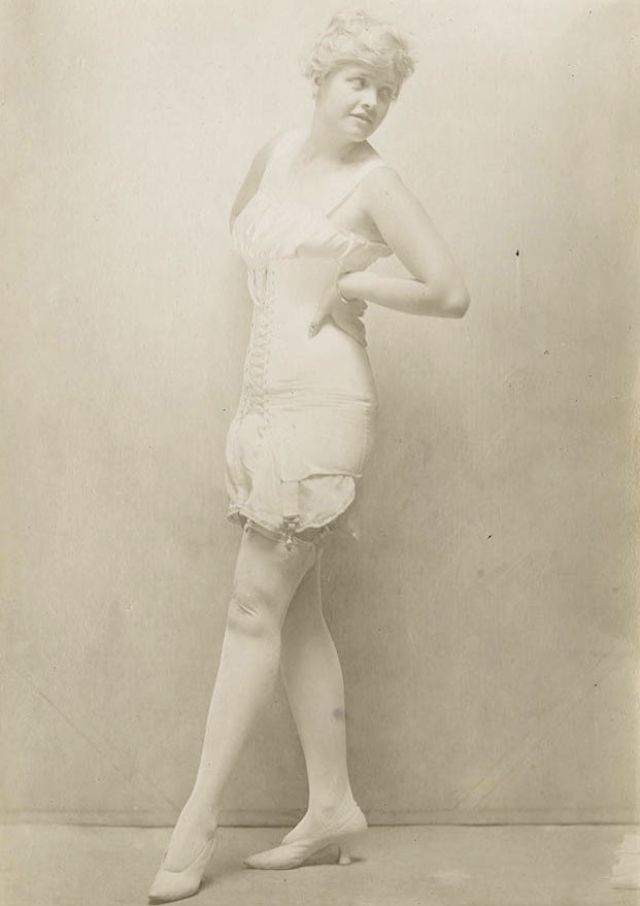
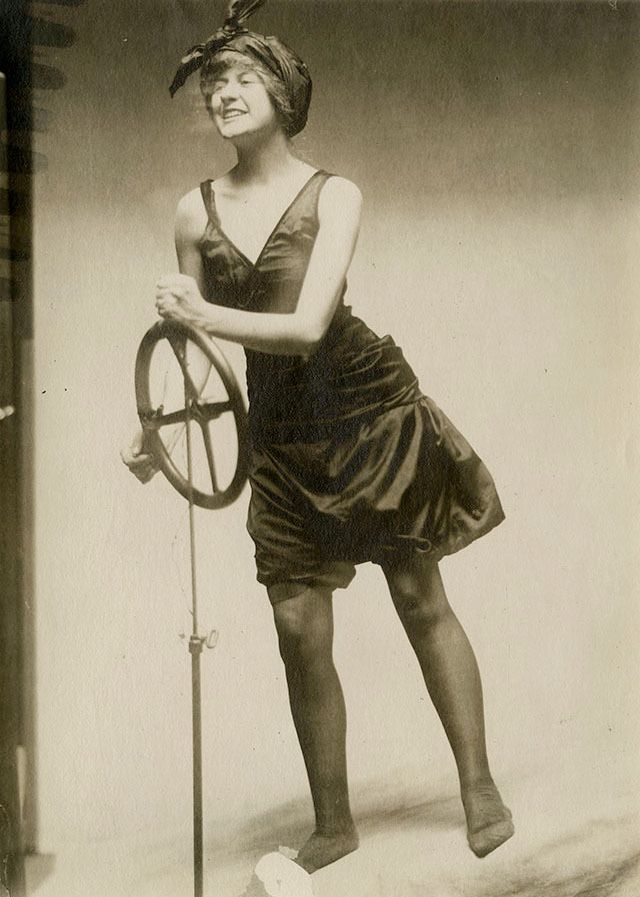
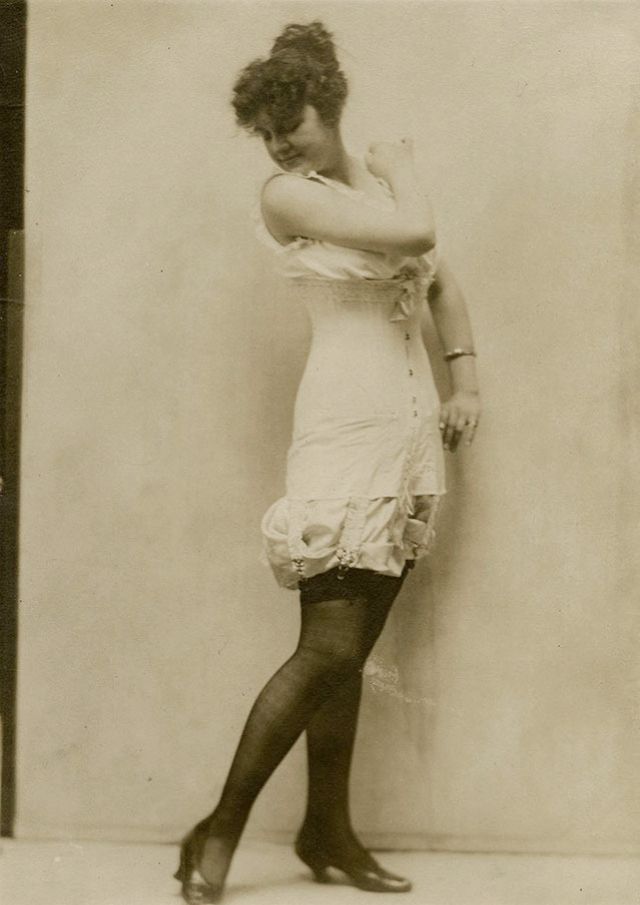
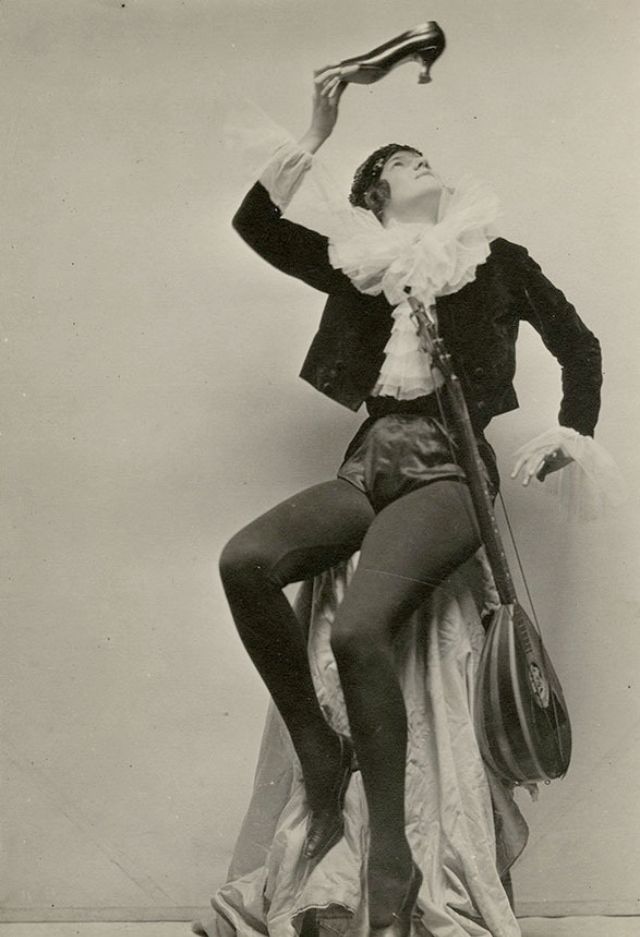
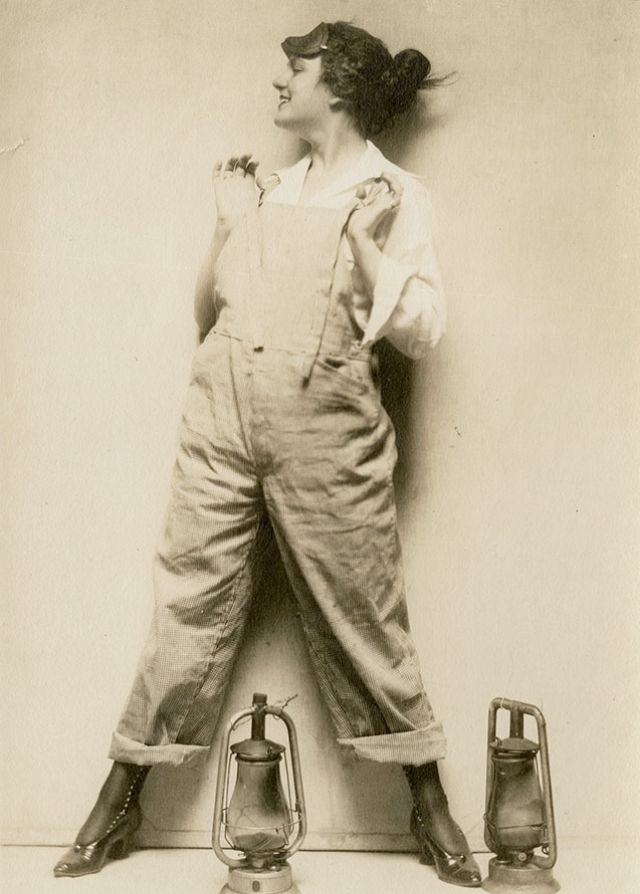
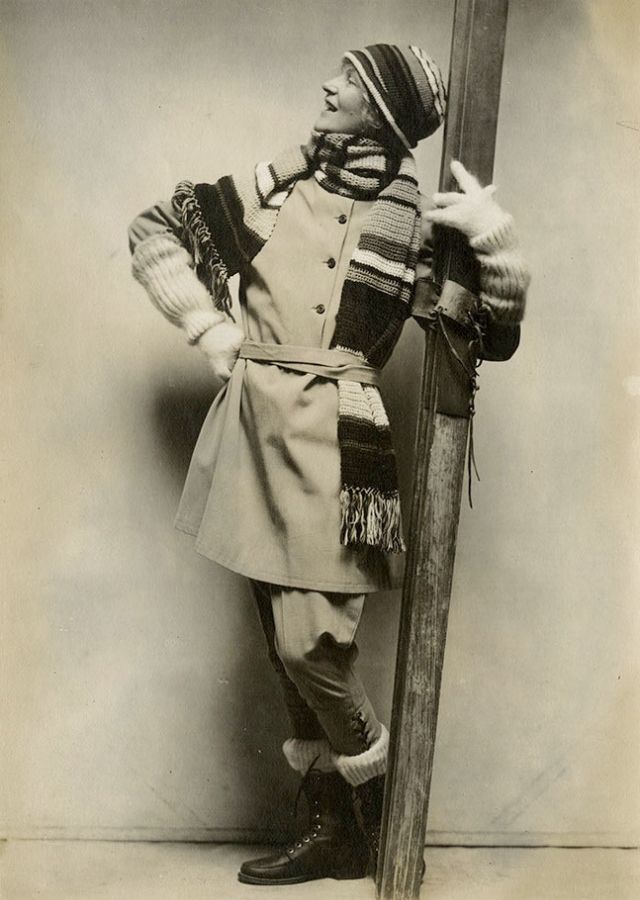
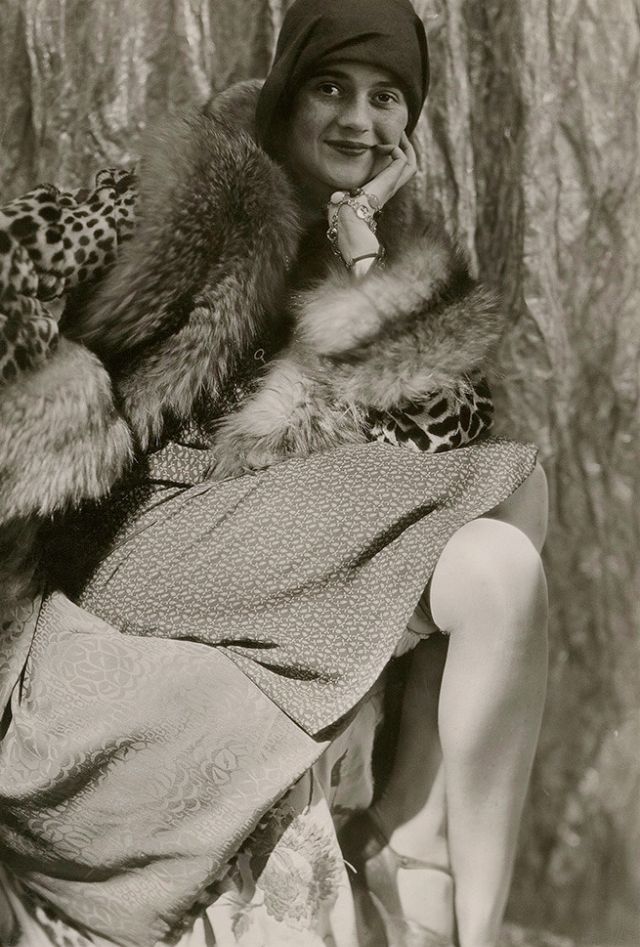
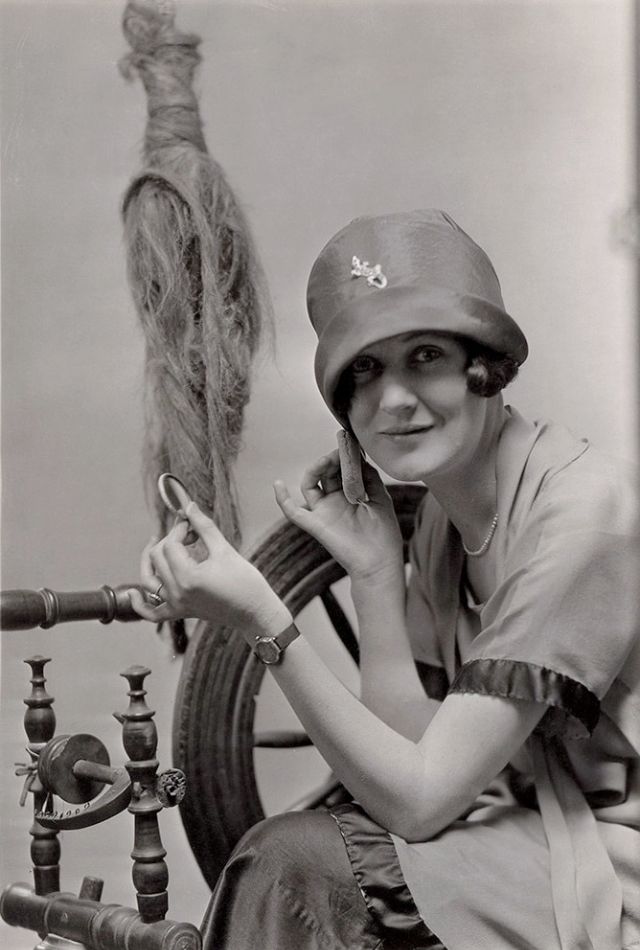
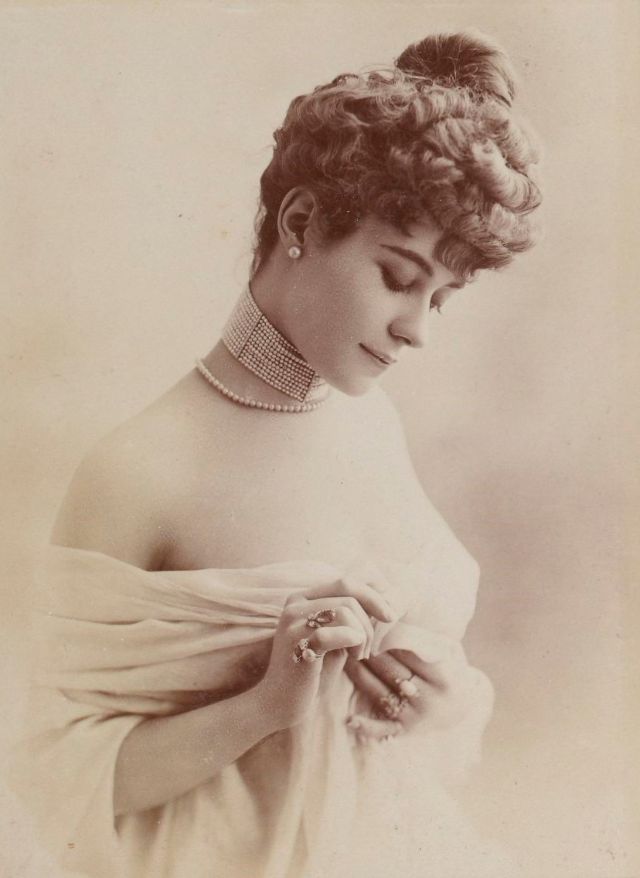
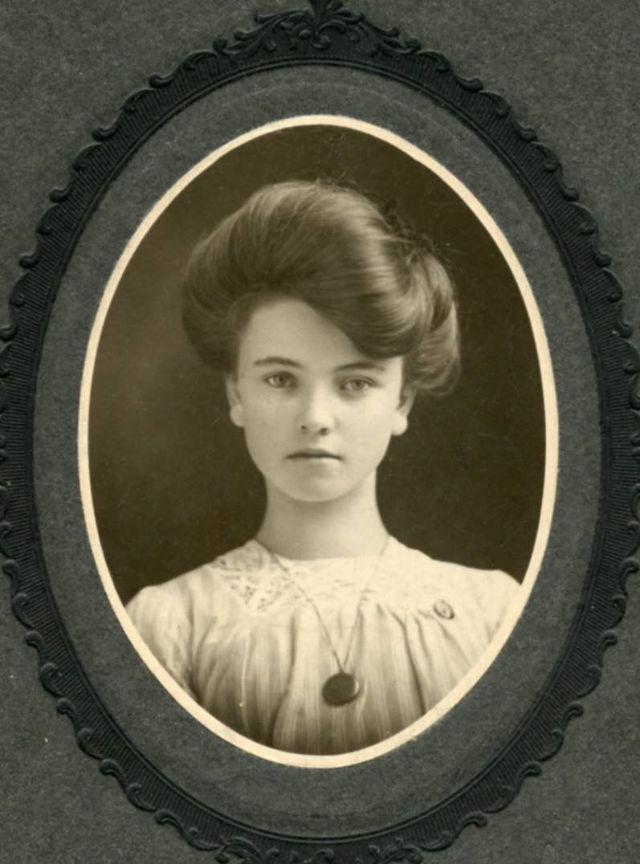
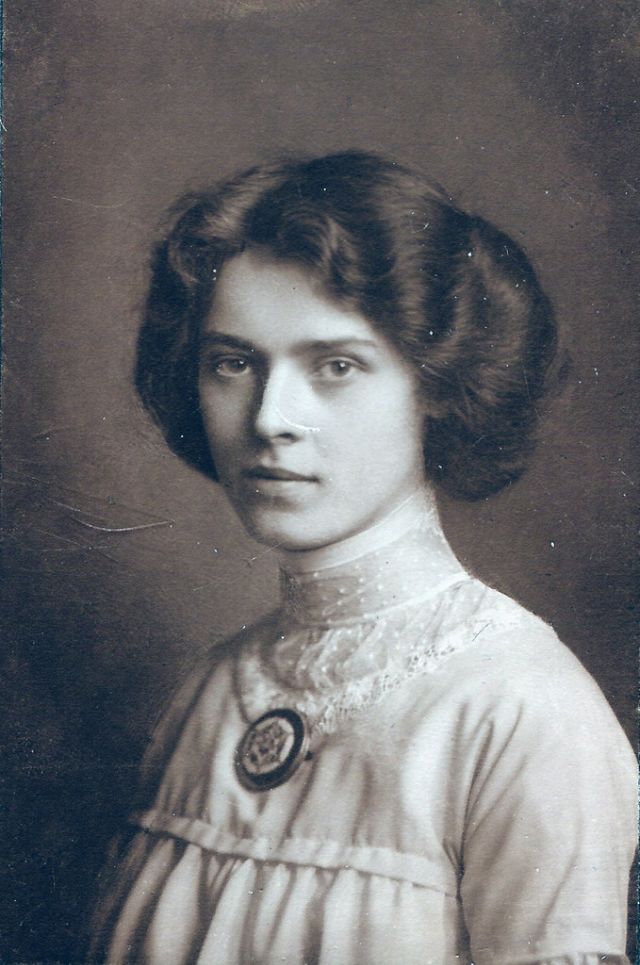
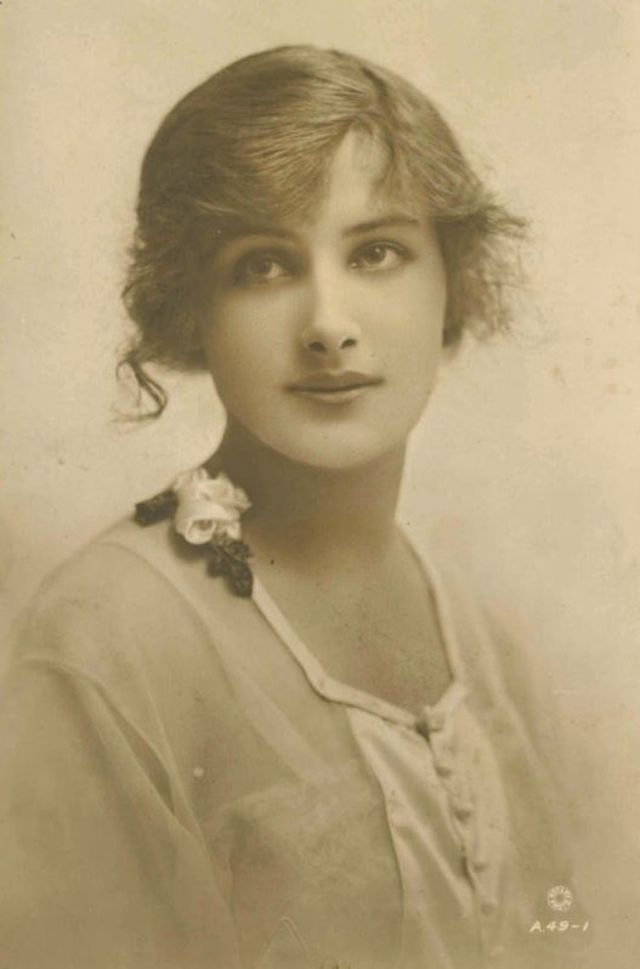
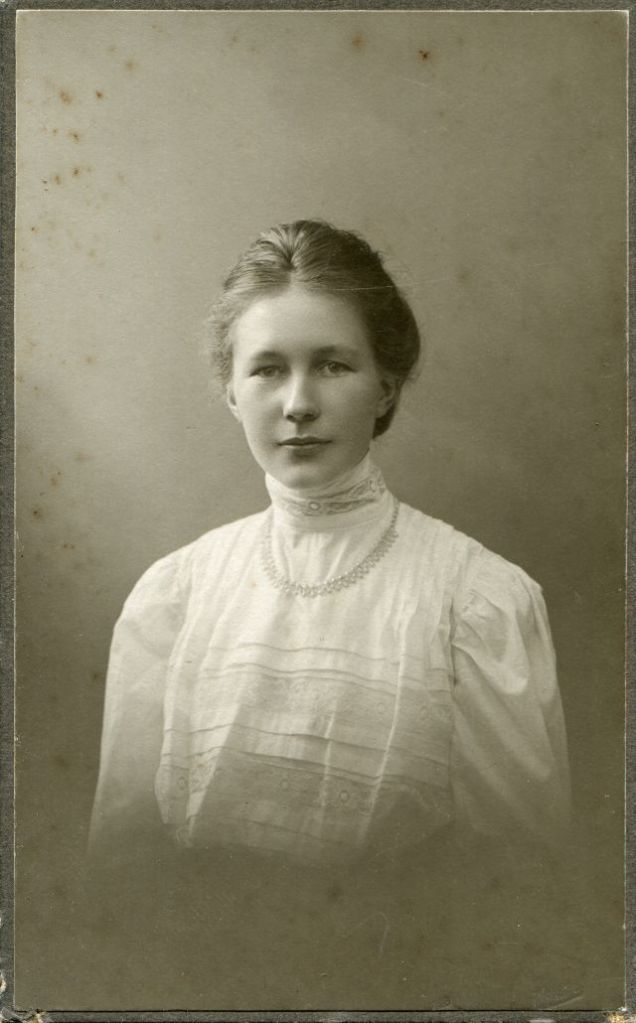
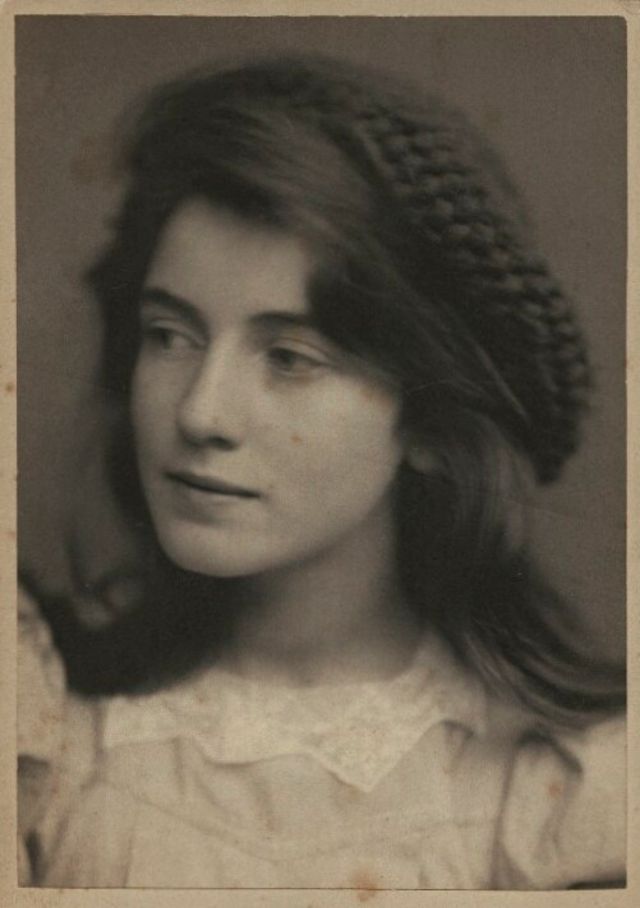
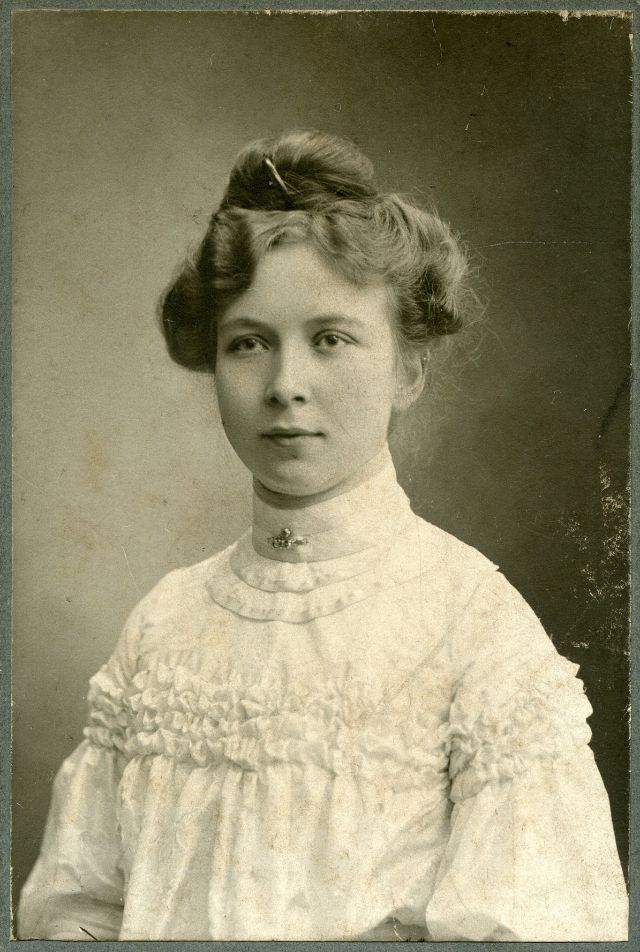
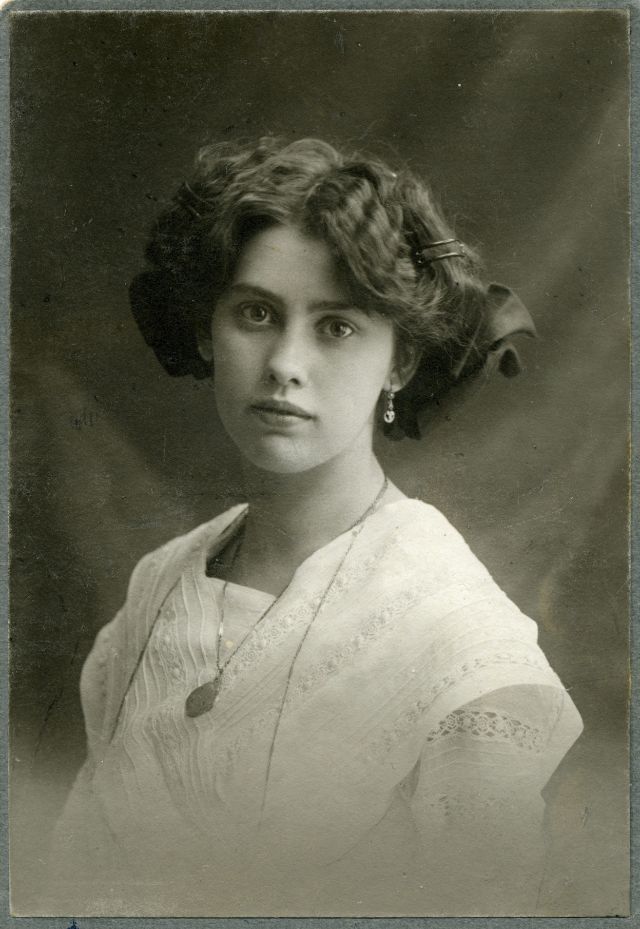
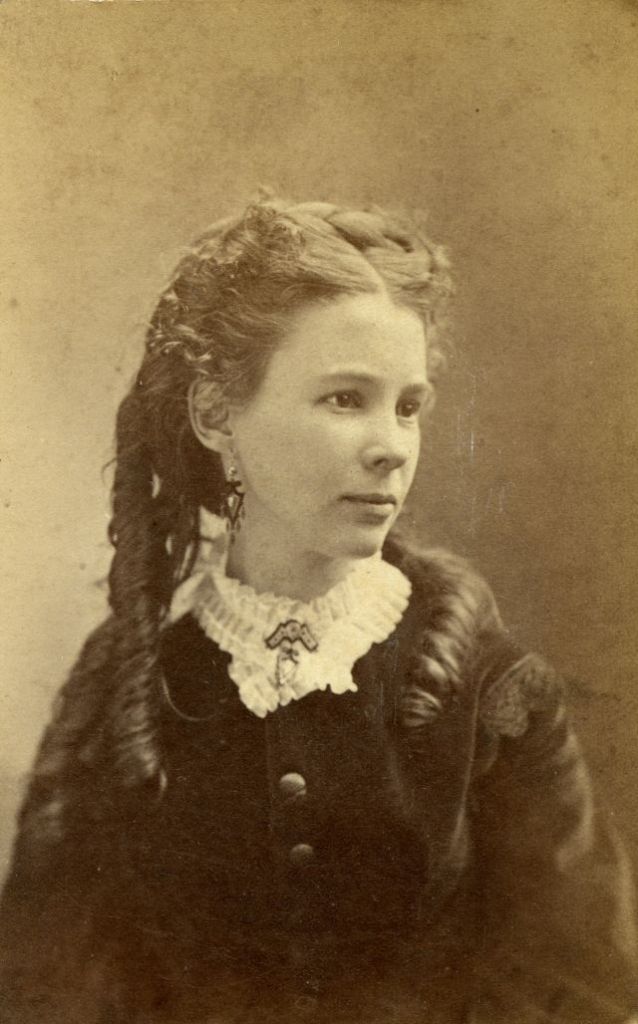
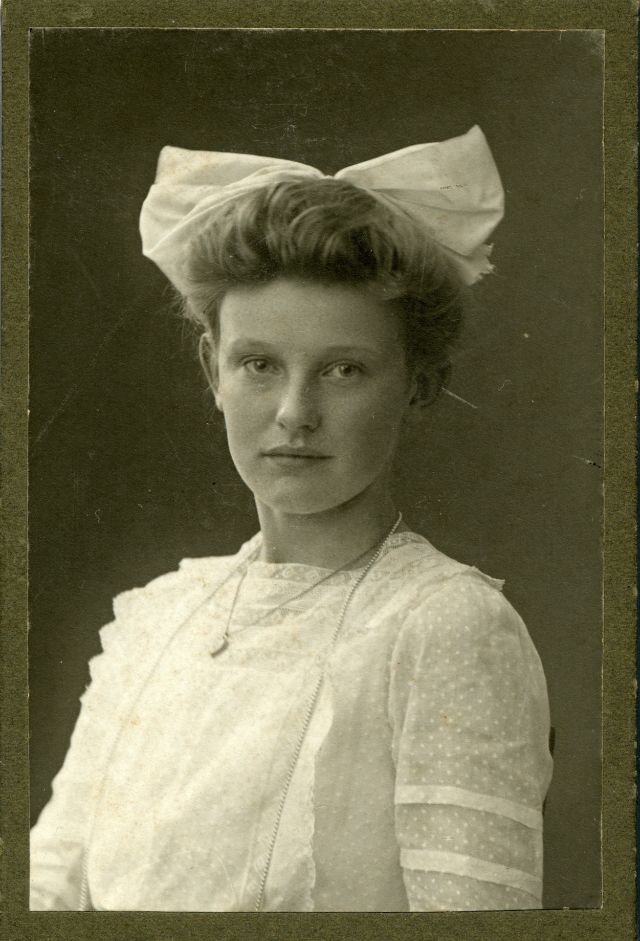
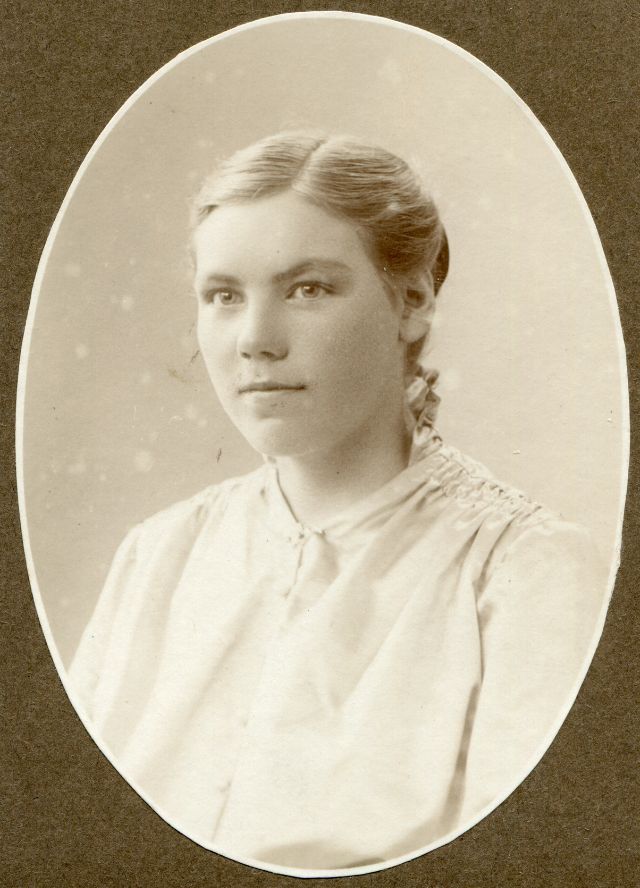
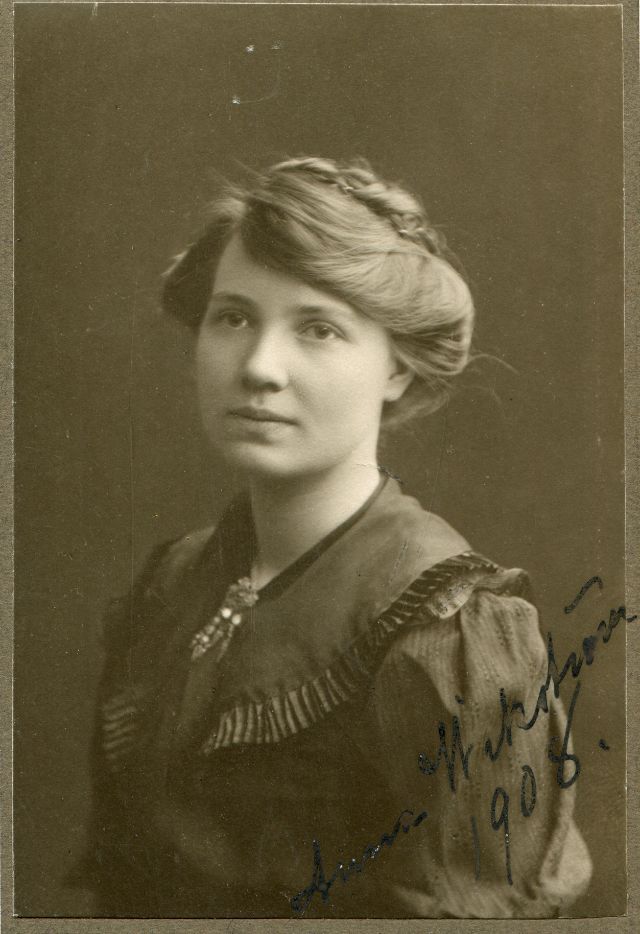
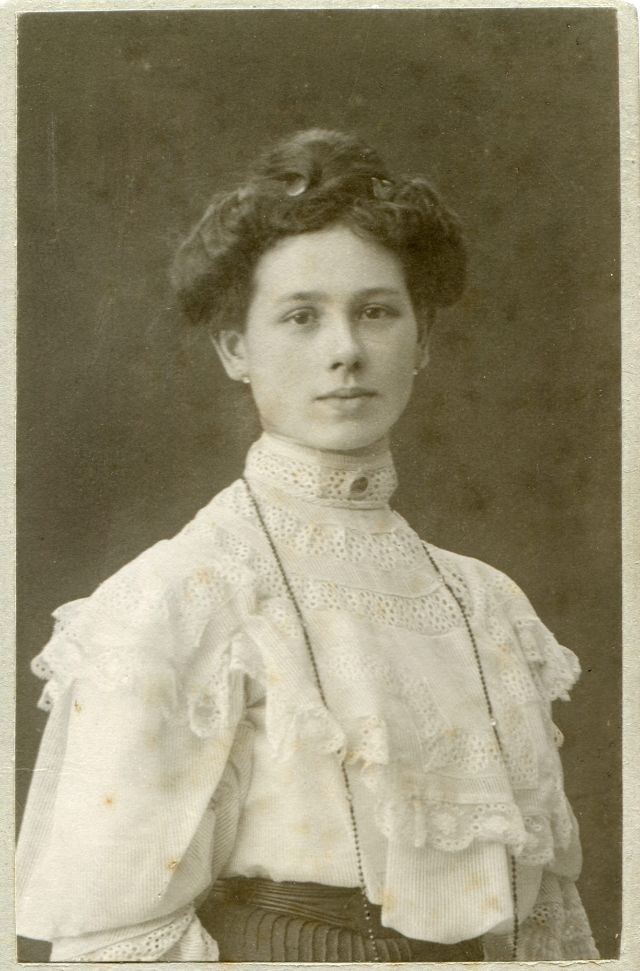
Beauty is in the eye of the beholder, according to the well-known saying. Yet it is only in the present day that our eyes need to make some effort to find beauty in so many faces. When it comes to women of the past, their appearance was unquestionably pure. One can be sure — this beauty is as real as it gets.
With Edwardian era, that has lasted from 1900 to 1912 came many life improvements that we still use today, such as electricity, cars, and vacuum cleaners, but it has also given us a fair share of bizarre facts, most of them concerning women.
According to Bored Panda, beautiful women of the Edwardian Era used Belladonna, a highly poisonous and even lethal plant, drops to make their pupils dilate, making the women look aroused. They have also smeared their faces with lead cream to make them look pale. And a faint smell of dame’s sweat was deemed very desirable by young gentlemen and even got a name as ‘bouquet de corsage’ (literally ‘smells of the bodice’).
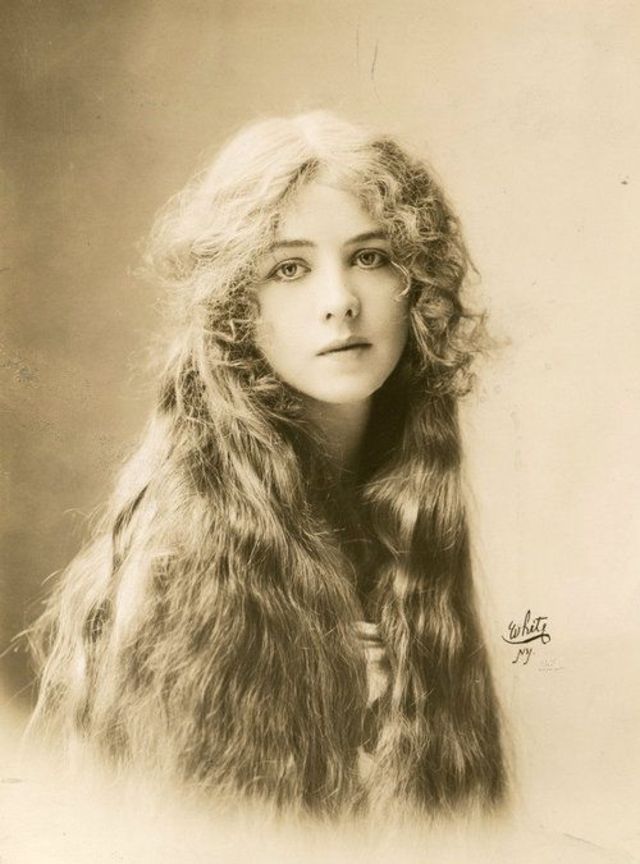
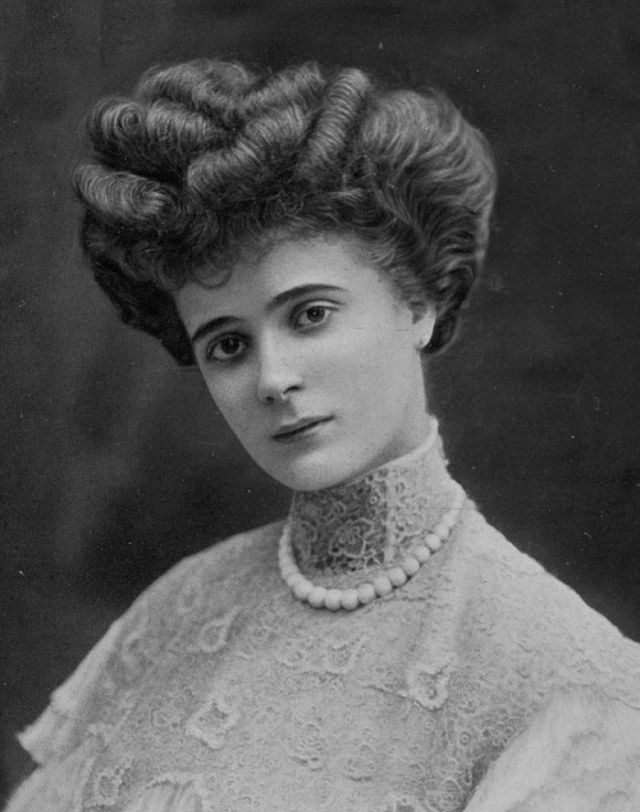
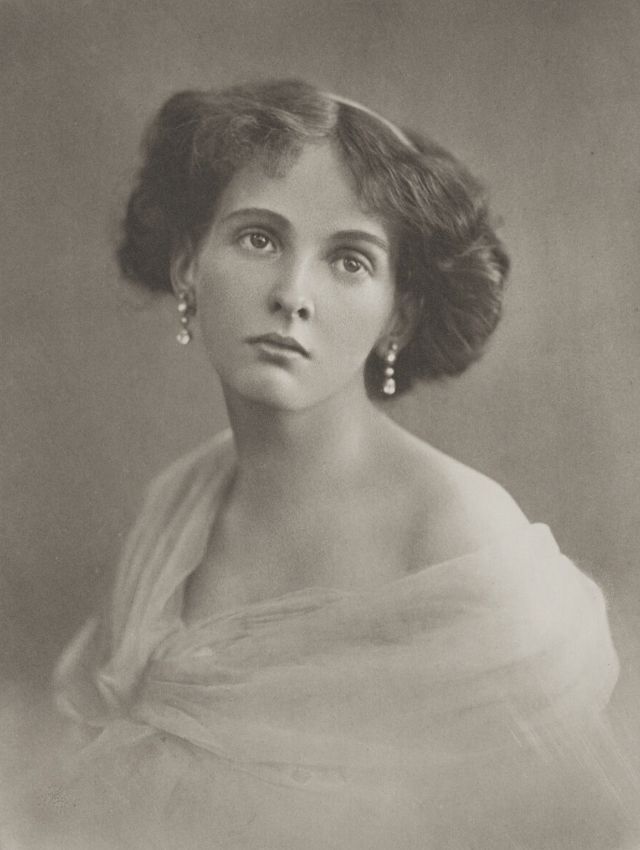
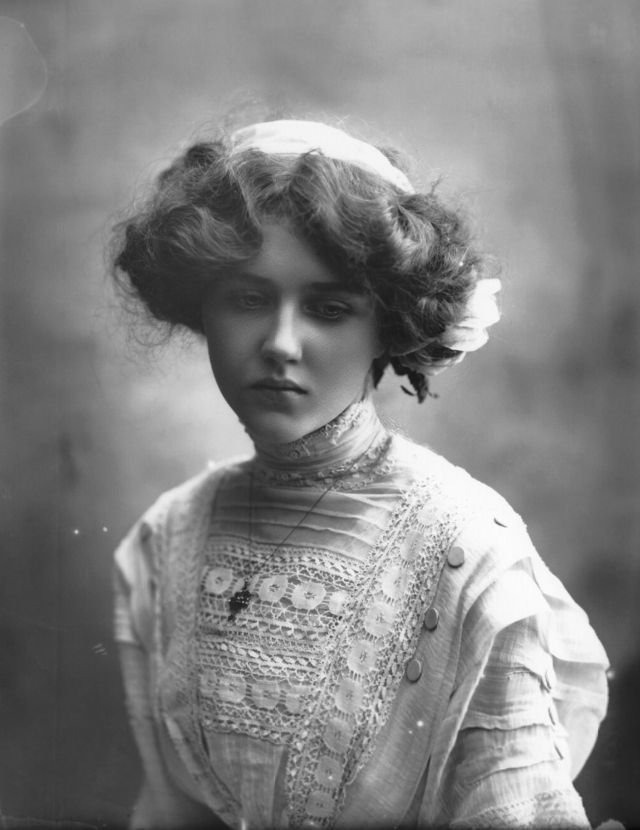
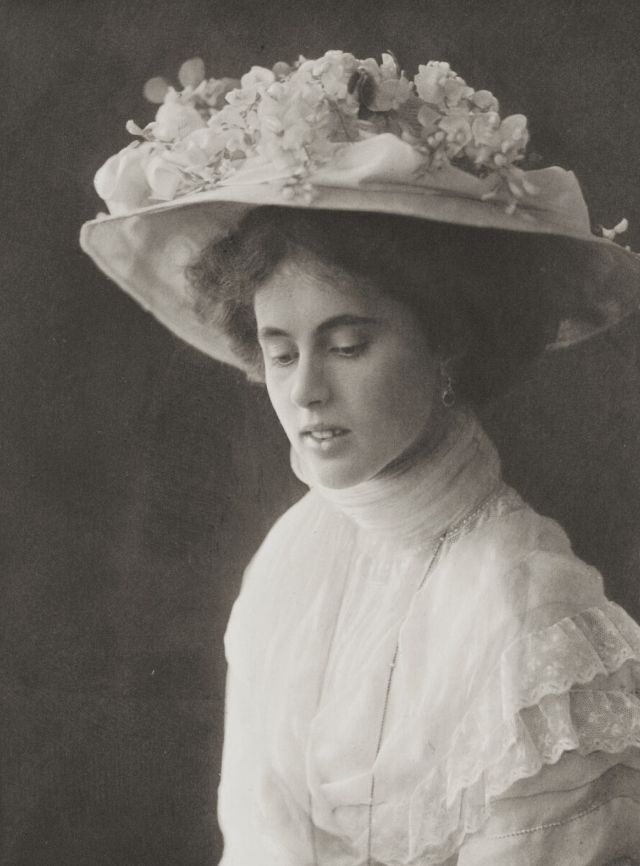
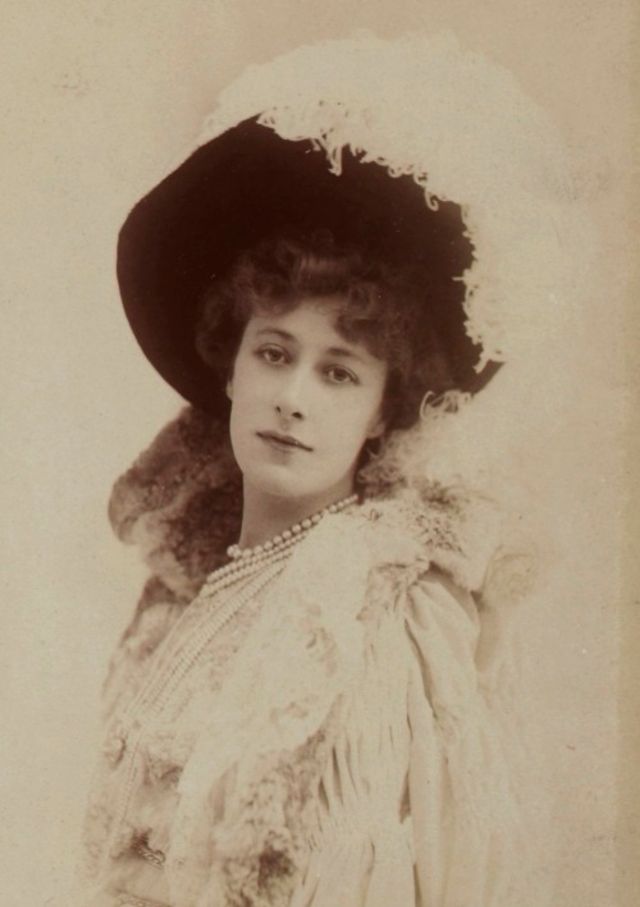
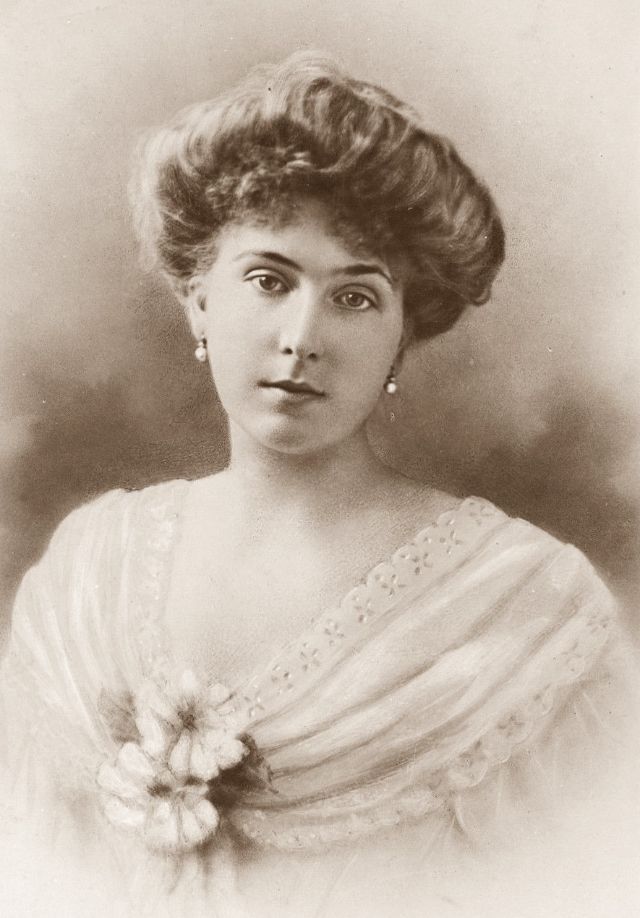
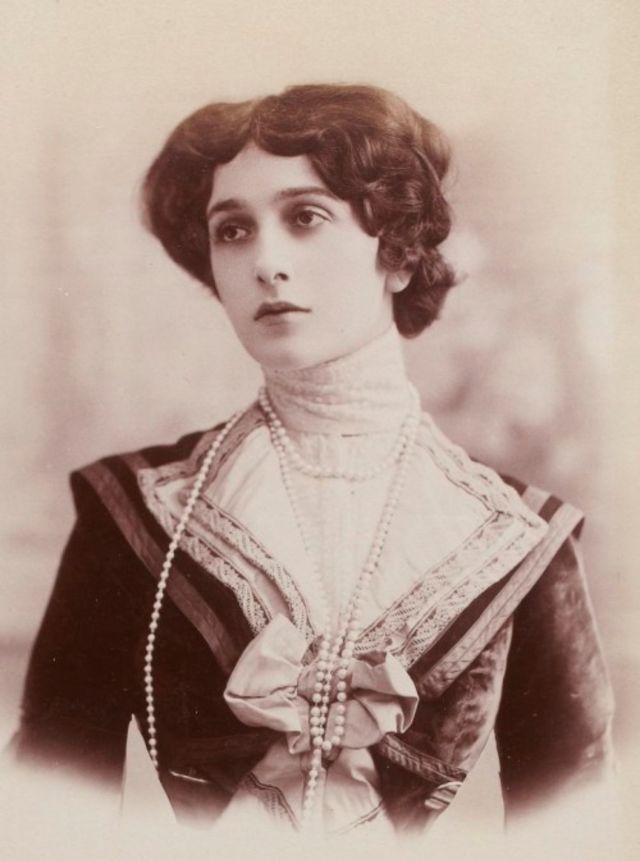
In spite of these absurd beauty trends, the era gave us some of the most beautiful women and emancipated ladies, here we gathered a gallery of 40 vintage portraits of beautiful women from between the 1900s to 1910s: