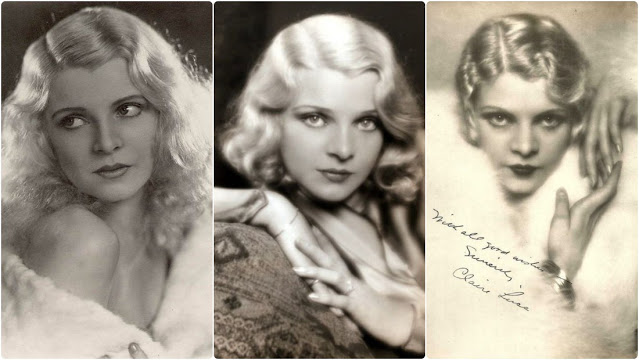
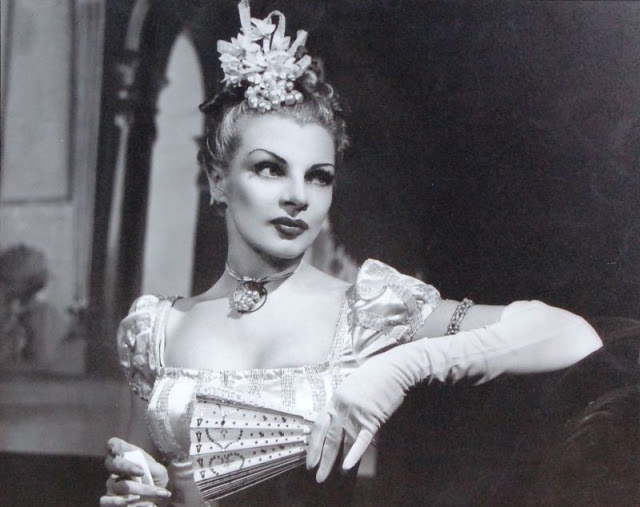
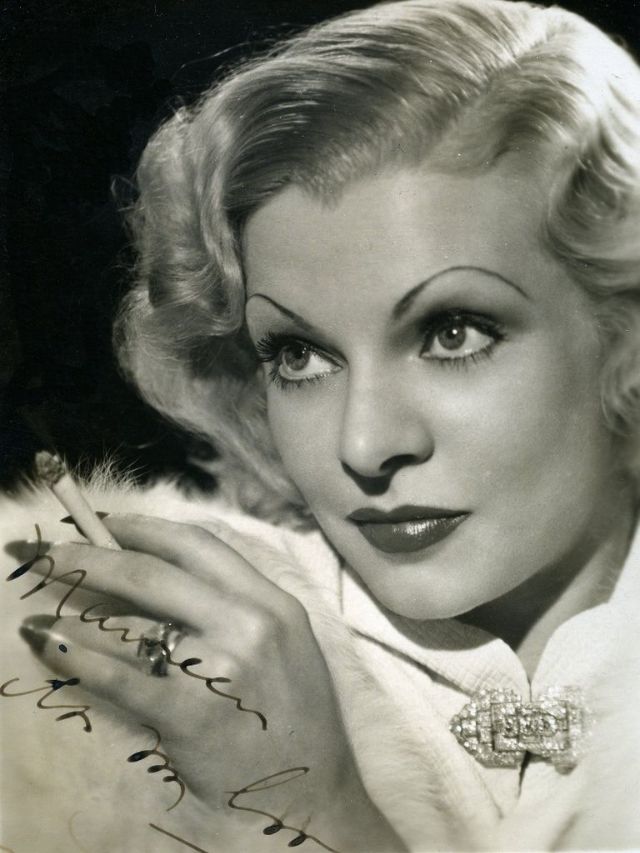
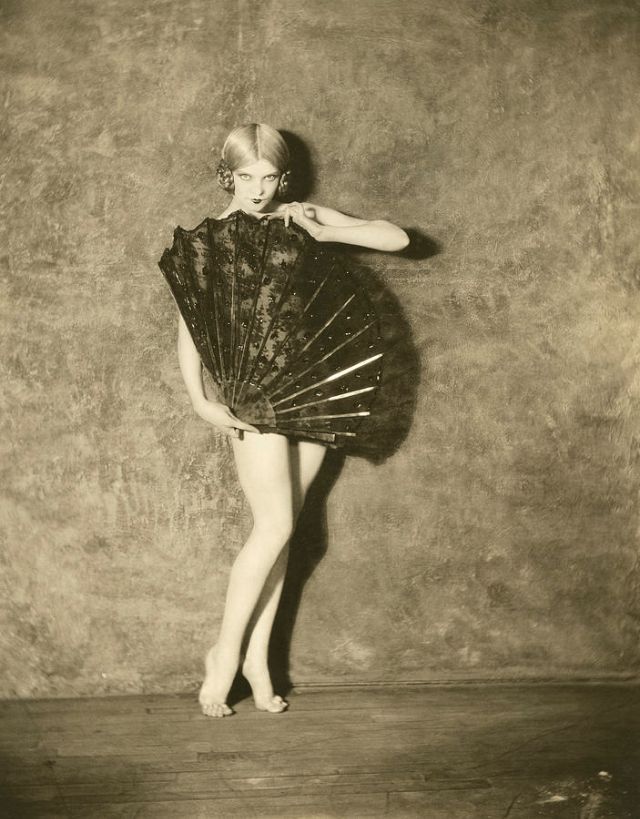
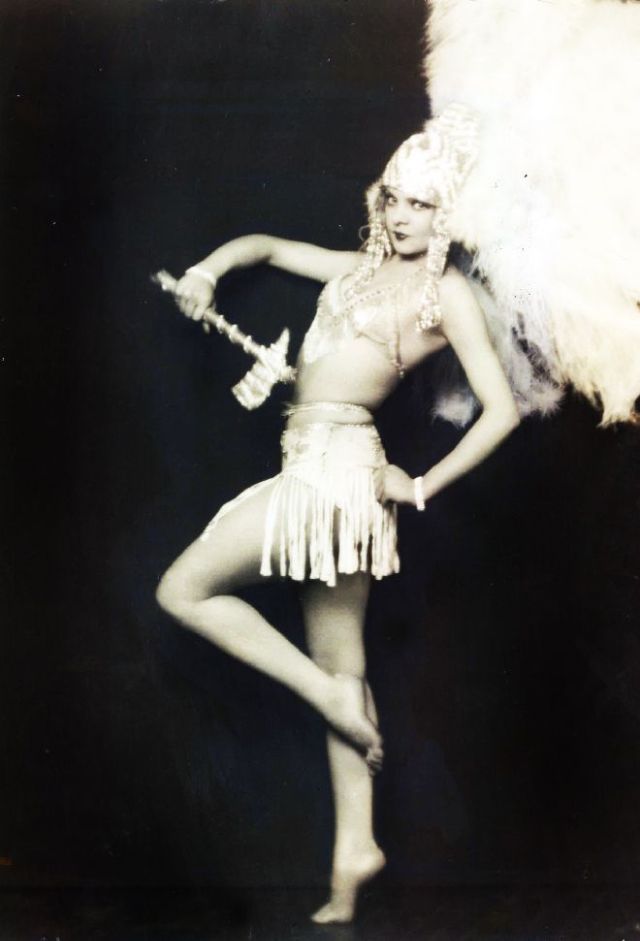
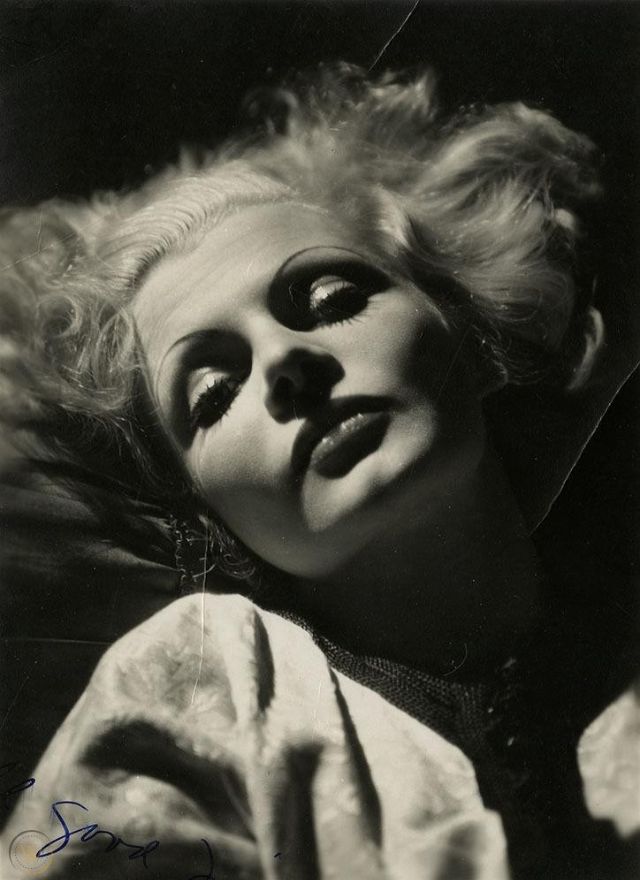
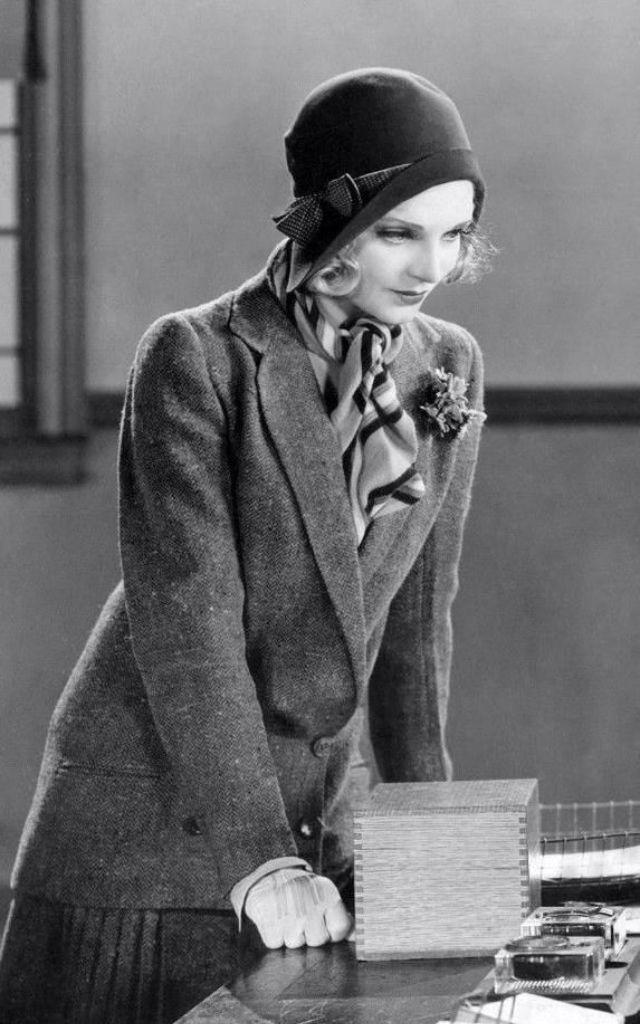
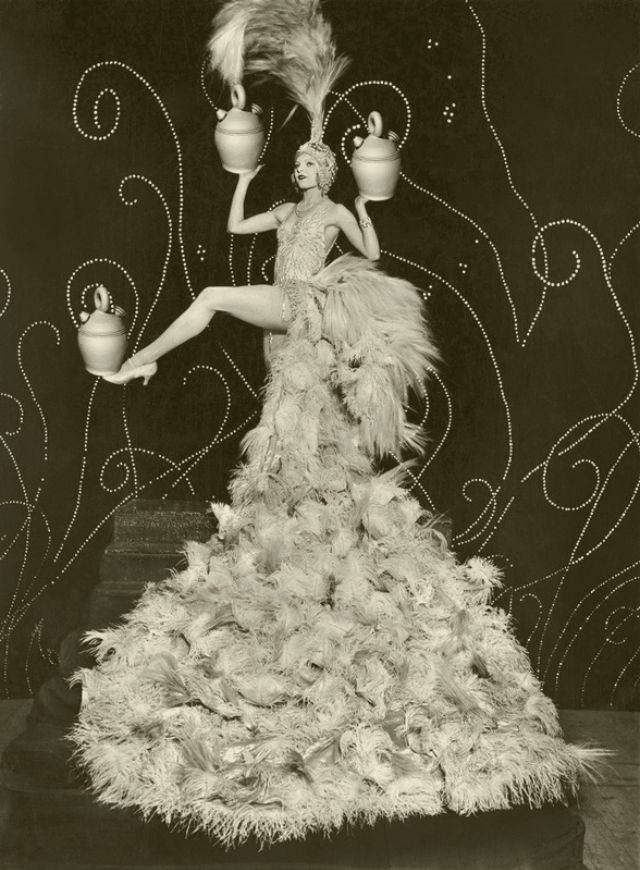
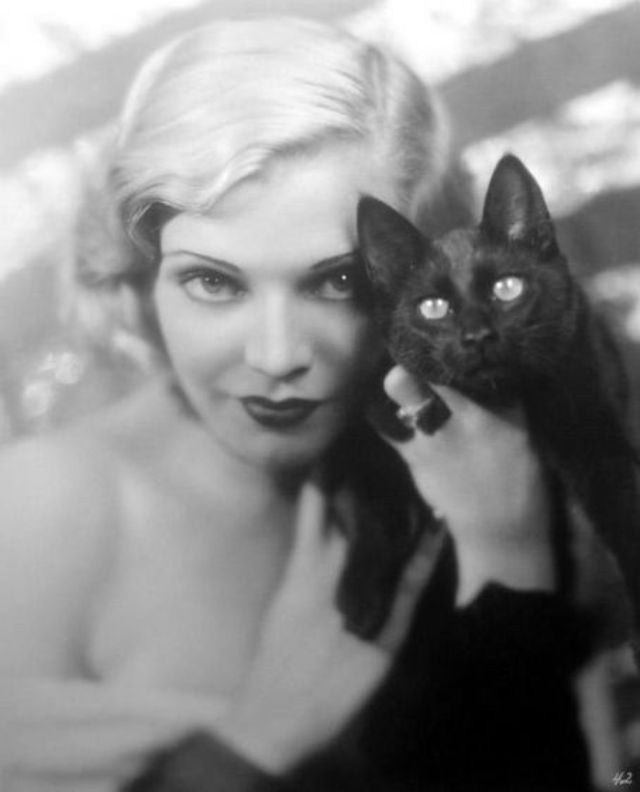
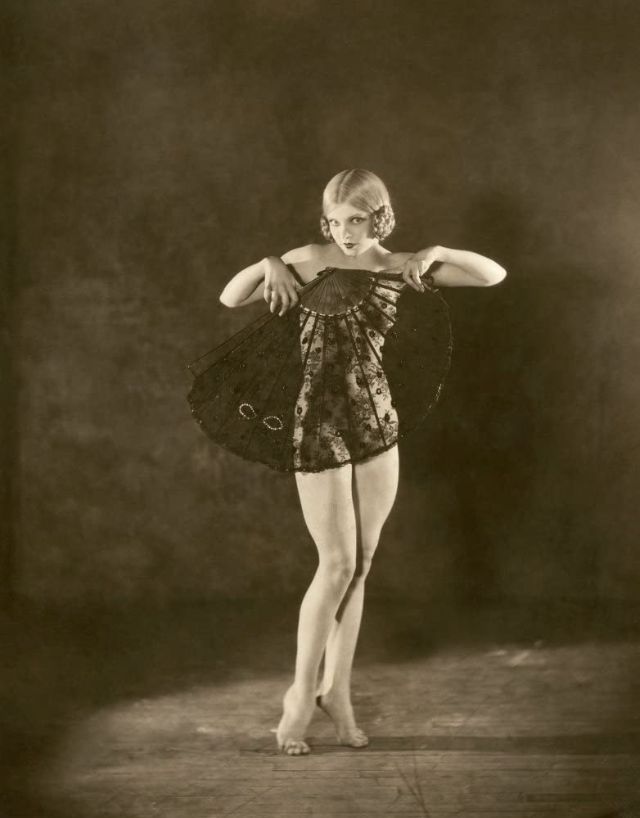
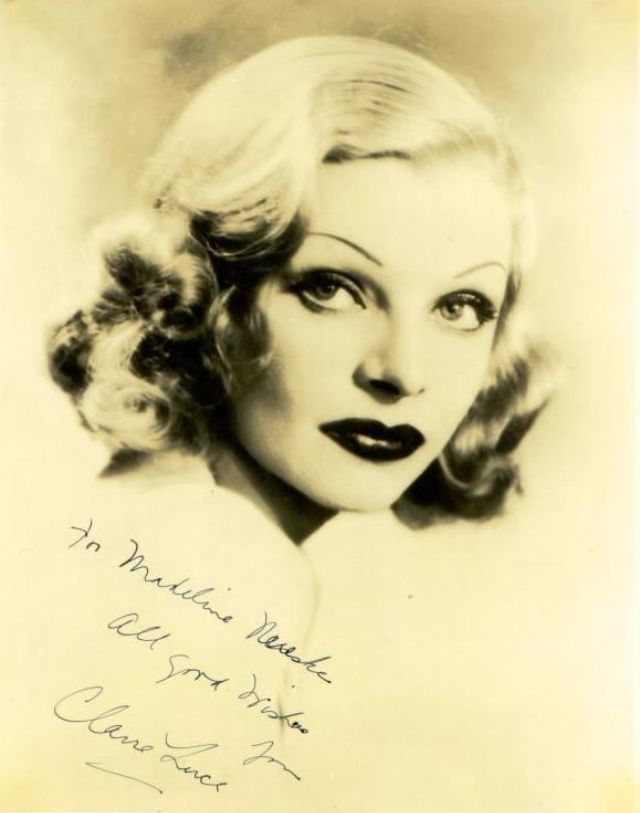
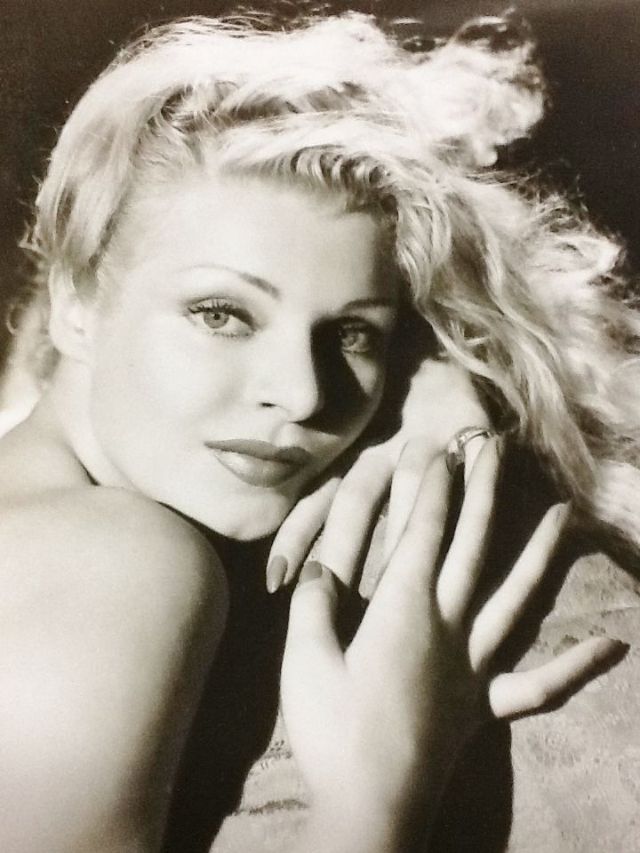
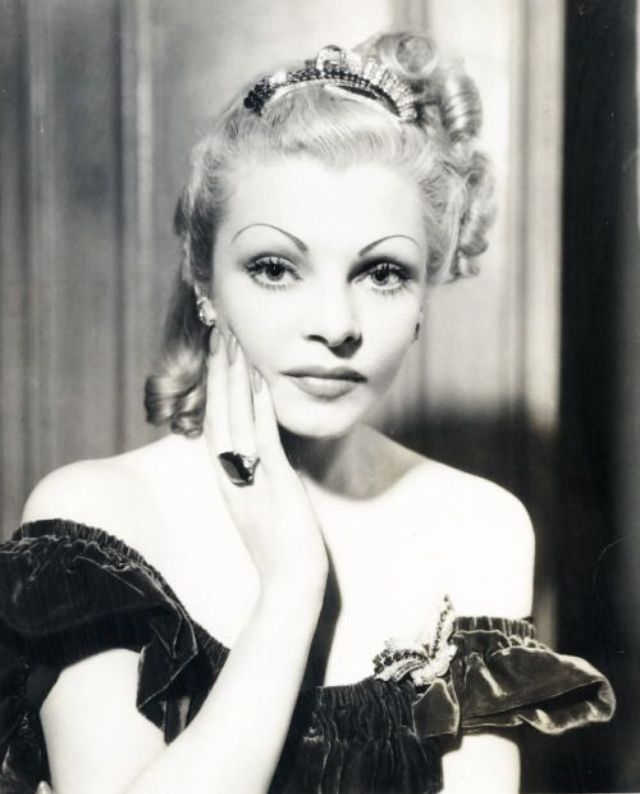
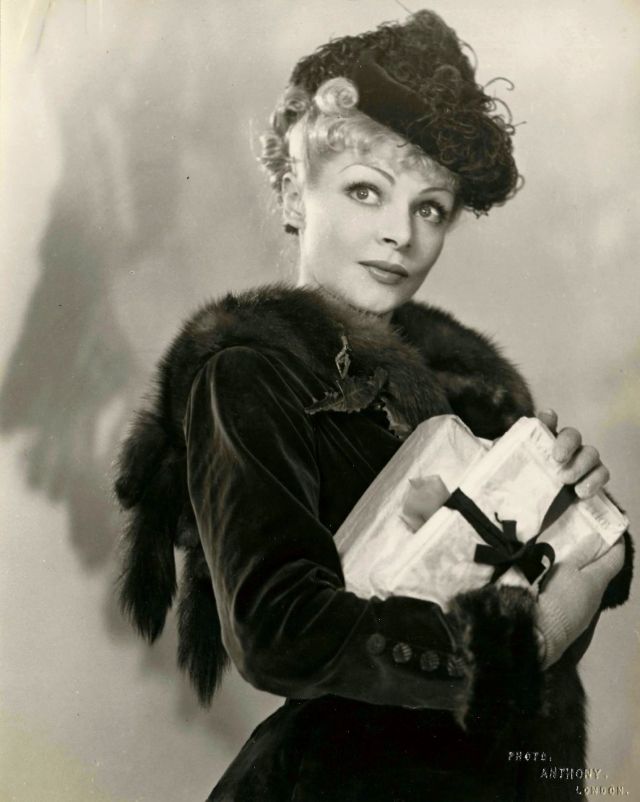
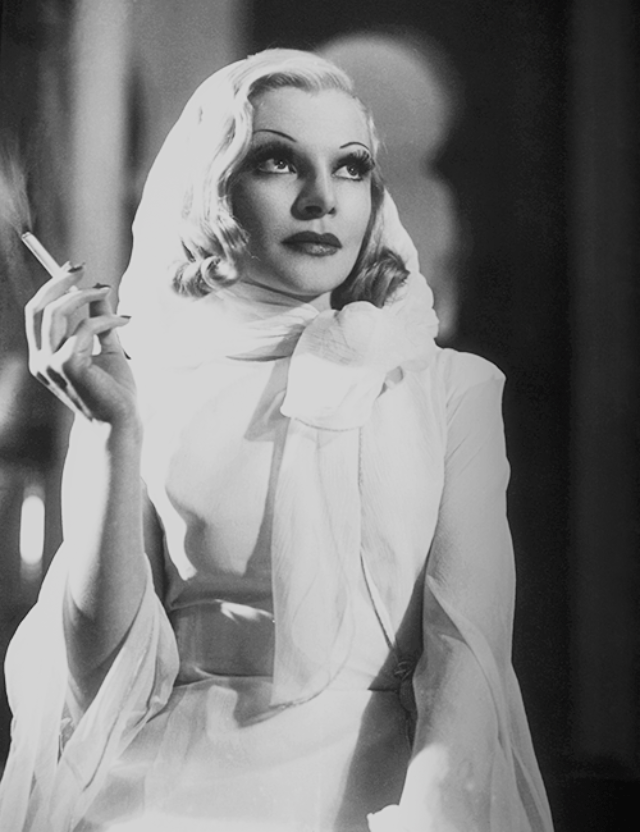
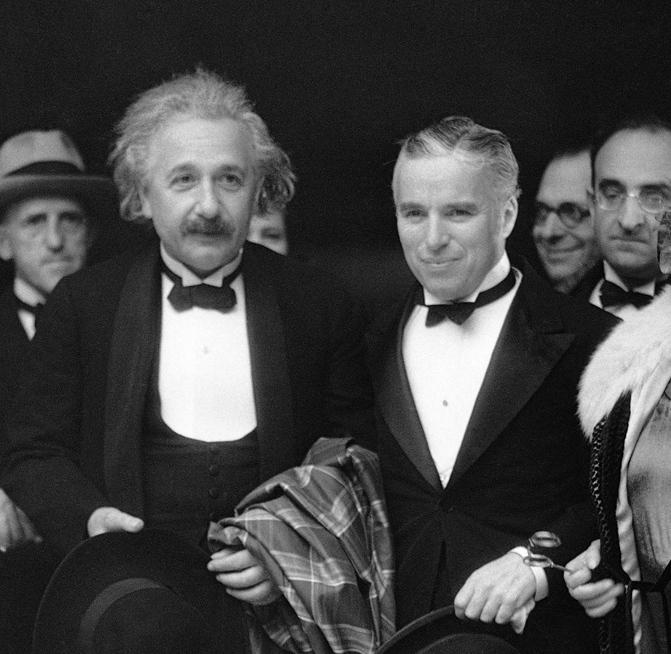
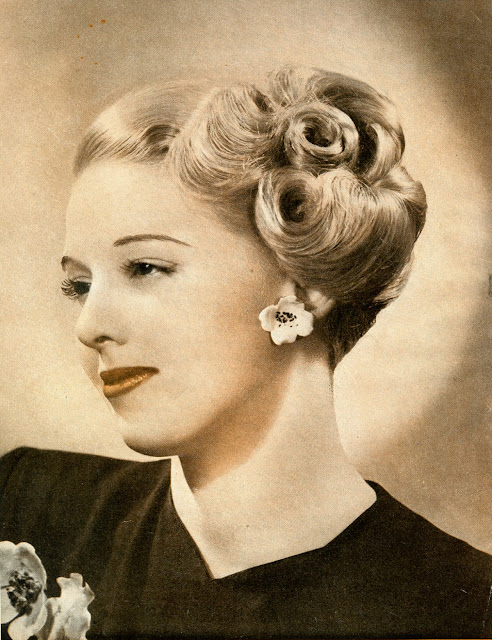
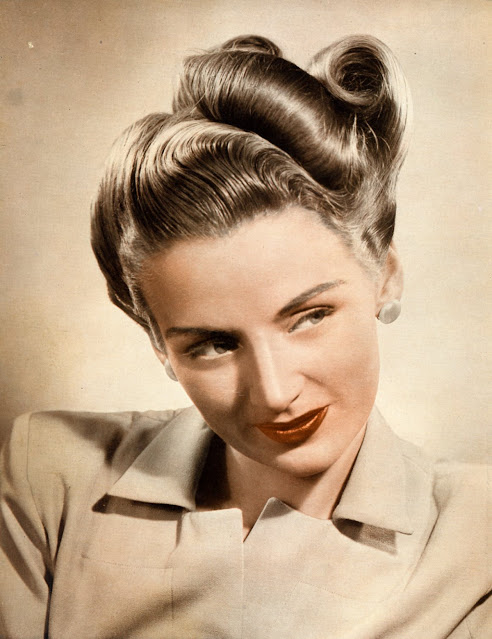
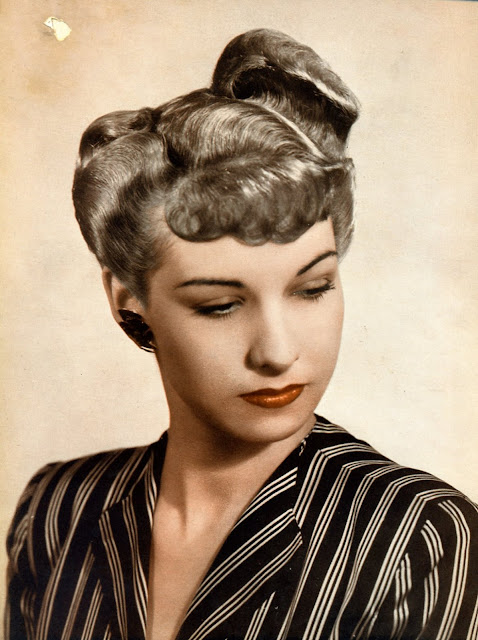
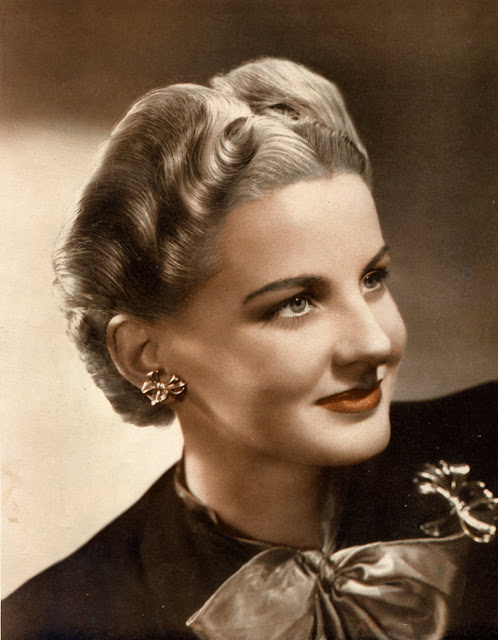
Born 1903 in Syracuse, New York, American actress, dancer and singer Claire Luce starred in many Broadway plays from 1923 until 1952, including costarring with Fred Astaire in the original musical Gay Divorce (1932).
In his autobiography, Astaire credits Luce as the inspiration for his revolutionary ‘Night and Day’ dance routine: “Claire was a beautiful dancer and it was her style that suggested to me the whole pattern of the ‘Night and Day’ dance. This was something entirely different from anything Adele and I had done together. That was what I wanted, an entirely new dancing approach.”
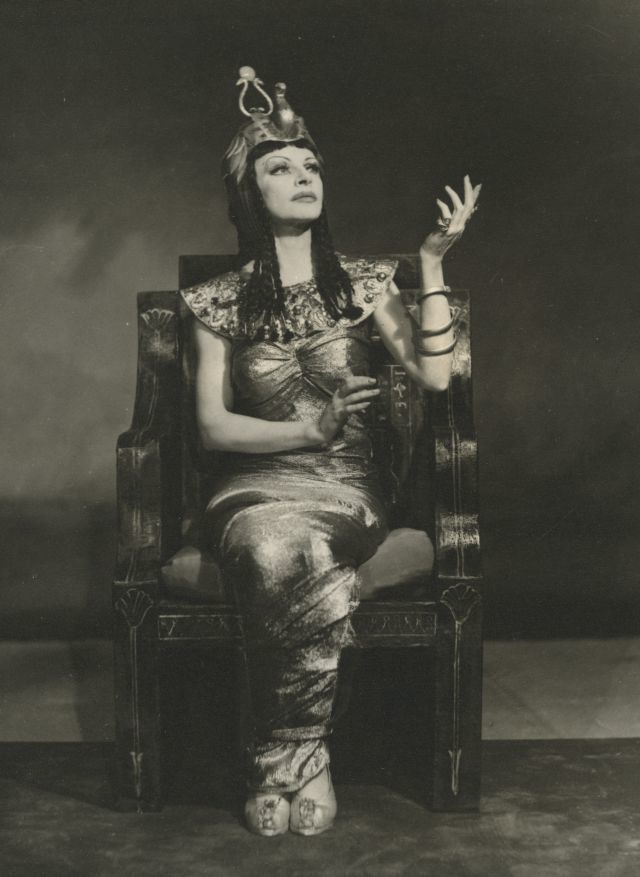
Luce also starred in the Broadway version of Of Mice and Men (1937), written by John Steinbeck and directed by George S. Kaufman. She often appeared on the English stage, played a number of Shakespearean roles during that time and in 1945 scored a big success leading the company at the annual Stratford-on-Avon Memorial Theatre’s summer Shakespeare Festival, particularly as Cleopatra in Antony and Cleopatra.
Her last appearance in London at that time was as Becky Sharp in an adaptation of Thackeray’s Vanity Fair at the Comedy Theatre in 1946. She died in 1989 at the age of 85.
Take a look at these vintage photos to see the beauty of a young Claire Luce in the 1920s and 1930s.
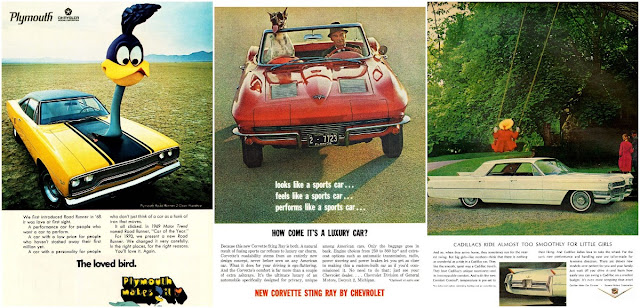
In 20th century automobile print advertising, automakers often depicted their new models in settings that attracted the attention of potential customers and instilled a positive sentiment. Consequently, scenes from the beach, the mountains, the open road, a night out on the town, or even the driveway with the family simply admiring or washing their new pride-and-joy were a few of the popular concepts developed by the auto companies and their advertising agencies.
Many of the ads chosen for this article, however, show none of those inspiring notions. Rather, they generally took a more dramatic approach to elicit interest, with certain elements sometimes nearly overshadowing the vehicle they were attempting to sell. These types of ads were usually only a portion of a larger coordinated campaign, however, that also included a host of more conventional layouts. Nevertheless, they are intriguing.
Take a look the enclosed examples and see how many of them would have piqued your interest and motivated you to learn more about the car that was advertised.
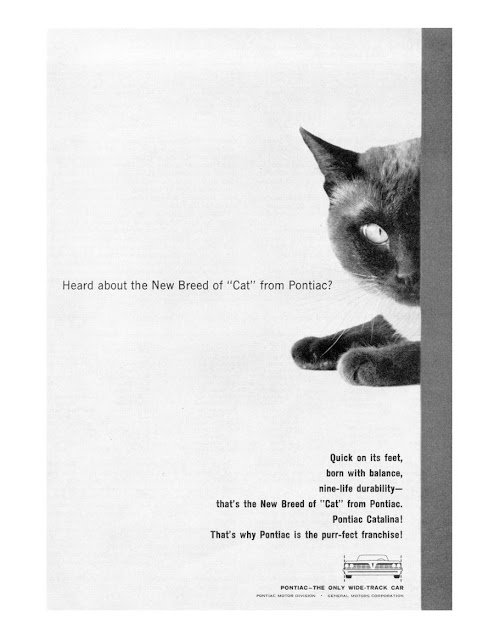
1961 Pontiac Catalina
It’s a daring move to make the cropped photo of the cat that big and the line drawing of the 1961 Pontiac that small in this ad. Though I’d read that the Catalina was named for Santa Catalina Island (typically just called Catalina) off the California coast, and not for a feline, the comparisons are clever.
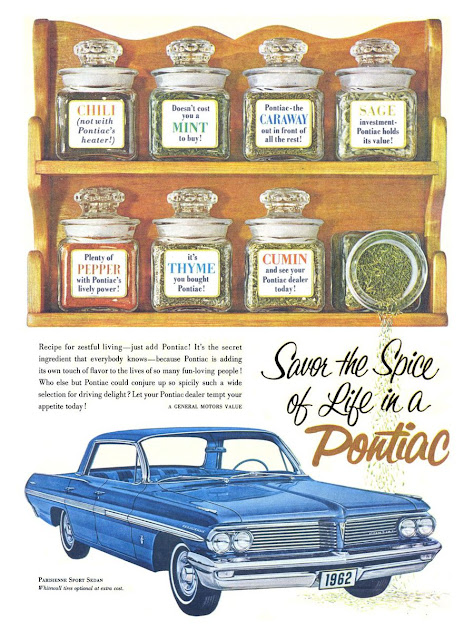
1962 Pontiac Parisienne
This pun-filled 1962 Pontiac Parisienne “recipe for zestful living” ad goes to 11—Pontiacs that is. Making the spice rack and jars so large relative to the car was a bold step, but no reader will forget the brand, as “Pontiac” is repeated on six of the eight bottles, and five more times below them.
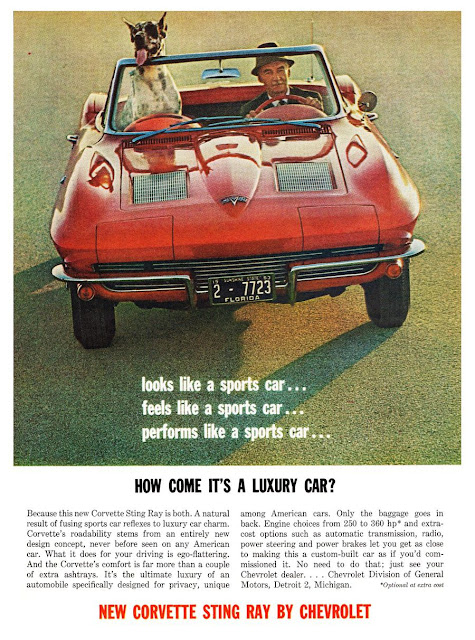
1963 Chevrolet Corvette Sting Ray
Chevrolet did it again in 1963 with a giant dog riding shotgun in a Sting Ray. Is this supposed to be a “Made you look!” ad where the implausible attracts your eye? It made us look twice.
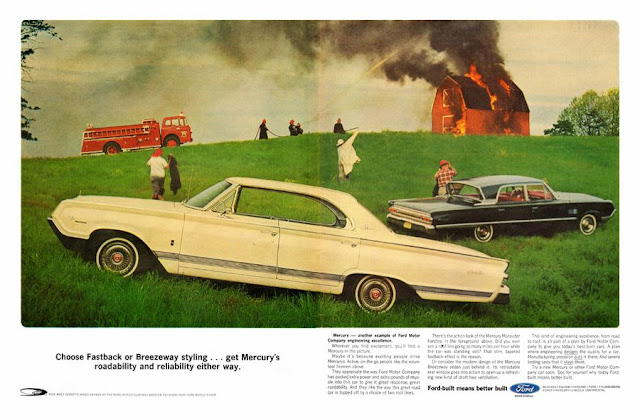
1964 Mercury
While many ads of the era portrayed picturesque barns in rolling pastures or as part of colorful autumn backgrounds etc., Mercury took a decidedly different direction with this 1964 ad that presents a barn on fire! Attention –grabbing? Yes. Disturbing? Also yes. Though its purpose was to highlight the adventurous-types that would be drawn to a Mercury, like volunteer firemen, still, very few car ads have shown tragedies, described here as “excitement,” in their backgrounds.
1964 Cadillac
The little girl on the swing looks like she is about to clear the roof of her parents’ 1964 Cadillac with plenty of room to spare. However, if my kid was reaching that height on a swing, I think the expression on my face would show quite a bit more concern than theirs does. (Maybe her image was superimposed onto the Cadillac photo?)
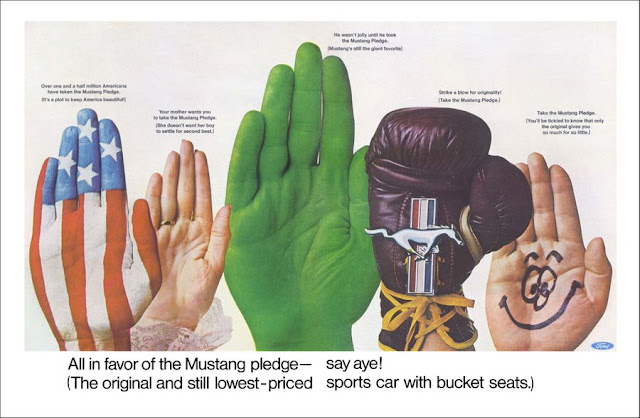
1967 Ford Mustang
It’s all hands and no car in this 1967 Mustang ad. The “Mustang Pledge” included a list of things that the owners promised to do and some they wouldn’t do. The big green hand, a veiled tie-in to the Jolly Green Giant of garden vegetables fame, seems strange today.
1970 Oldsmobile 4-4-2 W-30
The ever-popular Dr. Oldsmobile-themed ads were enjoyably offbeat already, but this one for the 1970 4-4-2 W-30 455 also includes “Elephant Engine Ernie.” Coincidentally, Ernie’s nickname—Elephant—was the same as that earned by the competing 426 Hemi that was optional in Dodges and Plymouths. Additionally, try reading the lettering on the front tire of the 4-4-2.
1970 Plymouth Road Runner
In the right places, for the right reasons. You’ll love it. Again. The loved bird.
1972 Mercury Monterey
For 1972, Mercury went for shock value again. A test to see whether or not a car explodes based on its ride smoothness certainly imparts a sense of danger, despite the fact that no potential buyers would seek out a luxury car to transport nitro carbol with a detonator attached. Additionally, no competing luxury cars were tested to see if they could accomplish the same task, so how do we know the Monterey is better than the competition in this area?
1976 Dodge Aspen R/T
Ski scenes were used in some ads of the era, but this one is “over-the-top.” Wayne Wong, “one of the world’s leading freestyle skiers” was willing to jump over his 1976 Aspen R/T for this ad. The result is a sports tie-in with a stunt component added to increase drama to great effect.
Initially a small market town, Watford is a town and borough in Hertfordshire, England, 15 miles northwest of London, on the River Colne.
While industry has declined in Watford, its location near London and transport links has attracted several companies to site their headquarters in the town. Cassiobury Park is a public park that was once the manor estate of the Earls of Essex.
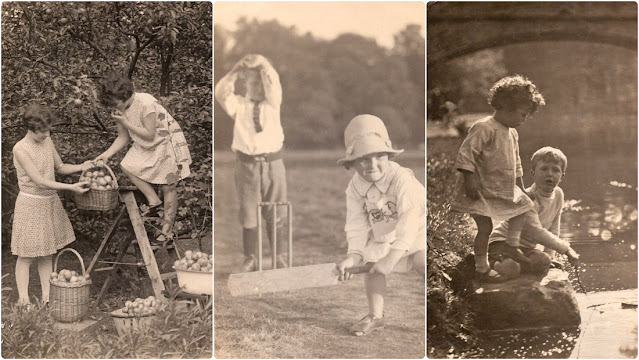
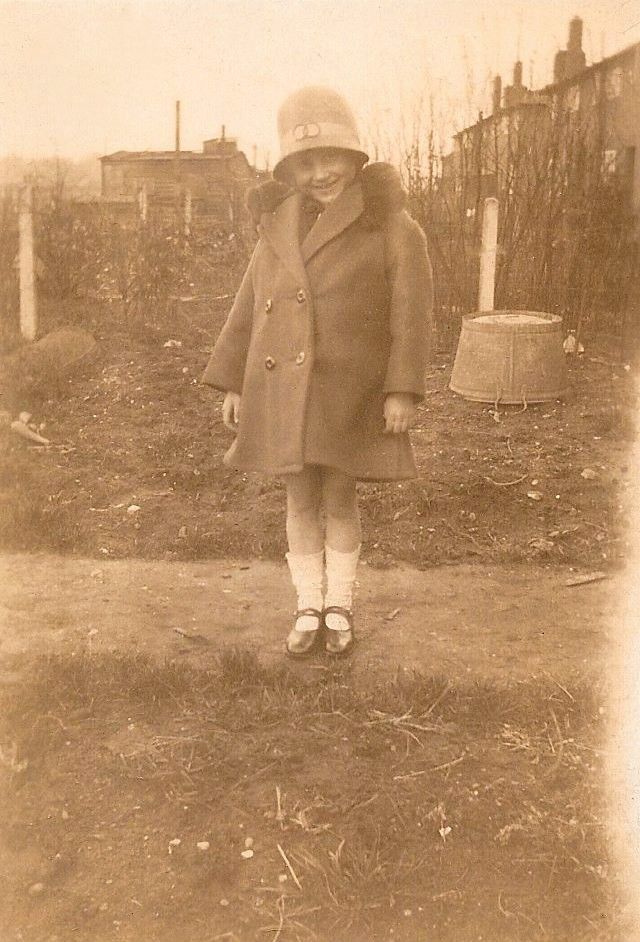
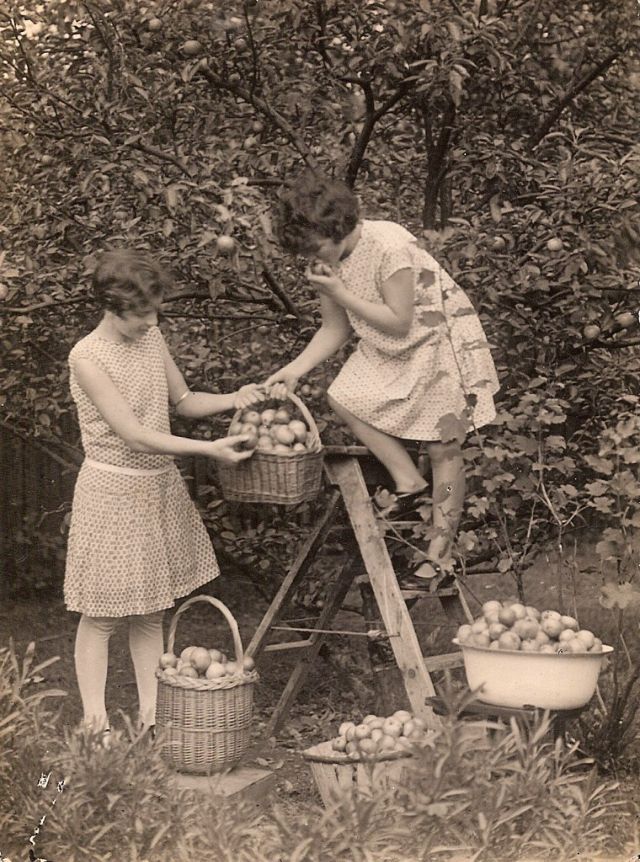
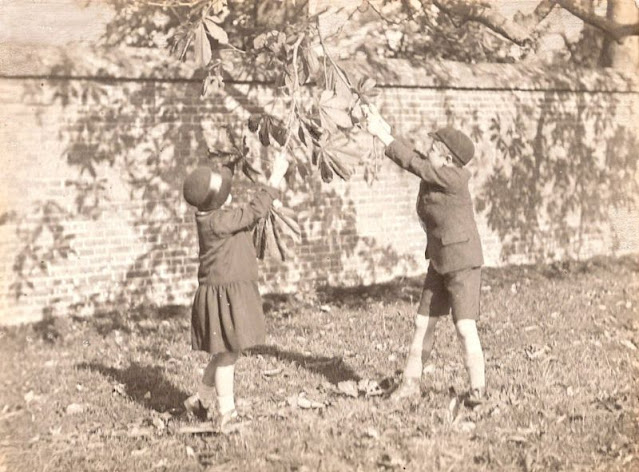
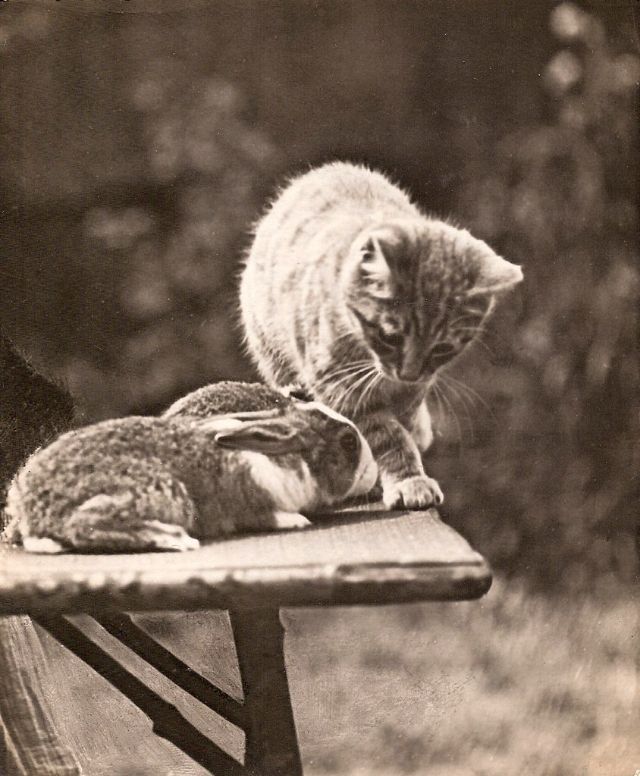
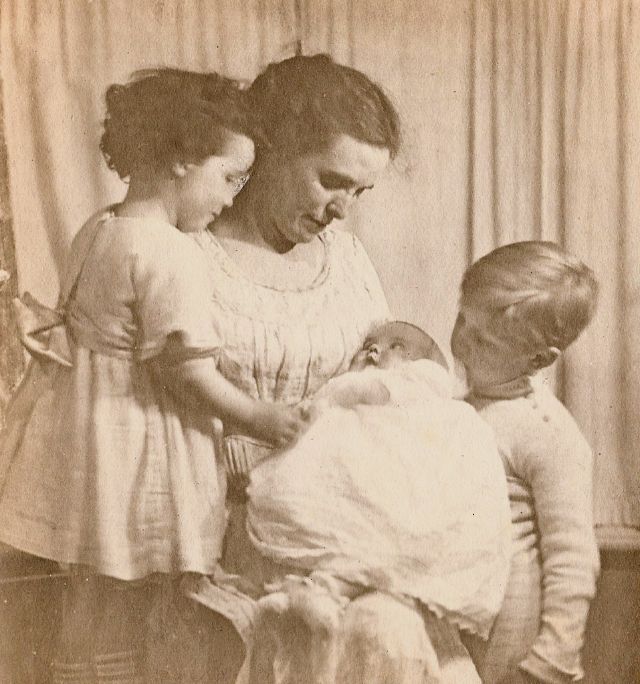
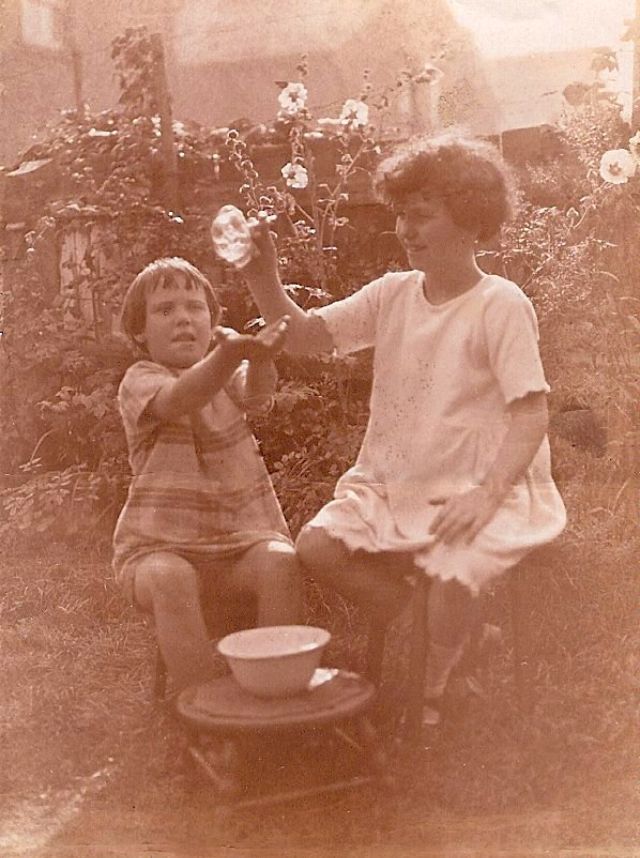
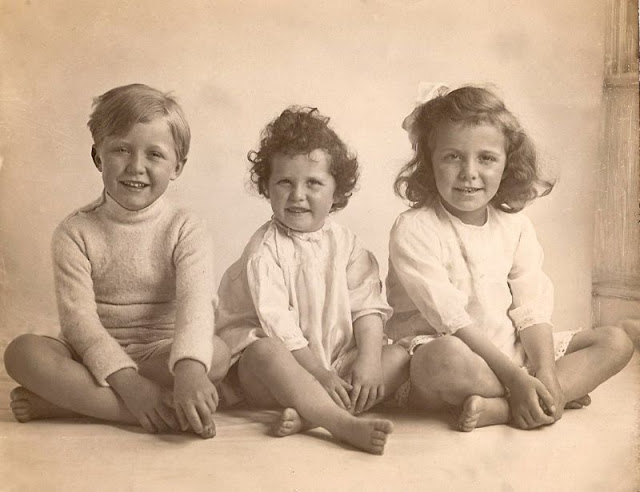
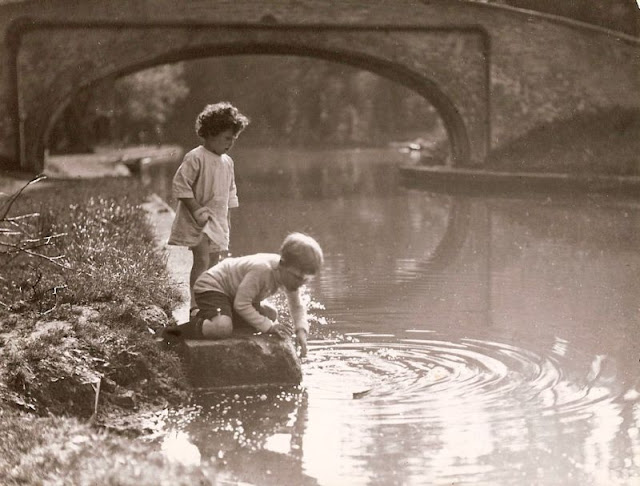
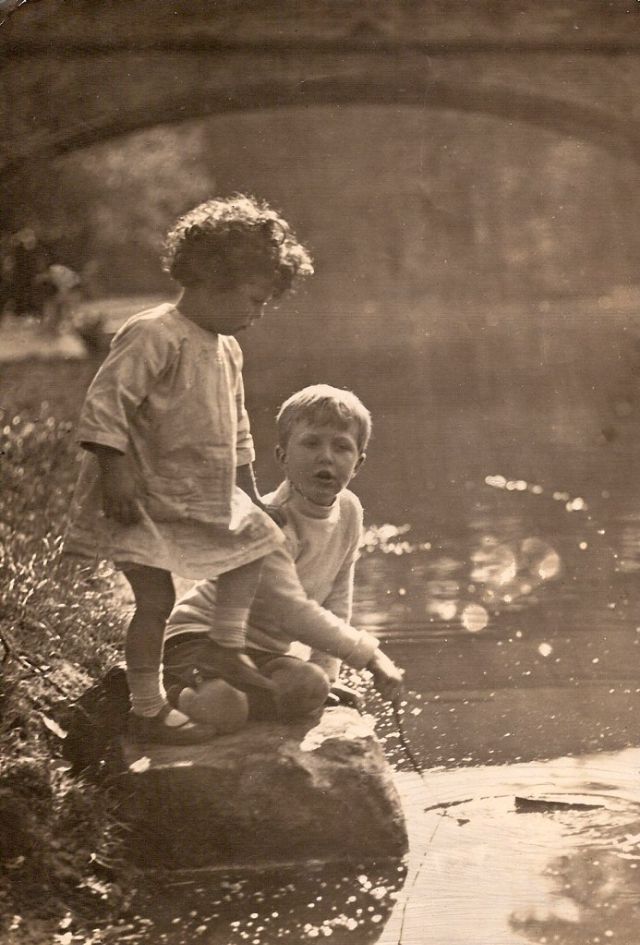
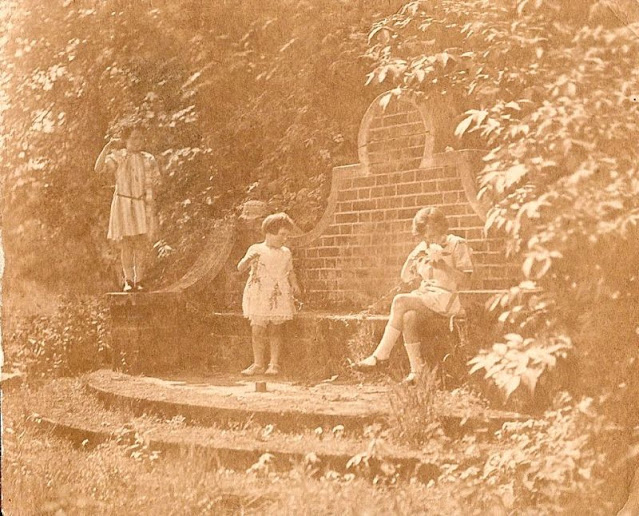
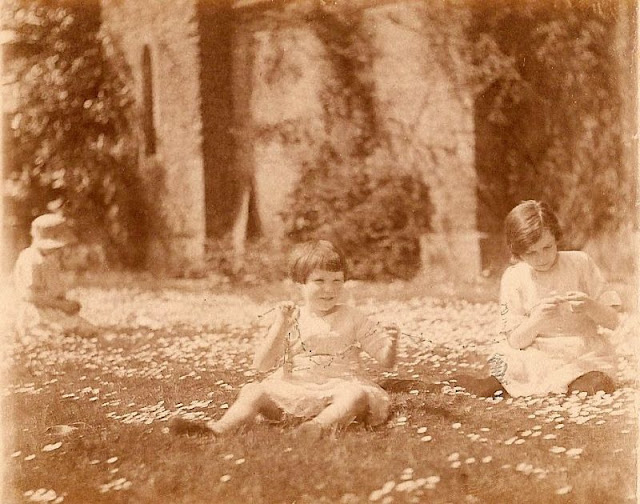
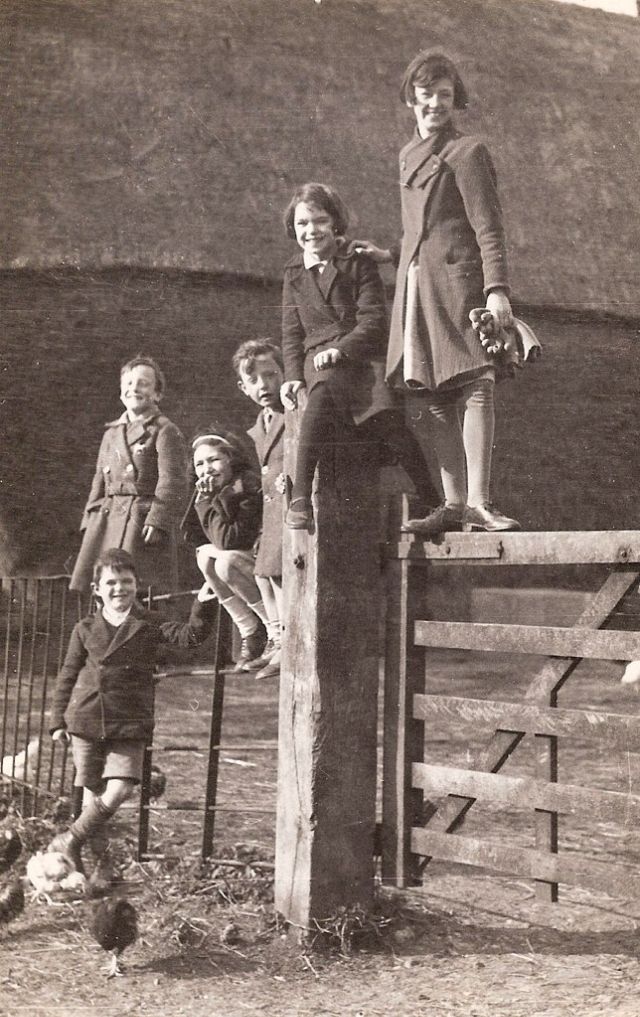
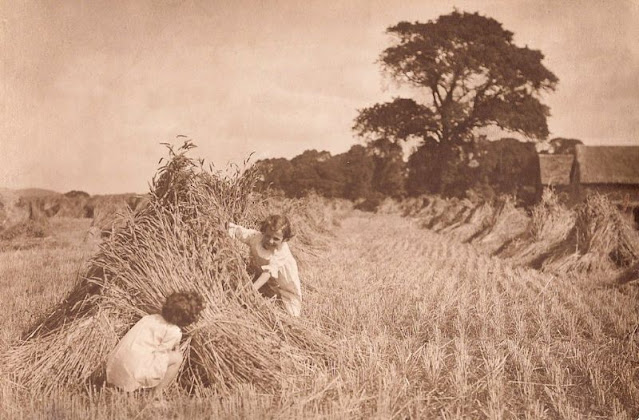
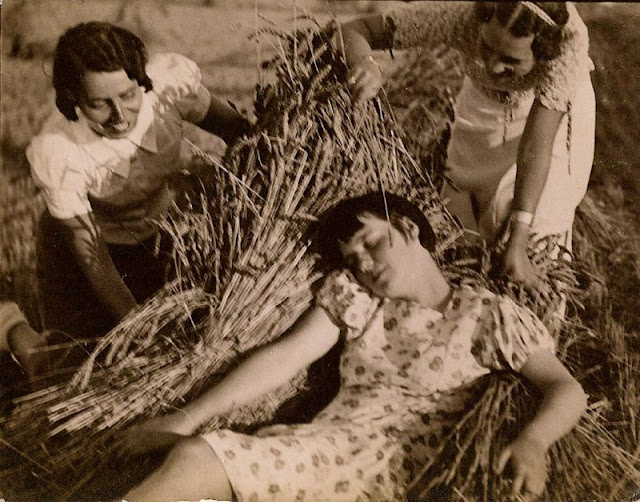
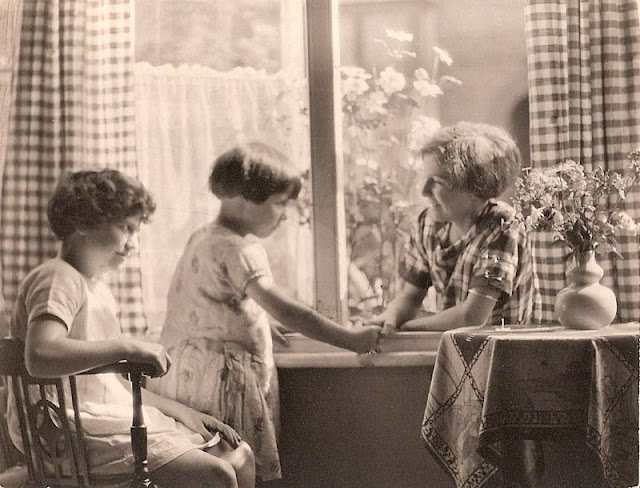
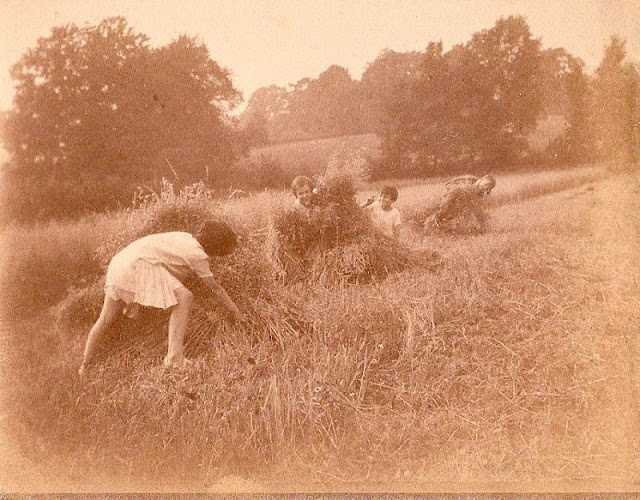
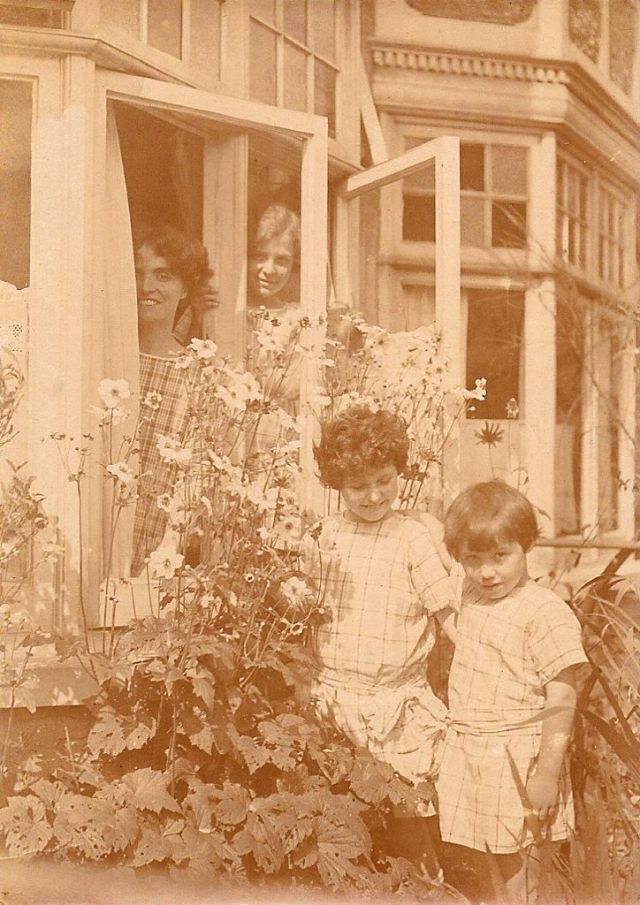
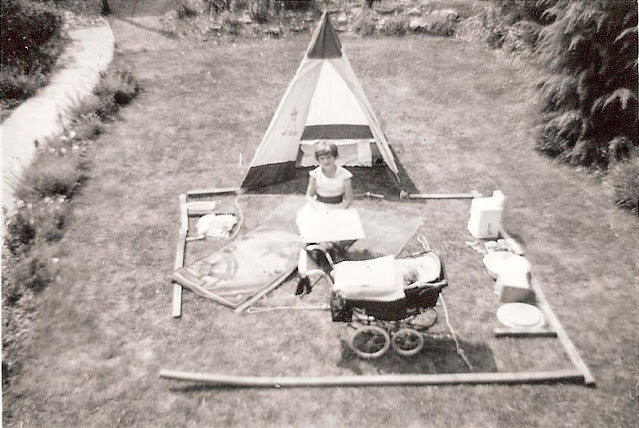
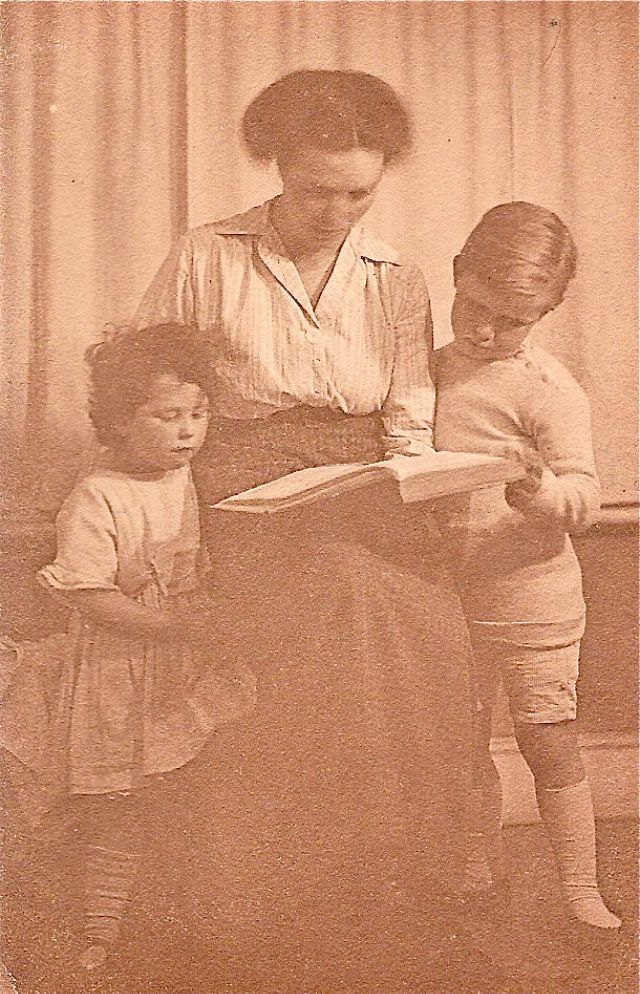
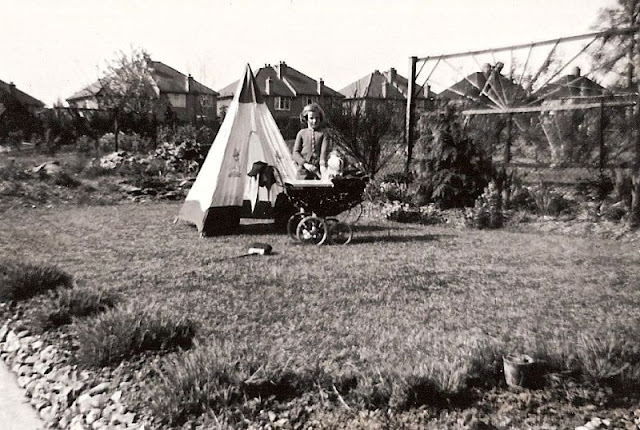
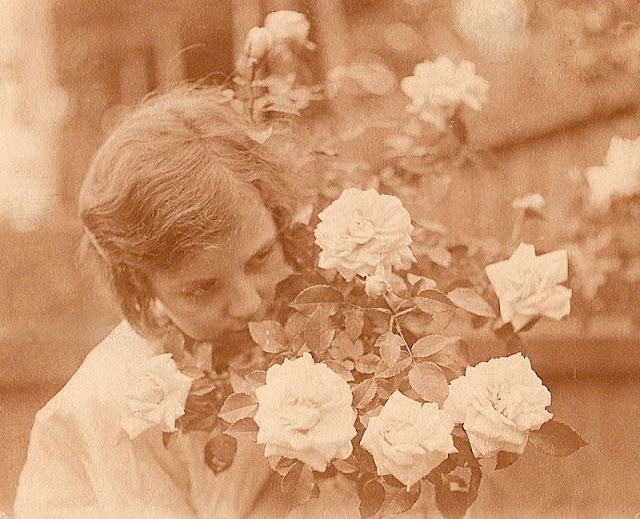
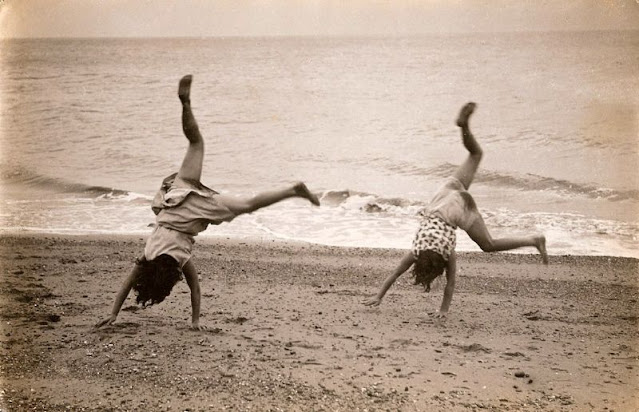
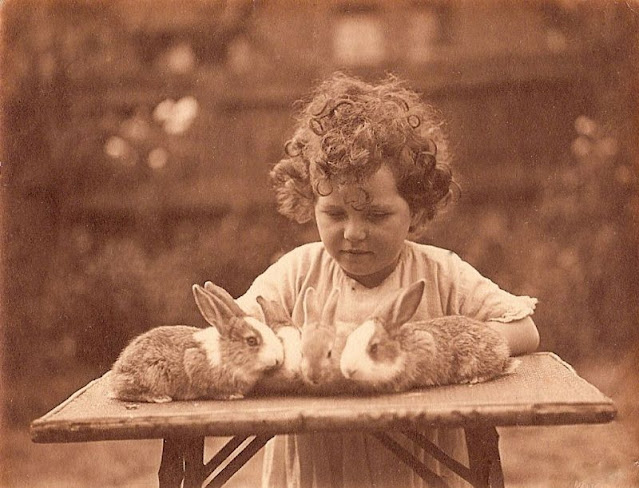
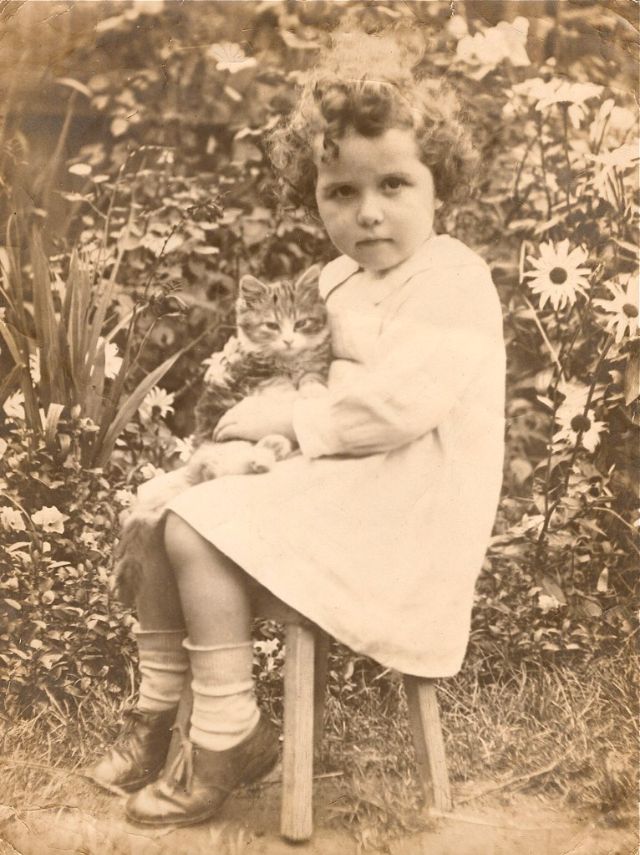
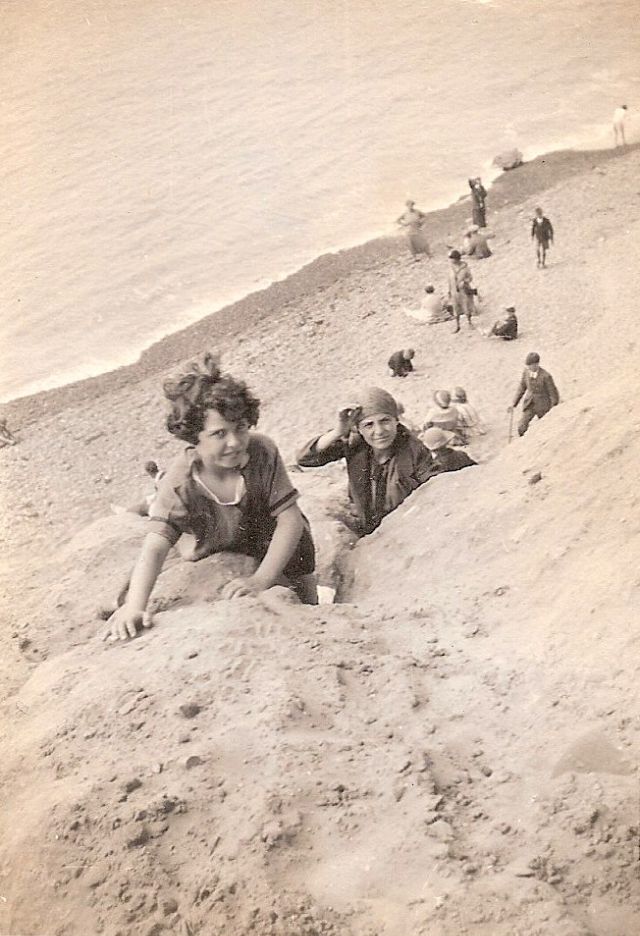
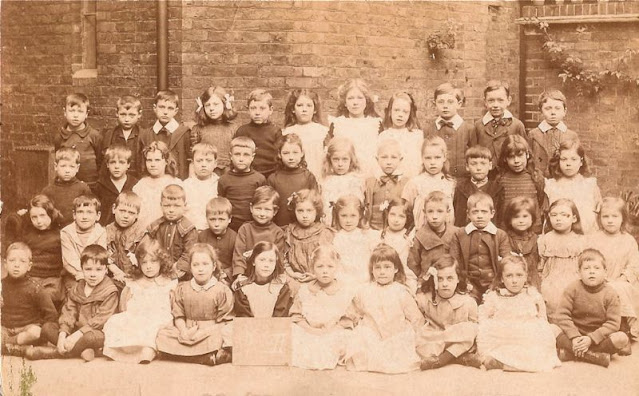
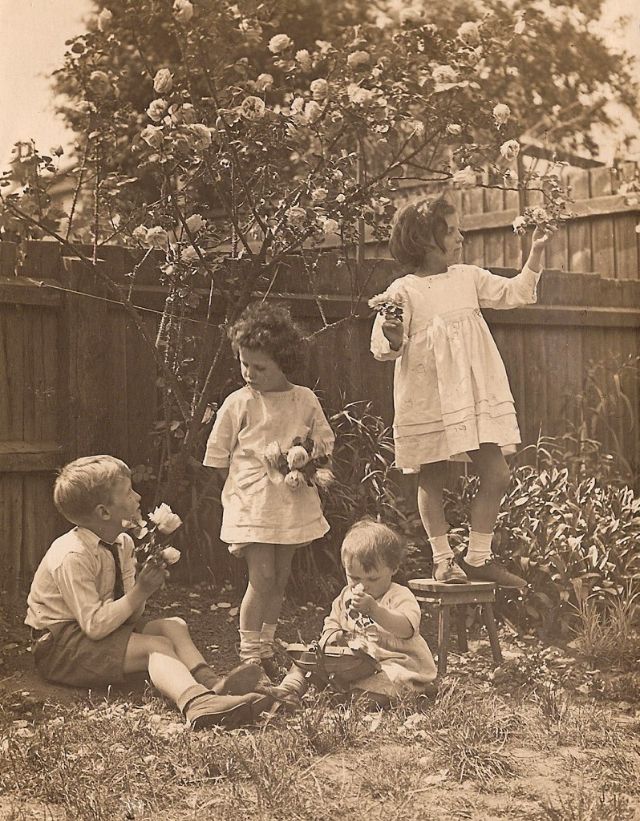
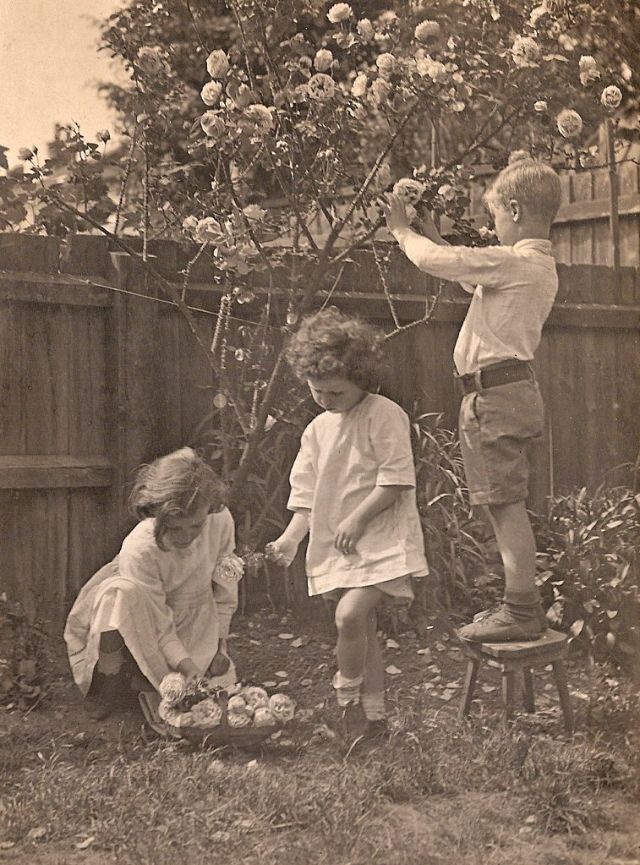
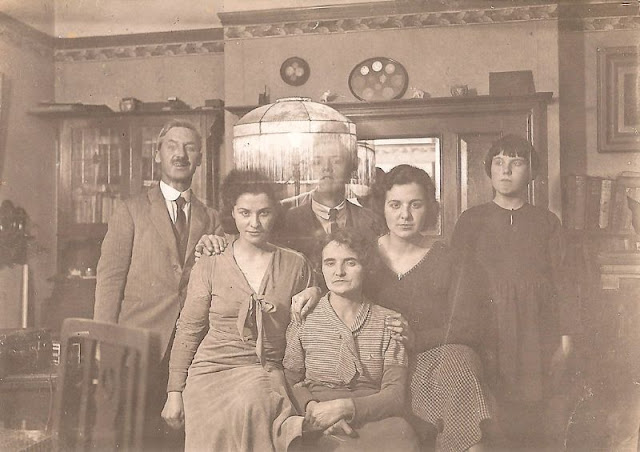
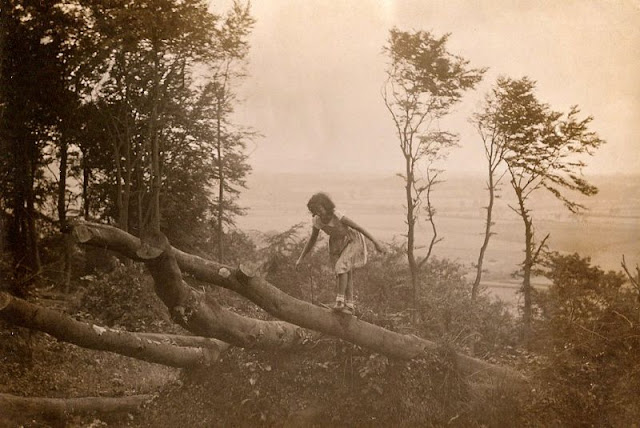
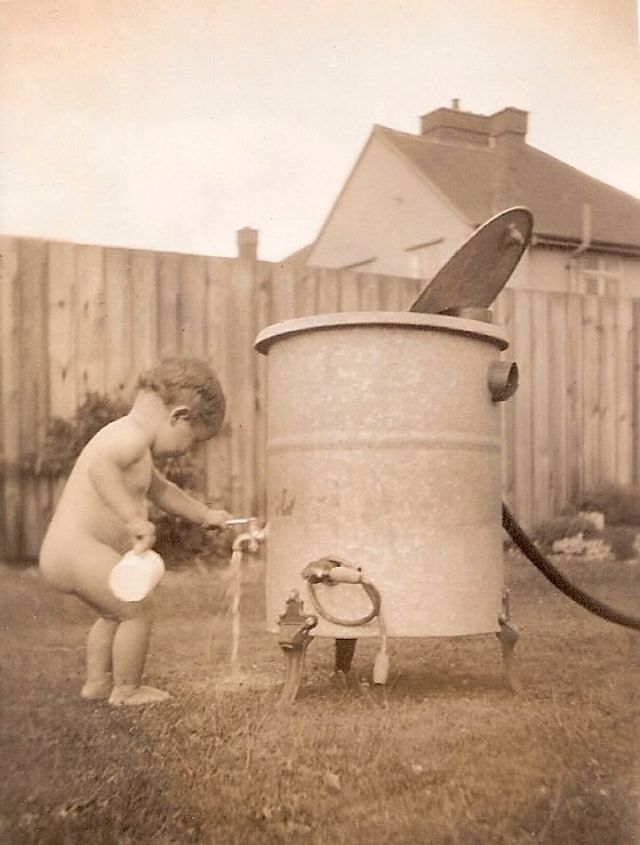
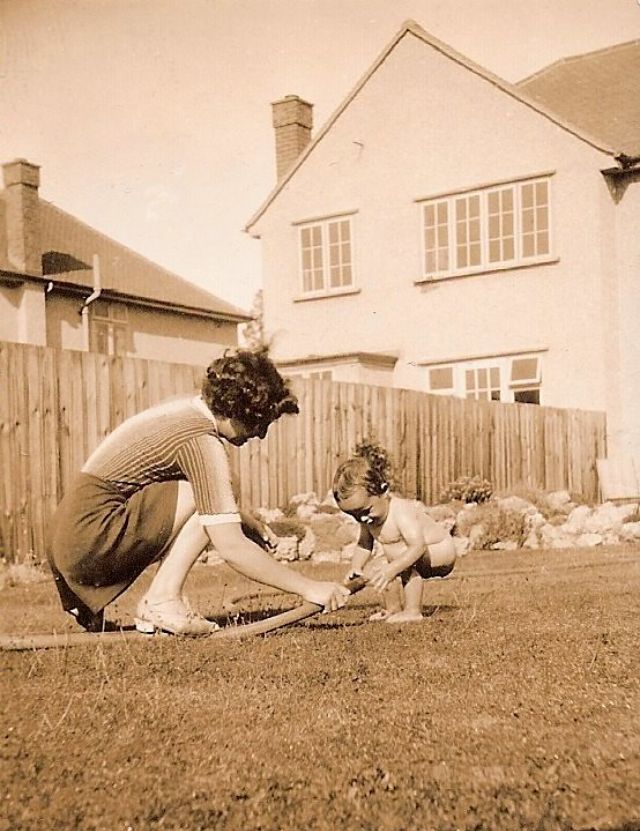
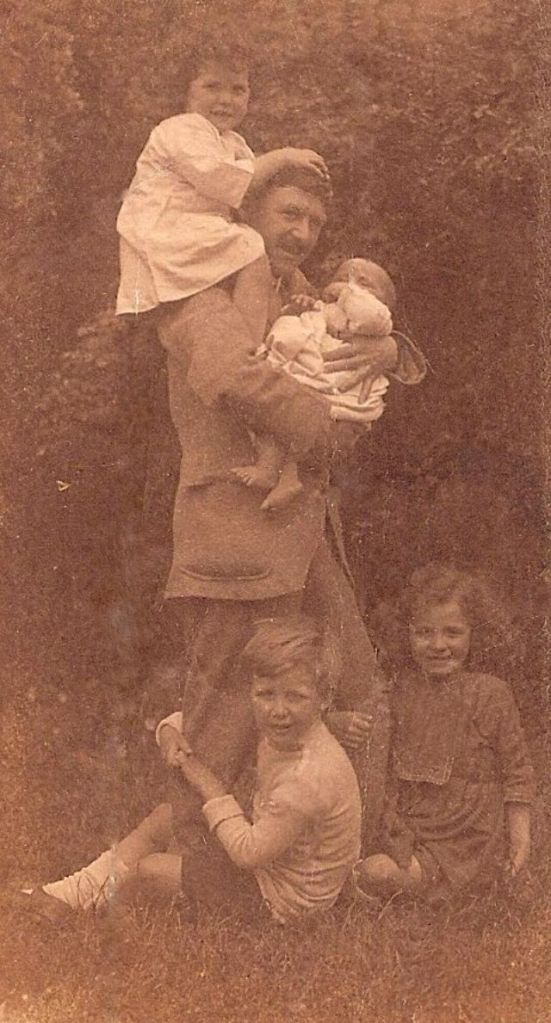
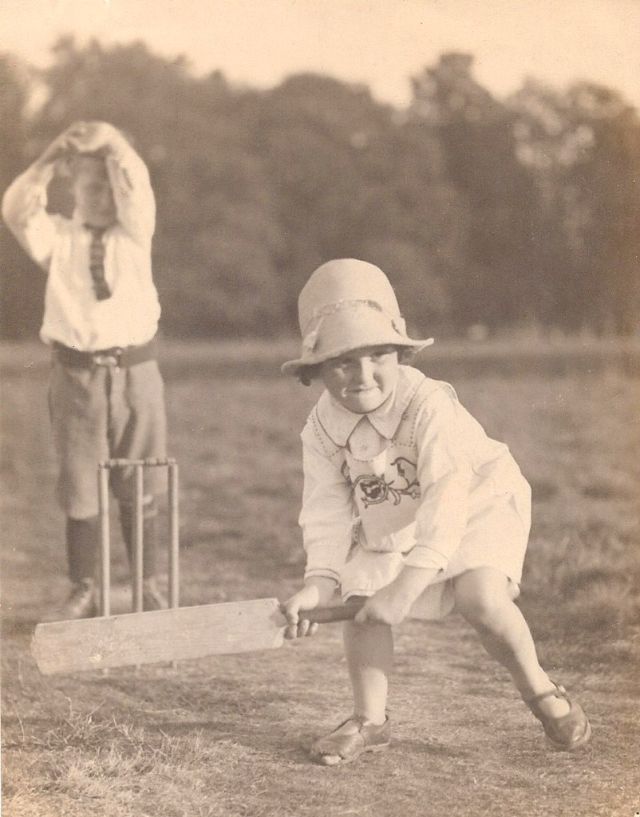
This is a series of family photos. The photos were taken by a Mr.E.A. Ife, mostly in the 1920s. They lived in Cassio Road, Watford, and Mr. Ife ran the ‘Post Office Savings Club Photographic Society’ from there (according to the ‘Photograms of the Year’ books for 1920 & 1921!). He was certainly a very fine photographer, and his family seem to have led a particularly happy, and idyllic lifestyle.
Subscribe to Yesterday Today to receive Daily updates about new content:
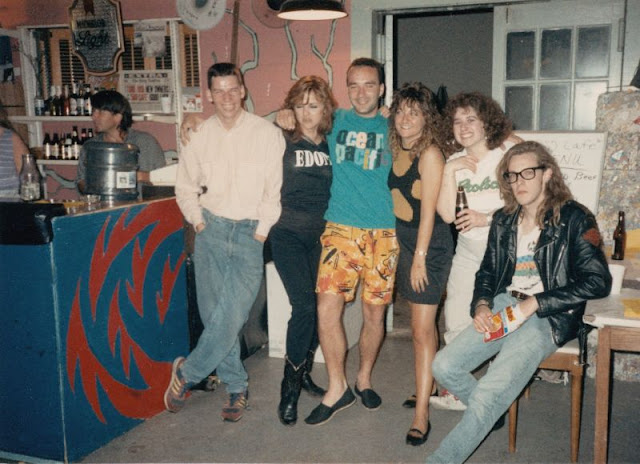
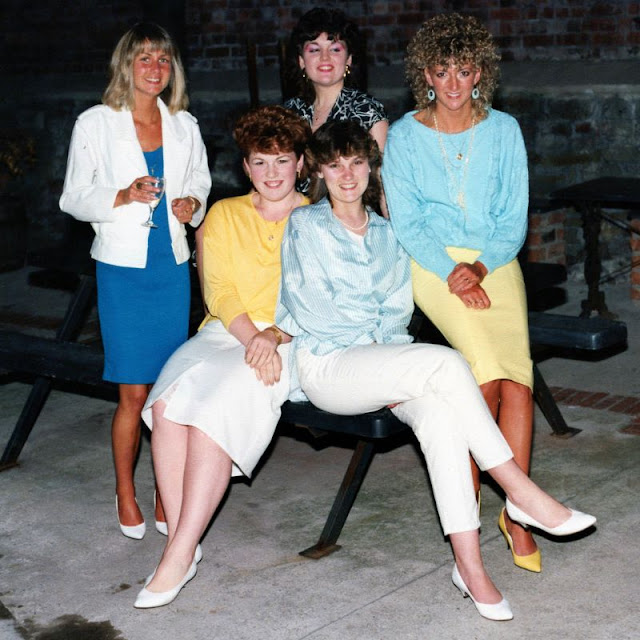
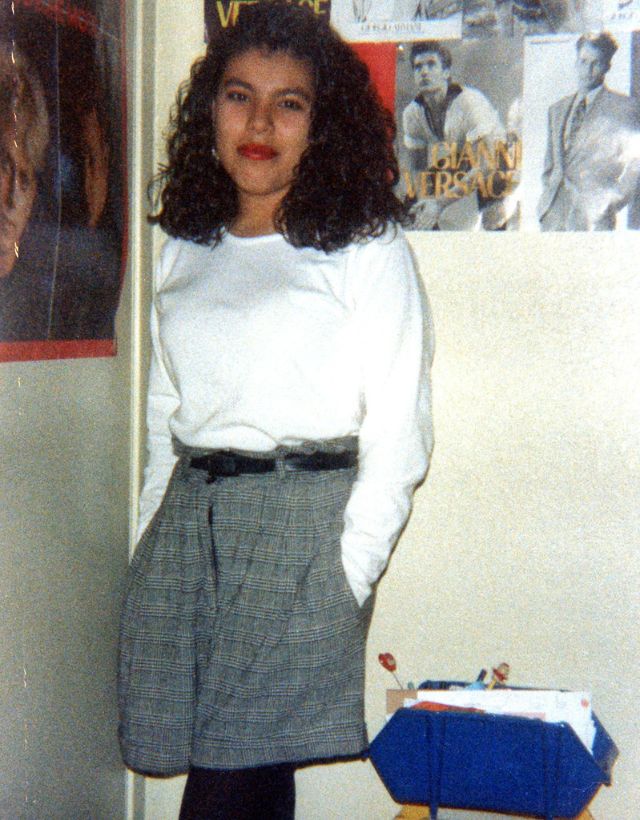
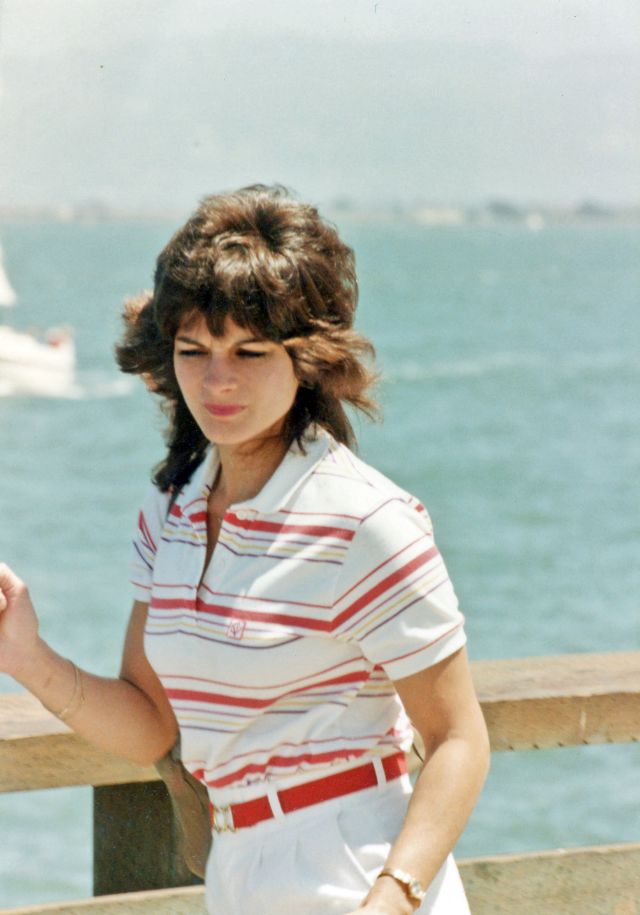
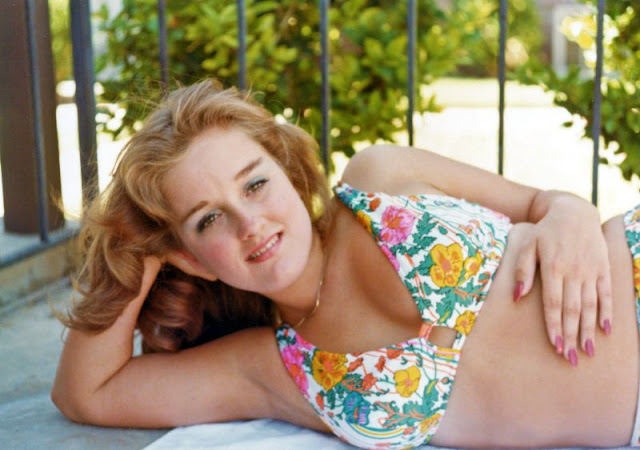
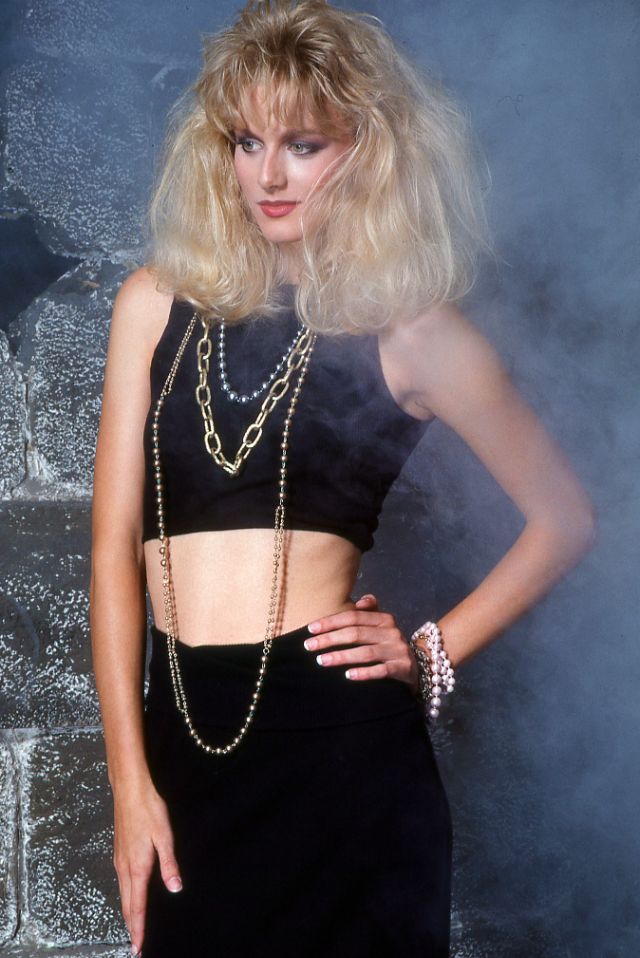
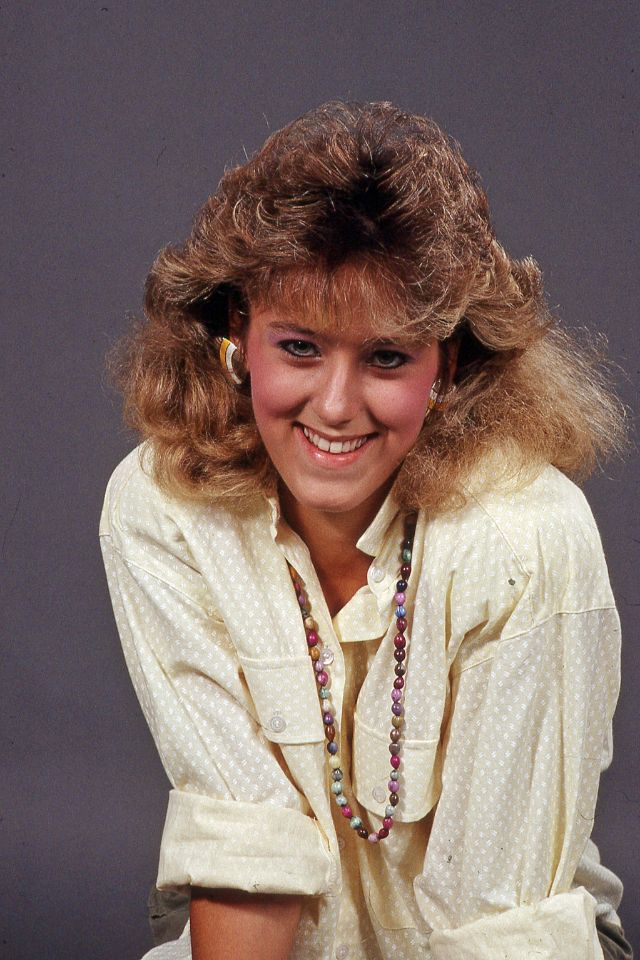
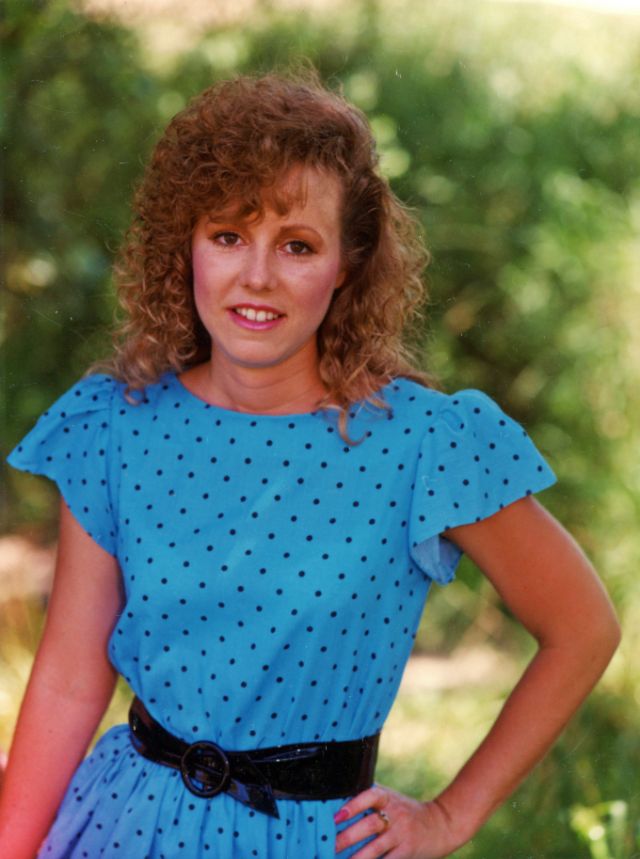
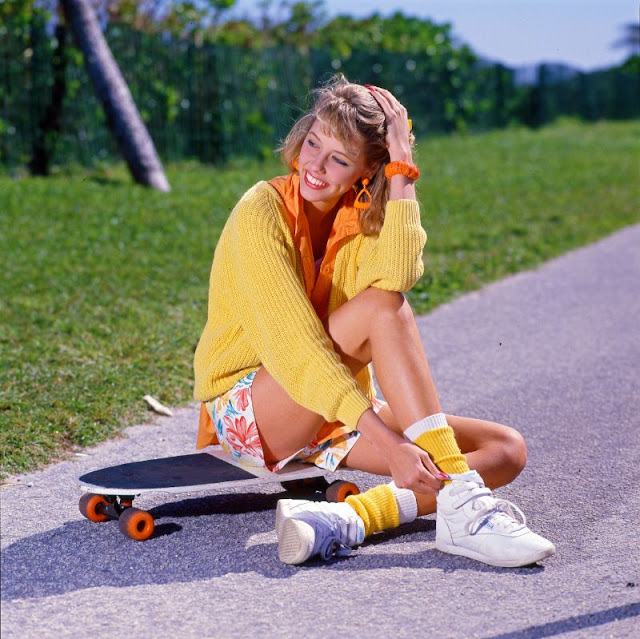
Fashion of the 1980s placed heavy emphasis on cheap clothes and fashion accessories and very big poofy hair. Apparel tended to be very bright and vivid in appearance. Punk fashion began as a reaction against both the hippie movement of the past decades and the materialist values of the current decade. The first half of the decade was relatively tame in comparison to the second half, which is when the iconic 1980s color scheme had come into popularity.
Hair in the 1980s was typically big, curly, bouffant and heavily styled. Television shows such as Dynasty helped popularize the high volume bouffant and glamorous image associated with it. Women in the 1980s wore bright, heavy makeup. Everyday fashion in the 1980s consisted of light-colored lips, dark and thick eyelashes, and pink or red rouge (otherwise known as blush).
Take a look at these vintage photos to see what fashion styles of young people looked like from the 1980s.
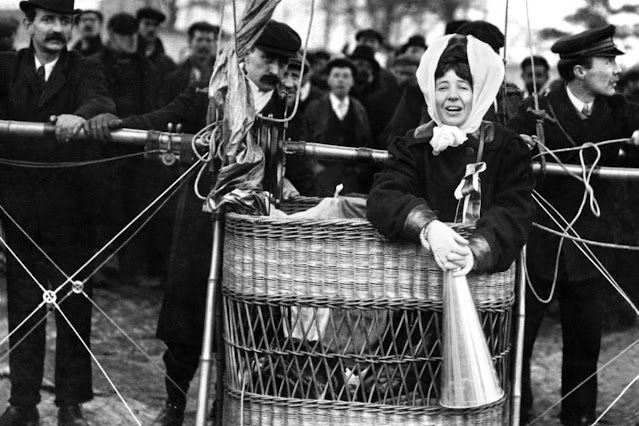
It was 1909: the skirts were long, the corsets tight. And women in Britain couldn’t vote. For Muriel Matters — so far from her home in Adelaide — taking to the skies in this rickety contraption was worth it. The plan was simple: suffragettes had been told they could not distribute leaflets on the streets. So instead, they were going to drop from the skies campaign leaflets on to the procession of King Edward VII as he made his way in his golden carriage along The Mall to the opening of Parliament on February 16, 1909.
The Votes for Women airship lifting off.
Muriel Matters (1877–1969), an Australian actress, arrived in London in 1905 looking for theatrical work. She loved her adopted country so much that she remained there for the rest of her life, but arriving from South Australia, where women had been voting since 1894, she was appalled at the lack of women’s rights in England. She soon became involved with the suffrage organization Women’s Freedom League (WFL) to further the cause of women.
Matters organized a number of stunts and events in order to bring attention to the suffrage cause. In 1908 she chained herself to the railings on the grille at the House of Commons and she addressed the MPs as they entered. Police had to cut the entire grille from the wall as she refused to tell them where the key was hidden. According to her biographer, Robert Wainwright, “She was dragged out of the gallery still shouting and proclaiming ‘Votes for Women!’ while attached to this section of metal.” She was arrested that evening and sentenced to a month in the notorious Holloway Prison.
Muriel became well known for her antics; her image was printed on postcards and sold by the WFL. But the most outrageous and memorable stunt Muriel pulled was flying in an airship over London.
In 1909 she took off in a dirigible balloon with ‘Votes for Women’ painted in enormous letters on the side. King Edward was opening Parliament and members of the suffrage movement had been told that they would be arrested if they tried to distribute leaflets along the route. So members of the WFL decided that if they couldn’t take their message to the street, they’d take it to the air. Muriel’s plan was to fly over London and scatter 56lbs of Women’s Freedom League pamphlets over Westminster. The weather that day was rainy and windy, so she was blown off course and ended up in South London in Croydon, but the Votes for Women airship made worldwide news and helped promote the suffrage movement.
Muriel Matters in the airship.
Thirty years later she recalled the trip: “That morning I went to Hendon and met Mr Henry Spencer who had his airship all ready near the Welsh Harp. It was quite a little airship, eighty eight feet long (25m), and written in large letters on the gas bag were three words, ‘Votes For Women’. Below this was suspended an extremely fragile rigging carrying the engine and a basket, like those used for balloons. We loaded up about a hundredweight of leaflets, then I climbed into the basket, Mr Spencer joined me, and we rose into the air.”
The dirigible ascended to an altitude of 3,500ft (1,000 meters). “It was very cold,” Muriel recalled, “but I got some exercise throwing the leaflets overboard.” She later described how Spencer had to climb out of the basket repeatedly and clamber ‘like a spider’ across the dirigible’s framework to make adjustments to the engine. “Suddenly I realized that if he fell off, I hadn’t the first idea how to maneuver the airship,” she said. “Not that I was terribly bothered about that. I was too busy making a trail of leaflets across London.”
Despite failing to fly over the king’s procession, Matters considered the aerial adventure a great success. “The flight achieved all we wanted. It got our movement a great deal of publicity, as you can imagine. In those days, the sight of an airship was enough to make people run for miles!”
Muriel’s airship adventure was also the first powered flight from what later became the London Aerodrome at Hendon, which was to feature prominently in both World Wars, and site of various pioneering aviation experiments, among them the first airmail, the first parachute descent from a powered aircraft, the first night flights, and the first aerial defense of a city.
Muriel Matters continued with her political life as an active member of the suffragettes lecturing all over the world.
It’s always fascinating to compare food advertisings then and now. Back then, pork, beef and chicken were three basic food groups in America, whereas today people have become more conscious of diet and nutrition, which results in the changes in modern selling points: organic, local, healthy and sustainable. Food stylists across social media, of course, had not existed yet, so glistening mounds of meat dripping with gravy and covered with fat were what consumers would see.
Take a look back at these vintage meat ads from old magazines, cookbooks from the 1930s to 1970s:
Subscribe to continue reading
Become a paid subscriber to get access to the rest of this post and other exclusive content.
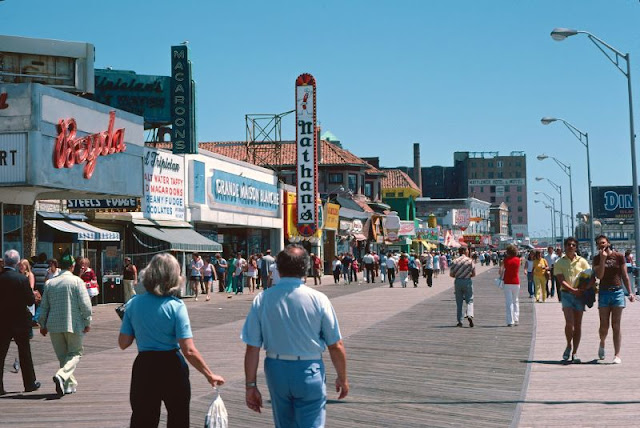
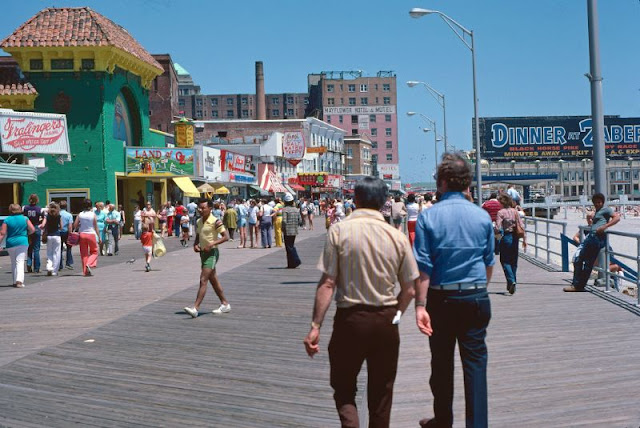
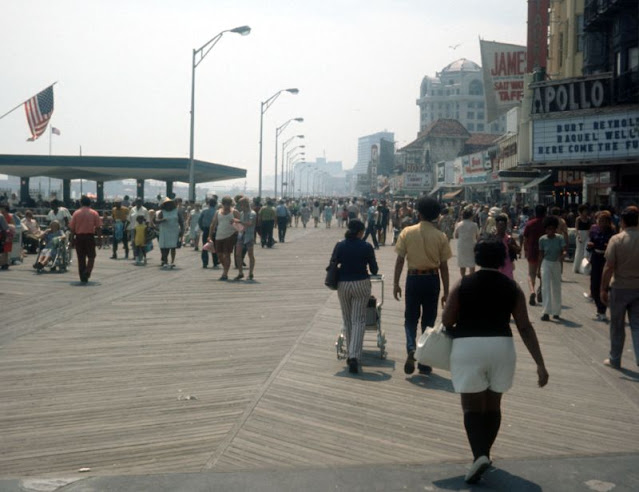
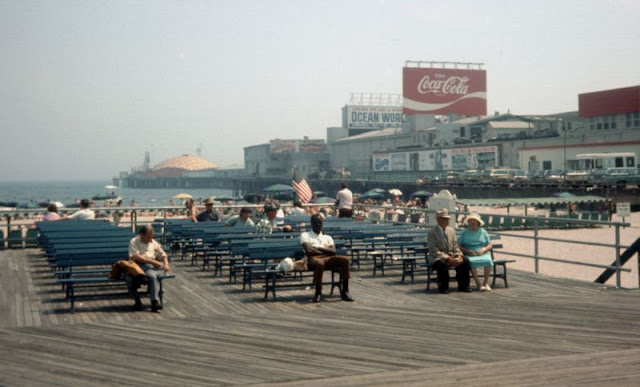
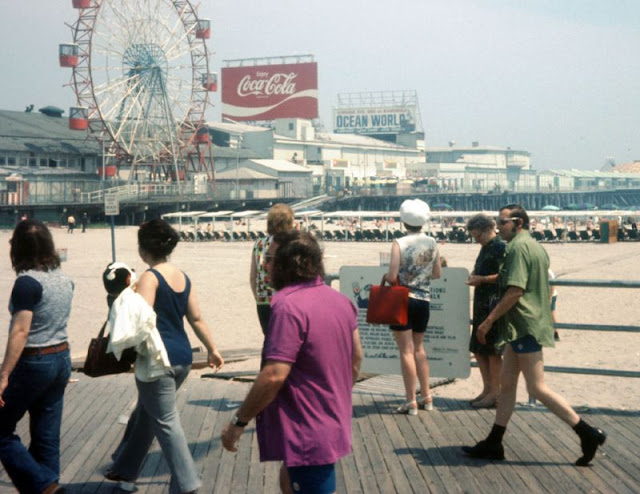
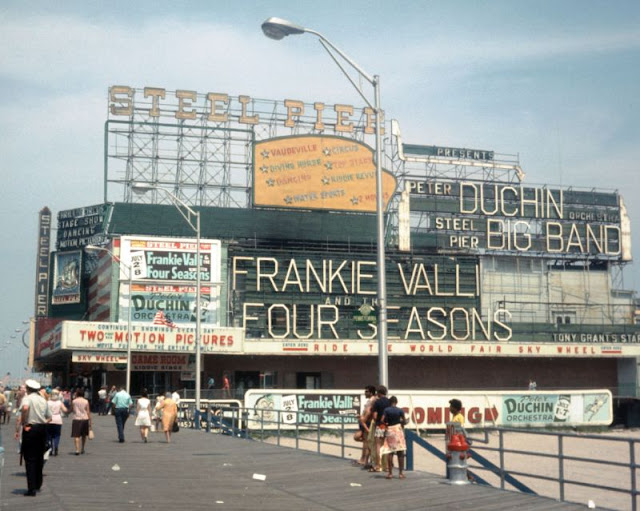
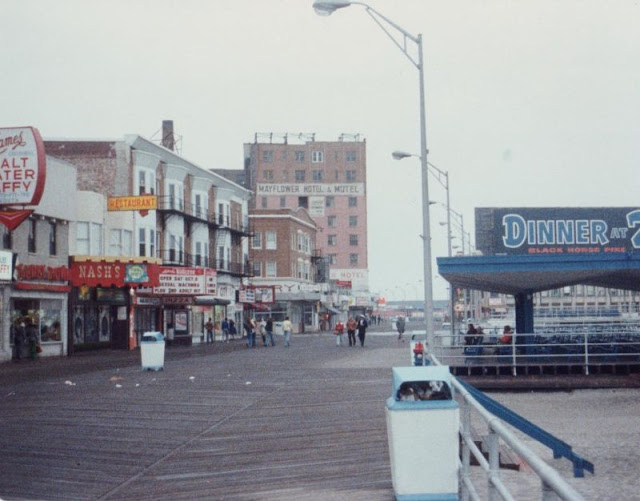
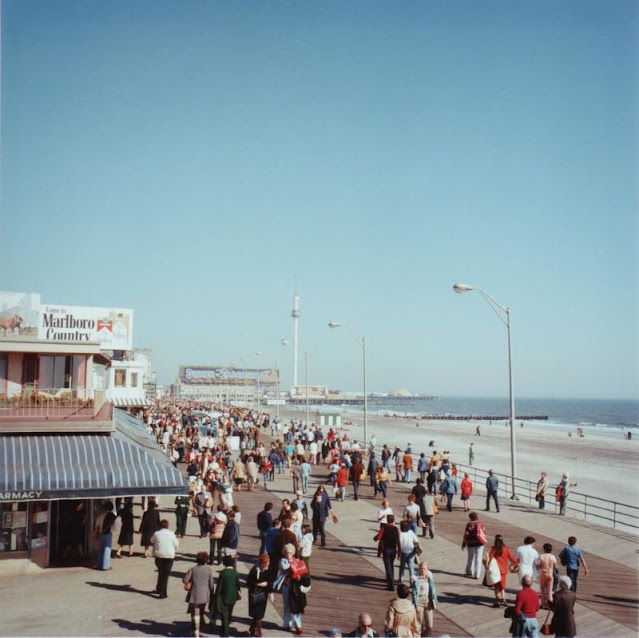
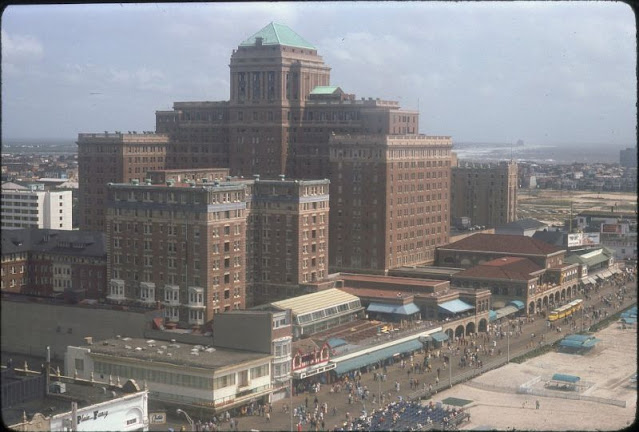
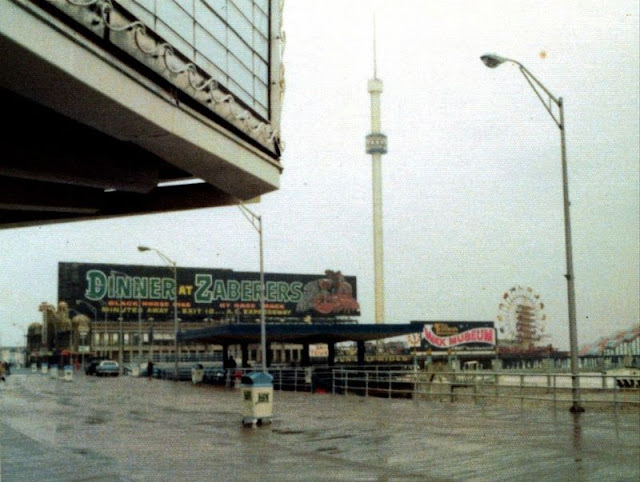
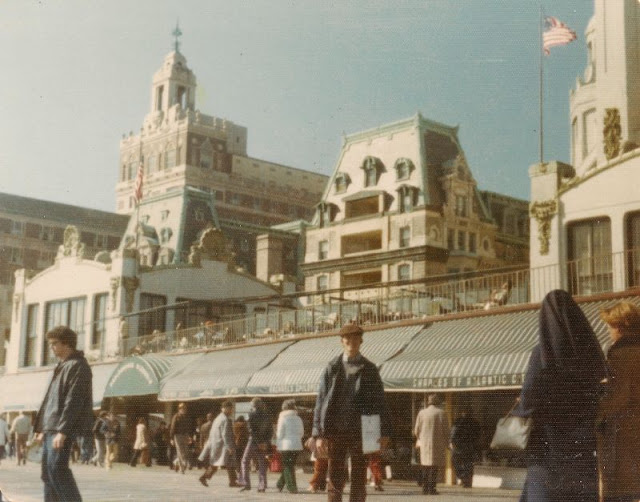
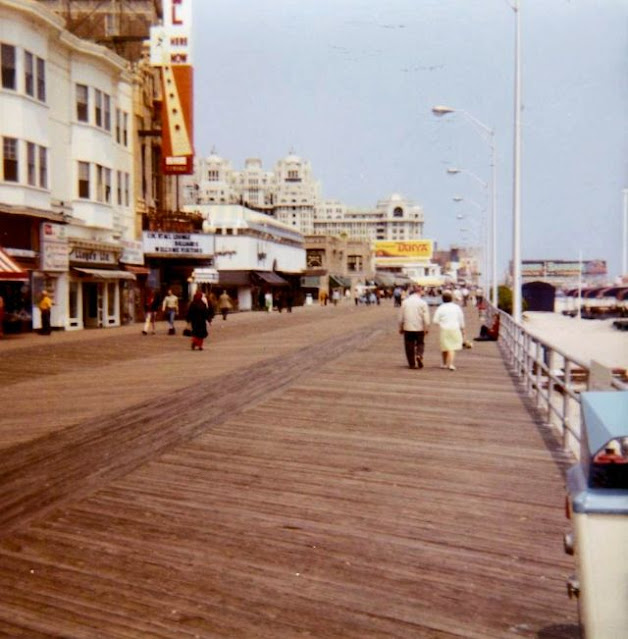
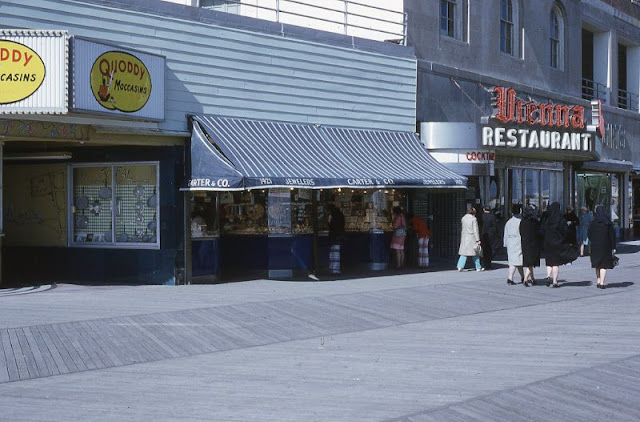
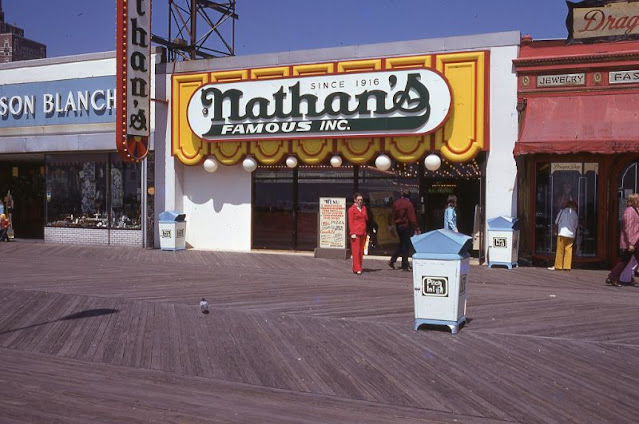
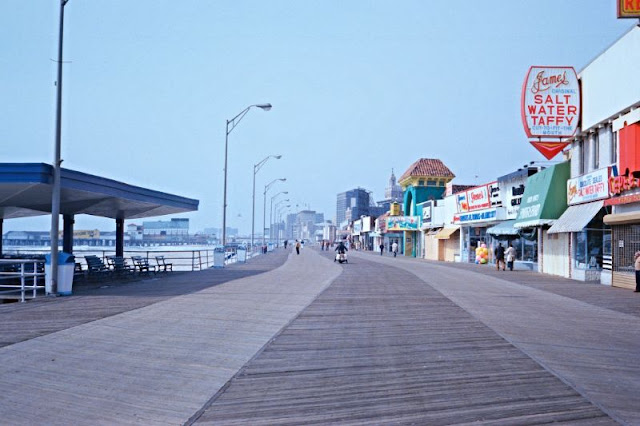
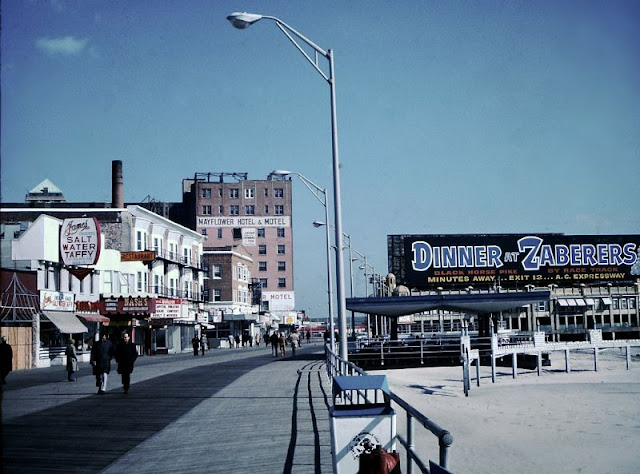
Atlantic City is a coastal resort city in Atlantic County, New Jersey, known for its casinos, boardwalk, and beaches. It was incorporated on May 1, 1854, from portions of Egg Harbor Township and Galloway Township.
The city is located on Absecon Island and borders Absecon, Brigantine, Pleasantville, Ventnor City, Egg Harbor Township, and the Atlantic Ocean.
Atlantic City inspired the U.S. version of the board game Monopoly, especially the street names. Since 1921, Atlantic City has been the home of the Miss America pageant. In 1976, New Jersey voters legalized casino gambling in Atlantic City. The first casino opened two years later.
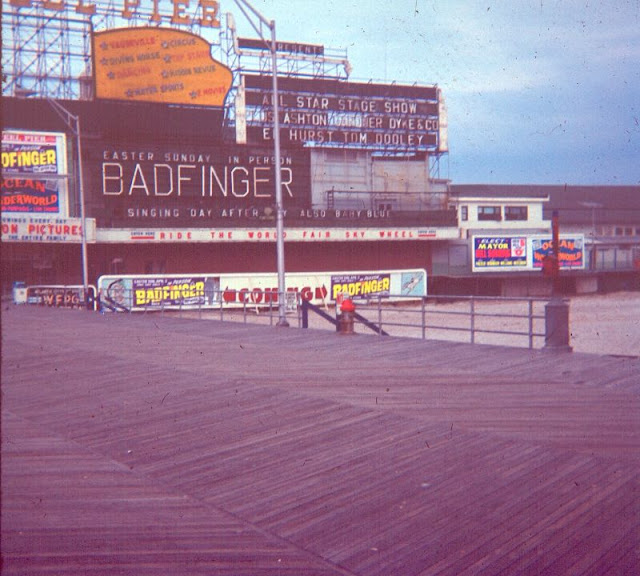
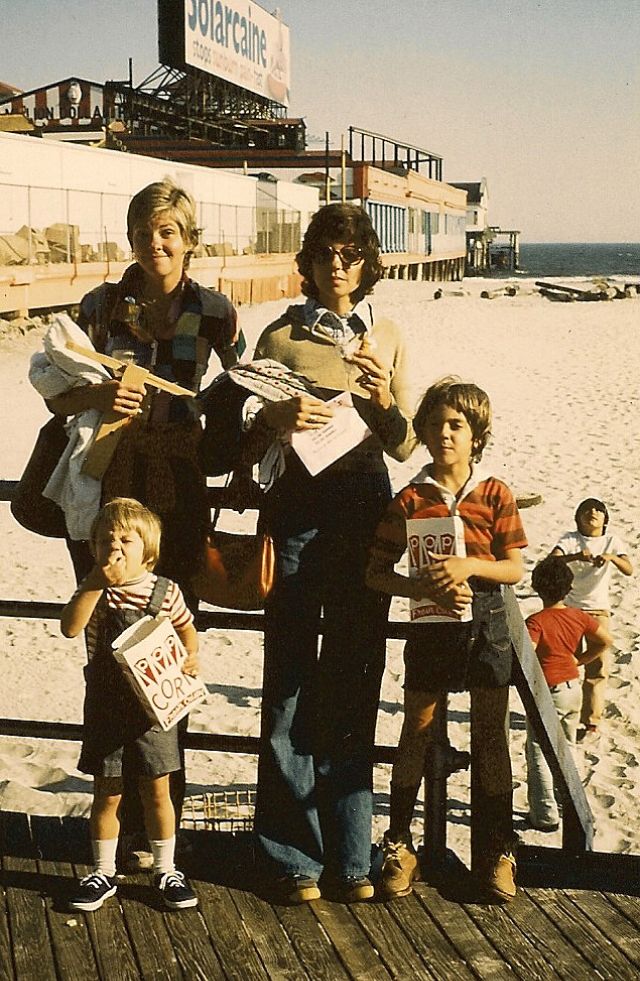
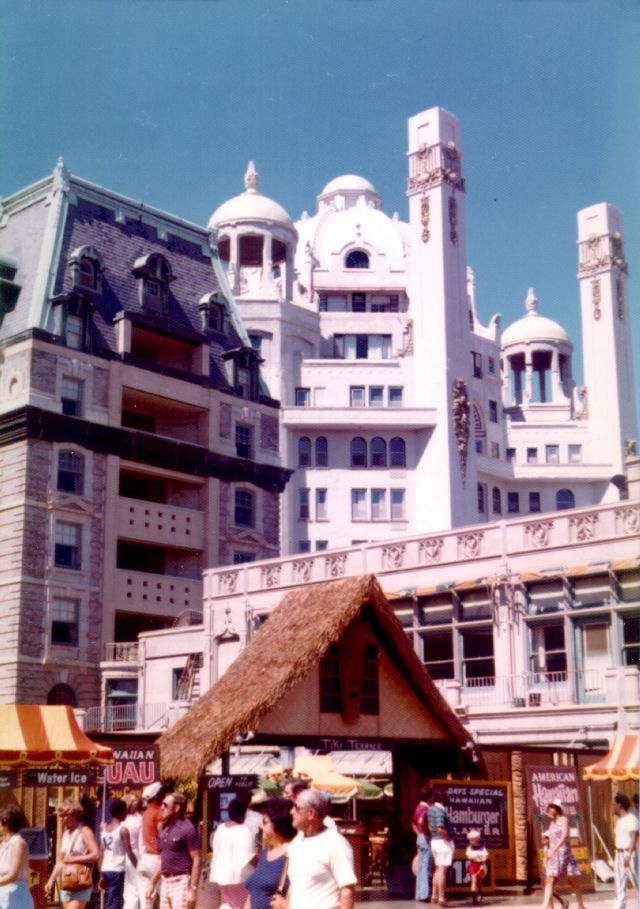
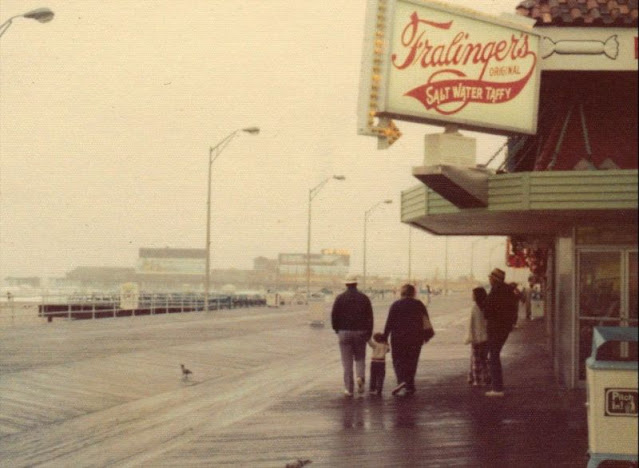
These vintage color photos show life of the Atlantic City Boardwalk in the 1970s.
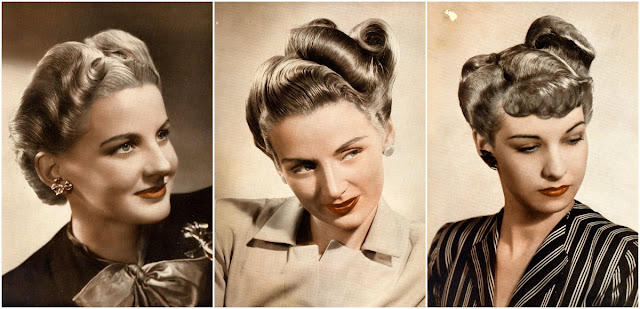
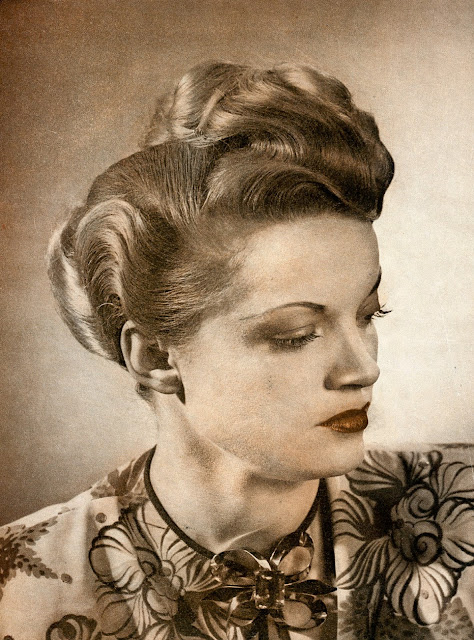
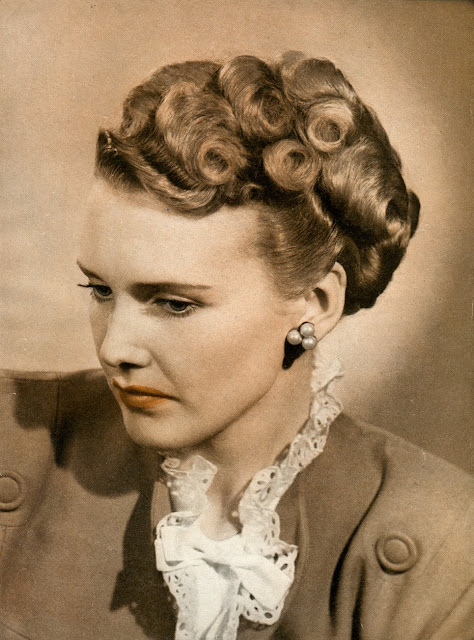
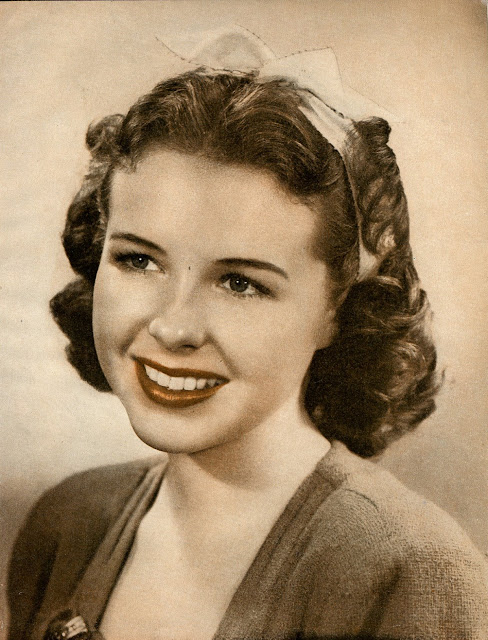
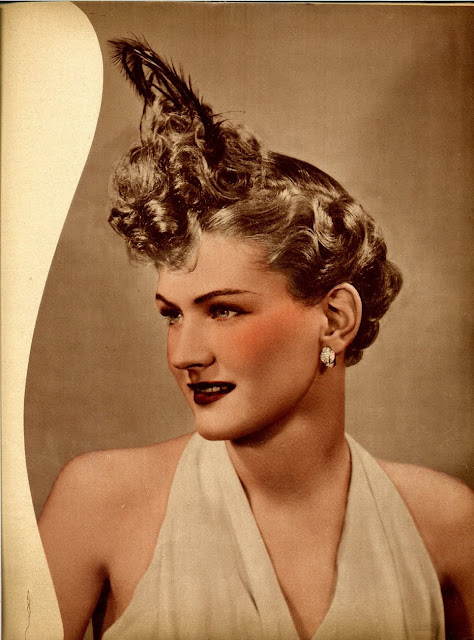
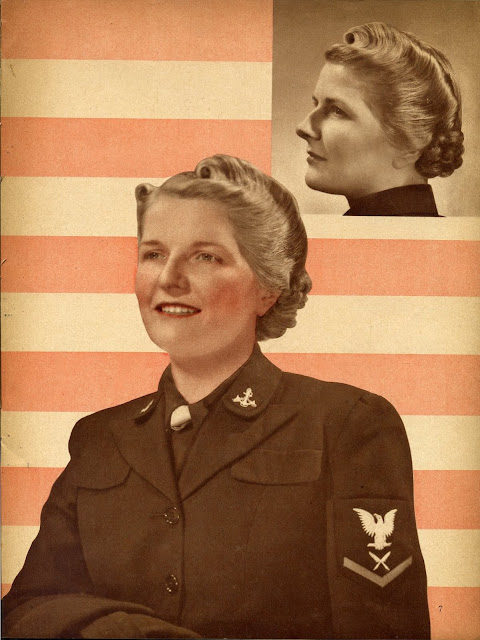
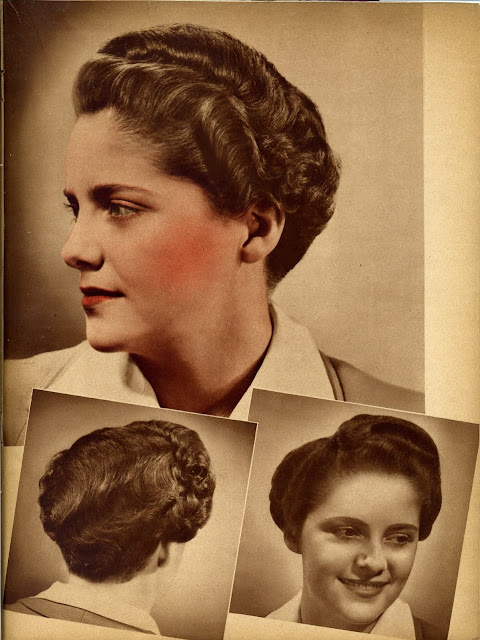
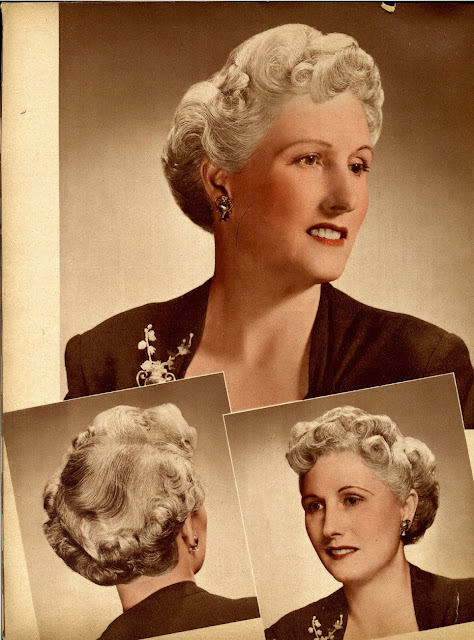
The 1940s proved to be iconic with hairstyling even though the wars at that time had a vast effect on everything. No matter the length of hair, the women of the 1940s always appeared soft and feminine as a result of their hairstyles. Hairs were very practical and easy since women didn’t have much money to spend at salons. With rolls and waves being the most common hairdos, women of the decade looked stunning at all times.
Hairstyles in the 1940s were fuller and longer than those of the 1930s and hair was cut in a rounded U-shape at the back, curving up towards the ears. There were always a lot of layers because the hair was usually worn in curls or soft waves, usually just below shoulder-length. Straight hair was simply unfashionable. To achieve the curls, girls who couldn’t afford a weekly “wash and set” at the hairdresser would pin up their wet hair in bobby pins each night to make pin-curls.
As war rationing really began to bite, women still spent time and effort on their hairstyles, but no longer wanted lots of waves in intricate designs. Hair was worn shorter, in a practical style, still curly with a wave or two at the front. This sort of style looked good under small hats and military hats and could be hidden under turbans if the hair was dirty.
An iconic war-time hairstyle was the “Victory Roll”. The name seems to have come from the corkscrew through the air by RAF pilots before landing, if they had successfully downed an enemy plane. The hair was divided at the front and curled up and out, in a rather aerodynamic form.