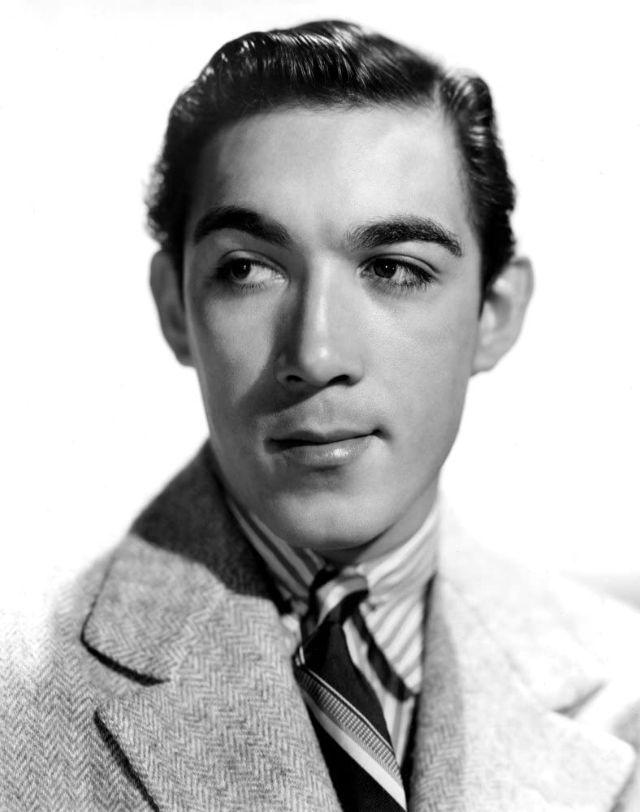
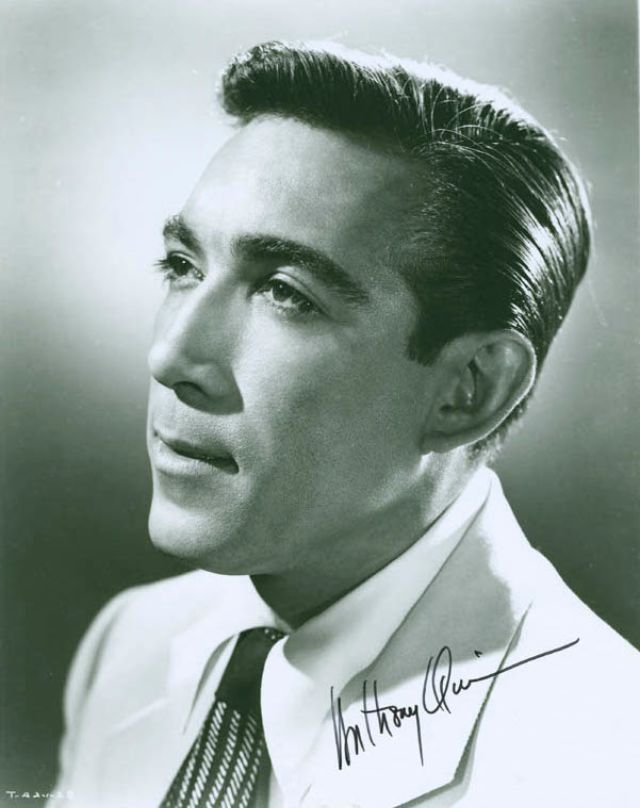
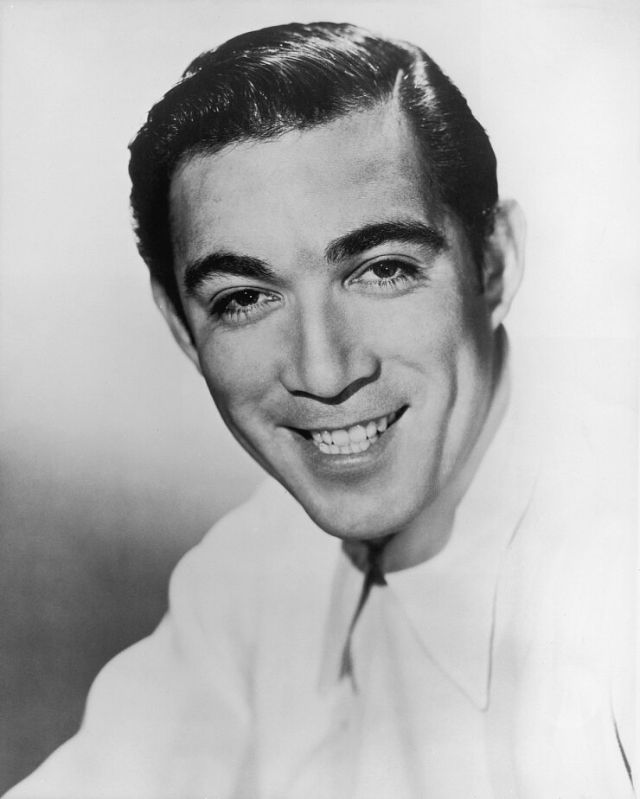
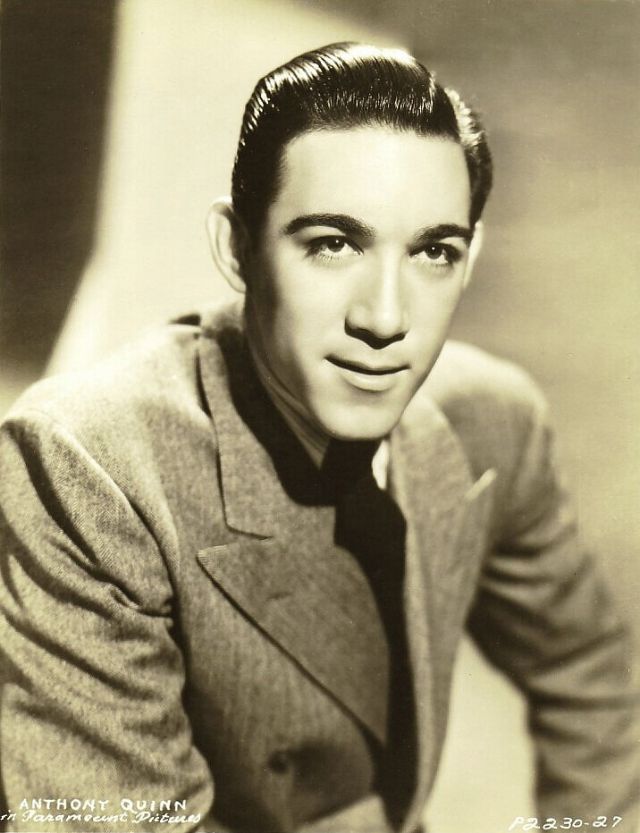
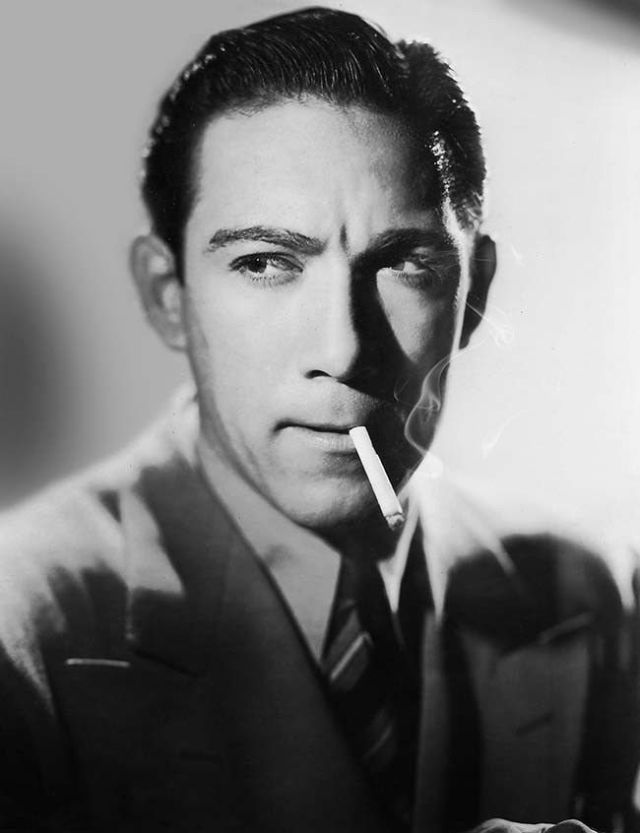
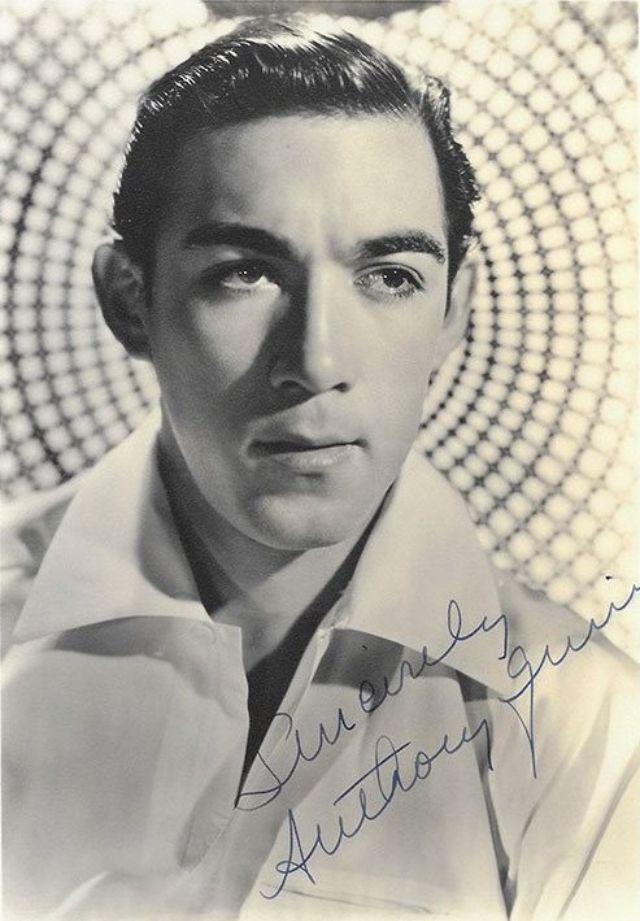
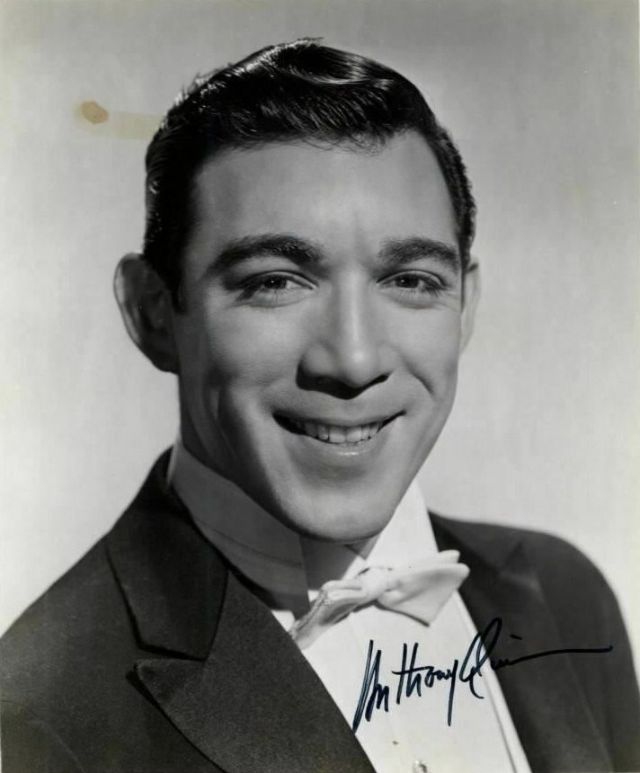
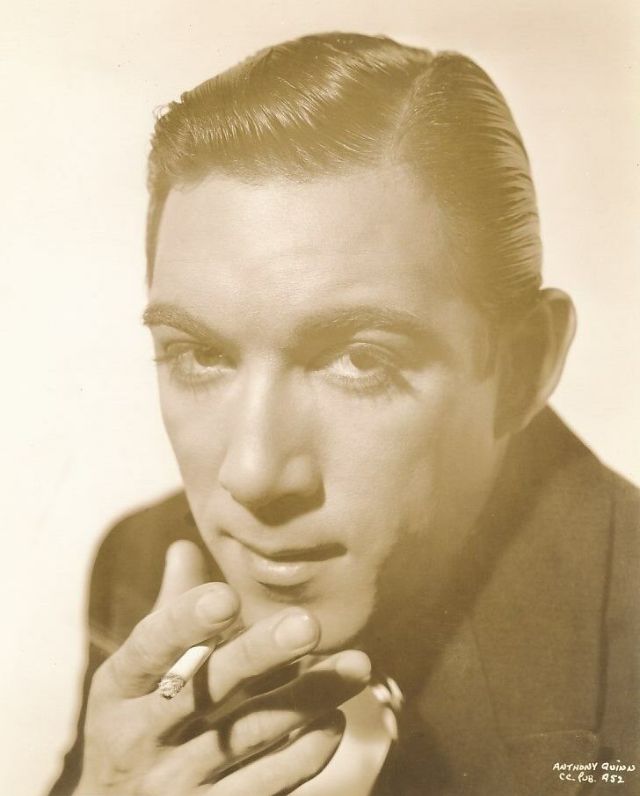
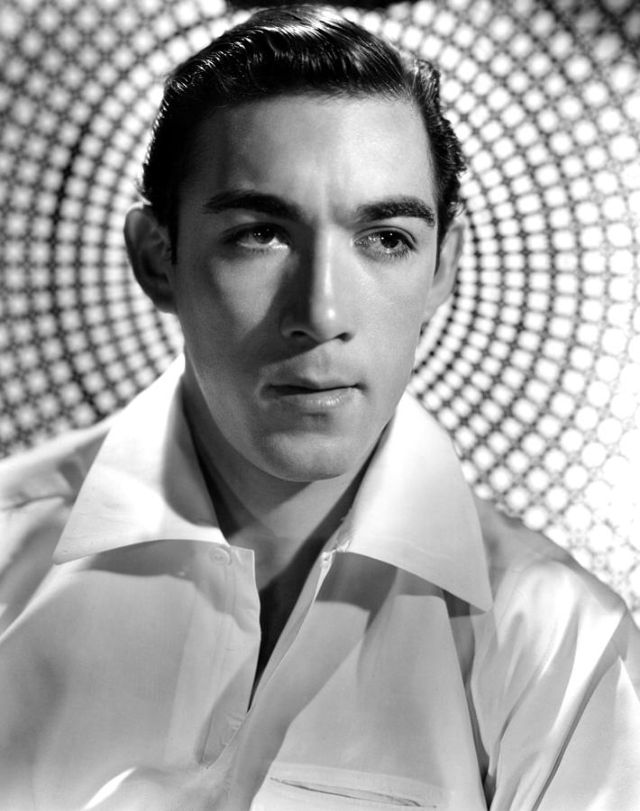
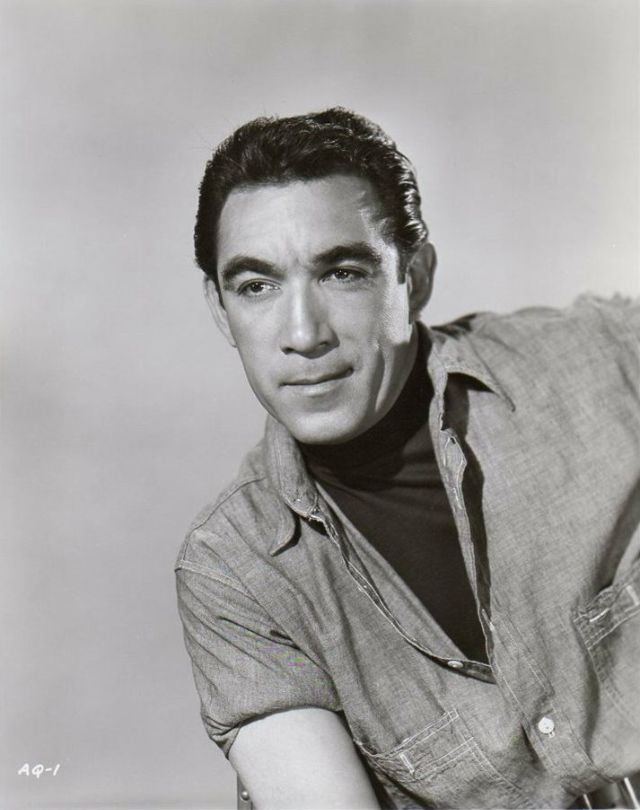
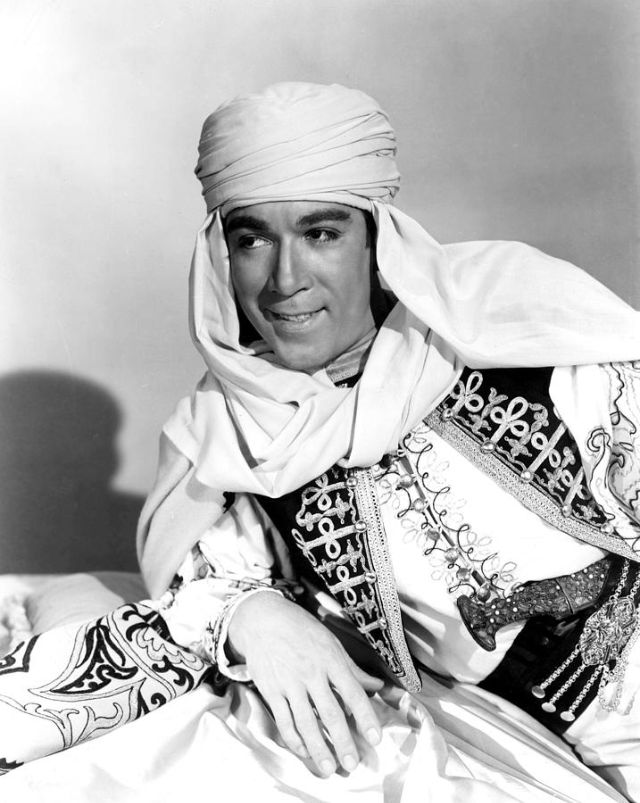
29 Amazing Portrait Photos of Actor Anthony Quinn in the 1930s and 1940s

Manuel Antonio Rodolfo Quinn Oaxaca (April 21, 1915 – June 3, 2001), known professionally as Anthony Quinn, was a Mexican-American actor. He was known for his portrayal of earthy, passionate characters “marked by a brutal and elemental virility” in numerous critically acclaimed films both in Hollywood and abroad. His notable films include La Strada, The Guns of Navarone, Guns for San Sebastian, Lawrence of Arabia, The Shoes of the Fisherman, The Message, Lion of the Desert, and A Walk in the Clouds. He also had an Oscar-nominated titular role in Zorba the Greek.

Quinn won the Academy Award for Best Supporting Actor twice: for Viva Zapata! in 1952 and Lust for Life in 1956. In addition, he received two Academy Award nominations in the Best Leading Actor category, along with five Golden Globe nominations and two BAFTA Award nominations. In 1987, he was presented with the Golden Globe Cecil B. DeMille Lifetime Achievement Award. Through both his artistic endeavours and civil rights activism, he remains a seminal figure of Latin-American representation in the media of the United States.

Quinn spent his last years in Bristol, Rhode Island. He died of respiratory failure (due to complications from radiation treatment for lung cancer) on June 3, 2001, in Boston, at age 86. Quinn’s funeral was held in the First Baptist Church in America in College Hill, Providence, Rhode Island. His wife asked for the permission of Bristol authorities to bury him in his favorite spot in the backyard of his house, near an old maple tree. They had bought the property in 1995; it had a view of the Narragansett Bay. Permission was granted and he was laid to rest there. (Wikipedia)

Take a look at these vintage photos to see portrait of a young and handsome Anthony Quinn in the 1930s and 1940s.

30 Amazing Photos Capture Street Scenes of Amsterdam During World War II

Nazi Germany invaded the Netherlands on 10 May 1940 and took control of the country. Some Amsterdam citizens sheltered Jews, thereby exposing themselves and their families to a high risk of being imprisoned or sent to concentration camps.

More than 100,000 Dutch Jews were deported to Nazi concentration camps, of whom some 60,000 lived in Amsterdam. In response, the Dutch Communist Party organized the February strike attended by 300,000 people to protest against the raids.

At the end of the Second World War, communication with the rest of the country broke down, and food and fuel became scarce. Many citizens travelled to the countryside to forage. Dogs, cats, raw sugar beets, and tulip bulbs—cooked to a pulp—were consumed to stay alive. Many trees in Amsterdam were cut down for fuel, and wood was taken from the houses, apartments and other buildings of deported Jews.

In the spring of 1945, Canadian forces liberated Amsterdam and the rest of the Netherlands.

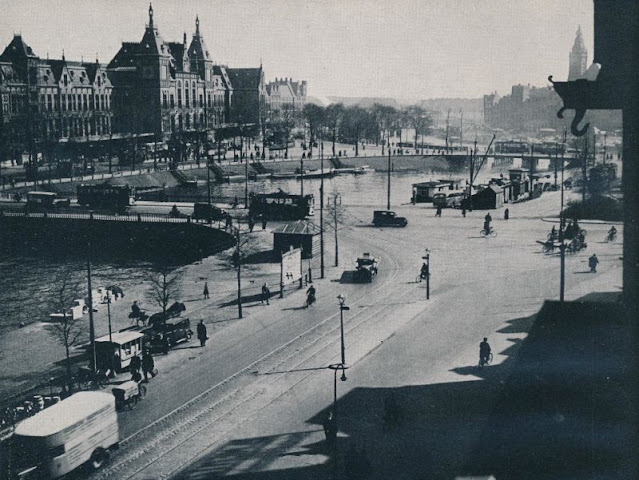
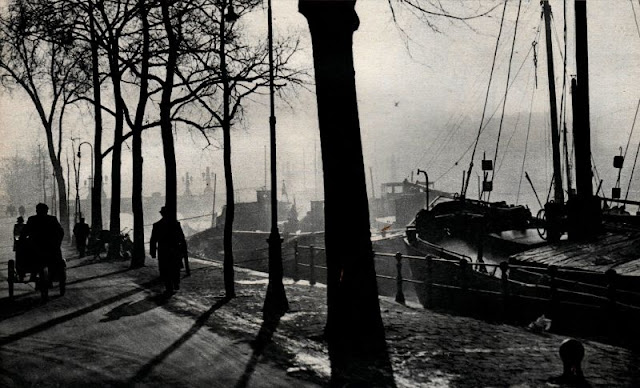
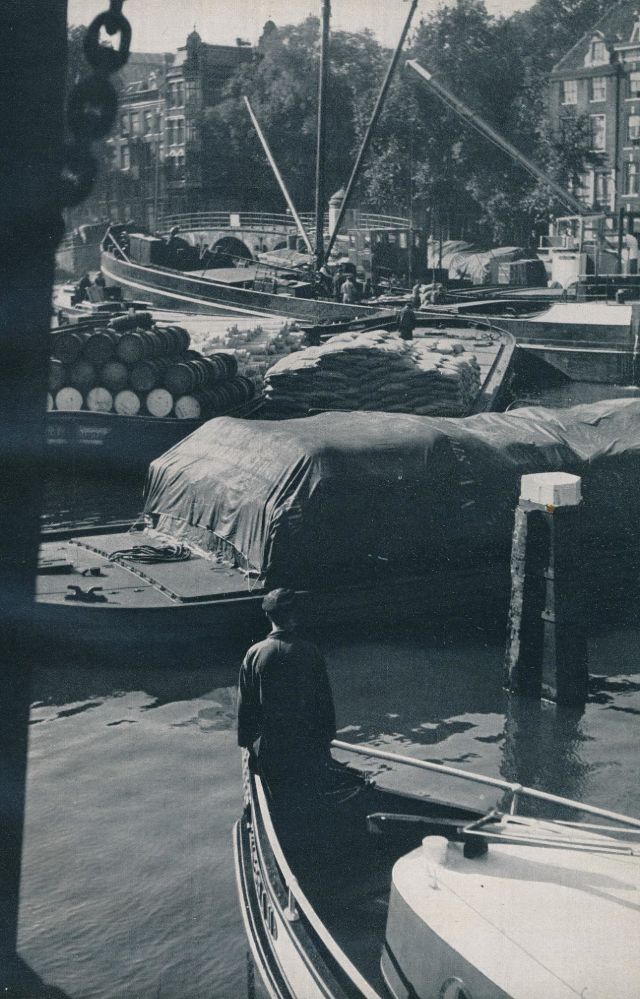
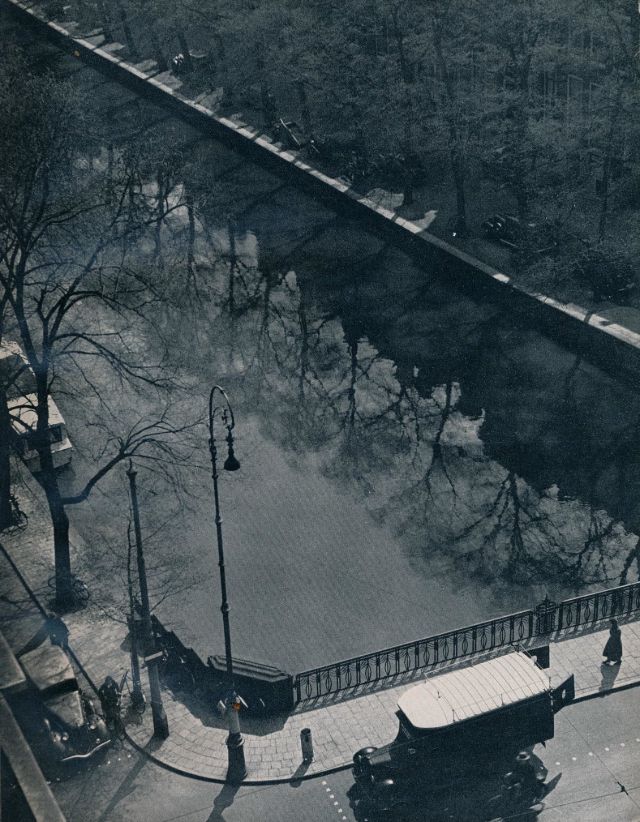
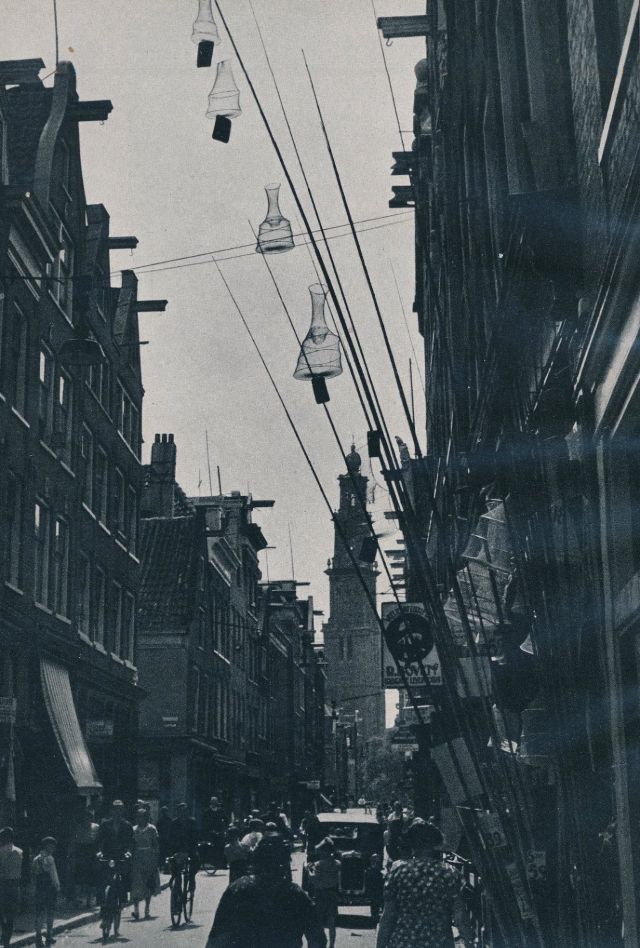
These amazing photos capture street scenes of Amsterdam in 1940 and 1941.

Amsterdam Prins Hendrikkade/Centraal Station, 1940
Amsterdam Amstel near Hogesluis, 1940
Amsterdam Amstel, 1940
Amsterdam bridge Leidsestraat, 1940
Amsterdam Damrak, 1940
Amsterdam Jordaan street orchestra, 1940
Amsterdam Jordaan street, 1940
Amsterdam Leidsebosje, 1940
Amsterdam Minervaplein, 1940
Amsterdam Nieuwendijk, 1940
Amsterdam Nieuwmarkt, 1940
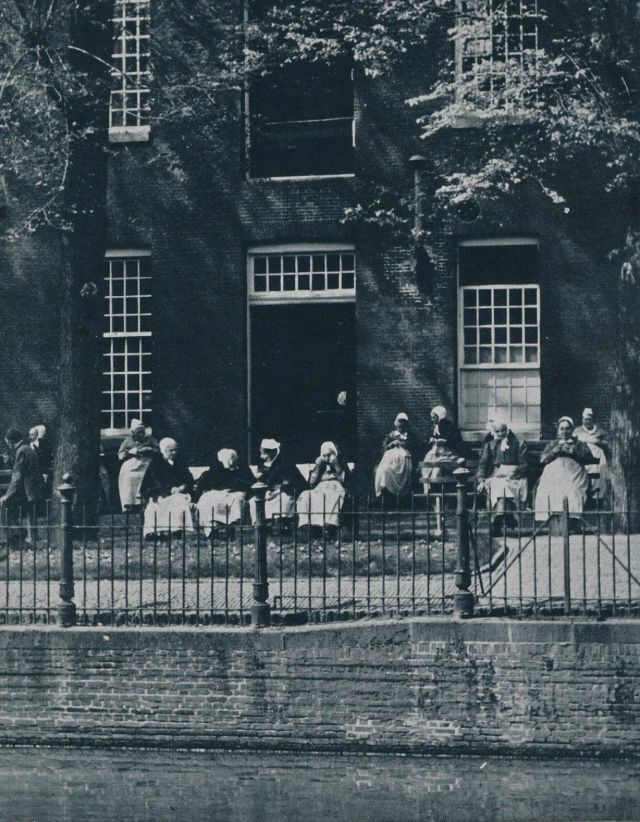
Amsterdam old women’s house, 1940
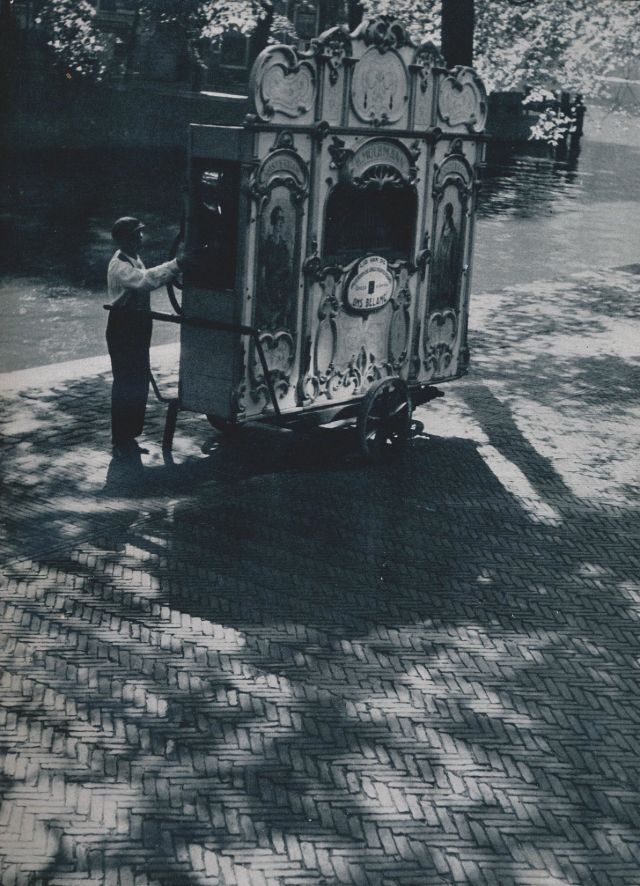
Amsterdam Pierement, 1940
Amsterdam pigeon keeper, 1940
Amsterdam pile driving, 1940
Amsterdam Prinseneiland, 1940
Amsterdam Prinsengracht facades, 1940
Amsterdam Prinsengracht, 1940
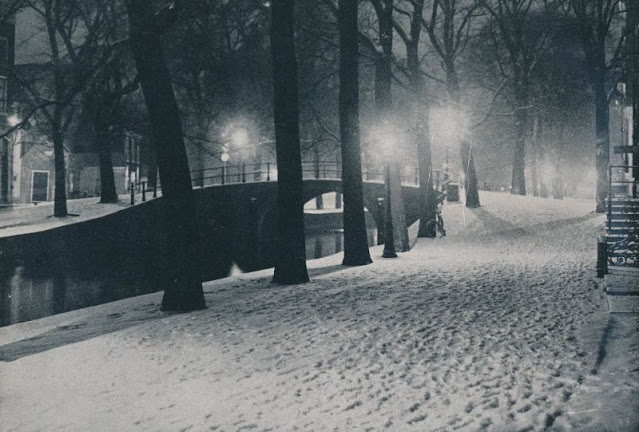
Amsterdam Reguliersgracht at night, 1940
Amsterdam Reguliersgracht during winter, 1940
Amsterdam south skyscraper, 1940
Amsterdam street scenes, 1940
Amsterdam within Amstel, 1940
Amsterdam C&A, 1941
Amsterdam in autumn, 1941
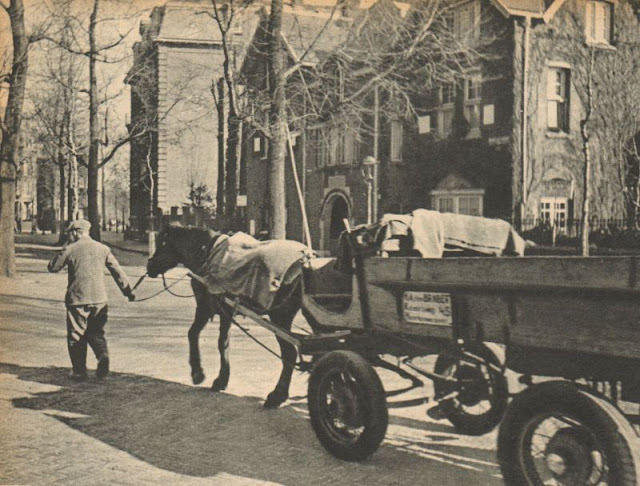
Amsterdam peel cart, 1941
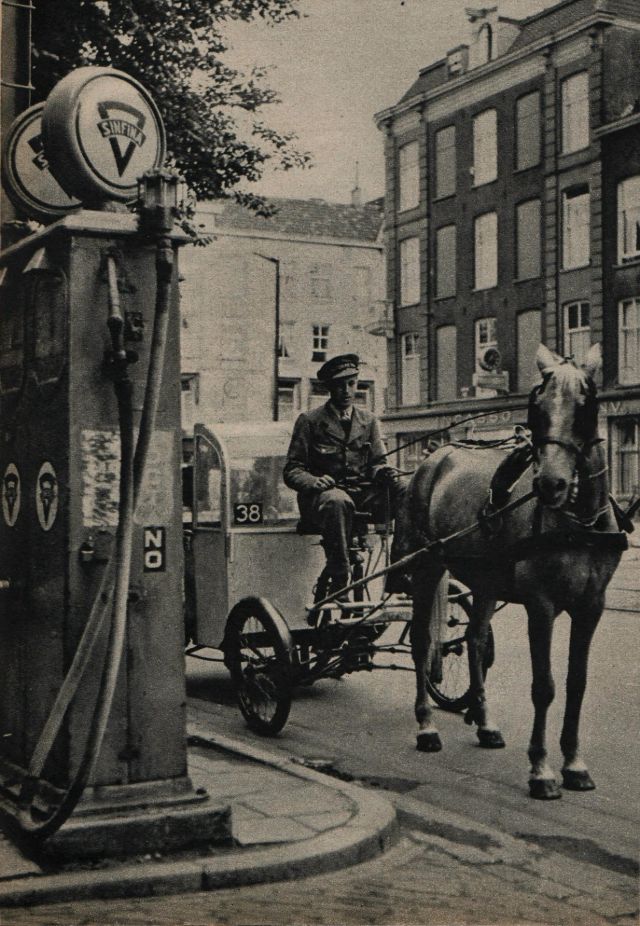
Amsterdam pony taxi, 1941
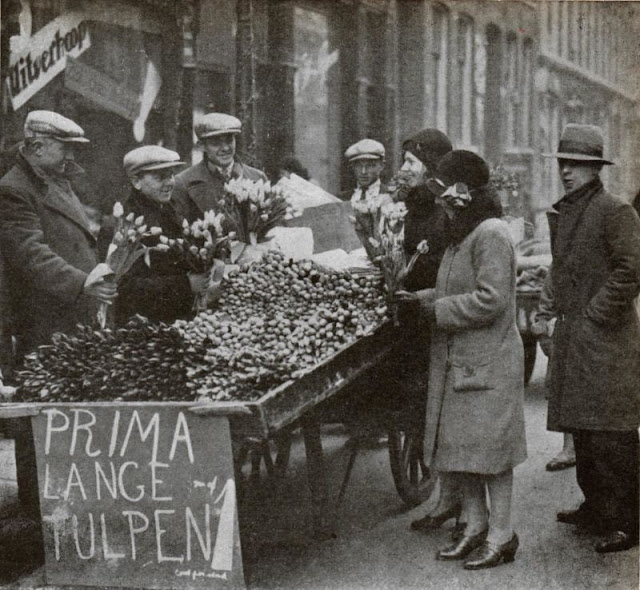
Amsterdam tulip sale, spring 1941

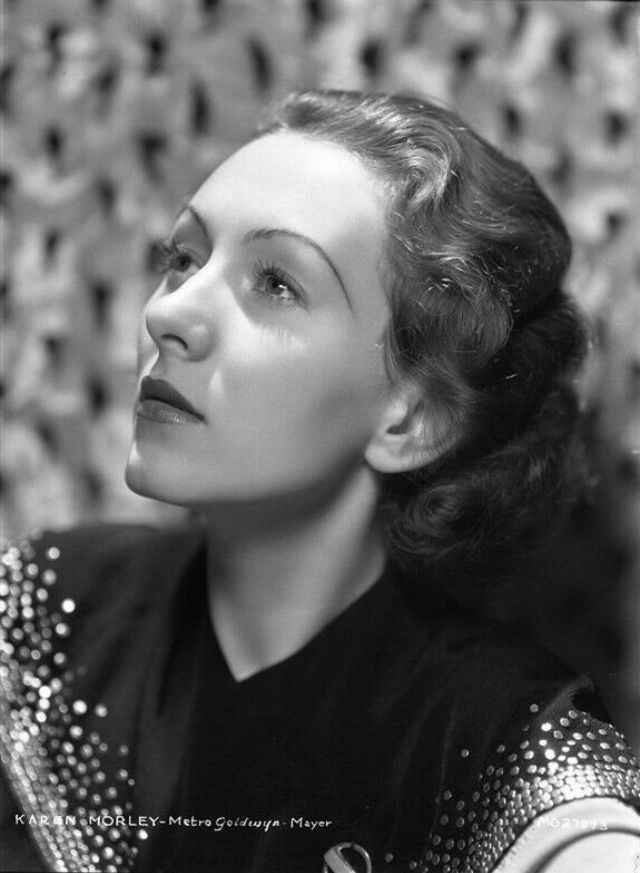
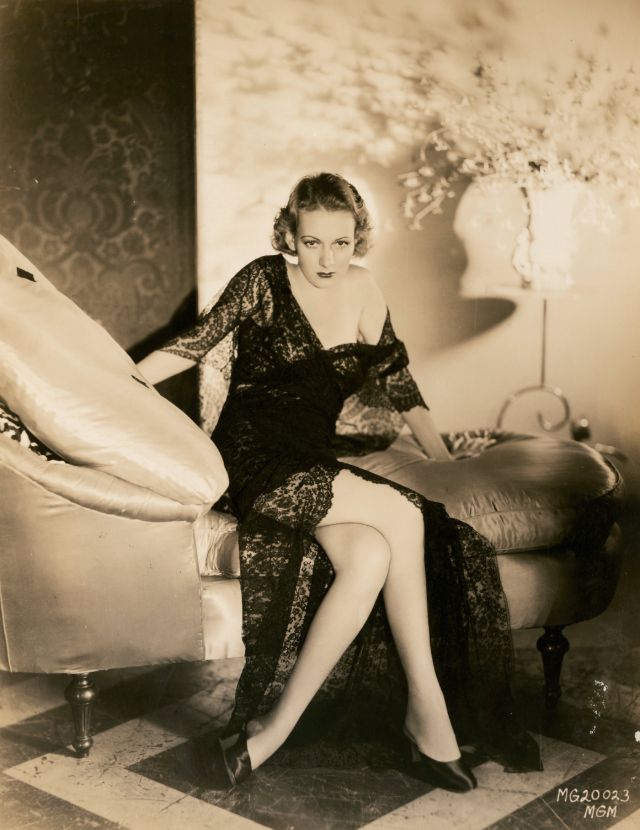
40 Beautiful Photos of American Actress Karen Morley in the 1930s

Born Mildred Linton in Ottumwa, Iowa, Karen Morley lived there until she was 13 years old. When she moved to Hollywood, she attended Hollywood High School. She went on to attend the University of California, but she dropped out to join the Los Angeles Civic Repertory Theatre and the Pasadena Playhouse.

After working at the Pasadena Playhouse, she came to the attention of the director Clarence Brown, at a time when he had been looking for an actress to stand-in for Greta Garbo in screen tests. This led to a contract with Metro-Goldwyn-Mayer and roles in films such as Mata Hari (1931), Scarface (1932), The Phantom of Crestwood (1932), The Mask of Fu Manchu (1932), Arsene Lupin (1933), Gabriel Over the White House (1933), and Dinner at Eight (1933).

In 1934, Morley left MGM. Her first film after leaving the studio was Our Daily Bread (1934), directed by King Vidor. She continued to work as a freelance performer and appeared in Michael Curtiz’s Black Fury, and The Littlest Rebel with Shirley Temple. Without the support of a studio, her roles became less frequent; however, she did play Mr. Collins’ wife Charlotte Lucas in Pride and Prejudice (1940), which was produced by MGM. The film was critically well-received, but it did not advance her career; as a result, Morley turned her attention to stage plays.

In the early 1940s, she appeared in several plays on Broadway, including the role of Gerda in the original production of The Walrus and The Carpenter.

Her career came to an end in 1947 when she testified before the House Un-American Activities Committee and refused to answer questions about her alleged American Communist Party membership. She maintained her political activism for the rest of her life. In 1954, she ran unsuccessfully for lieutenant governor of New York on the American Labor Party ticket.

After being blacklisted in Hollywood by the studio bosses, she never rebuilt her film acting career.

In the early 1970s, Karen Morley briefly resumed her acting career with guest roles in television series such as Kojak, Kung Fu, and Police Woman.

In 1993, she appeared in The Great Depression, a documentary TV series produced by Henry Hampton’s Blackside Productions in association with BBC2 and WGBH. In the series, she talked about how helpless she felt as a privileged Hollywood actress in the face of all the poverty and suffering that surrounded her. She also spoke of her experience making Our Daily Bread and working for King Vidor, whom she described as a conservative who thought that people should willingly help each other without government interference.

In December 1999, at the age of 90, she appeared in Vanity Fair in an article about blacklist survivors, and she was honored at the San Francisco FIlm Festival.

In November 1932, Morley married director Charles Vidor in Santa Ana, California. They were divorced on March 2, 1943. They met on the set of Man About Town, in which Morley played the female lead, and Vidor was co-director. Vidor and Morley had a son, Michael Charles Vidor.

Morley lived in Santa Monica, California during her later years. She died of pneumonia at the age of 93 in Woodland Hills, California. (Wikipedia)

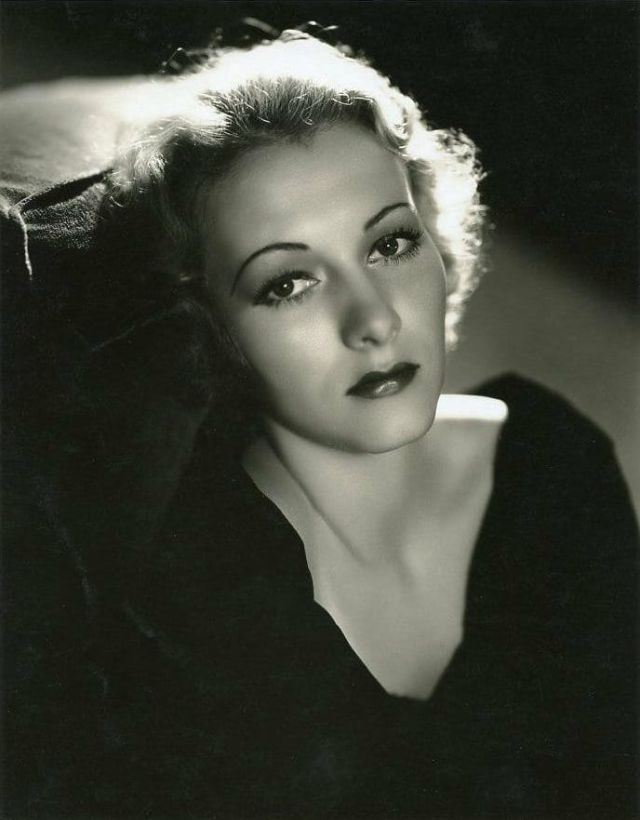
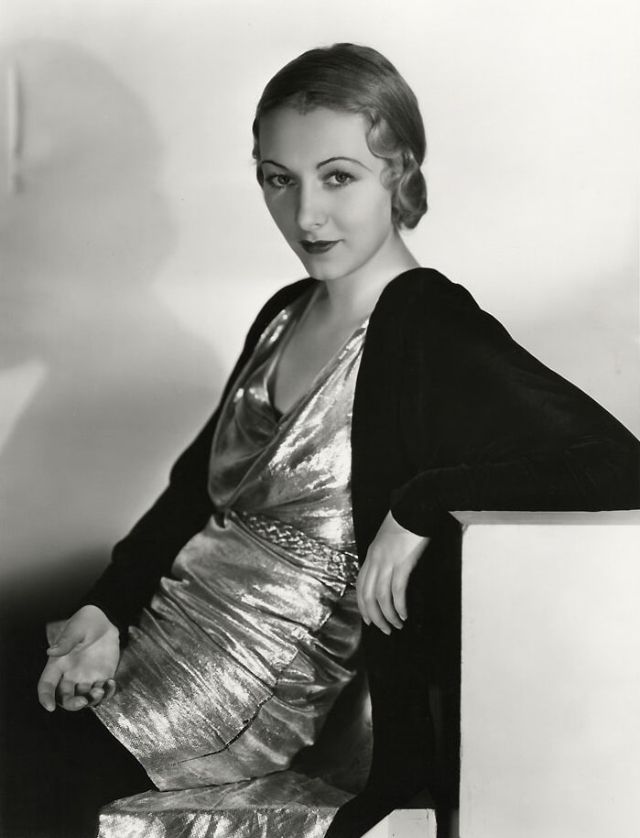
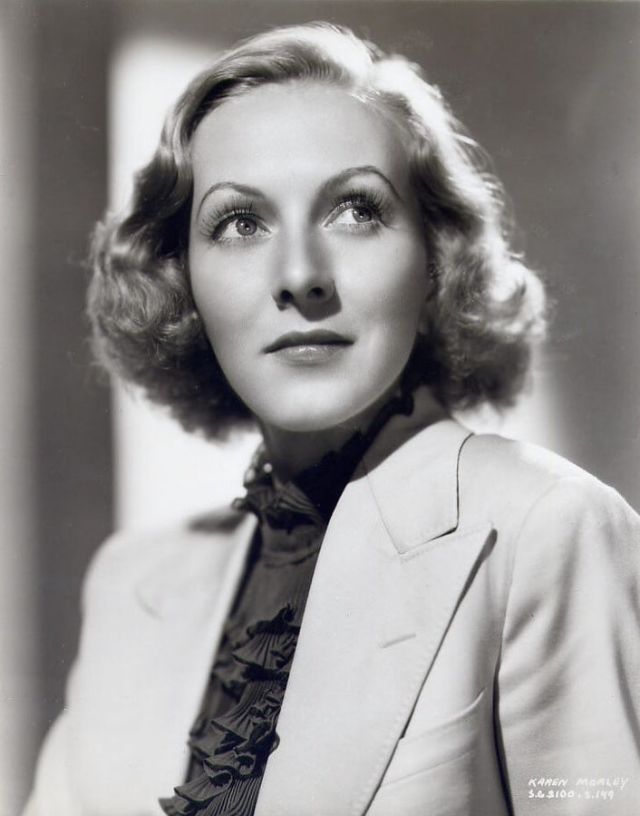
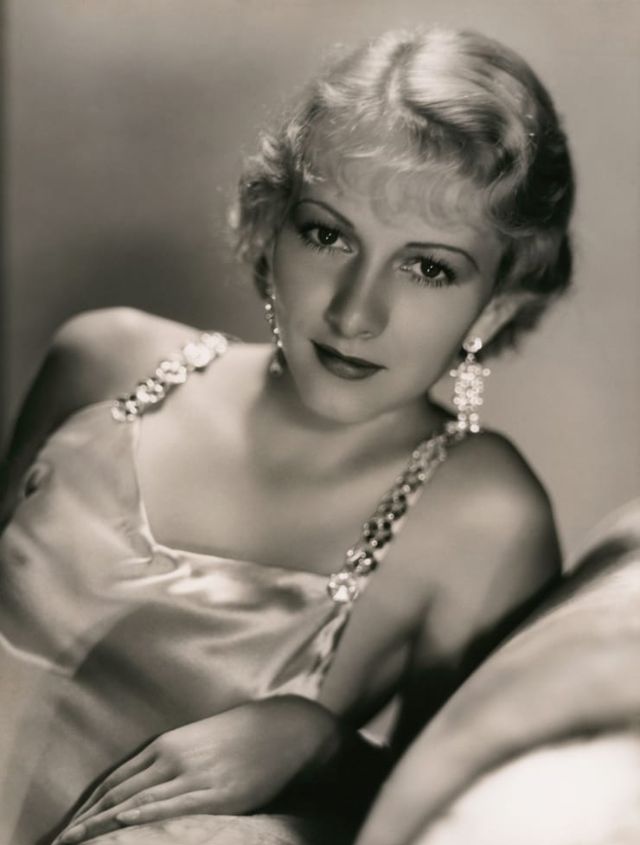
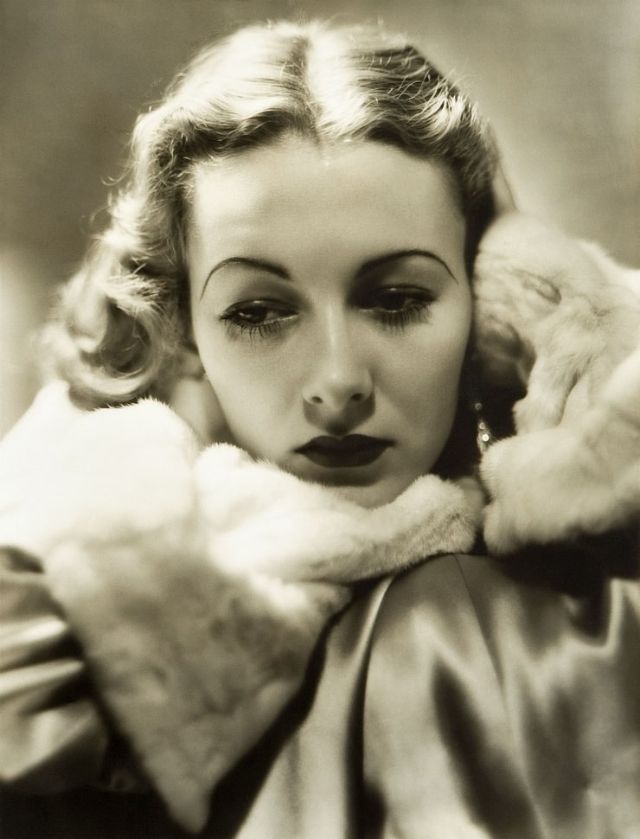
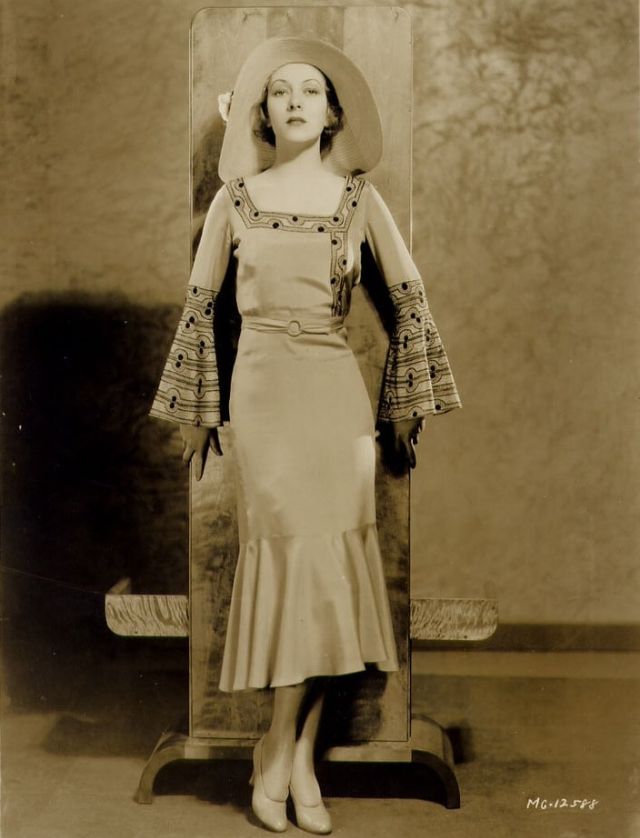
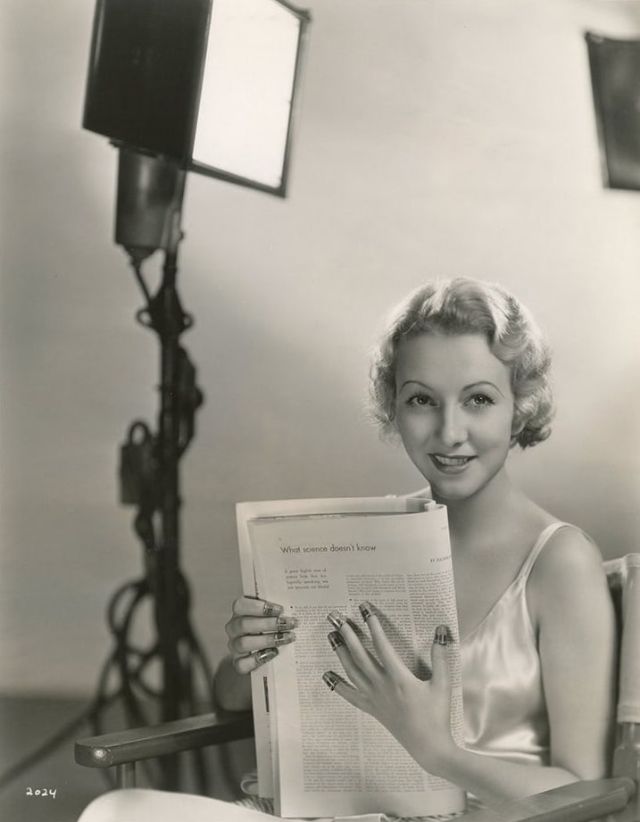
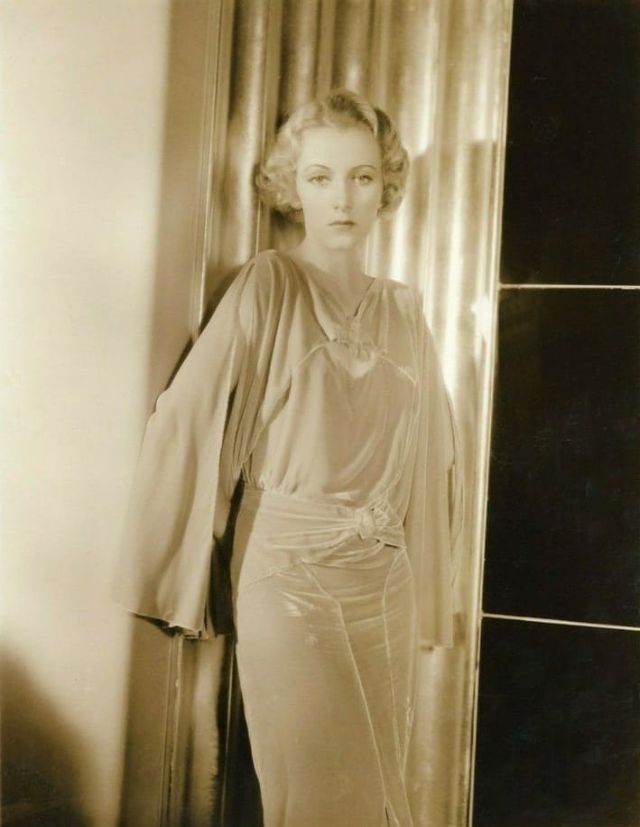
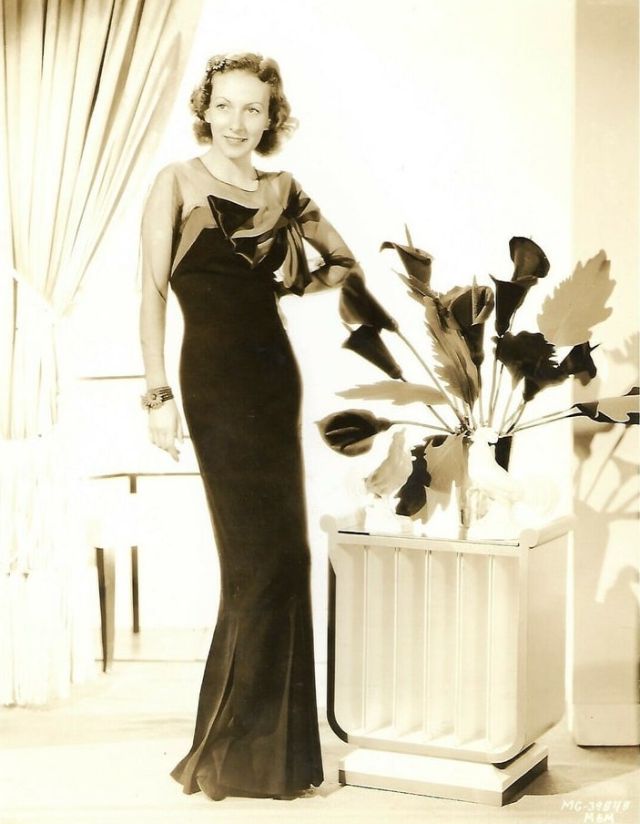
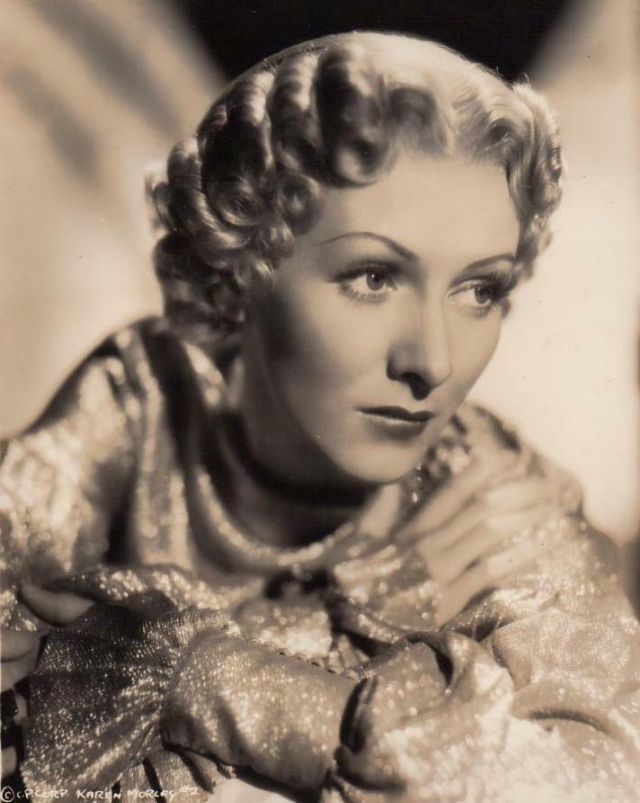
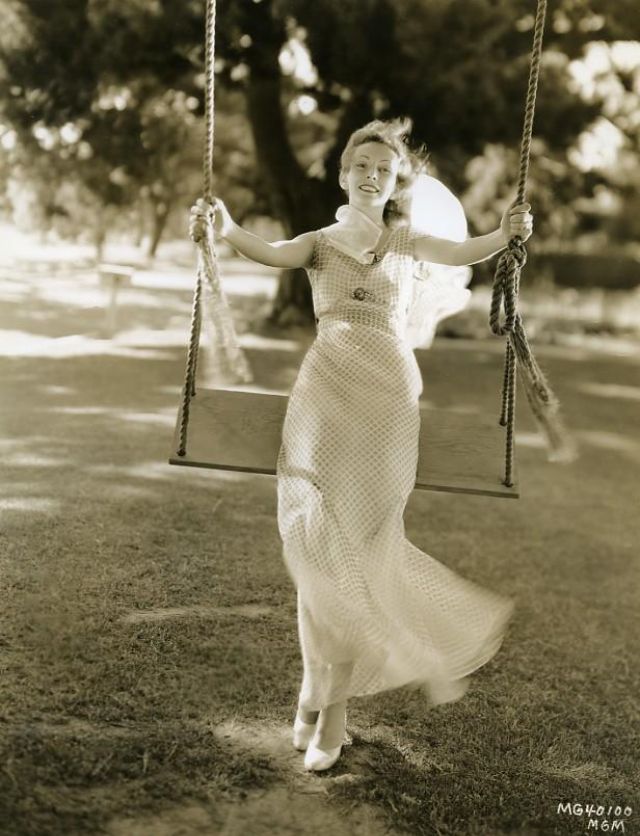
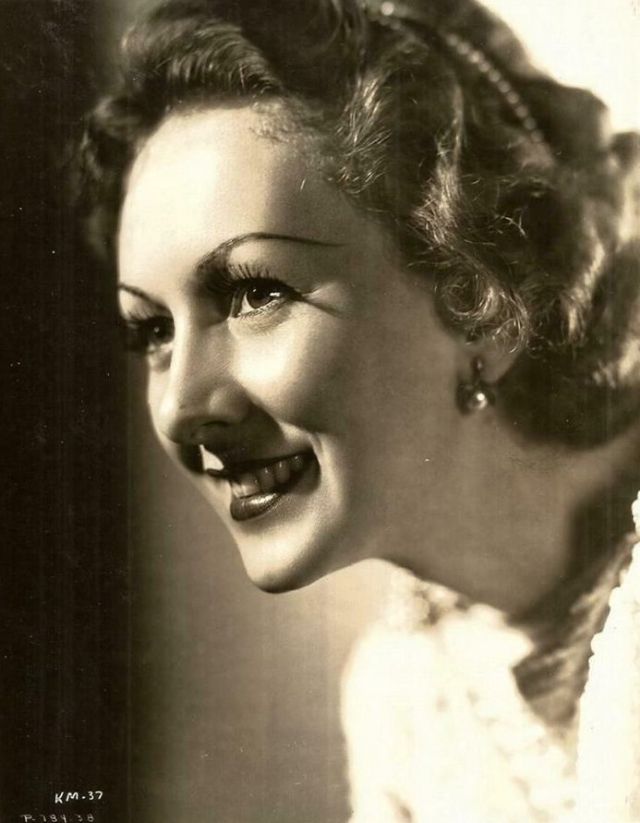
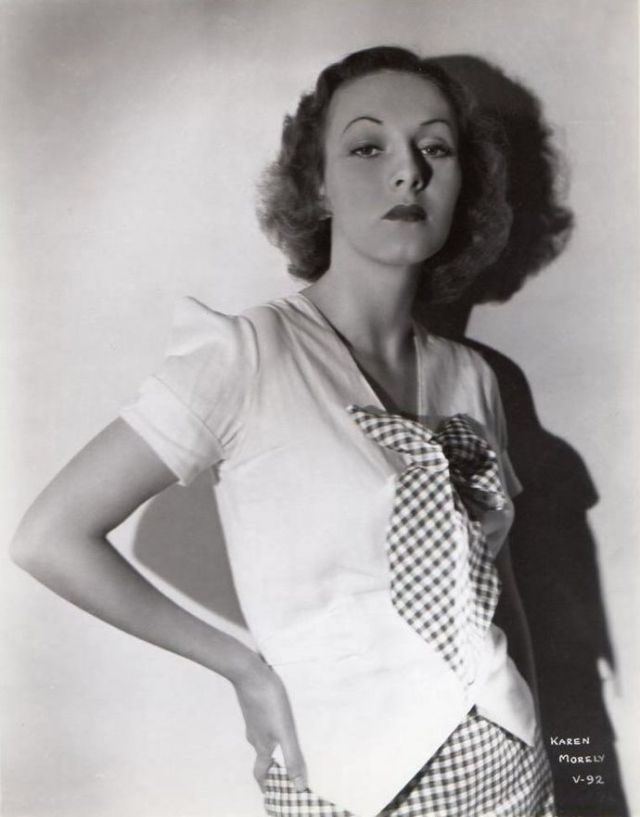
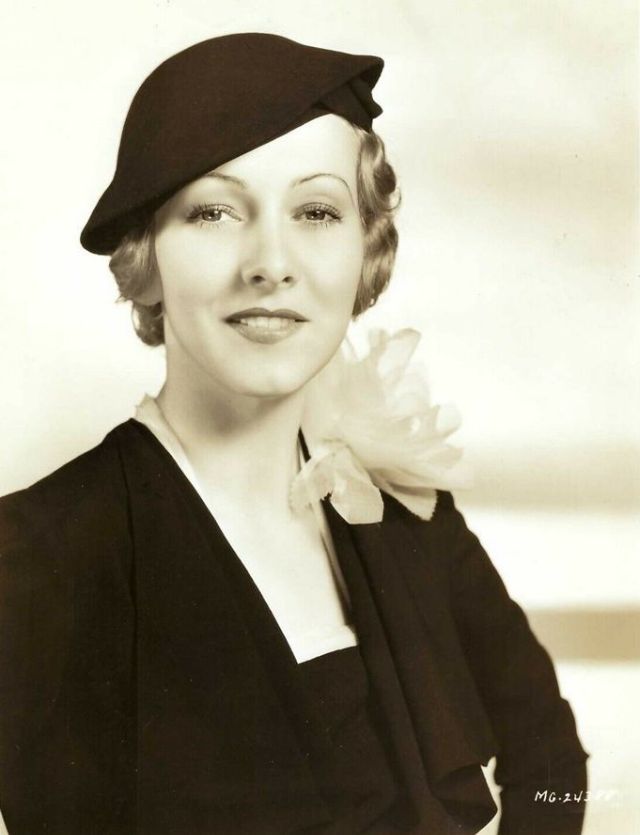
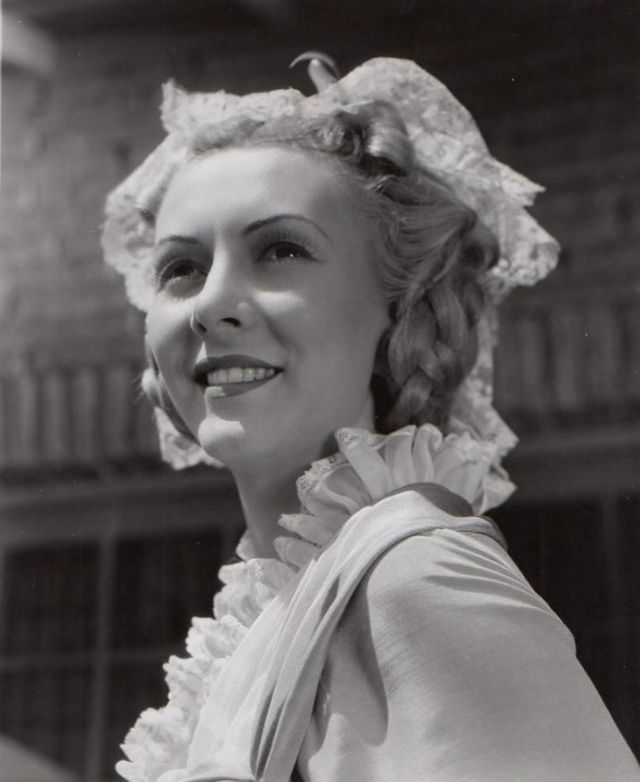
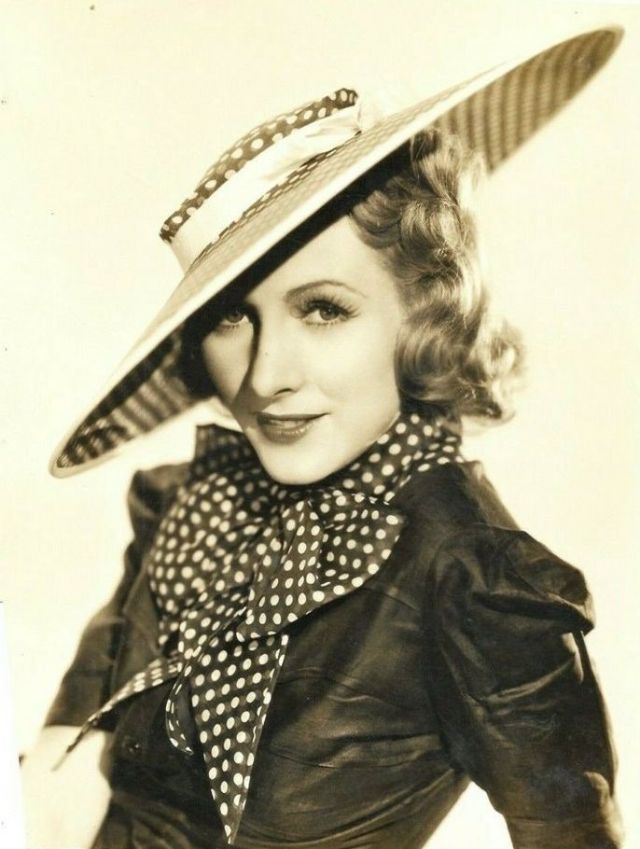
These vintage photos captured portrait of a young and beautiful Karen Morley in the 1930s.

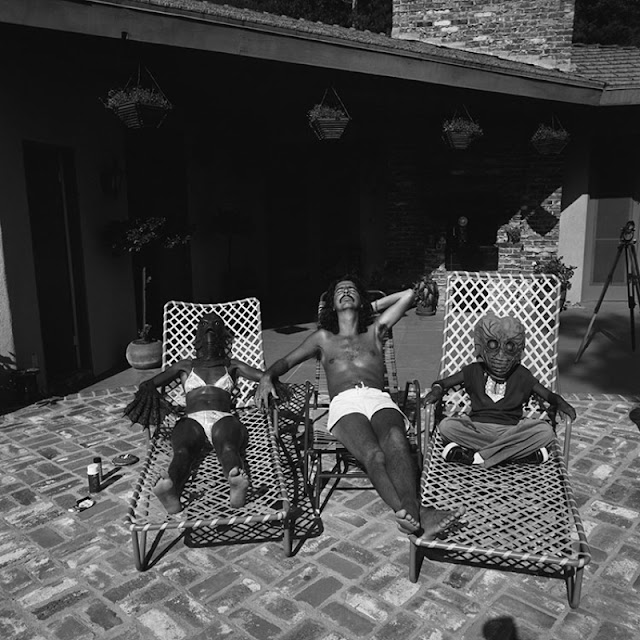
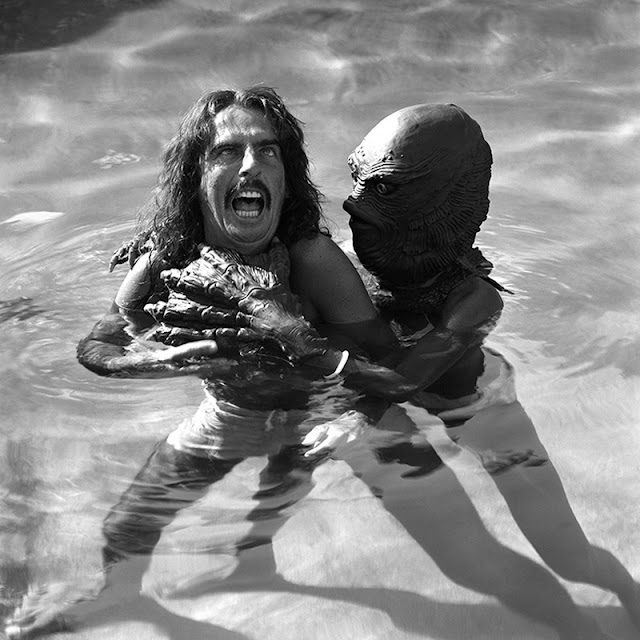
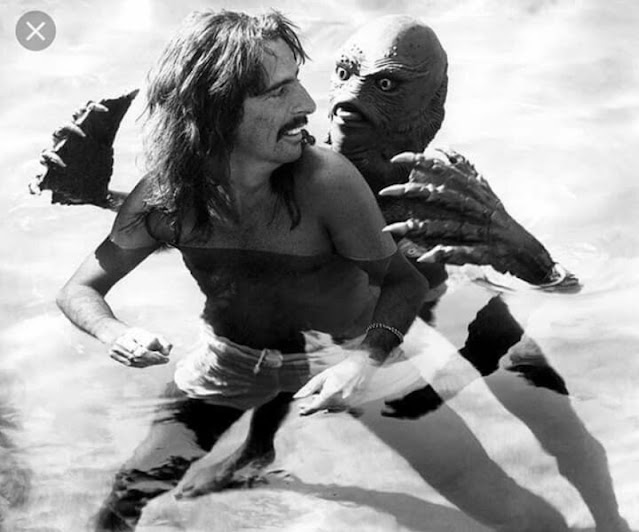
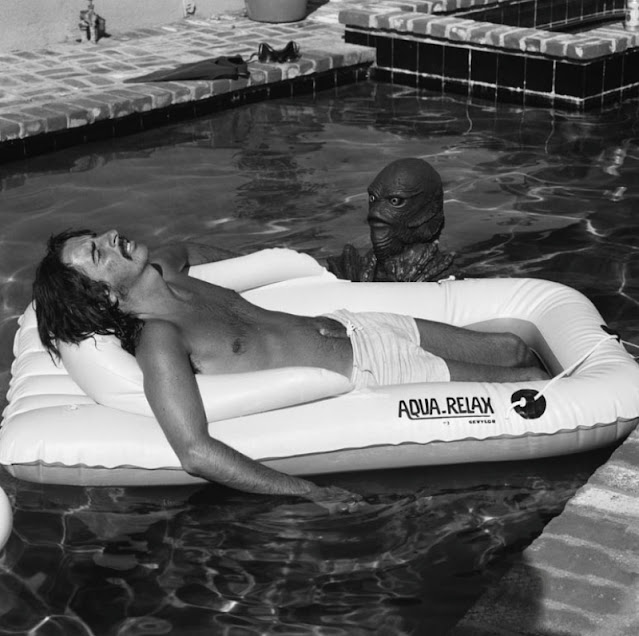
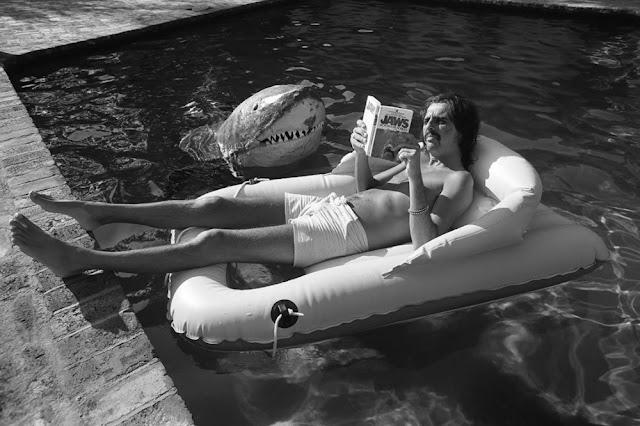
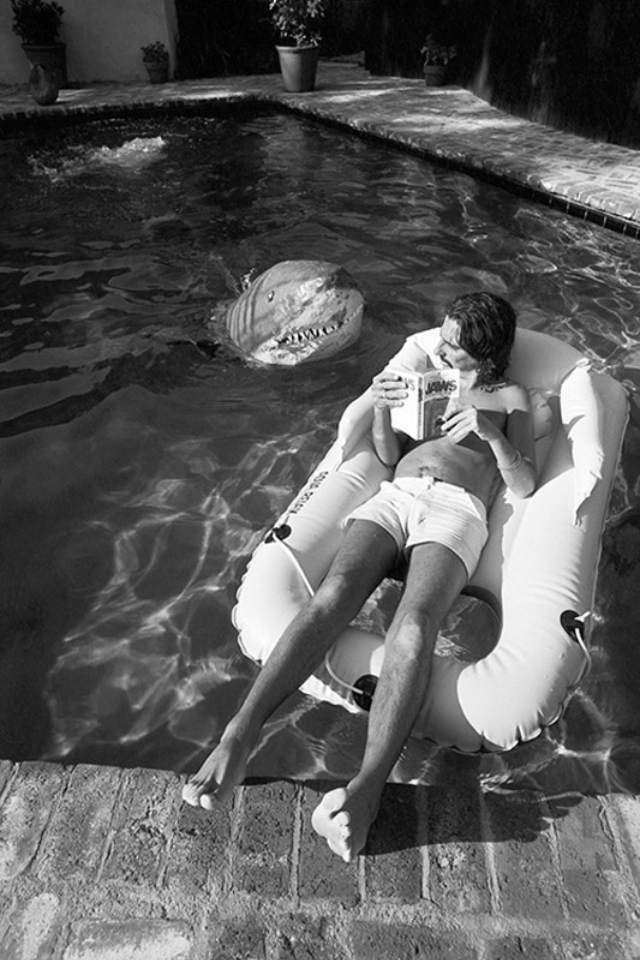
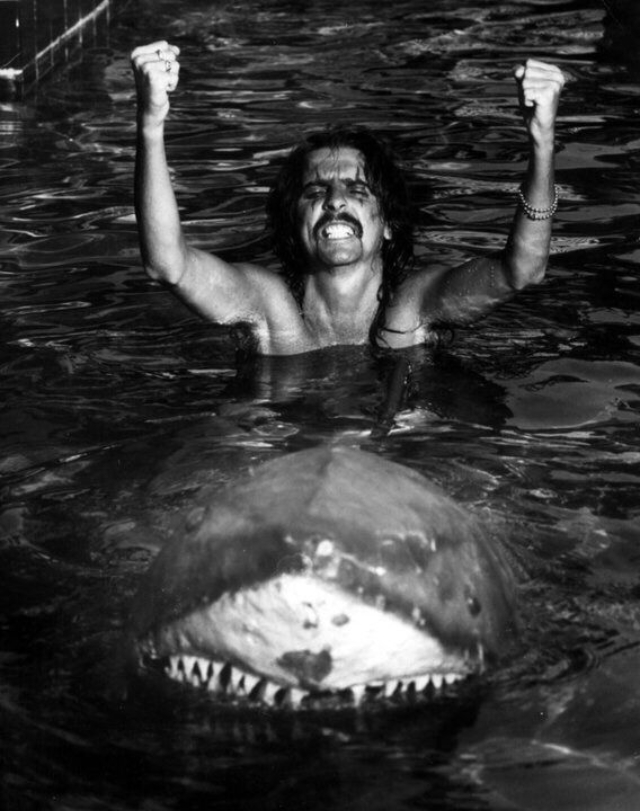
Alice Cooper and His Monster Family Hanging Out by the Pool at His Home in Los Angeles, 1975

American rock star Alice Cooper at his home with his girlfriend wearing a mask imitating The Creature from the Black Lagoon, the low-budget film which was re-released in 1975. The photographs were taken by Terry O’Neill in August 1975. The house burned down later that month, while he was away in New York.

The woman in these images is Cindy Lang. She and Alice separated in 1975 at which time Alice began a relationship with dancer Sheryl Goddard. Cindy never had any children. The kid is Micky Dolenz’s daughter Ami whom Alice used to babysit.

Alice Cooper (born Vincent Damon Furnier, February 4, 1948) is an American rock singer whose career spans over 54 years. With a raspy voice and a stage show that features numerous props and stage illusions, including pyrotechnics, guillotines, electric chairs, fake blood, reptiles, baby dolls, and dueling swords, Cooper is considered by music journalists and peers to be “The Godfather of Shock Rock”. He has drawn equally from horror films, vaudeville, and garage rock to pioneer a macabre and theatrical brand of rock designed to shock audiences.

Originating in Phoenix, Arizona, in 1964, “Alice Cooper” was originally a band with roots extending back to a band called The Earwigs, consisting of Furnier on vocals and harmonica, Glen Buxton on lead guitar, and Dennis Dunaway on bass guitar and background vocals. By 1966, Michael Bruce on rhythm guitar joined the three and Neal Smith was added on drums in 1967. The five named the band “Alice Cooper”, with Furnier eventually adopting the latter as his stage pseudonym. They released their 1969 debut album with limited chart success. Breaking out with the 1970 single “I’m Eighteen” and the third album Love It to Death,[citation needed] the band reached their commercial peak in 1973 with their sixth studio album, Billion Dollar Babies. After[citation needed] the band broke up, Furnier legally changed his name to Alice Cooper and began a solo career with the 1975 concept album Welcome to My Nightmare. Over his career, Cooper has sold well over 50 million records.

Cooper has experimented with a number of musical styles, including art rock, hard rock, heavy metal, new wave, glam metal, and industrial rock. He helped to shape the sound and look of heavy metal, and has been described as the artist who “first introduced horror imagery to rock and roll, and whose stagecraft and showmanship have permanently transformed the genre”. He is also known for his wit offstage, with The Rolling Stone Album Guide calling him the world’s most “beloved heavy metal entertainer”. Away from music, Cooper is a film actor, a golfing celebrity, a restaurateur, and, since 2004, a radio DJ with his classic rock show Nights with Alice Cooper. (Wikipedia)

50 Amazing Vintage Photos From the 1940s Volume 12

The 1940s (pronounced “nineteen-forties” and commonly abbreviated as “the 40s”) was a decade that began on January 1, 1940, and ended on December 31, 1949.

Most of World War II took place in the first half of the decade, which had a profound effect on most countries and people in Europe, Asia, and elsewhere. The consequences of the war lingered well into the second half of the decade, with a war-weary Europe divided between the jostling spheres of influence of the Western world and the Soviet Union, leading to the beginning of the Cold War. To some degree internal and external tensions in the post-war era were managed by new institutions, including the United Nations, the welfare state, and the Bretton Woods system, facilitating the post–World War II economic expansion, which lasted well into the 1970s. The conditions of the post-war world encouraged decolonization and the emergence of new states and governments, with India, Pakistan, Israel, Vietnam, and others declaring independence, although rarely without bloodshed. The decade also witnessed the early beginnings of new technologies (such as computers, nuclear power, and jet propulsion), often first developed in tandem with the war effort, and later adapted and improved upon in the post-war era. (Wikipedia)

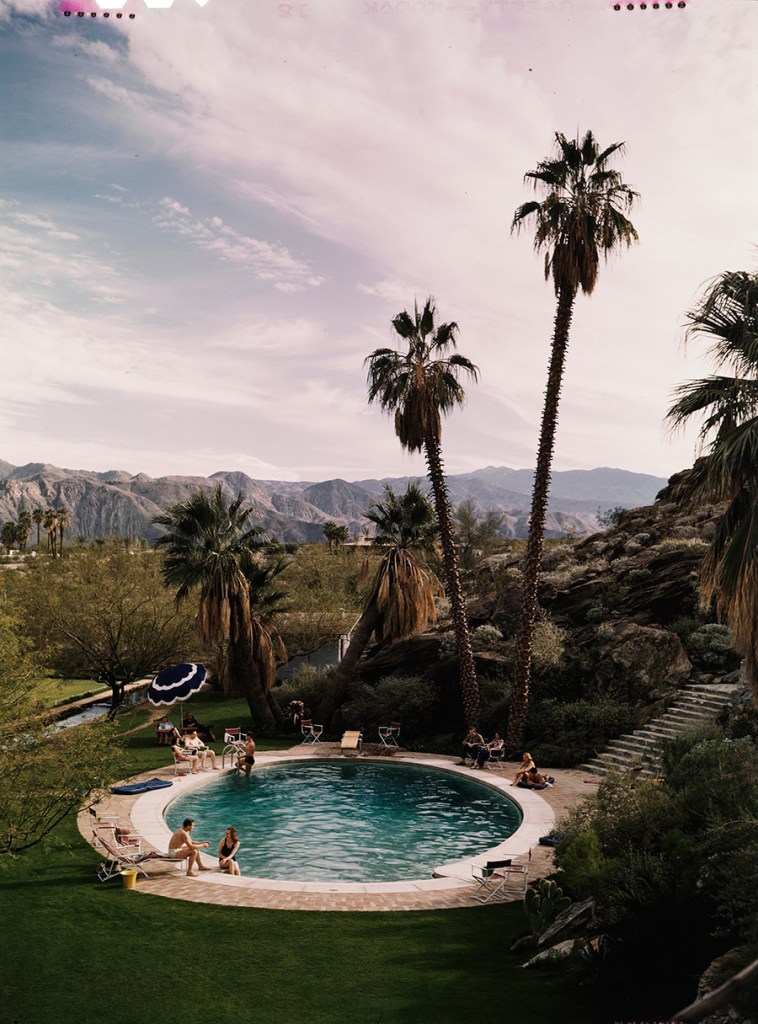
A wealthy group of young people relax by a pool in California, 1940.
Traffic lights are made in Shreveport, Louisiana, and sent around the U.S. and abroad, December 1947.
Londoners seek shelter during WWII in the Aldwych tube station, April 1941.
Westinghouse demonstrates an electric razor using x-ray technology, May 1941.
Bolivian women check out the latest merchandise at a department store, August 1943.
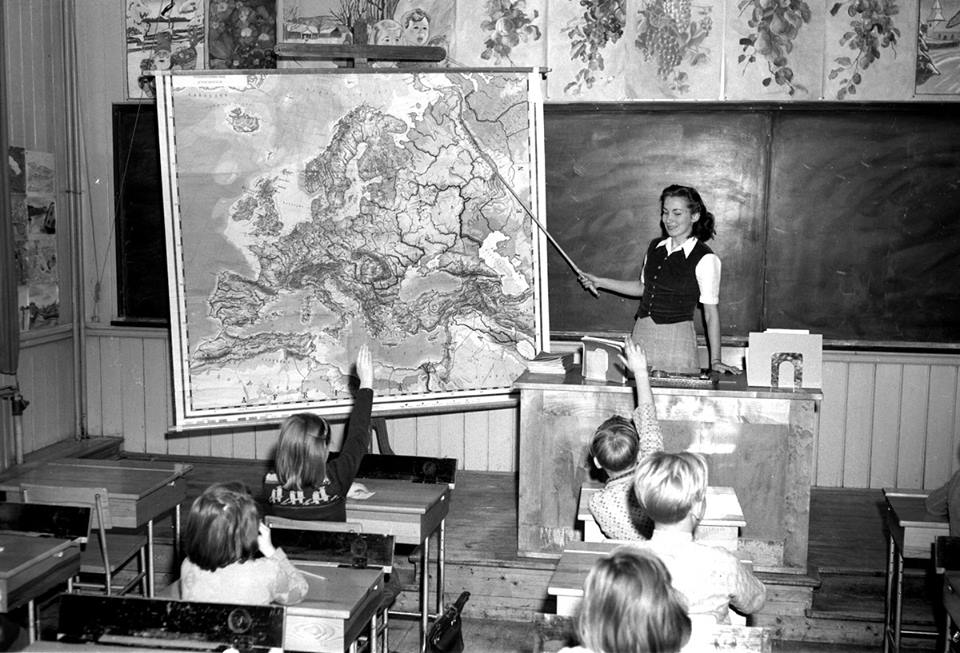
Geography lesson, Sweden, 1948.
A Marine reading his mail in a foxhole on Iwo Jima, March 1945.
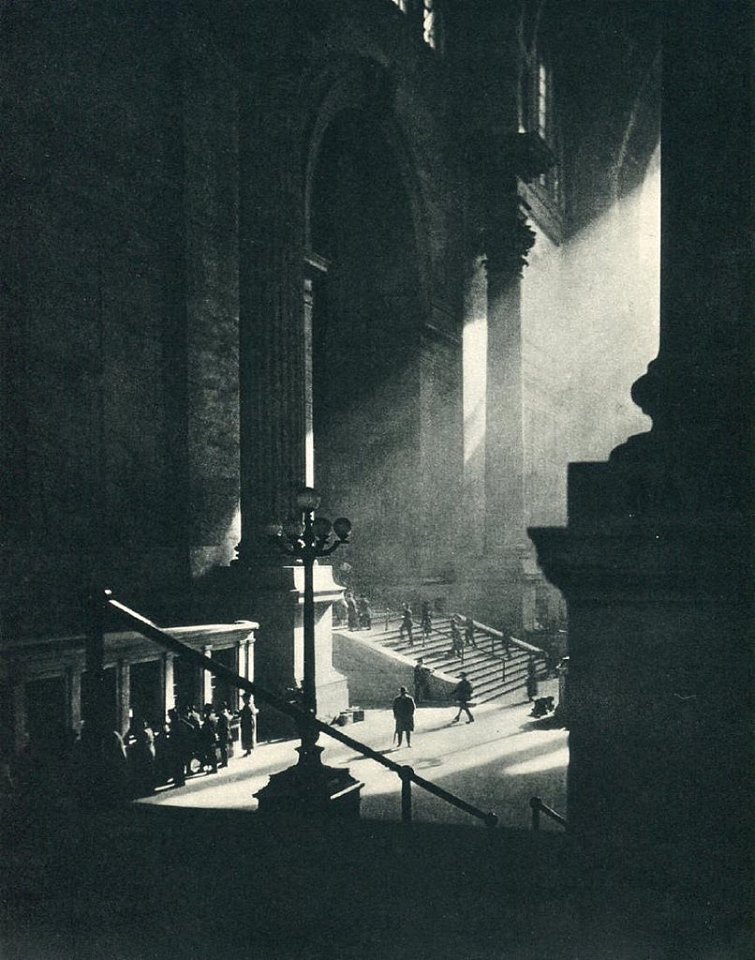
Penn Station, New York, 1941.
Two young women on the way to the theater, New York City, 1946.
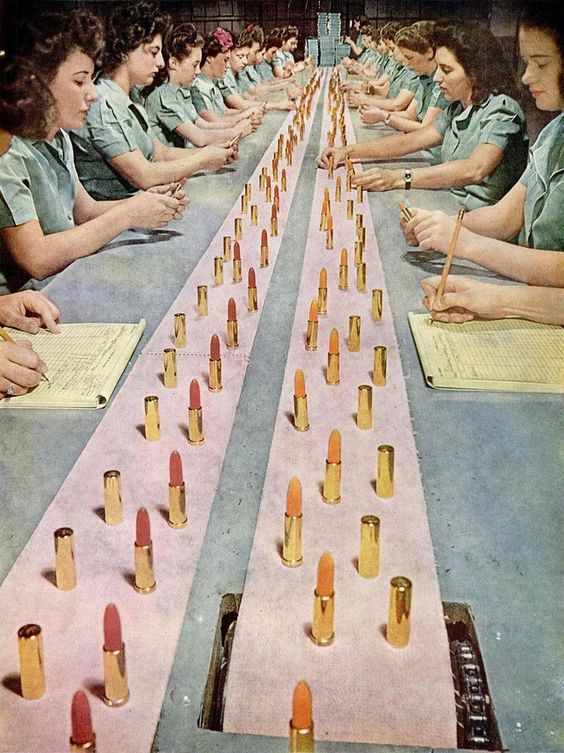
Lipstick inspectors at work in the 1940s.
Sponge diver John M. Gonatos puts on his diving suit in Tarpon Springs, Florida in the 1940s.
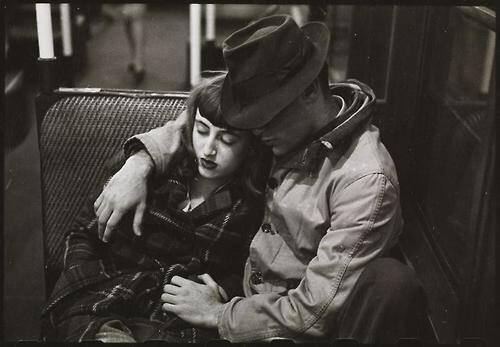
Couple napping on a subway train in New York City, 1946.
British sappers (also called pioneers or combat engineers) training to defuse landmines in 1943.
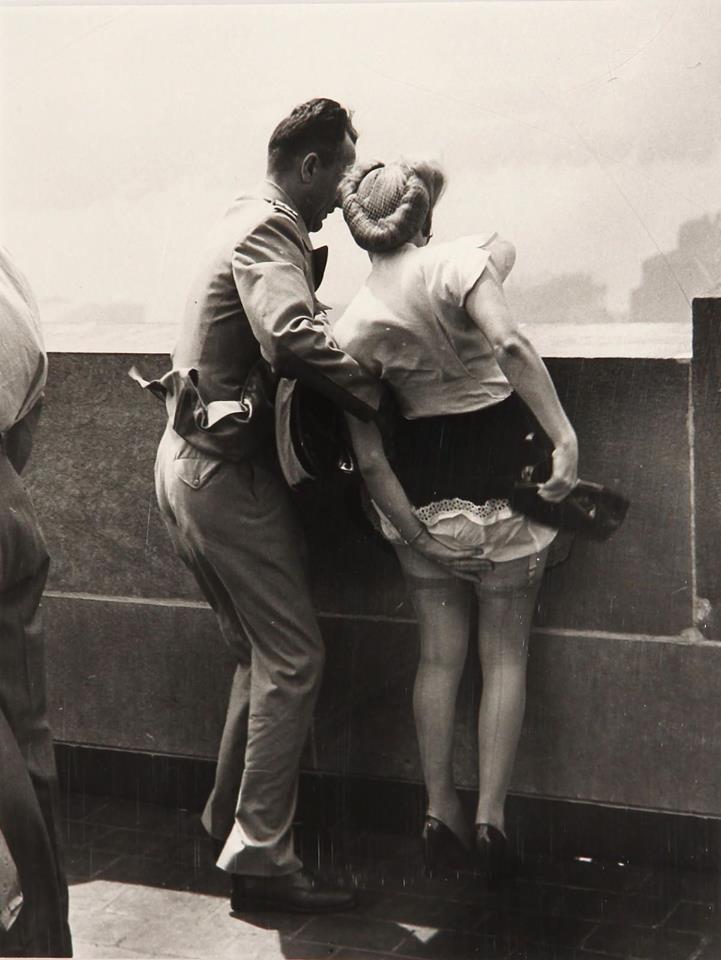
On top of the Empire State Building, New York, circa 1942.
American troops on their way back to New York harbor after V-Day, 1945.
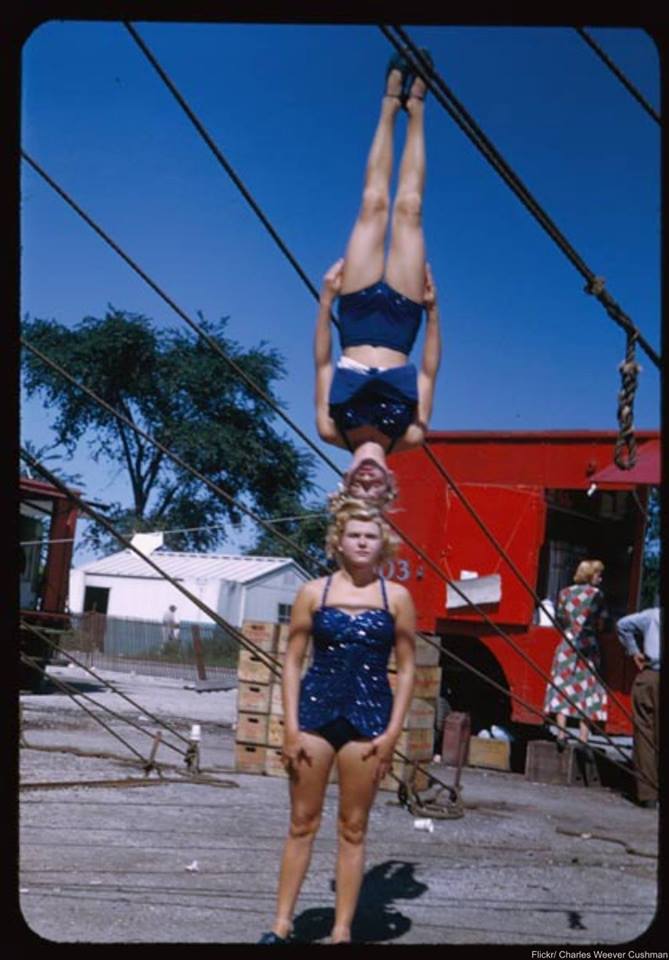
Behind-the-scenes photo from a 1946 Ringling Brothers Circus
Macy’s department store detectives pose for photo with their backs turned to protect their identity. (1948)
Street at night during a fog, New Bedford, Massachusetts, January 1941.
Finnish soldier with his reindeer near the tiny village of Nautsi, Northern Lapland in Finland (1941)
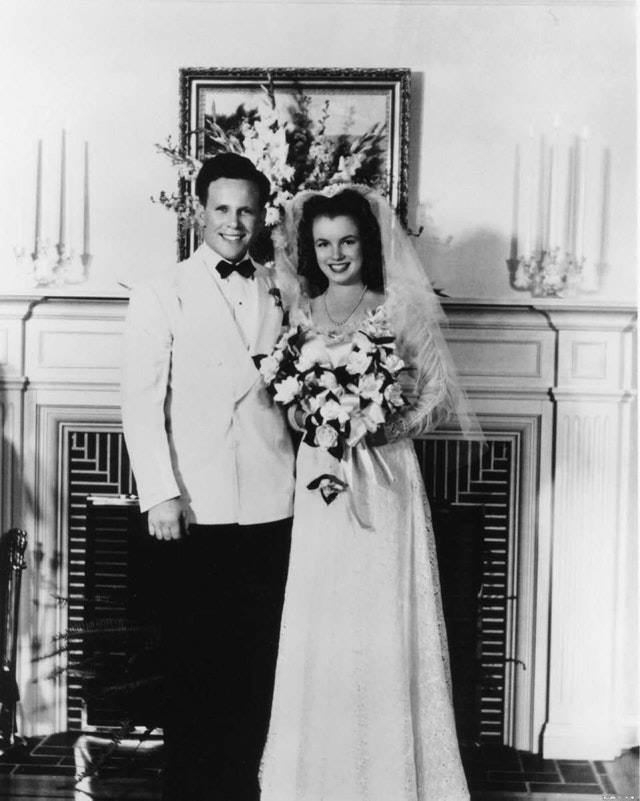
High school sweethearts James Dougherty and Norma Jean Baker were married when she was 16 in 1942. They divorced in 1946 and she went on to become one of the most popular sex symbols of the 1950s
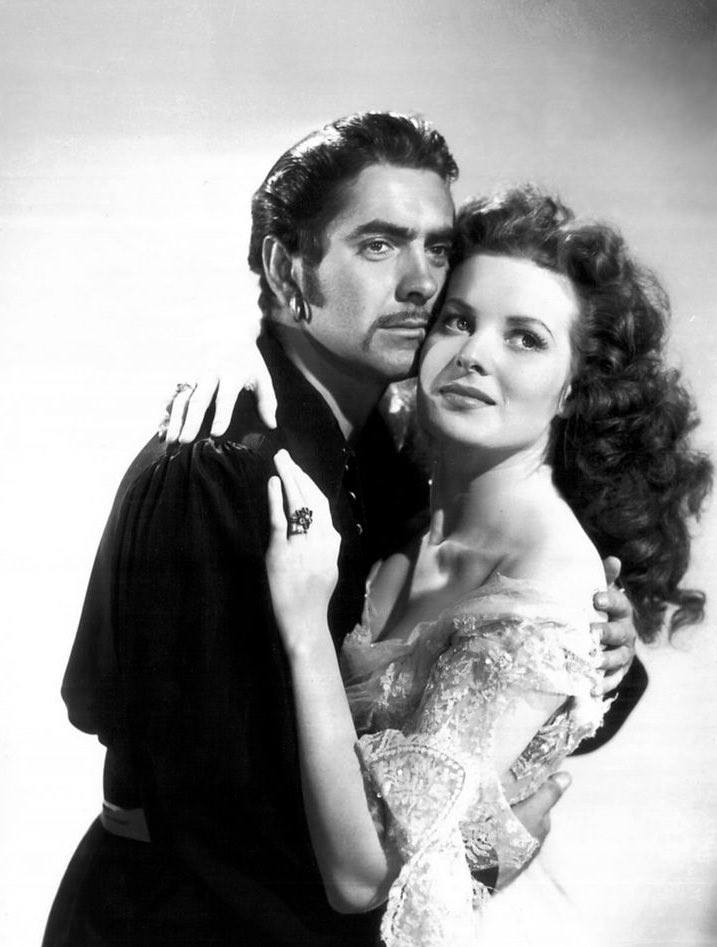
Tyrone Power and Maureen O’Hara in a publicity photo for the swashbuckling film, “The Black Swan”, 1942
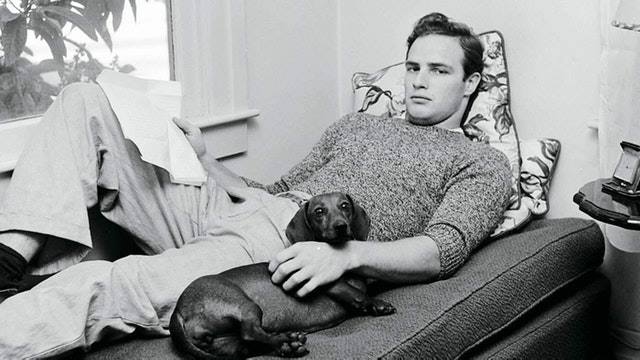
Marlon Brando reads a script at his grandmother’s house in California, 1949.
Comedian Rodney Dangerfield, 1940s
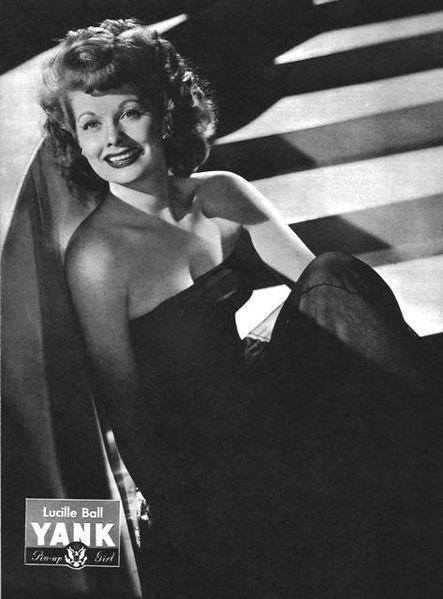
Lucille Ball was a pin-up girl in Yank Magazine for the troops of WWII, 1945.
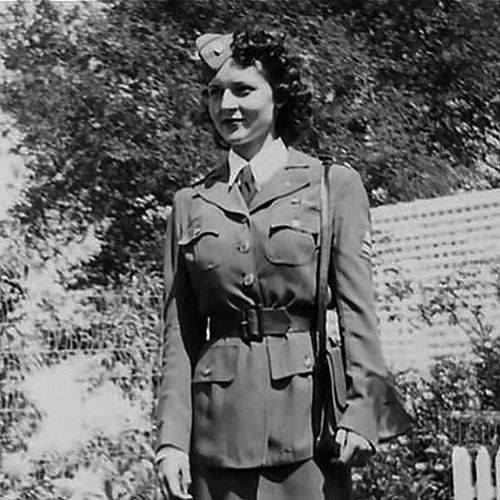
‘Golden Girl’ Betty White was a member of the American Women’s Voluntary Services during WWII. 1941
Dot Robinson and her daughter Betty pose with their Harleys in 1947. Dot was the first president of the Motor Maids and held this position for 25 years.
Members of the Maori Battalion who had fought in Greece, perform a haka for the King of Greece at Helwan, Egypt. 1941
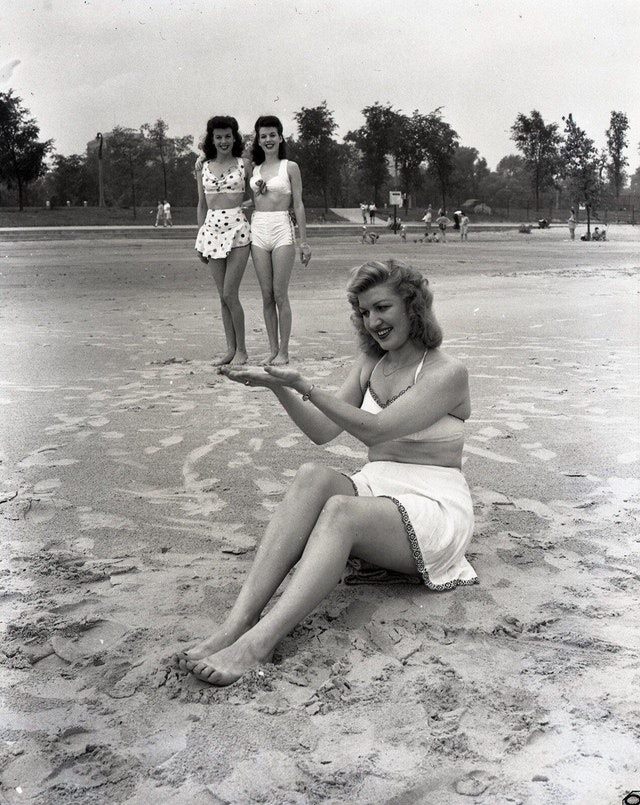
These bathing beauties make an optical illusion at the beach in the 1940s.
Queen Elizabeth served in the Women’s Auxiliary Territorial Service during World War II
Morning shave with an axe, 1940s
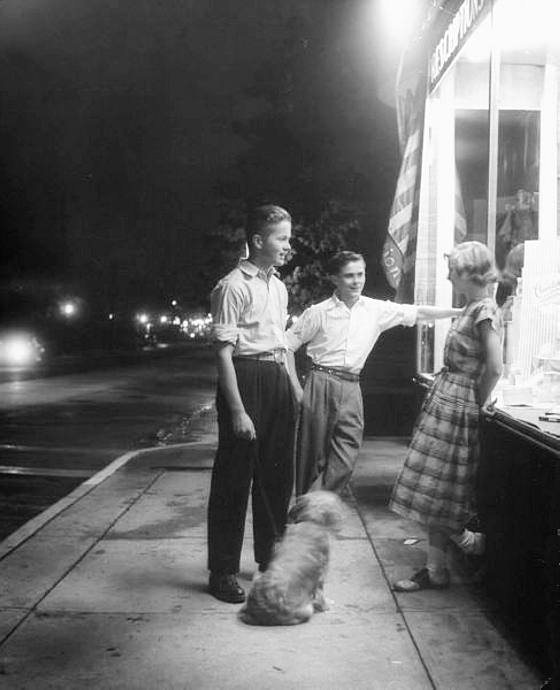
Teens talking on the corner in NYC, 1948.
Ben Bowden shows off his prototype bicycle called the ‘Bowden Spacelander’ in 1946.
The famous photo by Nathaniel Fein, “The Babe Bows Out” (1948) won Fein the Pulitzer Prize for Photography.
A very young Robert De Niro Jr. with his dad Robert De Niro Sr., 1946
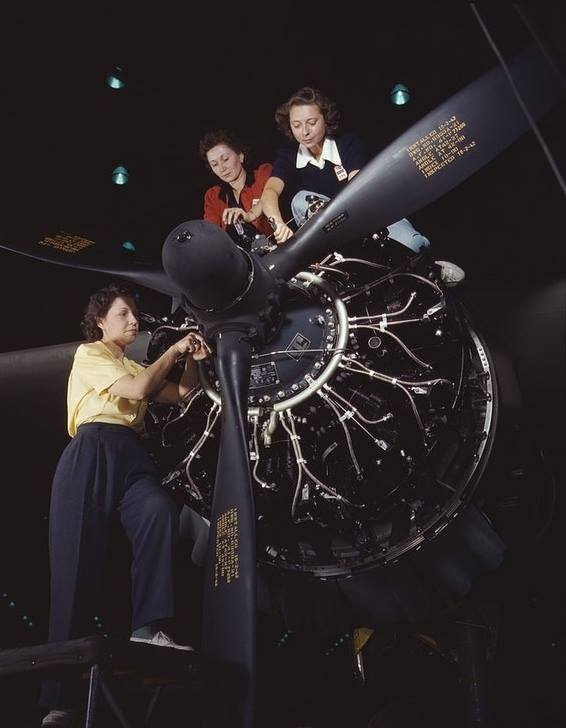
Women working on a Douglas C-47 cargo transport in Long Beach, 1942.
A couple stands by their futuristic Wonder Bolt car in 1947.
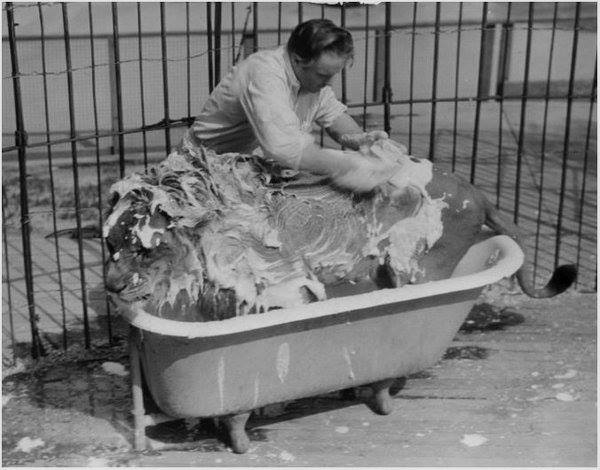
Bathing an African lion at the Los Angeles Zoo in 1940.
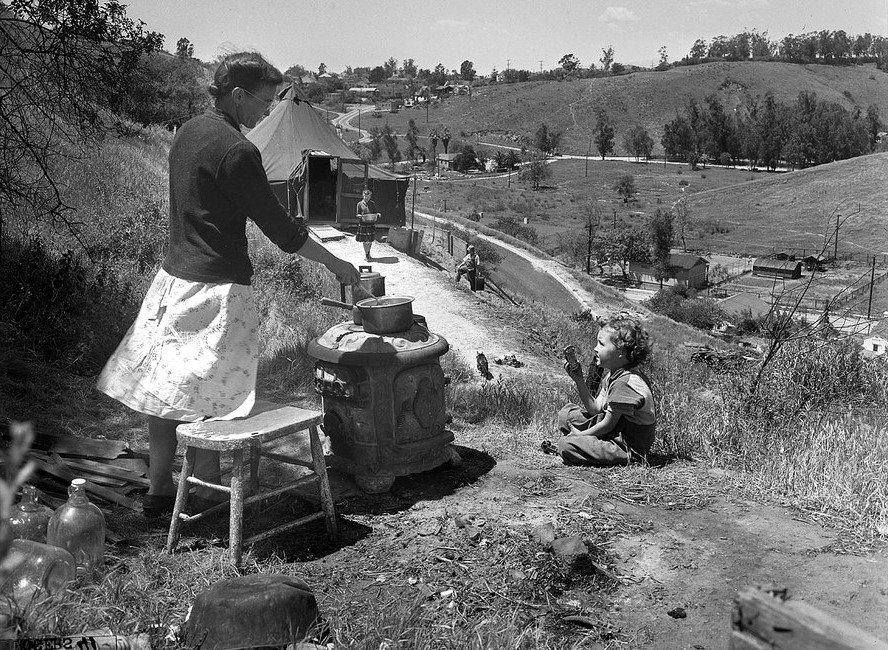
Noon meal, Chavez Ravine, Los Angeles, 1948.
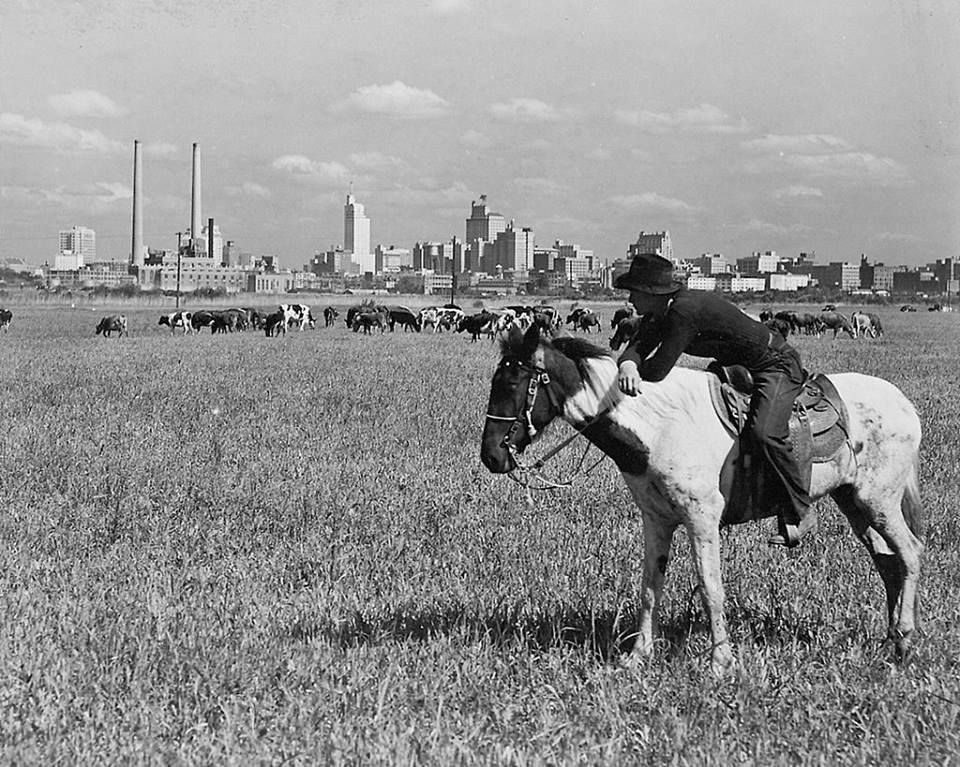
Dallas, 1945.
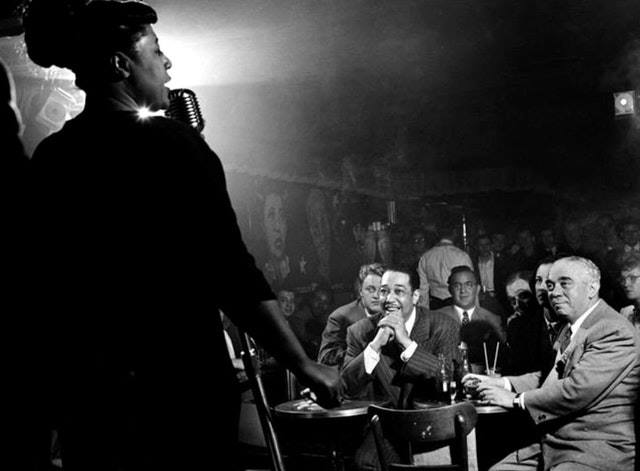
Ella Fitzgerald performing at the Downbeat Club in NYC, with Duke Ellington and Benny Goodman in the audience back in 1948.
Stockholm, Sweden – Miss Sweden knocks out Miss Italy during an international women’s boxing match in 1949
At 19-years-old, Roza Shanina, a Soviet sniper, killed 54 men during WWII
A possum behind the camera in Australia, 1943.
Playing a game of pool at the general store in Franklin, Georgia. (1941)
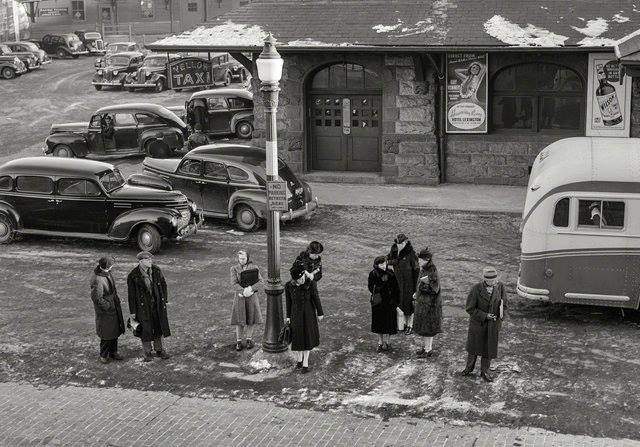
Waiting at the bus stop in Lowell, Massachusetts. (1941)
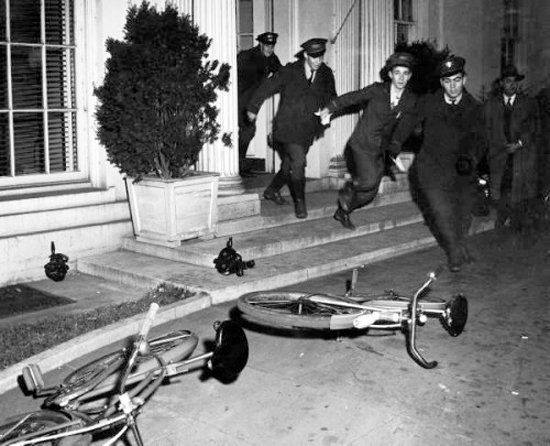
Bike messengers leaving the White House on Dec. 7, 1941, day of the Pearl Harbor attack.
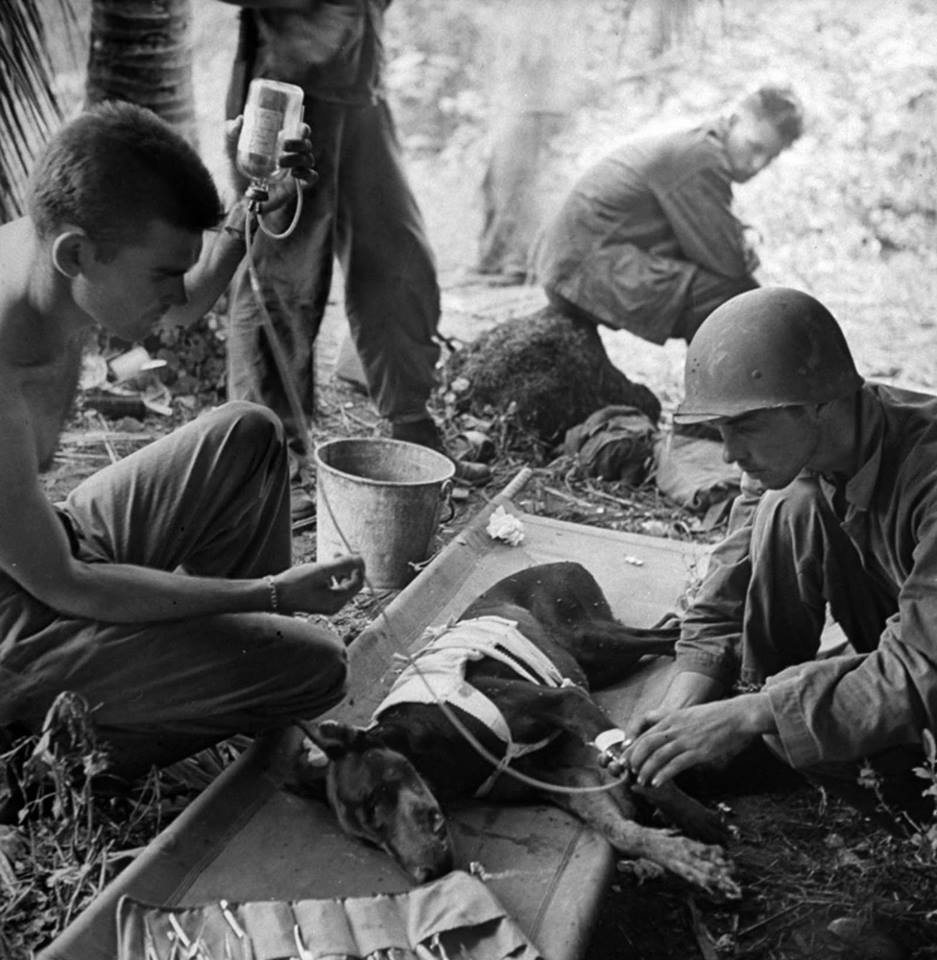
American troops treat a wounded dog on Orote Pennisula, Guam. (1944)
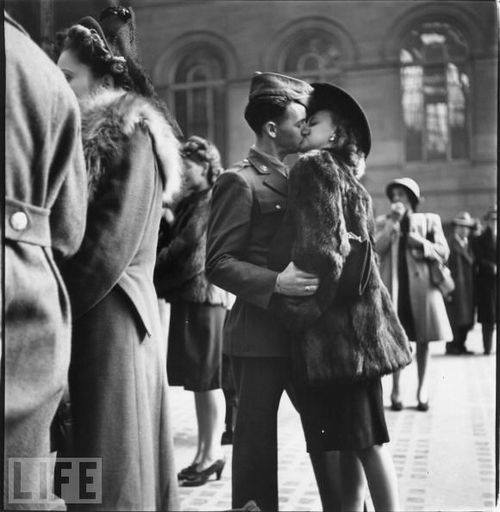
A goodbye kiss at Penn Station, NY, before shipping off to war (1942)
A British soldier reads a sign erected by British forces at the entrance of Bergen-Belsen concentration camp, Germany. (1945)
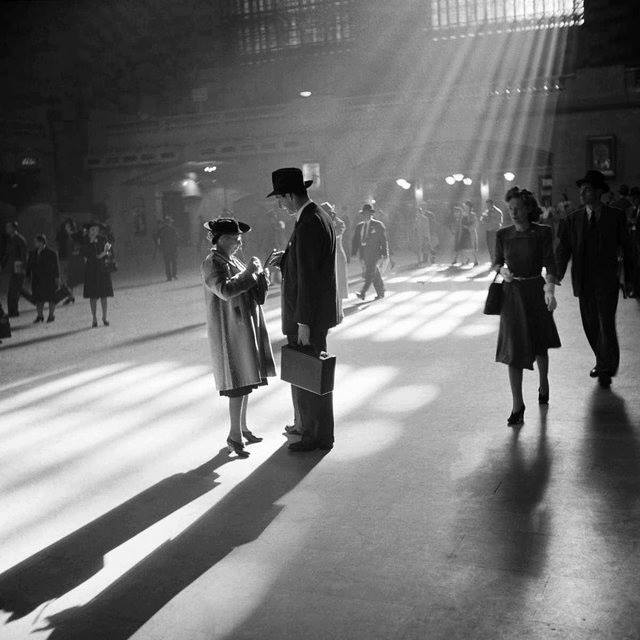
Grand Central Terminal in New York City, 1941.

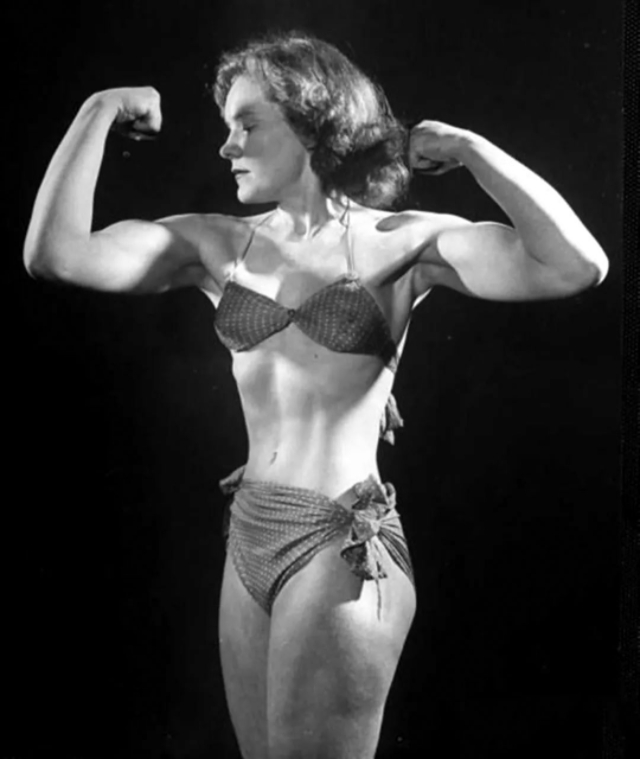
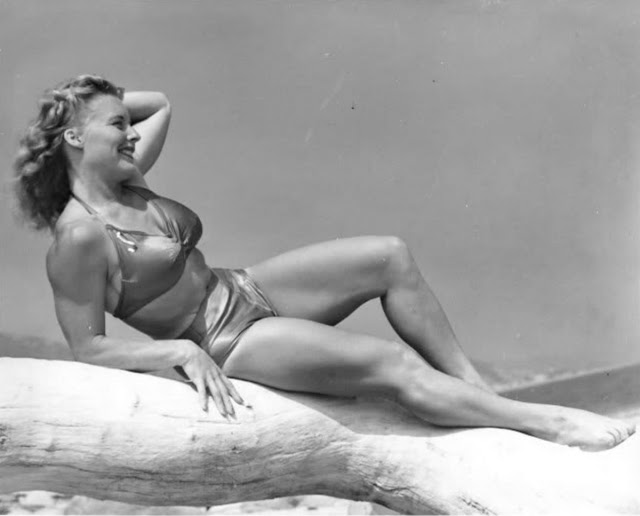
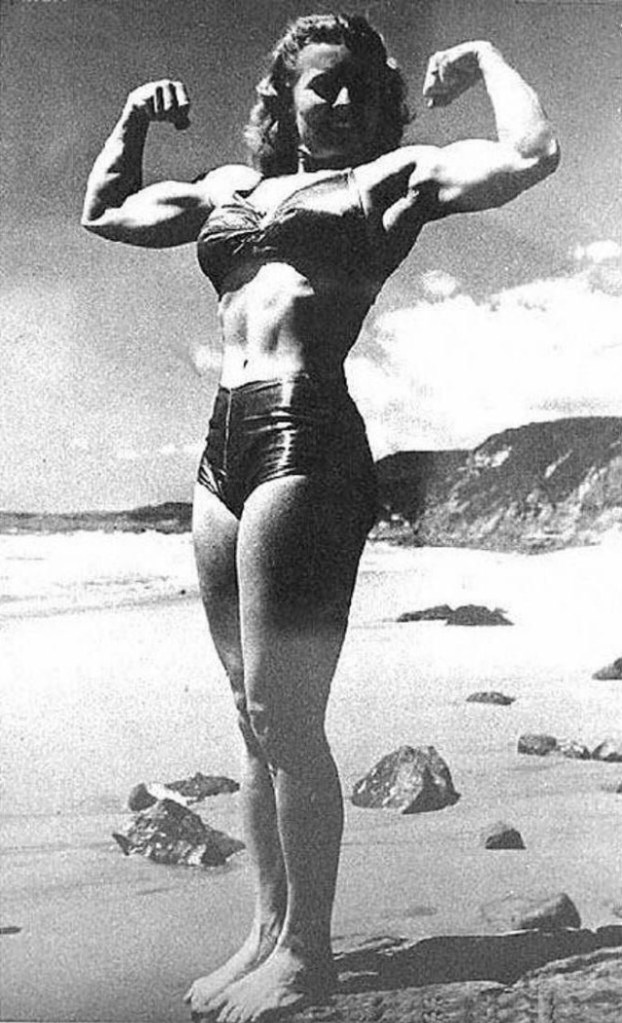
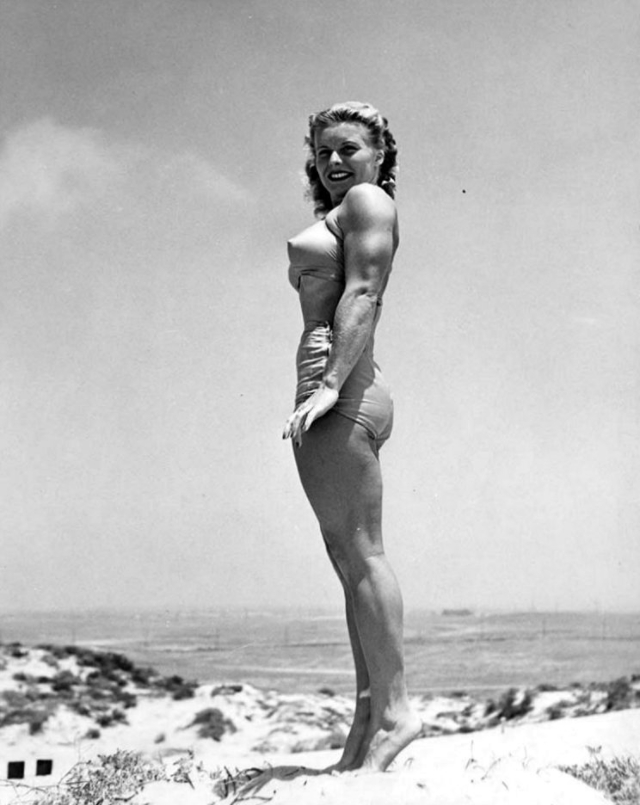
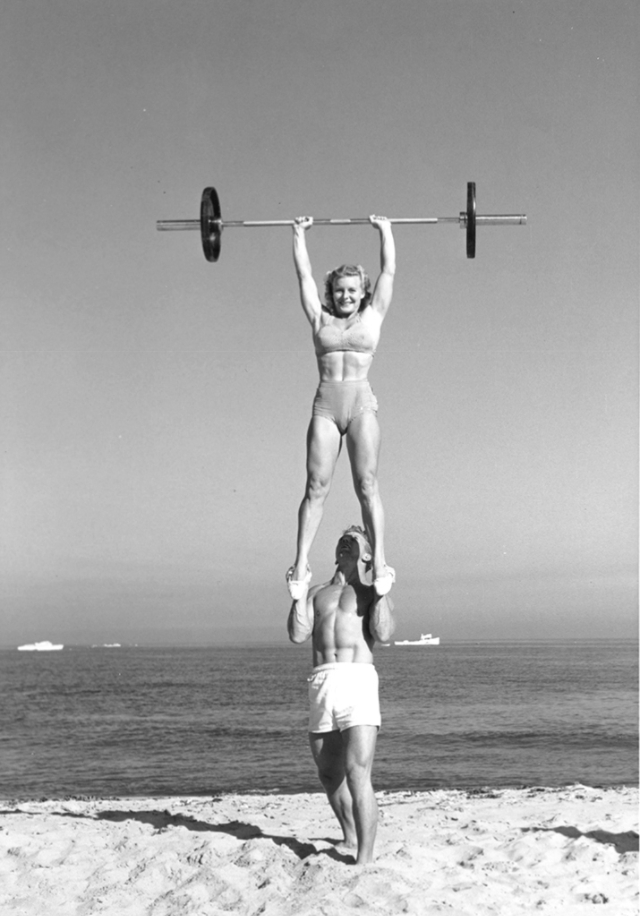
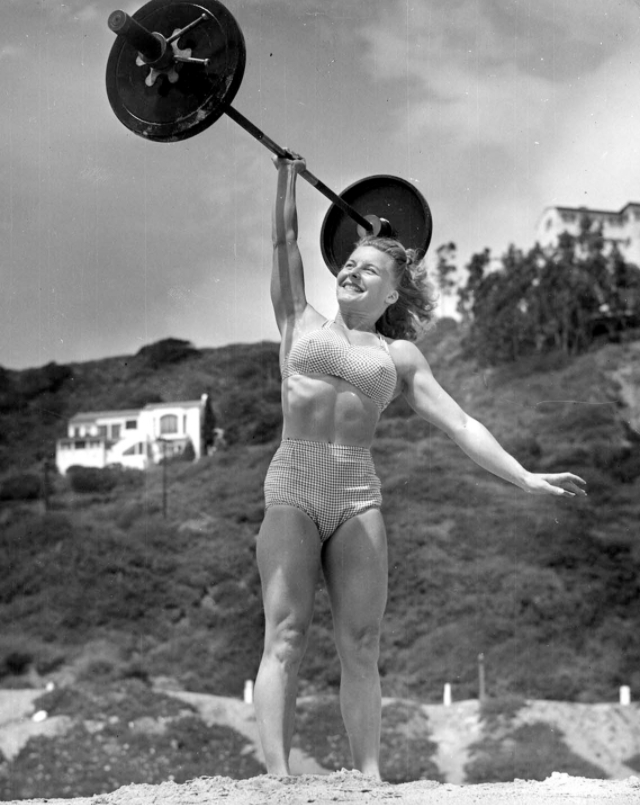
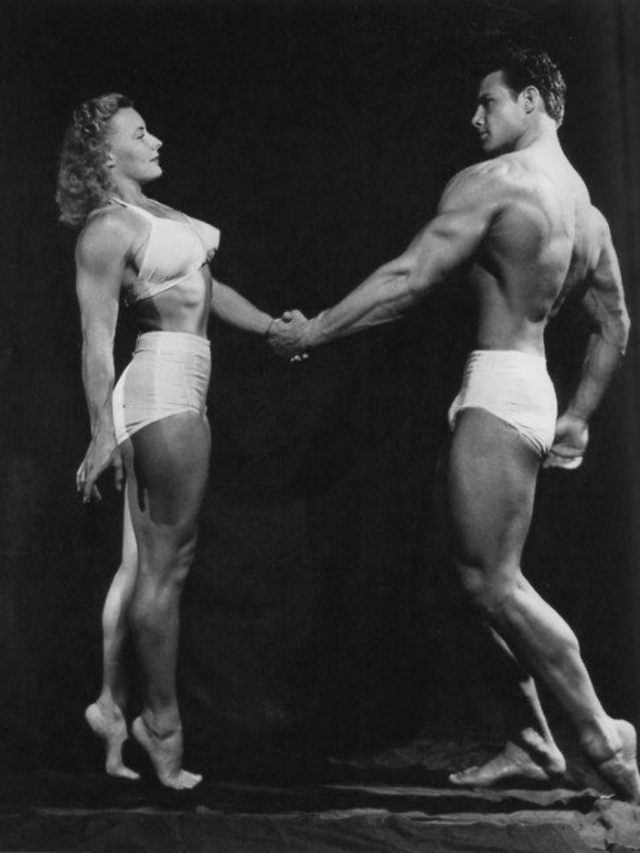
Queen of Muscle Beach: 20 Vintage Portraits of Abbye “Pudgy” Stockton From the 1940s

Abbye Eville, more commonly known around the world as Pudgy Stockton, was born August 11, 1917 in Santa Monica, California. During her childhood she acquired the nickname, “Pudgy” and it stuck with her; little did she know it was a name soon to be known all around the world.

After graduating high school, she started a sedentary job answering phones and became displeased with how the inactivity affected her body so she began lifting weights – a very humble beginning for the future, “Queen of Muscle Beach.”

She later told Sports Illustrated: “In those days, lifting weights was thought to be unfeminine. The misinformed think if women strength-trained, they’d become masculine looking. We laughed knowing they were wrong.”

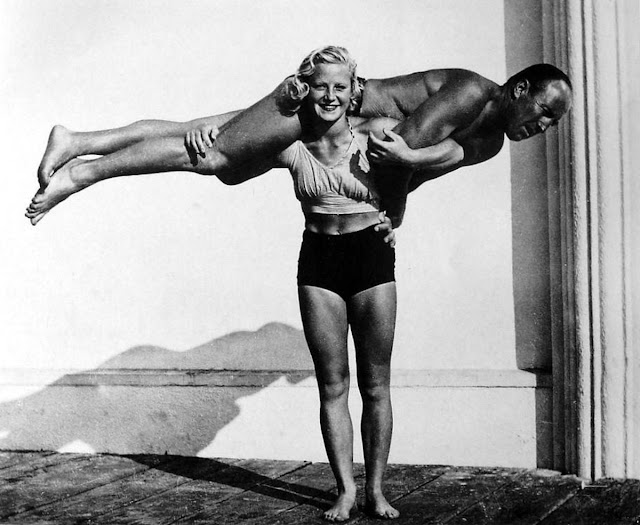
On most weekends she could be found at Muscle Beach performing any number of highly skilled athletic feats. An example would be, at the height of 5-feet, 1-inch tall, weighing 115 pounds, she held a 100-pound dumbbell overhead with her right arm as she balanced atop her husband’s outstretched arms.

Pudgy was a living example of muscular womanhood. She was not only proud of her vibrant health and fitness, she displayed her figure by being photographed with prominent muscle men of her era, such as Steve Reeves, George Eiferman, Joe Gold, and John Grimek.

In 1947, Pudgy and her husband Les, organized the first weightlifting contest in the United States for women. In 1948, chosen as “Miss Physical Culture Venus,” she was awarded a cash prize of $1,000 from pioneer physical culturist, Bernarr Macfadden.

Possibly the most admired of the original women’s physical culturists, Pudgy regularly wrote for Strength & Health magazine while her column was popular by both sexes. Attracting admiring stares and whistles on Muscle Beach, Pudgy’s two-piece bathing suits added to her allure. She recalled, “You couldn’t buy a two-piece, so my mother ripped apart an old brassiere to use as a pattern.”

Pudgy Stockton was honored by the Association of Oldetime Barbell & Strongmen in 1991; received the Steve Reeves International Society Pioneer Award in 1998, and inducted into Joe Weider’s Hall of Fame in 2000.

She died of Alzheimer’s disease on June 26, 2006, at age 88.

Portraits of Wild Bill Hickok, the Most Famous of All Western Gunfighters

Subscribe to get access

Read more of this content when you subscribe today.

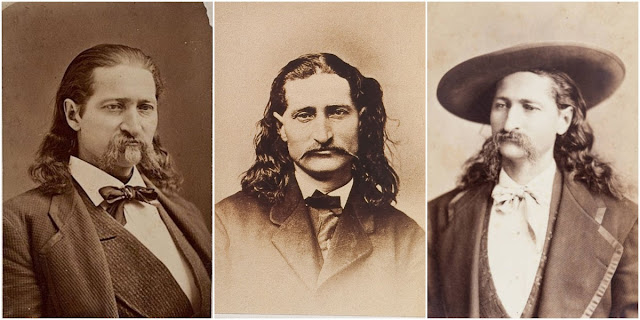
James Butler Hickok (May 27, 1837 – August 2, 1876), better known as “Wild Bill” Hickok, was a folk hero of the American Old West known for his life on the frontier as a soldier, scout, lawman, gambler, showman, and actor, and for his involvement in many famous gunfights. He earned a great deal of notoriety in his own time, much of it bolstered by the many outlandish and often fabricated tales he told about himself. Some contemporaneous reports of his exploits are known to be fictitious, but they remain the basis of much of his fame and reputation.

Hickok was born and raised on a farm in northern Illinois at a time when lawlessness and vigilante activity was rampant because of the influence of the “Banditti of the Prairie.” Drawn to this ruffian lifestyle, he headed west at age 18 as a fugitive from justice, working as a stagecoach driver and later as a lawman in the frontier territories of Kansas and Nebraska. He fought and spied for the Union Army during the American Civil War and gained publicity after the war as a scout, marksman, actor, and professional gambler. He was involved in several notable shootouts during the course of his life.

In 1876, Hickok was shot and killed while playing poker in a saloon in Deadwood, Dakota Territory (present-day South Dakota) by Jack McCall, an unsuccessful gambler. The hand of cards which he supposedly held at the time of his death has become known as the dead man’s hand: two pairs; black aces and eights.

Hickok remains a popular figure of frontier history. Many historic sites and monuments commemorate his life, and he has been depicted numerous times in literature, film, and television. He is chiefly portrayed as a protagonist, although historical accounts of his actions are often controversial, and much of his career is known to have been exaggerated both by himself and by contemporary mythmakers. While Hickok claimed to have killed numerous named and unnamed gunmen in his lifetime, his career as a gunfighter only lasted from 1861 to 1871. According to Joseph G. Rosa, Hickok’s biographer and the foremost authority on Wild Bill, Hickok killed only six or seven men in gunfights.

Portrait of a young James Butler Hickok, aka “Wild Bill” Hickok.

Subscribe to continue reading

Become a paid subscriber to get access to the rest of this post and other exclusive content.

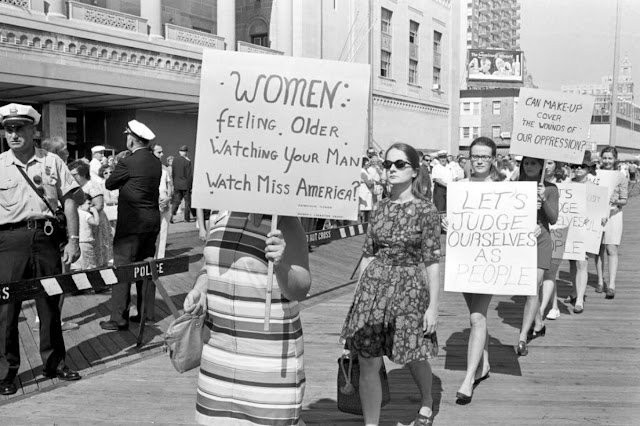
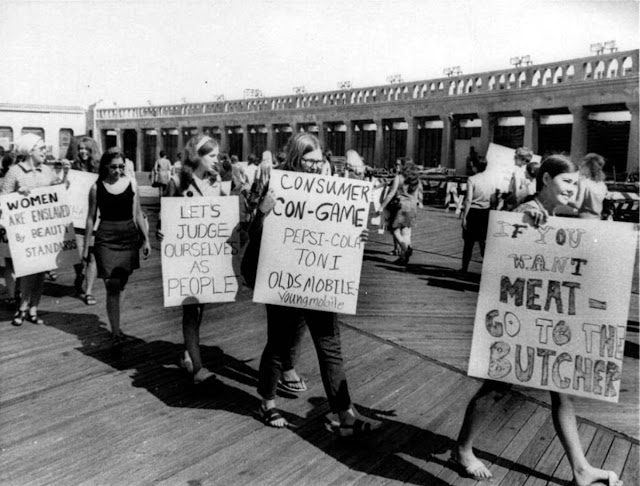
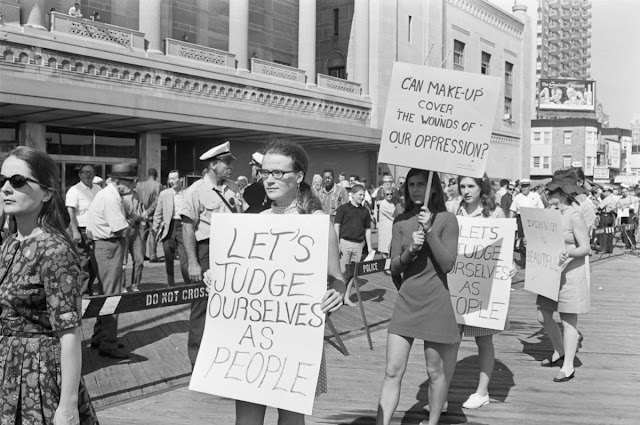
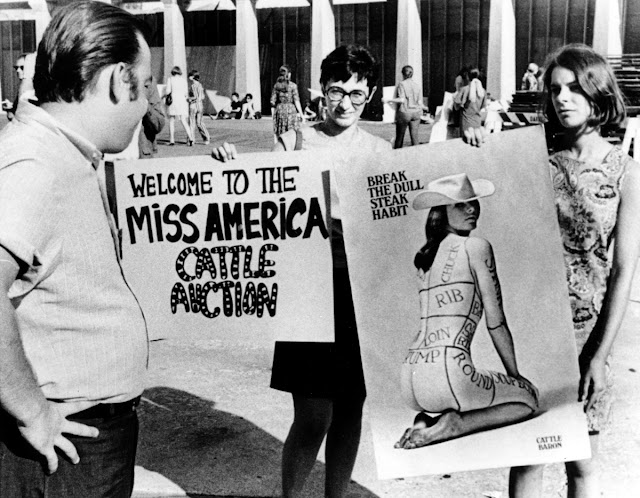
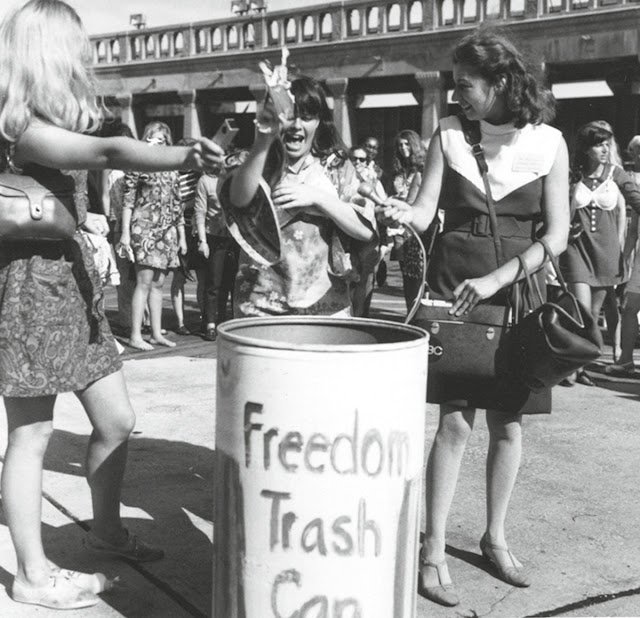
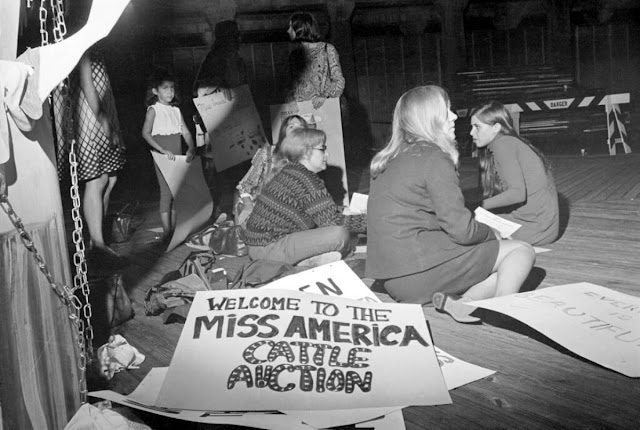
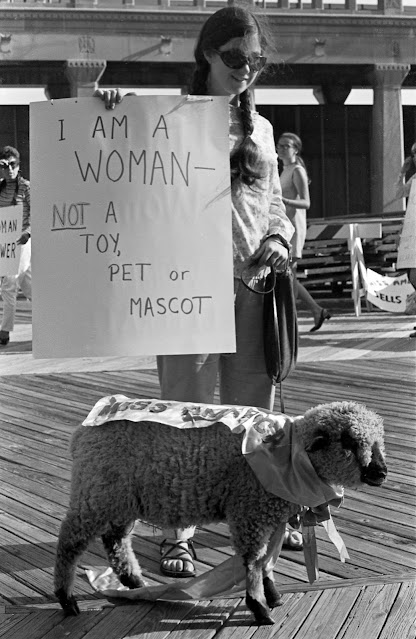
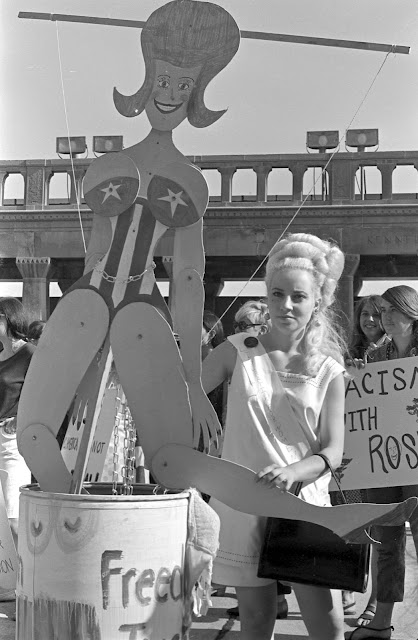
The “Bra Burning” Miss America Protest, 1968

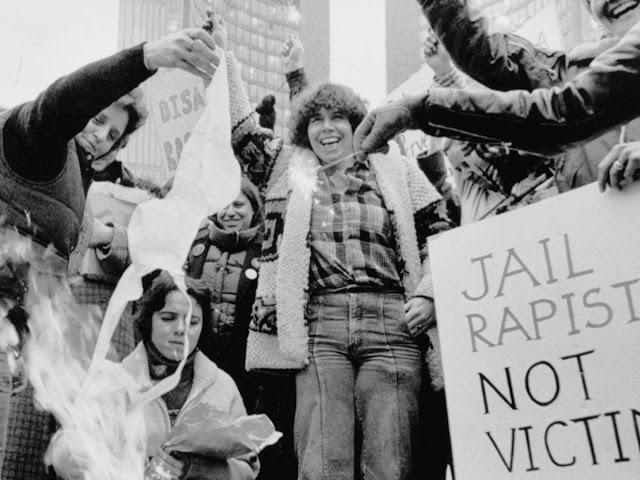
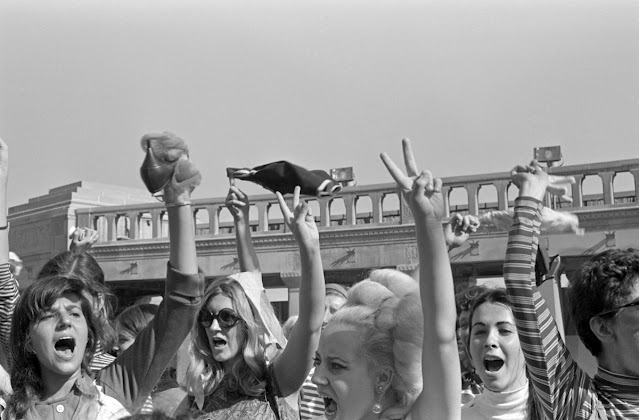
The Miss America protest was a demonstration held at the Miss America 1969 contest on September 7, 1968, attended by about 200 feminists and civil rights advocates. The feminist protest was organized by New York Radical Women and included putting symbolic feminine products into a “Freedom Trash Can” on the Atlantic City boardwalk, including bras, hairspray, makeup, girdles, corsets, false eyelashes, mops, and other items.

While it was widely rumored that the trash can was then lit on fire — sparking the decades-old myth of bra-burning feminists — the protest occurred incident (and flame) free. However, thanks to the widespread media that the pageant already drew, the protest and the cause was heavily covered in newspapers across the nation.

The dramatic, symbolic use of a trash can to dispose of feminine objects caught the media’s attention. Protest organizer Hanisch said about the Freedom Trash Can afterward, “We had intended to burn it, but the police department, since we were on the boardwalk, wouldn’t let us do the burning.” A story by Lindsy Van Gelder in the New York Post carried a headline “Bra Burners and Miss America.” Her story drew an analogy between the feminist protest and Vietnam War protesters who burned their draft cards. Individuals who were present said that no one burned a bra nor did anyone take off her bra.

The parallel between protesters burning their draft cards and women burning their bras were encouraged by organizers including Robin Morgan. The phrase became headline material and was quickly associated with women who chose to go braless. Feminism and “bra-burning” then became linked in popular culture.

Lovely Vintage Photos of 1930s Couples Posing With Their Cars

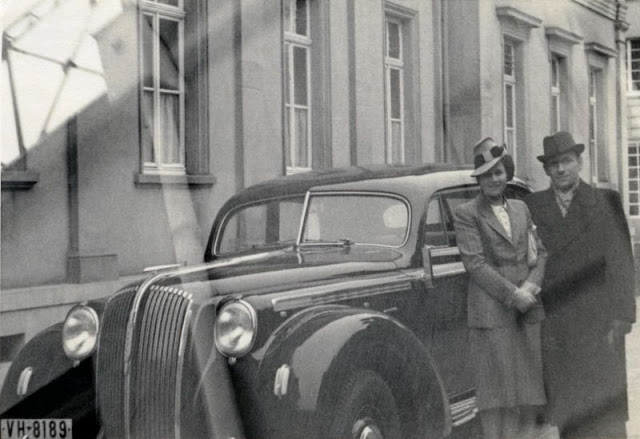
At home or in public, 1930s women most commonly wore dresses with wide shoulders; puffy sleeves; modest necklines; higher, belted waistlines; and mid-calf flared hemlines. Frilly bows, ruffles, buttons, and other details often decorated dresses.

Formal dresses most dramatically displayed the decade’s willowy, elegant silhouette. Evening gowns in fluid fabrics were cut on the bias to create flowing, figure-hugging lines that reached the floor. Popular fabrics included satin, rayon, and chiffon.

Hollywood screen stars Katherine Hepburn and Marlene Dietrich helped introduce women’s trousers for sports and leisure. These trousers were wide-legged and high-waisted, often styled like sailors’ pants. Women wore baggier, casual lounge pants on vacation and at the beach.

For men, suits of the 1930s typically had high waists and slightly tapered, creased trousers with turned-up cuffs. Younger men preferred baggier trousers and longer jackets. Suits were darker blue, brown, or gray for cooler weather, with lighter tones for warm weather. Bold patterns included stripes, checks, and plaids.

A vest, pocket handkerchief, shorter tie, hat (such as a fedora or bowler), and dark or two-toned leather dress shoes completed the look.

Here is a set of vintage photos from Vintage Cars & People that shows couples posing with their cars in the 1930s.
A middle-aged couple posing with a Steyr XX Cabriolet on a gravel road running along the bank of a lake on a bleak summer’s day, circa 1930
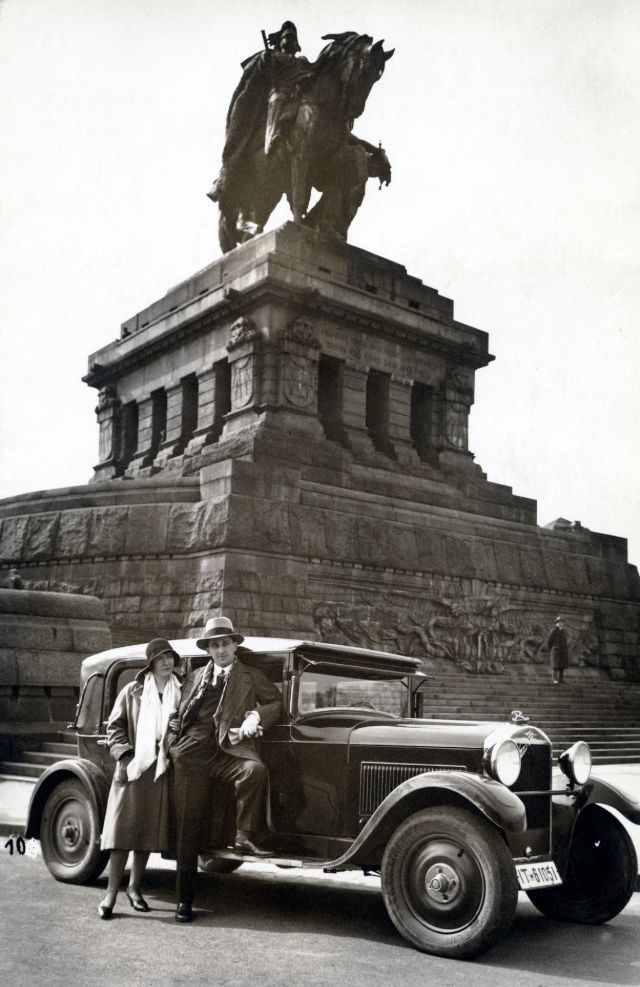
A stylish couple posing with a Röhr 8 9/50 PS Typ R in front of a monumental equestrian statue at Deutsches Eck, a landmark in the town of Koblenz at the confluence of the rivers Rhine and Moselle, circa 1930
A cheerful lady in a floral dress and a dapper fellow in a suit posing with a Hanomag 4/20 PS Cabriolet-Limousine in the backyard of a private home. The car is registered in the Bavarian province of Middle Franconia, June 1932

A middle-class couple posing with a 1932 DeSoto Six on a sunny spring day in the countryside. The car is registered in the state of Michigan with 1932 license plates, May 1932
A stylish couple posing on the running board of an Opel 4/20 PS Cabriolet 2 convertible in the countryside. The car is registered in the Saxon district of Leipzig, circa 1933
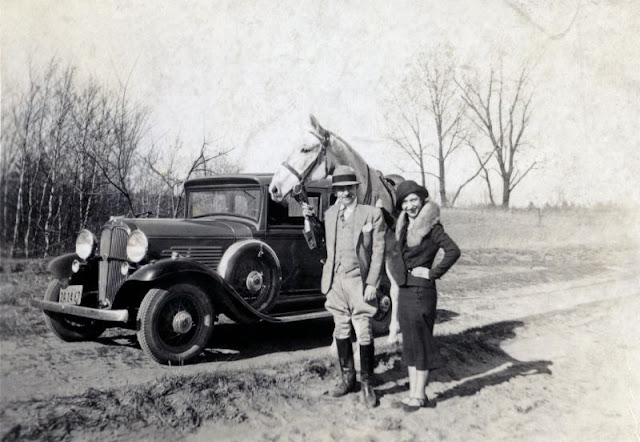
A well-to-do couple posing with their horse and their 1932 Willys-Overland Sedan on a sunny winter’s day. The car is registered in New York State with 1933 license plates, circa 1933
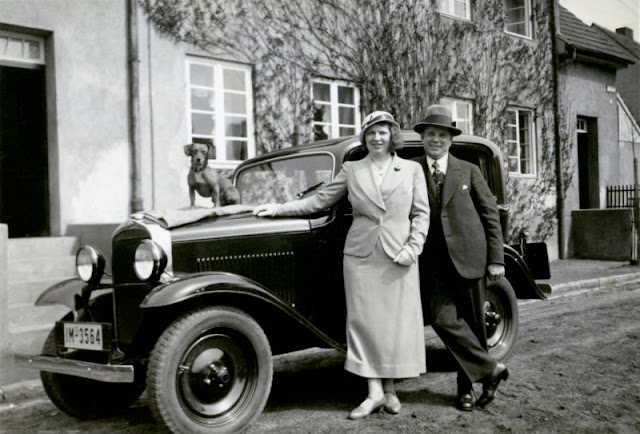
A cheerful couple and posing with an Opel 1,2 Liter in front of a middle-class home in a residential street. The car is registered in the Prussian province of Saxony, circa 1935
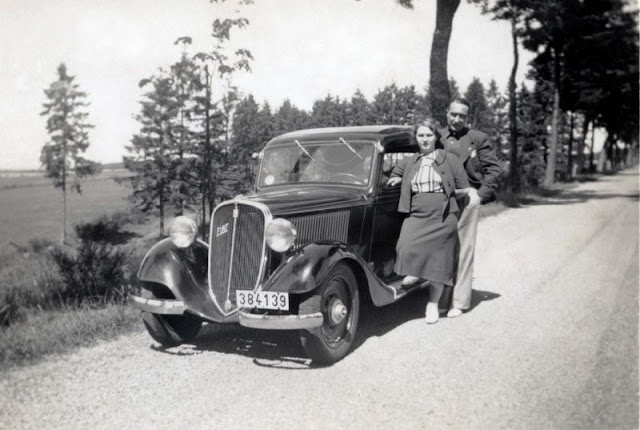
A couple posing with a Fiat Balilla 508 A on a gravel road in the countryside, circa 1935
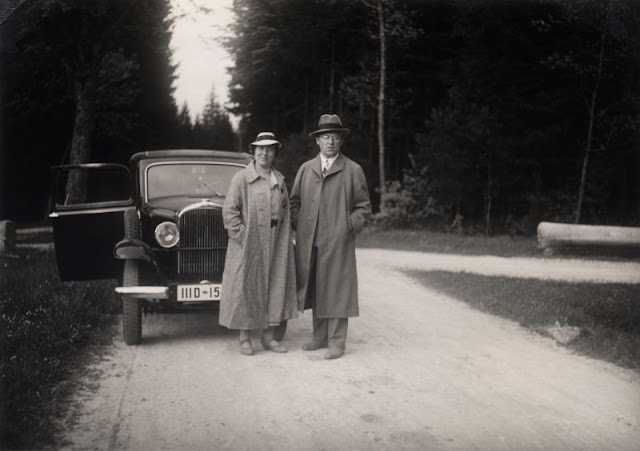
A middle-aged couple wearing raincoats and hats with an Opel 1,2 Liter. The car is registered in the German state of Württemberg, circa 1935
A stylish young couple and their dog posing with a 1933 Graham Blue Streak Sedan in an middle class neighborhood. The car is registered in the state of New York with 1935 license plates, 1935
An elegant couple posing with a Citroën 11 CV in front of an impressive Renaissance building in a busy historic town centre, circa 1935
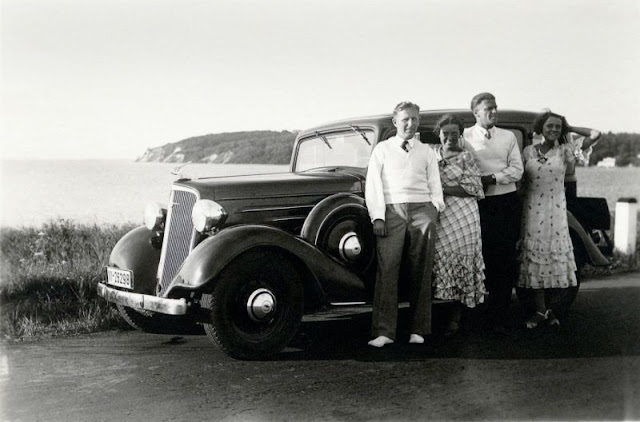
Two stylish couples posing with a 1934 Chevrolet Master Sedan at the seaside on the island of Rügen. The car is registered in the city of Leipzig, circa 1935
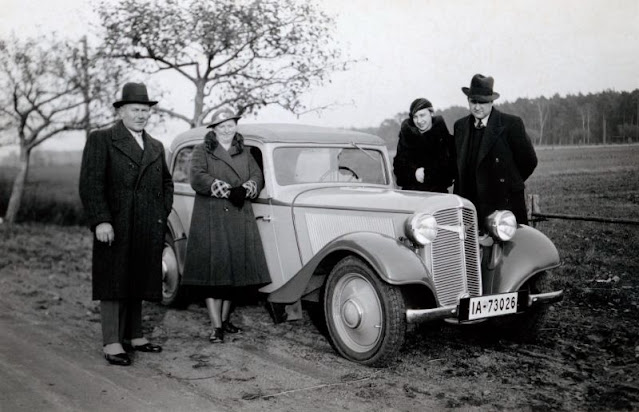
Two stylish couples posing with a Adler Trumpf Junior Cabrio-Limousine on a dirt road in the countryside. The car is registered in the city of Berlin, circa 1935
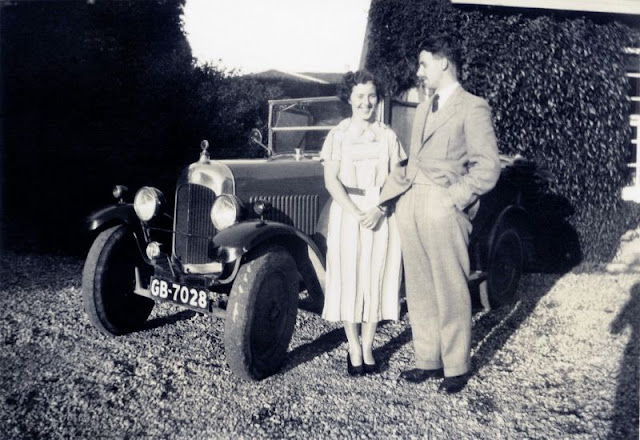
A cheerful lady in a light-colored dress and a fellow wearing a suit and tie posing with an English-built Citroën 7.5 H.P. Type C, circa 1936
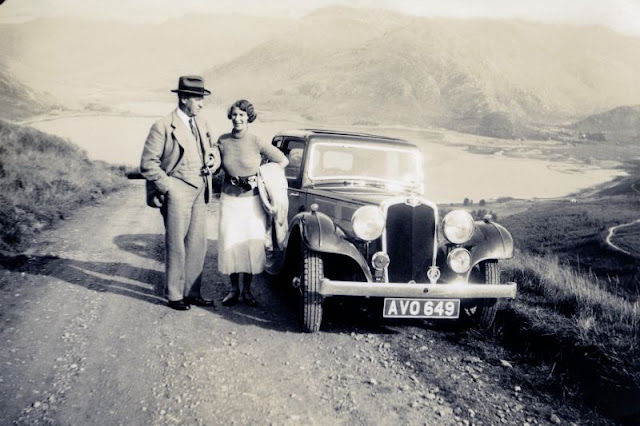
A middle-aged couple posing with a Triumph Gloria Vitesse on a gravel road in the countryside. The location is probably somewhere in Scotland, circa 1936
A stylish couple posing with a 1935 Chevrolet Master Deluxe in late afternoon sunshine, circa 1936
A stylish couple posing with a 1936 Chevrolet Standard Coupe on a gravel road in the countryside on July 22, 1936
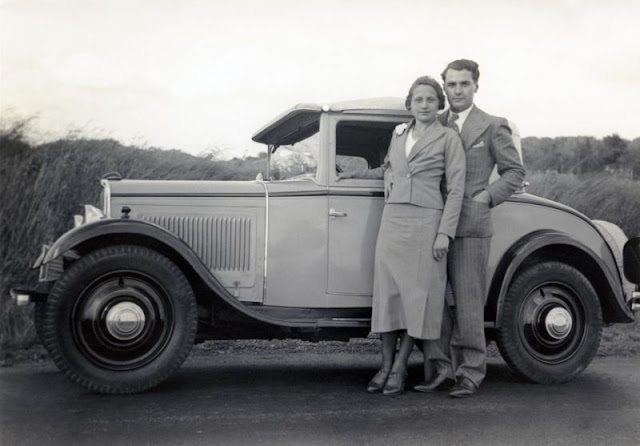
A stylish couple posing with a two-tone Peugeot 201 Cabriolet by the side of a country road, circa 1936
A cheerful couple posing with a Steyr 50 on the side of the road in the town of Melk on the bank of the Danube with the famous monastery visible in the background. The car is registered in the city of Vienna, circa 1937
A couple wearing light-colored suits in the fashion of the thirties posing with an Opel 6 Cabriolet in the countryside. A mountain range can be seen in the background. The car is registered in Upper Bavaria, 1937
A stylish couple posing with a Steyr 50 in the Styrian village of Palfau, rural Austria, the building in the background houses an inn called ‘Gasthof zur Kaisergemse’. The car is registered in the city of Vienna, circa 1937
A cheerful couple posing with a 1937 Dodge Sedan on a sunny summer afternoon, somewhere in Canada, 1938
A cheerful couple posing with a Steyr 220 Limousine on a country road in the Ahr Valley, a wine-growing region south of the city of Bonn. The car is registered in the administrative region of Düsseldorf, circa 1938
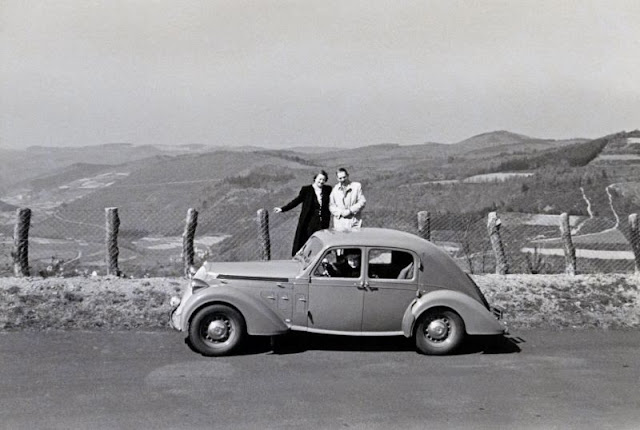
A couple posing with a Steyr 220 Limousine on a mountain road overlooking a valley, circa 1938
A fellow in a pinstripe suit and a lady in a floral dress posing on the fenders of a Mercedes-Benz 170 V, near the town of Plauen in Saxony. The car is registered in the Saxon district of Zwickau, August 1938
A lady in a short-sleeved dress and a fellow in a suit posing with a Mercedes-Benz 170 V in the countryside. The car is registered in the state of Bavaria, most probably in the district of Lower Bavaria, circa 1938
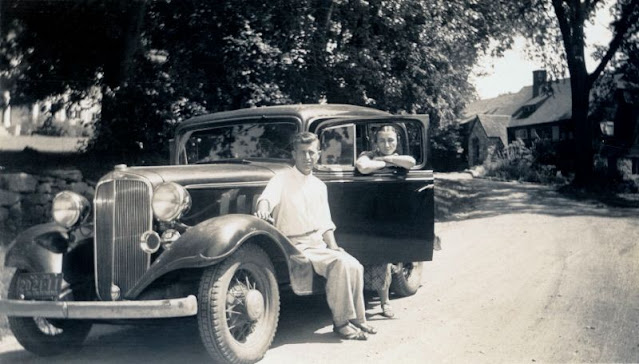
A leisurely clad couple posing with a 1933 Chevrolet Sedan on a sunny summer’s day. The car is registered in the state of New York, August 25, 1938
A young couple posing with a Fiat 521 Berlina on the side of a road lined with Italian stone pines. The Fiat is registered in the province of Imperia, September 25, 1938
A young elegant couple in trench coats and an elderly gent in a woollen coat posing with a German-built Ford Eifel. The car is registered in the city of Bremen, circa 1938
Two fashionable couples posing with an elegant two-tone Wanderer W 23 Cabriolet in summertime. The car is registered in the city of Berlin, circa 1938
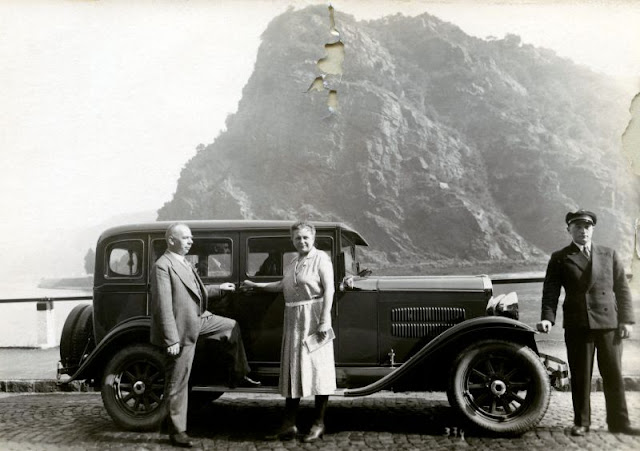
An elderly couple and their chauffeur posing with an 1930 Essex Sedan at Lorelei Rock on the bank of the River Rhine, circa 1930
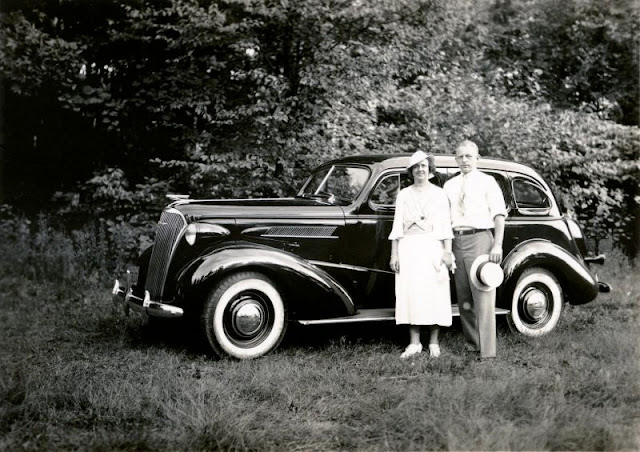
A middle-aged couple from Brooklyn posing with a shiny 1937 Chevrolet Master De Luxe in the countryside. The car is registered in New York State with 1937 license plates, September 1937
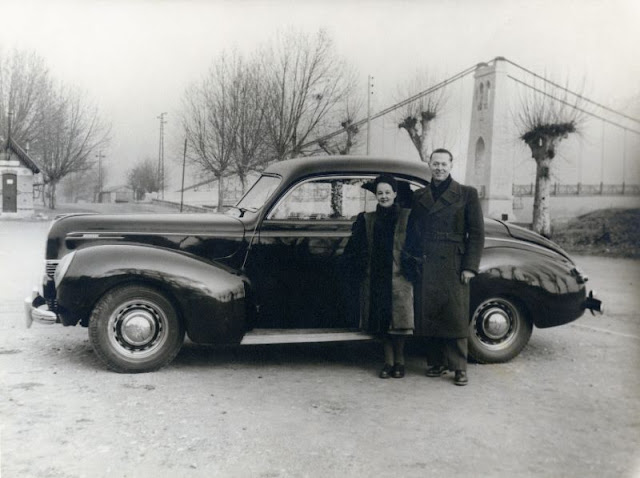
A fashionable couple posing with a 1939 Mercury Eight Club Coupe near a suspension bridge on a bleak winter’s day, circa 1939
A fashionable couple posing with a Fiat 500 A on a gravel road in the countryside. The car is registered in the city of Stuttgart, 1939
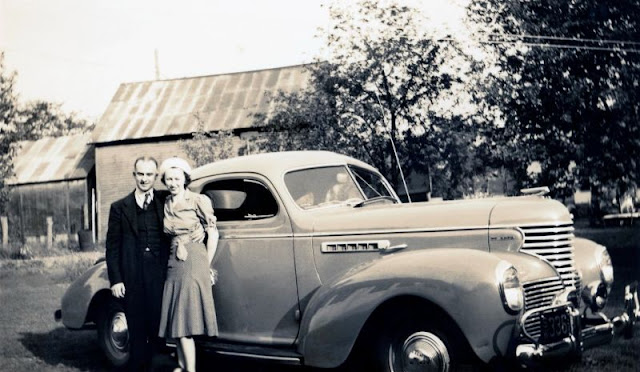
A middle-aged couple posing with a 1939 DeSoto Business Coupe in a back yard in summertime, circa 1939
A stylish couple posing with a Wanderer W 240 on a sunny summer’s day. In the background, a famous landmark – Lorelei Rock on the bank of the River Rhine – can be seen, 1939
A well-to-do couple posing with an Opel Admiral on a bleak winter’s day. The car is registered in the state of Hesse, circa 1939

Yesterday Today

Bringing You the Wonder of Yesterday - Today

Skip to content ↓