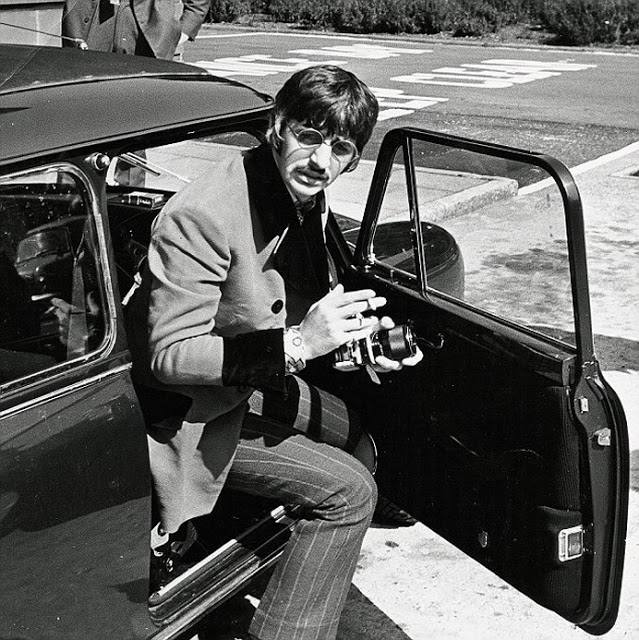
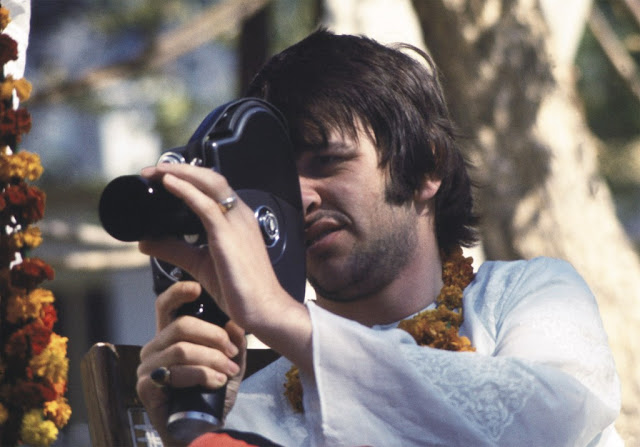
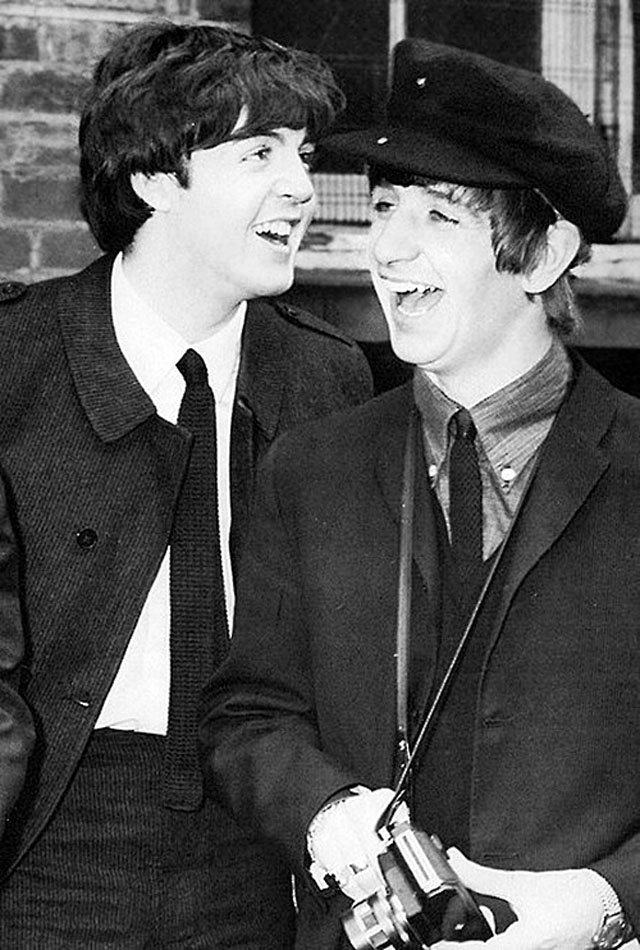
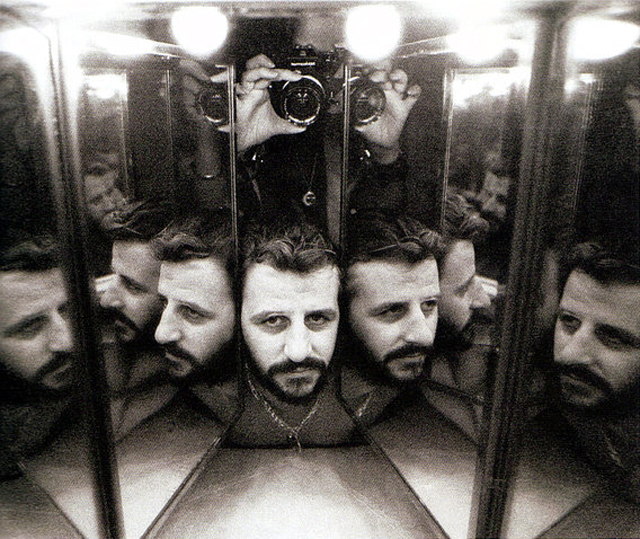
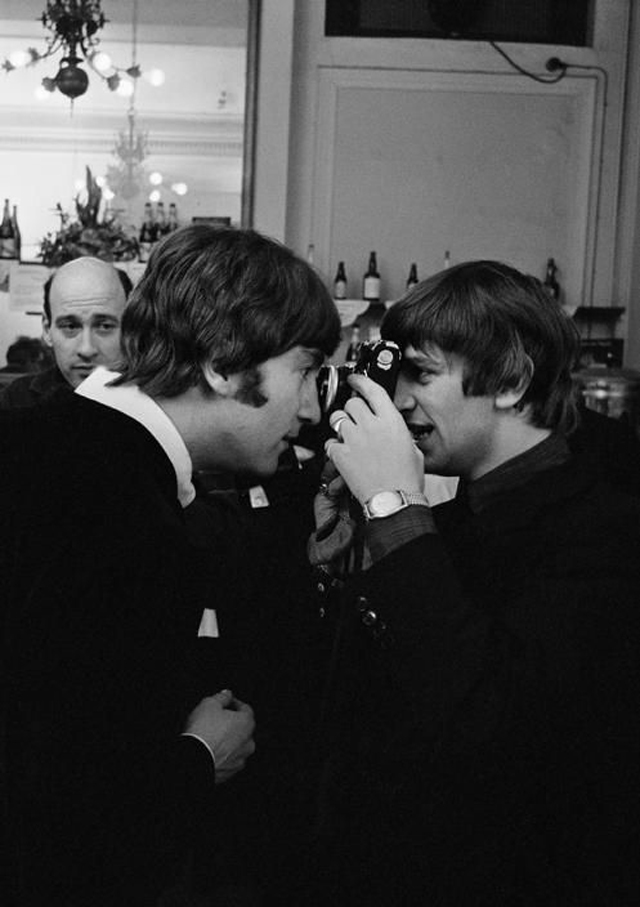
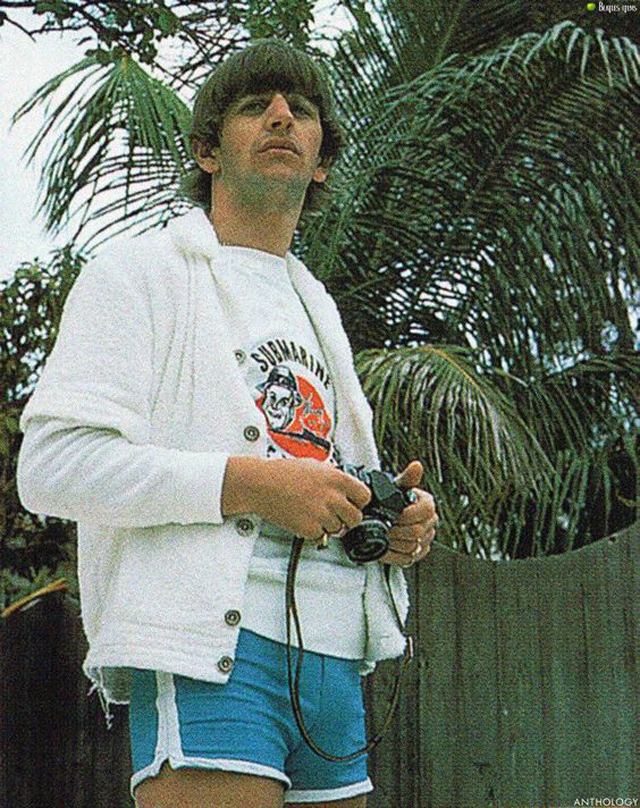
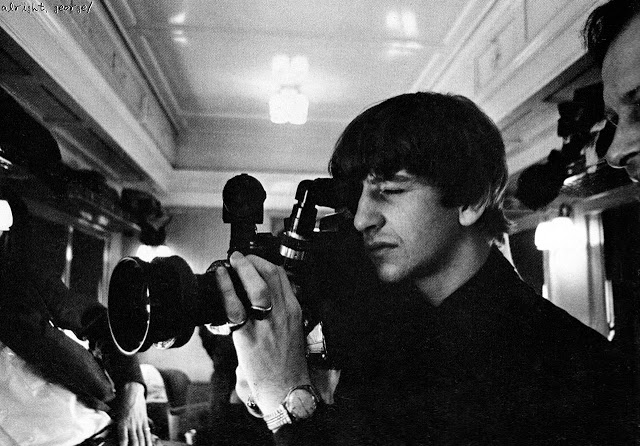
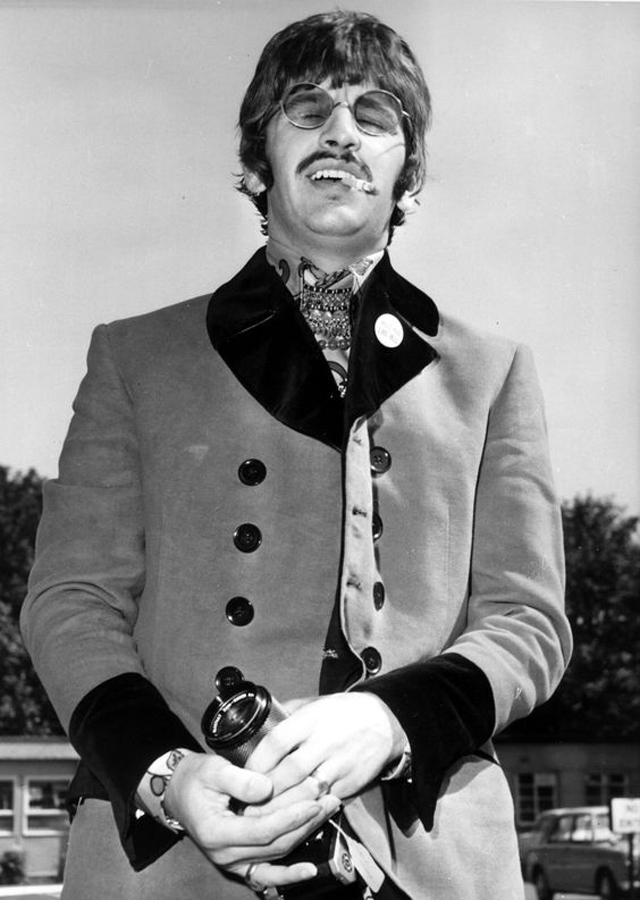
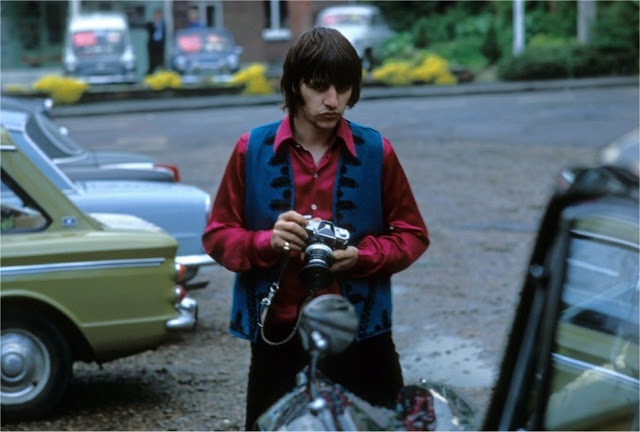
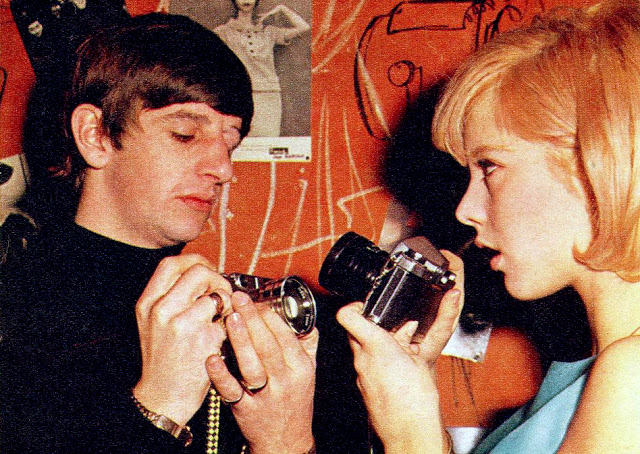
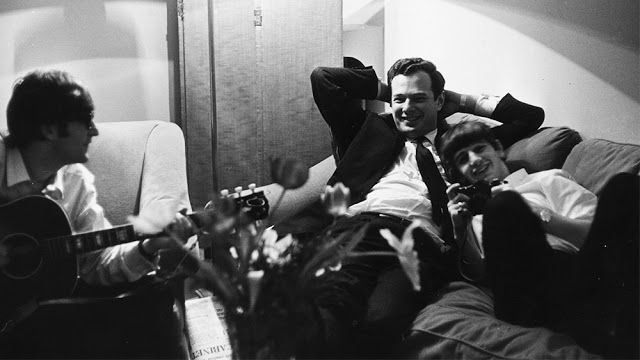
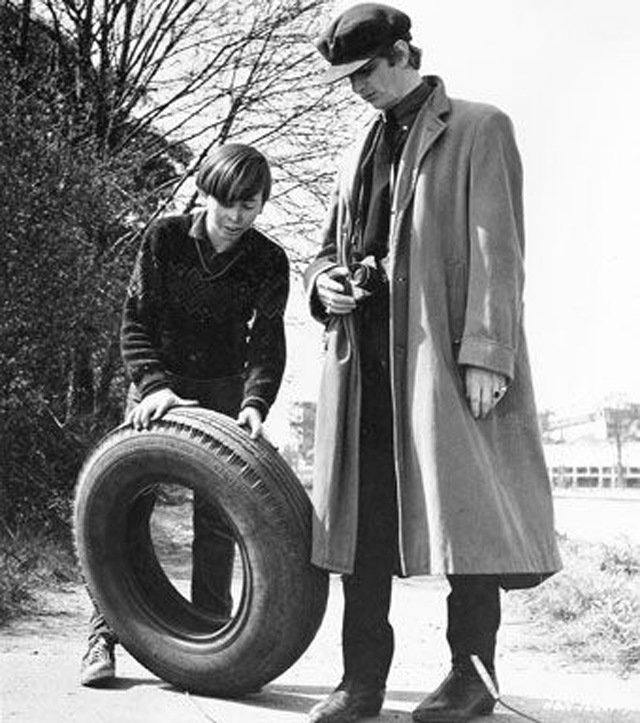
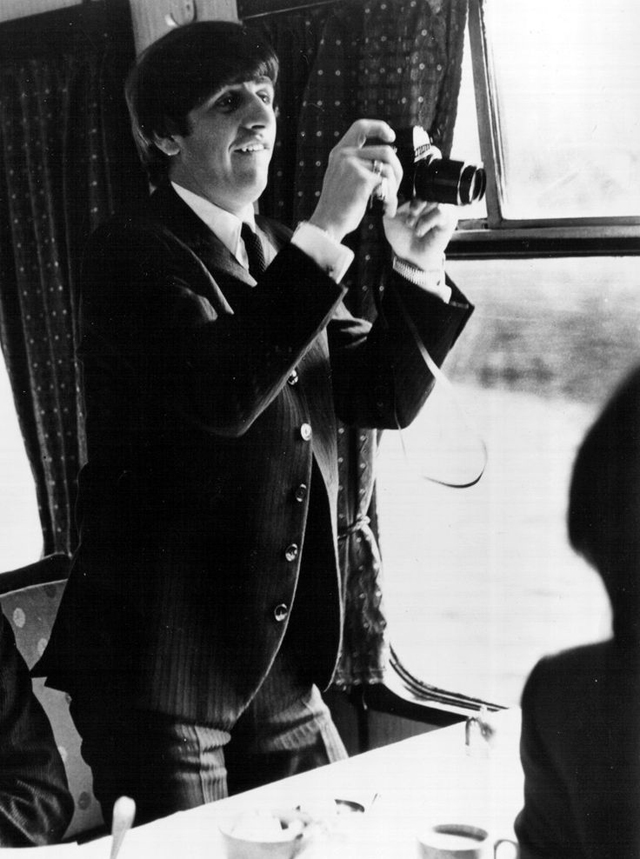
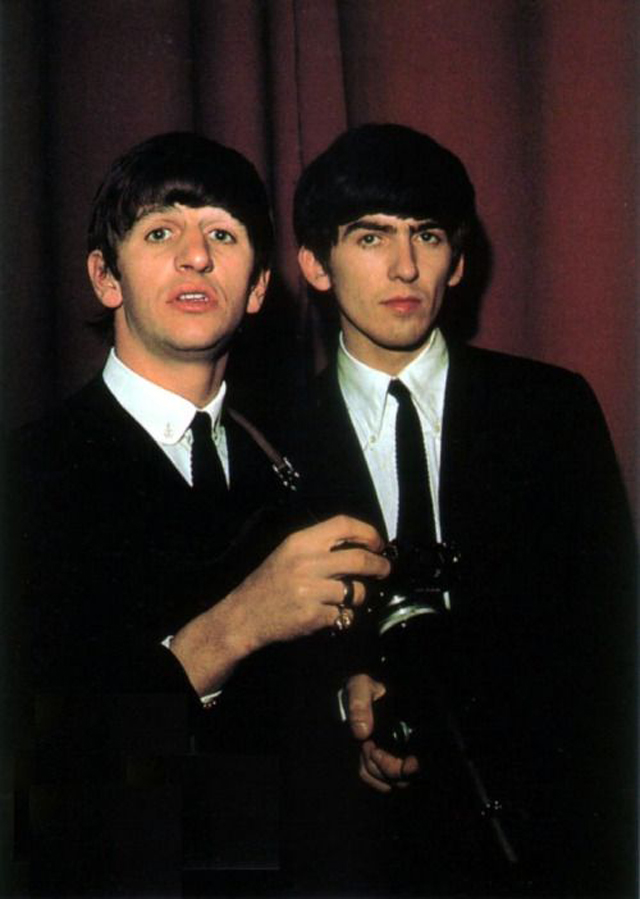
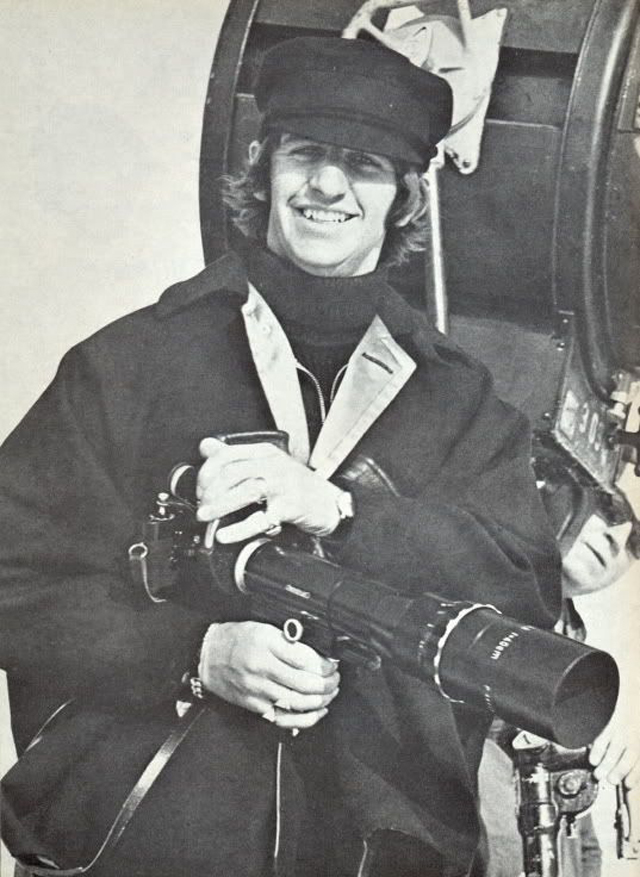
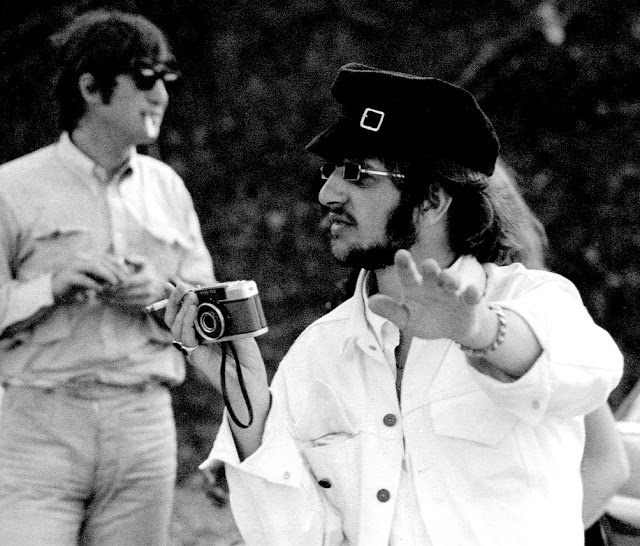
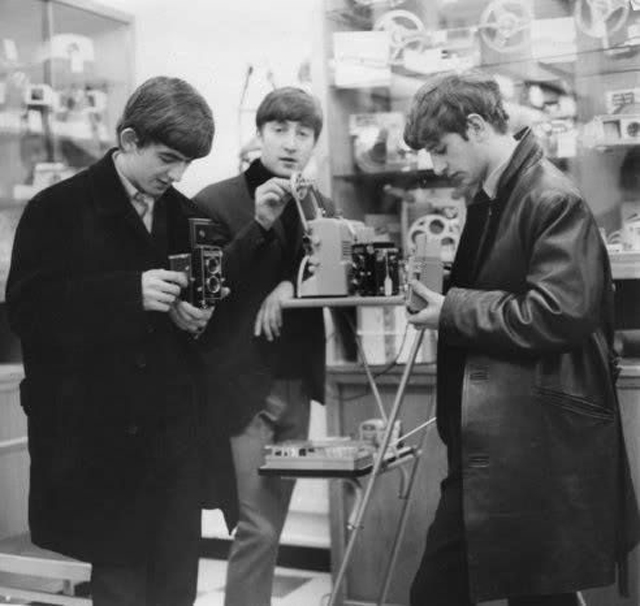
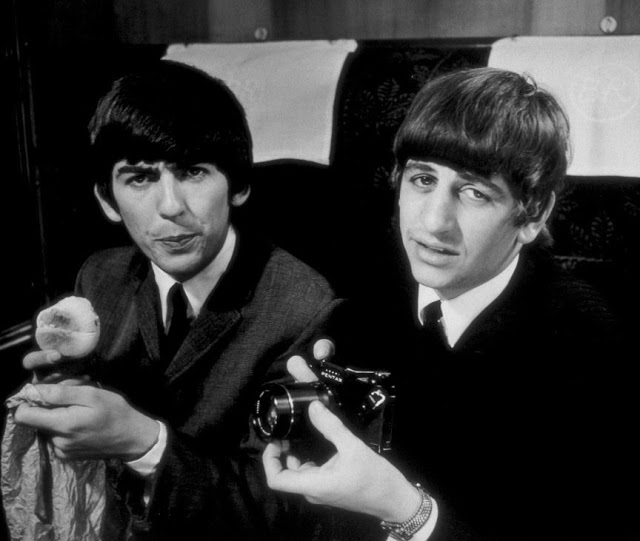
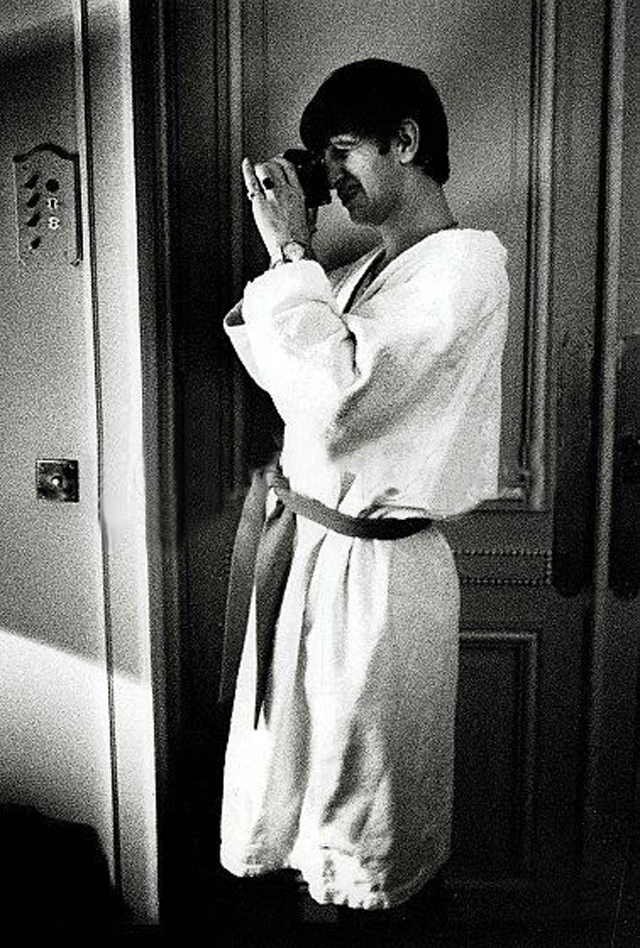
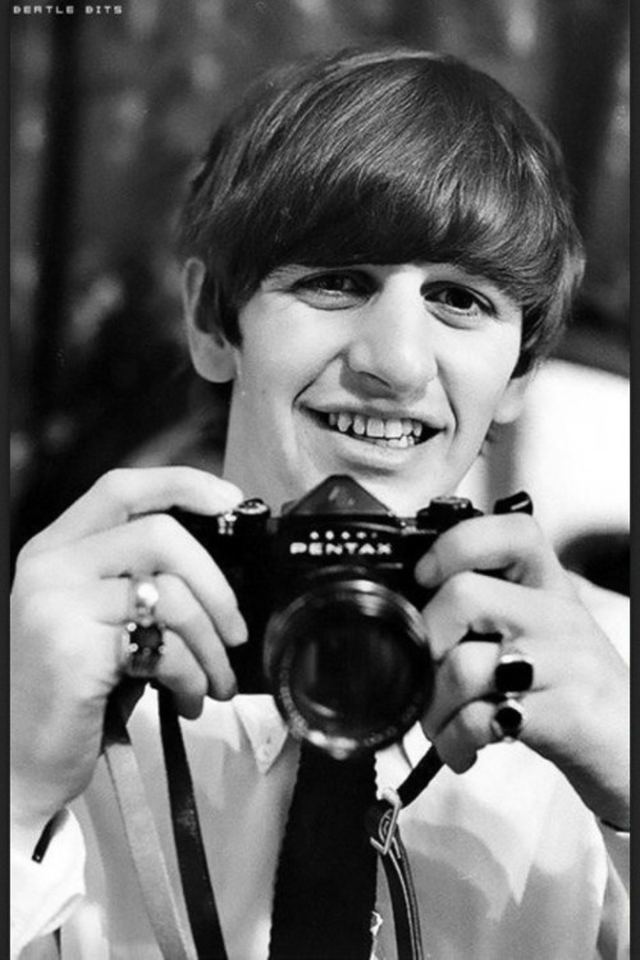
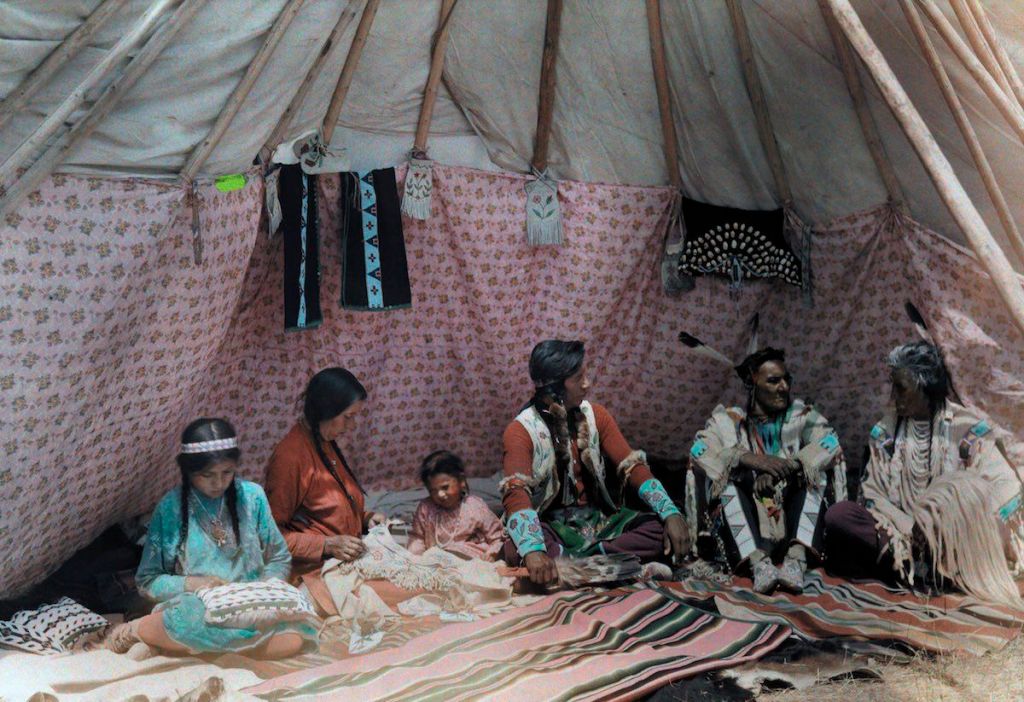
37 Vintage Photographs Showing the “Beatles” Ringo Starr as a Photographer

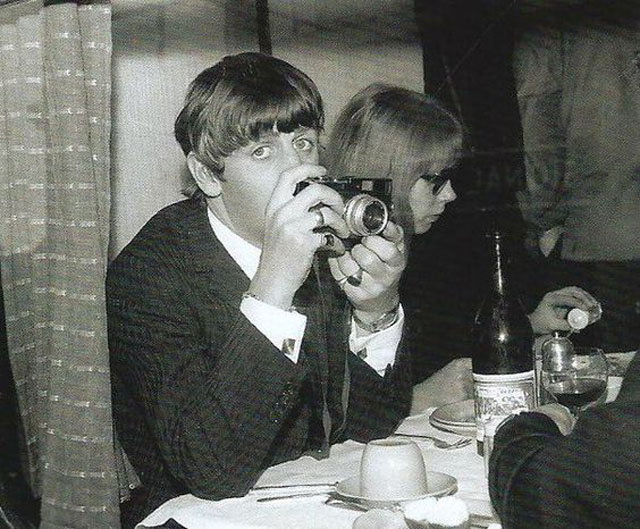
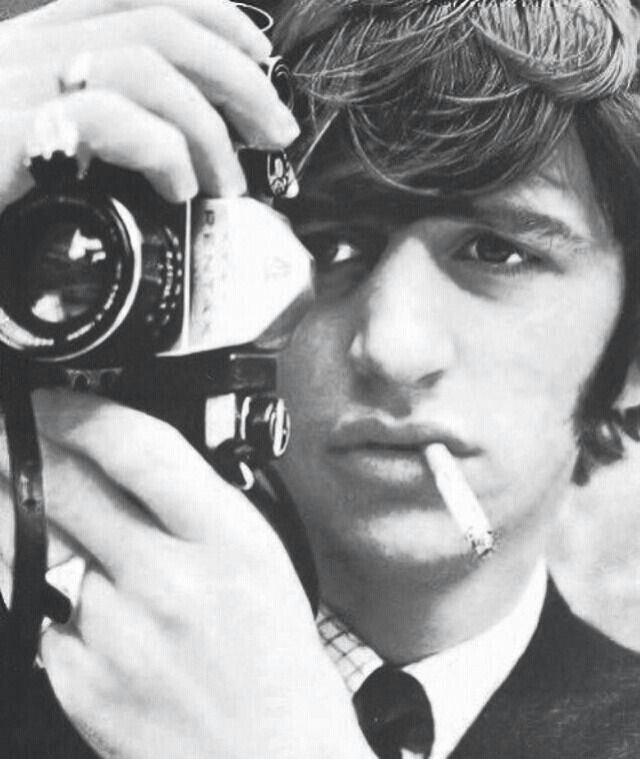
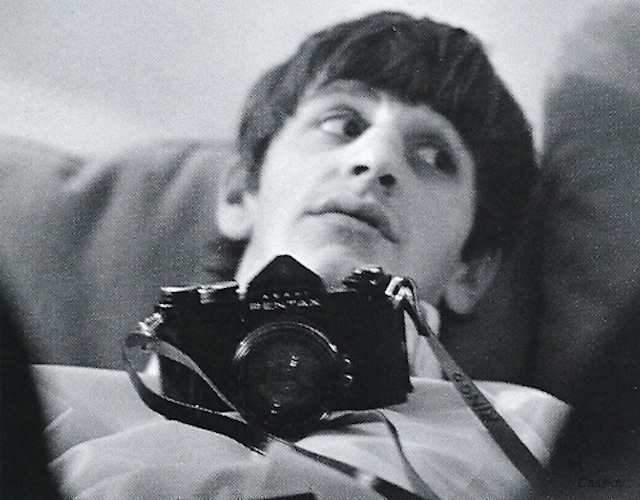
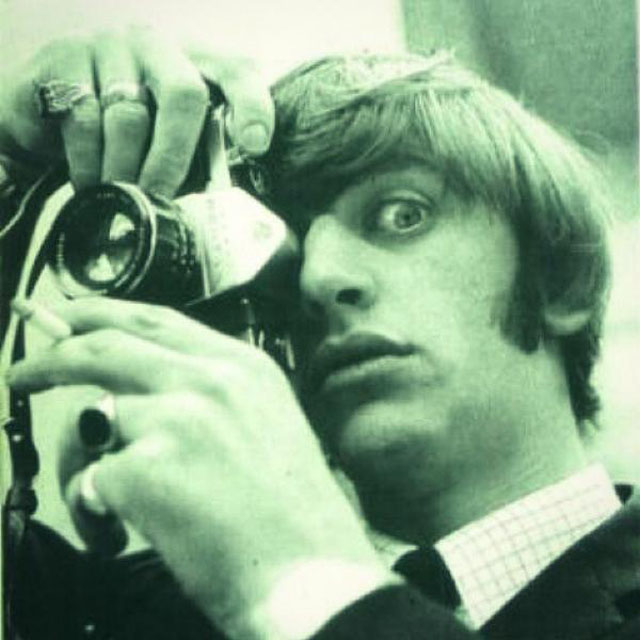
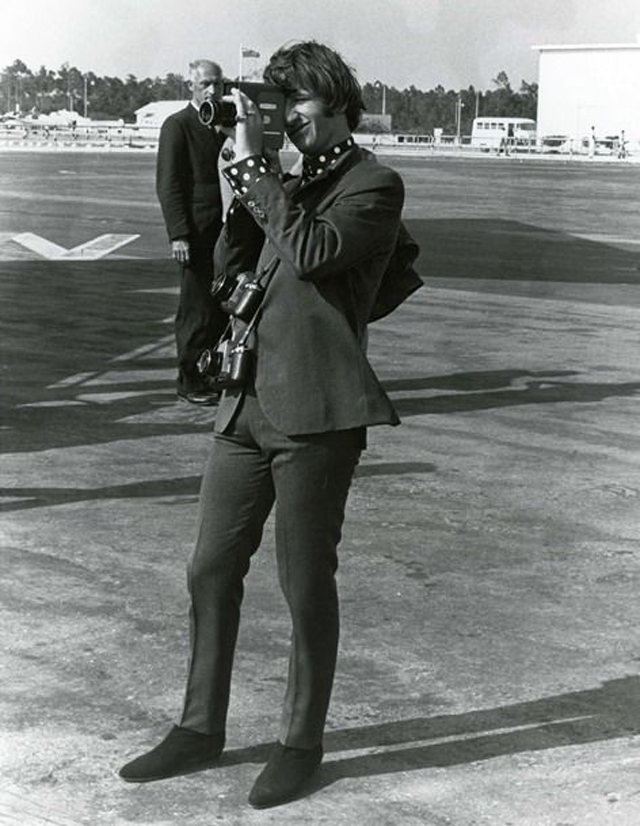
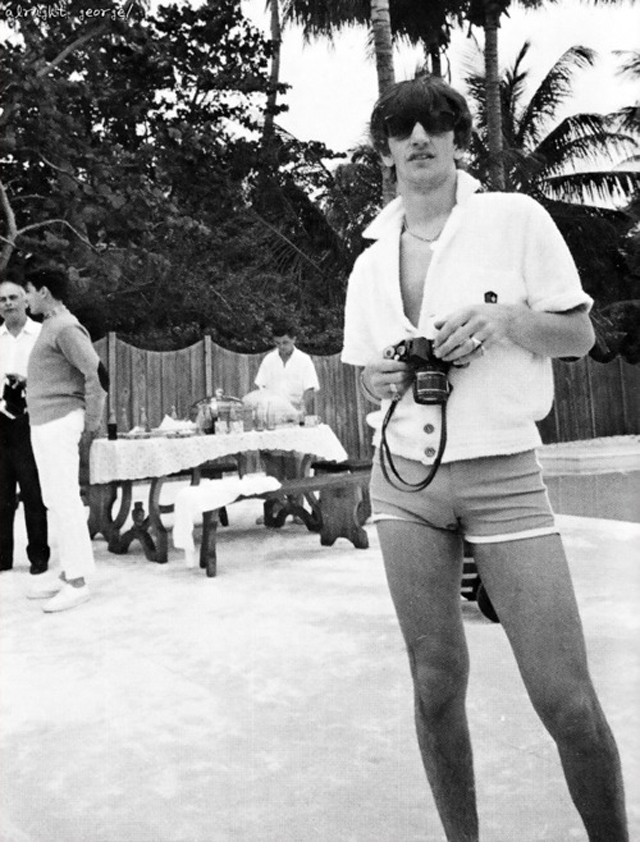
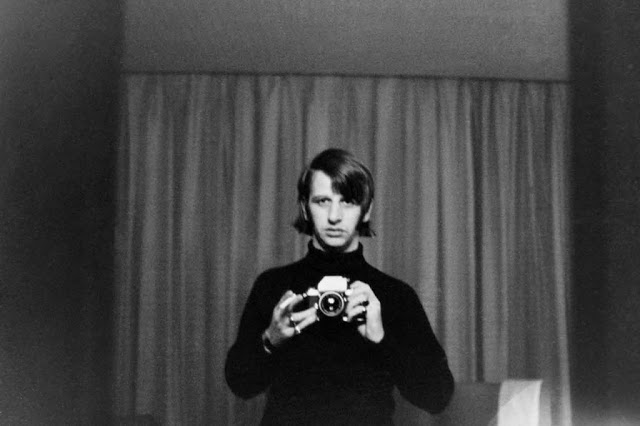
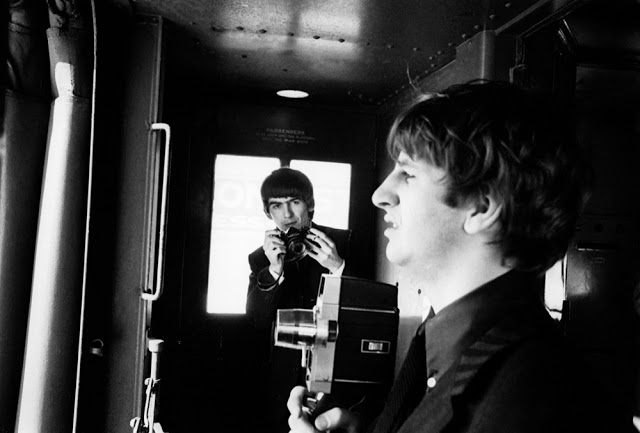
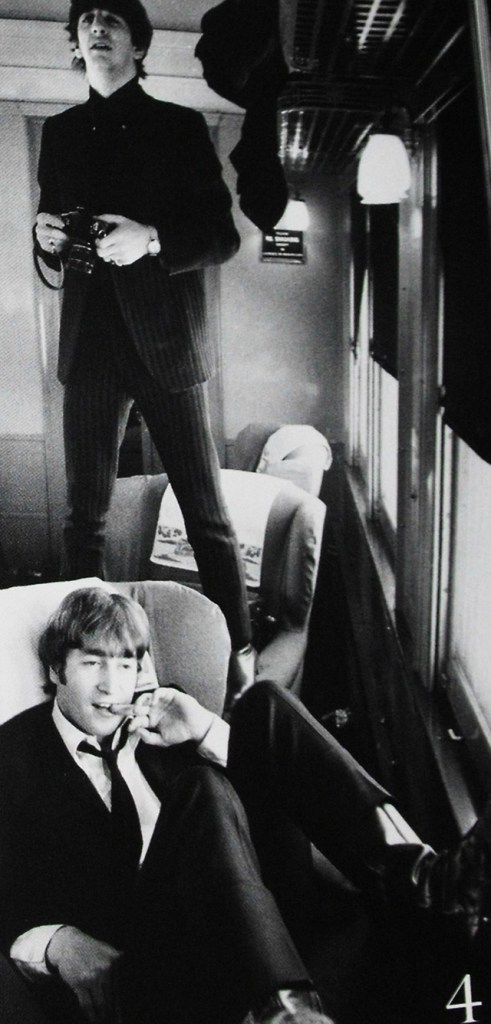
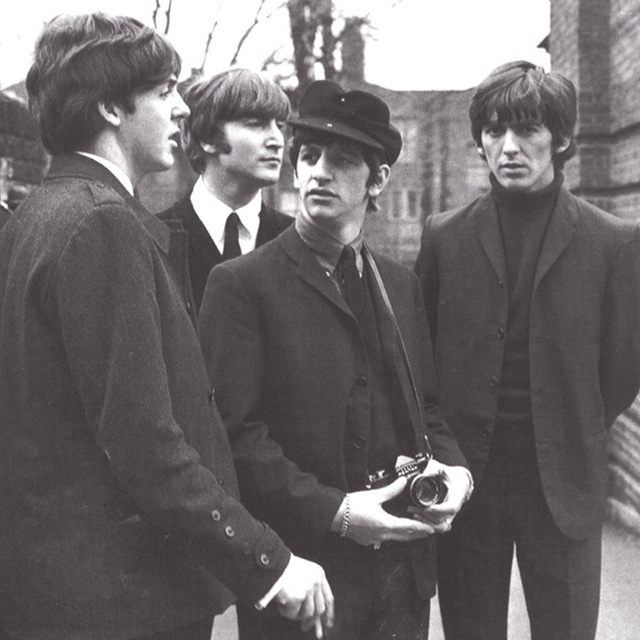
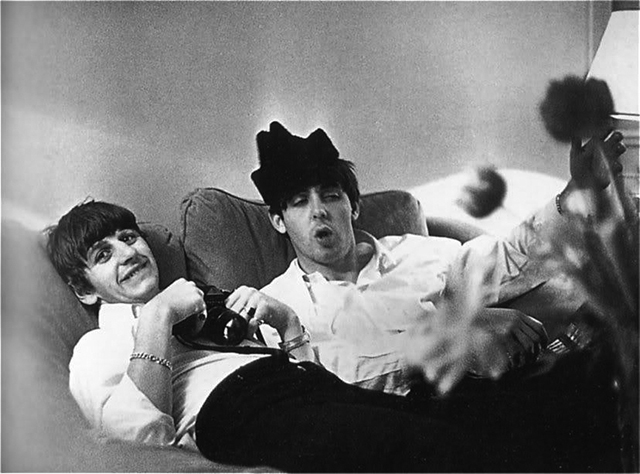
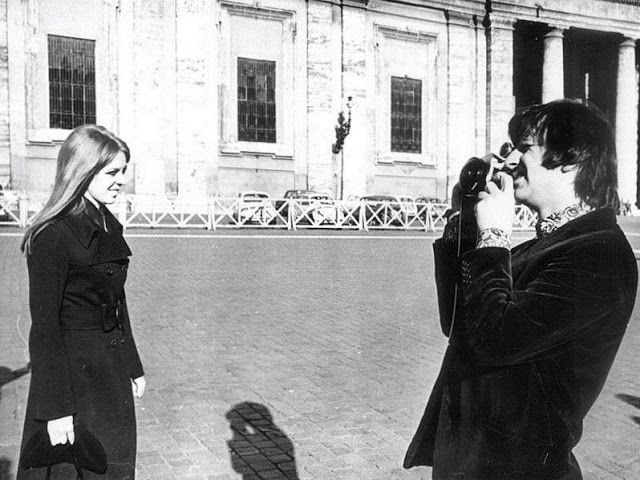
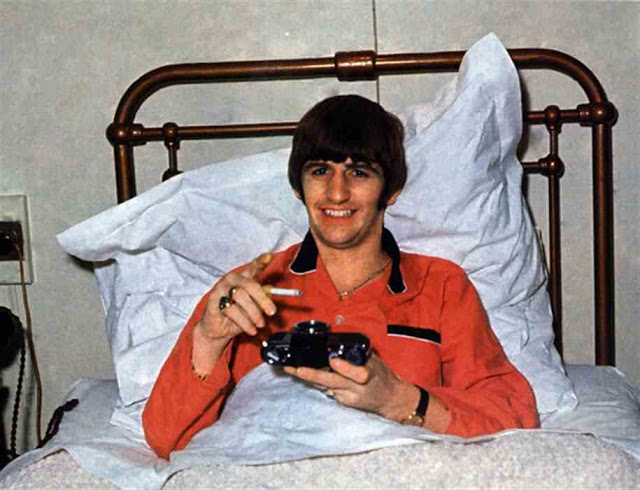
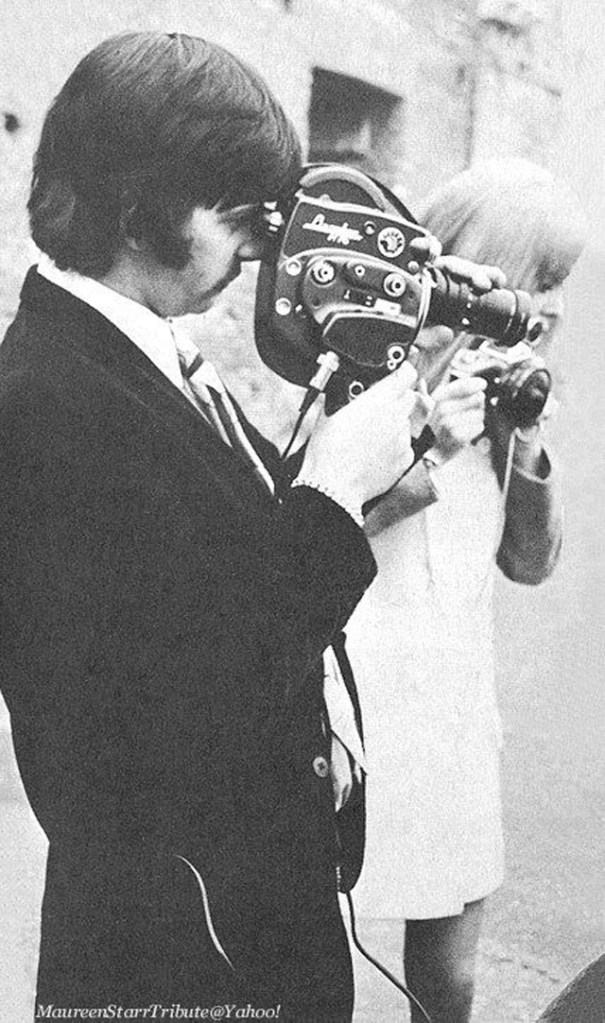
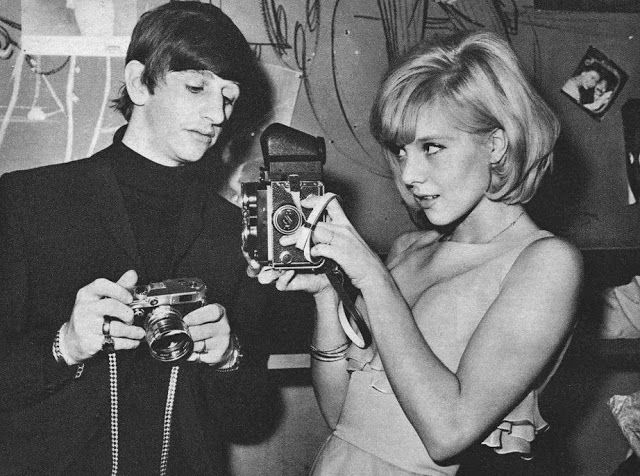
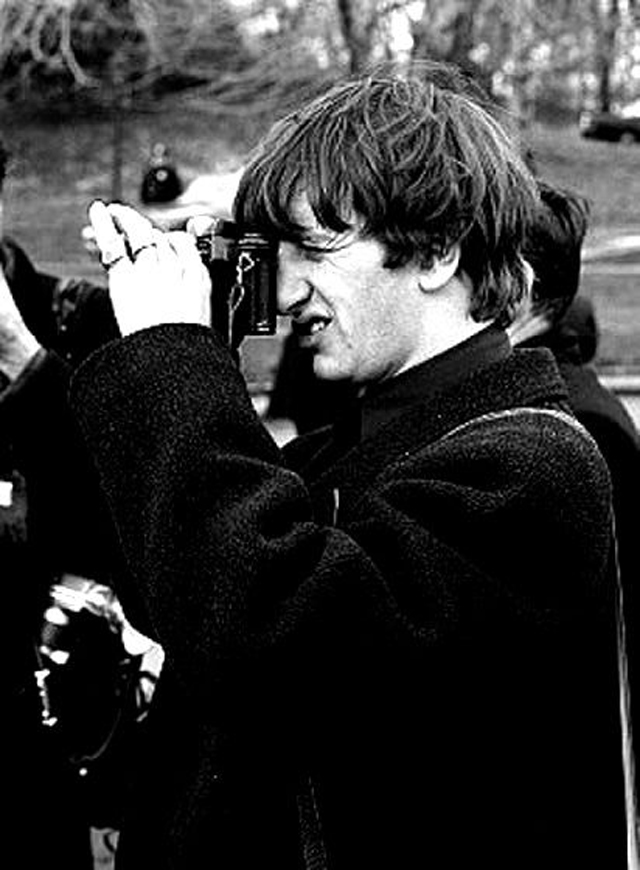
Not only a great drummer, Ringo is also a good photographer. His passion for photography is quite understated; he has been photographing even before his rise to rockstardom. Along music, photography comes as his other love.

“I think I really got more serious about it, more excited and interested in it, in the Beatle era,” Starr said of his work with a camera. “Photography became my passion alongside playing, really.”

Sir Richard Starkey MBE (born 7 July 1940), better known by his stage name Ringo Starr, is an English musician, singer, songwriter and actor who achieved international fame as the drummer for the Beatles. He occasionally sang lead vocals with the group, usually for one song on each album, including “Yellow Submarine” and “With a Little Help from My Friends”. He also wrote and sang the Beatles songs “Don’t Pass Me By” and “Octopus’s Garden”, and is credited as a co-writer of others.

Starr was afflicted by life-threatening illnesses during childhood, with periods of prolonged hospitalisation. He briefly held a position with British Rail before securing an apprenticeship as a machinist at a Liverpool school equipment manufacturer. Soon afterwards, he became interested in the UK skiffle craze and developed a fervent admiration for the genre. In 1957, he co-founded his first band, the Eddie Clayton Skiffle Group, which earned several prestigious local bookings before the fad succumbed to American rock and roll around early 1958. When the Beatles formed in 1960, Starr was a member of another Liverpool group, Rory Storm and the Hurricanes. After achieving moderate success in the UK and Hamburg, he quit the Hurricanes when he was asked to join the Beatles in August 1962, replacing Pete Best.

In addition to the Beatles’ films, Starr has acted in numerous others. After the band’s break-up in 1970, he released several successful singles including the US top-ten hit “It Don’t Come Easy”, and number ones “Photograph” and “You’re Sixteen”. His most successful UK single was “Back Off Boogaloo”, which peaked at number two. He achieved commercial and critical success with his 1973 album Ringo, which was a top-ten release in both the UK and the US. He has featured in numerous documentaries, hosted television shows, narrated the first two series of the children’s television program Thomas & Friends and portrayed “Mr. Conductor” during the first season of the PBS children’s television series Shining Time Station. Since 1989, he has toured with thirteen variations of Ringo Starr & His All-Starr Band.

Starr’s playing style, which emphasised feel over technical virtuosity, influenced many drummers to reconsider their playing from a compositional perspective. He also influenced various modern drumming techniques, such as the matched grip, tuning the drums lower, and using muffling devices on tonal rings. In his opinion, his finest recorded performance was on the Beatles’ “Rain”. In 1999, he was inducted into the Modern Drummer Hall of Fame. In 2011, Rolling Stone readers named him the fifth-greatest drummer of all time. He was inducted twice into the Rock and Roll Hall of Fame, as a Beatle in 1988 and as a solo artist in 2015, and appointed a Knight Bachelor in the 2018 New Year Honours for services to music. In 2020, he was cited as the wealthiest drummer in the world, with a net worth of $350 million. (Wikipedia)

Below are some interesting portrait photos of Ringo Starr with his camera.
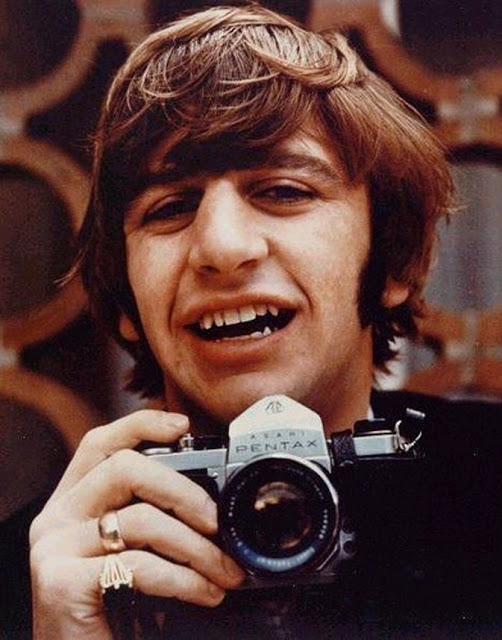
25 Wonderful Photos of Princess Diana at Home in the 1980s

Diana, Princess of Wales (born Diana Frances Spencer; 1 July 1961 – 31 August 1997), was a member of the British royal family. She was the first wife of Charles, Prince of Wales—the heir apparent to the British throne—and mother of Princes William and Harry. Diana’s activism and glamour made her an international icon and earned her enduring popularity as well as unprecedented public scrutiny, exacerbated by her tumultuous private life.

Diana was born into the British nobility and grew up close to the royal family on their Sandringham estate. In 1981, while working as a nursery teacher’s assistant, she became engaged to Prince Charles, the eldest son of Queen Elizabeth II. Their wedding took place at St Paul’s Cathedral in 1981 and made her Princess of Wales, a role in which she was enthusiastically received by the public. They had two sons, William and Harry, who were then second and third in the line of succession to the British throne. Diana’s marriage to Charles suffered due to their incompatibility and extramarital affairs. They separated in 1992, soon after the breakdown of their relationship became public knowledge. Their marital difficulties became increasingly publicised, and they divorced in 1996.

As Princess of Wales, Diana undertook royal duties on behalf of the Queen and represented her at functions across the Commonwealth realms. She was celebrated in the media for her unconventional approach to charity work. Her patronages initially centred on children and the elderly but she later became known for her involvement in two particular campaigns, that involving the social attitudes towards and the acceptance of AIDS patients, and the campaign promoted through the International Red Cross for the removal of landmines. She also raised awareness and advocated for ways to help people affected with cancer and mental illness. The Princess was initially noted for her shyness, but her charisma and friendliness endeared her to the public and helped her reputation survive the acrimonious collapse of her marriage. Considered to be very photogenic, she was a leader of fashion in the 1980s and 1990s. Diana’s death in a car crash in Paris led to extensive public mourning and global media attention. Her legacy has had a deep impact on the royal family and British society. (Wikipedia)

Here’s a gallery of 25 stunning photos of Princess Diana at home.

Princess Diana resting her head in her hands while sitting on the steps of her home at Highgrove, Gloucestershire in 1986.
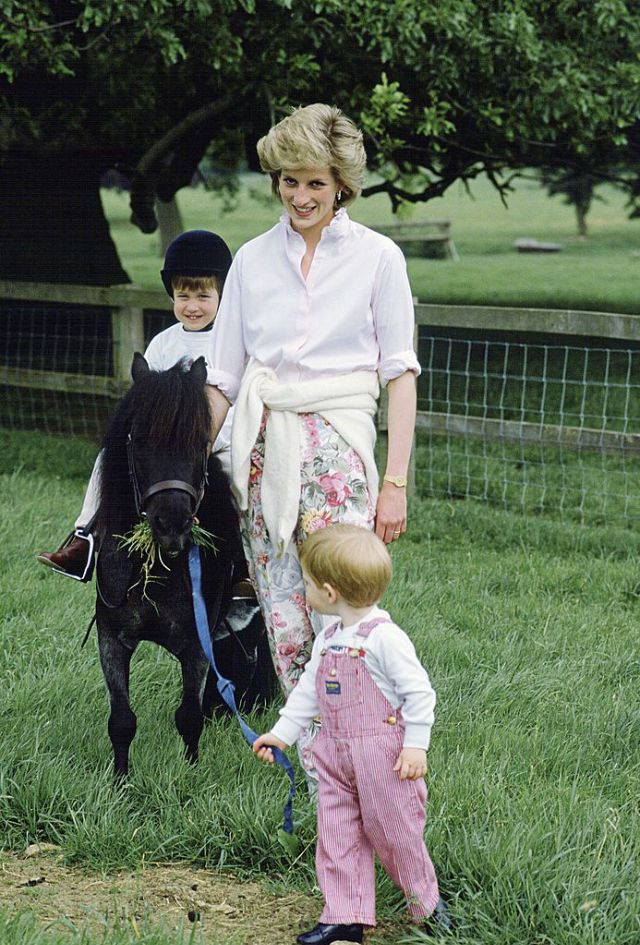
Princess Diana plays with her sons, William and Harry, on the grounds of Highgrove in 1986. William is riding a pony.
Princess Diana and Prince Charles with Prince William and Prince Harry at Highgrove in 1986.
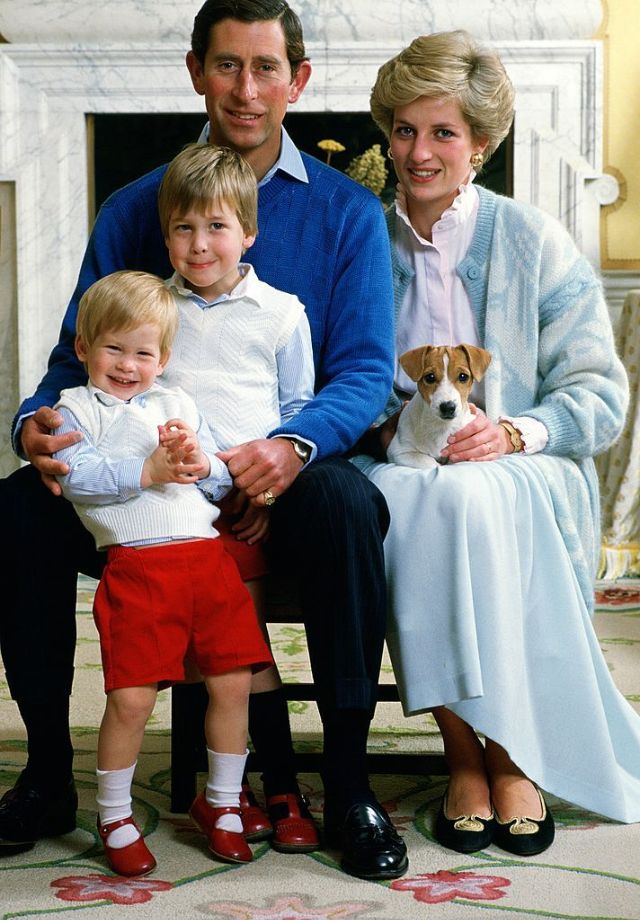
Prince Charles, Prince of Wales and Diana, Princess of Wales at home in Kensington Palace with their sons Prince William and Prince Harry in December 1986.
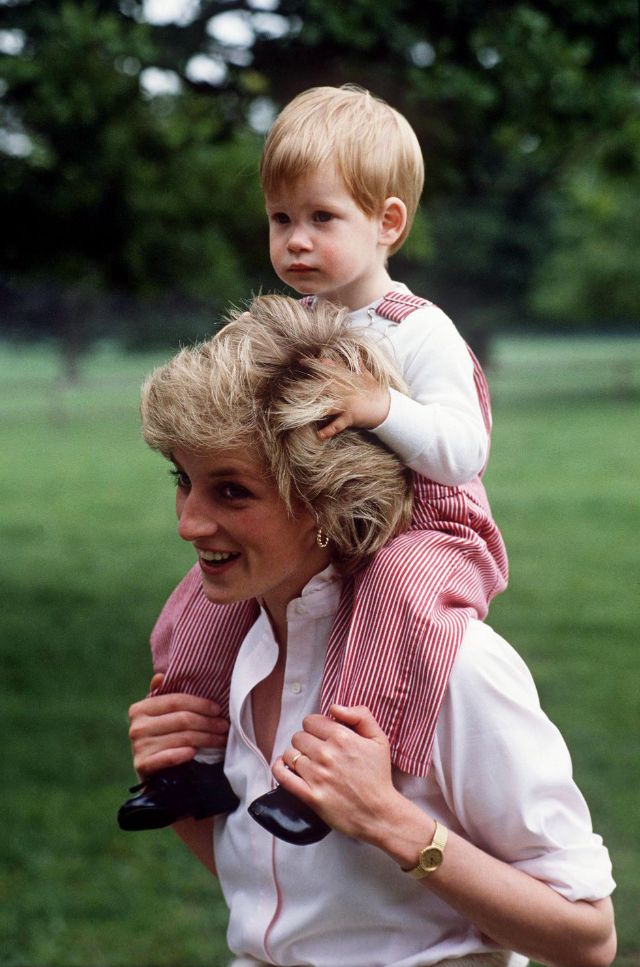
Princess Diana carries prince Henry (Harry) on her shoulders at Highgrove in 1986.
Princess Diana spends time with William and Harry on the royal residence grounds of Highgrove in Tetbury, Gloucestershire in July 1986.
The princess plays with Prince William at Kensington Palace in 1983.
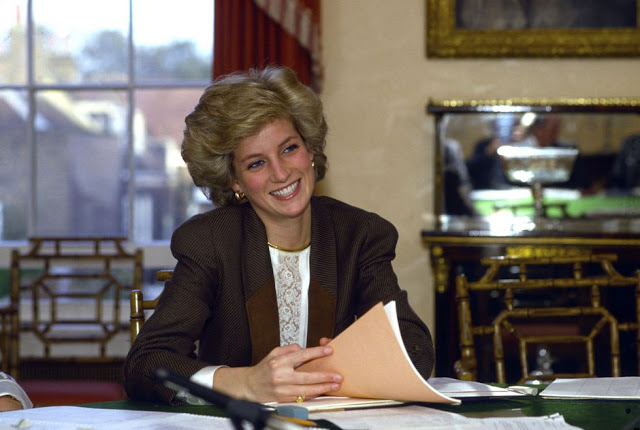
Princess Diana holds papers at her dining room table at home in Kensington Palace during a meeting in 1986.
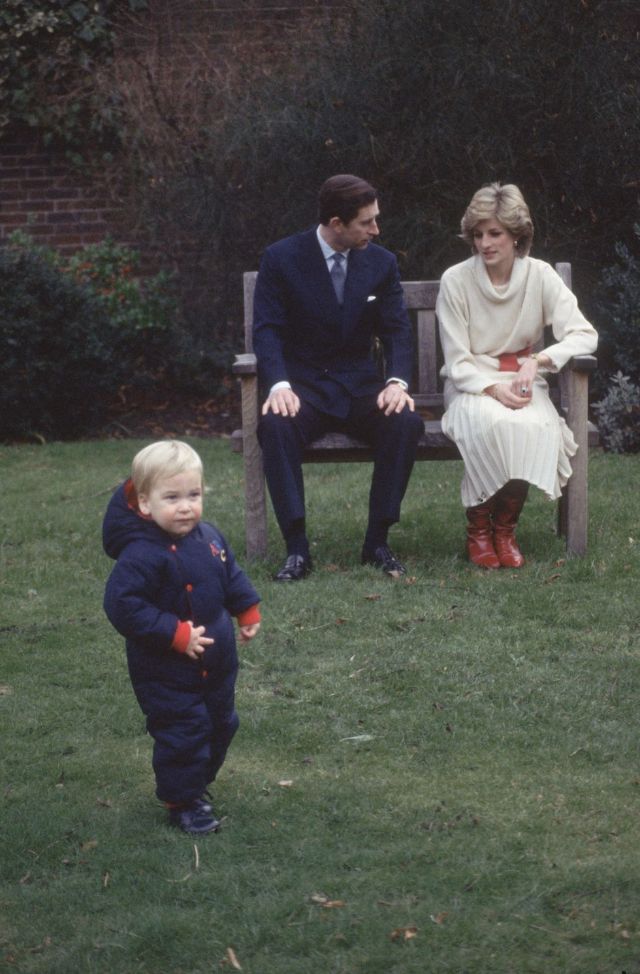
Princess Diana and her husband, Prince Charles, watch as a toddler Prince William explores the gardens of Kensington Palace.
Prince William and Prince Henry (Harry) sit at a piano with their mother at home in Kensington Palace in 1985.
Surrounded by designers David and Elizabeth Emanuel, Princess Diana considers designs and fabrics for an upcoming tour in the sitting room at Kensington Palace.
The royal couple relaxes in the Kensington Palace gardens on June 12, 1984.
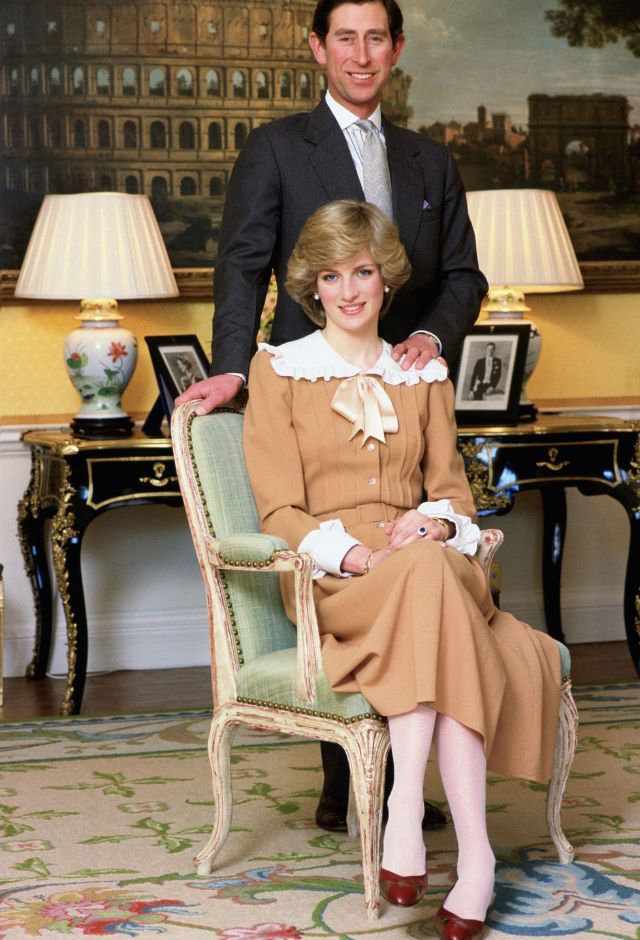
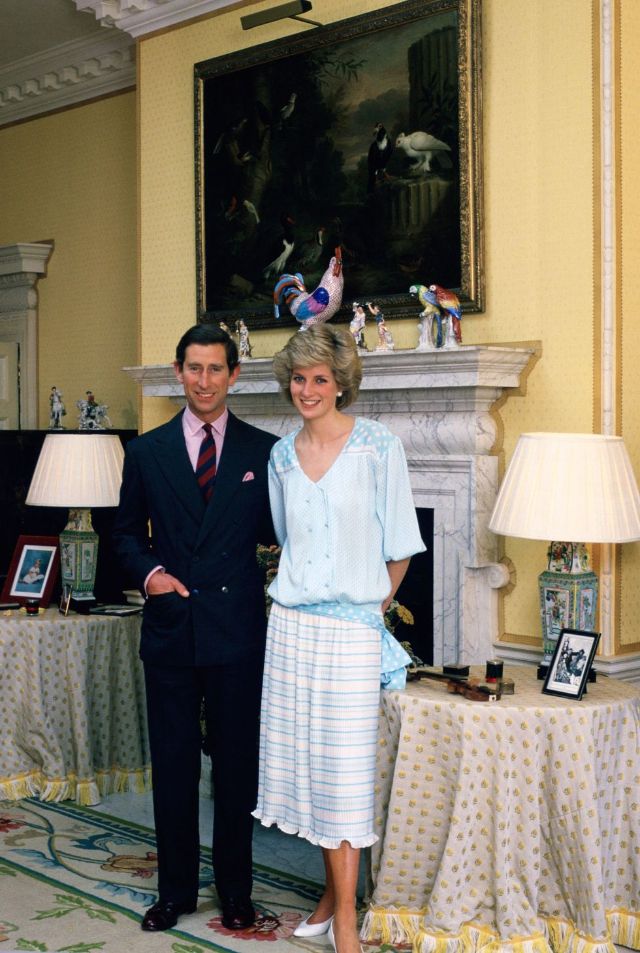
Princess Diana and Prince Charles situate themselves for a picture at home in Kensington Palace.
In the garden of her home in Highgrove, Princess Diana watches her sons play with a playhouse in 1986.
In 1985, Princess Diana helps her son, William, with a jigsaw puzzle in his playroom in Kensington Palace.
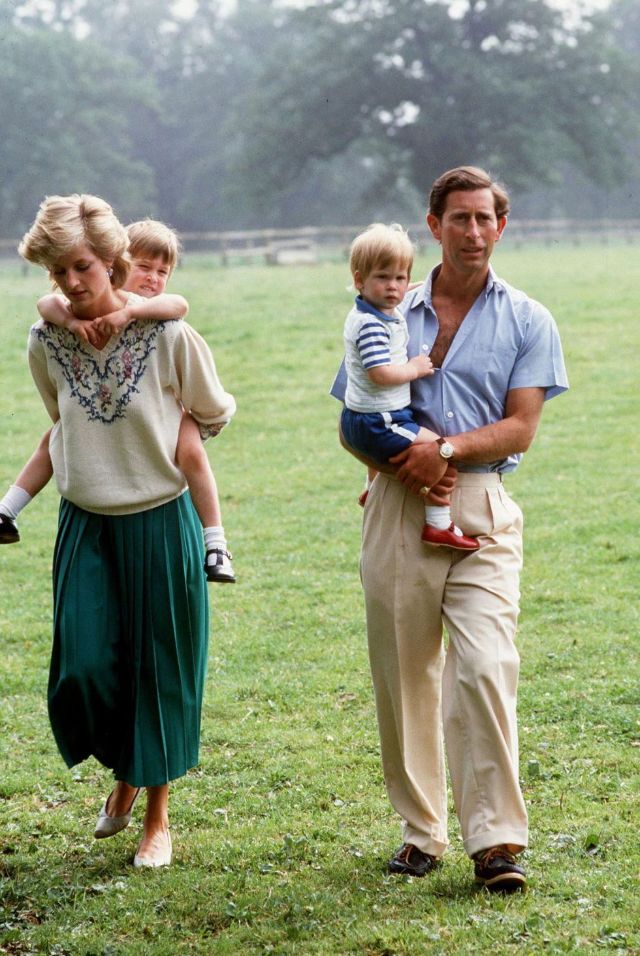
In the royal family’s Highrove House home, Prince William and Prince Harry hitch rides from their parents.
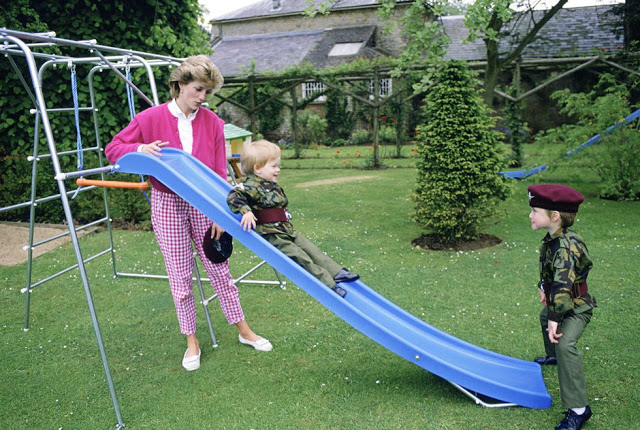
The Princess of Wales plays with her sons, dressed in miniature Parachute Regiment uniforms, on a slide in the garden at Highgrove.
Princess Diana leads a small pony with Prince William on top at Highgrove.
The royal couple stands together for a snapshot in their home at Kensington Palace.
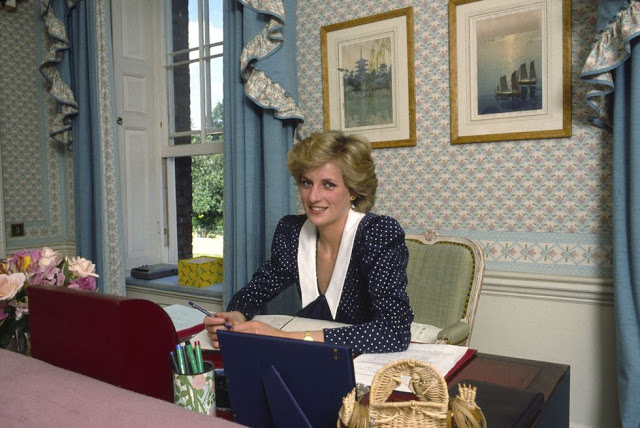
The princess sits at her desk in the sitting room at Kensington Palace in 1985.
Leaning against a sundial, the Princess of Wales relaxes at her home at Highgrove House.
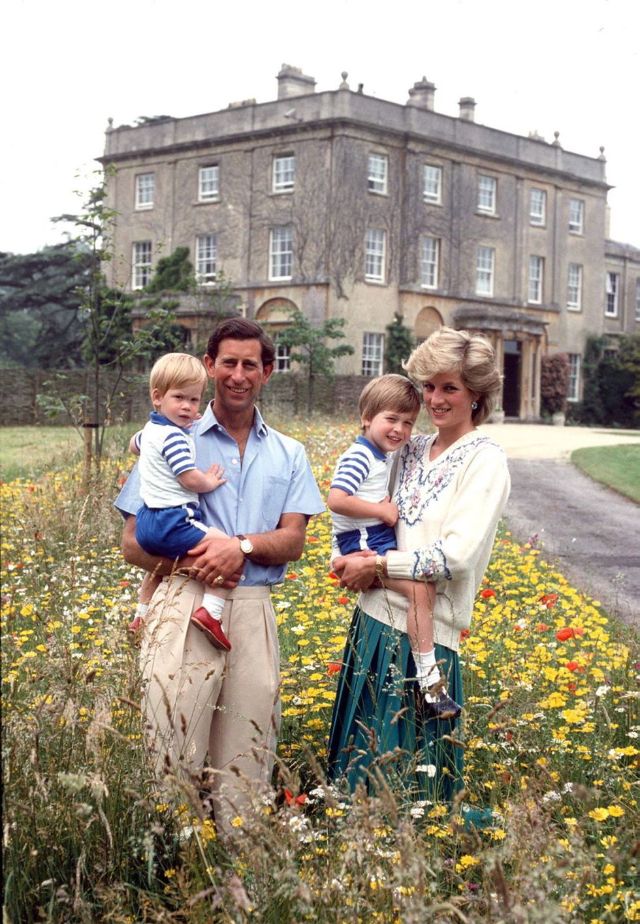
Princess Diana and Prince Charles pose with their sons in the wild flower meadow at Highgrove in 1986.
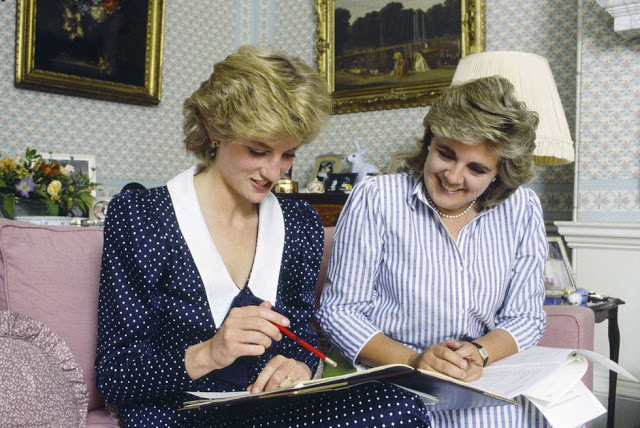
In the sitting room at Kensington Palace, Princess Diana works with her Lady-In-Waiting and private secretary, Anne Beckwith-Smith.
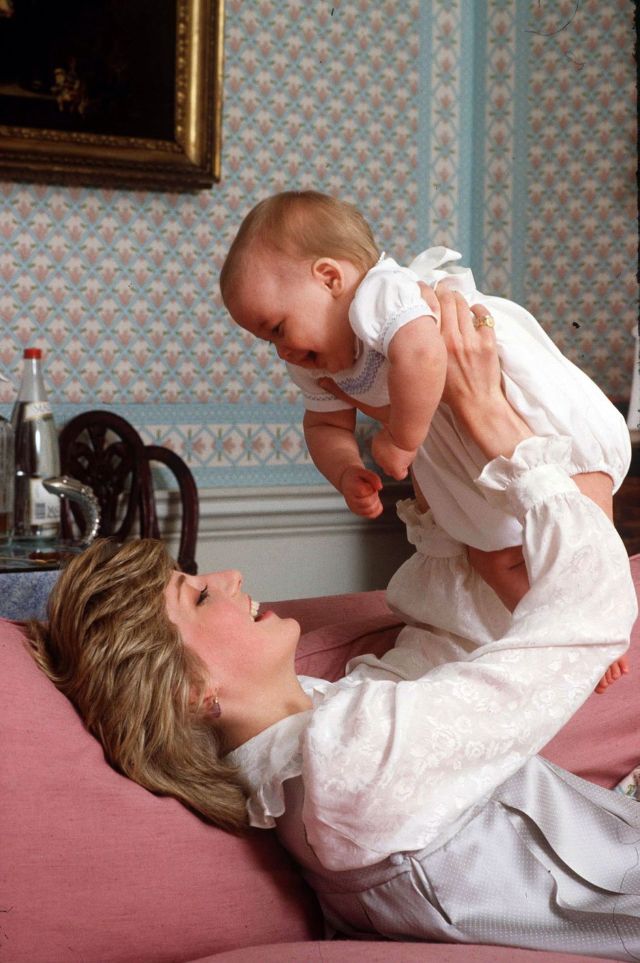
The Prince And Princess of Wales hold baby Prince William at Kensington Palace.
The royal couple attend to their son outside their Highrove home in Tetbury.

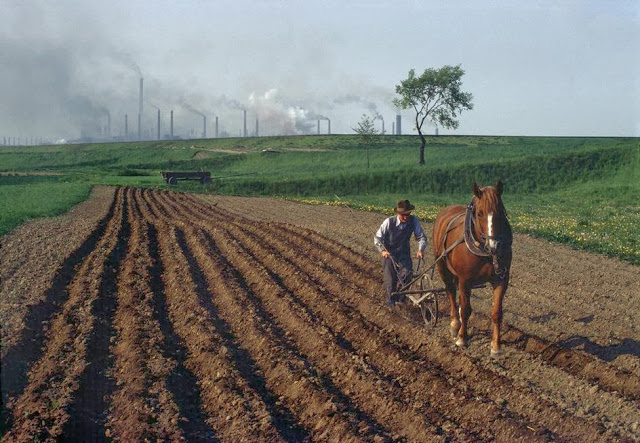
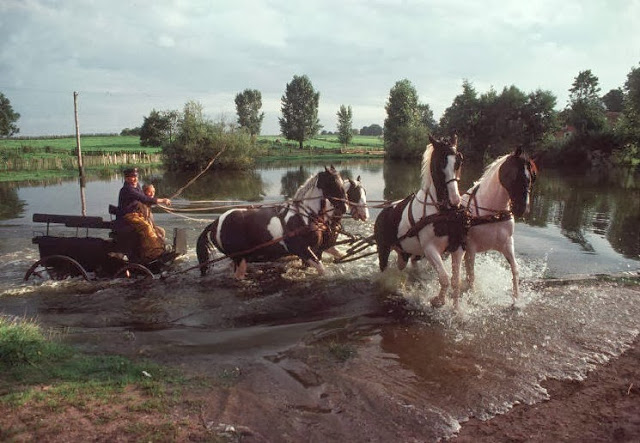
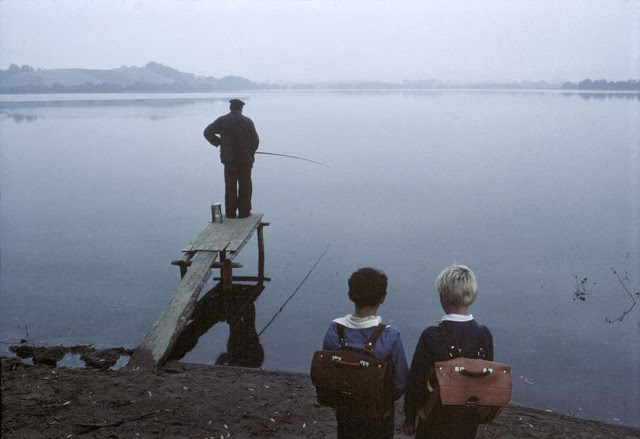
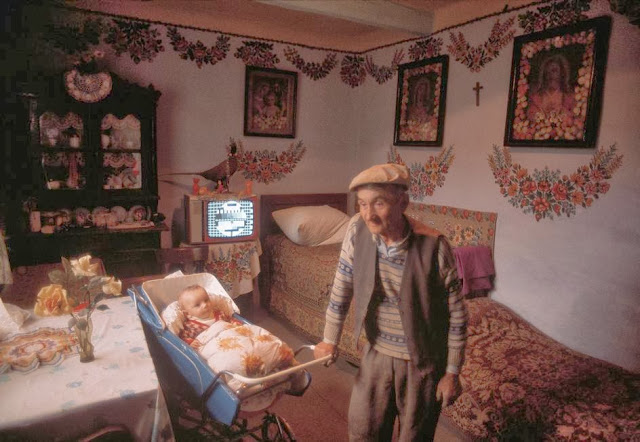
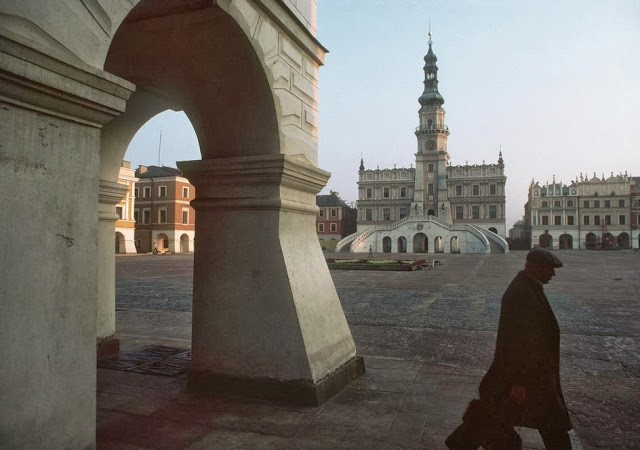
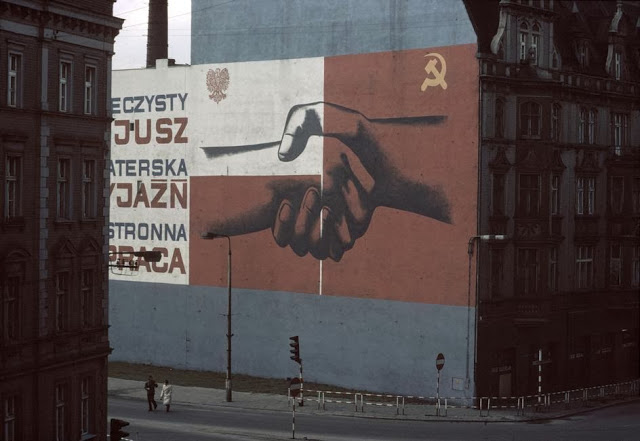
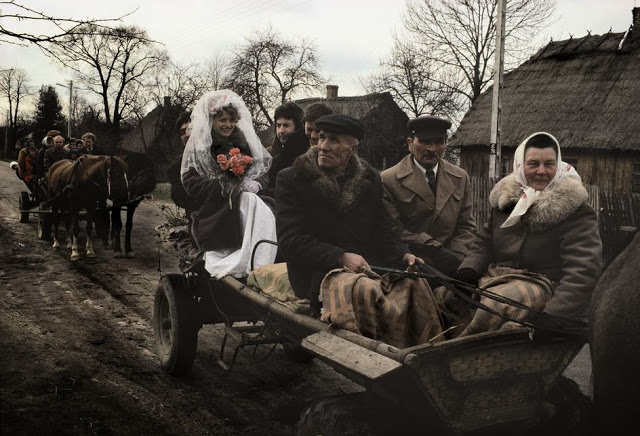
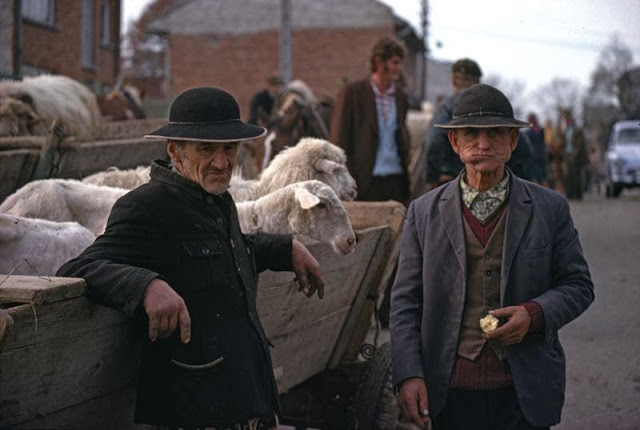
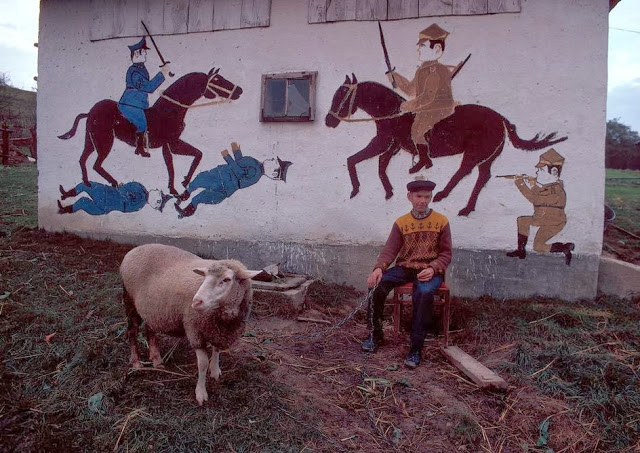
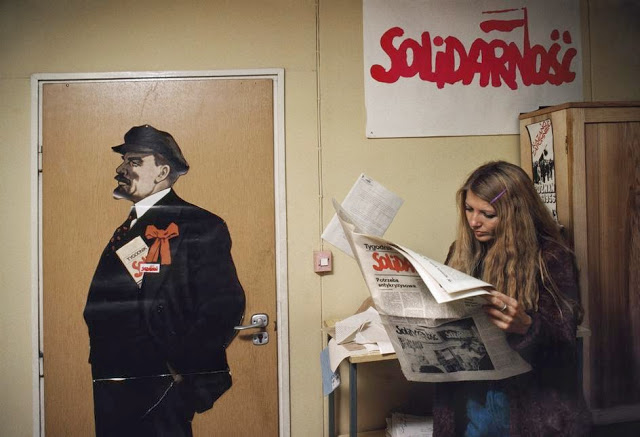
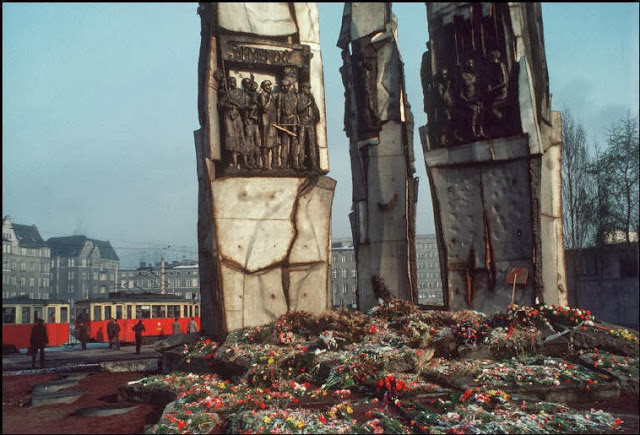
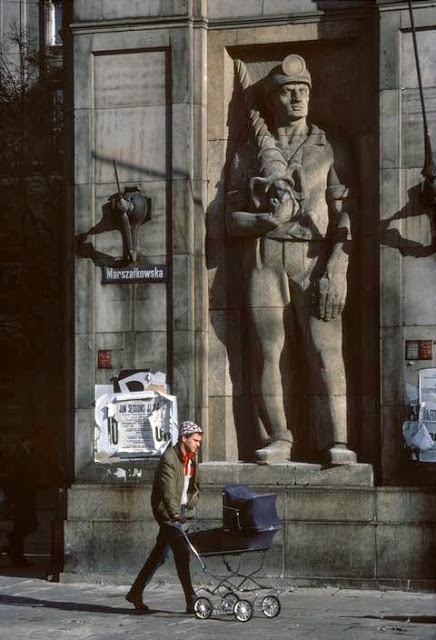
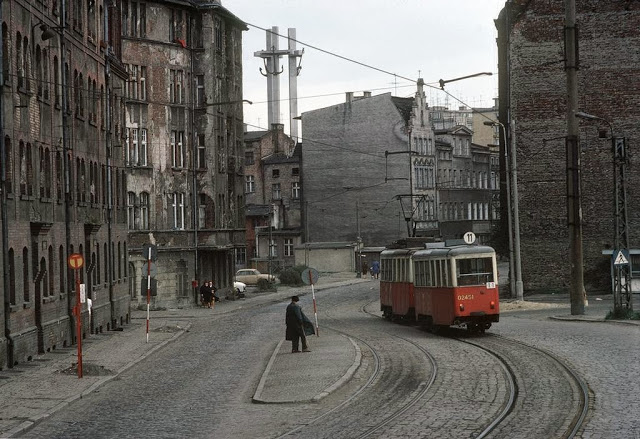
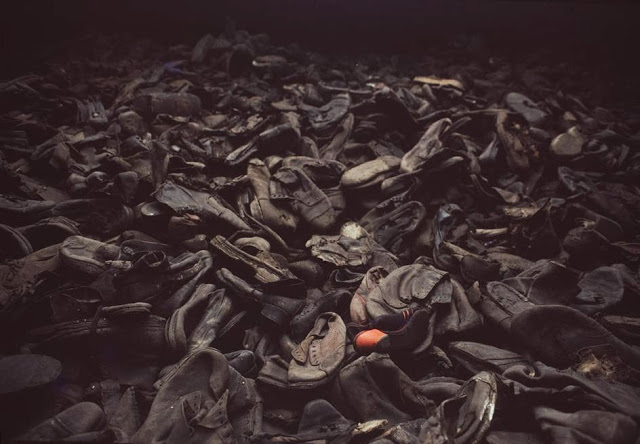
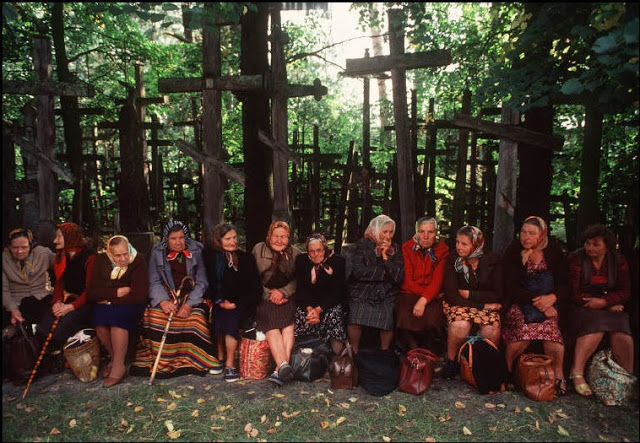
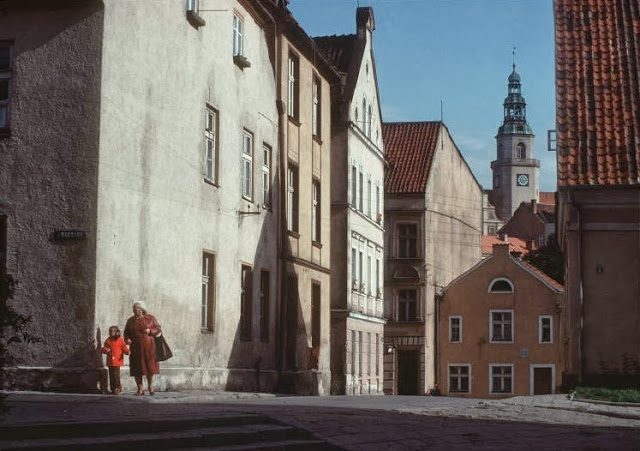
40 Amazing Photographs Showing Life in Poland in the Early 1980s

Poland, officially the Republic of Poland, is a country in Central Europe. It is divided into 16 administrative provinces called voivodeships, covering an area of 312,696 km2 (120,733 sq mi). Poland has a population of over 38 million and is the fifth-most populous member state of the European Union. Warsaw is the nation’s capital and largest metropolis. Other major cities include Kraków, Lódz, Wroclaw, Poznan, Gdansk, and Szczecin.

Poland’s territory extends from the Baltic Sea in the north to the Sudeten and Carpathian Mountains in the south. The country is bordered by Lithuania and Russia to the northeast, Belarus and Ukraine to the east, Slovakia and the Czech Republic to the south, and Germany to the west. Poland also shares maritime boundaries with Denmark and Sweden.

The history of human activity on Polish soil spans thousands of years. Throughout the late antiquity period it became extensively diverse, with various cultures and tribes settling on the vast Central European Plain. However, it was the Polans who dominated the region and gave Poland its name. The establishment of Polish statehood can be traced to 966, when the pagan ruler of a realm coextensive with the territory of present-day Poland embraced Christianity and converted to Catholicism. The Kingdom of Poland was founded in 1025 and in 1569 cemented its longstanding political association with Lithuania by signing the Union of Lublin. The latter led to the forming of the Polish–Lithuanian Commonwealth, one of the largest and most populous nations of 16th and 17th-century Europe, with a uniquely liberal political system that adopted Europe’s first modern constitution, the Constitution of 3 May 1791.

With the end of the prosperous Polish Golden Age, the country was partitioned by neighbouring states at the end of the 18th century. It regained its independence in 1918 with the Treaty of Versailles and restored its position as a key player in European politics. In September 1939, the German-Soviet invasion of Poland marked the beginning of World War II, which resulted in the Holocaust and millions of Polish casualties. As a member of the Eastern Bloc, the Polish People’s Republic proclaimed forthwith was a chief signatory of the Warsaw Pact amidst global Cold War tensions. In the wake of the 1989 events, notably through the emergence and contributions of the Solidarity movement, the communist government was dissolved and Poland re-established itself as a democratic republic.

Poland is a developed market and a middle power; it has the sixth largest economy in the European Union by nominal GDP and the fifth largest by GDP (PPP). It provides very high standards of living, safety and economic freedom, as well as free university education and a universal health care system. The country has 17 UNESCO World Heritage Sites, 15 of which are cultural. Poland is a founding member state of the United Nations, as well as a member of the World Trade Organization, NATO, and the European Union (including the Schengen Area). (Wikipedia)

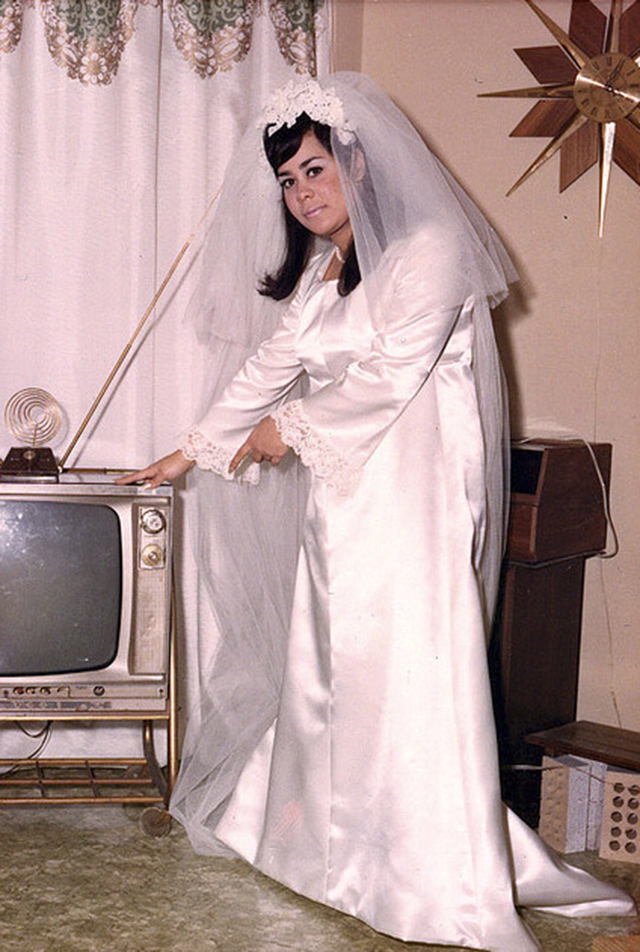
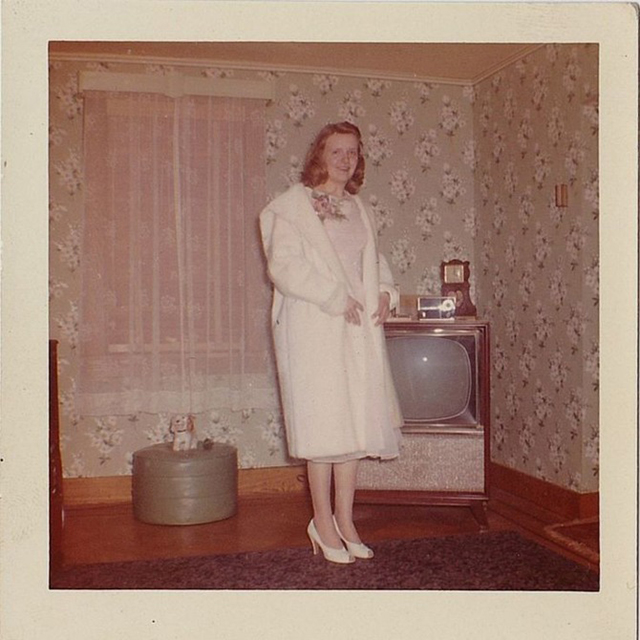
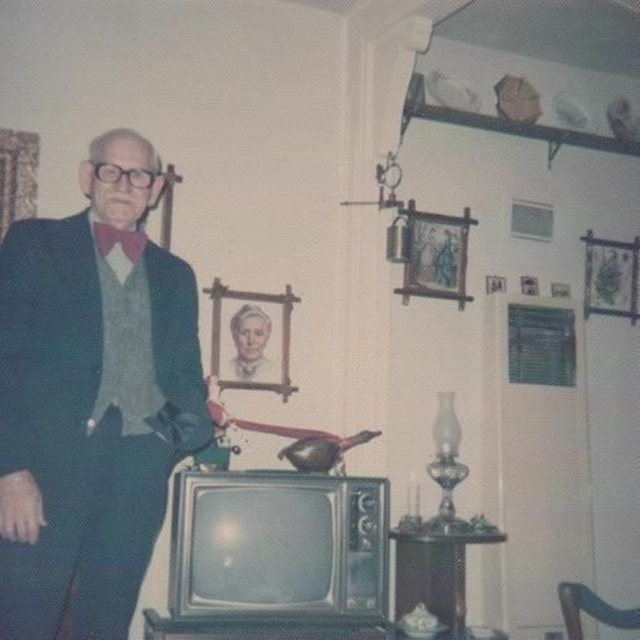
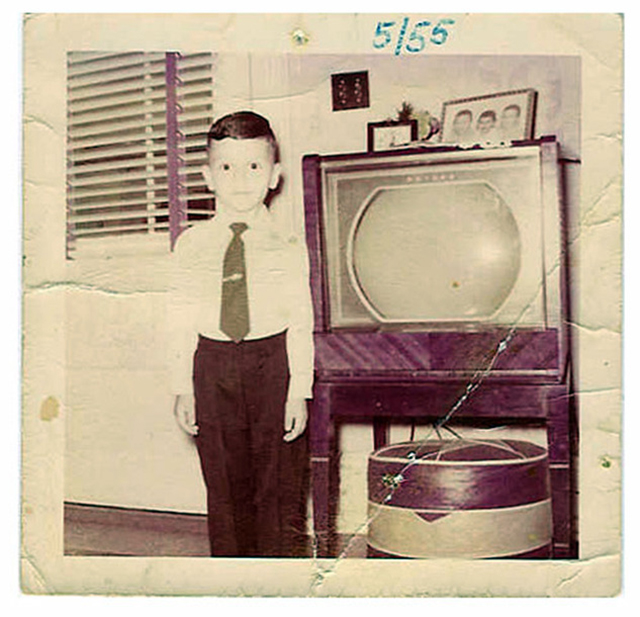
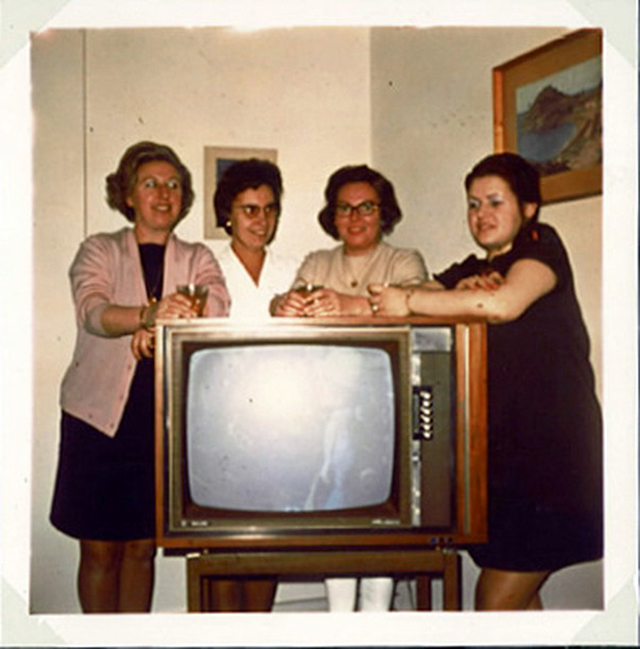
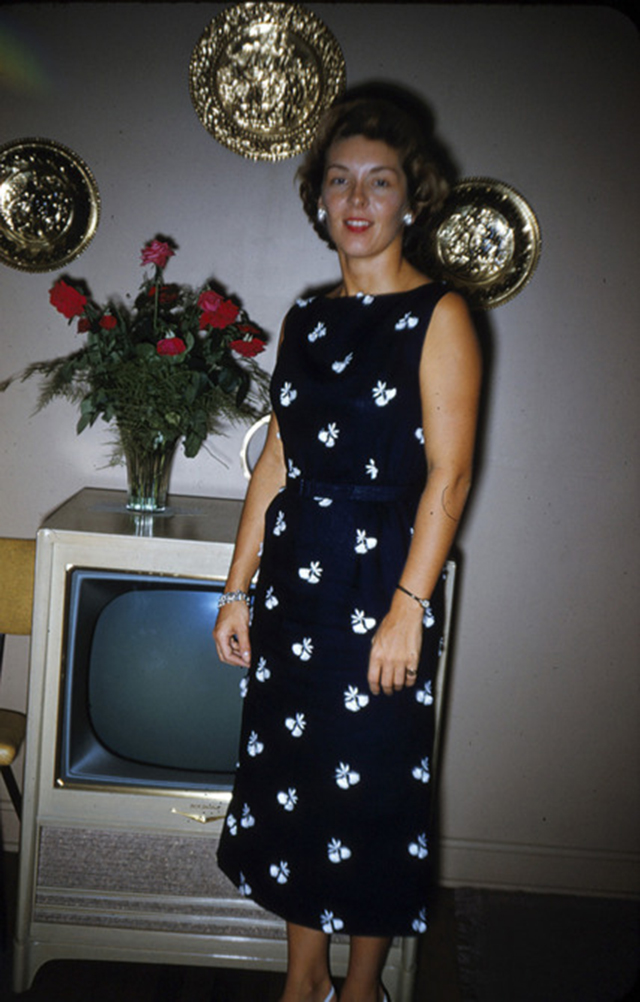
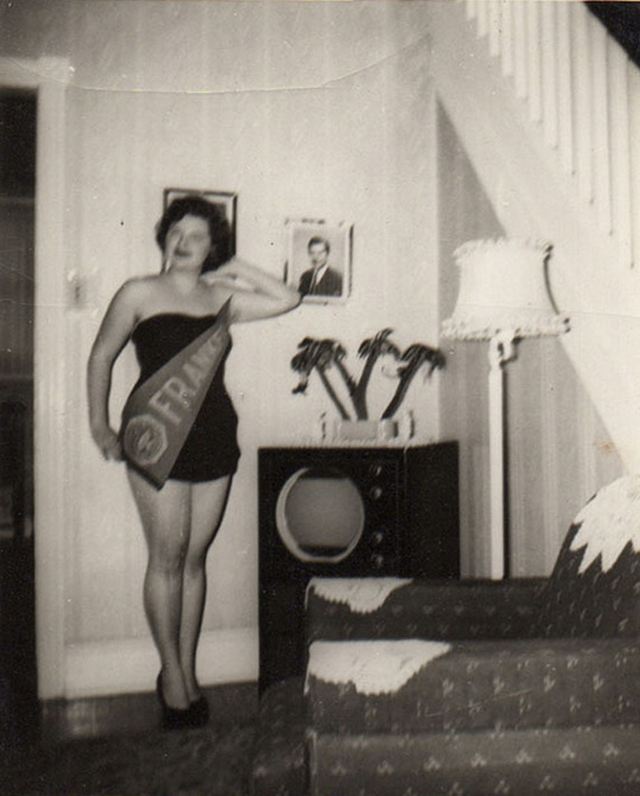
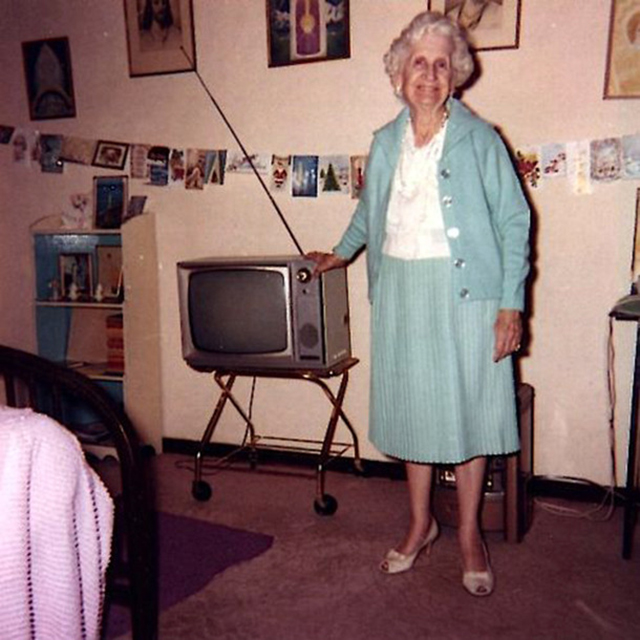
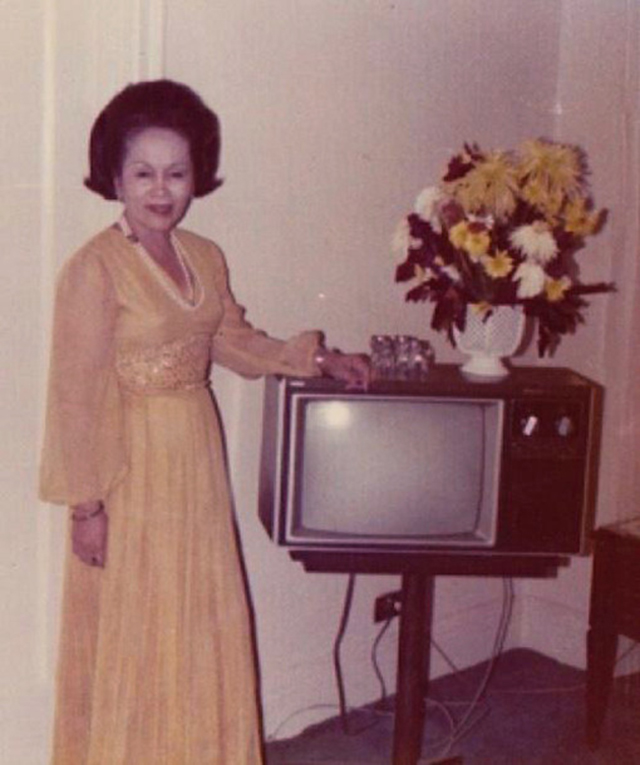
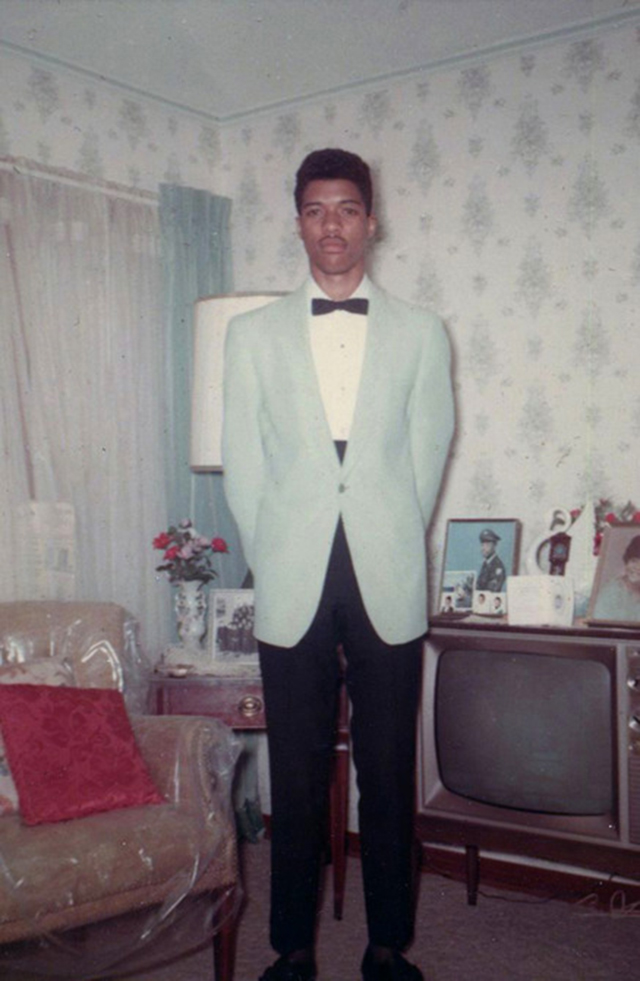
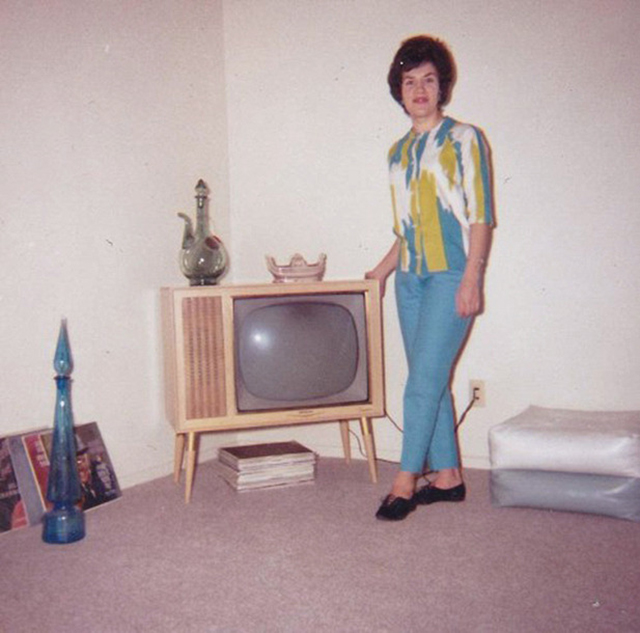
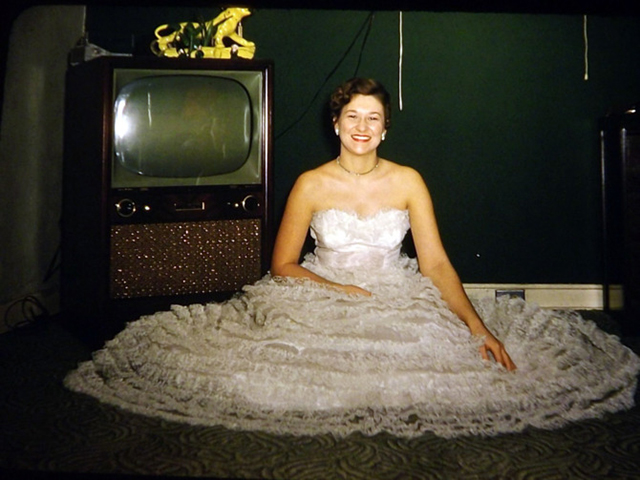
22 Funny Vintage Photographs of People Standing Next to Their Televisions

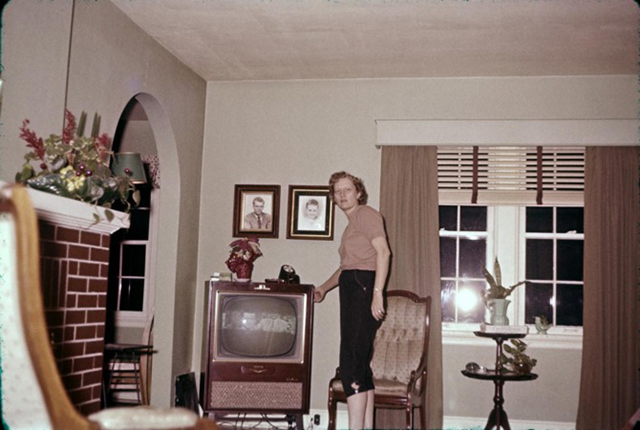
“Go Over There, By the TV” – The thing your mum asks you to go and stand in front of when she takes your picture. TVs were a prime example when they arrived in many homes in the 1950s, both a source of pride and wonder.

Here’s some of funny interesting snapshots of people standing next to their televisions.

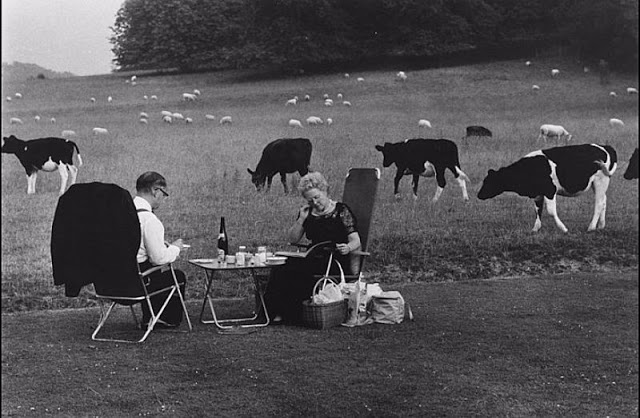
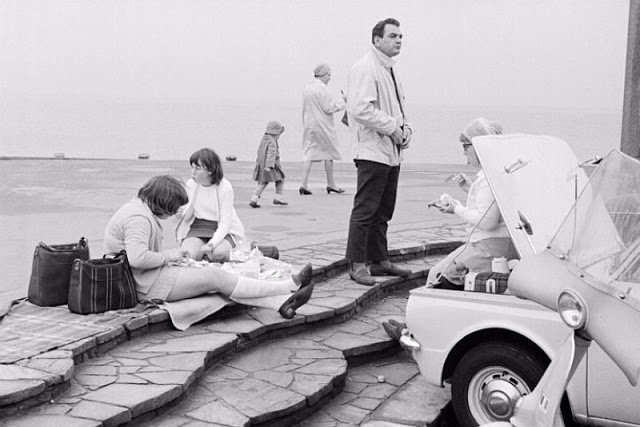
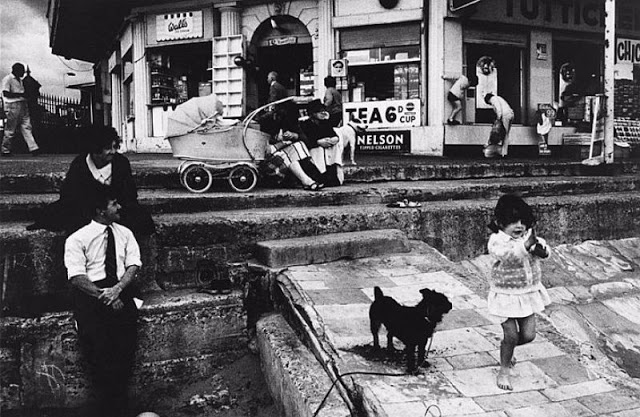
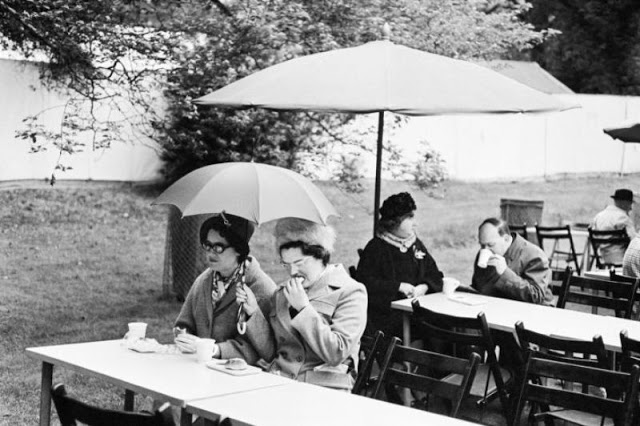
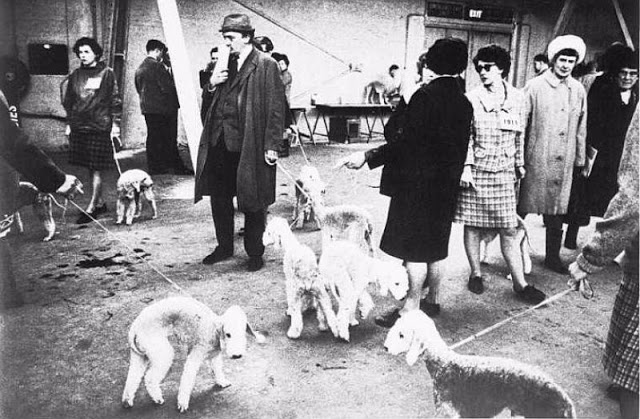
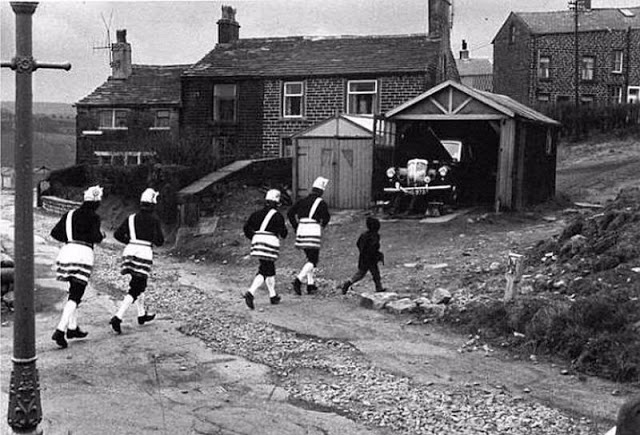
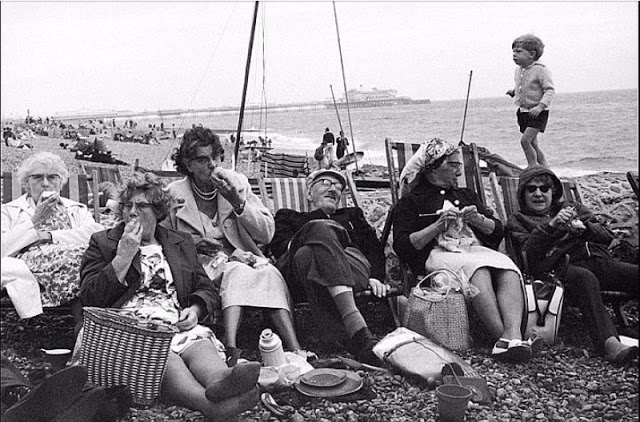
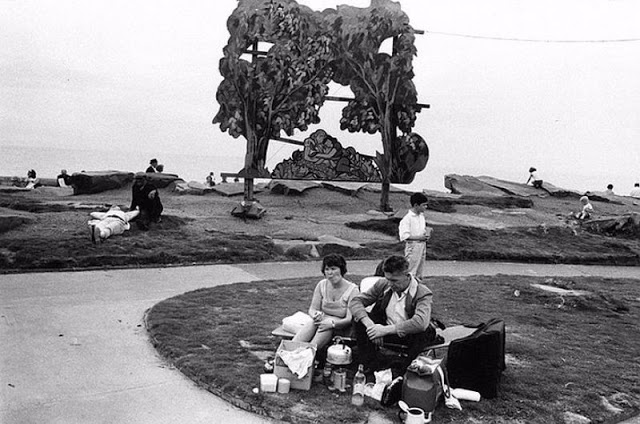
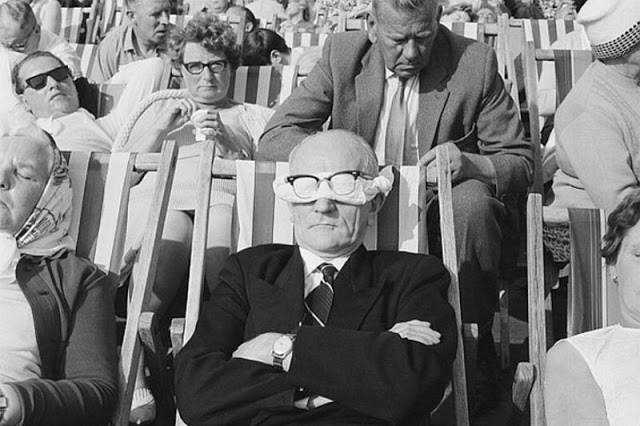
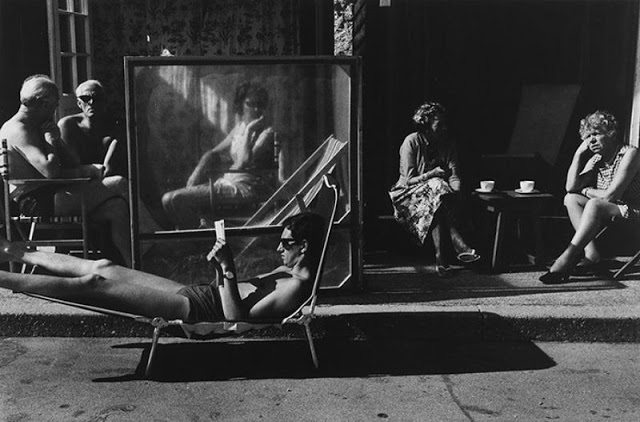
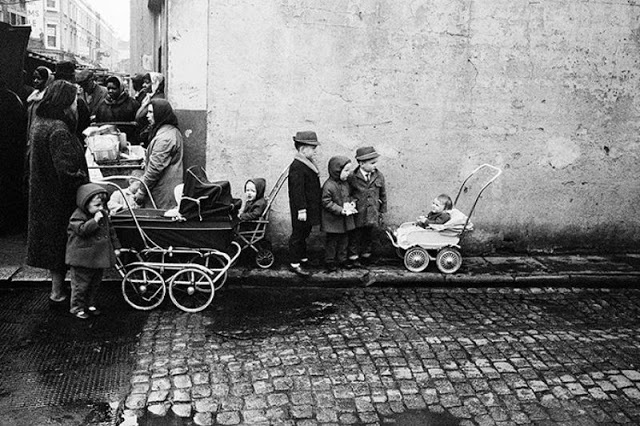
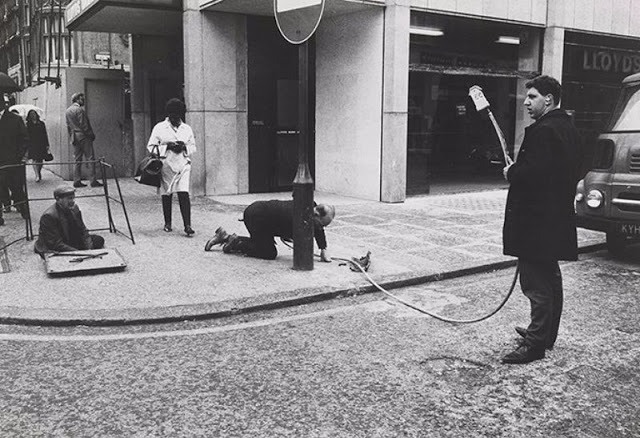
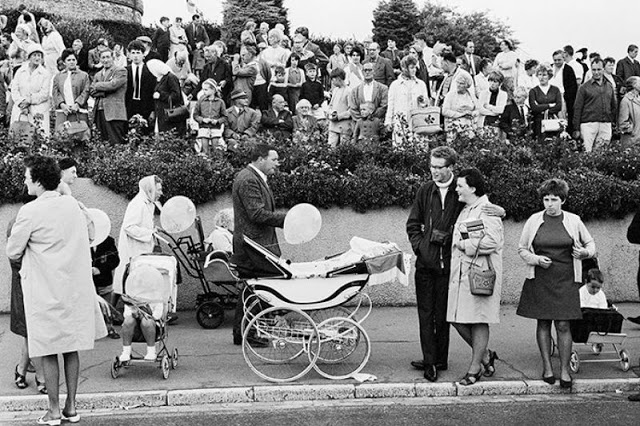
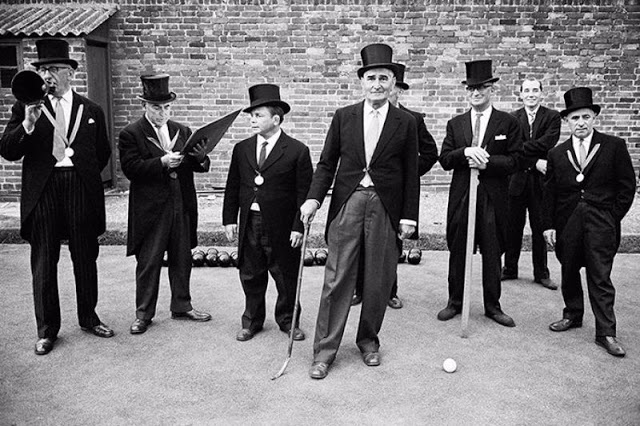
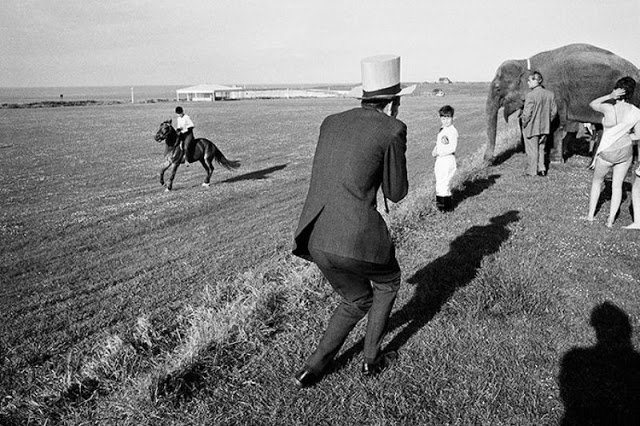
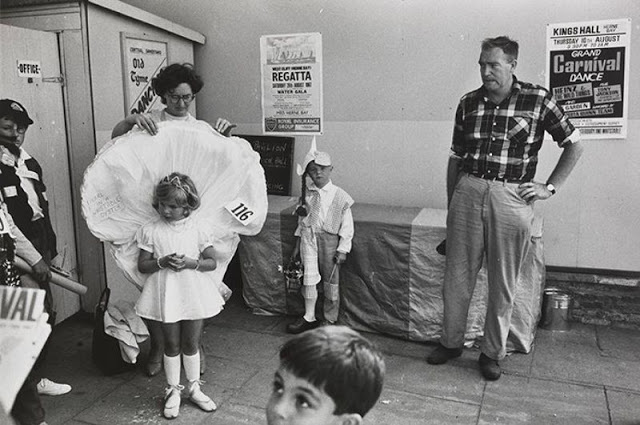
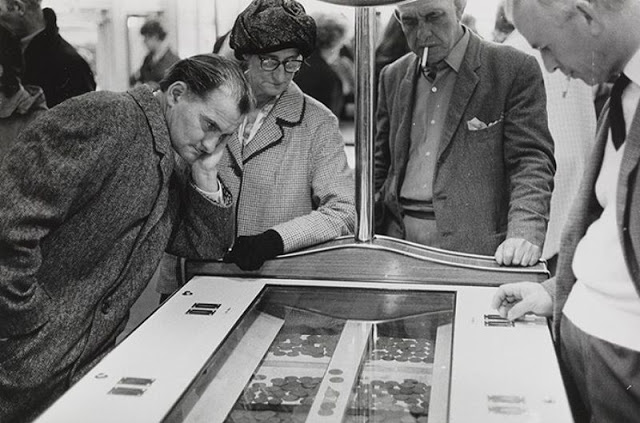
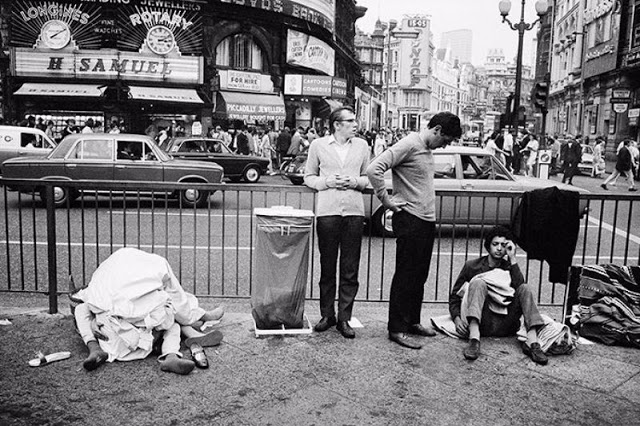
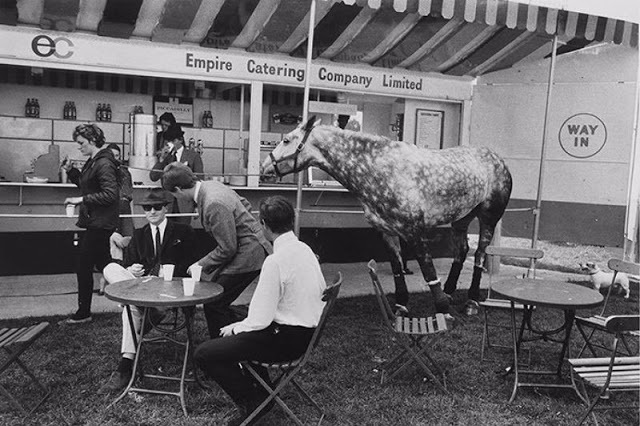
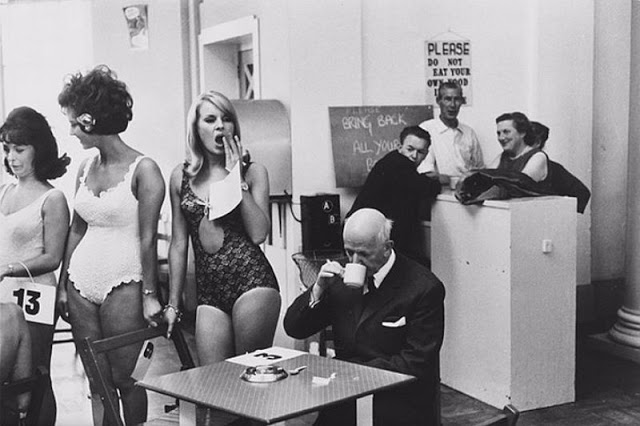
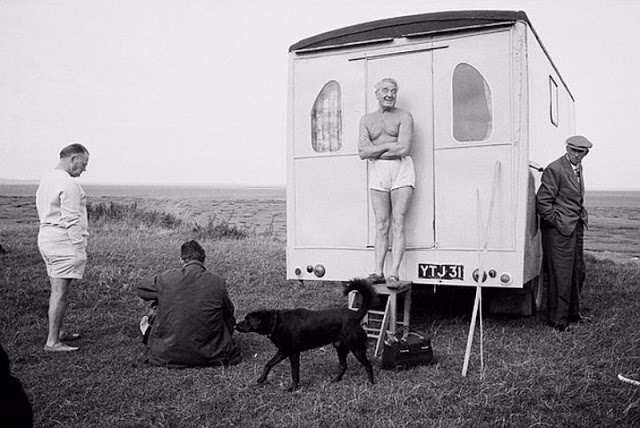
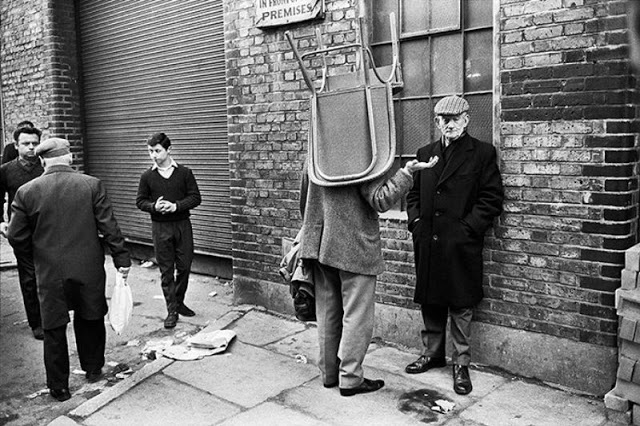
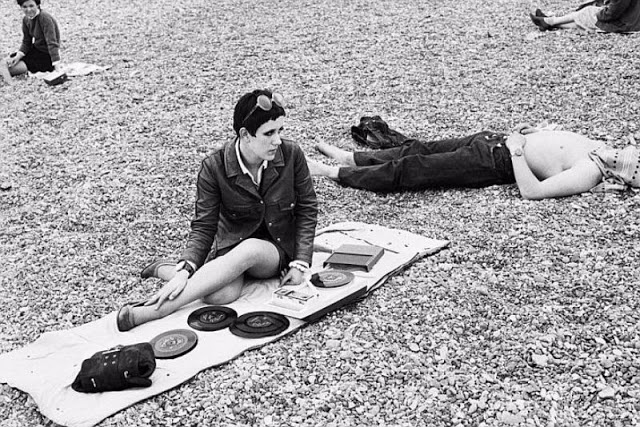
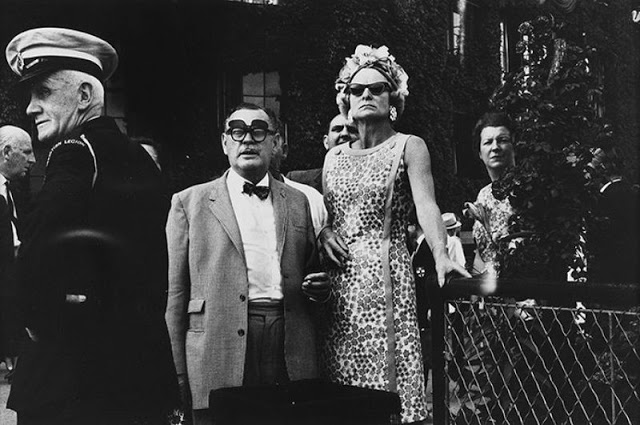
Only in England: Photographer Toured the UK Between 1966 and 1969 Seeking Out Odd British Customs

England is a country that is part of the United Kingdom. It shares land borders with Wales to its west and Scotland to its north. The Irish Sea lies northwest of England and the Celtic Sea to the southwest. England is separated from continental Europe by the North Sea to the east and the English Channel to the south. The country covers five-eighths of the island of Great Britain, which lies in the North Atlantic, and includes over 100 smaller islands, such as the Isles of Scilly and the Isle of Wight.

The area now called England was first inhabited by modern humans during the Upper Paleolithic period, but takes its name from the Angles, a Germanic tribe deriving its name from the Anglia peninsula, who settled during the 5th and 6th centuries. England became a unified state in the 10th century and has had a significant cultural and legal impact on the wider world since the Age of Discovery, which began during the 15th century. The English language, the Anglican Church, and English law—the basis for the common law legal systems of many other countries around the world—developed in England, and the country’s parliamentary system of government has been widely adopted by other nations. The Industrial Revolution began in 18th-century England, transforming its society into the world’s first industrialised nation.

England’s terrain is chiefly low hills and plains, especially in central and southern England. However, there is upland and mountainous terrain in the north (for example, the Lake District and Pennines) and in the west (for example, Dartmoor and the Shropshire Hills). The capital is London, which has the largest metropolitan area in the United Kingdom. England’s population of 56.3 million comprises 84% of the population of the United Kingdom, largely concentrated around London, the South East, and conurbations in the Midlands, the North West, the North East, and Yorkshire, which each developed as major industrial regions during the 19th century.

The Kingdom of England – which after 1535 included Wales – ceased being a separate sovereign state on 1 May 1707, when the Acts of Union put into effect the terms agreed in the Treaty of Union the previous year, resulting in a political union with the Kingdom of Scotland to create the Kingdom of Great Britain. In 1801, Great Britain was united with the Kingdom of Ireland (through another Act of Union) to become the United Kingdom of Great Britain and Ireland. In 1922 the Irish Free State seceded from the United Kingdom, leading to the latter being renamed the United Kingdom of Great Britain and Northern Ireland. (Wikipedia)

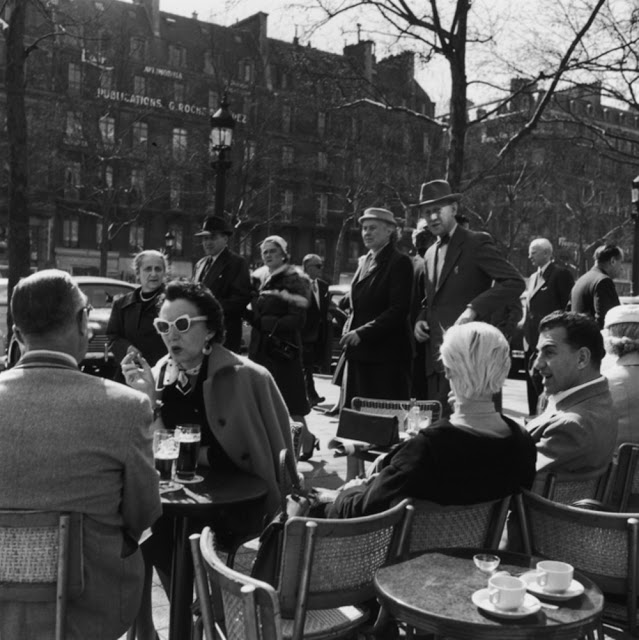
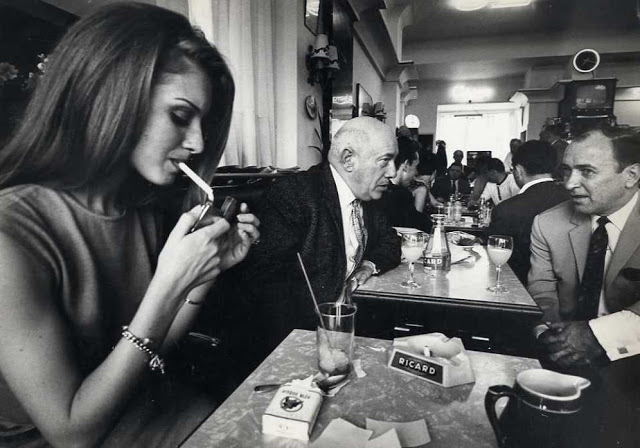
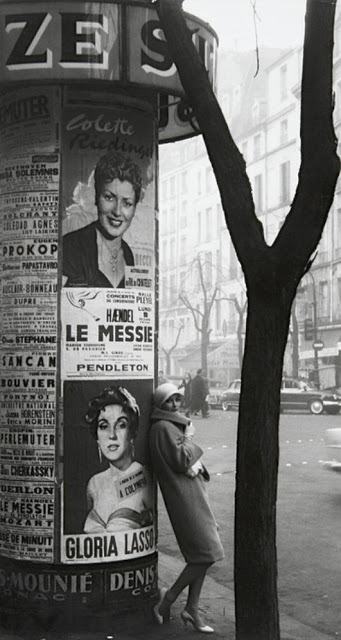
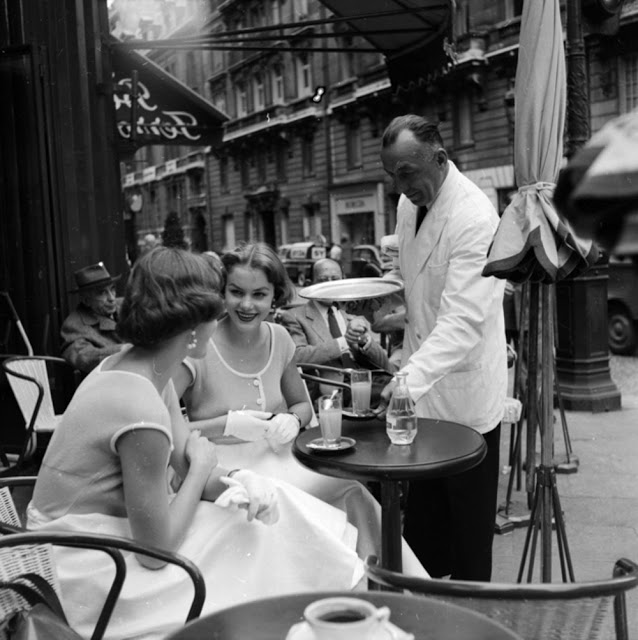
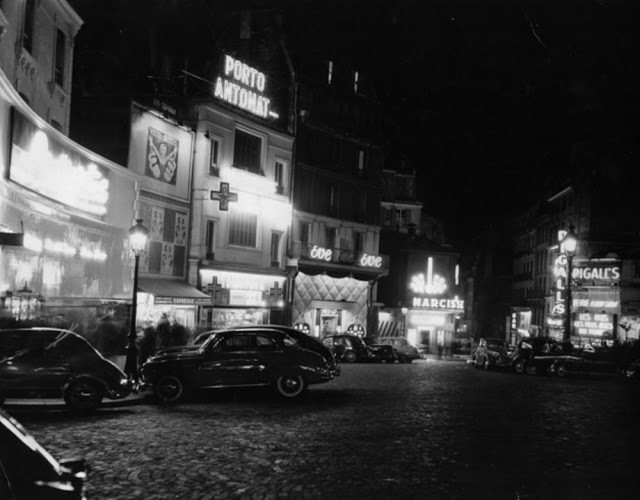
21 Fantastic Photographs Showing Scenes of Paris in the 1950s and 1960s

Not unlike its Western “great power” counterparts, 1960s France was a time of economic gains and social upheaval. Under the presidency of Charles de Gaulle, the country rebuilt itself from the destruction wrought by World War II, becoming more prosperous and less reliant on countries like the United States along the way.

Paris is the capital and most populous city of France, with an estimated population of 2,165,423 residents in 2019 in an area of more than 105 km² (41 sq mi), making it the 34th most densely populated city in the world in 2020. Since the 17th century, Paris has been one of the world’s major centres of finance, diplomacy, commerce, fashion, gastronomy, science, and arts, and has sometimes been referred to as the capital of the world. The City of Paris is the centre and seat of government of the region and province of Île-de-France, or Paris Region, with an estimated population of 12,997,058 in 2020, or about 18% of the population of France, making it in 2020 the second largest metropolitan area in the OECD, and 14th largest in the world in 2015. The Paris Region had a GDP of €709 billion ($808 billion) in 2017. According to the Economist Intelligence Unit Worldwide Cost of Living Survey, in 2021 Paris was the city with the second-highest cost of living in the world, tied with Singapore, and after Tel Aviv.

Paris is a major railway, highway, and air-transport hub served by two international airports: Paris–Charles de Gaulle (the second-busiest airport in Europe) and Paris–Orly. Opened in 1900, the city’s subway system, the Paris Métro, serves 5.23 million passengers daily; it is the second-busiest metro system in Europe after the Moscow Metro. Gare du Nord is the 24th-busiest railway station in the world and the busiest located outside Japan, with 262 million passengers in 2015. Paris is especially known for its museums and architectural landmarks: the Louvre received 2.8 million visitors in 2021, despite the long museum closings caused by the COVID-19 virus. The Musée d’Orsay, Musée Marmottan Monet and Musée de l’Orangerie are noted for their collections of French Impressionist art. The Pompidou Centre Musée National d’Art Moderne has the largest collection of modern and contemporary art in Europe. The Musée Rodin and Musée Picasso exhibit the works of two noted Parisians. The historical district along the Seine in the city centre has been classified as a UNESCO World Heritage Site since 1991; popular landmarks there include the Cathedral of Notre Dame de Paris on the Île de la Cité, now closed for renovation after the 15 April 2019 fire. Other popular tourist sites include the Gothic royal chapel of Sainte-Chapelle, also on the Île de la Cité; the Eiffel Tower, constructed for the Paris Universal Exposition of 1889; the Grand Palais and Petit Palais, built for the Paris Universal Exposition of 1900; the Arc de Triomphe on the Champs-Élysées, and the hill of Montmartre with its artistic history and its Basilica of Sacré-Coeur.

Paris hosts several United Nations organisations: the UNESCO, the Young Engineers / Future Leaders, the World Federation of Engineering Organizations, and other international organisations such as the OECD, the OECD Development Centre, the International Bureau of Weights and Measures, the International Energy Agency, the International Federation for Human Rights, the International Organisation of La Francophonie; along with European bodies such as the European Space Agency, the Euro Banking Association or the European Securities and Markets Authority. Other international organisations were founded in Paris such as the CIMAC in 1951 (International Council on Combustion Engines | Conseil International des Machines à Combustion), or the modern Olympic Games in 1894 which was then moved to Lausanne, Switzerland.

Tourism recovered in the Paris region in 2021, increasing to 22.6 million visitors, thirty percent more than in 2020, but still well below 2019 levels. The number of visitors from the United States increased by 237 percent over 2020. Museums re-opened in 2021, with limitations on the number of visitors at a time and a requirement that visitors wear masks.

The football club Paris Saint-Germain and the rugby union club Stade Français are based in Paris. The 80,000-seat Stade de France, built for the 1998 FIFA World Cup, is located just north of Paris in the neighbouring commune of Saint-Denis. Paris hosts the annual French Open Grand Slam tennis tournament on the red clay of Roland Garros. The city hosted the Olympic Games in 1900, 1924 and will host the 2024 Summer Olympics. The 1938 and 1998 FIFA World Cups, the 2007 Rugby World Cup, as well as the 1960, 1984 and 2016 UEFA European Championships were also held in the city. Every July, the Tour de France bicycle race finishes on the Avenue des Champs-Élysées in Paris. (Wikipedia)

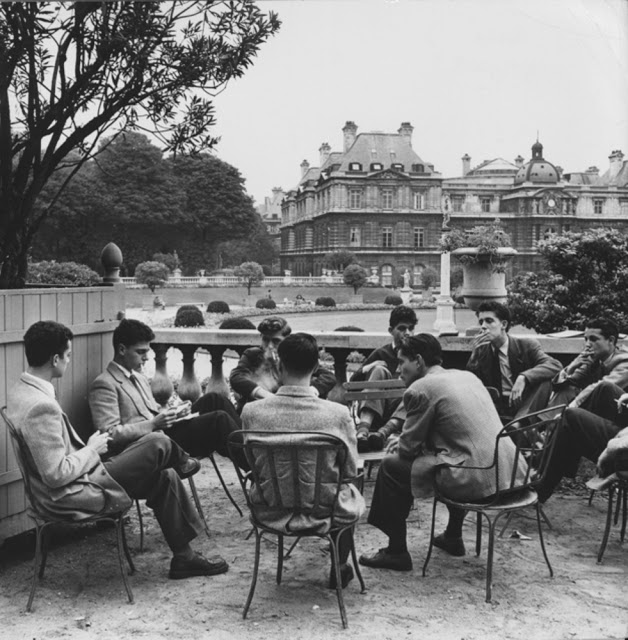
Students from the Sorbonne kick it in the Luxembourg Gardens, 1950.
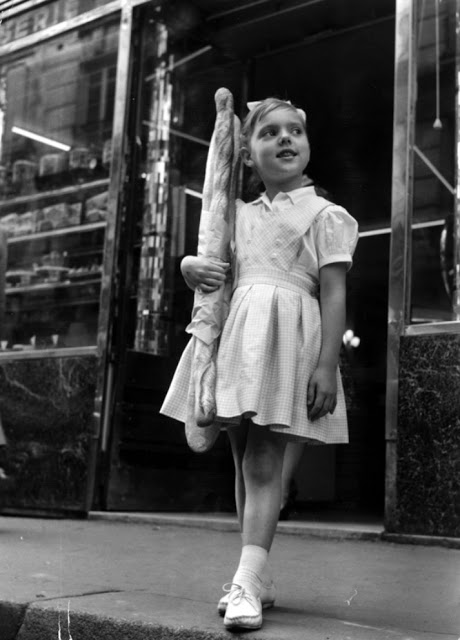
From a young age, the French trust their children to do grocery shopping and not spend the money on drugs. 1961.
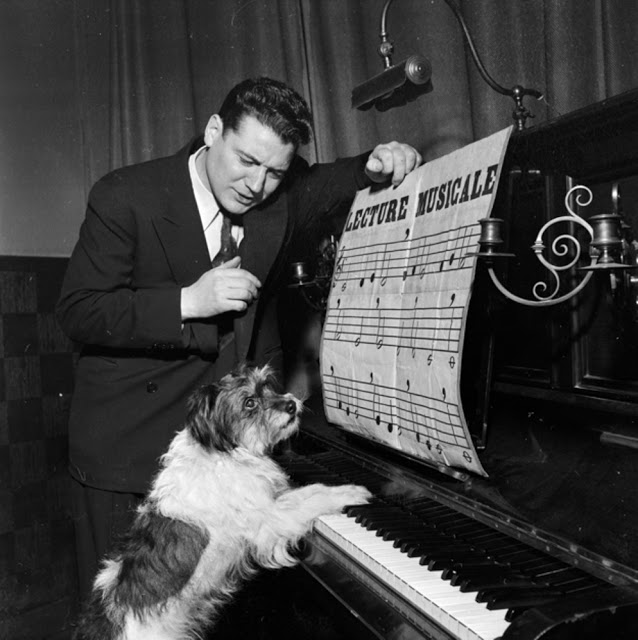
Doggie, je t’aime: part deux, 1955.
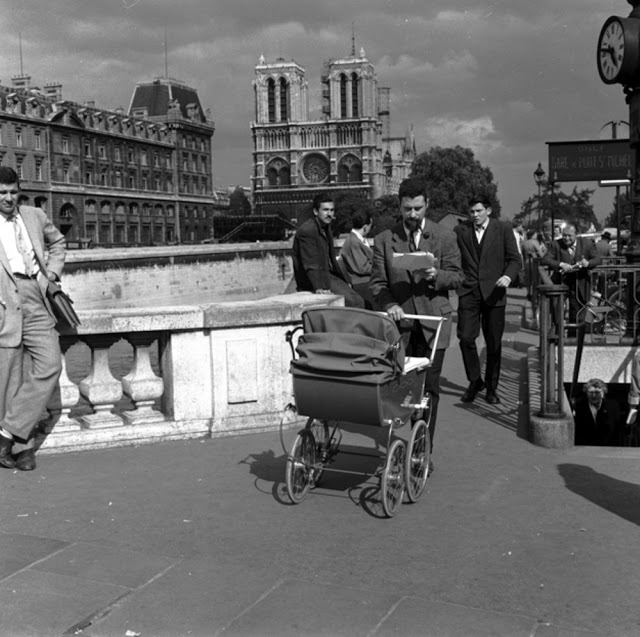
Menfolk in Paris do their part, 1955.
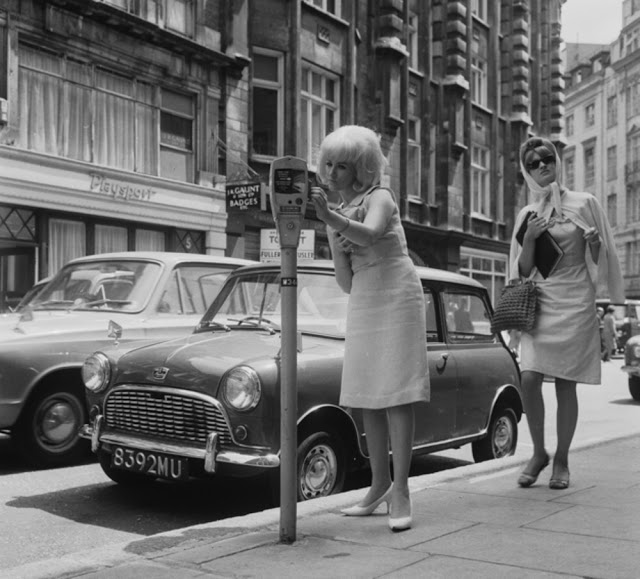
A woman tries to work one of those new-fangled “parking meters,” 1964.
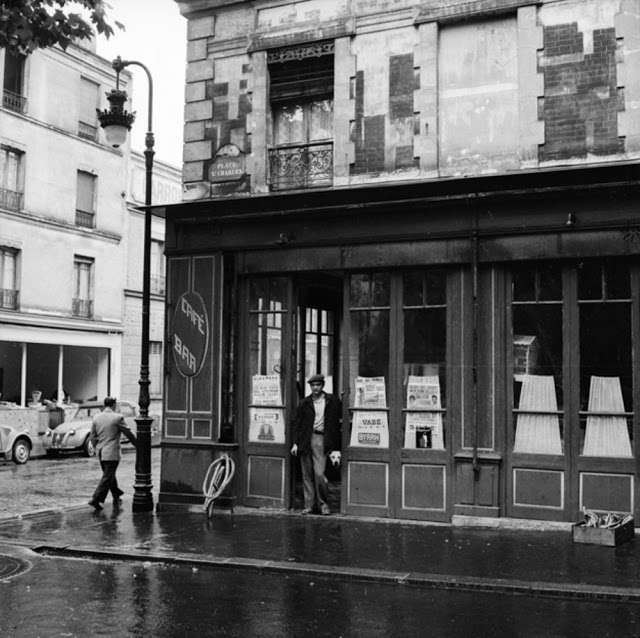
A man and his dog wait for the bar to officially open, 1956.
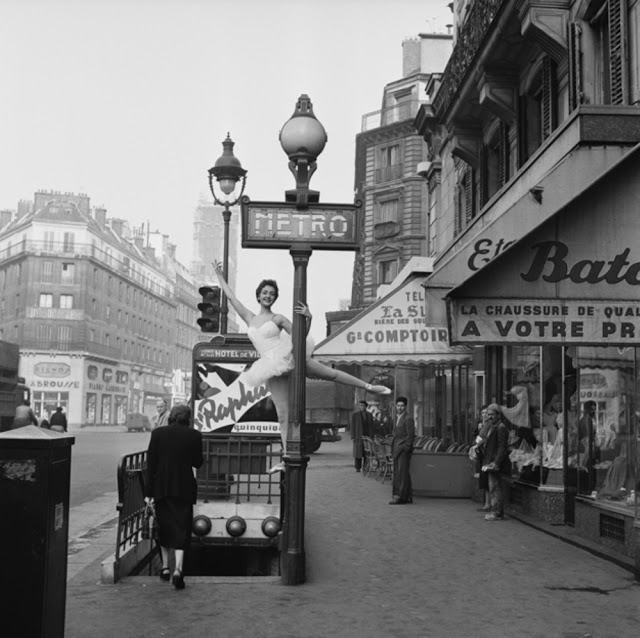
A ballerina demonstrates the correct way to enter the Parisian métro, 1955.
These people are having highly philosophical conversations. Comme d’habitude, 1956.
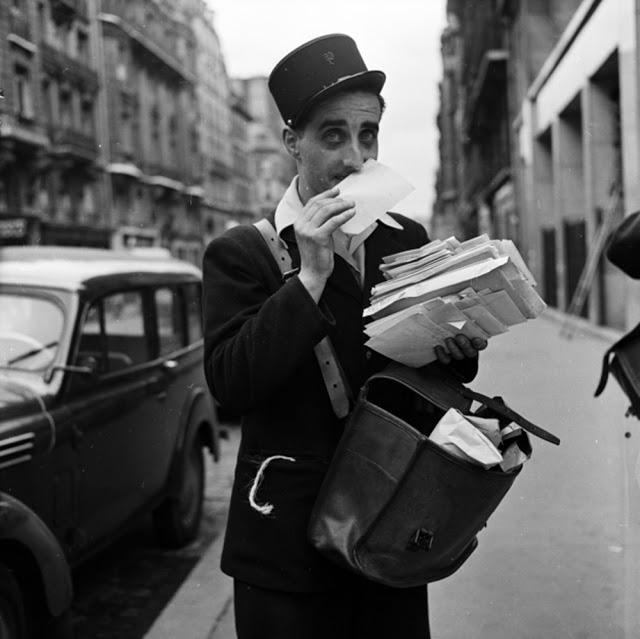
A French postal worker makes sure to smell each envelope before delivery to ensure it has been spritzed with the right amount of Chanel No. 5, 1956.
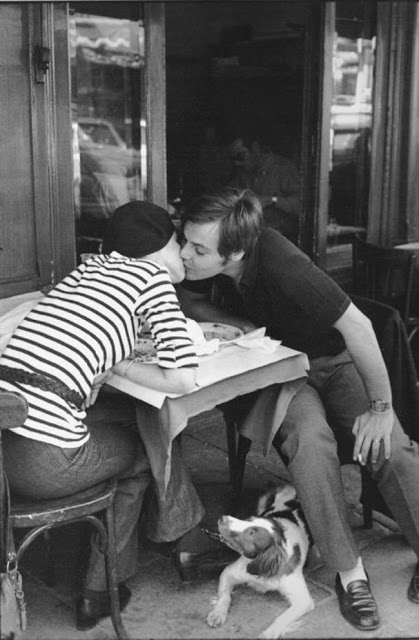
Doggie, je t’aime, 1969.
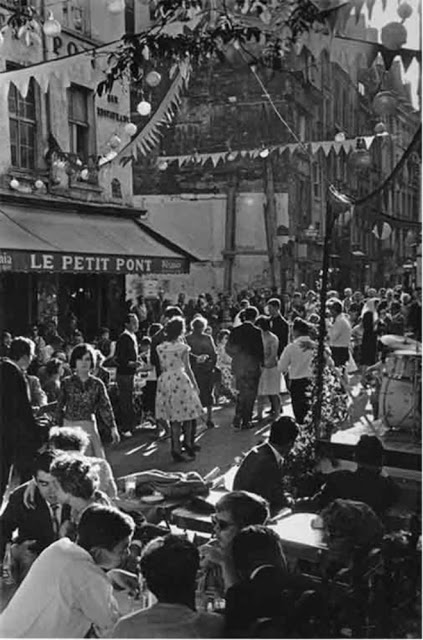
Dancing in the streets on Bastille Day, 1961.
Beauty in a cafe, 1968.
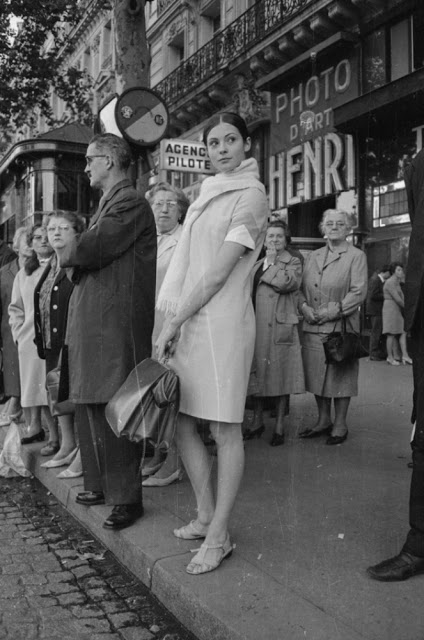
A very fashionable lady waits. But for whom, we ponder. 1960.
Twin sisters avoid eye contact with a waiter, 1955.
What clubbing in 1955 looked like.
Russian ballerina Sonia Petrovna waits for le bus, showing restraint by not dancing, 1966.
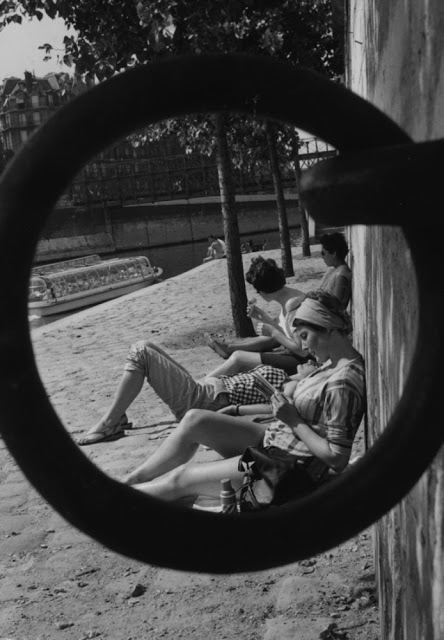
Young ladies sun by the banks of the Seine, 1965.
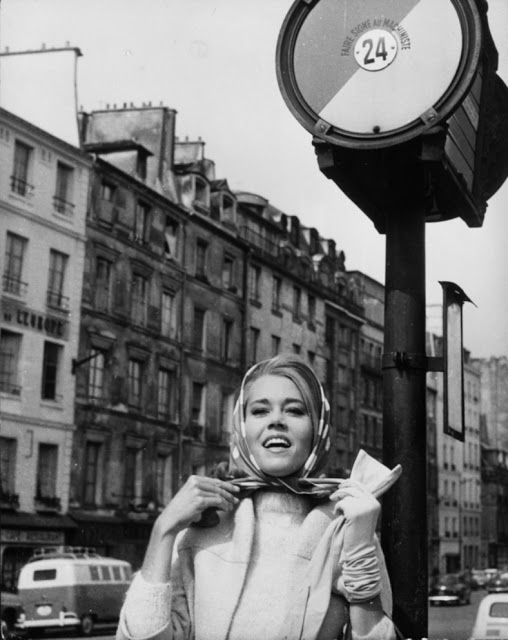
On a visit to Paris, Jane Fonda demonstrates the single-gloved scarf-tying technique, a very difficult French move to master, 1963.
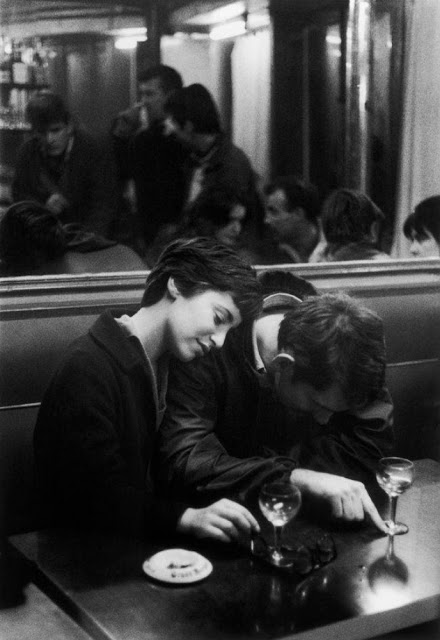
Couple in La Methode cafe, 1960.
Two fine ladies at a cafe on the Champs-Élysées, ca. 1960s.
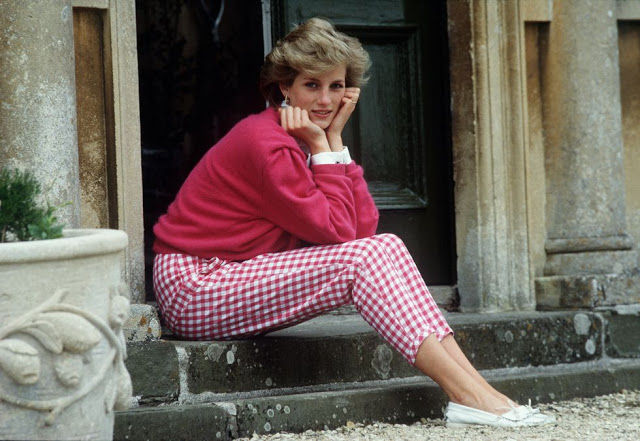
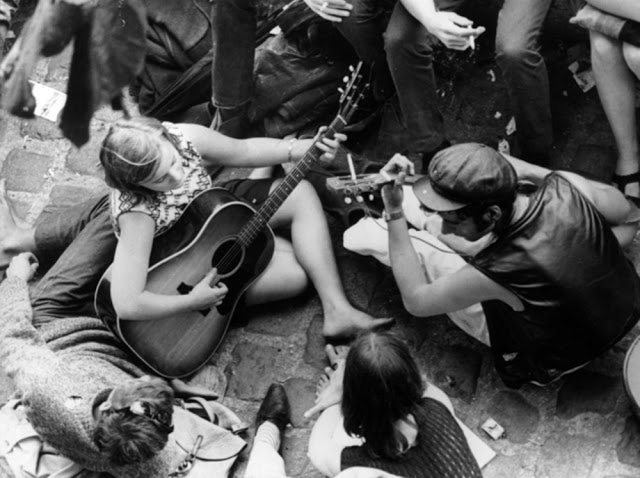
Beatniks just chilling, 1955.

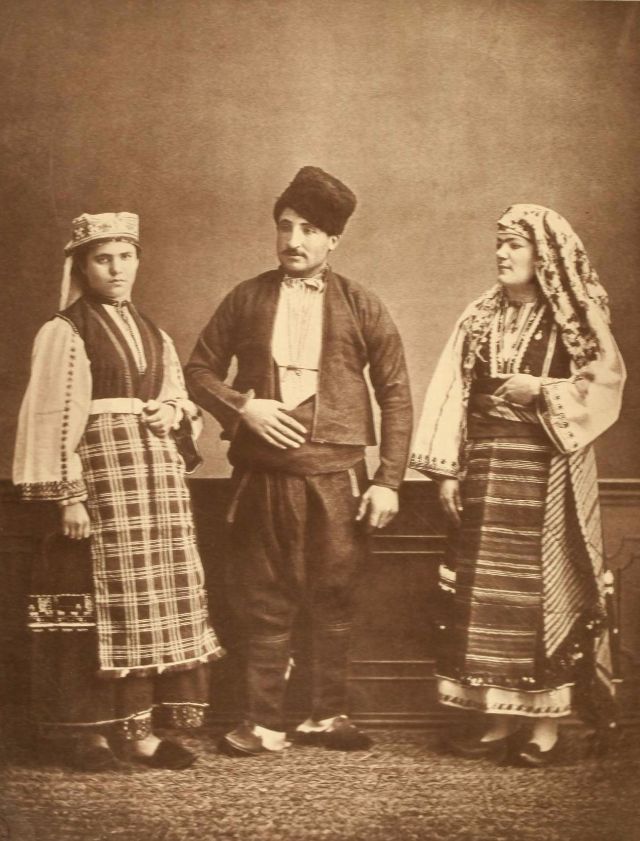
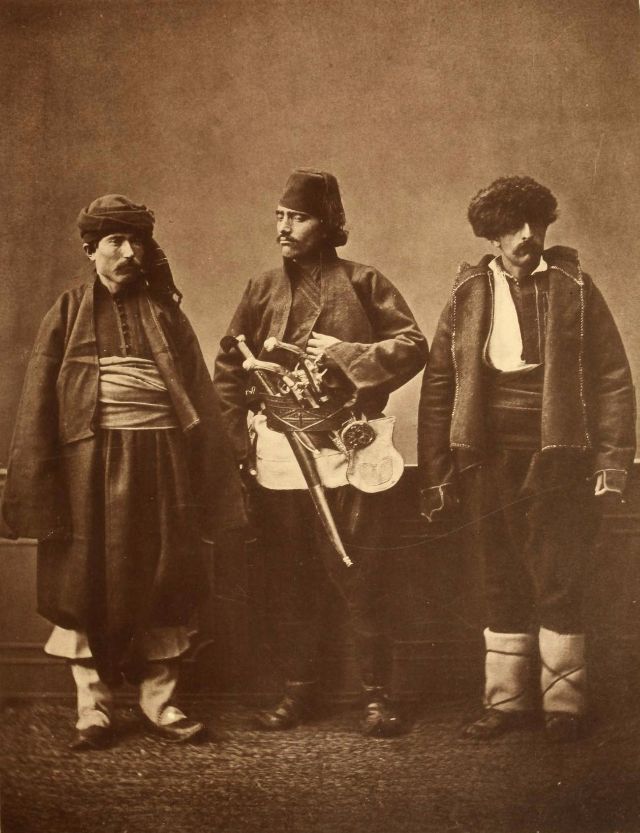
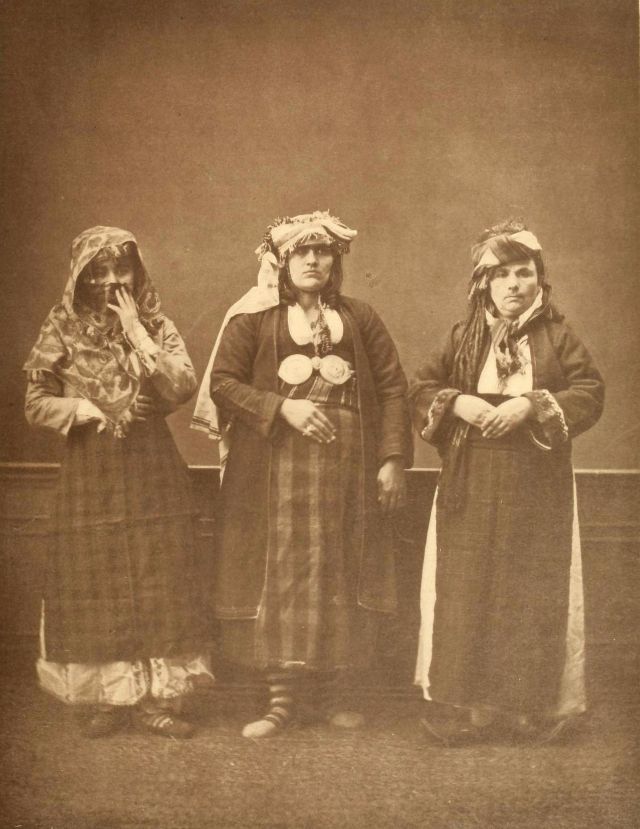
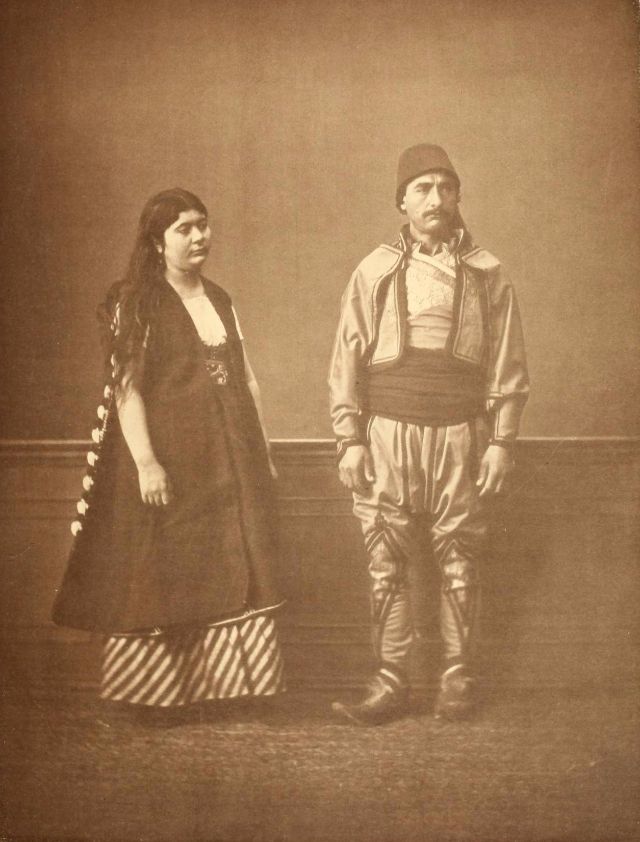
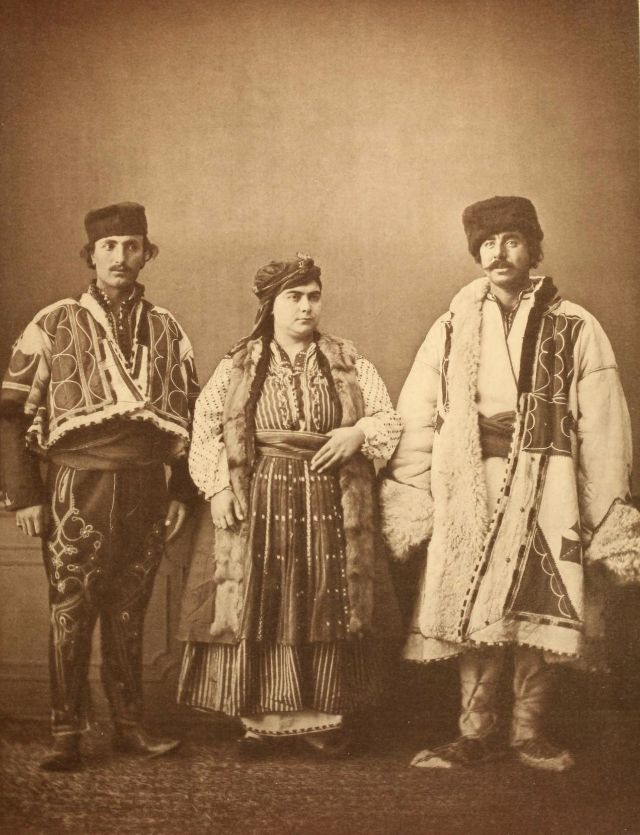
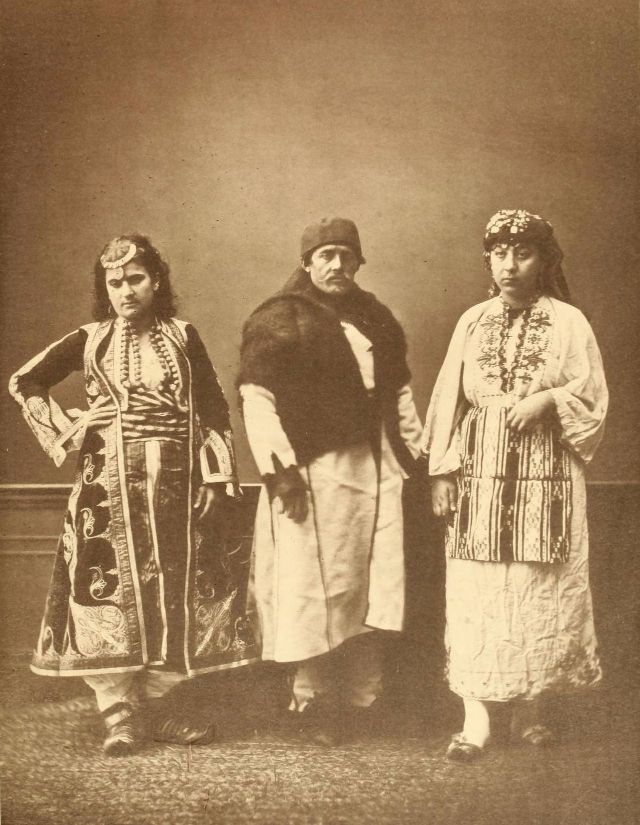
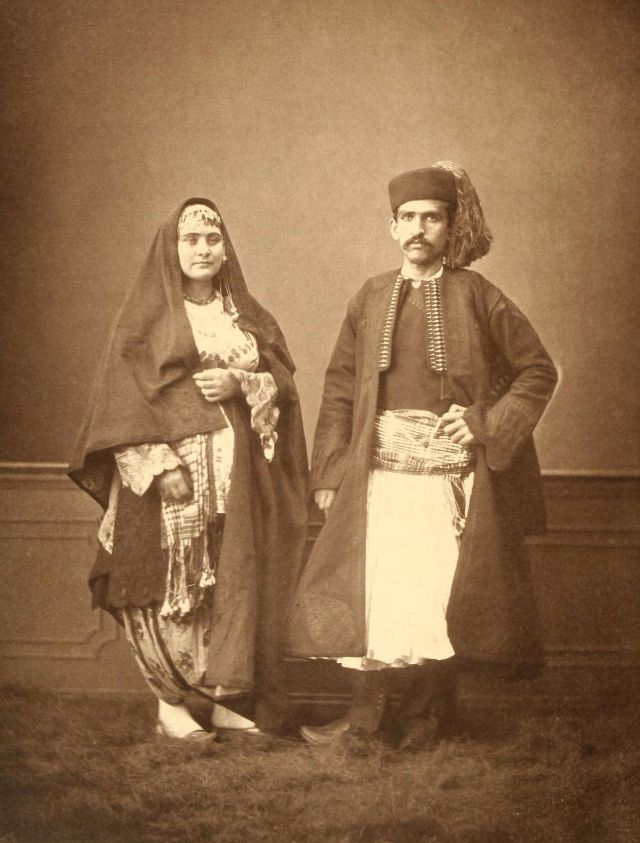
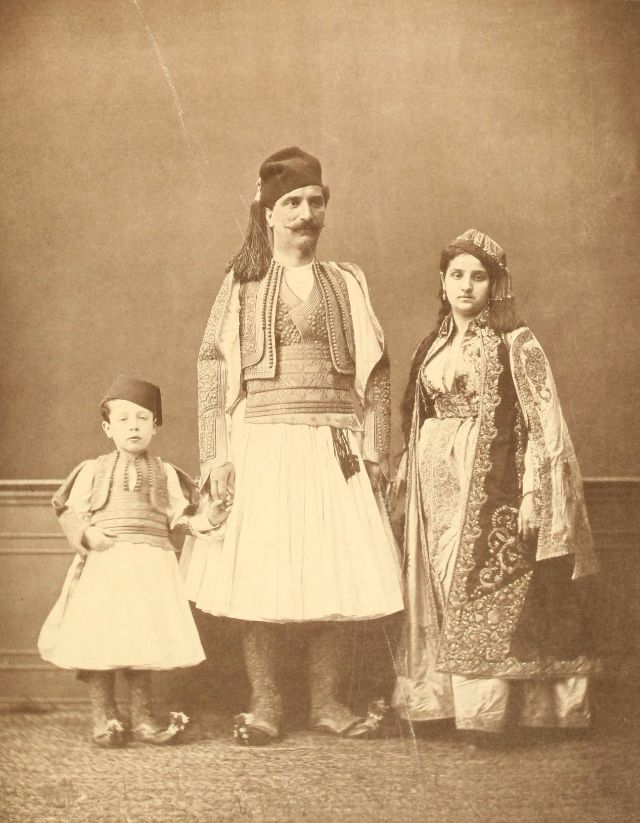
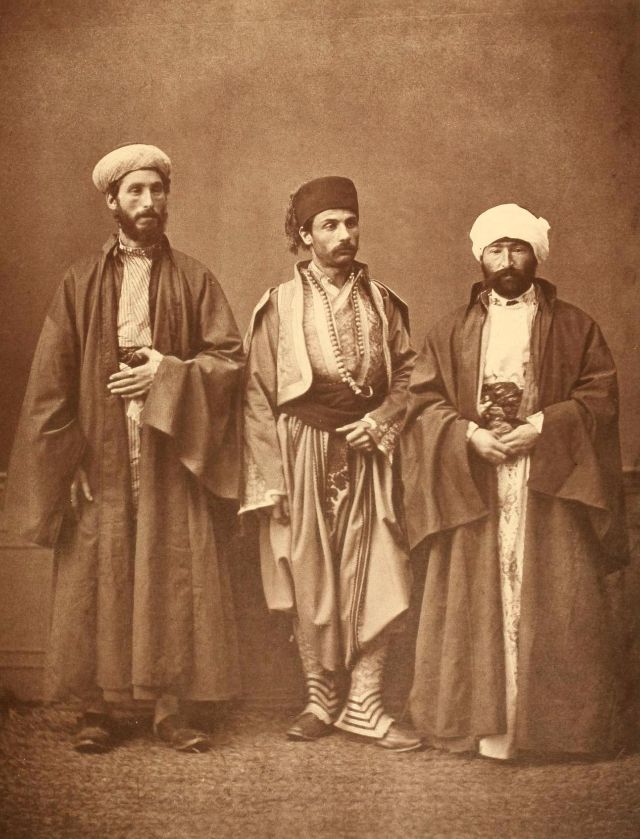
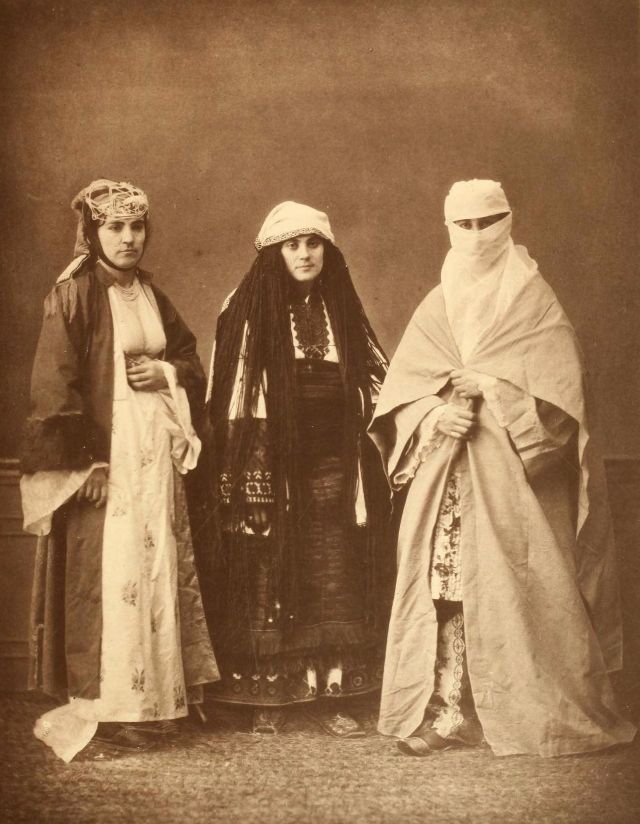
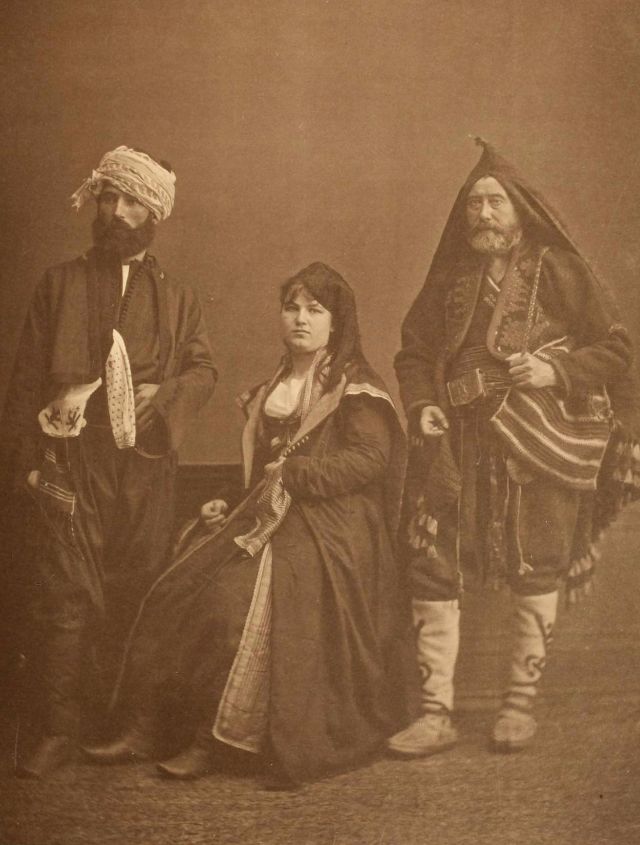
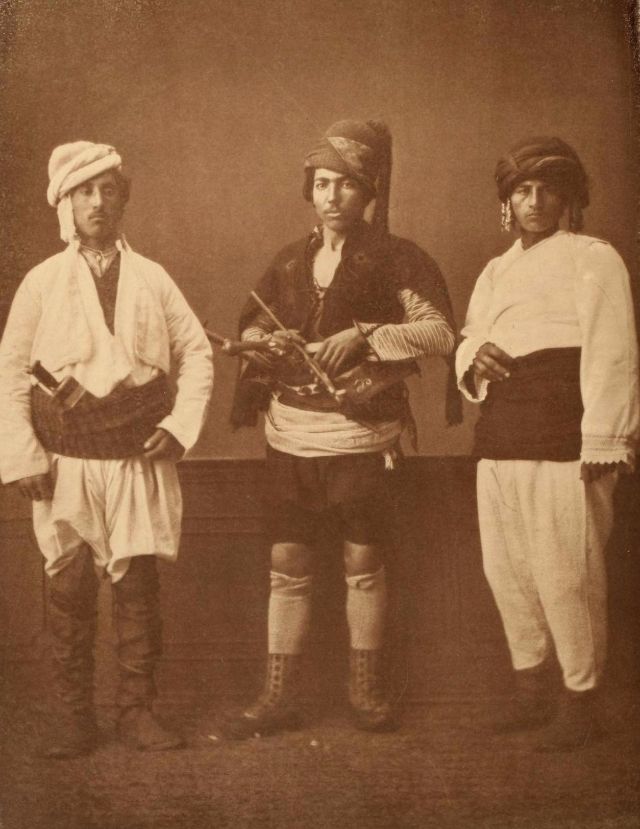
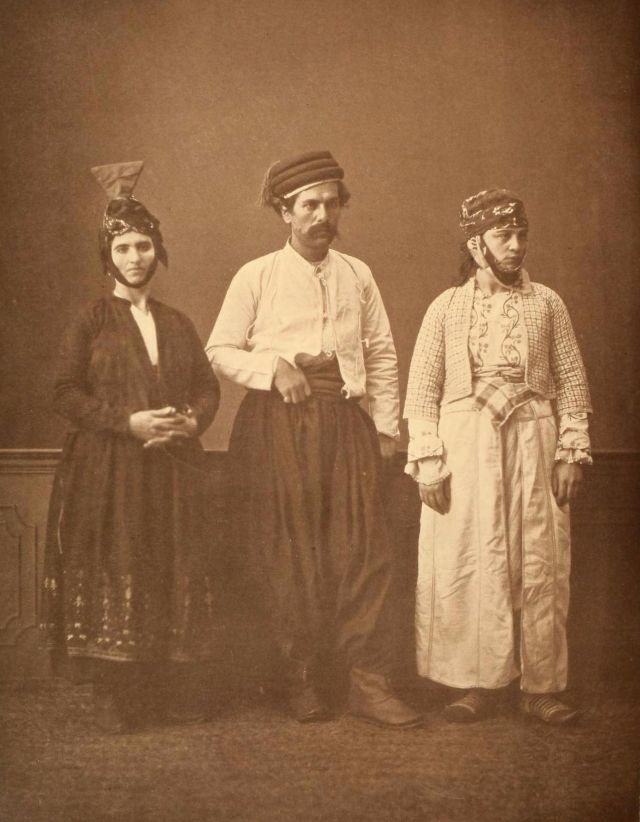
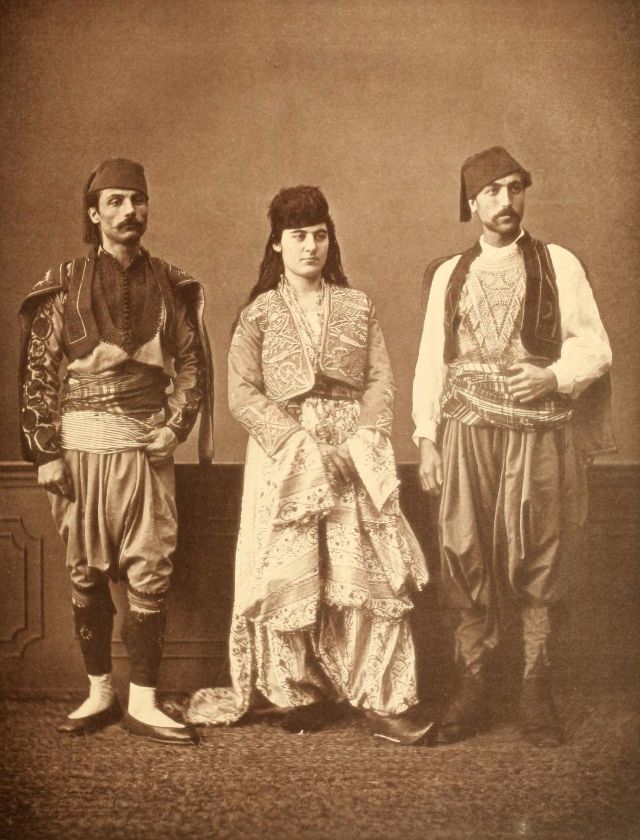
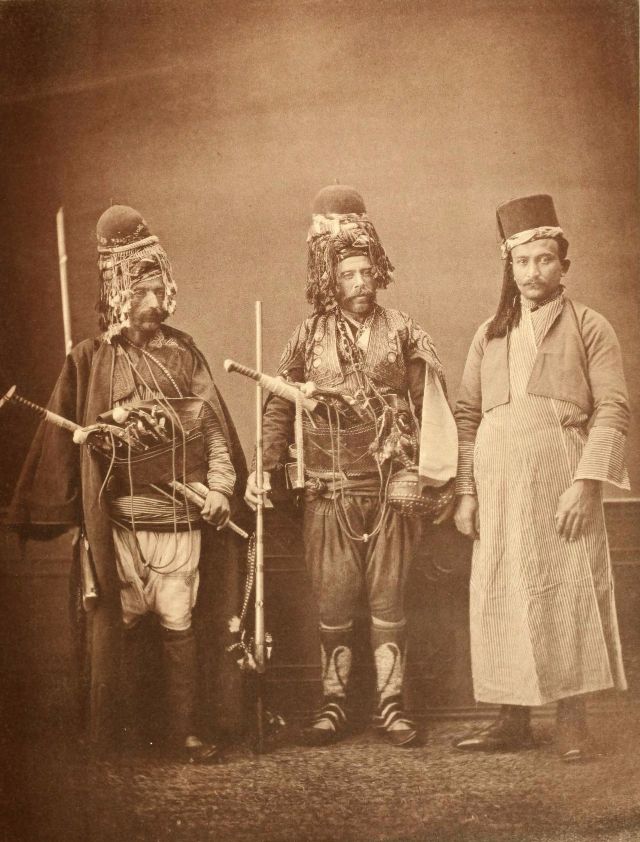
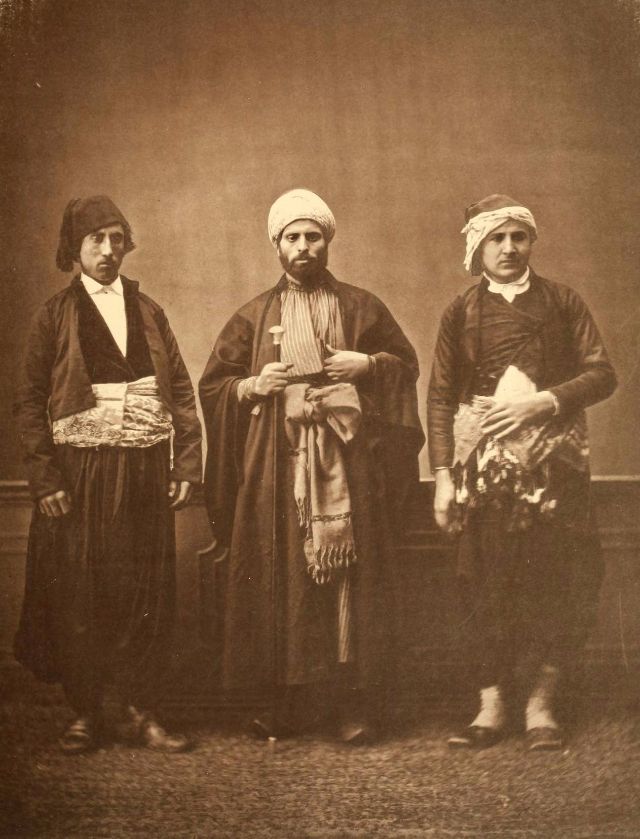
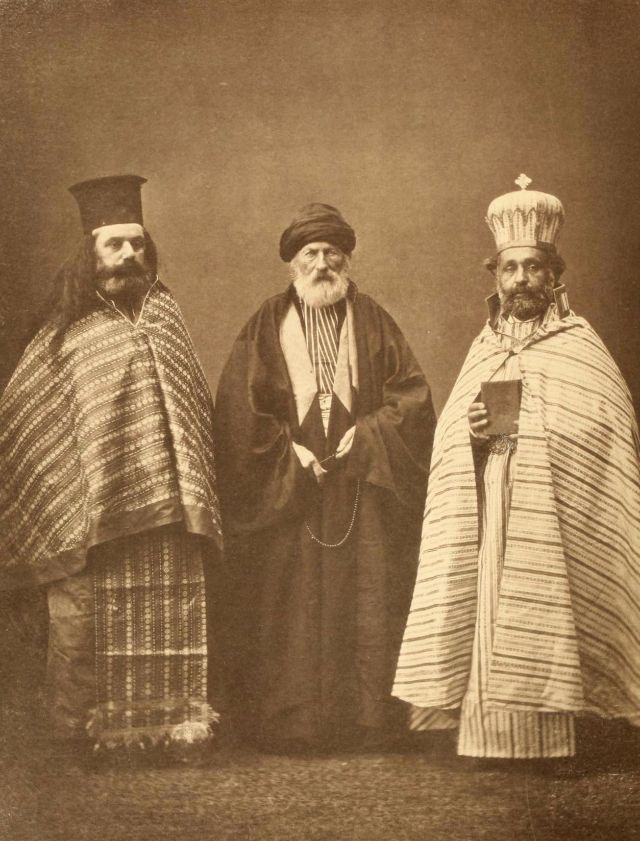
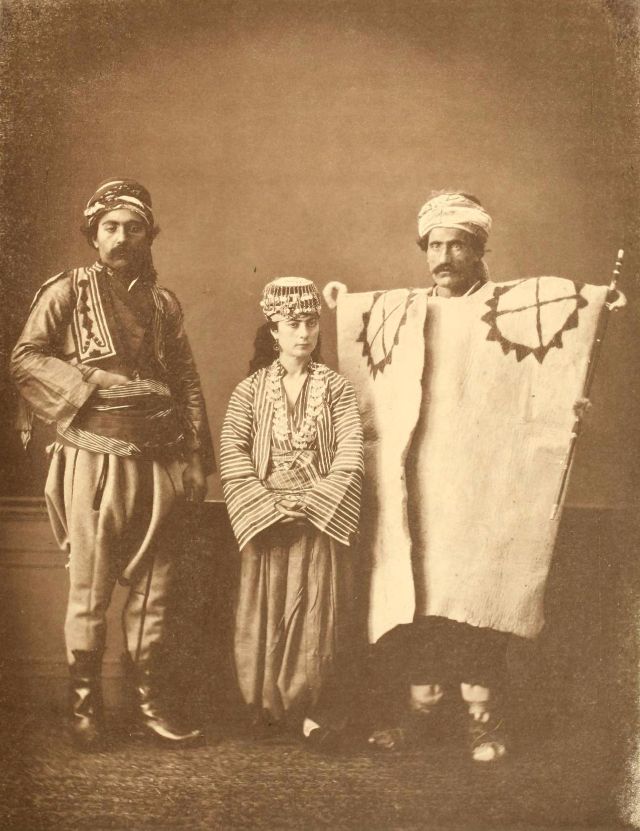
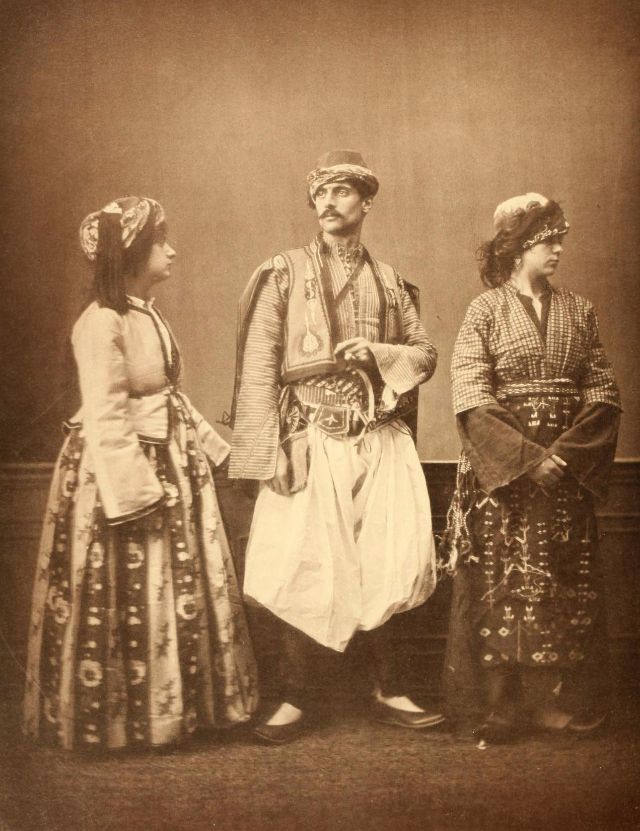
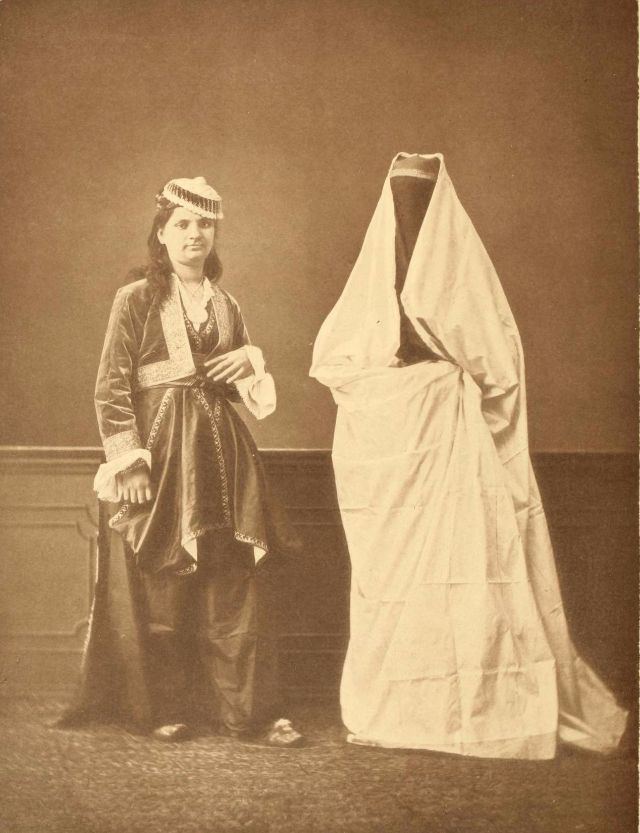
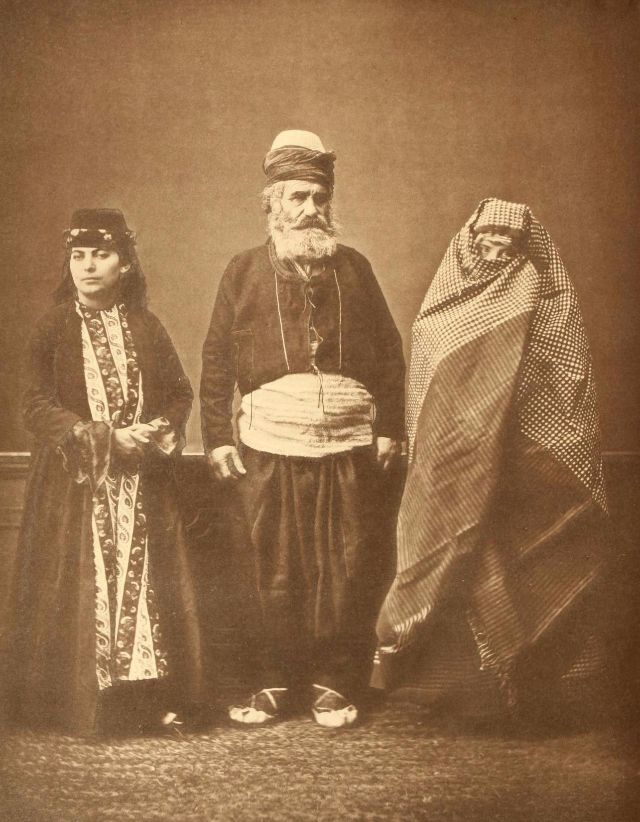
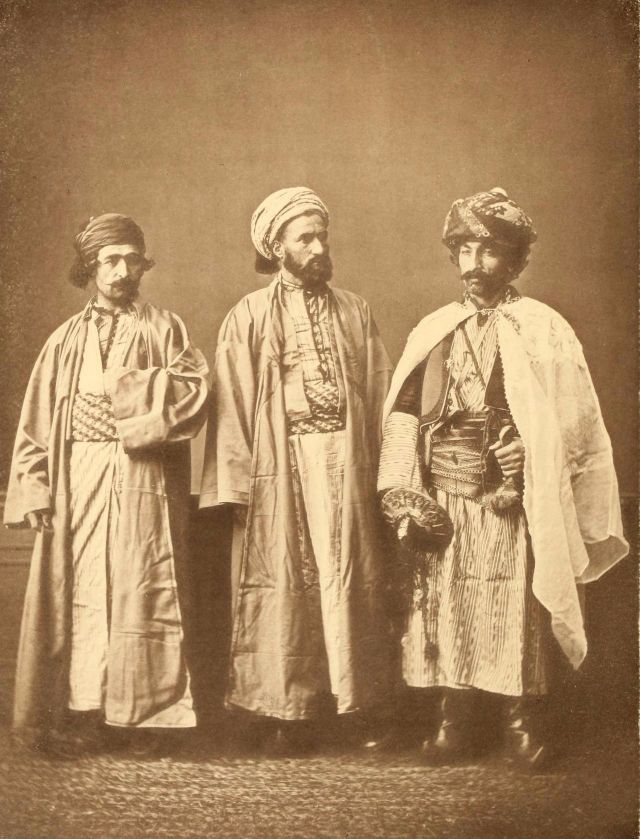
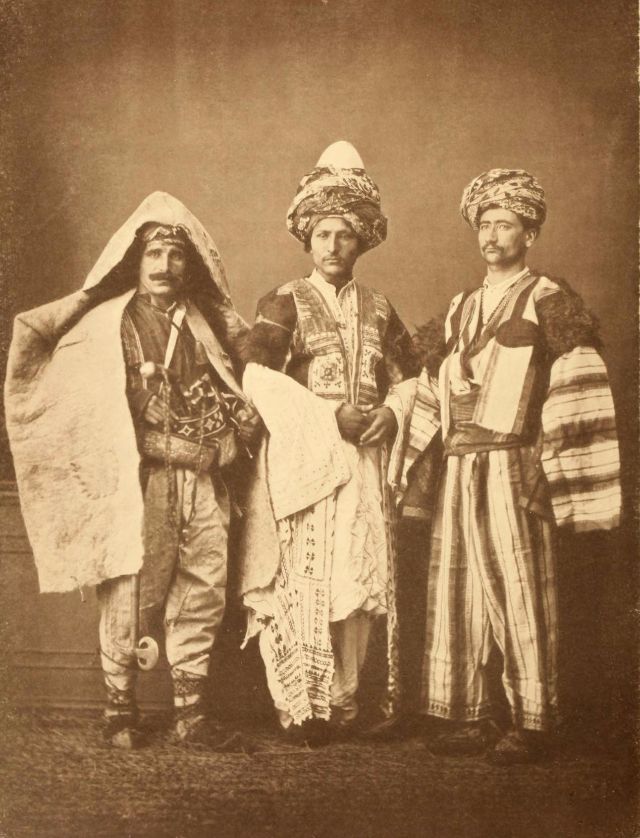
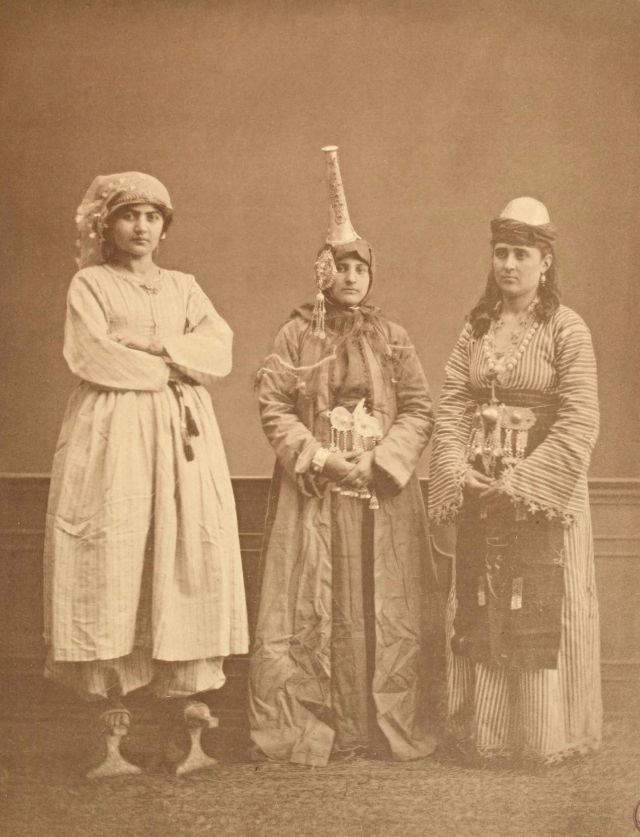
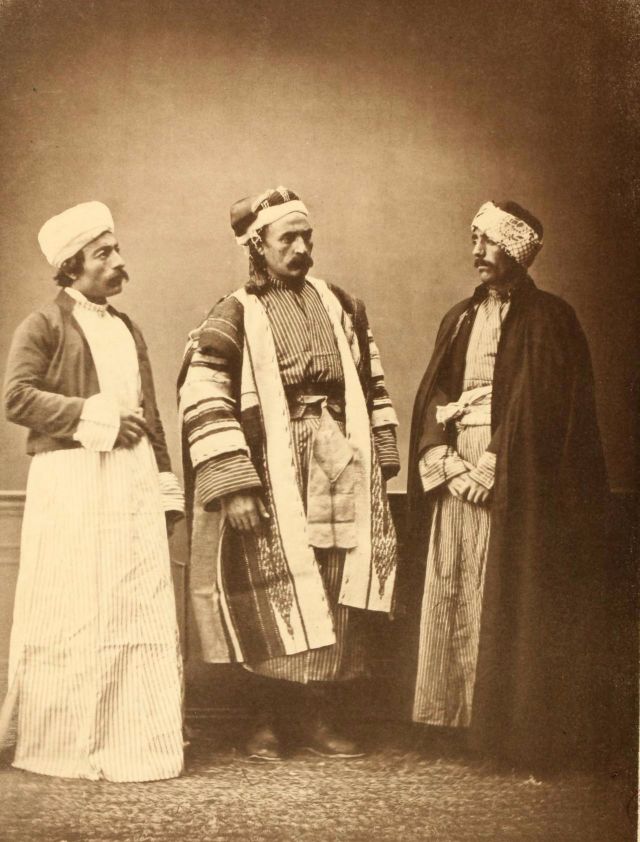
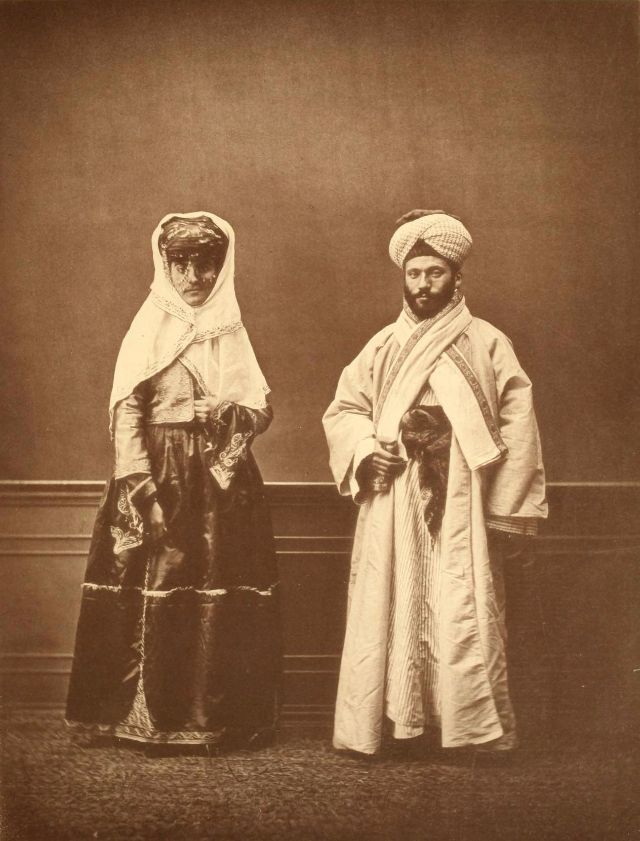
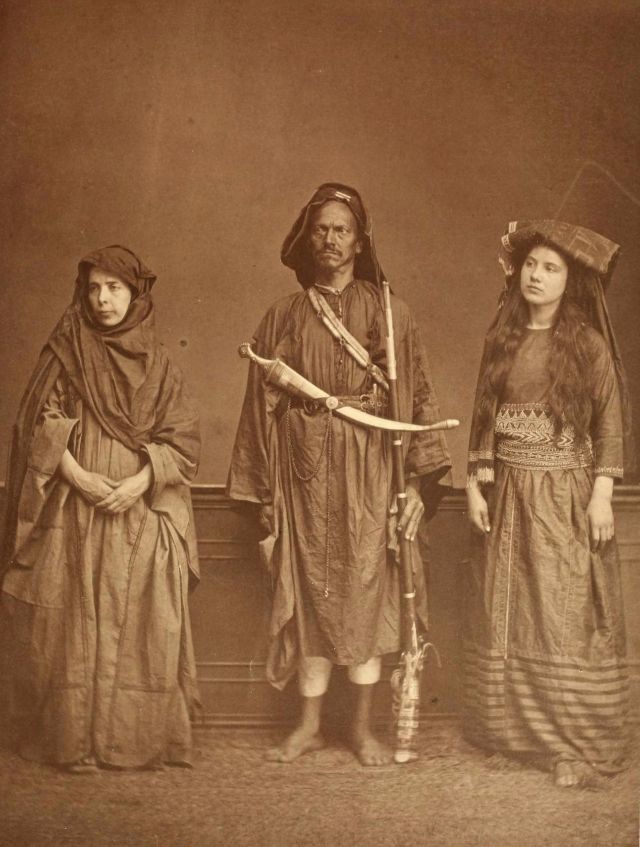
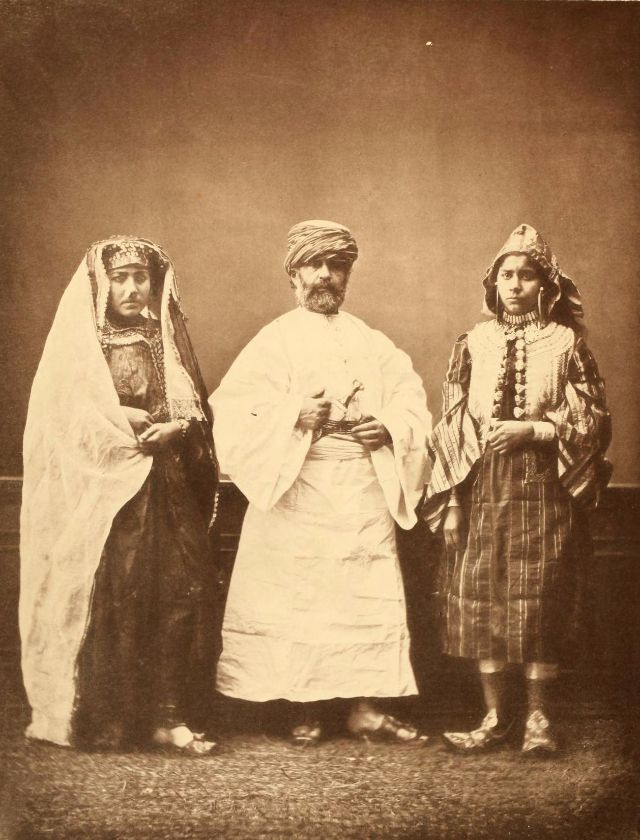
74 Remarkable Vintage Photos Showing Turkish Clothing in 1873

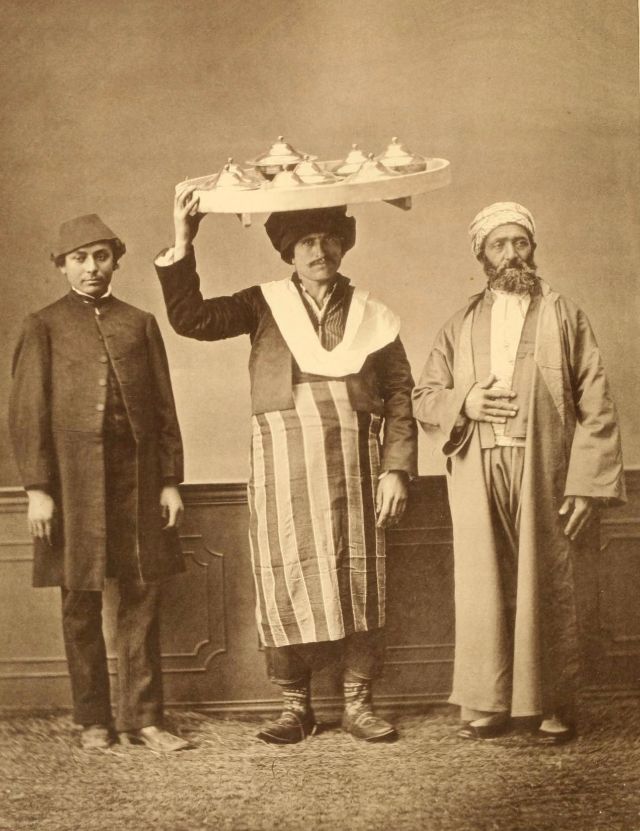
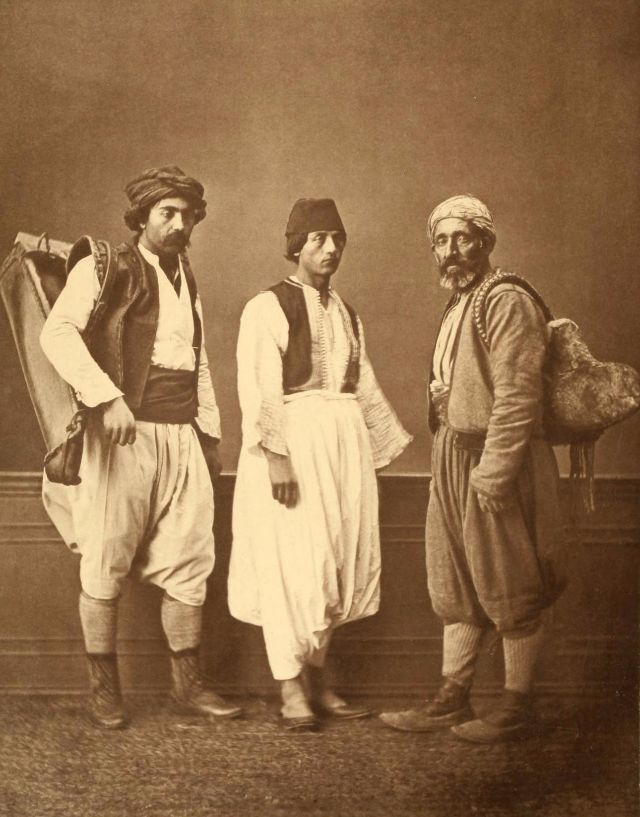
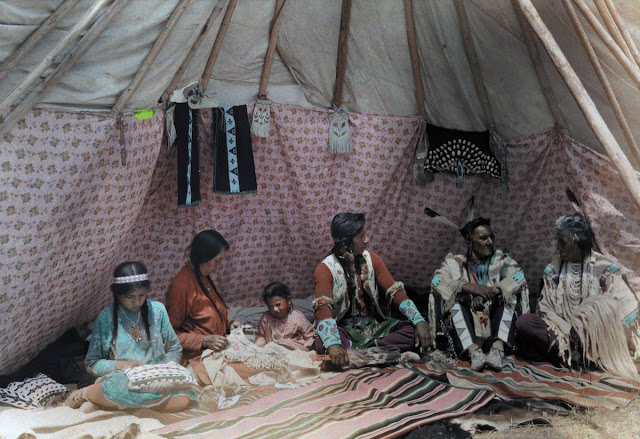
Ottoman clothing is the style and design of clothing worn by the Ottoman Turks.

While the Palace and its court dressed lavishly, the common people were only concerned with covering themselves. Starting in the reign of Suleiman the Magnificent, administrators enacted sumptuary laws upon clothing. The clothing of Muslims, Christians, Jewish communities, clergy, tradesmen, and state and military officials were particularly strictly regulated during the reign of Suleiman the Magnificent.

In this period men wore outer items such as ‘mintan’ (a vest or short jacket), ‘zibin’, ‘salvar’ (trousers), ‘kusak’ (a sash), ‘potur’, ‘entari’ (a long robe), ‘kalpak’, ‘sarik’ on the head; ‘çarik’, ‘çizme’, ‘çedik’, ‘Yemeni’ on the feet. The administrators and the wealthy wore caftans with fur lining and embroidery, whereas the middle class wore ‘cübbe’ (a mid-length robe) and ‘hirka’ (a short robe or tunic), and the poor wore collarless ‘cepken’ or ‘yelek’ (vest).

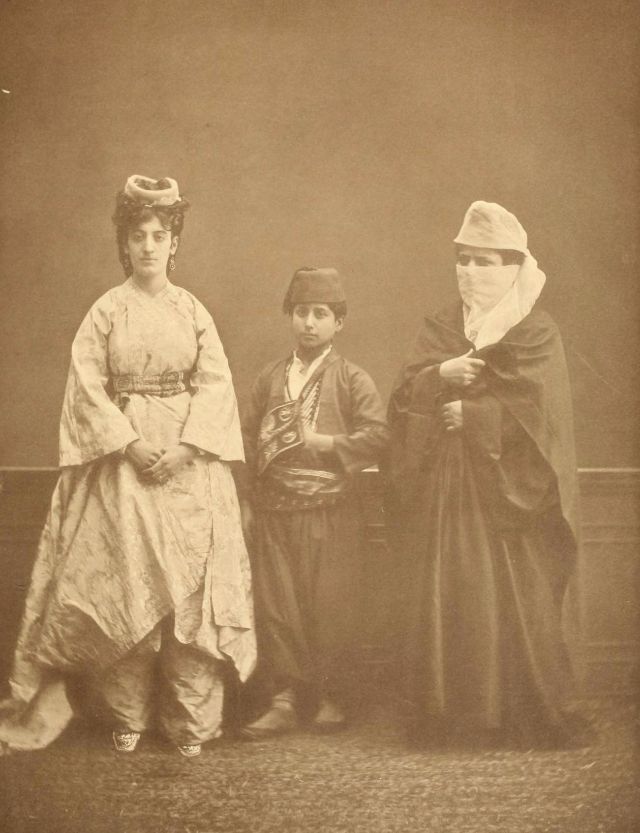
Women’s everyday wear was salvar (trousers), a gömlek (chemise) that came down to the mid-calf or ankle, a short, fitted jacket called a hirka, and a sash or belt tied at or just below the waist. For formal occasions, such as visiting friends, the woman added an entari, a long robe that was cut like the hirka apart from the length. Both hirka and entari were buttoned to the waist, leaving the skirts open in front. Both garments also had buttons all the way to the throat, but were often buttoned only to the underside of the bust, leaving the garments to gape open over the bust. All of these clothes could be brightly colored and patterned. However, when a woman left the house, she covered her clothes with a ferace, a dark, modestly cut robe that buttoned all the way to the throat. She also covered her face with a variety of veils or wraps.

Bashlyks, or hats, were the most prominent accessories of social status. While the people wore “külah’s” covered with ‘abani’ or ‘Yemeni’, the cream of the society wore bashlyks such as ‘yusufi, örfi, katibi, kavaze’, etc. During the rule of Süleyman a bashlyk called ‘perisani’ was popular as the palace people valued bashlyks adorned with precious stones.

During the ‘Tanzimat’ and ‘Mesrutiyet’ period in the 19th century, the common people still keeping to their traditional clothing styles presented a great contrast with the administrators and the wealthy wearing ‘redingot’, jacket, waistcoat, boyunbagi (tie), ‘mintan’, sharp-pointed and high-heeled shoes. Women’s clothes of the Ottoman period were observed in the ‘mansions’ and Palace courts. ‘Entari’, ‘kusak’, ‘salvar’, ‘basörtü’, ‘ferace’ of the 19th century continued their existence without much change.

Women’s wear becoming more showy and extravagant brought about adorned hair buns and tailoring. Tailoring in its real sense began in this period. The sense of women’s wear primarily began in large residential centers such as Istanbul and Izmir in the 19th century and as women gradually began to participate in the social life, along with the westernization movement.

27 Incredible Vintage Photos of Blizzards and Snowfalls in New York City’s Past

Whether they’re facing flurries of snowflakes or all-out blizzards, New Yorkers are all too familiar with old man winter! See how the Big Apple has weathered the cold…

A blizzard turns Broad Street into a white blur during a cold winter day in 1940
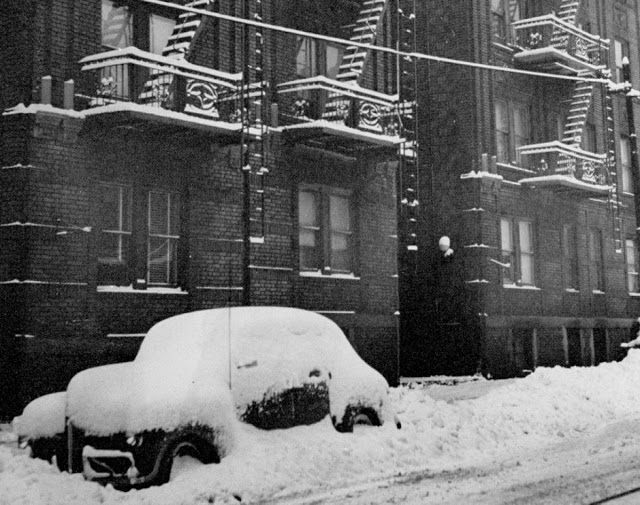
A car covered by snow, 1947
A city street becomes an icy tundra as cars try (unsuccessfully) to plough through the snow along Second Avenue in 1947
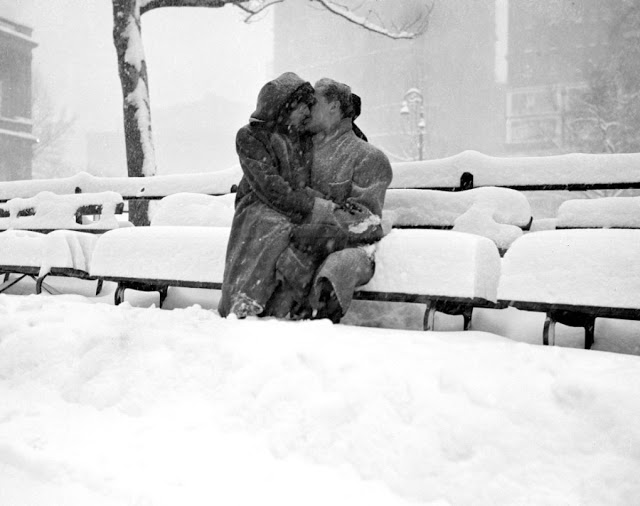
A couple shares a steamy kiss on a snowy park bench outside New York City’s Municipal Building in 1947
A doting mother tries to shield her baby from blizzard-like conditions in Central Park during a snowy day in 1964
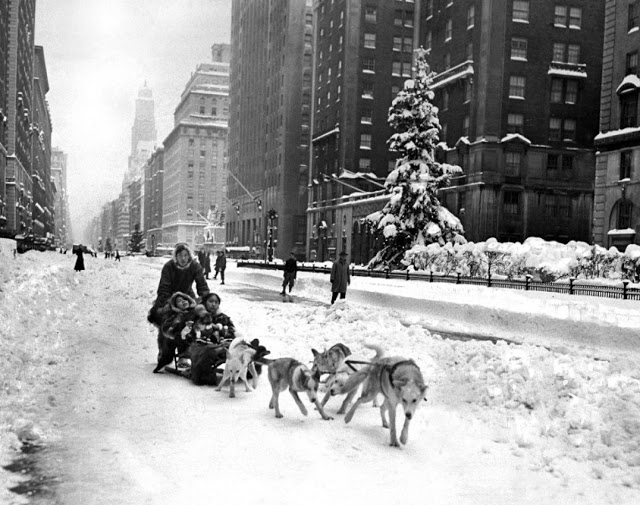
A family heads down Park Avenue via dog sled during the winter of 1947
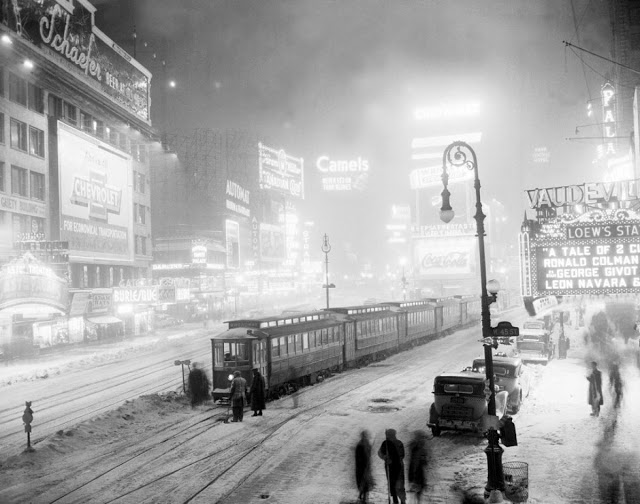
A freak snowstorm leaves passengers stuck in Times Square after a frozen switch brings streetcars to a screeching halt, 1936
A lucky lady catches a ride with a smiling gentleman outside City Hall as others trudge by during a snowy day in 1947
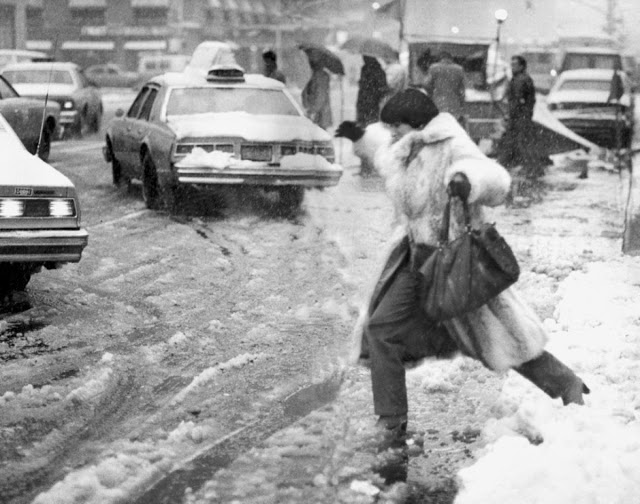
A pedestrian jumps over a mound of snow into the streets of New York City during a storm in 1982
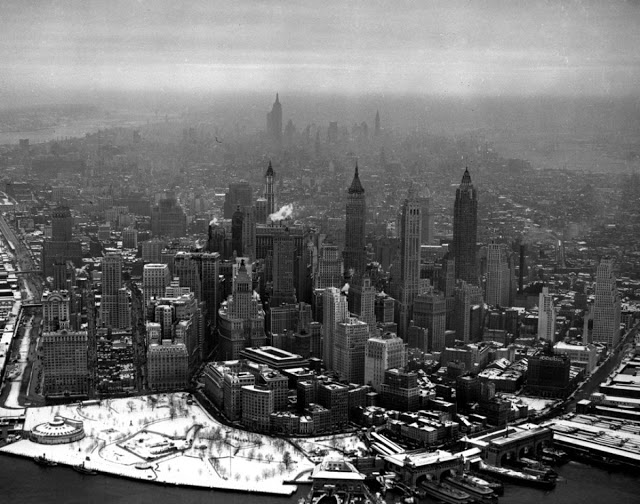
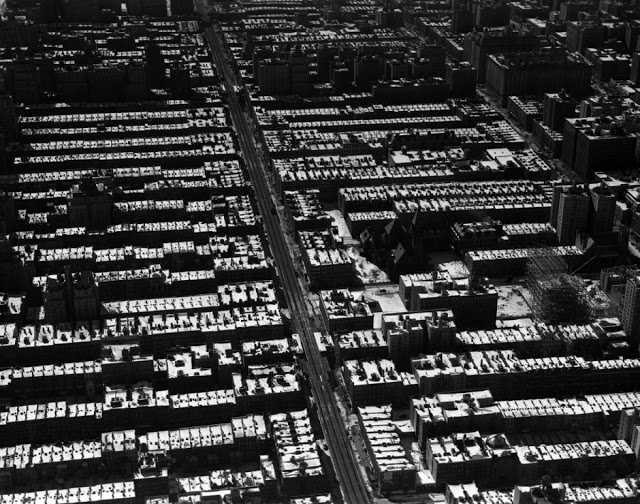
A stunning aerial view shows the majestic Manhattan skyline covered in a layer of snow during the winter of 1941
A train sits abandoned on the elevated tracks along Third Avenue, brought to an utter standstill by snow, wind and ice, 1947
An unexpected blizzard makes for dangerous driving conditions near East 42nd street, where gale-force winds and a foot of snow brings cars and buses to a stop, 1967
Bundled up city dwellers line up to hit the 59th Street lake in Central Park during a chilly day in 1936
Chilly pedestrians brave the snow as they hurry home on a cold winter day in 1940
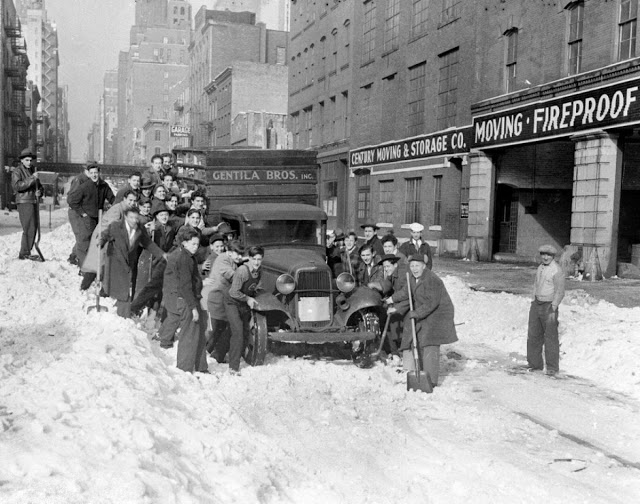
Driving becomes a team effort after a car gets lodged in almost 7 inches of snow on East 38th Street in 1943
Fifth Avenue in snowstorm in 1948
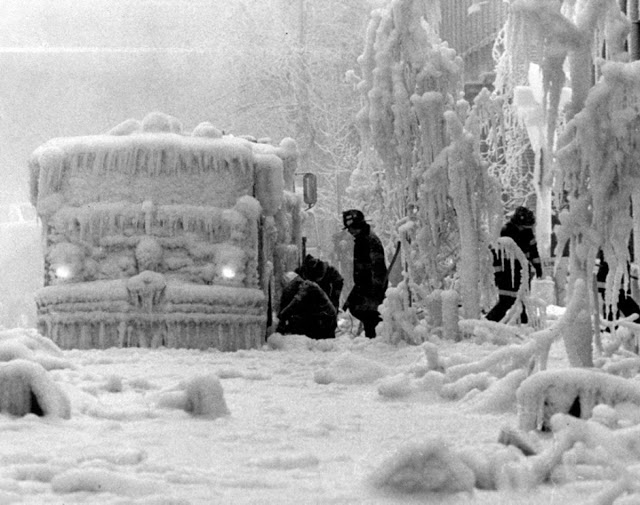
Following a fight with a five-alarm fire in Brooklyn Heights, firemen struggle to free up equipment completely encrusted in ice in 1980
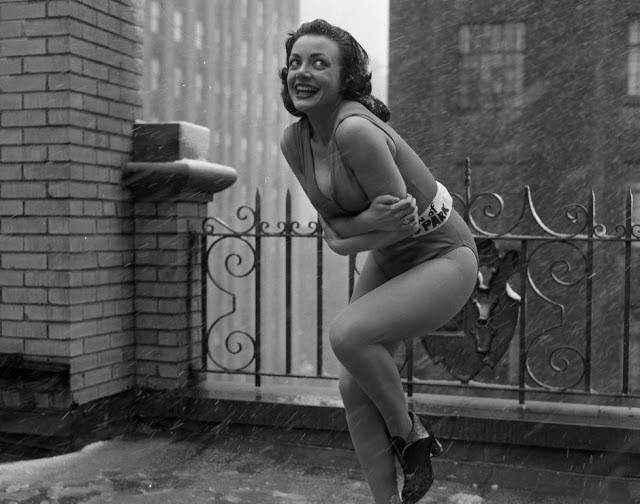
Kitty Dolan, the 1957 ‘Outdoor Fun Queen’ of Palisades Amusement Park, doesn’t seem to be having too much fun as she stands outside in the cold near the Belmont Plaza Hotel
Orchard Street on Manhattan’s Lower East Side becomes a scene of chaos after a heavy snow storm left parts of the city a huge mess in 1926
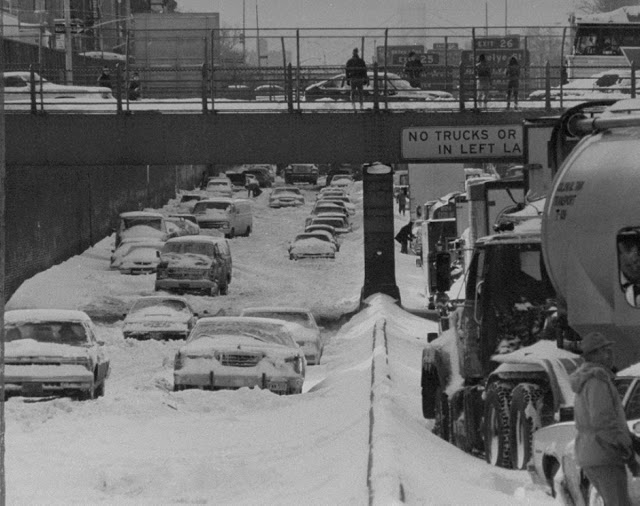
The blizzard of 1983 dumped so much snow on New York City that cars were stranded on the Brooklyn-Queens Expressway
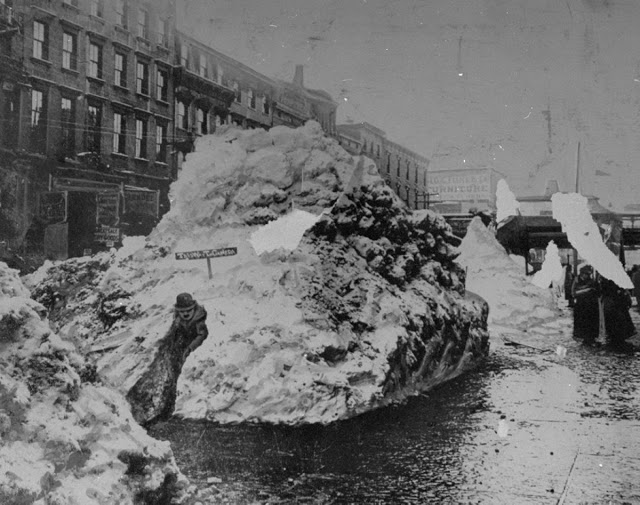
The Great Blizzard of 1888 dumped 40-50 inches on New York City and New Jersey. It left behind this giant snow pile in the middle of the Big Apple
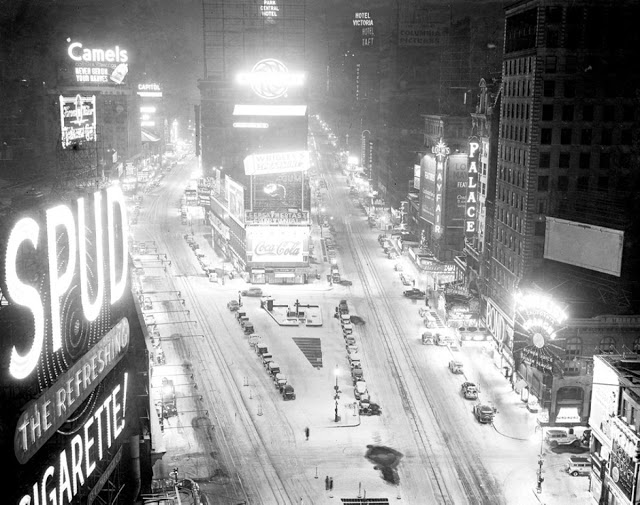
The normally bright lights of Times Square are dimmed by a blanket of white snow following a storm in 1935
The World’s Fair isn’t exactly bustling after a frozen day left the spectacle completely covered in white powder during the winter of 1939
Tired of shoveling snow, a man uses a flamethrower to clear a path through the frozen Governors Island, 1947
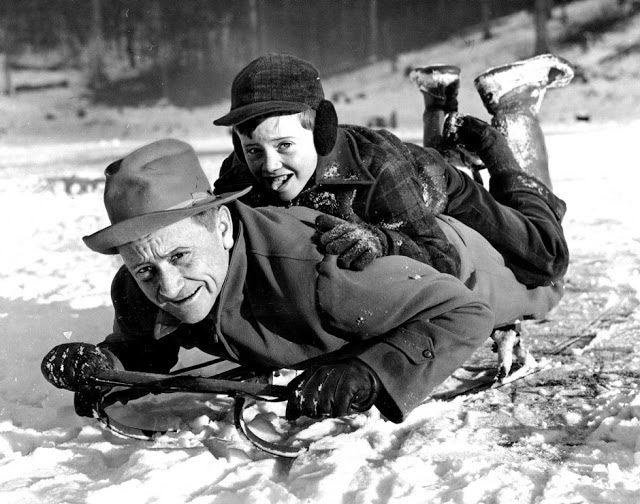
U.S. Supreme Court Justice William Douglas partakes in a favorite winter pastime as he and his son go sledding in 1942
Winter leaves the city’s roofs covered with snow following flurries in 1940
With the city lit up behind them, a couple wards off the cold by sharing a cigarette under a glowing street lamp
in Central Park in 1957

Yesterday Today

Bringing You the Wonder of Yesterday - Today

Skip to content ↓