











Bringing You the Wonder of Yesterday – Today
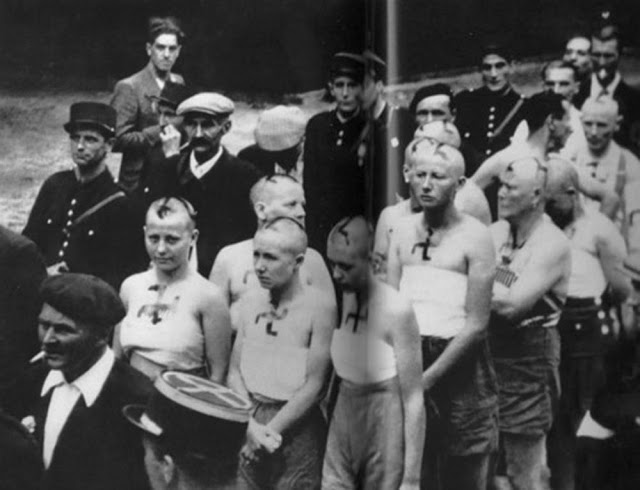
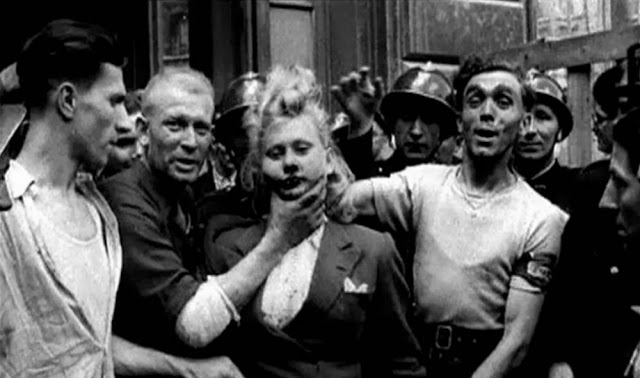
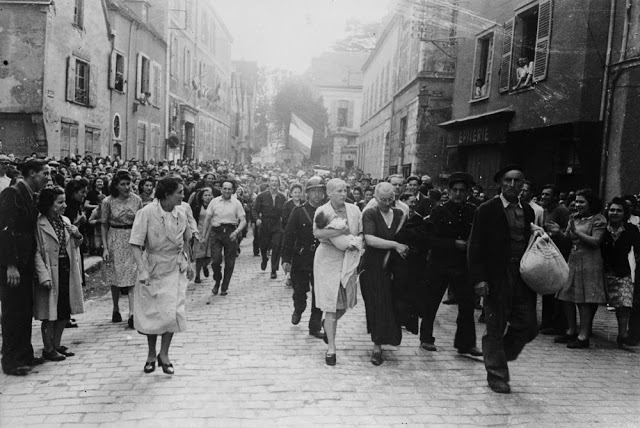
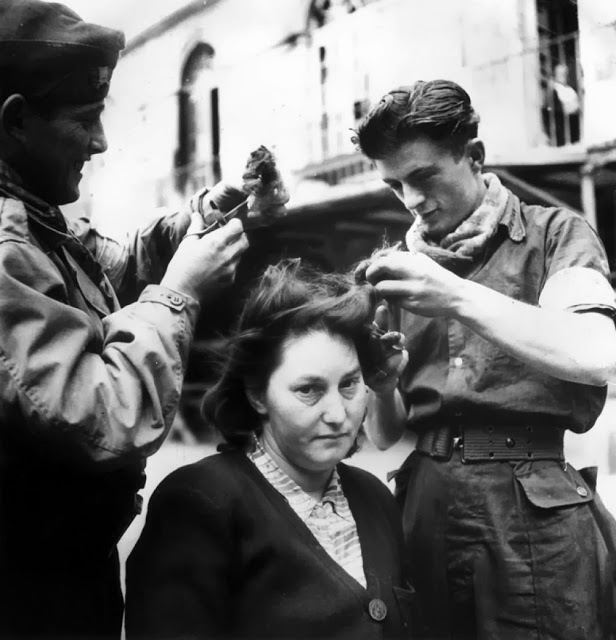
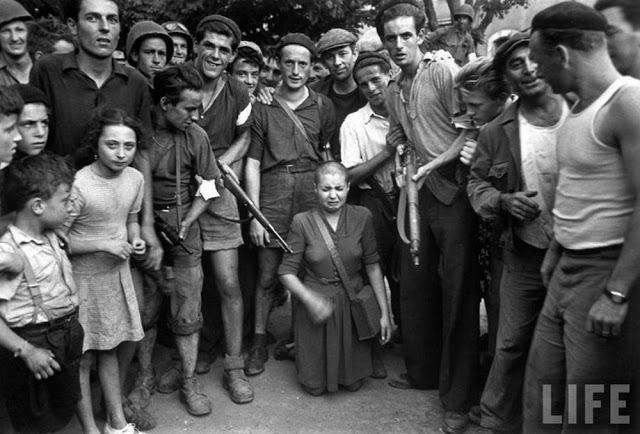
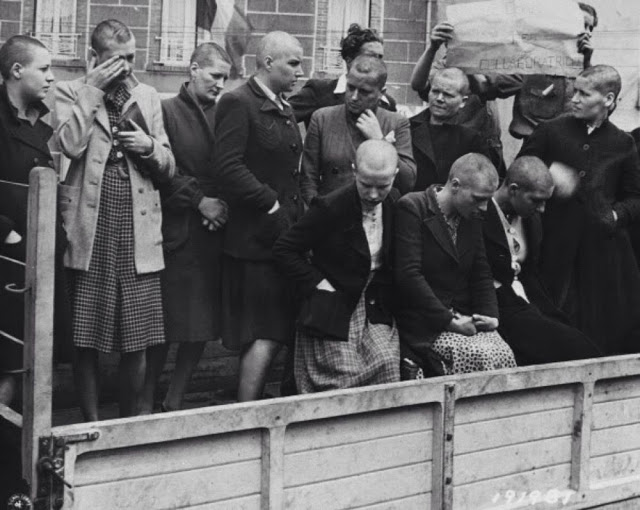
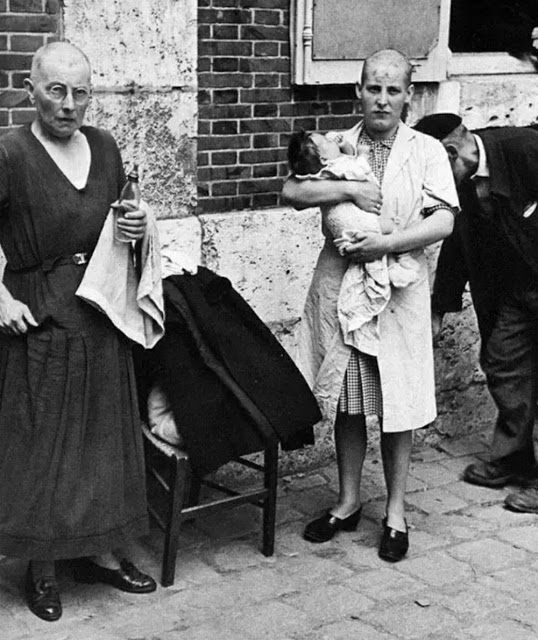
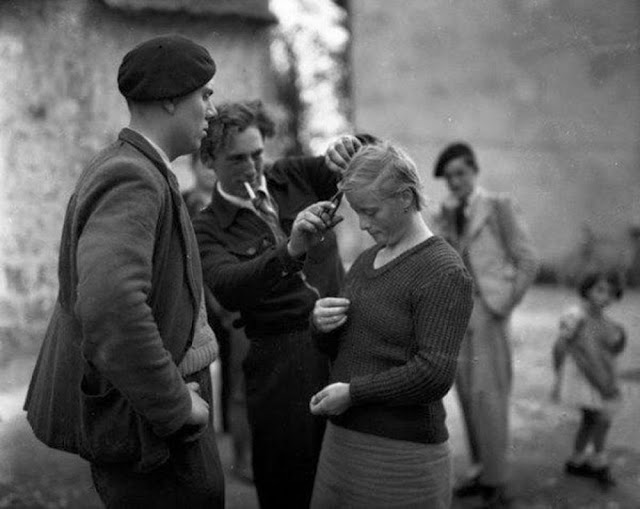
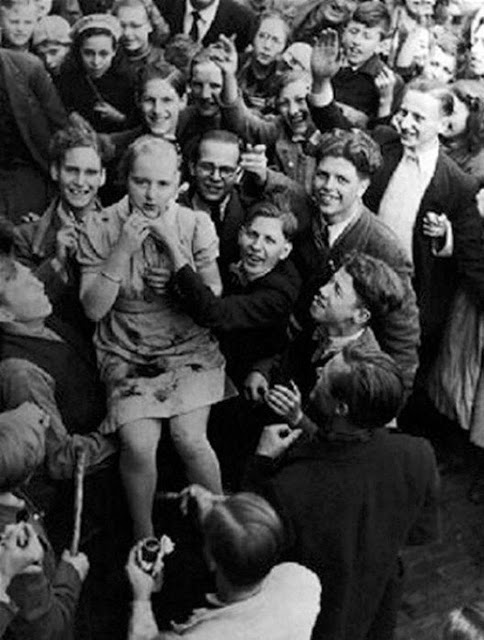
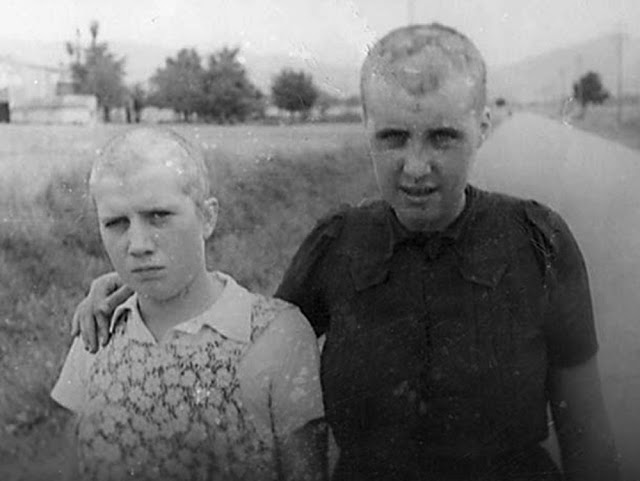
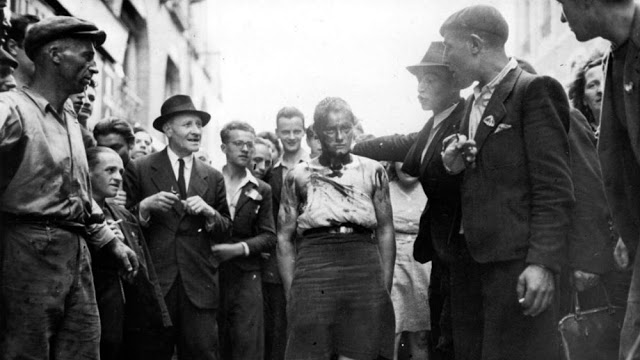
At the end of World War II, many French people accused of collaboration with Germany endured a particularly humiliating act of revenge: their heads were shaved in public.
There are thousands upon thousands of joyful pictures of the liberation of France in 1944. But among the cheering images there are also shocking ones. These show the fate of women accused of “collaboration horizontale”. To sum it up, when a woman who had engaged in collaboration horizontale — that means having sex with occupying troops — was punished, her head was forcibly shaved as the first step. Depending upon how the partisans felt, she also might have been disrobed, tarred and feathered, and perhaps beaten.
The punishment of shaving a woman’s head had biblical origins. In Europe, the practice dated back to the dark ages, with the Visigoths. During the middle ages, this mark of shame, denuding a woman of what was supposed to be her most seductive feature, was commonly a punishment for adultery. Shaving women’s heads as a mark of retribution and humiliation was reintroduced in the 20th century. After French troops occupied the Rhineland in 1923, German women who had relations with them later suffered the same fate. And during the Second World war, the Nazi state issued orders that German women accused of sleeping with non-Aryans or foreign prisoners employed on farms should also be publicly punished in this way.
The humiliating scenes often took place in front of jeering crowds. Members of the resistance were suppose to be doing the shaving but in fact many of them weren’t from the resistance – they were in fact collaborators themselves seeking to divert attention away from themselves. Many of the collaborators were prostitutes or young mothers whose husbands were in prisoner of war camps. The only way they could feed themselves and their children was to have a liaison with a German.








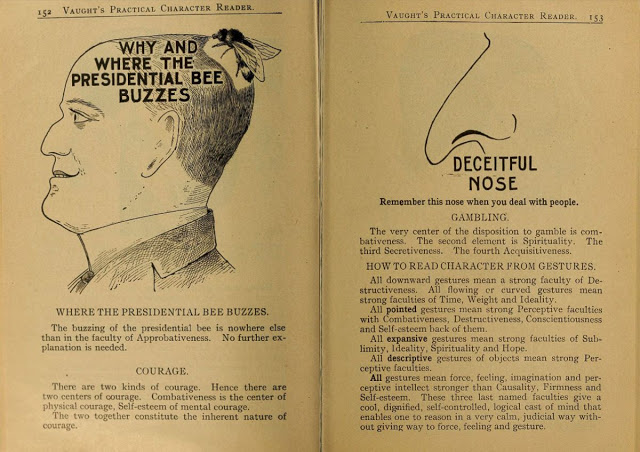
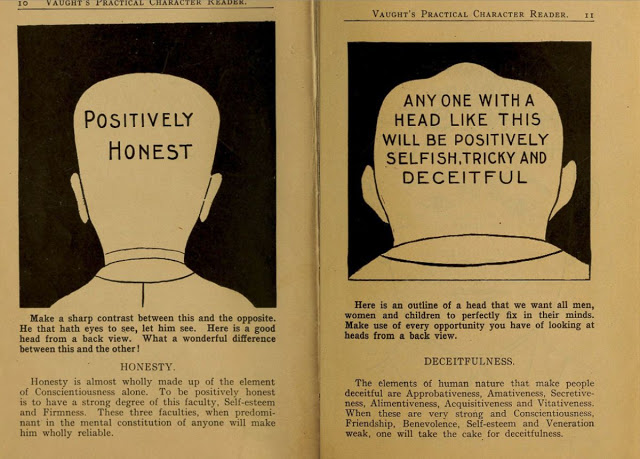
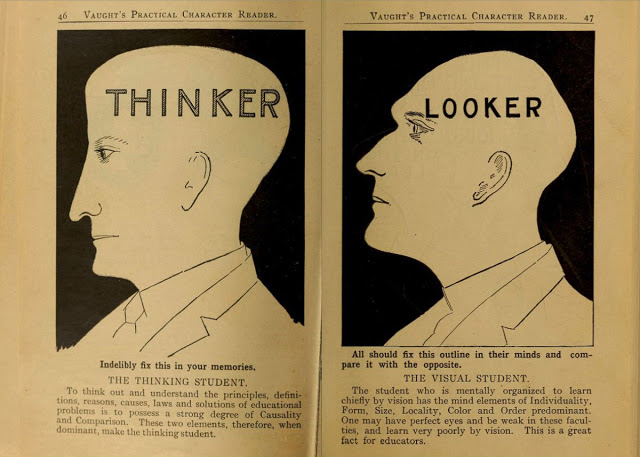
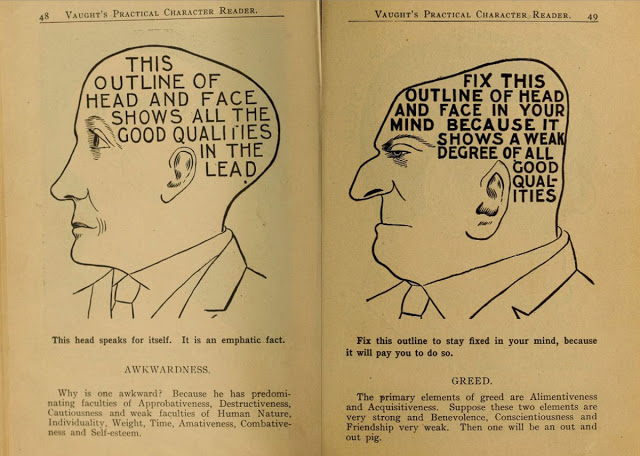
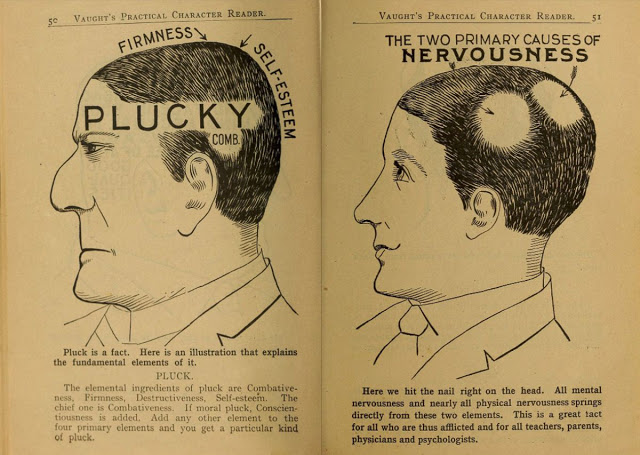
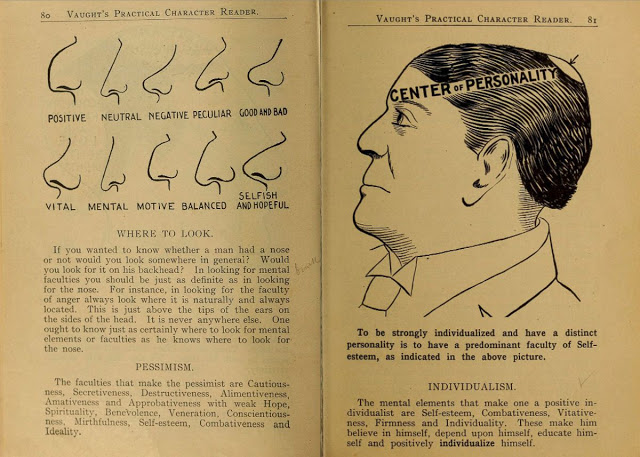
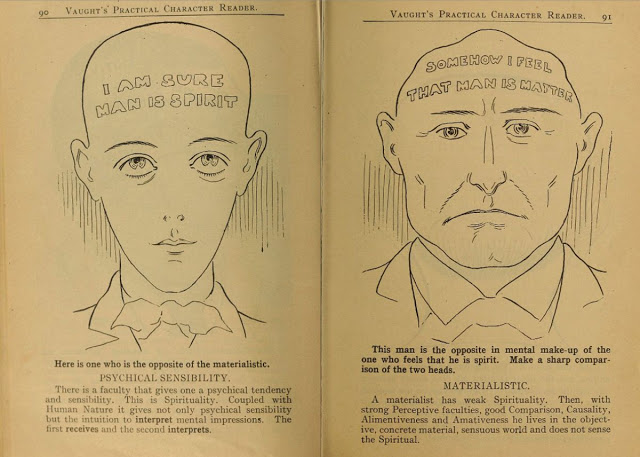
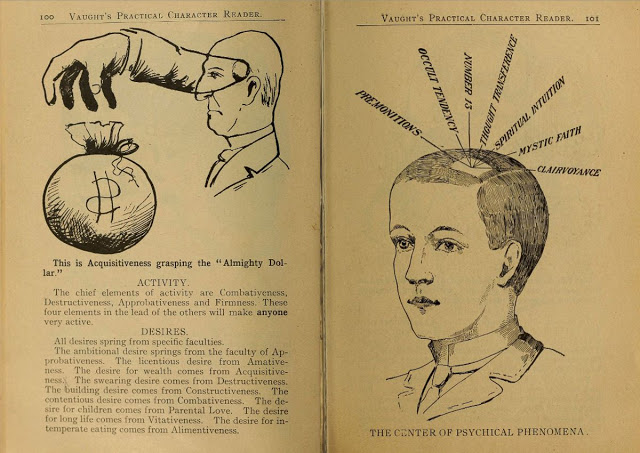
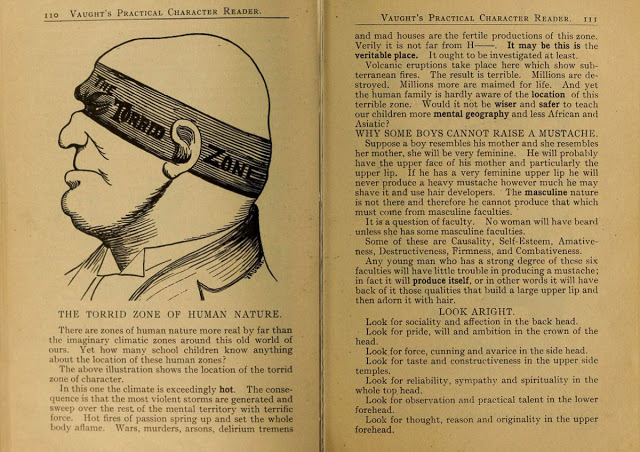
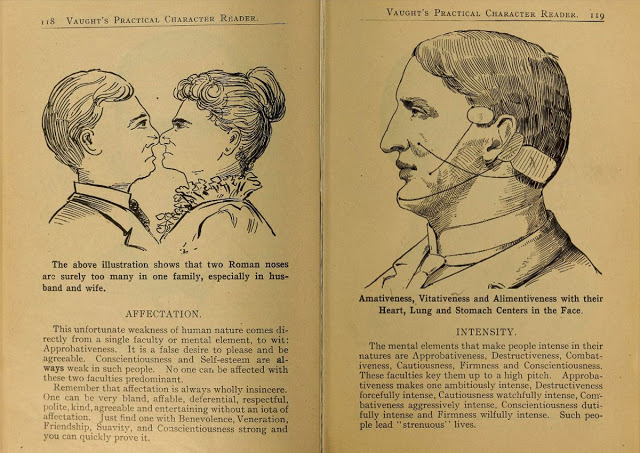
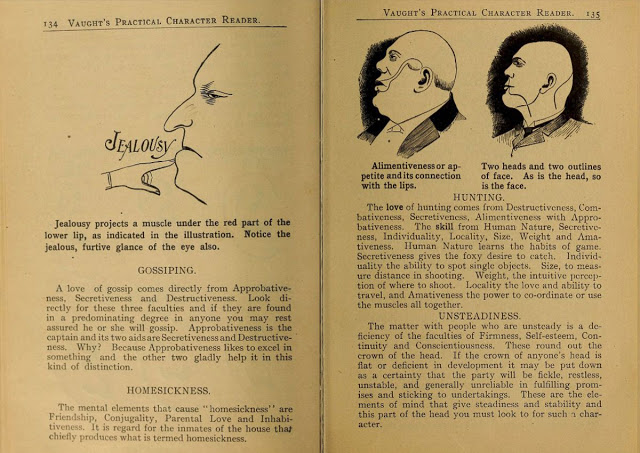
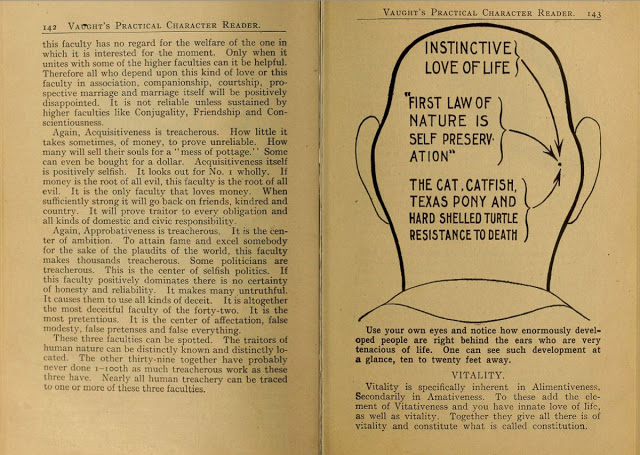
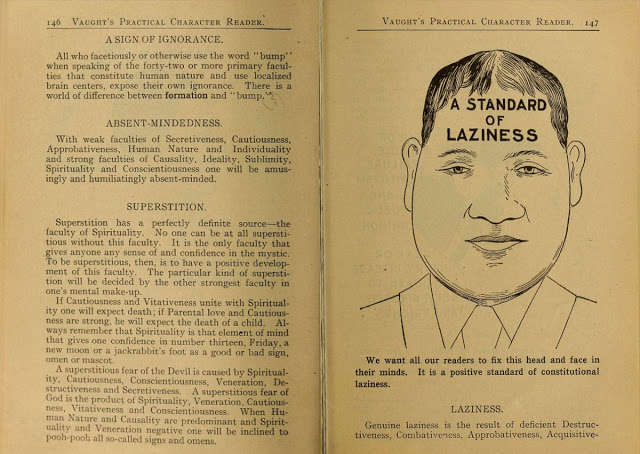
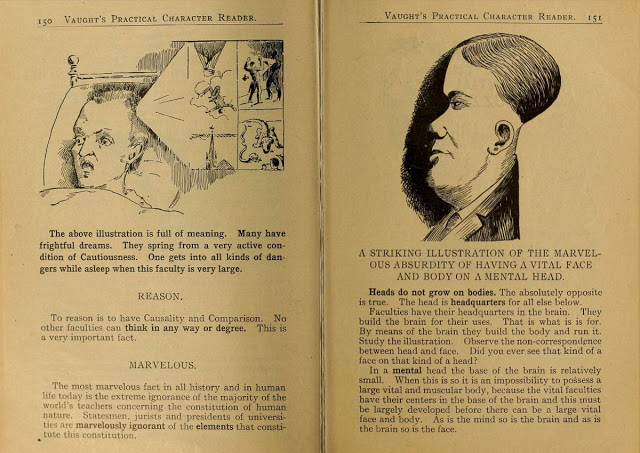
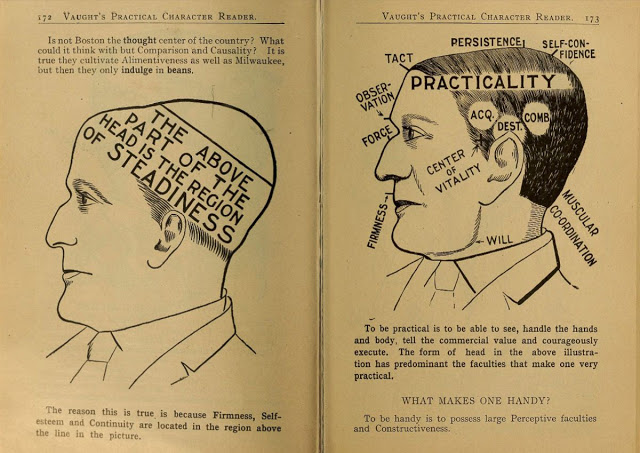
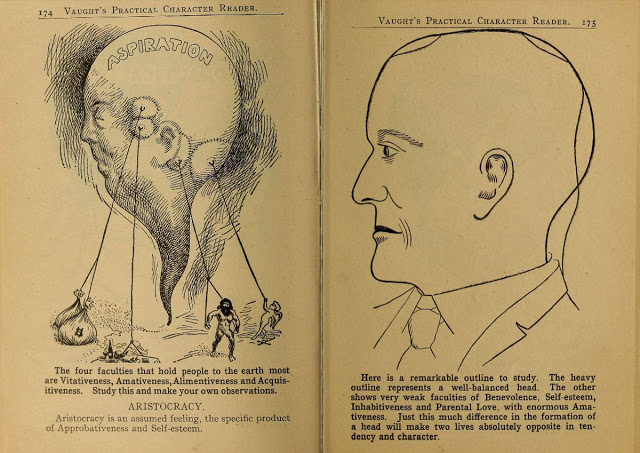
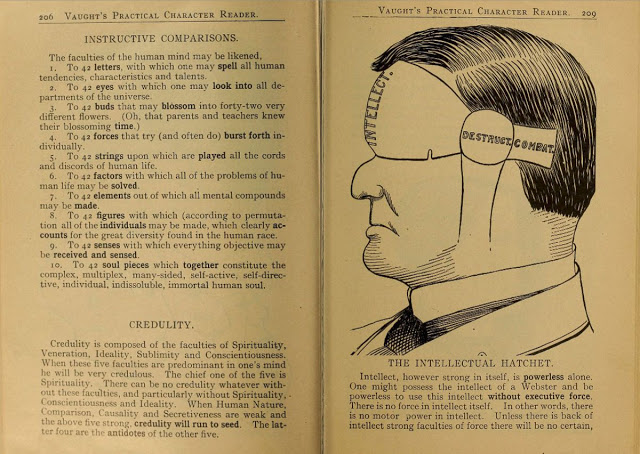
Illustrations from Vaught’s Practical Character Reader, a book on phrenology by L. A. Vaught published in 1902. As he confidently states in his Preface:
The purpose of this book is to acquaint all with the elements of human nature and enable them to read these elements in all men, women and children in all countries. At least fifty thousand careful examinations have been made to prove the truthfulness of the nature and location of these elements. More than a million observations have been made to confirm the examinations. Therefore, it is given the world to be depended upon. Taken in its entirety it is absolutely reliable. Its facts can be completely demonstrated by all who will take the unprejudiced pains to do so. It is ready for use. It is practical. Use it.
The book lays out the 42 known elements of human nature and how they’re made manifest in people’s heads, noses, ears and chins.
It’s both fascinating and disturbing to look through the diagrams from old phrenology texts. Although phrenology was at the height of its popularity during the first half of the 19th century, it enjoyed a bit of resurgence in the early 20th century.
While the author expounds with conviction on “cruel eyes,” “selfish ears” and “gross, sensual chins,” the illustrator provides diagrams and pictures which have cemented the book as a classic in the genre of unintentional humor.
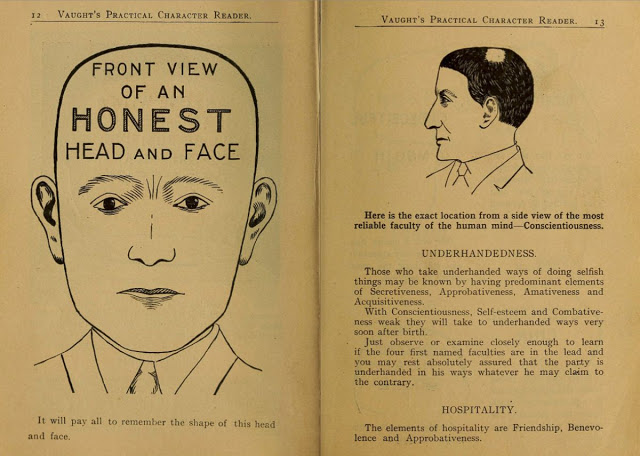


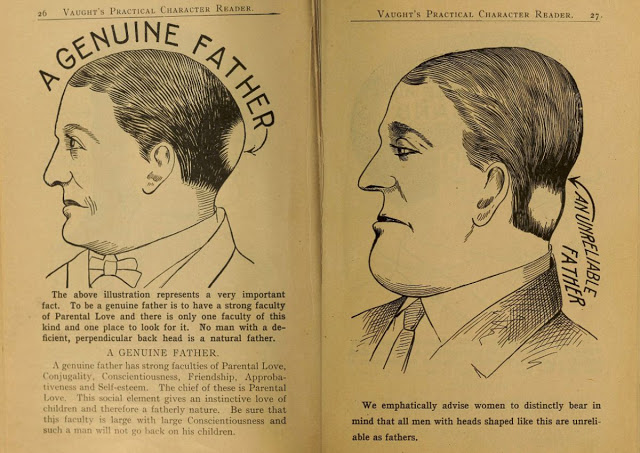

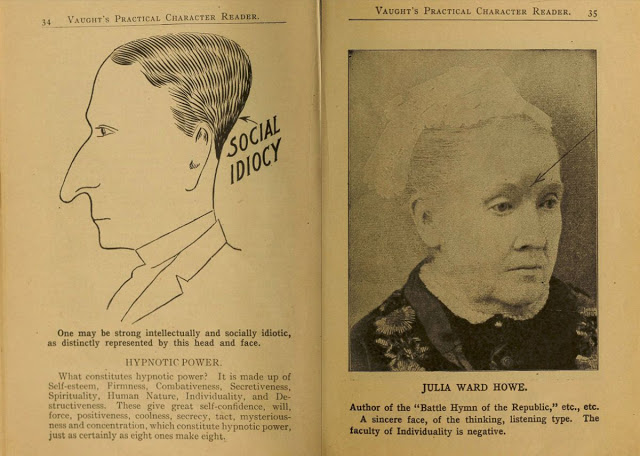

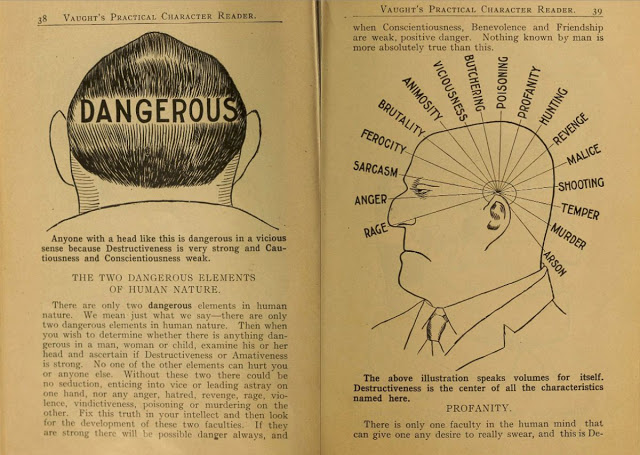









Images: Library of Congress
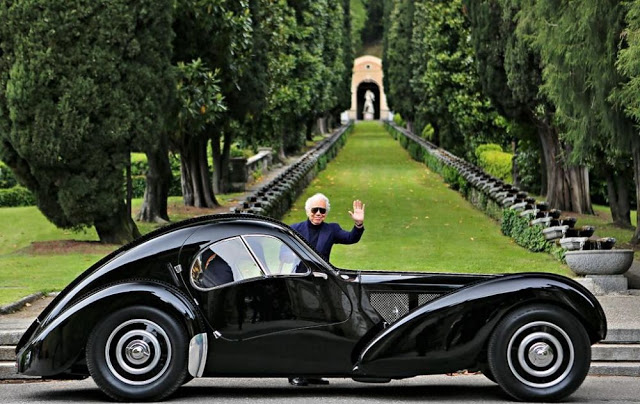
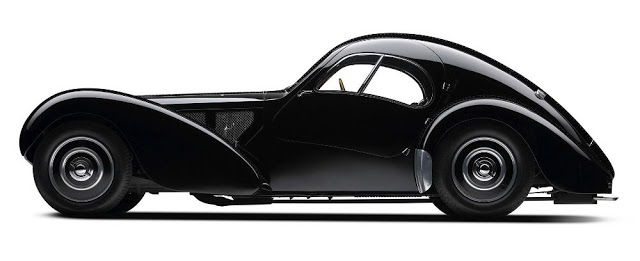
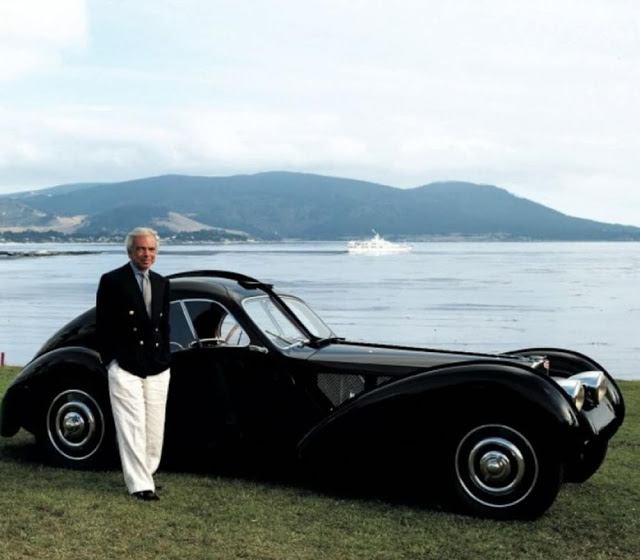
Designer Ralph Lauren is the proud owner of one of the world’s most handsome, interesting and fine specimens – the 1938 Bugatti 57SC Atlantic Coupe.
This gem is one of the rarest and most expensive cars in the world, designed by Jean Bugatti, son of founder Ettore. This beauty is estimated to be worth around $40 million US, why? Besides the fact it’s a visual work-of-art which has been on display in museums such as the Cleveland Museum of Art, there are only three known examples of the Atlantic world-wide.
Apart from Lauren’s, one Atlantic recently changed hands for $38 million and is now in Mullin Automotive Museum in Los Angeles. The third and final was destroyed in a train accident in the 1950s.
Lauren added the Atlantic to his considerable car collection in 1988. His collection boasts 60-odd rare cars ranging from a 1958 Ferrari Testarossa to a 1929 Bentley Blower – all housed in a disguised office park-like building in Bedford Hills, New York.
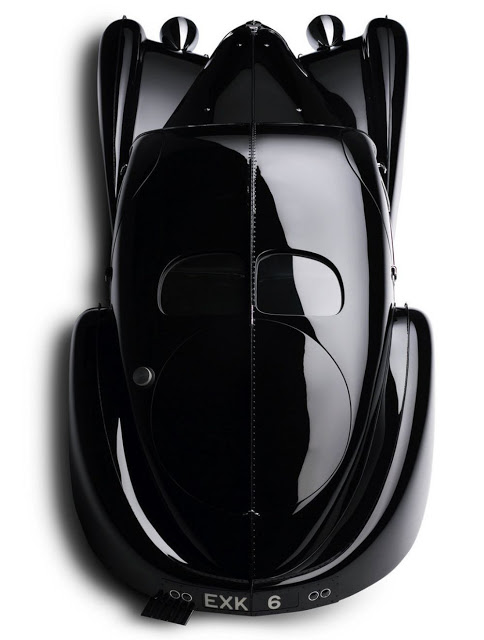
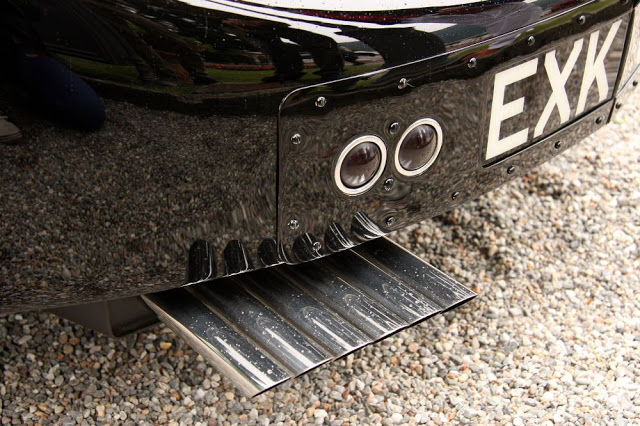
Said to reach speeds of up to 200 km/h the Atlantic has a truly stunning hand-formed aluminium body, low stance and still boasts many of its original features: the original interior upholstery made of goatskin leather, seats stuffed with horsehair and the original EXK6 UK registration.
“I’ve always been inspired by automotive design — the materials, the lines, but also the power and functionality. Cars are like art — moving art — an accomplishment in mechanics and precision.” — Ralph Lauren.
Lauren has so much passion for his Bugatti he took inspiration from it to create his latest watch collection. The Elm burl wood dials, black alligator straps and Amboyna burl wood bezels are reminiscent of the car’s rich interior.
Ralph Lauren, KBE ( né Lifshitz; born October 14, 1939) is an American fashion designer, philanthropist, and billionaire businessman, best known for the Ralph Lauren Corporation, a global multibillion-dollar enterprise. He has become well known for his collection of rare automobiles, some of which have been displayed in museum exhibits. Lauren stepped down as CEO of the company in September 2015 but remains executive chairman and chief creative officer. As of 2019, Forbes estimates his wealth at $6.3 billion, which makes Ralph Lauren the 102nd richest person in America.




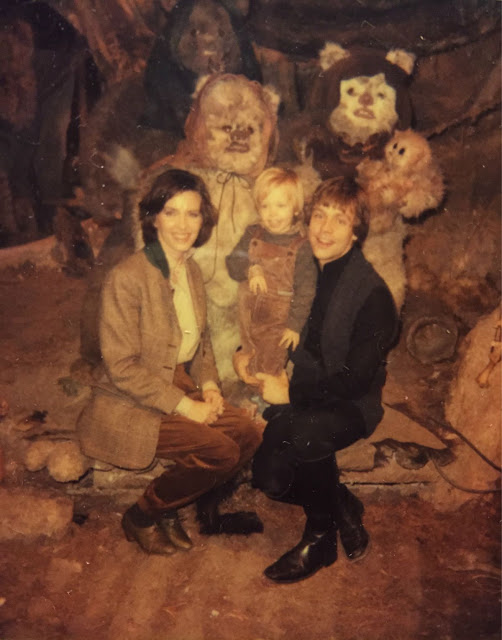
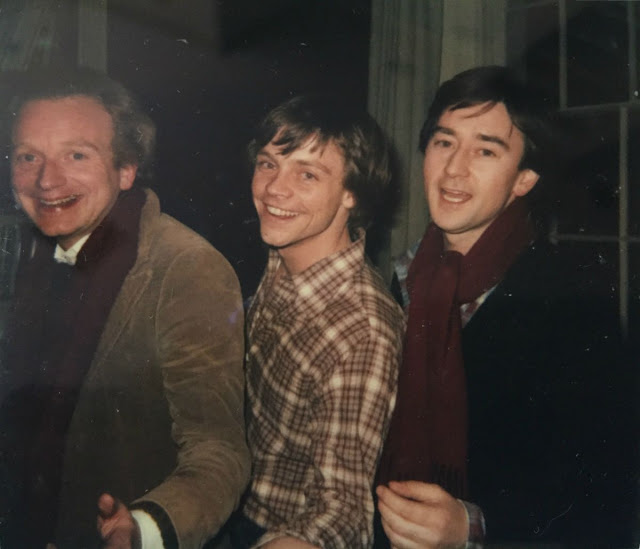
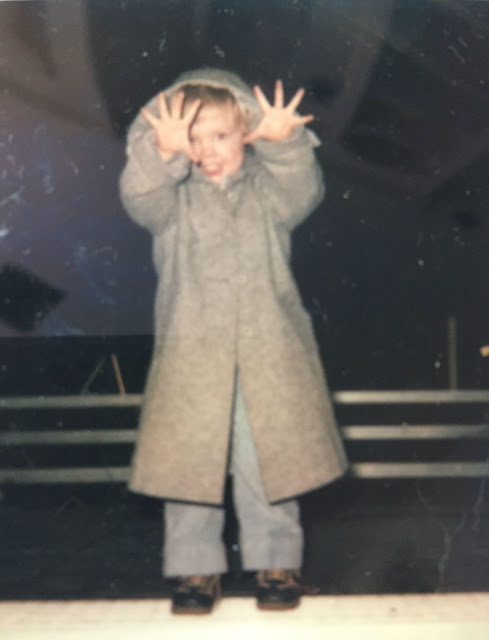
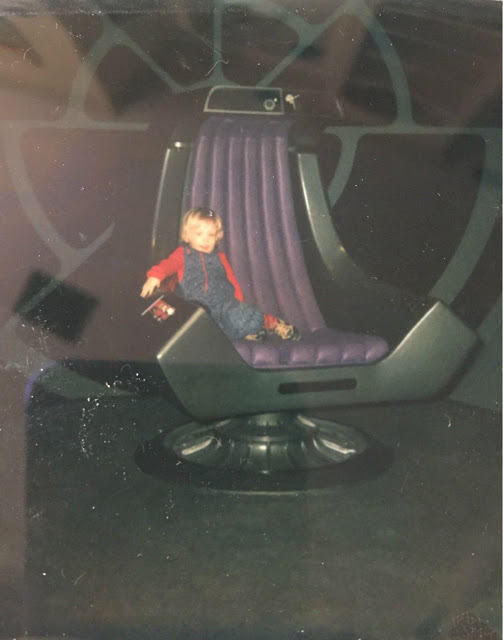
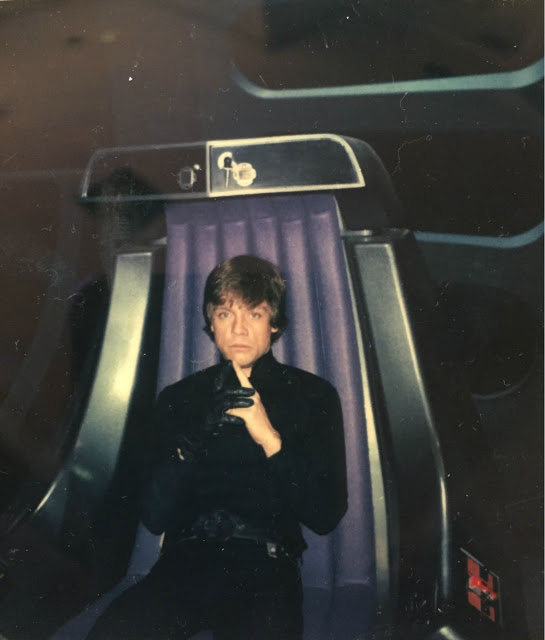
Star Wars has always been a story about family, and is often shared by families — even behind the scenes. The Hamill family had shared their own behind-the-scenes photos on StarWars.com.
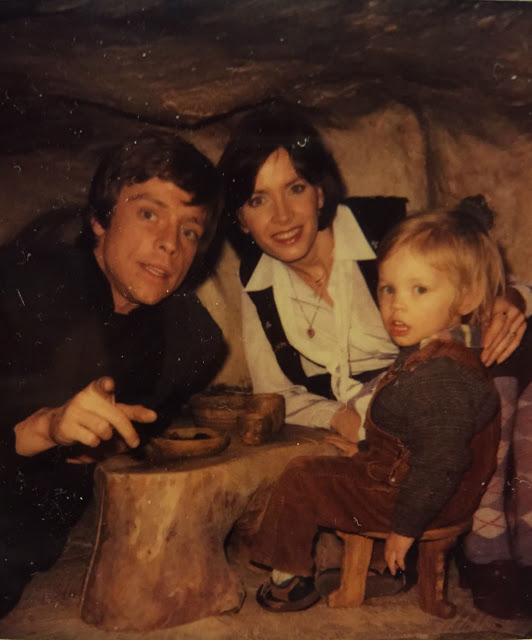
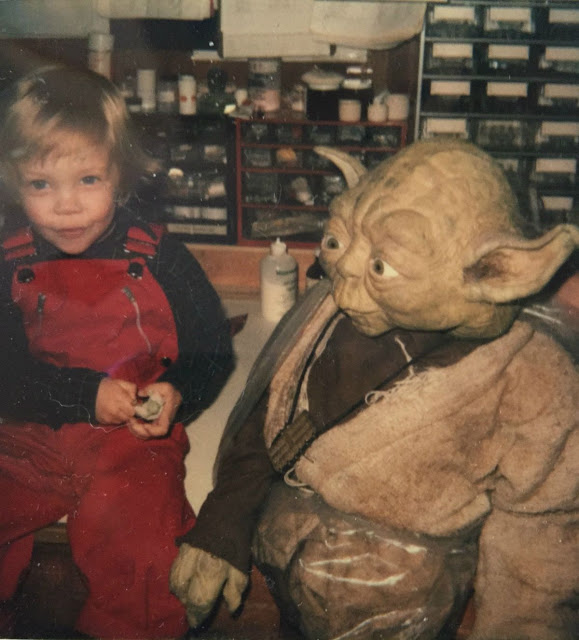
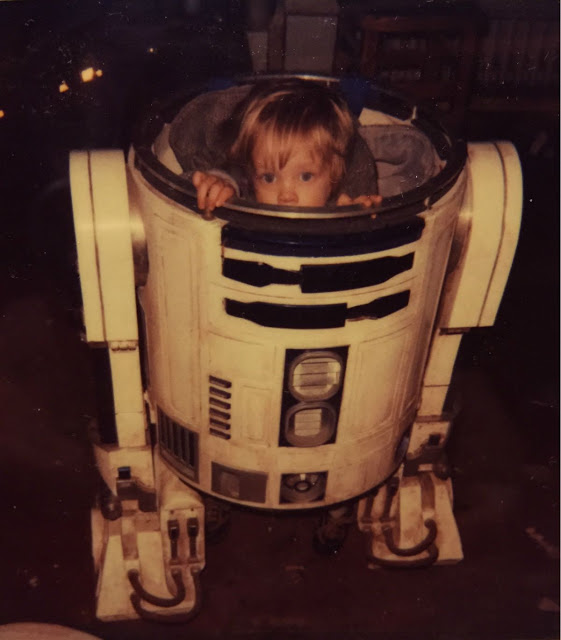
In a backstage interview with James Arnold Taylor and StarWars.com at Star Wars Celebration Anaheim, the legendary Mark Hamill discussed some newly unearthed photos from his family’s own collection. The photos show Hamill — often in costume as Luke — with his wife Marilou and son Nathan during the filming of Return of the Jedi, visiting such iconic sets as the Emperor’s throne room, Yoda’s hut, and more…
Return of the Jedi (also known as Star Wars: Episode VI – Return of the Jedi) is a 1983 American epic space opera film directed by Richard Marquand. The screenplay is by Lawrence Kasdan and George Lucas from a story by Lucas, who was also the executive producer. The sequel to Star Wars (1977)[a] and The Empire Strikes Back (1980), it is the third installment in the original Star Wars trilogy, the third film to be produced, and the sixth chronological film in the “Skywalker saga”. The film stars Mark Hamill, Harrison Ford, Carrie Fisher, Billy Dee Williams, Anthony Daniels, David Prowse, Kenny Baker, Peter Mayhew and Frank Oz.
Set one year after The Empire Strikes Back, the Galactic Empire, under the direction of the Emperor, is constructing a second Death Star in order to crush the Rebel Alliance once and for all. Since the Emperor plans to personally oversee the final stages of its construction, the Rebel Fleet launches a full-scale attack on the Death Star in order to prevent its completion and kill the Emperor, effectively bringing an end to his hold over the galaxy. Meanwhile, Luke Skywalker, now a Jedi Knight, struggles to bring his father Darth Vader back to the light side of the Force.
Following Lucas and Kasdan’s discussion on making Return of the Jedi, the film went into production. Steven Spielberg, David Lynch and David Cronenberg were considered to direct the project before Marquand signed on as director. The production team relied on Lucas’ storyboards during pre-production. While writing the shooting script, Lucas, Kasdan, Marquand, and producer Howard Kazanjian spent two weeks in conference discussing ideas to construct it. Kazanjian’s schedule pushed shooting to begin a few weeks early to allow Industrial Light & Magic more time to work on the film’s effects in post-production. Filming took place in England, California, and Arizona from January to May 1982.
The film was released in theaters on May 25, 1983, receiving positive reviews, although many felt that it did not match the cinematic heights of its predecessors. It grossed $374 million during its initial theatrical run, becoming the highest-grossing film of 1983. Several re-releases and revisions to the film have followed over the decades, which has also brought its total gross to $475 million. The United States Library of Congress selected it for preservation in the National Film Registry in 2021. After Lucas finished his six-film saga by making the prequel trilogy, Disney purchased Lucasfilm and produced a sequel trilogy. Additionally, it released The Mandalorian, the first live-action television series in the franchise, for the streaming service Disney+. The series and its spin-offs are set beginning five years after Return of the Jedi. (Wikipedia)

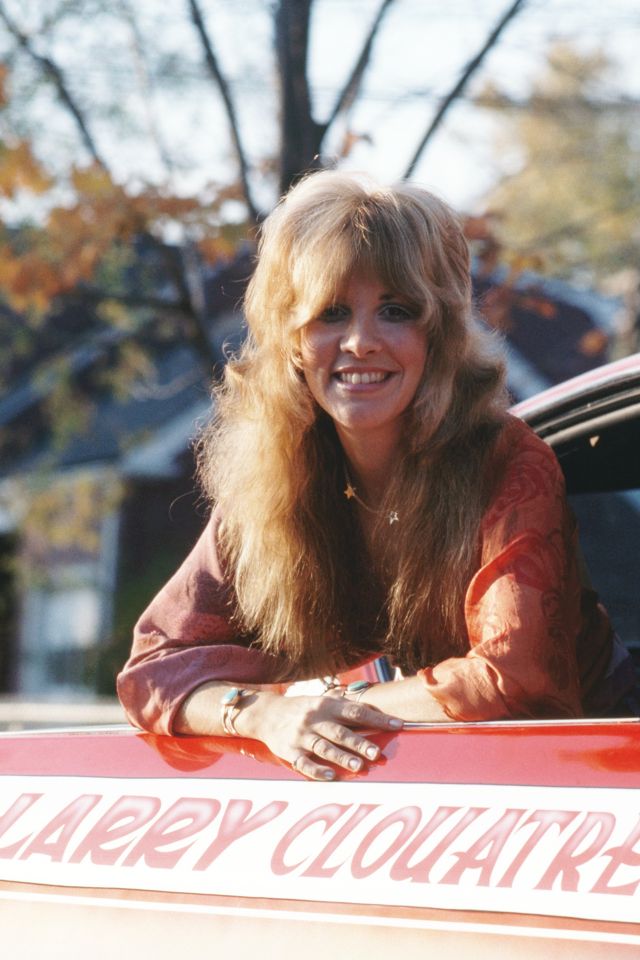
Photographer Fin Costello was born in Glenamaddy in Galway, Ireland and grew-up in Cork by St Lukes. He emigrated to London when he was 19 years old, and took up a trade as a sailmaker. In 1966 he began photography as a hobby and discovered he had an aptitude for it, initially beginning working for magazines as a sports photographer, but soon moved onto working with bands.
In 1971 Fin got his big break when a friend asked him to photograph some bands at a gig. The venue was a place called the Roundhouse, where many established and upcoming bands would play. The gig started at 12 noon and continue on through to 12 that night, with band after band getting up on stage to play a few songs. One of the bands he photographed was called Argent, who were about to have a hit with the song “Hold Your Head Up”, Fin’s photos were used on the album’s artwork and within a month he was taking photos for the likes of Uriah Heep, Humble Pie and Deep Purple.
In a career spanning 40 years he has worked with some of the most influential names in the music business, including Aerosmith, Ozzy Osbourne, The Police, Thin Lizzy, Deep Purple, Kiss, The Rolling Stones and Jimi Hendrix.
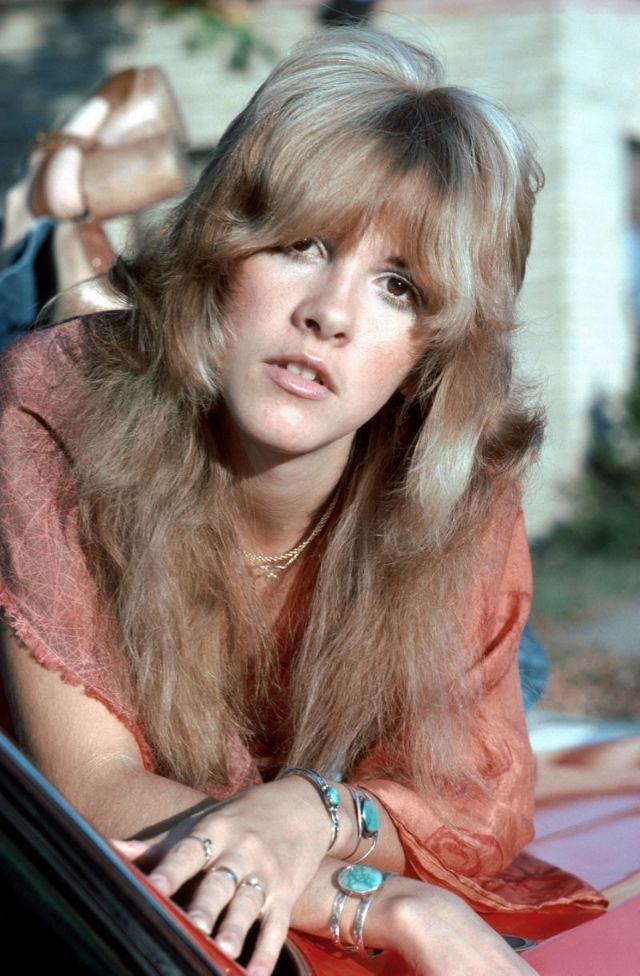
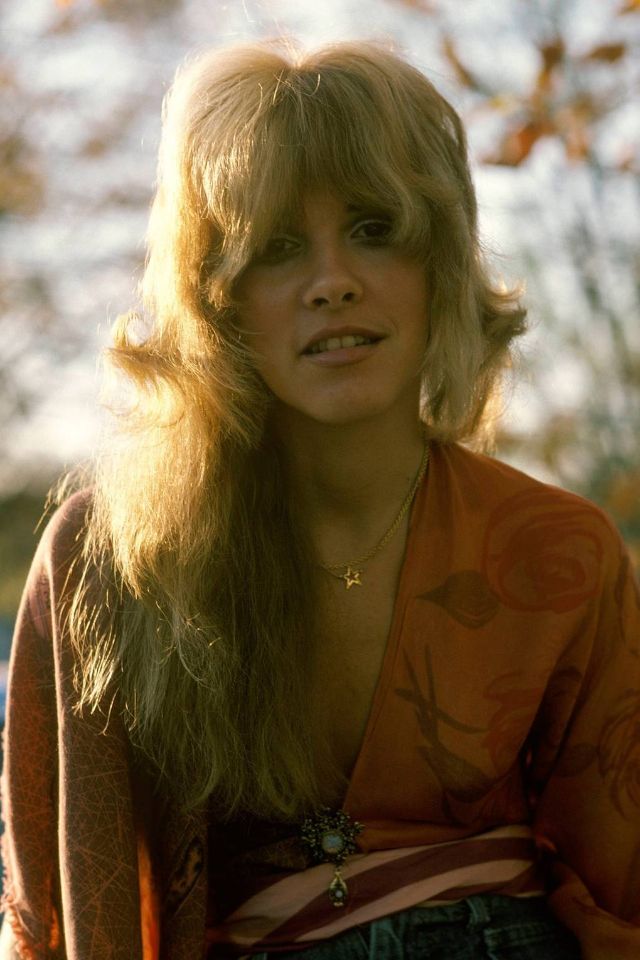
Stephanie Lynn Nicks (born May 26, 1948)[1] is an American singer, songwriter, and producer known for her work with the band Fleetwood Mac and as a solo artist.
After starting her career as a duo with her then-boyfriend Lindsey Buckingham, releasing the album Buckingham Nicks to little success, Nicks joined Fleetwood Mac in 1975, helping the band to become one of the best-selling music acts of all time with over 120 million records sold worldwide. Rumours, the band’s second album with Nicks, became one of the best-selling albums of all time, being certified 20× platinum in the US. In 1981, while remaining a member of Fleetwood Mac, Nicks began her solo career, releasing the studio album Bella Donna, which topped the Billboard 200 and has reached multiplatinum status. She has released eight studio solo albums and seven studio albums with Fleetwood Mac, selling a certified total of 65 million copies in the US alone.
After the release of her first solo album, Rolling Stone named her the “Reigning Queen of Rock and Roll”. Nicks was named one of the 100 Greatest Songwriters of All Time and one of the 100 Greatest Singers of All Time by Rolling Stone. Her Fleetwood Mac songs “Landslide” and “Dreams”, with the latter being the band’s only number one hit in the US, together with her solo hit “Edge of Seventeen”, have been included in Rolling Stone’s list of the 500 Greatest Songs of All Time. She is the first woman to have been inducted twice into the Rock and Roll Hall of Fame, as a member of Fleetwood Mac in 1998 and as a solo artist in 2019. She has garnered eight Grammy Award nominations and two American Music Award nominations as a solo artist. She has won numerous awards with Fleetwood Mac, including a Grammy Award for Album of the Year in 1978 for Rumours. The 1975 album Fleetwood Mac, Rumours and Bella Donna have been included in the “Greatest of All Time Billboard 200 Albums” chart by Billboard. Furthermore, Rumours was rated the seventh-greatest album of all time in Rolling Stone’s list of the “500 Greatest Albums of All Time”, as well as the fourth-greatest album by female acts. (Stevie Nicks Bio via Wikipedia)
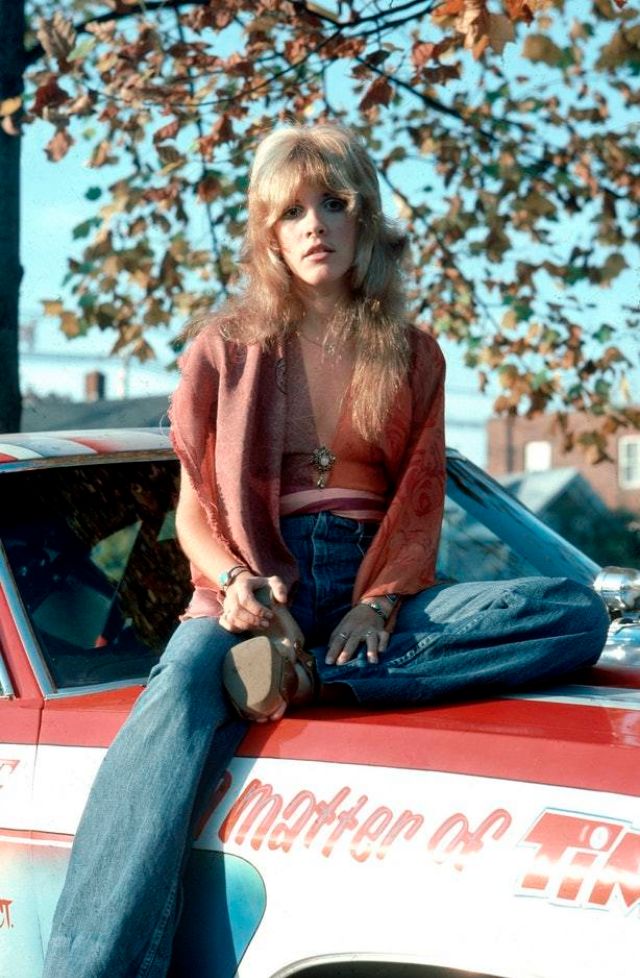
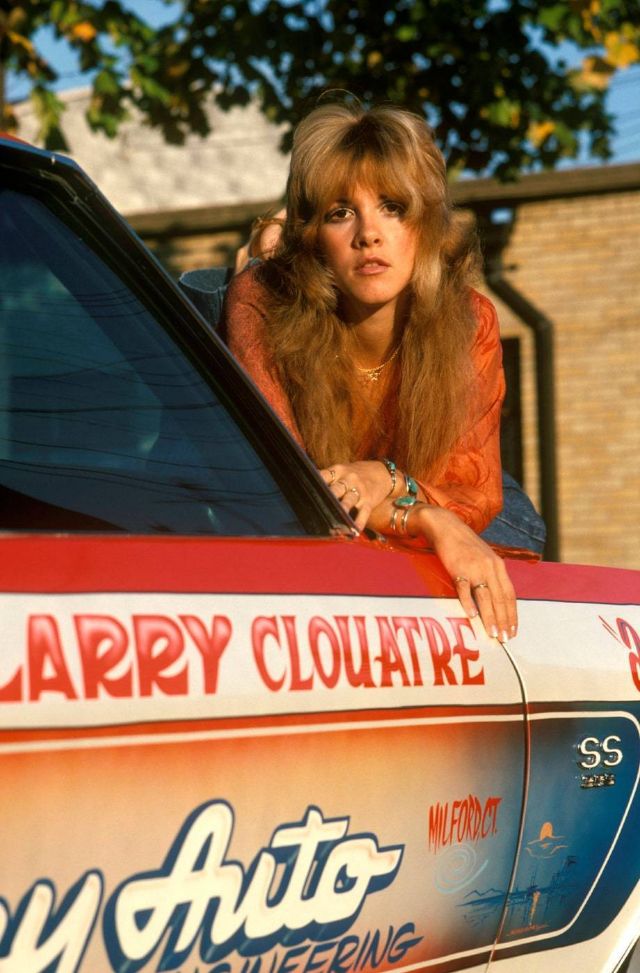
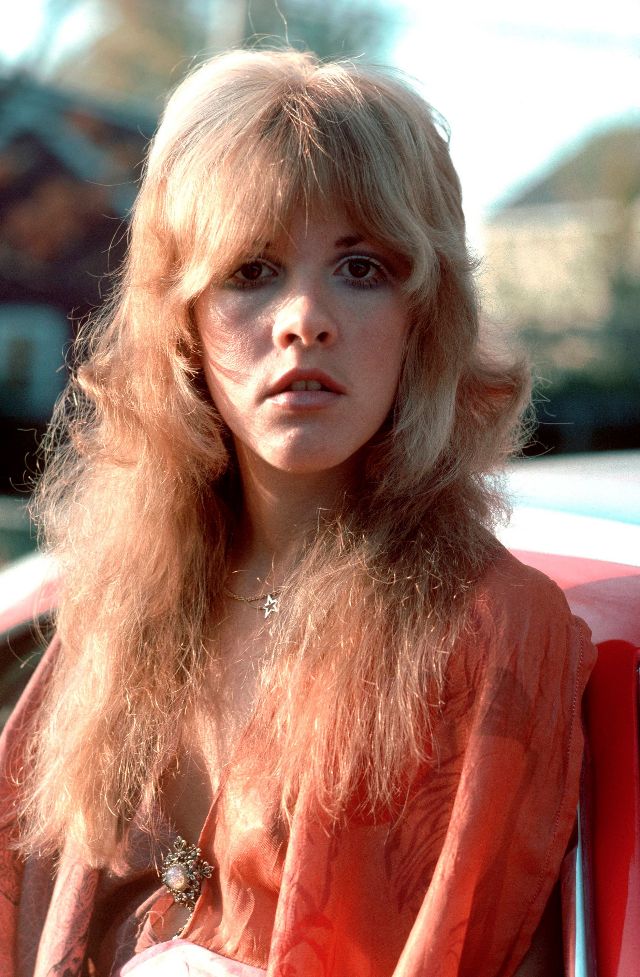
These wonderful photos of Stevie Nicks from Fleetwood Mac were taken by Fin Costello in New Haven in October 1975.


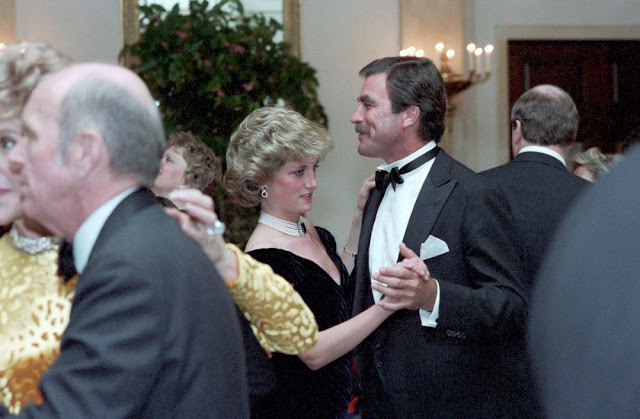
When Princess Diana visited President Ronald Reagan and his wife, Nancy, at the White House in 1985, she stepped onto the ballroom dance floor — with a man known for his electrifying moves on the big screen.
“I put my hand in the middle of her back, brought her hand down so that it wouldn’t be so high and gave her the confidence that we would do just fine.” – John Travolta
Diana took the hand of John Travolta, star of Grease and Saturday Night Fever, and the pair gracefully spun around the checkered floor for nearly 30 minutes. The dance would become one of the most iconic moments of her life — and the velvet dress she wore for the occasion instantly assumed its place in her hall-of-fame looks.
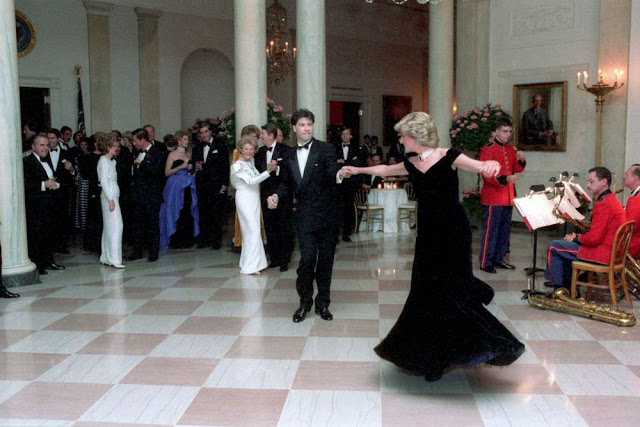
Designed by London-born Victor Edelstein, the “Travolta dress” is an off-the-shoulder midnight blue velvet evening gown. It was inspired by Edwardian fashion, giving it a “slight sweep of costume drama”. The journalist Jackie Modlinger described it as “dramatic in style” and “regal in fabric”.

The Princess of Wales wore the dress again in Germany in December 1987 and at the premiere of the film Wall Street in April 1988. She wore it for her last official portrait photograph, taken by her former husband’s uncle, the Earl of Snowdon, in 1997.
Shortly before her death in August 1997, Diana requested that the dress be sold in a charity auction. Florida-based businesswoman Maureen Dunkel bought it for £100,000 in New York in June 1997, along with nine other dresses formerly owned by the Princess. The Travolta dress was the most expensive one sold at the auction. When she went bankrupt in 2011, Dunkel was forced to put them up for auction, but the Travolta dress was one of six that were not sold. It was finally auctioned off by Kerry Taylor in London on 19, March 2013, fetching £240,000 ($362,424) and again being the most expensive auctioned dress. It was bought by “a British gentleman as a surprise to cheer up his wife”.
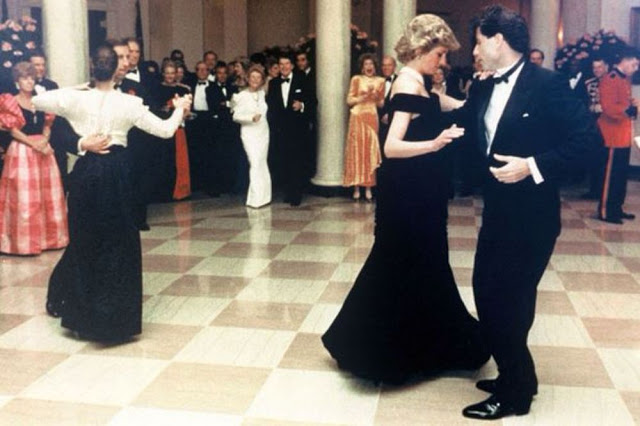
During the gala, Princess Diana also taking to the floor with Tom Selleck and Clint Eastwood on that glittering night at the White House in September 1985.






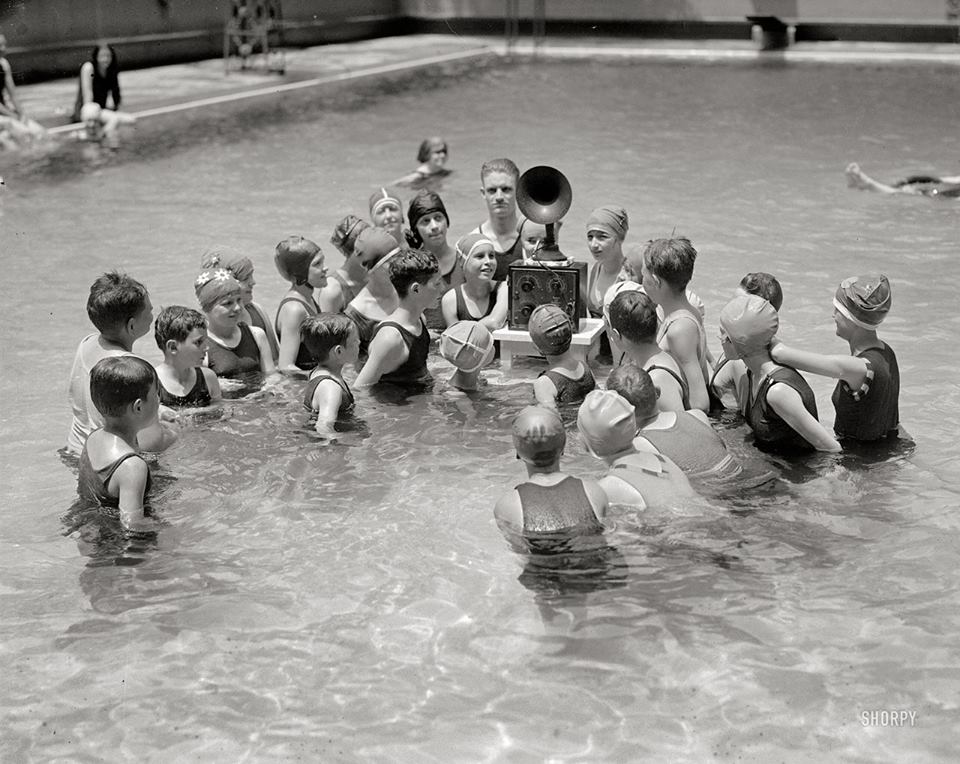
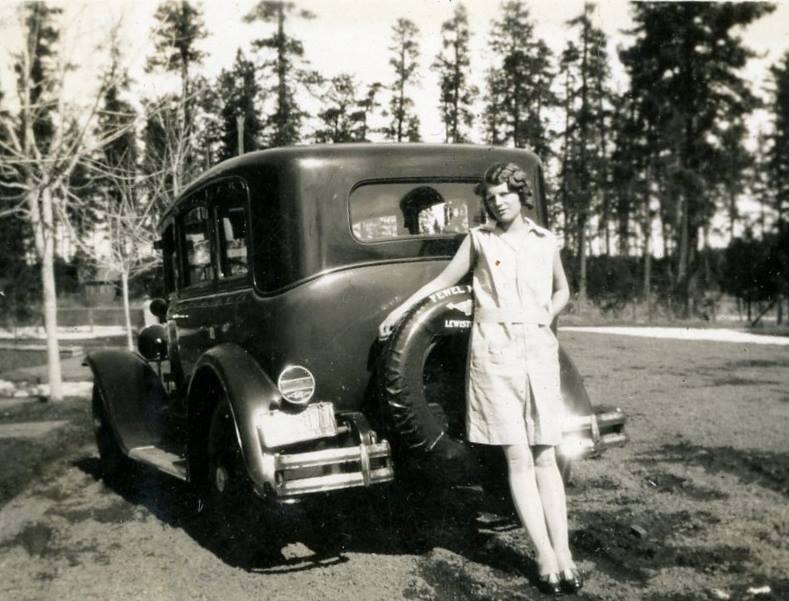




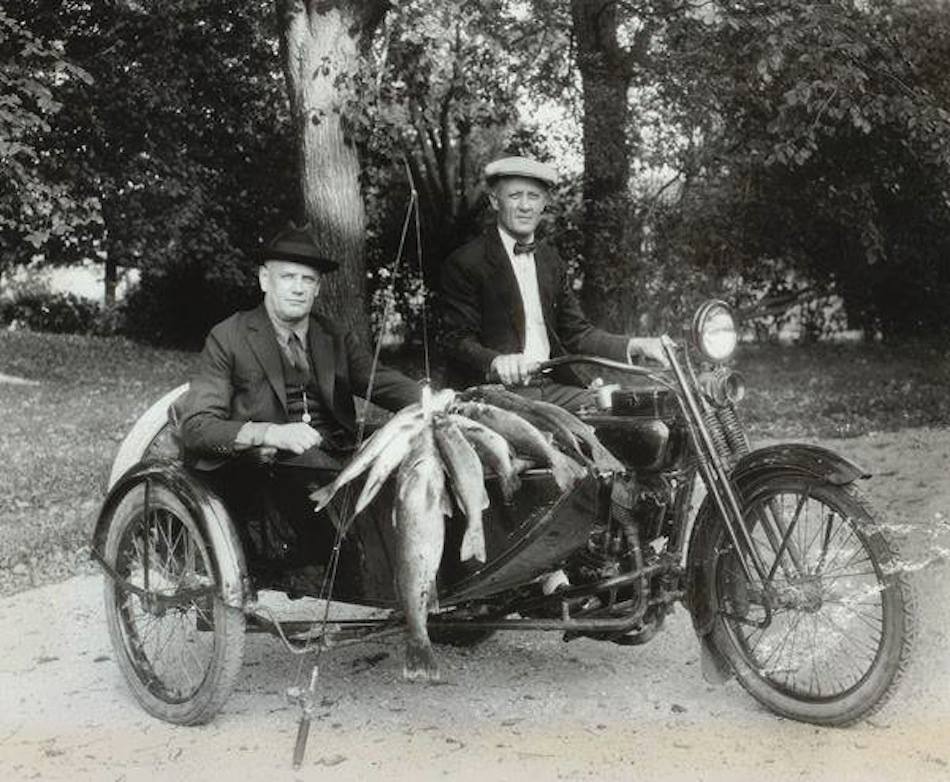


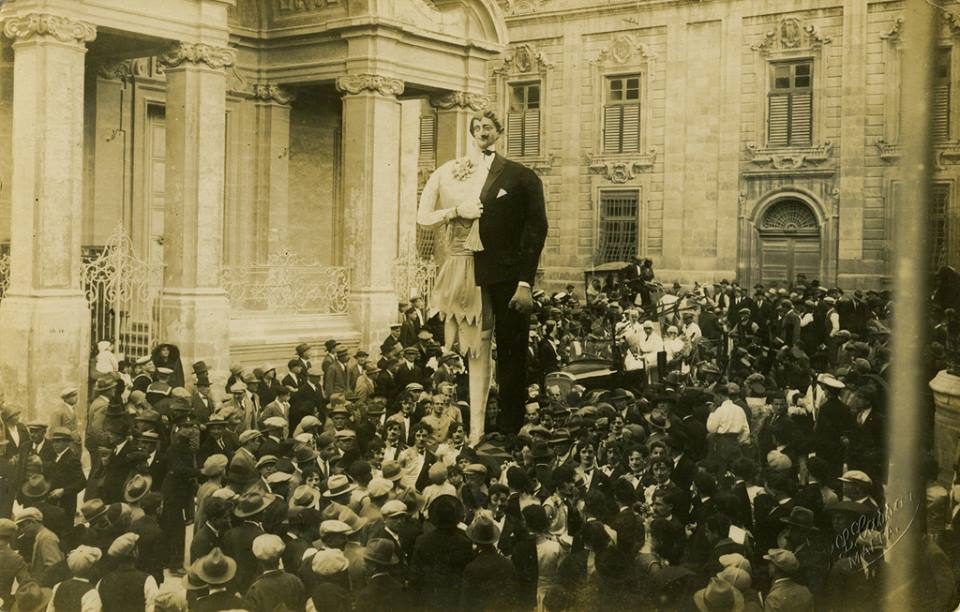




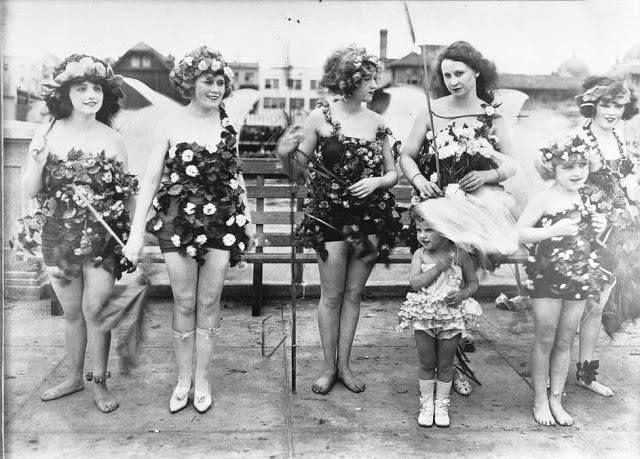
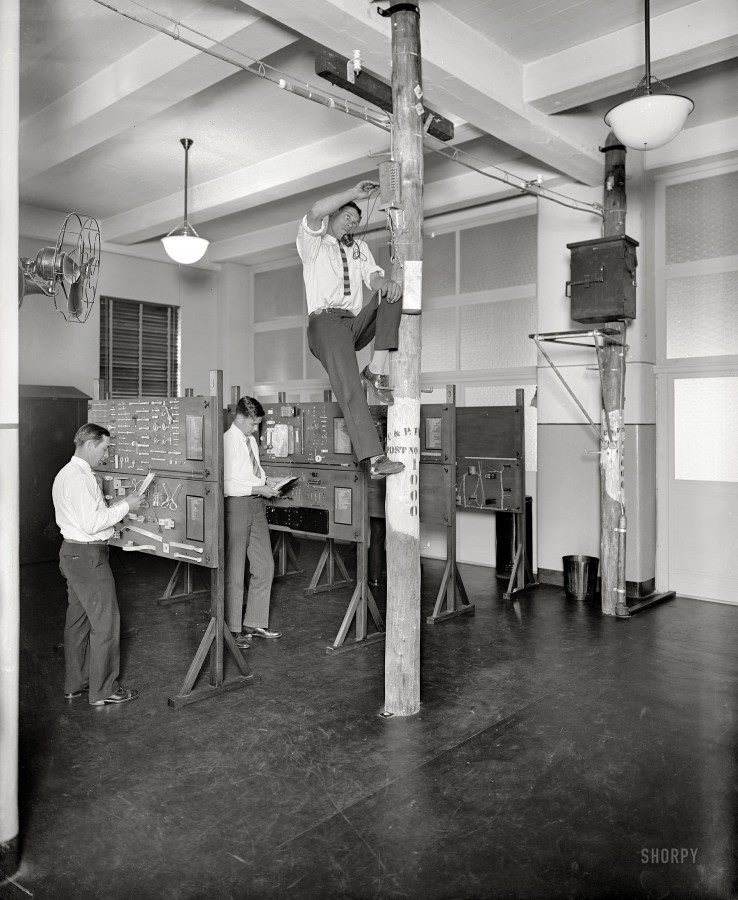



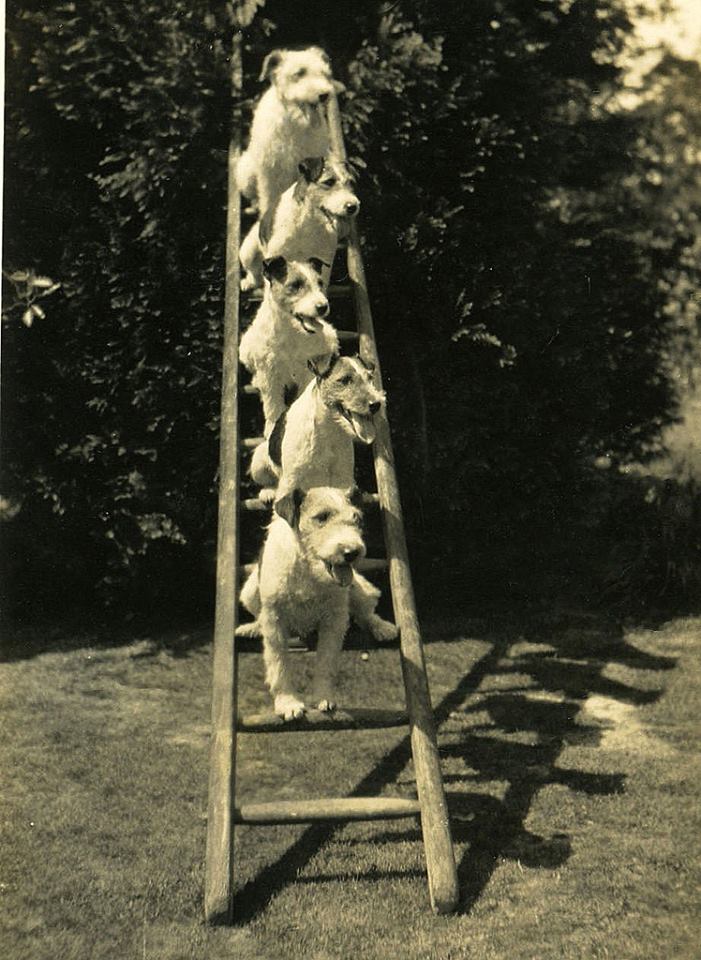


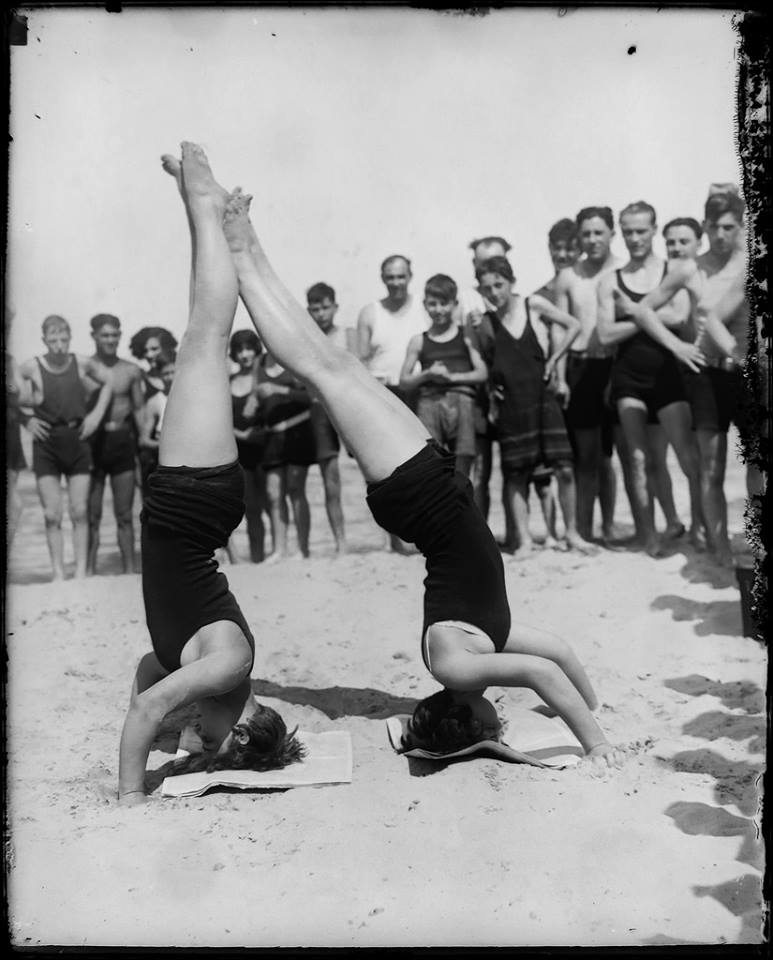




Read more of this content when you subscribe today.
The photograph of Winston Churchill with the Thompson submachine gun was taken during his visit to the coastal defense positions near Hartlepool on 31 July, 1940. The interesting thing about this picture is that both the British and the Germans used it for propaganda purposes. The British edited out two soldiers standing next to Churchill, making him look statesmanlike, determined and menacing. On the other hand, the Germans compared it to those of the gangsters of the American West. The Nazis used this photo in their propaganda leaflets airdropped onto Britain during the Battle of Britain.

Become a paid subscriber to get access to the rest of this post and other exclusive content.

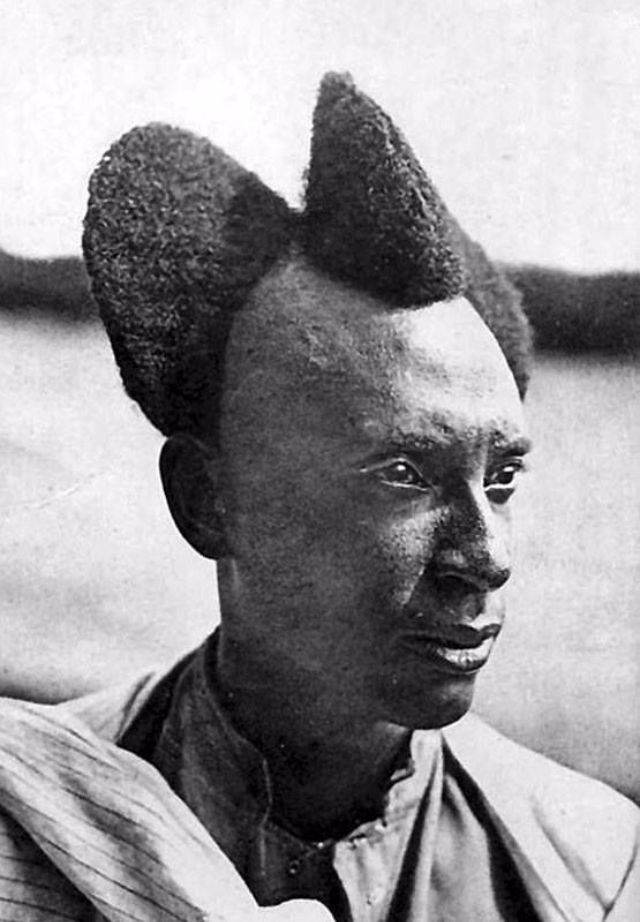
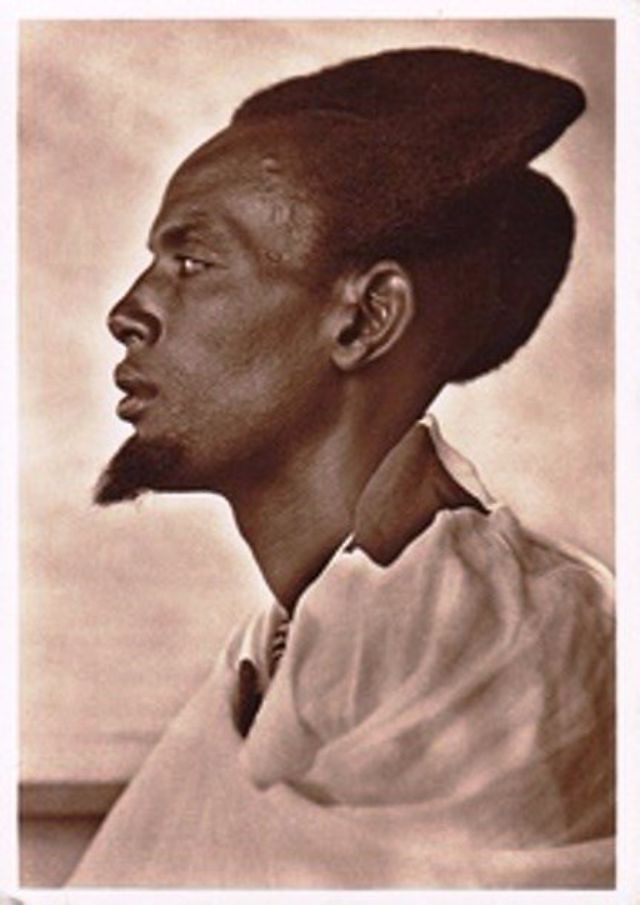
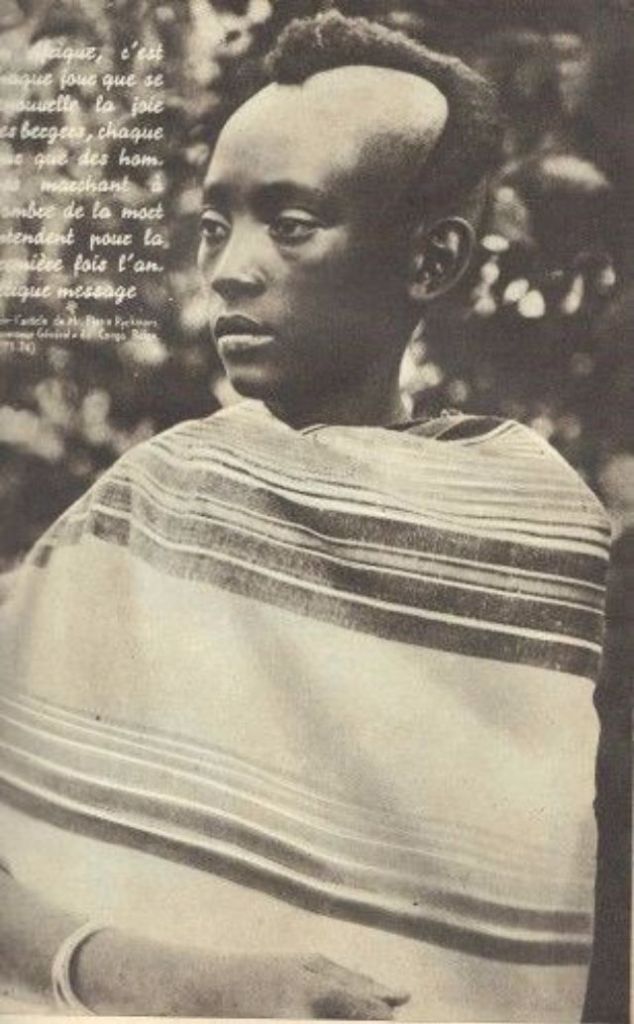
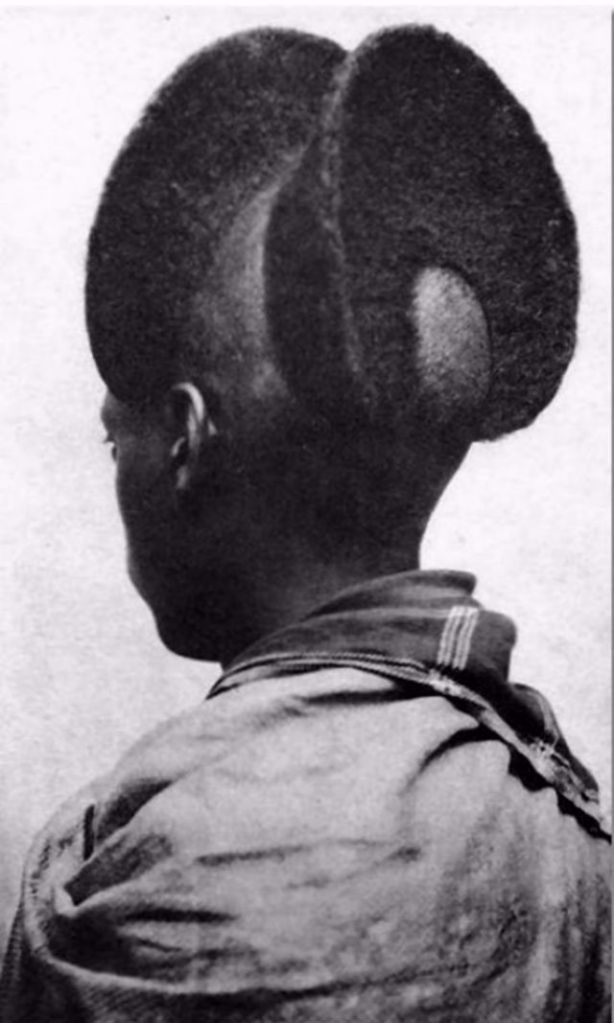
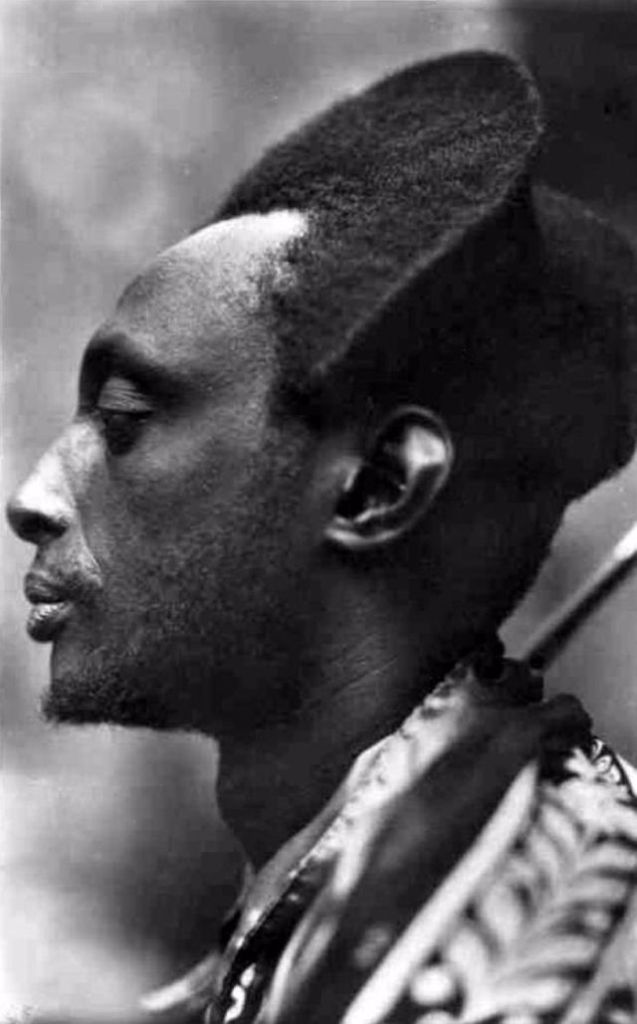
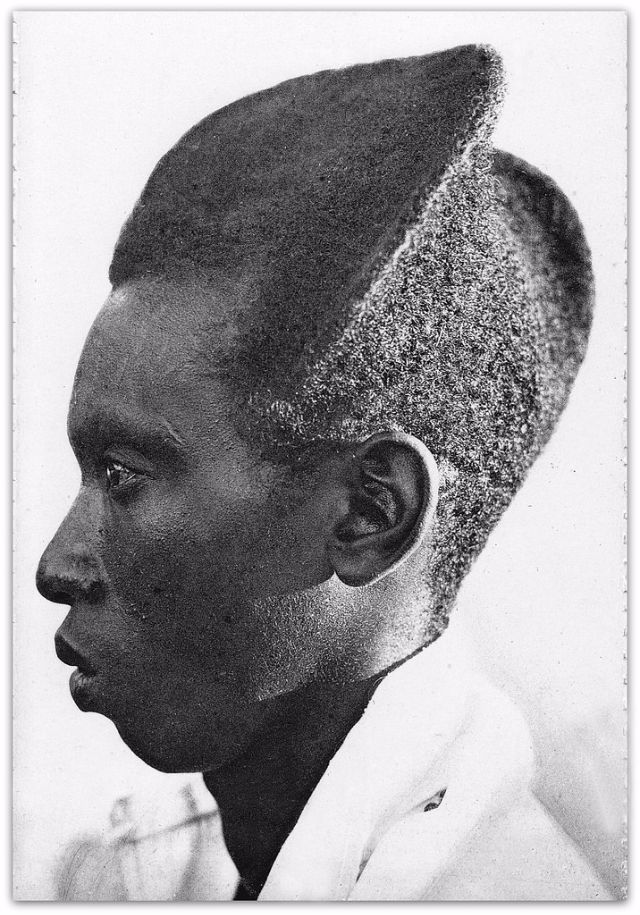
The Amasunzu traditional hairstyle is hands down one of the most creative ever. Still being worn today, it was and still is a symbol of pride in Rwanda.
The Amasunzu hairstyle represented different roles and stages in life of women and men. When warriors wore the style, it symbolized strength and bravery. Worn by women, it usually marked marital status and virginity. Young woman wore it before they were married. After marriage, some women let their hair grow freely.