











Bringing You the Wonder of Yesterday – Today
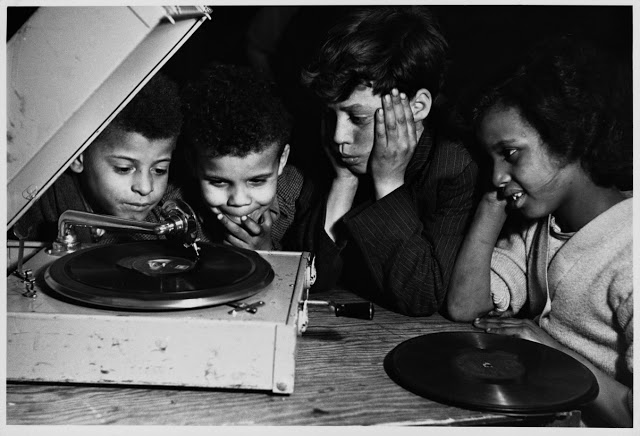
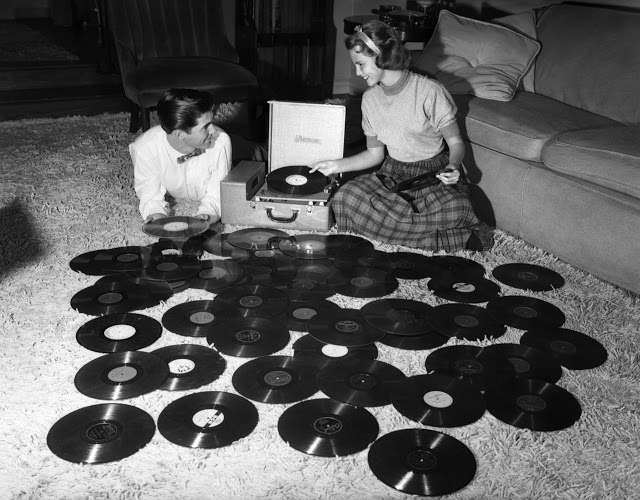
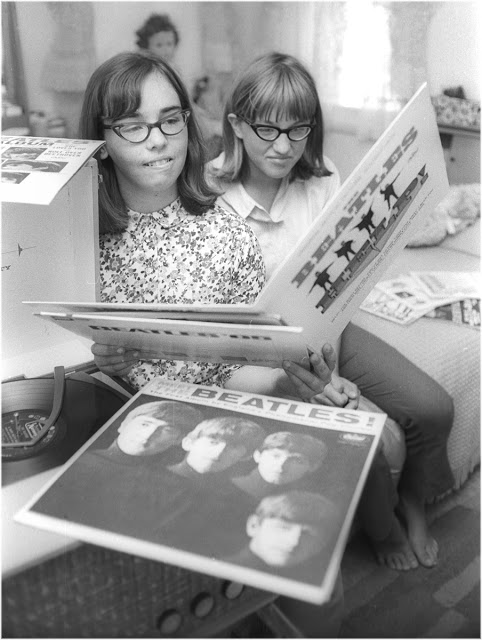
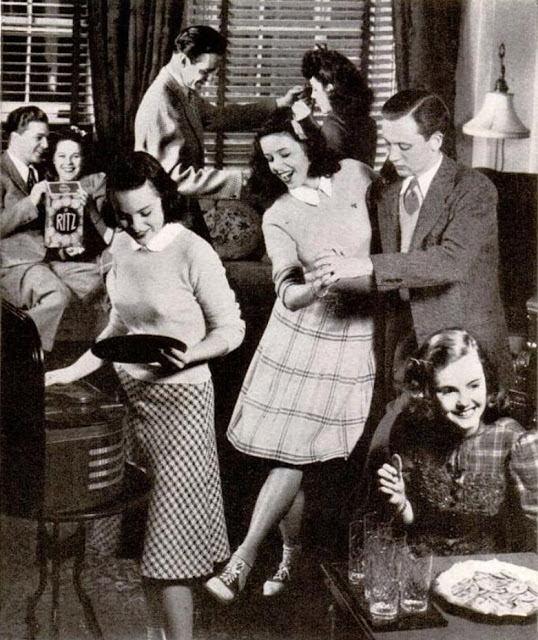
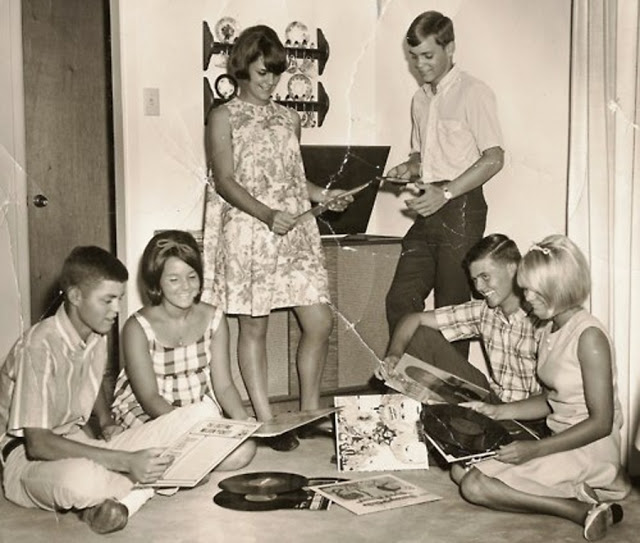
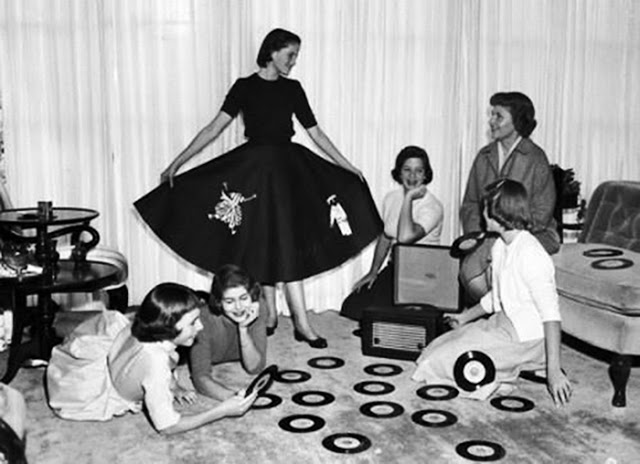
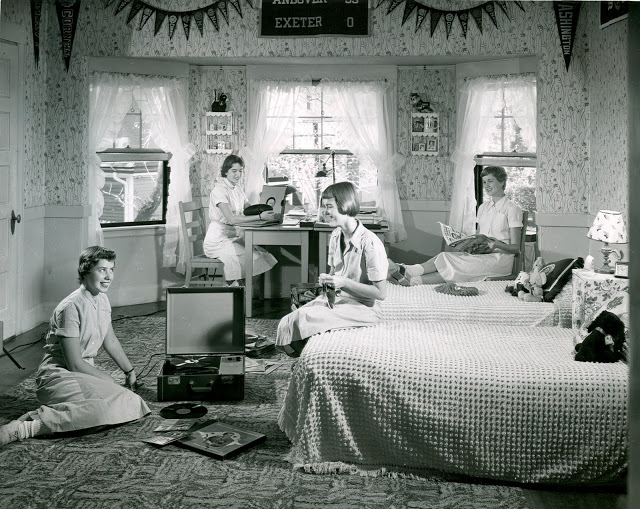
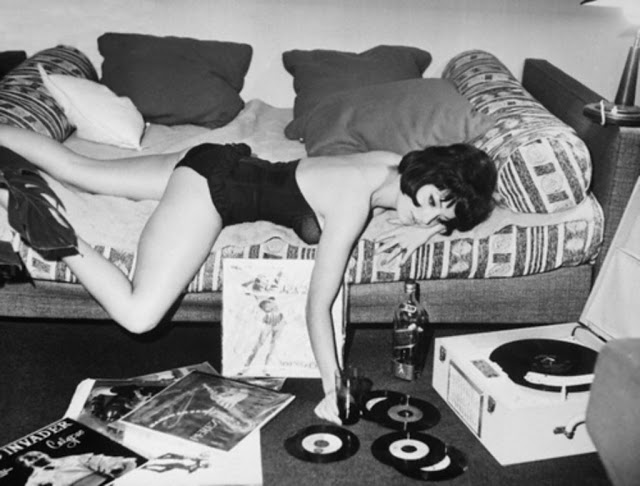
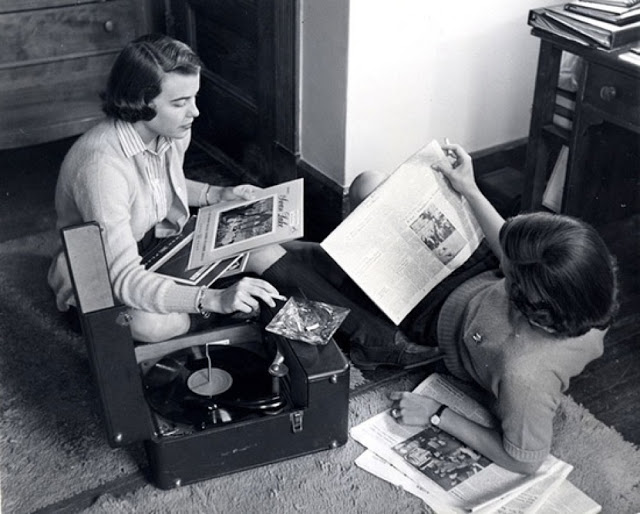
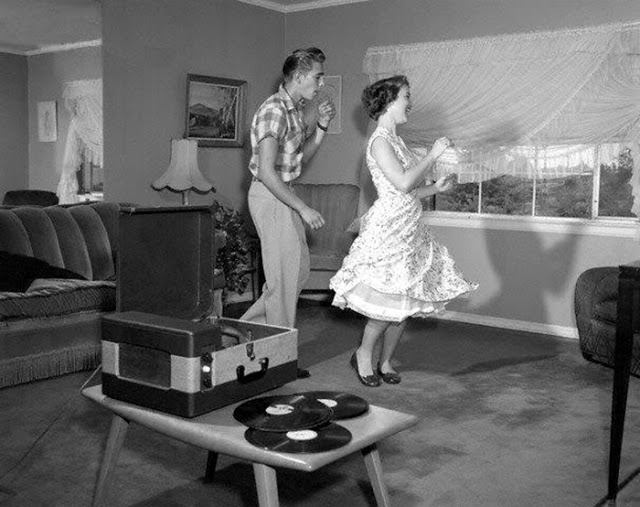
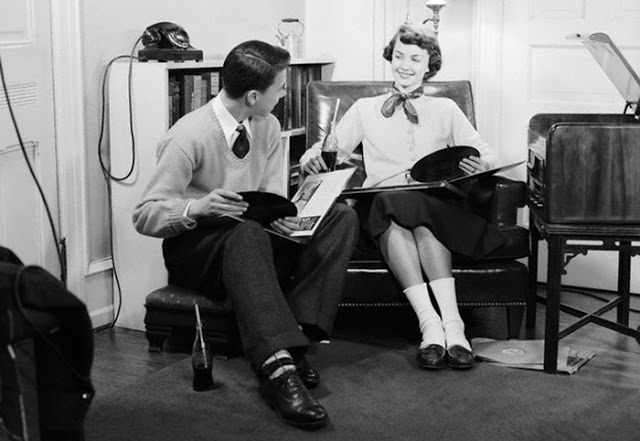
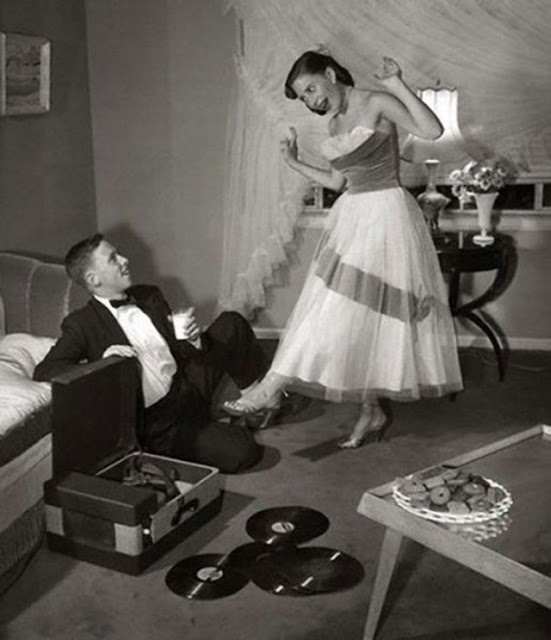
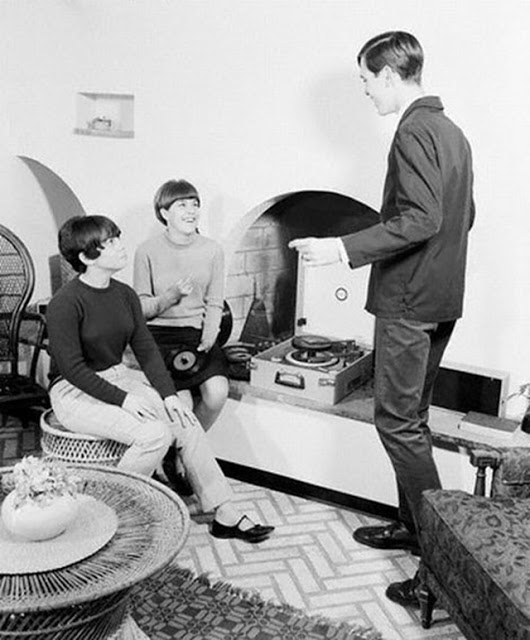
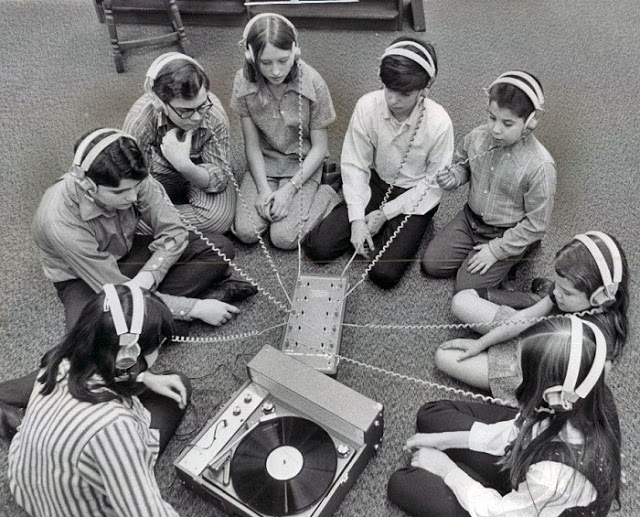
Before the 1950s, teenagers listened to the music of their parents, but when rock and roll came on the scene teens swarmed to it. Even though teens were able to purchase rock and roll records because they were receiving extra spending money, their parents were opposed to rock and roll music, they despised it, and thought of it as corrupting their children. A collection of 14 vintage photos below show teenage record parties from between the 1950s and 1960s.

Reasons for admission into the Trans-Allegheny Lunatic Asylum in West Virginia from 1864 to 1889 included laziness, egotism, disappointed love, female disease, mental excitement, cold, snuff, greediness, imaginary female trouble, “gathering in the head,” exposure and quackery, jealousy, religion, asthma, masturbation, and bad habits. Spouses used lunacy laws to rid themselves of their partners and in abducting their children.
The diseases attributed to those admitted to the hospital from its opening in 1864 through 1880 were varied, with the most common being 304 patients with chronic dementia, 254 with acute mania, 225 with melancholia, and 165 with chronic mania. Listings were given of the supposed causes of the diseases, and they were labeled supposed causes, with the physicians of the time feeling “a little unease with them,” they still published them. Most common at Weston were the 359 who were “not assigned” a cause, and “heredity,” and “epilepsy” ranked next. Forty to fifty patients were attributed each of the following causes: “intemperance,” “ill health,” “menstrual,” “traumatic injury,” and “masturbation.” One honest man was listed with “masturbation for 30 years.”
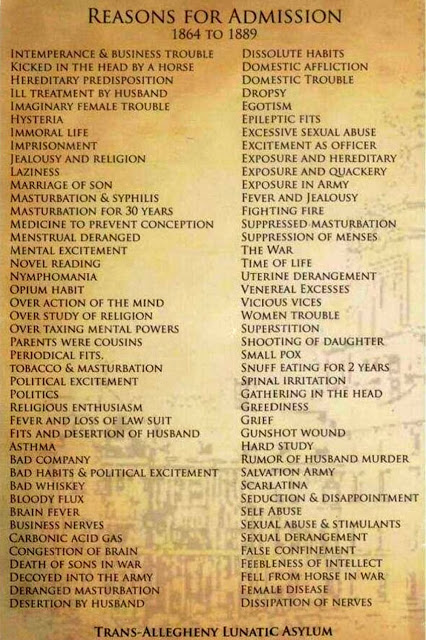
REASONS FOR ADMISSION
WEST VIRGINIA HOSPITAL FOR THE INSANE (WESTON)
OCTOBER 22, 1864 to DECEMBER 12, 1889
Amenorrhea
Asthma
Bad company
Bad habits & political excitement
Bad whiskey
Bite of a rattle snake
Bloody flux
Brain fever
Business nerves
Carbonic acid gas
Carbuncle
Cerebral softening
Cold
Congestion of brain
Constitutional
Crime
Death of sons in the war
Decoyed into the army
Deranged masturbation
Desertion by husband
Diphtheria
Disappointed affection
Disappointed love
Disappointment
Dissipation of nerves
Dissolute habits
Dog bite
Domestic affliction
Domestic trouble
Doubt about mother’s ancestors
Dropsy
Effusion on the brain
Egotism
Epileptic fits
Excessive sexual abuse
Excitement as officer
Explosion of shell nearby
Exposure & hereditary
Exposure & quackery
Exposure in army
Fall from horse
False confinement
Feebleness of intellect
Fell from horse
Female disease
Fever
Fever & loss of law suit
Fever & nerved
Fighting fire
Fits & desertion of husband
Gastritis
Gathering in the head
Greediness
Grief
Gunshot wound
Hard study
Hereditary predisposition
Ill treatment by husband
Imaginary female trouble
Immoral life
Imprisonment
Indigestion
Intemperance
Interference
Jealousy
Jealousy & religion
Kick of horse
Kicked in the head by a horse
Laziness
Liver and social disease
Loss of arm
Marriage of son
Masturbation & syphilis
Masturbation for 30 years
Medicine to prevent conception
Menstrual deranged
Mental excitement
Milk fever
Moral sanity
Novel reading
Nymphomania
Opium habit
Over action on the mind
Over heat
Over study of religion
Over taxing mental powers.
Parents were cousins
Pecuniary losses: worms
Periodical fits
Political excitement
Politics
Puerperal
Religious enthusiasm
Religious excitement
Remorse
Rumor of husband’s murder or desertion
Salvation army
Scarlatina
Seduction
Seduction & disappointment
Self abuse
Severe labor
Sexual abuse and stimulants
Sexual derangement
Shooting of daughter
Smallpox
Snuff
Snuff eating for two years
Softening of the brain
Spinal irritation
Sun stroke
Sunstroke
Superstition
Suppressed masturbation
Suppression of menses
Tabacco & masturbation: hysteria
The war
Time of life
Trouble
Uterine derangement
Venereal excesses
Vicious vices in early life
Women
Women trouble
Young lady & fear
According to Snopes, although this list is frequently posted as a joke, it is somewhat rooted in truth. The list was compiled from the log book of the West Virginia Hospital for the Insane, documenting admissions to that institution between 1864 and 1889 and has been published or referenced in several books and research papers. It has also been archived by the West Virginia Division of Culture and History.
Although this list was sourced from a contemporaneous hospital log, its entries should not be considered as denoting things that were all considered symptoms of mental instability. Rather, among patients who were treated at West Virginia Hospital for the Insane for various illnesses such as chronic dementia, acute mania, and melancholia, these entries recorded the reasons or causes why those patients were said to have developed their underlying maladies. That is, people didn’t think that novel reading, asthma, the marriage of one’s child, politics, or falling from a horse were symptoms of mental illness, but rather factors that might have produced or exacerbated such an illness.
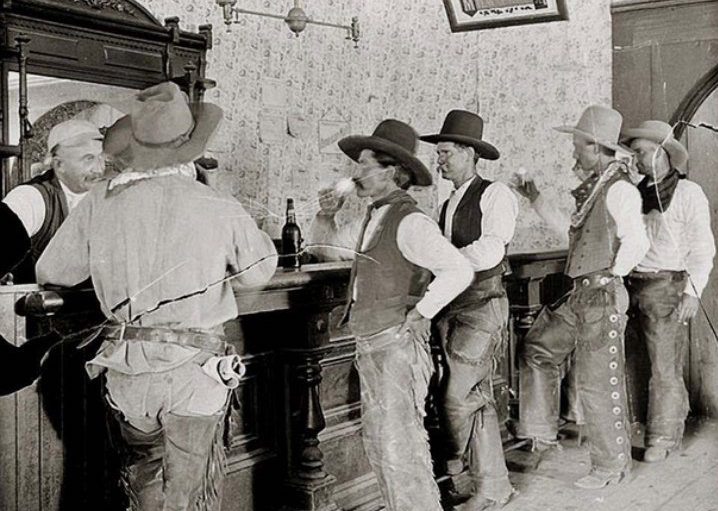
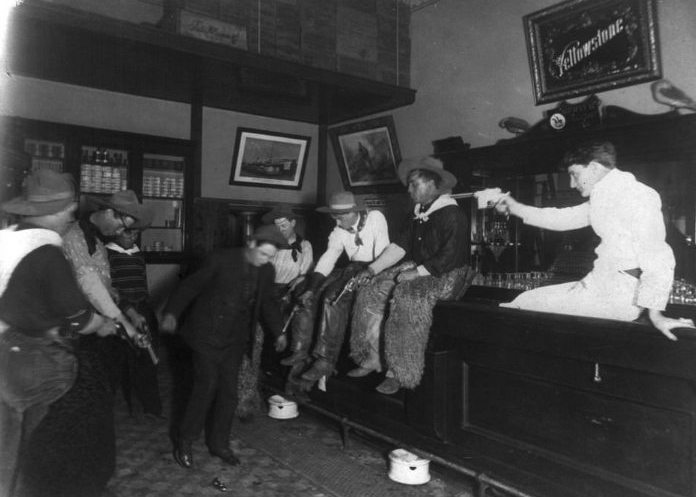
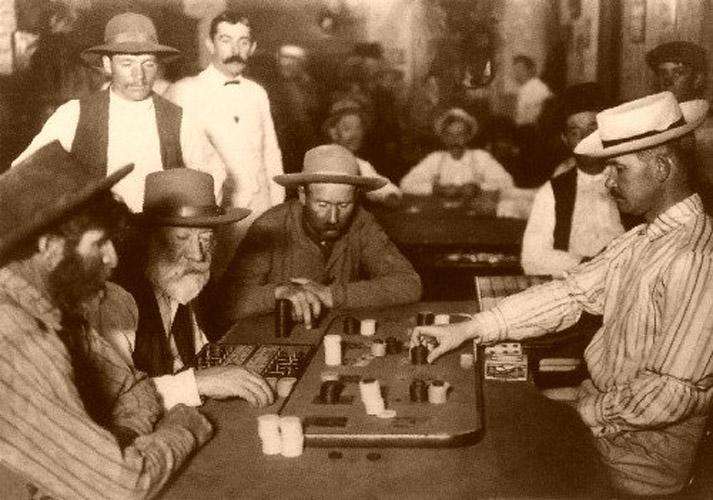
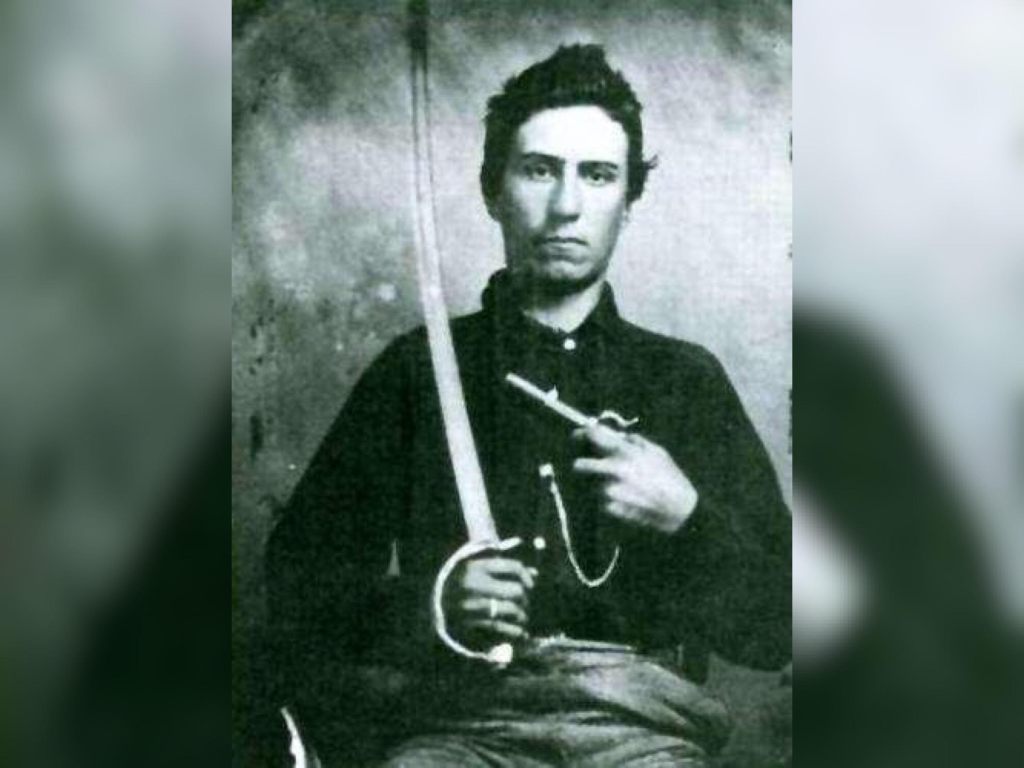
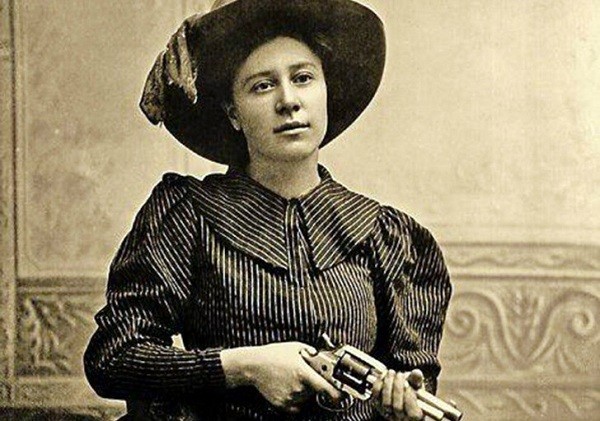
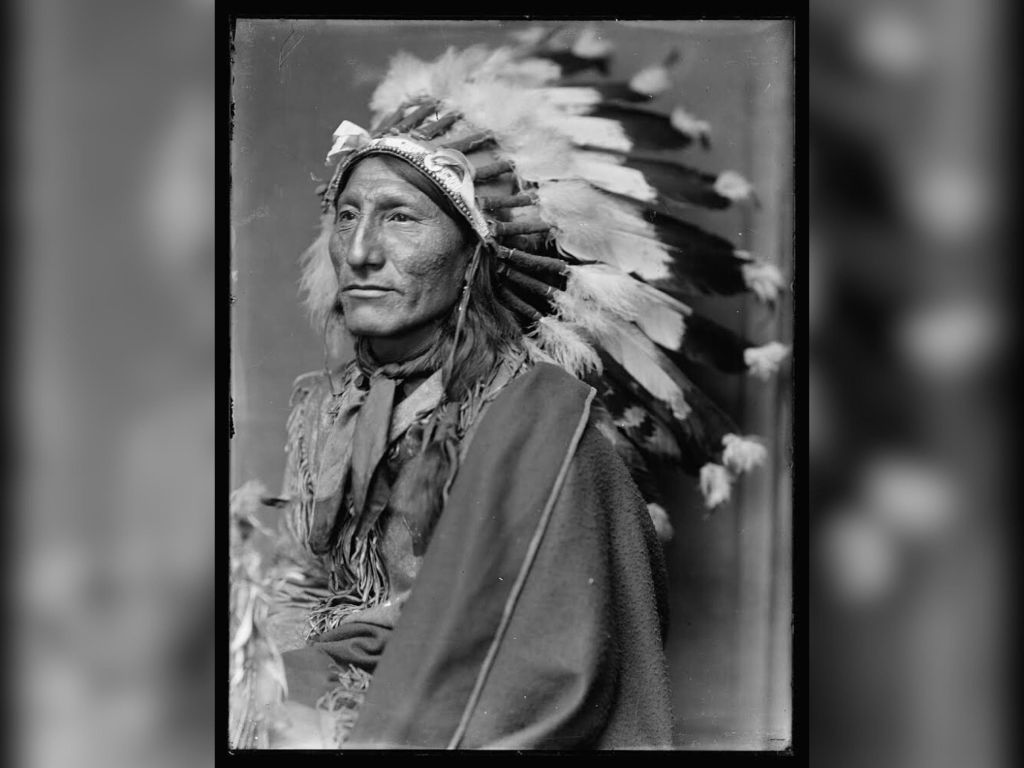
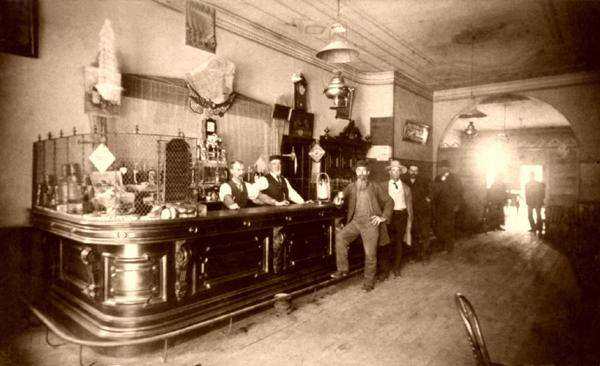
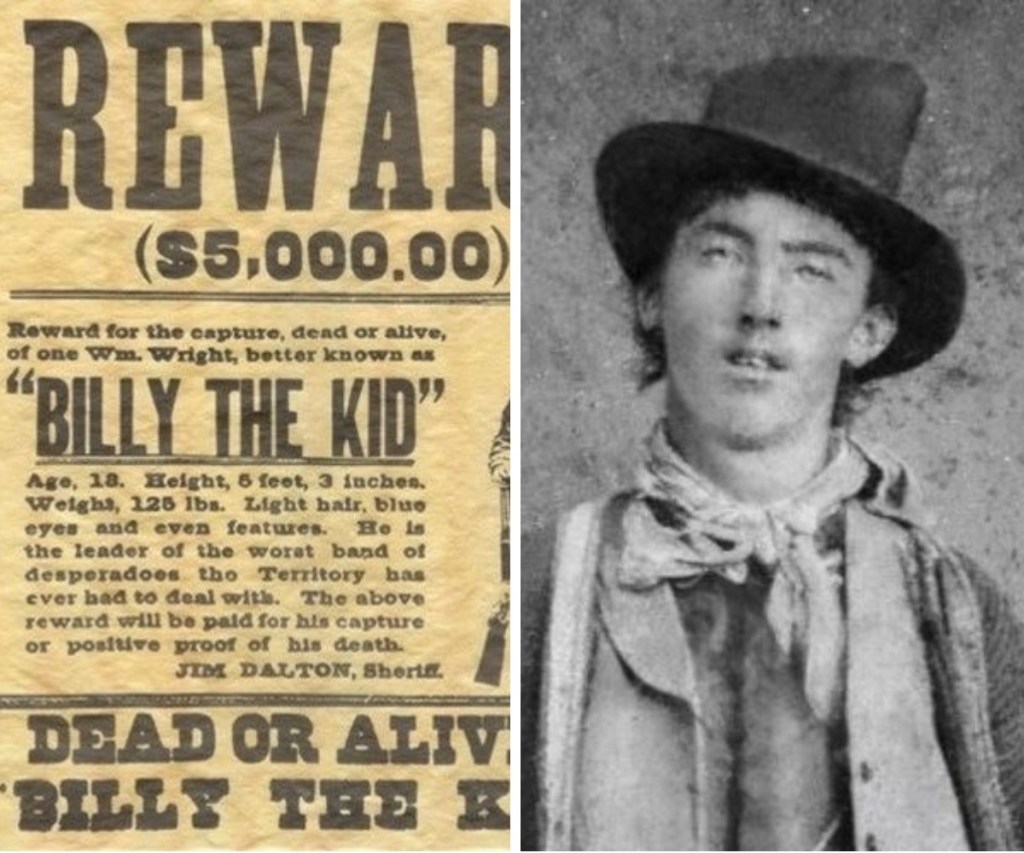
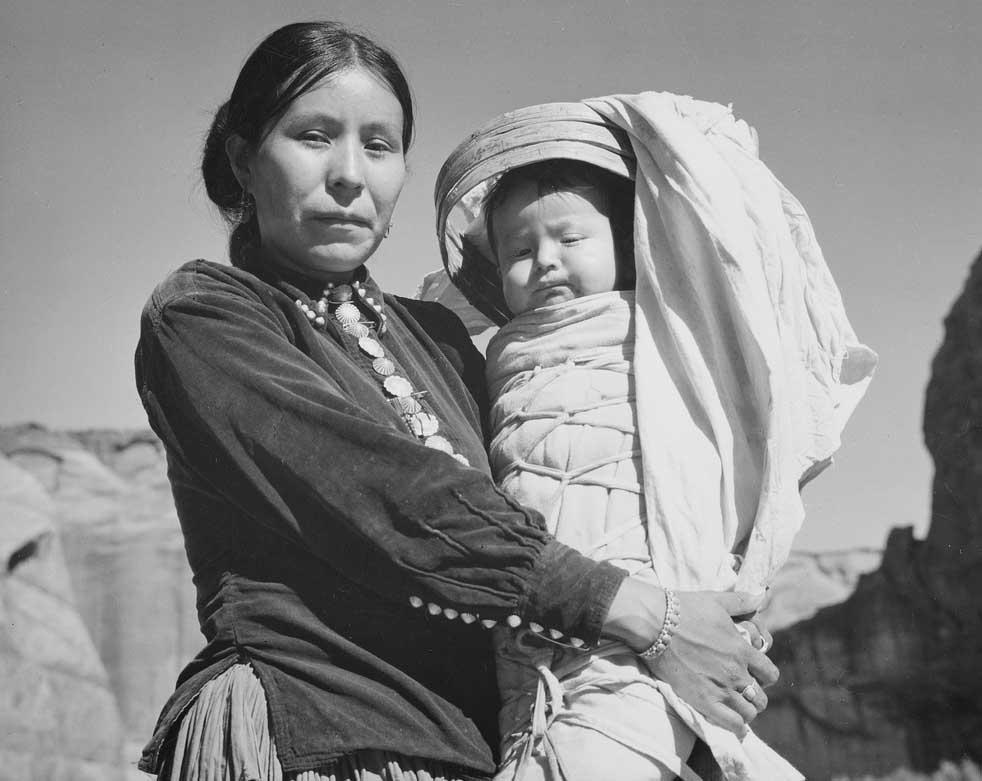
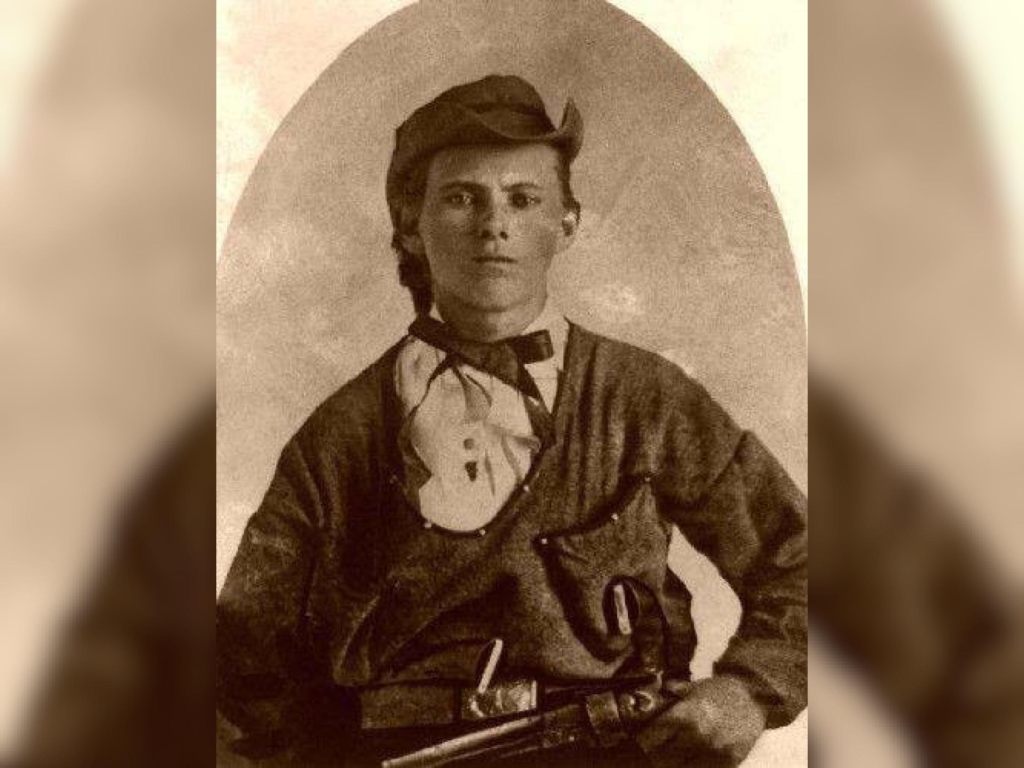
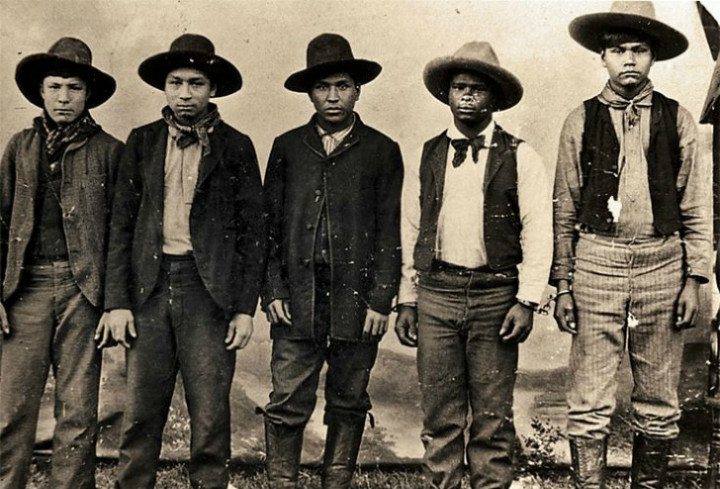
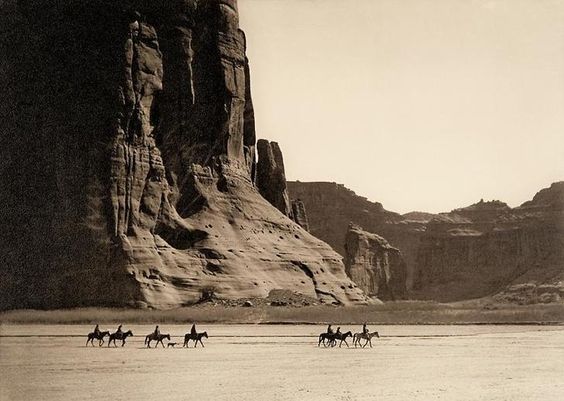
The American frontier, also known as the Old West or the Wild West, includes the geography, history, folklore, and culture in the forward wave of American expansion in mainland North America that began with European colonial settlements in the early 17th century and ended with the admission of the last few western territories as states in 1912 (except Alaska, which was not admitted into the Union until 1959). This era of massive migration and settlement was particularly encouraged by President Thomas Jefferson following the Louisiana Purchase, giving rise to the expansionist attitude known as “Manifest Destiny” and the historians’ “Frontier Thesis”. The legends, historical events and folklore of the American frontier have embedded themselves into United States culture so much so that the Old West, and the Western genre of media specifically, has become one of the defining periods of American national identity.
The archetypical Old West period is generally accepted by historians to have occurred between the end of the American Civil War in 1865 until the closing of the Frontier by the Census Bureau in 1890.
By 1890, settlement in the American West had reached sufficient population density that the frontier line had disappeared; in 1890 the Census Bureau released a bulletin declaring the closing of the frontier, stating: “Up to and including 1880 the country had a frontier of settlement, but at present the unsettled area has been so broken into by isolated bodies of settlement that there can hardly be said to be a frontier line. In the discussion of its extent, its westward movement, etc., it can not, therefore, any longer have a place in the census reports.”
A frontier is a zone of contact at the edge of a line of settlement. Leading theorist Frederick Jackson Turner went deeper, arguing that the frontier was the scene of a defining process of American civilization: “The frontier,” he asserted, “promoted the formation of a composite nationality for the American people.” He theorized it was a process of development: “This perennial rebirth, this fluidity of American life, this expansion westward…furnish[es] the forces dominating American character.” Turner’s ideas since 1893 have inspired generations of historians (and critics) to explore multiple individual American frontiers, but the popular folk frontier concentrates on the conquest and settlement of Native American lands west of the Mississippi River, in what is now the Midwest, Texas, the Great Plains, the Rocky Mountains, the Southwest, and the West Coast.
Enormous popular attention was focused on the Western United States (especially the Southwest) in the second half of the 19th century and the early 20th century, from the 1850s to the 1910s. Such media typically exaggerated the romance, anarchy, and chaotic violence of the period for greater dramatic effect. This inspired the Western genre of film, along with television shows, novels, comic books, video games, children’s toys and costumes.
As defined by Hine and Faragher, “frontier history tells the story of the creation and defense of communities, the use of the land, the development of markets, and the formation of states.” They explain, “It is a tale of conquest, but also one of survival, persistence, and the merging of peoples and cultures that gave birth and continuing life to America.” Turner himself repeatedly emphasized how the availability of free land to start new farms attracted pioneering Americans: “The existence of an area of free land, its continuous recession, and the advance of American settlement westward, explain American development.” Through treaties with foreign nations and native tribes, political compromise, military conquest, the establishment of law and order, the building of farms, ranches, and towns, the marking of trails and digging of mines, and the pulling in of great migrations of foreigners, the United States expanded from coast to coast, fulfilling the ideology of Manifest destiny. In his “Frontier Thesis” (1893), Turner theorized that the frontier was a process that transformed Europeans into a new people, the Americans, whose values focused on equality, democracy, and optimism, as well as individualism, self-reliance, and even violence.
As the American frontier passed into history, the myths of the West in fiction and film took a firm hold in the imaginations of Americans and foreigners alike. In David Murdoch’s view, America is exceptional in choosing its iconic self-image: “No other nation has taken a time and place from its past and produced a construct of the imagination equal to America’s creation of the West.” (Wikipedia)

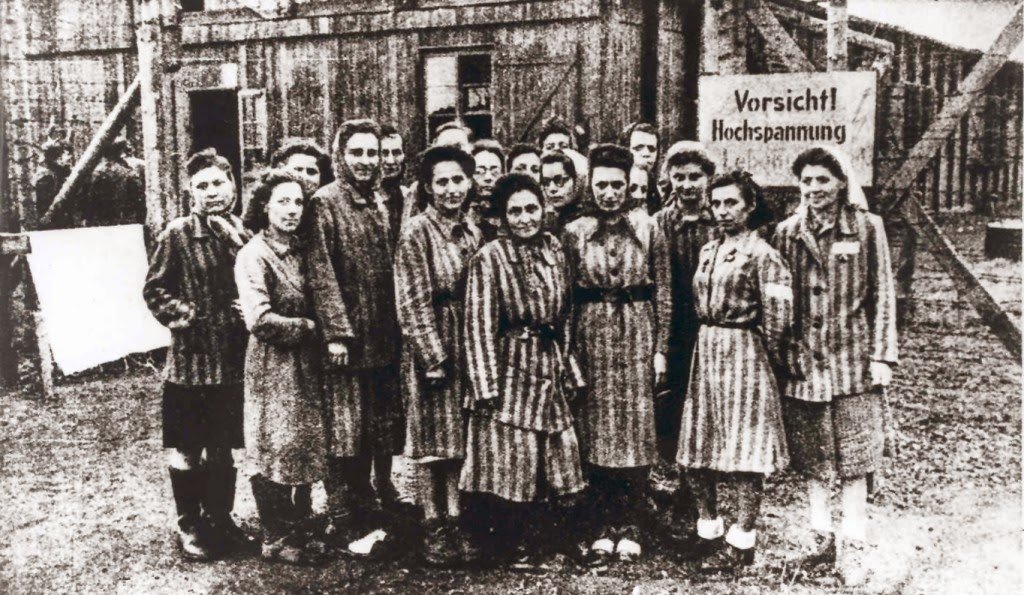
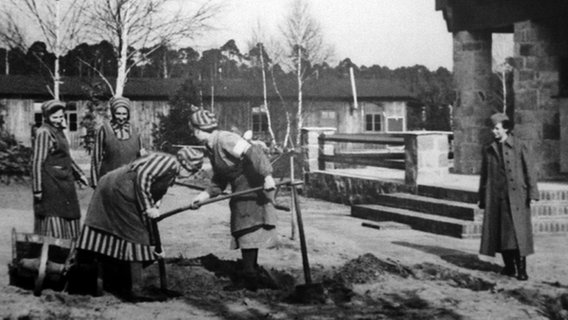
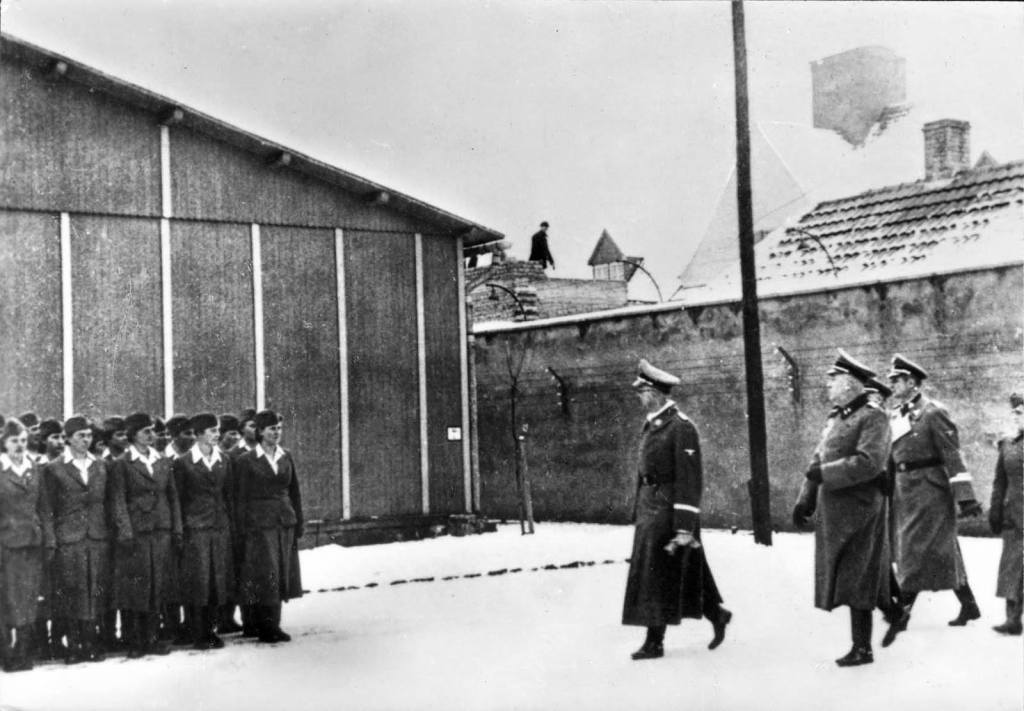
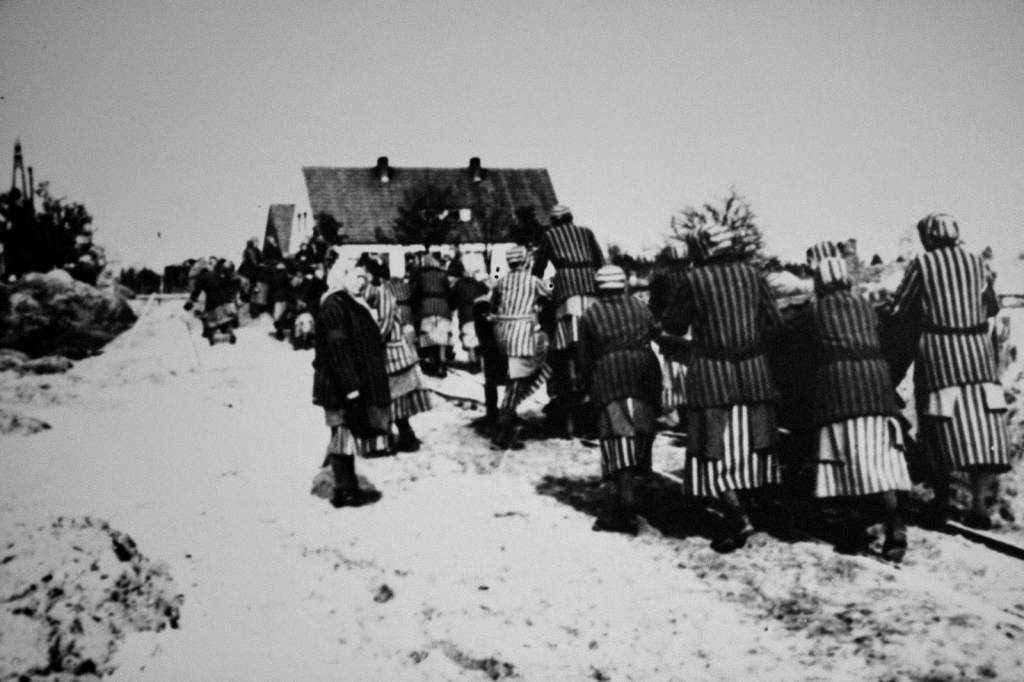
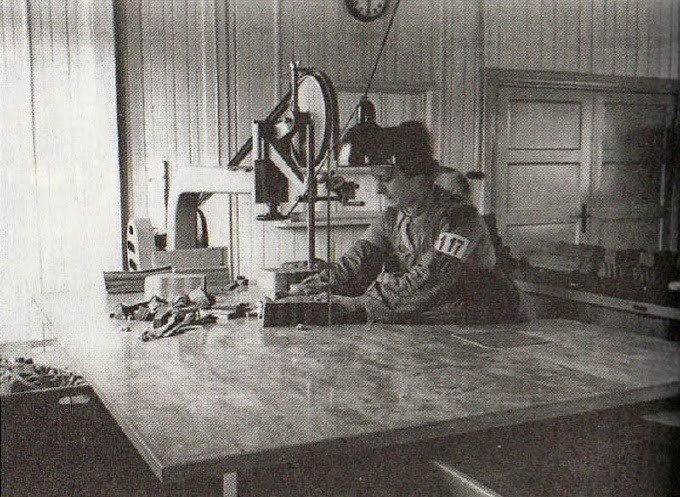
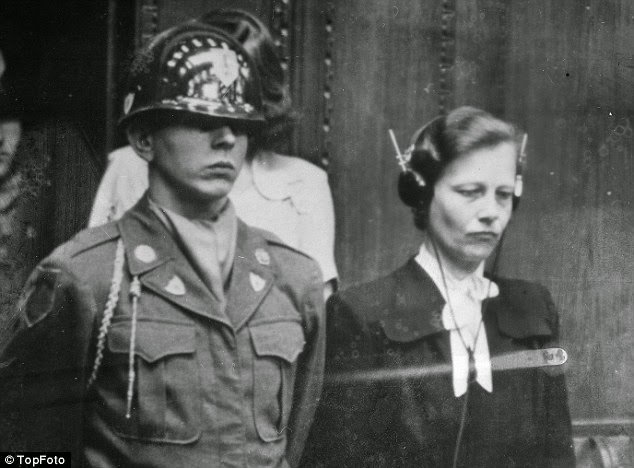
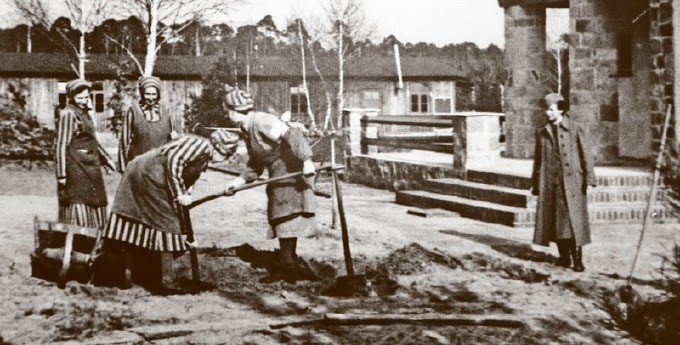
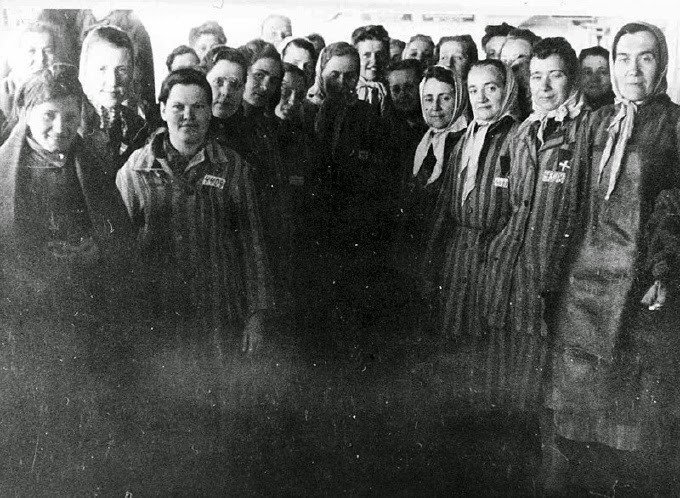
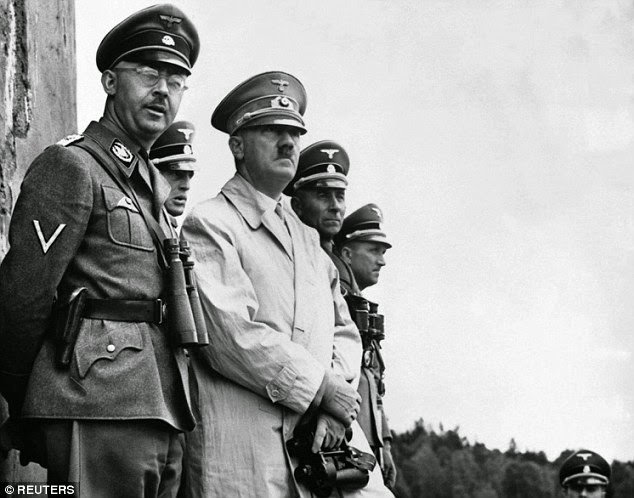
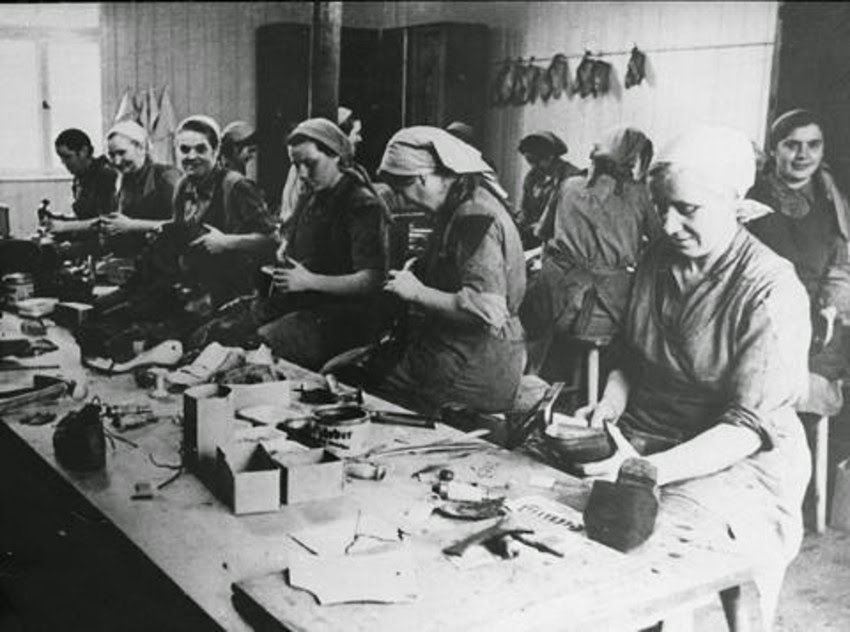
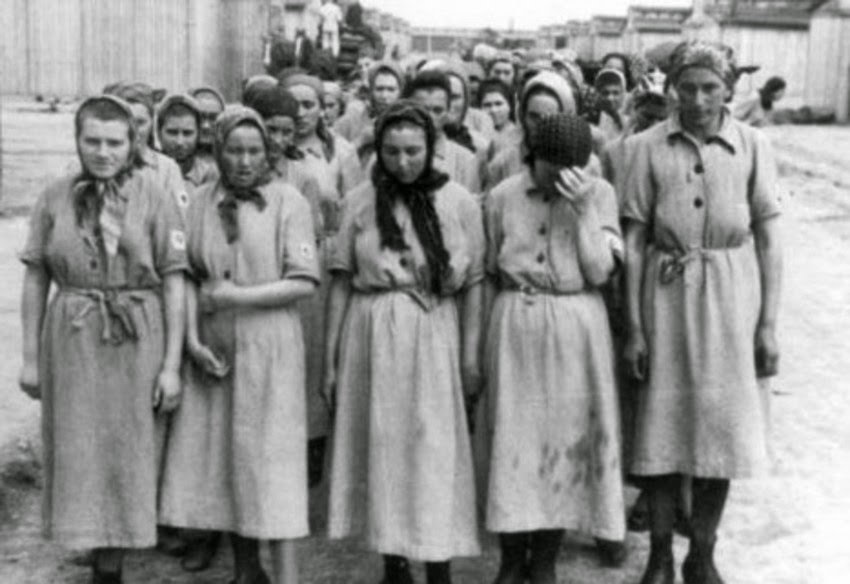
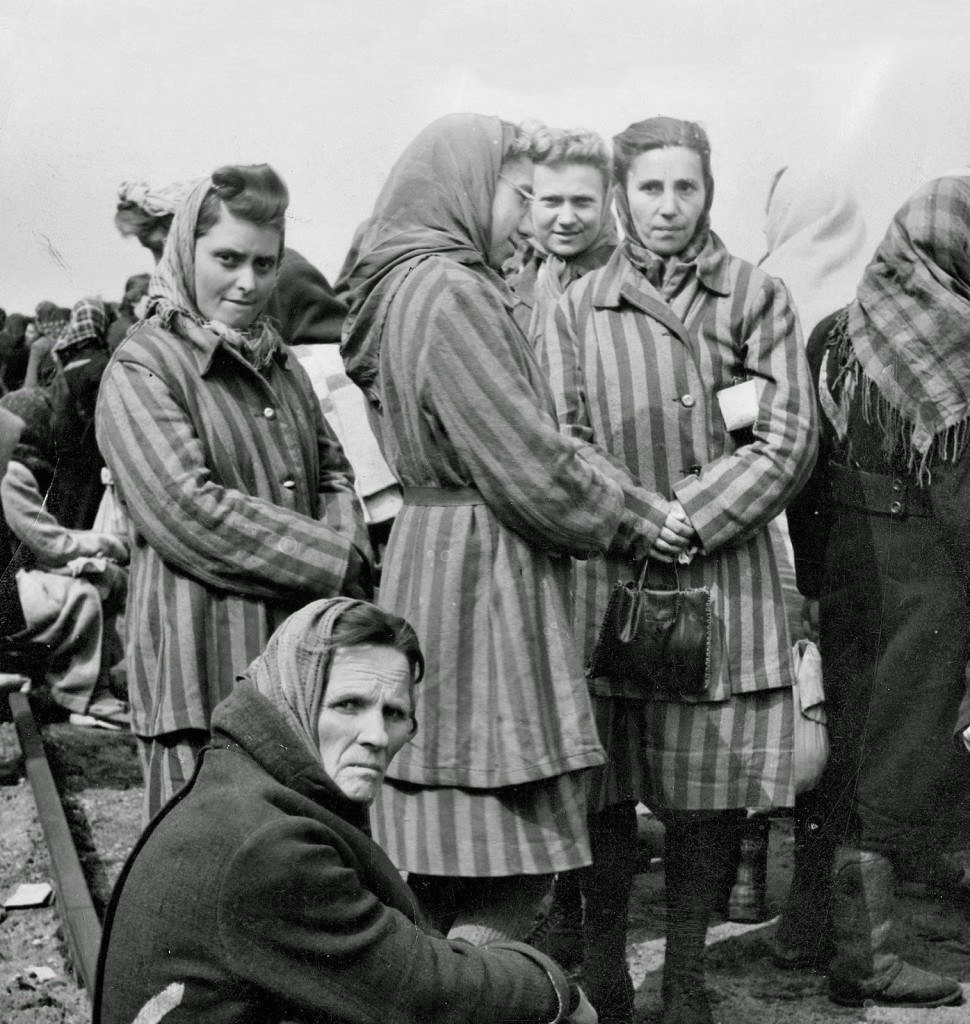
In 1938, Heinrich Himmler ordered the construction of Ravensbrück, a concentration camp exclusively for women.
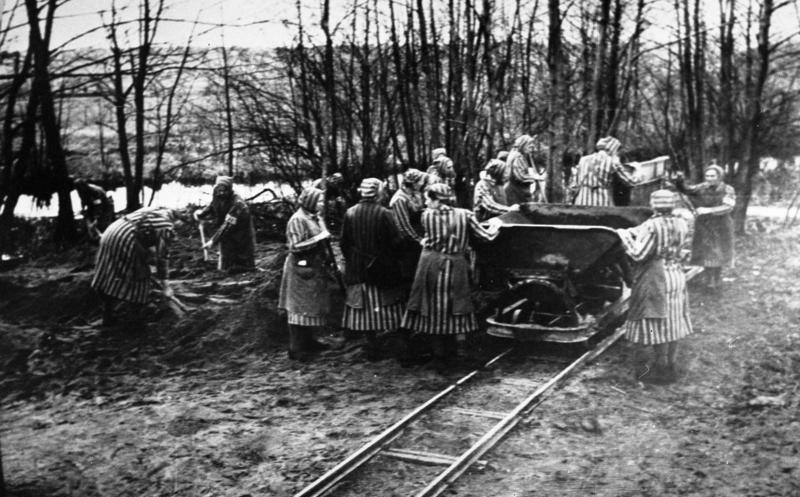
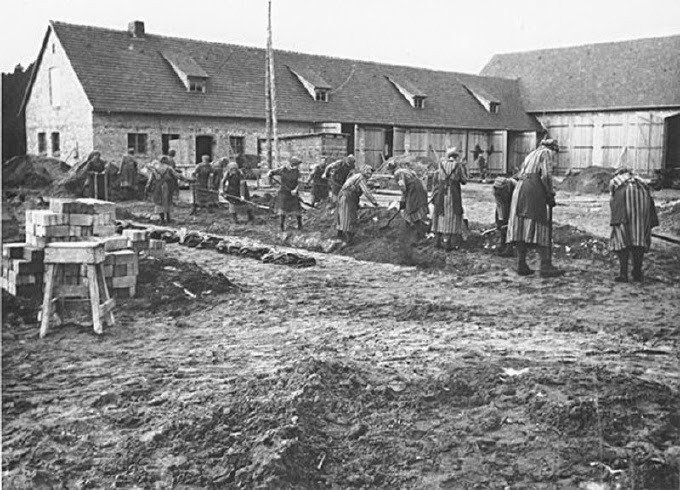
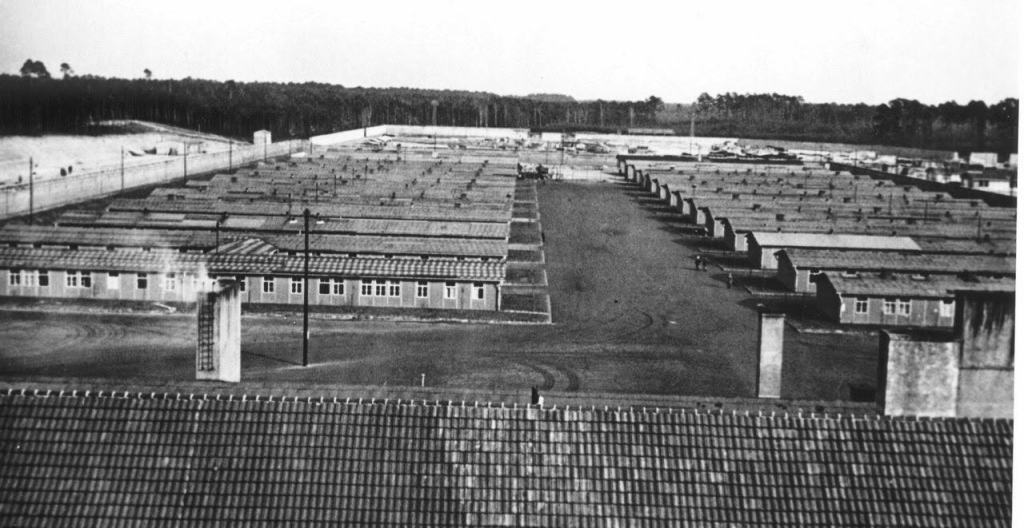
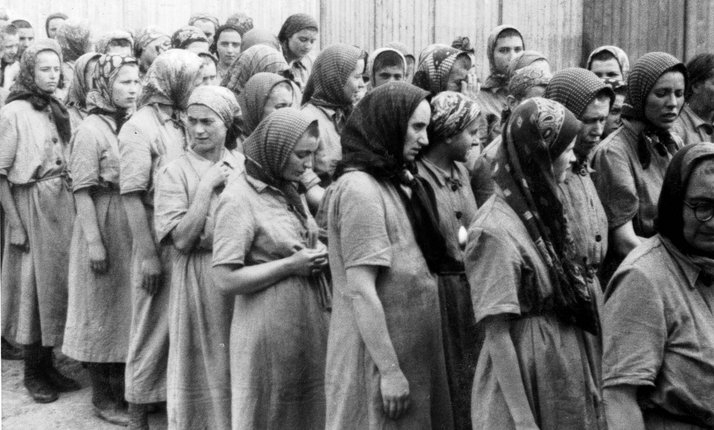
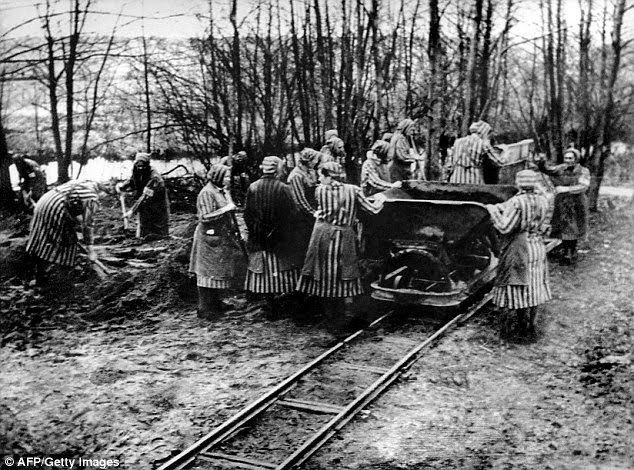
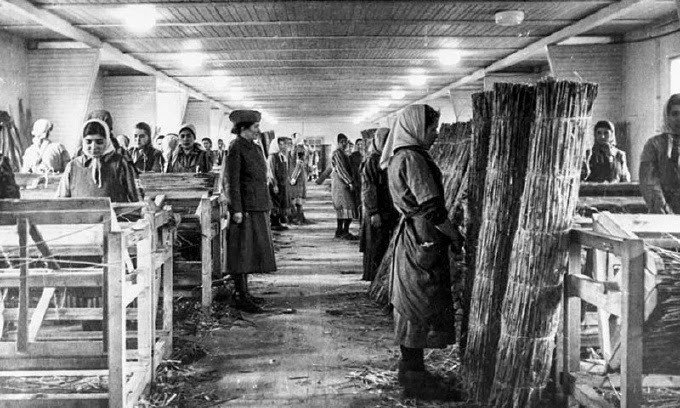
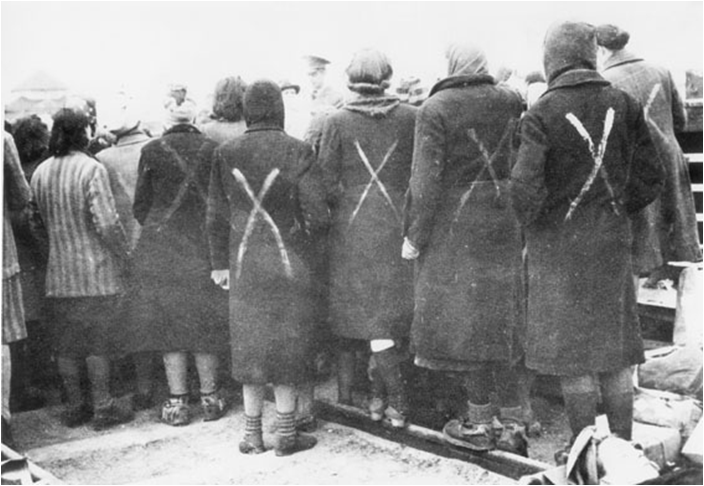
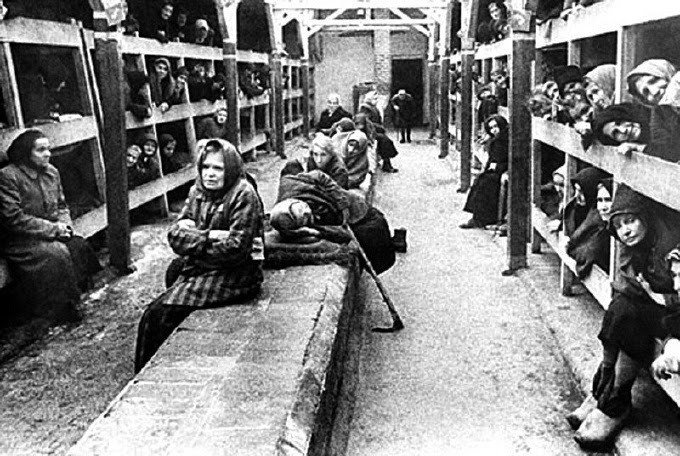
Around an hour north of Berlin, Ravensbrück also served as a training camp for female Nazi overseers, many of whom would go on to be chief wardresses at other concentration camps. From 1939 to 1945, over 100,000 women from 20 European countries died at Ravensbrück, with the largest portion of inmates hailing from Poland. By the time of the camp’s liberation, only 15,000 prisoners were still alive. The camp memorial’s estimated figure of 132,000 women who were in the camp during the war includes about 48,500 from Poland, 28,000 from the Soviet Union, almost 24,000 from Germany and Austria, nearly 8,000 from France, and thousands from other countries including a few from the United Kingdom and the United States. More than 20,000 of the total were Jewish, approximately 15%. 85% were from other races and cultures. More than 80 percent were political prisoners. Many prisoners were employed as slave labor by Siemens & Halske. From 1942 to 1945, the Nazis undertook medical experiments to test the effectiveness of sulfonamides.
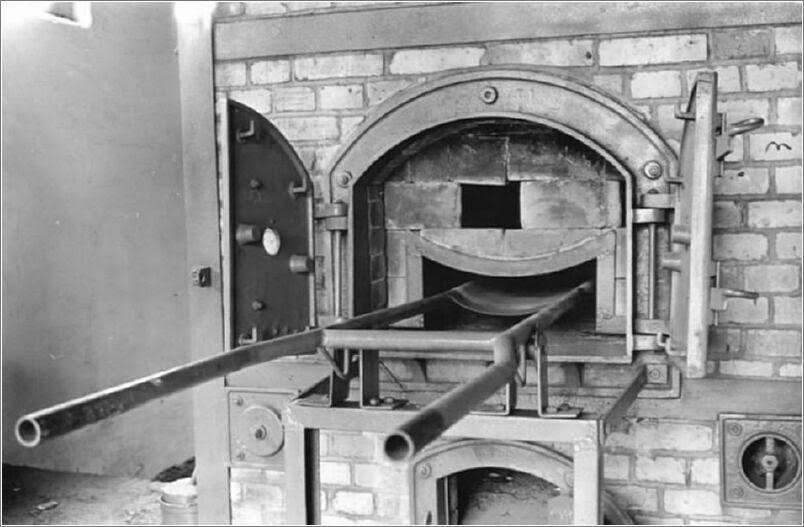
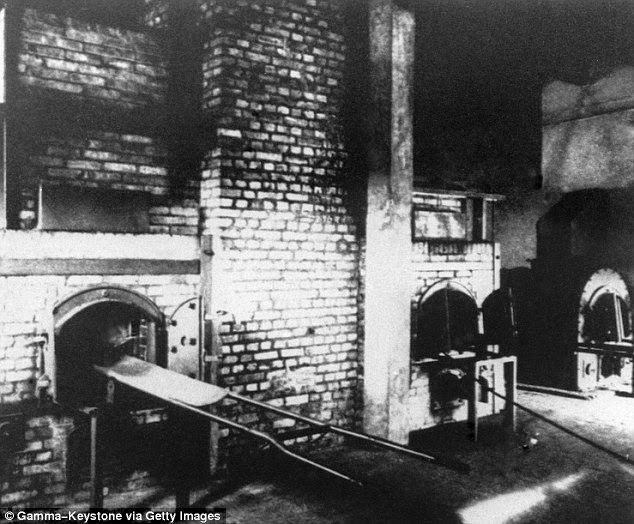
In the spring of 1941, the SS established a small adjacent camp for male inmates, who built and managed the camp’s gas chambers in 1944. Of some 130,000 female prisoners who passed through the Ravensbrück camp, about 50,000 perished; some 2,200 were killed in the gas chambers.
Conditions at Ravensbrück were initially acceptable with some expressing wonder at the manicured lawns, peacock-filled birdhouses and flower beds that adorned the great square.
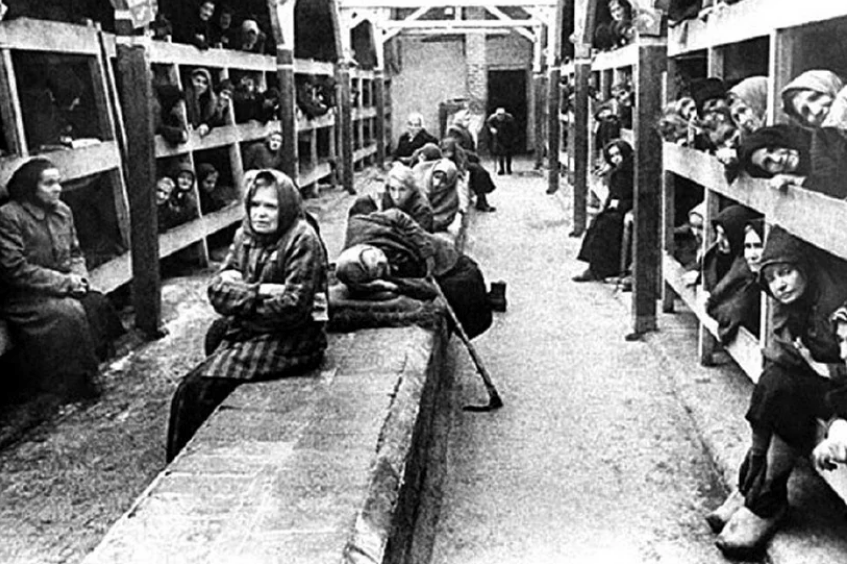
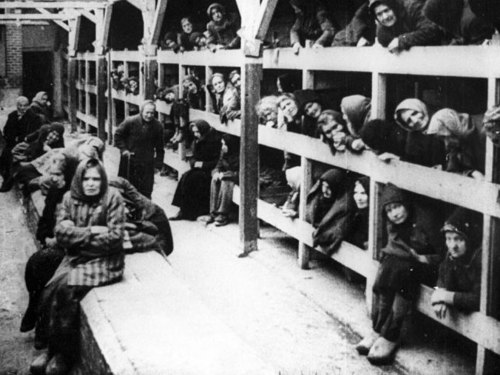
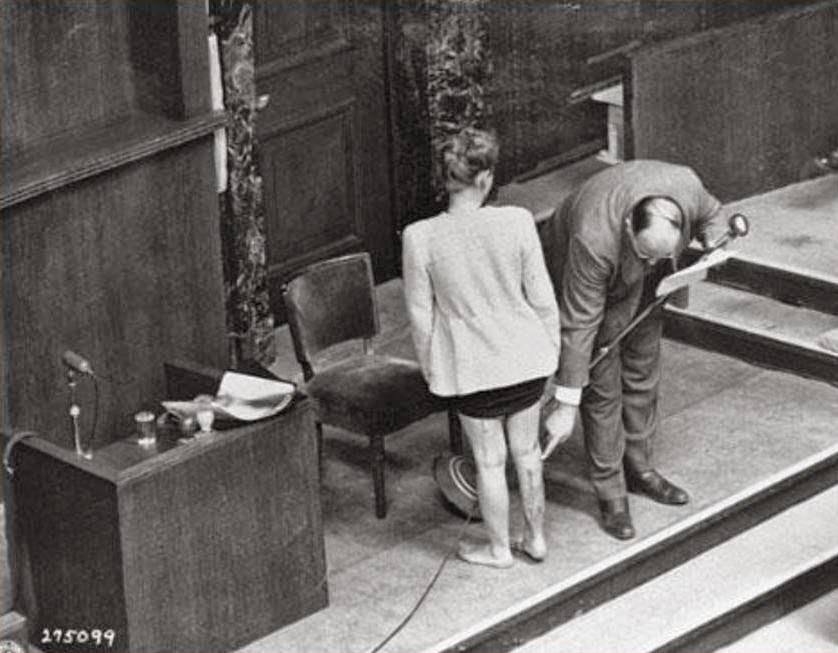
Soon enough, disease and famine struck, and SS guards began to conduct medical experiments on inmates, where they would cut into and infect bones, muscles and nerves and introduce wood or glass into them. Others were sterilized.
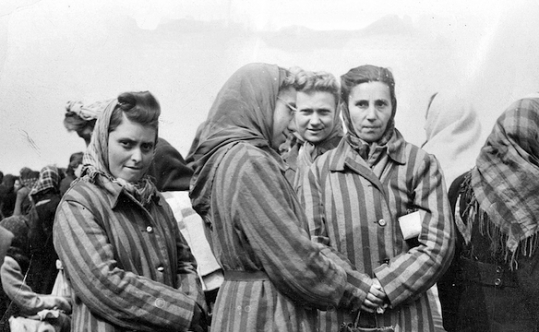
The following images of Ravensbrück women’s concentration camp present a stark image of the brutality of the Nazi regime — but, more than that, they are a testament to the strength of these women, who would make jewelry, write comic operettas about camp life and organize secret education programs to remind themselves of their humanity. As incredibly, in some photos the female inmates muster the energy and the courage to smile.
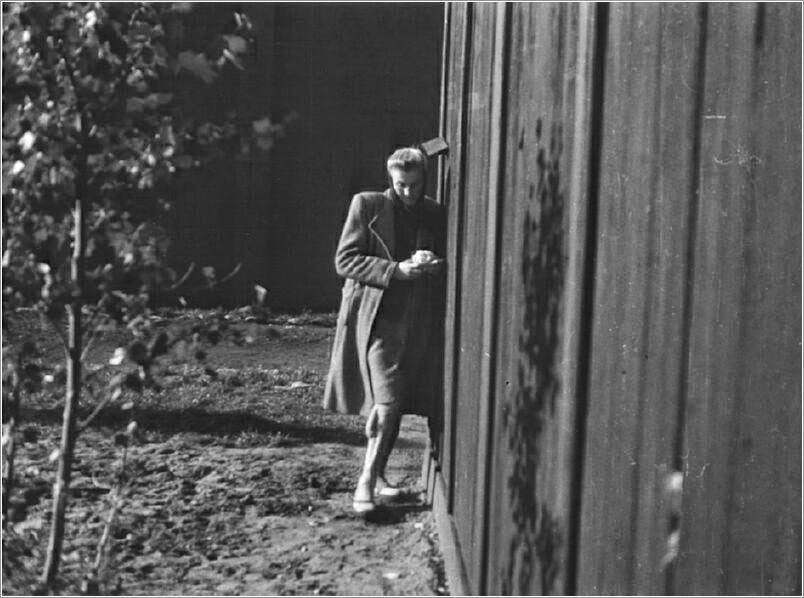
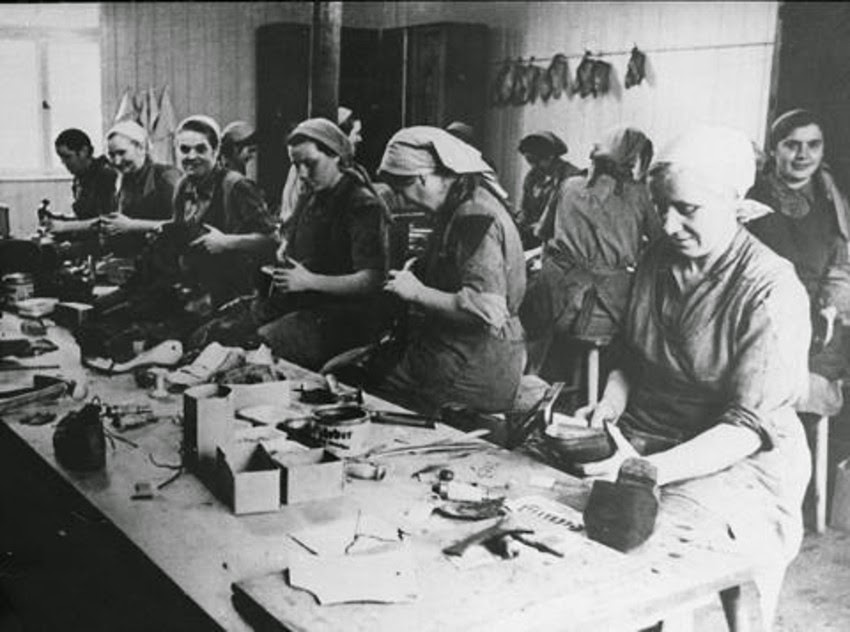
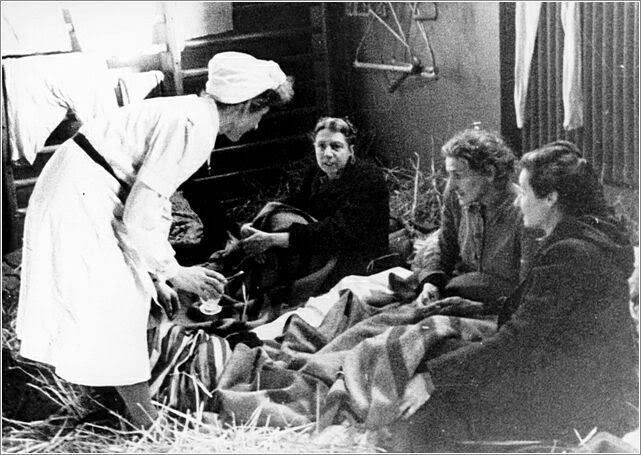
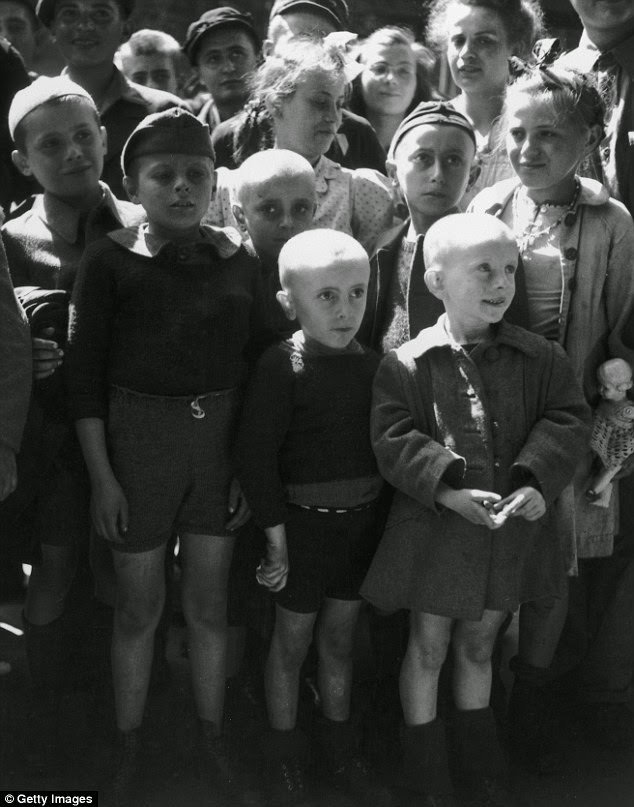

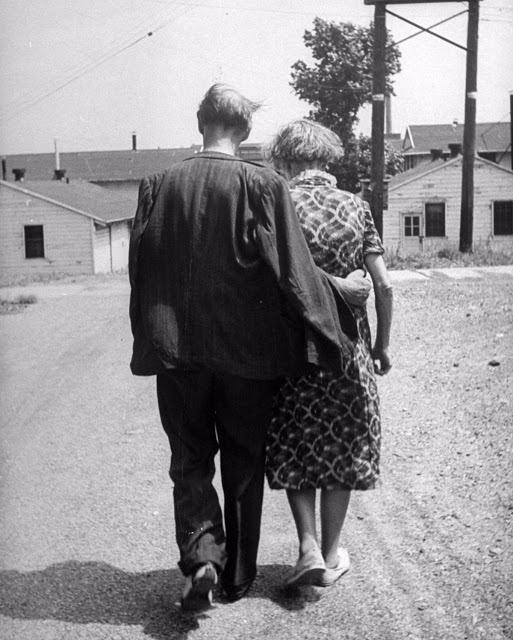
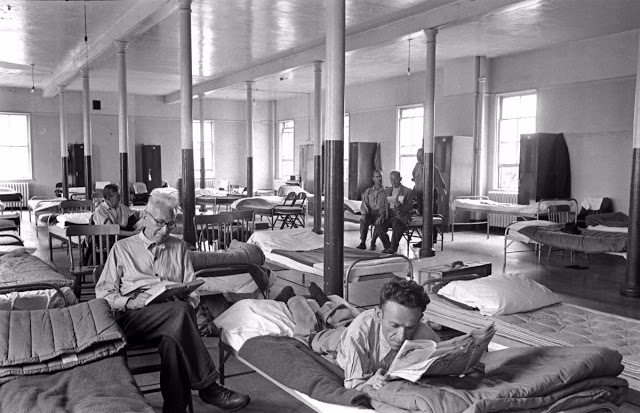
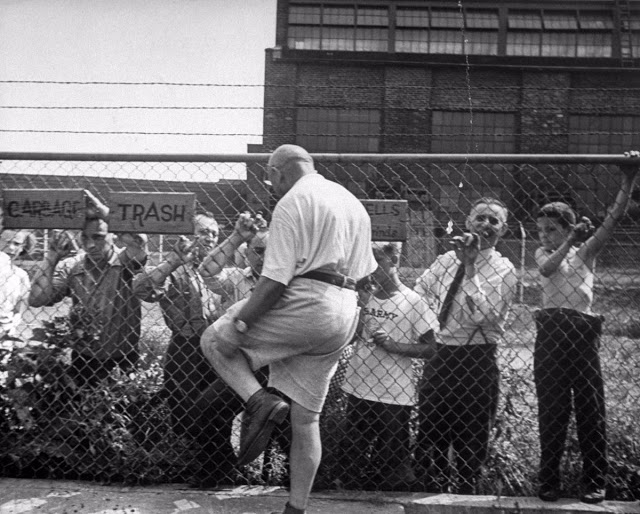
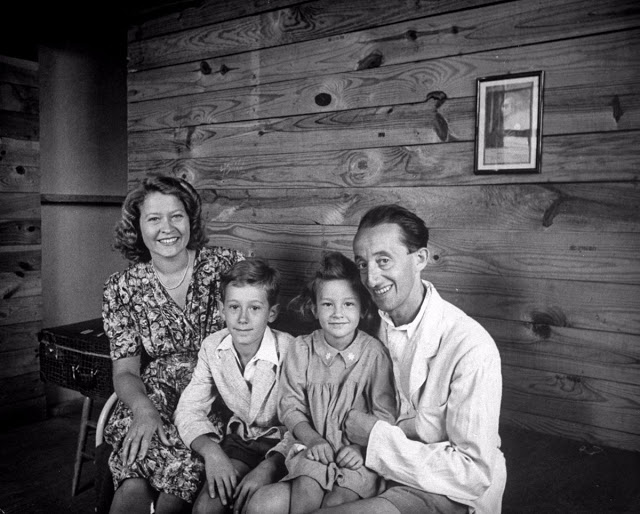
Before war came, they had not necessarily had much in common. Eva Bass, pictured in the photo below, was a nightclub singer; Julius Hirschler, who appears in the seventh photo, was a banker. The 981 other people with whom they traveled had lives of their own, too. By August of 1944, however, they all shared one title: refugee.
By the time LIFE’s photographer Alfred Eisenstaedt met these individuals to photograph them for an Aug. 21, 1944, story, they had all arrived in Oswego, N.Y., where they were given army barracks in which to live. They had come from refugee camps in Italy, to which they’d made their way from 17 different countries, and had been designated to spend the rest of World War II living there under American protection. As LIFE explained, their arrival fell outside the bounds of the immigration quotas that the U.S. then used to determine who could come to stay, so they would have to go elsewhere when that time came.
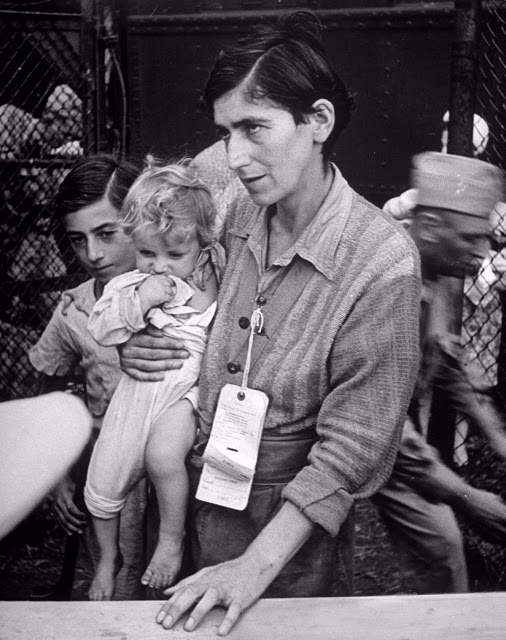
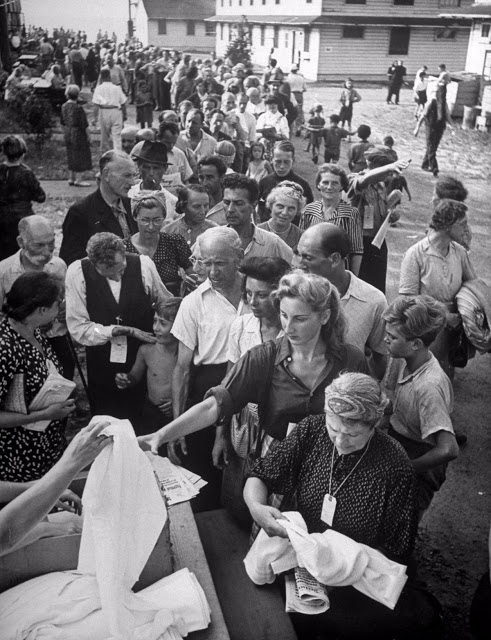


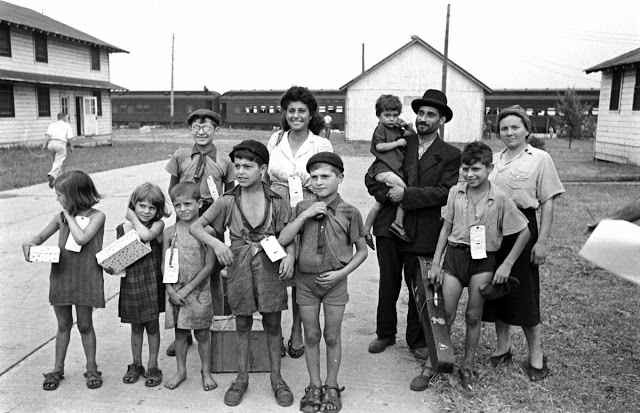
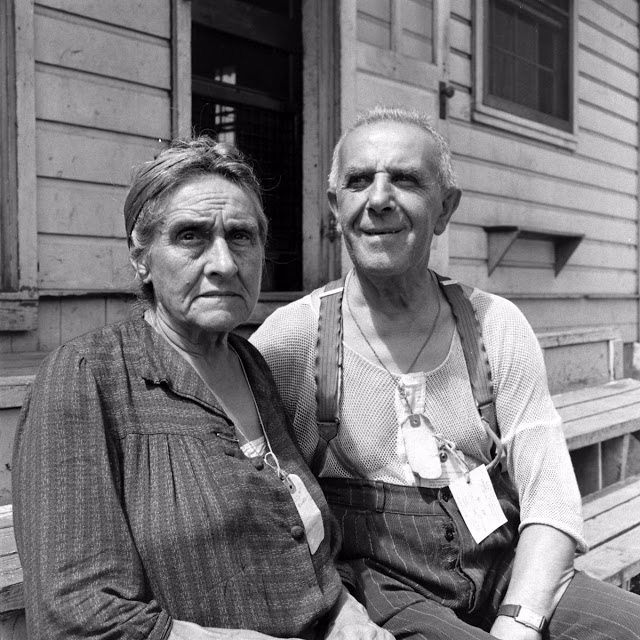
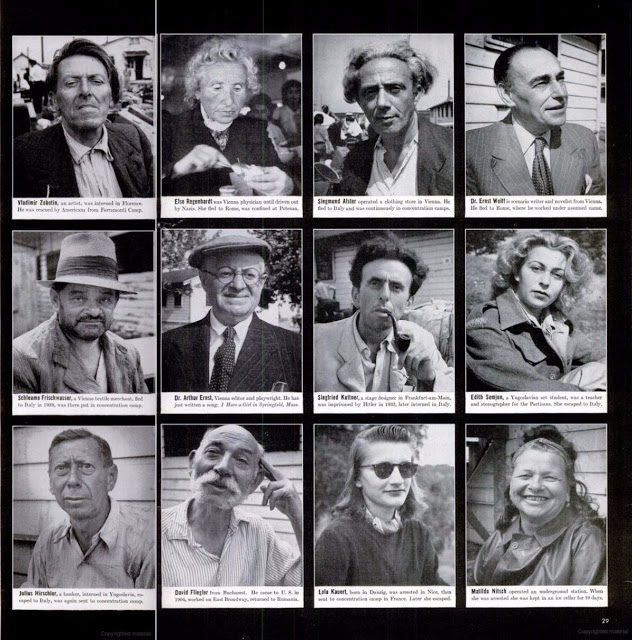
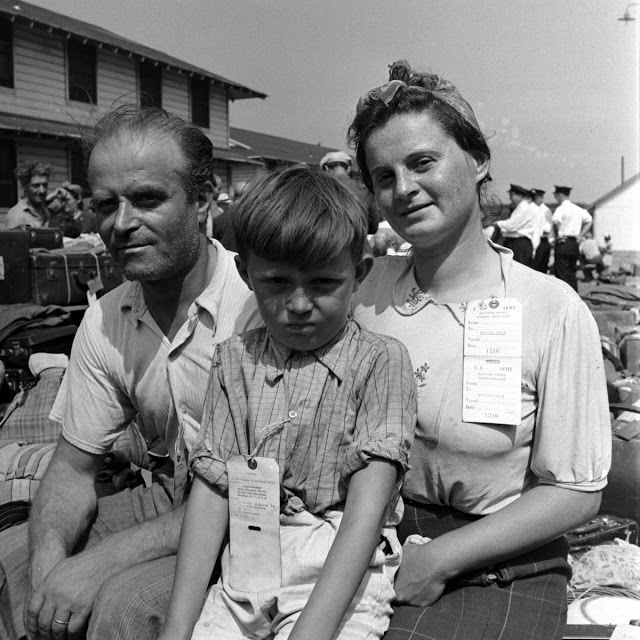
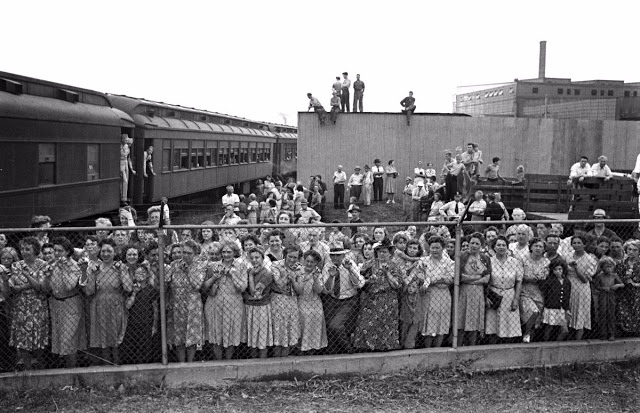
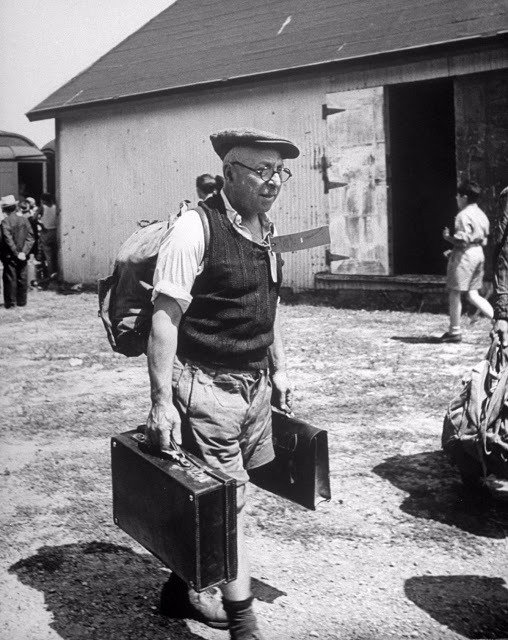
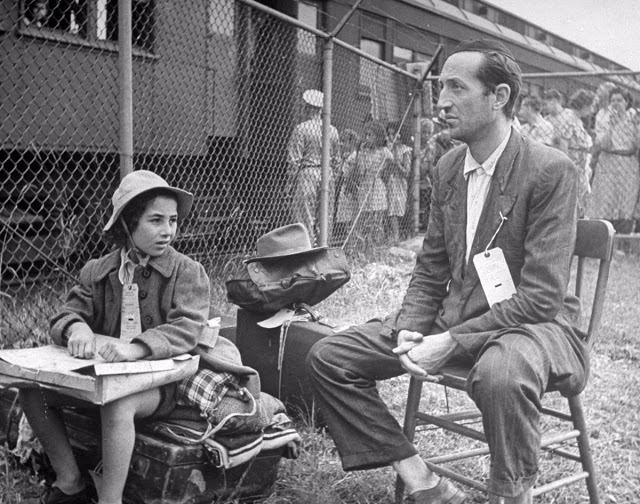

(Photos: Alfred Eisenstaedt—The LIFE Picture Collection/Getty Images)

Retired gym teacher Dale Irby posed for his first yearbook photo back in 1973 at Prestonwood Elementary school in Dallas, Texas. The next year, completely by accident, Irby wore the exact same outfit.
“I was so embarrassed when I got the school pictures back that second year and realized I had worn the very same thing as the first year,” Dale told Dallas Morning News.
At first he was horrified to discover the faux pas, but then his wife Cathy dared him to do it a third year. Then Dale thought five would be funny. “After five pictures,” he said, “it was like: ‘Why stop?’”
So he just never did, right on through this, his final year as every kid’s favorite physical education teacher at Prestonwood Elementary in the Richardson school district.
What started as a mistake, turned into a dare, and then ultimately into a 40-year tradition that ended in 2013 when Irby chose to retire. From 1973 until 2013, you can pick up any of Prestonwood Elementary’s yearbooks and find an aging Irby wearing the same exact outfit.

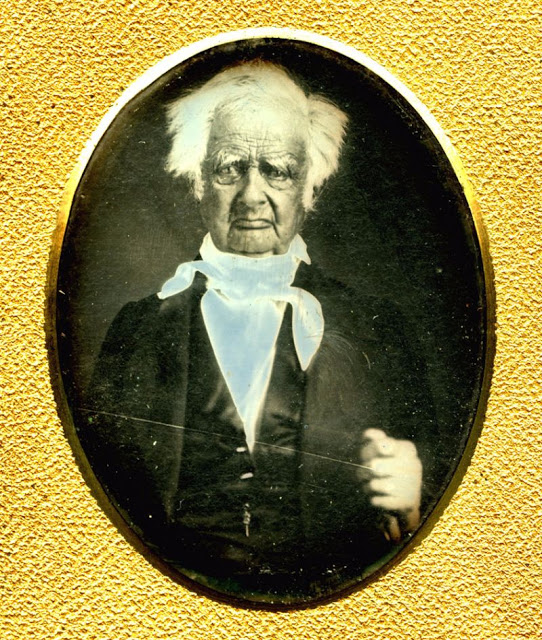
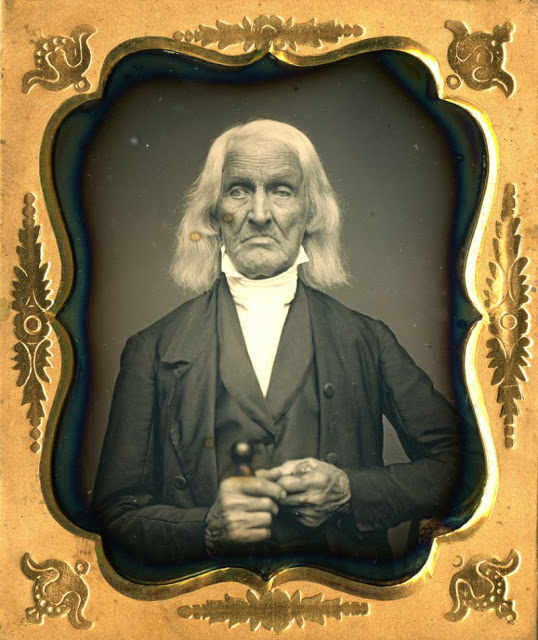
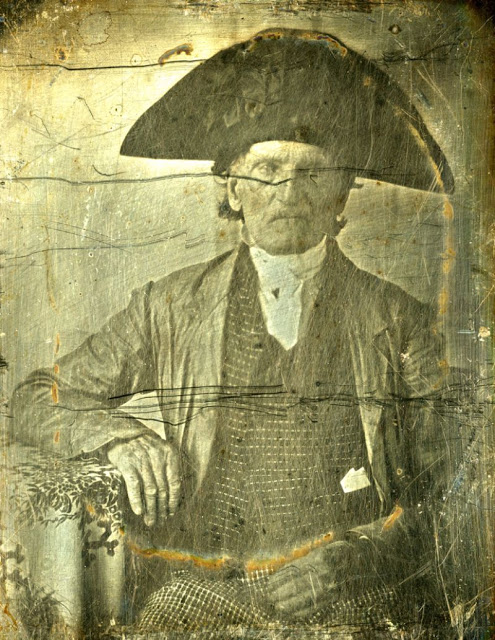
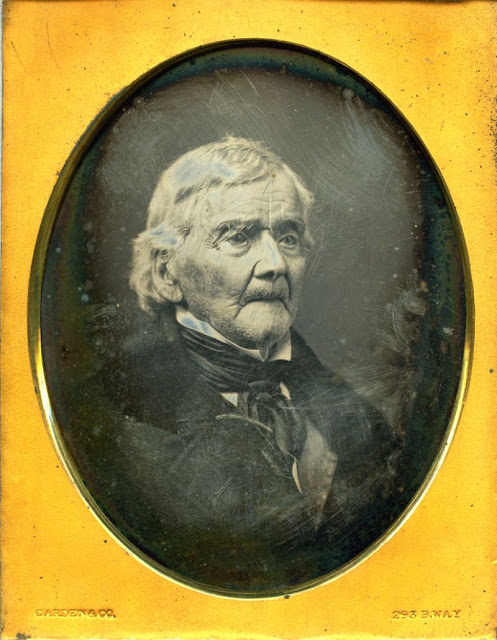
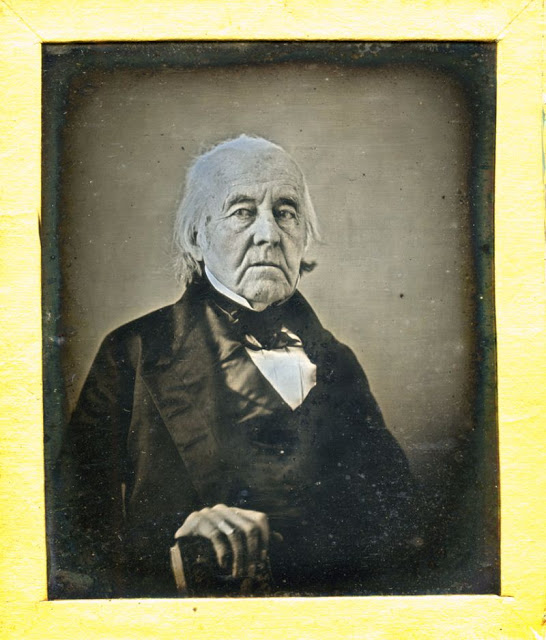
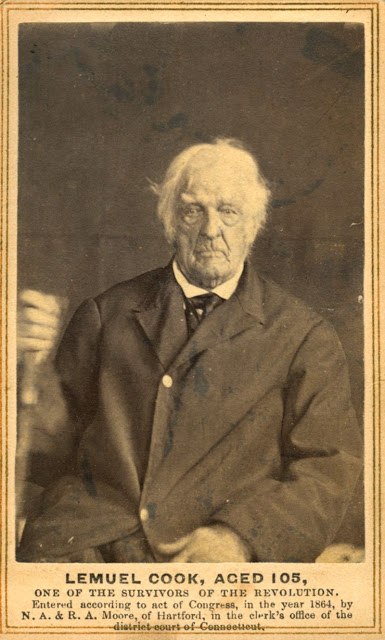
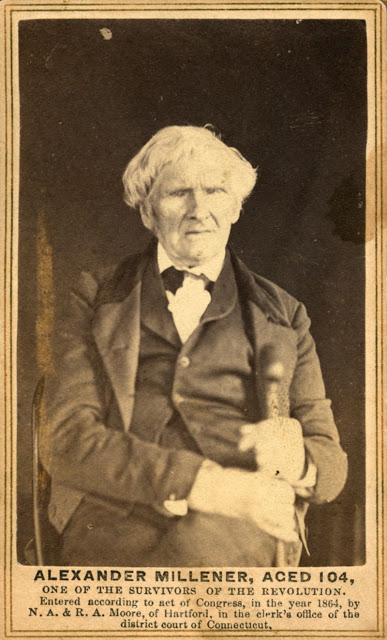
Images of Americans who fought in the Revolution are exceptionally rare because few of the Patriots of 1775-’83 lived until the dawn of practical photography in the early 1840s; far fewer were daguerreotyped; many, probably most, of such daguerreotypes never carried identification; and finally, the ravages of time have claimed the vast majority of portraits from the 1840s and ‘50s.
Accordint to PetaPixel, in 1864, 81 years after the war, Reverend E. B. Hillard and two photographers embarked on a trip through New England to visit, photograph, and interview the six known surviving veterans, all of whom were over 100 years old. The glass plate photos were printed into a book titled The Last Men of the Revolution.
In 1976, an investigative reporter named Joe Bauman came across Hillard’s photos. Realizing that more photos may have been captured of other veterans in the 40-50 year gap between when photography was invented and when Hillard’s images were made, Bauman set out to find them.
After finding photos of subjects that were about the right age, Bauman dug into their histories to see if they had been involved in the Revolution. In the end, the journalist spent three decades building what is now considered the biggest collection of daguerreotypes showing veterans of the Revolutionary War — a set of eight portraits.





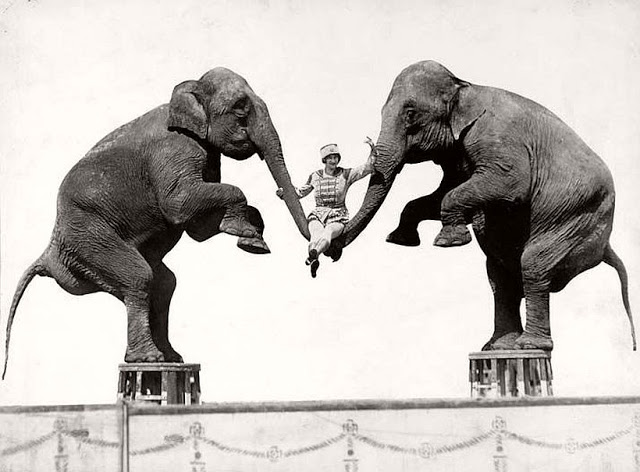
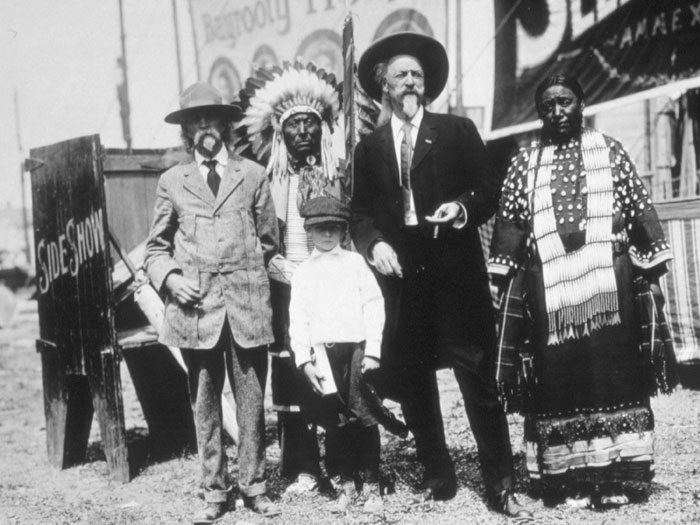
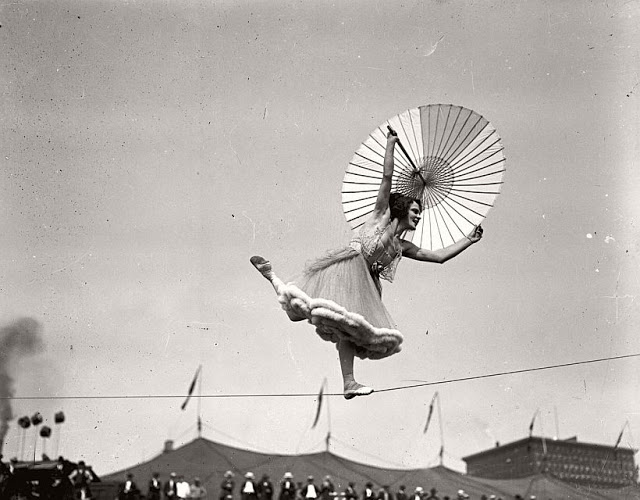
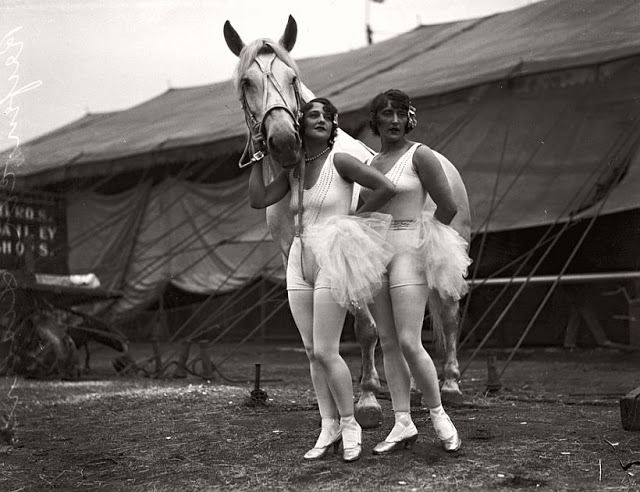
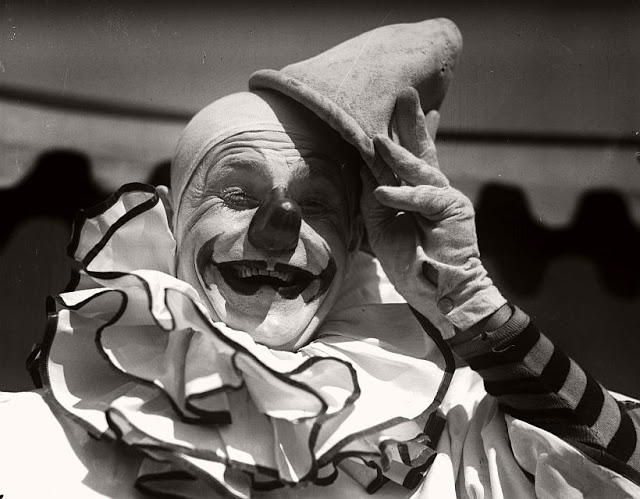
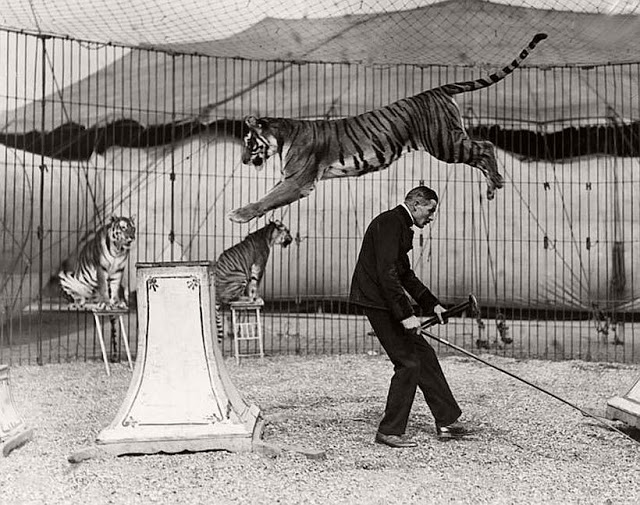
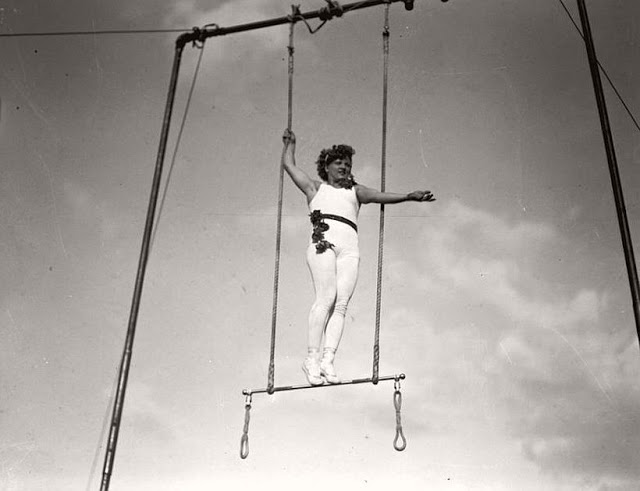
Harry A. Atwell (1879-1957) was an American photographer. He was hired for his first circus assignment in 1910 to travel with the Ringling Bros. Circus. Over the next forty years he documented the roustabouts, big top crowds, sideshow performers and center-ring stars of the circus during a time when shops, schools, and even factories closed when the circus came to town, so people could enjoy the fleeting pageantry of the traveling shows.
His fascination with the circus images began early; in later years he claimed to have shot his first image in 1907. He photographed wild west shows, state fairs, carnivals, and touring circuses, and his affection for circus folk became so legendary that in the 1930s any circus performer visiting Chicago would drop in for lunch or doughnuts at his studio at 54 W. Randolph.
In 1882, before the Ringling brothers created their first circus, the five brothers performed skits and juggling routines in town halls around the state of Wisconsin. Their first show was on November 27, 1882, in Mazomanie, Wisconsin. They called this the “Ringling Bros. Variety Performance” when they took the show to the next town. With two wandering performers the next year, the brothers toured the Northwest. After the Northwest tour, they used the money earned for suits.
They expanded their acts into a one ring show in 1884. The show added a trick horse and a bear at the end of the season. The circus started traveling by trains in 1888 allowing the show to consistently expand.
Ringling Circus purchased the Yankee Robinson Circus and opened a joint show on May 19, 1884. This brought them to the attention of James Anthony Bailey of Barnum and Bailey’s Circus as a viable competitor. The brothers met with Bailey thus agreeing to a division of areas. This was followed by them purchasing a half share of the Adam Forepaugh Sells Brothers Circus from Bailey. Bailey, under the area division, prohibited the Ringlings from playing at the Madison Garden, a location it was the brothers’ ambition to perform at. In 1887 Ringling Circus changed its official title to the “Ringling Bros. United Monster Shows, Great Double Circus, Royal European Menagerie, Museum, Caravan, and Congress of Trained Animals.”
In 1906, Bailey died, which led to the Ringlings taking over Forepaugh–Sells, which continued to operate separately. In October 1907, the stockholders of Barnum and Bailey’s Circus approved the sale of the circus to the Ringlings. Due to declining audiences and employees being drafted for World War I, Ringling Circus and Barnum and Bailey’s Circus were merged in 1919 as Ringling Bros. and Barnum & Bailey Circus.
In 1907 Ringling Bros. acquired the Barnum & Bailey Circus, merging them in 1919 to become Ringling Bros. and Barnum & Bailey Circus, promoted as The Greatest Show on Earth. Ringling Bros. and Barnum & Bailey closed on May 21, 2017, following weakening attendance and high operating costs. (Wikipedia)




Rock stardom is practically synonymous with a lifestyle of reckless partying and debauchery. Therefore, it’s no surprise that life in the limelight comes with a few stints in jail — along with accompanying mug shots.
Everyone from David Bowie to Kurt Cobain has a mug shot in their history. Some even have multiple arrests on their rap sheets, including the Doors’ Jim Morrison and Guns N’ Roses frontman Axl Rose. Here’s a list of 11 worst Rock star mugshots in the past and cause of arrest are included…
Jimi Hendrix
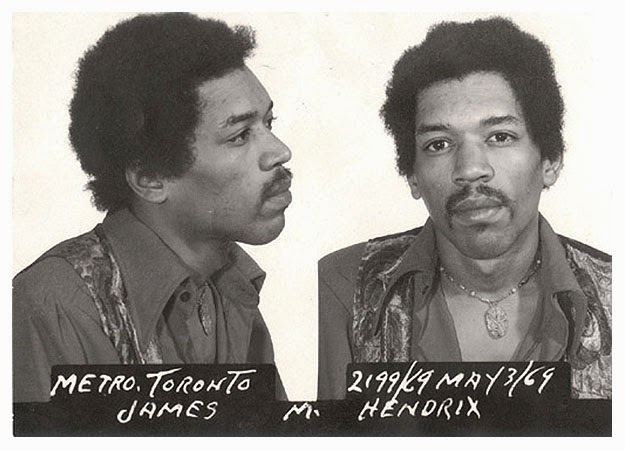
Jimi Hendrix was arrested at Toronto International Airport airport in May 1969 after customs inspectors found heroin and hashish in his luggage. Hendrix, who claimed the drugs were slipped into his bag by a fan without his knowledge, was later acquitted of the charges.
Axl Rose
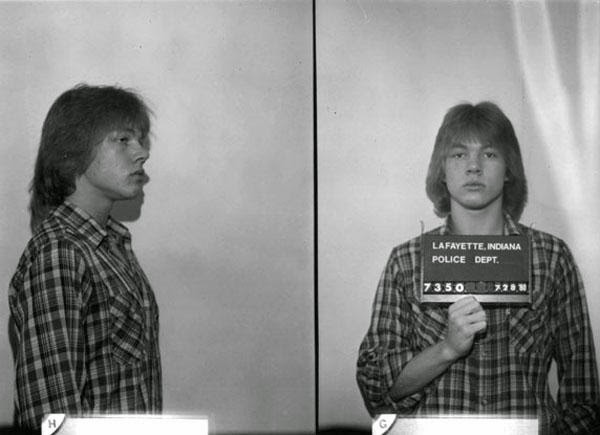
An 18-year-old Axl Rose posed for the above Lafayette, Indiana police mug shot in July 1980. This was one of the first of many misdemeanor bust for the future Guns N’ Roses frontman.
David Bowie
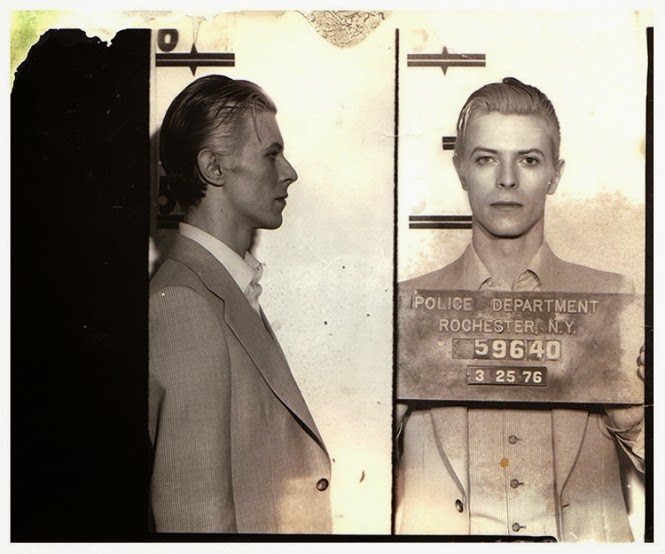
Music legend David Bowie was arrested in upstate New York in March 1976 on a felony pot possession charge. The Thin White Duke, 29 at the time, was nabbed along with Iggy Pop and two other codefendants at a Rochester hotel following a concert. Bowie was held in the Monroe County jail for a few hours before being released. The above Rochester Police Department mug shot was taken three days after Bowie’s arrest, when the performer appeared at City Court for arraignment.
Janis Joplin
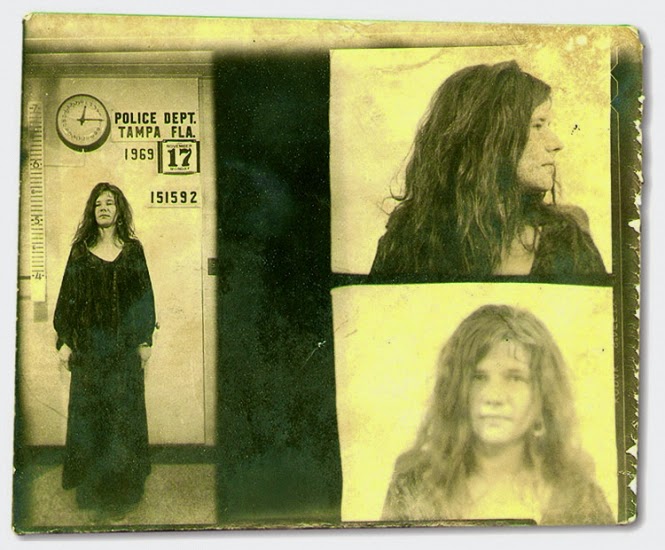
Janis Joplin was arrested in November 1969 in Florida and charged with disorderly conduct after yelling obscenities at police officers during a Tampa concert. Charges were later dropped after it was ruled that the singer’s actions were an exercise of free speech.
Jim Morrison
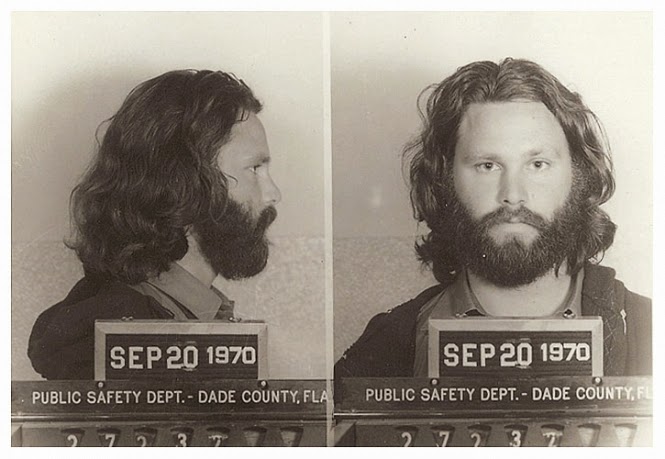
Jim Morrison posed for this mug shot following his 1970 conviction in Florida on misdemeanor indecent exposure and profanity charges. The singer was busted after he exposed himself during a March 1969 concert in Miami. As seen here, Morrison, who was photographed by Dade County’s Public Safety Department, testified on his own behalf at trial.
Frank Sinatra
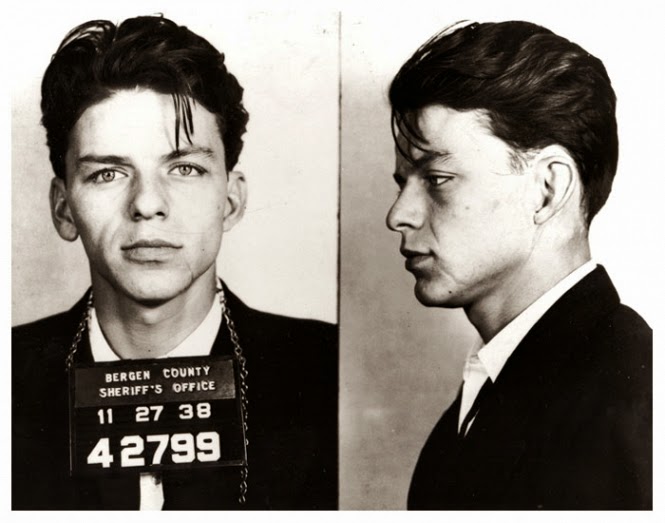
Frank Sinatra was arrested by the Bergen County, New Jersey sheriff in 1938 and charged with carrying on with a married woman (yes, you could get popped for that back then). The charge was later changed to adultery, and eventually dismissed.
Johnny Cash
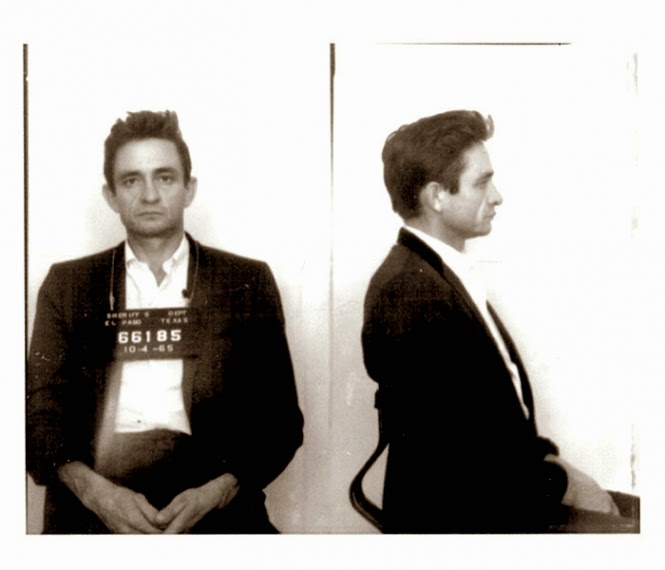
Johnny Cash was arrested in October 1965 when U.S. Customs agents found hundreds of pep pills and tranquilizers in his luggage. The Man in Black–who was returning by plane from a trip to Juarez, Mexico–spent a night in the El Paso jail, and later pleaded guilty to a misdemeanor count. Cash paid a $1000 fine and received a 30-day suspended sentence.
Kurt Cobain
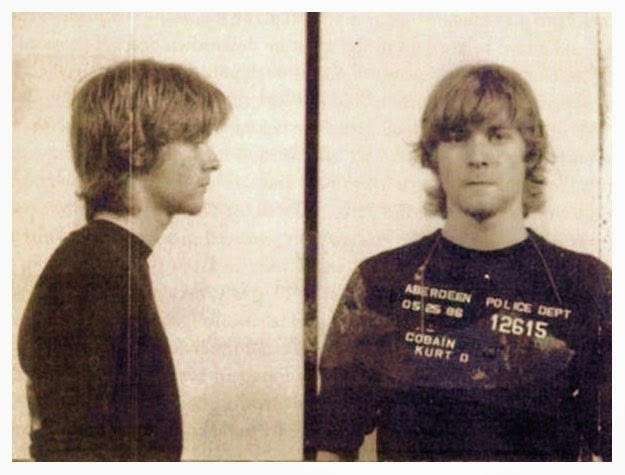
Kurt Cobain was arrested by Aberdeen, Washington police in May 1986 and charged with trespassing while intoxicated. The misdemeanor bust was not the Nirvana founder’s first brush with the law. The musician had been arrested in Aberdeen a year earlier on a vandalism count.
Mick Jagger
Mick Jagger posed for the above mug shot in 1967 after being arrested in England on a narcotics charge. Jagger, 23, was busted after police, acting on a tip, raided the country home of fellow Rolling Stone Keith Richards, who was also collared. Jagger, photographed at a Brixton jail, spent a few nights in custody before making bail.
Steven Tyler
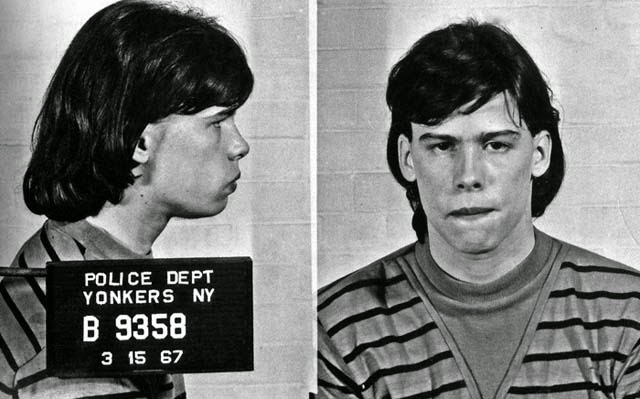
Aerosmith frontman Steven Tyler posed for the above mug shot in March 1967 after Yonkers, New York police busted the future rock star, then 18, for pot possession.
Ozzy Osbourne
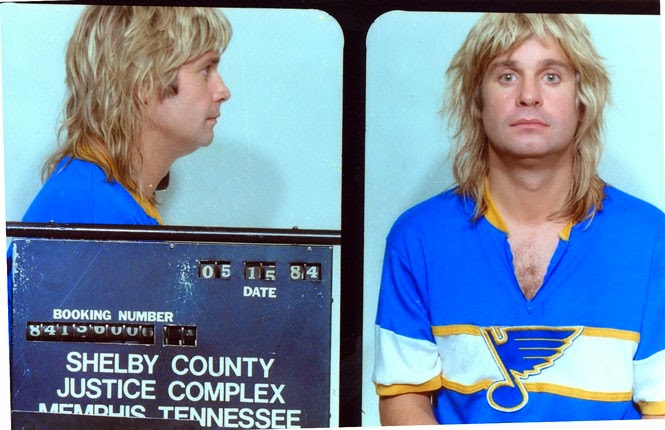
John Osbourne (aka Ozzy Osbourne) was arrested by Memphis cops in May 1984 and charged with public intoxication. According to the police report, Ozzy was “staggering drunk” when nabbed on raucous Beale Street.
