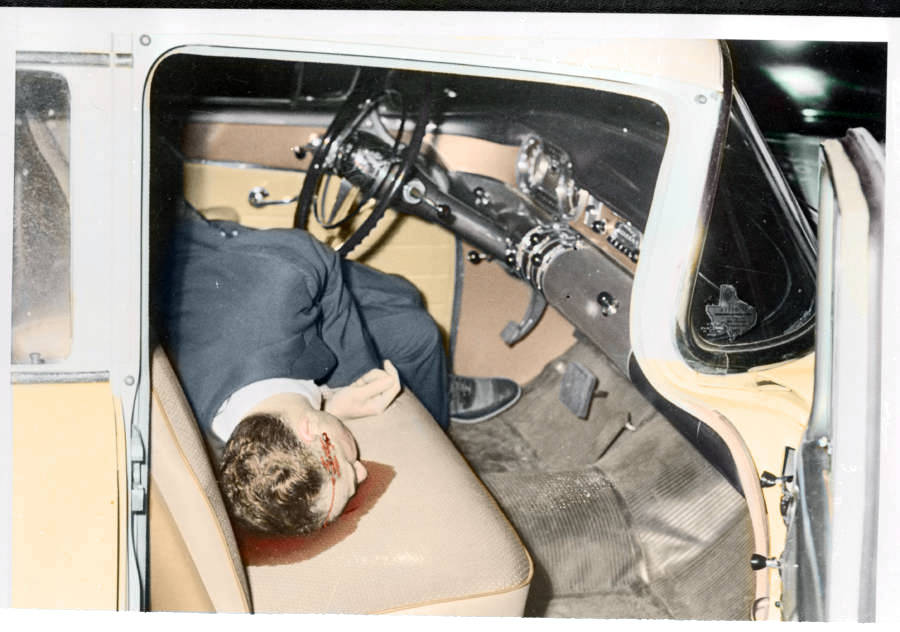
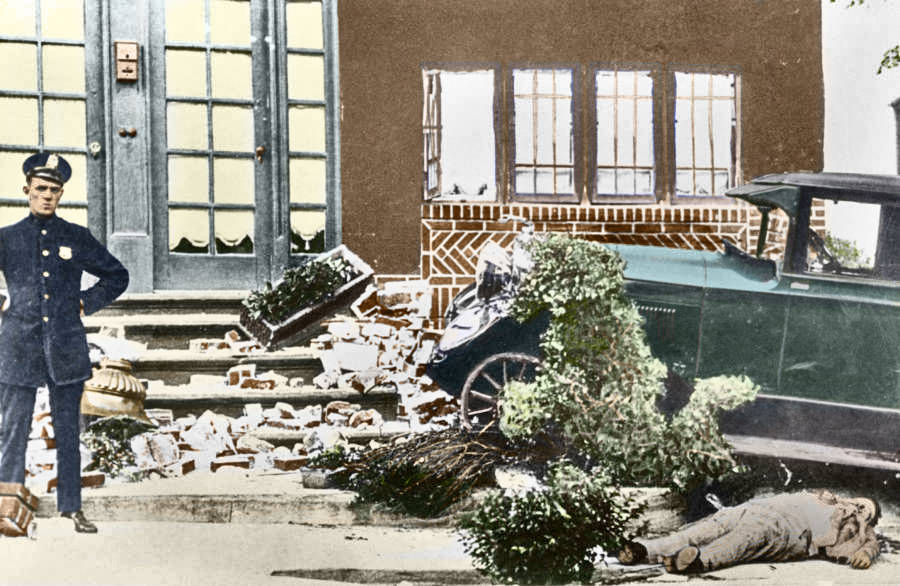
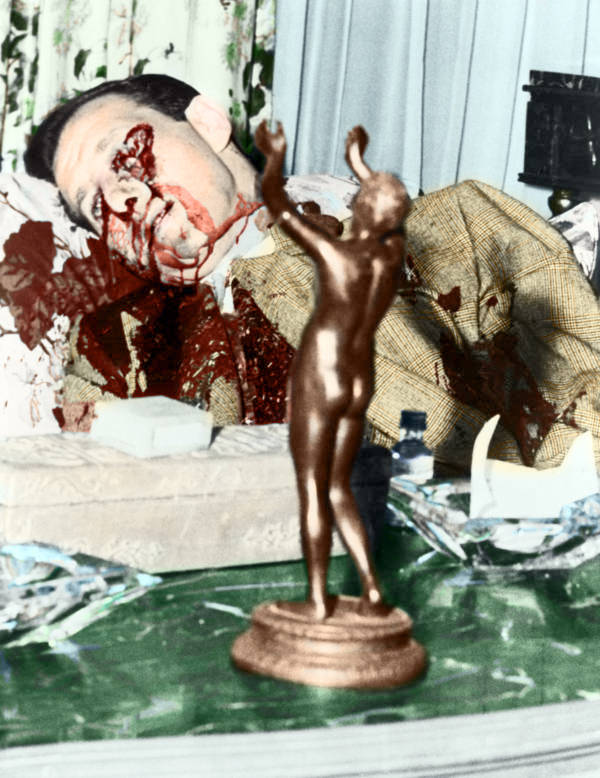
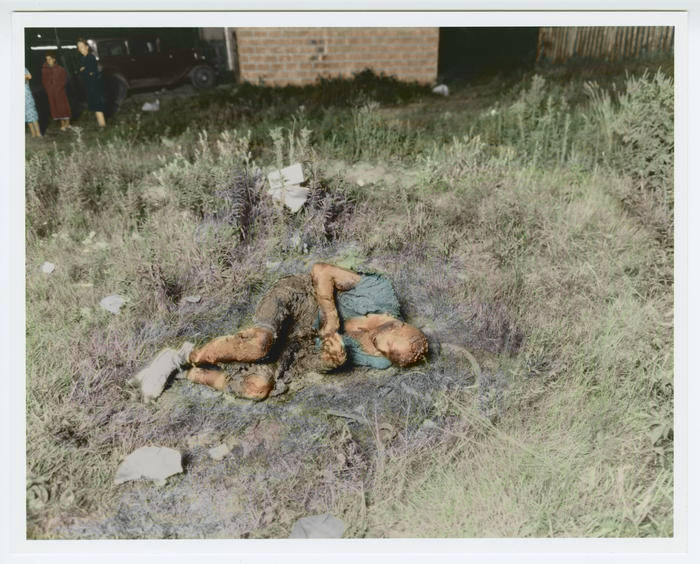
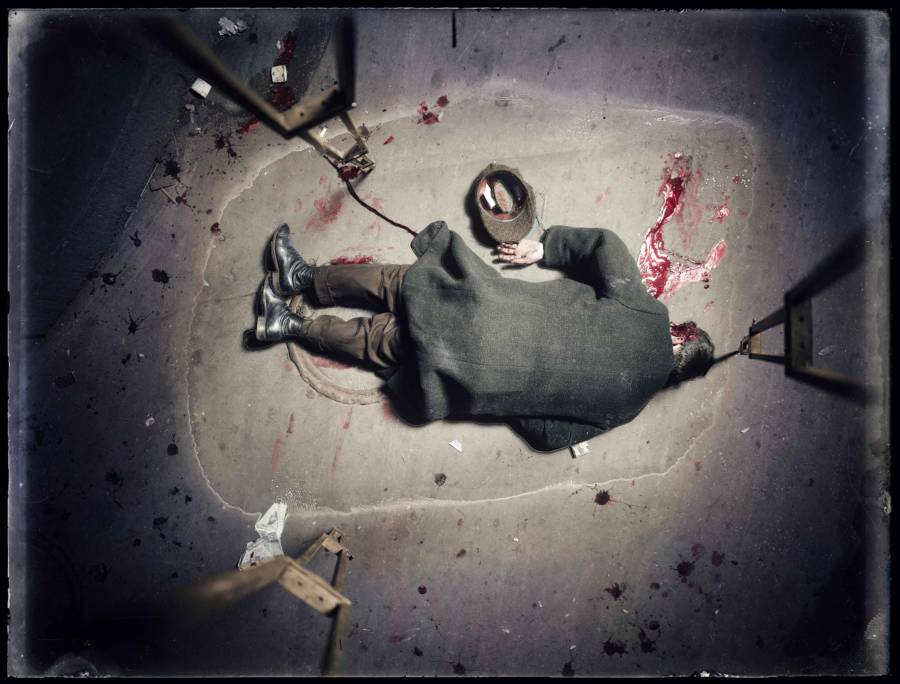
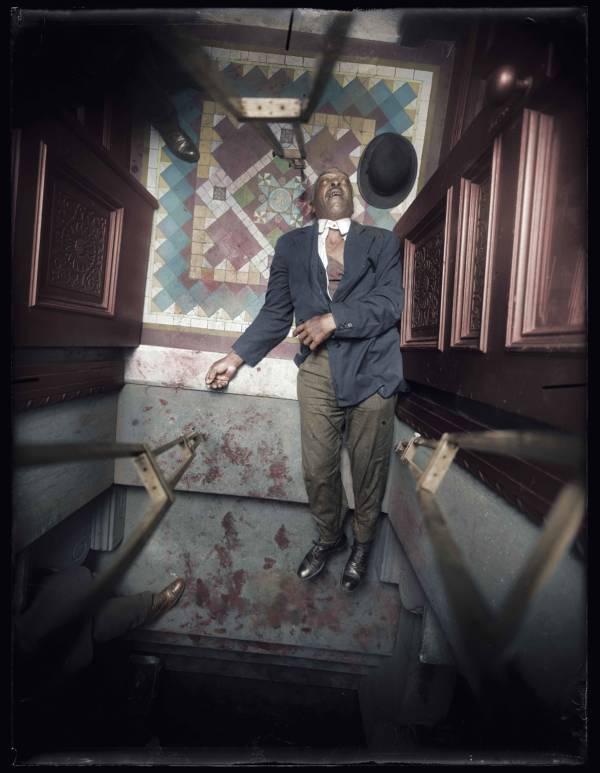
These colorized versions of vintage black-and-white crime scene photos reveal a unique perspective on the murders, mobsters, and mayhem of decades past.
Though we may not often think it, crime scene photography plays an important role in documenting history. These portraits are bloody, gruesome, even stomach-churning, but they also open a seldom-seen window into what life was like at the time.
Throughout a large portion of the 20th century in New York City, for example, organized crime ruled the streets of many of the city’s neighborhoods. And while the grisly stories of mob murders help reveal what those crime-ridden streets were like, the photos of those crime scenes truly bring the past to life.
Perhaps no crime scene photographer captured these horrors as well as Arthur Fellig, better known as Weegee. A Ukrainian immigrant who came to the United States at 10 and quit school at 14 to become a freelance photographer, Weegee soon made a name for himself as the go-to crime scene photographer in New York.
He seemed to have a sixth sense about when and where a crime was going to take place and always seemed to be the first on the scene. Of course, it turned out that Weegee didn’t actually possess any superhuman abilities, just a police scanner. Nevertheless, his photographs of New York City murders, suicides, fires, and so much more remain legendary to this day.
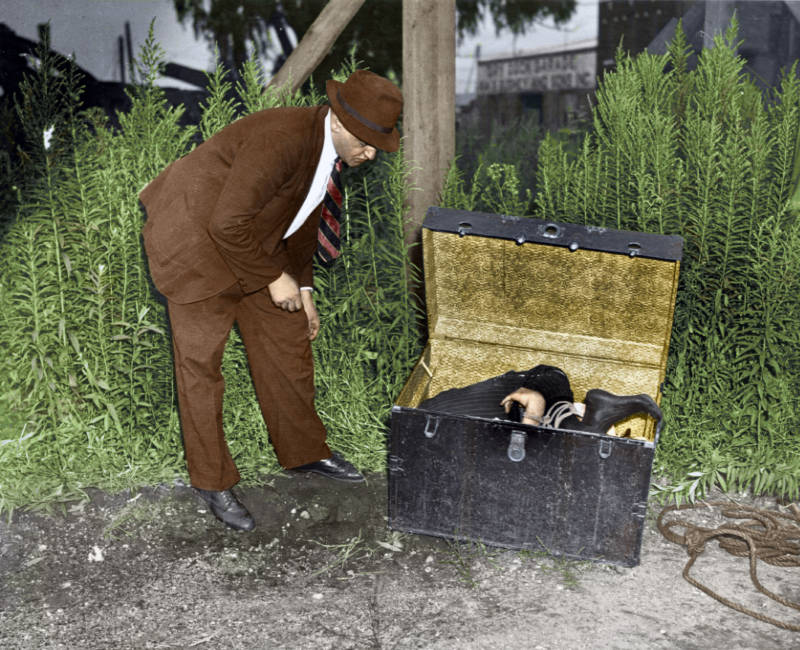
Through it all, Weegee’s twisted sense of humor also helped cement his iconic status. In 1936, he arrived at a crime scene to photograph a dead man whose body had been stuffed into a trunk. For obvious reasons, the photo was too graphic to be printed in a newspaper, so Weegee decided to employ a bit of dark humor for his shot: He snapped a shot of himself looking into the trunk, which took the focus of the photo off of the mutilated body and placed it on himself and made the audience feel as if they were behind the lens themselves.
Whether Weegee was involved or not, plenty of history’s most evocative crime scene photos come with macabre little stories just like these. And some of these photos come with macabre stories of a much larger scale.
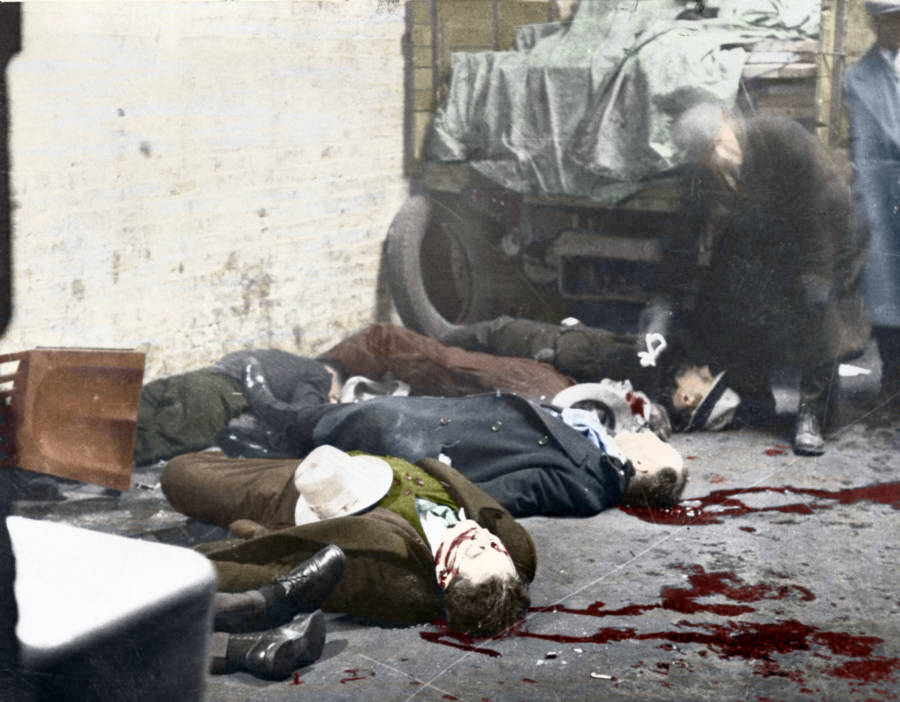
Take, for example, the infamous photos of an entire row of bodies lined up along a wall and riddled with bullets in a Chicago garage on Feb. 14, 1929. These photos are not only gruesomely striking in their own right, they are also a glimpse at the aftermath of perhaps the most notorious gangland slaying in American history. Known as the St. Valentine’s Day Massacre, the hit saw gunmen employed by Al Capone round up and slaughter seven members of the rival North Side Gang.
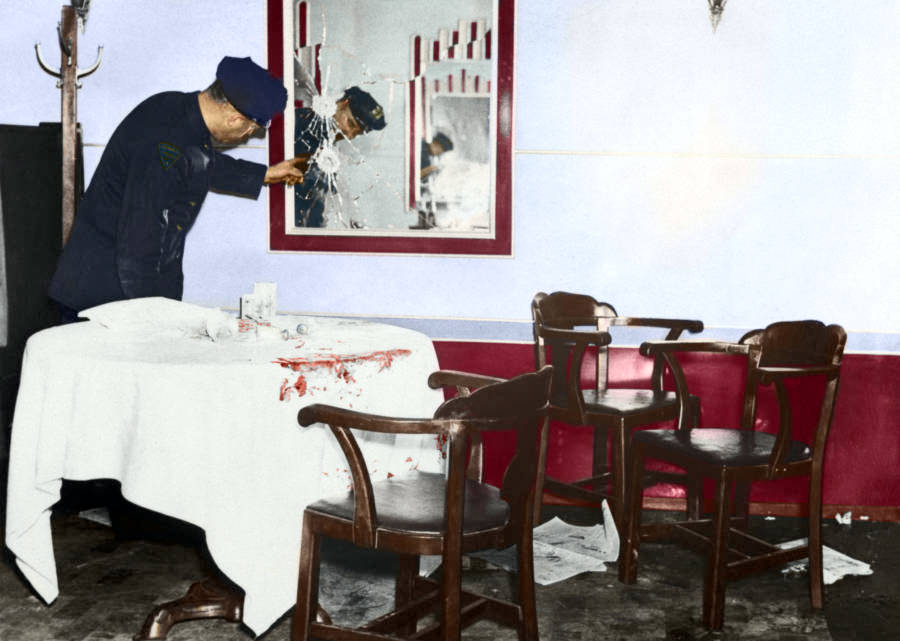
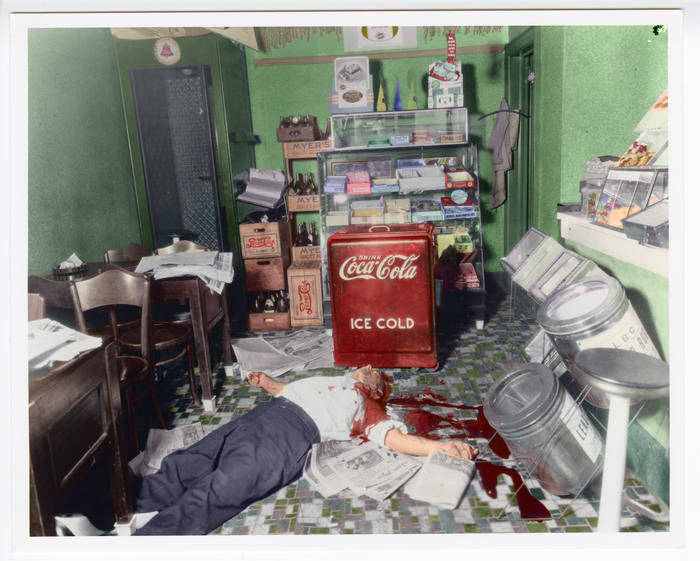
Then there’s the photo of Joseph Rosen, gunned down in his candy store on September 13, 1936, in Brooklyn. The photo itself is bloody — as is the bloody story associated with it. After police were able to link the brutal slaying to gangster Louis “Lepke” Buchalter, Rosen’s murder set off a chain of events that would cause the downfall of the most fearsome and lethal ring of hitmen in New York’s history: Lepke’s Murder Inc.
But whether such stories lurk behind these photos, vintage crime scene images remain a powerful window into the past. And especially when they’re brought to life in stunning color, they can transport us back to another time and show us what the city streets were once like in all their grisly glory.
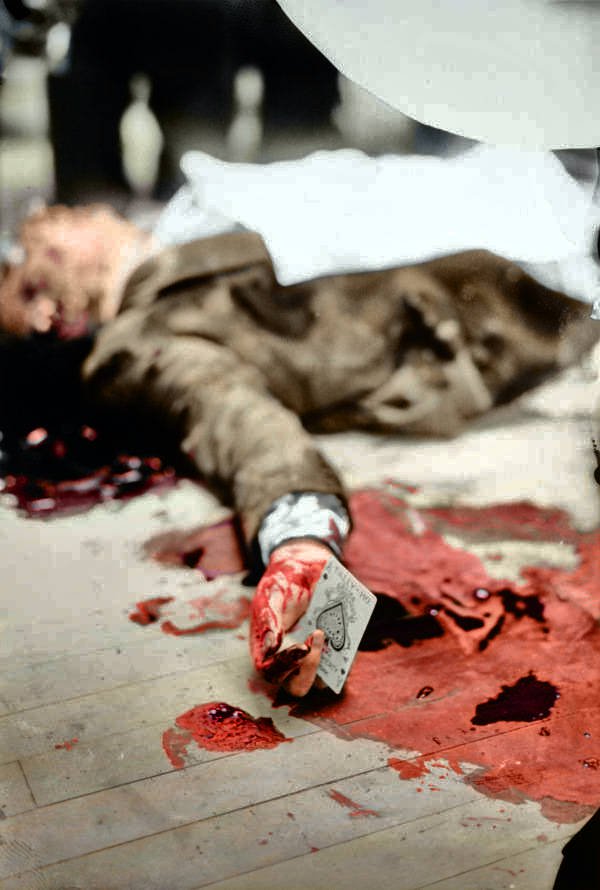
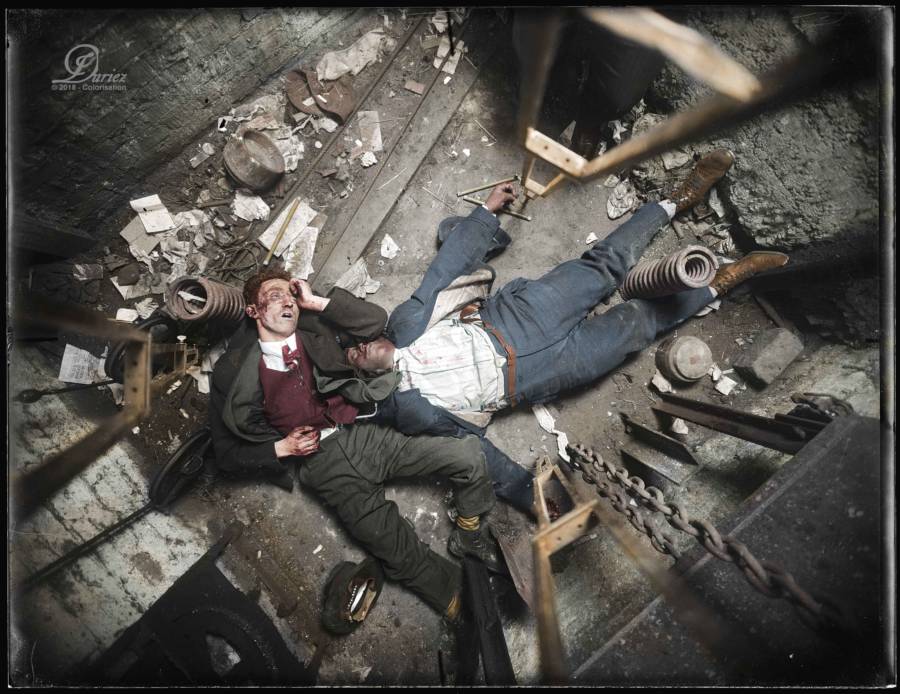
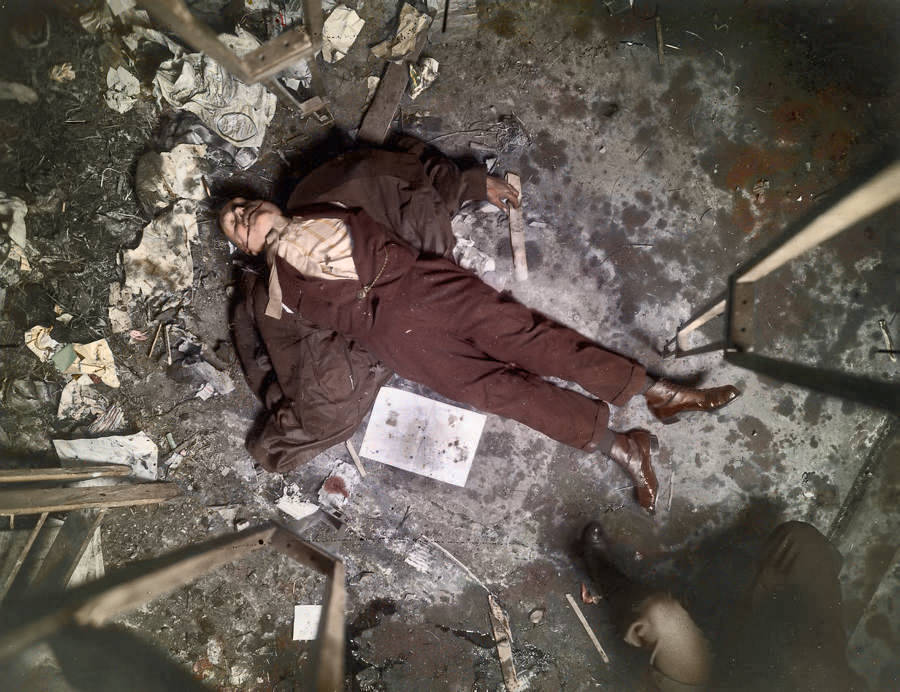
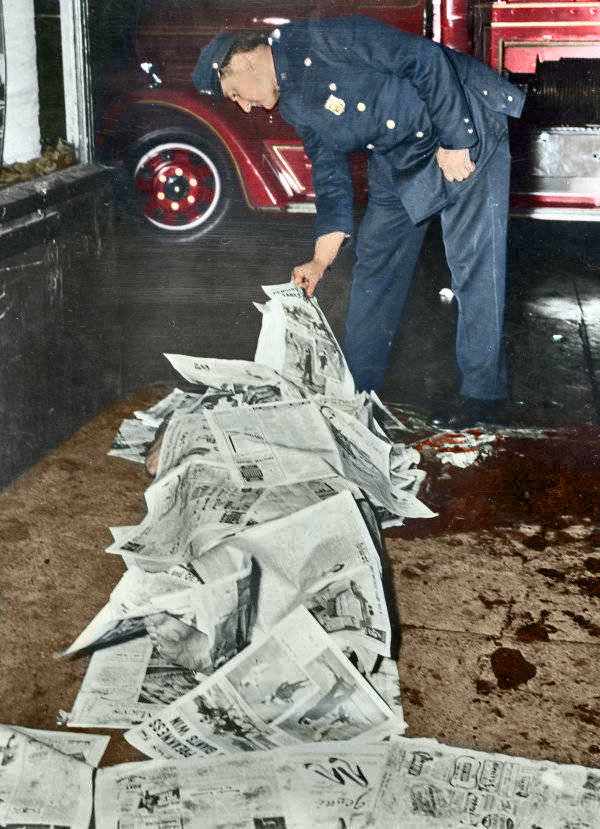
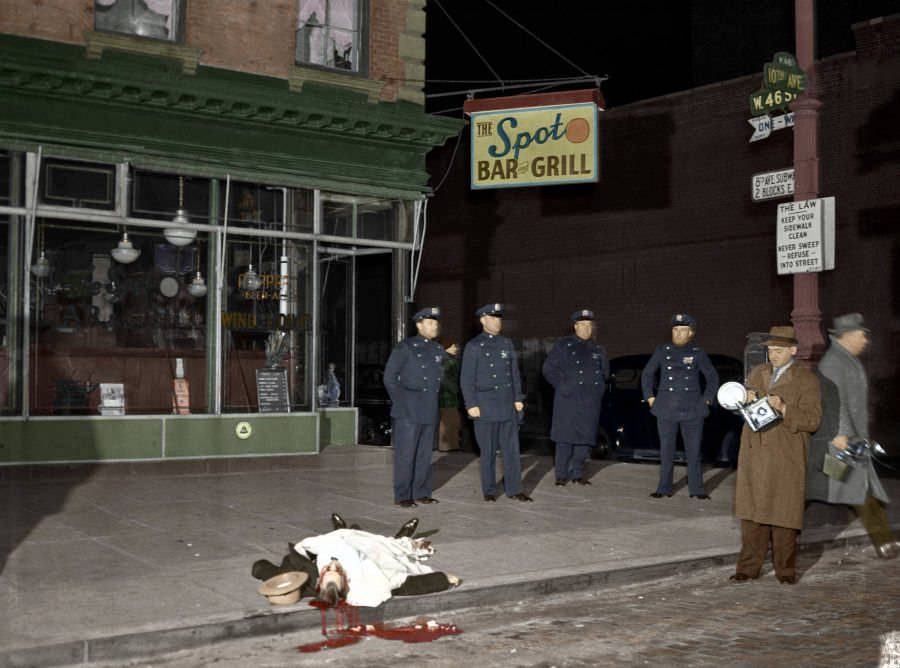
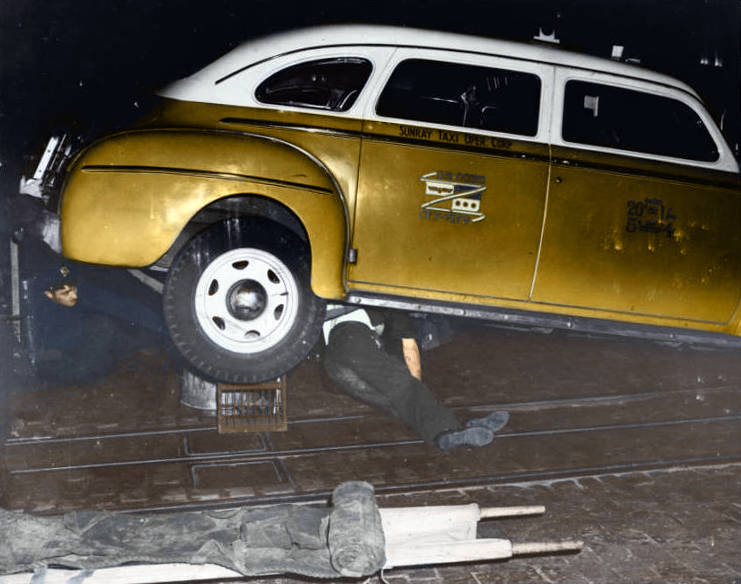
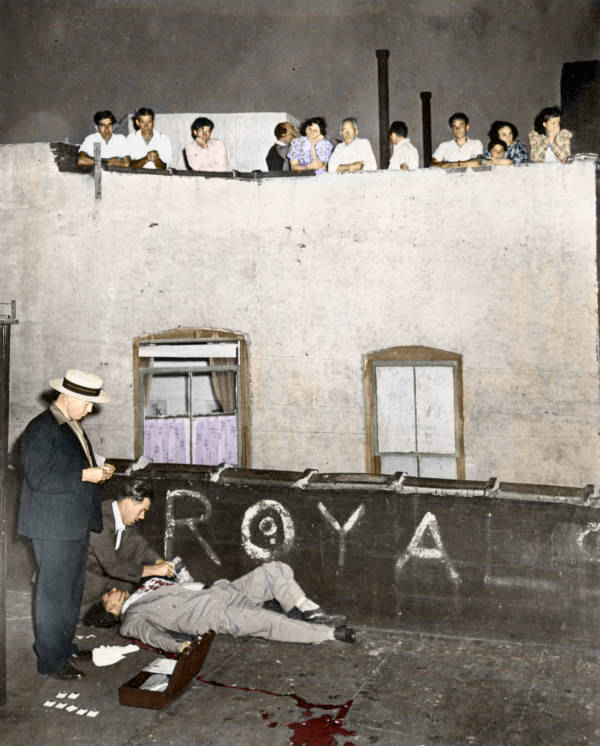
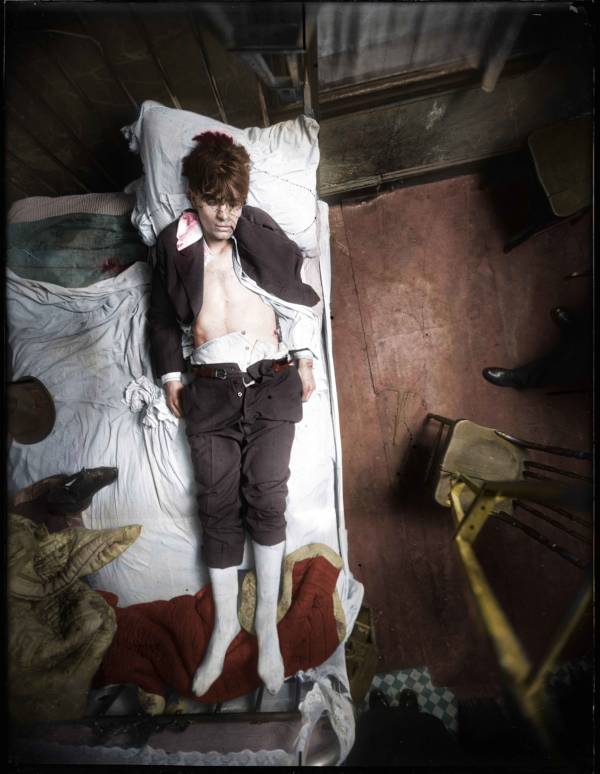
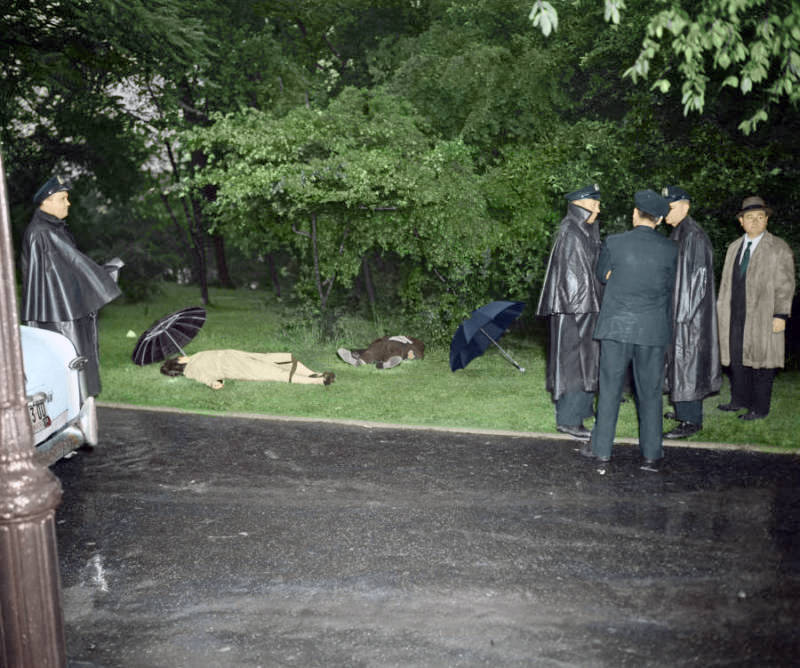
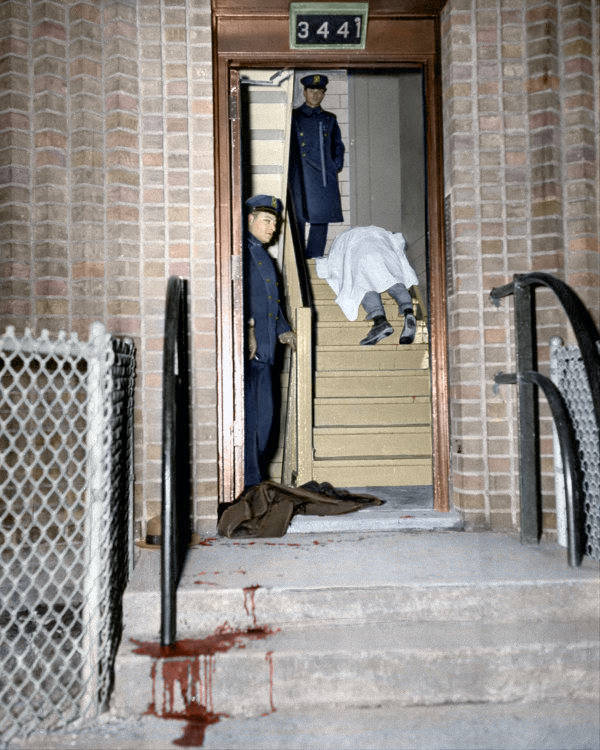
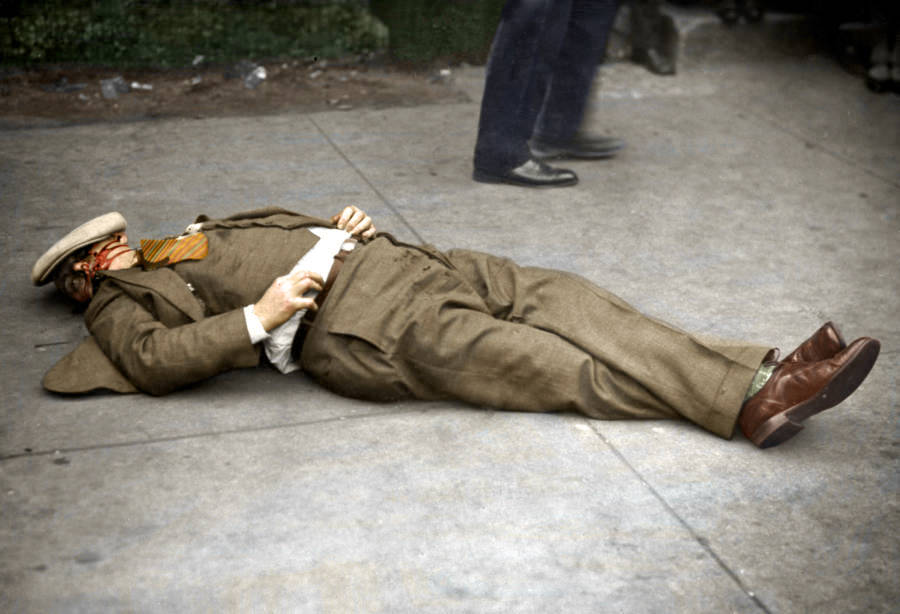
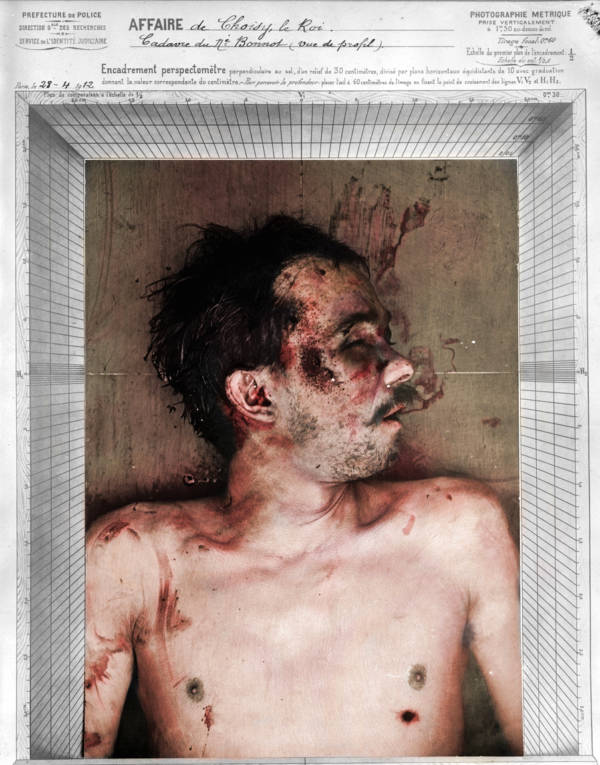
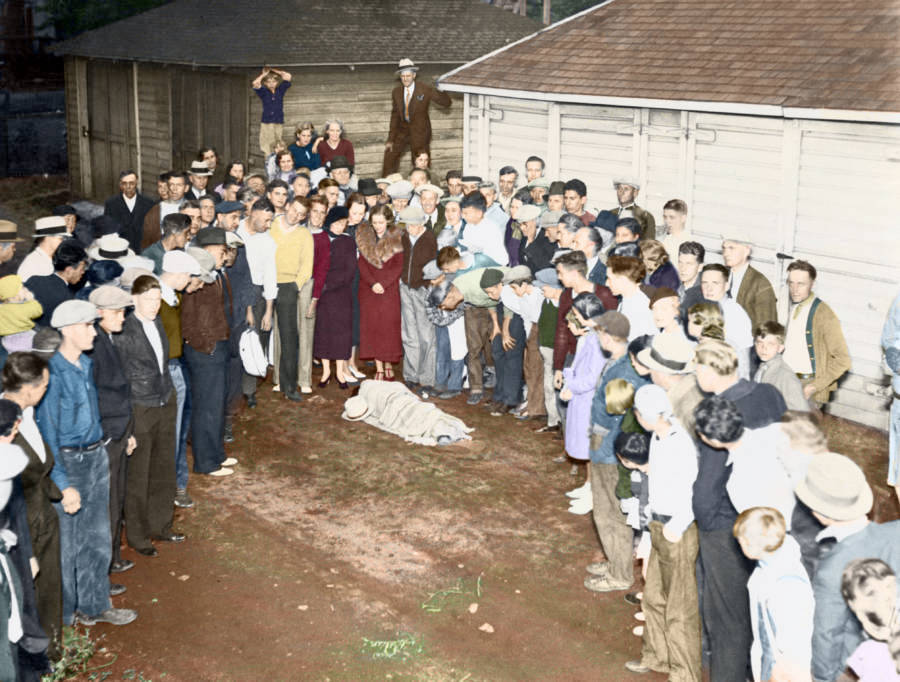
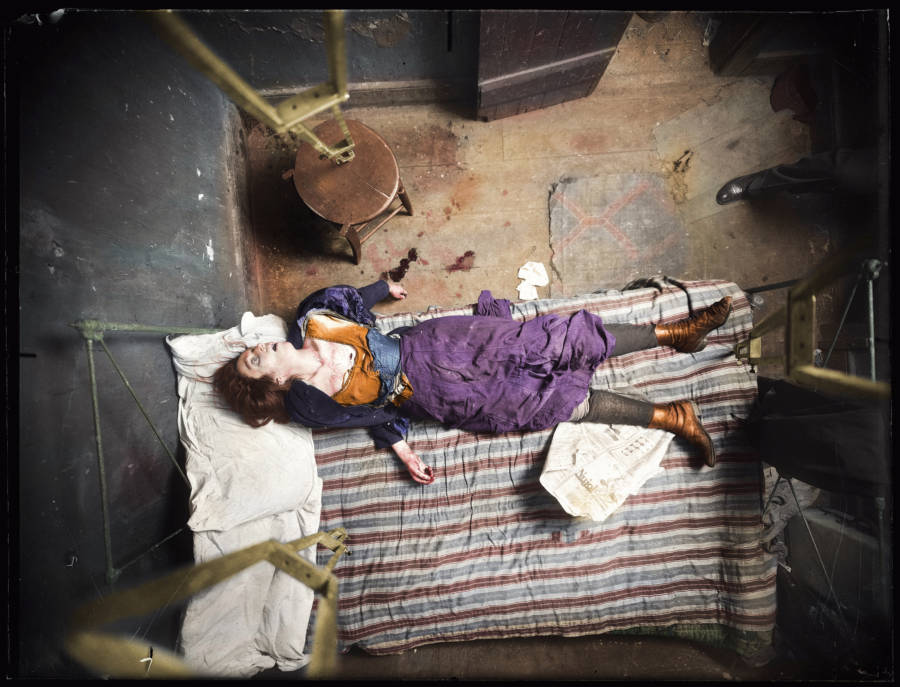
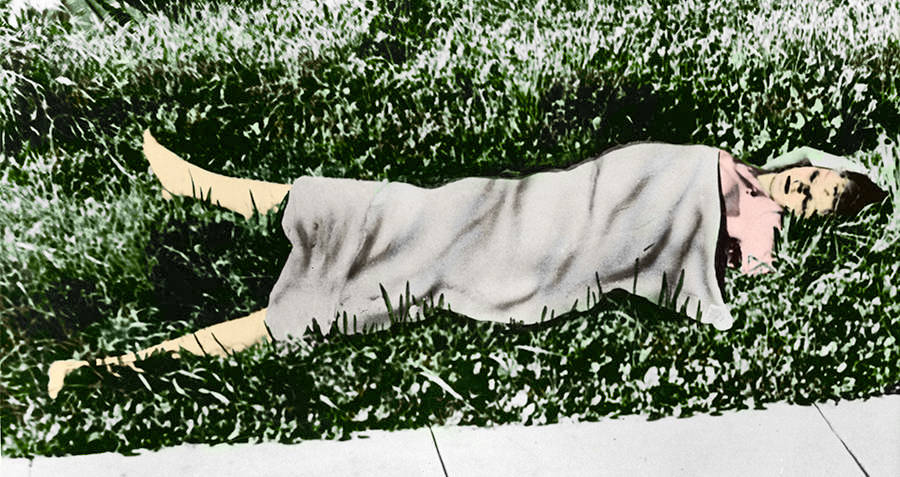
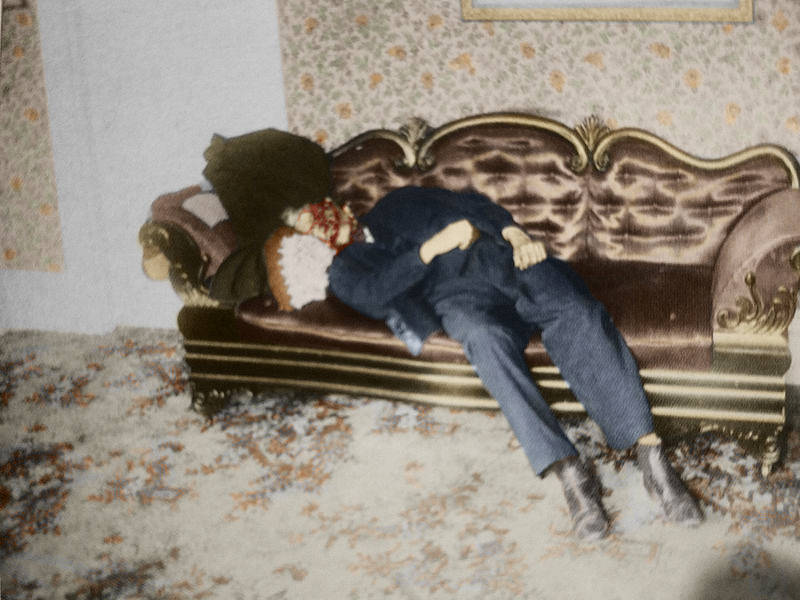
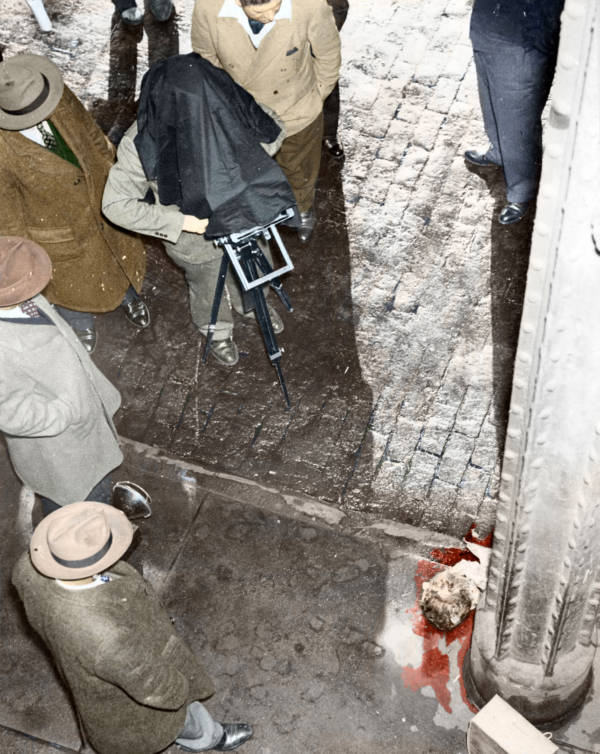
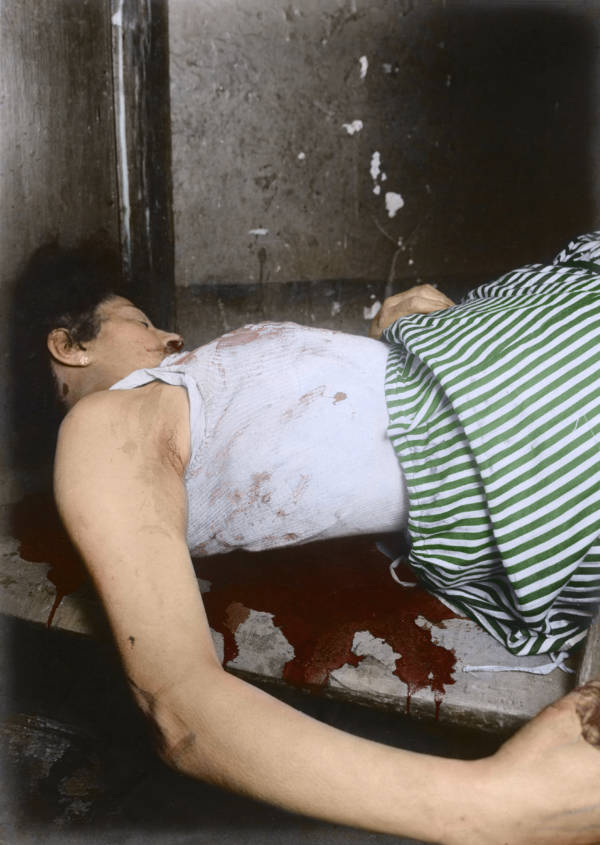
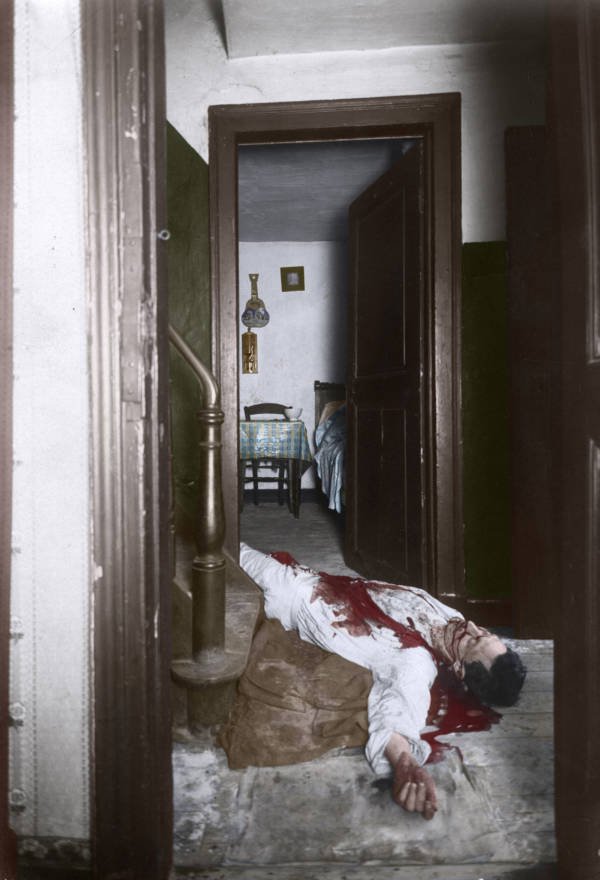
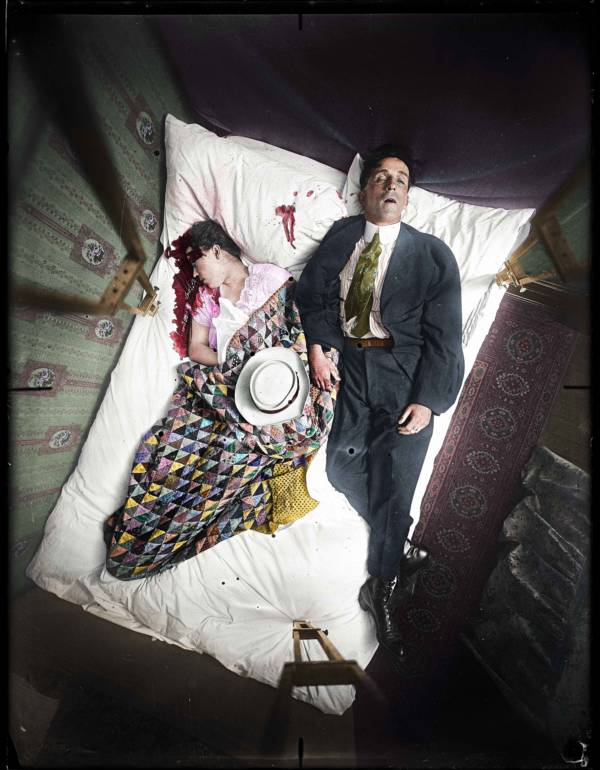
Mafia kingpin Joe Masseria holds the ace of spades, “the death card,” in his hand following his murder on the orders of infamous gangster Charles “Lucky” Luciano in a Coney Island restaurant. 1931.The bodies of two would-be thieves named Robert Green and Jacob Jagendorf after a failed robbery attempt that ended when they accidentally fell down the building’s elevator shaft. New York. 1915.Unspecified New York murder scene. 1916.A New York police officer takes a peek at a dead body covered with newspapers. 1943.Murdered gangster David Beadle, also known as “David the Beetle,” in front of The Spot Bar and Grill in Manhattan. 1939.A police officer crouches under the rear end of a taxi jacked up on a crate and garbage can as the dead body of a man who was hit by the cab lies underneath. 1943.Forensic detectives take the fingerprints of murdered store owner Joseph Gallichio, as he lies on the roof beside his cage of racing pigeons. New York. 1941.The body of a man named Antonio Pemear, who was found murdered in his bed in Brooklyn. 1915.Scene of a murder-suicide in New York’s Central Park. 1952.Two police officers with a dead body in a New York apartment stairwell. 1957.The Saint Valentine’s Day Massacre, in which seven members of the North Side Gang were trapped in a garage, lined up against the wall, and shot to death by members of Al Capone’s rival gang during a power struggle for control of Chicago. 1929.The body of Earl “Hymie” Weiss, leader of Chicago’s North Side Gang. He was killed when Al Capone’s men opened fire with a submachine gun on him and his associates while they were visiting a courthouse where an ally of his was on trial. 1926.The murder scene of Arthur “Dutch Schultz” Flegenheimer, a powerful New York gangster in the 1920s and ’30s who was ultimately killed in Newark, New jersey by an assassin hired by the Mafia Commission. The Commission had denied Schultz’s request to murder the prosecutor that was targeting him. When he disobeyed and attempted the murder anyway, the Commission had him killed. 1935.Close-up of a corpse’s battered and bloodied face. Angres, France. 1912.The dead body of Homer Van Meter, an associate of John Dillinger and a notorious bank robber, who was killed after fleeing police in St. Paul, Minn. 1934.A young woman dead in her bed. Circa 1930.The dead body of Al Capone associate Charles “Cherry Nose” Gioe, who was shot through the head by mafia hitmen hired by a Chicago mob boss whose plans Gioe had unknowingly interfered with. 1954.The body of Brooklyn mobster Frankie Yale. He was killed by unidentified rival gangsters following a car chase through the streets of New York. 1928.The body of mobster Benjamin “Bugsy” Siegel, who was killed by an unknown assailant who shot him through a window with an M1 Carbine while he was staying at an associate’s house in Beverly Hills. 1947.The burnt body of gangster Irving Feinstein, who was set on fire by Murder Inc. killers Harry Strauss and Martin Goldstein and left exposed in a lot in New York City. 1938.The dead body of Joseph Rosen, a candy shop owner who was killed by Murder Inc. leader Louis “Lepke” Buchalter in his own store in Brooklyn. 1936.The naked corpse of American aspiring actress and murder victim Elizabeth Short, known as the “Black Dahlia,” lying in a vacant lot in Los Angeles. 1947.The dead body of Andrew Borden, father of Lizzie Borden, in his house in Fall River, Mass. 1892.Newspaper photographer Arthur Fellig, better known as Weegee, examines a body stuffed into a trunk and deposited on a patch of waste ground in New York. Circa 1945.Weegee photographs a human head at the scene of a murder. Circa 1945.A French crime scene. Circa 1930.A dead man at the foot of a staircase in a French crime scene. 1912.A photo of a bloodied couple lying dead in bed in New York. 1915.An unidentified murder victim. Circa early 20th century.An unidentified dead man in New York City. Circa early 20th century.
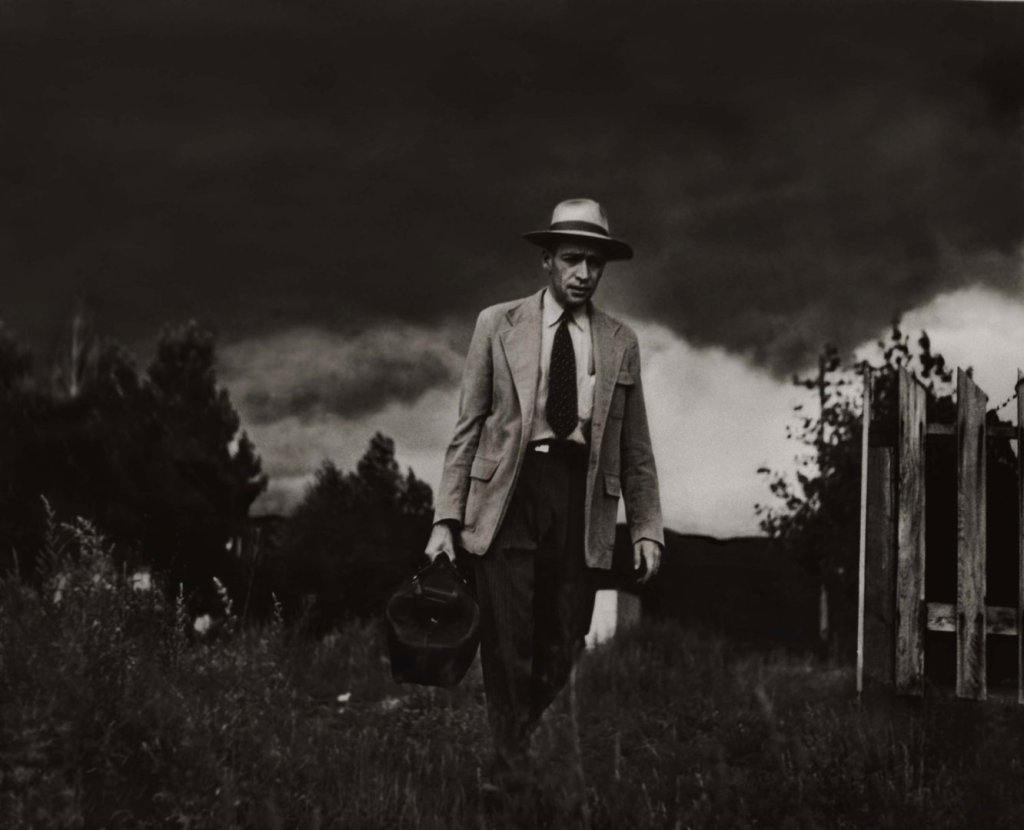
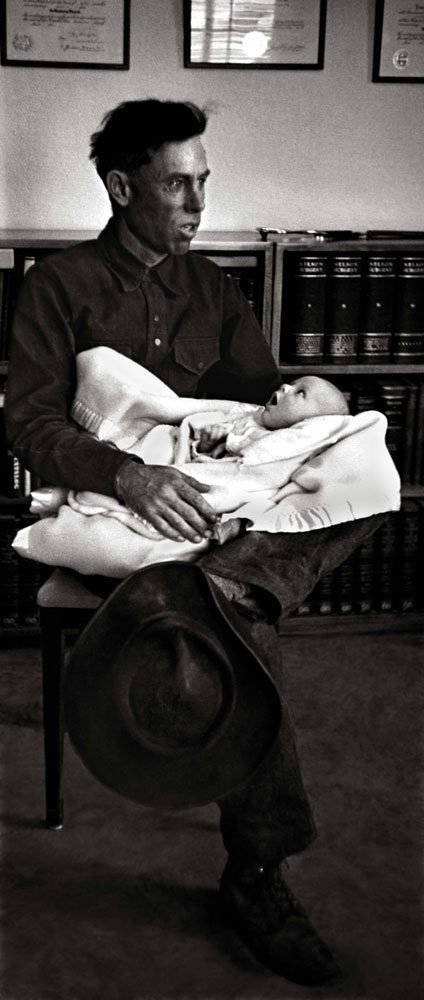
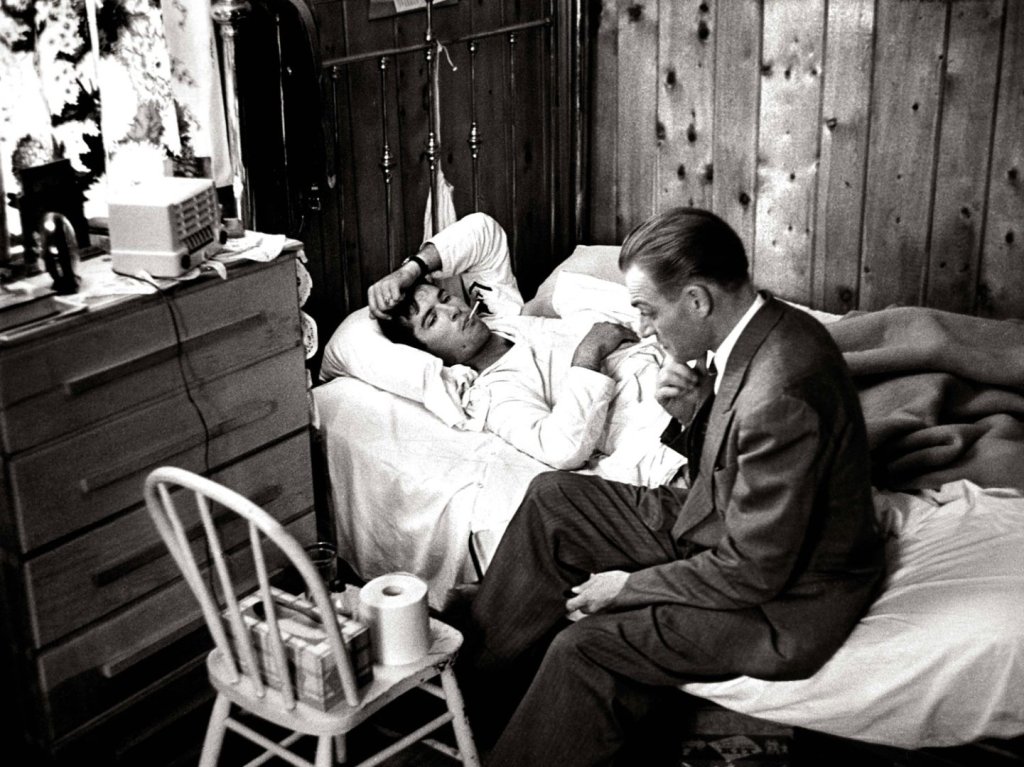
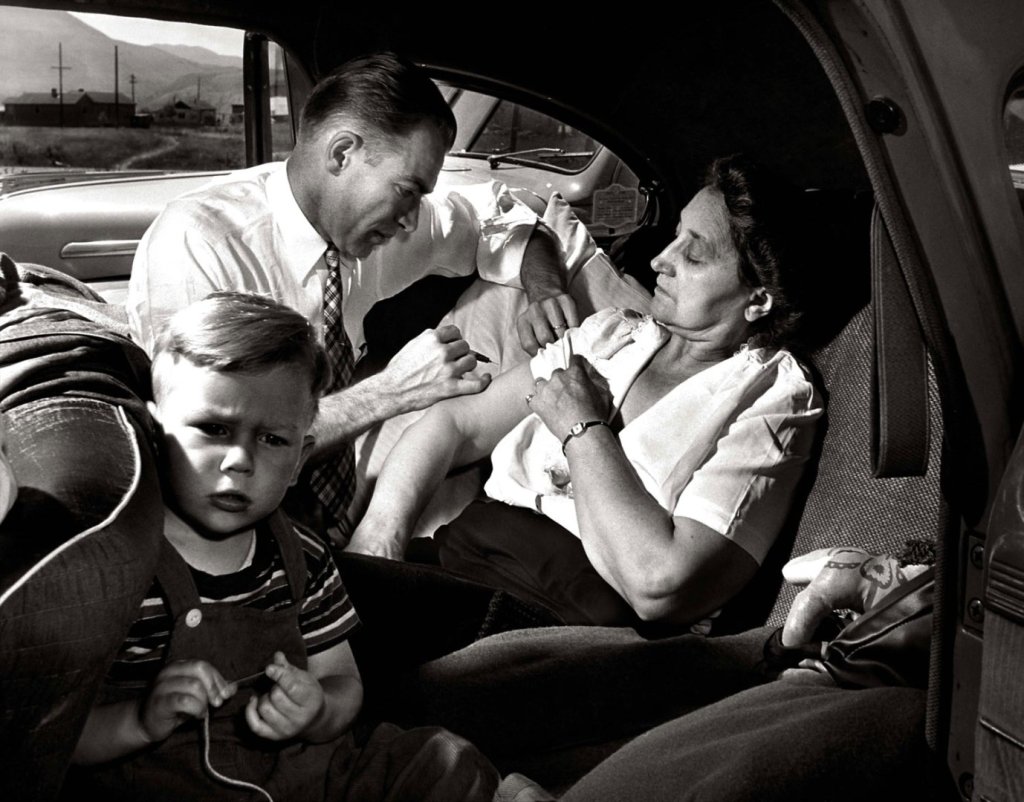
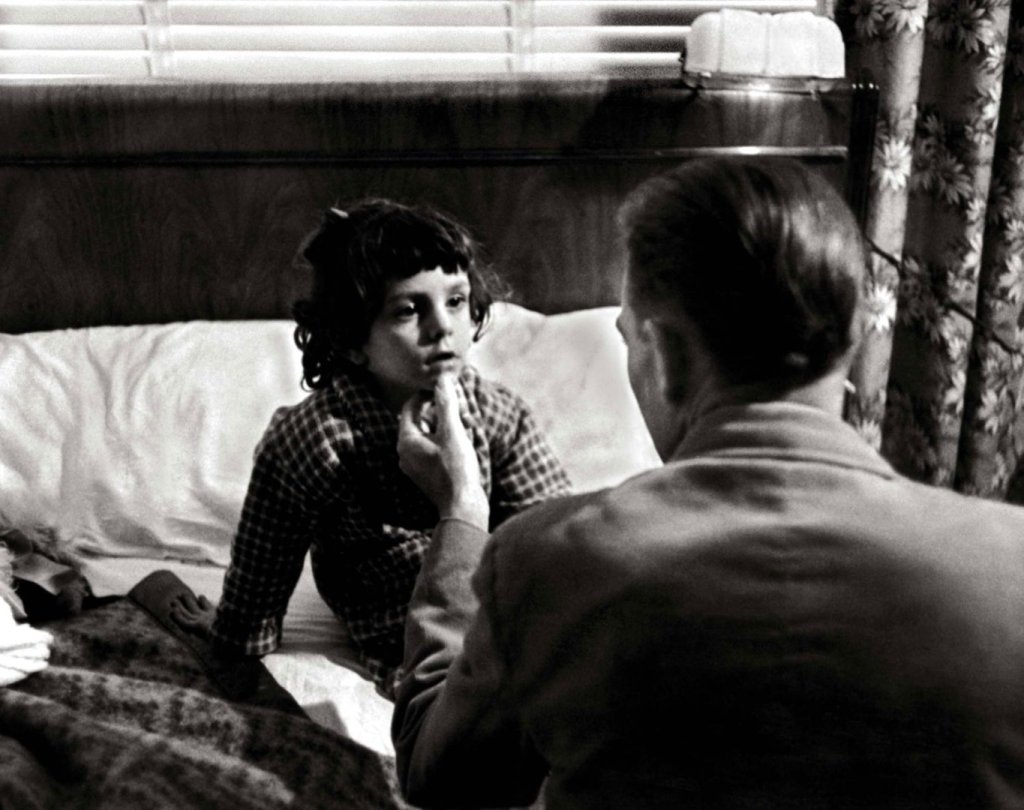
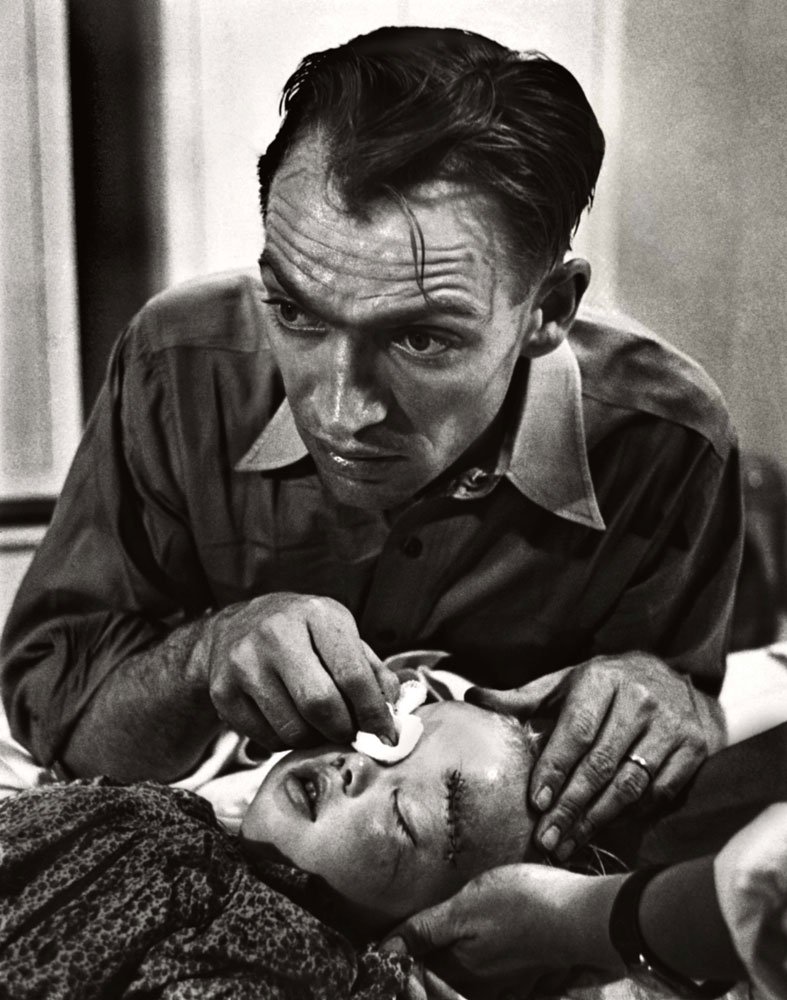
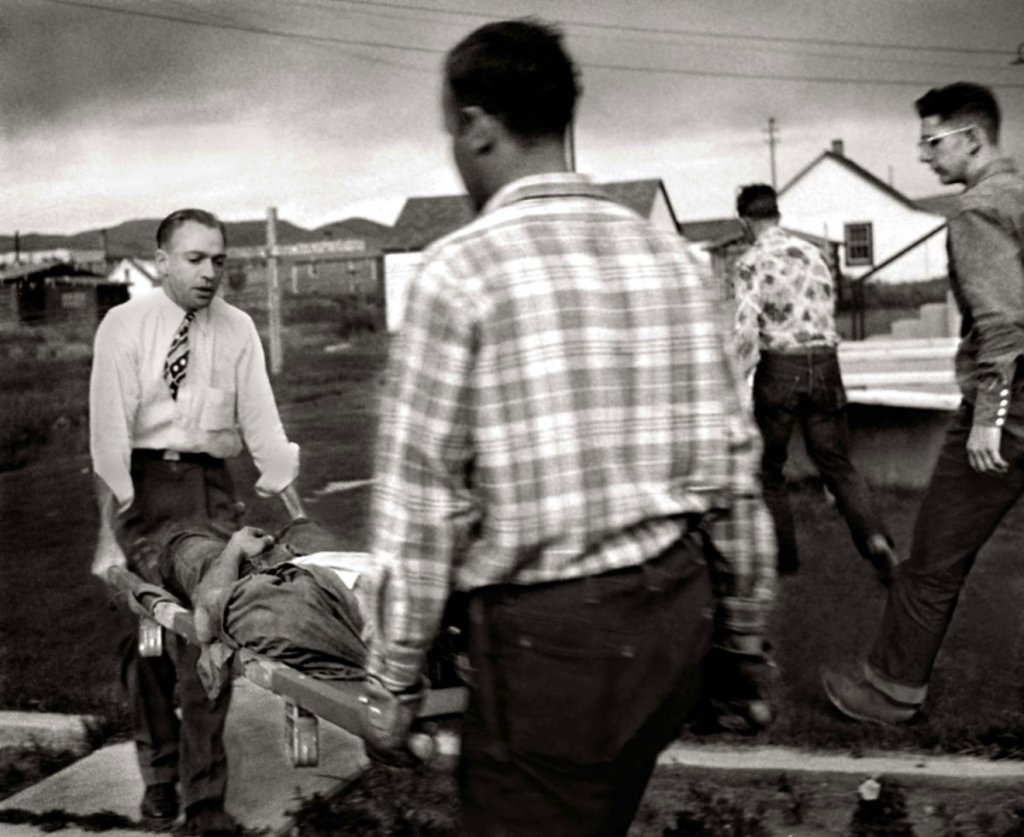
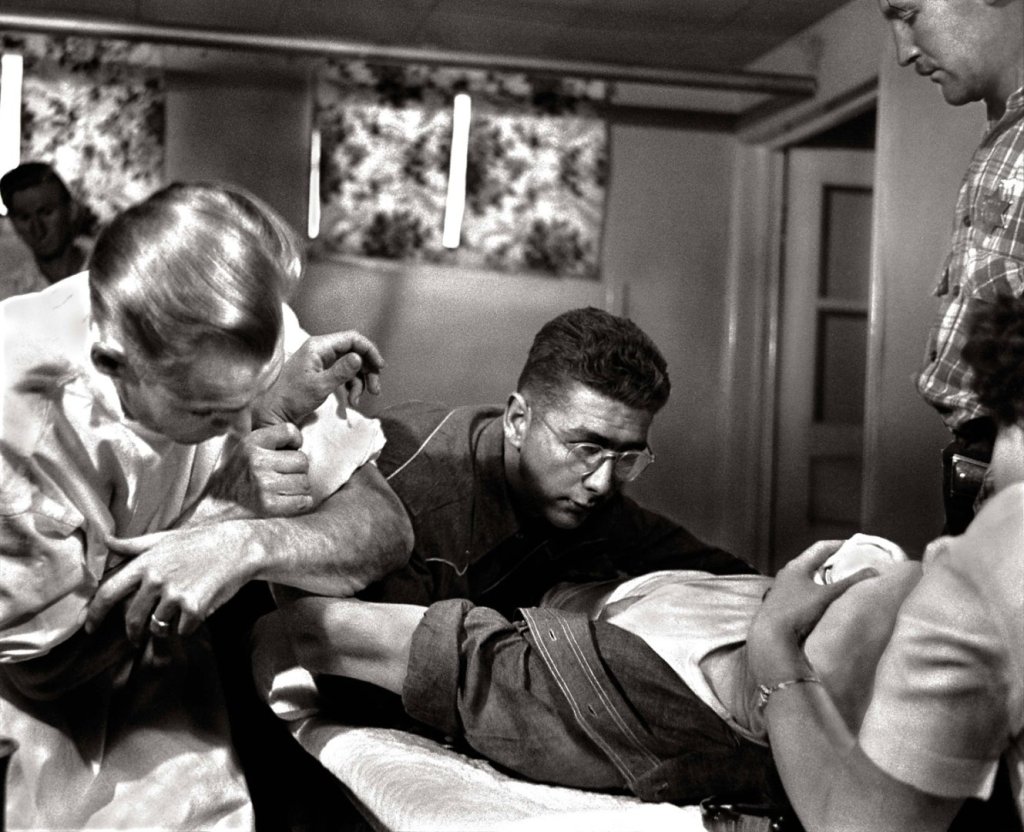
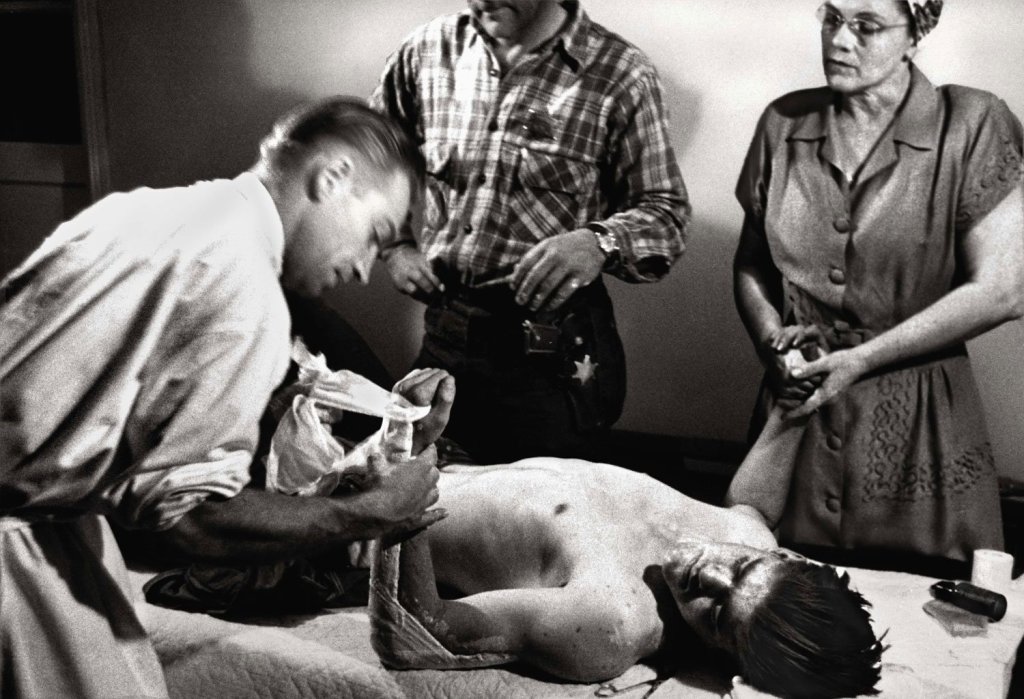
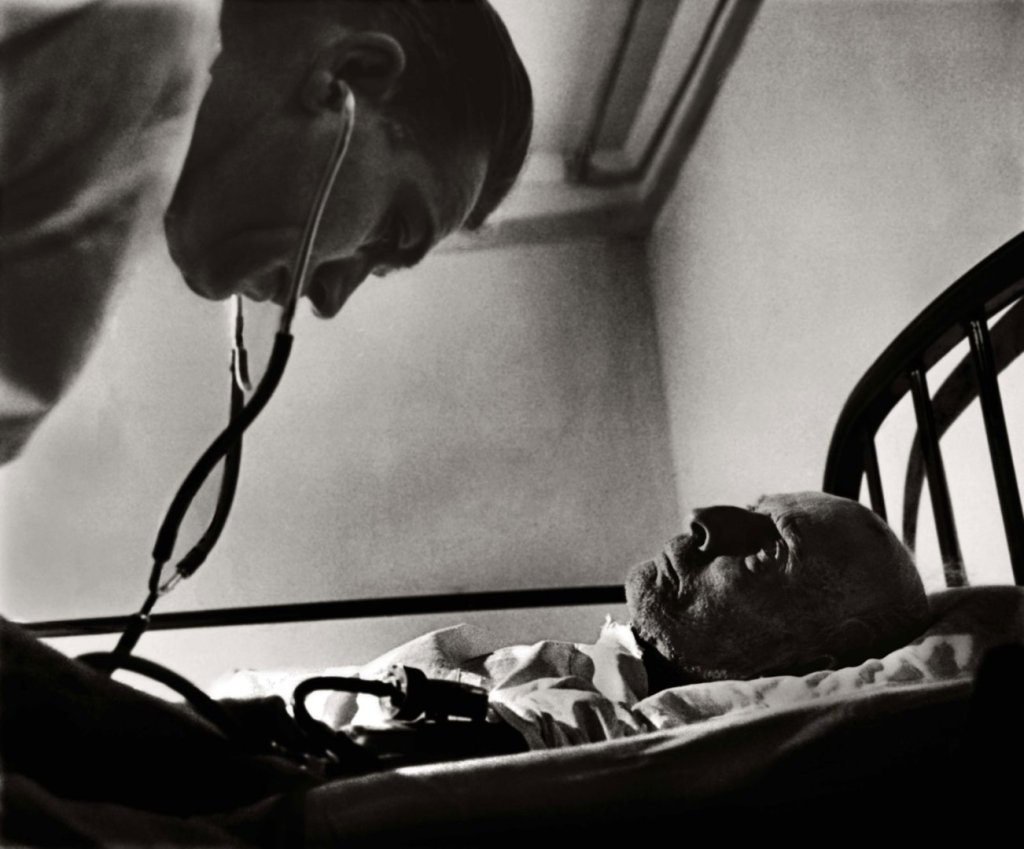
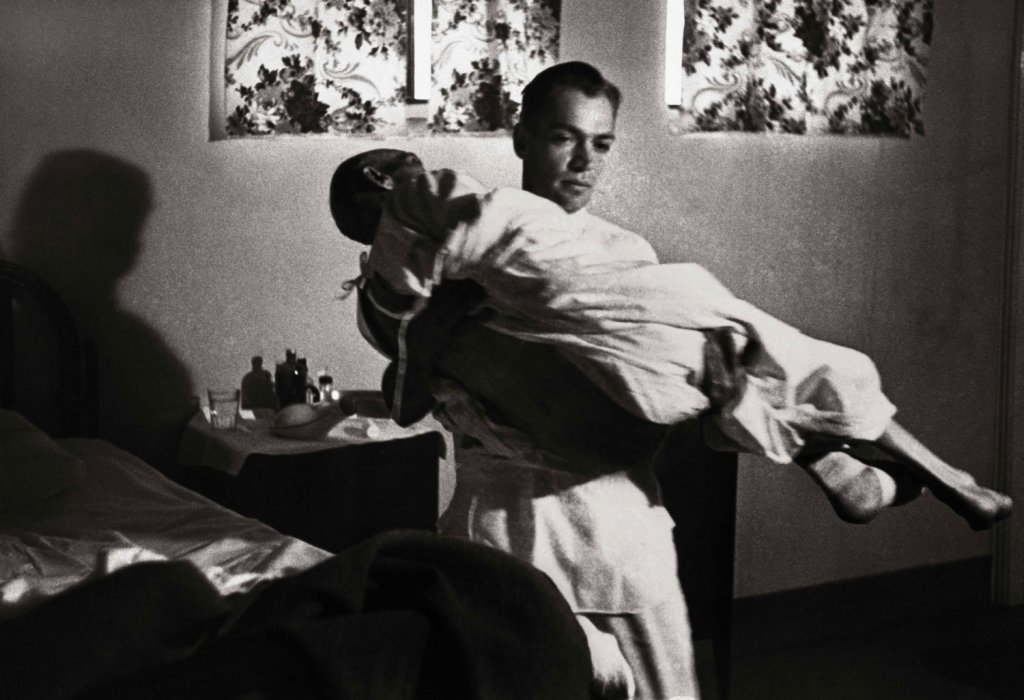
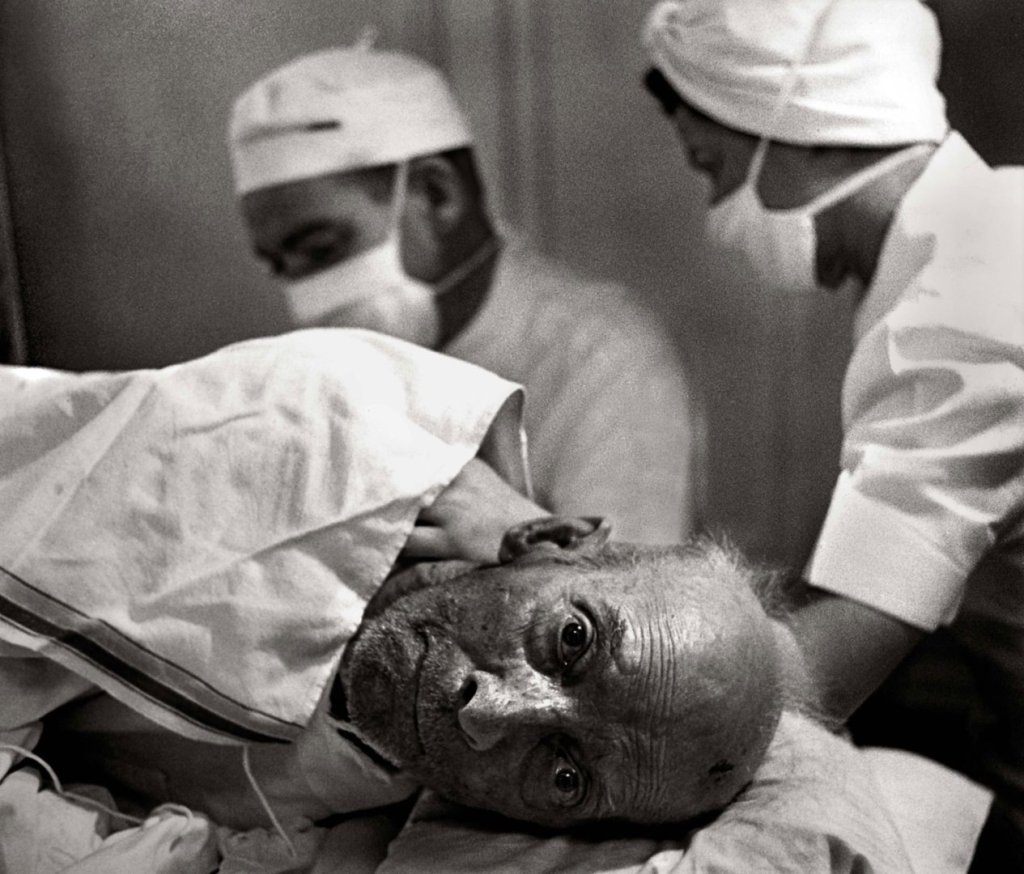
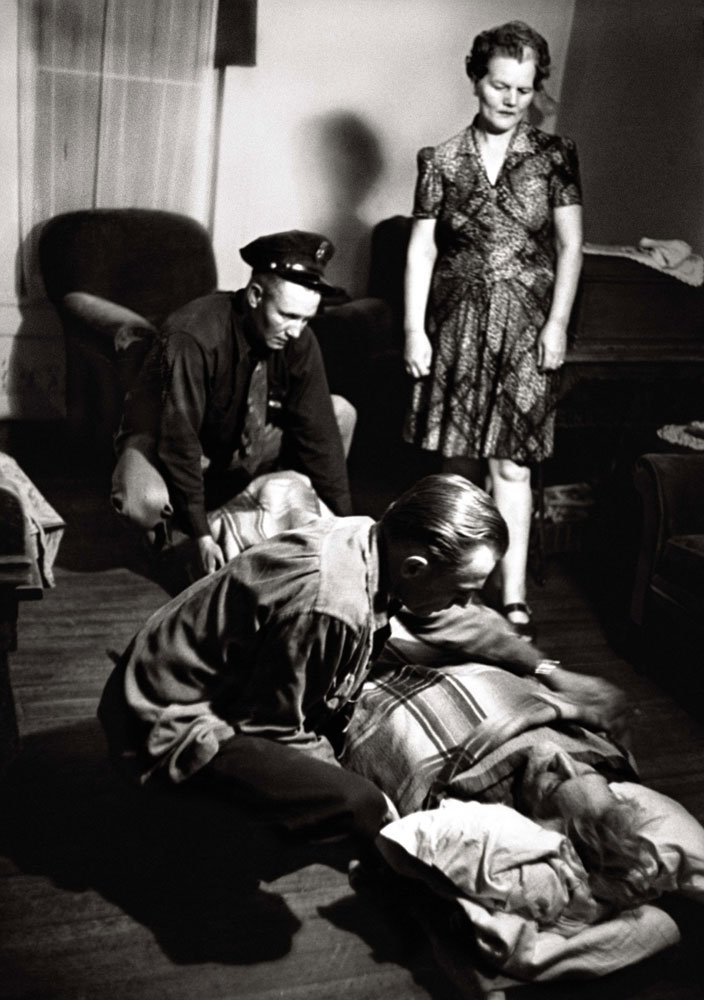
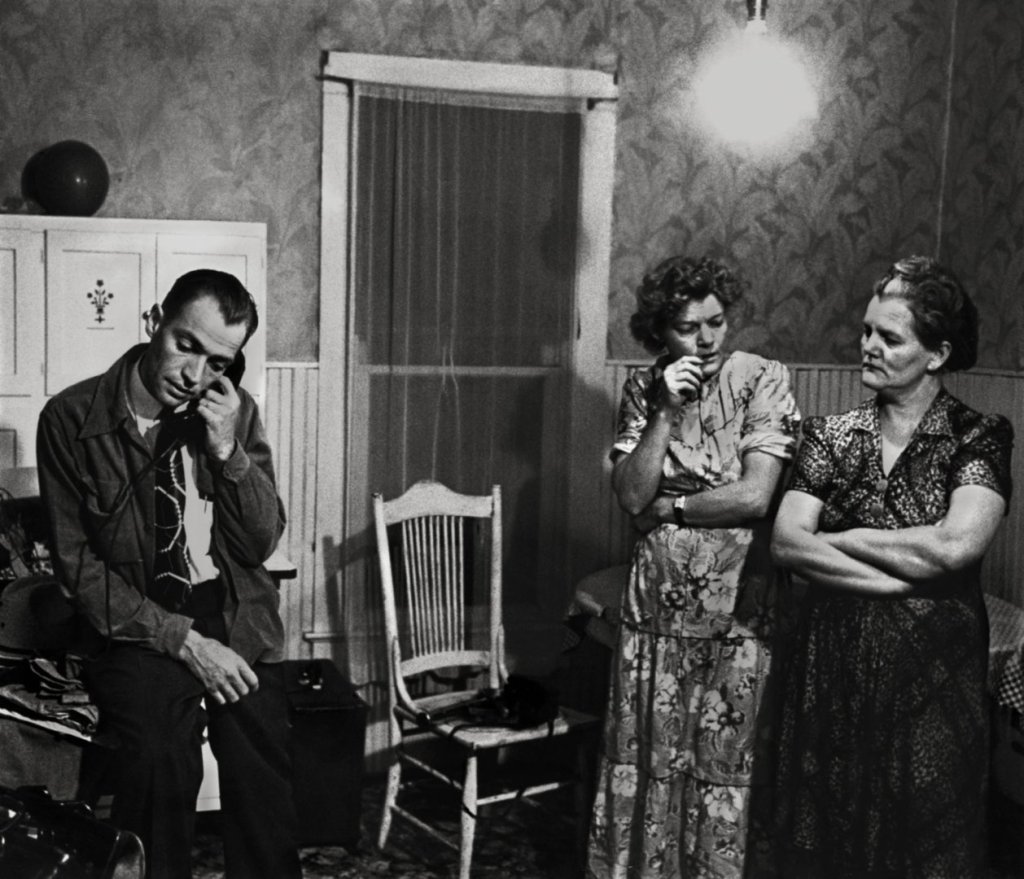
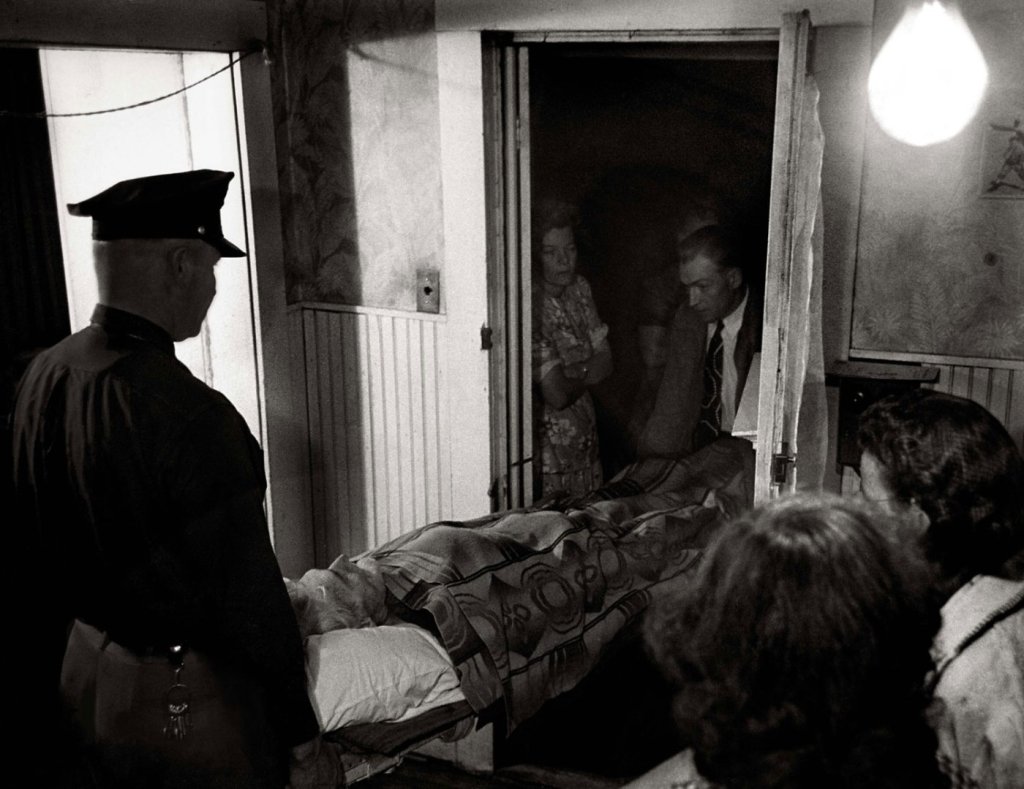
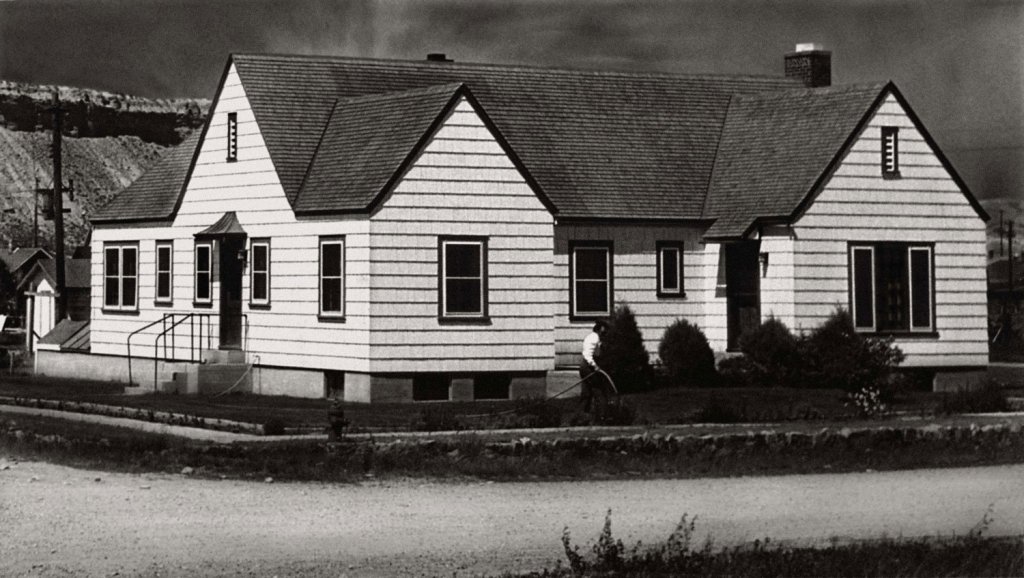
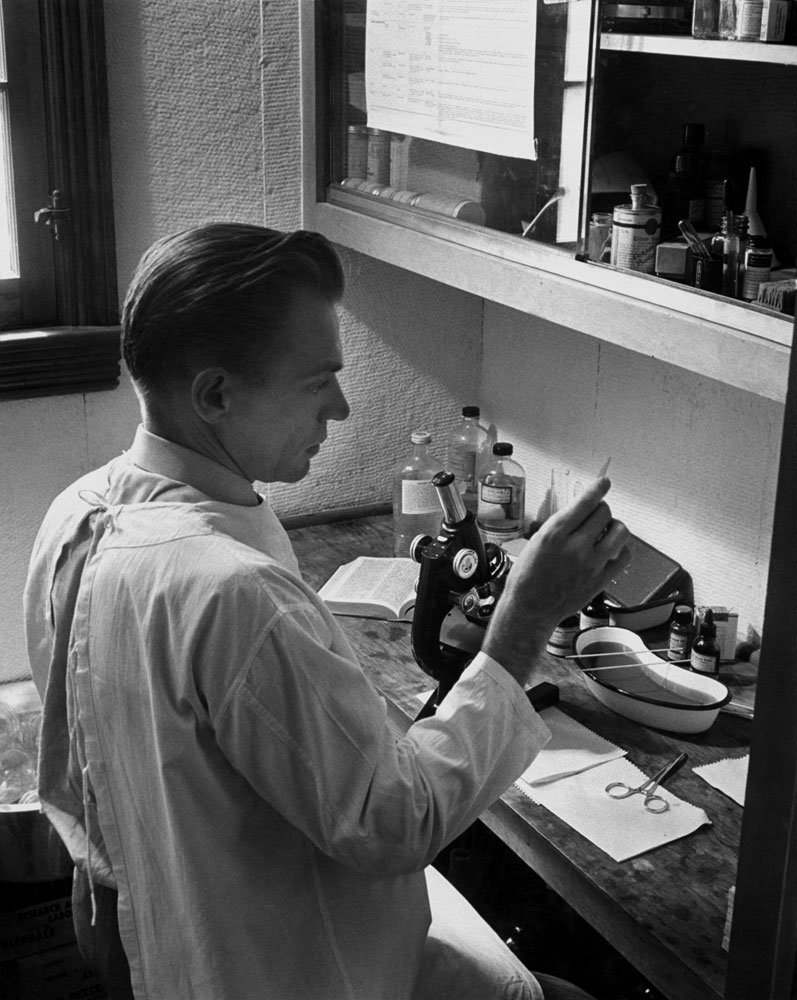
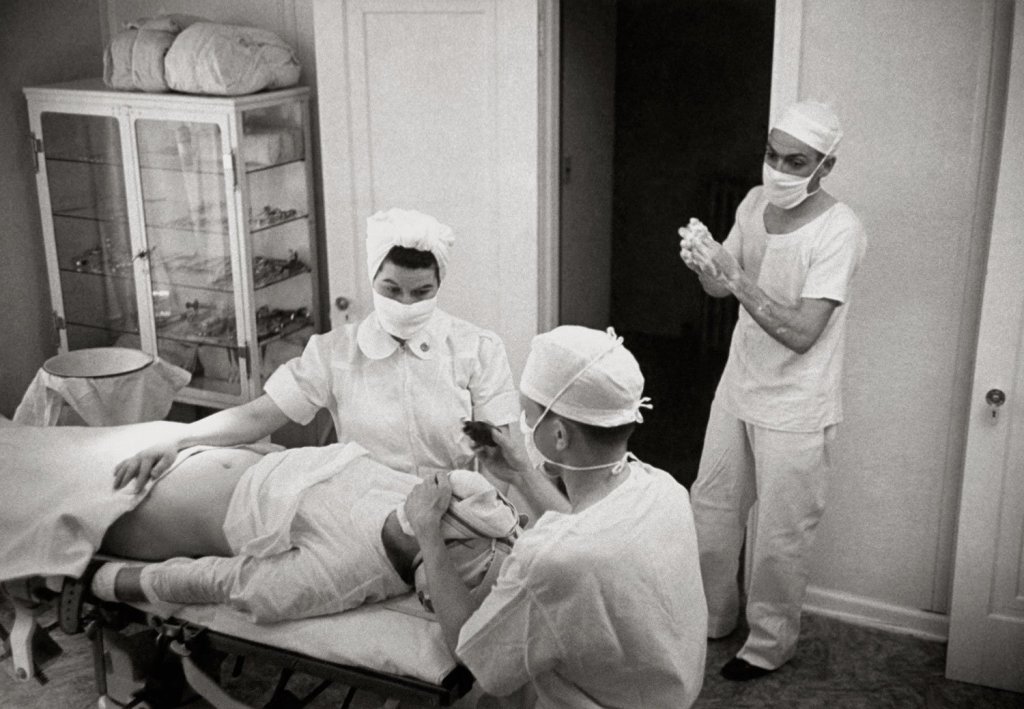
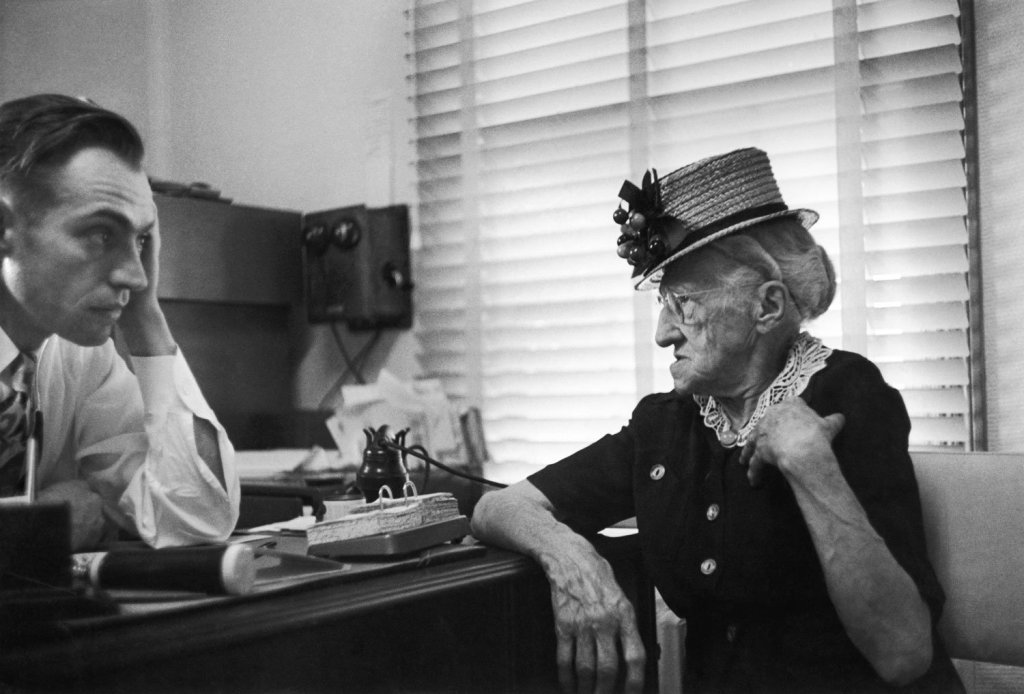
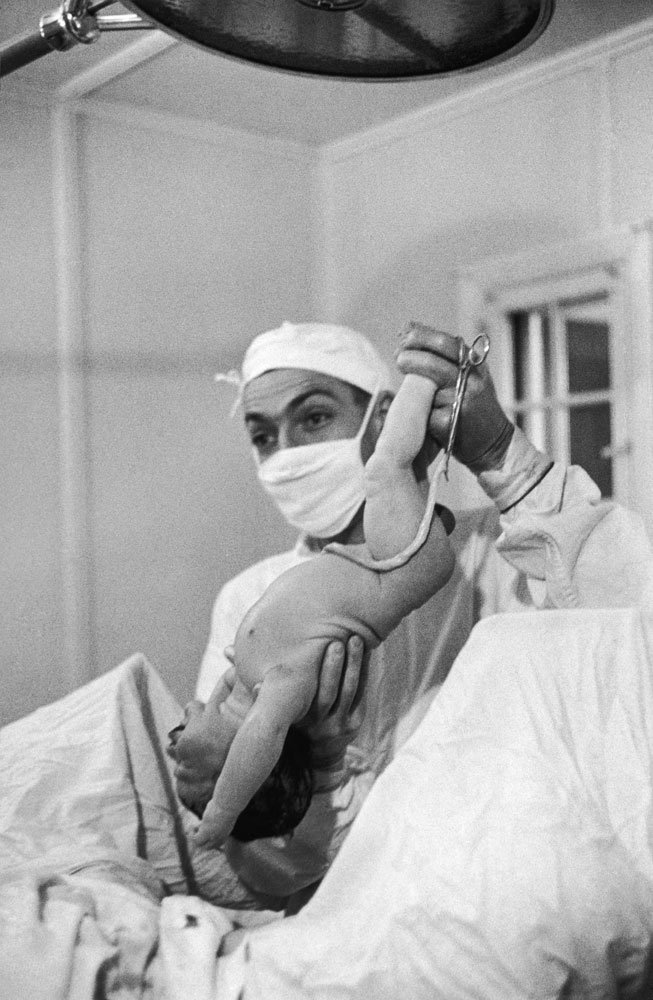
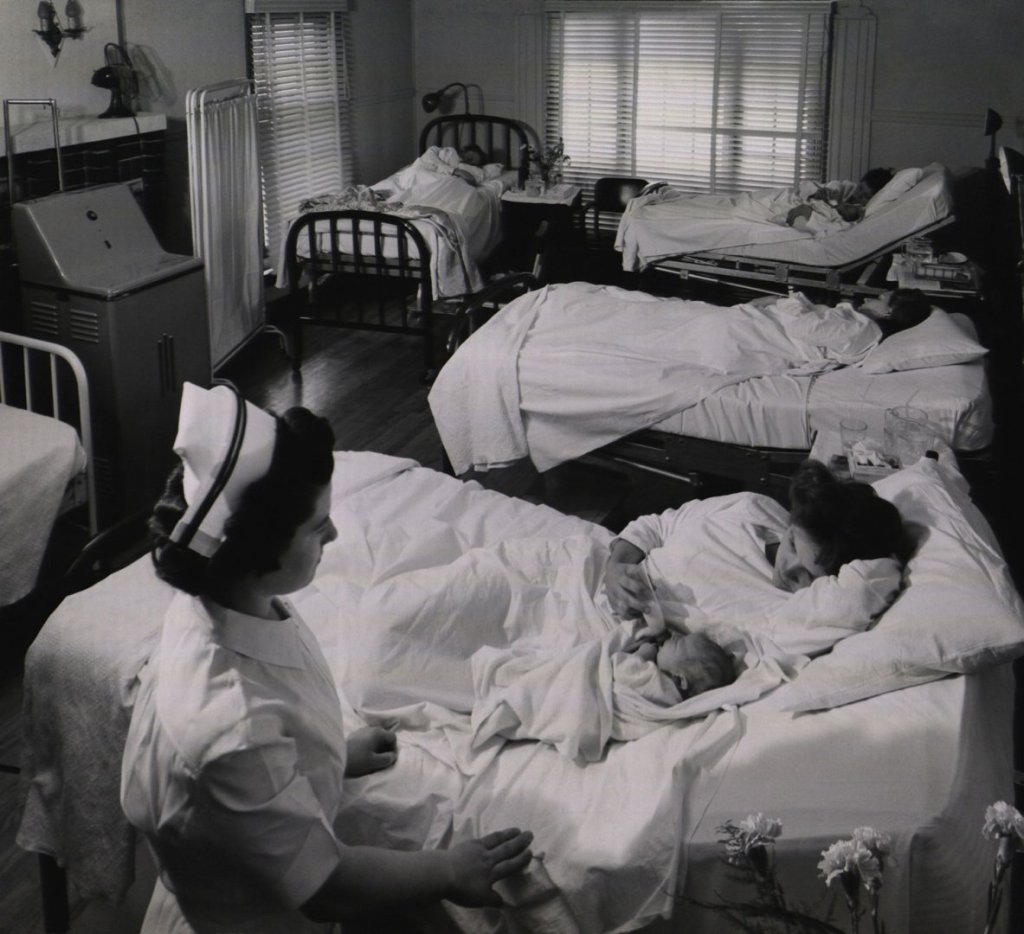
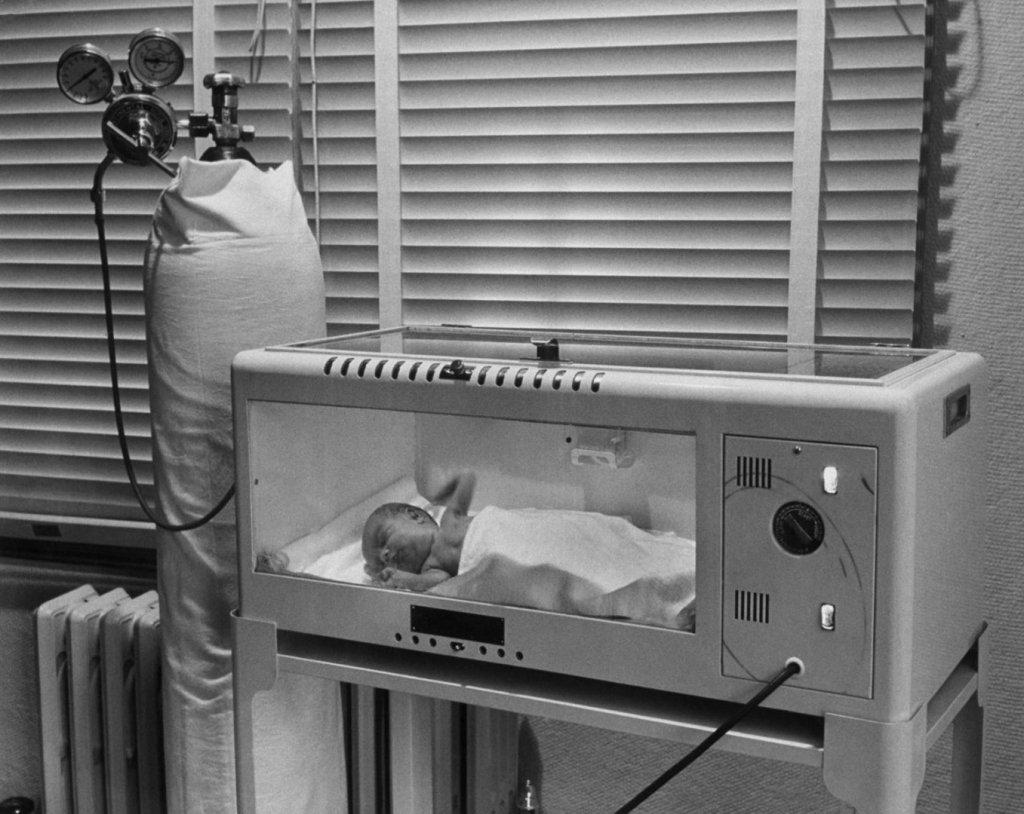
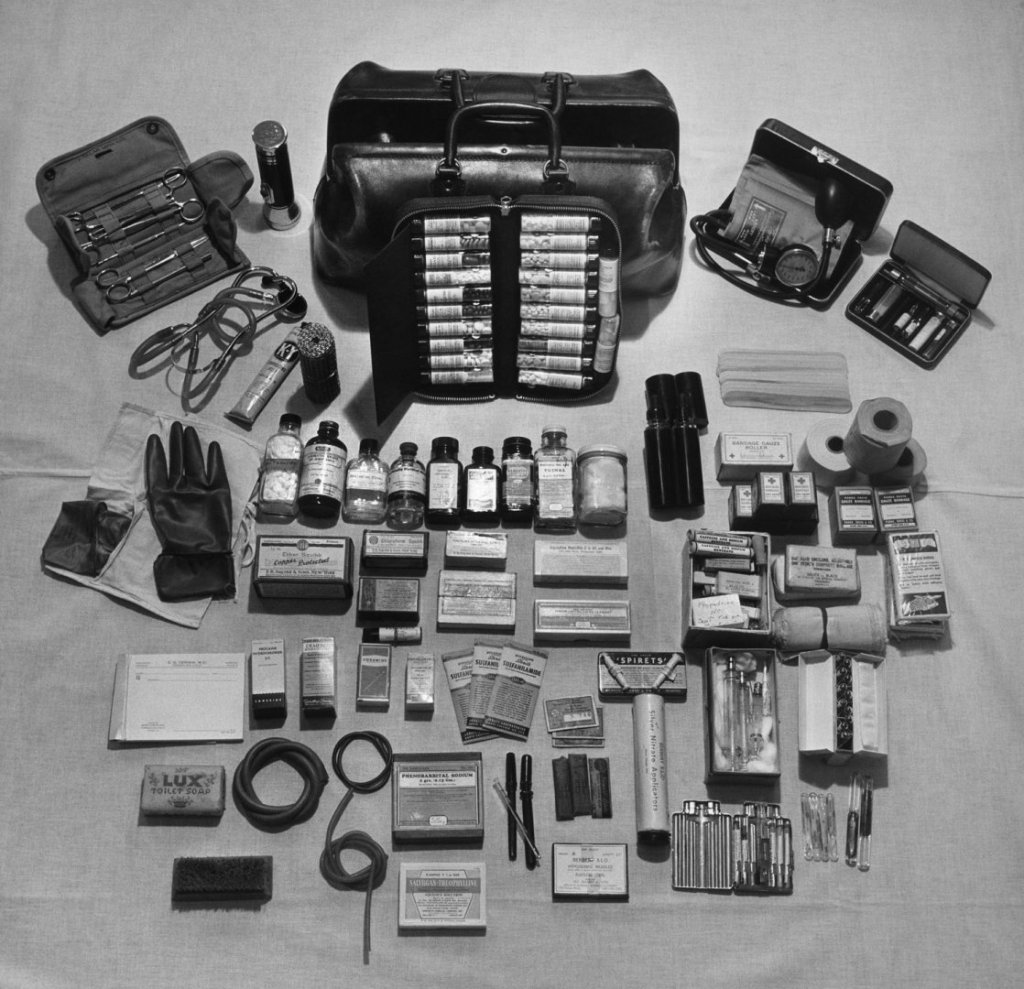
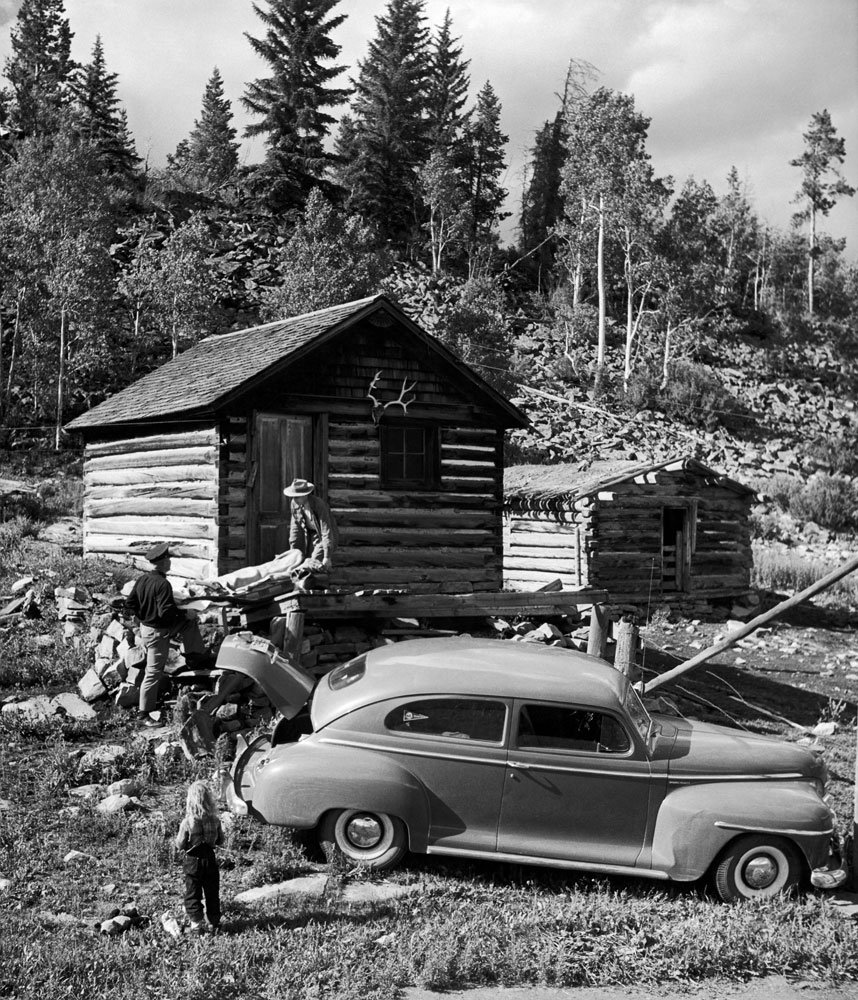
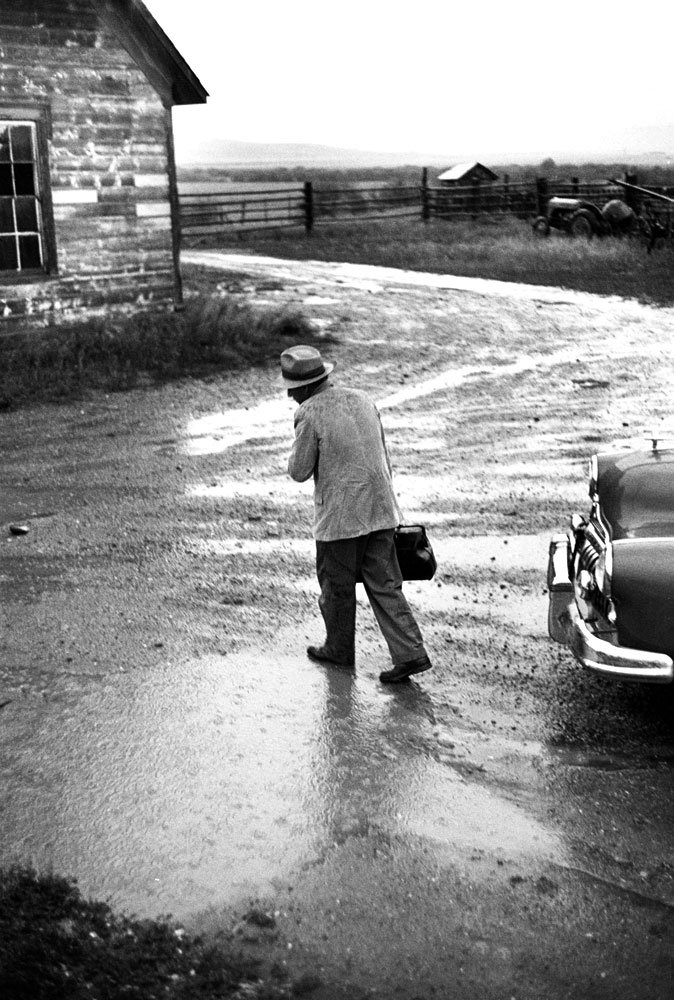
For his groundbreaking 1948 LIFE magazine photo essay, “Country Doctor” — seen here, in its entirety, followed by several unpublished photographs from the shoot — photographer W. Eugene Smith spent 23 days in Kremmling, Colo., chronicling the day-to-day challenges faced by an indefatigable general practitioner named Dr. Ernest Ceriani. Seven decades later, Smith’s images from those three weeks remain as fresh as they were the moment he took them, and as revelatory as they surely felt to millions of LIFE’s readers as they encountered Dr. Ceriani, his patients and his fellow tough, uncompromising Coloradans. Born on a sheep ranch in Wyoming, Dr. Ceriani attended Chicago’s Loyola School of Medicine but opted not to pursue a medical career in the big city. In 1946, after a stint in the Navy, he was recruited by the hospital in Kremmling, and he and wife Bernetha, who was born in Colorado, settled into the rural town. Dr. Ceriani was the sole physician for an area of about 400 square miles, inhabited by some 2,000 people. Eugene Smith’s at-times almost unsettlingly intimate pictures illustrate in poignant detail the challenges faced by a modest, tireless rural physician — and gradually reveal the inner workings and the outer trappings of what is clearly a uniquely rewarding life.”Country Doctor” was an instant classic when first published, establishing Smith as a master of the uniquely commanding young art form of the photo essay, and solidifying his stature as one of the most passionate and influential photojournalists of the 20th century. In 1979, the W. Eugene Smith Memorial Fund was founded to support those working in the profoundly humanistic style of photography to which Smith dedicated his life and his art.
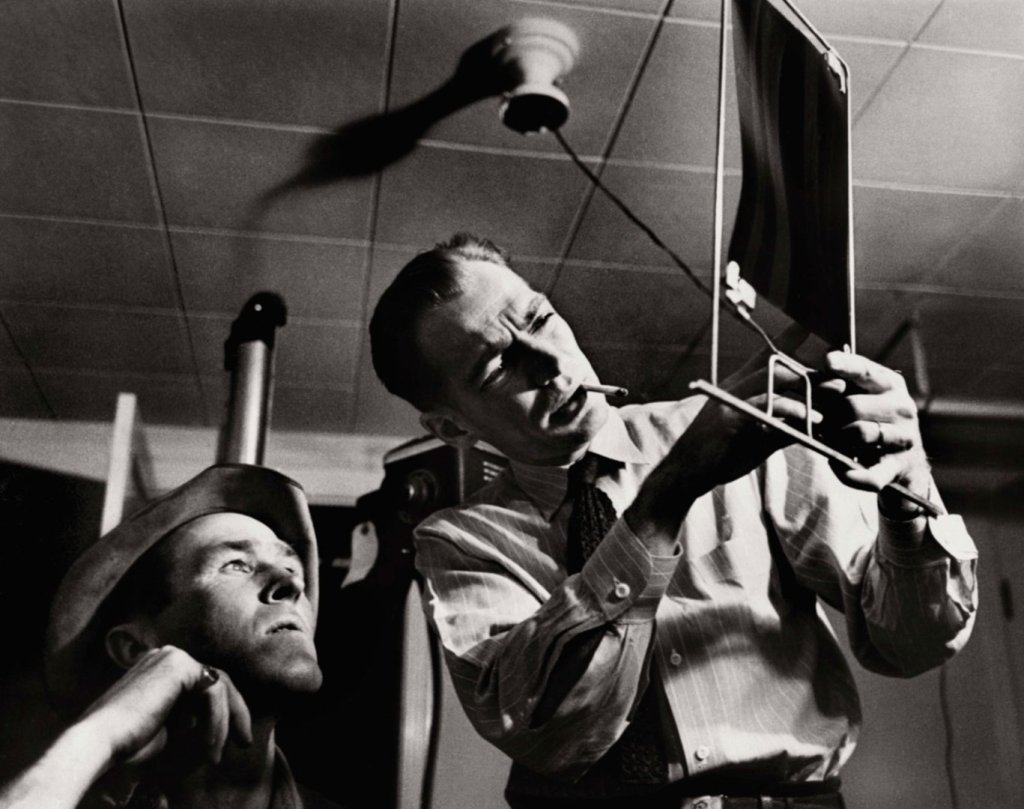
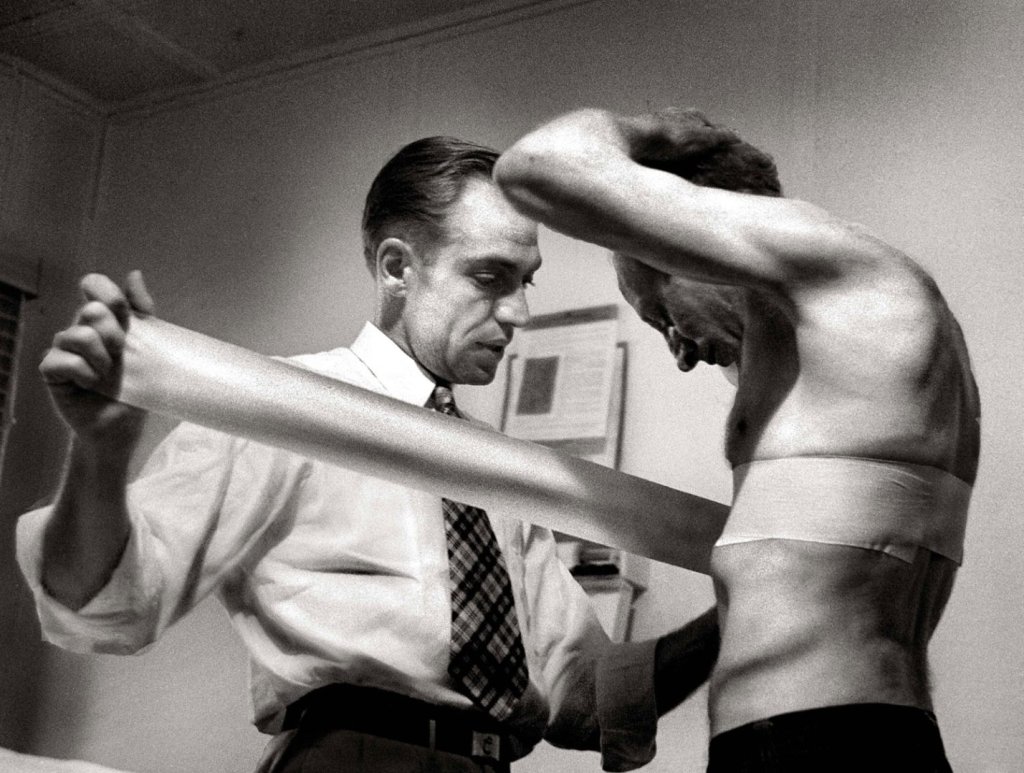
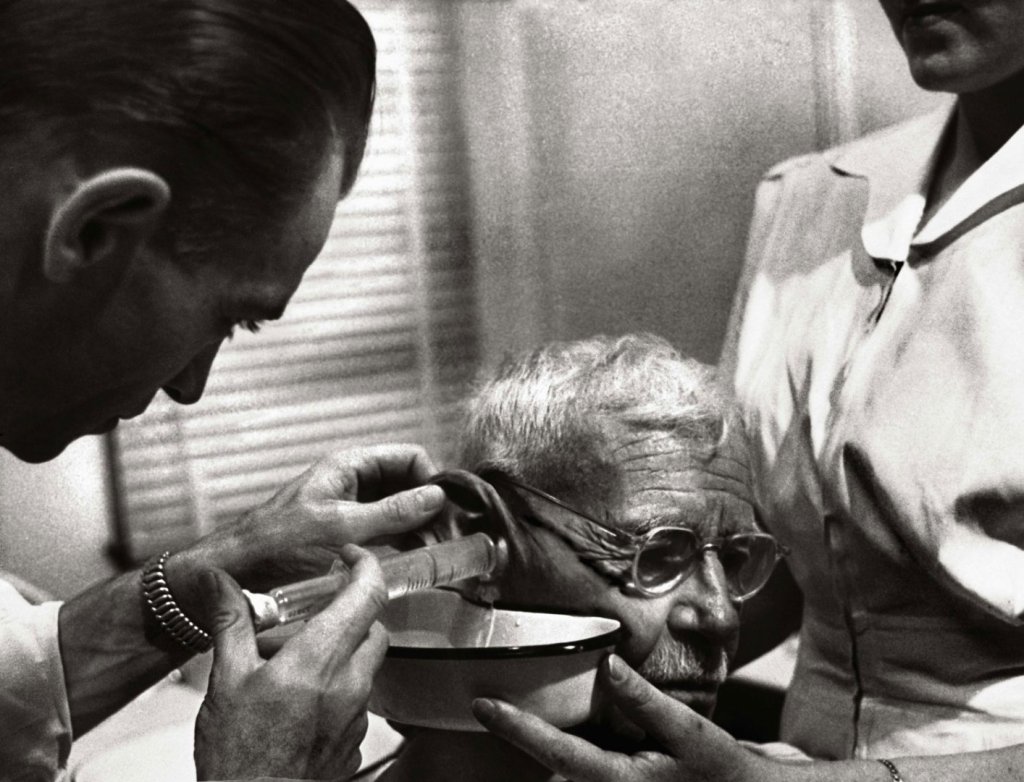
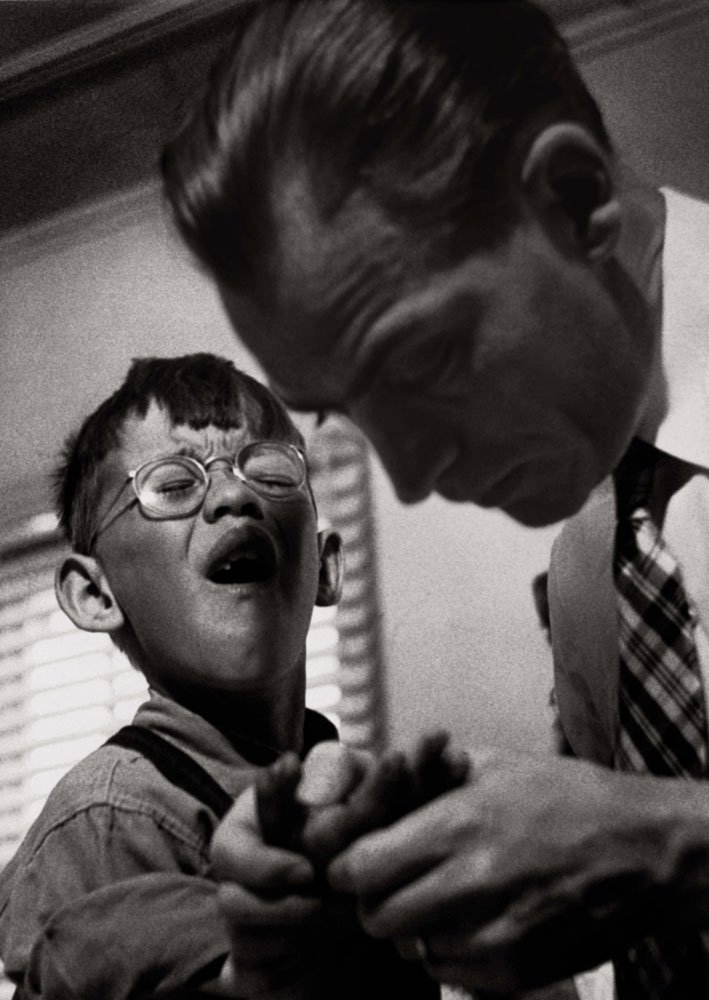
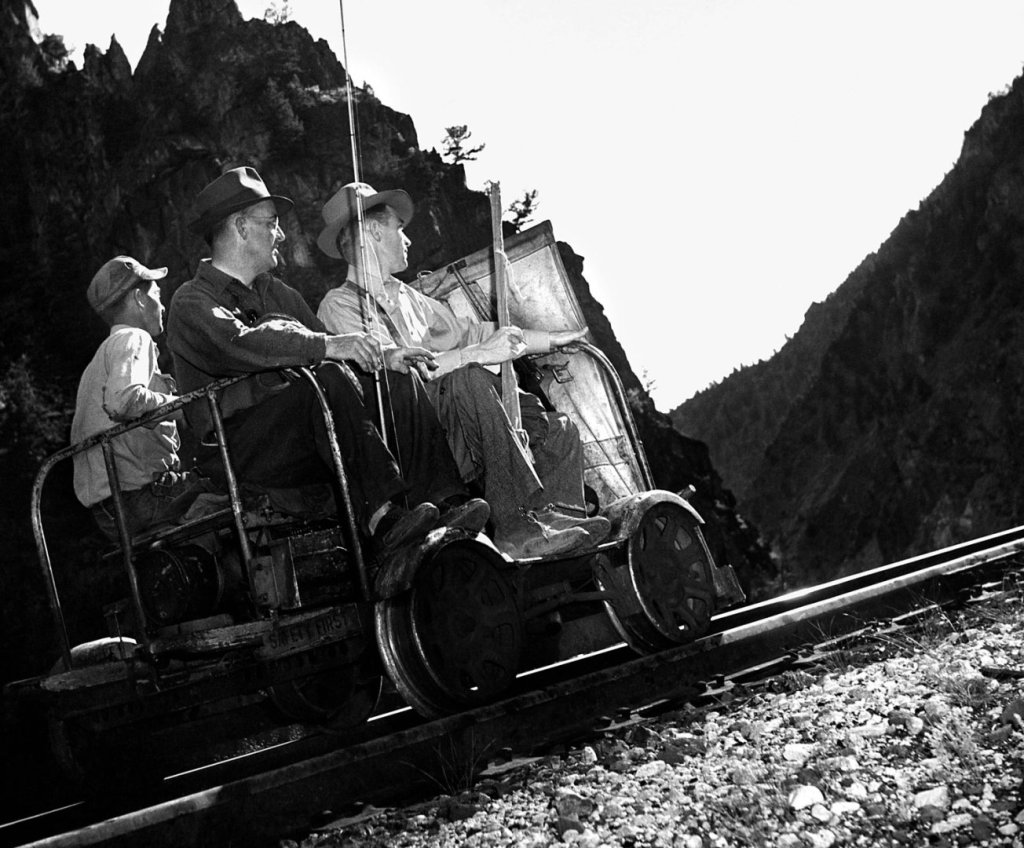
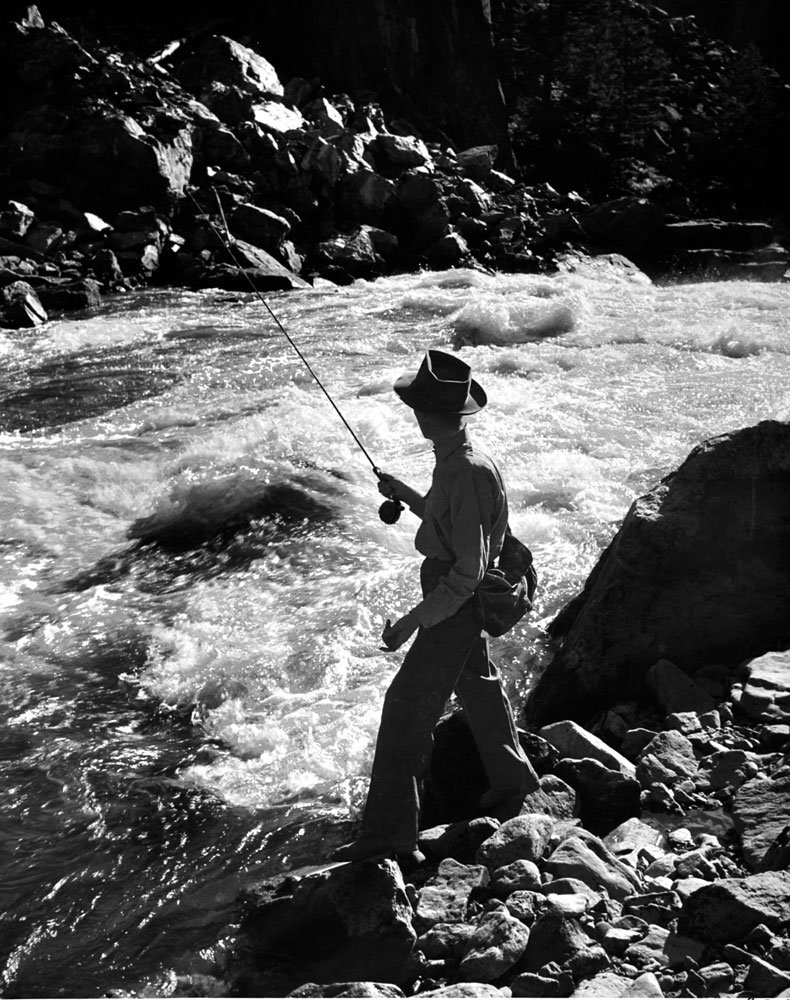
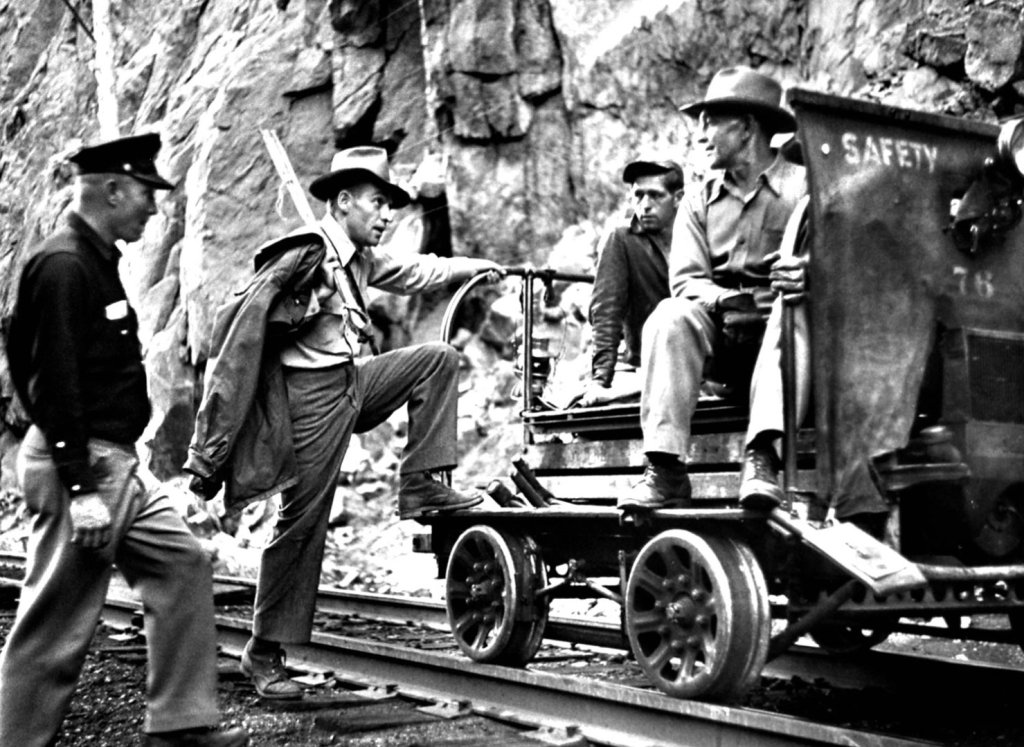
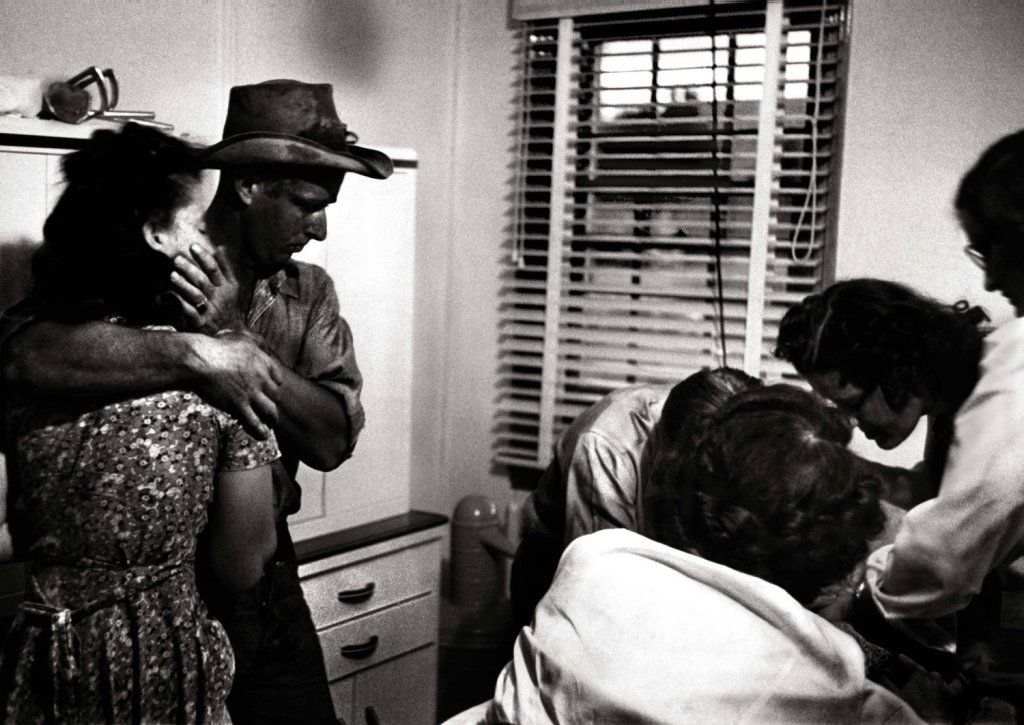
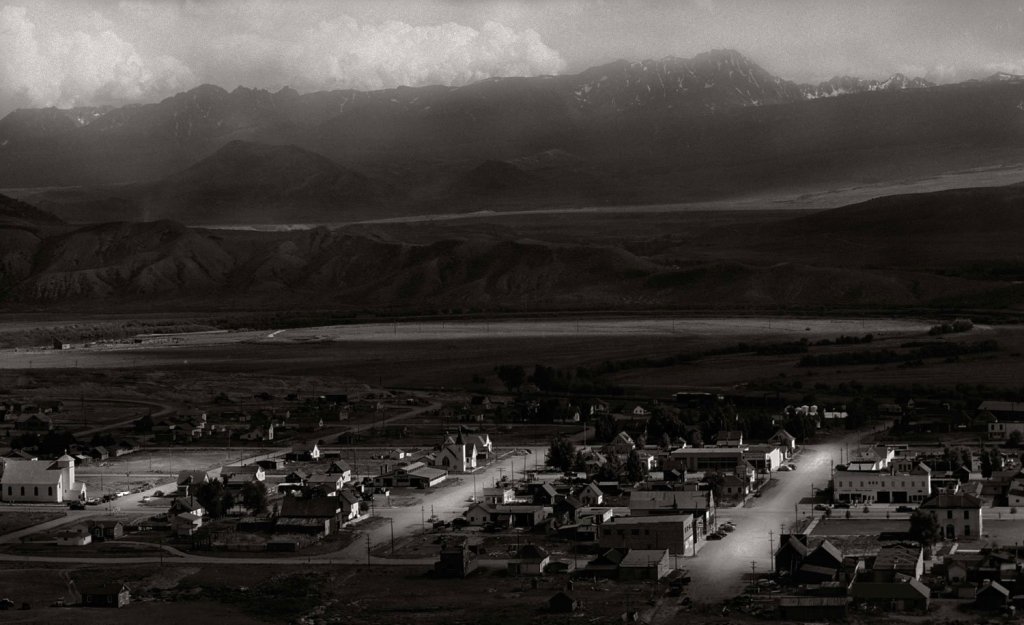
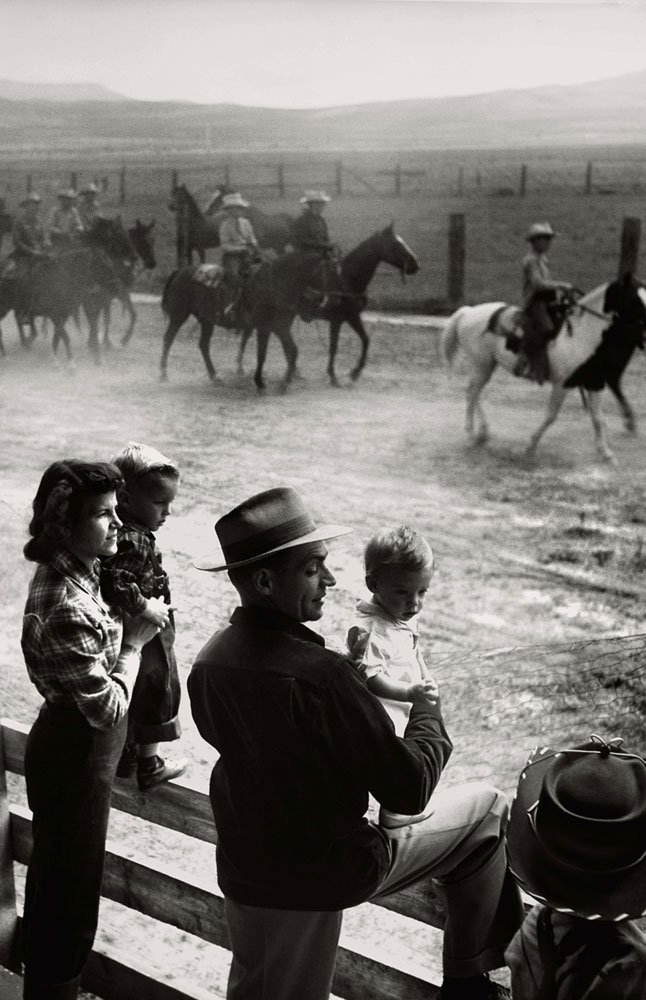
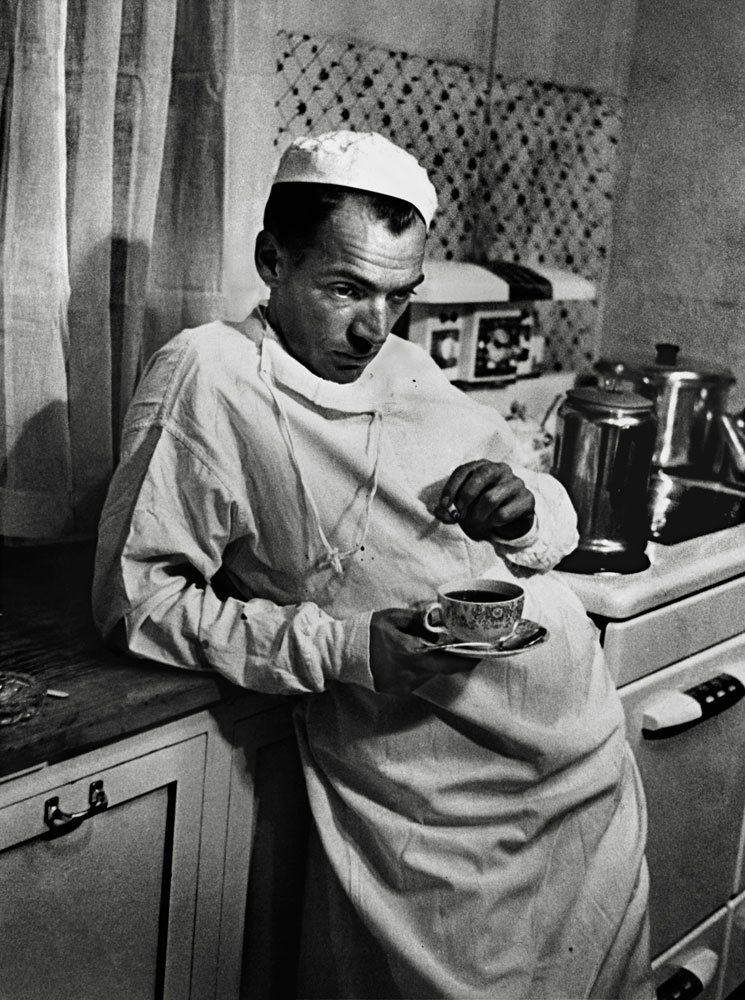
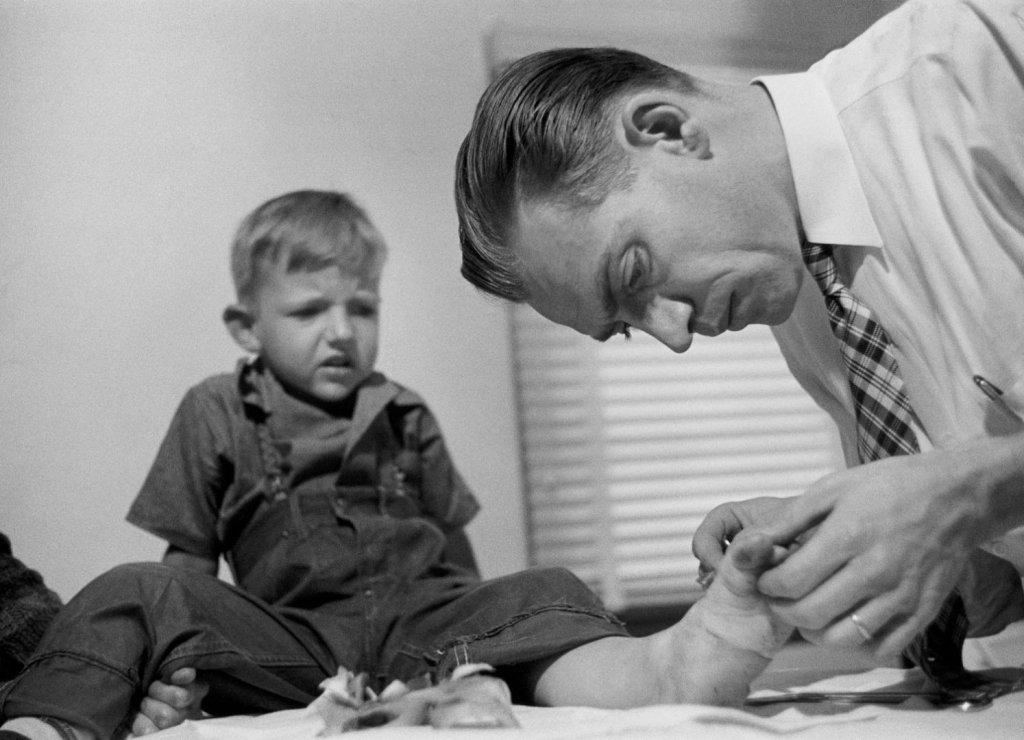
Dr. Ernest Ceriani makes a house call on foot, Kremmling, Colo., 1948.Ralph Pickering holds his 5-week-old baby while waiting to be Dr. Ceriani’s first patient of the day. Pickering, a horseback guide to tourists coming to see the majestic Rocky Mountains, traveled from an outlying ranch to reach the doctor’s office.Dr. Ceriani sits at bedside of a patient as he assesses flu symptoms during a house call. When Smith began “Country Doctor,” he shot for a period of time with no film in his camera, to help Ceriani get used to his presence without wasting precious film.In the backseat of a car, Dr. Ceriani administers a shot of morphine to a 60-year-old tourist from Chicago, seen here with her grandson, who was suffering from a mild heart disturbance.Dr. Ceriani examines a feverish 4-year-old girl suffering from tonsillitis. Although most of his patients were children, Ceriani was initially inexperienced in pediatrics when he started his practice, and studied up on it whenever he had the chance.Though he had no vacations and few days off, Dr. Ceriani did have use of a small hospital, which was equipped with an X-ray machine, an autoclave and an oxygen tent, among other medical necessities. Here, he explains an X-ray — he developed the film himself — to one of his rancher patients.The doctor tapes a patient who broke some ribs after a horse rolled over him. “His income for covering a dozen fields is less than a city doctor makes by specializing in just one,” LIFE’s editors noted, “but Ceriani is compensated by the affection of his patients and neighbors, by the high place he has earned in his community and by the fact that he is his own boss. For him, this is enough.”Dr. Ceriani uses a syringe to irrigate wax from an elderly man’s ear to improve his hearing.Dr. Ceriani examines the stitches in the lacerated hand of a young patient.Two friends transport Dr. Ceriani to Gore Canyon so he can enjoy a few hours of recreational fishing, a rare treat for the hard-working physician.Dr. Ceriani fly-fishes on the Colorado River.Thirty minutes into his fishing excursion, Dr. Ceriani is called to an emergency: A young girl has been kicked in the head by a horse and is badly injured.The child’s worried parents look on as Dr. Ceriani, surrounded by nurses, examines their 2-year-old daughter.Dr. Ceriani has stitched the girl’s wound to minimize scarring, but he must now find a way to tell the parents that her eye cannot be saved and they must take her a specialist in Denver to have it removed.The doctor helps a rancher carry his son into the hospital. The inebriated young man dislocated his elbow when he was thrown from a bronco at a rodeo.The injured elbow required a painful reset.“Don’t tell my mother,” said the young man. Still under the effects of ether, he didn’t realize she’d been holding his hand during the procedure.Dr. Ceriani checks the blood pressure of 85-year-old Thomas Mitchell, who came to the hospital with a gangrenous leg. Knowing that Mitchell might not be strong enough to endure the necessary amputation, Ceriani had been postponing surgery.When Mitchell finally rallied, the doctor gently carried him from the basement ward up to the operating room of the hospital, which had no elevator.Dr. Ceriani gives the 85-year-old man spinal anesthesia before amputating his gangrenous left leg.Dr. Ceriani responds to a late-night call when an 82-year-old man suffers a heart attack at a boarding house. Town marshal Chancy Van Pelt and one of the man’s fellow tenants stand by.Knowing the man who suffered the heart attack at the boarding house will not make it through the night, Dr. Ceriani calls for a priest from the kitchen.Dr. Ceriani helps the town marshal carry the heart attack victim to the ambulance. There, the country doctor will see that his patient is as comfortable as possible, knowing there’s nothing he can do to save him.The treeless ranching community of Kremmling, Colo., stands on a 7,000-ft. plateau beneath the towering Rocky Mountains.Dr. Ceriani holds 11-month-old son Gary as his wife, Bernetha, steadies 3-year-old Phillip on a fence while watching a parade. Though they’d been married for four years at the time Smith was profiling the doctor, Mrs. Ceriani still struggled with the unpredictability of her husband’s schedule.A fund-raising committee in Kremmling was able to raise $35,000 in 1947 to purchase the home of the town’s retiring physician and turn it into a 14-bed hospital. The funds were used to stock the tiny hospital with as much equipment — some of it war surplus — as could be afforded. Middle Park Hospital had only three wards that could accommodate 14 patients. With a new hospital in place, the town then put out a call for a new general practitioner — a call answered by Dr. Ceriani.After finishing a surgery that lasted until 2 AM, Dr. Ceriani stands exhausted in the hospital kitchen with a cup of coffee and a cigarette. “The nurses,” LIFE noted, “constantly admonish him to relax and rest, but because they are well aware that he cannot, they keep a potful of fresh coffee simmering for him at all hours.”Dr. Ernest Ceriani in the small Kremmling, Colo., hospital.Doctor Ceriani checks 4-year-old Jimmy Free’s foot, cut when the boy stepped on broken glass.Dr. Ceriani examines his handiwork after the partial amputation of a patient’s leg, Kremmling, Colorado, August 1948. The patient, Thomas Mitchell, was suffering from a gangrenous infection.An operating room in Kremmling, Colo.Dr. Ceriani with a patient.Dr. Ernest Ceriani delivers a baby.Maternity ward, Kremmling, Colo., 1948.An incubator in Kremmling, Colo., 1948.The contents of a country doctor’s bag, Kremmling, Colo., 1948.Doctor Ceriani and town marshal Chancey Van Pelt carry a patient from a cabin in the hills near Kremmling, Colorado, 1948.Dr. Ernest Ceriani on his way to a house call in foul weather, Kremmling, Colo., 1948.
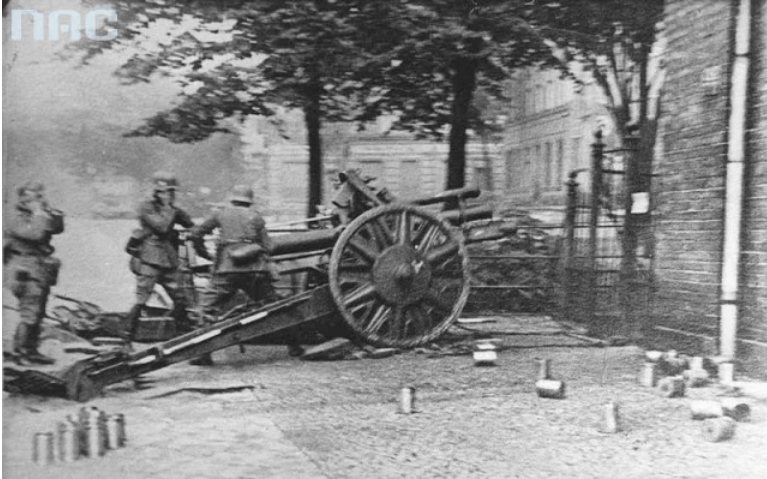
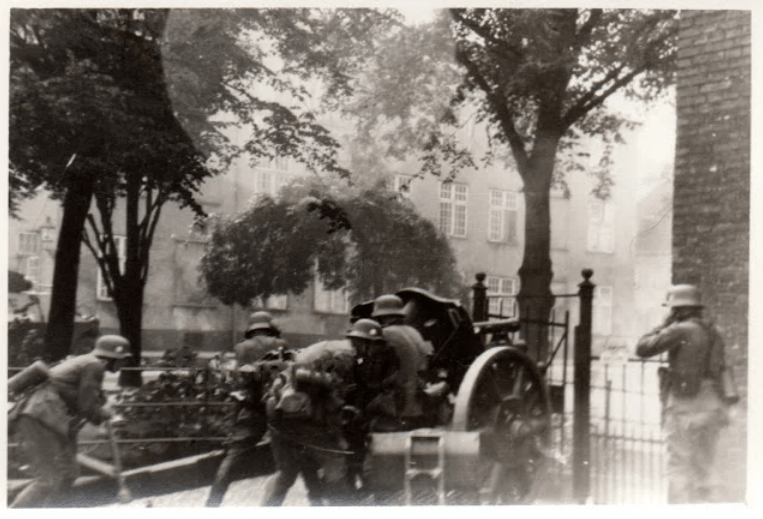
The German 105mm Howitzer seen mid recoil from a shot
In 1939, it was obvious that Nazi Germany was on the war path. Austria had been annexed just a year earlier, and so also was the Sudetenland that belonged to Czechoslovakia. The British and French, who represented the defenders of the 1919 Treaty of Versaille, hesitated, hoping that Hitler’s imperialistic thirst was going to be satisfied by these territorial claims. But on 1st of September, Nazi Germany invaded Poland.
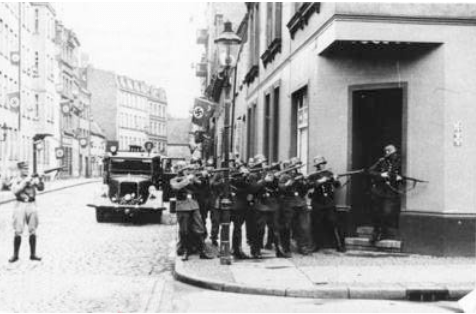
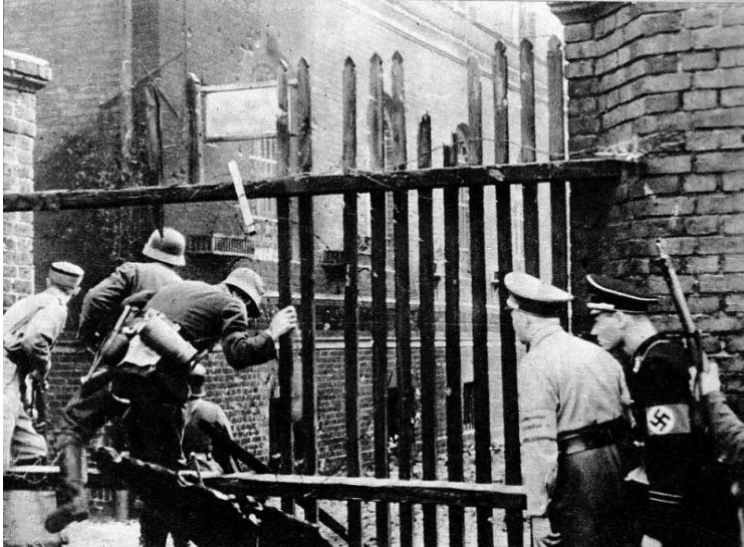
SS Heimwehr-Danzig and SA begin their assault on the Polish Post Office
The invasion codenamed Fall Weiss (Plan White) included an attack before the official declaration of war. The plan was developed as early as 1928. The invasion also implied on a secret agreement between the Germans and the Soviets, since USSR invaded Poland 16 days after the initial German attack.
This violation of international politics would continue all through Hitler’s European campaign, in Belgium, Netherlands, and Luxembourg particularly, where he dismissed the notion of military neutrality of these countries.
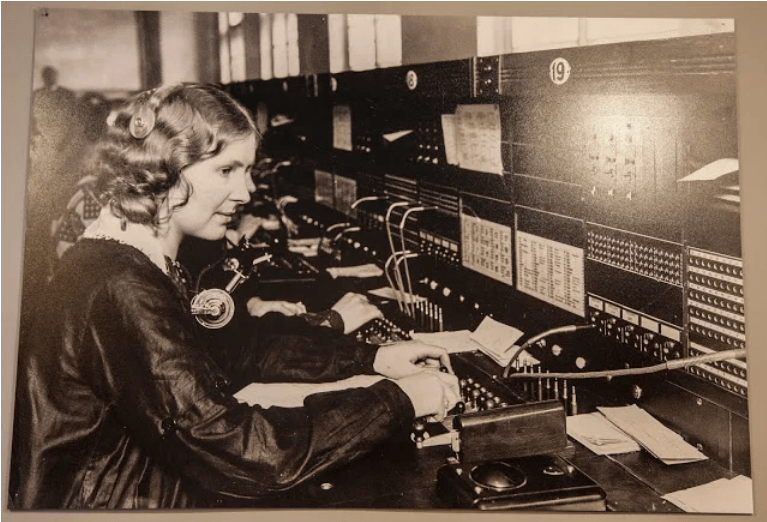
A Polish Switchboard Operator in the Polish Post Office
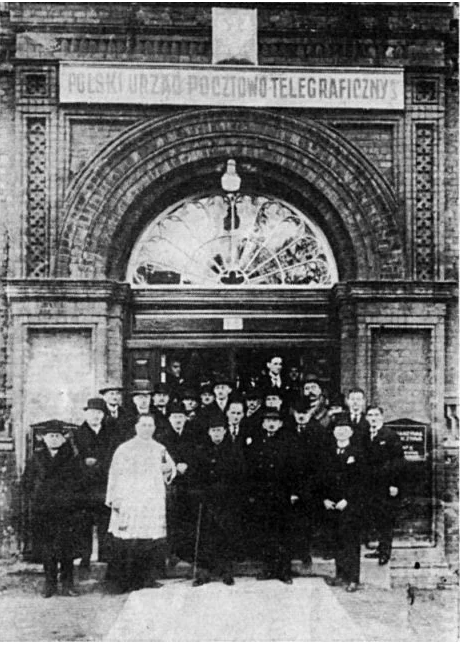
Since the war began without any official warning, the first skirmish of WWII was fought not by soldiers, but by the employees of the Gdansk (Danzig) Post Office building. At the time, the Free City of Danzig was a semi-autonomous region and a German enclave. The City and its region were under the protection of the League of Nations, created by the Treaty of Versailles as a guarantee that the treaty would not be broken at any of its points. The Polish minority in the city gathered at the post offices, as they were proclaimed exterritorial units of Poland. Sort of like embassies.
Hitler already demonstrated his opinion on international politics in 1938, and the Poles sent some weapons caches together with a combat engineer, Second Lieutenant Konrad Guderski to organize an initial defense plan. The plan was intended to halt the Germans in a case of attack and hold them for six hours before the Polish Army could send in reinforcements to the demilitarized zone.
The opening of the Polish Post Office “Gdansk 3” in 1925.
Guderski’s second in command was a forty-year-old post office worker, Alfons Flisykowski. Together they prepared the defensive perimeter in and around the building. They cut the trees, to minimize cover for the invading force and barricaded the exits. In mid-August, just before the German attack, ten more employees were sent to the main Danzig post office, as it was obvious that the defense plan was going to be inevitable.
German troops at rest in between attacks on the Post Office
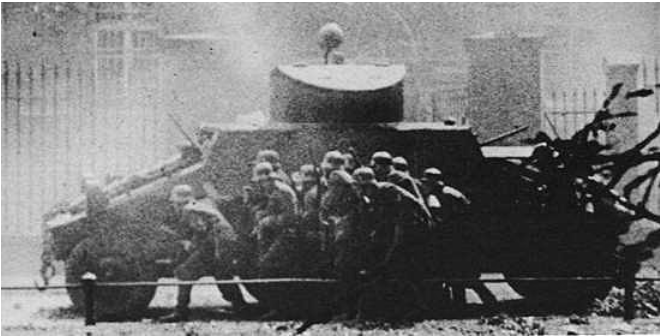
Their darkest predicaments had come true on the early morning of the 1st September. With the help of the ethnic Germans in Danzig, a siege was organized. Members of the police office, together with local SS and SA volunteers cut the telephone and electricity line that was supplying the post office building and laid a siege. Three ADGZ heavy armored cars were brought in by the police.
The SS Heimwehr-Danzig huddle around a doorway keeping the Poczta Polska under close observation
Inside the building, there were 56 men. Konrad Guderski, 42 local Polish employees, ten employees sent in from Poland in August, and Bydgoszcz, the building keeper with his wife and a 10-year-old daughter who lived in the complex. Except for Guderski, there were no professional soldiers during the siege.
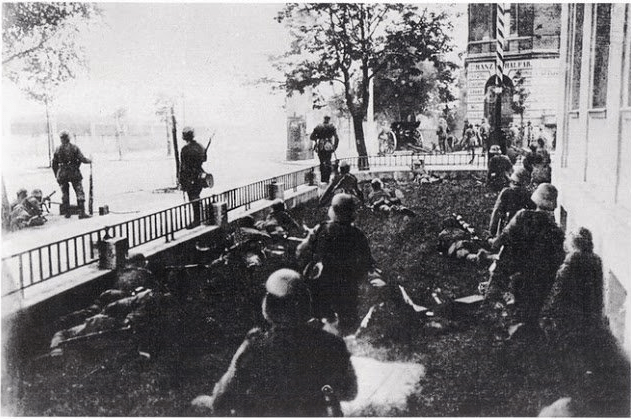
The Germans attacked from two different directions, even entering the building, but were repelled soon after. During the frontal attack, two besiegers were killed, and seven were wounded. The attack from the rear was also repelled successfully.
The German 105mm Howitzer opens fire on the Post Office
The ineffective charge left the Germans in awe. But during their second attack, the group was better organized, and some Nazi supporters volunteered to assist them. Also, the armored vehicles were put to use.
German troops creep up the side of the front of the Polish Post Office
The leader of the group, Konrad Guderski, died during the second attack, by blowing himself up with a hand grenade to slow down the German advance through the building. The attack itself failed, as the rest of the Poles managed to drive out the Germans, even though their commanding officer had been killed.
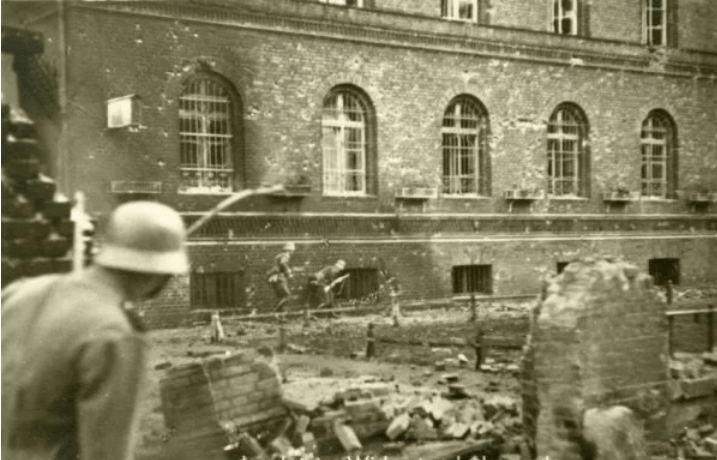
SS men attacking under cover of ADGZ vehicle.
At this point, the siege was well into its sixth hour, but there was no sign of reinforcements. The commander of the Danzig police units, Willi Bethke, proposed to mine the post office and blow it up with its defenders. His idea was initially vetoed by Albert Forster, the head of the Danzig Nazi Party.
Soon the besiegers were joined by a Wehrmacht artillery detachment which provided mortar support, but the defenders stood their ground even under shell fire. After another failed attack, the Germans declared a two-hour ceasefire and called the Poles to surrender which they unanimously refused to do. In the meantime, German sappers were already planting explosives on the building’s side wall.
The exploding device went off and the Germans finally captured most of the building, but the remaining resistance had withdrawn successfully to the basement, where they made their last stand. Once again they refused to surrender, accepting the consequences, which meant death.
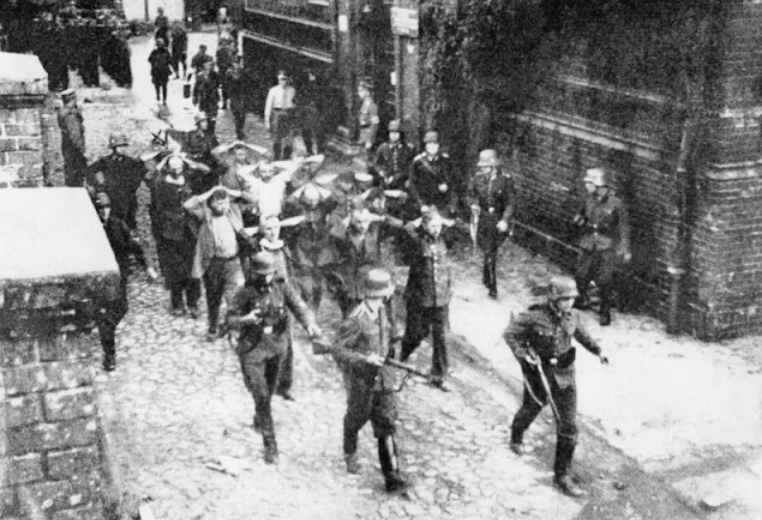
Bethke was made so furious by the Polish defiant stand, that he filled the building with gasoline and set it on fire, burning three of the defenders alive. The rest decided to capitulate to avoid incineration. The first two Poles who went out with a white flag were shot on sight. Six of them escaped, but two were caught the second day. The rest were apprehended and an immediate false trial was organized.
The trial – which was a mockery – sentenced the men to death on the accusation they were bandits. Since none of the apprehended was of military affiliation, they were denied the rights given to combatants by the Geneva Convention. The 16 wounded from the post office were transferred to a Gestapo hospital, where they all suffered death, most probably at the hands of the Secret Police agents. Among them was the 10-year-old daughter of the building’s superintendent, Erwina.
The defenders being marched off to captivity
A similar fate had struck eleven Polish railway workers south of the city after they foiled a German attempt to use an armored train, and were executed by the SA along with their immediate families. The defenders of the Danzig Post Office had held out for 15 hours. The reinforcements never came as they were occupied fighting the Wehrmacht invasion at the Tuchola Forest.
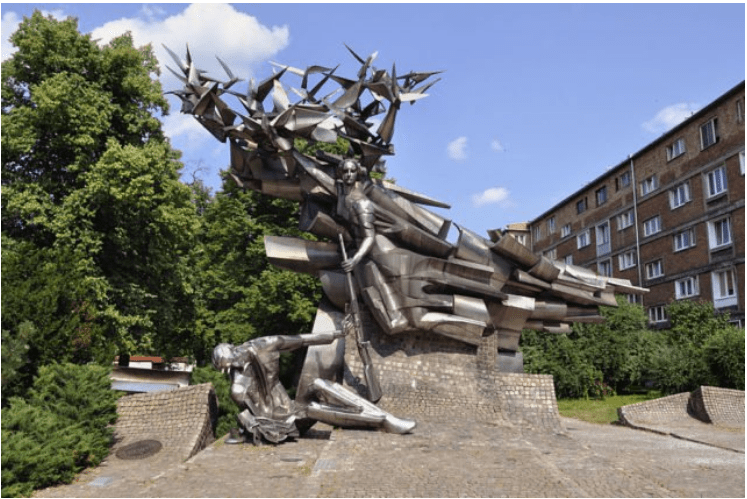
Monument to the Defenders of the Polish Post Office, Gdansk.
In 1979 in the People’s Republic of Poland a Defenders of the Polish Post Monument was unveiled in Gdansk. The ones who died during the siege and the ones who were executed afterward were posthumously relieved of their charges of banditry and rehabilitated.
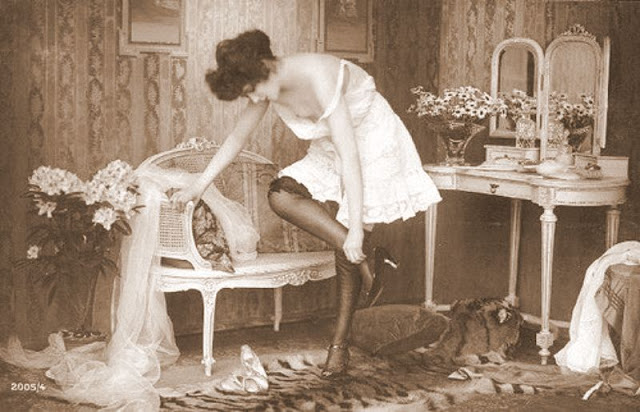
A petticoat or underskirt is an article of clothing, a type of undergarment worn under a skirt or a dress. Its precise meaning varies over centuries and between countries.
According to the Oxford English Dictionary, in current British English, a petticoat is “a light loose undergarment … hanging from the shoulders or waist”. In modern American usage, “petticoat” refers only to a garment hanging from the waist. They are most often made of cotton, silk or tulle. Without petticoats, skirts of the 1950s would not have the volume they were known for.[1] In historical contexts (16th to mid-19th centuries), petticoat refers to any separate skirt worn with a gown, bedgown, bodice or jacket; these petticoats are not, strictly speaking, underwear, as they were made to be seen. In both historical and modern contexts, petticoat refers to skirt-like undergarments worn for warmth or to give the skirt or dress the desired attractive shape. (Wikipedia)
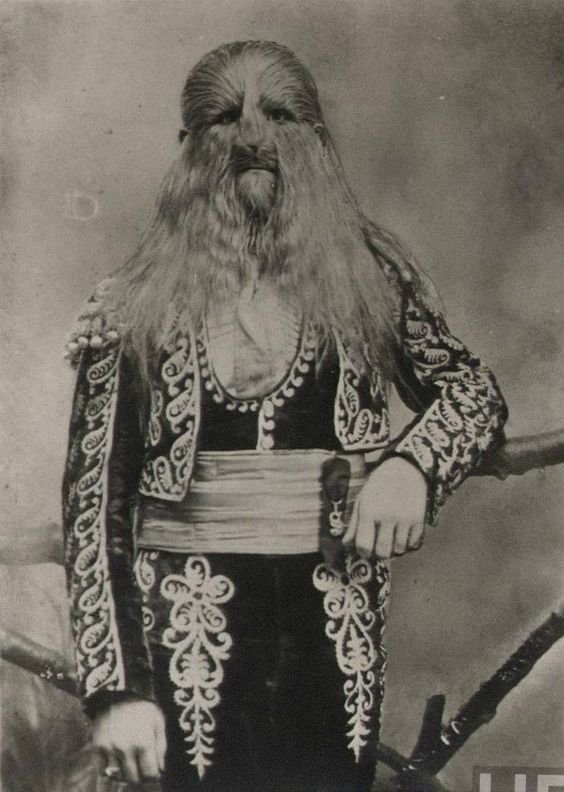
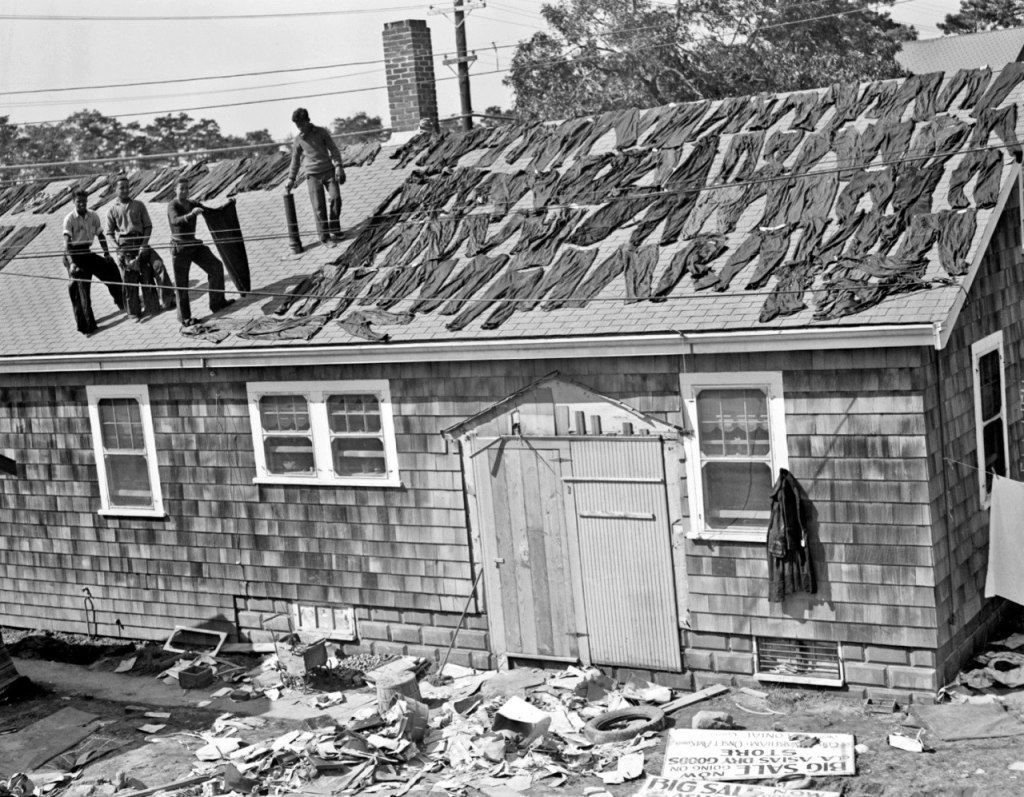
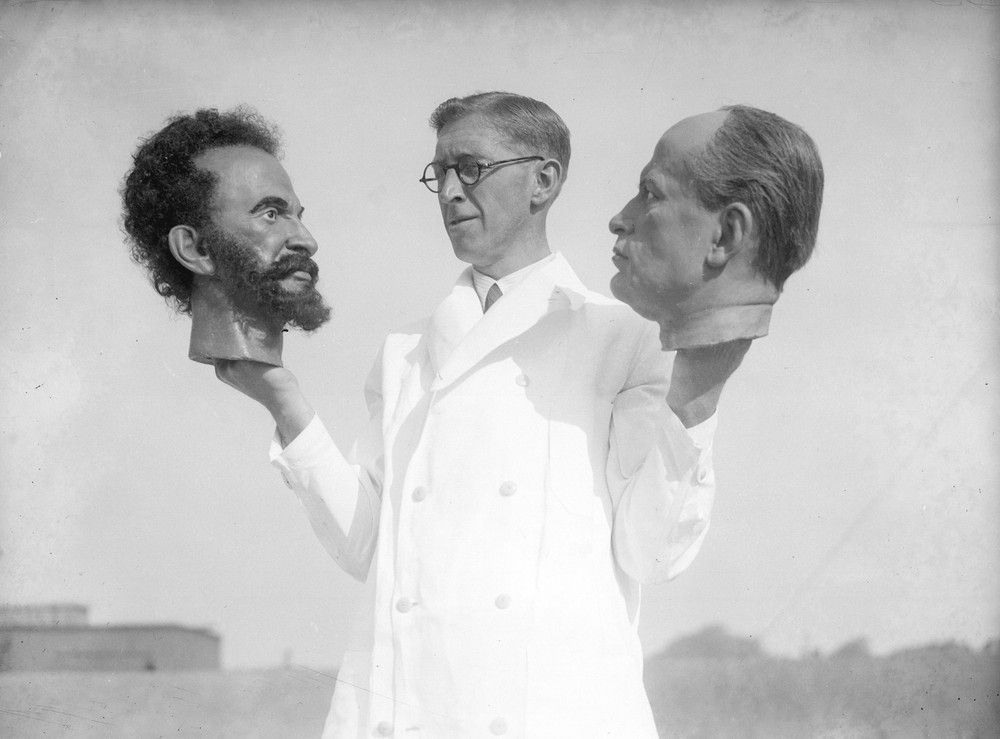
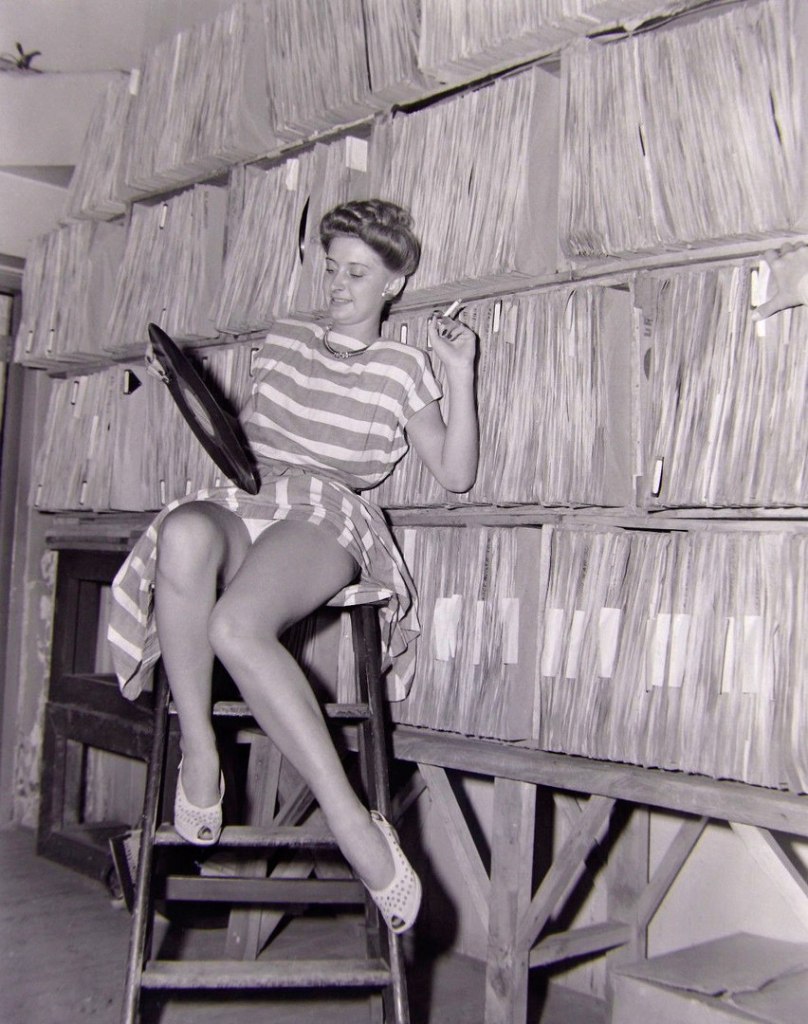
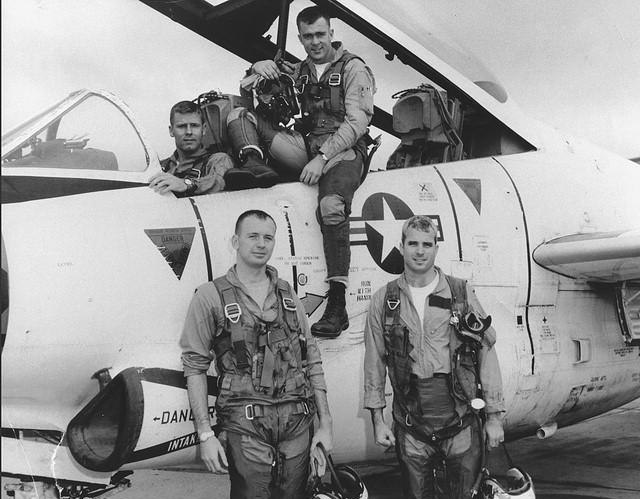
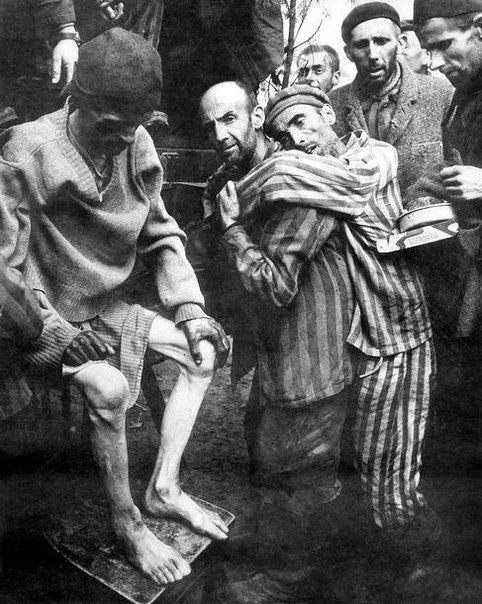
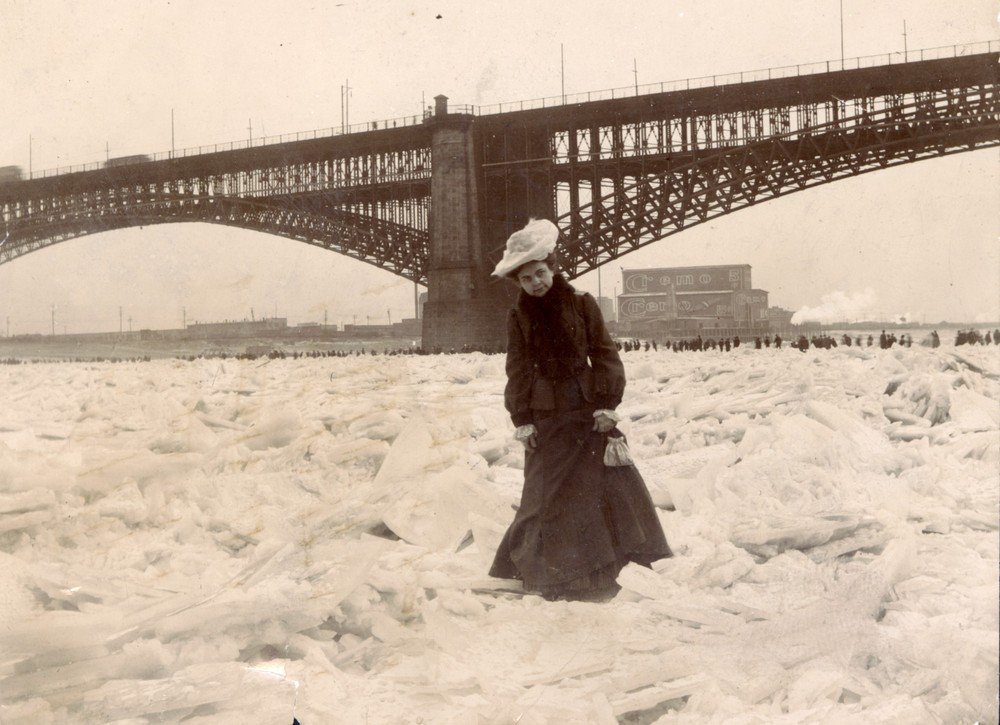
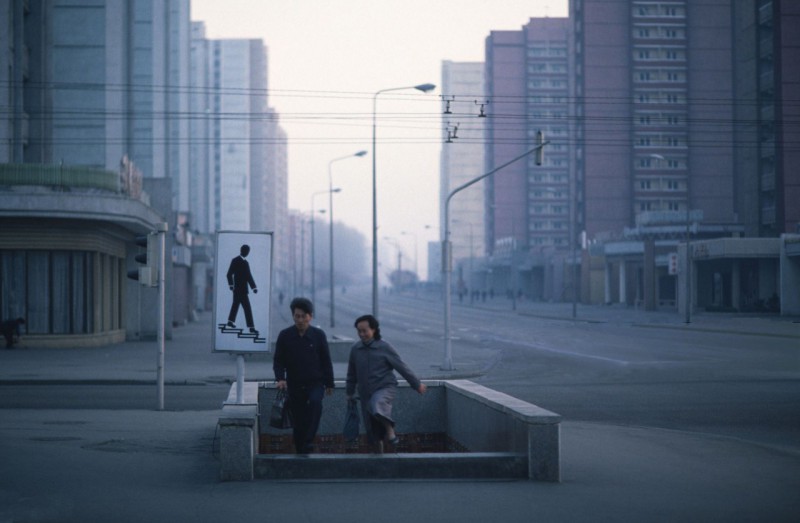
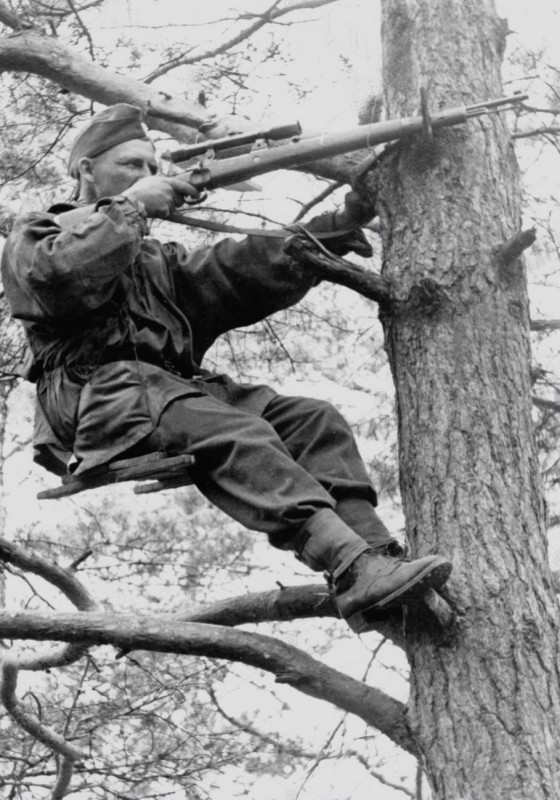
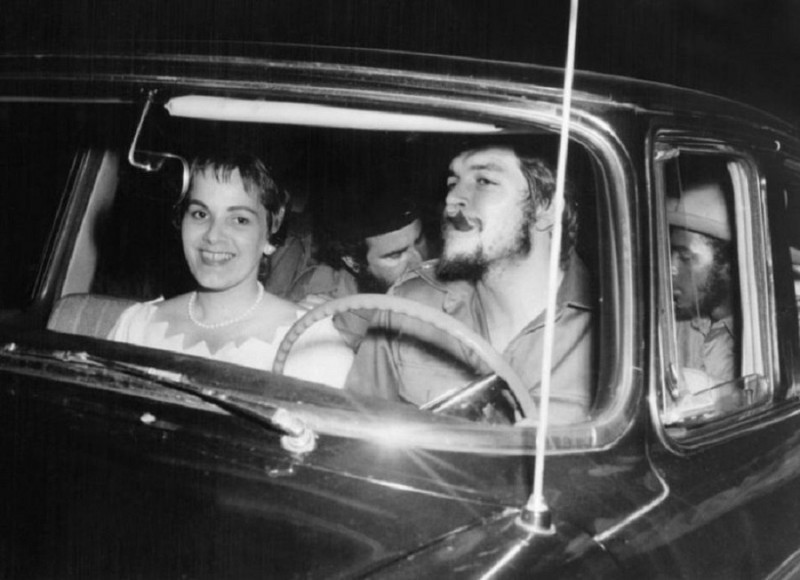
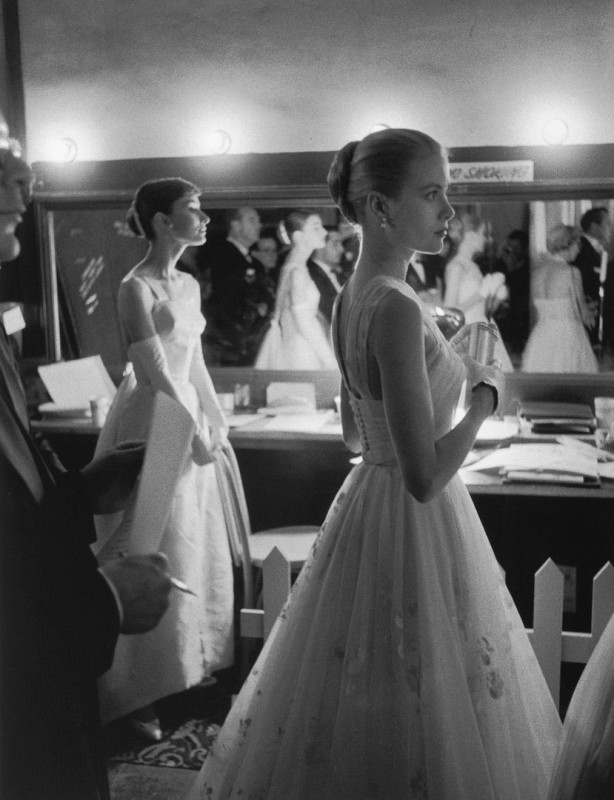
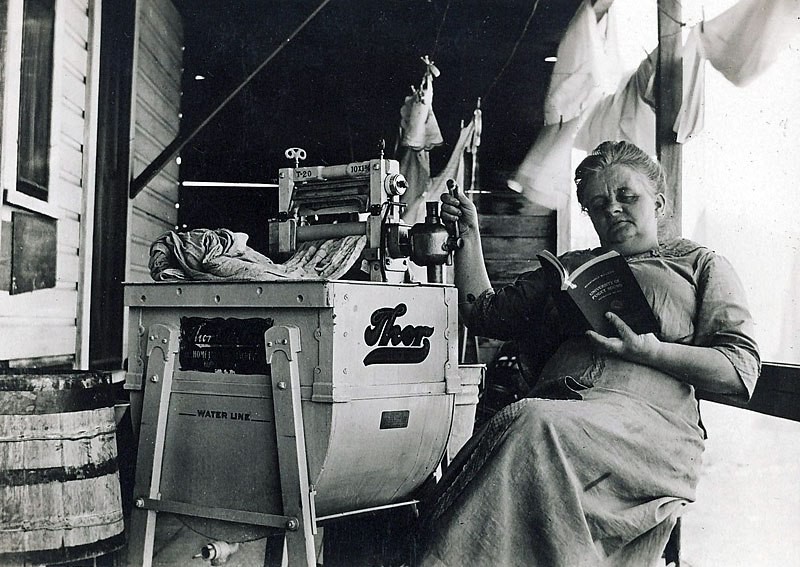
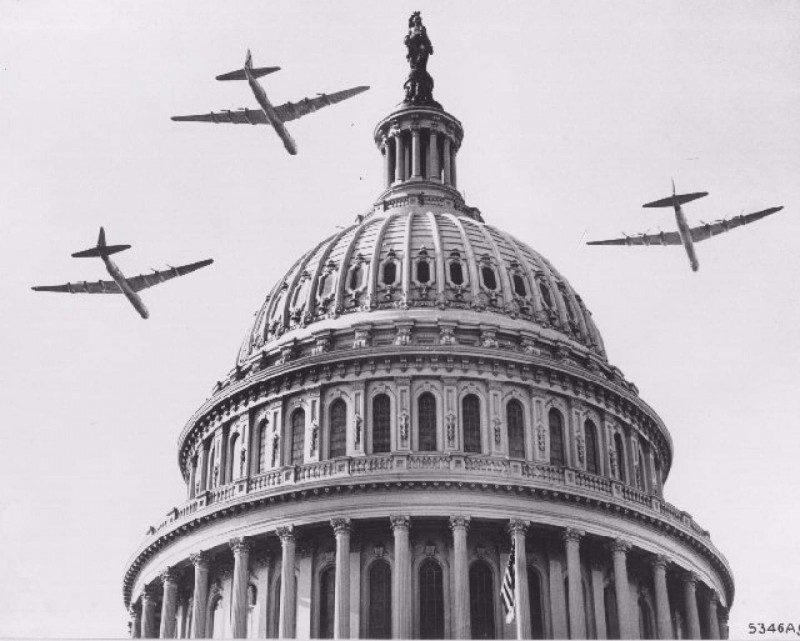
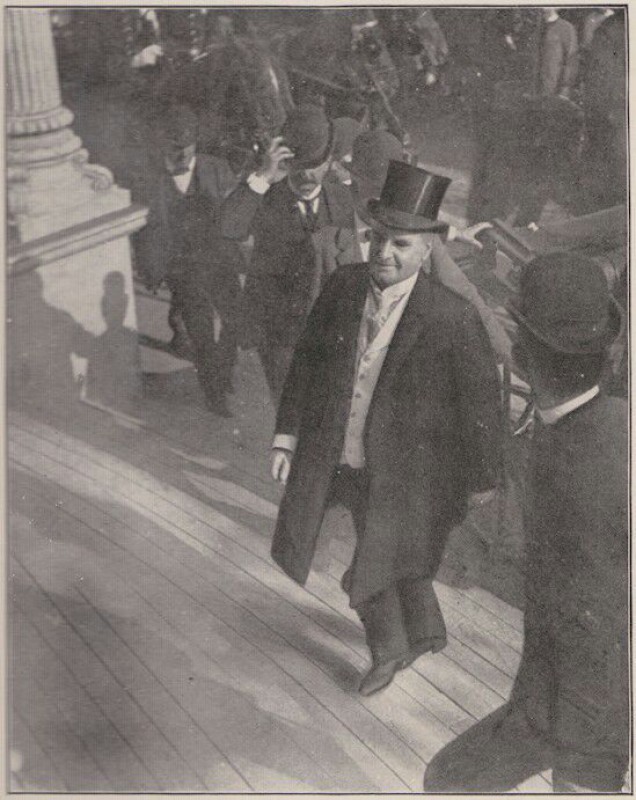
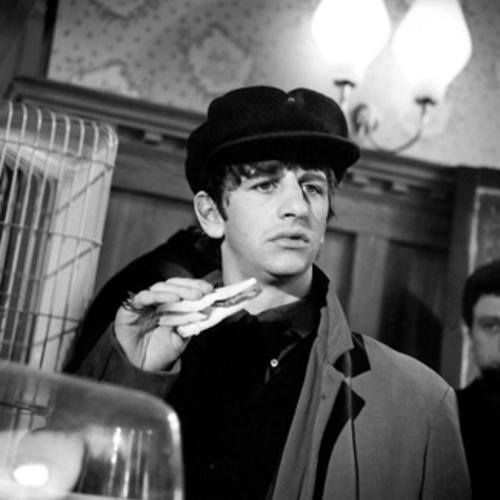
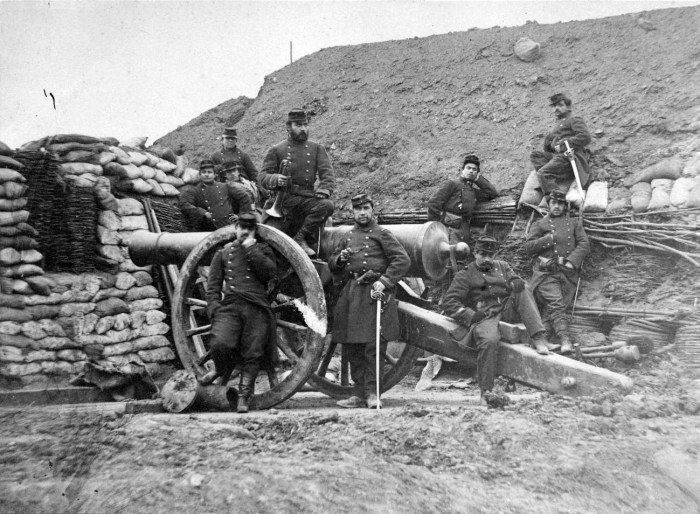
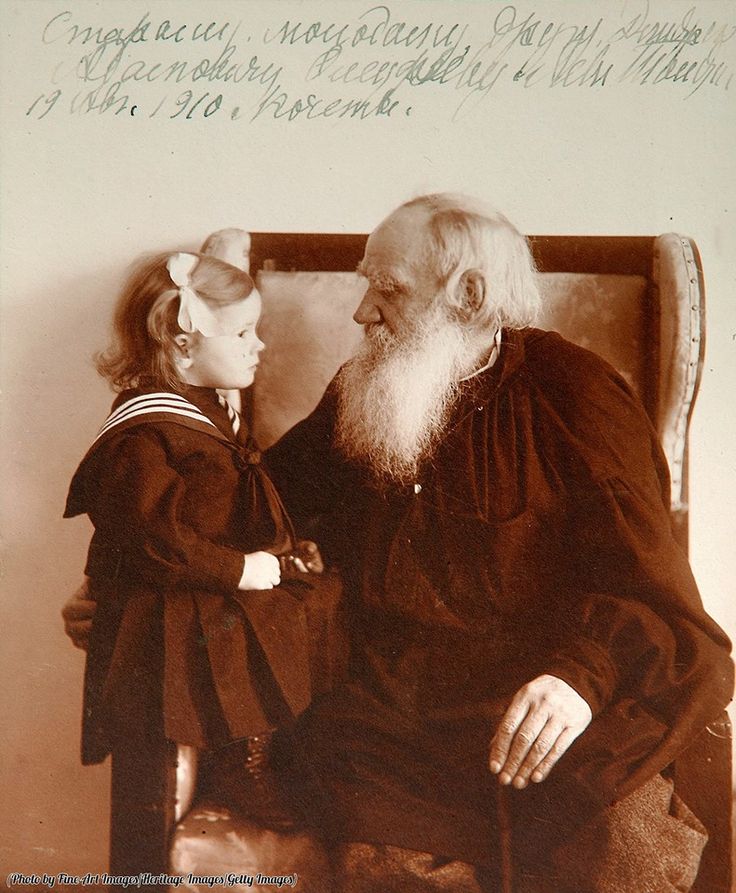
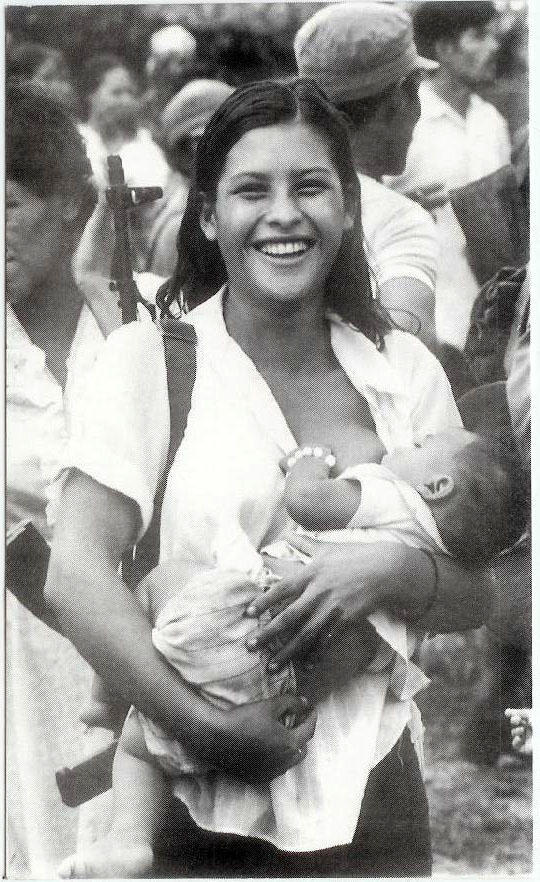
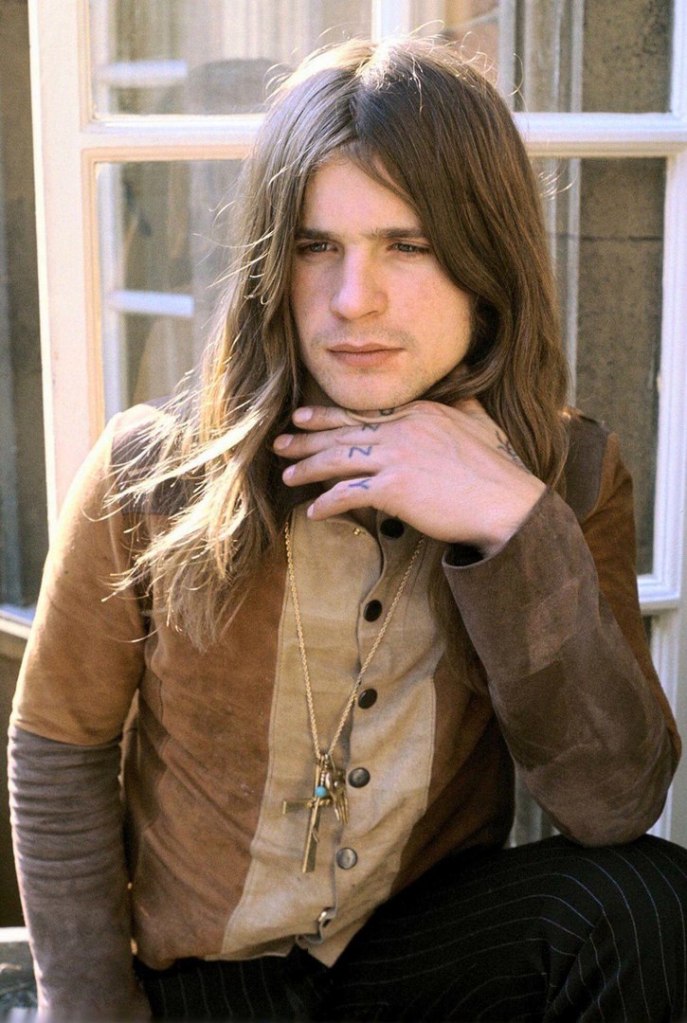
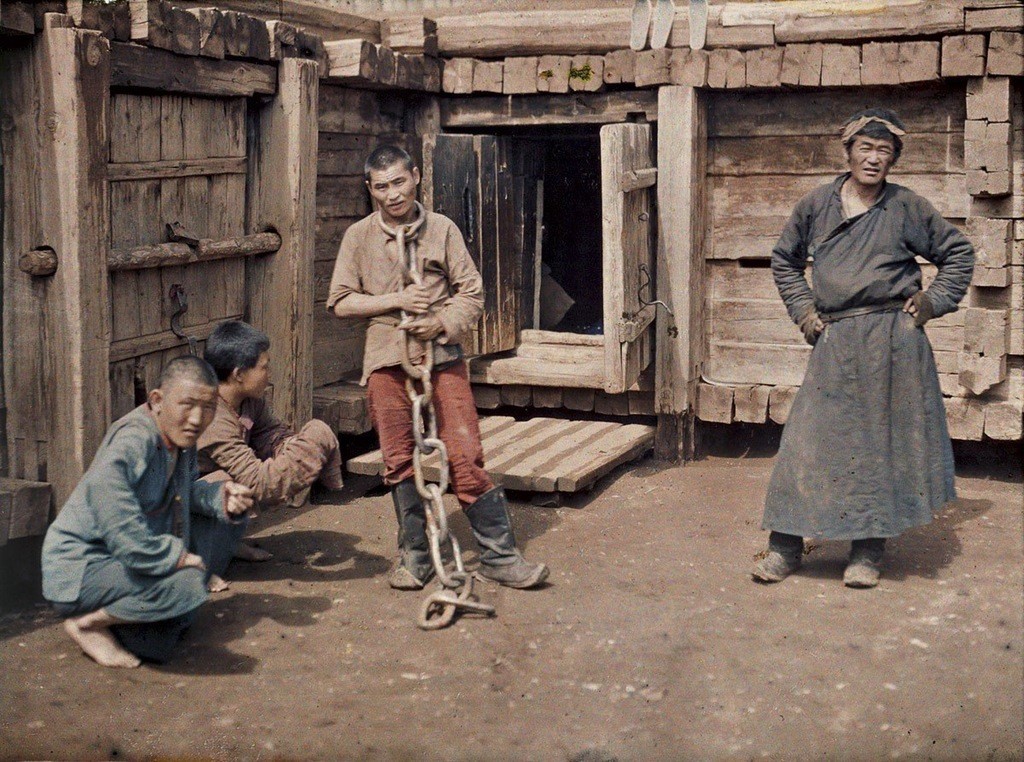
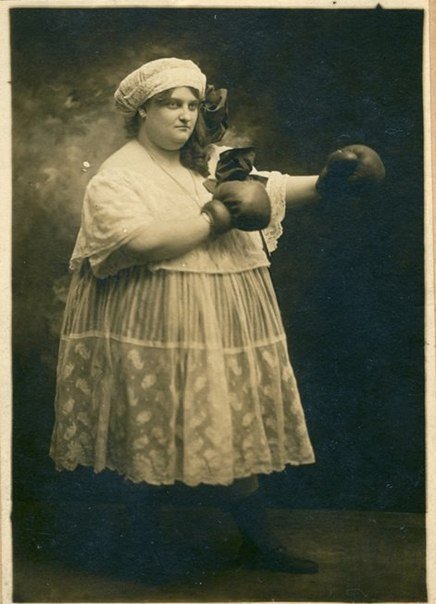
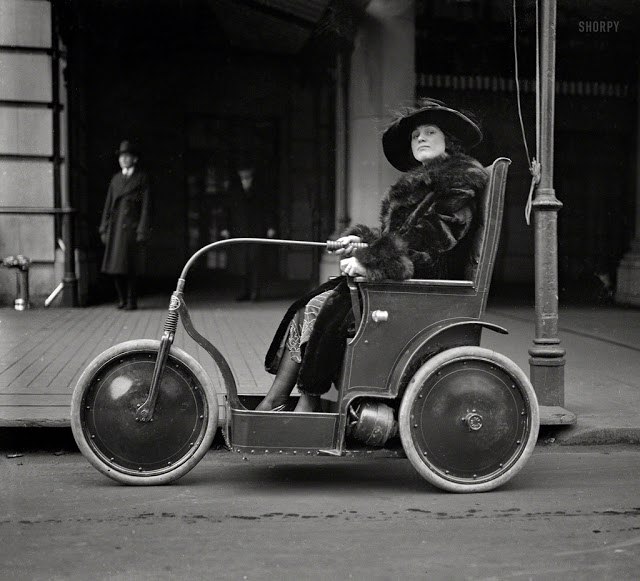
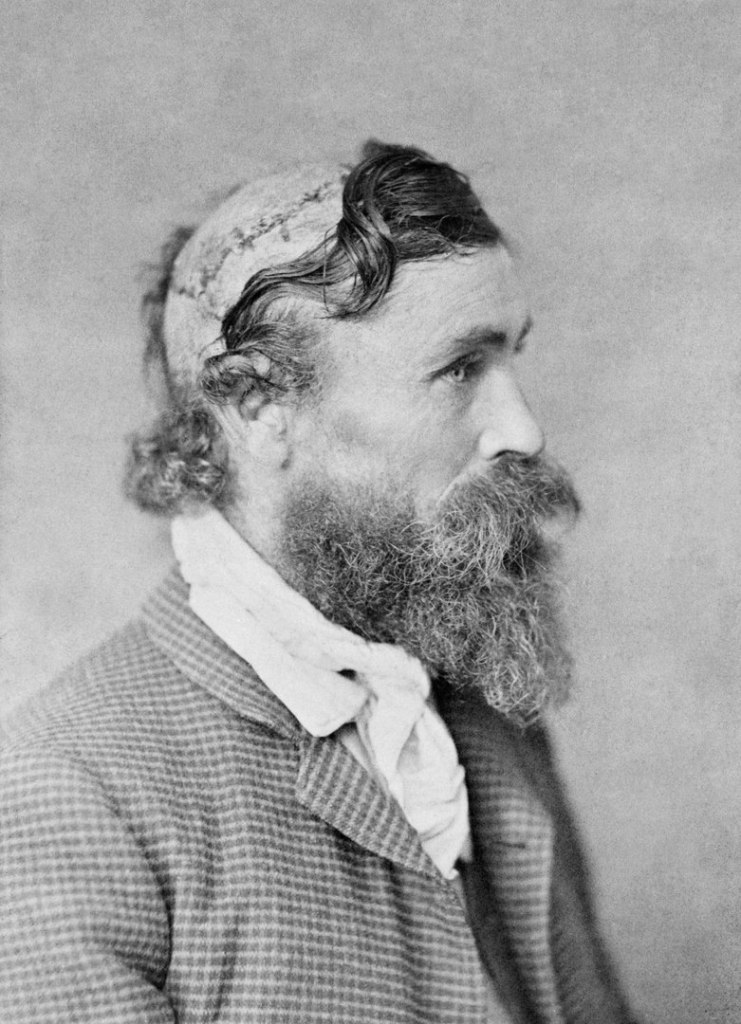
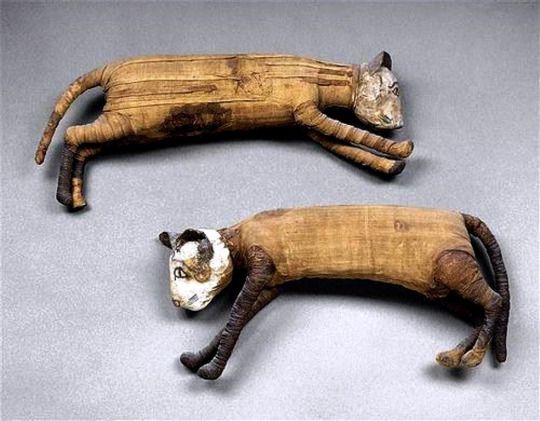
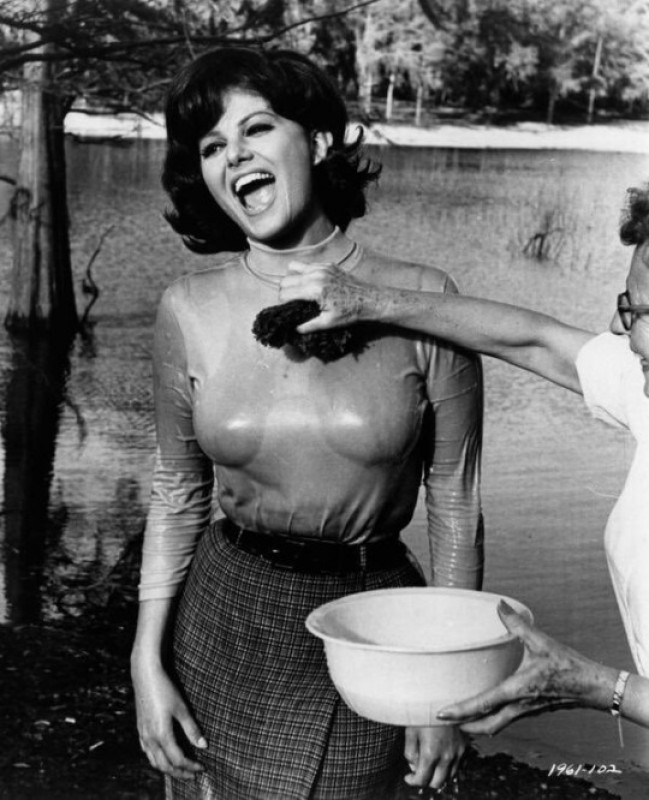
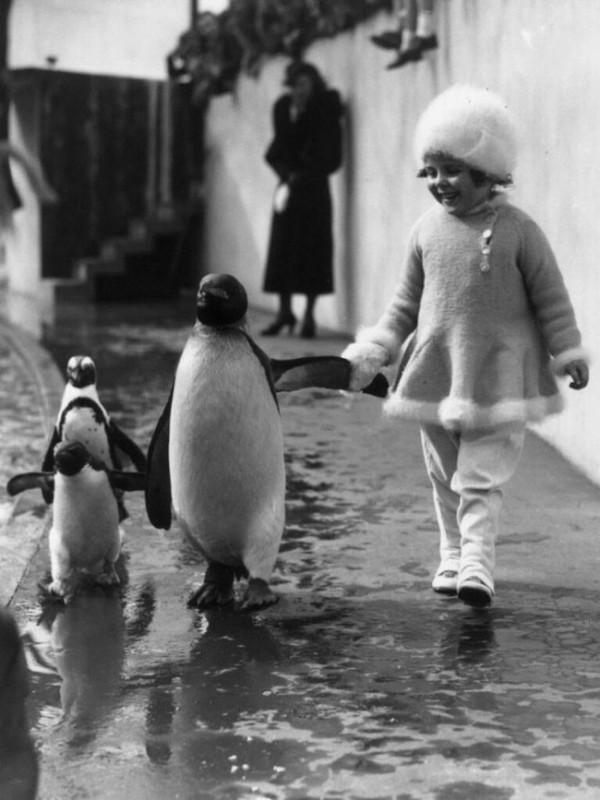
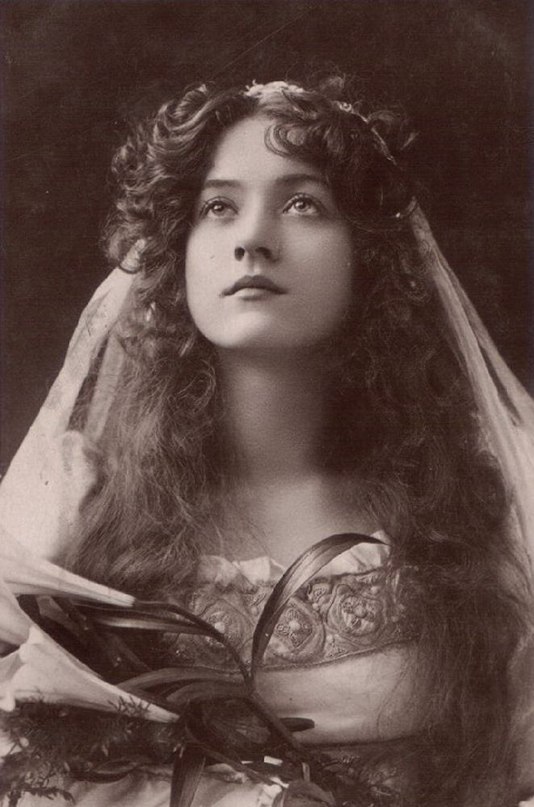
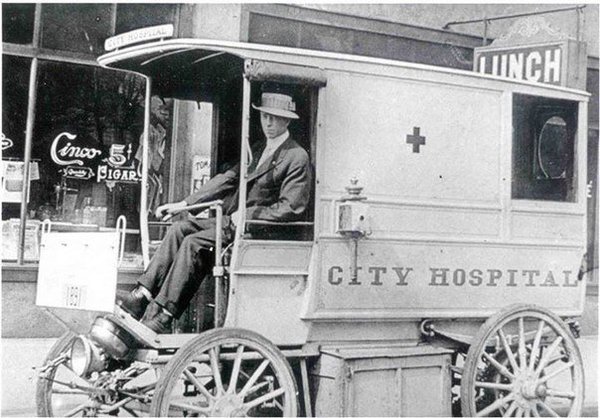
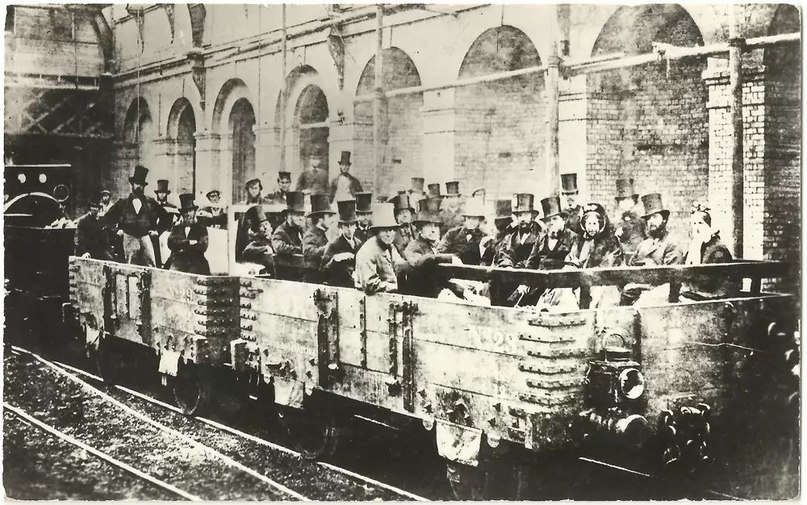
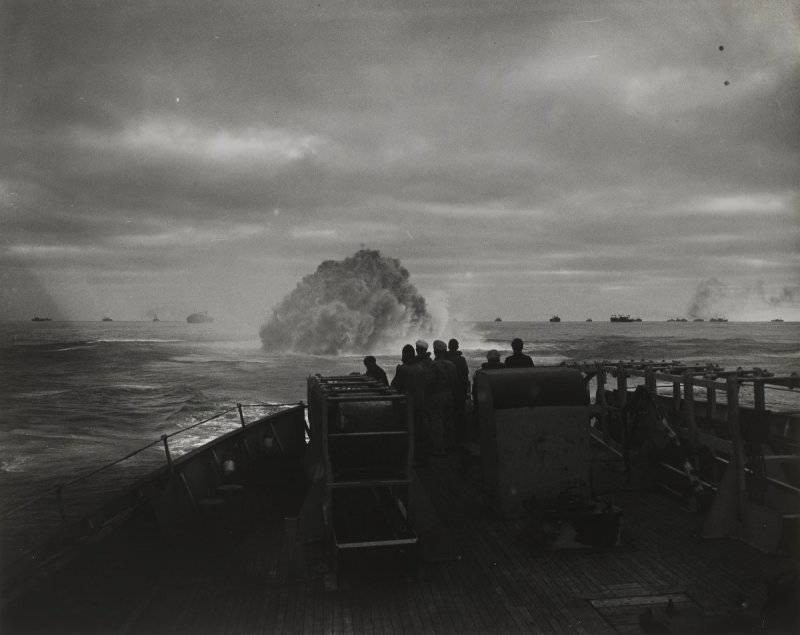
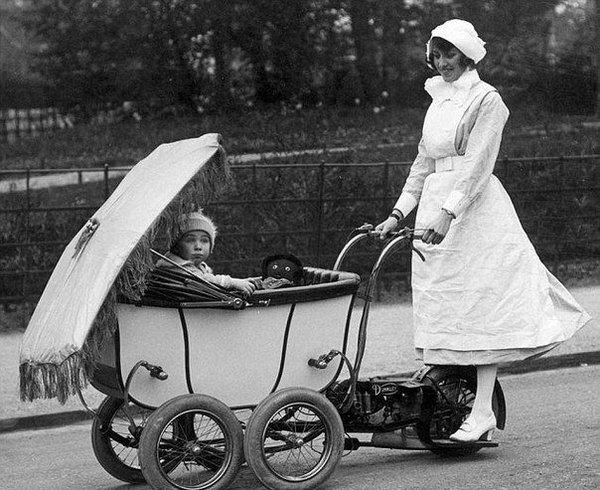
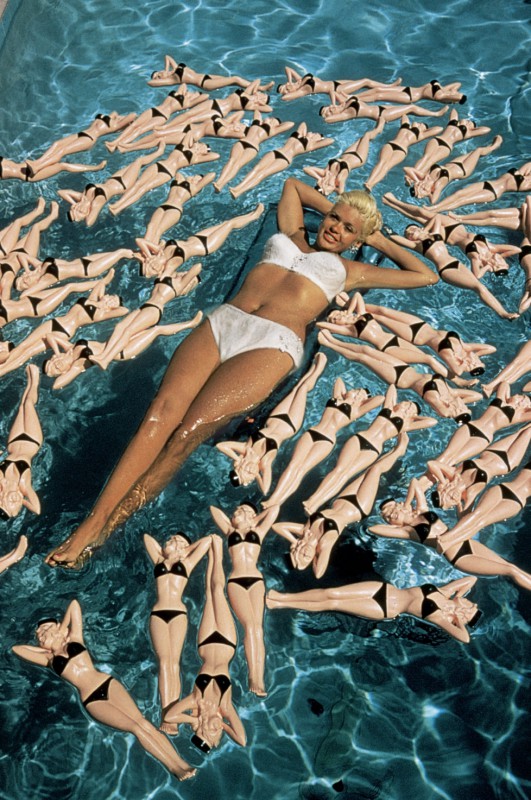
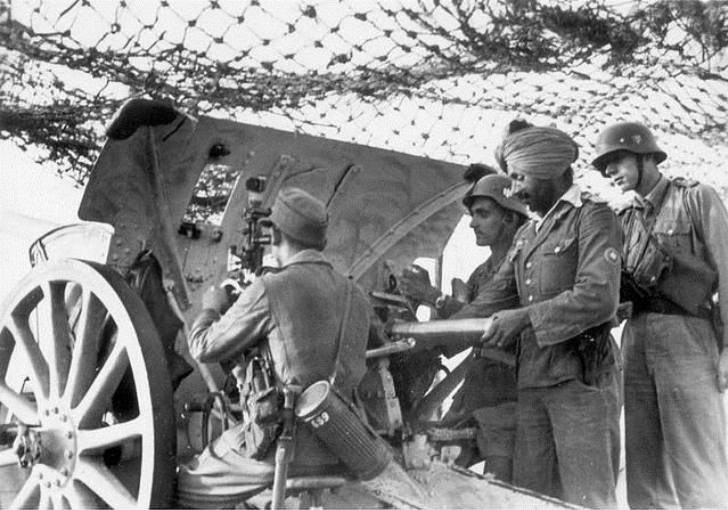
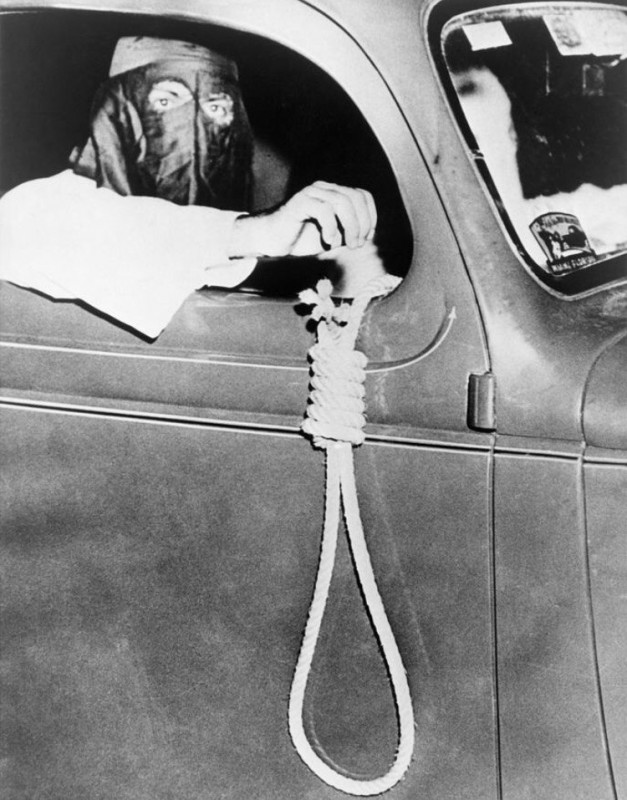
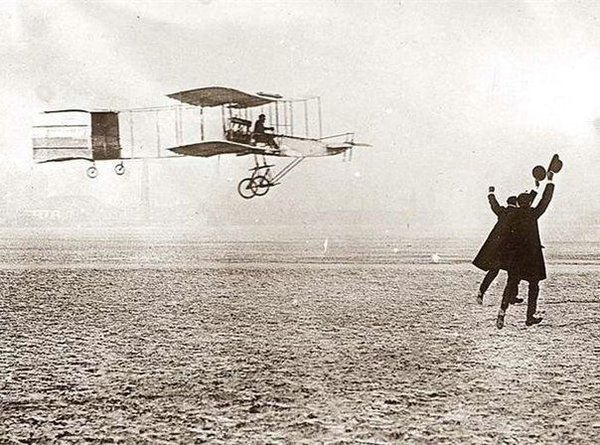
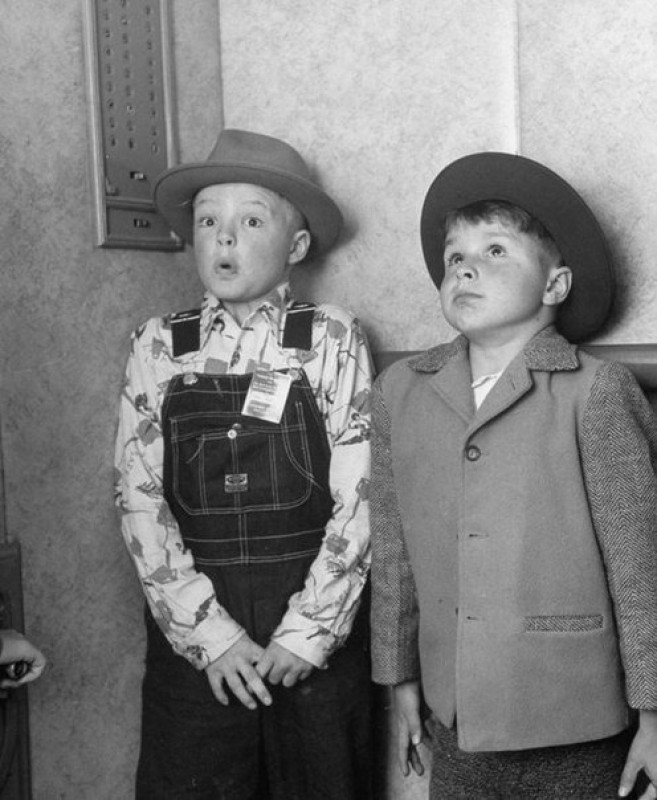
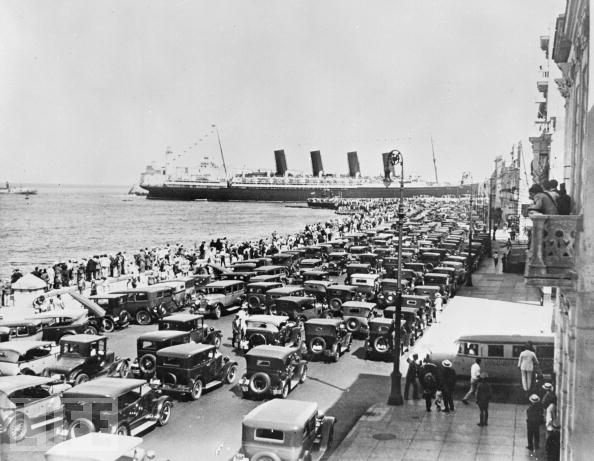
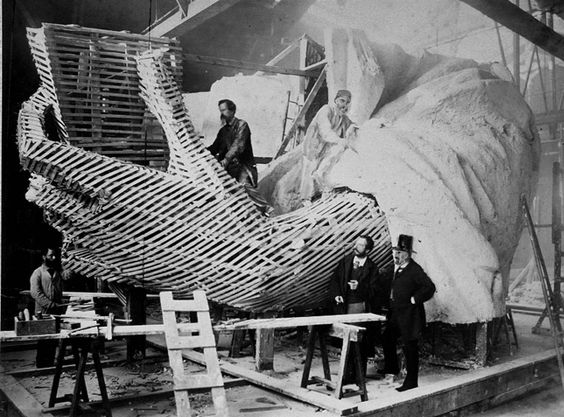
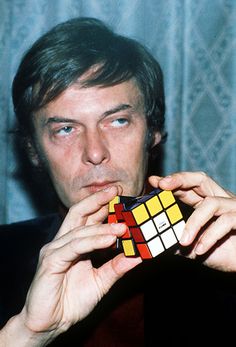
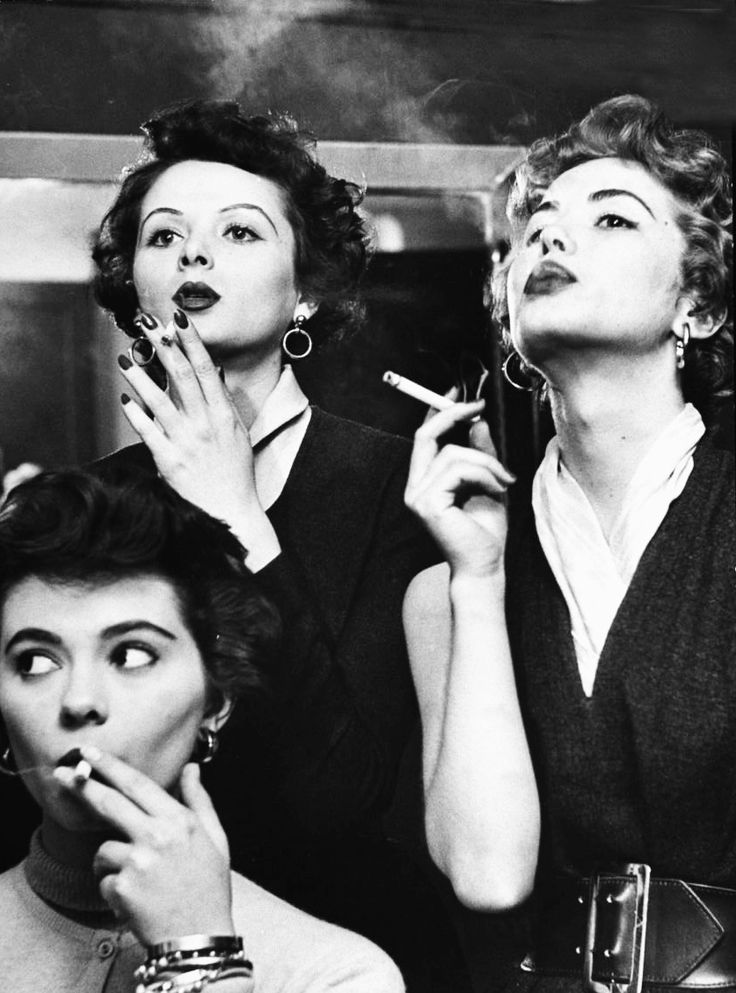
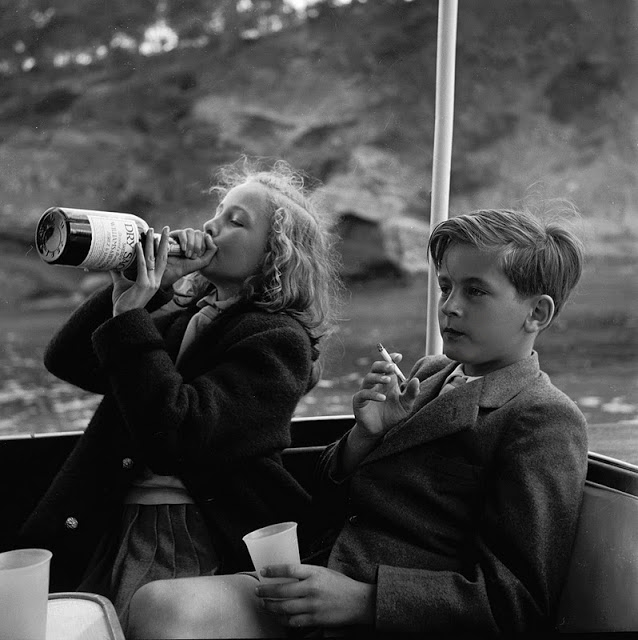
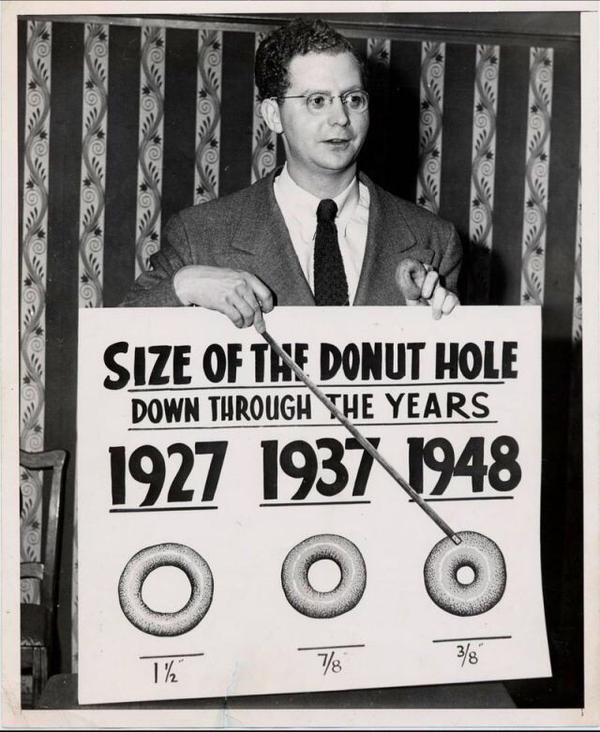
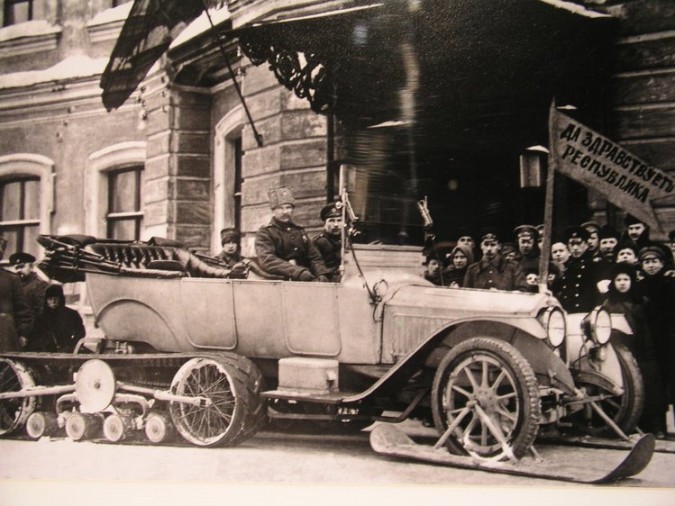
Drying out clothes after Hurricane, Boston, 1938.Bernard Tussaud, grandson of Swiss modeller Madame Tussaud, holds two wax heads, one of Haile Selassie, Emperor of Abyssinia (Ethiopia) and the other of Italian dictator Benito Mussolini. September 1935.New York, 1905.At the radio station, 1944.John McCain (front right) with his squadron in 1965.Survivors of the Wöbbelin concentration camp, 1945.In February 1905, it was cold enough in St. Louis that the mighty Mississippi River froze solid.Pyongyang, North Korea,1992.Soldier of the German Wehrmacht in combat as a sniper sitting on a self-made seat in a tree. 1944.Che Guevara (R) at the wheel of a US-made car with his second wife Aleida March (L) on their wedding day in Havana. 1959.Audrey Hepburn and Grace Kelly Backstage, Oscars, 1956.Housewife doing laundry using the first electric washing machine – Eatonville WA, 1910.Convair B-36 aircraft fly over the Capitol for Harry S. Truman’s inauguration, January 20, 1949.President William McKinley entering the Temple of Music, shortly before being assassinated – Sep 6, 1901Drummer Ringo Starr is seen holding a sandwich in a scene from the Beatles’ film “A Hard Day’s Night,1964.French soldiers during the Franco-Prussian War, 1870.Leo Tolstoy with his granddaughter Tatiana, Yasnaya Polyana, Russia, circa 1910.A Sandinista militiawoman smiles as she nurses her infant in Matagalpa, Nicaragua during the Contra War, 1984.A 26 year old Ozzy Osbourne, 1974Ulaanbaatar, Mongolia, 1913, prisoner in large chains .Hattie Madders, winner of the Most Scary Woman in the UK title in 1883, was the only woman to hold the boxing heavyweight championship of the world title. Nicknamed ‘The Mad Hatter’ she allegedly won the belt in 1883, stopping Scottish pugilist Wee Willy Harris in the first round of their bout.Woman in three-wheeled vehicle, Washington, D.C. 1922.Wassily Kandinsky. With class in Kochel, Germany 1902.Robert McGee, scalped by Sioux Chief Little Turtle in 1864.Two mummified cats, Egypt, 1200-700 BCClaudia Cardinale, 1961.A little girl holds a penguin’s flipper as they walk together at London Zoo, 1937.Maude Fealy (1883 – 1971) was an American stage and silent film actress who survived into the talkie era. Named “Most Beautiful Woman in the World” in 1903.Ambulance, 1910s, USAEdgware Road Station, and the first ever underground train journey, London.1862.US Coast Guard Cutter Spencer destroys the Nazi submarine U-175, April 17, 1943.An English nanny driving a motorized pram (stroller), 1922.Jayne Mansfield with mini Mansfields, 1957.Nazi Germany’s Indian Legion. France, 1944.A member of the Ku Klux Klan holds a noose during attempts to suppress black voters in Miami, Fla., in 1939.Wright brothers’ first flight in 1903 in Kitty Hawk North CarolinaTwo boys hold their breath, amazed, on their first elevator ride – 1948.La Habana, Cuba, 1925Stephan Bibrowsky (1890-1932), known as Lionel the Lion-Faced Man. Sideshow performer for Barnum & Bailey’s Circus.Statue of Liberty in Paris, 1877-1885Inventor Erno Rubik demonstrates his cube in London in 1981Smoking models learning proper cigarette smoking technique in practice for TV ad, 1953.Princess Yvonne and Prince Alexander by their mother, Princess Marianne zu Sayn-Wittgenstein-Sayn. 1955Size of the donut hole through the years.Tsar Nikolai’s II Car with skates, 1917.
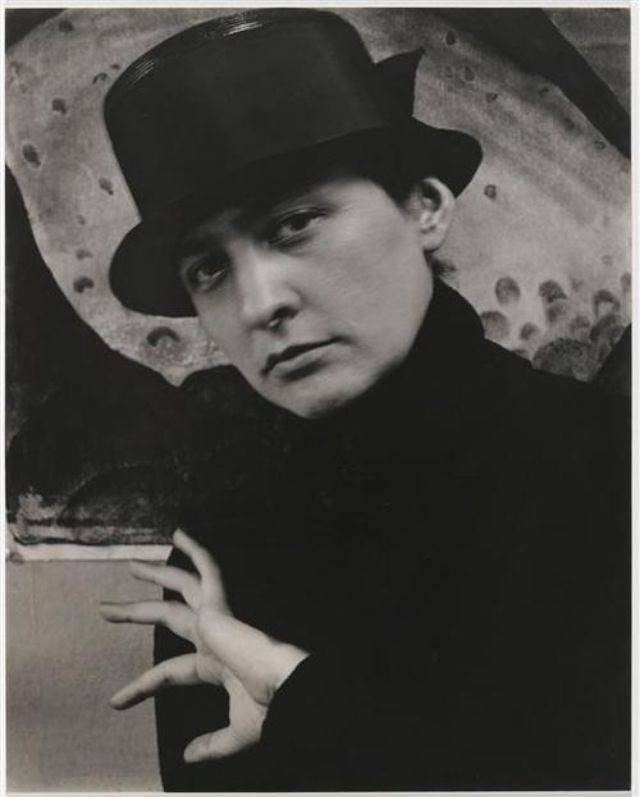
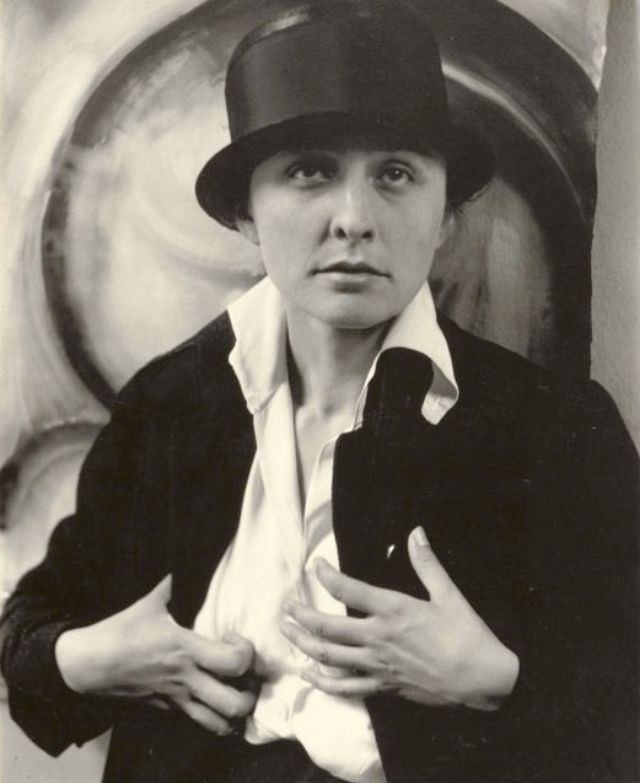
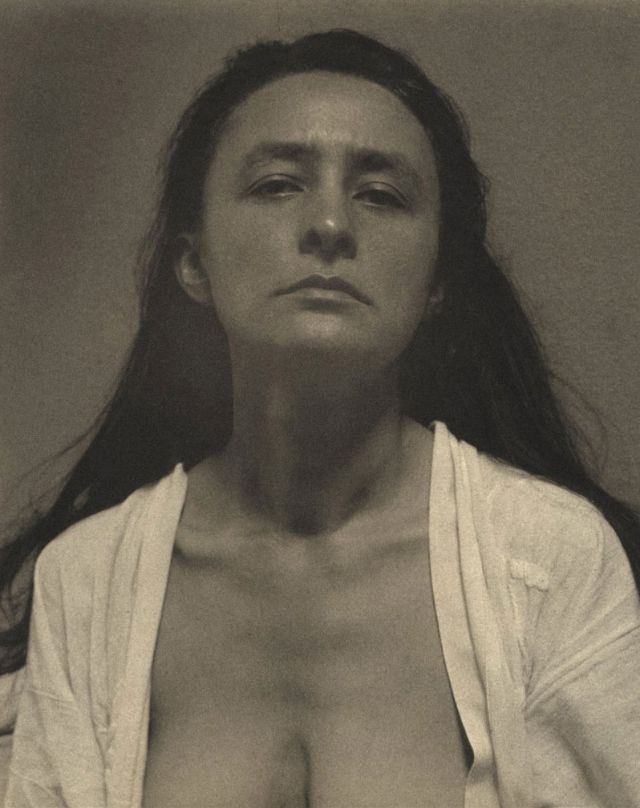
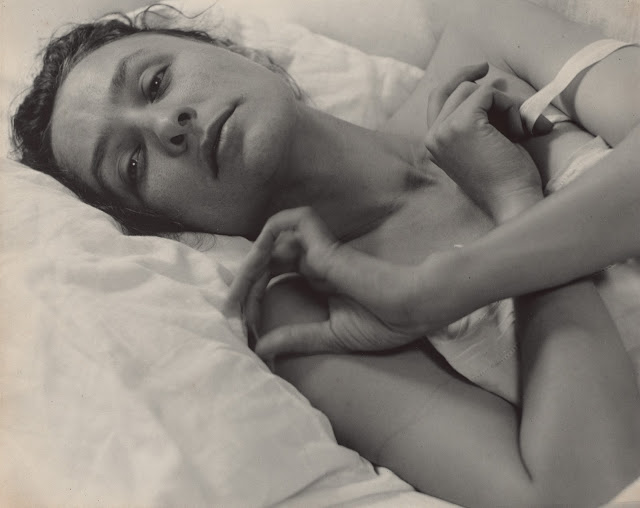
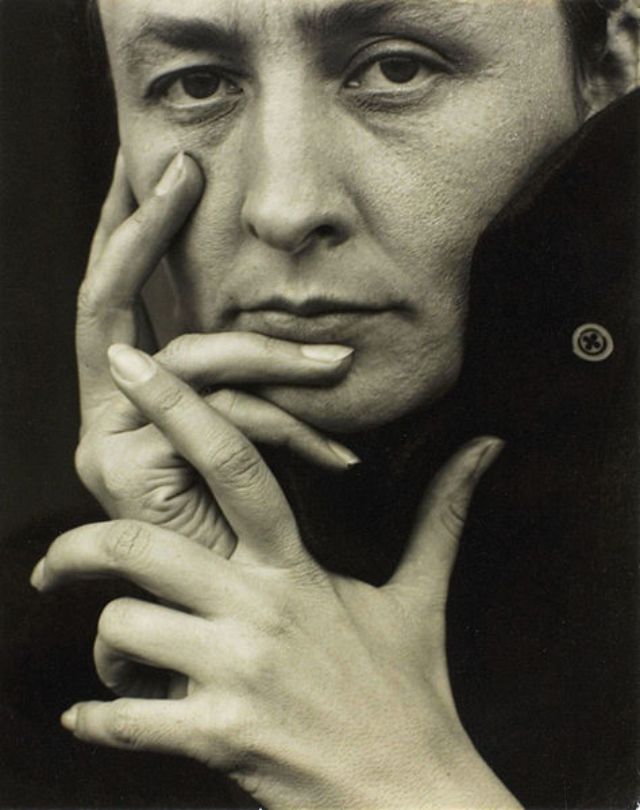
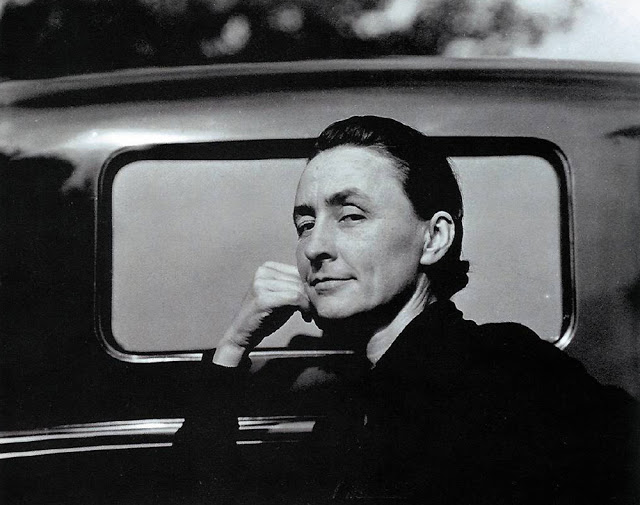
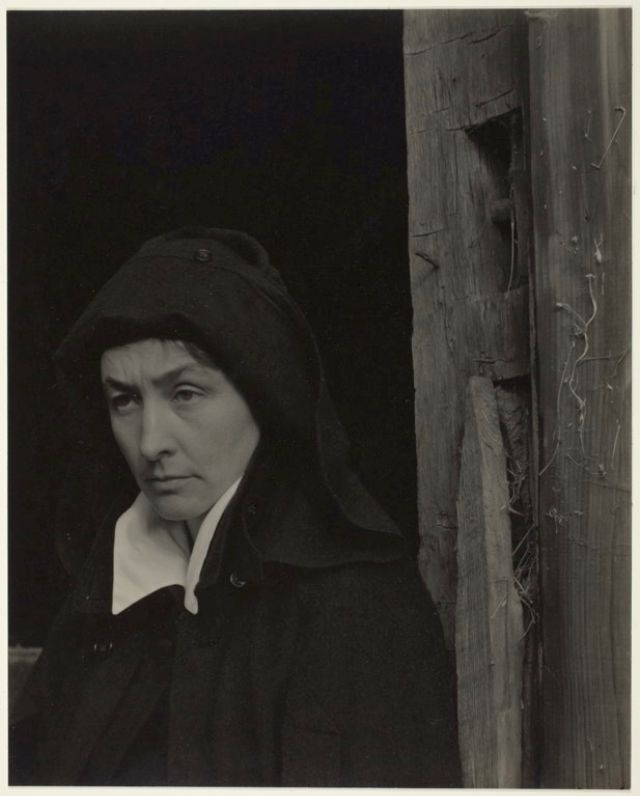
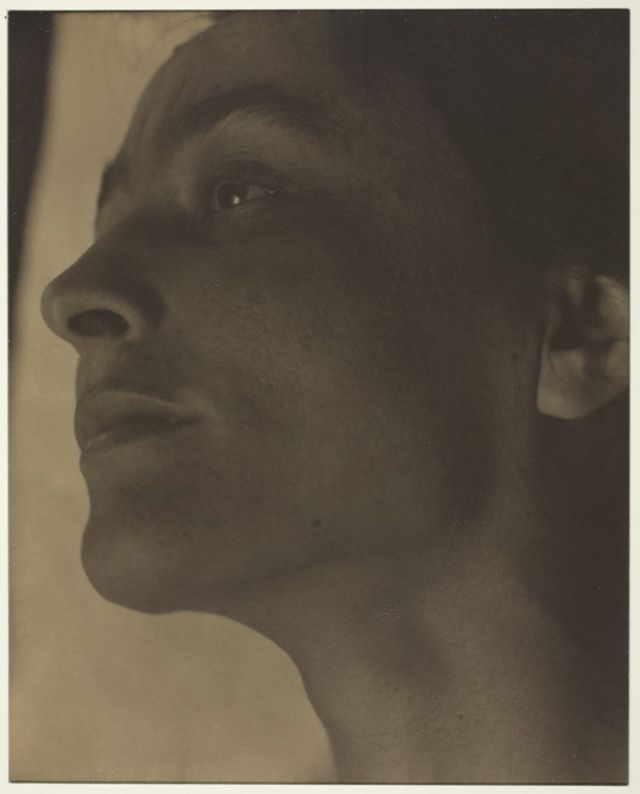
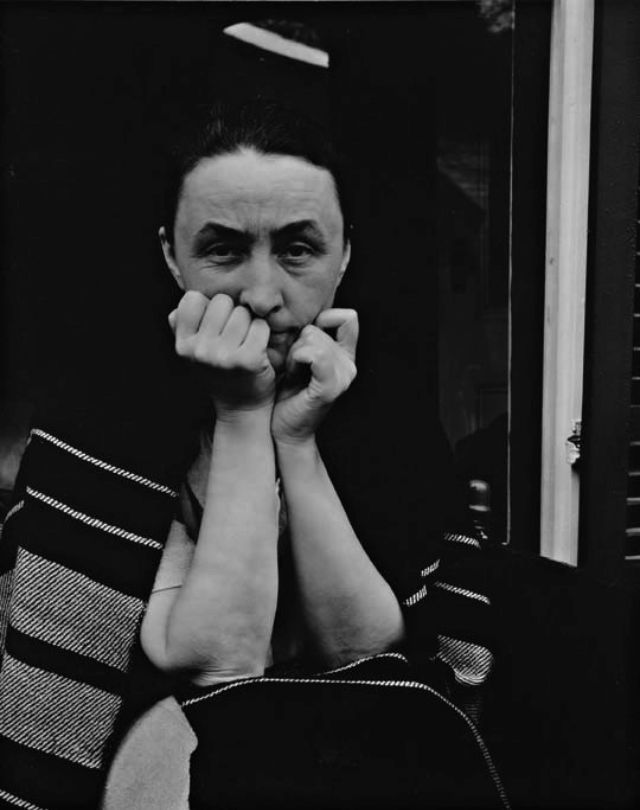
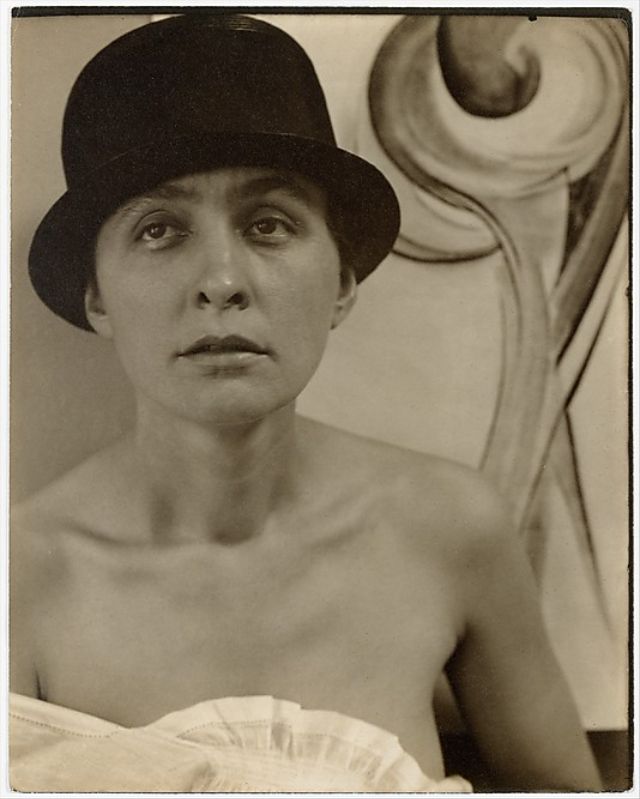
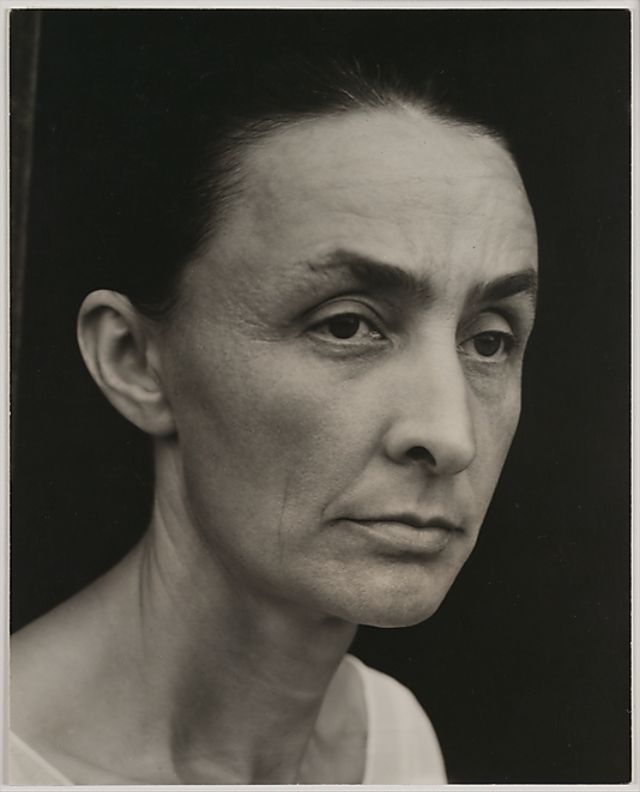
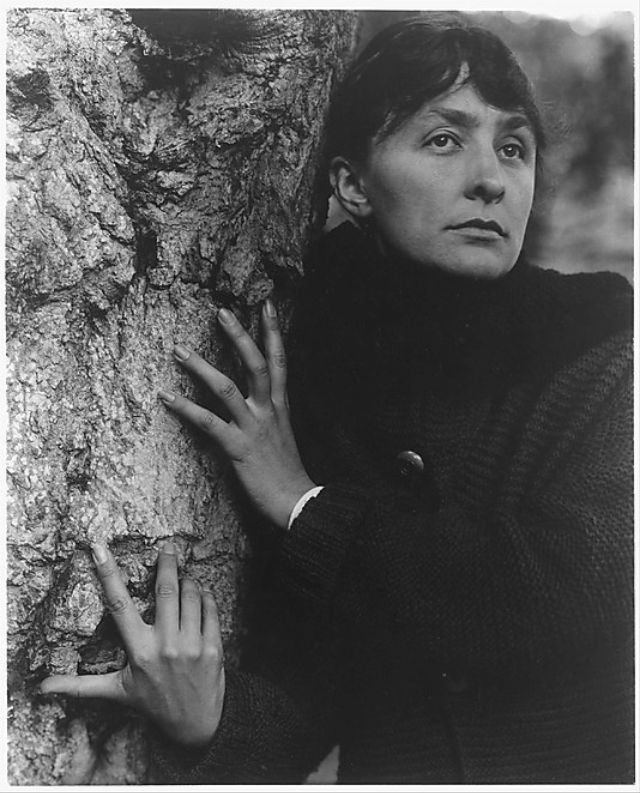
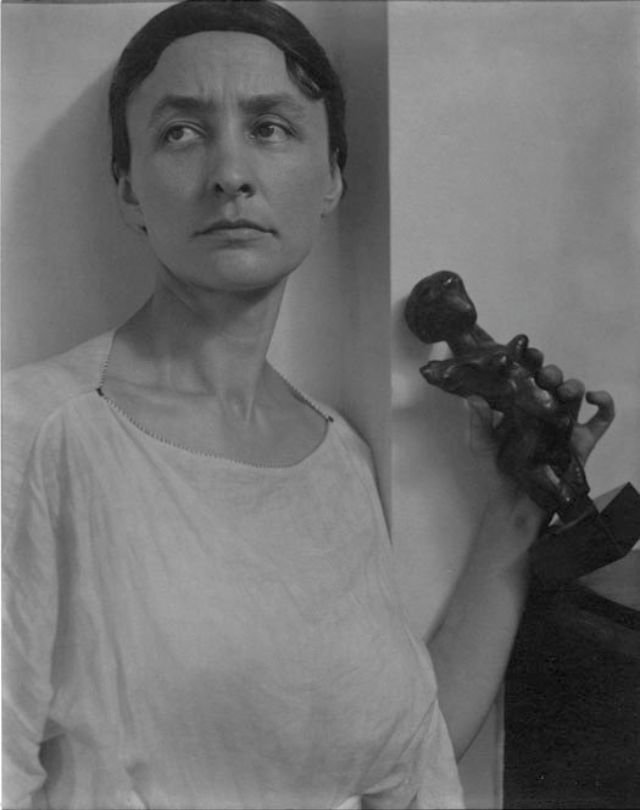
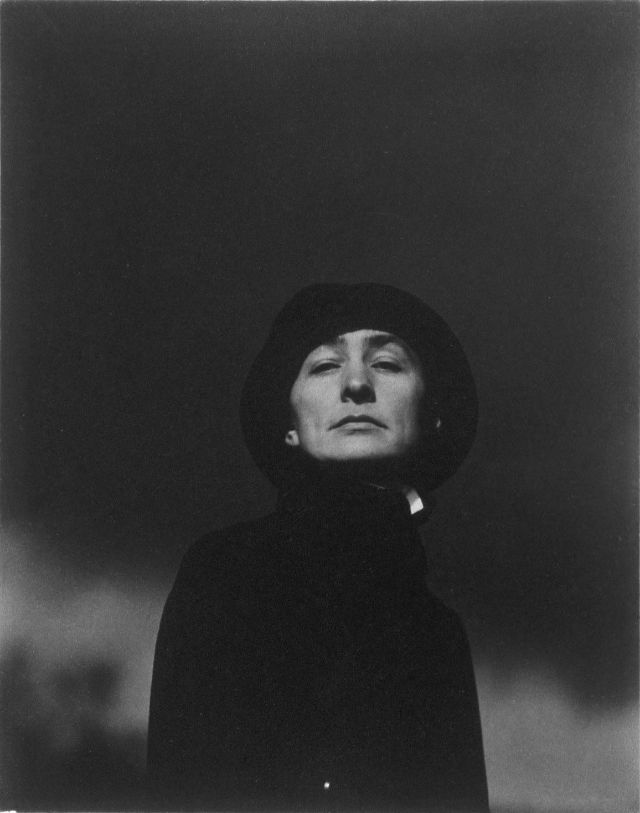
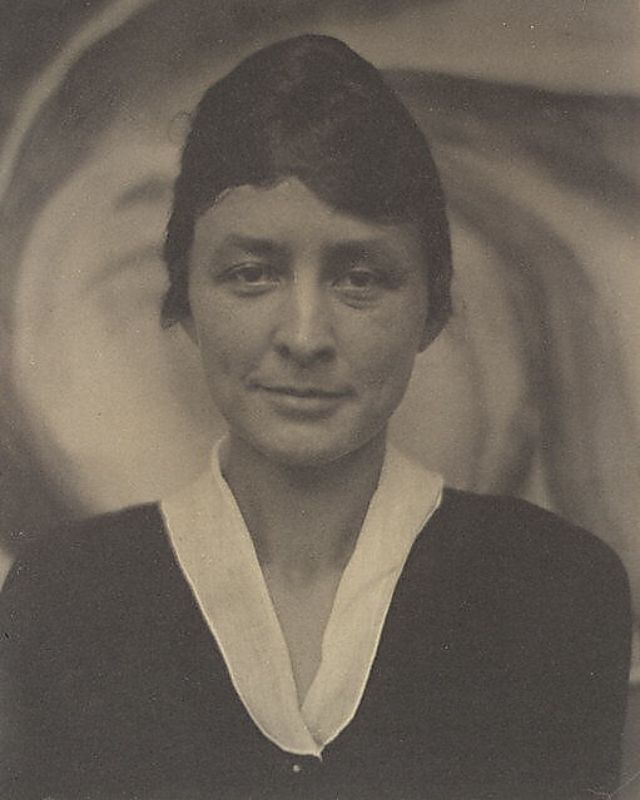
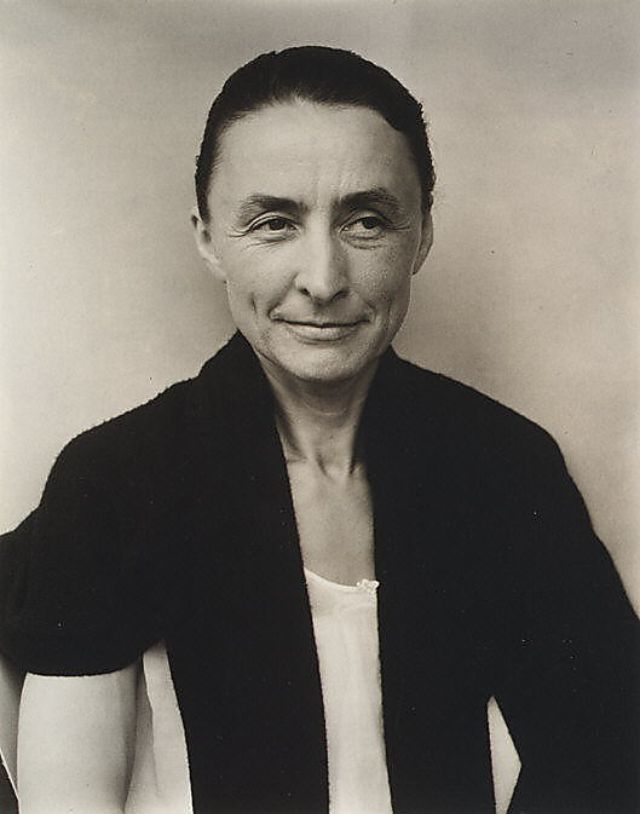
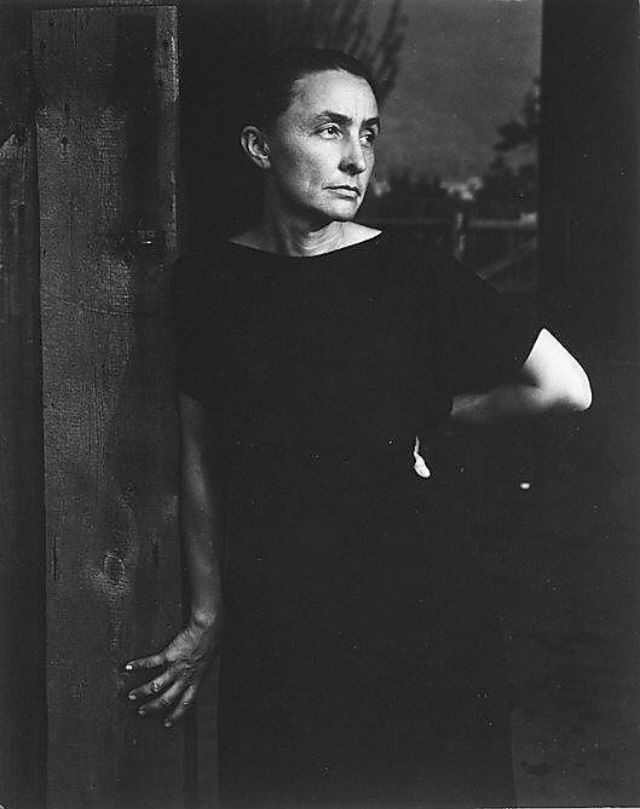
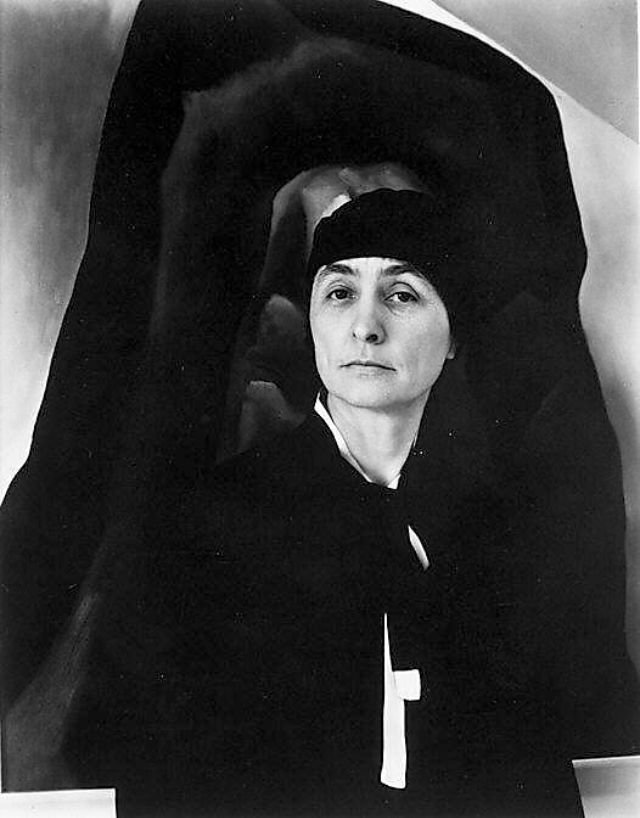
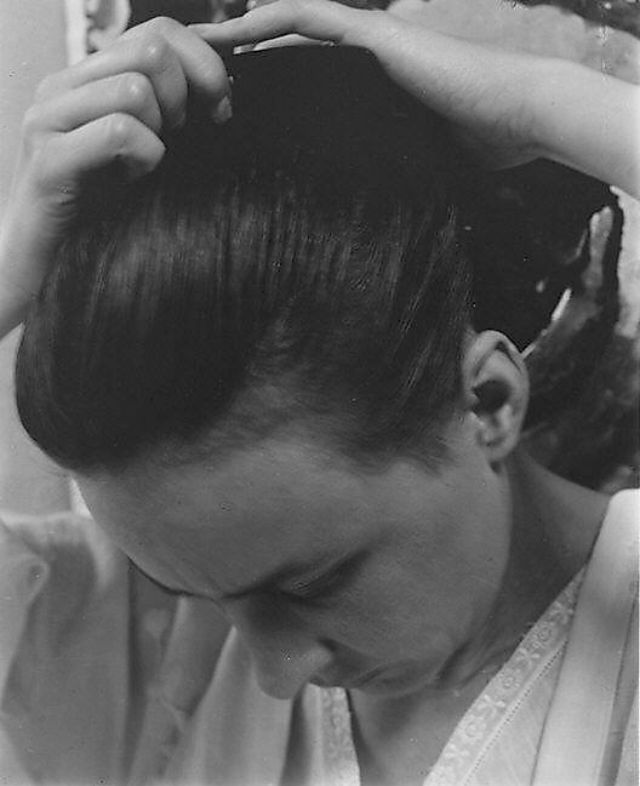
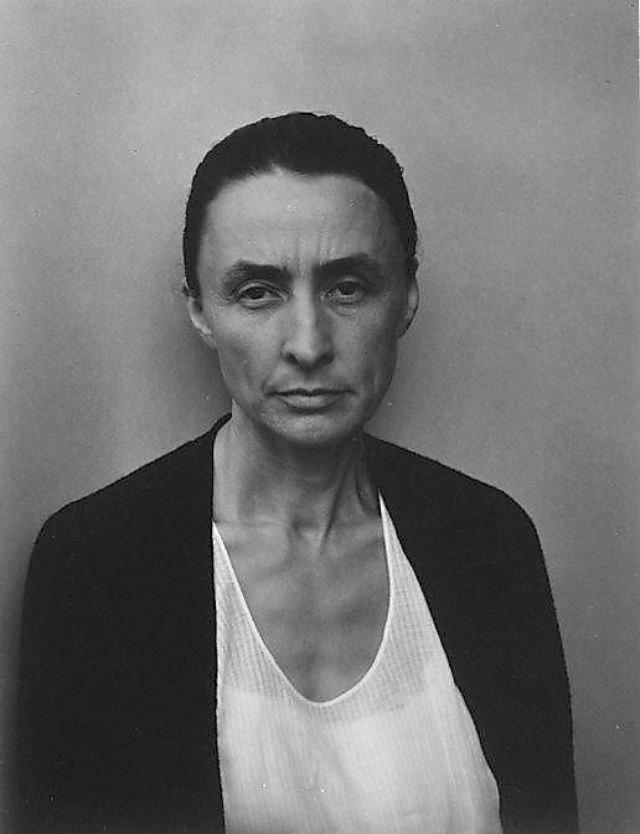
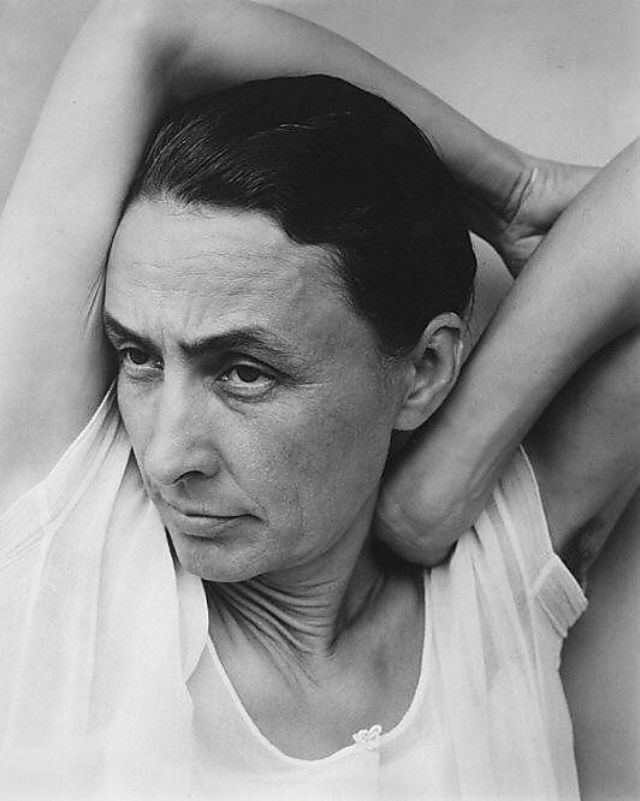
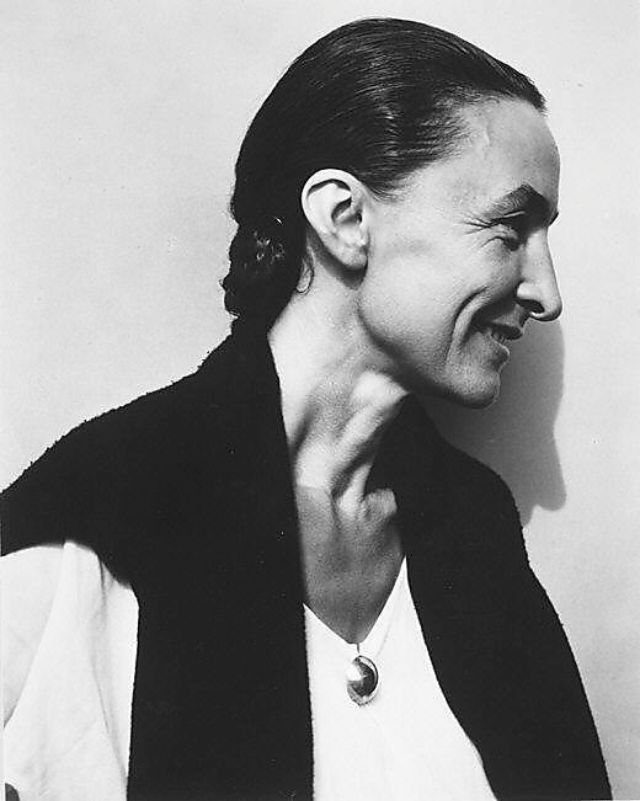
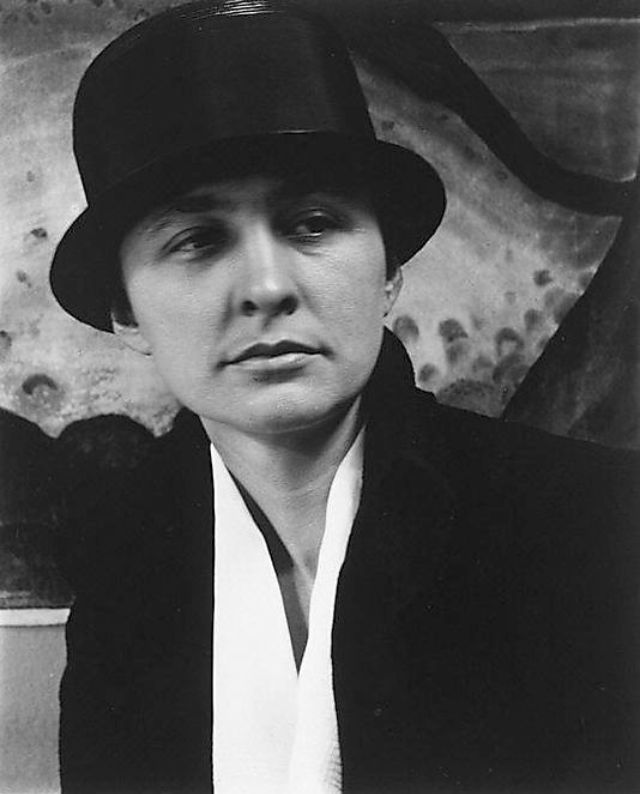
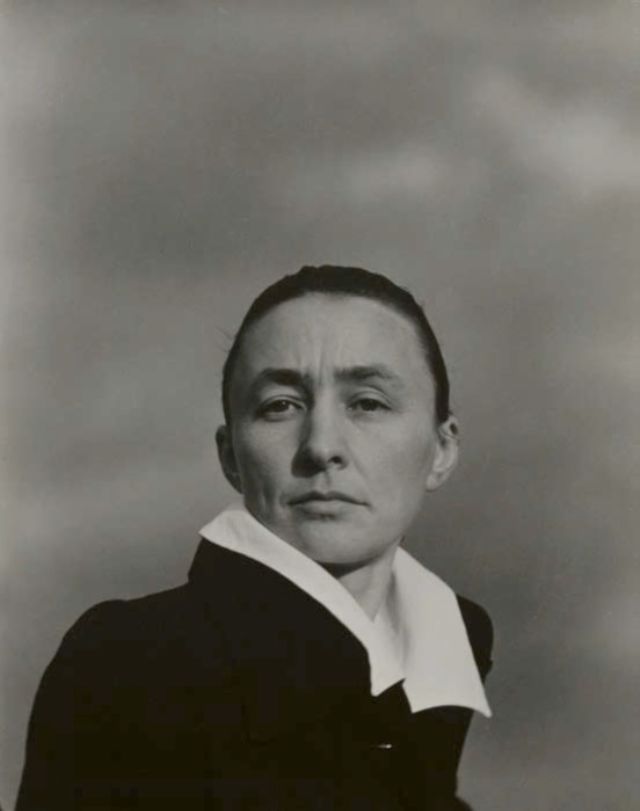
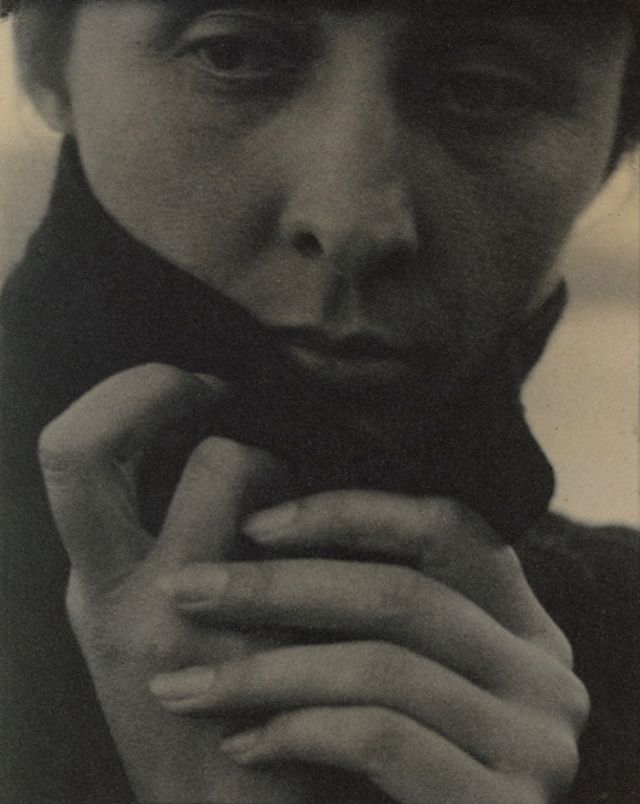
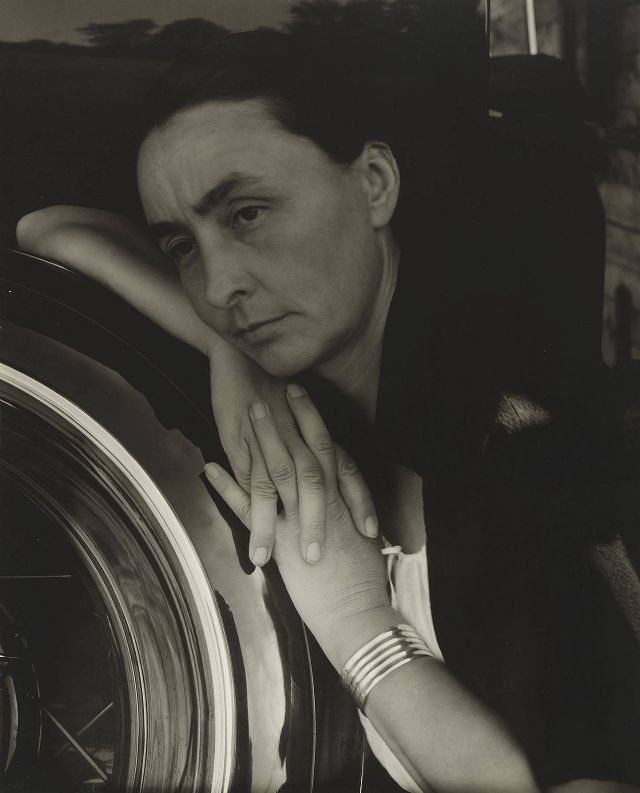
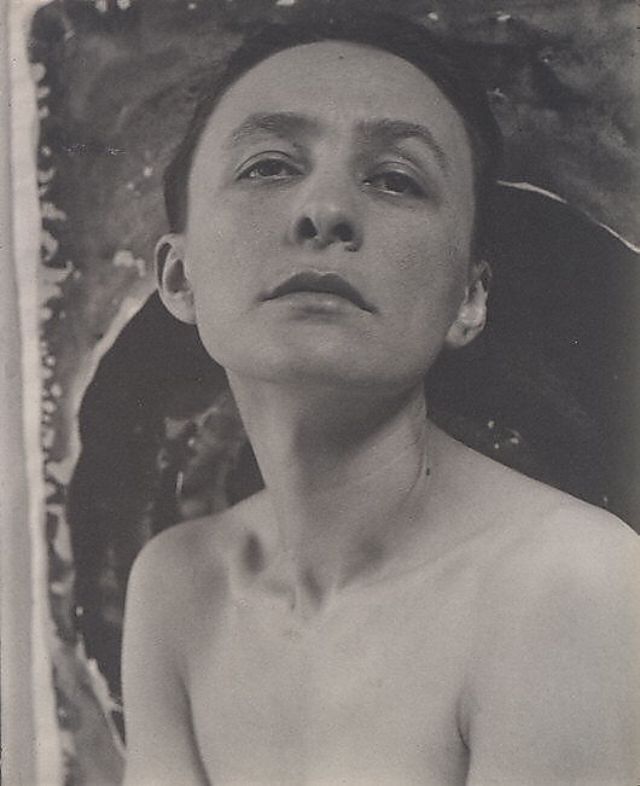
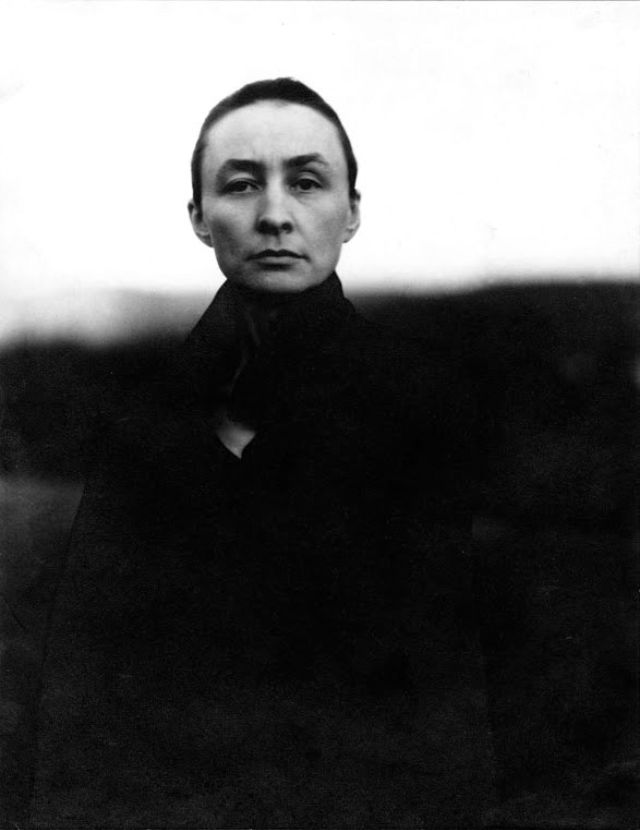
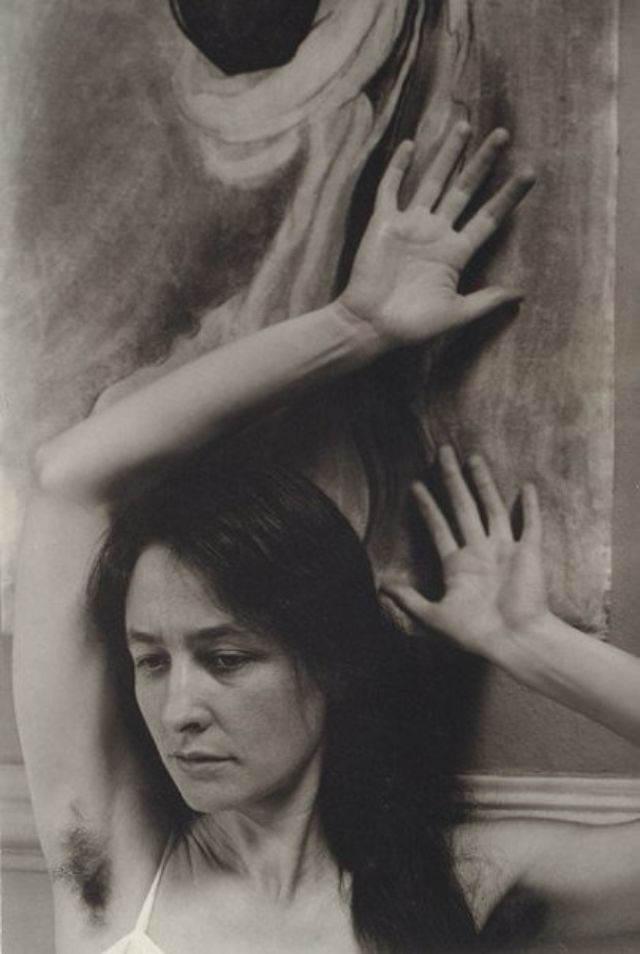
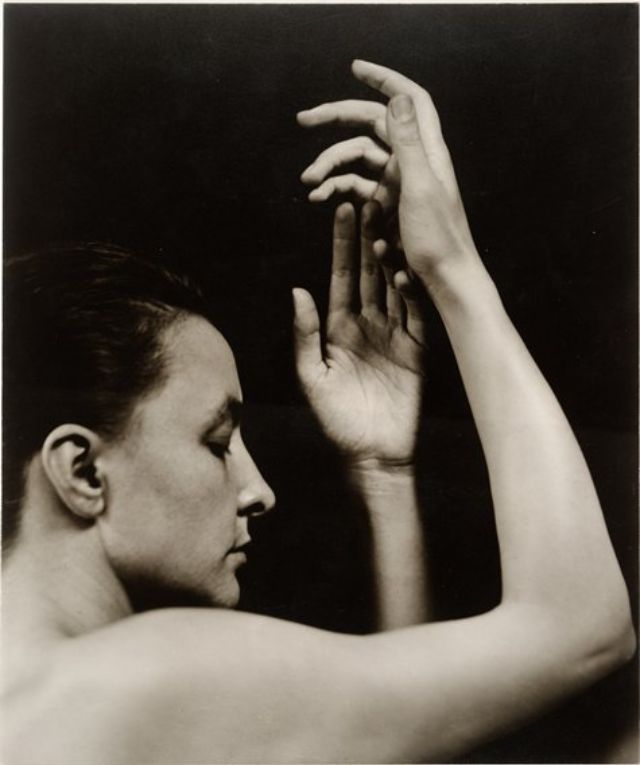
Georgia Totto O’Keeffe (November 15, 1887 – March 6, 1986) was an American modernist artist. She was known for her paintings of enlarged flowers, New York skyscrapers, and New Mexico landscapes. O’Keeffe has been called the “Mother of American modernism”.
In 1905, O’Keeffe began art training at the School of the Art Institute of Chicago and then the Art Students League of New York. In 1908, unable to fund further education, she worked for two years as a commercial illustrator and then taught in Virginia, Texas, and South Carolina between 1911 and 1918. She studied art in the summers between 1912 and 1914 and was introduced to the principles and philosophies of Arthur Wesley Dow, who created works of art based upon personal style, design, and interpretation of subjects, rather than trying to copy or represent them. This caused a major change in the way she felt about and approached art, as seen in the beginning stages of her watercolors from her studies at the University of Virginia and more dramatically in the charcoal drawings that she produced in 1915 that led to total abstraction. Alfred Stieglitz, an art dealer and photographer, held an exhibit of her works in 1917. Over the next couple of years, she taught and continued her studies at the Teachers College, Columbia University.
She moved to New York in 1918 at Stieglitz’s request and began working seriously as an artist. They developed a professional and personal relationship that led to their marriage in 1924. O’Keeffe created many forms of abstract art, including close-ups of flowers, such as the Red Canna paintings, that many found to represent female genitalia, although O’Keeffe consistently denied that intention. The imputation of the depiction of women’s sexuality was also fueled by explicit and sensuous photographs of O’Keeffe that Stieglitz had taken and exhibited.
O’Keeffe and Stieglitz lived together in New York until 1929, when O’Keeffe began spending part of the year in the Southwest, which served as inspiration for her paintings of New Mexico landscapes and images of animal skulls, such as Cow’s Skull: Red, White, and Blue and Ram’s Head White Hollyhock and Little Hills. After Stieglitz’s death, she lived in New Mexico at Georgia O’Keeffe Home and Studio in Abiquiú until the last years of her life, when she lived in Santa Fe. In 2014, O’Keeffe’s 1932 painting Jimson Weed/White Flower No. 1 sold for $44,405,000, more than three times the previous world auction record for any female artist. After her death, the Georgia O’Keeffe Museum was established in Santa Fe. (Wikipedia)
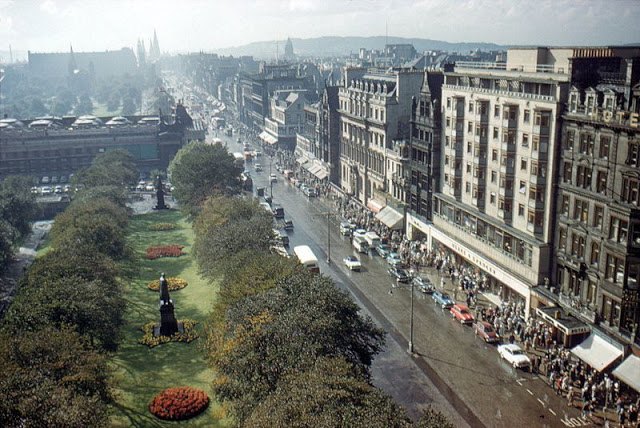
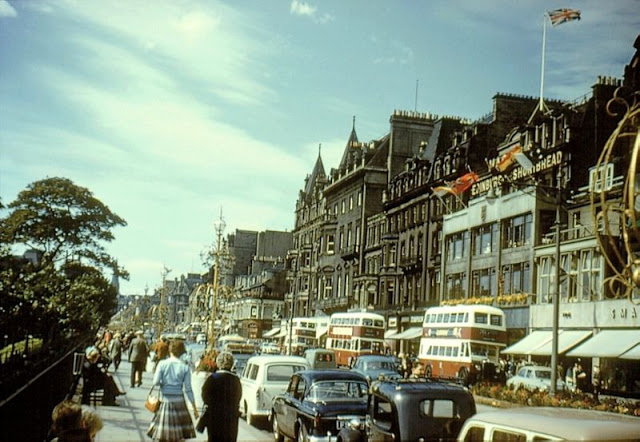
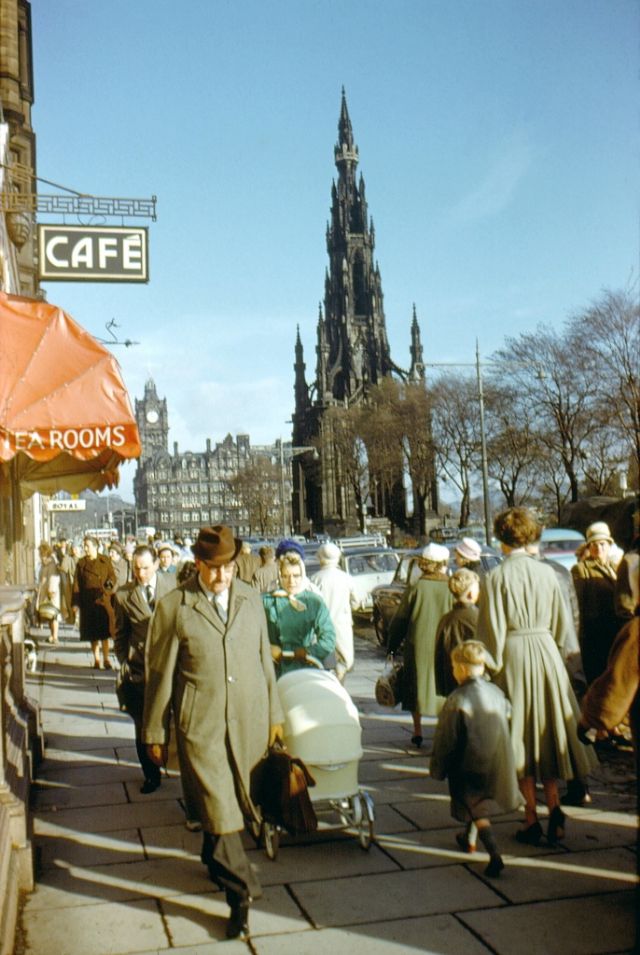
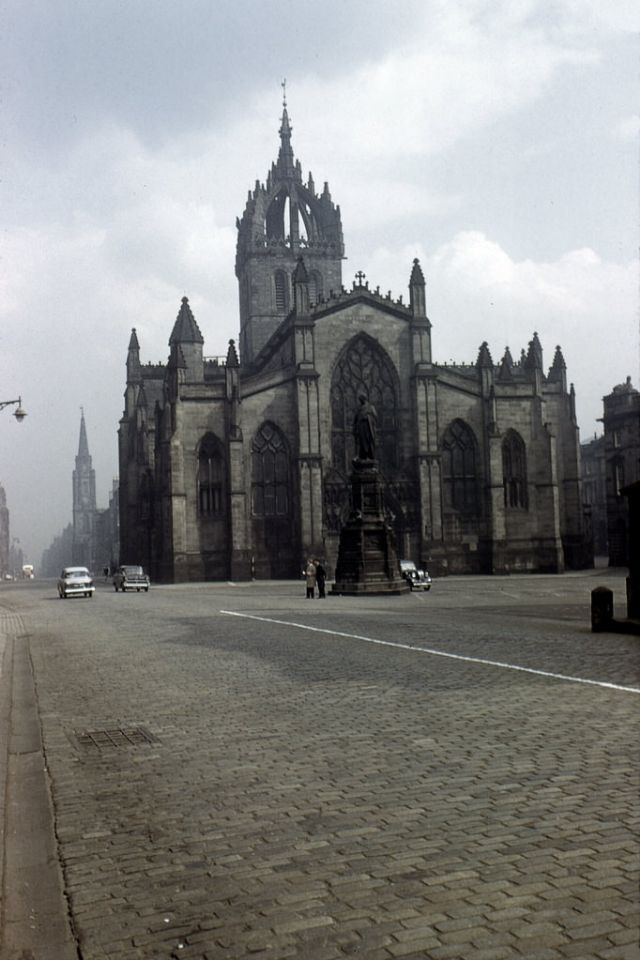
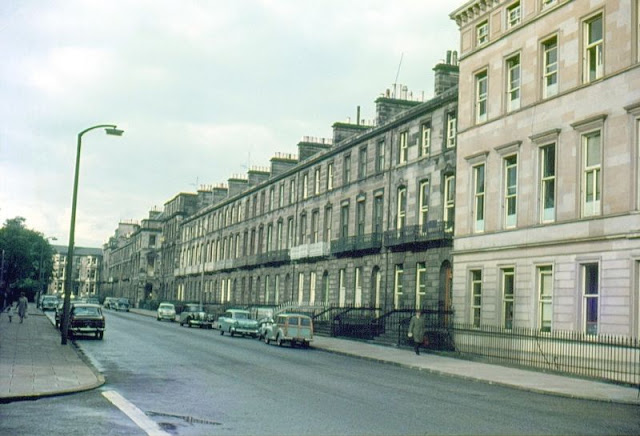
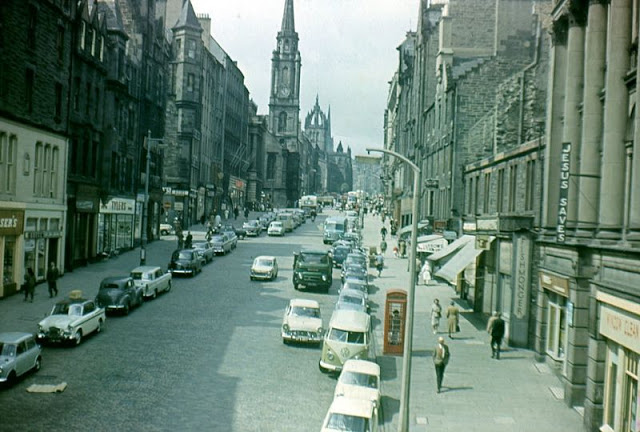
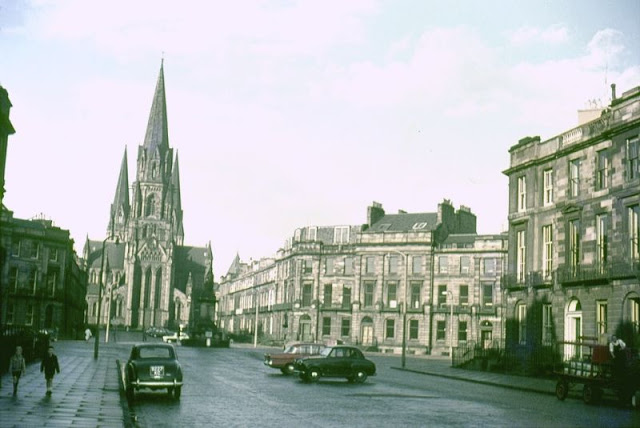
Edinburgh is the capital city of Scotland and one of its 32 council areas. Historically part of the county of Midlothian (interchangeably Edinburghshire before 1921), it is located in Lothian on the southern shore of the Firth of Forth. Edinburgh is Scotland’s second-most populous city and the seventh-most populous city in the United Kingdom.
Recognised as the capital of Scotland since at least the 15th century, Edinburgh is the seat of the Scottish Government, the Scottish Parliament and the highest courts in Scotland. The city’s Palace of Holyroodhouse is the official residence of the monarch in Scotland. The city has long been a centre of education, particularly in the fields of medicine, Scots law, literature, philosophy, the sciences and engineering. It is the second-largest financial centre in the United Kingdom, and the city’s historical and cultural attractions have made it the UK’s second-most visited tourist destination attracting 4.9 million visits, including 2.4 million from overseas in 2018.
Edinburgh’s official population estimates are 488,050 (mid-2016) for the Edinburgh locality, 518,500 (mid-2019) for the City of Edinburgh council area, and 1,339,380 (2014) for the wider city region. Edinburgh lies at the heart of the Edinburgh and South East Scotland city region comprising East Lothian, Edinburgh, Fife, Midlothian, Scottish Borders and West Lothian.
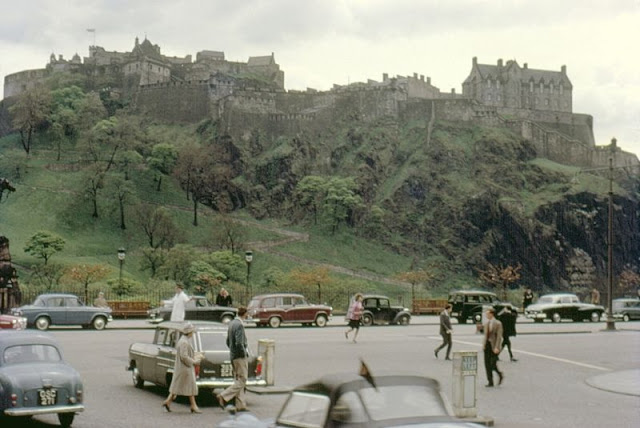
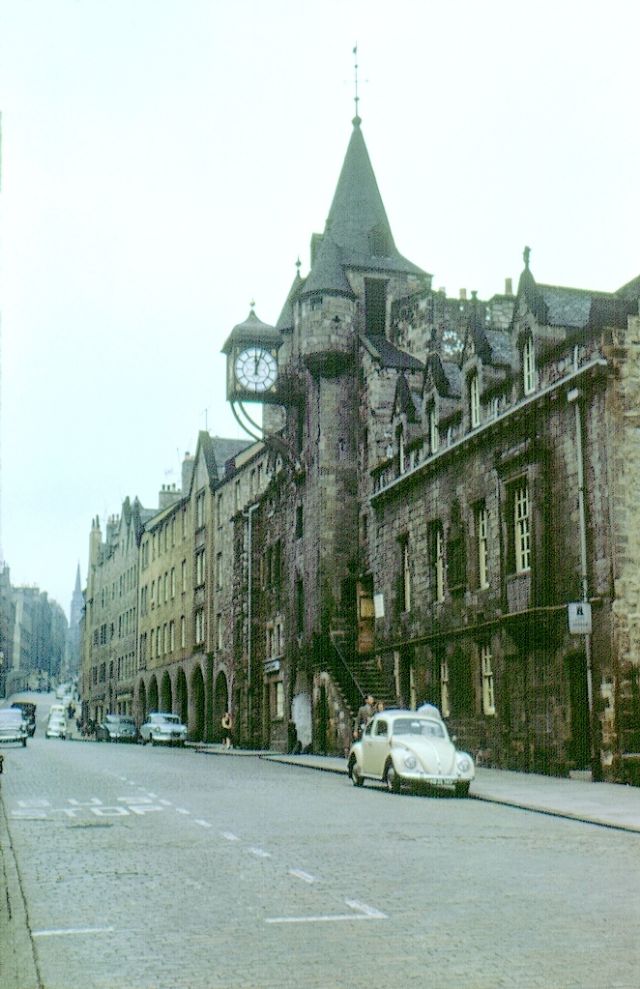
The city is the annual venue of the General Assembly of the Church of Scotland. It is home to national cultural institutions such as the National Museum of Scotland, the National Library of Scotland and the Scottish National Gallery. The University of Edinburgh, founded in 1582 and now one of three in the city, is placed 16th in the QS World University Rankings for 2022. The city is also known for the Edinburgh International Festival and the Fringe, the latter being the world’s largest annual international arts festival. Historic sites in Edinburgh include Edinburgh Castle, the Palace of Holyroodhouse, the churches of St. Giles, Greyfriars and the Canongate, and the extensive Georgian New Town built in the 18th/19th centuries. Edinburgh’s Old Town and New Town together are listed as a UNESCO World Heritage Site, which has been managed by Edinburgh World Heritage since 1999. (Wikipedia)
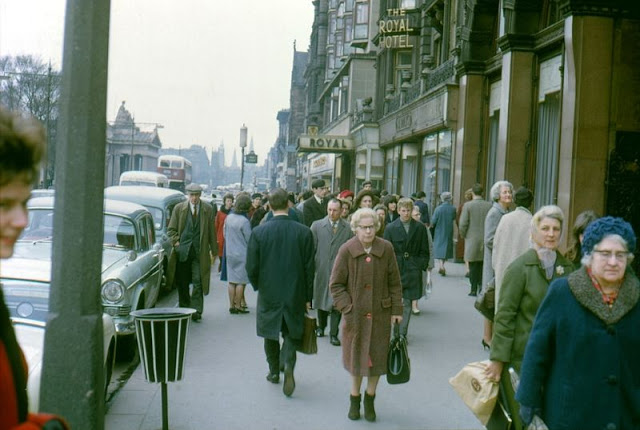
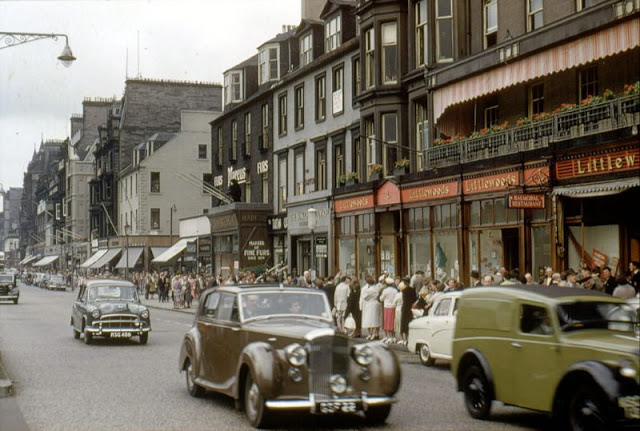
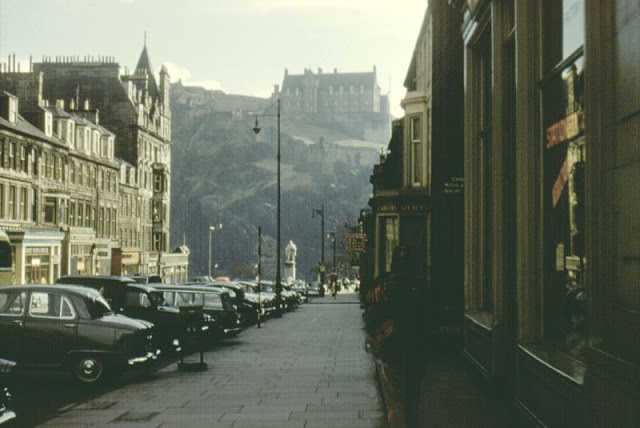
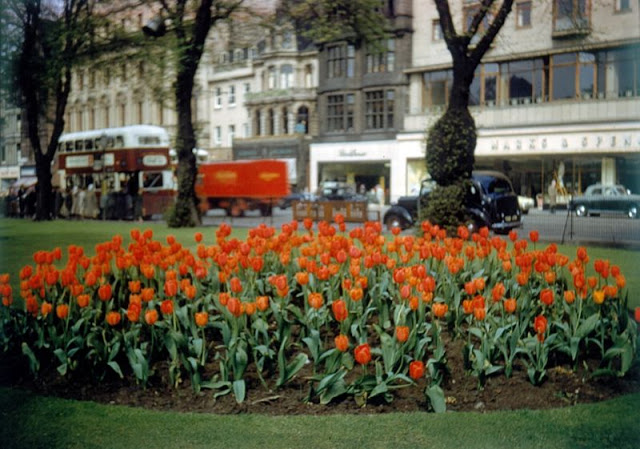
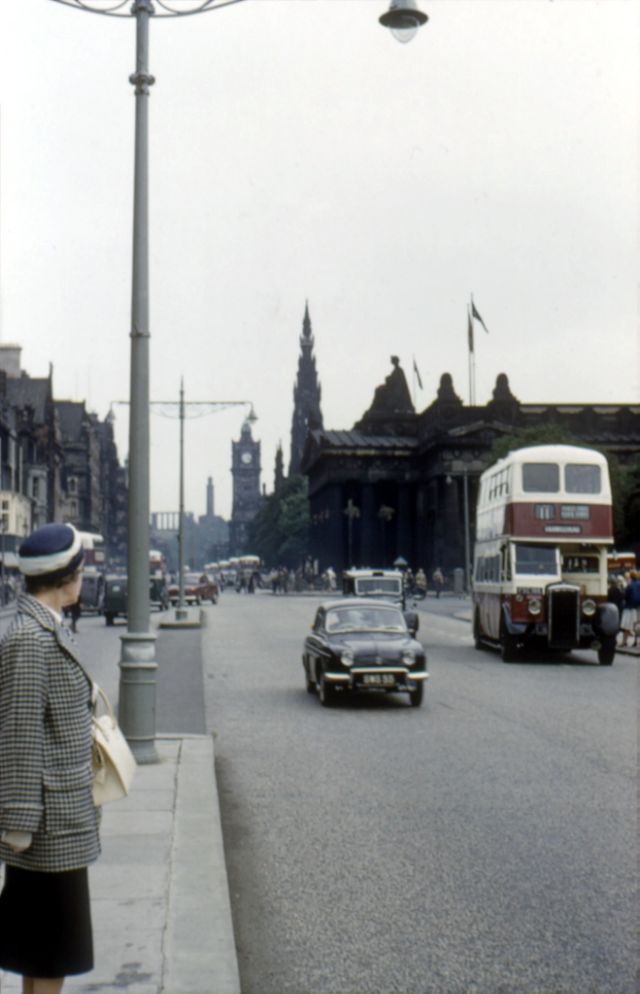
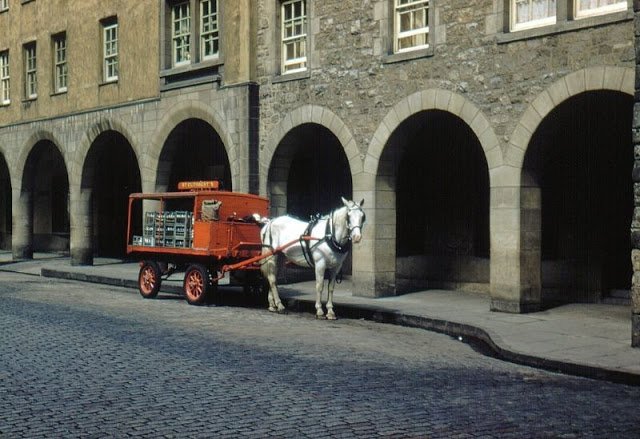
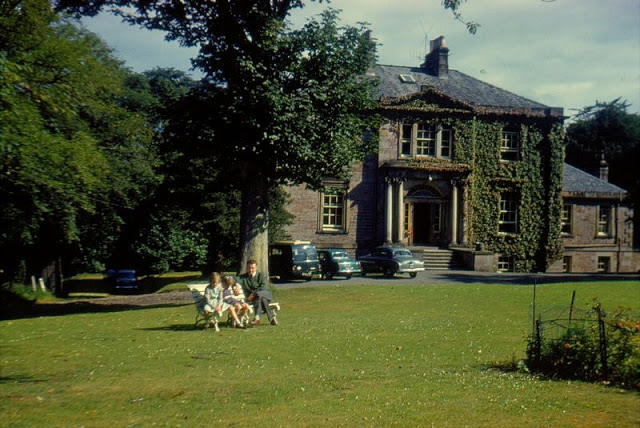
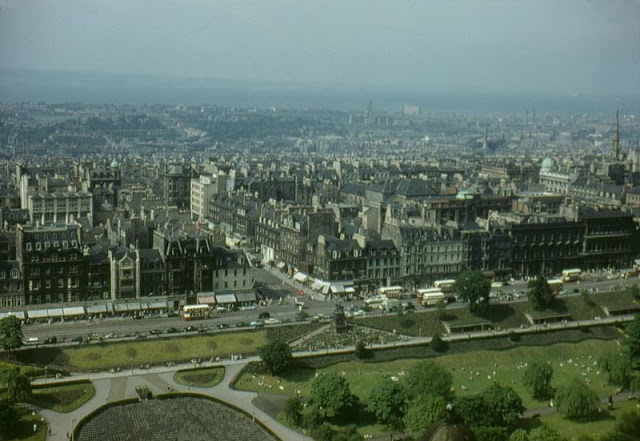
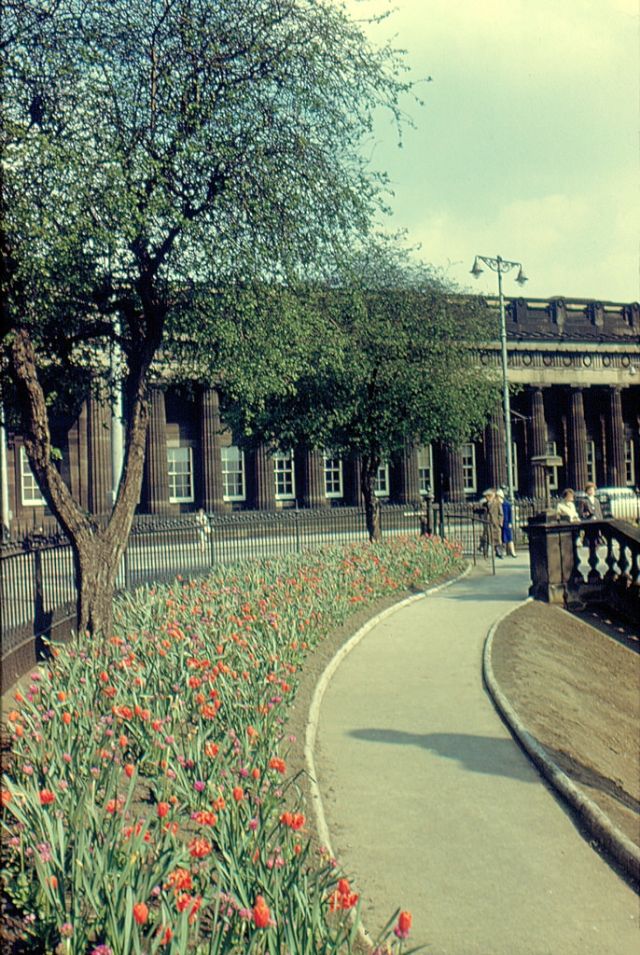
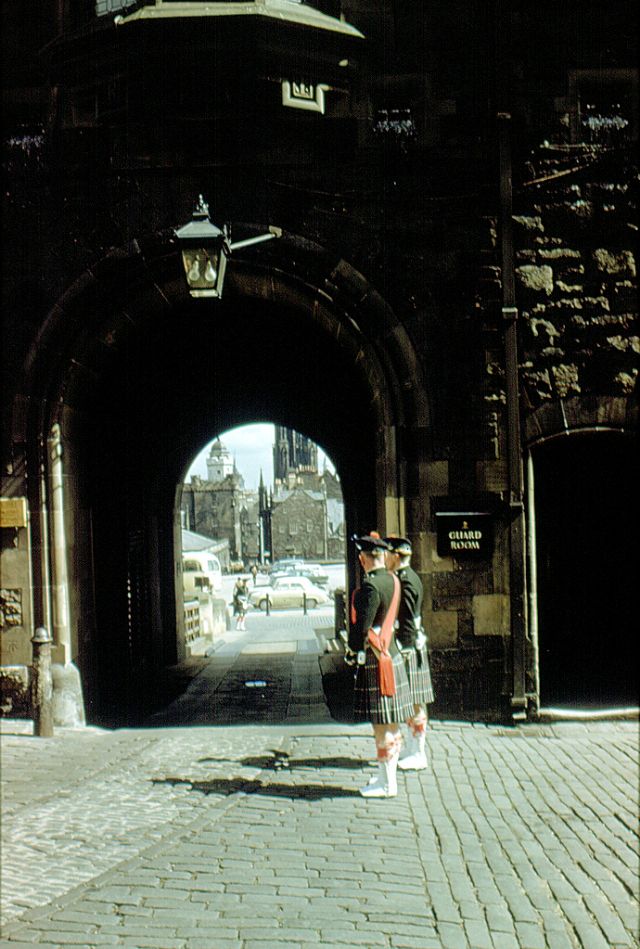
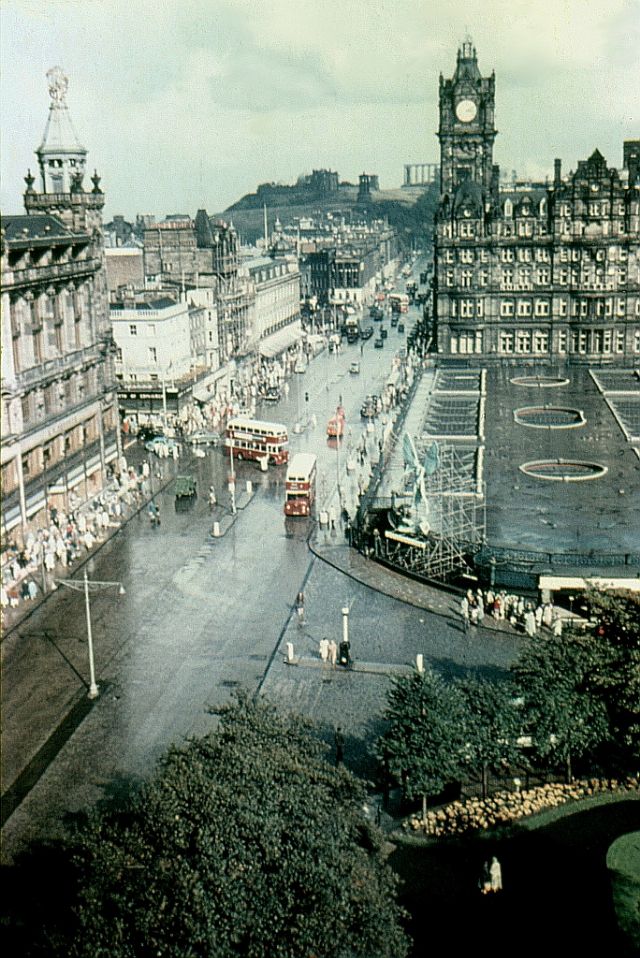
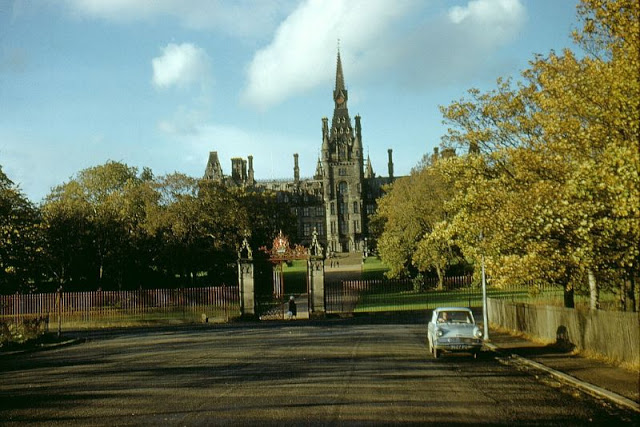
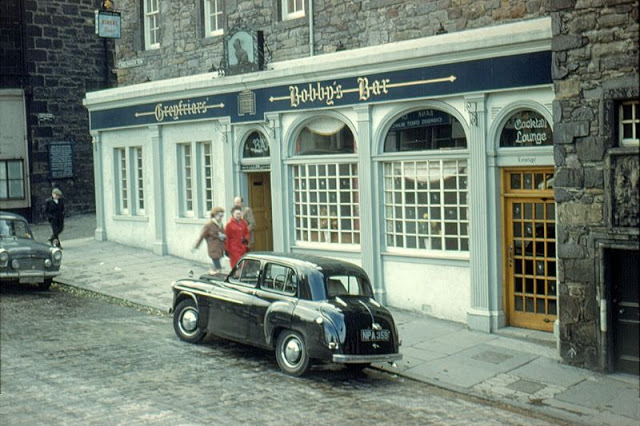
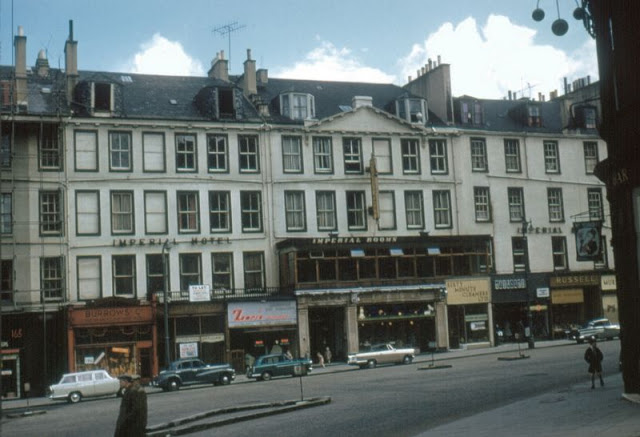
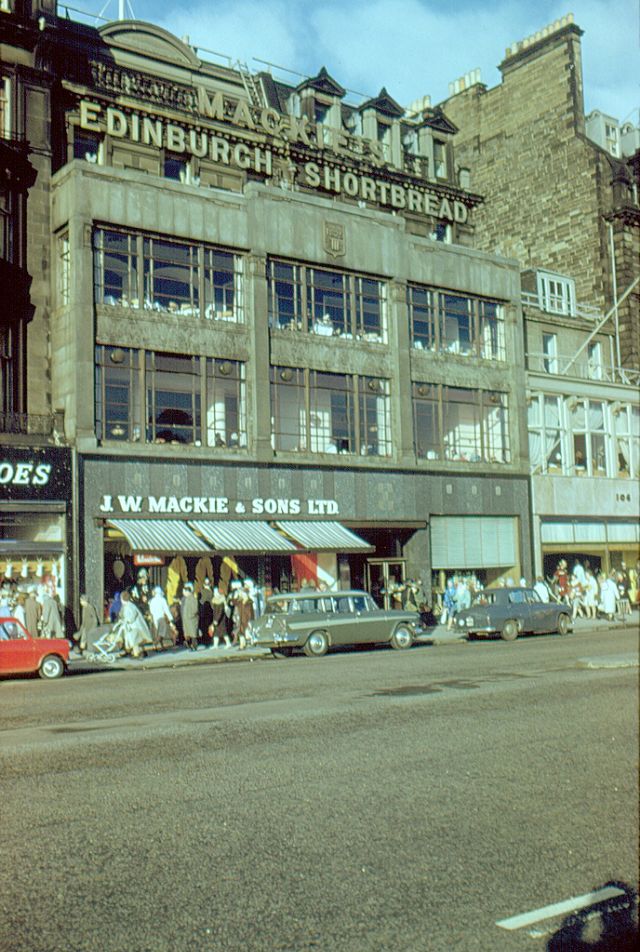
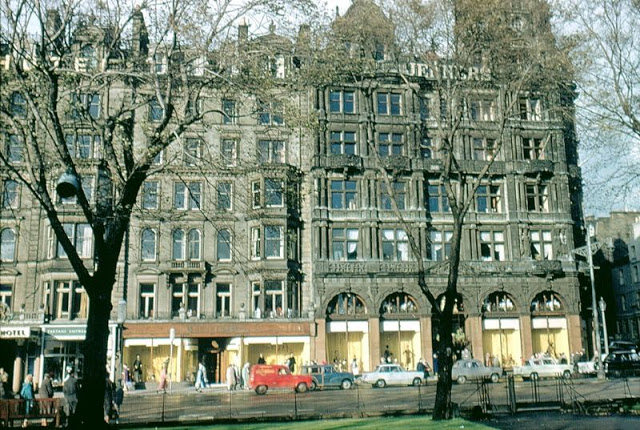
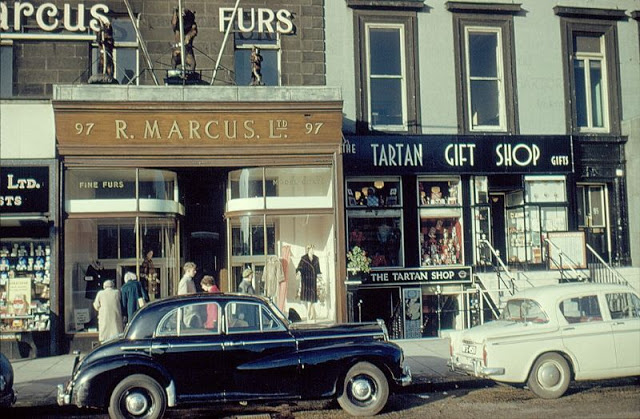
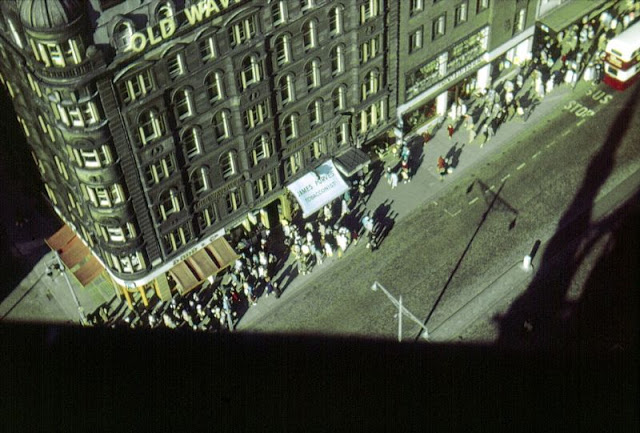
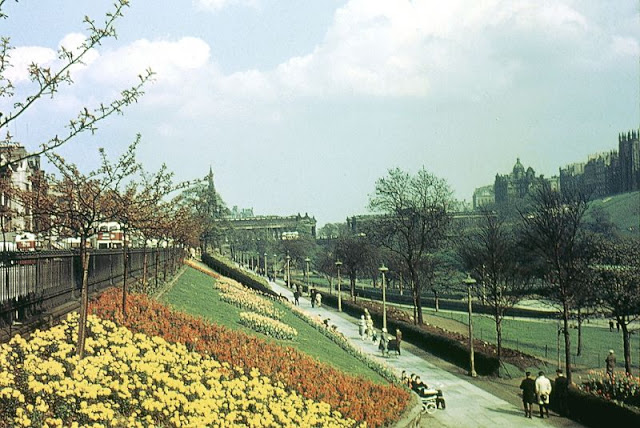
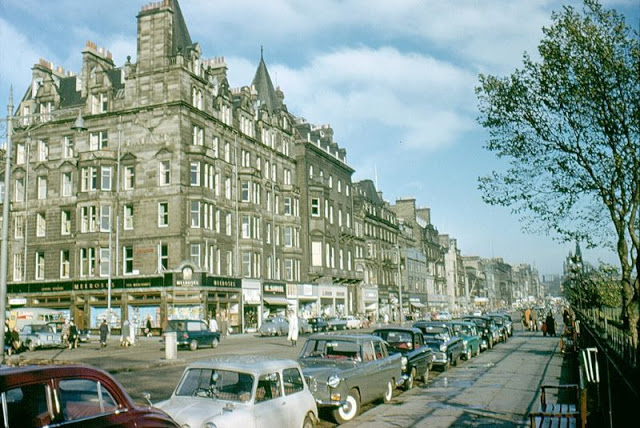
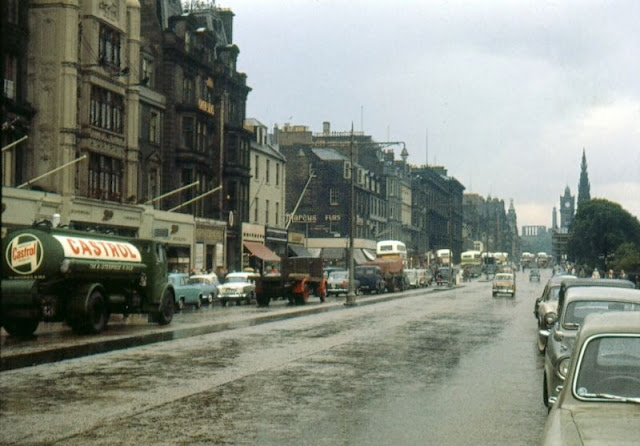
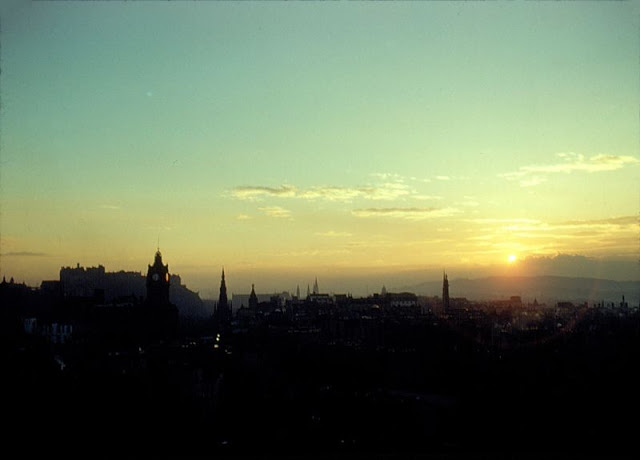
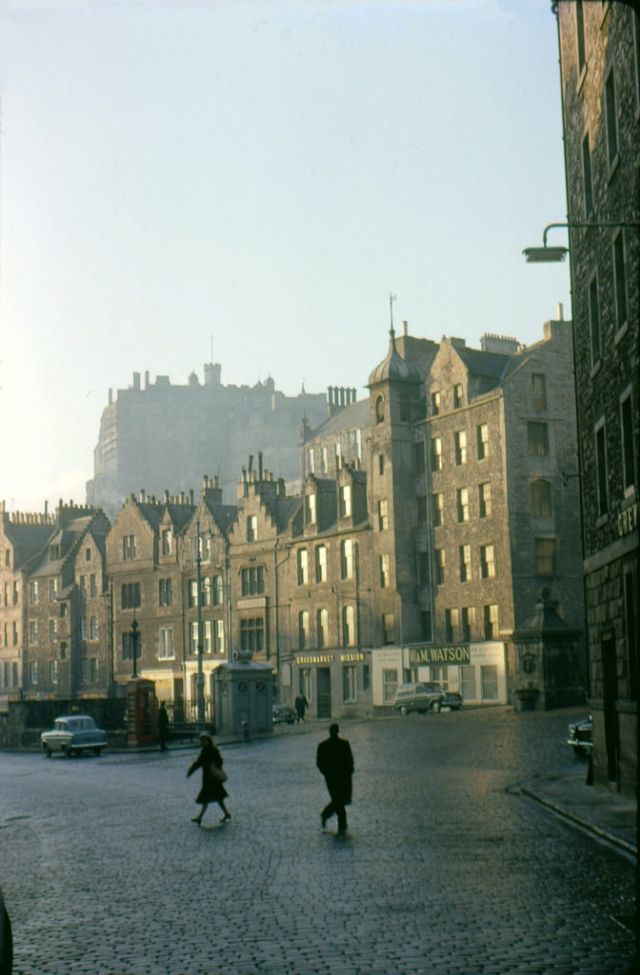
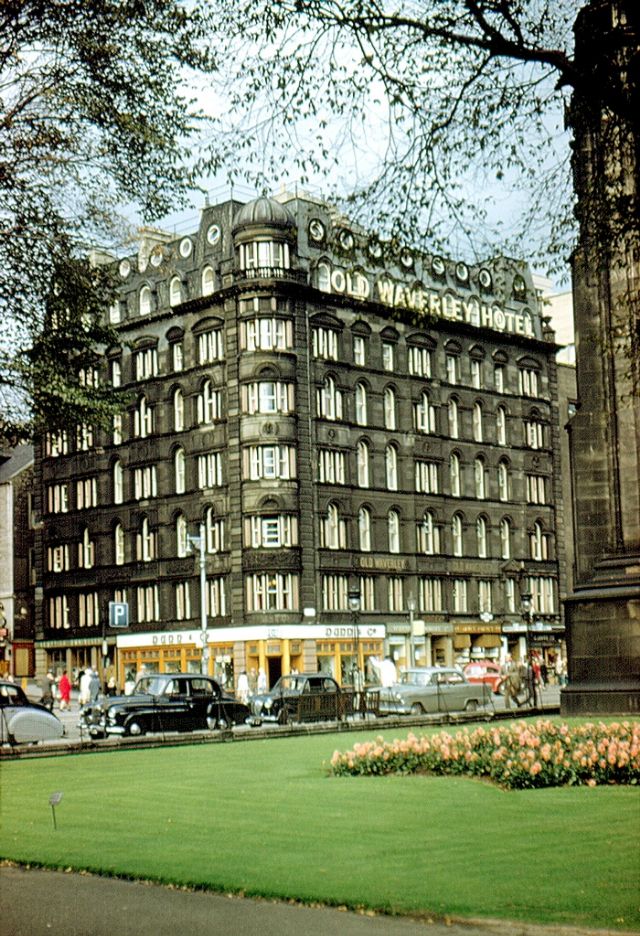
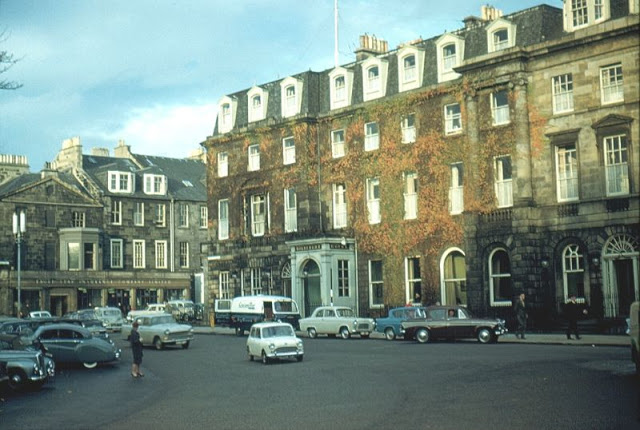
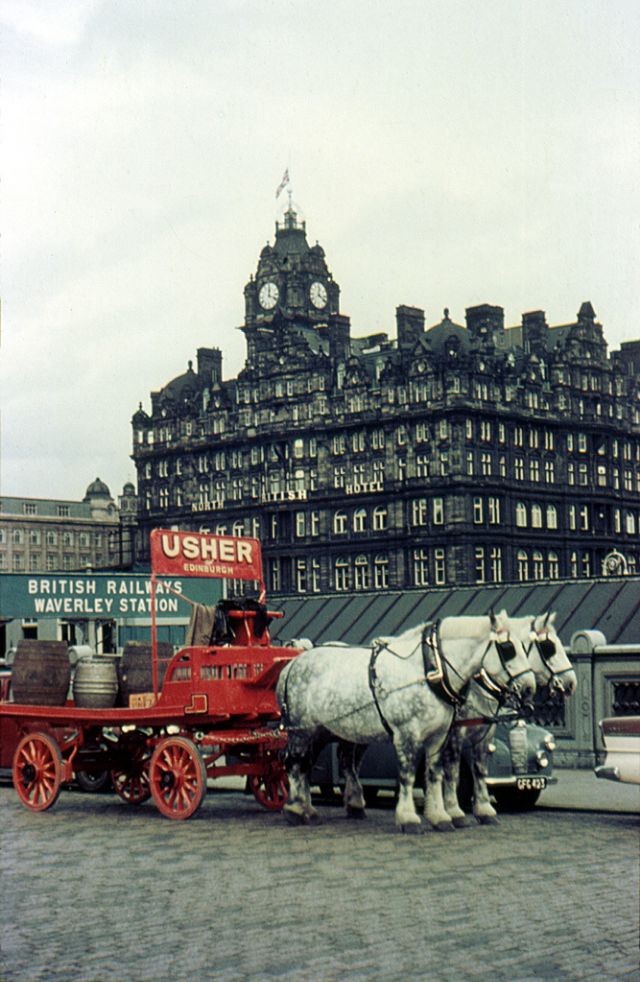
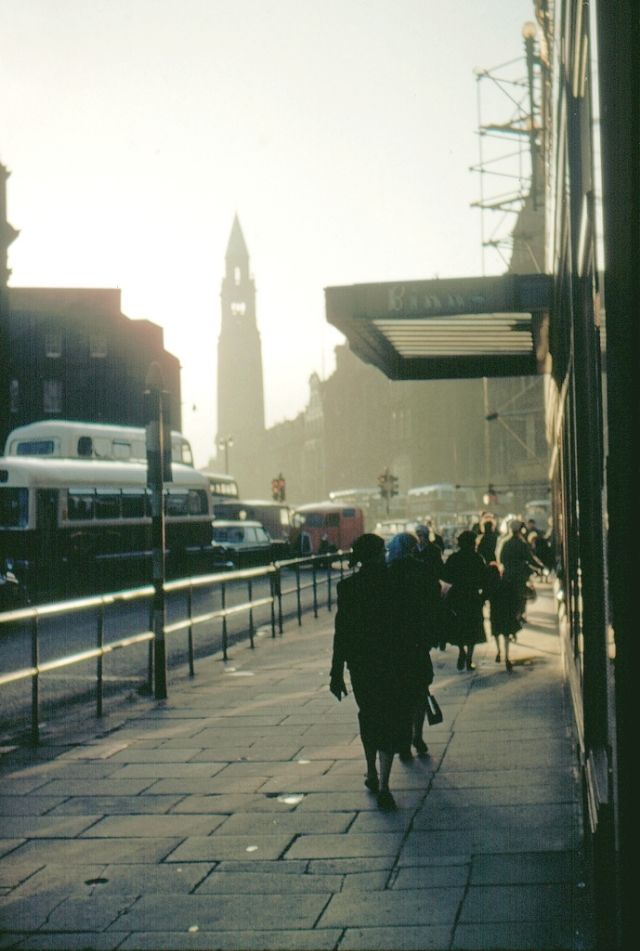
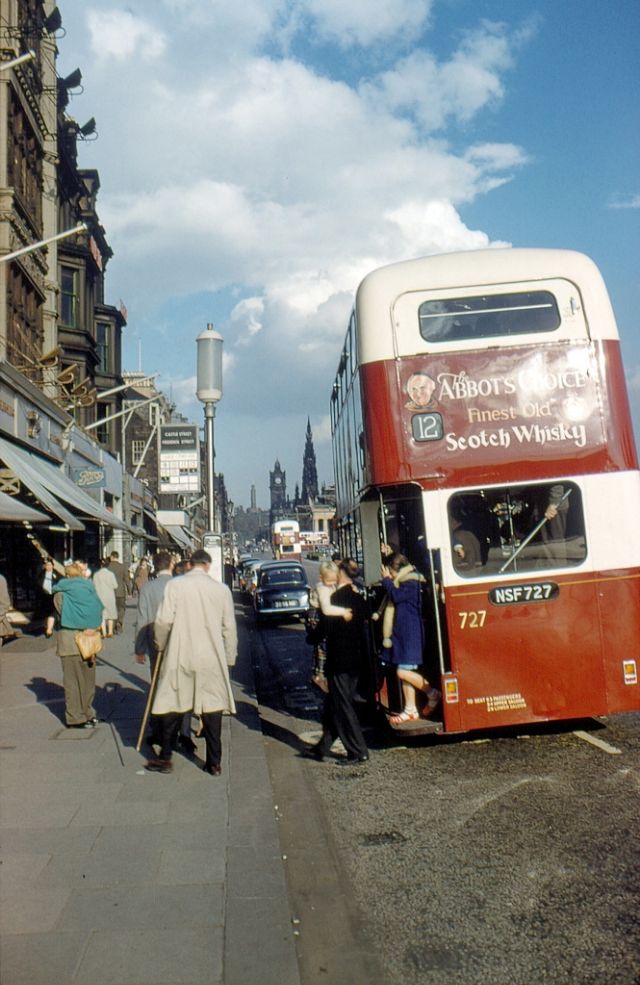
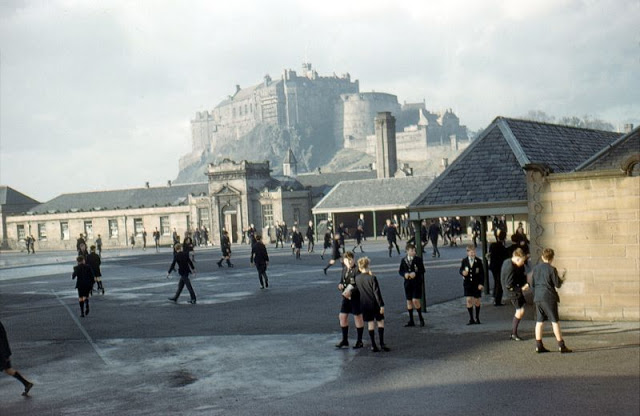
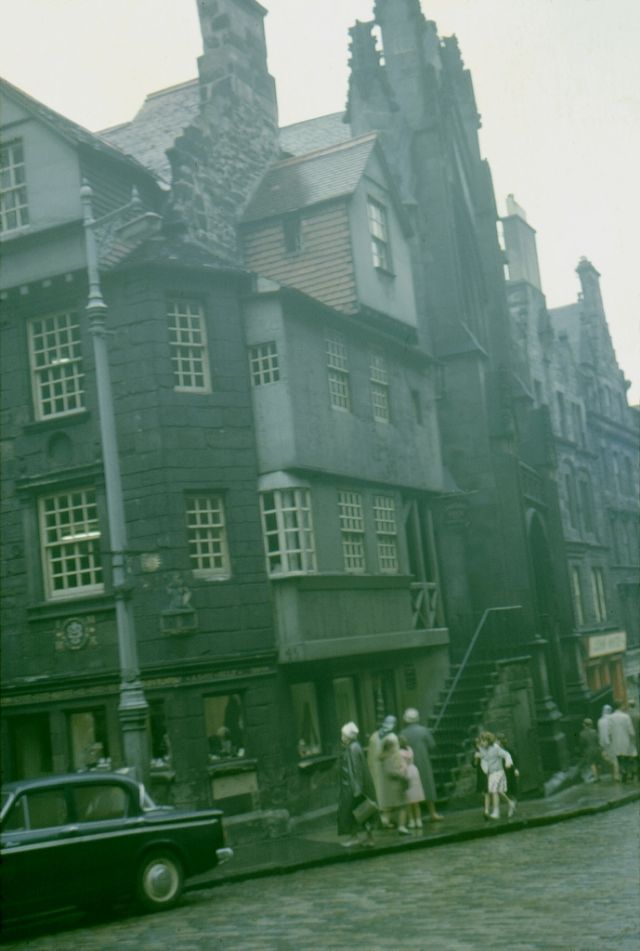
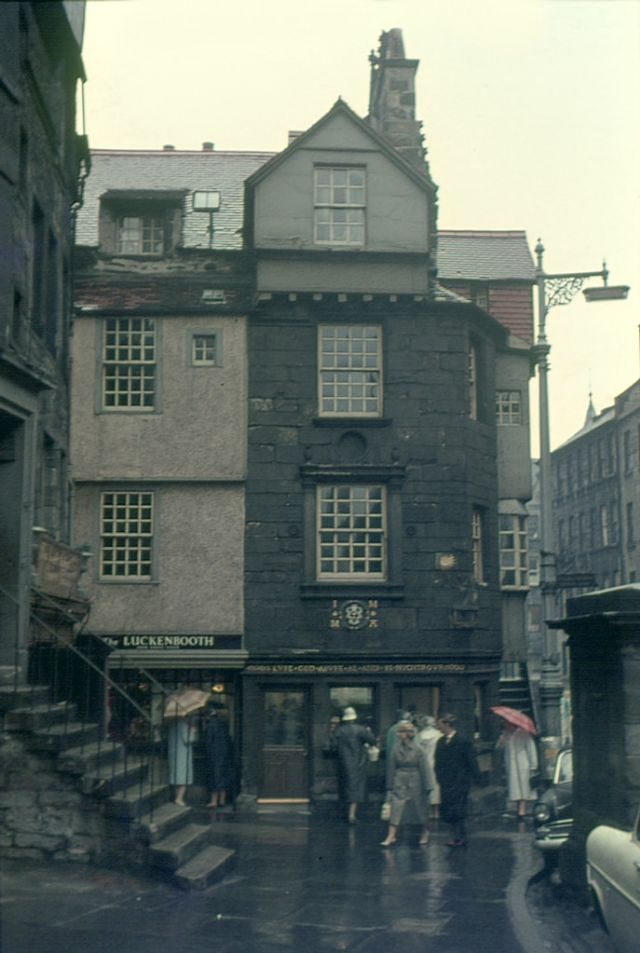
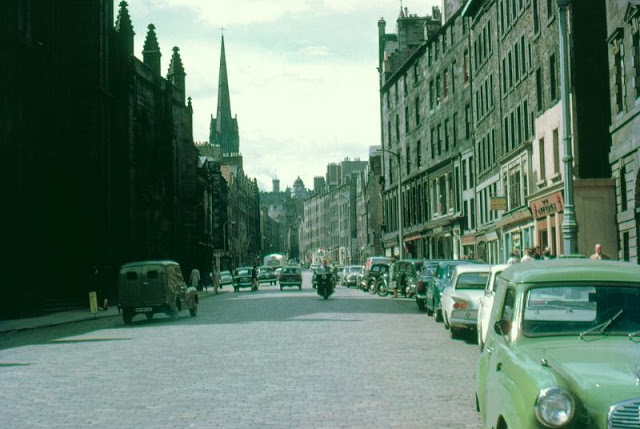
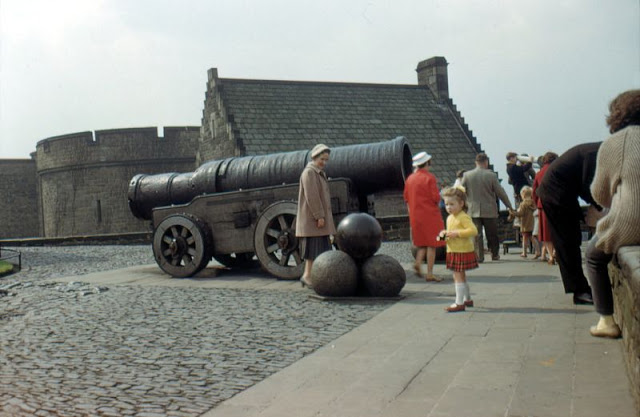
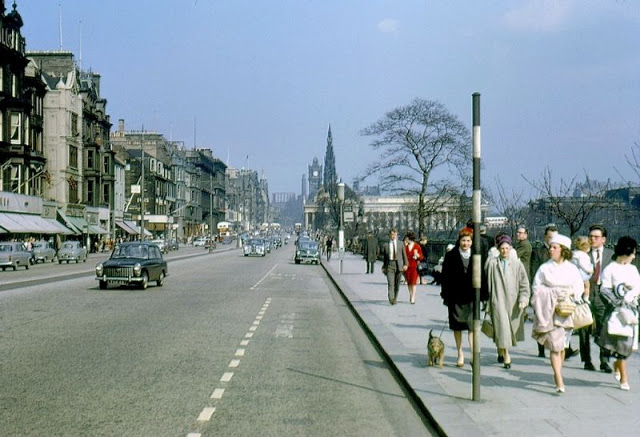
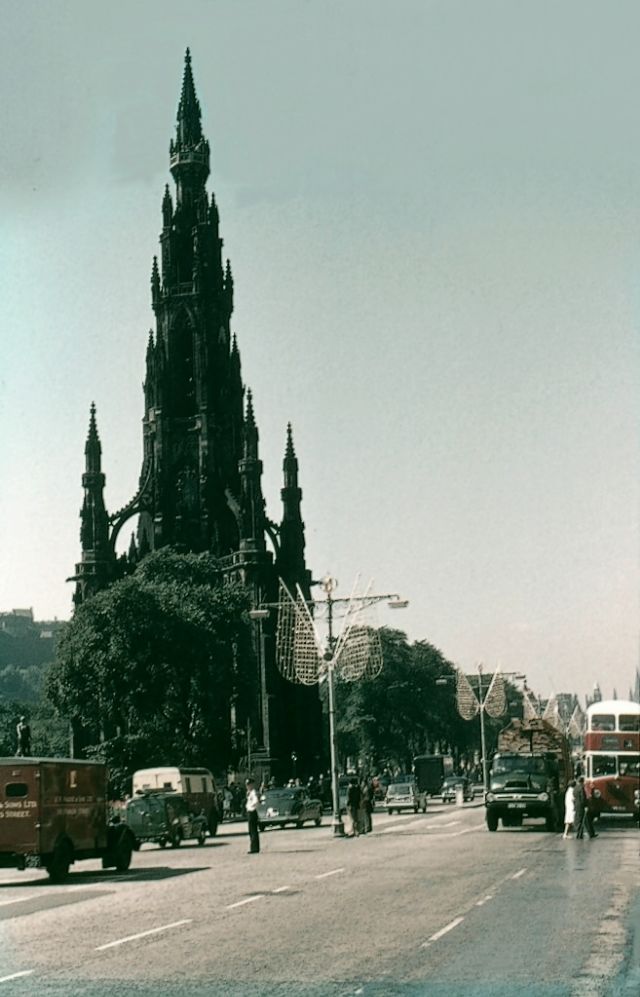
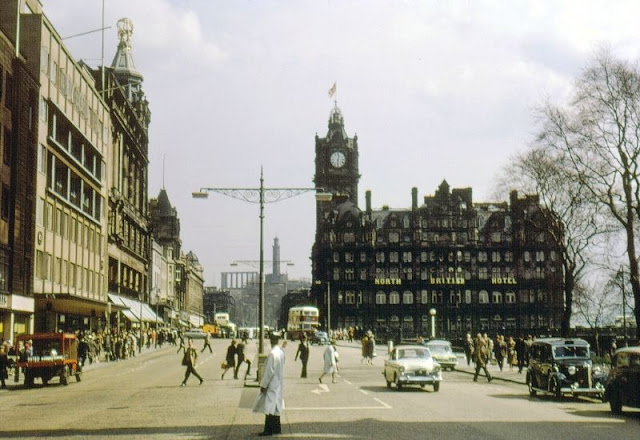
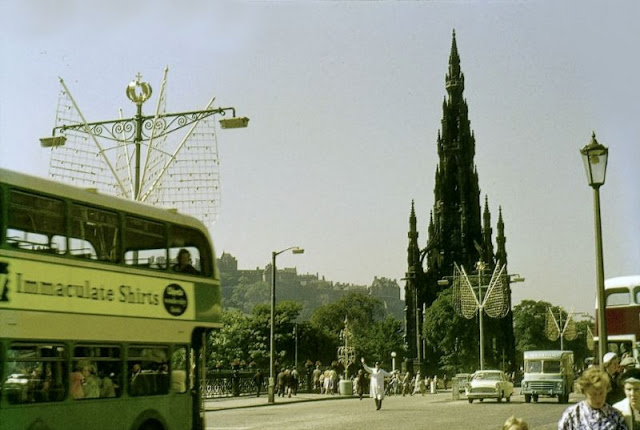
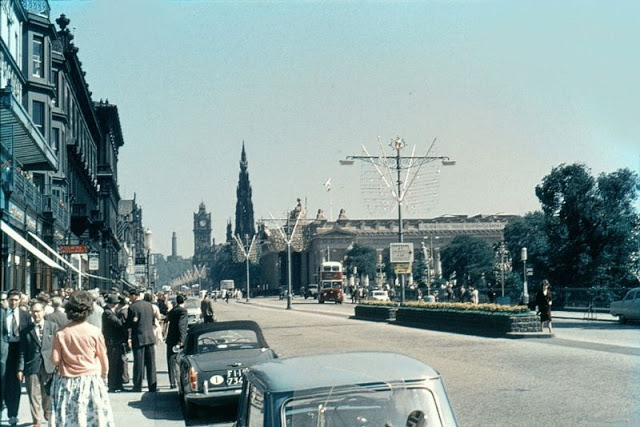
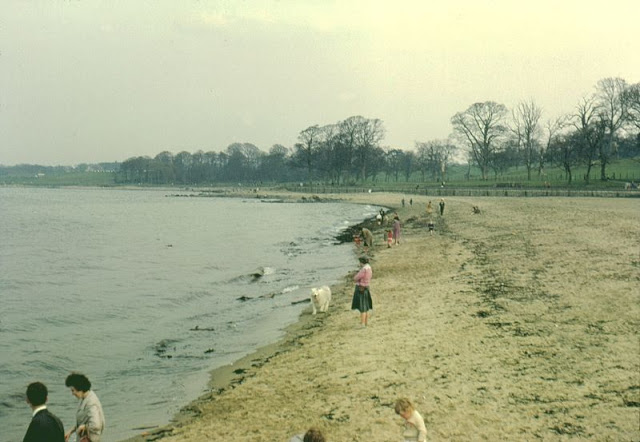
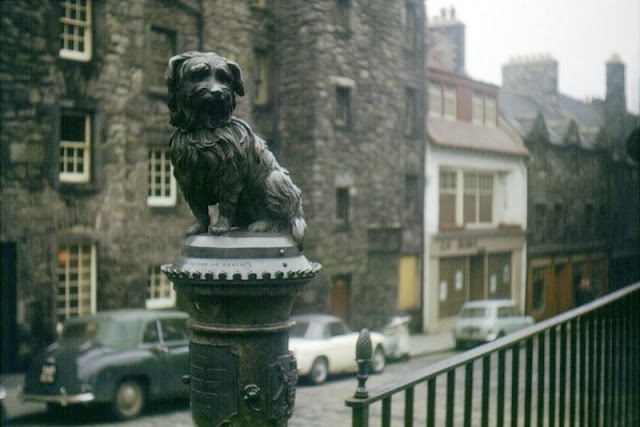
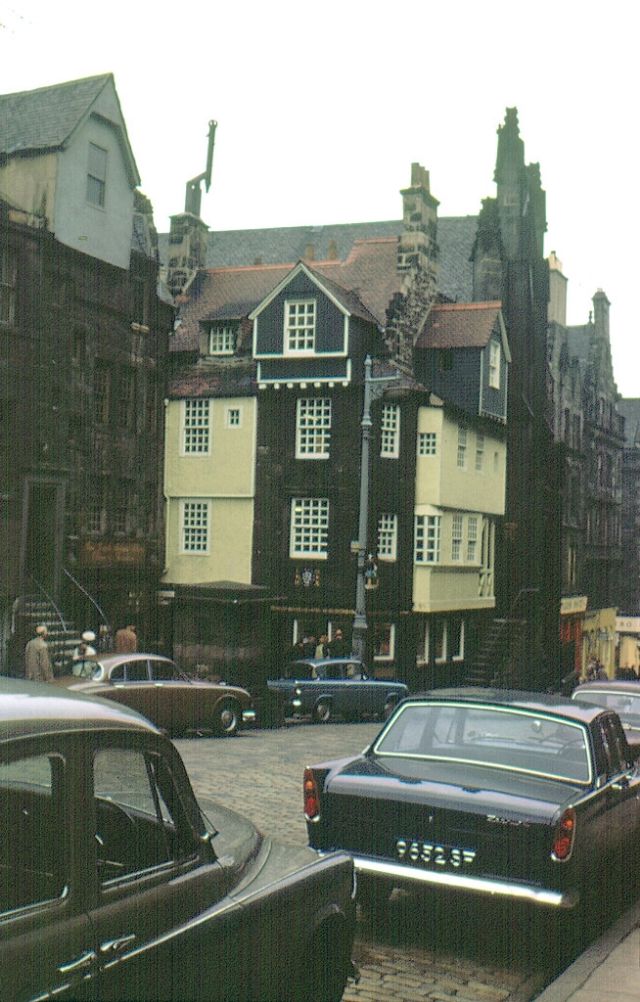
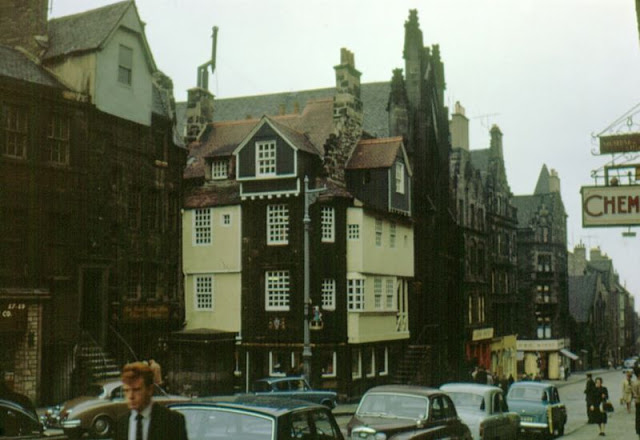
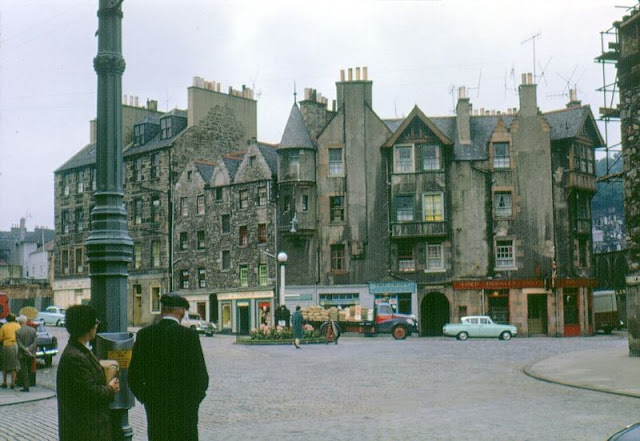
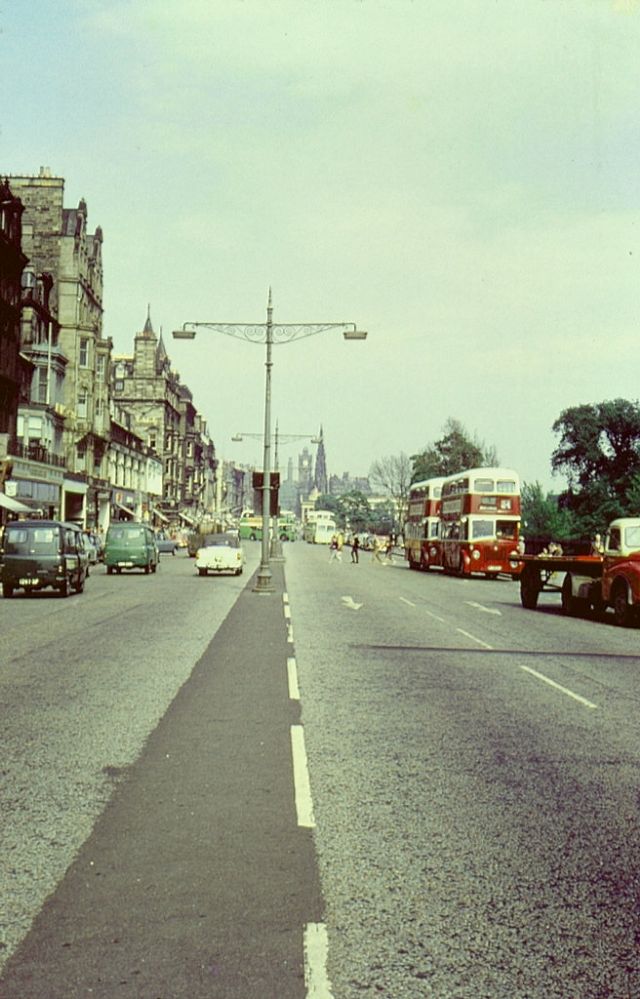
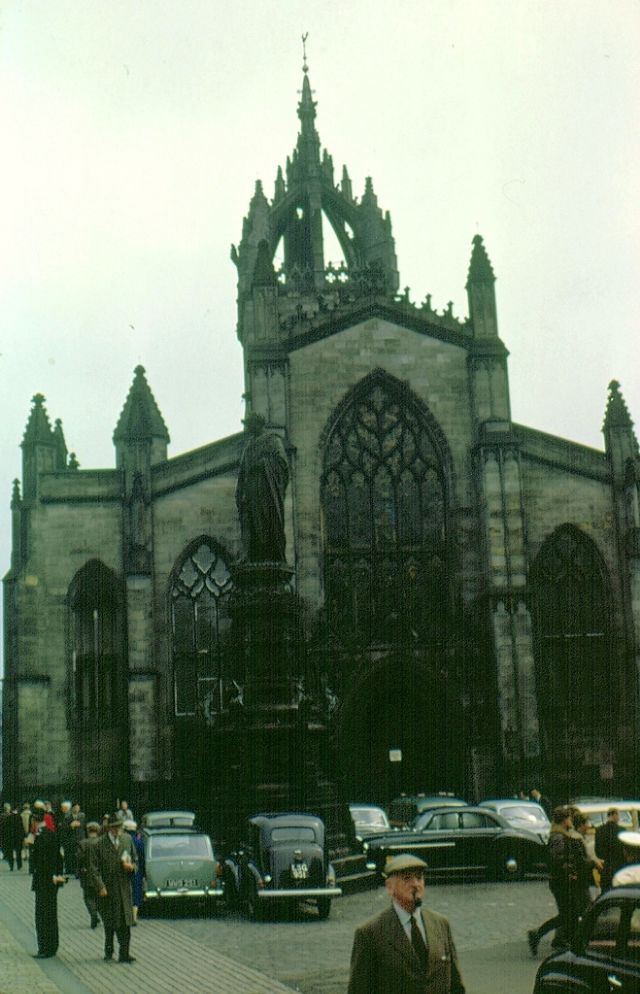
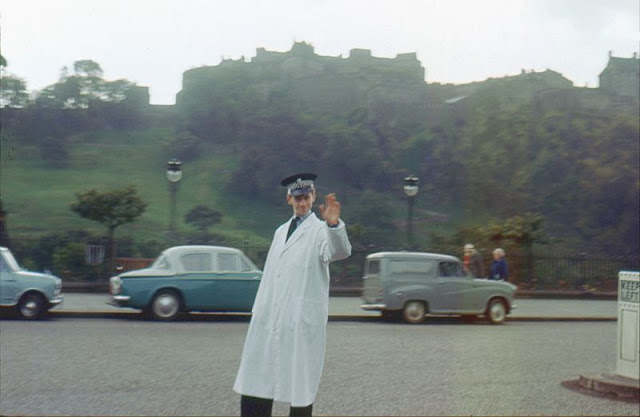
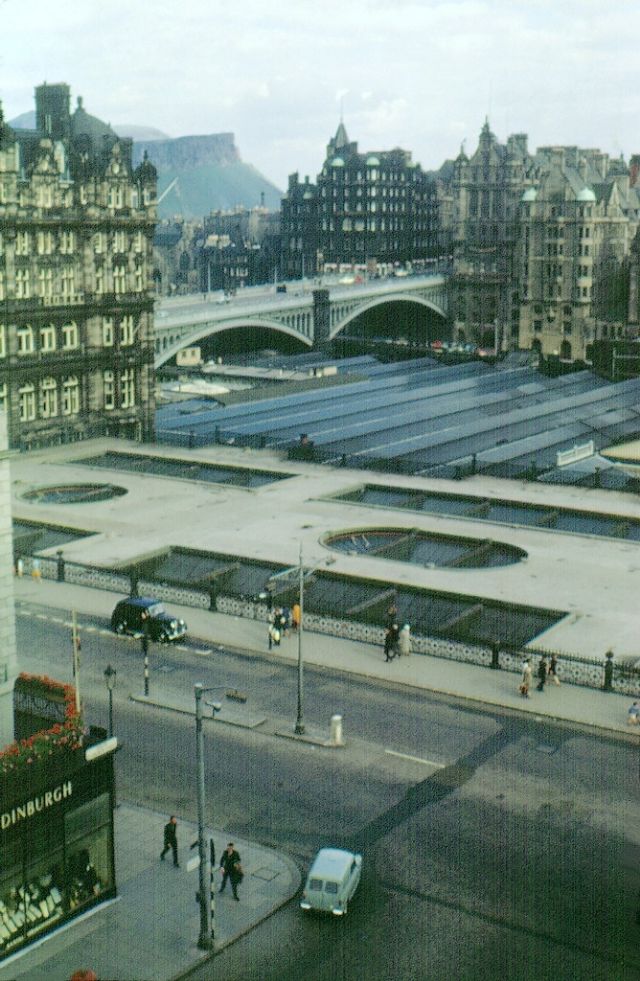
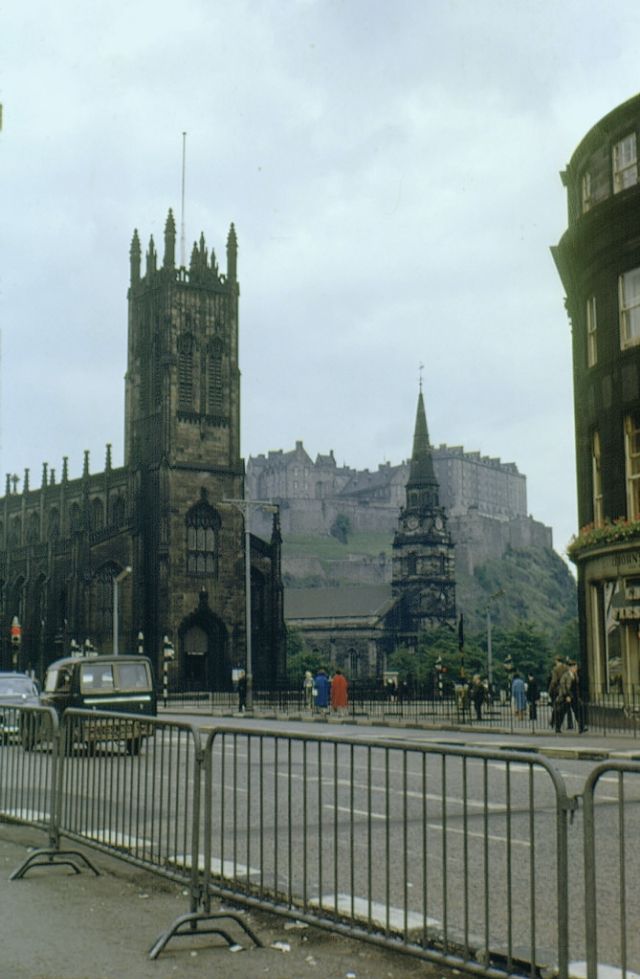
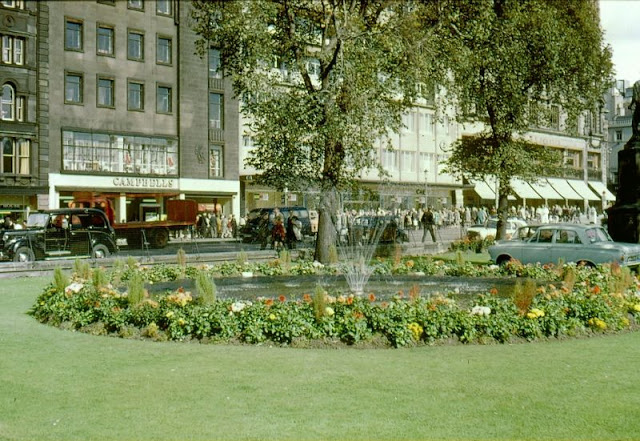
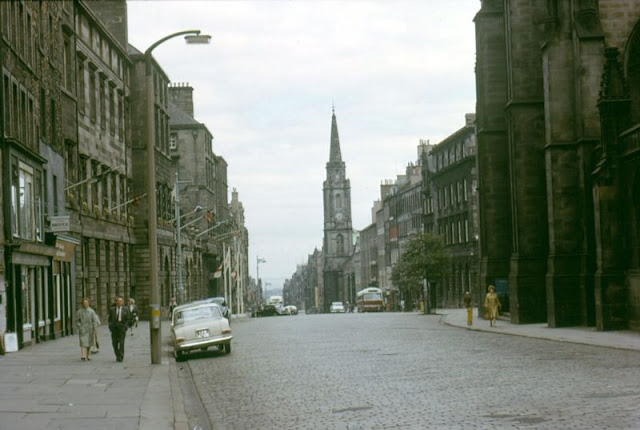
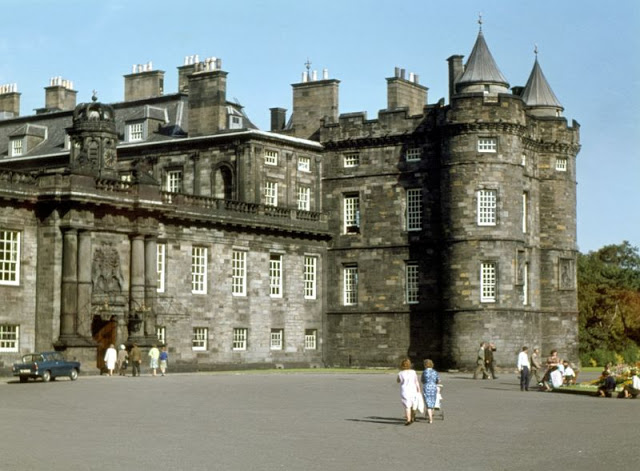
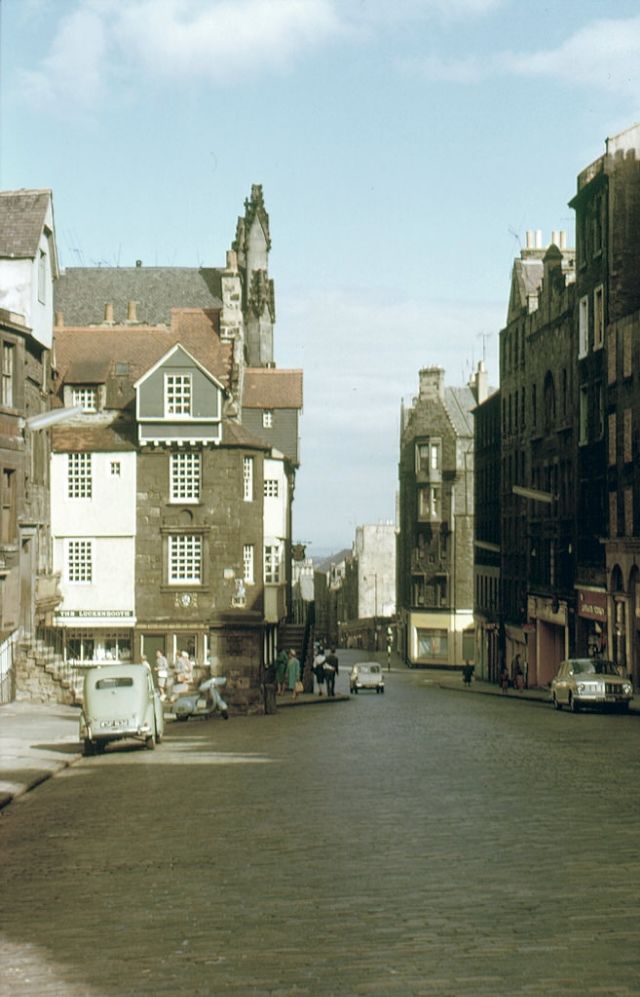
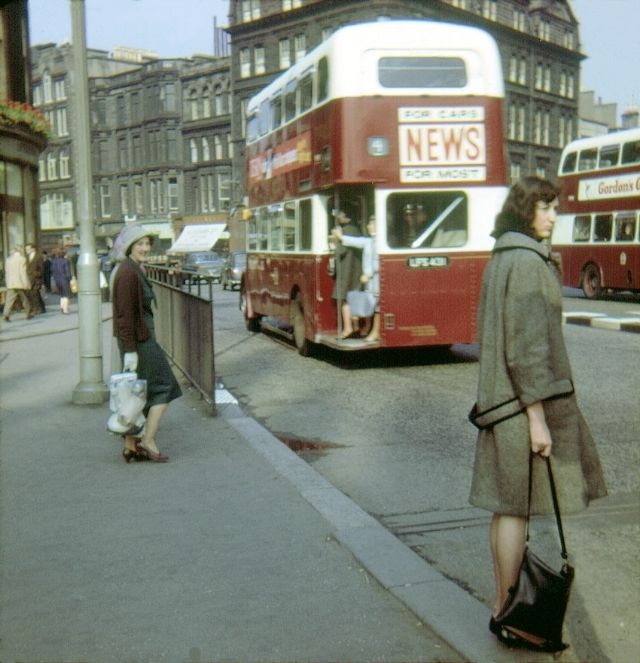
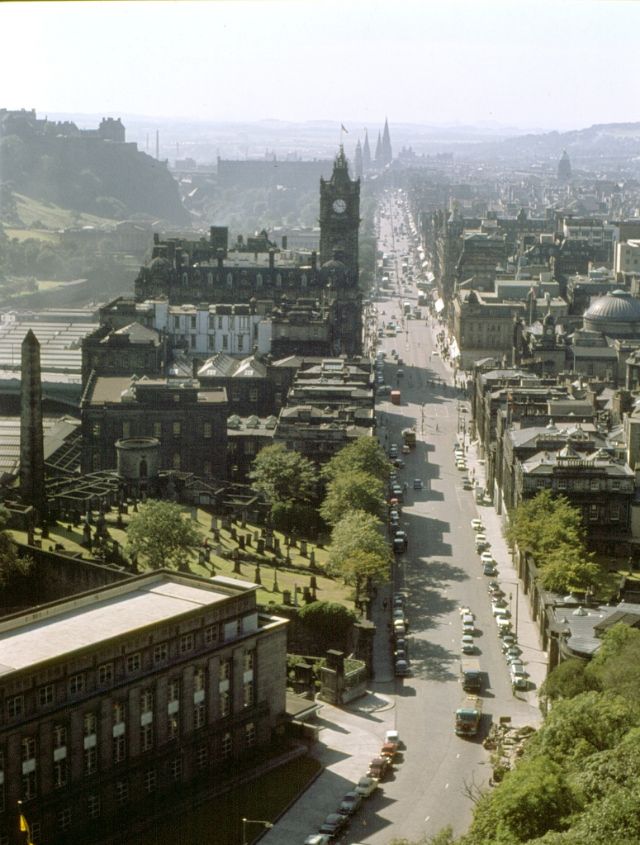
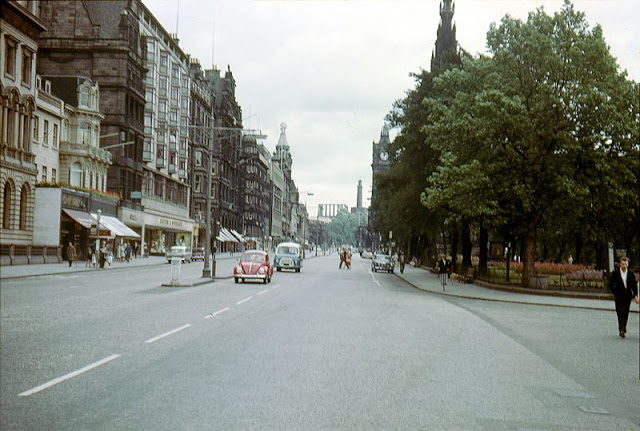
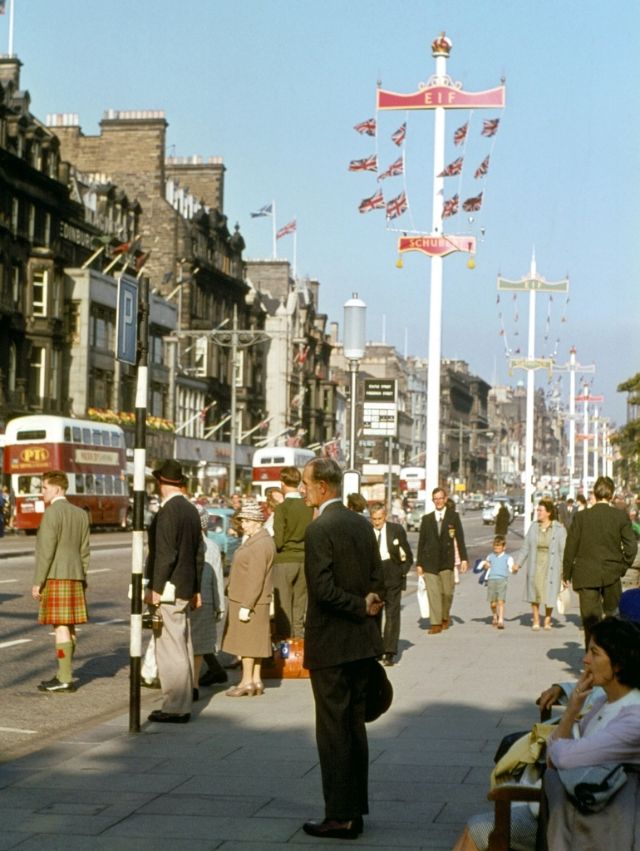
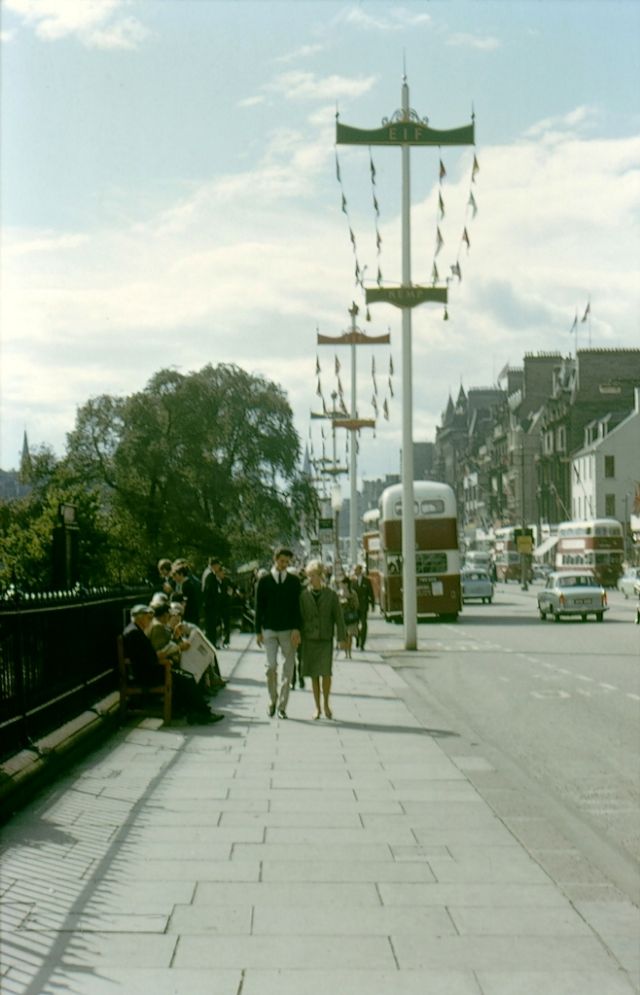
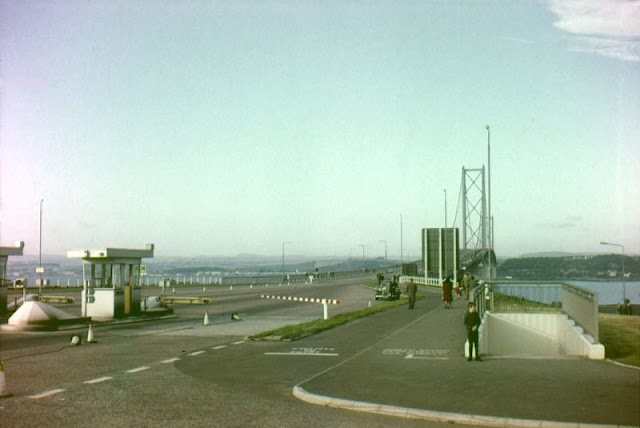
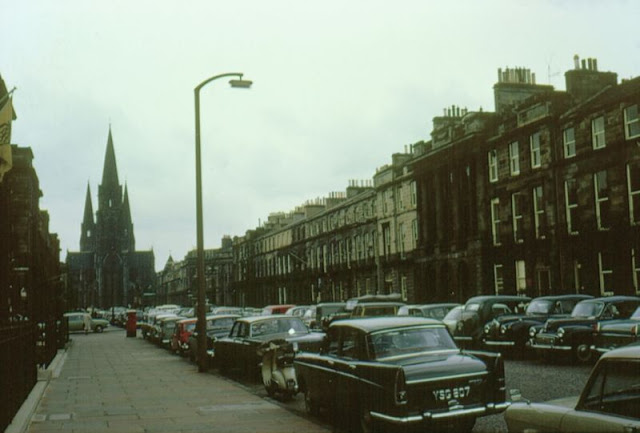
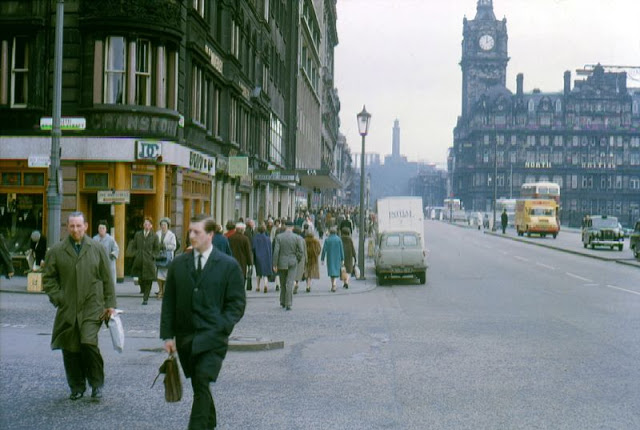
Princes Street looking west, Edinburgh, circa 1960Castle Street, Edinburgh, circa 1960Princes Street looking east, Edinburgh, circa 1960Princes Street looking east, Edinburgh, circa 1960St. Cuthbert’s horse-drawn milk cart, Canongate, Edinburgh, 1960The ‘Pentland Hills Hotel’, 68 Camus Avenue, Edinburgh, 1960View north from the castle, Edinburgh, circa 1960By the Floral Clock, Edinburgh, 1961Castle entrance, Edinburgh, 1961East end of Princes Street, Edinburgh, 1961Fettes College, Inverleith, Edinburgh, 1961Greyfriars’ Bobby’s Bar, Candlemaker Row, Edinburgh, 1961Imperial Hotel, Leith Street, from the junction with Little King Street (the pub on the right is Moir’s Bar), Edinburgh, 1961J. W. Mackie’s Shop & Tea Room, Princes Street, Edinburgh, 1961Jenners Store, Princes Street, Edinburgh, 1961Marcus’ Fur Shop, 97 Princes Street, Edinburgh, 1961Old Waverley Hotel from the Scott Monument, Princes Street, Edinburgh, circa 1961Princes Street Gardens looking east, Edinburgh, 1961Princes Street looking east, Edinburgh, 1961Princes Street looking east, Edinburgh, 1961Princes Street looking west from the Scott Monument, Edinburgh, 1961Princes Street looking west, Edinburgh, 1961Scott Monument, Princes Street, Edinburgh, 1961St.Giles Cathedral, Edinburgh, 1961Sunset from Calton Hill, Edinburgh, 1961The Old Waverley Hotel, Princes Street, Edinburgh, 1961The Old Waverley Hotel, Princes Street, Edinburgh, 1961The ‘Roxburghe’ Hotel, Charlotte Square, Edinburgh, 1961Usher Brewery Cart, Waverley Bridge, Edinburgh, 1961West end of Princes Street at Binns Store, Edinburgh, 1961Bus stop, Princes Street, Edinburgh, 1962Castle from George Heriot’s School, Edinburgh, 1962Chester Street, Edinburgh, 1962High Street looking west, Edinburgh, 1962John Knox’s House, High Street, Edinburgh, 1962John Knox’s House, High Street, Edinburgh, 1962Looking west at St. Giles Cathedral, High Street, Edinburgh, 1962Mons Meg, Castle, Edinburgh, 1962Princes Street looking east, Edinburgh, circa 1962Princes Street looking east, Edinburgh, circa 1962Princes Street looking east, Edinburgh, circa 1962Princes Street looking west, Edinburgh, circa 1962Princes Street looking west, Edinburgh, circa 1962River Almond, Cramond, Edinburgh, 1962St. Mary’s Episcopalian Cathedral from Melville Street, Edinburgh, 1962The Beach, Cramond, Edinburgh, 1962The castle from Frederick Street, Edinburgh, 1962Canongate Tolbooth, High Street, Edinburgh, 1963Greyfriars Bobby, George IV Bridge, Edinburgh, circa 1963John Knox’s House, Edinburgh, 1963John Knox’s House, Edinburgh, 1963Lower Canongate, Edinburgh, 1963Princes Street looking east, Edinburgh, 1963St. Giles Cathedral, High Street, Edinburgh, 1963Traffic policeman, junction of Frederick St. and Princes St., Edinburgh, 1963Waverley Station from south St. Andrew Street, Edinburgh, 1963West end, Princes Street, Edinburgh, 1963East Princes Street Gardens, Edinburgh, 1964High Street Looking East at St. Giles, Edinburgh, 1964Holyrood House, Edinburgh, 1964John Knox’s House, High Street, Edinburgh, 1964Junction of Princes Street and Shandwick Place, Edinburgh, 1964Princes Street from Calton Hill, Edinburgh, 1964Princes Street looking east, Edinburgh, 1964Princes Street looking east, Edinburgh, 1964Princes Street looking west, Edinburgh, 1964Forth Road Bridge, River Forth, Queensferry, 1965Melville Street, Edinburgh, 1965Princes Street looking east, Edinburgh, 1965Princes Street Looking West, Edinburgh, 1965
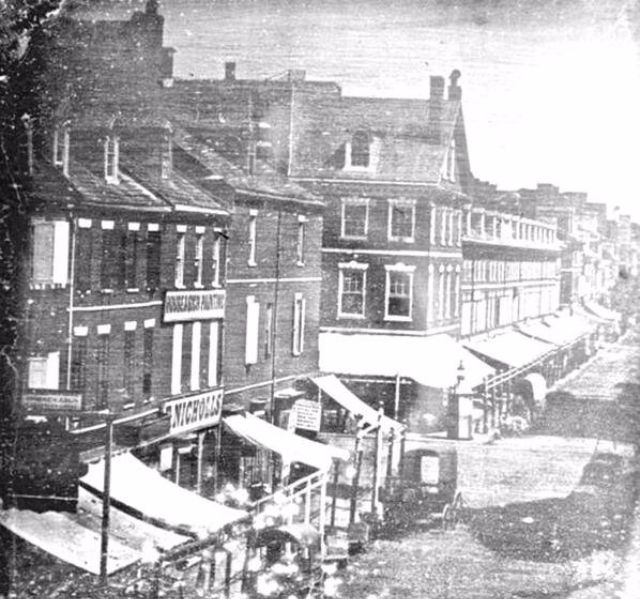
A view of 8th and Market streets downtown. It’s one of the earliest photos of the city, courtesy of Free Library of Philadelphia.
New York City, N.Y.
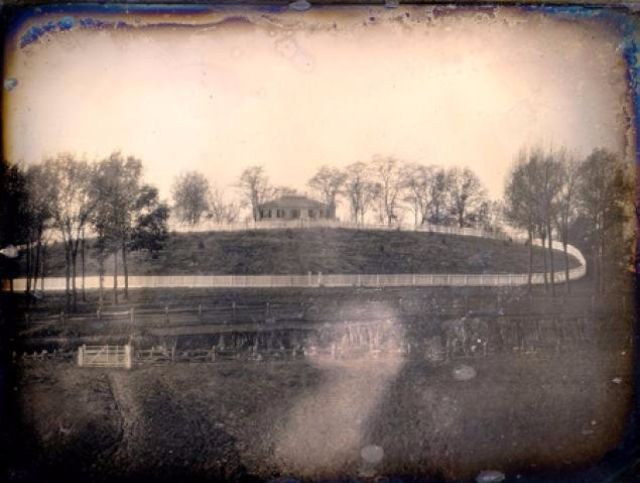
This home on the Upper West Side of Manhattan in a daguerreotype from 1848.
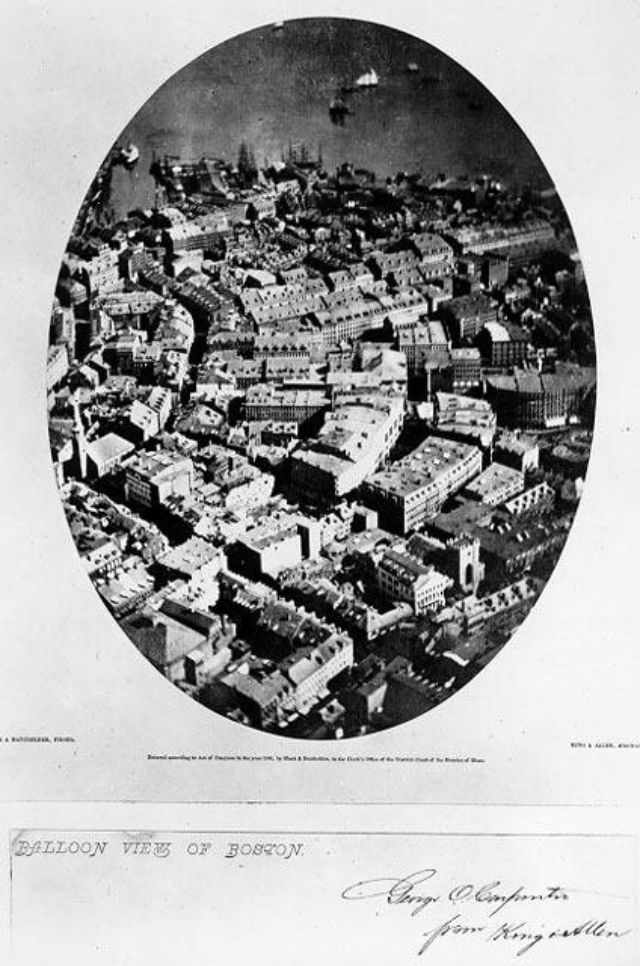
Boston, Mass.
William Blake photographed this aerial view of Boston from a hot air balloon in 1860, courtesy of the Boston Public Library. It was the first successful aerial photographic effort in the U.S., according to the Air and Space Museum.
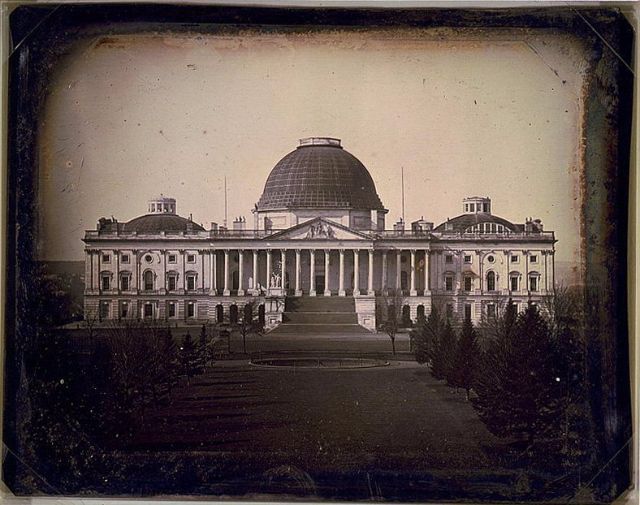
Washington, D.C.
John Plumbe made a daguerreotype of the Capitol Building in 1846, according to the Library of Congress.
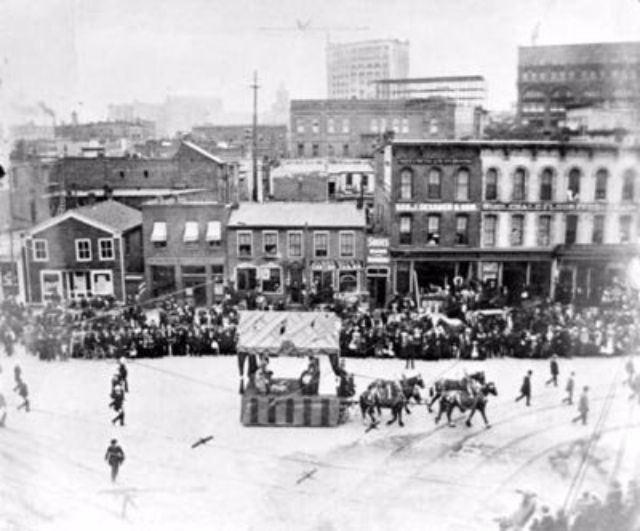
Detroit, Mich.
A view of Randolph Street in downtown Detroit from the 1890s, courtesy of the Walter P. Reuther Library.
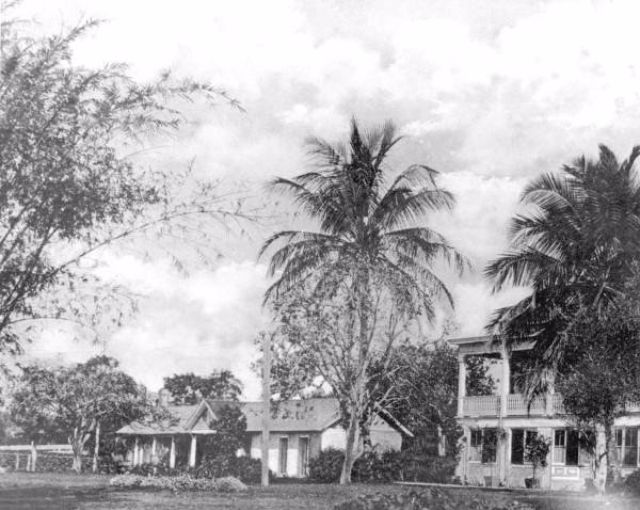
Miami, Fla.
Gleason Waite Romer took this snapshot of Old Fort Dallas and the Seminole Club hotel in Miami in 1895. This photo comes from the State Archives of Florida.
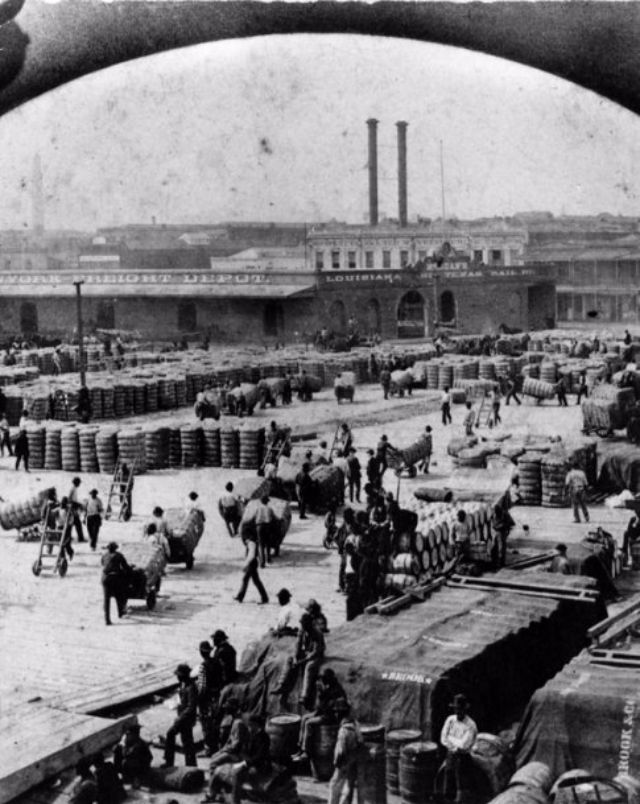
New Orleans, La.
George F. Mugnier photographed a cotton shipment at a New Orleans dock in the 1880s, courtesy of the State Library of Louisiana.
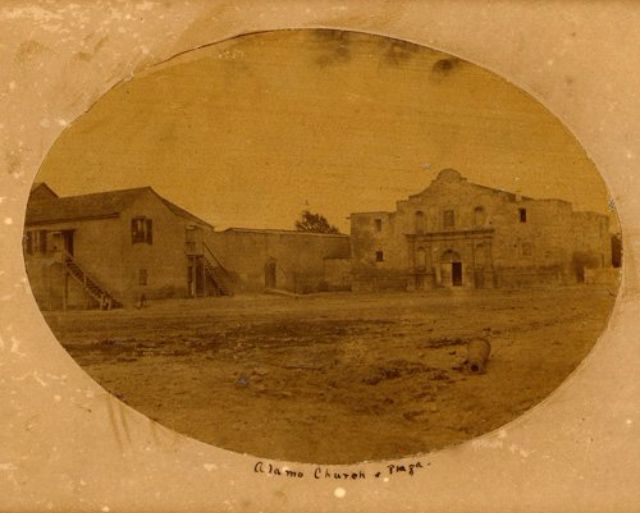
San Antonio, Tex.
The earliest known photograph of the Alamo Church and Plaza in San Antonio comes from 1858, according to the Daughters of the Republic of Texas Library.
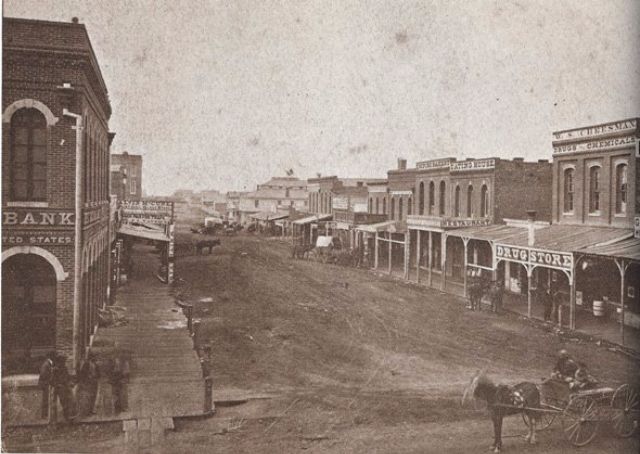
Denver, Colo.
This is a view of downtown Denver’s Blake Street in 1866 from the Denver Public Library.
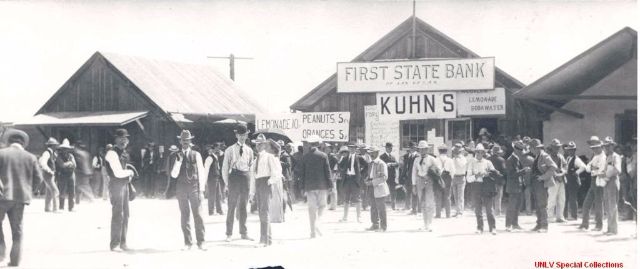
Las Vegas, Nev.
This photograph of the First State Bank of Las Vegas, circa 1905, comes from the special collections at the library of the University of Nevada, Las Vegas.
Seattle, Wash.
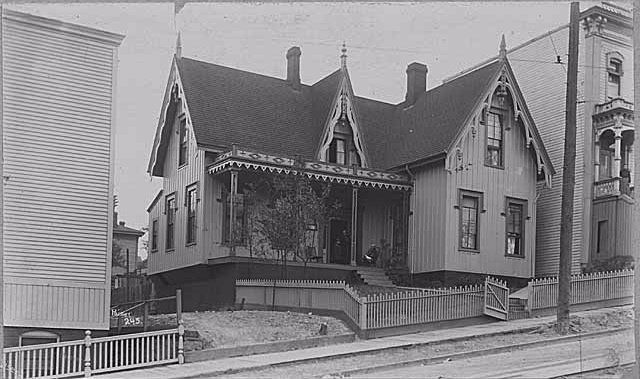
Charles Terry’s residence on the northeast corner of James Street and Third Avenue in Seattle in 1865, courtesy of the Museum of History and Industry. The building later became Seattle’s Public Safety Building. Theodore E. Peiser took the photograph.
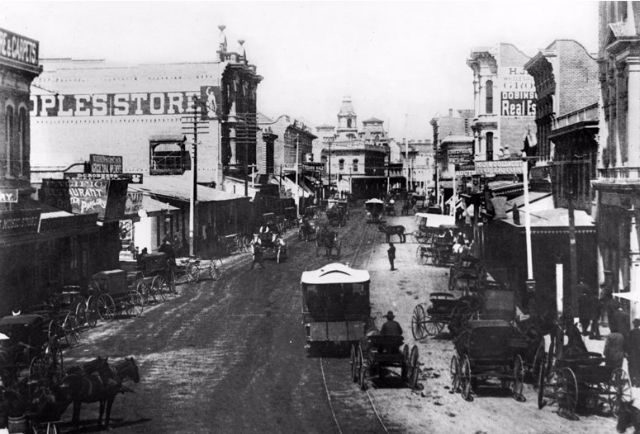
Los Angeles, Calif.
This is an early view of Spring Street in Los Angeles dating from 1870 – 1880, from the California Historical Society Collection at the University of Southern California.
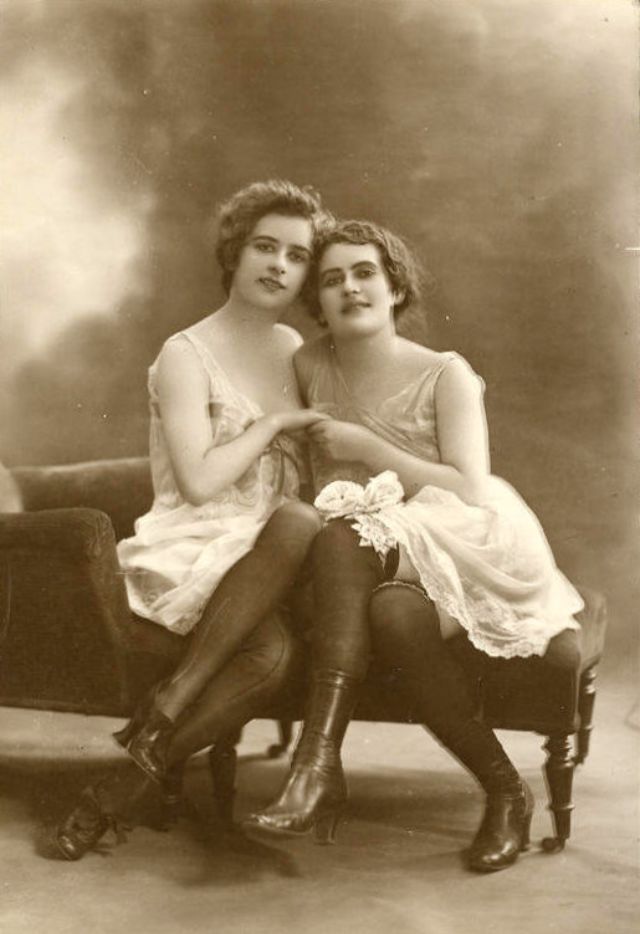
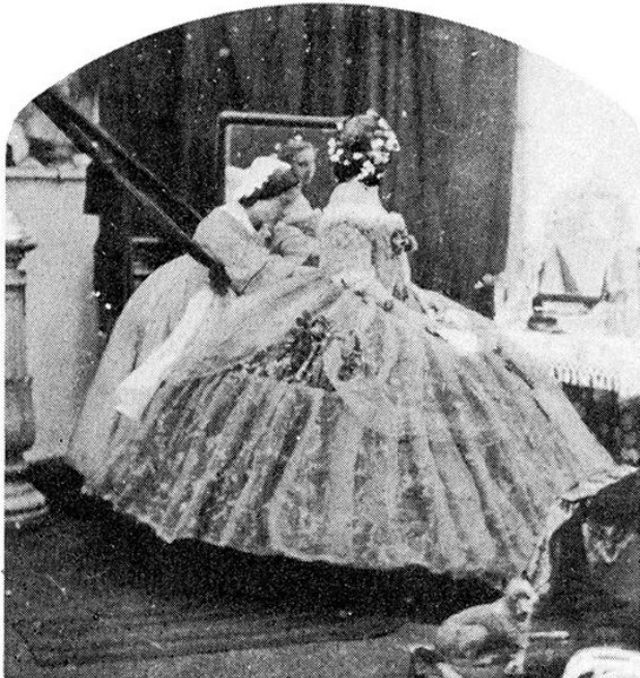
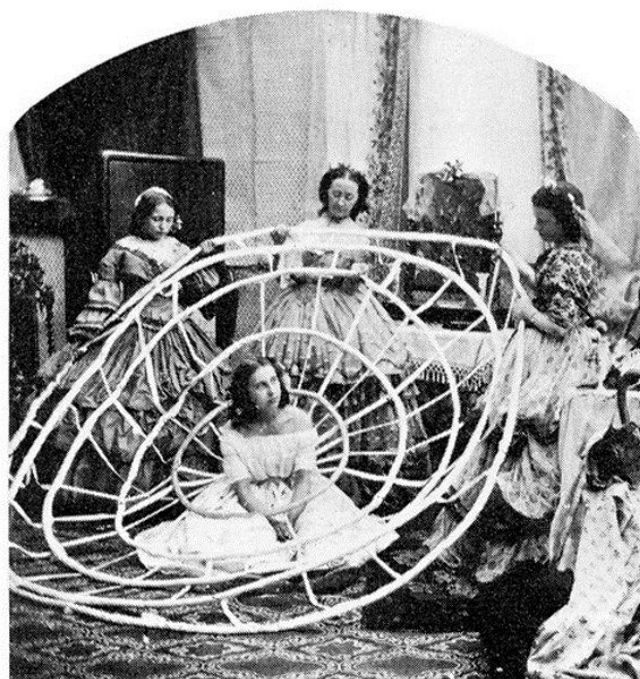
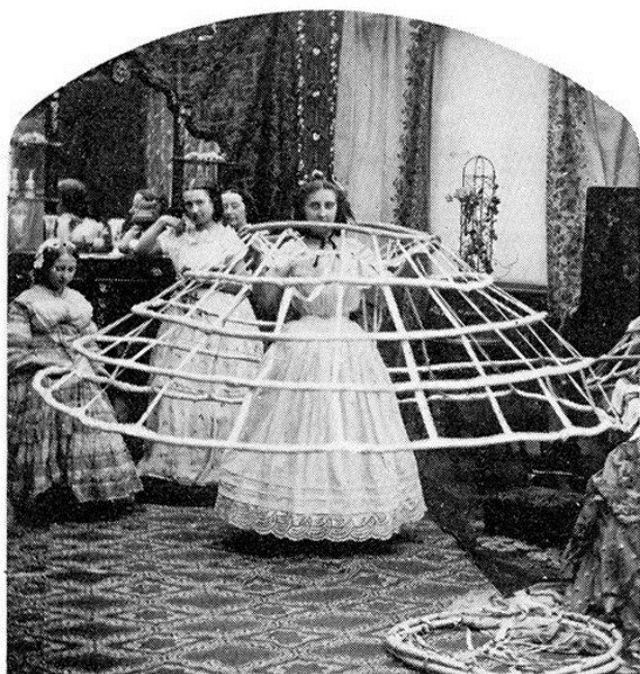
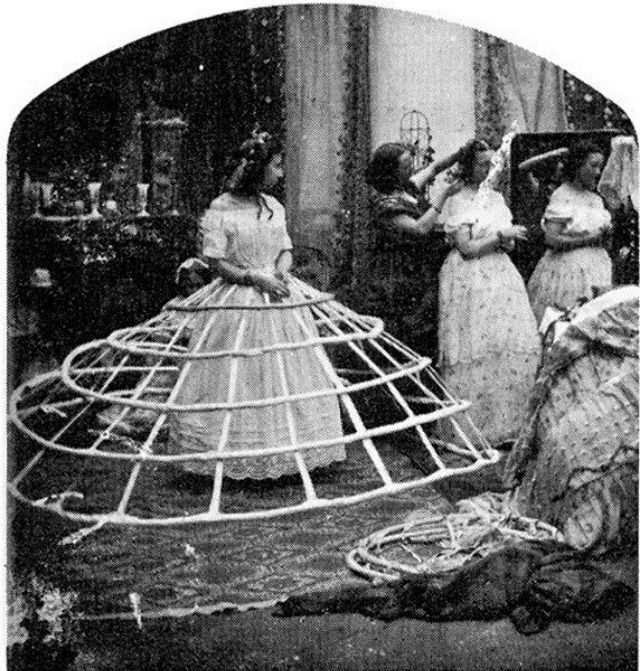
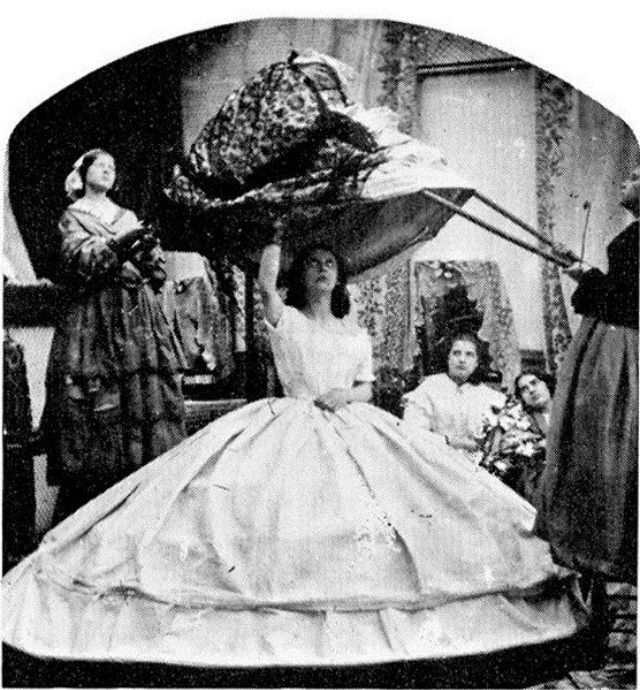
At the beginning of the Victorian era, all clothing was hand-made. Because of this, dresses were expensive, and only the wealthy could afford a large wardrobe. The less fortunate wore cast-offs, clothing from second-hand shops, or sewed their own. After the invention of the sewing machine in 1851, the industry began to change. Not only was clothing less expensive to produce, it was mass-produced, and by the end of the century, ready-made dresses were available to the general public at department stores.
A Victorian woman did not simply throw on a gown over her slip and panties, though. There were many layers to achieve the picture of fashion perfection. If you ever wondered how Victorian women got dressed 160 years ago, take a look at these amazing images.
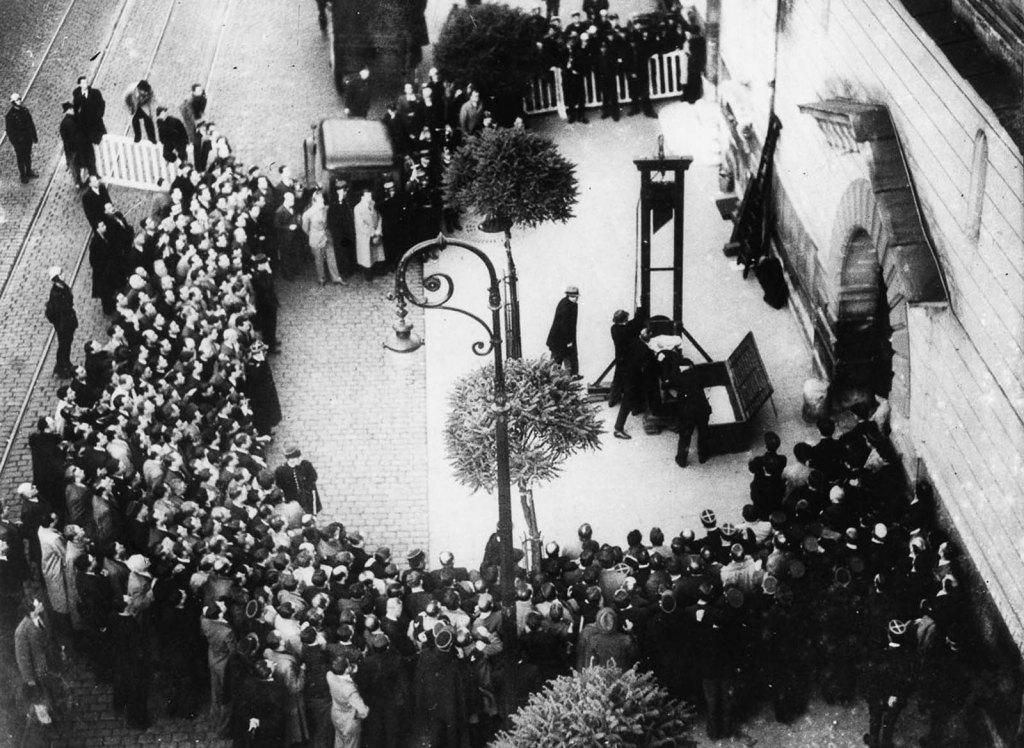
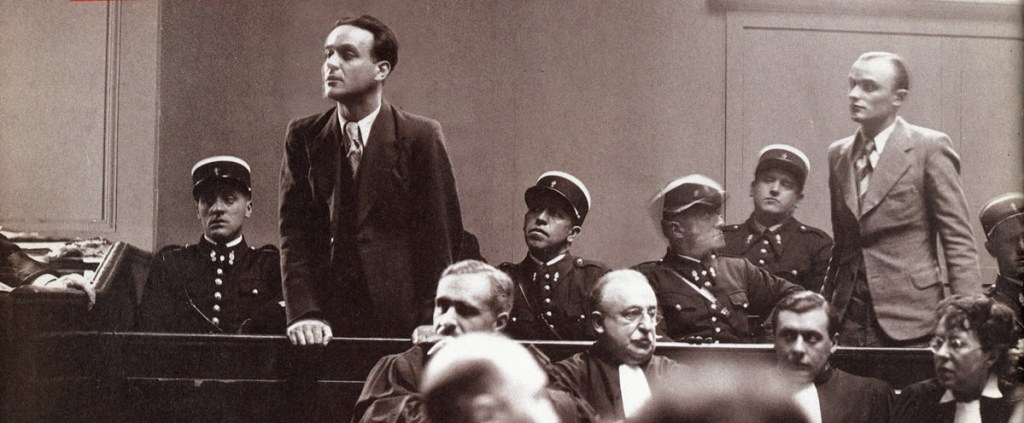
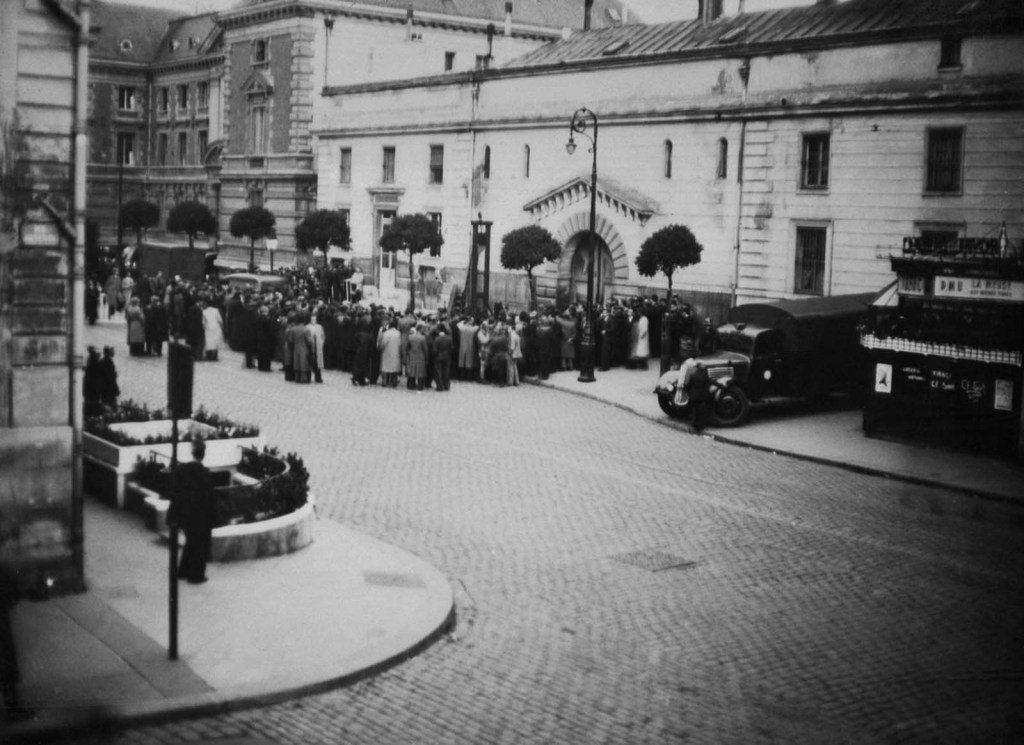
In the early morning of 17 June 1939, Eugène Weidmann became the last person to be publicly executed by guillotine. He had been convicted of multiple kidnappings and murders, including that of a young American socialite.
Weidmann is placed in the guillotine seconds before the blade falls.
Beginning with the botched kidnapping of an American tourist, the inspiring dancer Jean de Koven, Eugène Weidmann murdered two women and four men in the Paris area in 1937. His other victims included a woman lured by the false offer of a position as a governess; a chauffeur; a publicity agent; a real estate broker; and a man Weidmann had met as an inmate in a German prison. On the surface, his crimes seemed in most cases to have had a profit motive, but they generally brought him very small winnings. Born in Frankfurt-am-Main in 1908, Weidmann early showed himself to be an incorrigible criminal. He had been sent to a juvenile detention facility and then served prison terms for theft and burglary in Canada and Germany prior to his arrival in Paris in 1937.
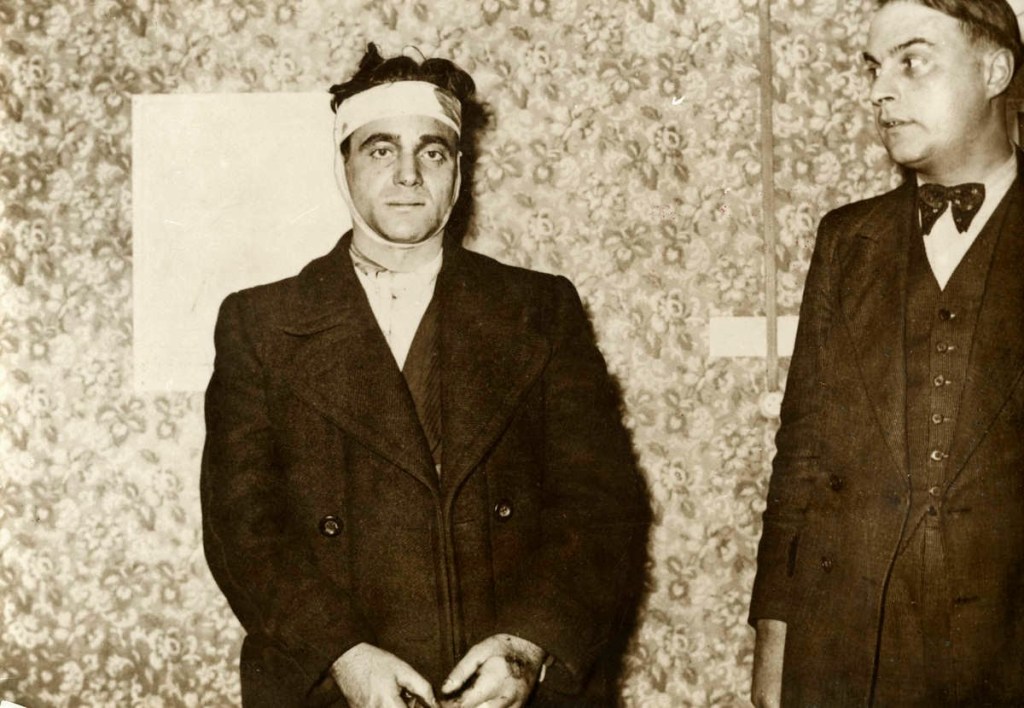
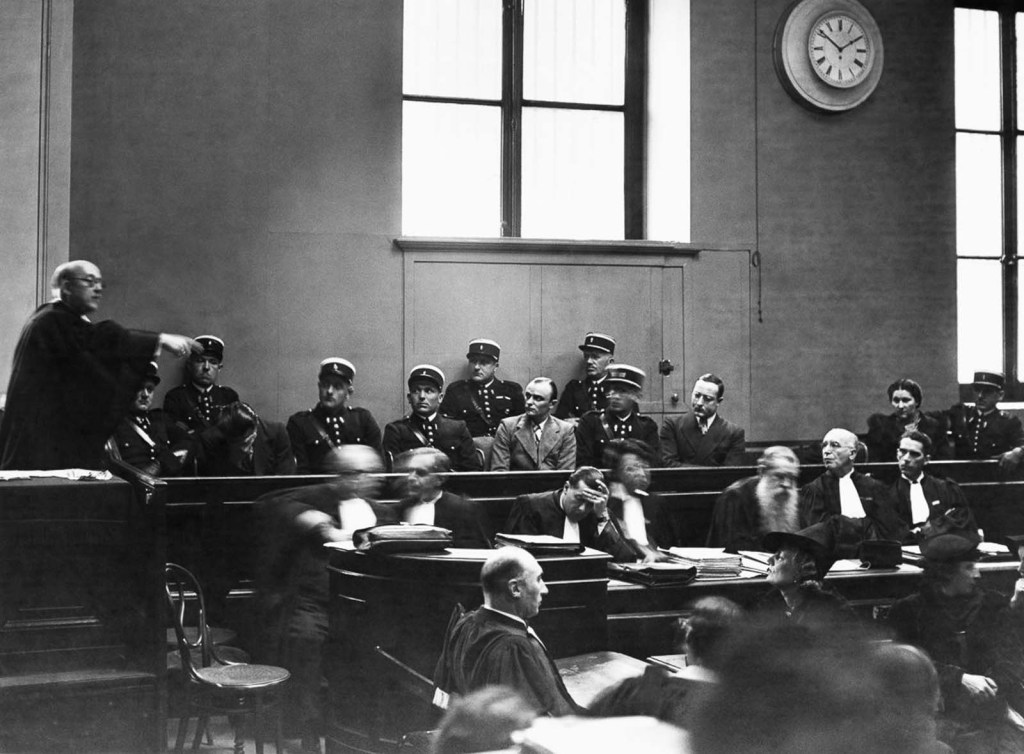
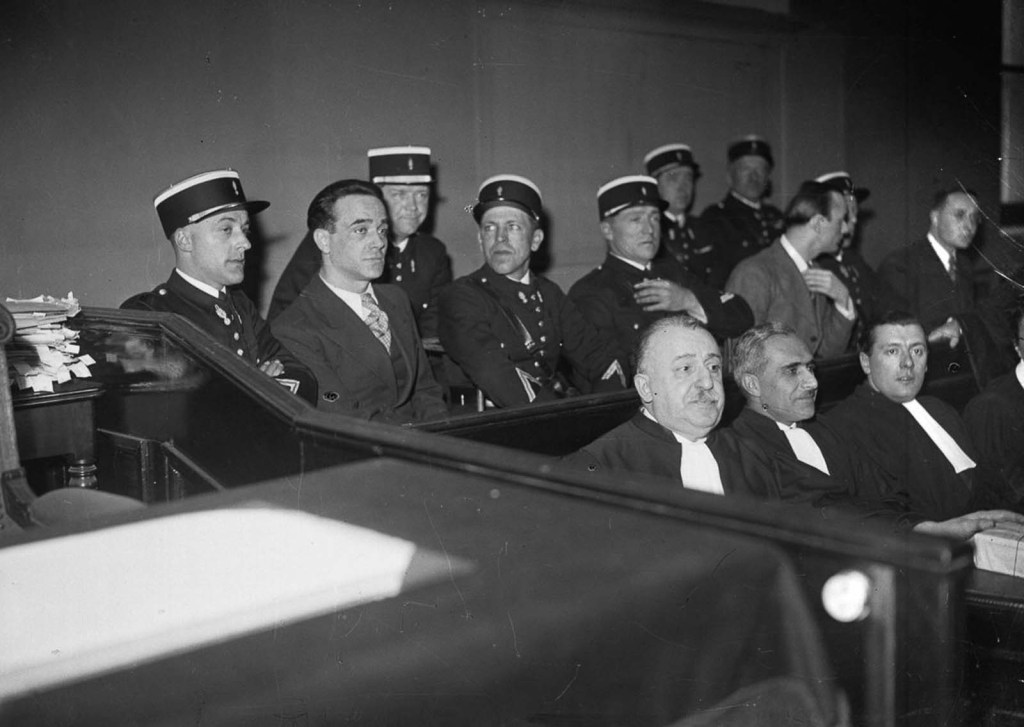
Weidmann is led away in handcuffs after his capture by police.Eugène Weidmann under arrest.During the trial of Eugene Weidmann.The trial, March 24, 1939.Weidmann on trial in France.
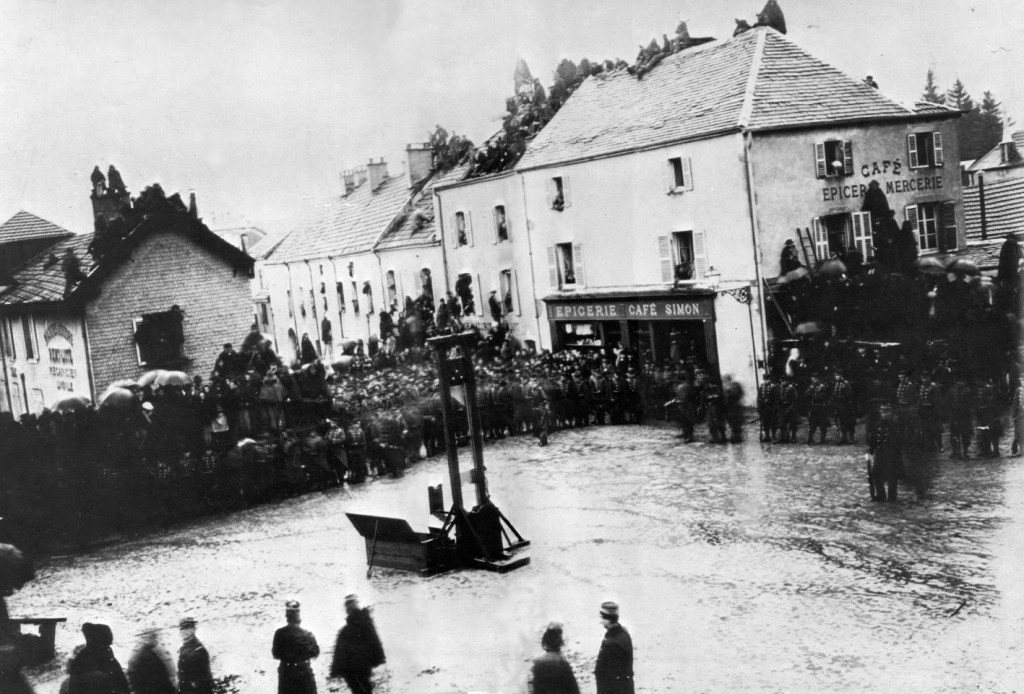
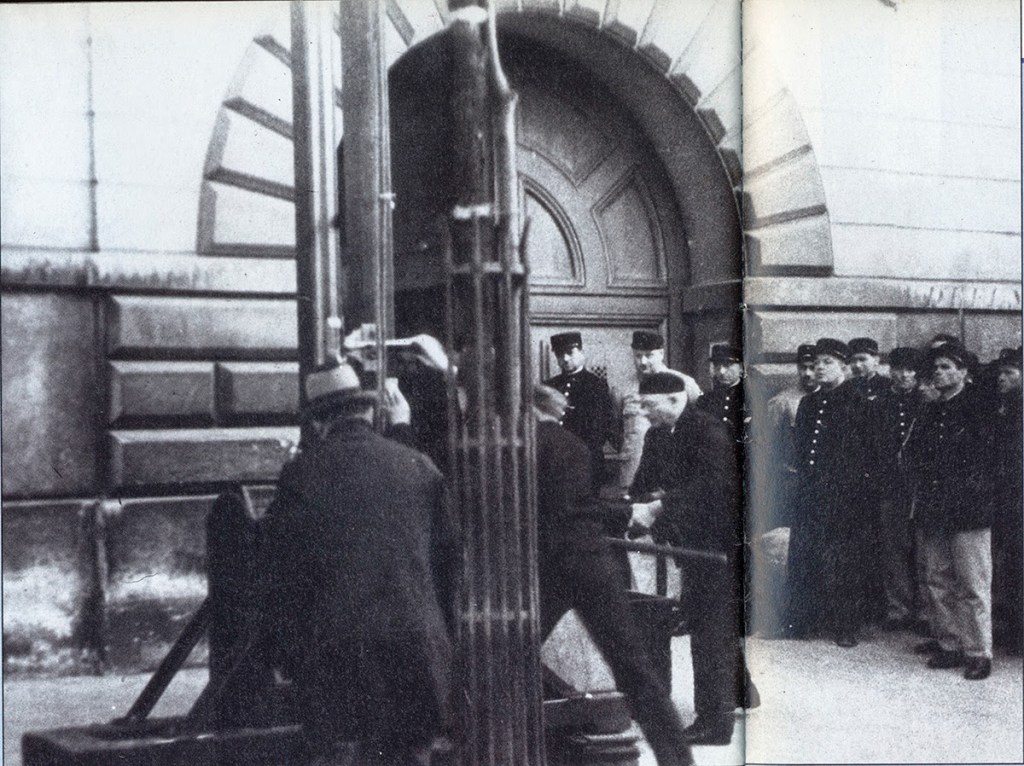
After a sensational and much-covered trial, Weidmann was sentenced to death. On the morning of June 17, 1939, Weidmann was taken out in front of the Prison Saint-Pierre, where a guillotine and a clamoring, whistling crowd awaited him. Among the attendees was future acting legend Christopher Lee, then 17 years old. Weidmann was placed into the guillotine, and France’s chief executioner Jules-Henri Desfourneaux let the blade fall without delay.
Rather then react with solemn observance, the crowd behaved rowdily, using handkerchiefs to dab up Weidmann’s blood as souvenirs. Paris-Soir denounced the crowd as “disgusting”, “unruly”, “jostling, clamoring, whistling”. The unruly crowd delayed the execution beyond the usual twilight hour of dawn, enabling clear photographs and one short film to be taken.
After the event the authorities finally came to believe that “far from serving as a deterrent and having salutary effects on the crowds” the public execution “promoted baser instincts of human nature and encouraged general rowdiness and bad behavior”. The “hysterical behavior” by spectators was so scandalous that French president Albert Lebrun immediately banned all future public executions.
Guillotine was the only mean of execution that the French republic had ever known, the device was in service from 1792 to 1977. For almost 200 years the guillotine executed tens of thousands of culprits (or not) without ever failing to deliver a quick and painless death.
While it is easy to see the guillotine as barbaric, it is actually a lot less gruesome than it looks. Capital punishment was very common in pre-revolutionary France. For nobles, the typical method of execution was beheading; for commoners, it was usually hanging, but less common and crueler sentences were also practiced. When Dr. Joseph-Ignace Guillotin proposed the new method of execution to the National Assembly, it was meant to be more humane than previous capital punishments and also to be an equal method of death for all criminals regardless of rank.
Compared to many forms of capital punishment practiced to this day, the guillotine remains one of the best if we are judging based on pain and “cleanness”. In fact, the guillotine was developed with the idea of creating the most humane way to execute people. The condemned don’t feel pain, death is almost instantaneous and there are very few ways for things to be botched. The head of the victim remains alive for about 10-13 seconds, depending on the glucose and blood levels in his brain at the time. However, the head is believed to be more than likely knocked unconscious by the force of the blow and blood loss.
Preparing the guillotine (the spot was changed later).Weidmann is led to the guillotine, passing by the trunk that will be used to transport his body.A crowd awaiting Weidmann’s execution gathers around the guillotine outside the Prison Saint-Pierre.The guillotine in action.