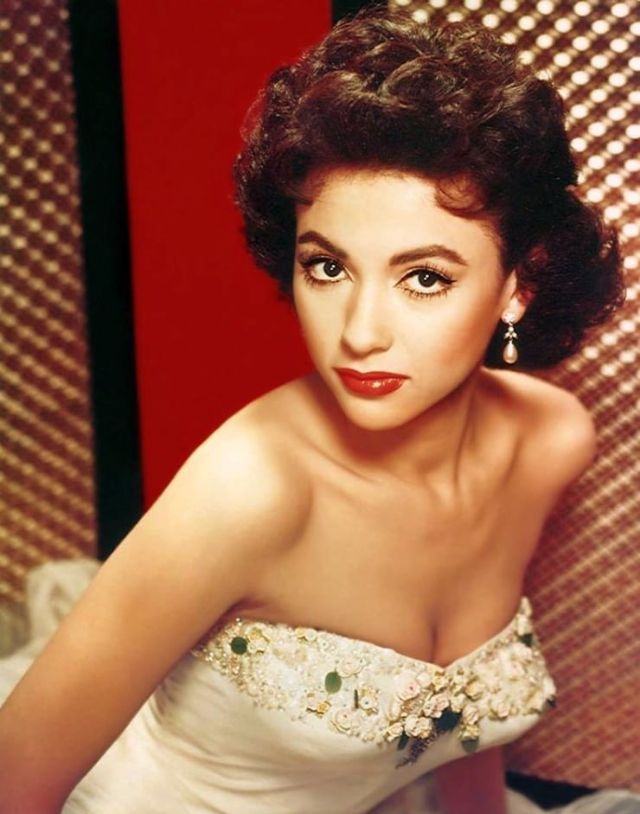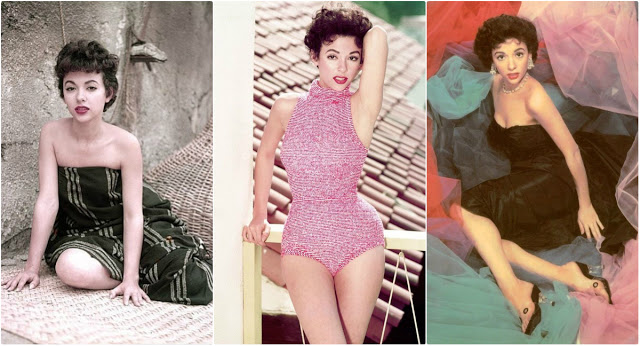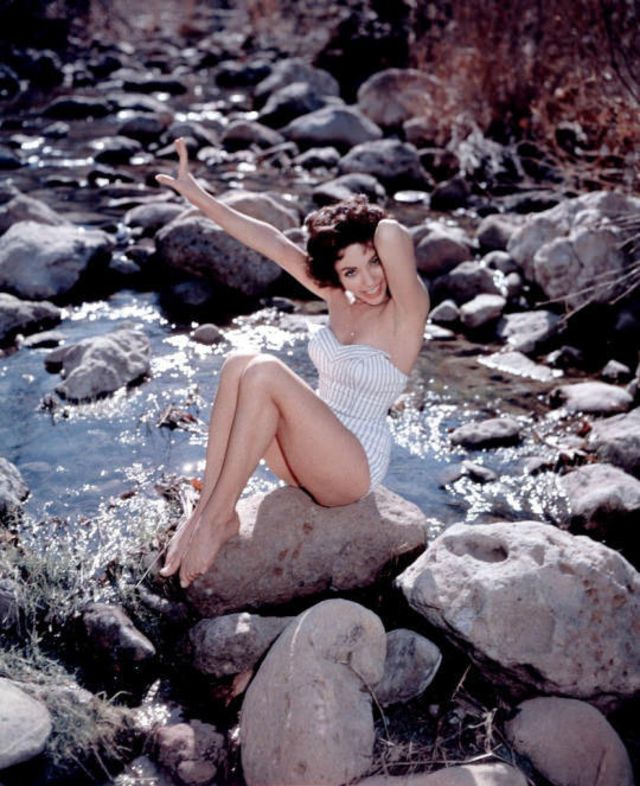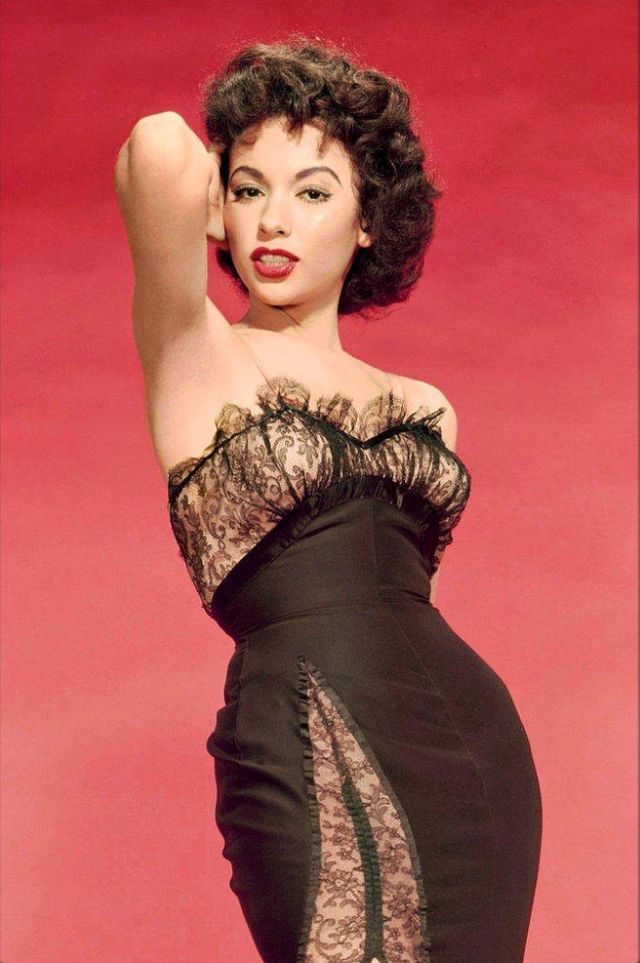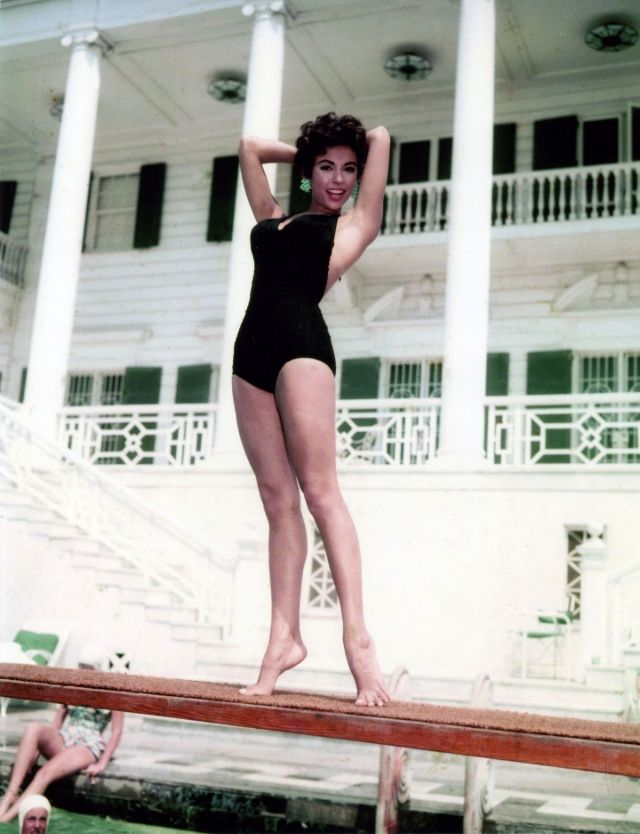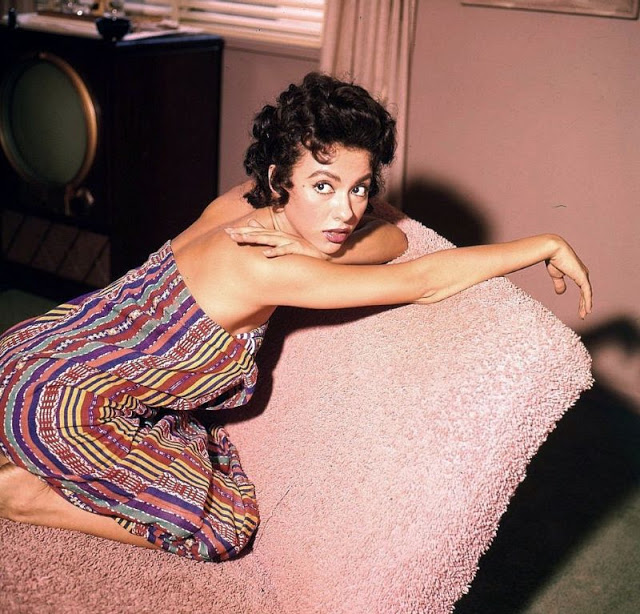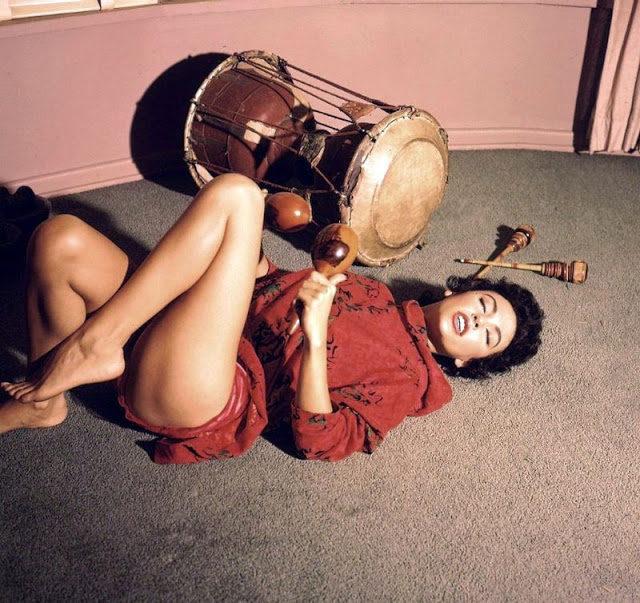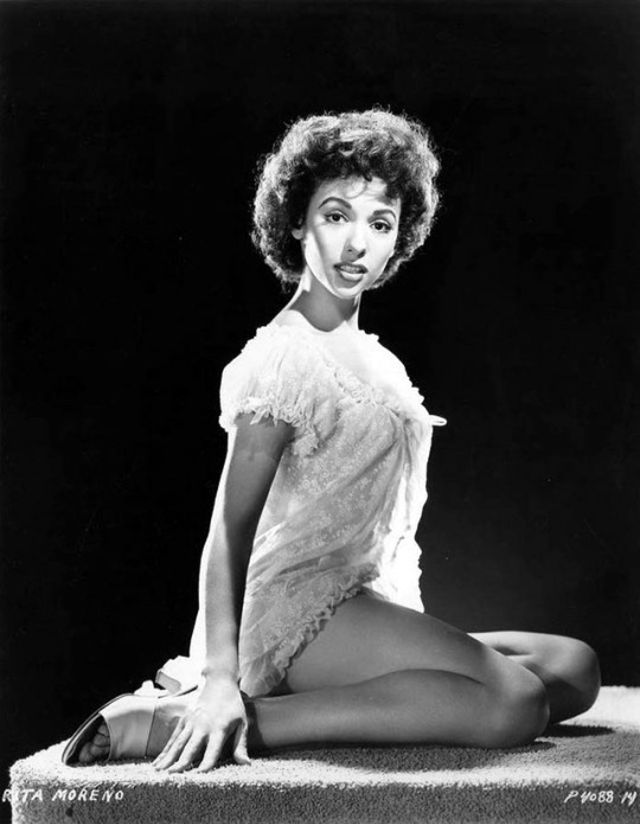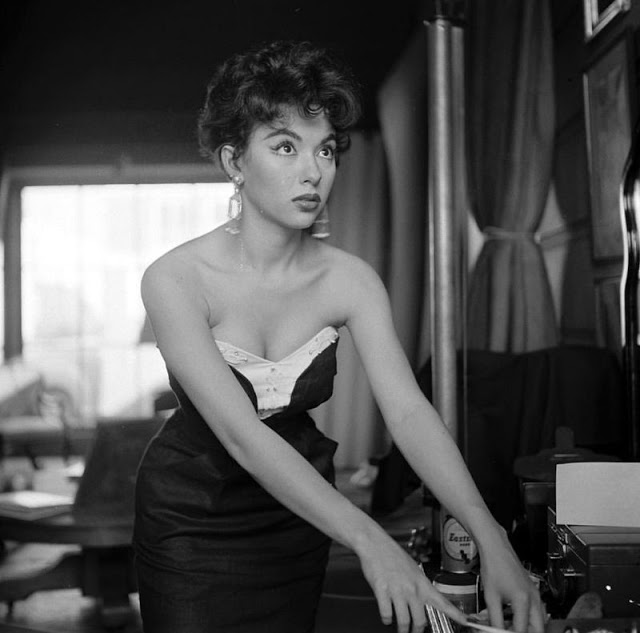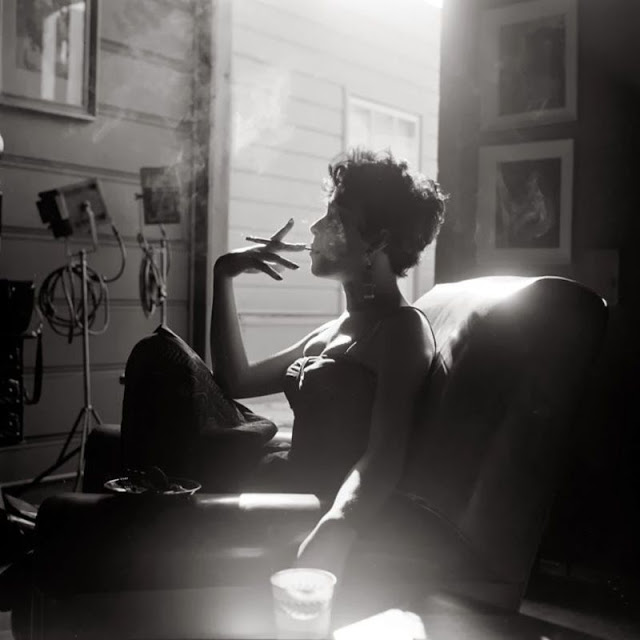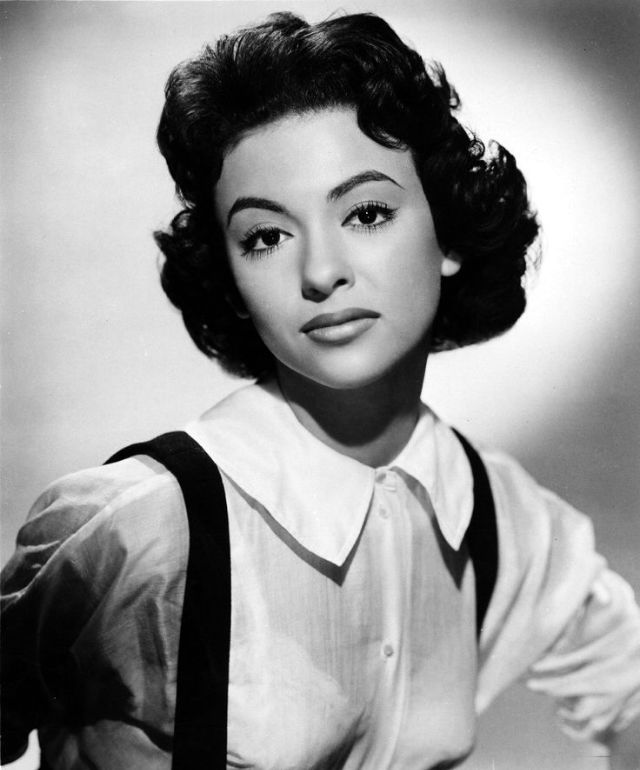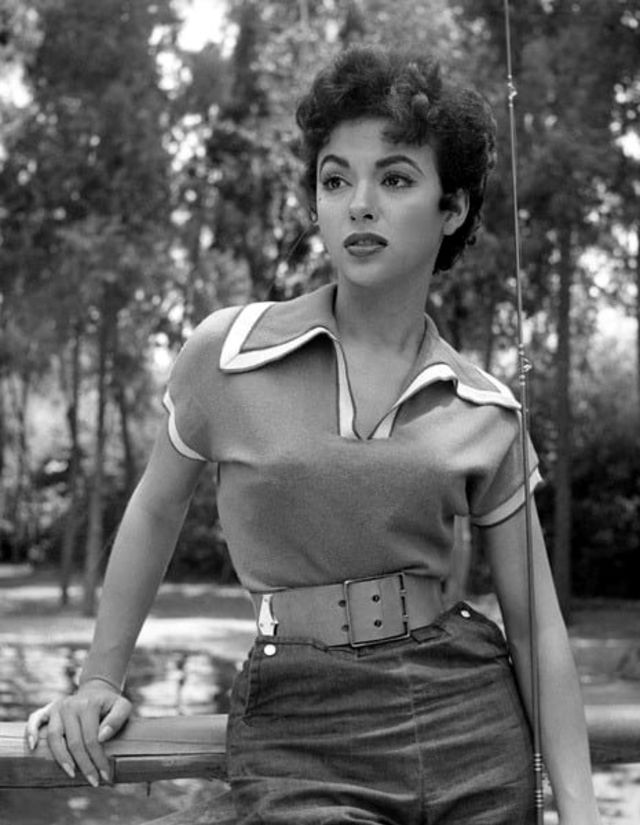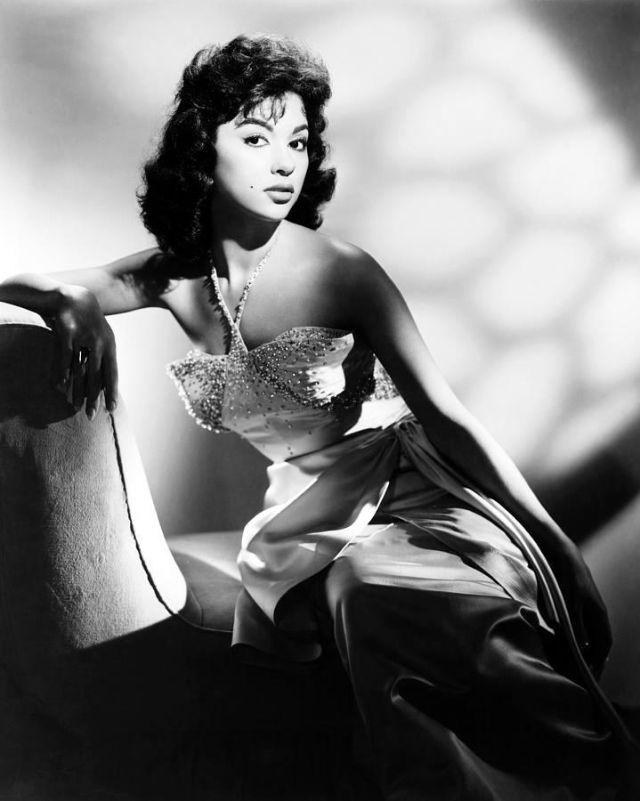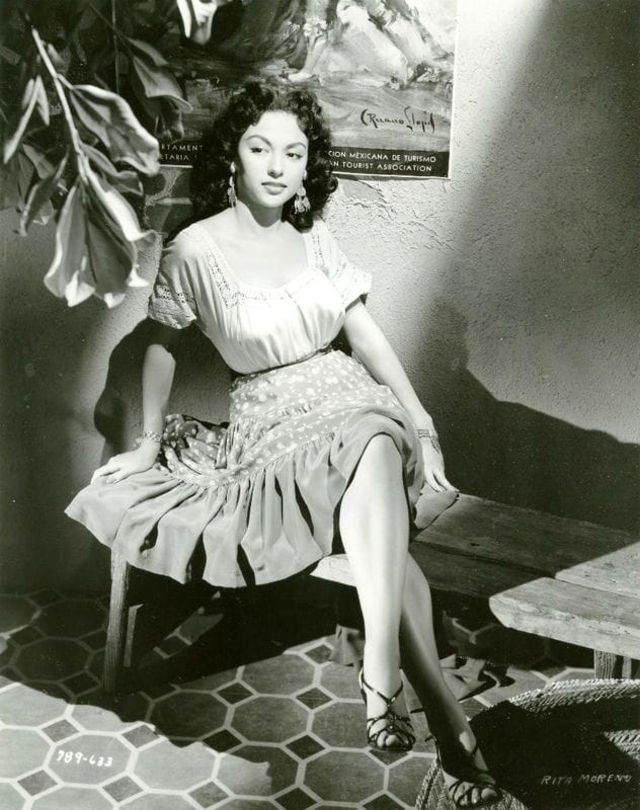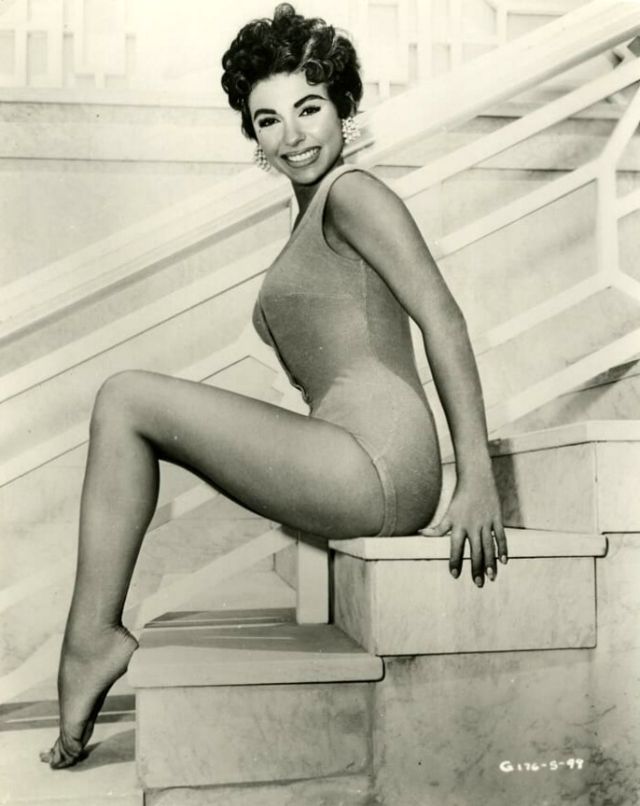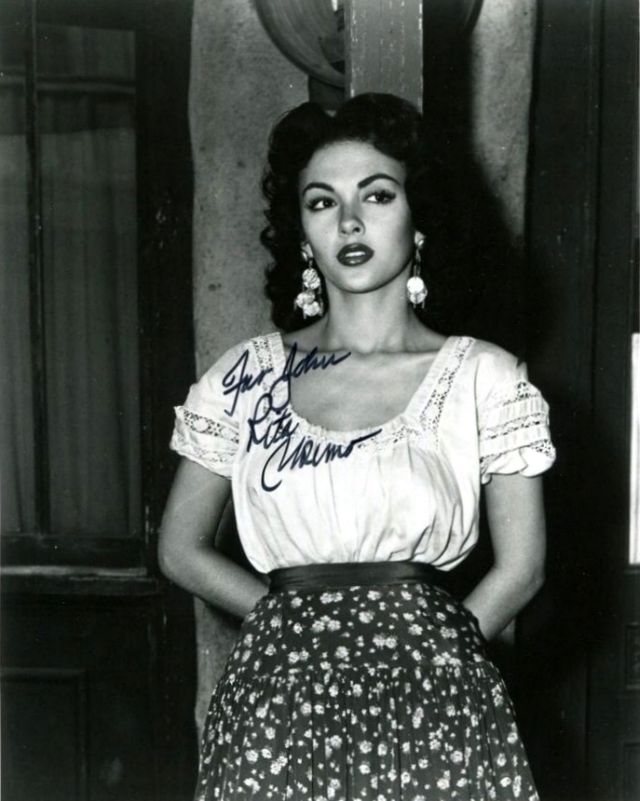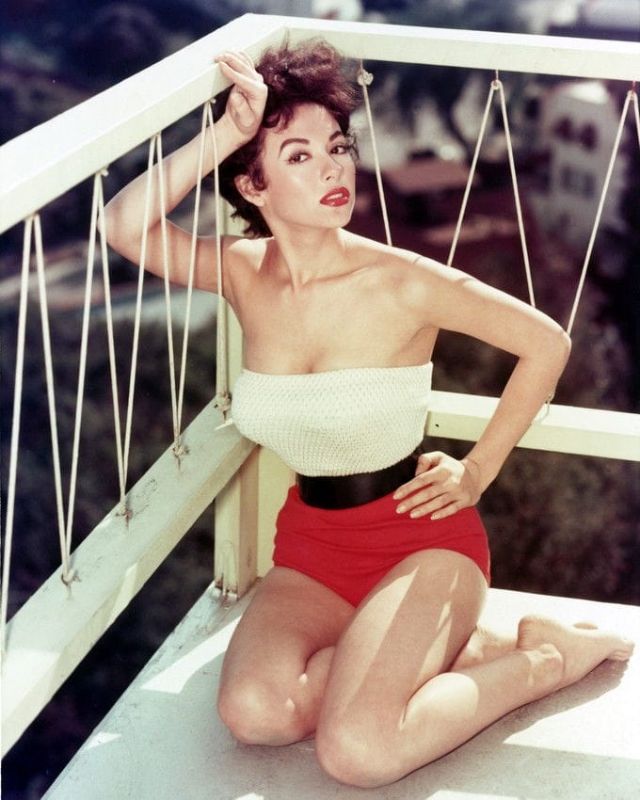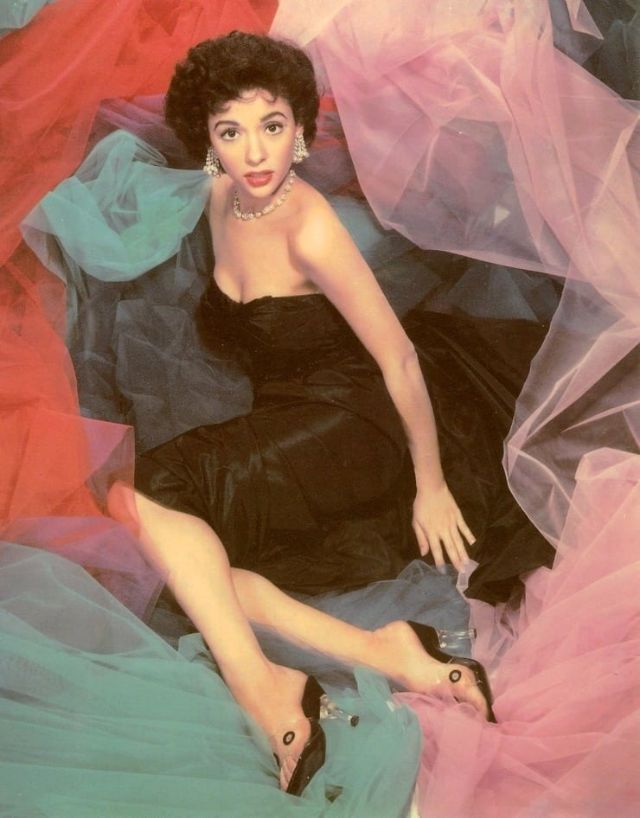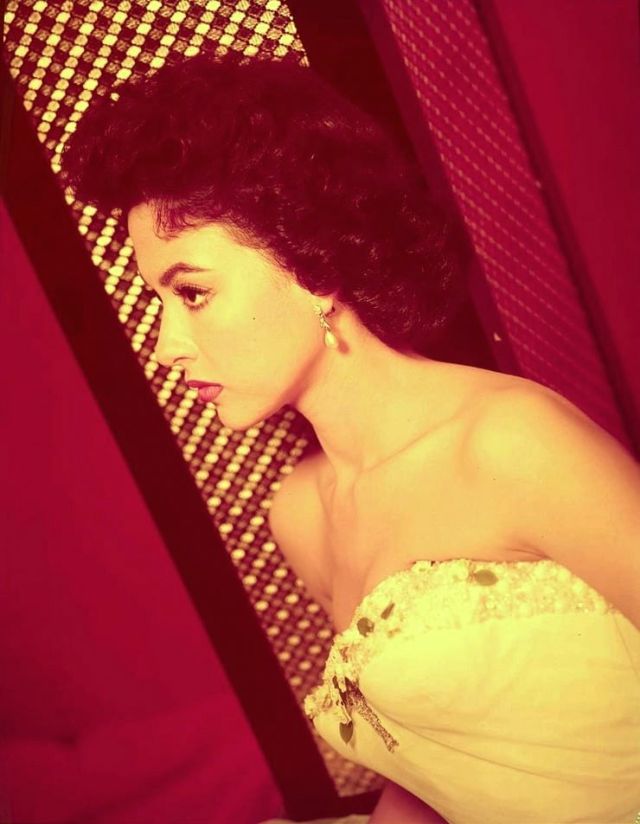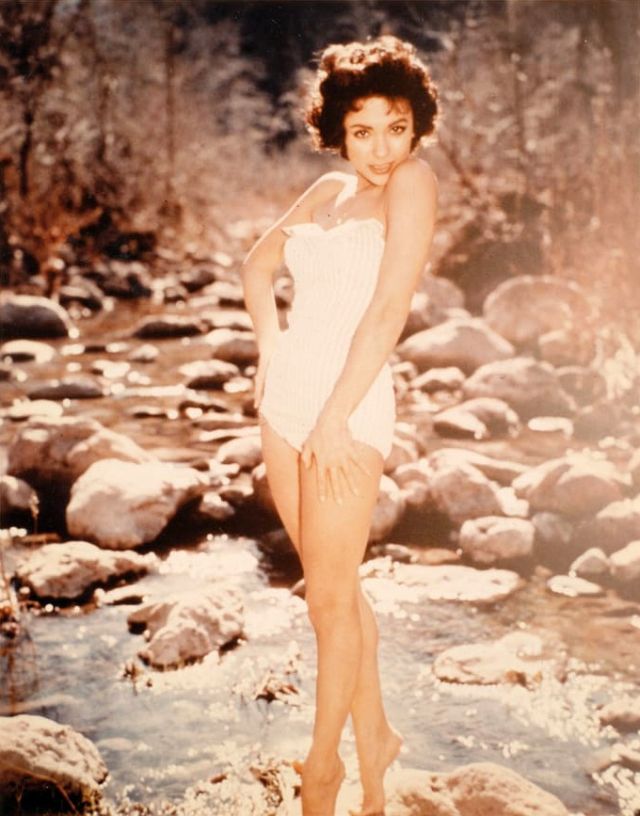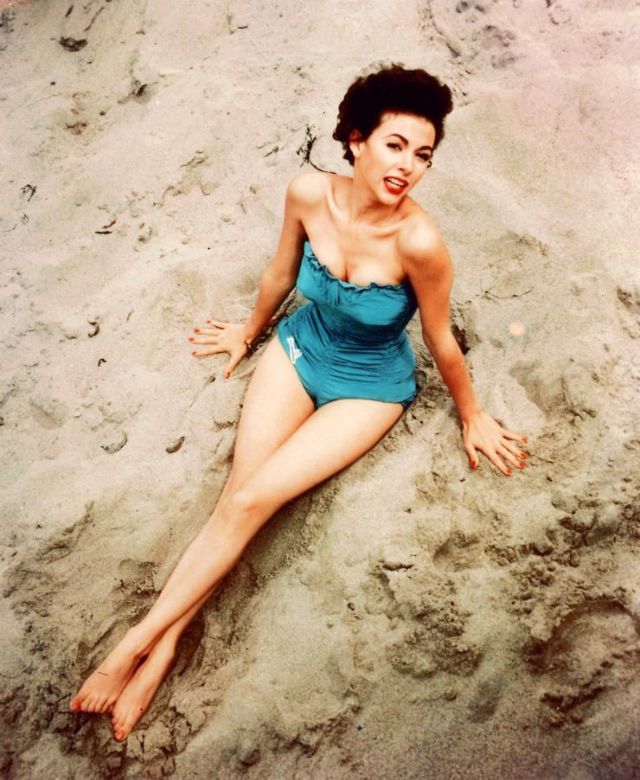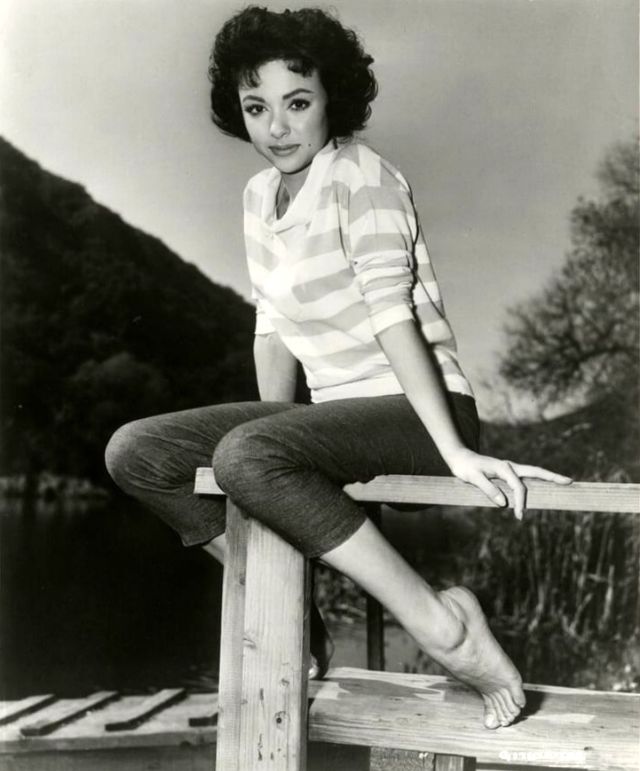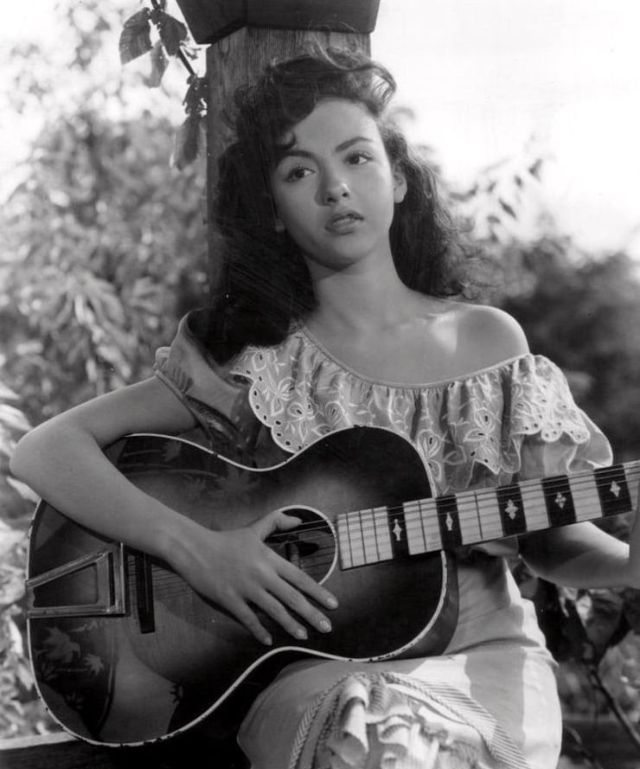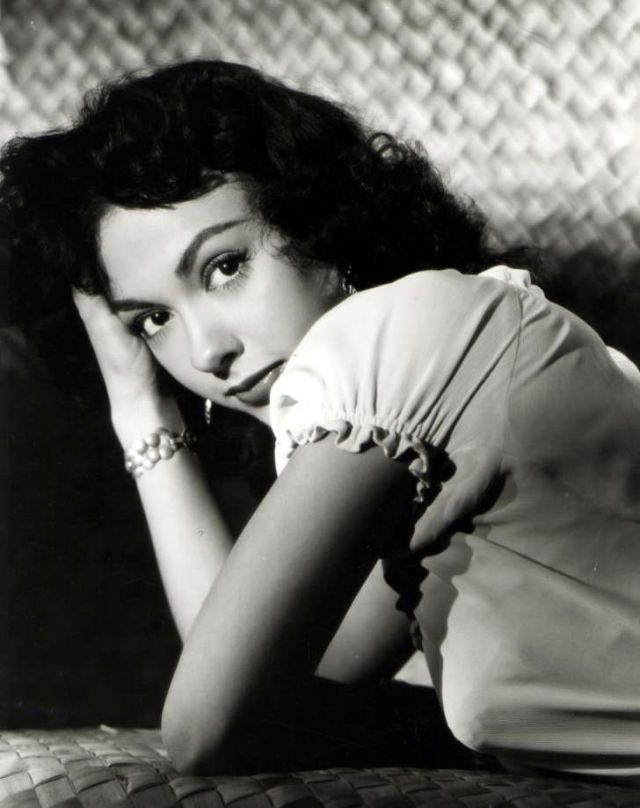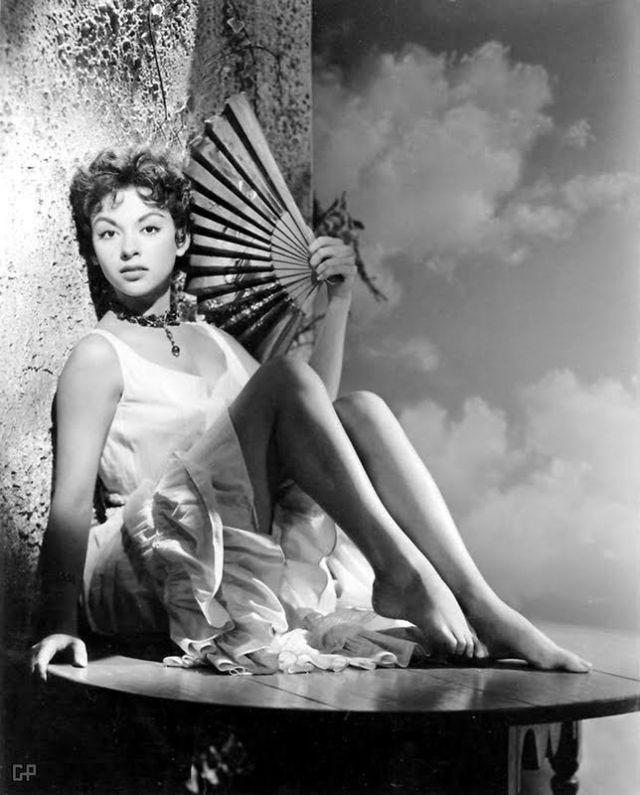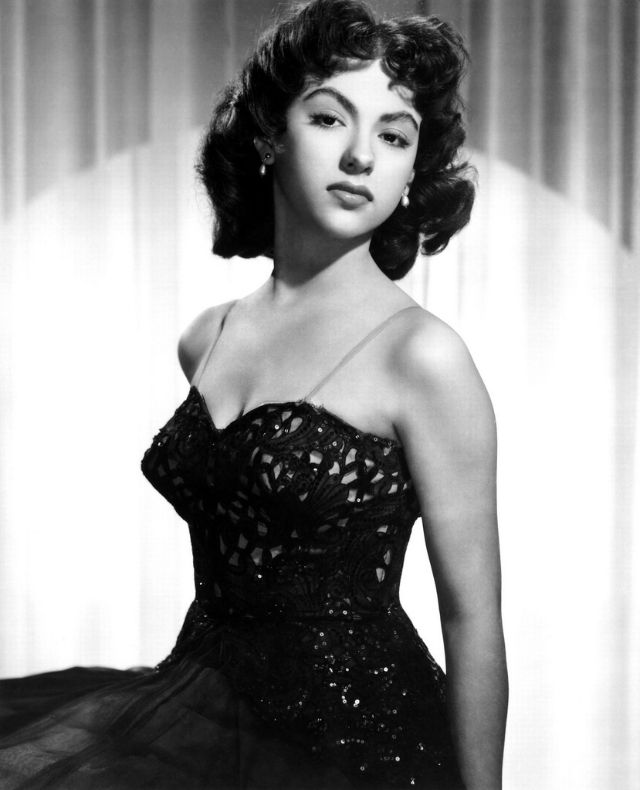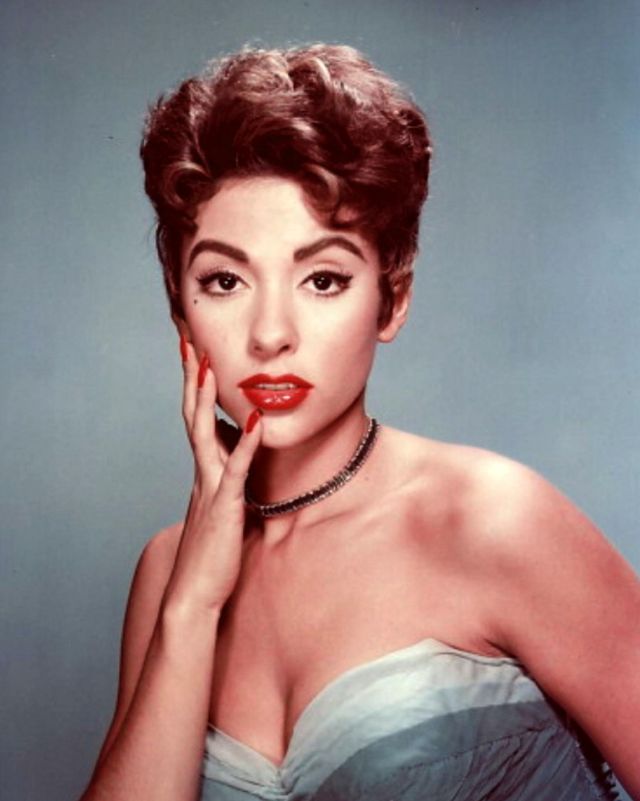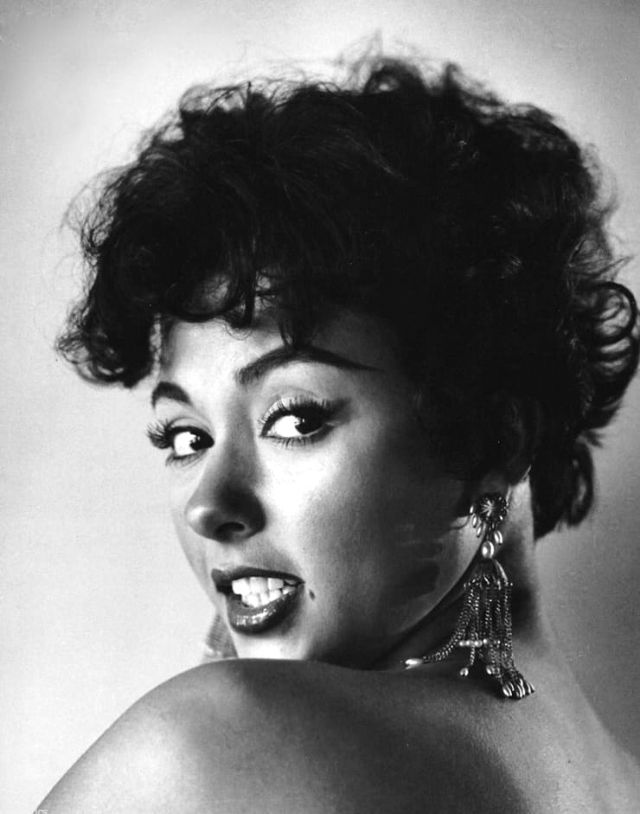
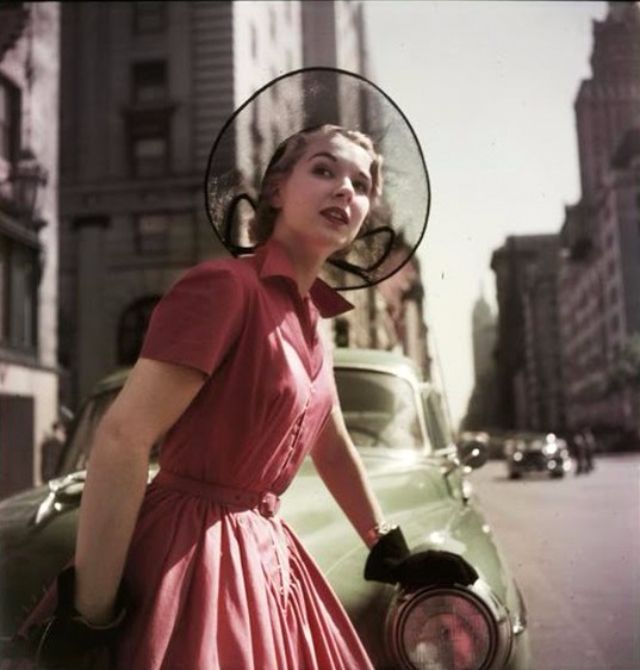
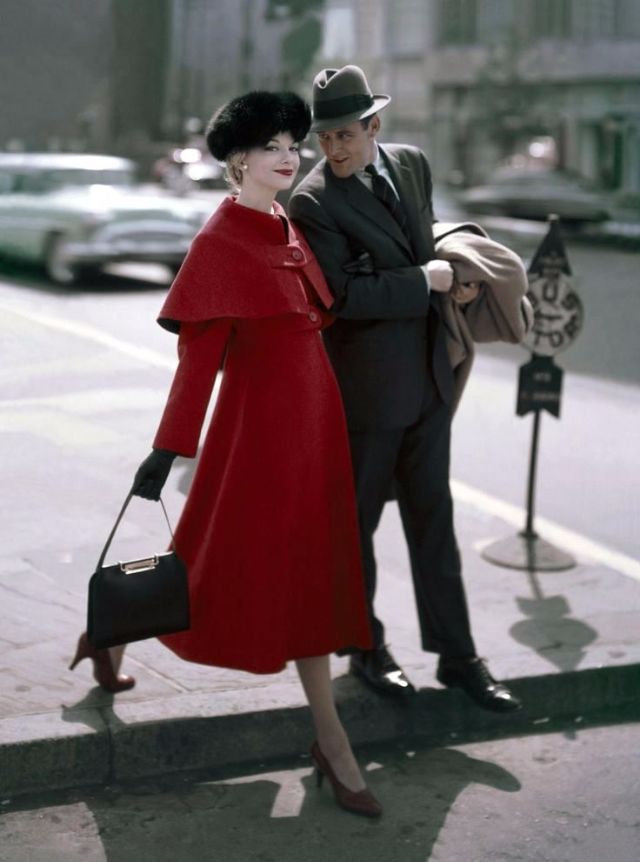
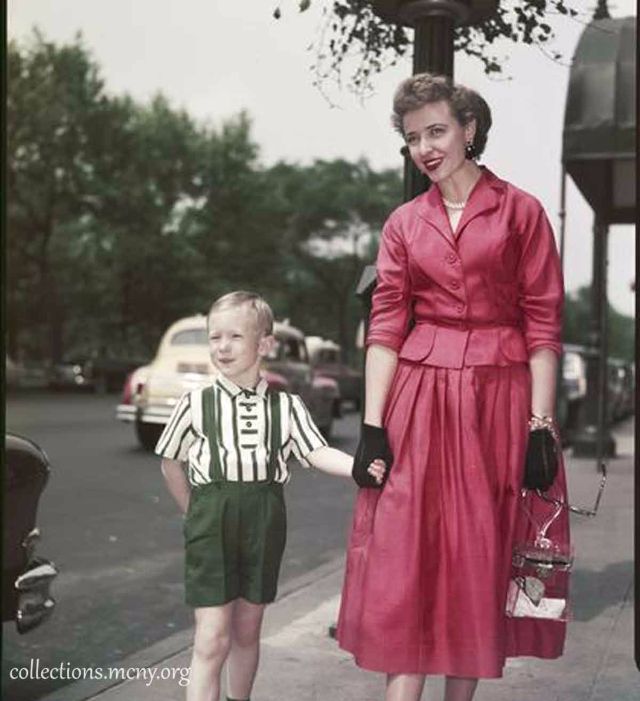
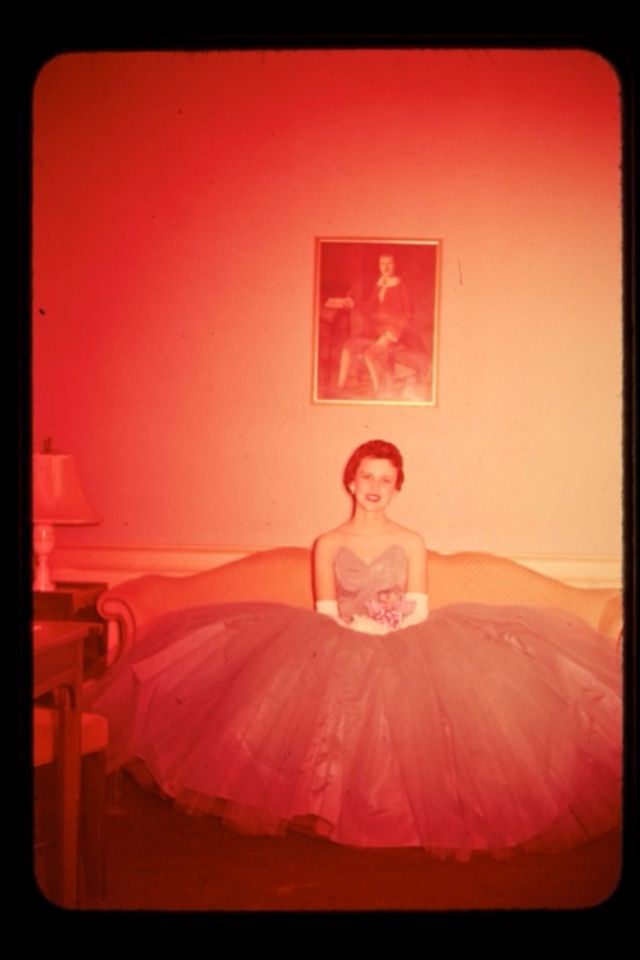
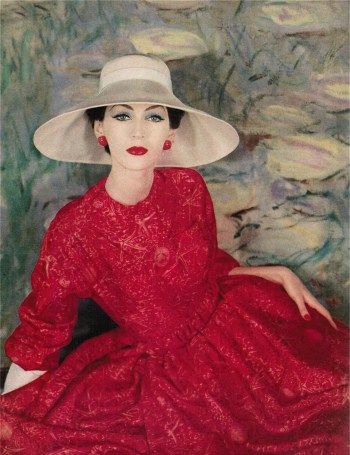
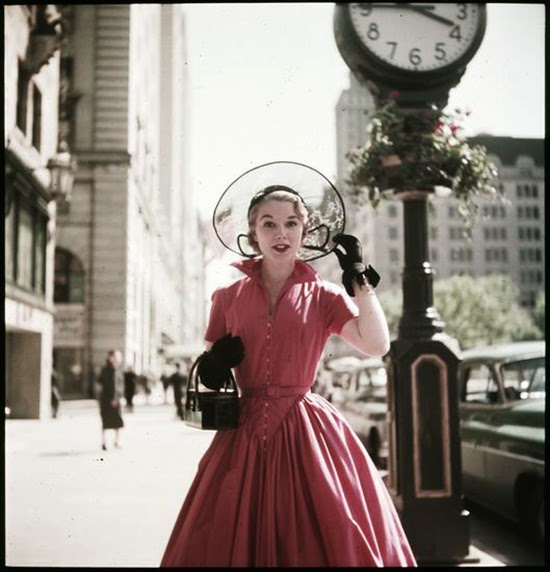
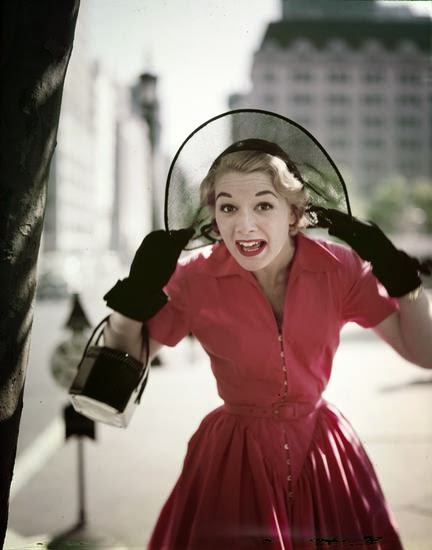
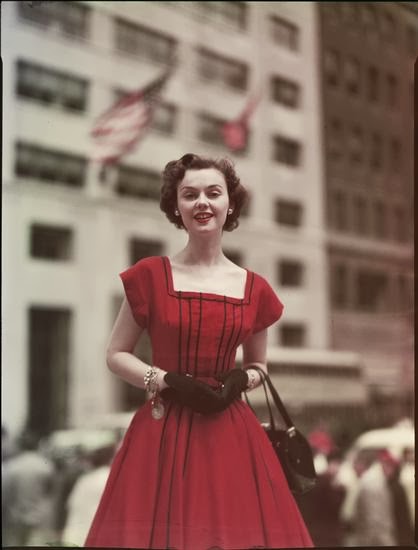
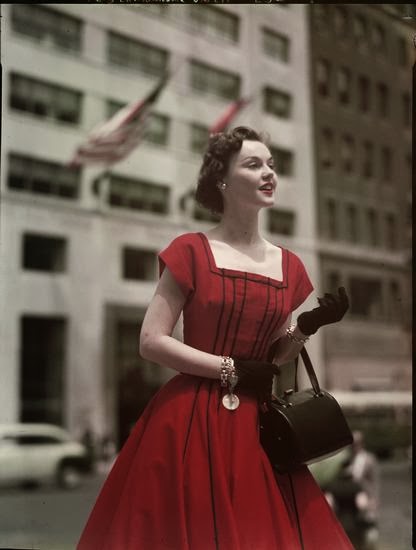
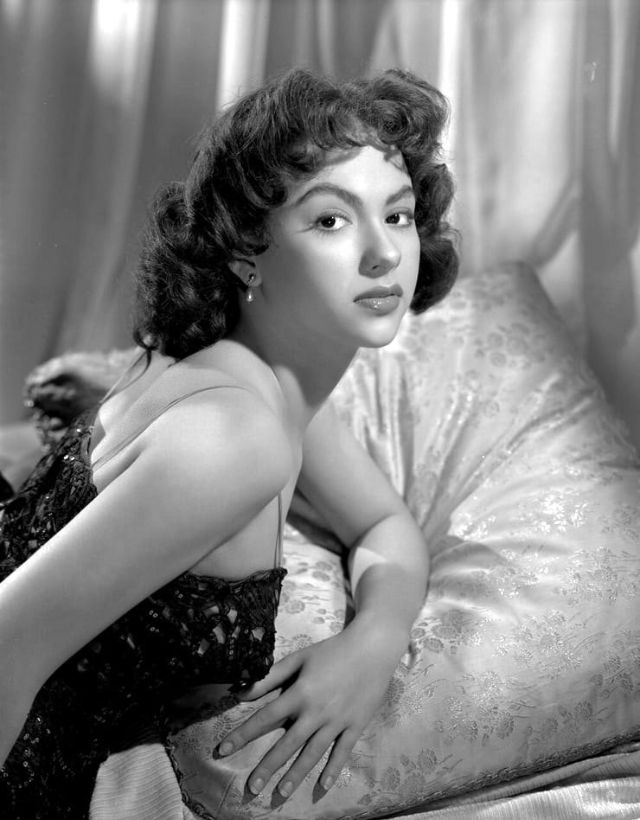
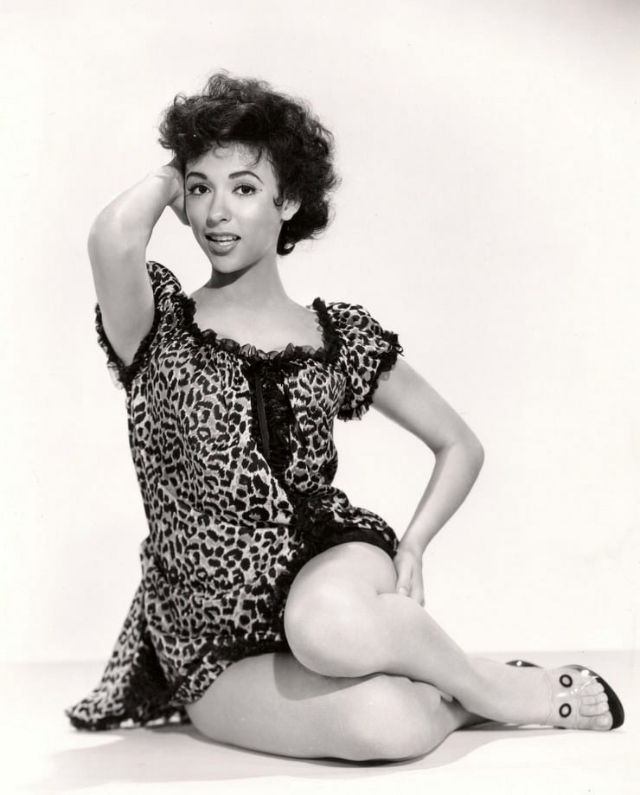
50 Stunning Photos of Rita Moreno During the 1950s

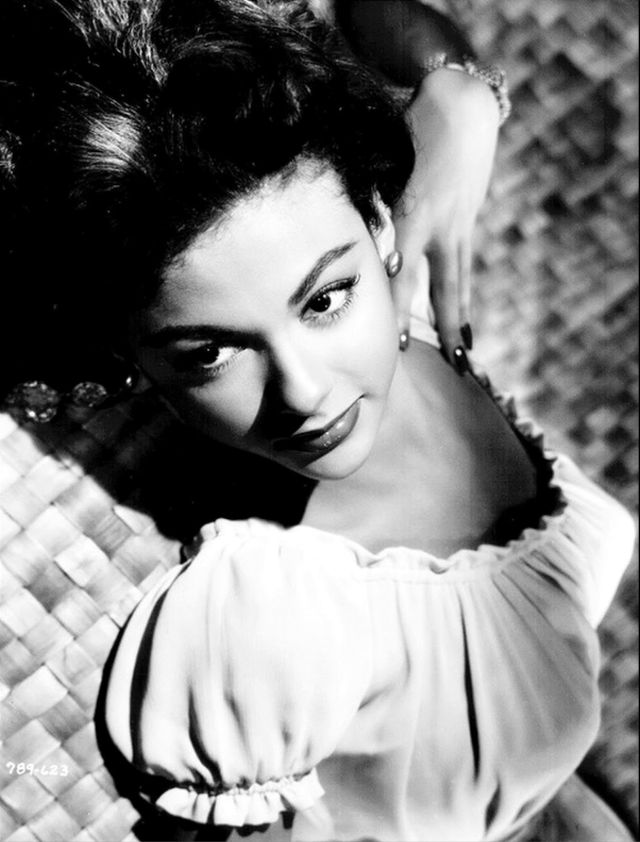
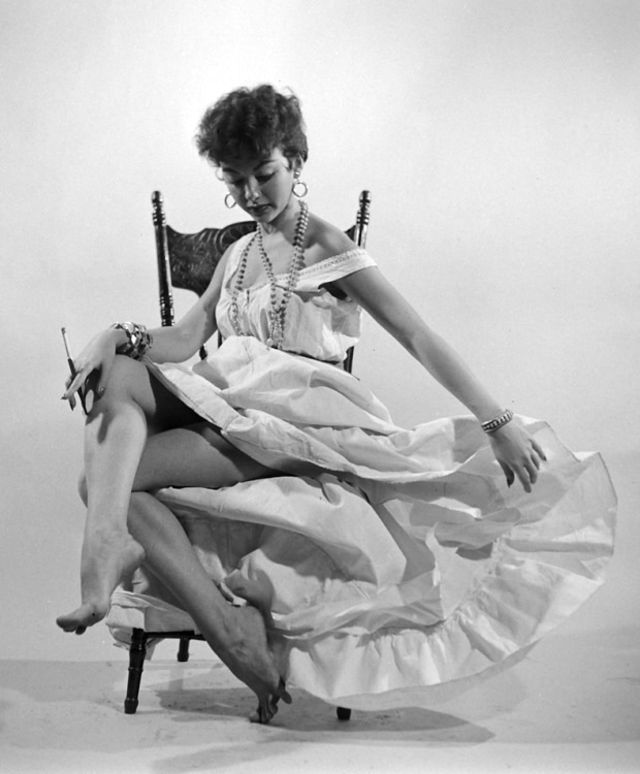
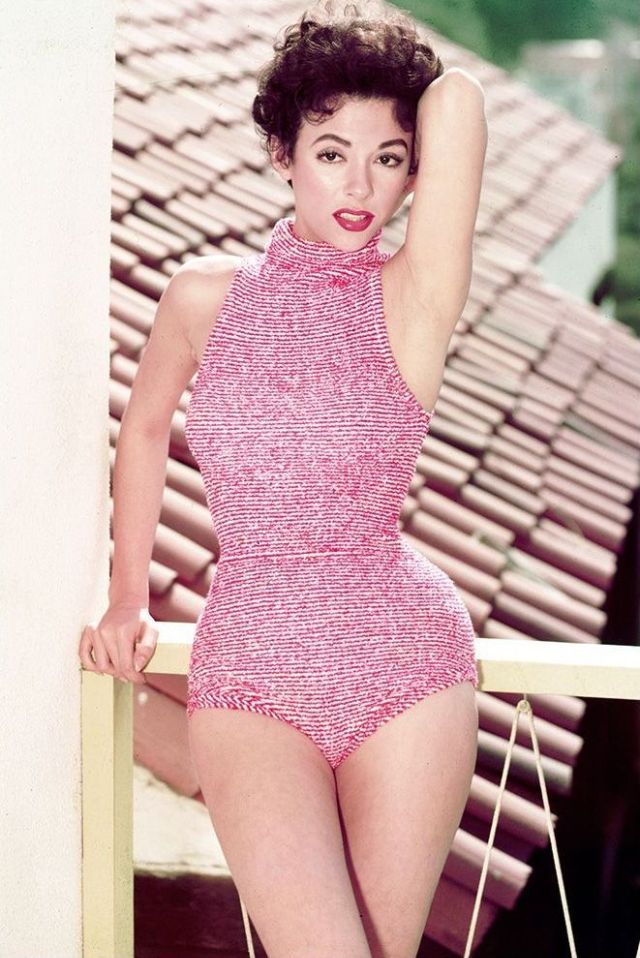
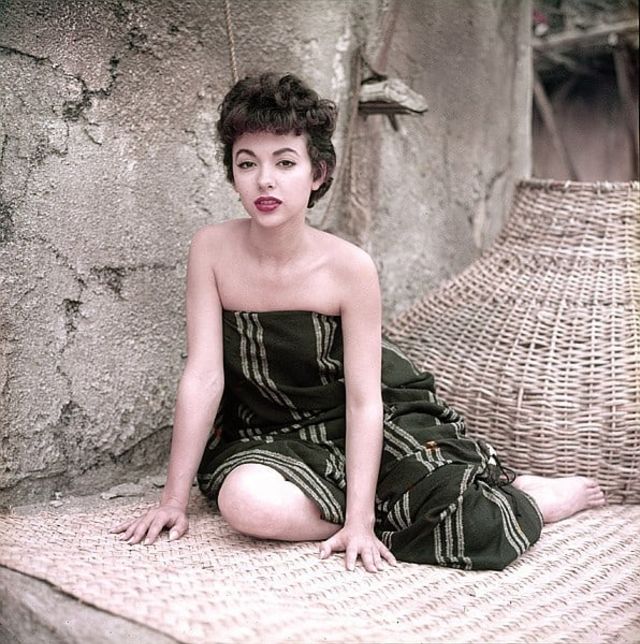
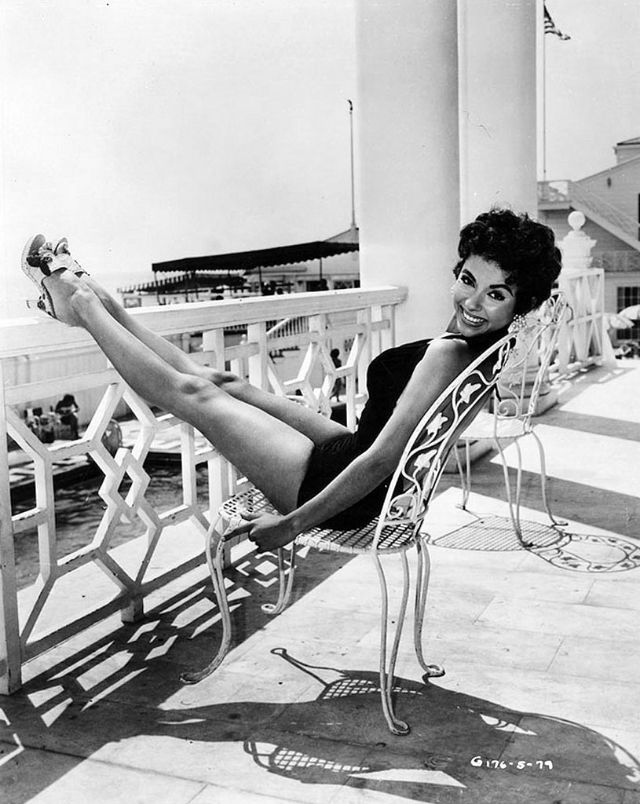
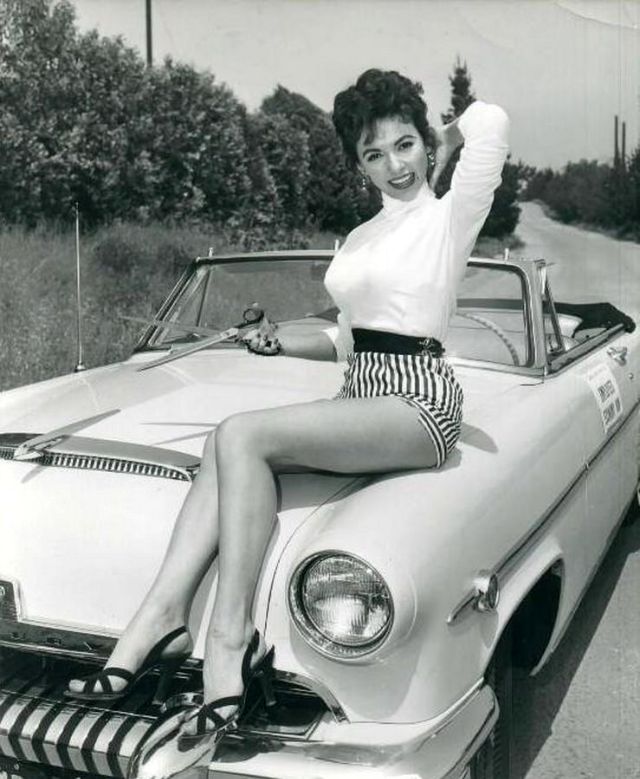
Born 1931 as Rosa Dolores Alverío Marcano in Humacao, Puerto Rican actress, dancer and singer Rita Moreno began her first dancing lessons soon after arriving in New York with a Spanish dancer known as “Paco Cansino”, who was a paternal uncle of film star Rita Hayworth.

When Moreno was 11 years old, she lent her voice to Spanish language versions of American films. She had her first Broadway role—as “Angelina” in Skydrift—by the time she was 13, which caught the attention of Hollywood talent scouts.

Rita Moreno is a Puerto Rican actress, dancer, and singer. Her career has spanned over 70 years; her notable acting work includes supporting roles in the musical films Singin’ in the Rain (1952), The King and I (1956) and West Side Story (1961), as well as a 1971 to 1977 stint on the children’s television series The Electric Company, and a supporting role as Sister Peter Marie Reimondo on the HBO series Oz from 1997 to 2003. Her other notable films include Popi (1969), Carnal Knowledge (1971), The Four Seasons (1981), I Like It Like That (1994) and the cult film Slums of Beverly Hills (1998). She voiced the titular role of Carmen Sandiego in Where on Earth Is Carmen Sandiego? from 1994 to 1999. For theater, she is best known for her role as Googie Gomez in The Ritz.

Moreno is one of the few artists to have won all four major annual American entertainment awards: an Emmy, a Grammy, an Oscar and a Tony. She is also one of 24 people who have achieved what is called the Triple Crown of Acting, with individual competitive Academy, Emmy and Tony awards for acting; she and Helen Hayes are the only two who have achieved both distinctions. She has won numerous other awards, including various lifetime achievement awards and the Presidential Medal of Freedom, America’s highest civilian honor. In 2015, she was awarded a Kennedy Center Honor for her contribution to American culture through performing arts. She was awarded the Peabody Career Achievement Award in 2019.

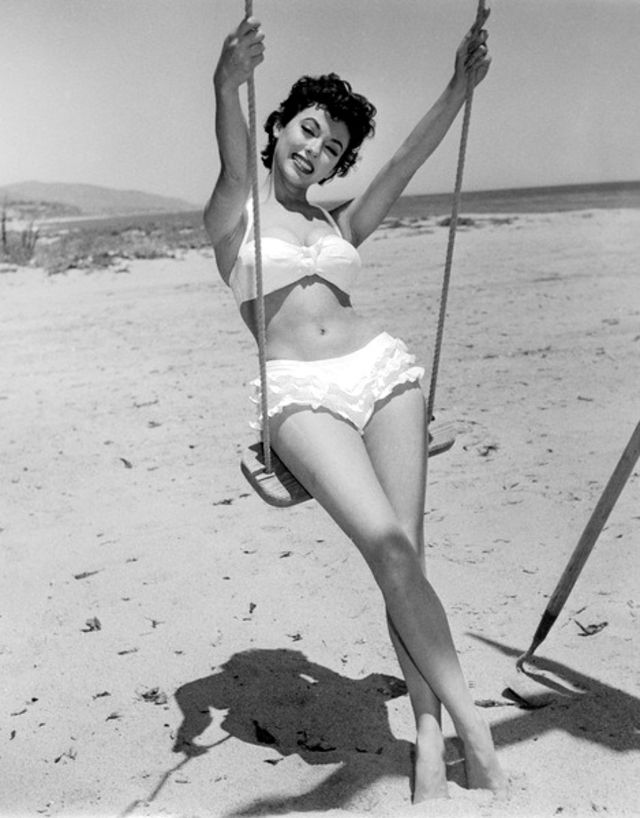
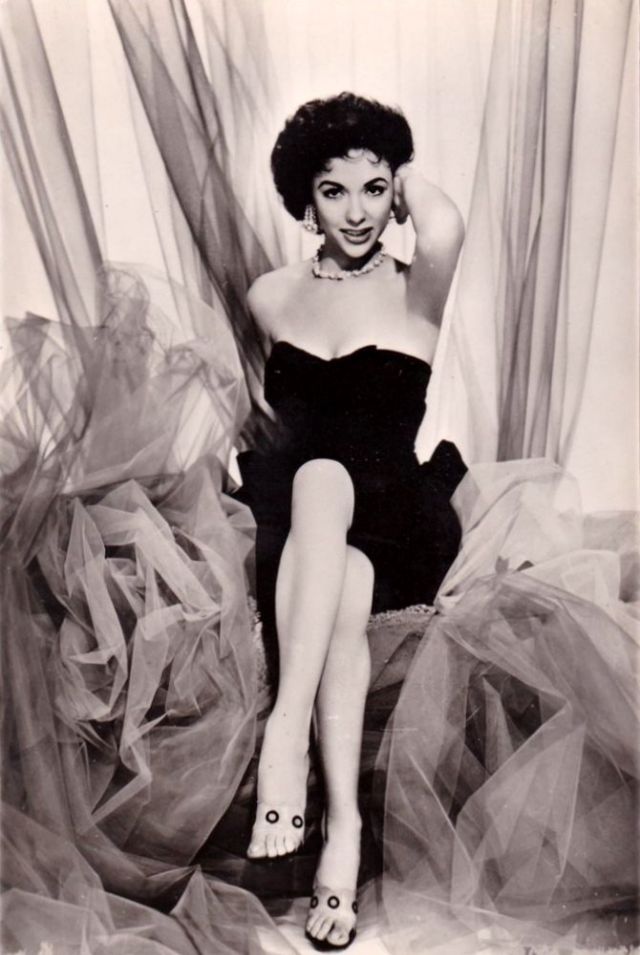
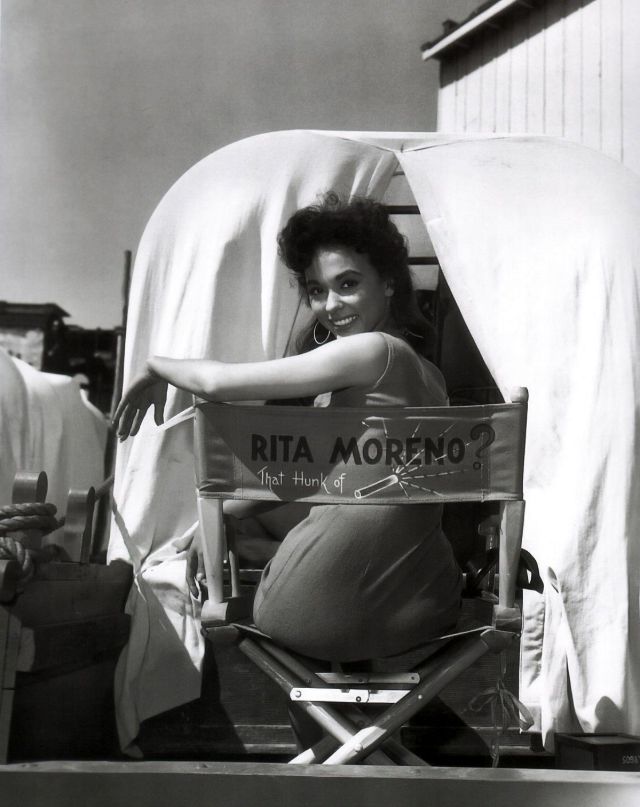
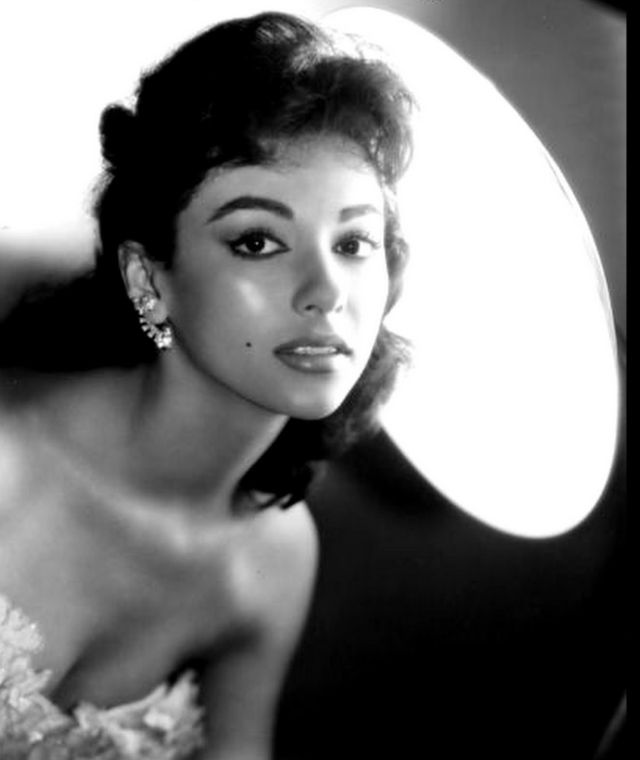
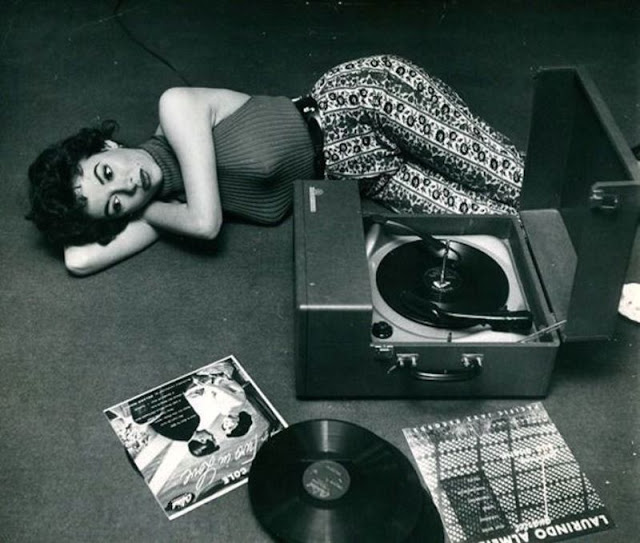
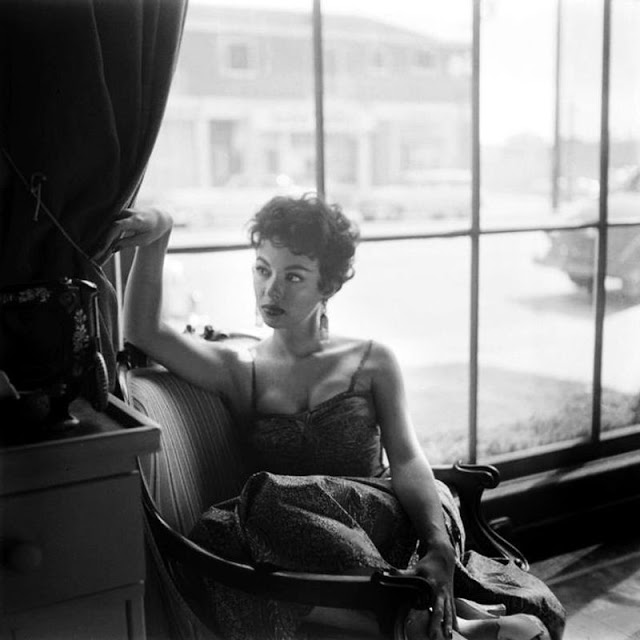
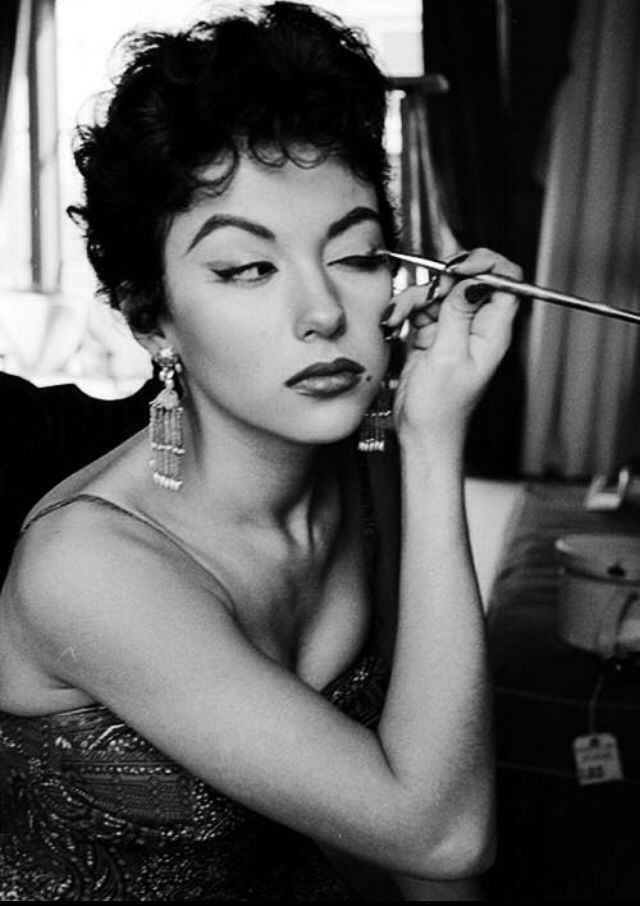
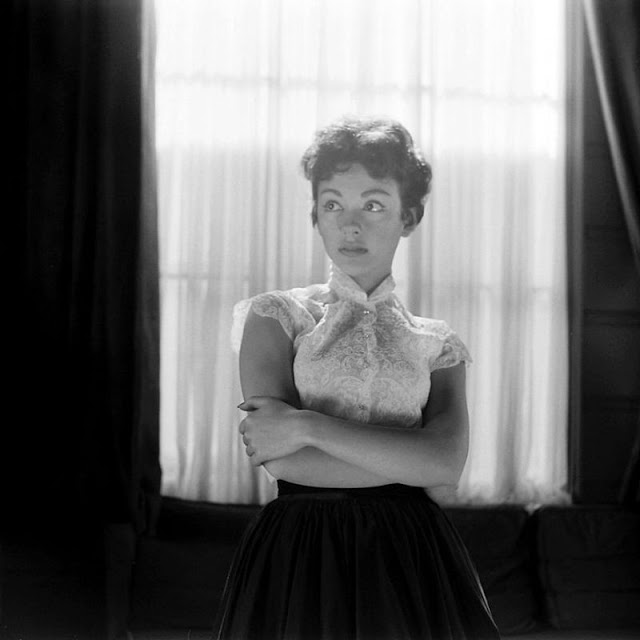
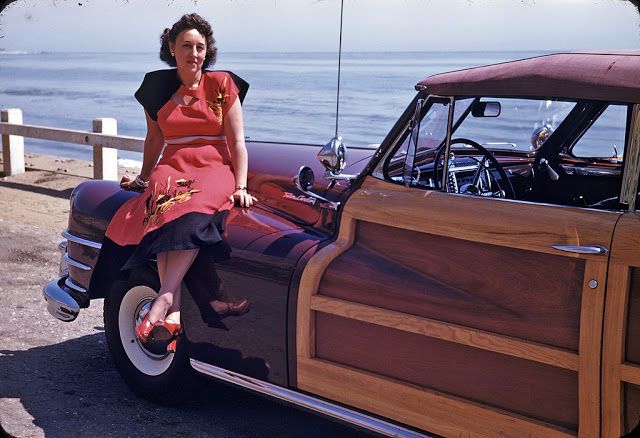
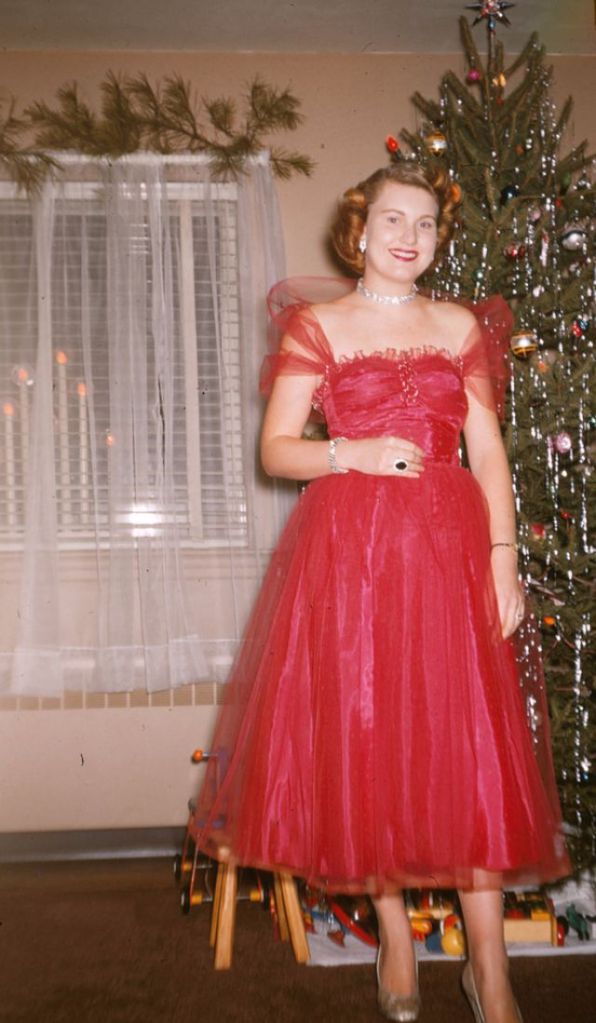
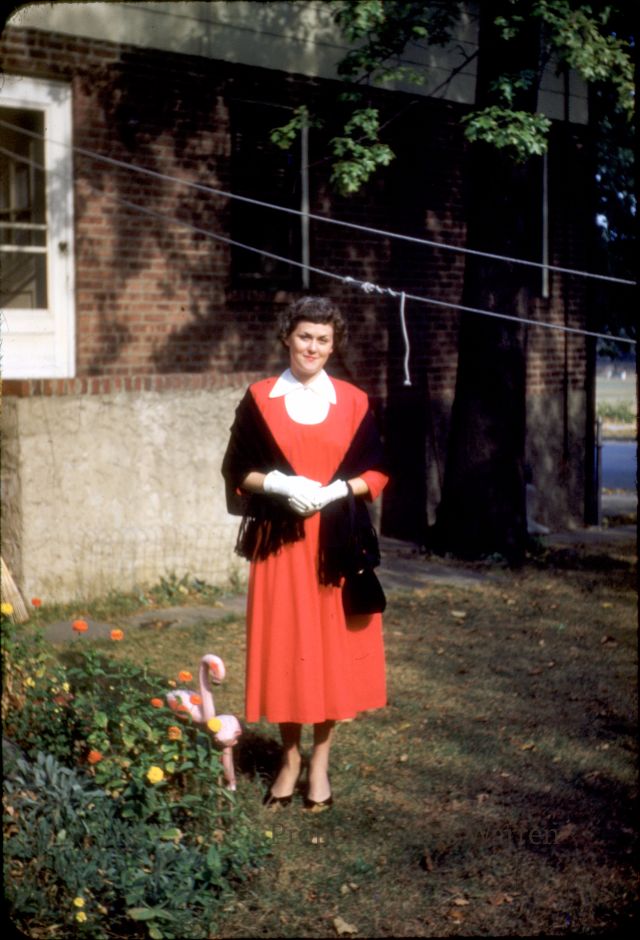
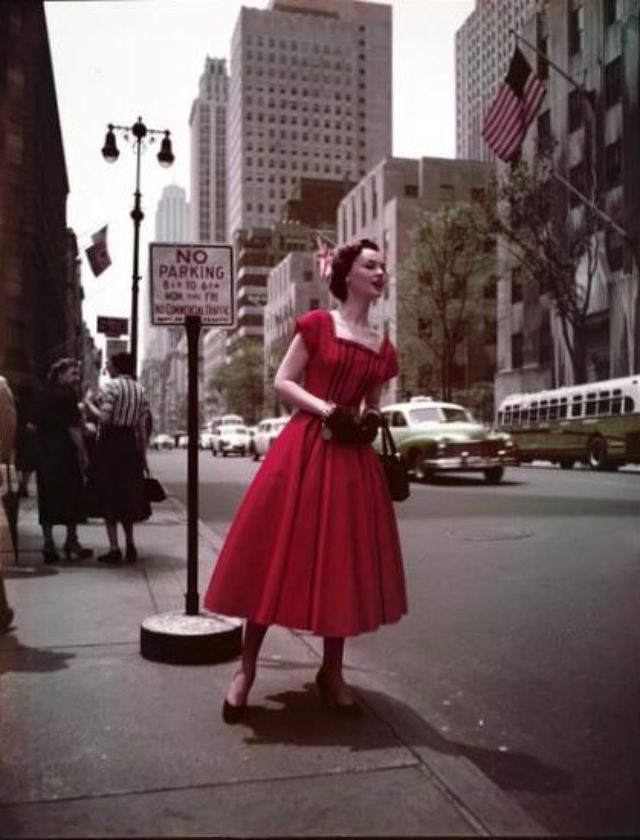
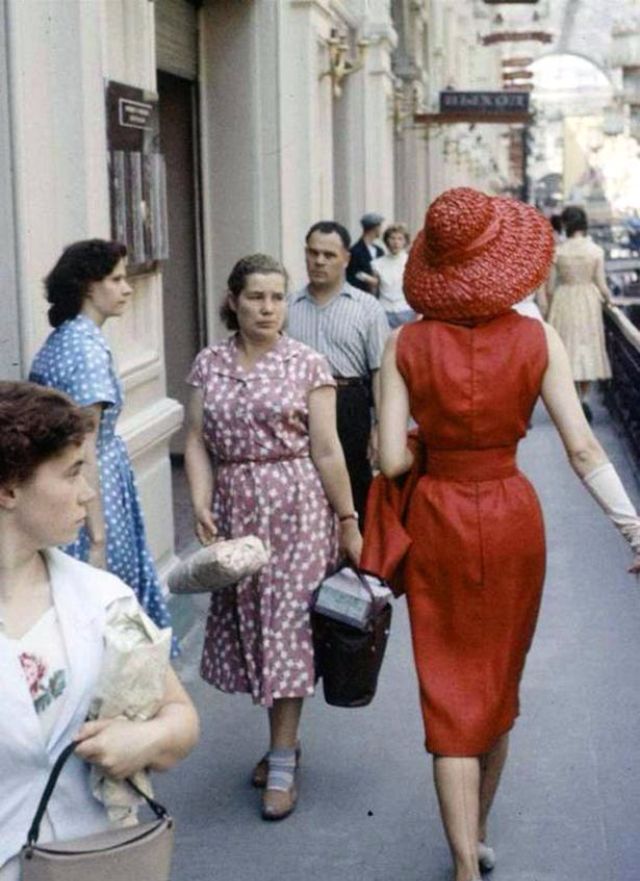
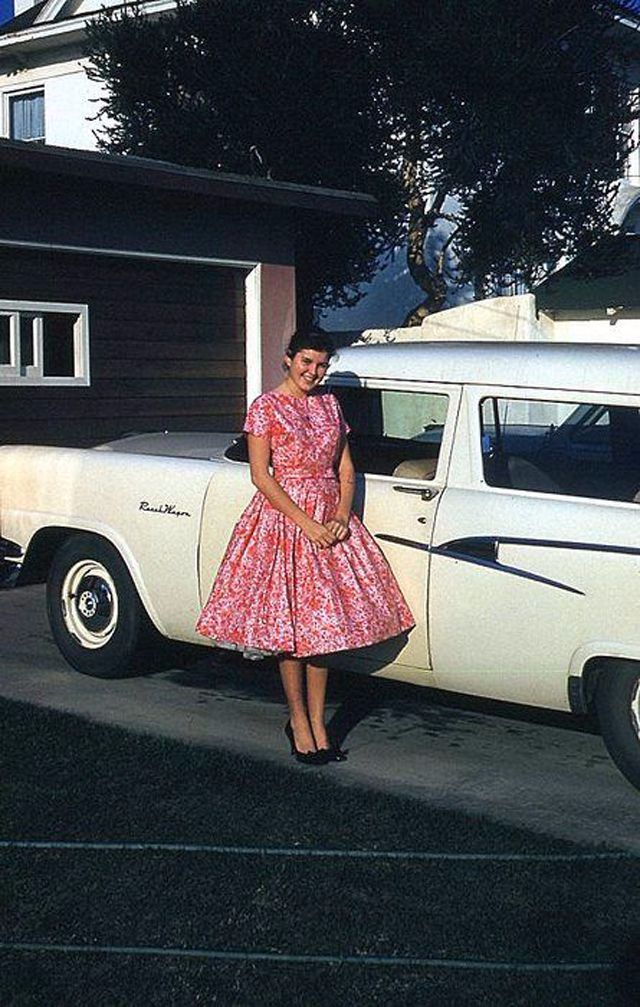
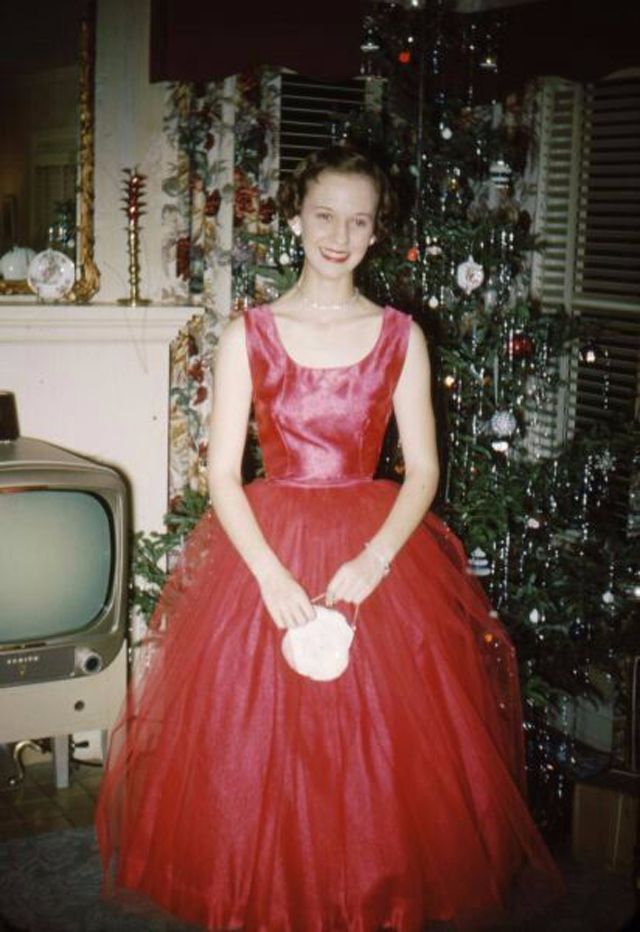
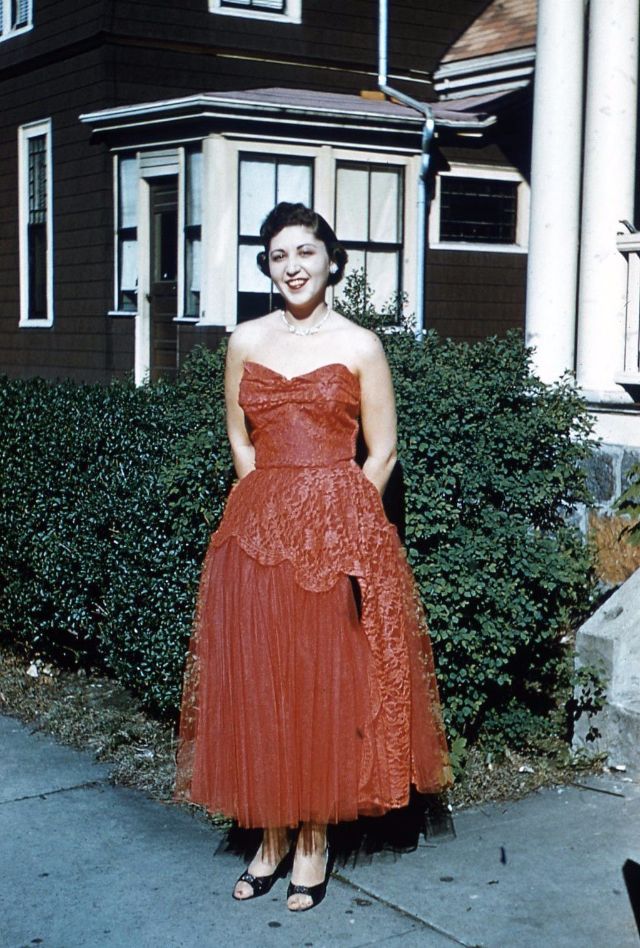
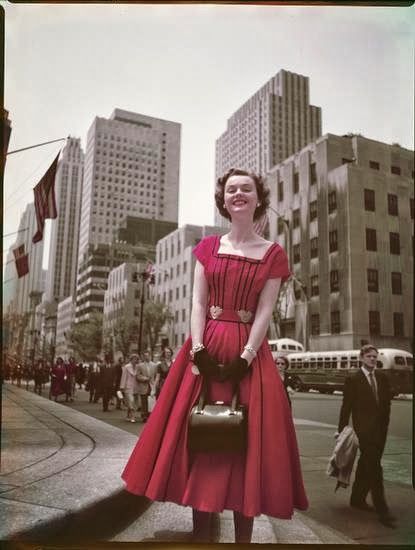
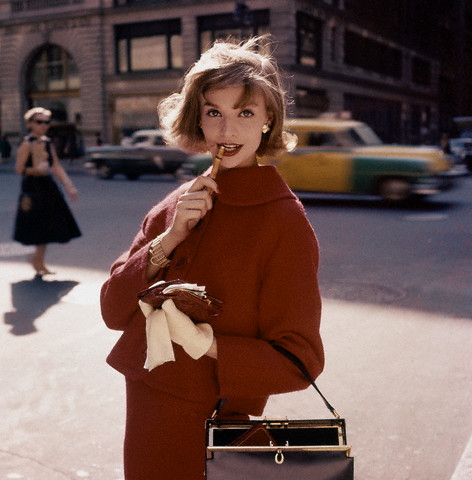
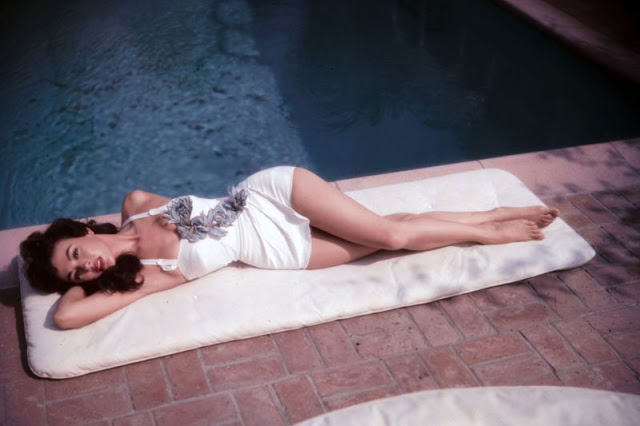
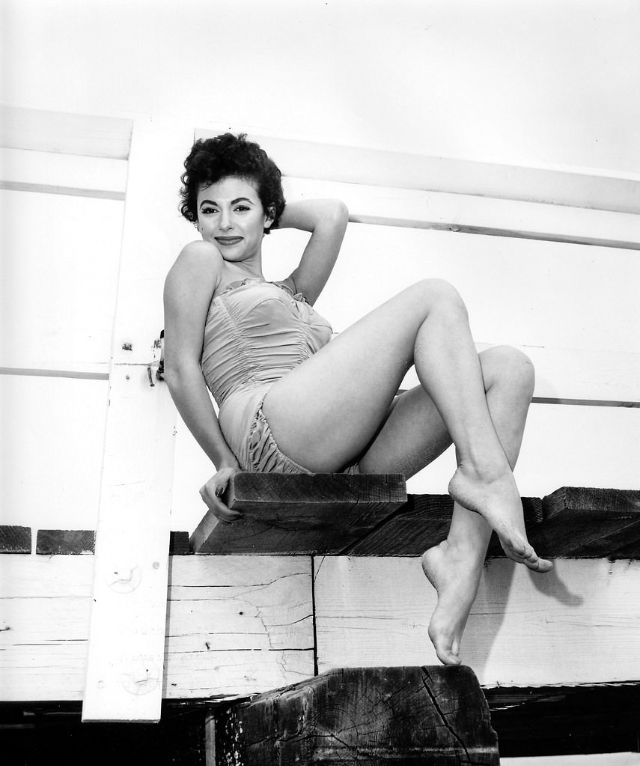
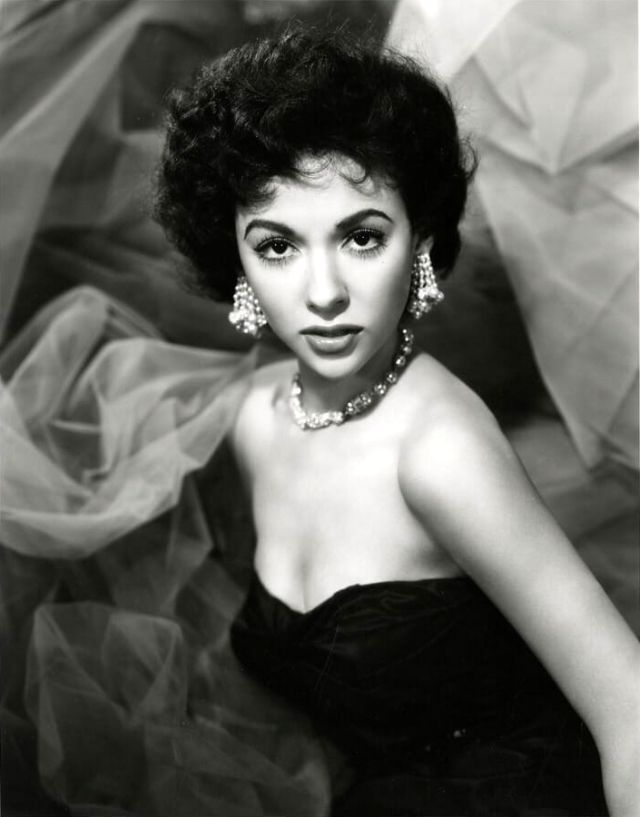
Take a look at these charming photos to see the glamorous beauty of young Rita Moreno in the 1950s.
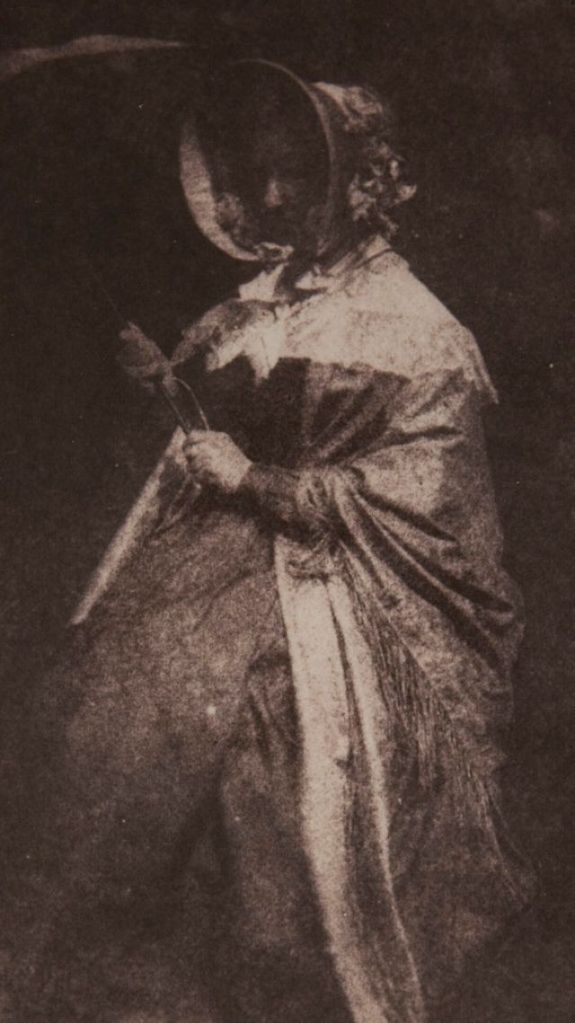
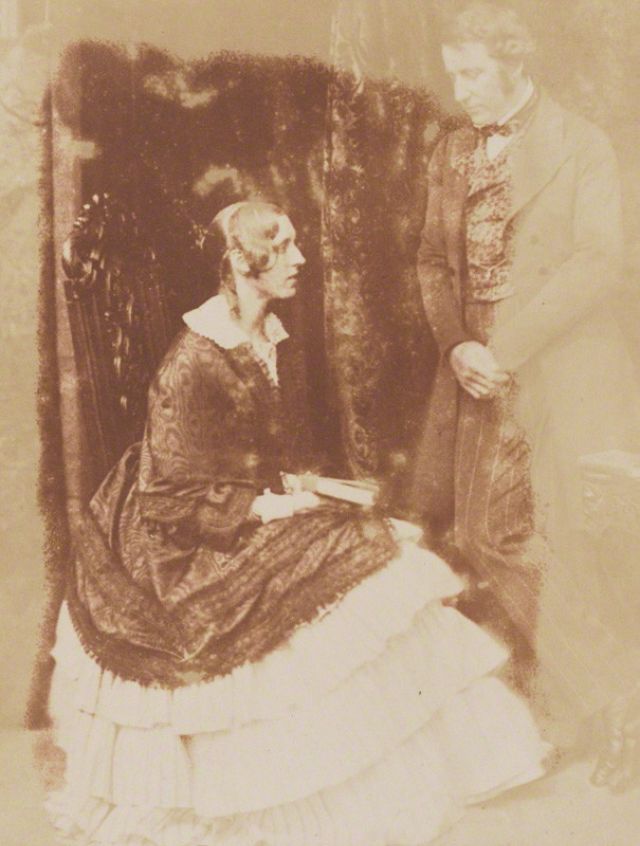
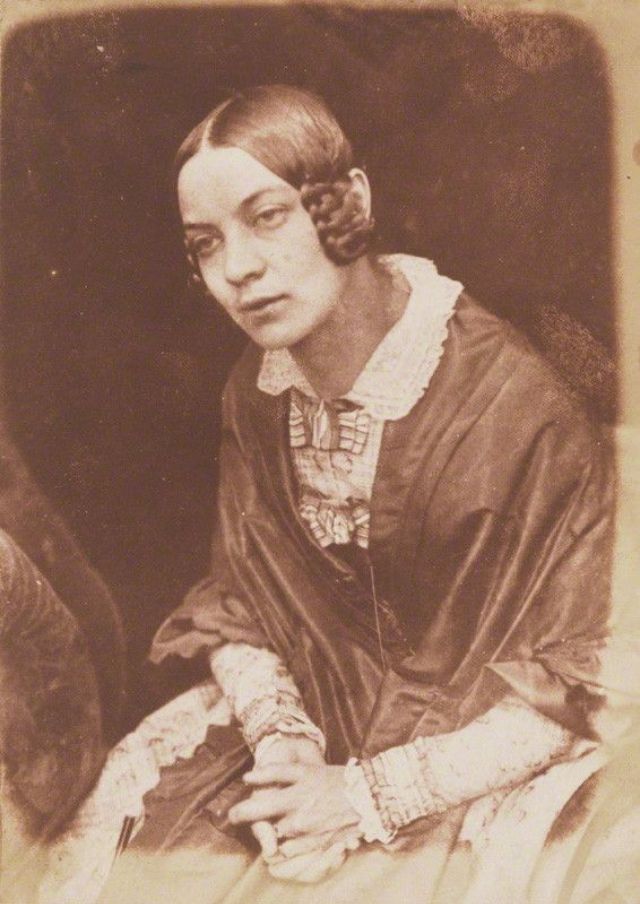
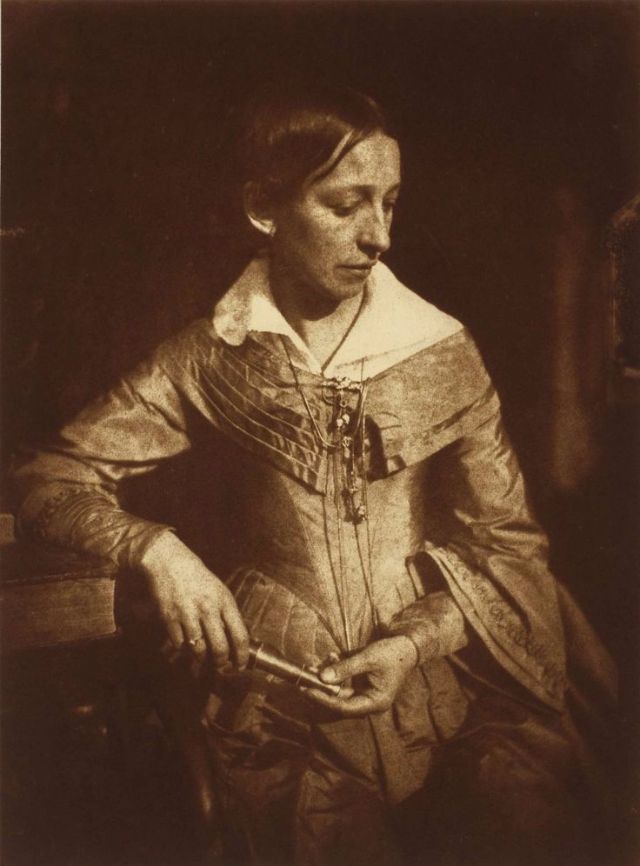
39 Exceptional Photographic Portraits From the 1840’s

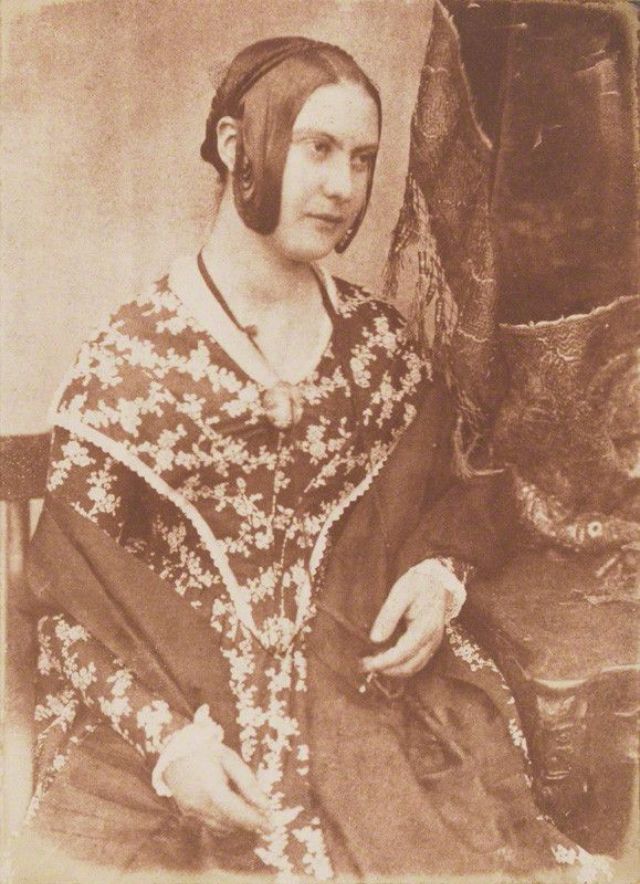
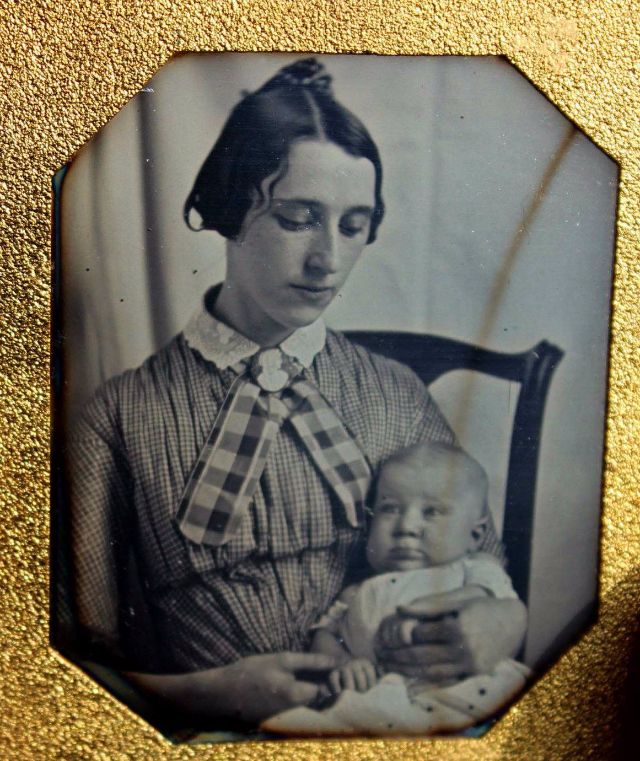
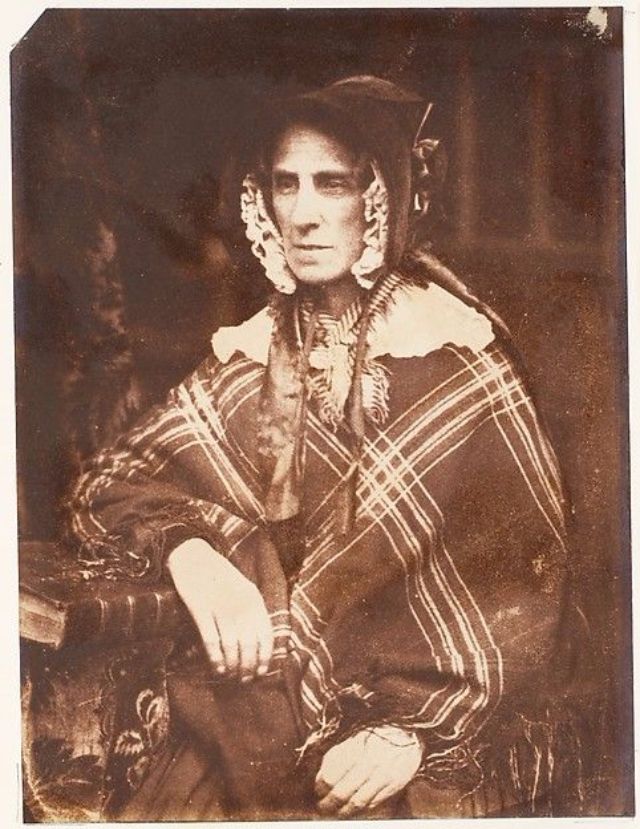
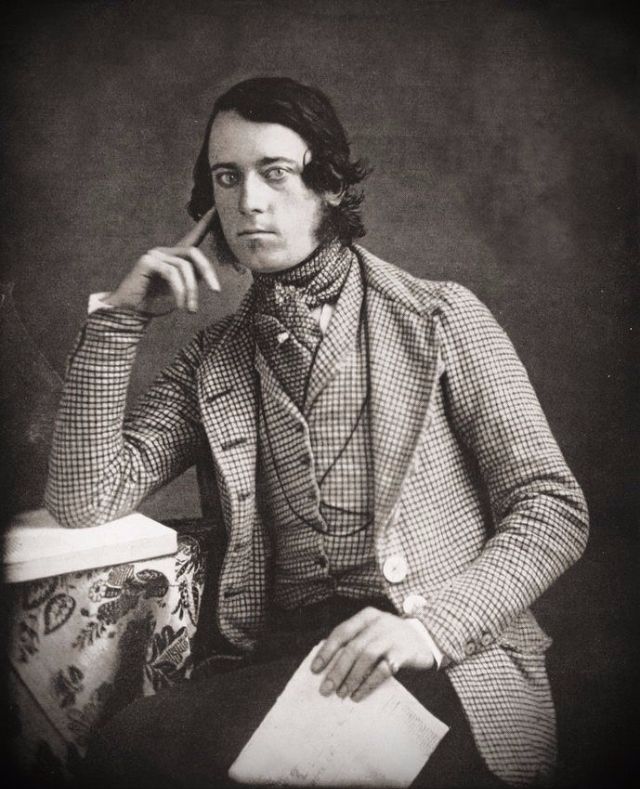
After the introduction of photography in the 1840s the early Victorians soon recognized the medium’s potential for portraiture. At first only the rich could afford high prices at fashionable city photographic studios. Alongside the professionals, gentleman amateurs worked to master photography’s complicated chemistry and optics. It was the children or other relatives of these first photographers who sat for their early experimental portraits. Below is a collection of 39 rare portrait photos of people taken in the 1840s.
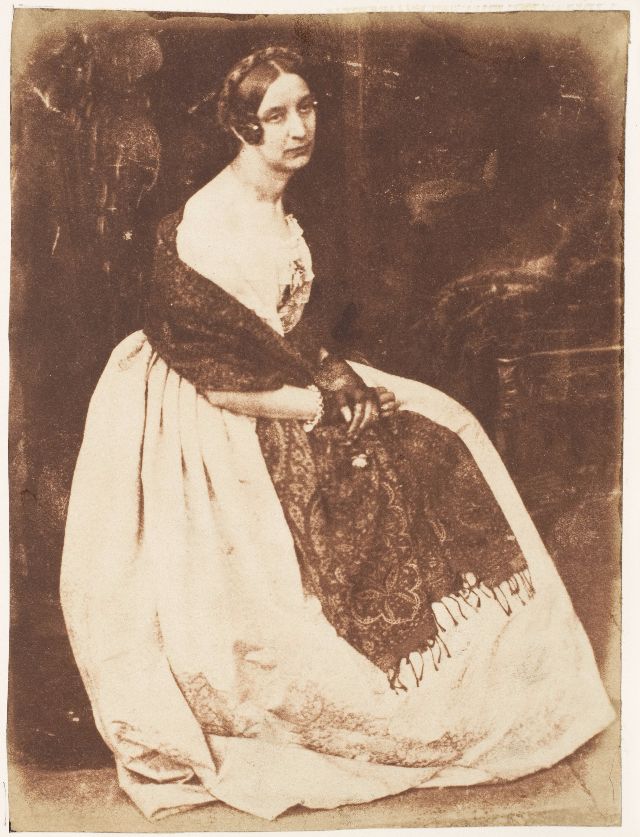
Charlotte Lockhart, later Mrs Hope, grand-daughter of Sir Walter Scott, circa 1846
Couple in winter clothes, ca. 1840s

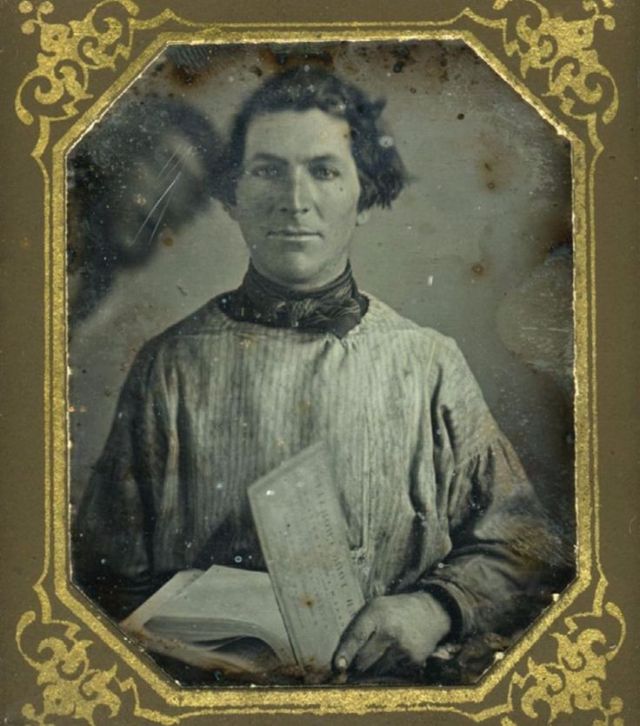
Daguerreotype portrait of an unidentified man holding a book with another man moving into frame behind him, ca. 1840s
Daguerreotype portrait of Edgar Allan Poe, 1842
Portrait of Edgar Allen Poe, taken several months before his death, 1849
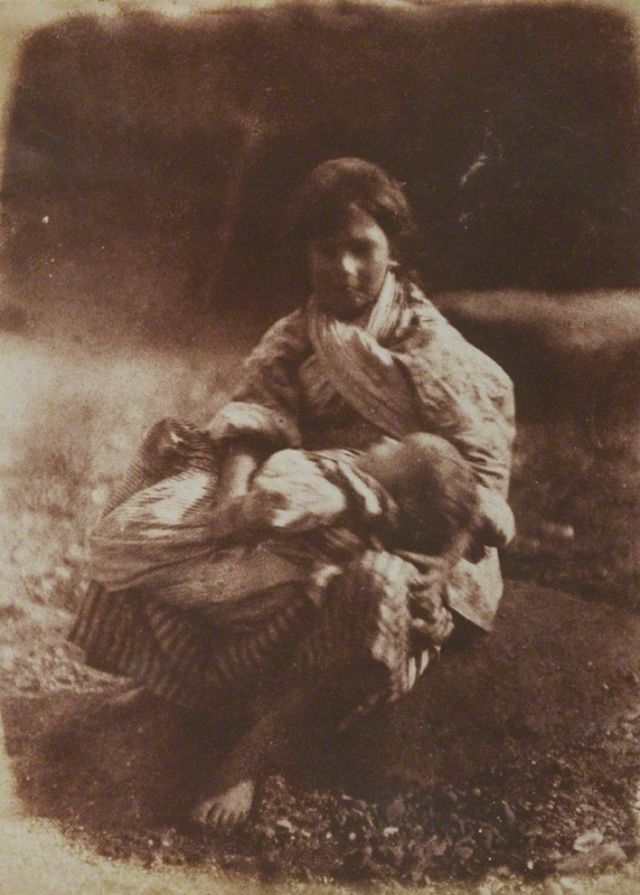
Fisher Lassie and her child by David Octavius Hill and Robert Adamson, 1843-1848
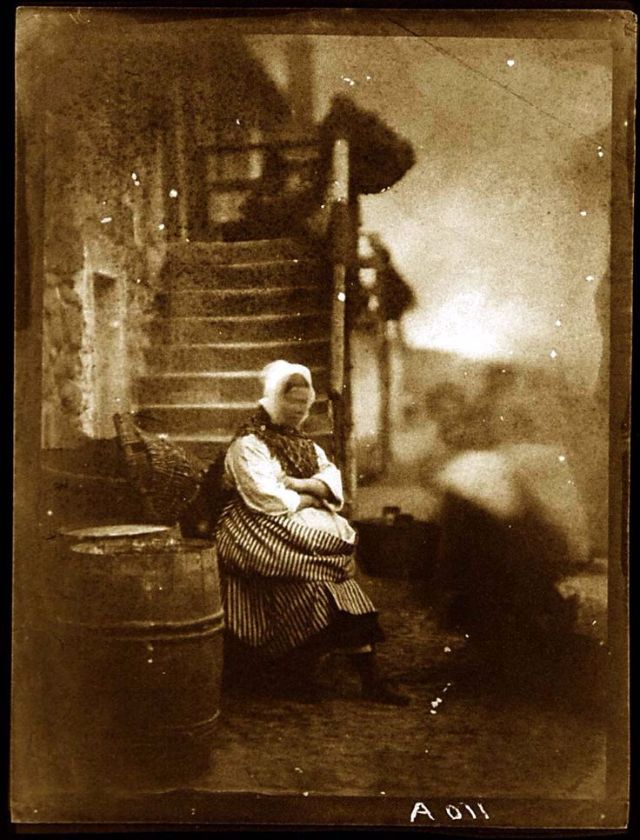
Fishwife from Newhaven by Hill and Adamson, 1843-1847
Girl wearing a white chemisette, holding long watch on chain, 1845
Handsome gentleman in the late 1840s
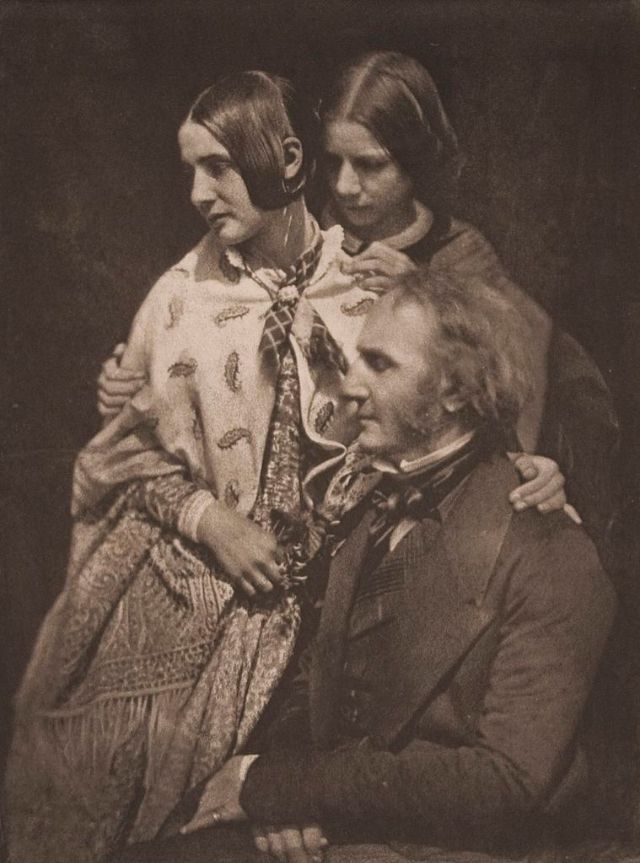
James Fillans with his two daughters by Hill and Adamson, 1845
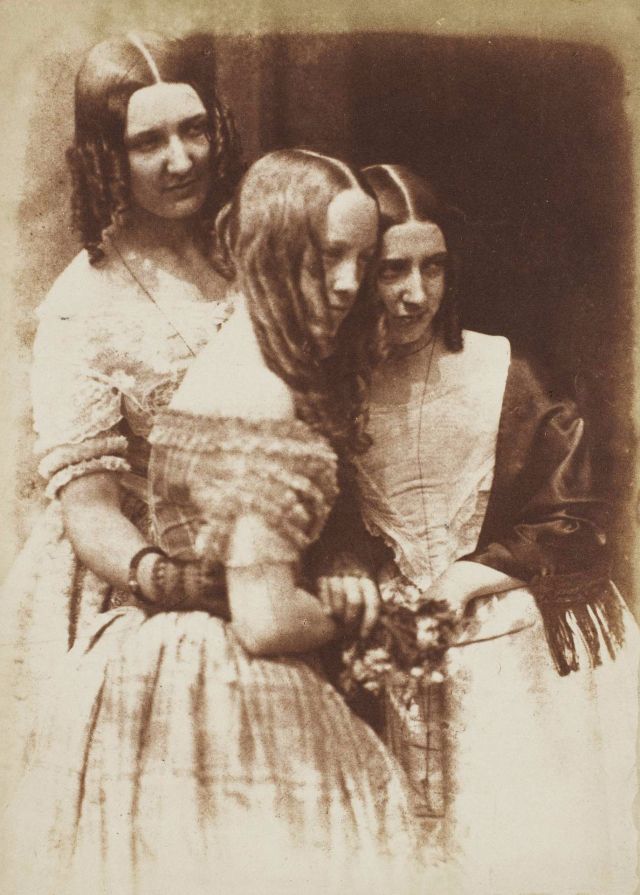
Jane Webster (née Binny); Justine Gallie (née Monro); Mrs Marrable (née Binny) by Hill and Adamson, 1843-1848
Lady Eastlake by Hill and Adamson, 1843-1848
Lady Elisabeth Theresa Feilding, née Fox Strangways (1773-1846), ca. early 1840s
Lady Georgina Elizabeth Wharncliffe (née Ryder), John Stuart-Wortley by David Octavius Hill and Robert Adamson, 1846
Matilda Smith (née Rigby) by Hill and Adamson, 1843-1848
Miss Elizabeth (Betsy) Etty, daughter of John Etty, by Hill and Adamson, 1844
Miss Kemp by David Octavius Hill and Robert Adamson, 1843-1848
Miss Munro by Hill and Adamson, 1843-1848
Mother and child in the late 1840s
Mrs. Jameson by Hill and Adamson, 1843-47
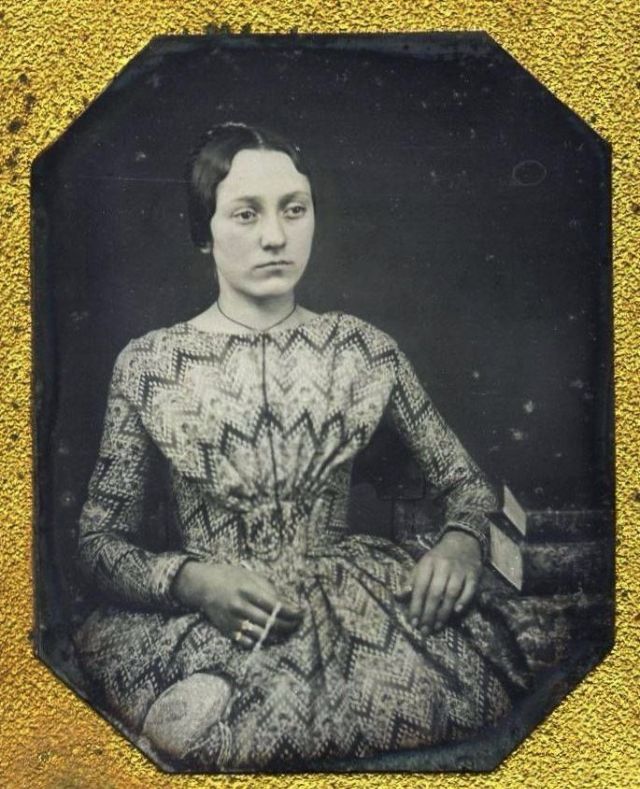
Mrs. Rishton (née McCandlish) by David Octavius Hill and Robert Adamson, 1843-1848
Mrs. Shanker by Hill and Adamson, 1843-1847
Portrait of a beautiful bride, ca. 1840s
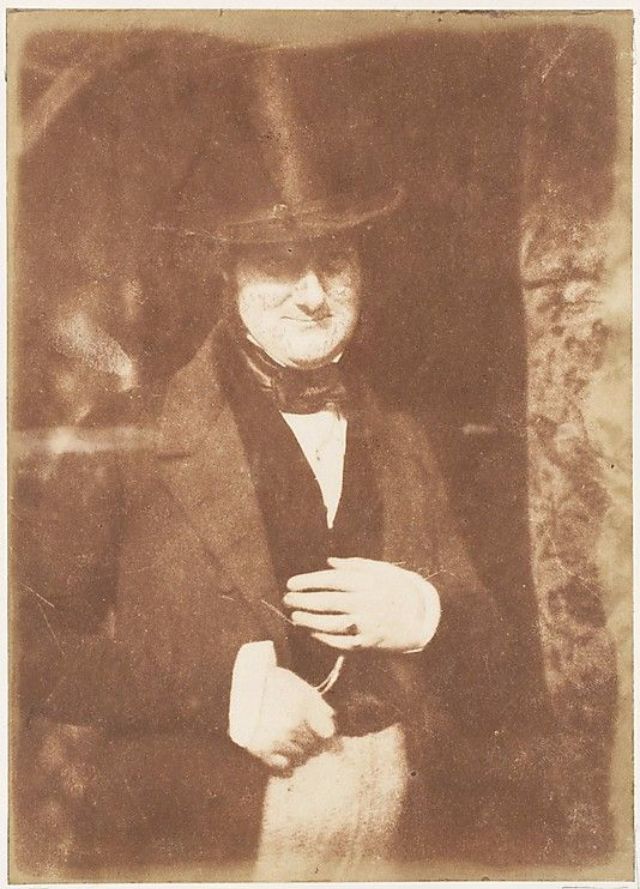
Portrait of a gentleman, 1845
Portrait of a lady, possibly a domestic servant, in a striped dress, late 1840s
Portrait of a lovely couple in the early 1840s
Portrait of a woman, 1844
Portrait of Elizabeth, Lady Eastlake (17 November 1809 – 2 October 1893) in the early 1840s
Portrait of Jane Sophia Barker (née Harden) by David Octavius Hill and Robert Adamson, 1844
Portrait of Miss Dorothy Catherine Draper in 1840
Portrait of Mrs. Isabella Morrison Bell by David Octavius Hill and Robert Adamson, 1843-1848
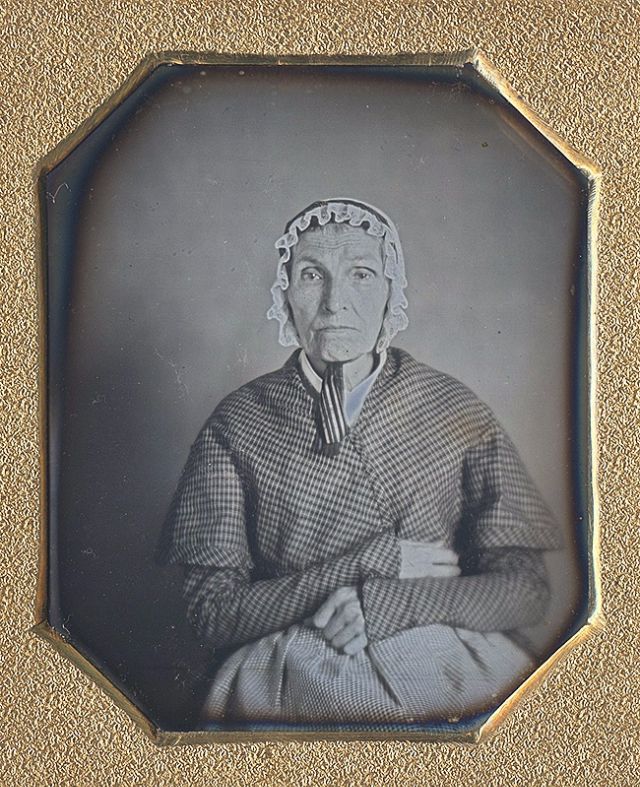
Portrait of old woman in 1848
Portrait of two young women by Carl Ferdinand Stelzner, 1849
Sophia Finlay by David Octavius Hill and Robert Adamson, 1843-1848
Styling it up in 1842
Woman holding a Daguerreotype portrait, ca. late 1840s
Woman with two daughters, 1840s
Young lady in dress, 1840s
Young woman in ‘bead print’ dress, 1845

50 Amazing Vintage Photos of Airplanes of World War 2, Volume 1

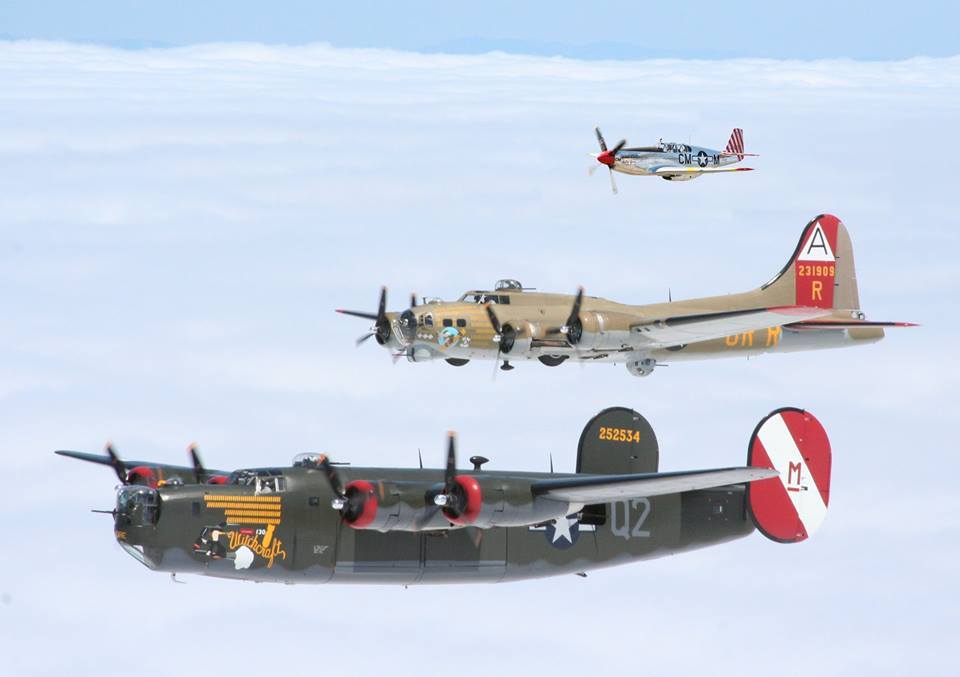
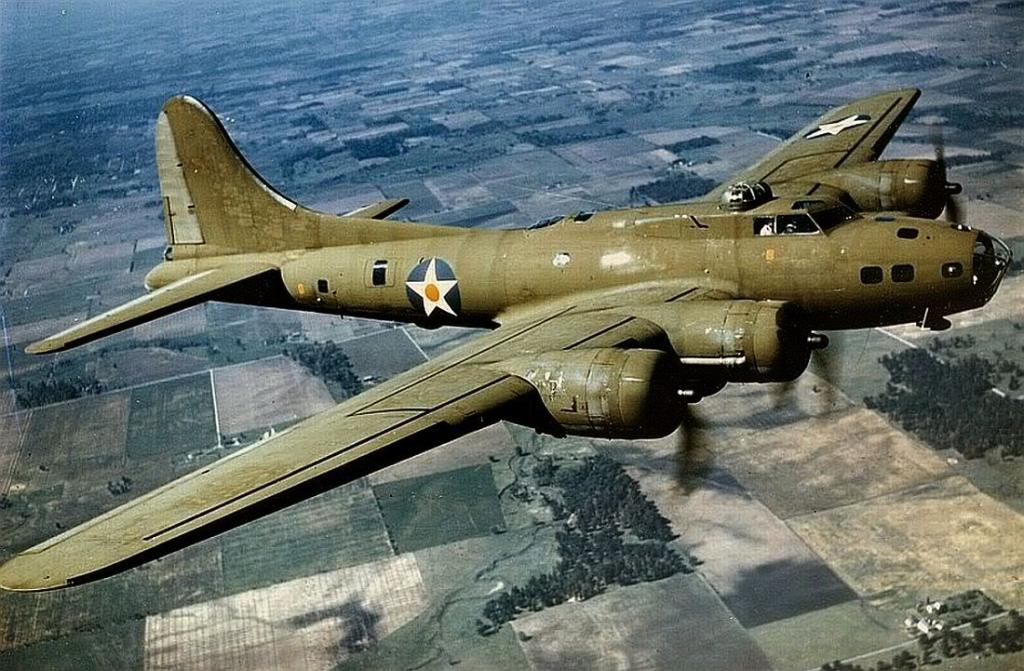
B-17 Flying Fortress, a B-24 Liberator and a P51 Mustang
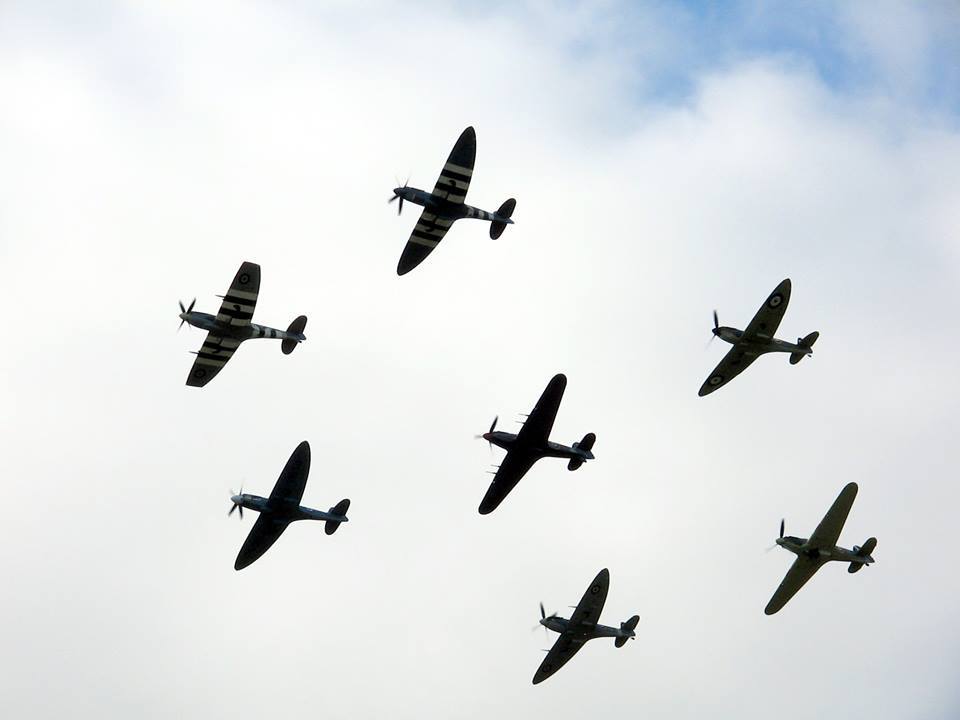
2 Hawker Hurricanes and 5 Supermarine Spitfires of the Battle of Britain Memorial Flight at
Duxford airshow, May 2007
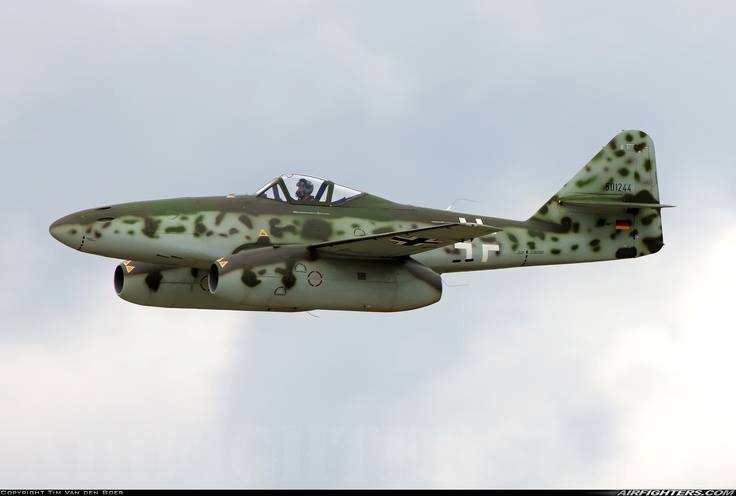
Messerschmitt Me-262
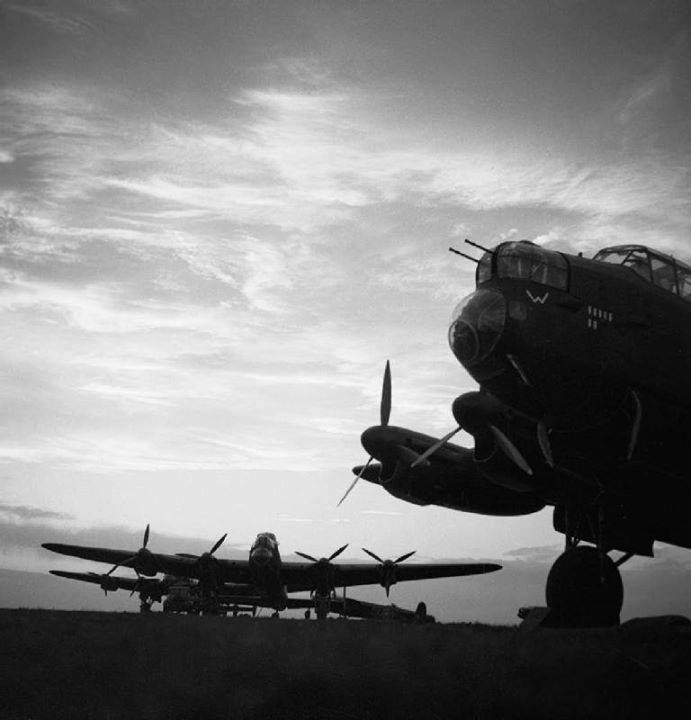
Avro Lancasters of No 57 Squadron, Royal Air Force, lined up in the dusk at Scampton,
Lincolnshire, before an operation.
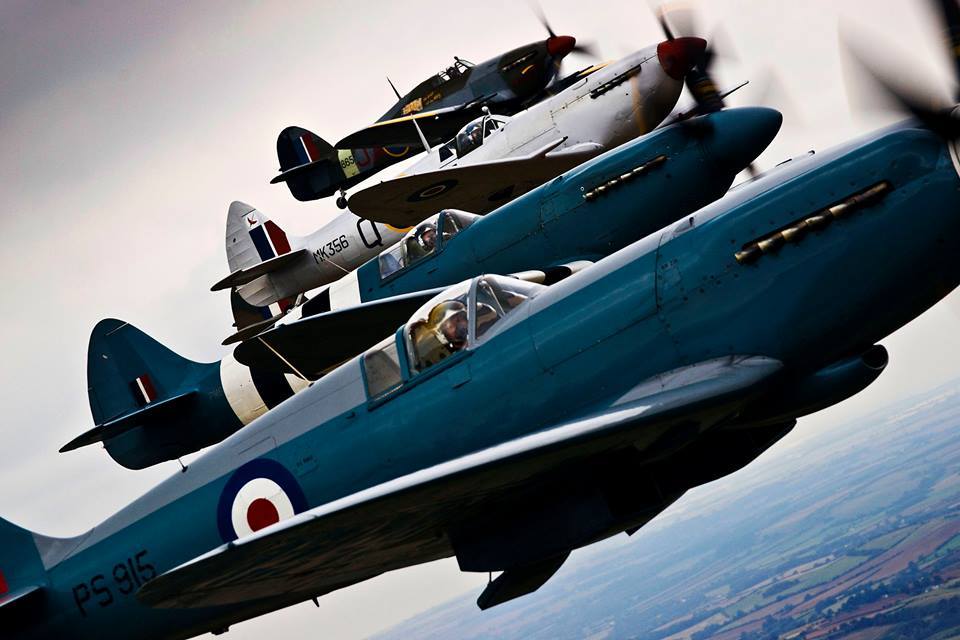
Spitfire and Hurricane aircraft from World War II come together over Lincolnshire, for the
Lincolnshire Lancaster Association Day event held at RAF Coningsby.
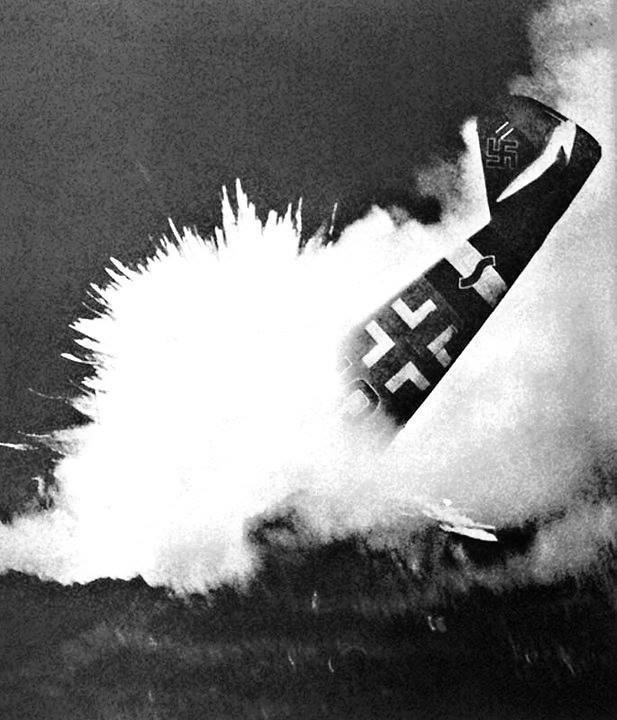
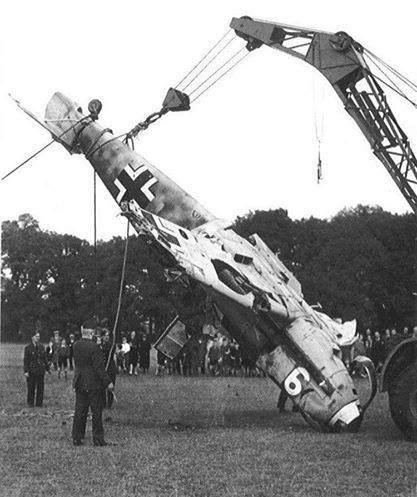
A dramatic ending of a BF-109
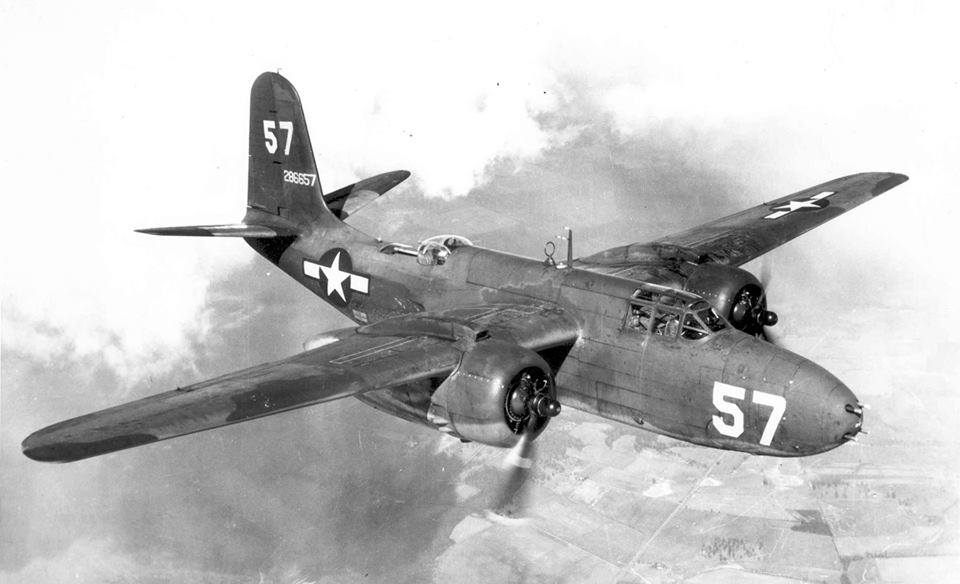
Douglas A-20 Havoc
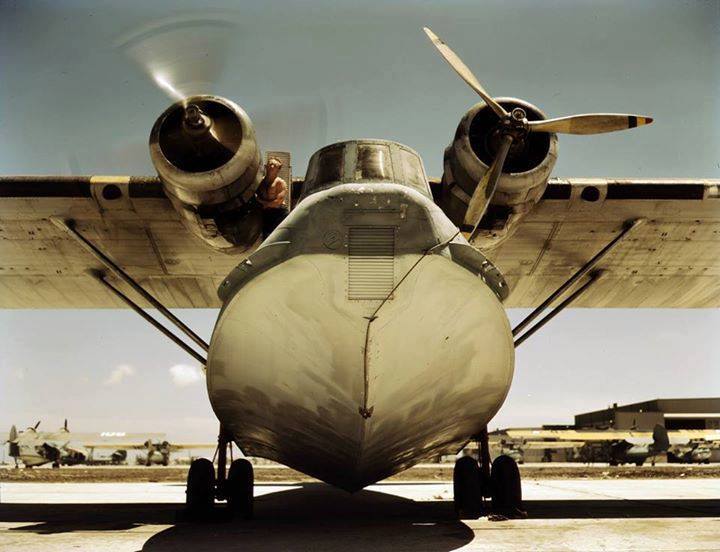
Close up of the nose of a PBY Catalina (Corpus Christi, Texas, United States, 1942)
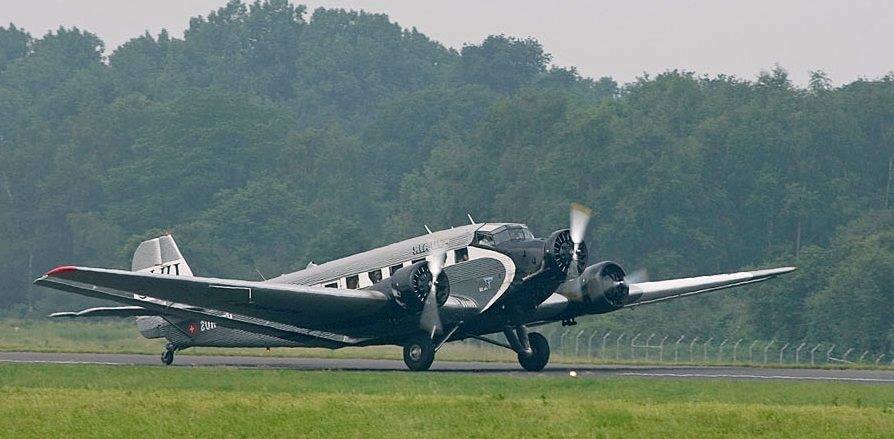
Junkers Ju 52, nicknamed “Auntie Ju”
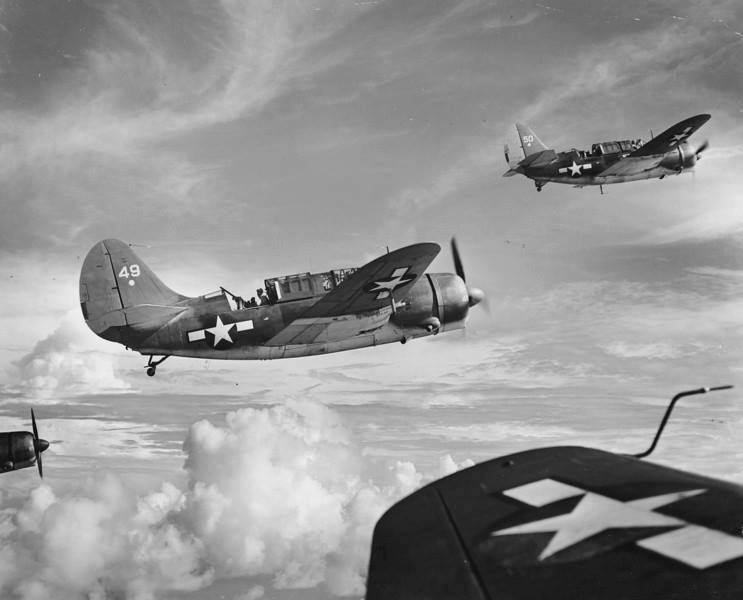
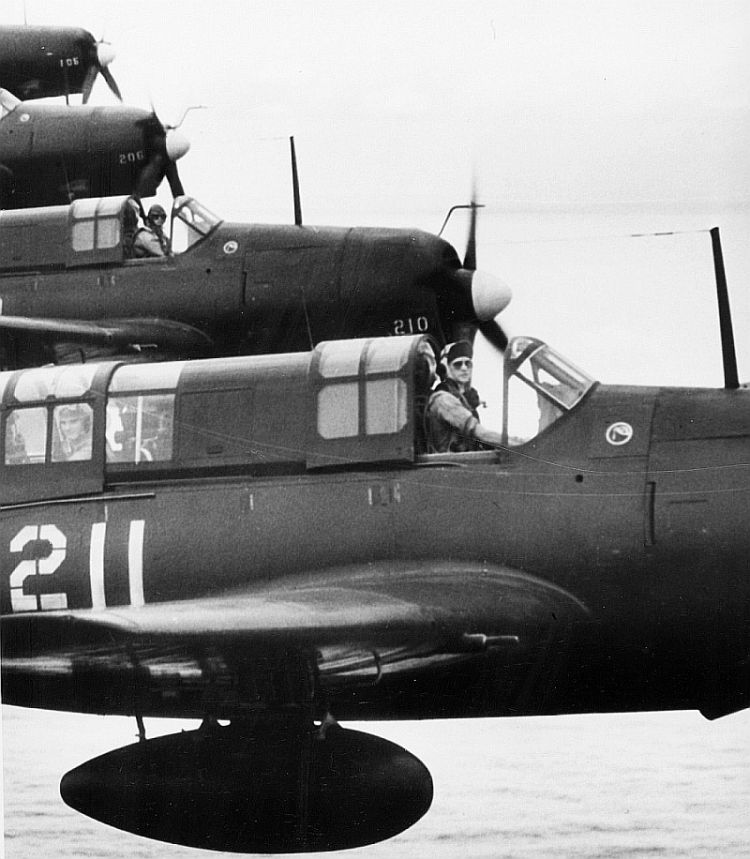
Curtiss Helldivers somewhere over the Pacific
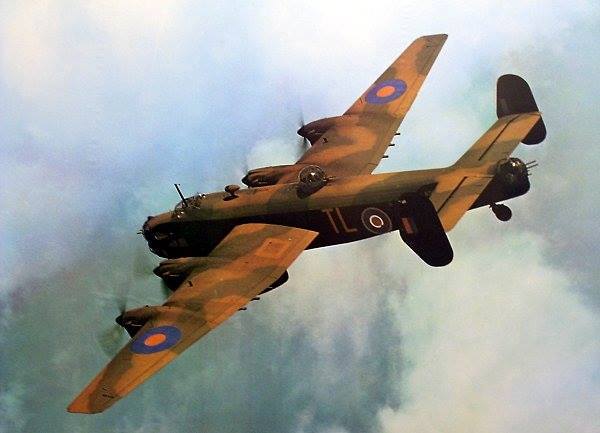
Halifax Bomber
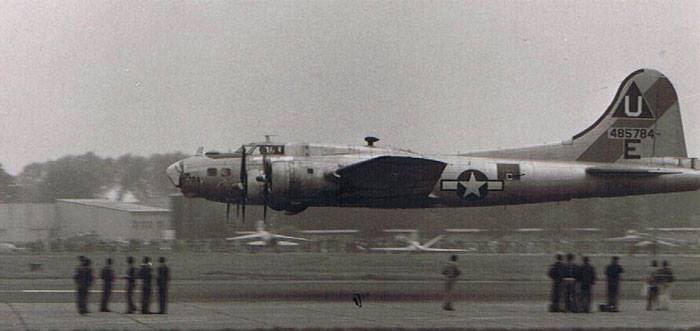
The legendary Don Bullock was well known for his low level flying… in particular in B-
17s.
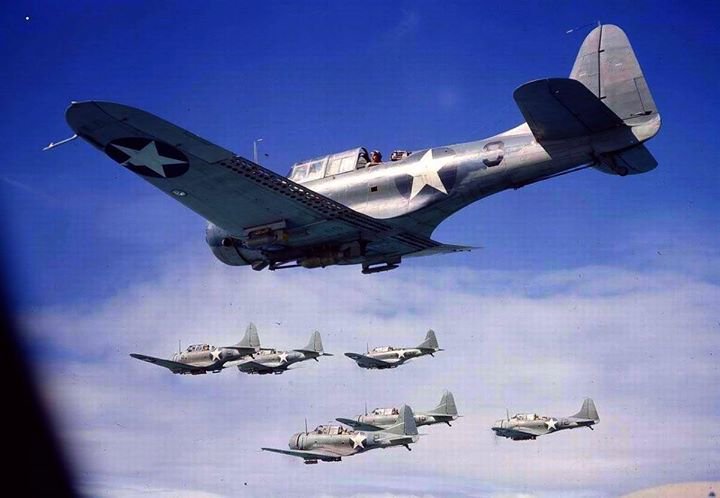
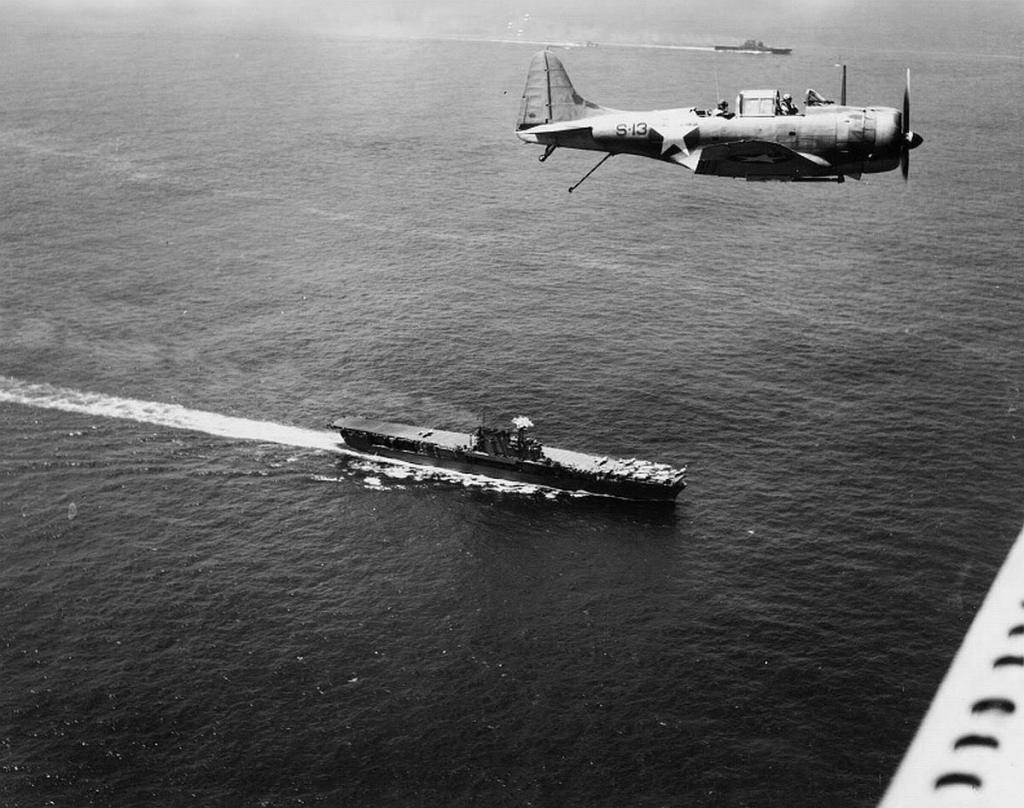
Seven SBD Dauntless dive-bombers in flight, circa 1942
Oberleutnant Fischer of 7 JG 27 survived this forced landing in Windsor Great Park on
September 30 1940 after losing out to RAF fighters.
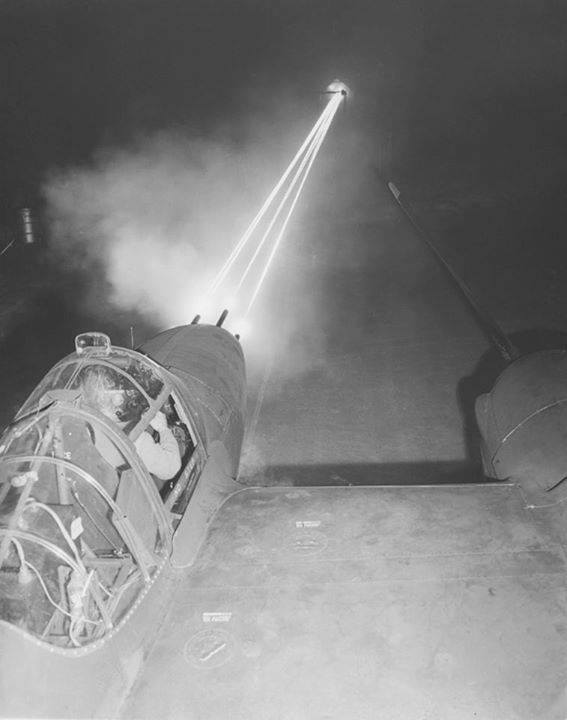
P-38 machine gun firing test. 50 caliber machine guns firing with every 5th shell a tracer
in 3 second bursts.
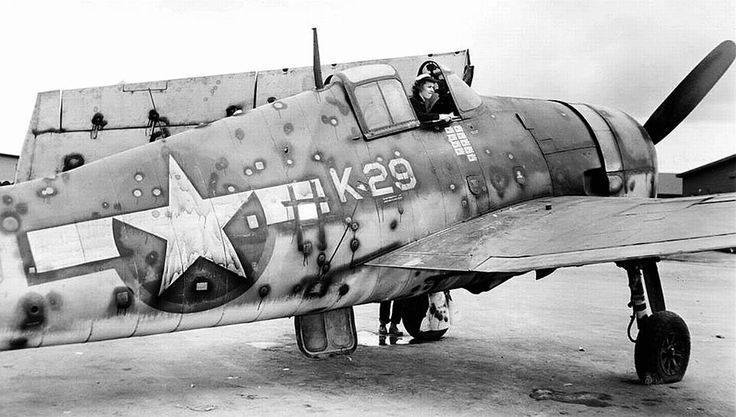
Hellcat back in Hawaii all patched up from Japanese machine gun fire…
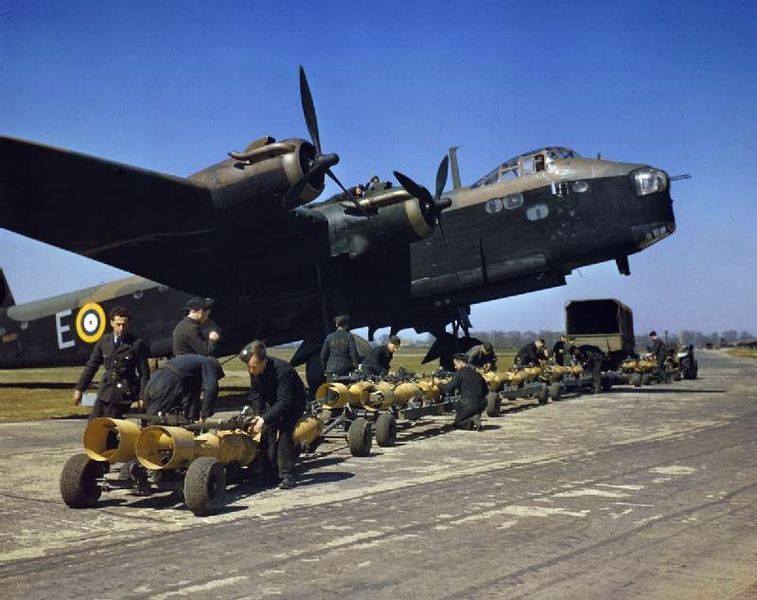
The Short Stirling was the first four-engined British heavy bomber of the Second World War.
The Stirling was designed and built by Short Brothers to an Air Ministry specification from 1936,
and entered service in 1941.
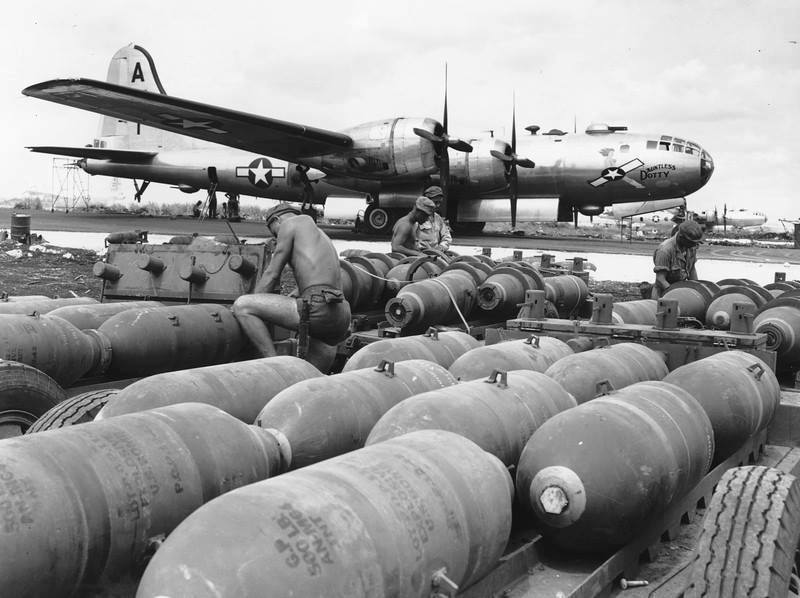
B-29 Dauntless Dotty, flown by LTC Robert K. Morgan lead the first B-29 raids over Tokyo.
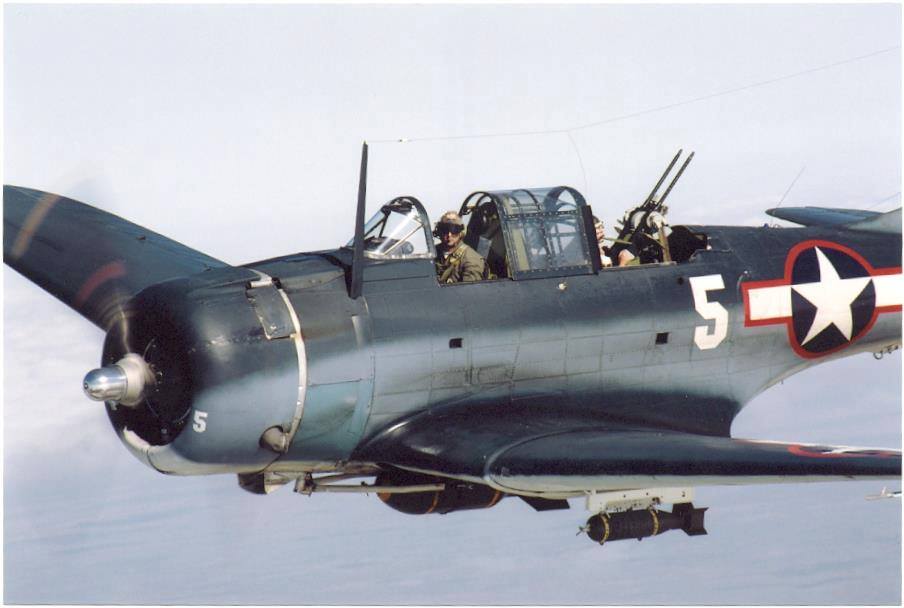
Dauntless
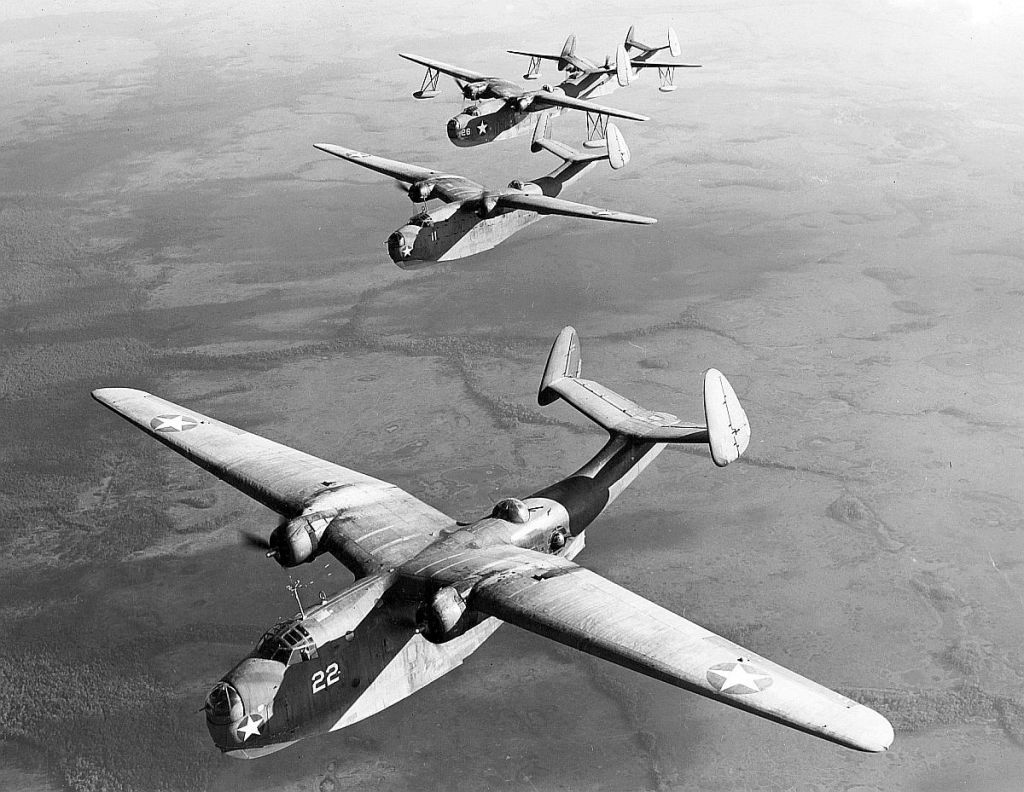
Martin PBM Mariners
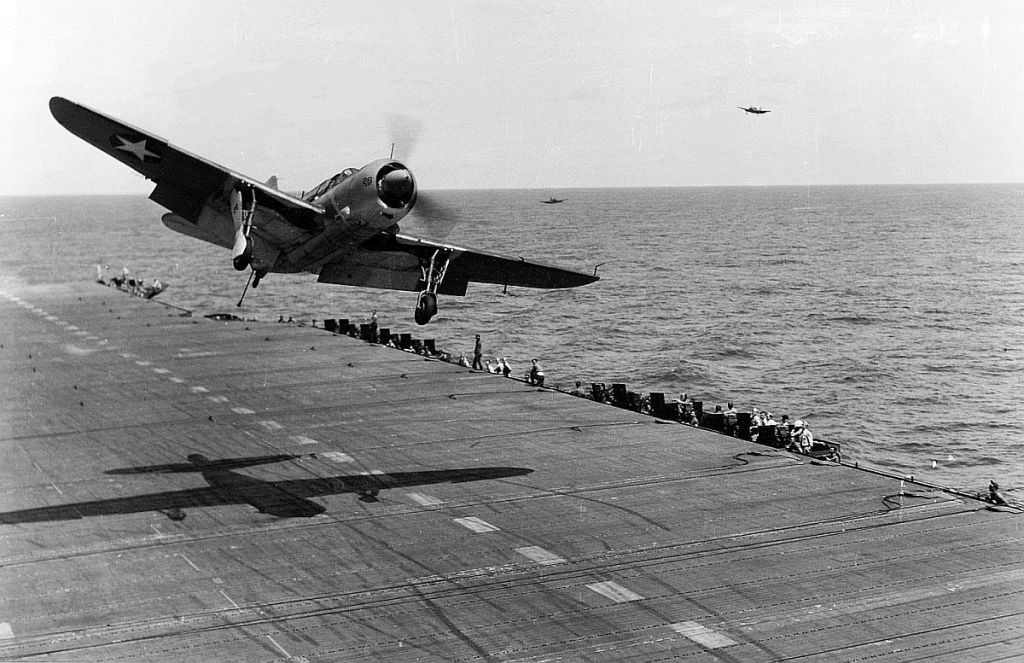
Helldiver waveoff, USS Bunker Hill, Caribbean
Helldivers of VB-87
Avenger of Ens. R.J. Bye, USS Enterprise
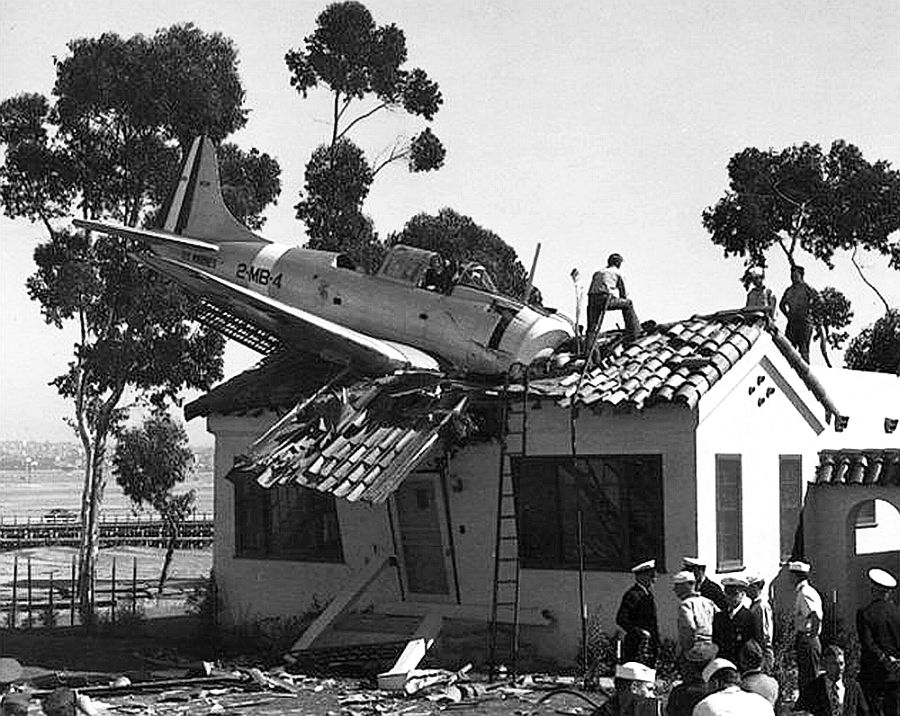
Dauntless v house
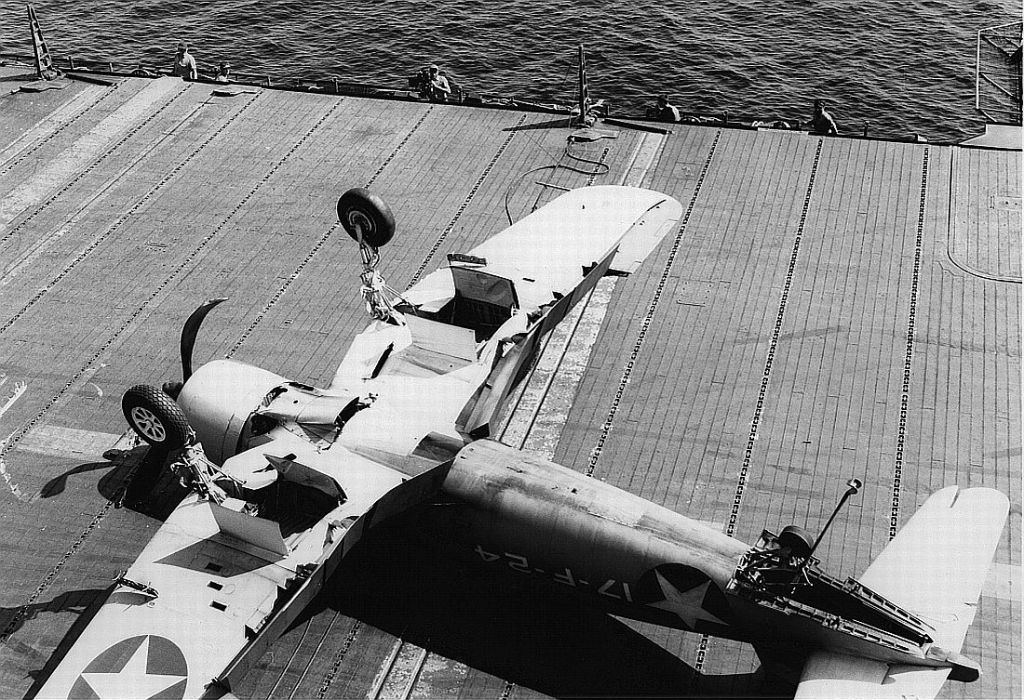
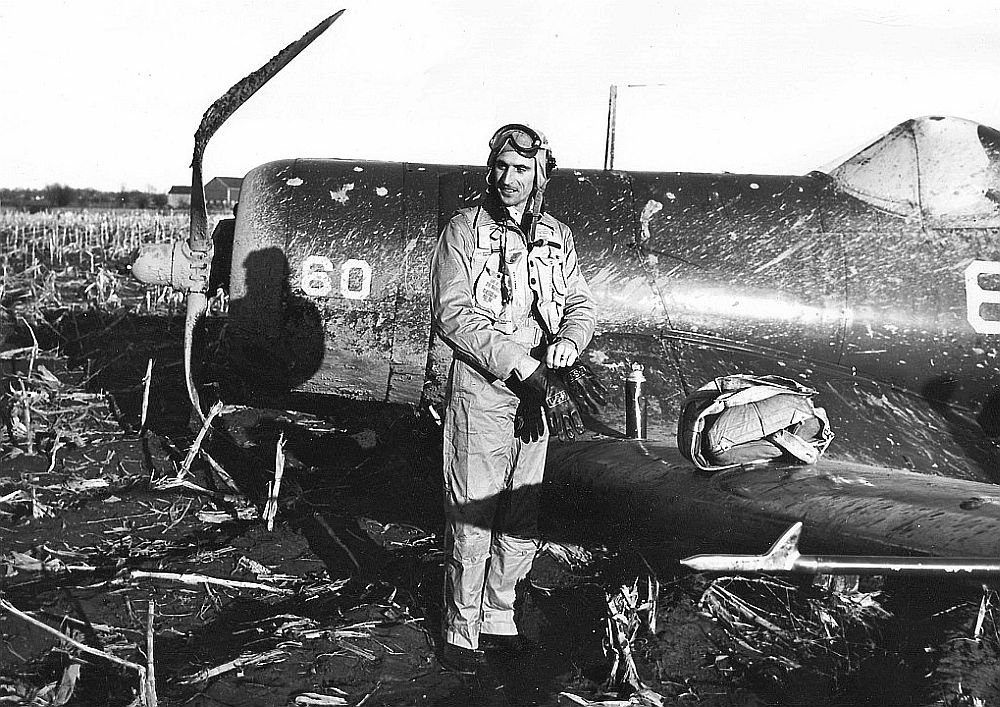
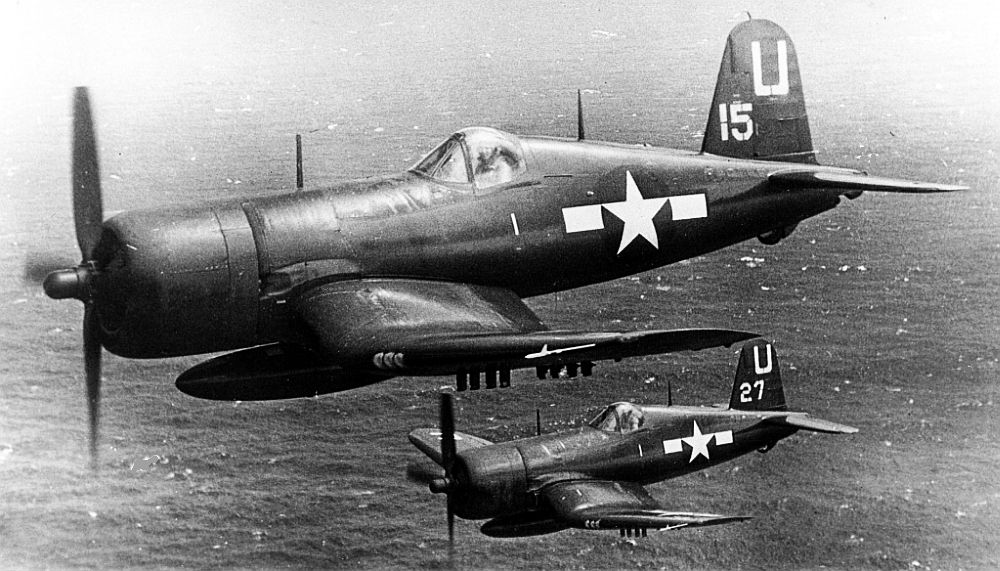
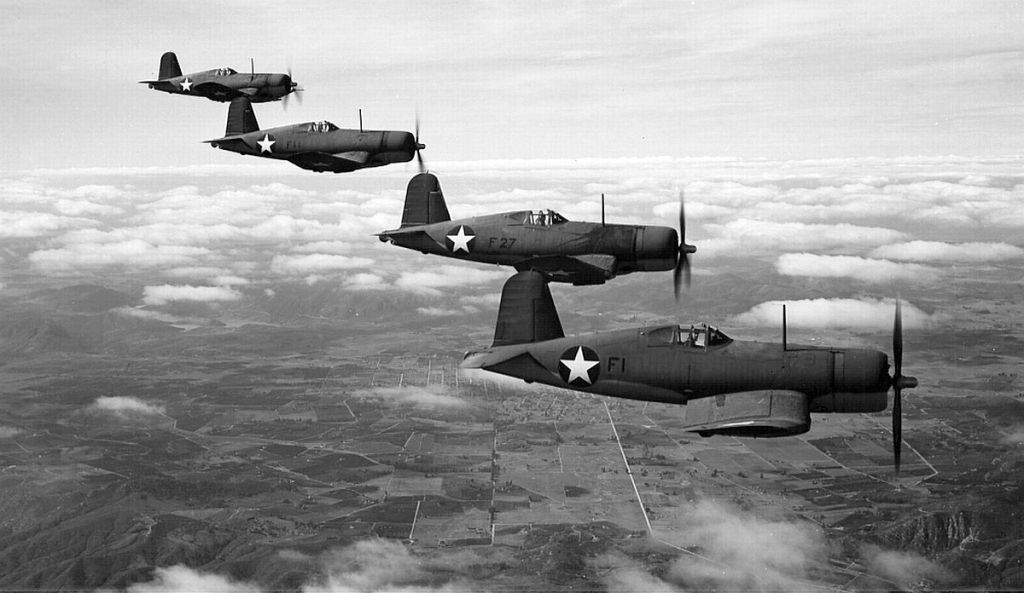
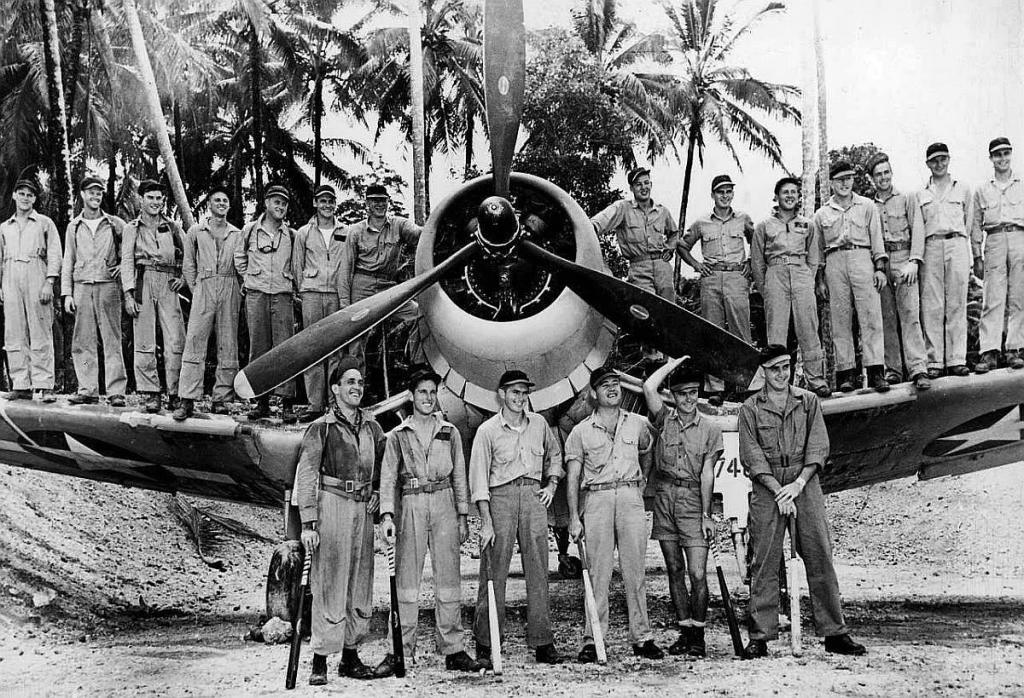
Corsair, VF-17, Bunker Hill 1943
Corsair
Corsair, VF-17, USS Bunker Hill 1943
Corsairs off USS Hancock
Corsairs, VF-12
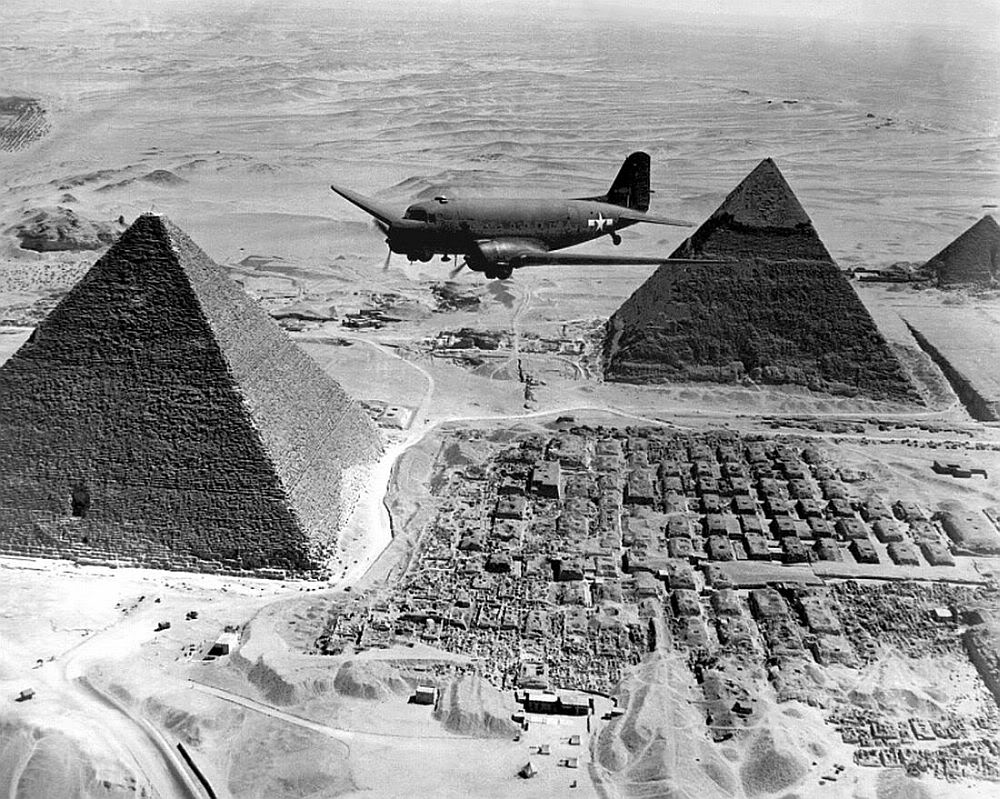
C-47 over the Pyramids, 1943.
‘The Black Sheep’ Sqn
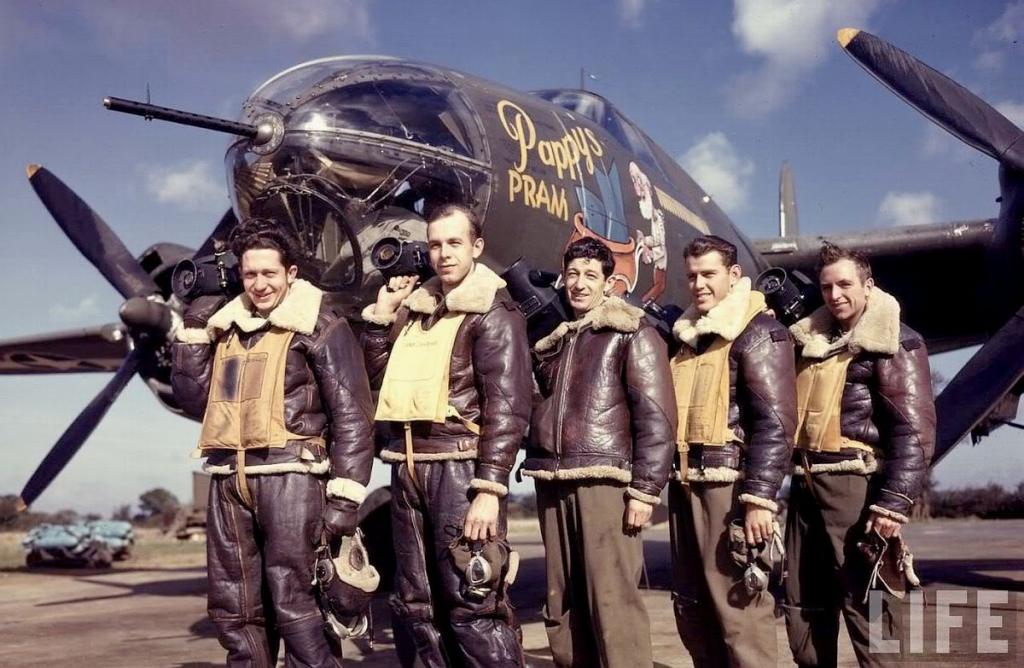
B-26
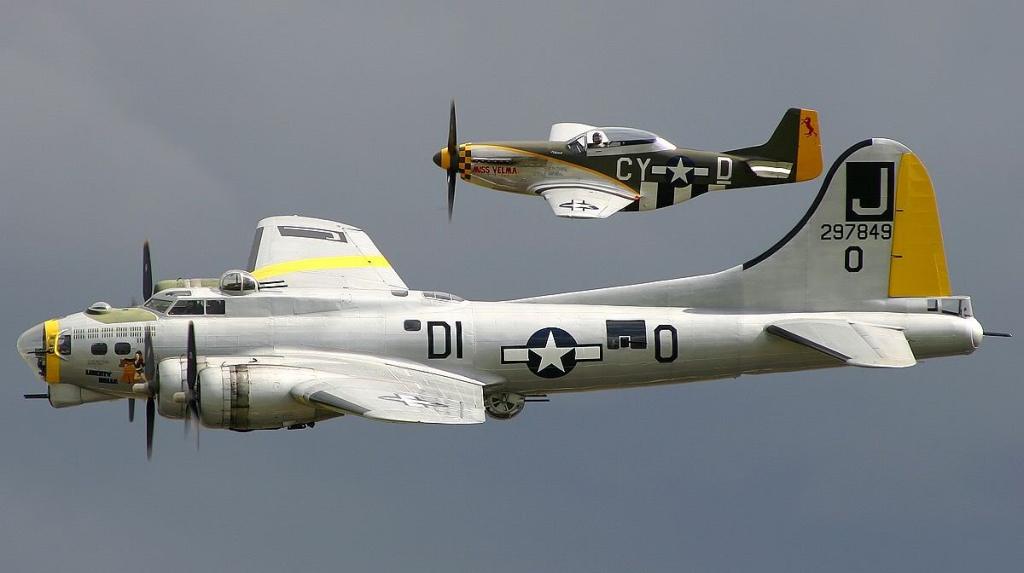
B-17 and Mustang
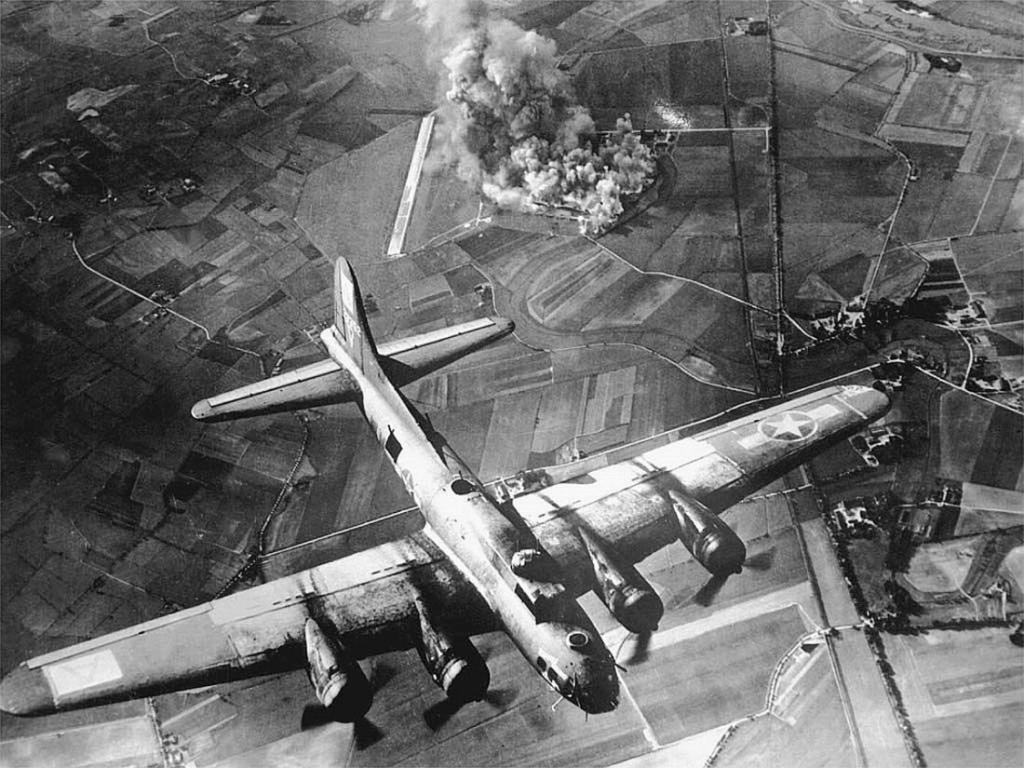
B-17 v airfield
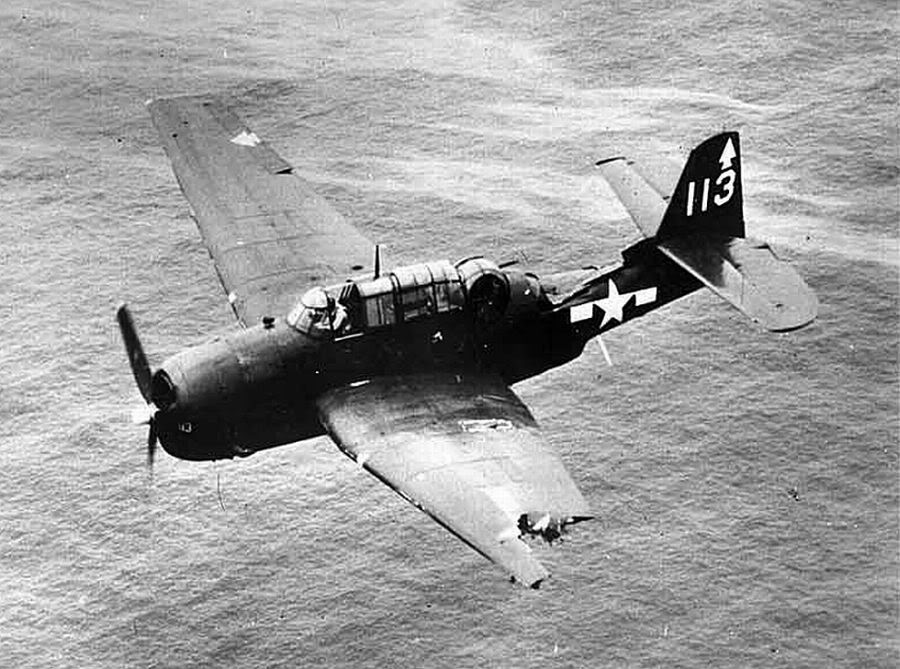
Damaged Avenger- the pilot would make it to safety
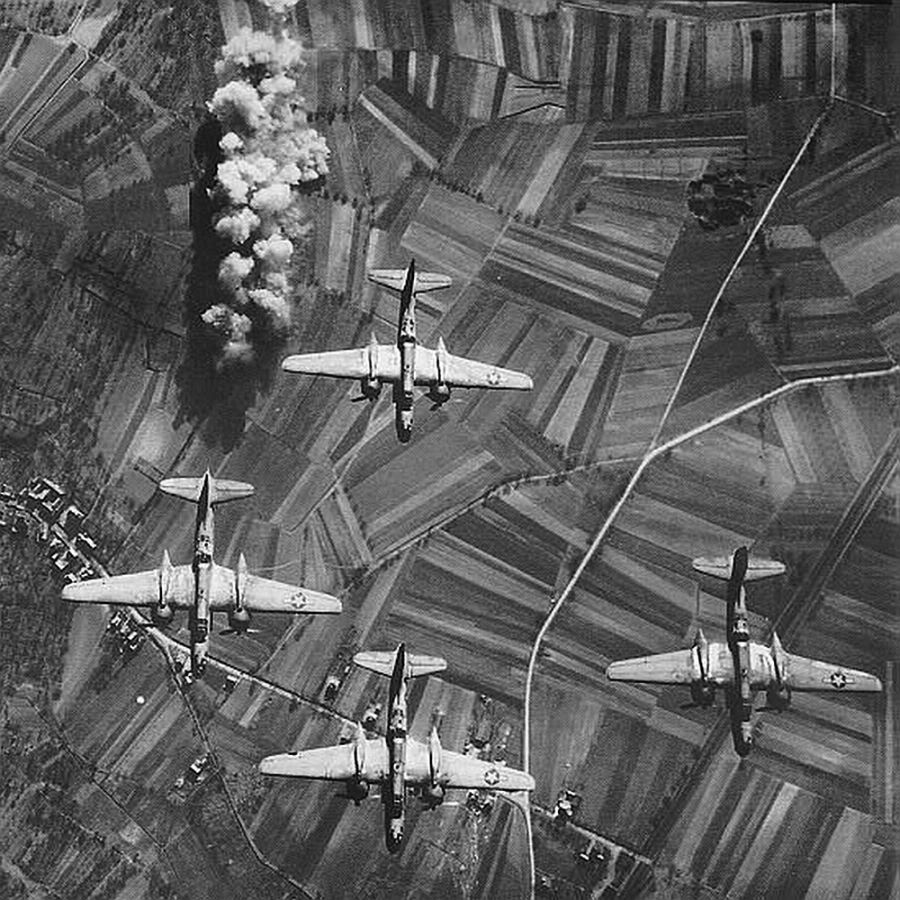
A-20’s
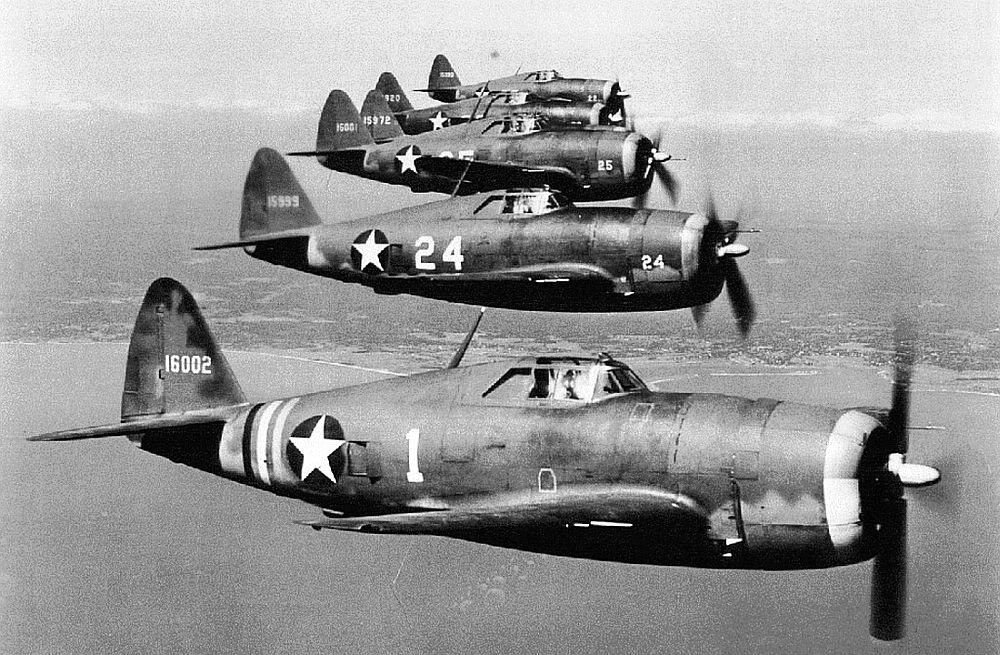
P-47’s
Dauntless
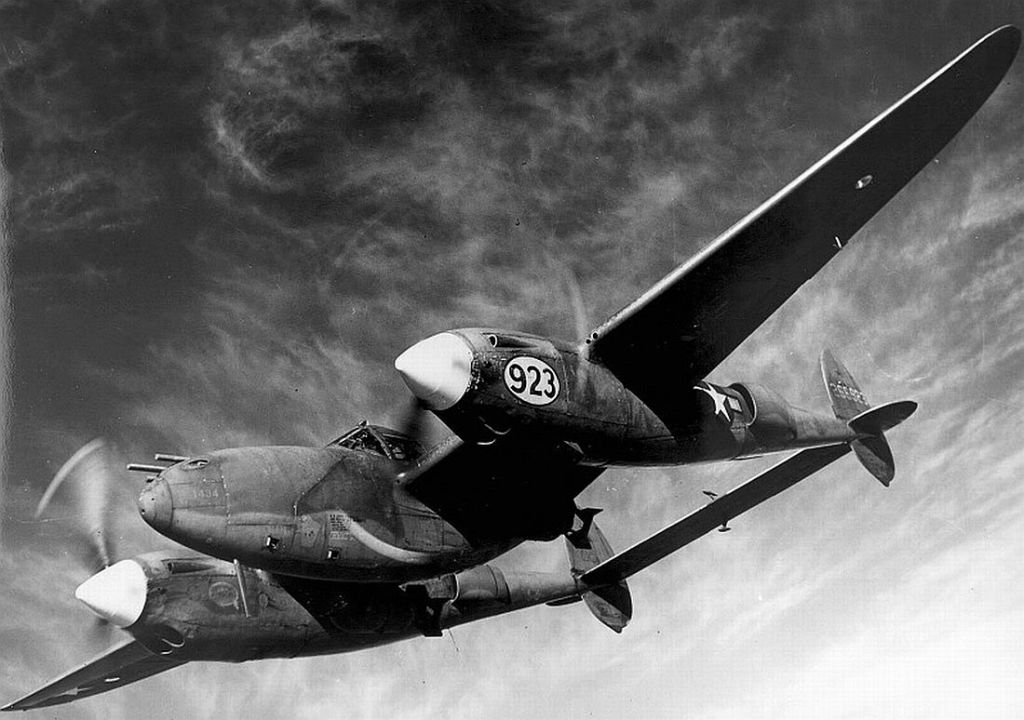
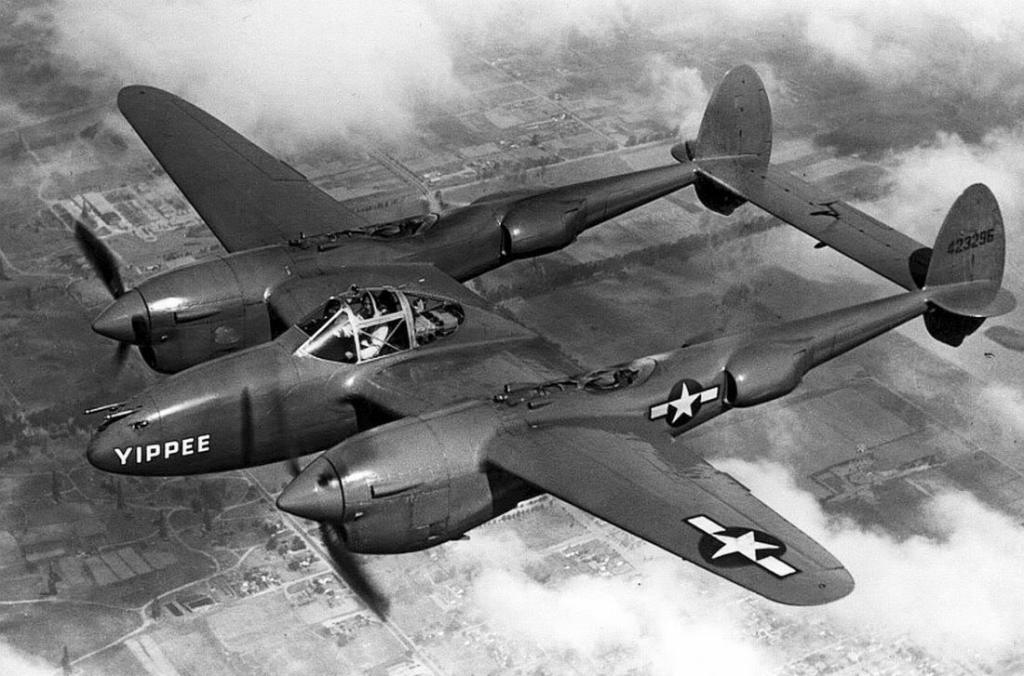
P-38
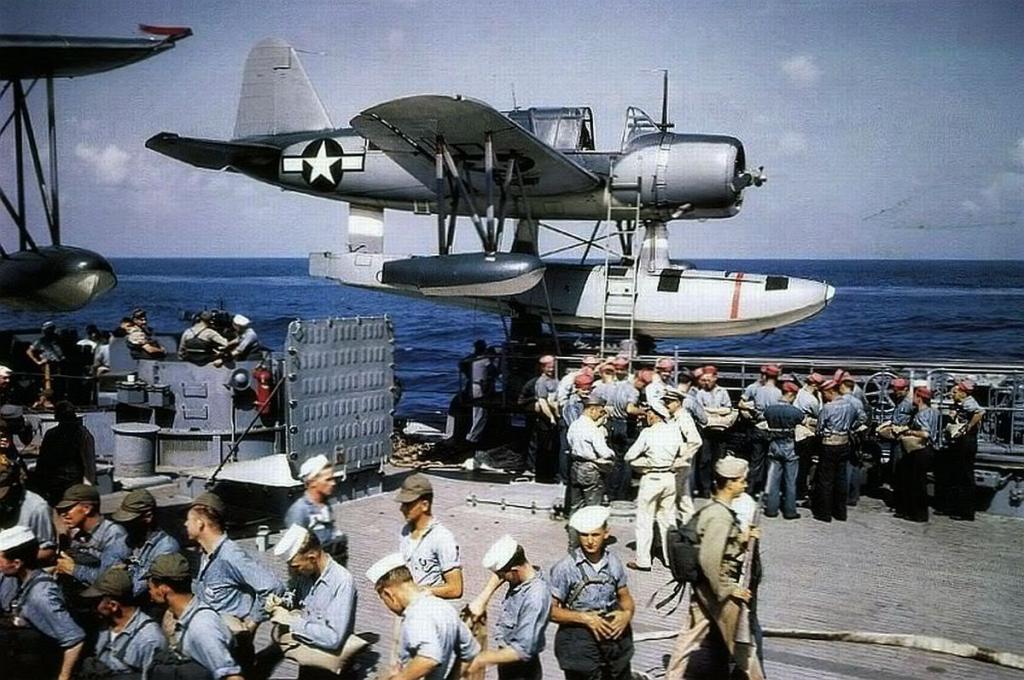
Kingfisher
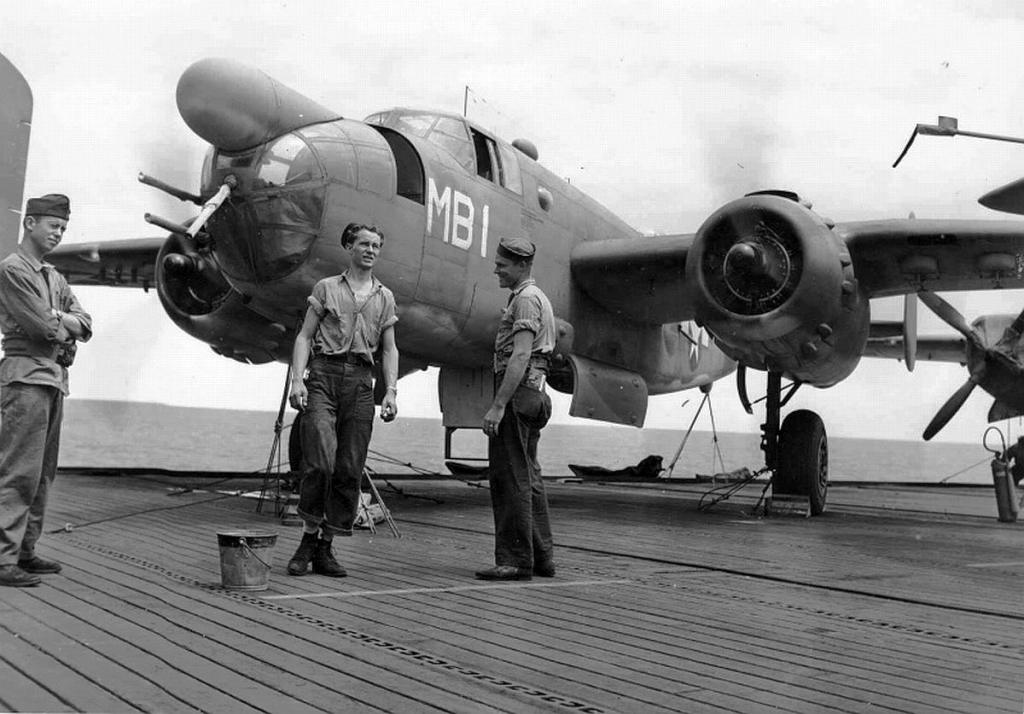
B-25
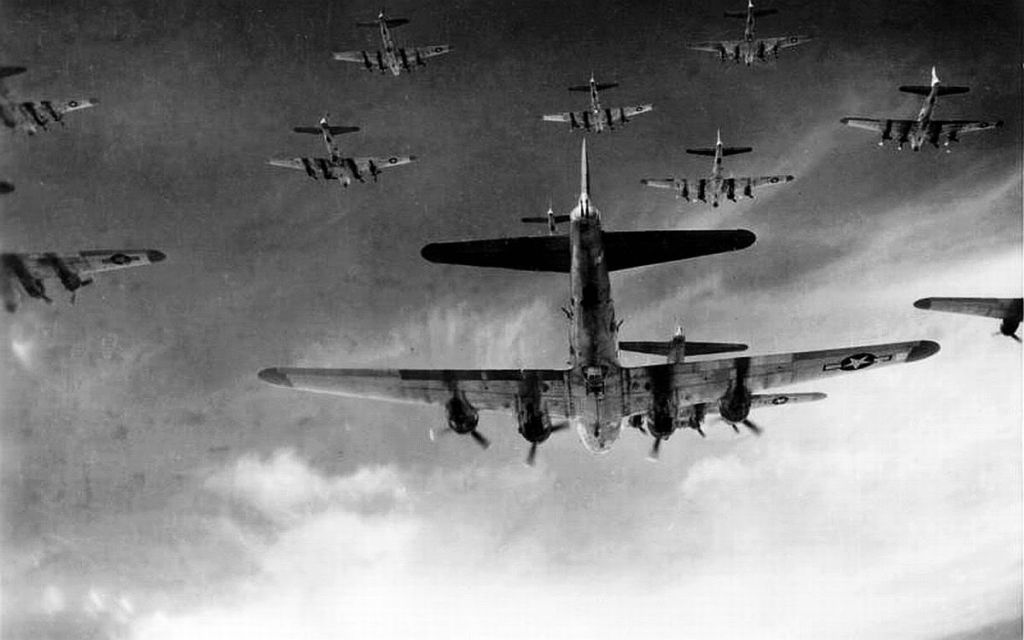
B-17
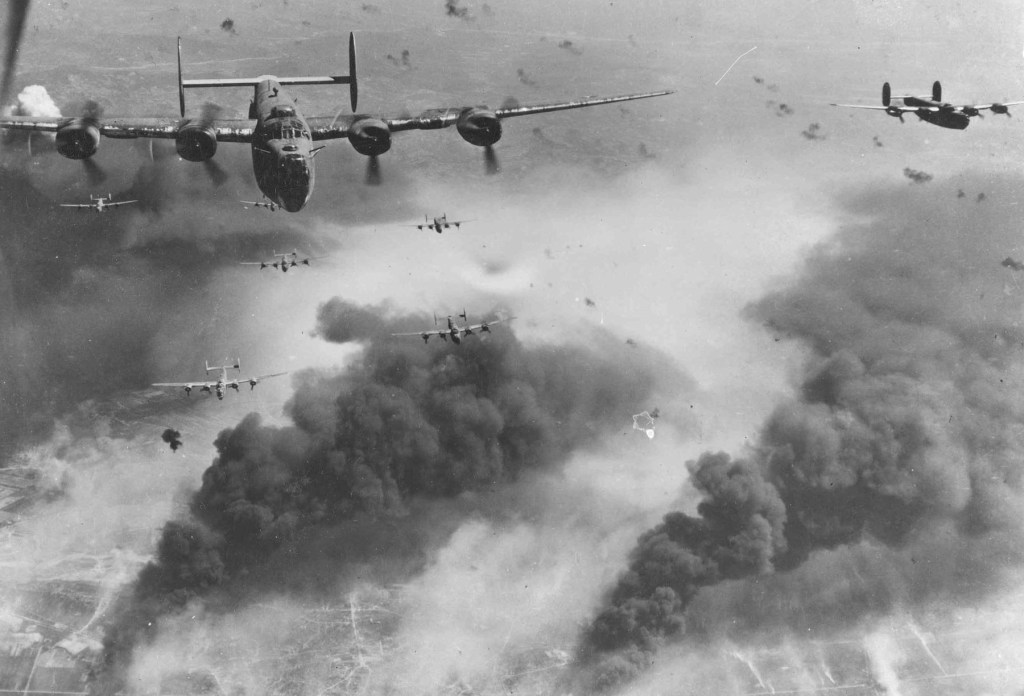
Through flak and over the destruction created by preceding waves of bombers, these 15th Air Force B-24s leave Ploesti, Rumania, after one of the long series of attacks against the No. 1 oil target in Europe..
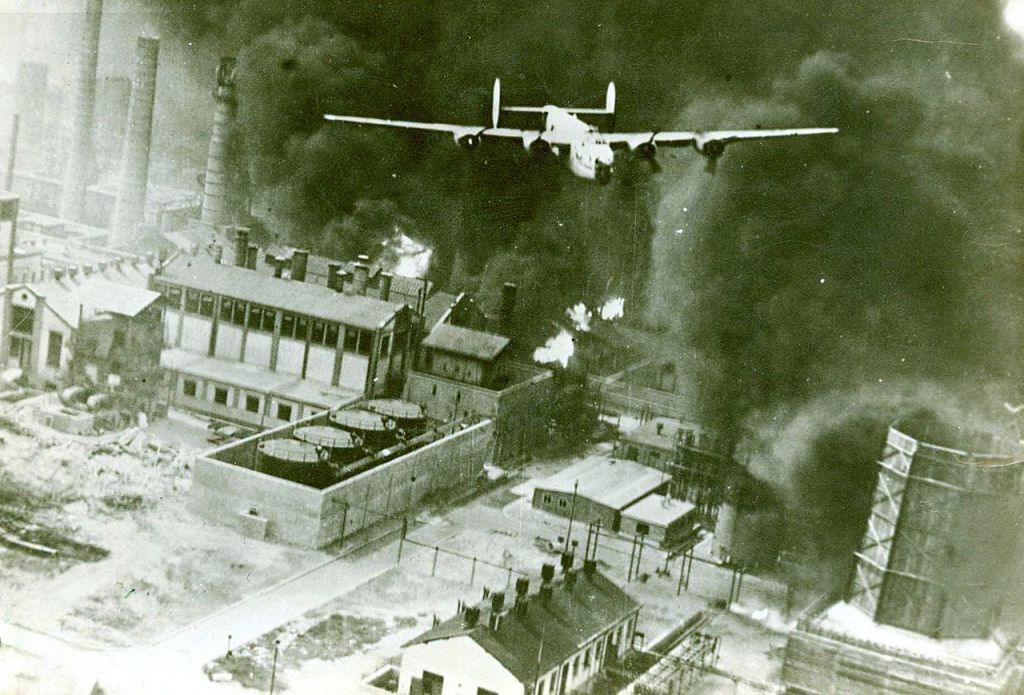
A B-24 flying over a burning oil refinery at Ploesti, Rumania, 1 August 1943.
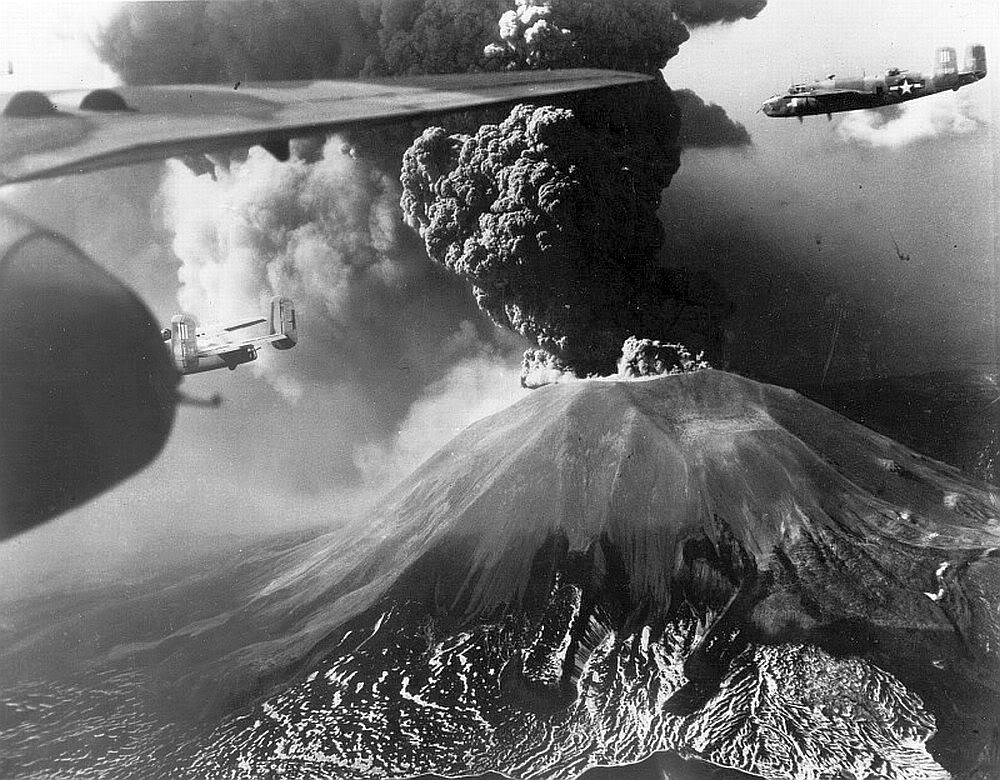
B-25s over Mount Vesuvius,Italy March 23, 1944
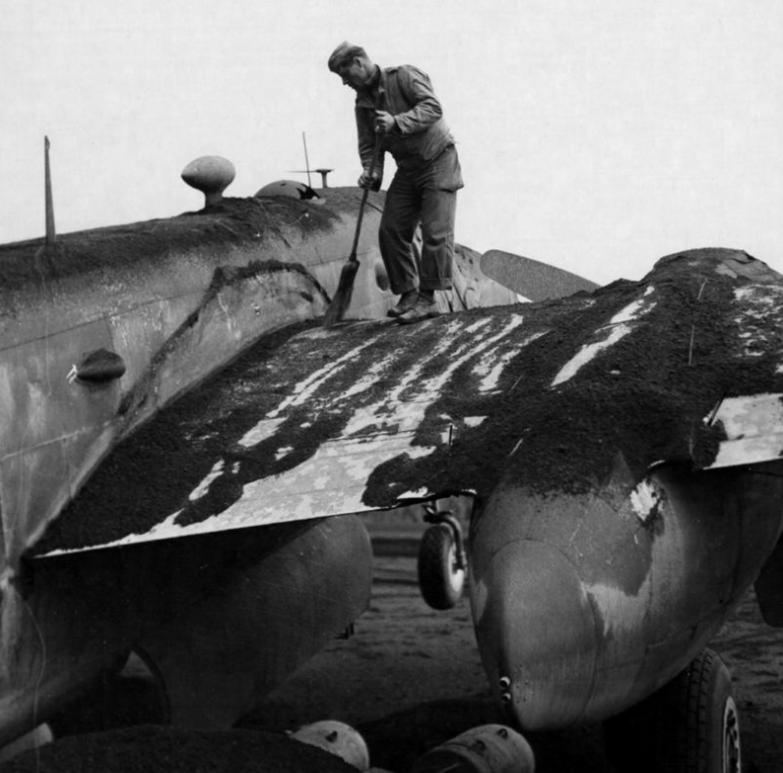
Ash is swept off the wings of an American B-25 Mitchell medium bomber of the 340th
Bombardment Group on March 23, 1944 after the eruption of Mount Vesuvius.
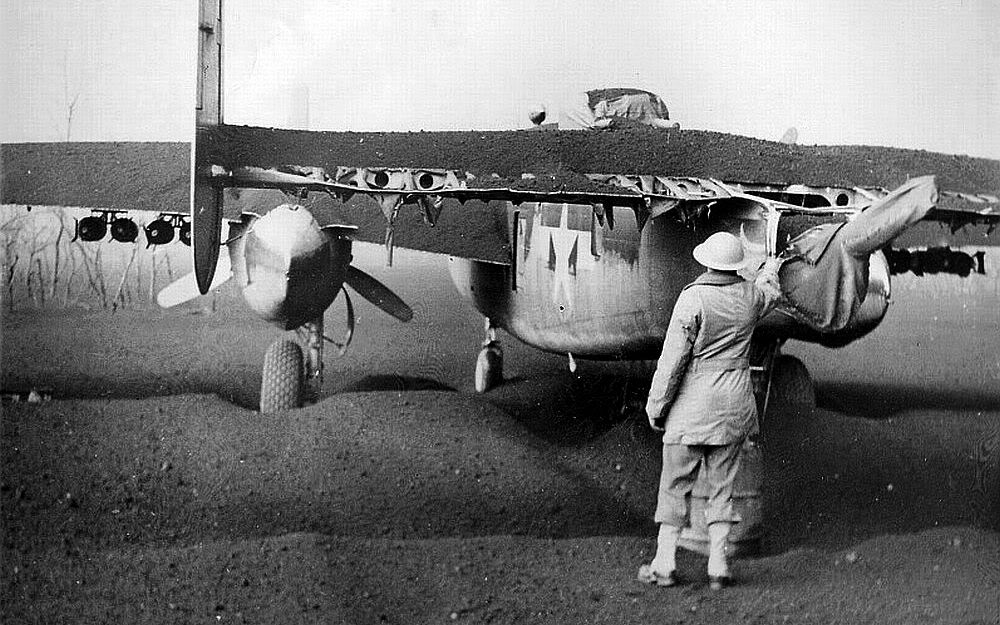
B-25 covered in ash from Vesuvius
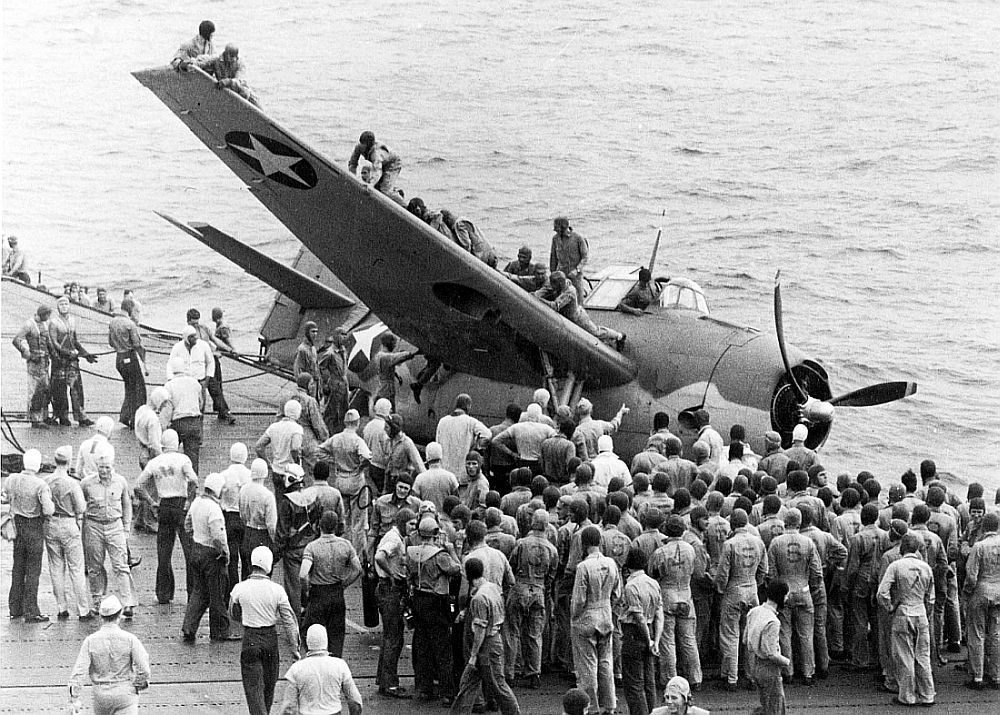
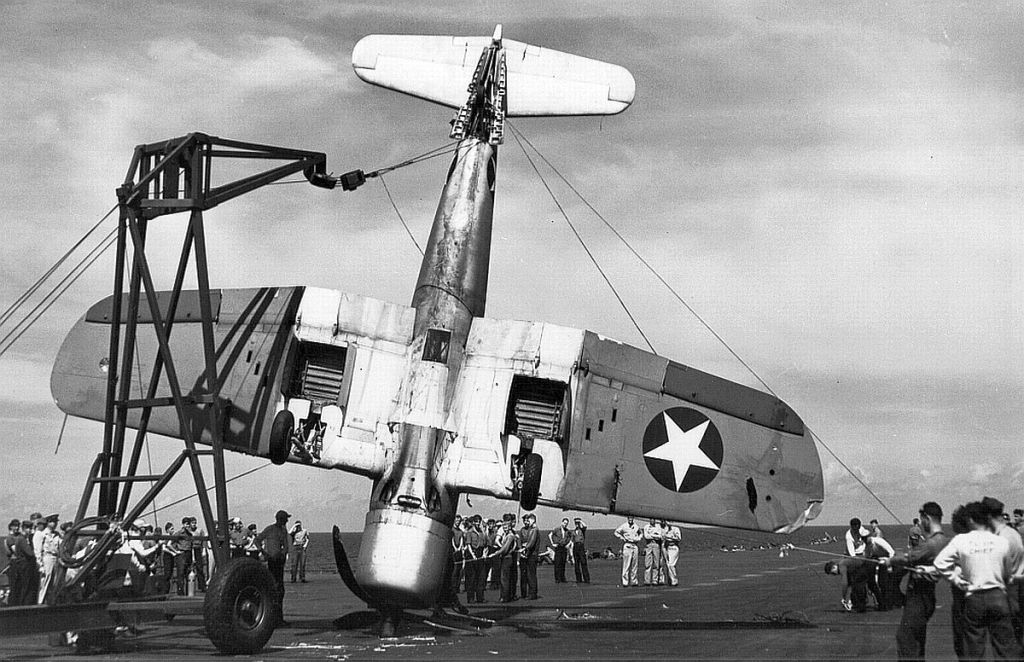
Avenger ditching
P-38
B-17s

36 Incredible Photographs of World War I Taken By Some of the First Color Cameras

At first glance these photos from the First World War appear to have had digitally colorised, but in fact these rare images were taken using some of the world’s first colour cameras.

The stunning pictures show French soldiers reading newspapers, pausing for lunch in ruined towns and cities and clearing the rubble after devastating German artillery raids.

Some of the weapons and machinery of the war can also be seen in extraordinary detail, including a British Sopwith fighter plane and 75mm guns used by French artillery.

The world’s first colour photograph was taken in 1861, but the use of colour film did not become widespread until well after the end of the First World War.

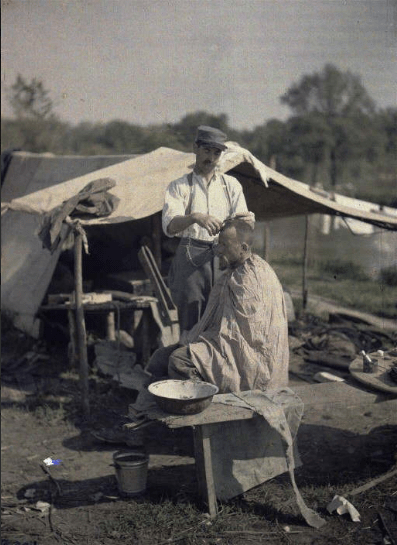
The pictures also reveal the human side of the war, as one soldier is shaved by a barber in a French military encampment and another picture shows a girl playing with her doll in the ruins of Reims.

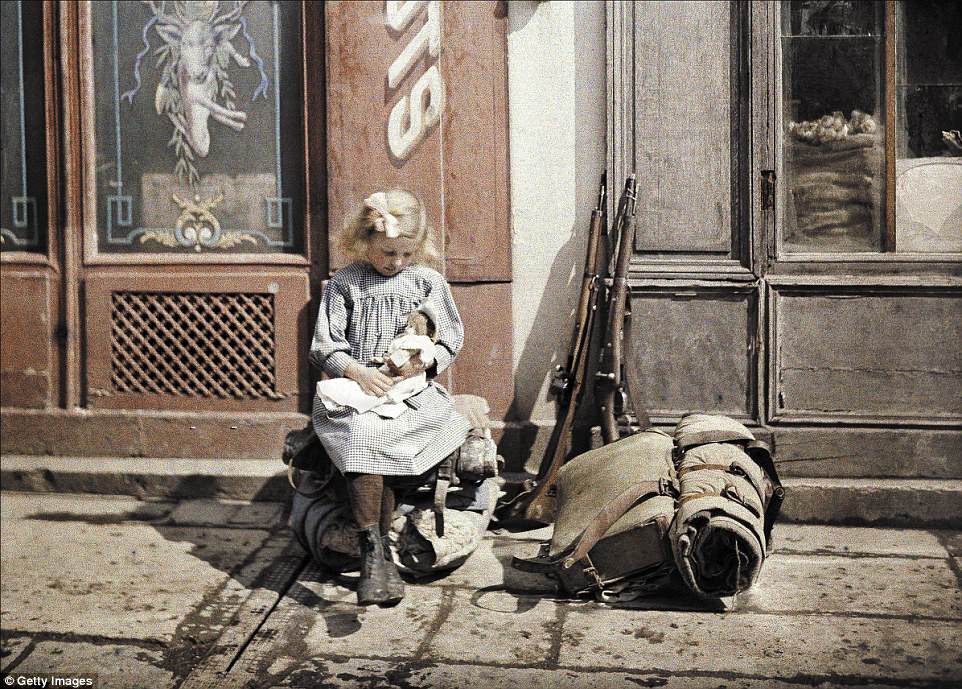
A little girl plays with her doll next to two guns and a knapsack, in the city of Reims in northern France in 1917. Between April and May of this year, British and French troops fought the Battle of the Hills to the east of the city, between Prunay and Aubérive, in an attempt to break through German lines on the Aisne front and push the Germans back across modern-day Belgium toward their own borders. Though the attack achieved several important goals, it was ultimately unsuccessful.
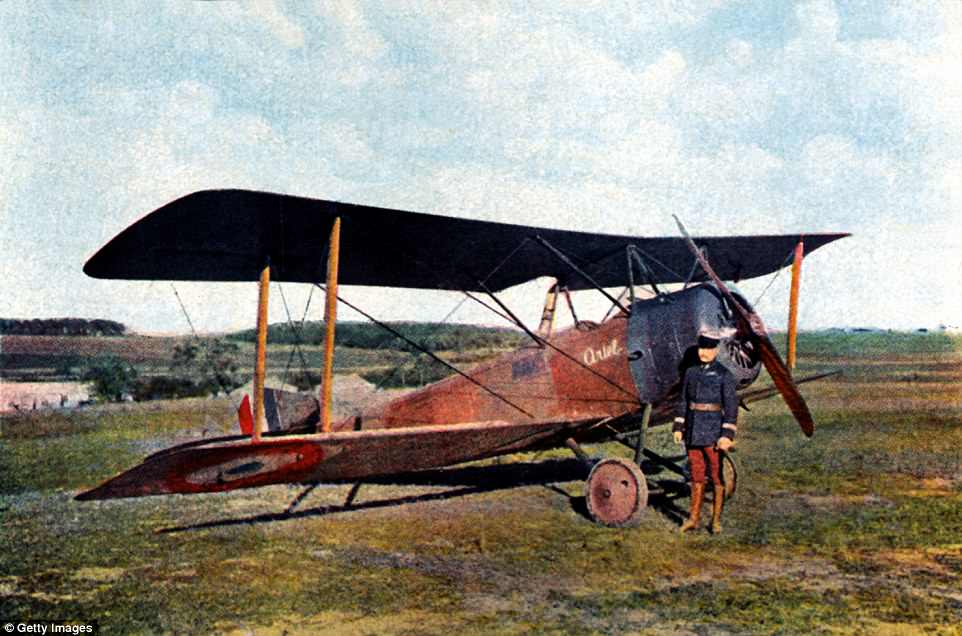
French Captain Robert de Beauchamp stands alongside his British Sopwith fighter in September 1916, after returning from a bombing raid on Essen in Germany. The picture was taken shortly before his death at Verdun. According to Le Souvenir Français, an organisation which remembers France’s war dead, Beauchamp ‘was the first to organize and execute long-range bombing, showing, in the accomplishment of these missions, an energy, a tenacity and a daring that was unparalleled’
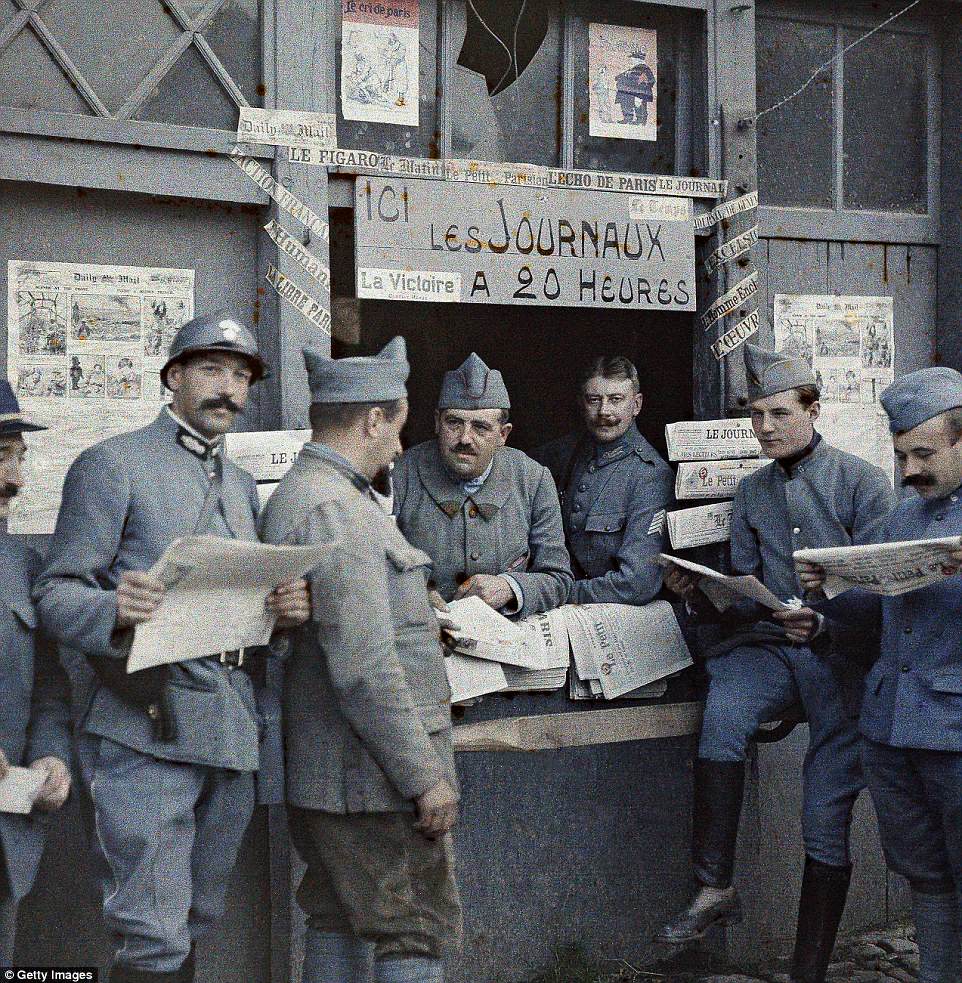
French soldiers buying and reading newspapers at a kiosk in Rexpoede, in the far north of France, in September 1917. The town is just 20 miles from Ypres, in Belgium, where the Battle of Passchendaele was being fought at this time. The battle was one of the bloodiest of the entire war, but is perhaps more infamous for the mud. The worst rains to hit the Flanders region for 30 years turned parts of the battlefield into a quagmire so deep that men and horses drowned in it.
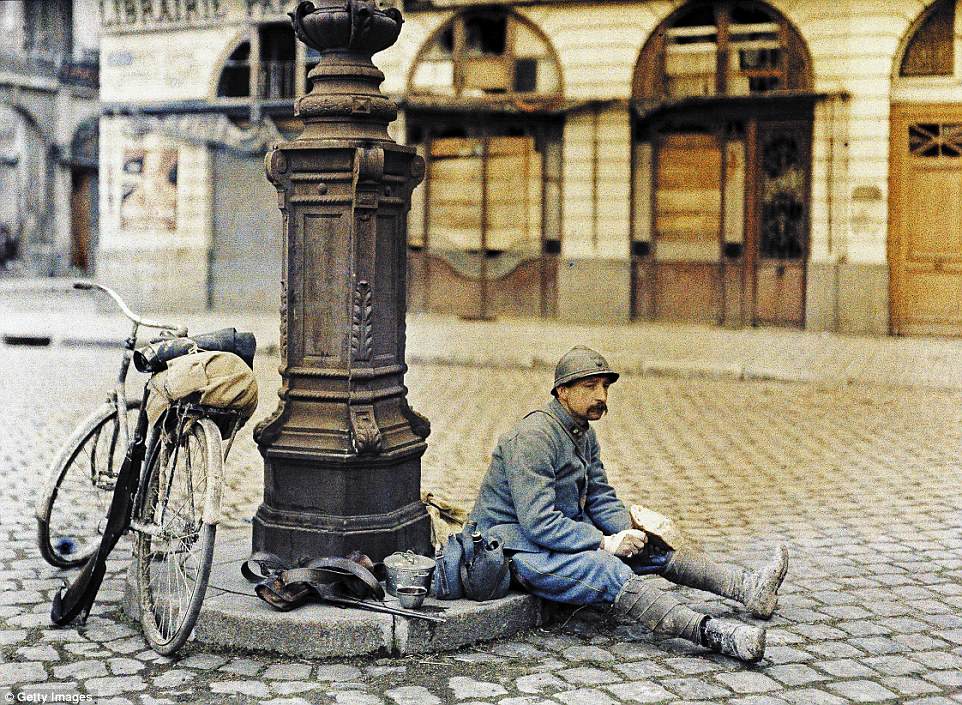
A French soldier has his lunch in front of a damaged library, sitting by a lamp-post after parking his bicycle in Reims, France in April 1917. German troops capture Reims early on in the conflict and while they were pushed back out of the city, they formed a trench network on the surrounding high ground allowing them to periodically shell the buildings. In total, around 60 per cent of Reims was destroyed during the war.
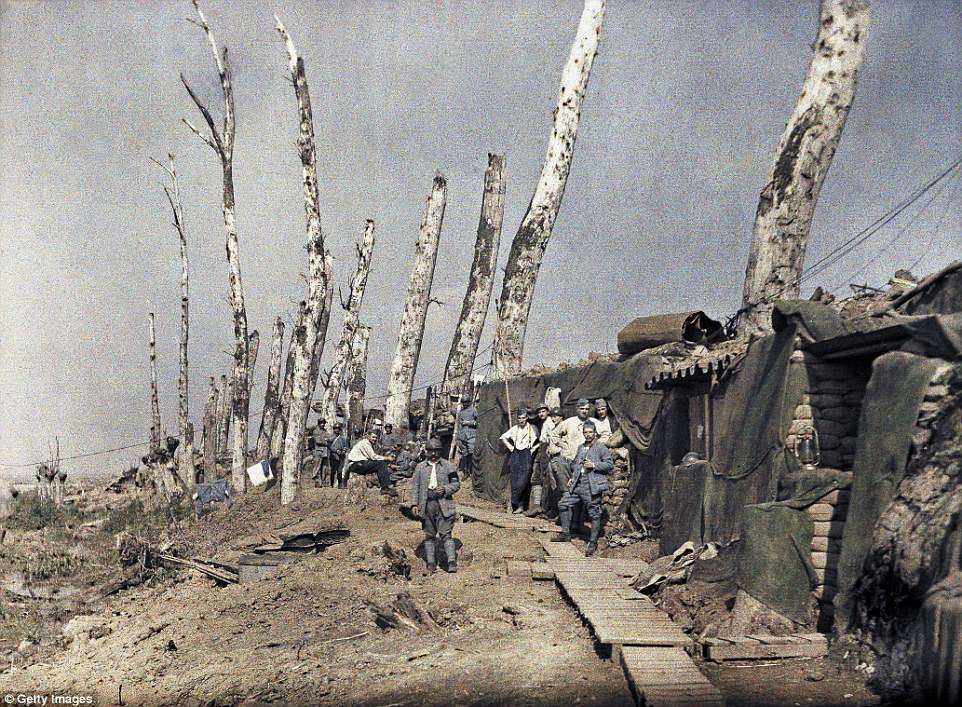
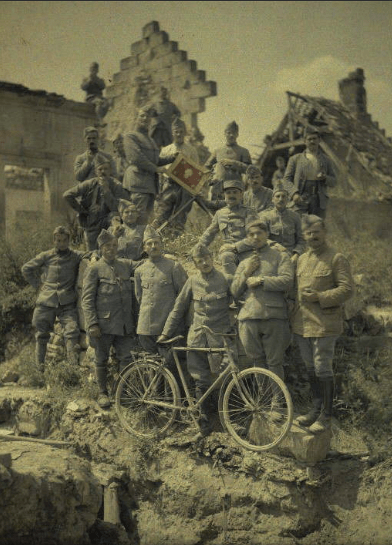
The French line at Het Sas, north of Ypres in Belgium, devastated by artillery fire with soldiers standing in front of shelters, September 10, 1917. This image was taken a month after the Battle of Passchendaele began, while the Allies and Germans were still locked in a bloody stalemate. Fifteen days after this picture was taken, however, the fighting began to swing in the Allies’ favour with British victory at the Battle of Menin Road Ridge.
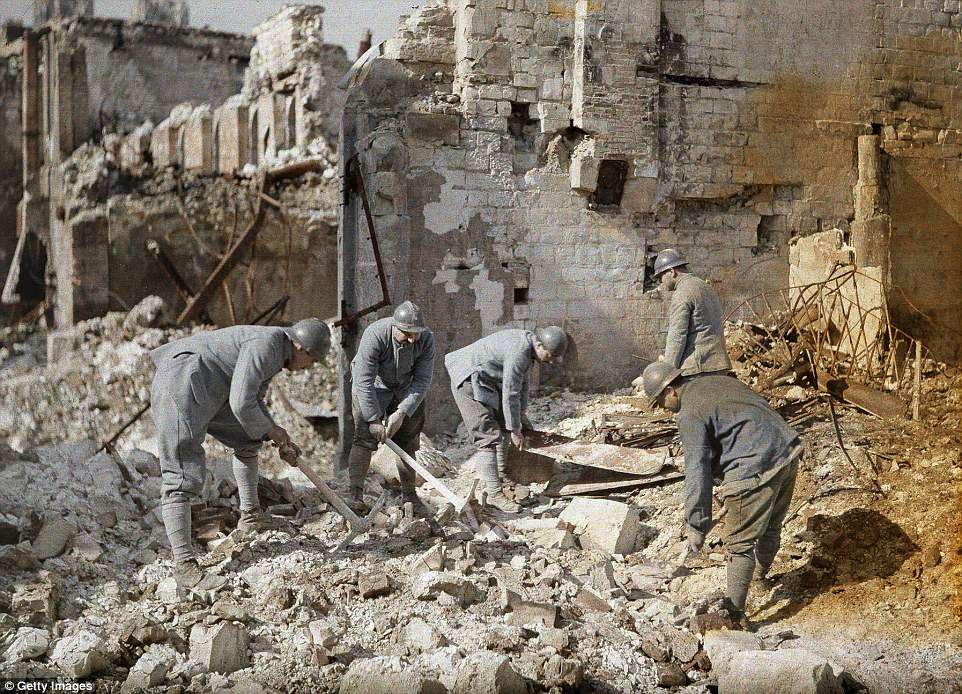
French soldiers clearing the rubble in the ruins of Reims, in 1917. Reims was bombarded continually by the Germans during the war, leaving city heavily damaged, but perhaps the most infamous attack occurred in 1914. On that occasion a German shell hit the city’s cathedral, setting it on fire and destroying statues and stained glass windows. The incident was often used in French propaganda to depict the Germans as barbaric.
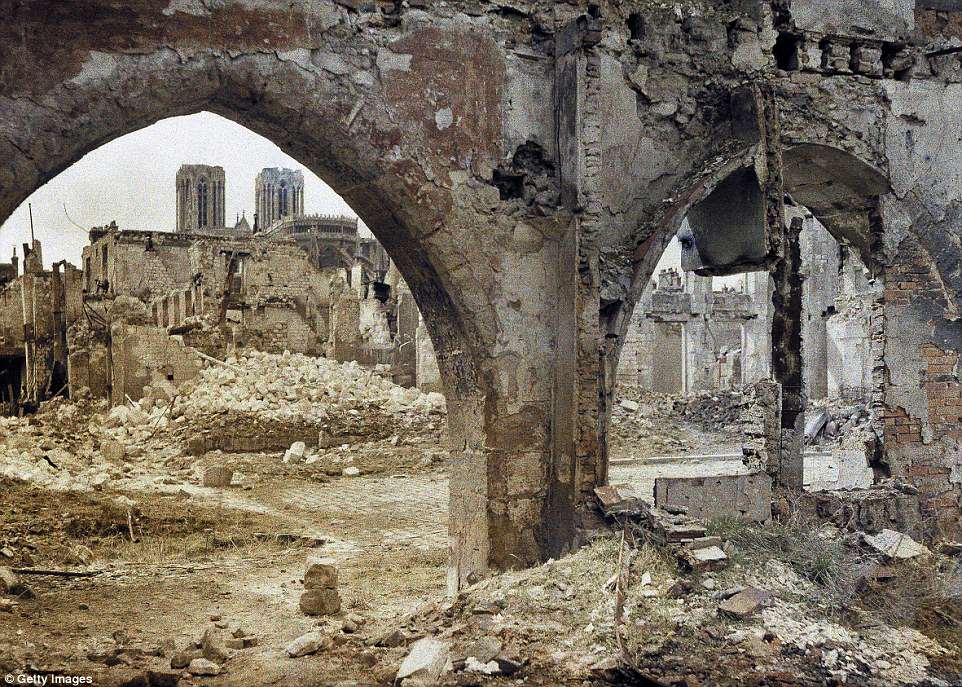
The towers of the Cathedral Notre-Dame de Reims can be seen through the damaged windows of another building, in 1917. The Germans had pledged not to shell Reims after retreating from the city in the early months of the war, but that pact lasted just a week. Over the course of the next four years, the cathedral alone was hit more than 300 times, leaving it little more than a battered shell by the end.
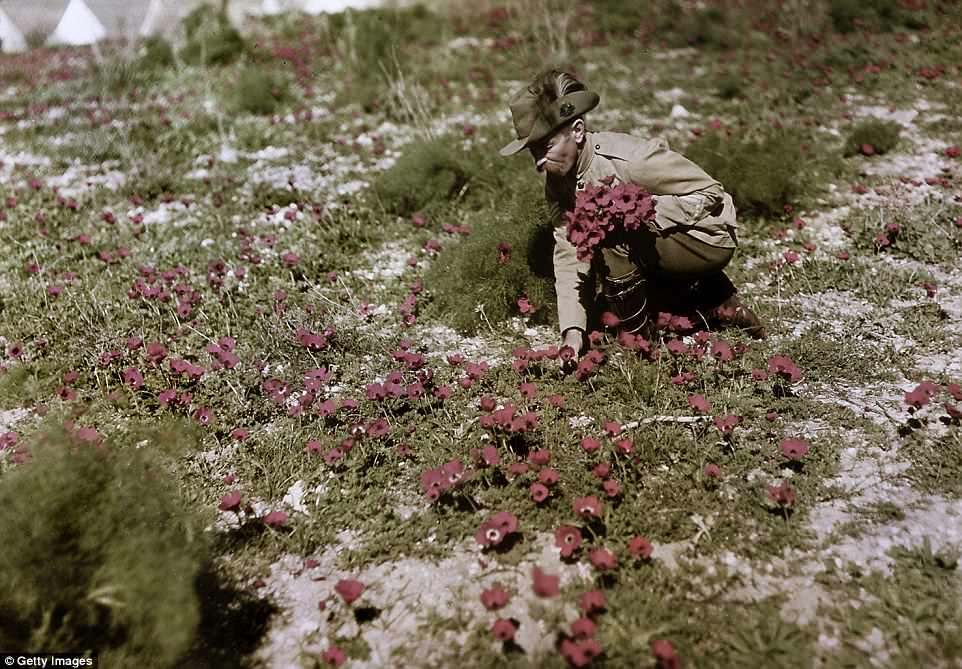
George ‘Pop’ Redding, an Australian soldier from the 8th Light Horse Regiment, picks flowers during the war in Palestine. ‘Pop’ enlisted in the Australian army in 1915 giving his age as 44 to the recruiting sergeant, when in fact he was 57. At the time this picture was taken he was 61, making him one of the oldest men in the First Australian Imperial Force.
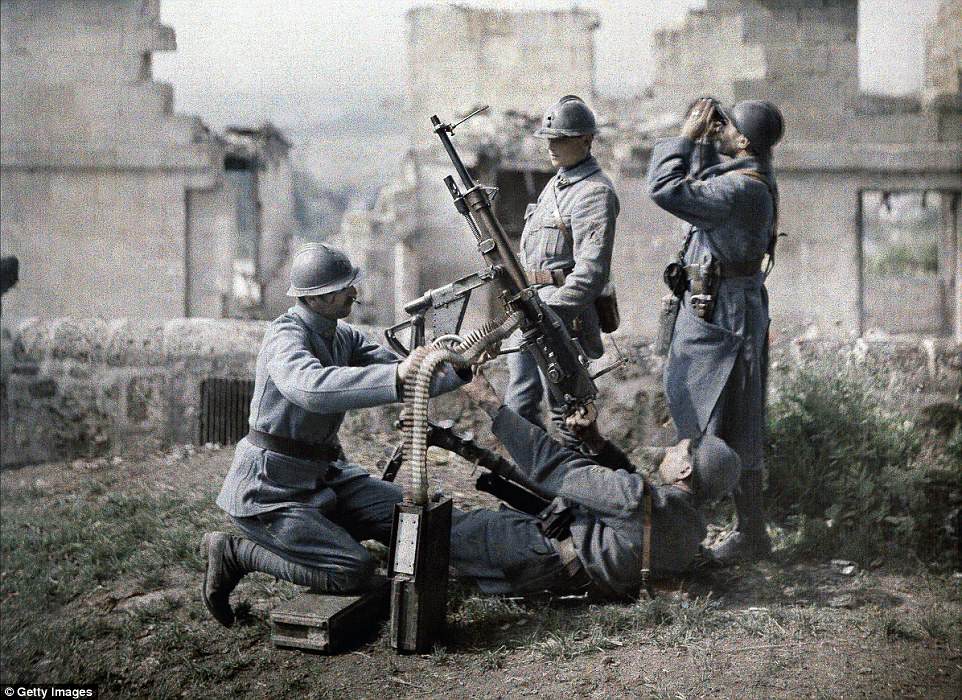
A French section of machine gunners takes position during the Second Battle of the Aisne on the Western Front in 1917. The battle was part of the Nivelle Offensive, devised by French general Robert Nivelle, and the Aisne offensive formed the main thrust of the attack. The battle was supposed to last 48 hours with casualties of 10,000 men, but dragged on for three weeks with nearly 30,000 dead. Despite achieving several key objectives, it led to mutinies among the men and ended in failure.
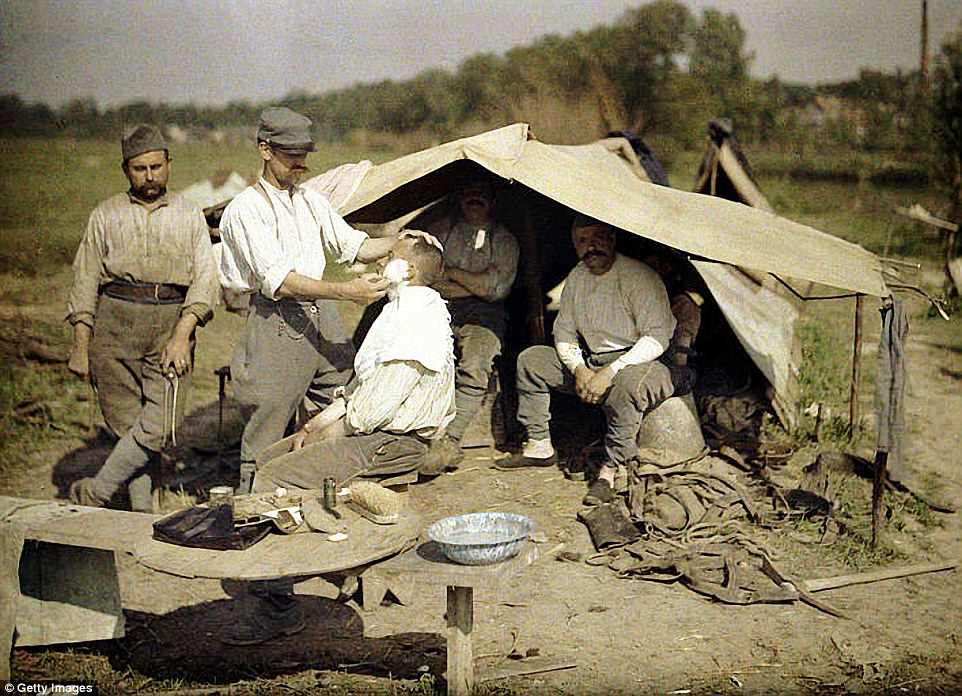
A soldier is shaved by a barber in a French military encampment in Soissons, while two soldiers wait under a tent, in 1917. A year after this picture was taken a major battle was fought here between the French and Germans, with the British and Americans supporting the French. In total 95,000 French and 12,000 Americans were killed, alongside 168,000 Germans. It was for his actions during this battle that Adolf Hitler was awarded the Iron Cross First Class.
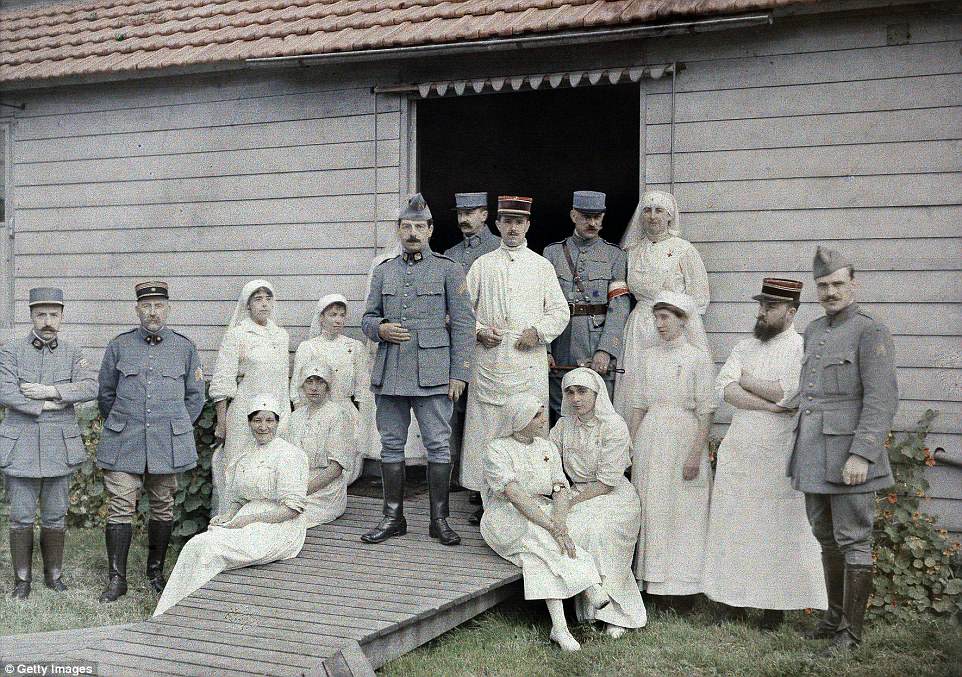
Doctors, nurses and medical personnel in front of field hospital number 55, in Bourbourg in northern France. The hospital was known as ‘the camp in the oatfield’ because of its location, having been moved there from Dunkirk after the German army started shelling the region. It existed for just five months in summer 1915 before being relocated to the dune near Calais.
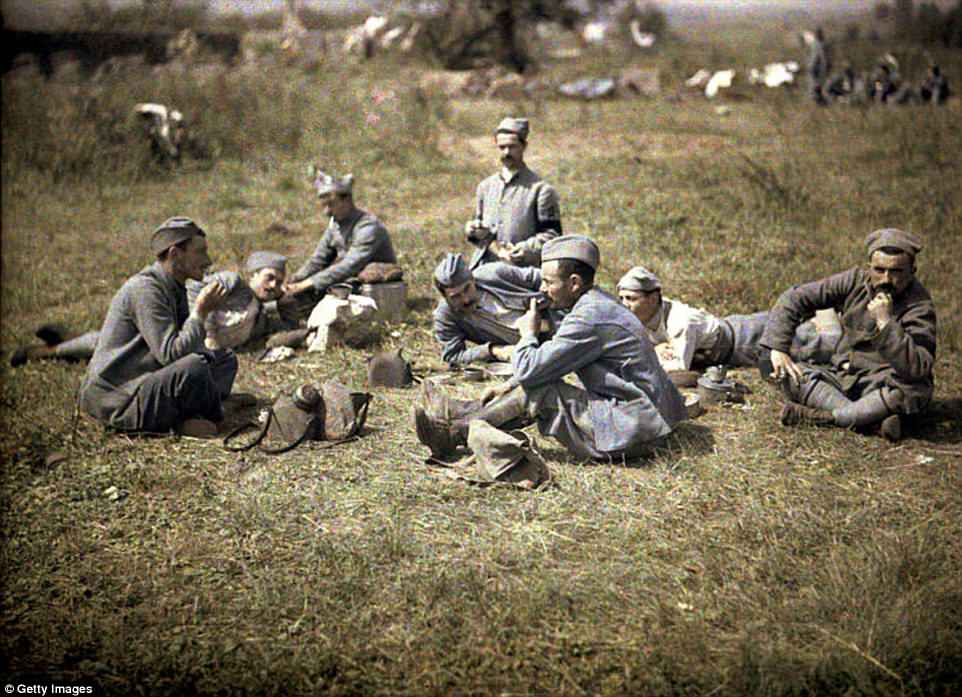
A group of French soldiers rest on the grass as they eat their lunch in Aisne, on the Western Front in France, in 1917. While the men in this picture appear relaxed and happy, this was the site of mutinies by several French divisions in May following the failure of the Second Battle of Aisne. The failure also led to the dismissal of General Robert Nivelle.
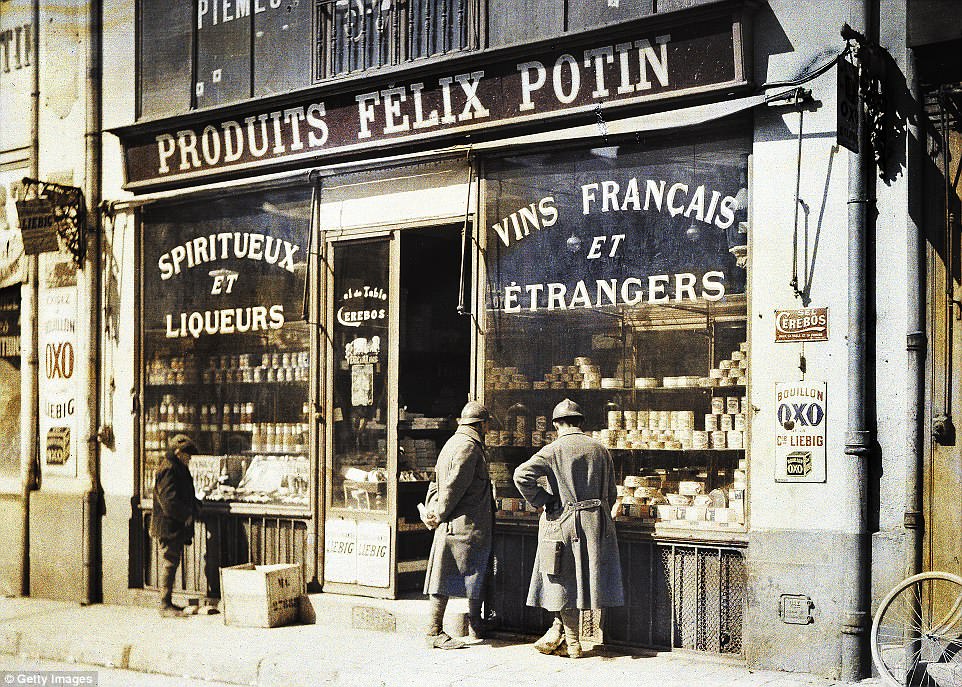
Two French soldiers and a young boy look through the window of a shop selling alcohol in Reims, France, in 1917. While these scenes appear peaceful, in fact the German front line was located less than 10 miles away to the north, with the Kaiser’s forces regularly shelling the city. The Germans actually occupied Reims in the first few months of the war, though were quickly pushed back and would never retake it.
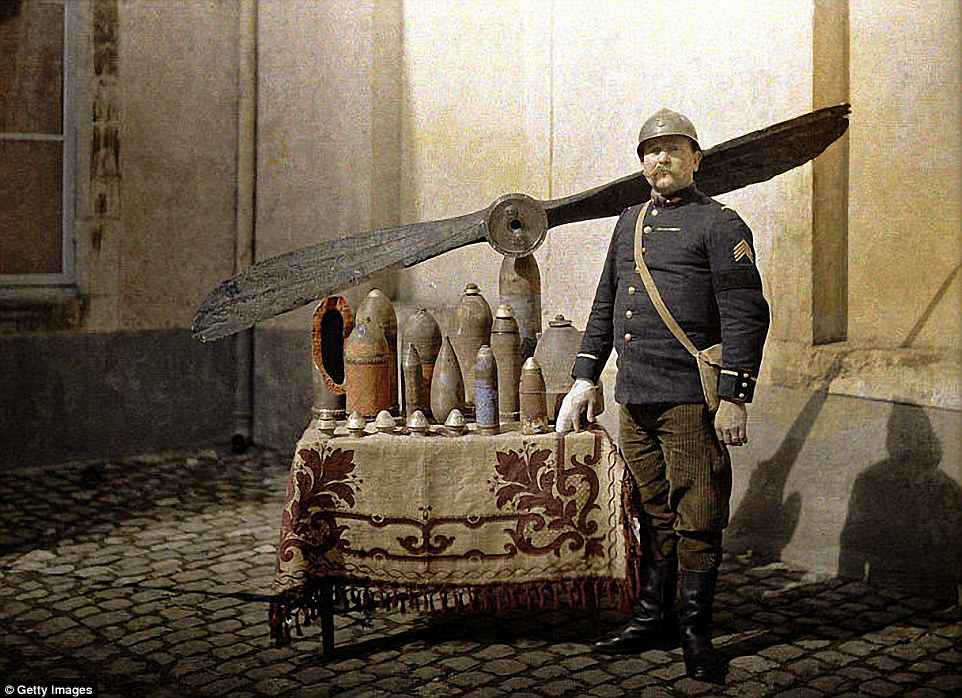
A French soldier stands by a table which has German grenades and an aircraft propeller on it, in Reims, France, in 1917. The First World War was the first major conflict to see the deployment of military aircraft and while they were initially used for reconnaissance, by the war’s end they were also being used as fighters and for bombing runs, often with shells such as these simply tossed out of the plane by the co-pilot.
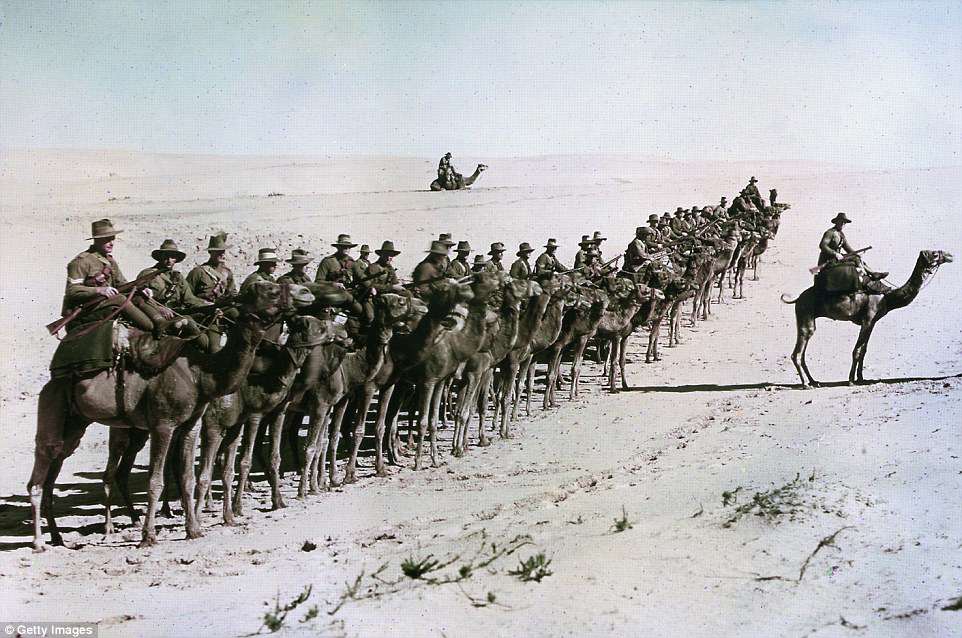
Australians from the Imperial Camel Corps line up at Rafah, Egypt, during the war against the Ottoman Empire in January 1918. The Camel Corps, or ICC for short, was a brigade comprised of four battalions – one British, one New Zealand and two Australian – and fought during the Senussi Campaign, the Sinai and Palestine Campaign, and in the Arab Revolt. It was disbanded after the war ended in 1919.
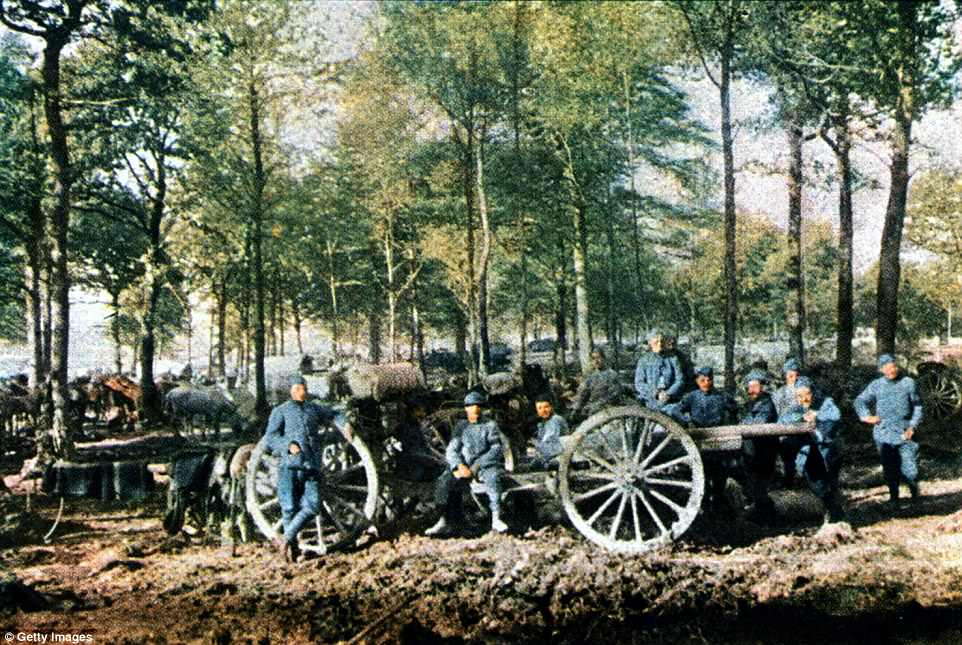
A group of French artillerymen with 75 mm guns on the Western Front in September 1916, during the Battle of Verdun. The battle, which lasted from February until December 1916, was the largest and longest of any fought during the war and one of the deadliest battles in human history. Estimated of the total number of casulaties range between 700,000 at the low end and more than 1million at the top end.
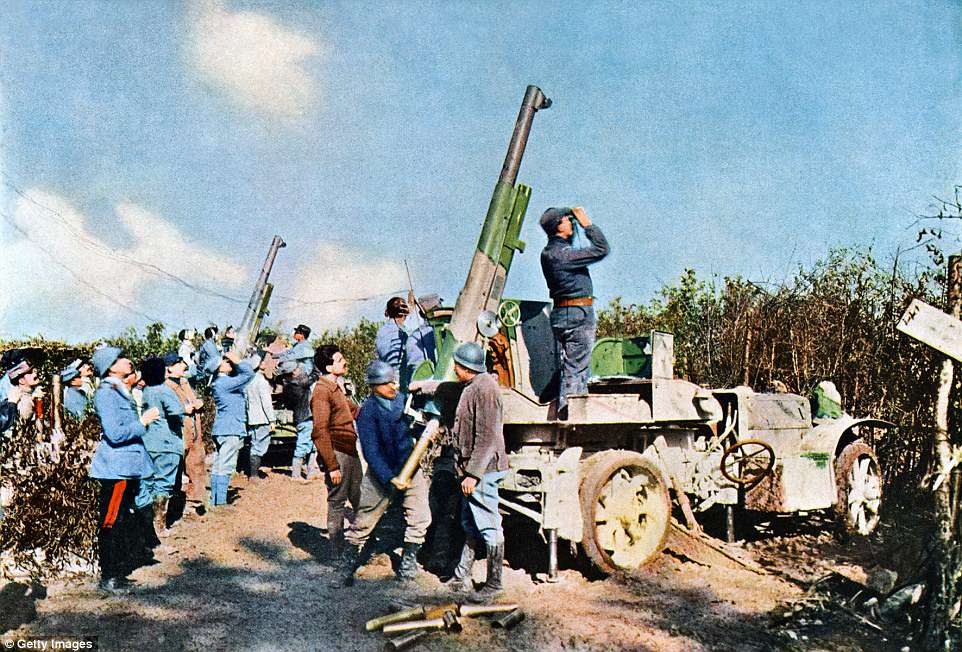
People on the ground watch with binoculars as anti-aircraft guns mounted on vehicles are deployed during the Battle of Verdun in September 1916. Verdun was the first land battle in history that began with a fight for air superiority, effectively laying a blueprint for conflicts since. Marshal Philippe Pétain described it as ‘the crucible that forged French aviation’.
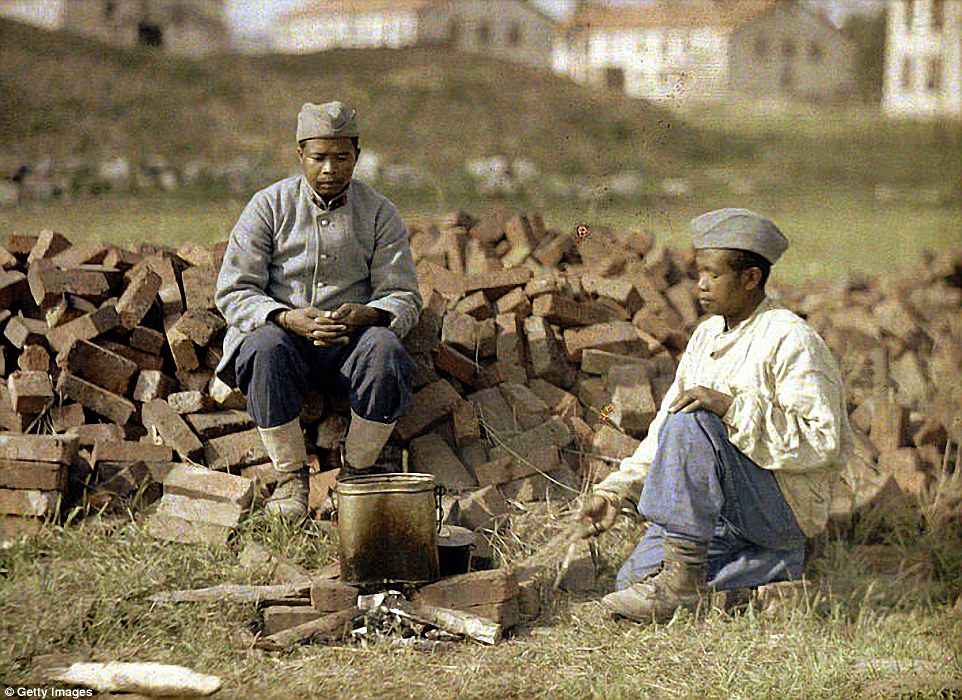
Two French soldiers from Africa heat up a meal on an outdoor fireplace made of brick, in Soissons, France, in 1917. Of all countries involved in the First World War, France made the most extensive use of soldiers from its colonies. Between 1914 and 1918, the French deployed approximately 450,000 indigenous troops from Africa, including West Africans , Algerians, Tunisians, Moroccans, Malagasies, and Somalis.
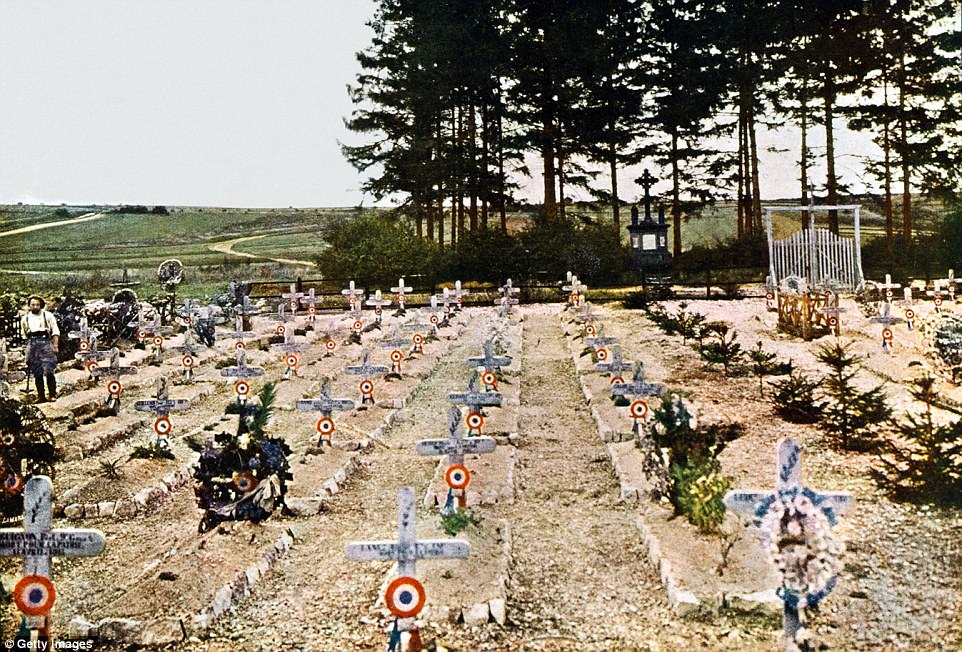
A man tends to a French military cemetery on the Western Front during the Battle of Verdun in 1916. Over the course of the battle, which lasted for 303 days, France suffered and estimated 379,000 casualties, of which 163,000 died – an average of more than 500 per day.
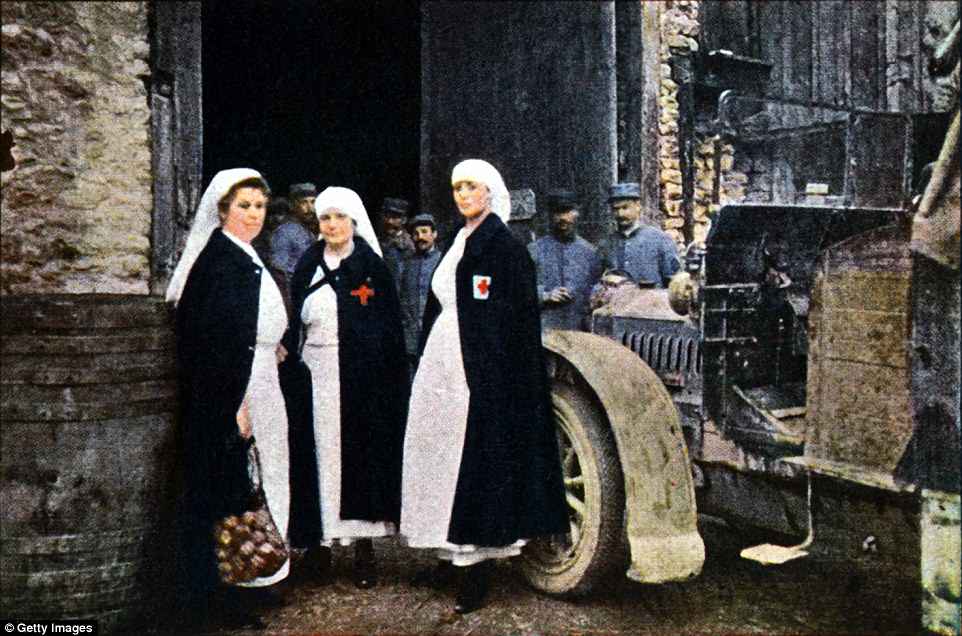
Three women wearing the Red Cross stand in front of a vehicle with French ambulance staff behind them in September 1916 during the Battle of Verdun. The battle was a severe test for medics, who often found themselves caught up in the fighting. During the first four months of the battle 33 doctors were killed, 13 disappeared and 86 were wounded.
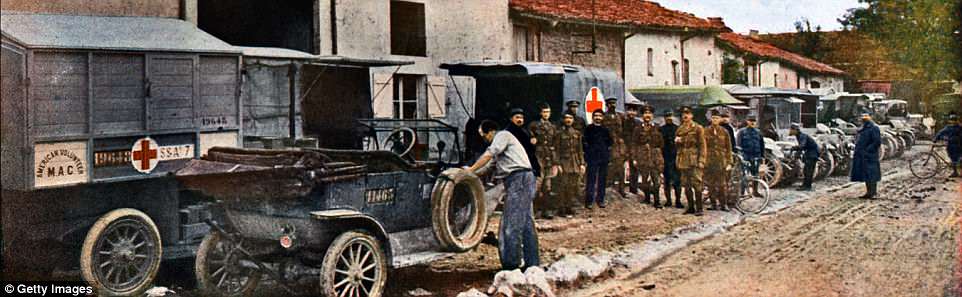
A wide picture shows Red Cross ambulance trucks joining forces with U.S. postal workers who were deployed in France, in Dieue-sur-Meuse, north of Verdun, in September 1916. Despite fierce fighting across Europe during the war, more than 12 million letters per week were delivered to soldiers per week, with thousands of postal workers drafted in to meet demand.
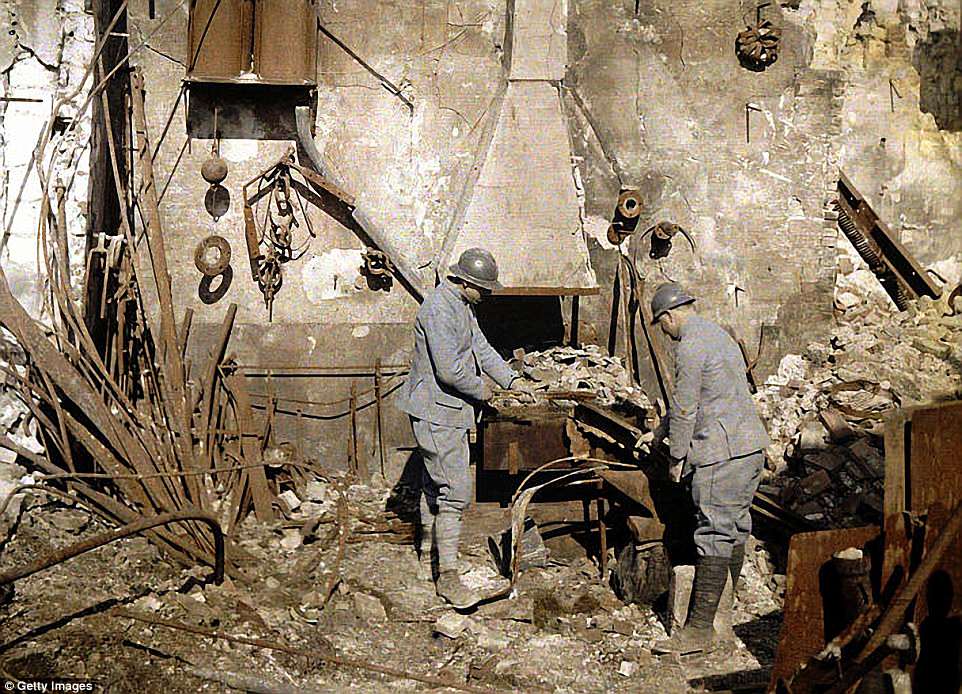
Two French soldiers working at the smith’s hearth in a forge destroyed by grenades, in Reims, France, in 1917. The city was bombarded throughout the war and more than 60 per cent of it was destroyed by the time that fighting finished.
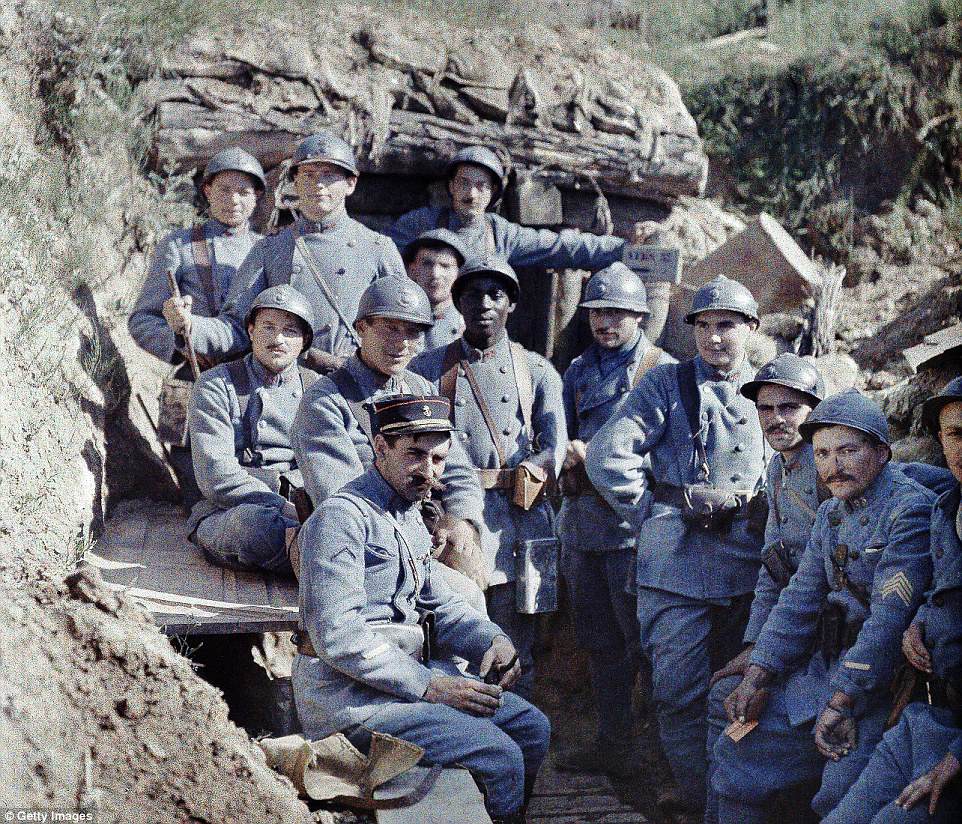
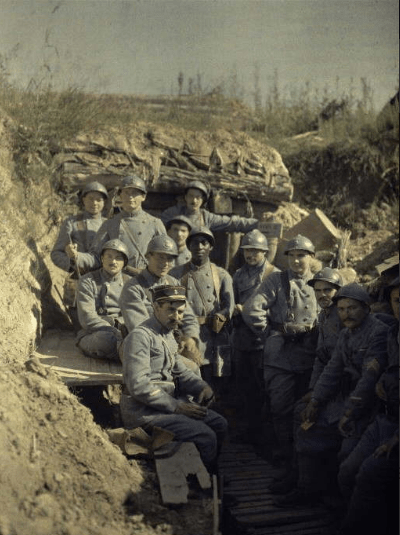
A group of French soldiers in a trench on June 16, 1917, in Hirtzbach in the Alsace region, near the modern German border. The recapture of Alsace-Lorriane from the Germans was a top war priority for the French, who attacked it early in 1914. The territory would swap hands several times during the conflict, before being returned to France in the Treaty of Versailles.
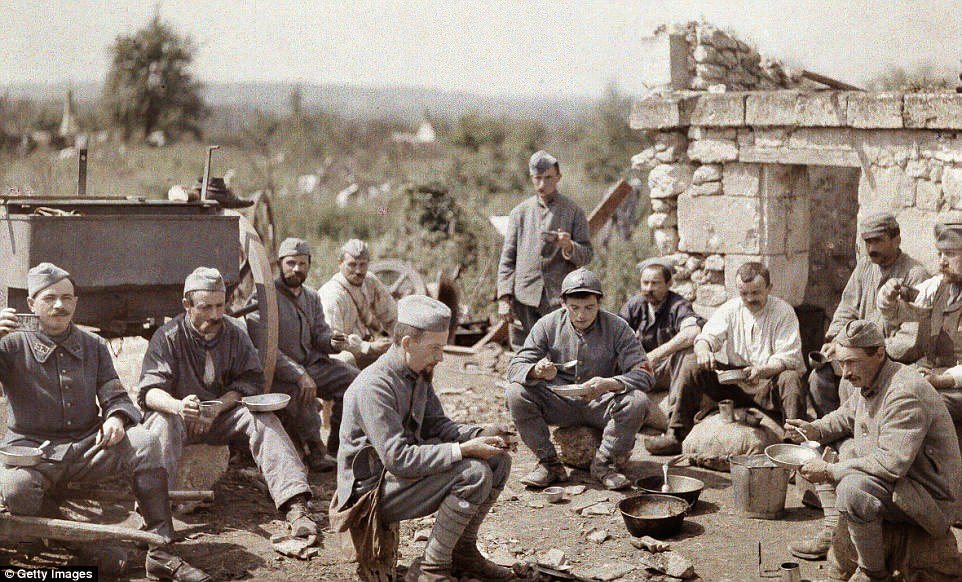
French soldiers of the 370th Infantry Regiment sit on their bags as they eat soup during the Battle of the Aisne in 1917. The battled was supposed to last 48 hours at a cost of 10,000 French troops, but actually lasted three weeks with 30,000 casualties. This led to mutinies among the men, and meant the battle ended in defeat.
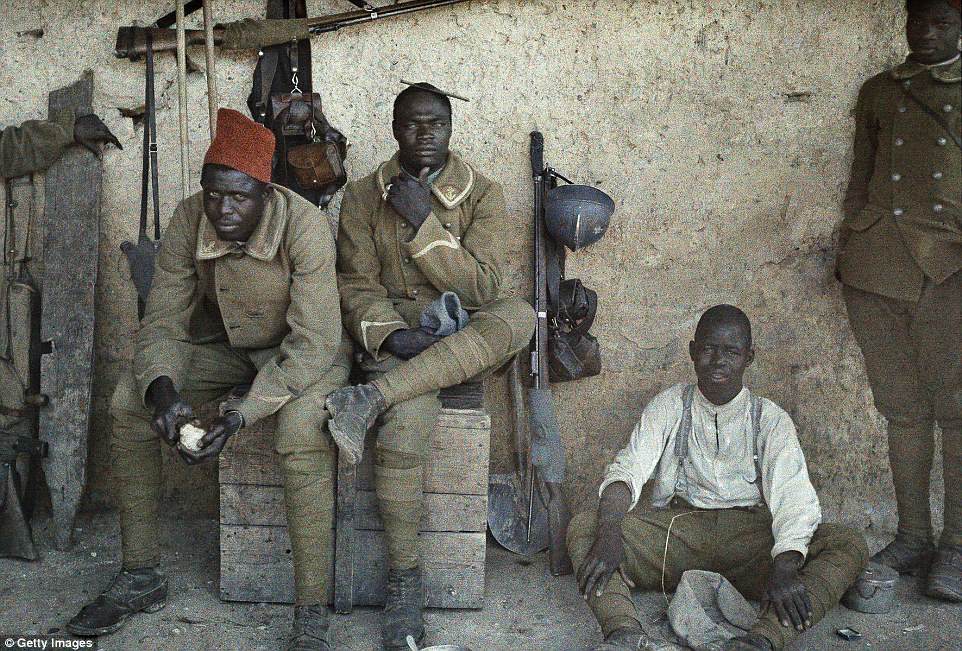
Senegalese soldiers serving as infantrymen in the French army rest with guns in Saint-Ulrich, in the Alsace region, in 1917. Around 200,000 Senegalese fought in the First World War, more than 135,000 of whom fought in Europe and 30,000 of whom were killed.
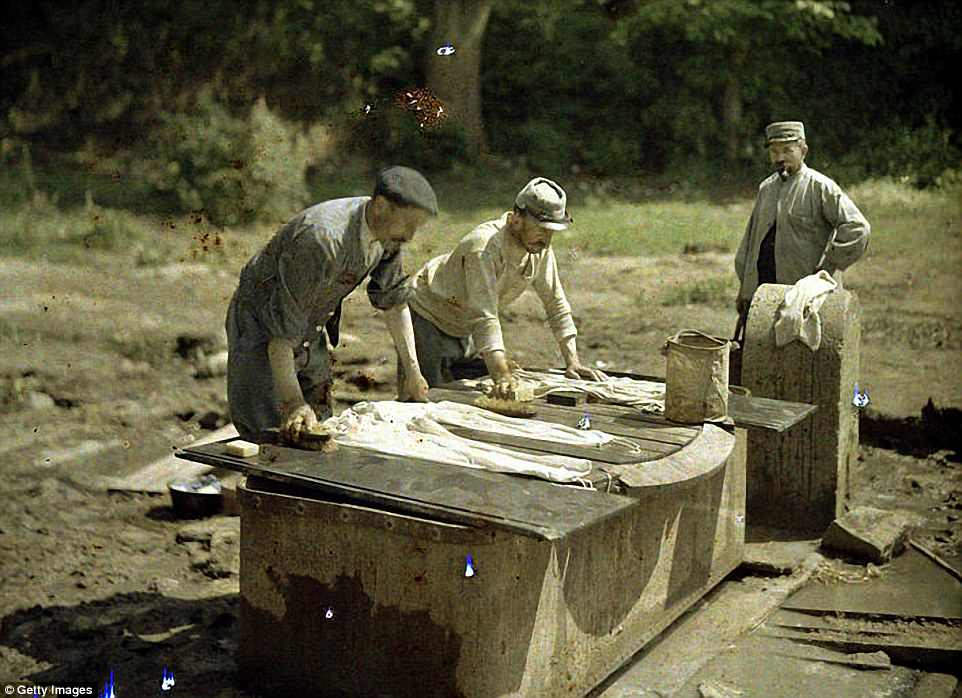
Three French soldiers do their laundry at a well in Soissons, in 1917. While this area remained under French control for much of the war, it also remained within range of German artillery, which regularly shelled the area. French and British troops stationed here came under attack by the Germans in 1918, and were initially pushed back before recapturing the area.
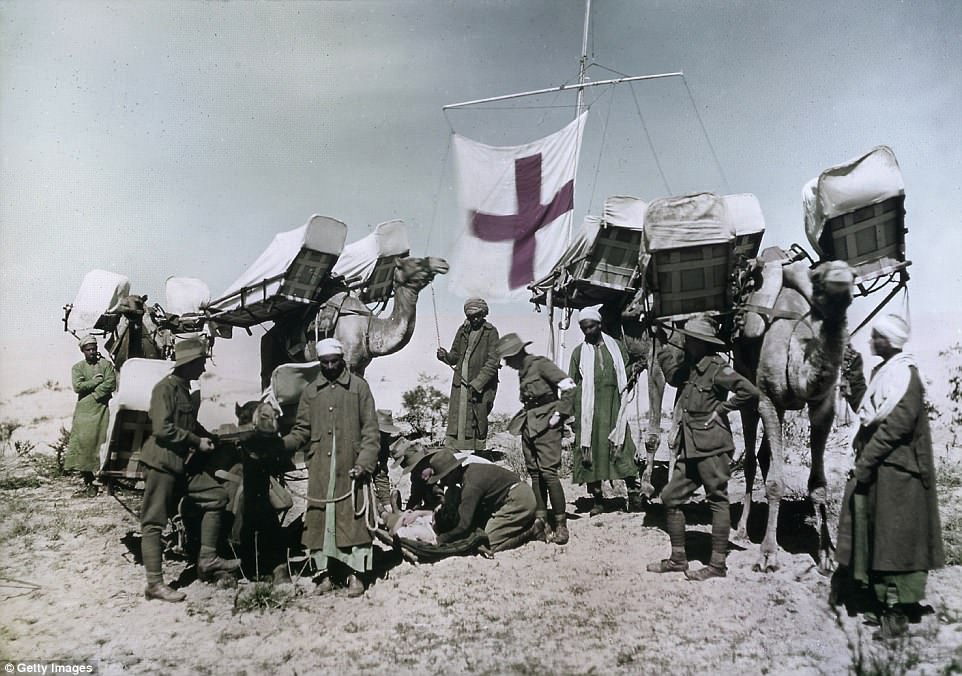
Four camel ambulances in 1918 attached to the Imperial Camel Corps in Rafa, Egypt, used as a base for an attack on Gaza. The ICC were instrumental in a number of battles across the Middle East during the First World War, suffering a total of 246 casualties before being disbanded in 1919.
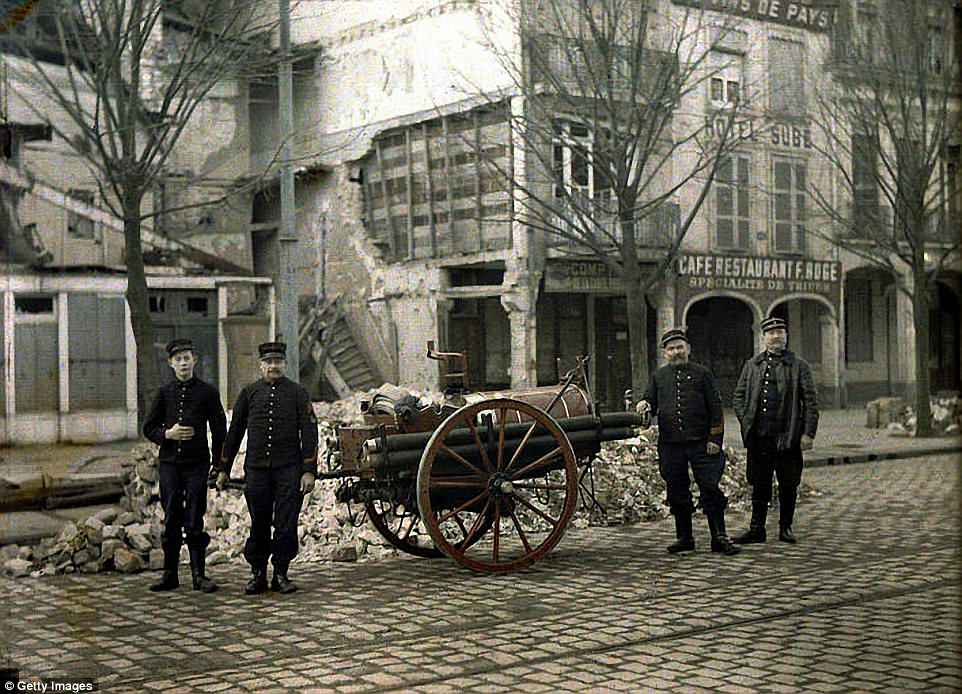
Four firemen pose with their equipment in front of a pile of rubble in Reims, on the Western Front in France, in 1917. Firemen were essential to keeping the city of Reims standing despite repeated German shelling attempts. However, they could not save the cathedral after it was hit in 1914. Scaffolding around the outside caught fire, melting the lead roof and causing a huge amount of damage.
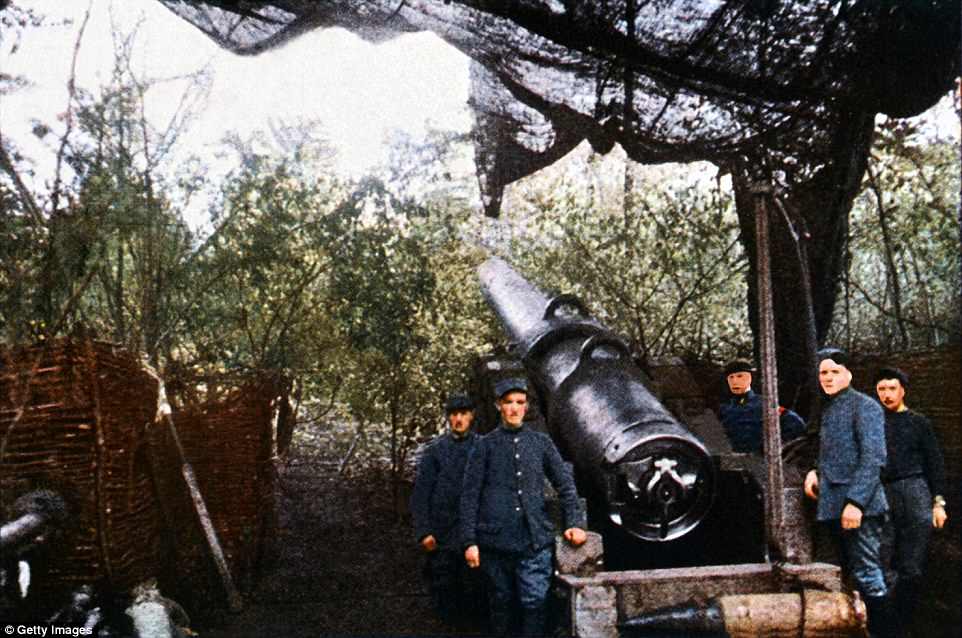
French military personnel stand by a gun used by French forces during the Battle of Verdun, in September 1916. Artillery fire caused an estimated 70 per cent of the more than 700,000 casualties at Verdun, with an estimated 60million shells fired during the battle’s 10 month duration.
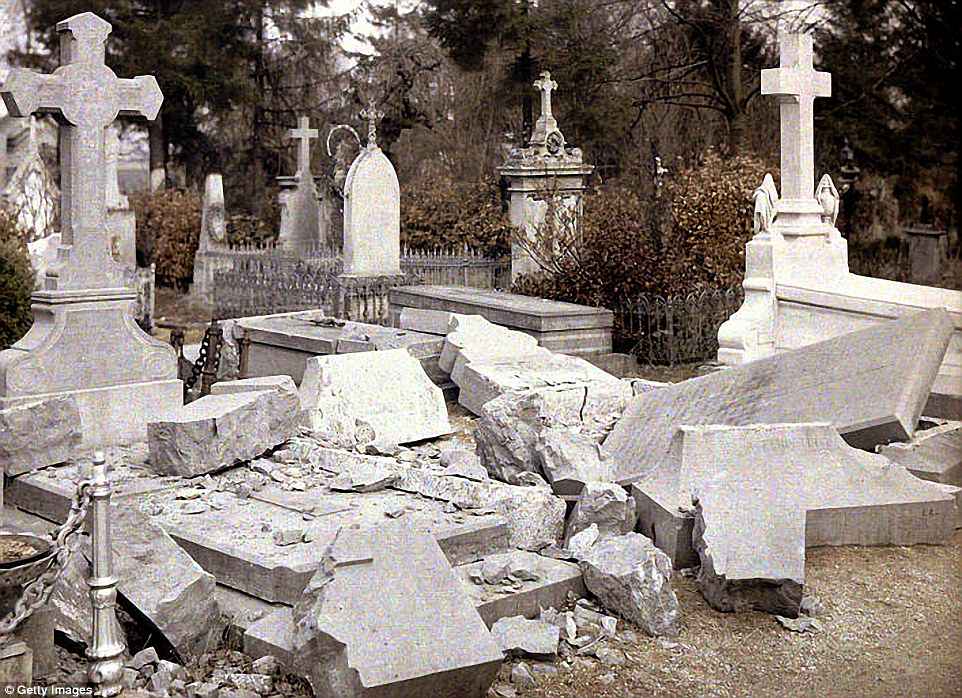
Broken gravestones at the Northern Cemetery in Reims, France, after they suffered severe damage in 1917. The German shelling of Reims, particularly the damage to religious buildings and other structures, proved a powerful propaganda tool to the Allies and featured on posters throughout the war.
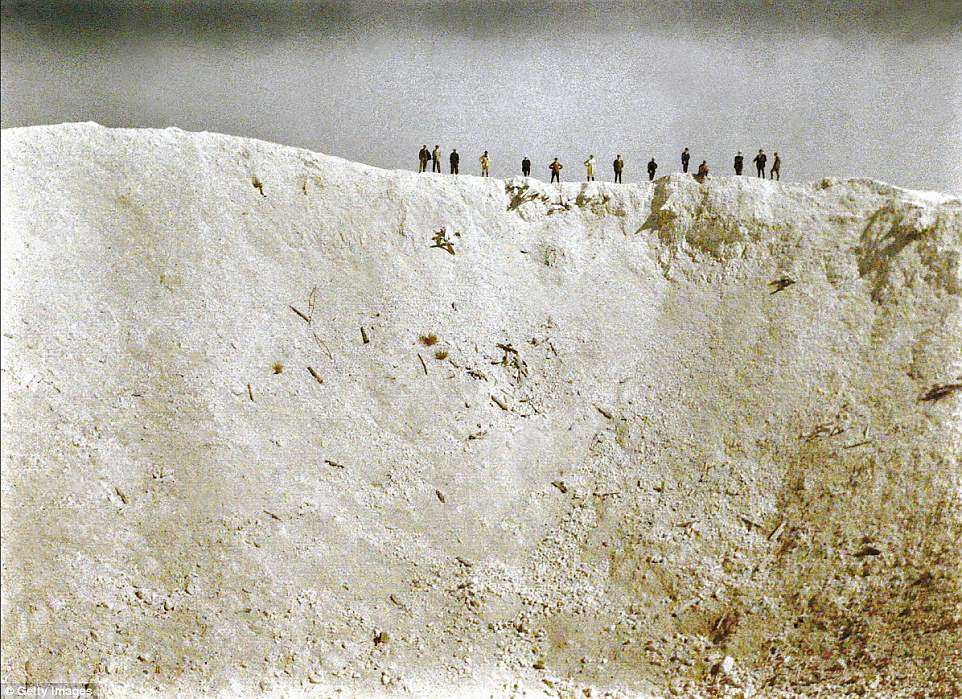
People stand at the edge of an enormous, 127 yard-wide crater in Messines, Belgium, after 19 mines exploded under German positions. The explosives, planted by British sappers tunneling underneath the German trenches, killed around 10,000 of the Kaiser’s soldiers, most of them from the 3rd Royal Bavarian Division. The blast ranks among the largest non-nuclear explosions in history.
Group of French Soldiers in front of the entrance of a cote. Woods of Hirtzbach, France. June 1917.
A group of Canadian forestry workers. Oise, France, 1917.
Time for a haircut. In a camp a soldier is cutting the hair of a comrade. Aisne, France, 1917.
Officers of the 370th, having been subjected to the attack of July 8th, take time to relax. Aisne, France 1917
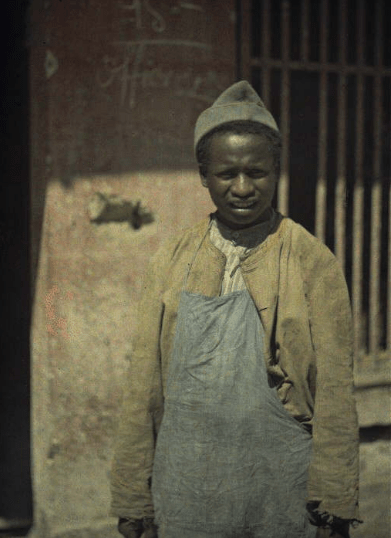
Senegalese cook. Aisne, France, 1917

22 Amazing Photos Show What America Looked Like When Alcohol Was Illegal During the 1920s and 1930s

The prohibition of alcohol in the United States lasted for 13 years during the 1920s and 30s. It is one of most famous—or infamous—times in recent American history. While the intention was to reduce the consumption of alcohol by eliminating businesses that manufactured, distributed, and sold it, the plan backfired.

Considered by many as a failed social and political experiment, the era changed the way many Americans viewed alcoholic beverages. It also enhanced the realization that federal government control cannot always take the place of personal responsibility.
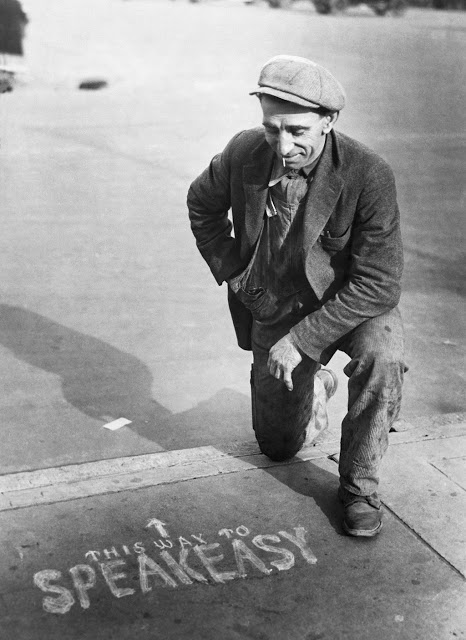
We associate the Prohibition era with gangsters, bootleggers, speakeasies, rum-runners, and an overall chaotic situation in respect to the social network of Americans. The period began in 1920 with general acceptance by the public. It ended in 1933 as the result of the public’s annoyance with the law and the ever-increasing enforcement nightmare.
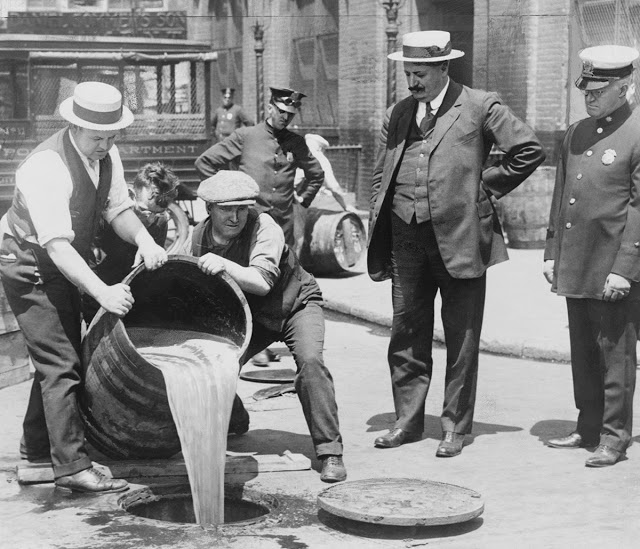
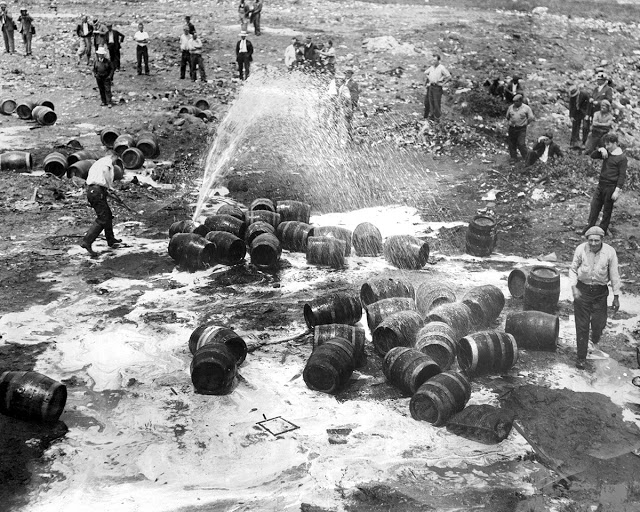
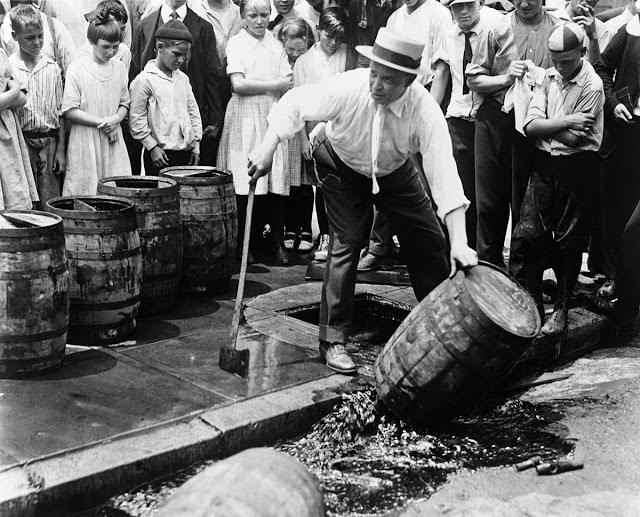
Police in New York City pour liquor from a barrel down a sewer during a 1921 raid.
Tears mingle with strong beer in Newark, New Jersey, as prohibition agents destroy the unlawful liquor seized in a Hoboken raid on June 18, 1931.
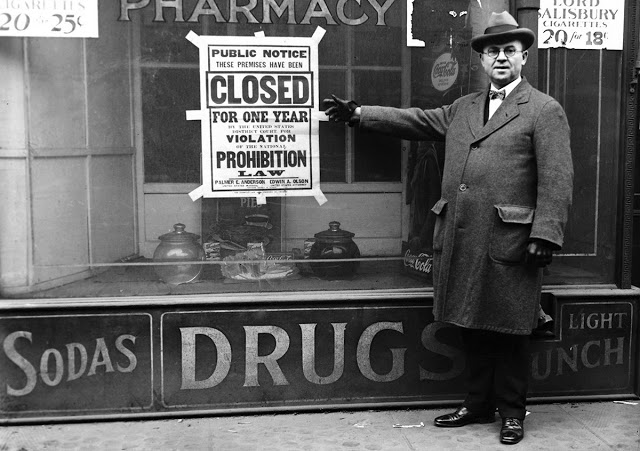
Huge black-and-white posters printed in bold type serve as notice that a Chicago business had been closed by the federal courts for violations of the Volstead Act.
A driver tries to ensure his safety with a banner on his vehicle that reads, “I’m not a Bootlegger. Don’t shoot, I’ll stop,” near the Mexico border in 1929.
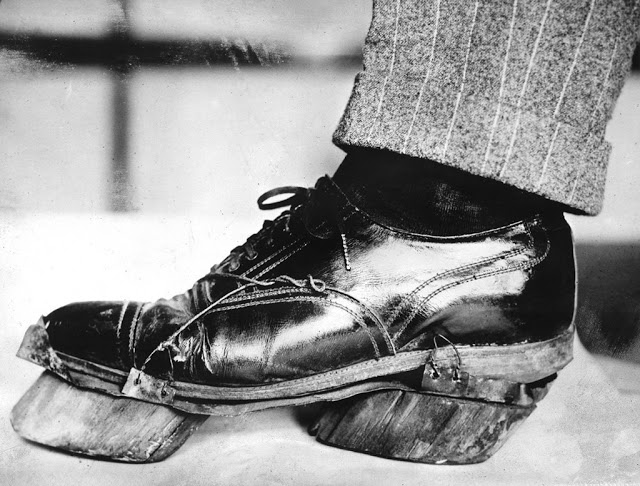
The shoe of an alcohol smuggler who had been arrested at the Canadian border is strapped with wooden soles in the form of cattle hooves to camouflage their border crossing, circa 1924.
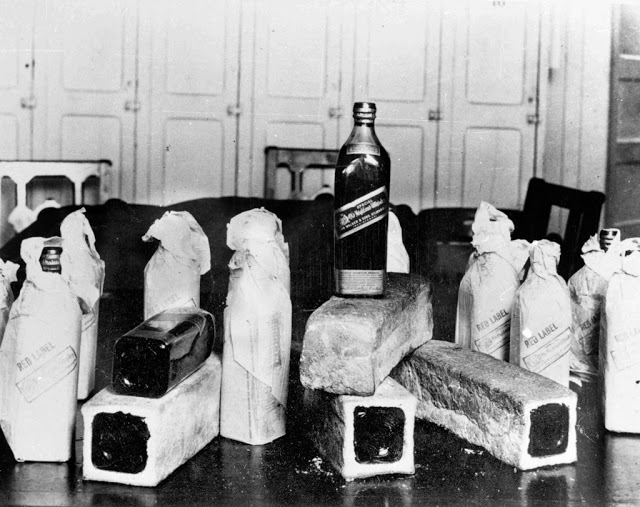
Bottles of Scotch whisky smuggled in hollowed-out loaves of bread are confiscated by police on June 12, 1924.
Groups of young people playfully pose with illegal drinks, circa 1922.
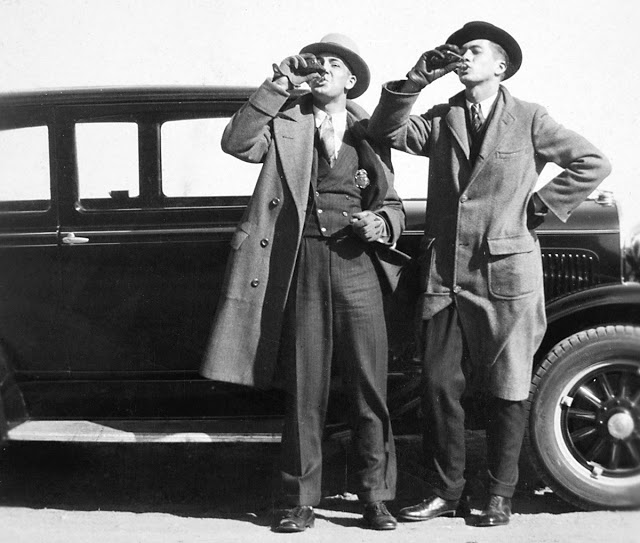
Two police officers drink from flasks by their car, circa 1930.
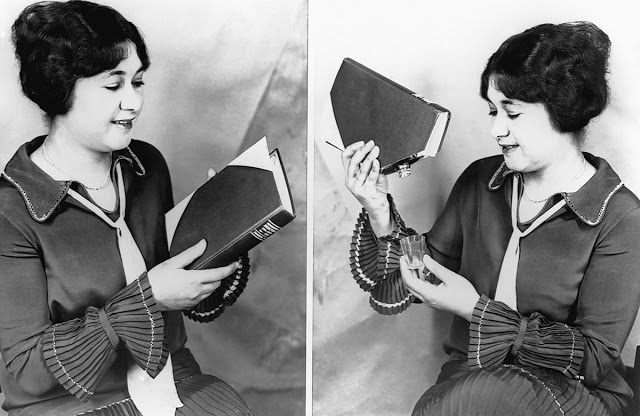
A woman demonstrates how to use a Prohibition-era book to conceal a liquor flask in 1927.
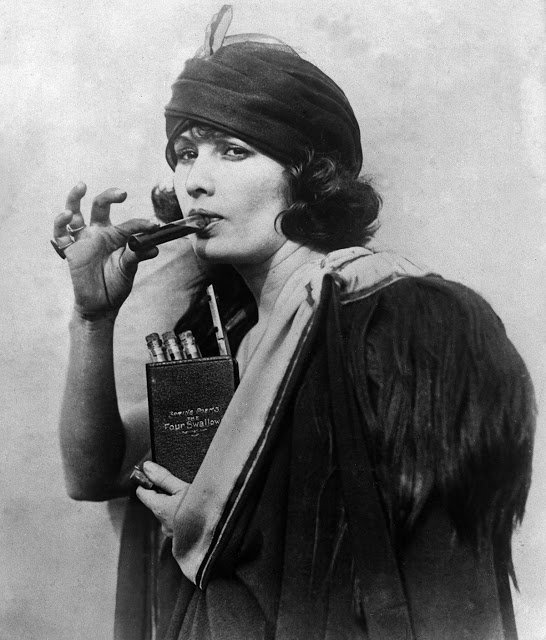
A woman uses a dummy book, titled The Four Swallows, as a hiding place for liquor during Prohibition in 1925.
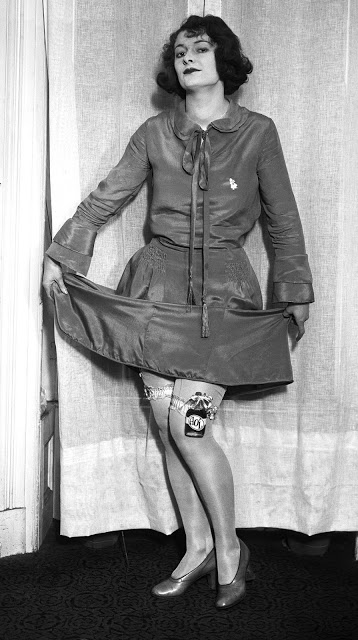
A woman shows off her new initialed garter flask, which had become the latest rage in 1926.
A potential customer examines an enterprising advertisement for an illegal speakeasy during Prohibition in the 1920s.
Children watch as a prohibitionist destroys a barrel of beer with an ax during the 1920s.
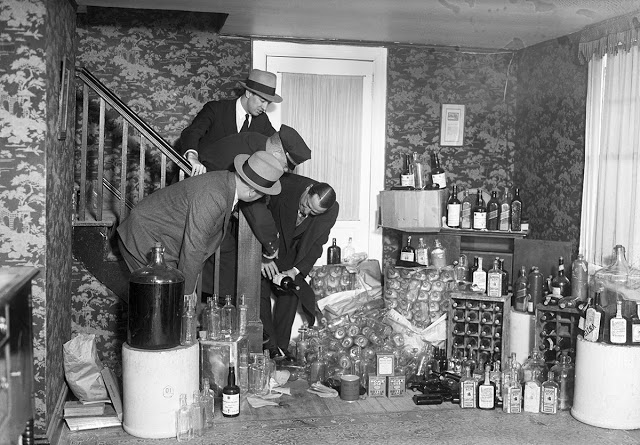
Police officers raid a Long Island, New York, home to find $20,000 worth of booze on Jan. 26, 1930.
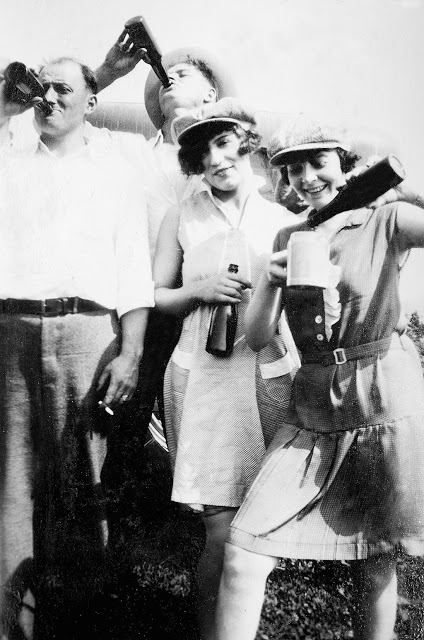
Four women chug bottles of illegal liquor, circa 1925.
A woman demonstrates how her overcoat conceals two tins of booze strapped to her thighs on Sept. 3, 1928.
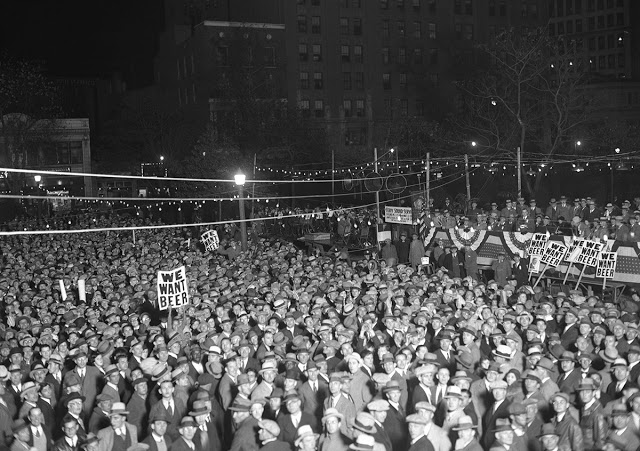
More than 40,000 demonstrators gather in Military Park, Newark, on Nov. 1, 1931, to oppose the ban of alcohol in the US.
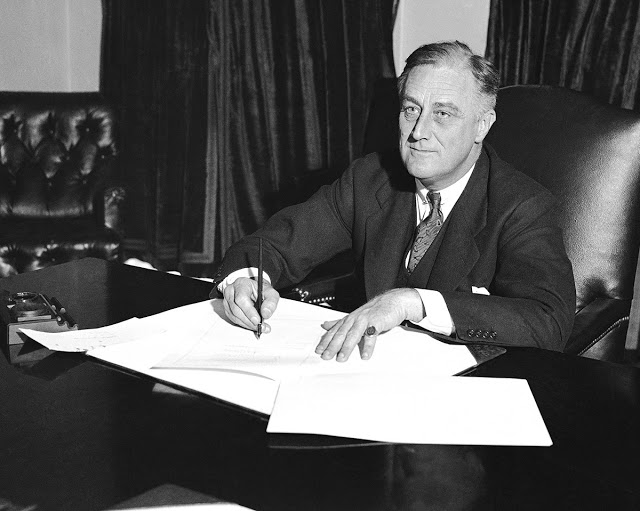
President Franklin D. Roosevelt signs the Cullen-Harrison Act, or “Beer Bill,” the first relaxation of the Volstead Act, on Mar. 22, 1933. The new law allowed the sale of beer and wine containing 3.2% alcohol starting at midnight on April 6.
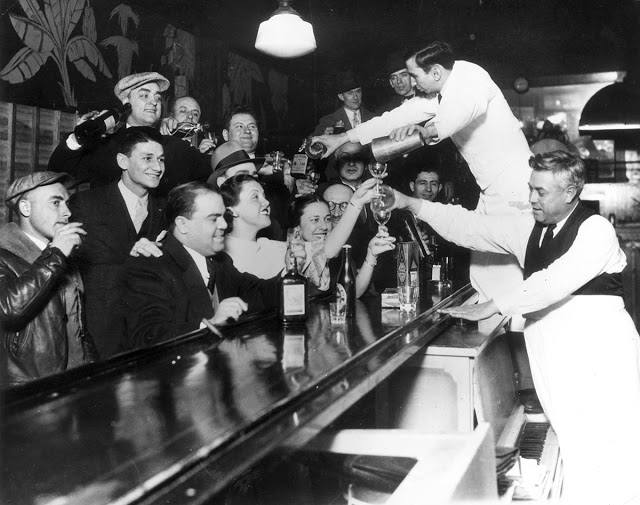
Partygoers celebrate the end of Prohibition amid a tangle of confetti and ribbons in 1933.
Workers in Brooklyn unload cases of liquor from marble blocks, which were used to conceal alcohol before the repeal of Prohibition, in October 1933.
Bartenders at Sloppy Joe’s bar in Chicago pour a round of drinks on the house for a large group of smiling customers as it was announced that the 18th Amendment had been repealed and Prohibition had been removed from the US Constitution after 13 years.
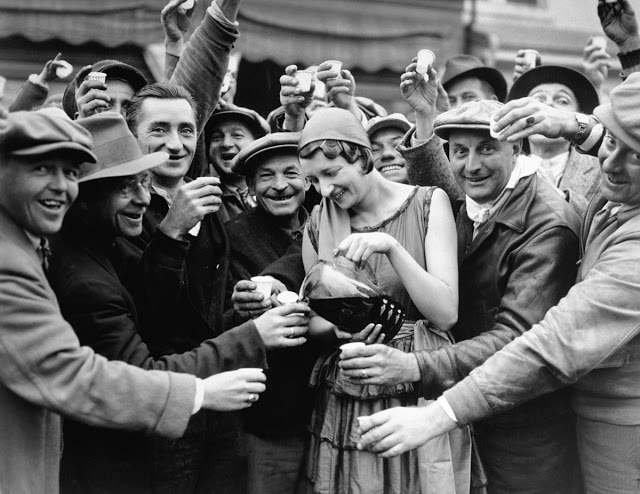
A woman serves drinks to a crowd of men who are joyfully celebrating the repeal of Prohibition in 1933.

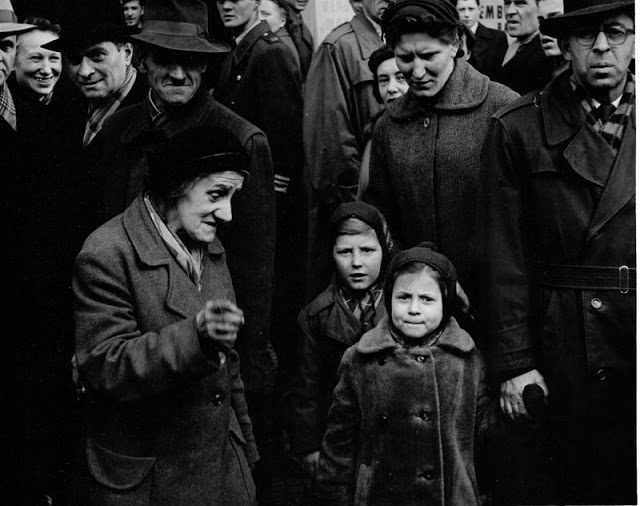
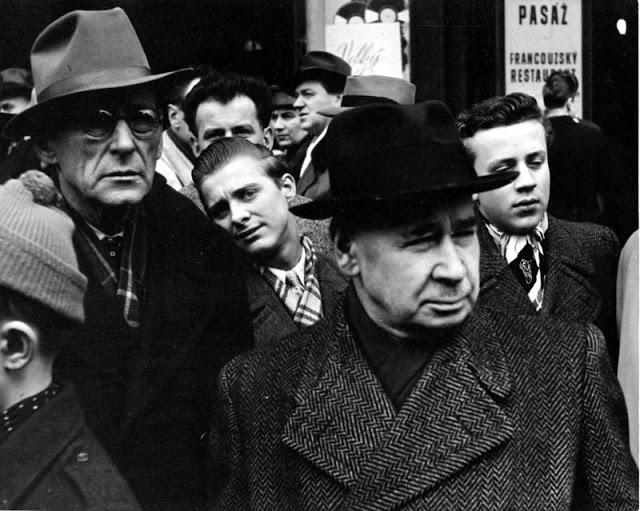
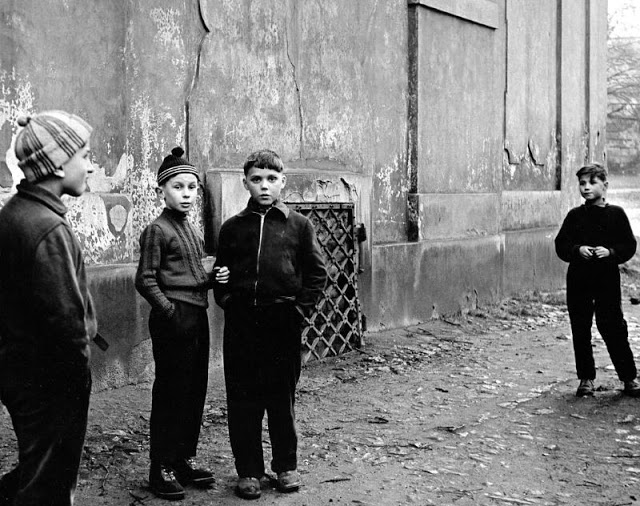
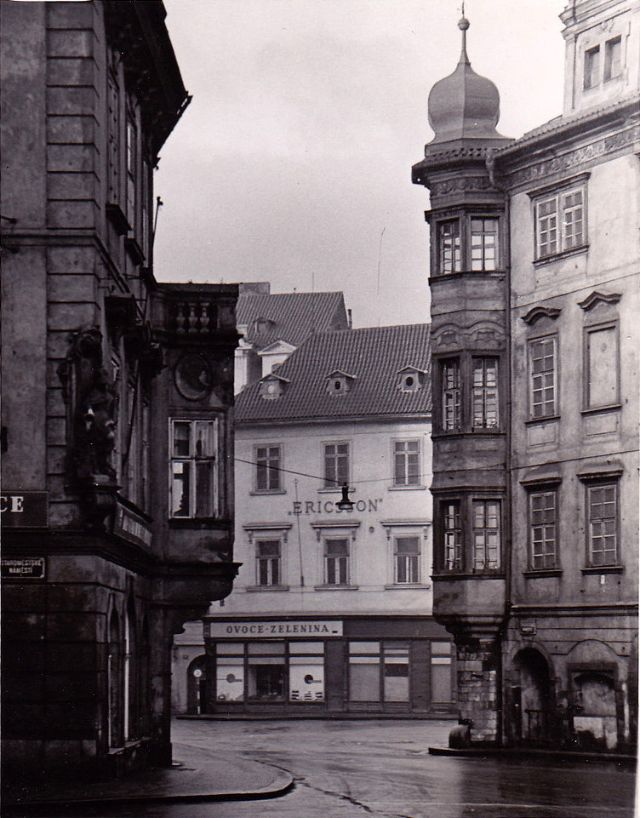
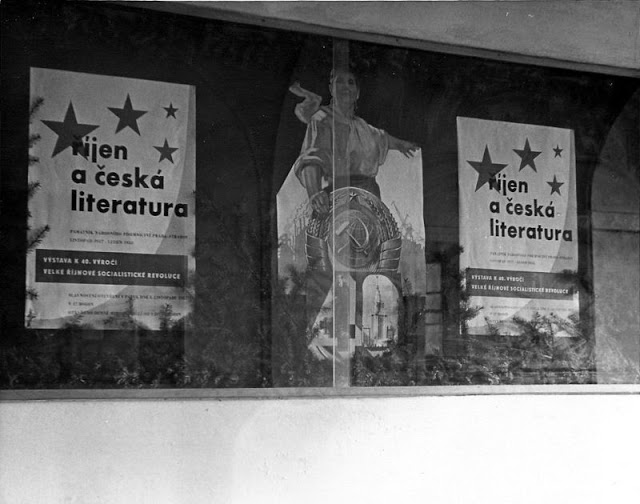
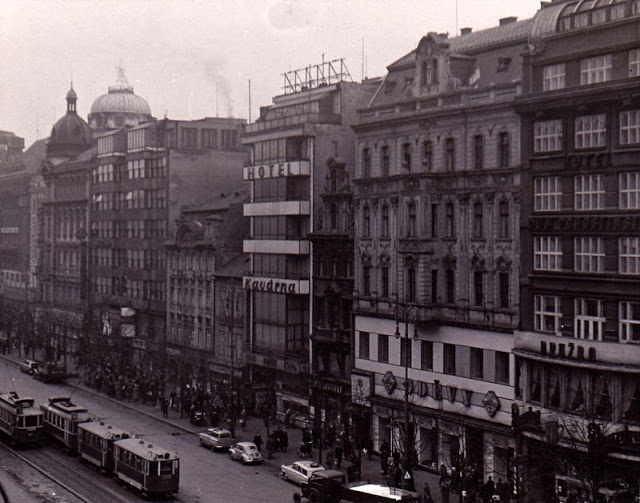
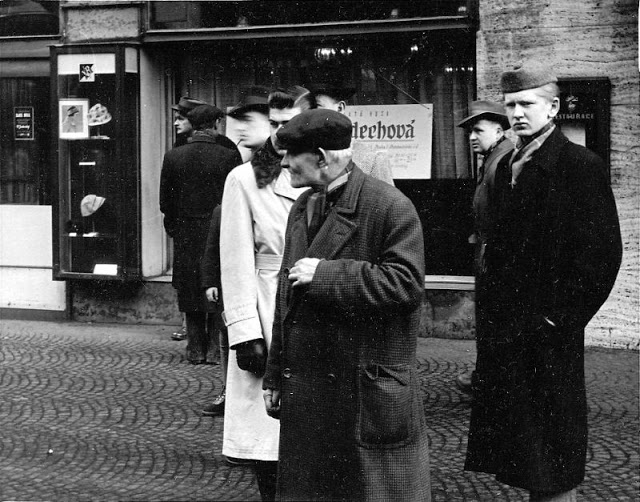
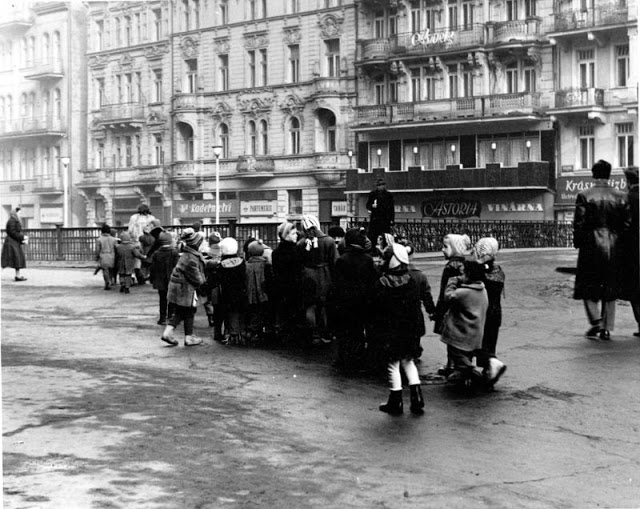
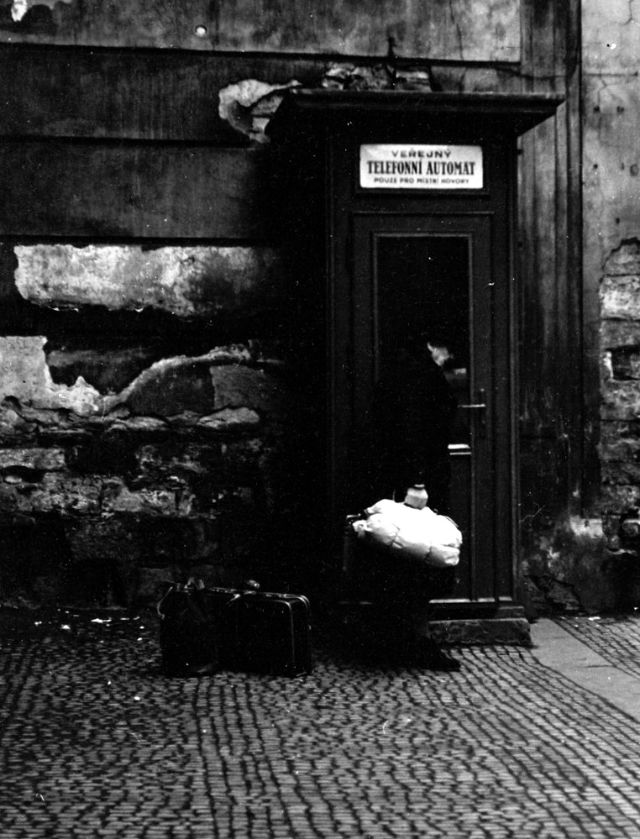
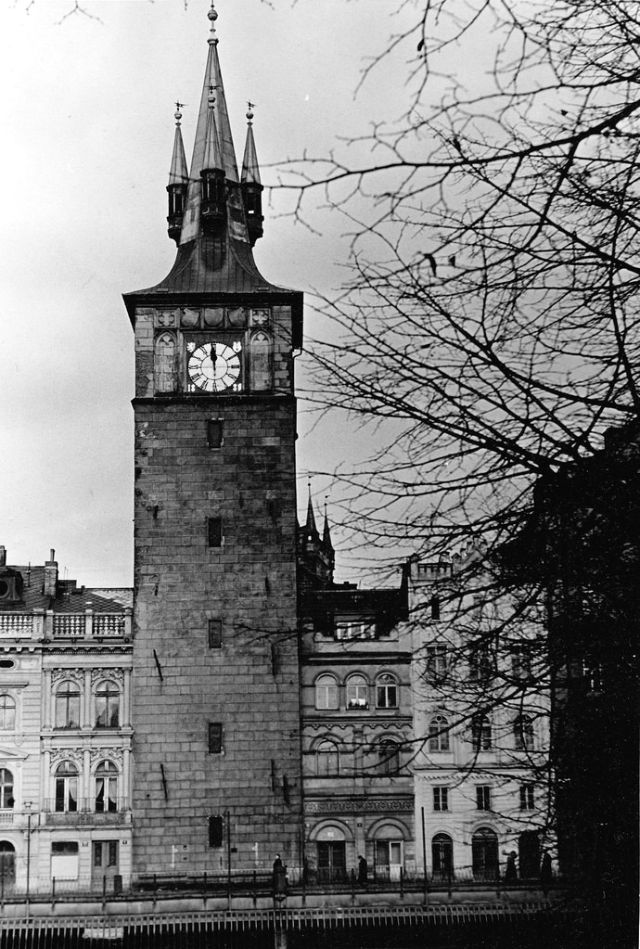
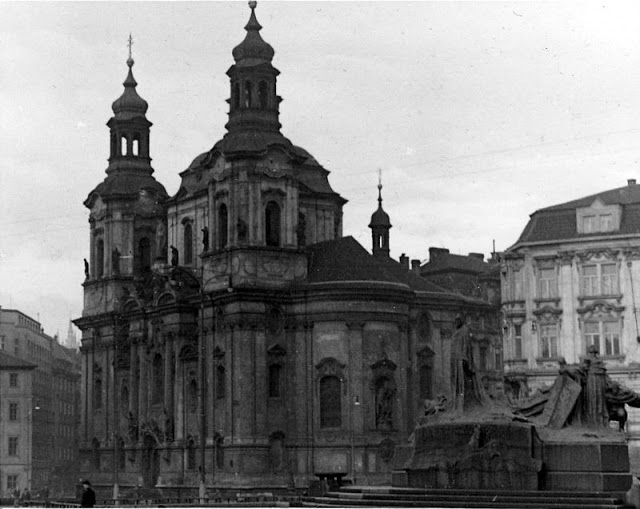
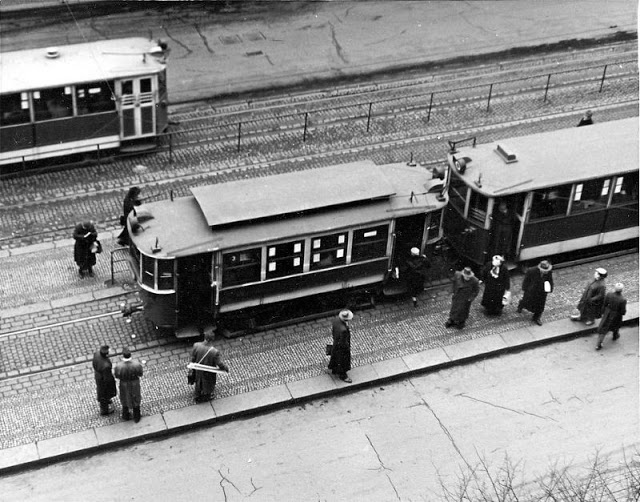
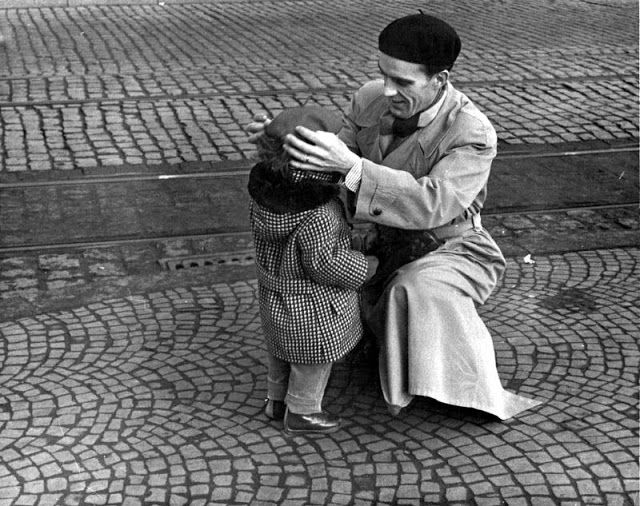
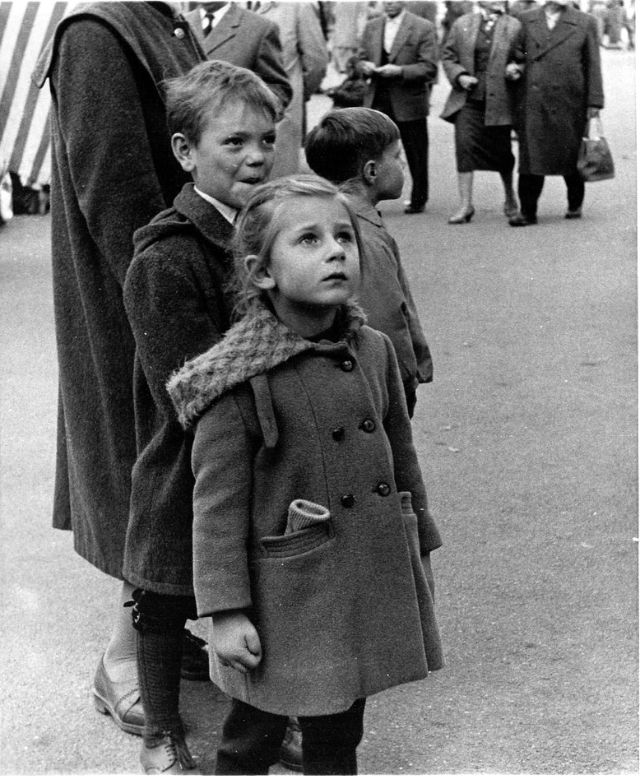
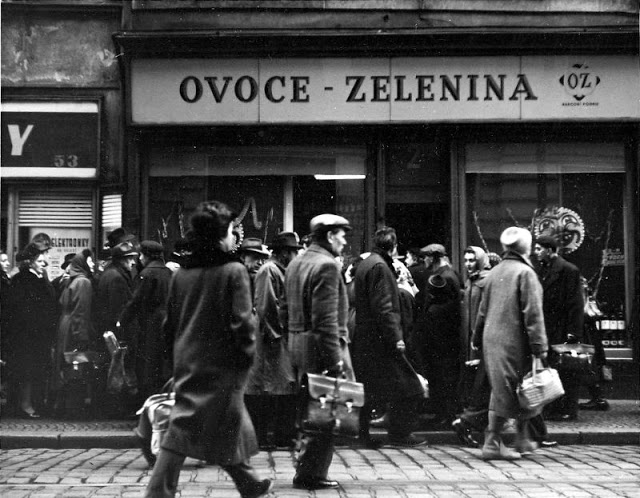
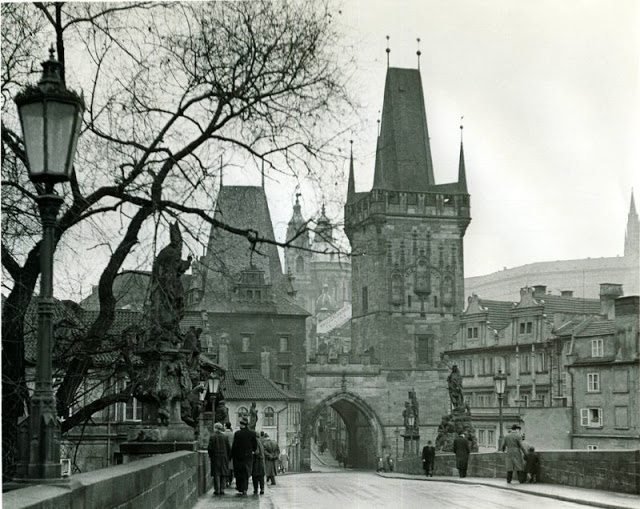
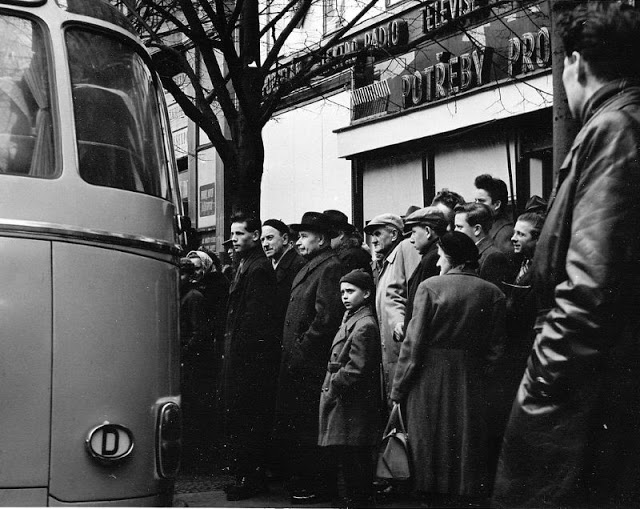
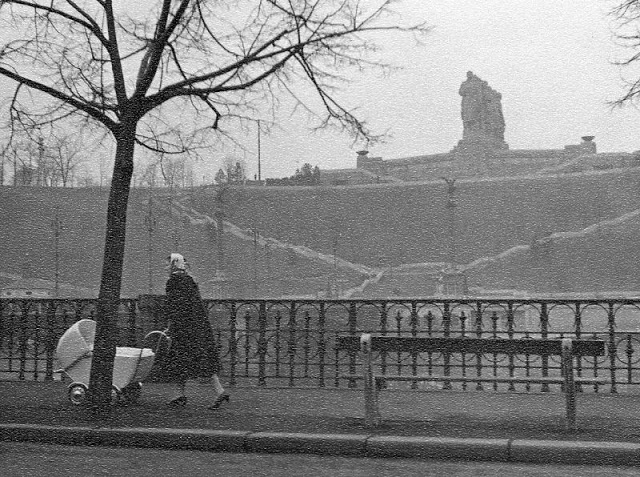
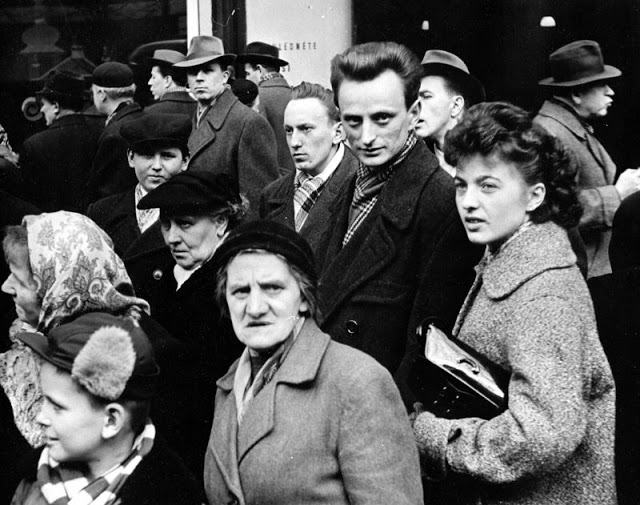
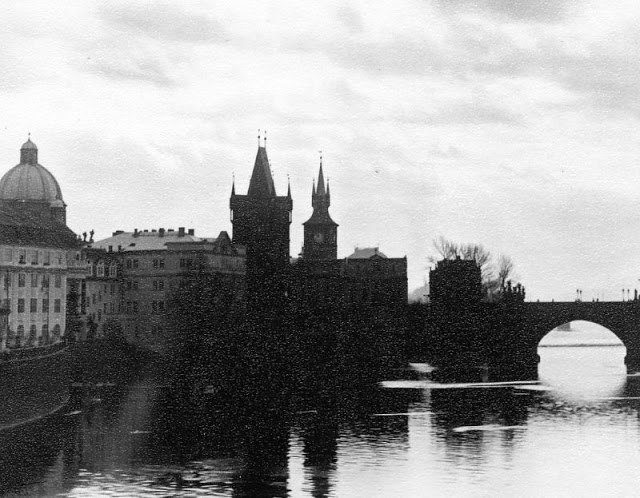
24 Amazing Photos Showing Life in Prague in the 1950s

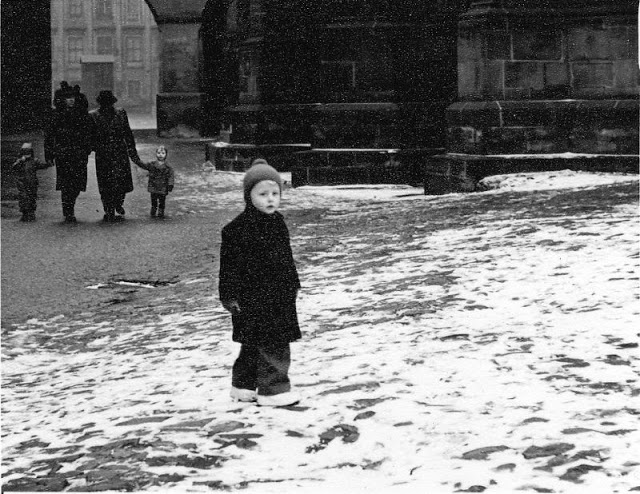
Prague is the capital and largest city in the Czech Republic, the 13th largest city in the European Union and the historical capital of Bohemia. Situated on the Vltava river, Prague is home to about 1.3 million people, while its metropolitan area is estimated to have a population of 2.7 million. The city has a temperate oceanic climate, with relatively warm summers and chilly winters.

Prague is a political, cultural, and economic centre of central Europe complete with a rich history. Founded during the Romanesque and flourishing by the Gothic, Renaissance and Baroque eras, Prague was the capital of the Kingdom of Bohemia and the main residence of several Holy Roman Emperors, most notably of Charles IV (r. 1346–1378). It was an important city to the Habsburg Monarchy and its Austro-Hungarian Empire. The city played major roles in the Bohemian and the Protestant Reformations, the Thirty Years’ War and in 20th-century history as the capital of Czechoslovakia between the World Wars and the post-war Communist era.

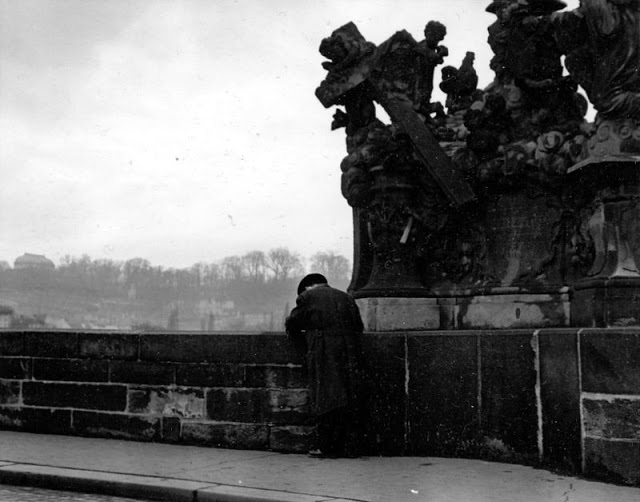
Prague is home to a number of well-known cultural attractions, many of which survived the violence and destruction of 20th-century Europe. Main attractions include Prague Castle, Charles Bridge, Old Town Square with the Prague astronomical clock, the Jewish Quarter, Petrín hill and Vyšehrad. Since 1992, the extensive historic centre of Prague has been included in the UNESCO list of World Heritage Sites.

The city has more than ten major museums, along with numerous theatres, galleries, cinemas, and other historical exhibits. An extensive modern public transportation system connects the city. It is home to a wide range of public and private schools, including Charles University in Prague, the oldest university in Central Europe.

Prague is classified as an “Alpha-” global city according to GaWC studies. In 2019, the city was ranked as 69th most liveable city in the world by Mercer. In the same year, the PICSA Index ranked the city as 13th most liveable city in the world. Its rich history makes it a popular tourist destination and as of 2017, the city receives more than 8.5 million international visitors annually. In 2017 Prague was listed as the fifth most visited European city after London, Paris, Rome, and Istanbul.
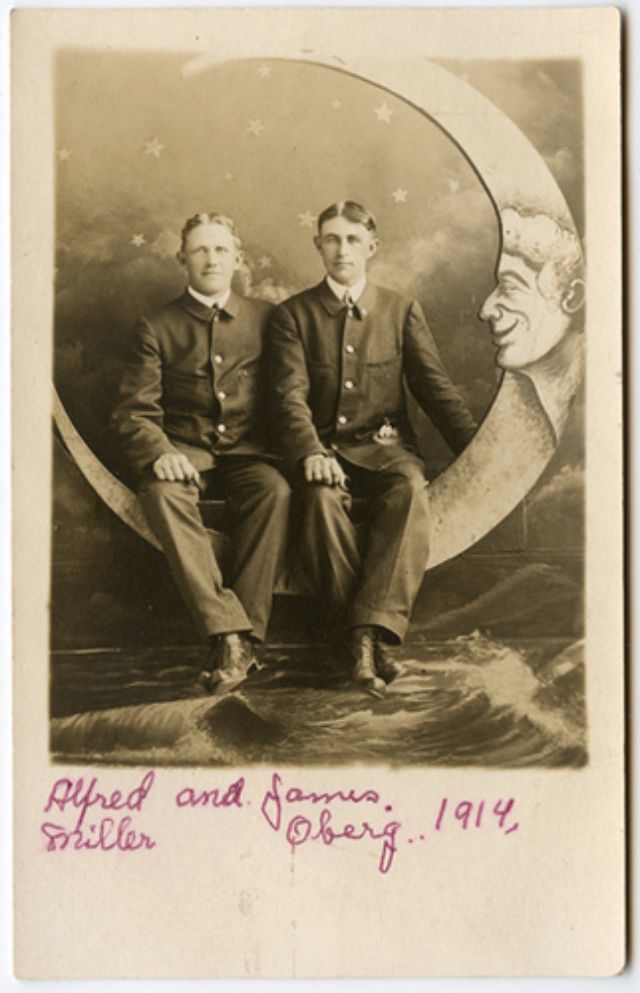
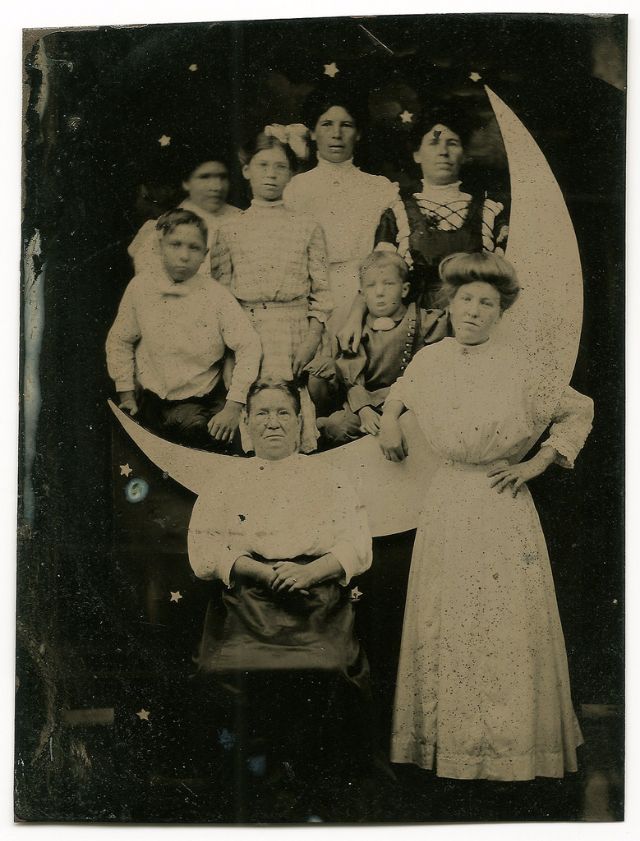
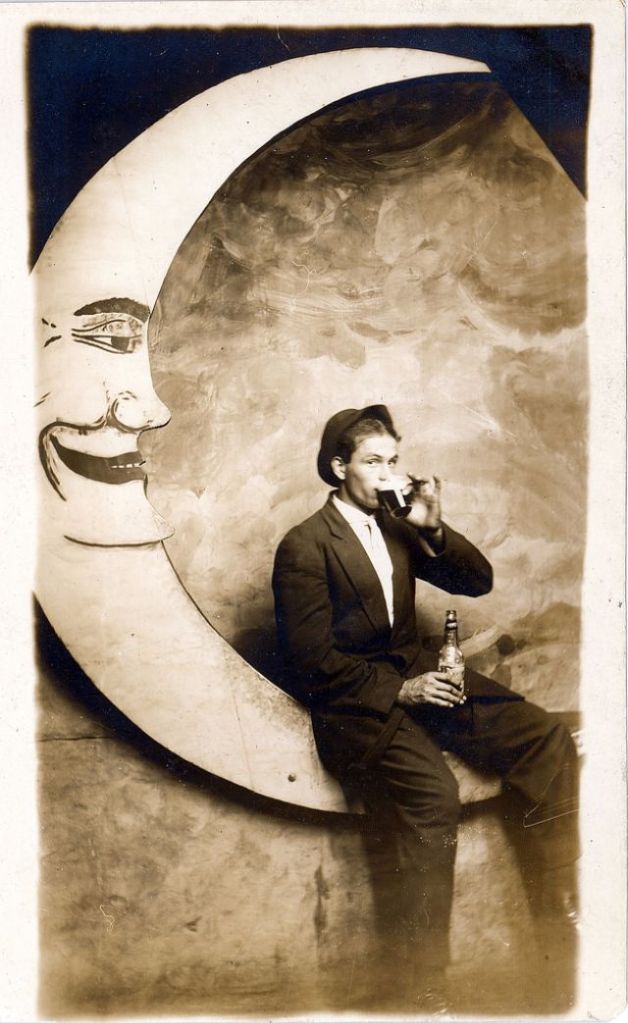
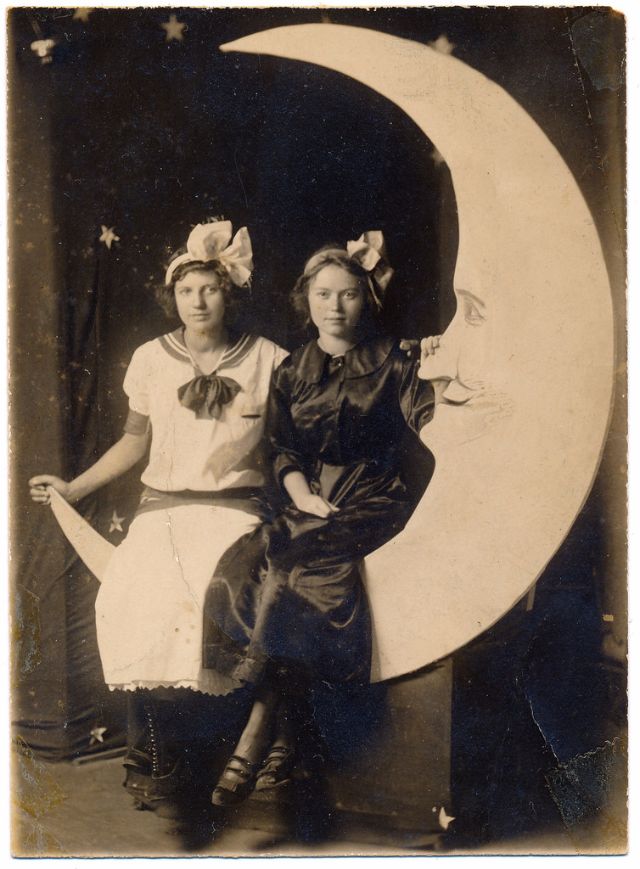
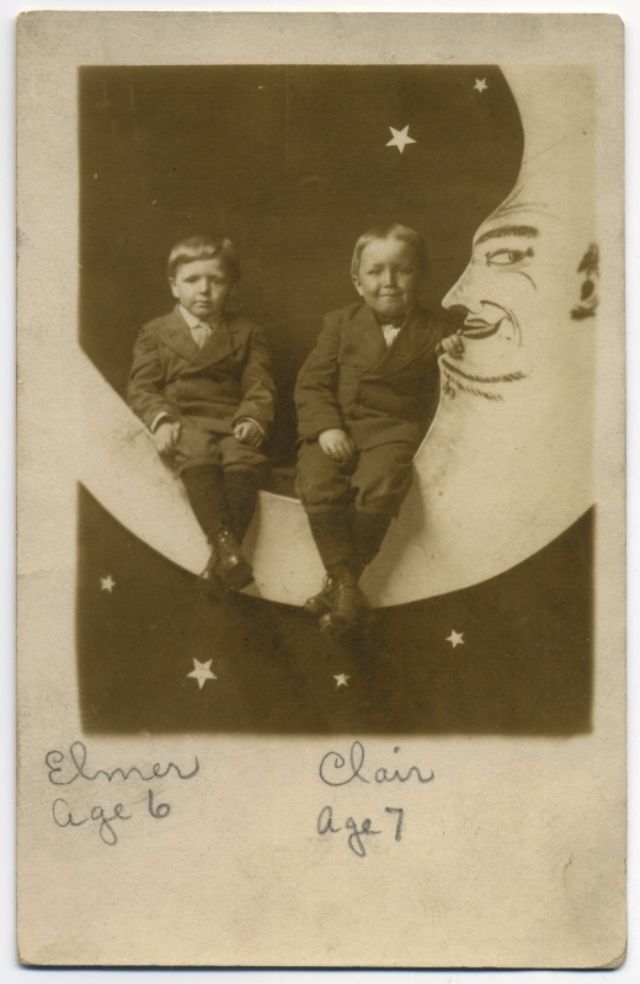
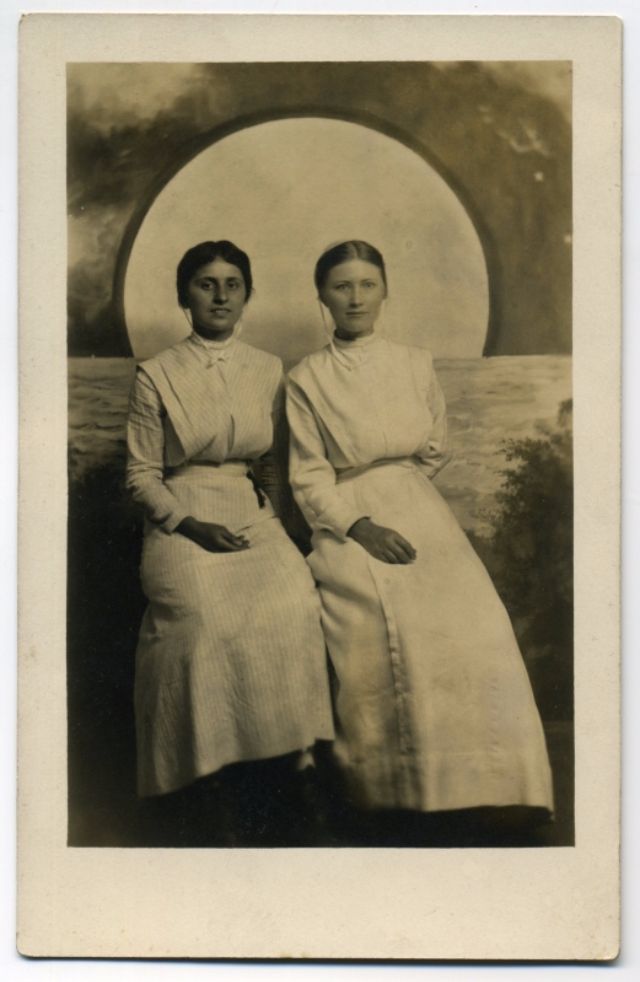
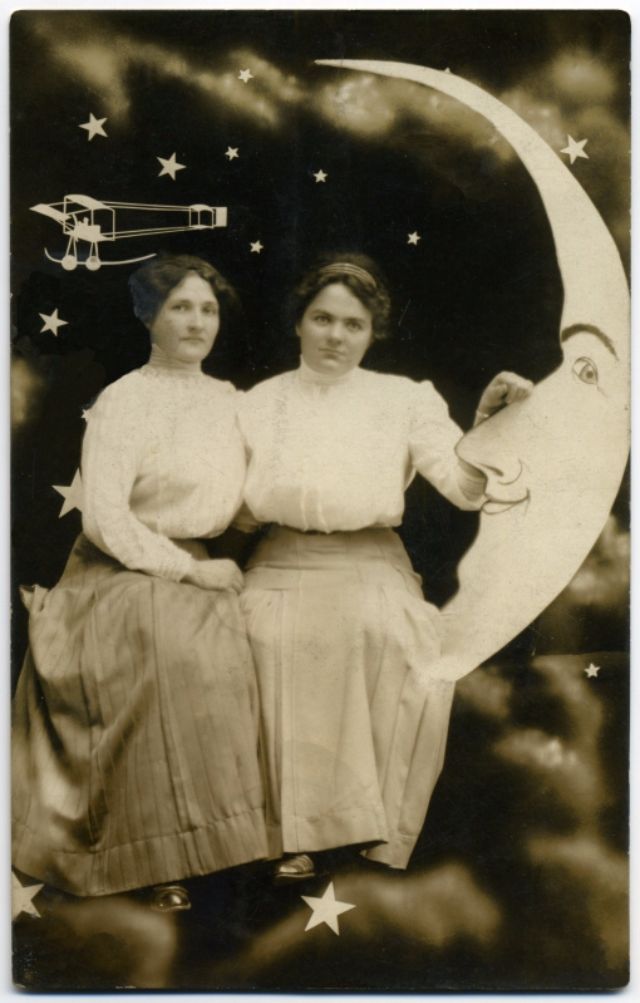
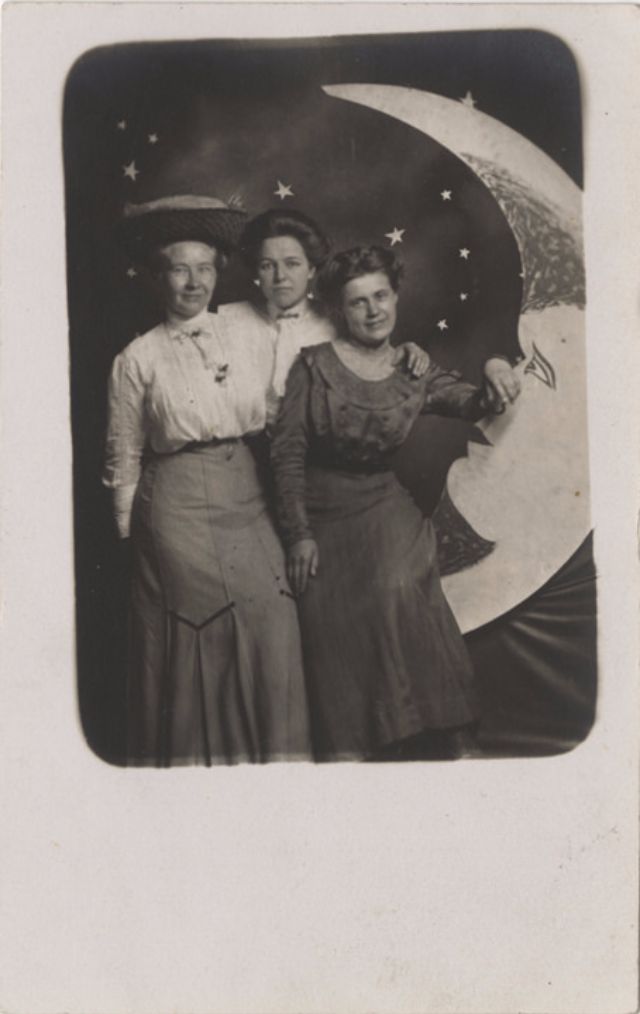
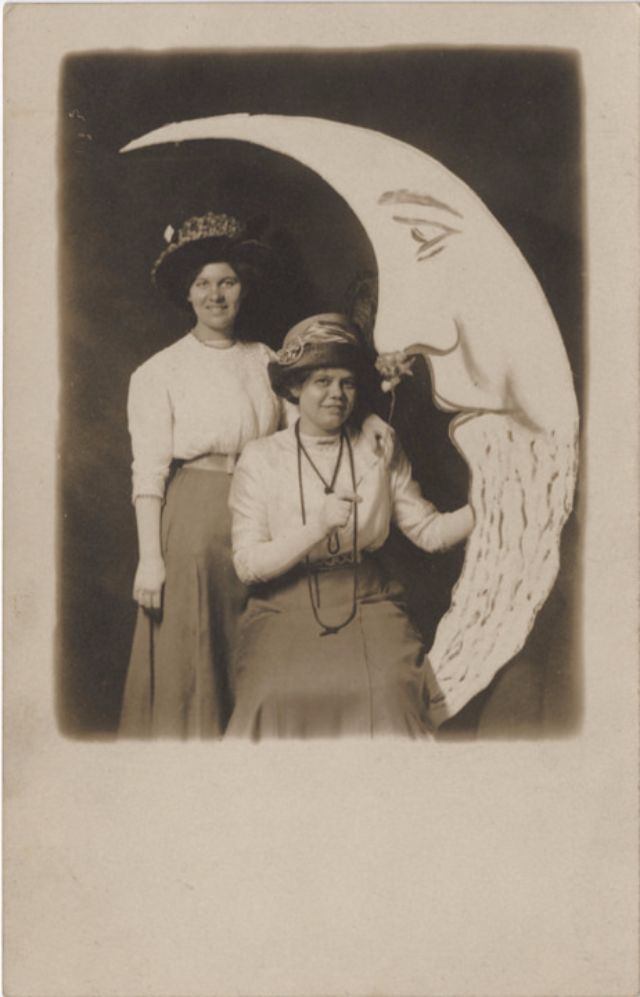
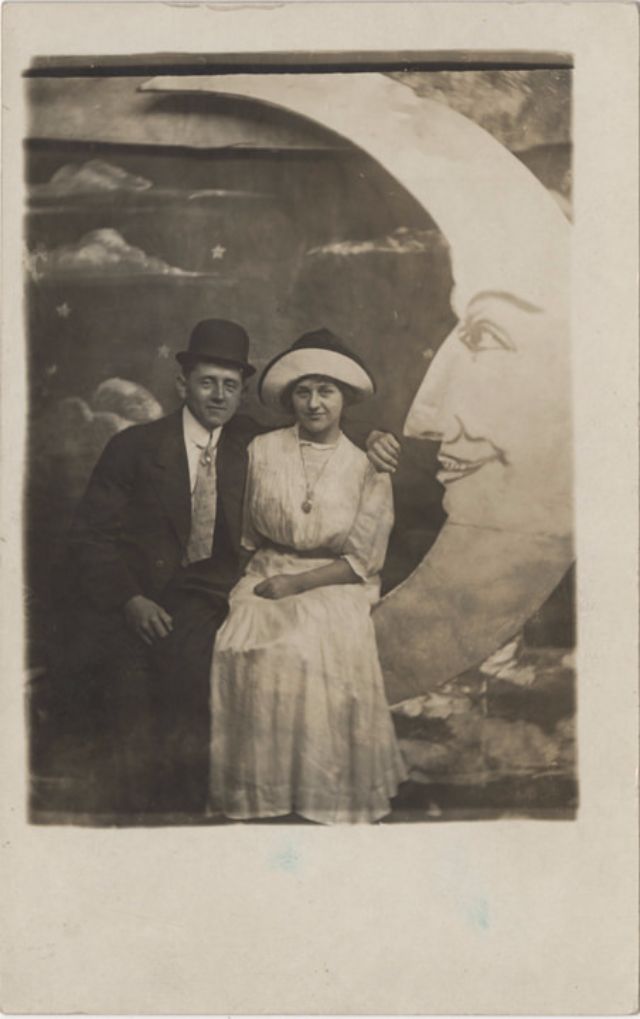
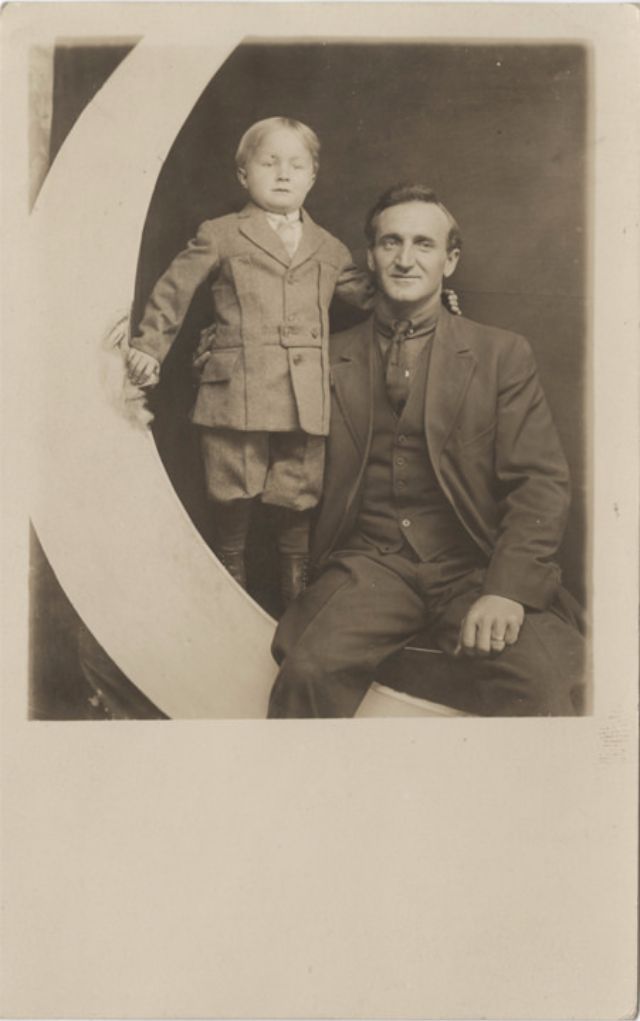
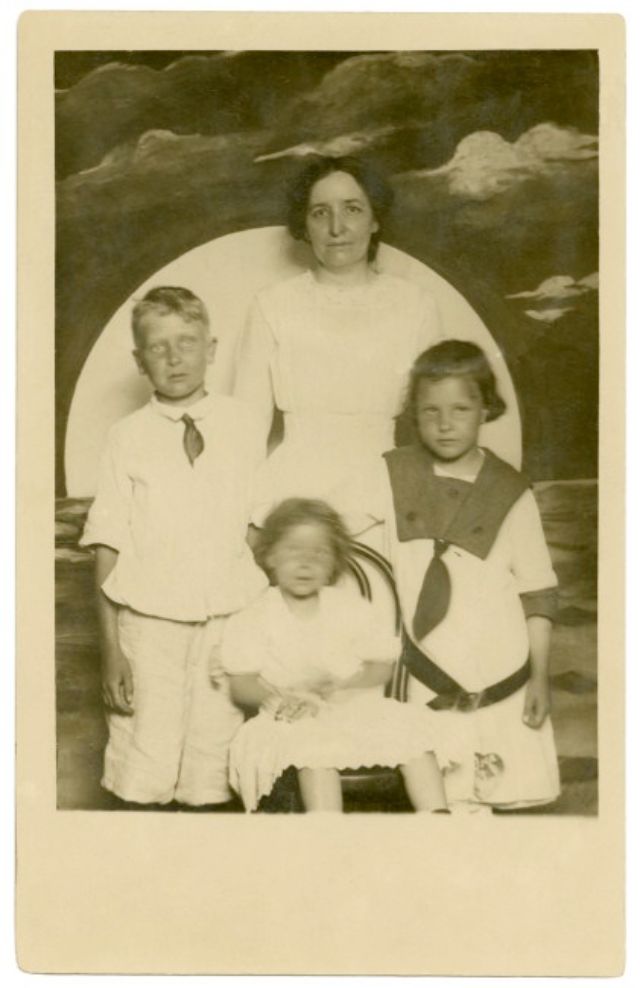
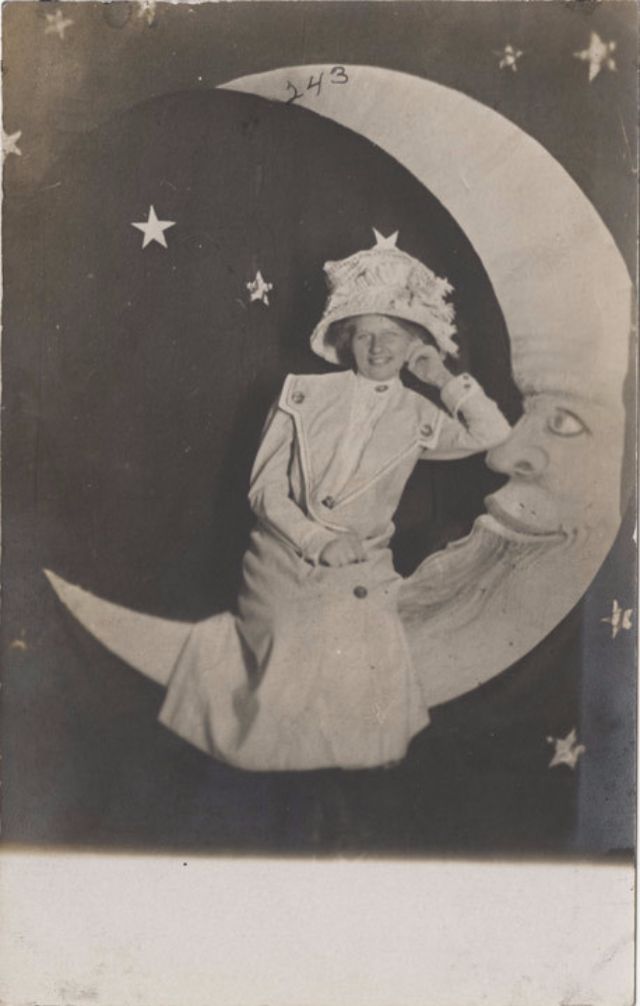
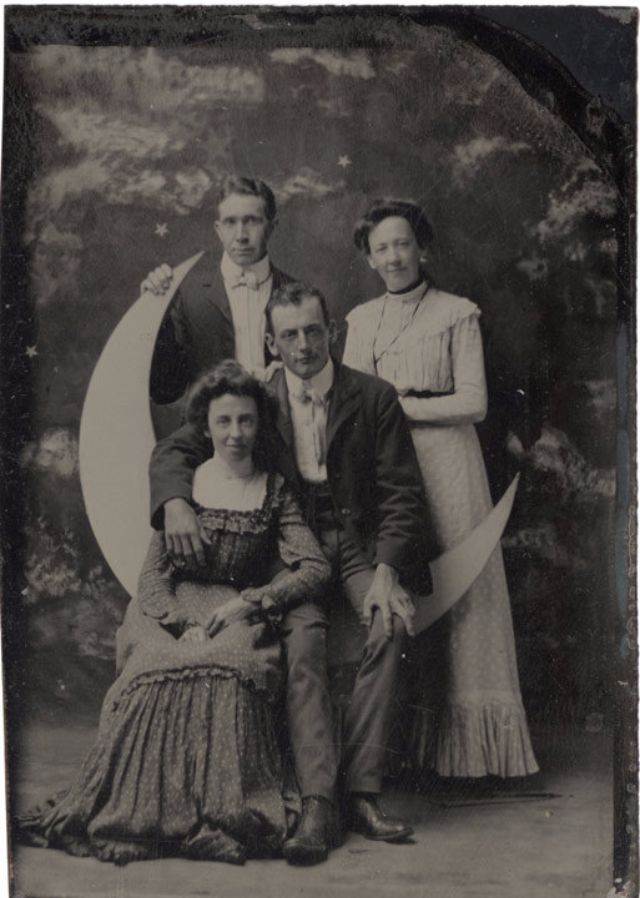
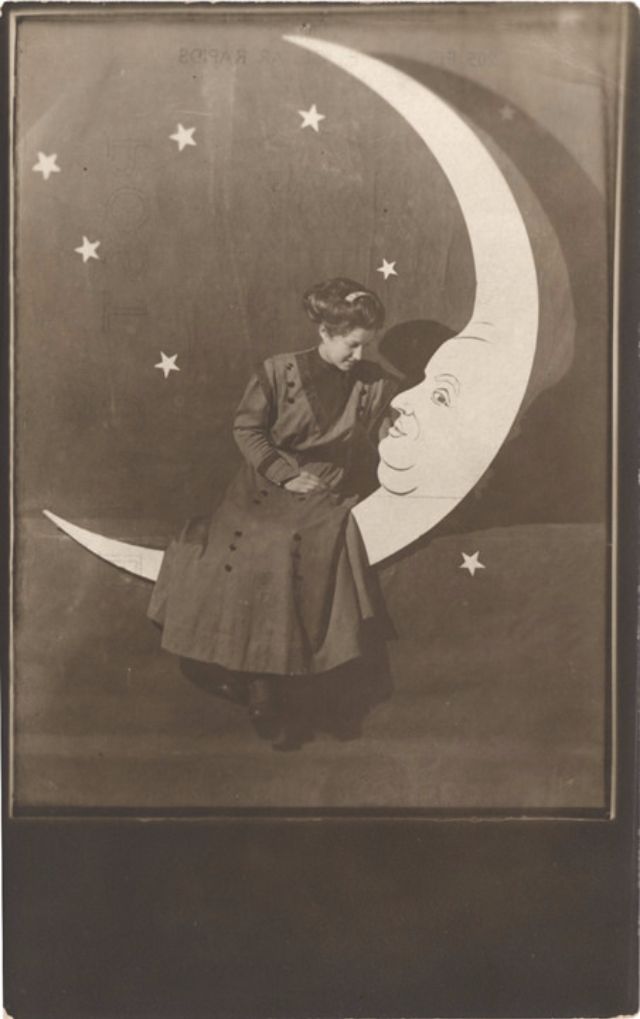
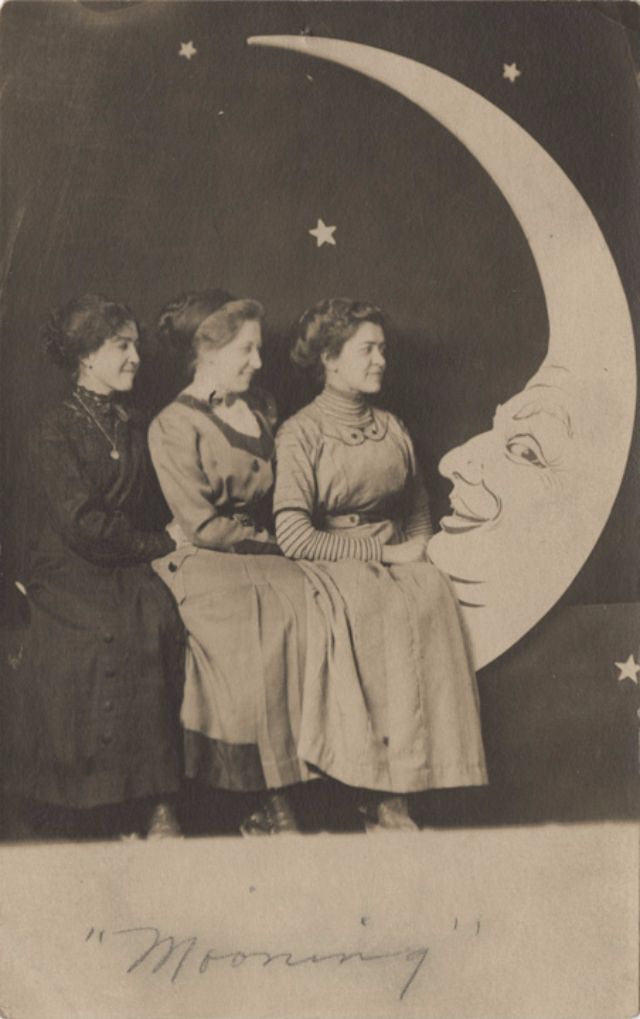
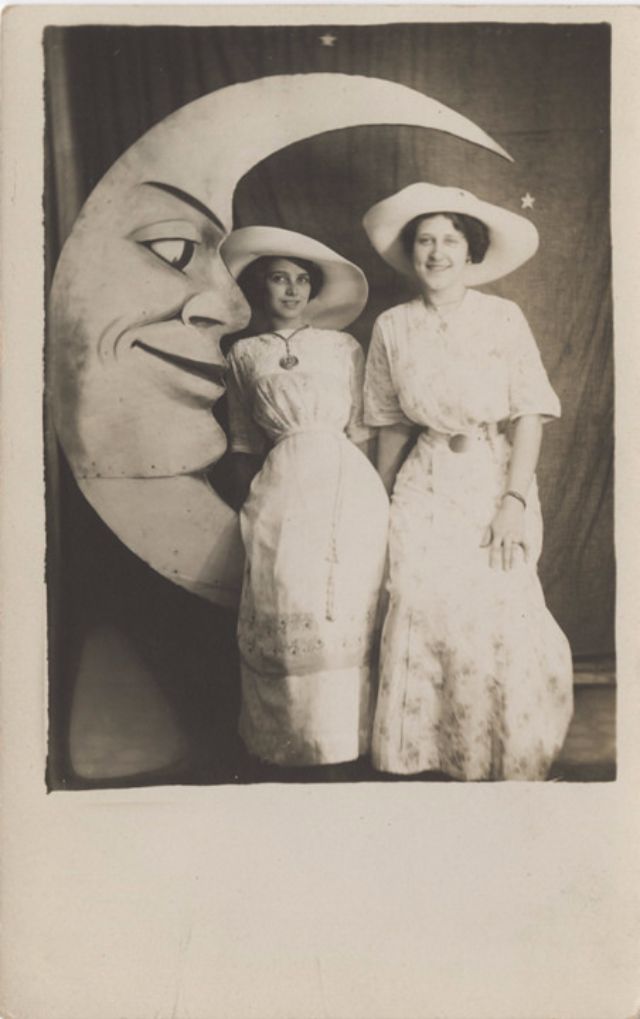
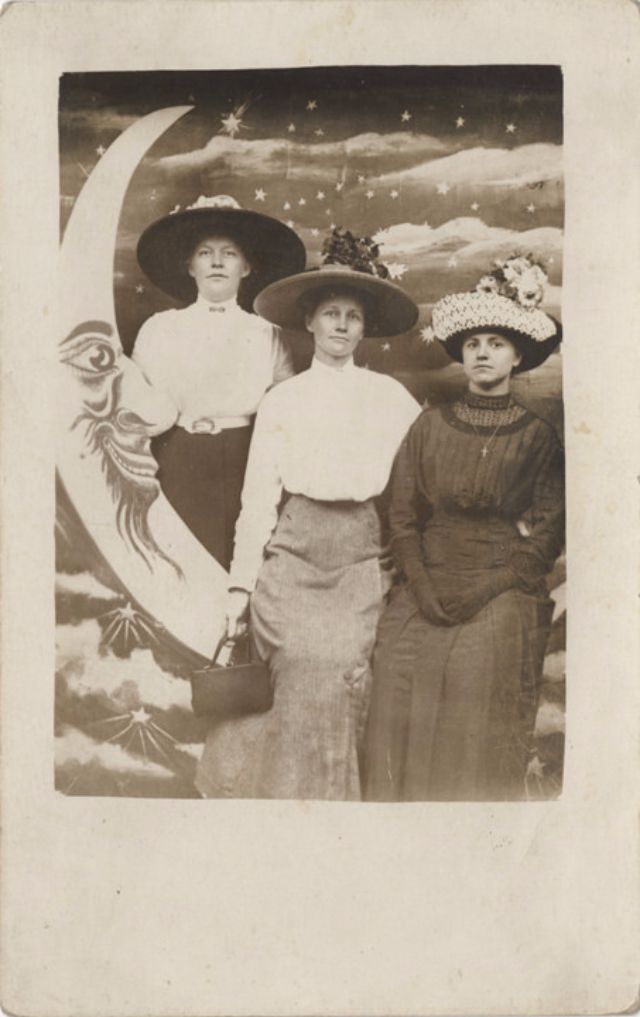
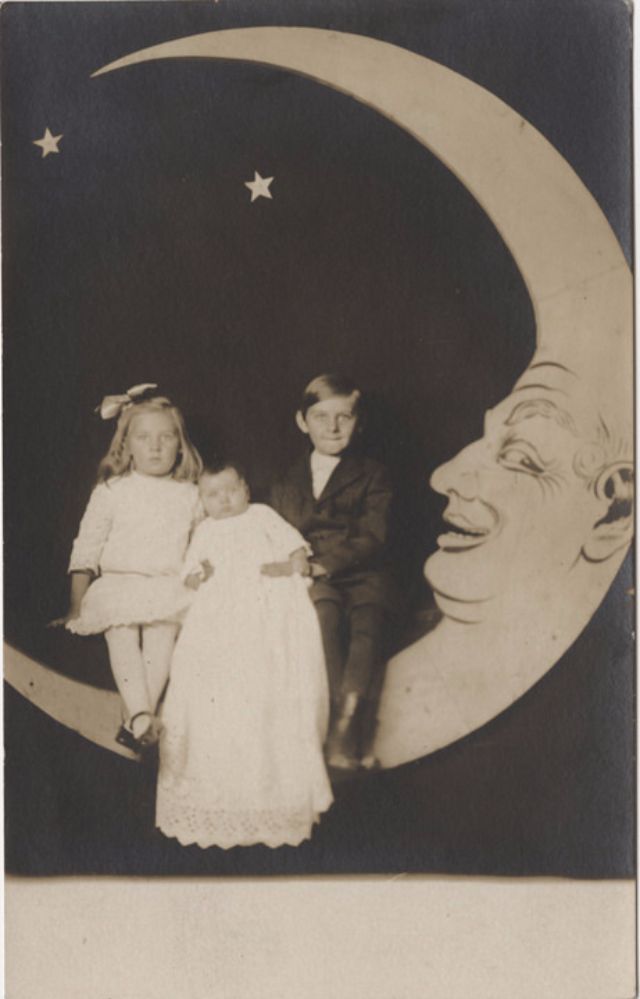
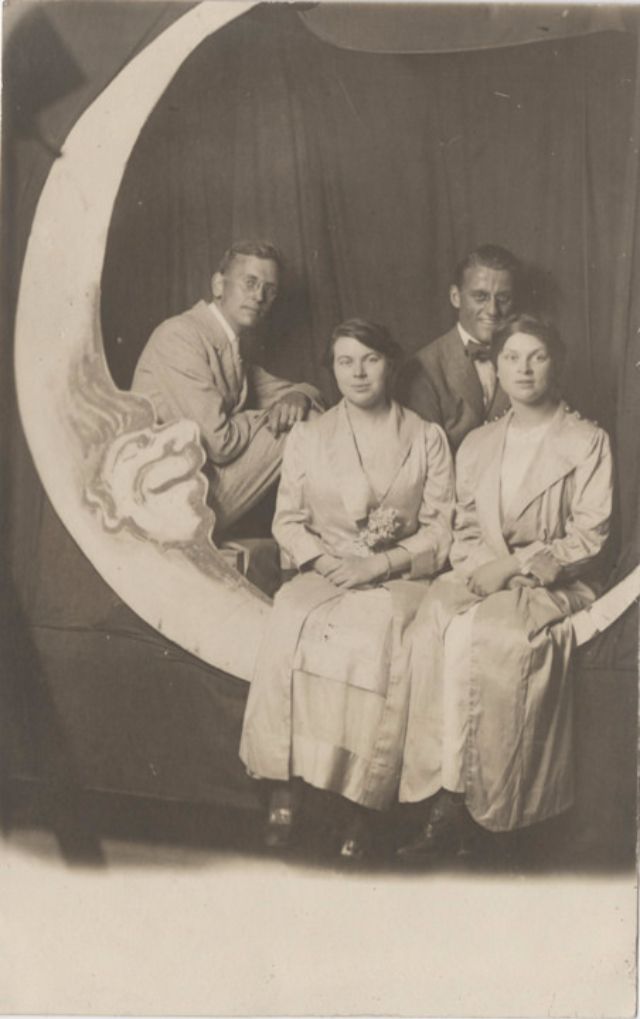
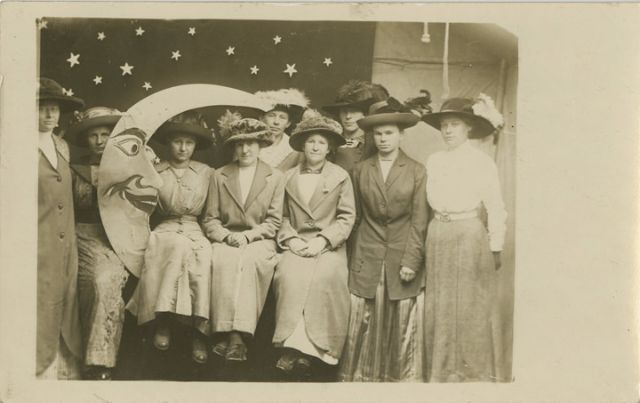
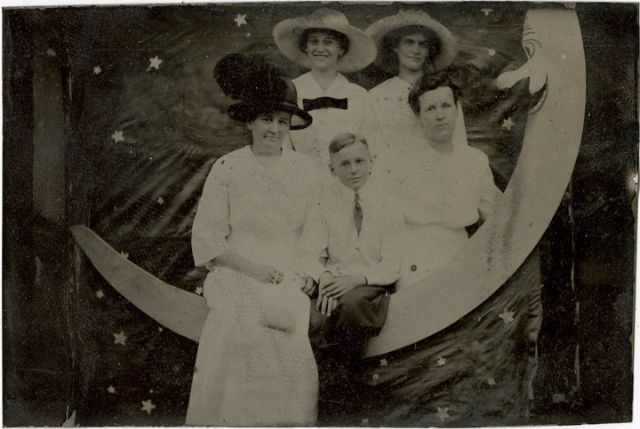
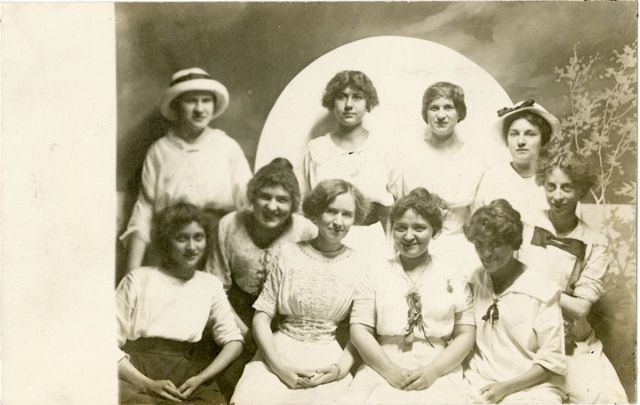
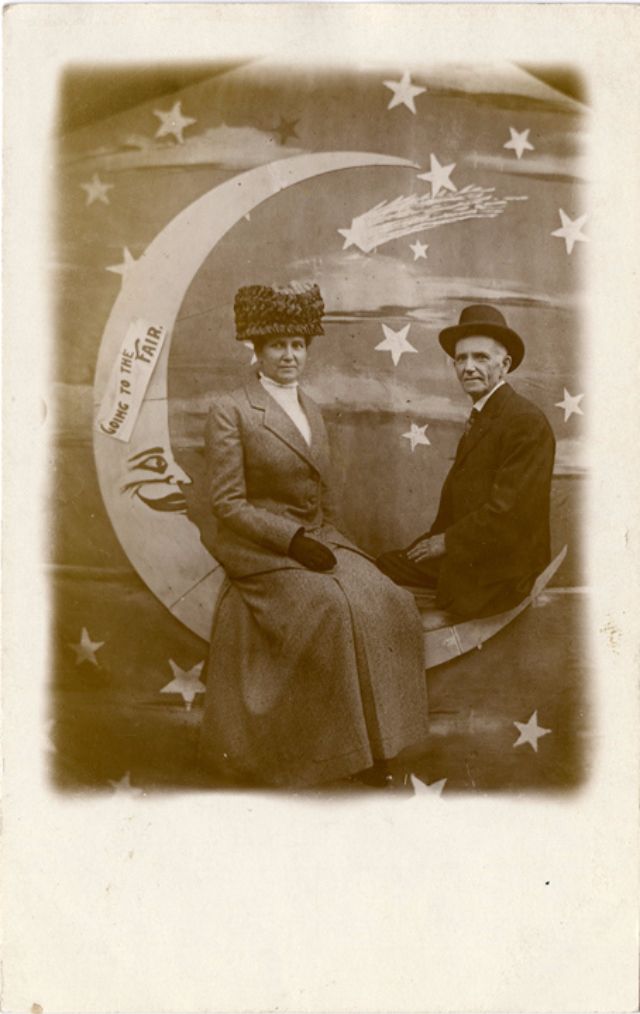
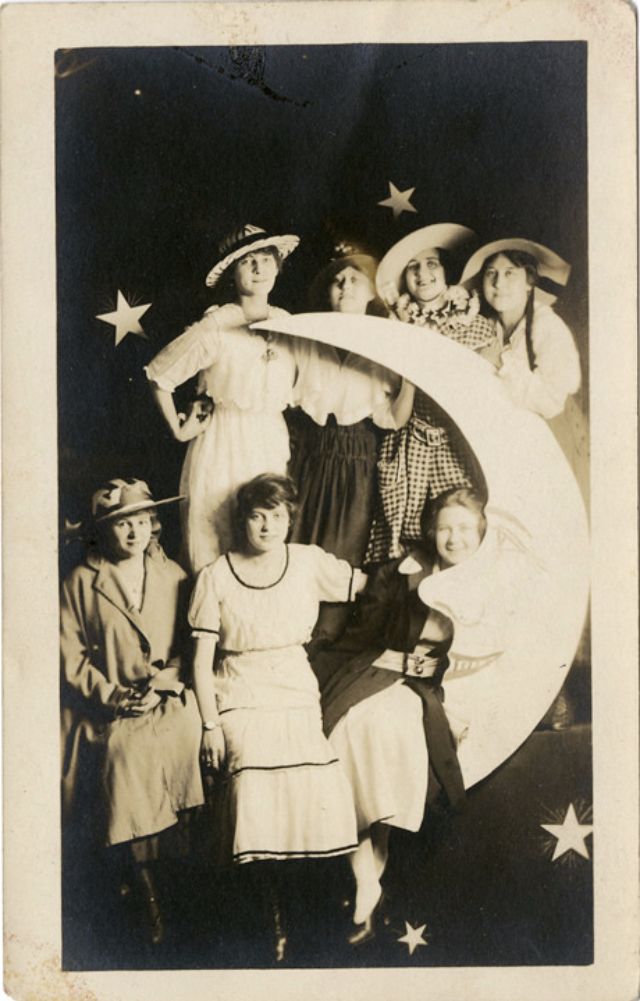
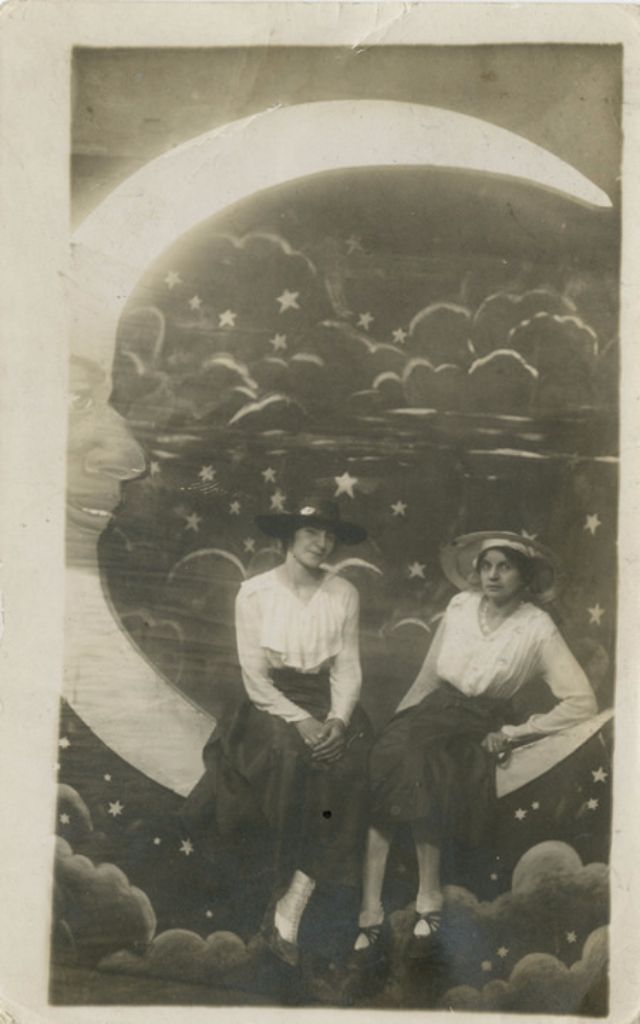
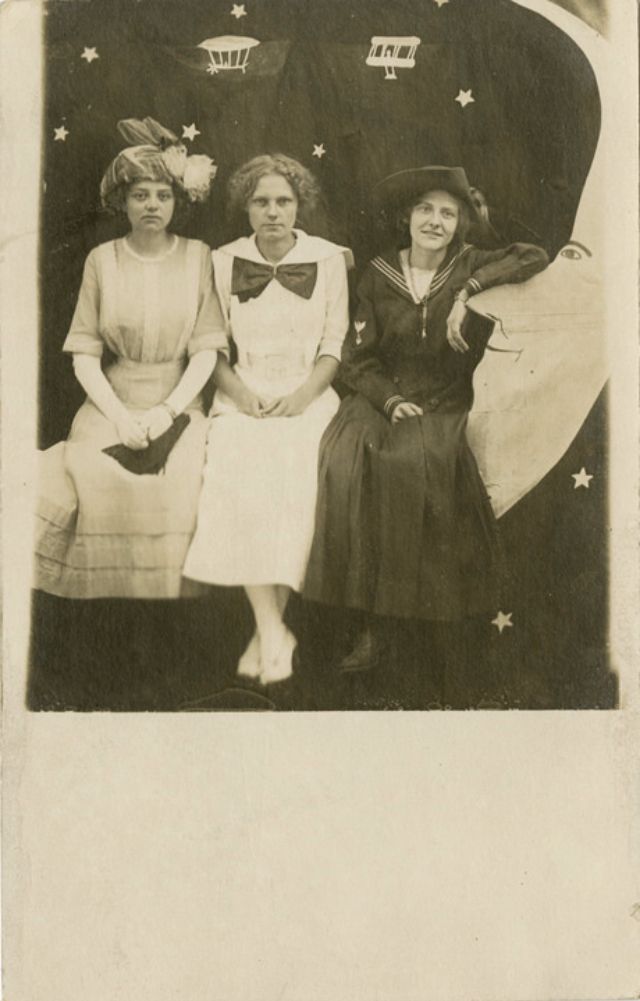
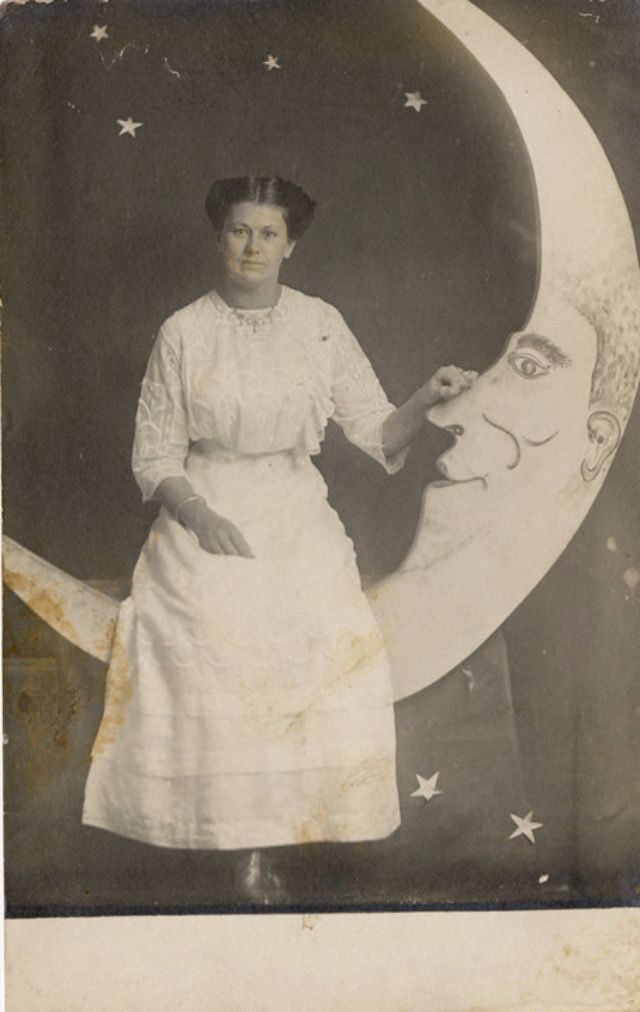
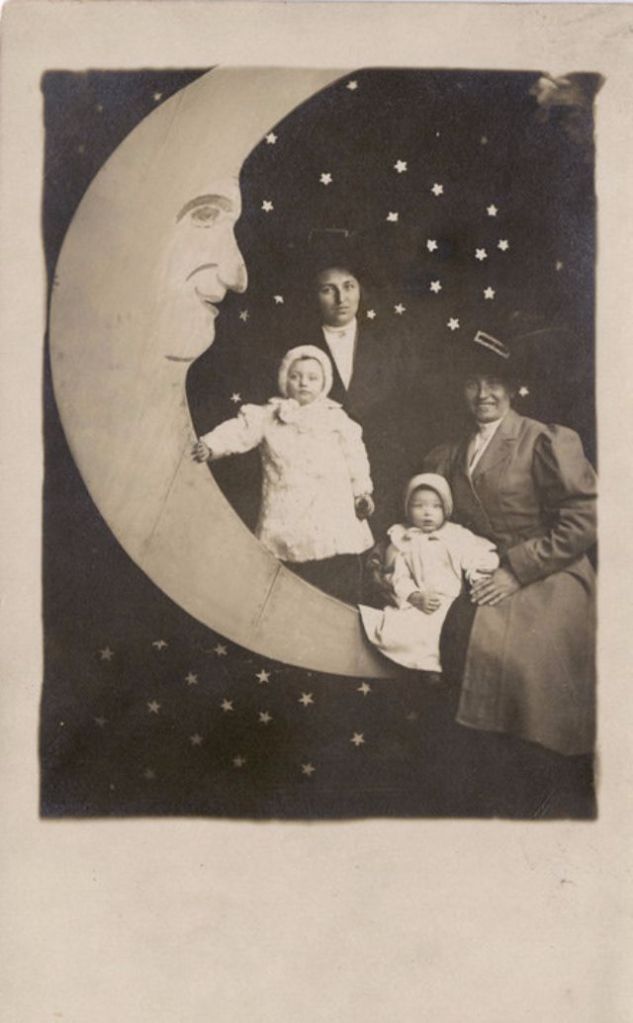
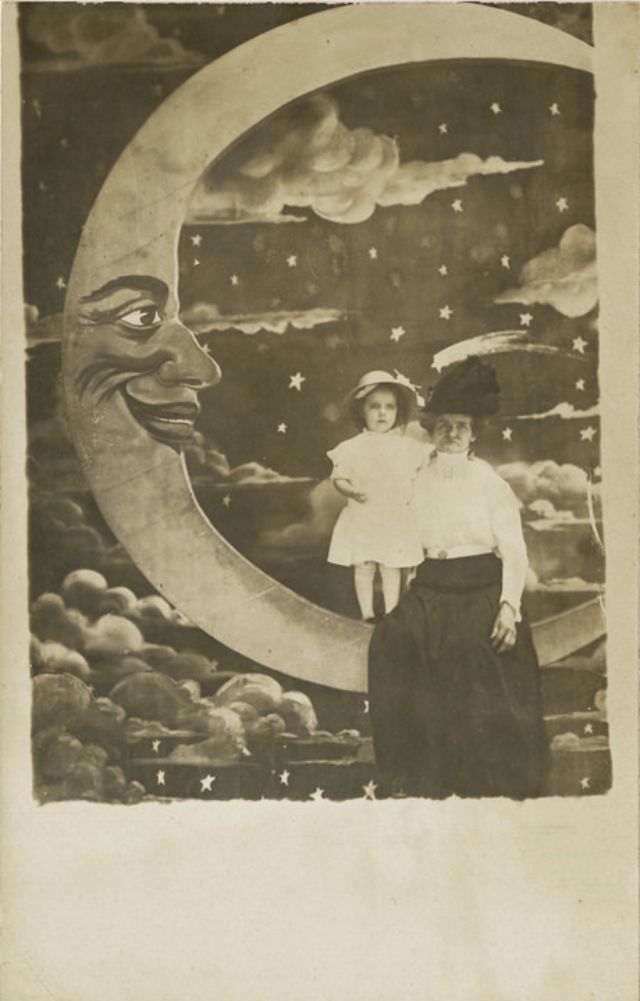
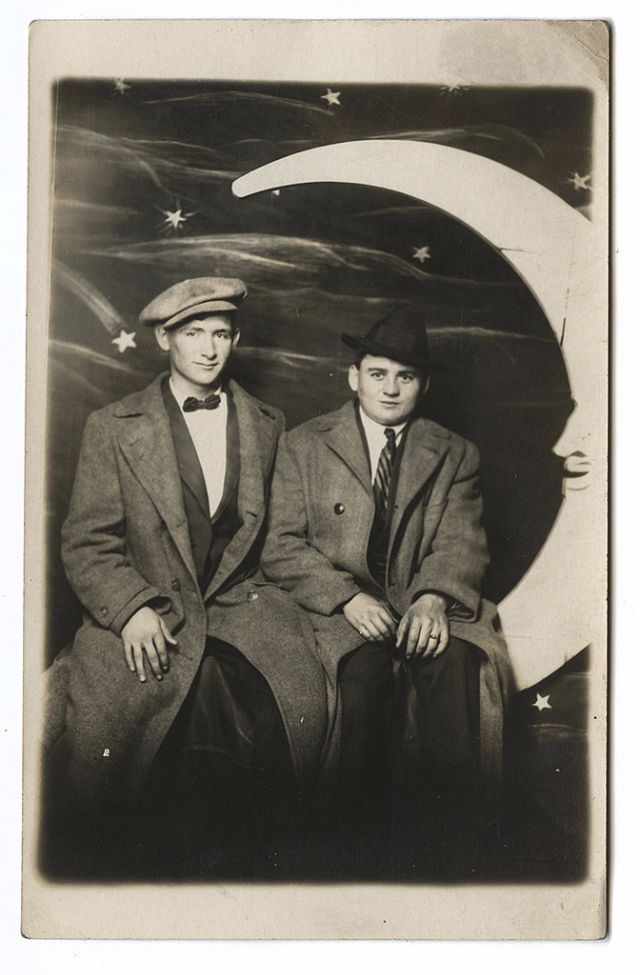
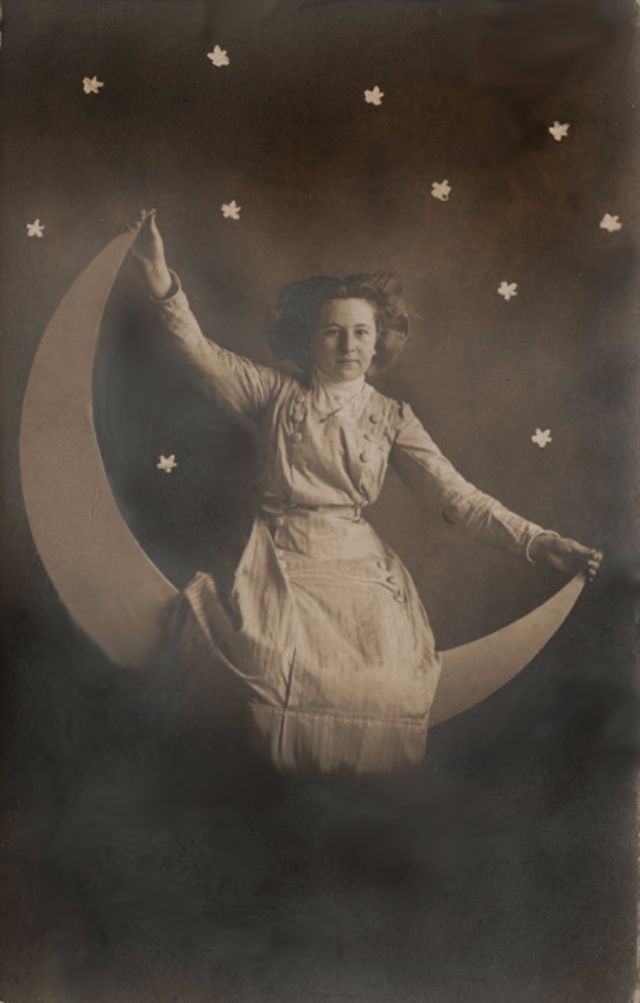
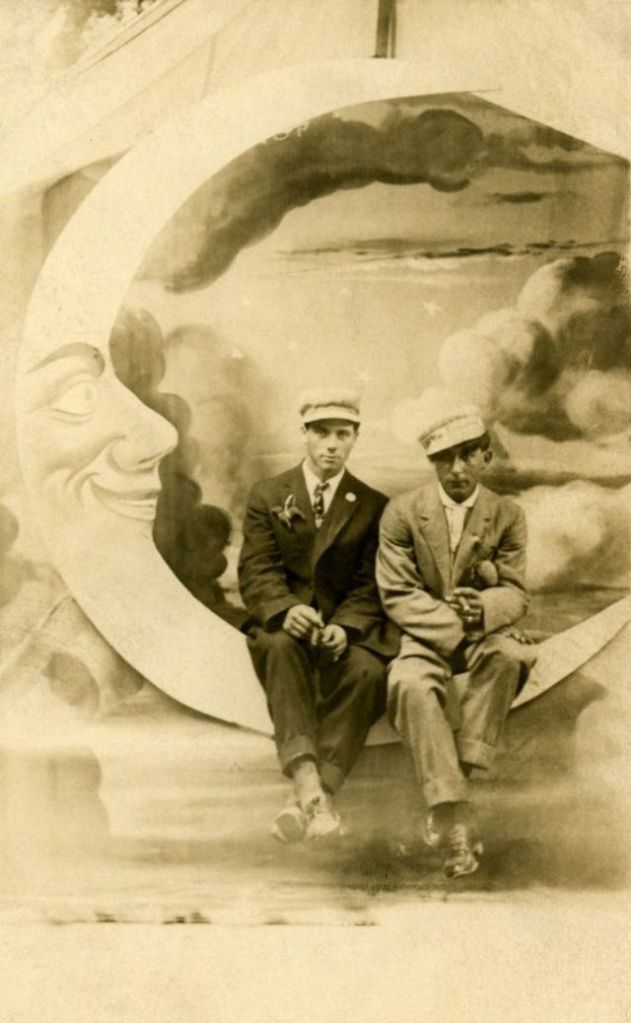
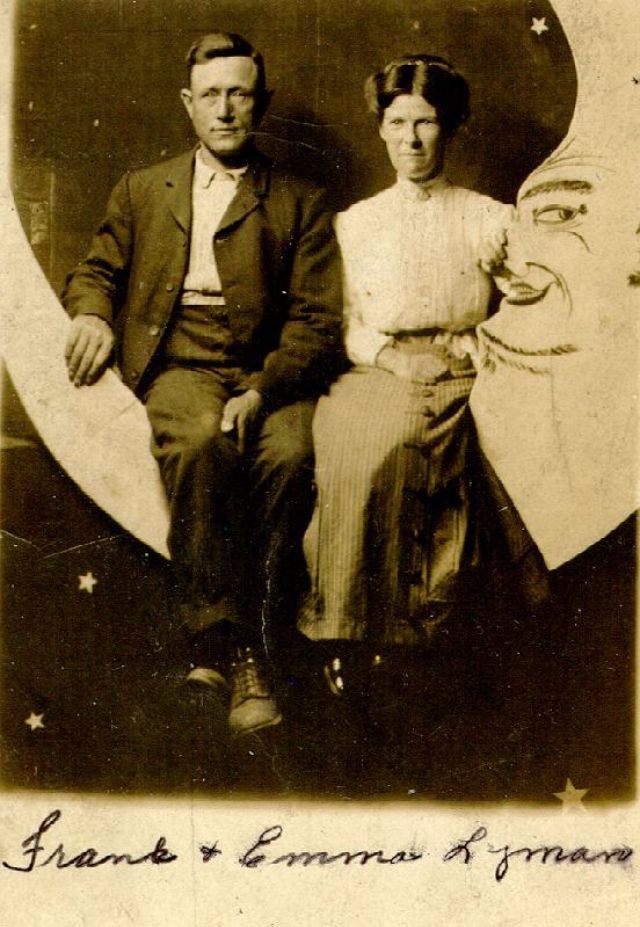
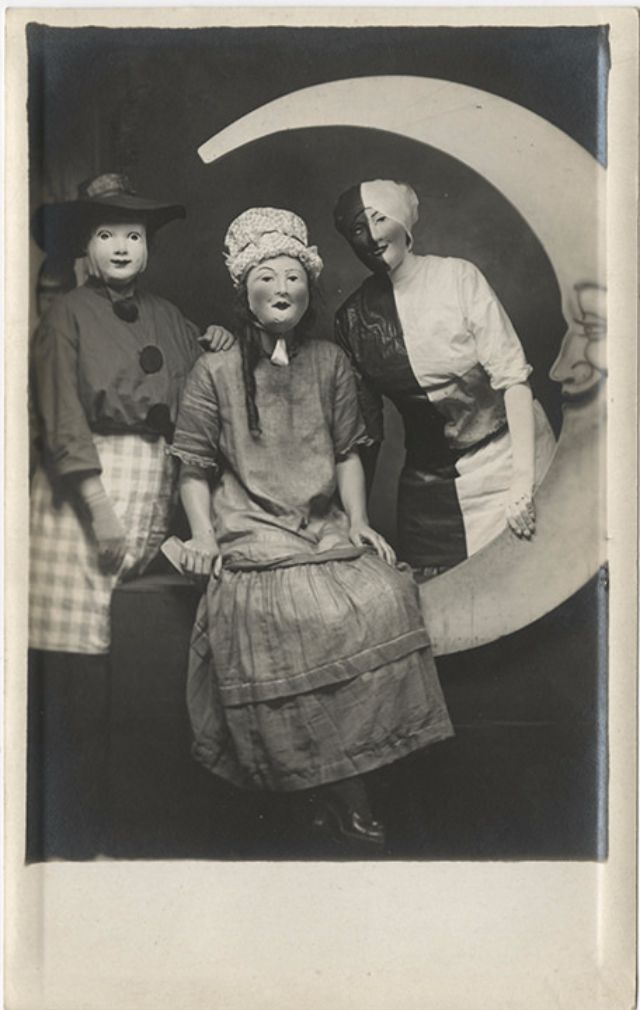
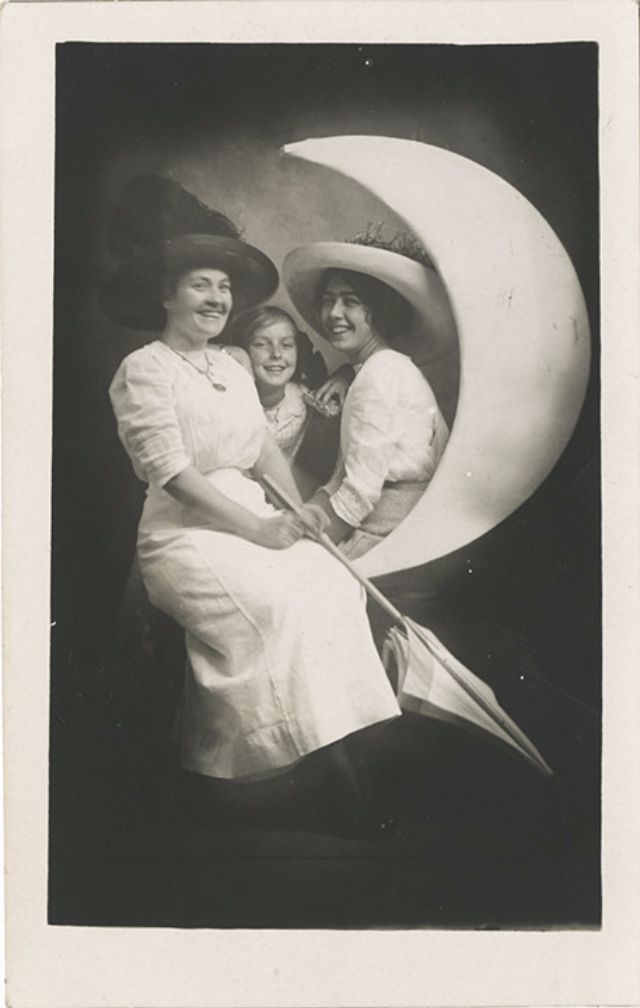
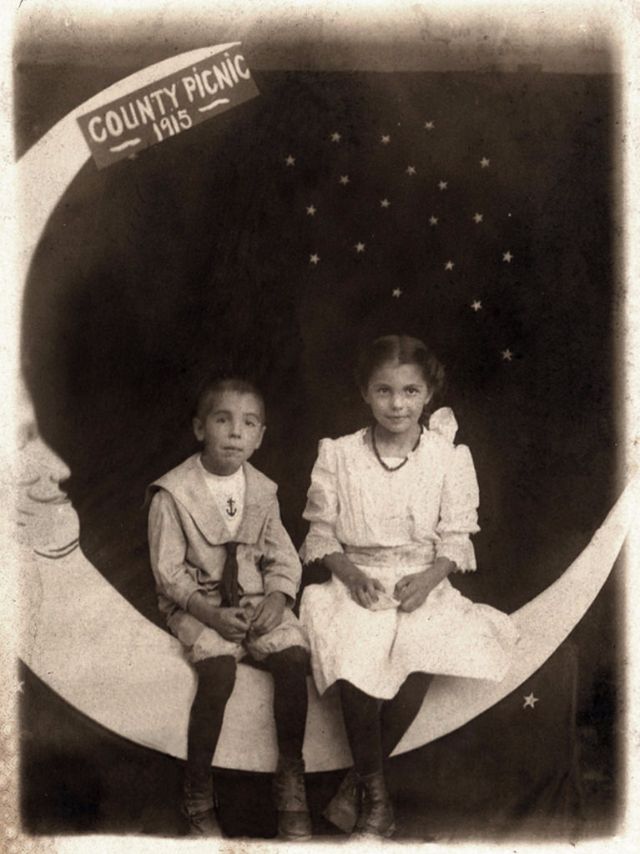
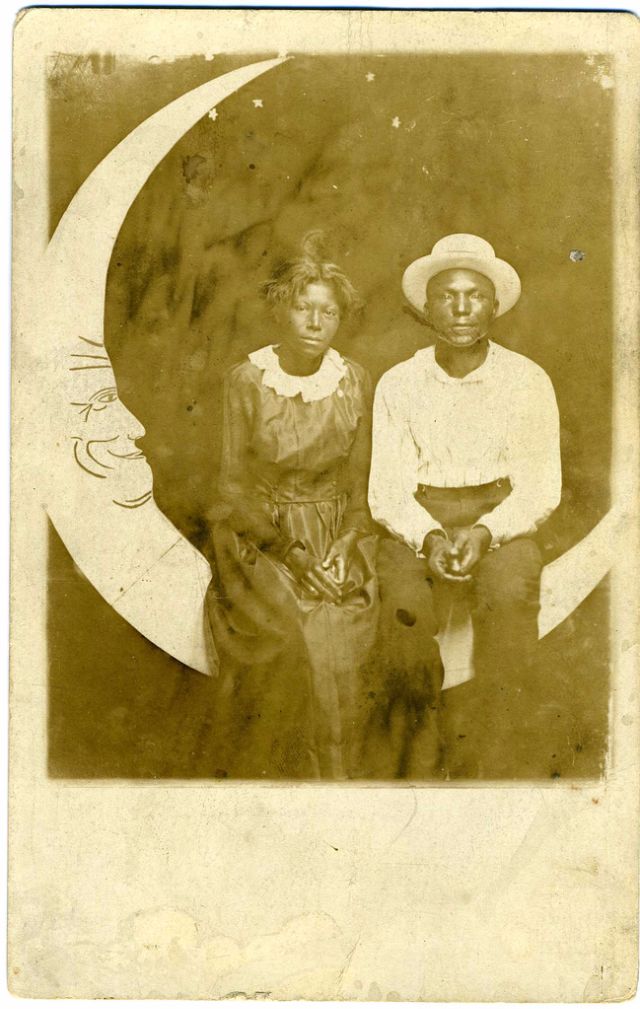
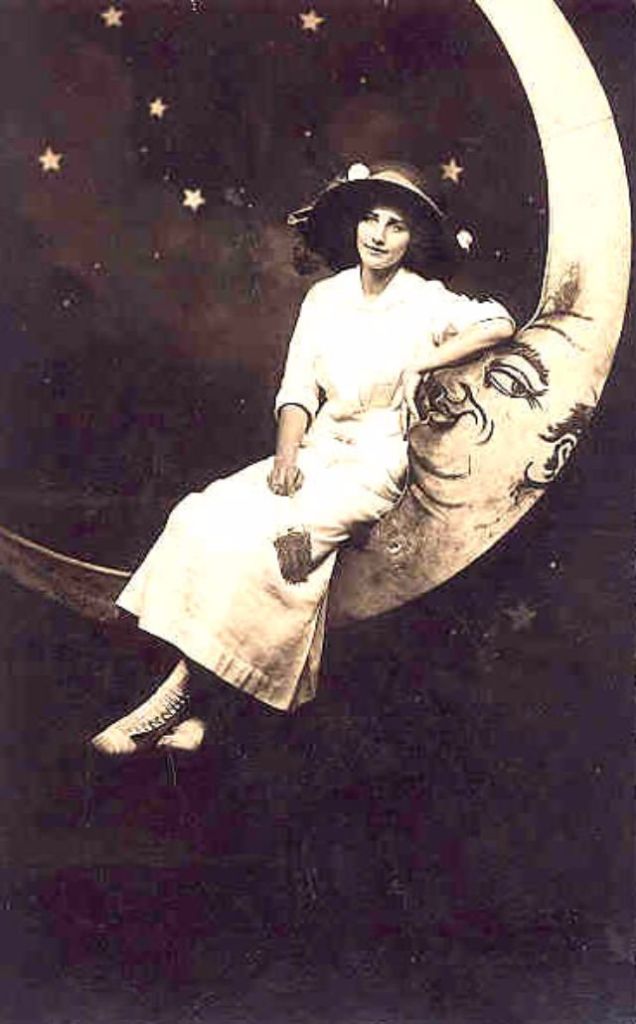
100-Year-Ago Studio Photography – 41 Vintage Photos of Paper Moon Portraits From the 1900s and 1910s

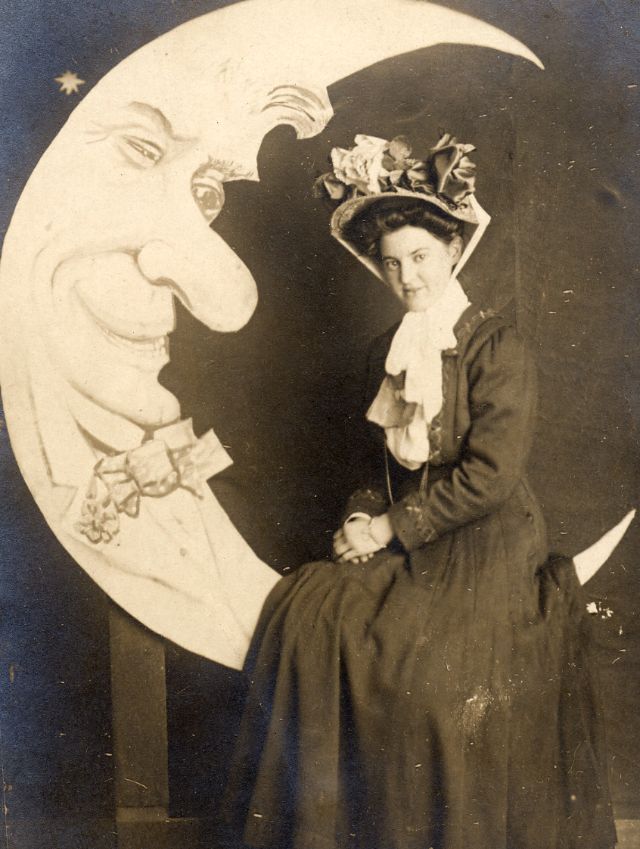
Long before Instagram, photo booths or even the common ownership of a camera, you could get your photograph taken sitting on the moon. Often a fixture at fairs, parties and carnivals, people sat in the crescent of a smiling “paper moon,” as if lifted to the stars.

A photographic phenomena primarily of the early half of the 20th century, it captivated the imagination of a world pre-Photoshop and gave many a memorable image of great times.

Here’s a collection of interesting paper moon portraits from between the 1900s and 1910s.
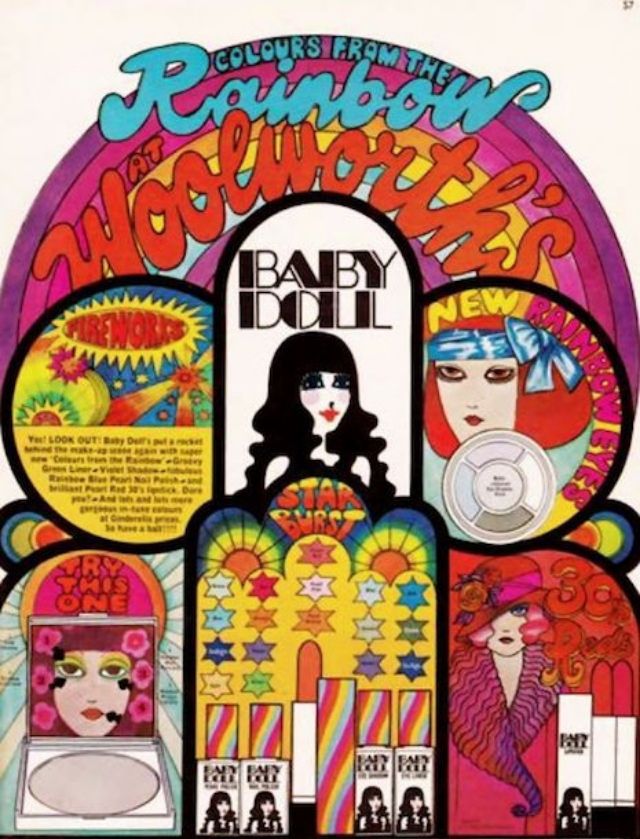
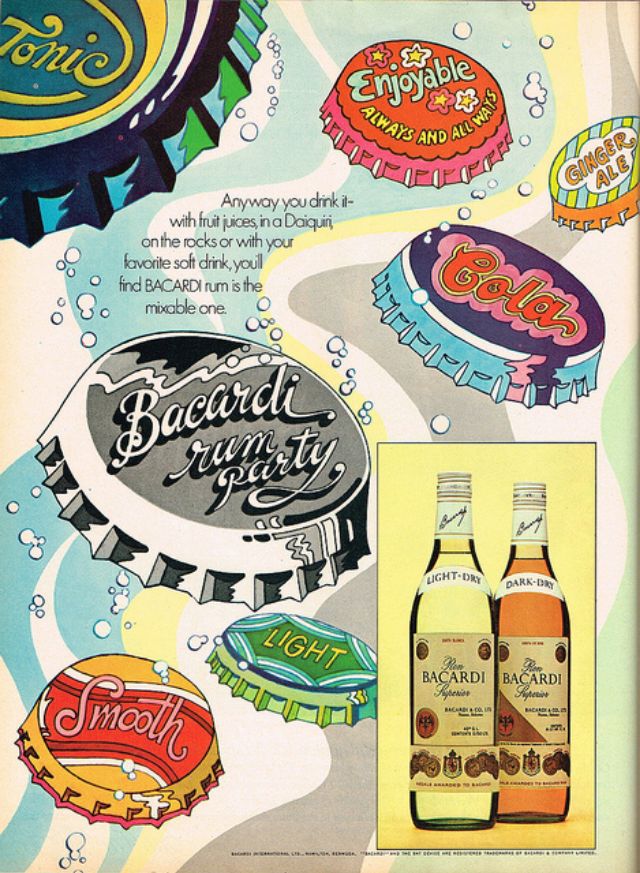
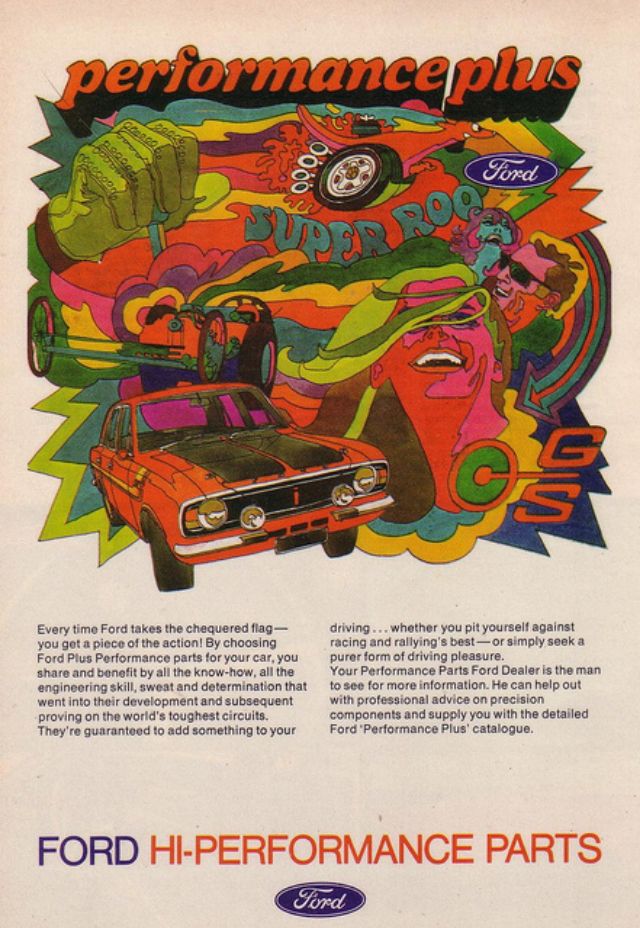
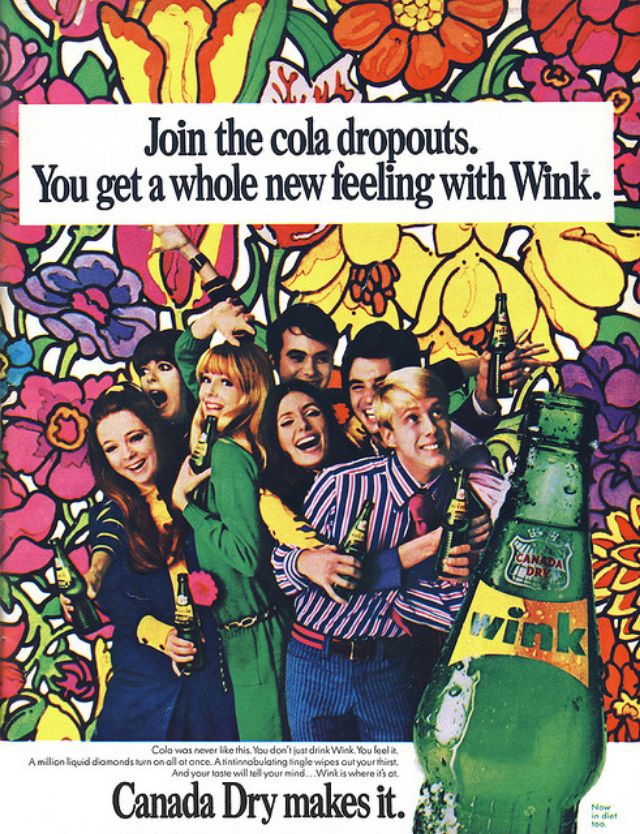
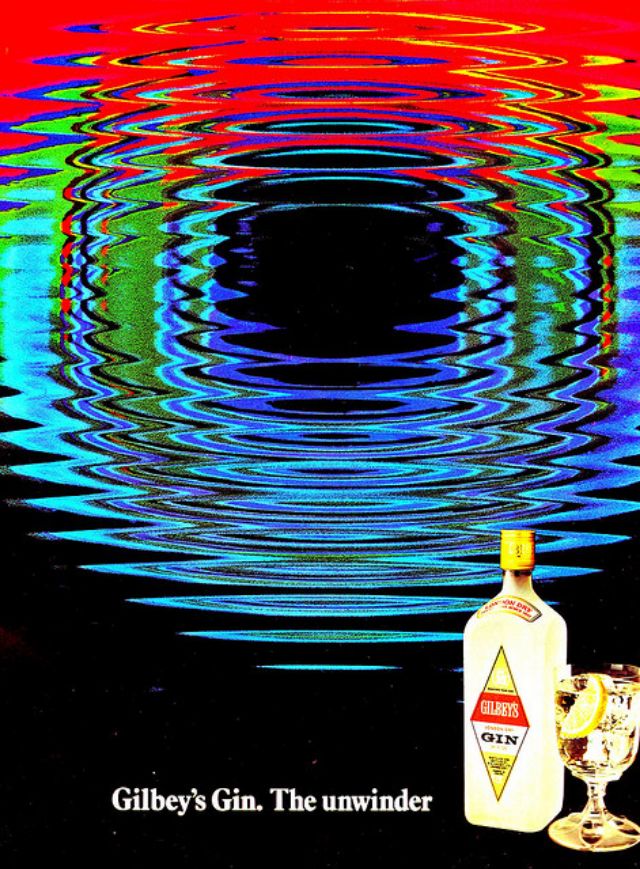
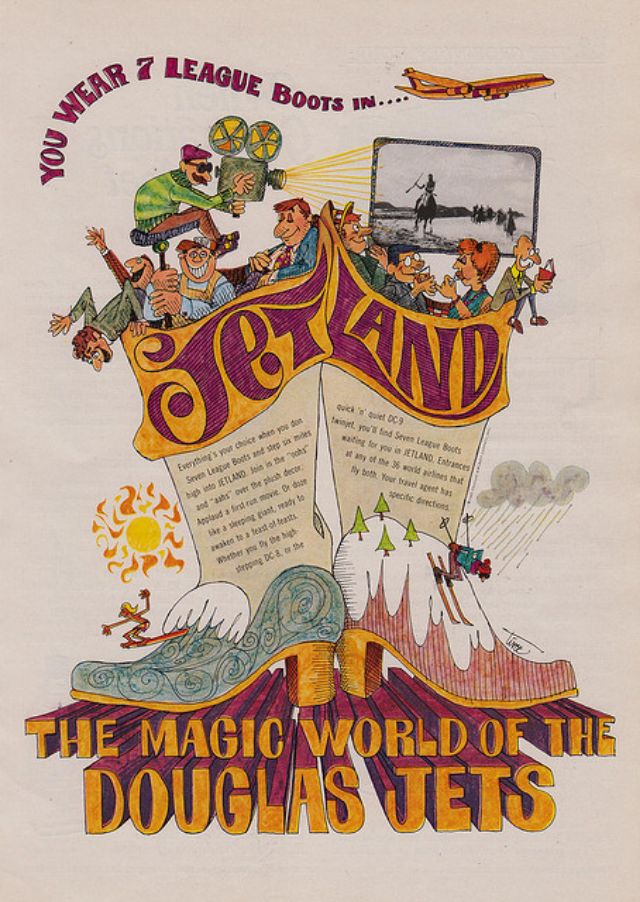
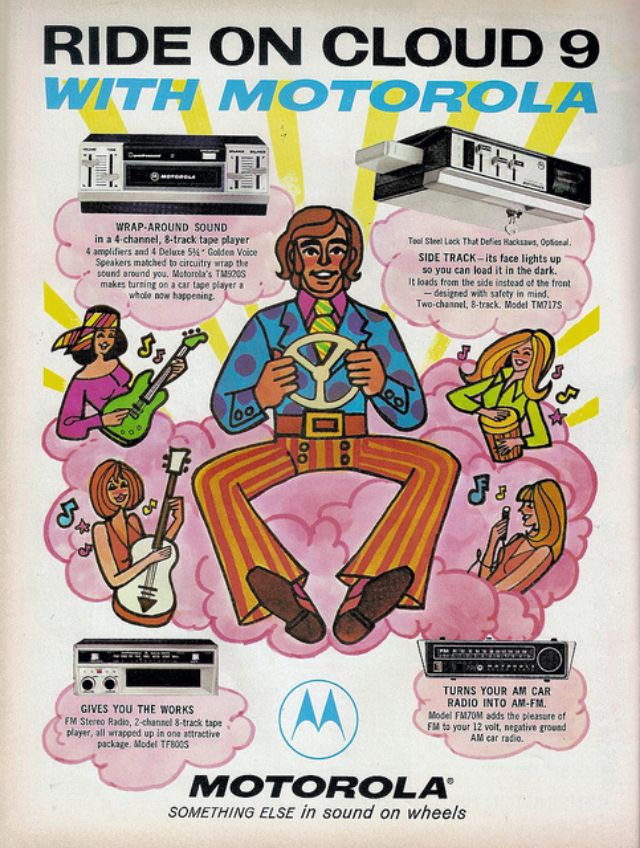
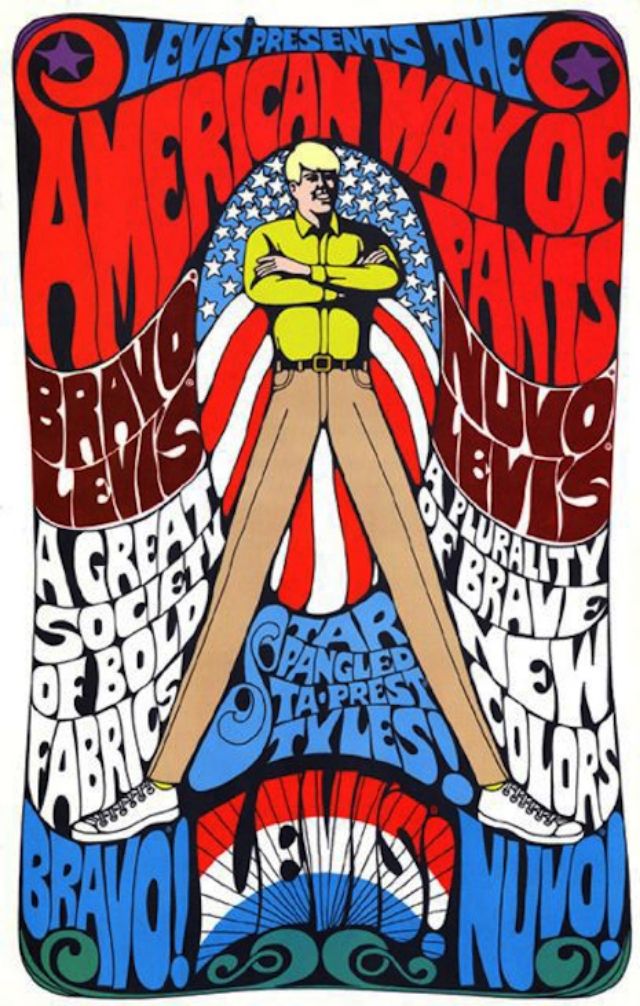
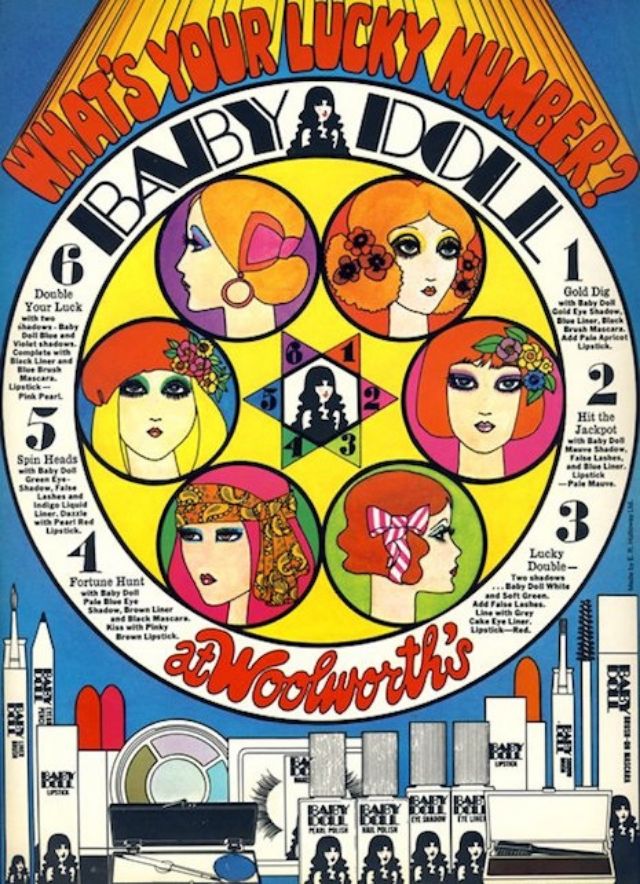
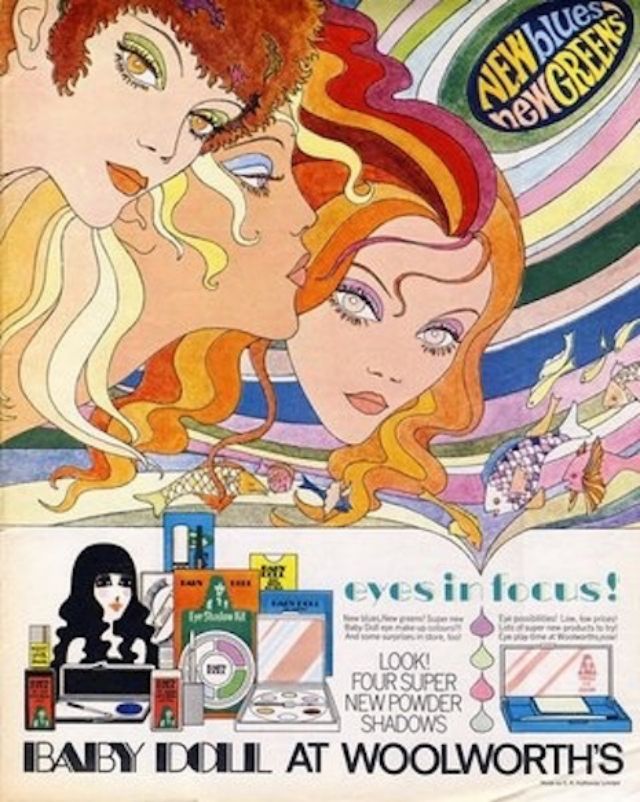
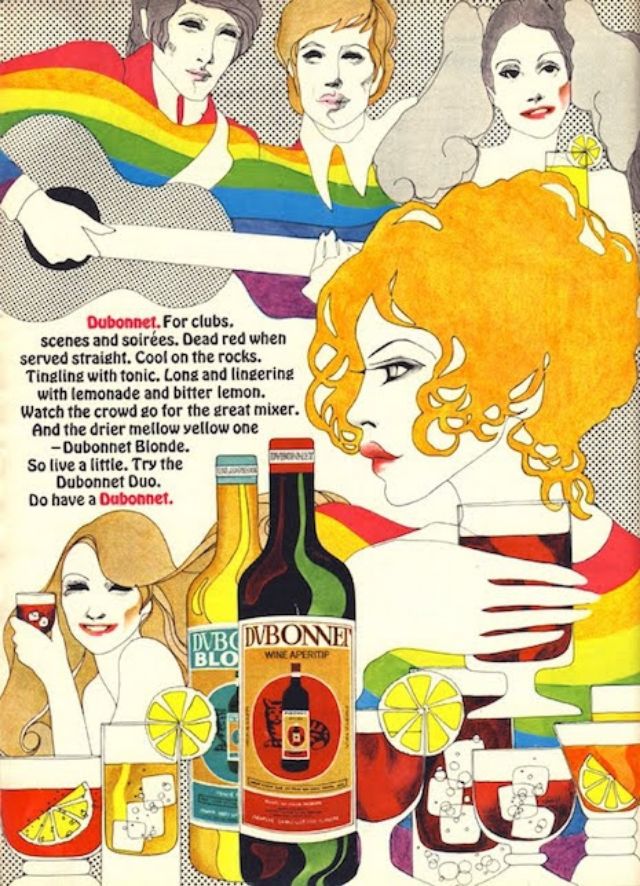
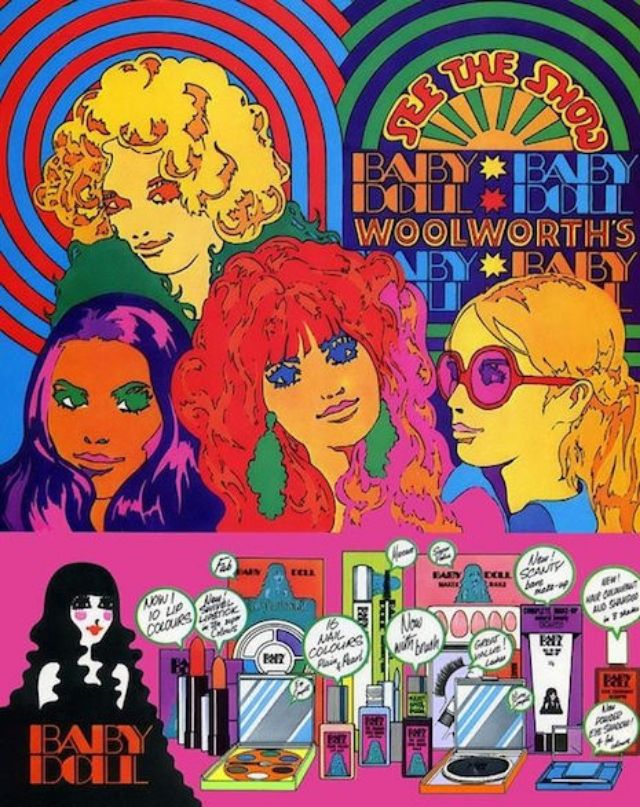
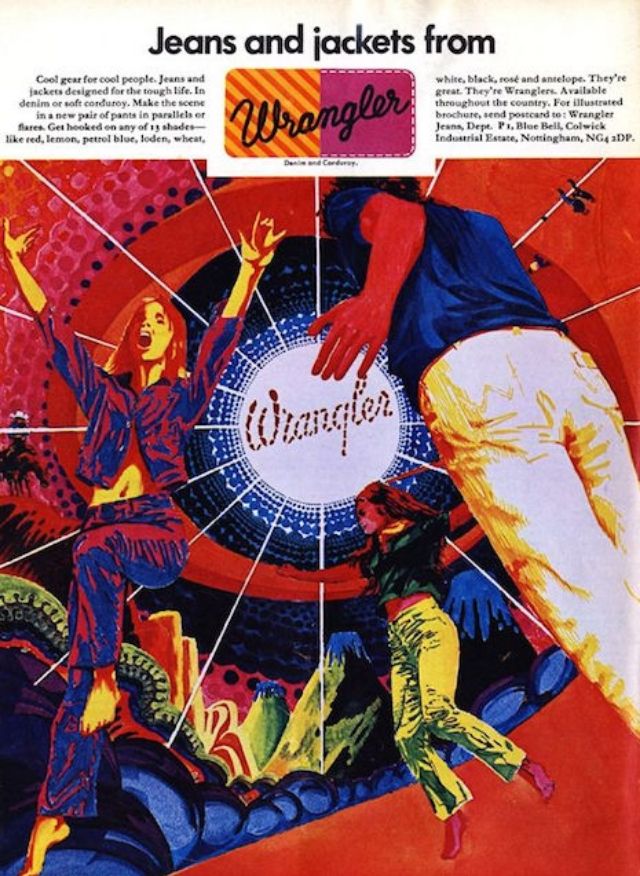
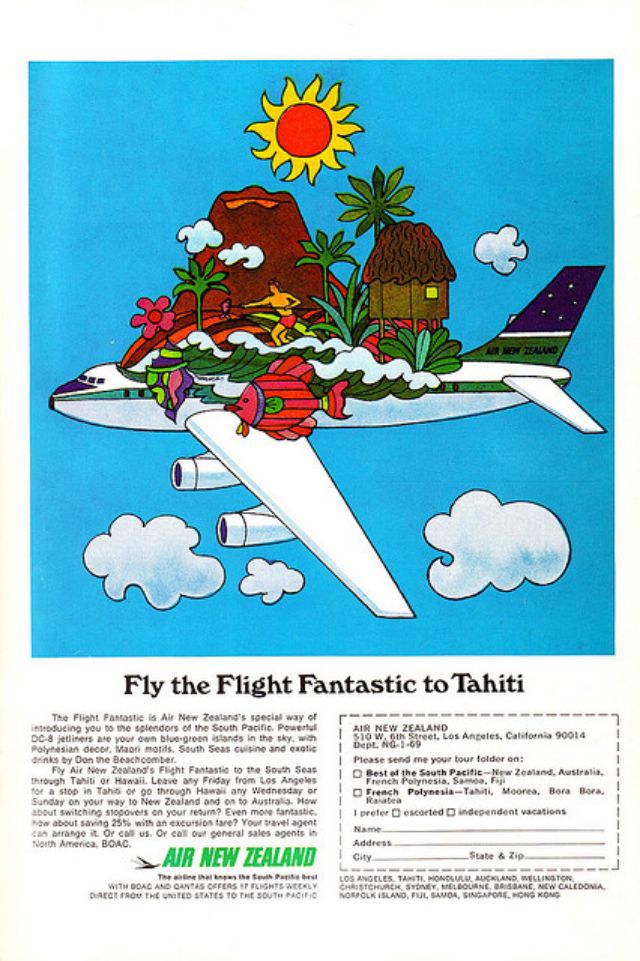
28 Colorful Psychedelic Advertisements From Between the 1960s and Early 1970s

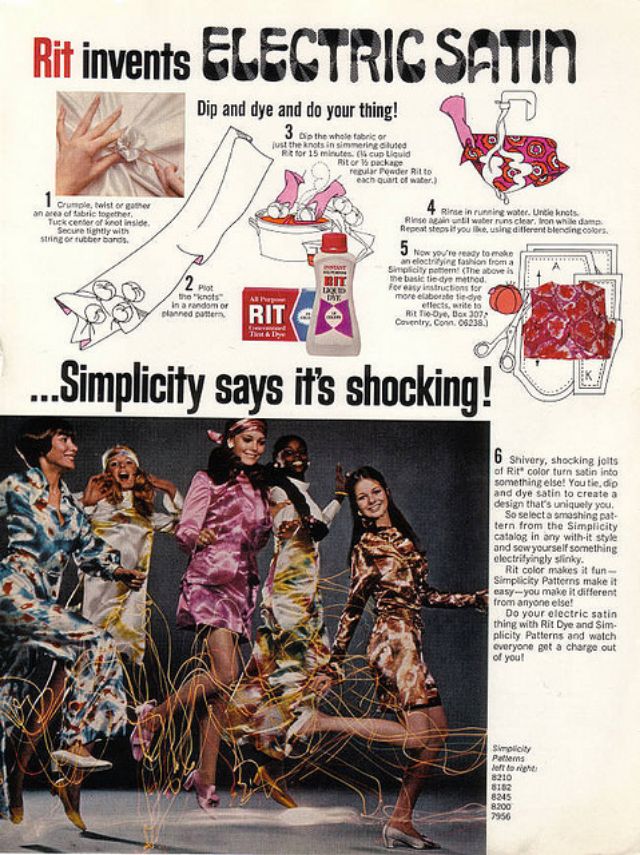
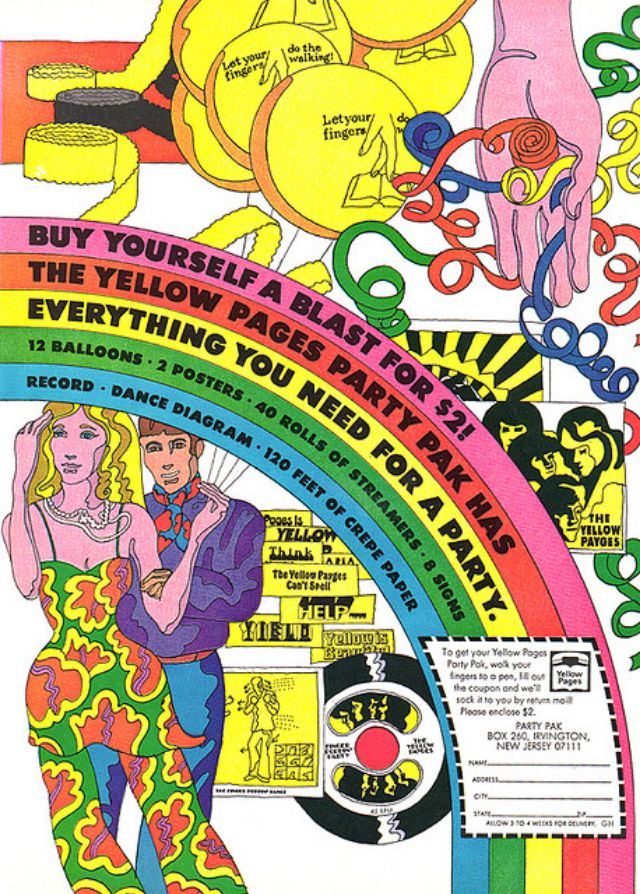
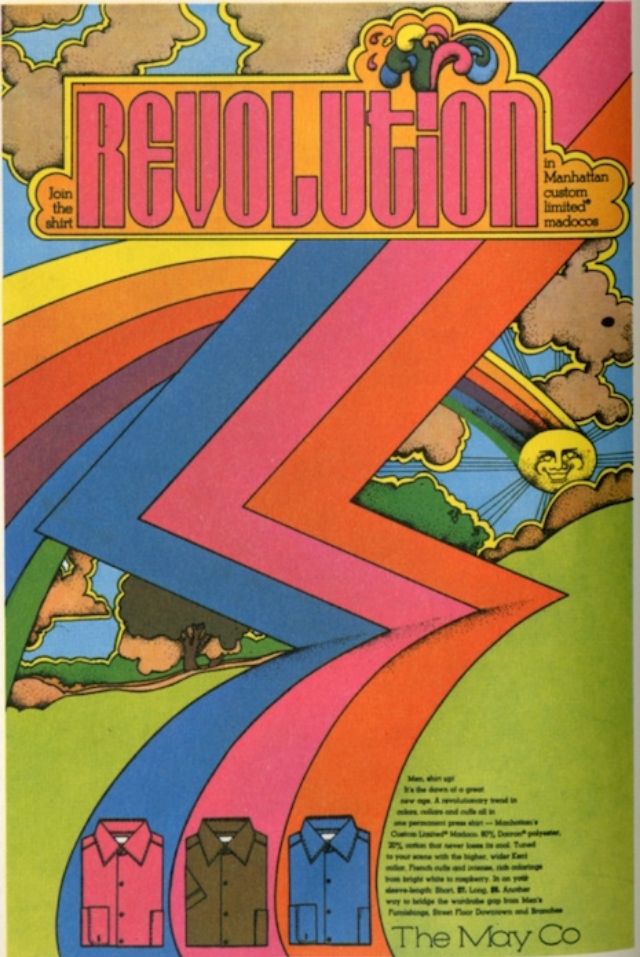
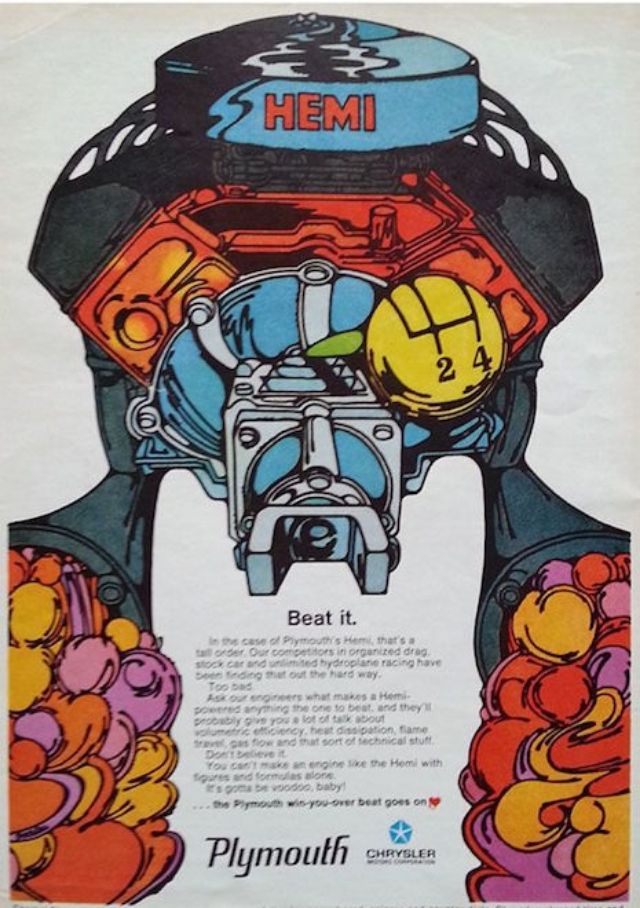
Psychedelic art is any art or visual displays inspired by psychedelic experiences and hallucinations known to follow the ingestion of psychoactive drugs such as LSD and psilocybin. The word “psychedelic” (coined by British psychologist Humphry Osmond) means “mind manifesting”. By that definition, all artistic efforts to depict the inner world of the psyche may be considered “psychedelic”.

By the late 1960s, the commercial potential of psychedelic art had become hard to ignore. General Electric, for instance, promoted clocks with designs by New York artist Peter Max. A caption explains that each of Max’s clocks “transposes time into multi-fantasy colors.” In this and many other corporate advertisements of the late 1960s featuring psychedelic themes, the psychedelic product was often kept at arm’s length from the corporate image: while advertisements may have reflected the swirls and colors of an LSD trip, the black-and-white company logo maintained a healthy visual distance.

The early years of the 1970s saw advertisers using psychedelic art to sell a limitless array of consumer goods. Hair products, cars, cigarettes, and even pantyhose became colorful acts of pseudo-rebellion.
Even the term “psychedelic” itself underwent a semantic shift, and soon came to mean “anything in youth culture which is colorful, or unusual, or fashionable.” Puns using the concept of “tripping” abounded: as an advertisement for London Britches declared, their product was “great on trips!” By the mid-1970s, the psychedelic art movement had been largely co-opted by mainstream commercial forces, incorporated into the very system of capitalism that the hippies had struggled so hard to change.

Yesterday Today

Bringing You the Wonder of Yesterday - Today

Skip to content ↓